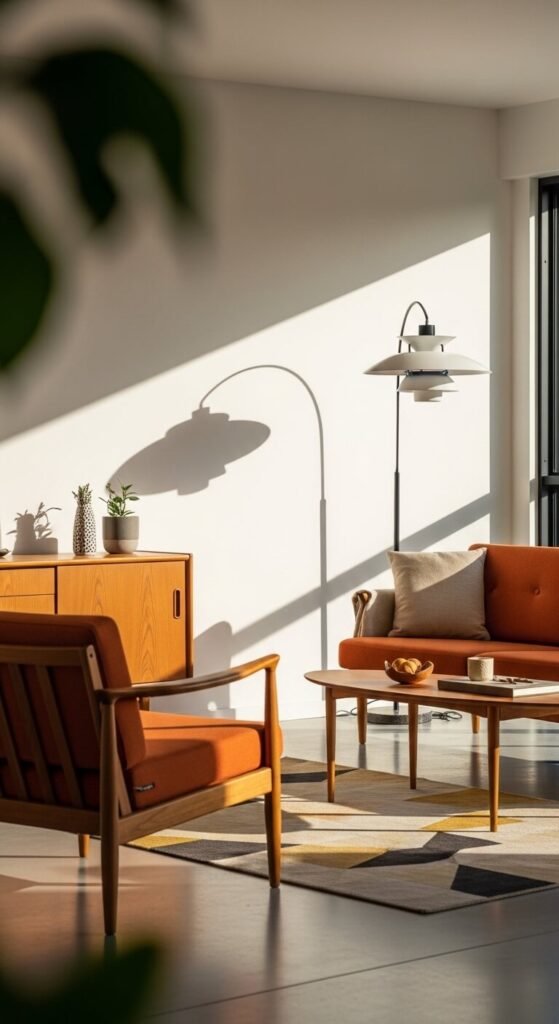
Mid-century modern design hit its stride between the 1940s and 1960s — and it never really left. These pieces have outlasted every trend cycle because they were built around a simple idea: form follows function. Clean lines, organic curves, natural materials, and honest craftsmanship made them timeless. Whether you’re furnishing a first apartment or refreshing a family home, these 25 icons belong on your radar. Some are affordable reproductions. Some are thrift-store finds waiting to happen. All of them will make your space look pulled-together without trying too hard.
1. Eames Lounge Chair and Ottoman
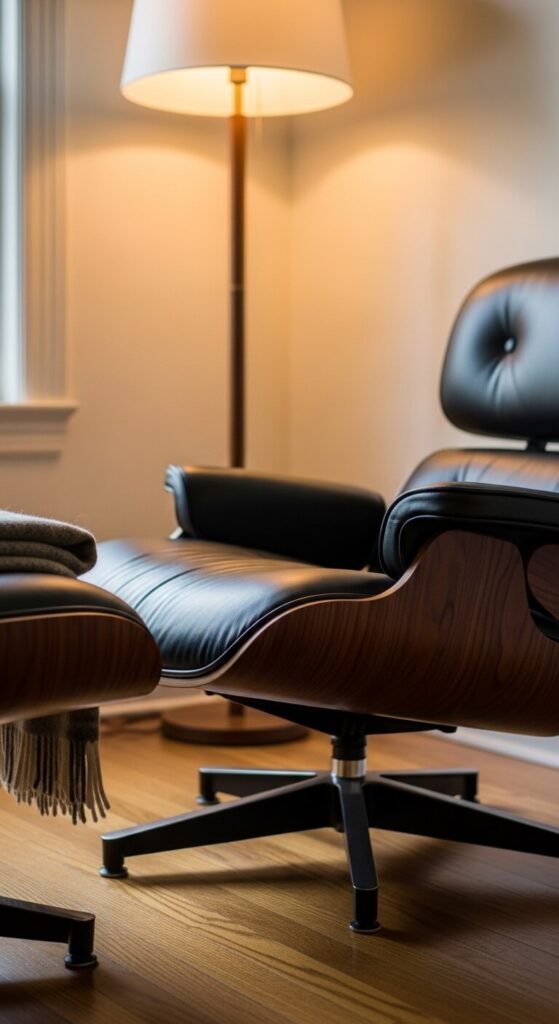
Few chairs carry the cultural weight of the Eames Lounge Chair. Designed by Charles and Ray Eames in 1956, it was meant to feel like a worn baseball glove — broken in, personal, and deeply comfortable. The molded plywood shell and leather cushions look as current today as they did in any mid-century living room. Authentic versions from Herman Miller run into the thousands. But quality reproductions start around $400–$600 and hold up well. Look for real wood veneer, not plastic shell imitations. Pair it with a simple floor lamp and a side table for an instant reading nook.
2. Tulip Table by Eero Saarinen
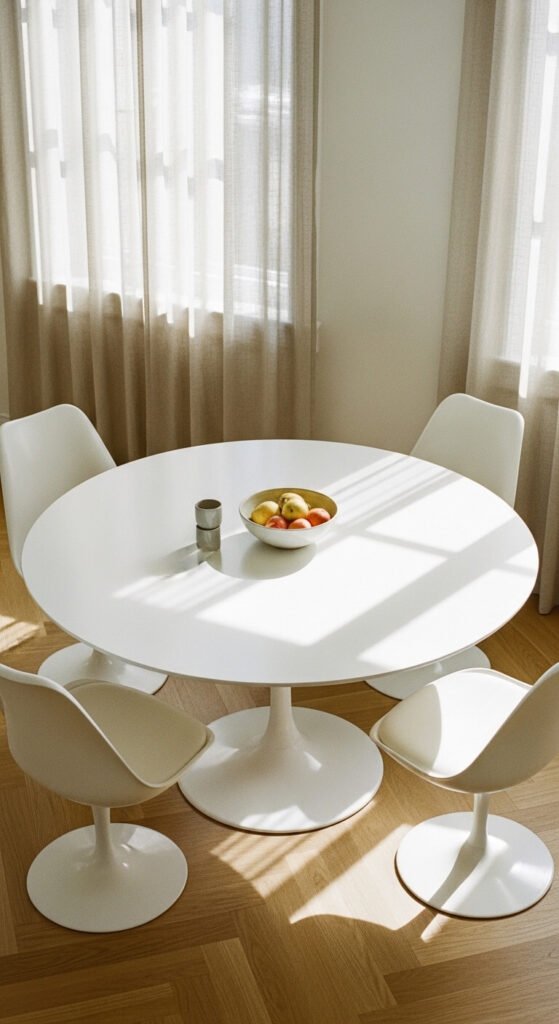
Eero Saarinen hated the “slum of legs” under tables and chairs. So in 1956 he designed the Tulip Table — one pedestal, no clutter. The single stem base gives any dining room an airy, sculptural quality that four-legged tables simply can’t match. The round top works beautifully in small spaces because there are no corner constraints. Saarinen originals by Knoll are an investment. Reproductions start around $200–$500 depending on size and material. For a DIY spin, source a vintage round table top and swap the base for a weighted pedestal — hardware stores carry threaded flanges that make this surprisingly doable.
3. Barcelona Chair by Mies van der Rohe
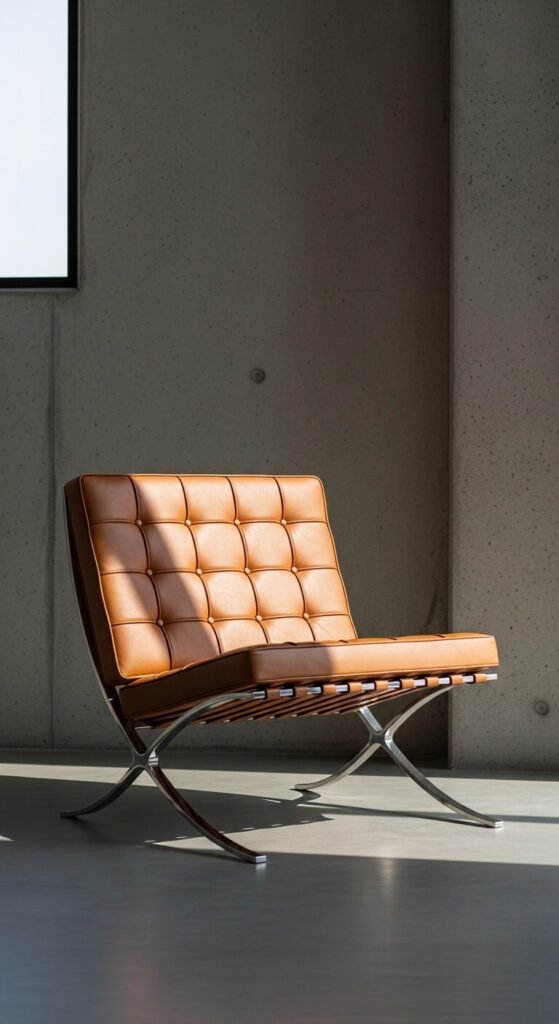
Designed for the 1929 Barcelona Pavilion, this chair was literally made for a king. The Barcelona Chair by Mies van der Rohe still defines refined minimalism almost 100 years later. That flat X-frame base and hand-stitched leather cushions read as simultaneously architectural and luxurious. Authentic Knoll versions cost $5,000+. High-quality reproductions with genuine leather run $400–$900 and are widely available. Place one in a home office or entryway — it doesn’t need company to make a statement. Avoid faux leather versions; they crack within a year and cheapen the entire look.
4. Nelson Coconut Chair
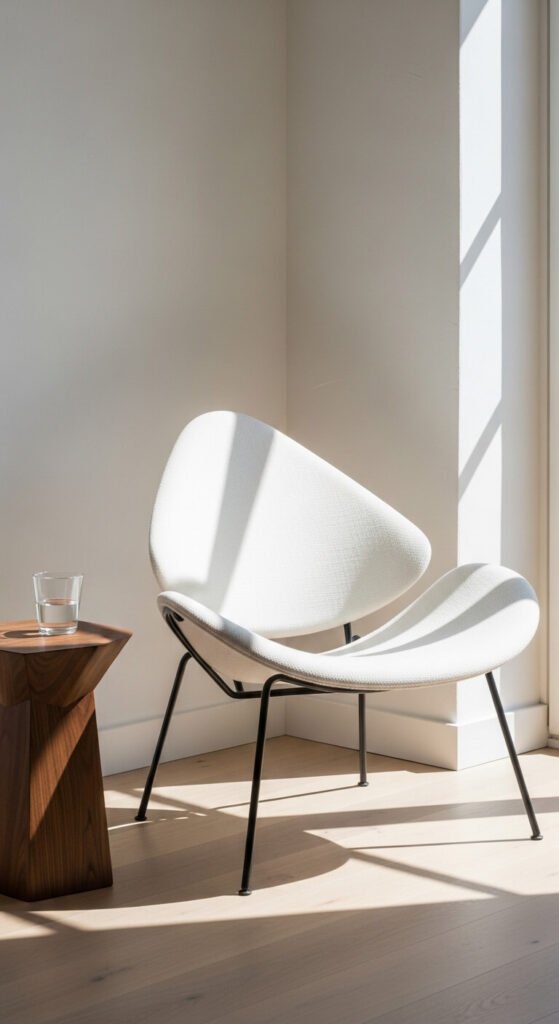
George Nelson designed the Coconut Chair in 1955, cutting a coconut shell shape into nine separate wedge-like sections to create something that looks sculptural from every angle. It’s a chair you notice the second you walk into a room. The angled shell makes it surprisingly comfortable despite how graphic it looks. Authentic Herman Miller examples are collector’s pieces. Good reproductions land around $300–$700. It works especially well in white or cream upholstery against a dark wall — or upholstered in a bold mustard or olive fabric for a warmer, more personal take on the original.
5. Egg Chair by Arne Jacobsen
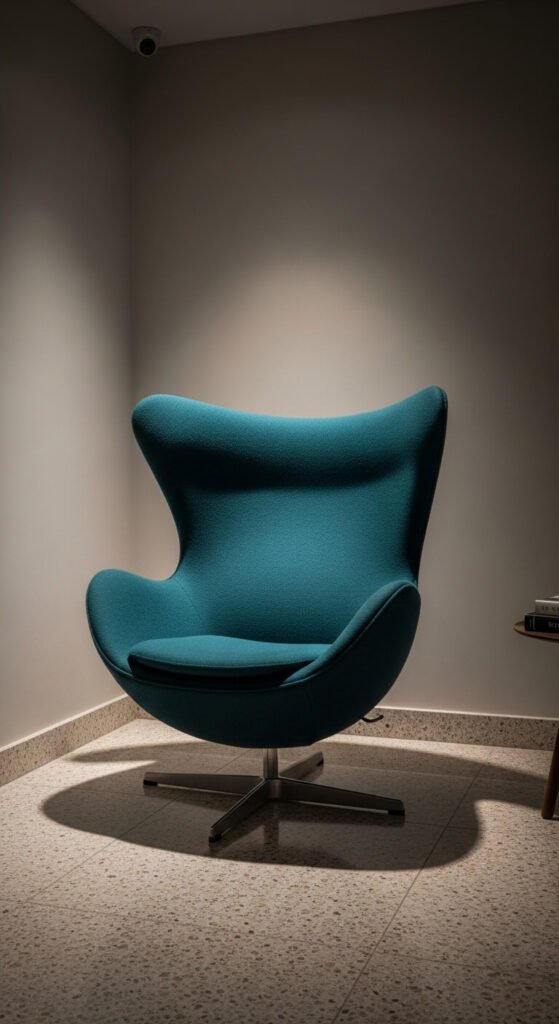
Arne Jacobsen designed the Egg Chair in 1958 for the SAS Royal Hotel in Copenhagen, carving the shape from foam and plaster in his garage. The enclosed shell gives the sitter a sense of privacy — unusual and intentional in a public hotel lobby. That feeling translates perfectly to a home corner or reading spot. Fritz Hansen originals are significant investments at $8,000+. Licensed reproductions with good foam density run $500–$1,200. Always test foam density before buying a reproduction — cheap versions lose their shape quickly. Stick to neutral or muted upholstery colors to keep it timeless.
6. Noguchi Coffee Table
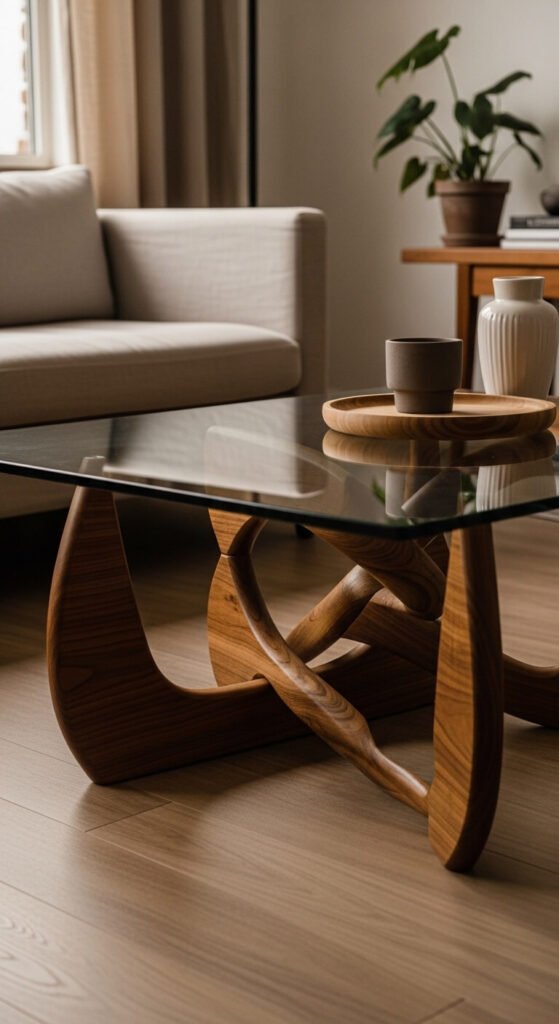
Isamu Noguchi created this table in 1947 and it remains one of the most recognized furniture forms in design history. Two interlocking wood legs support a freeform glass top — no hardware, no glue, just gravity and geometry. It looks like art but functions as everyday furniture. Herman Miller still produces the authentic version around $1,500. Quality reproductions run $200–$600. For a budget DIY, source a large irregular piece of thick glass from a local glass shop and pair it with two custom-cut curved wood legs from a woodworker. The silhouette is simple enough to replicate at a fraction of the cost.
7. Wishbone Chair by Hans Wegner
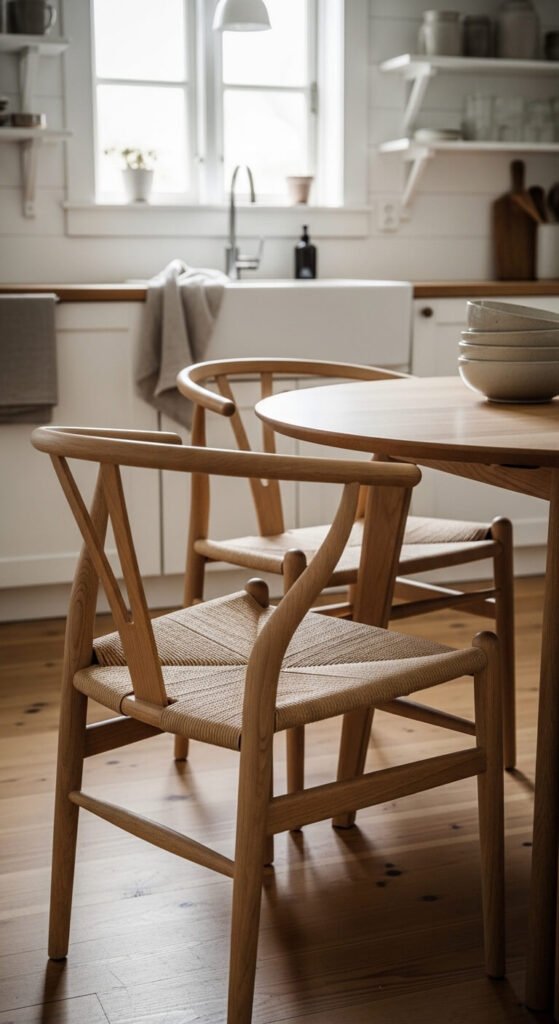
Hans Wegner designed over 500 chairs in his lifetime. The Wishbone Chair — or CH24 — from 1949 is the one everyone knows. That Y-shaped back splat and hand-woven paper cord seat make it warm, tactile, and instantly recognizable. Carl Hansen & Son still makes them by hand in Denmark, starting around $700 per chair. Authorized reproductions land around $150–$300 each and are widely sold. The paper cord seat is a selling point, not a compromise — it’s durable, comfortable, and ages beautifully. These chairs stack, which makes them practical as well as beautiful.
8. Sputnik Chandelier
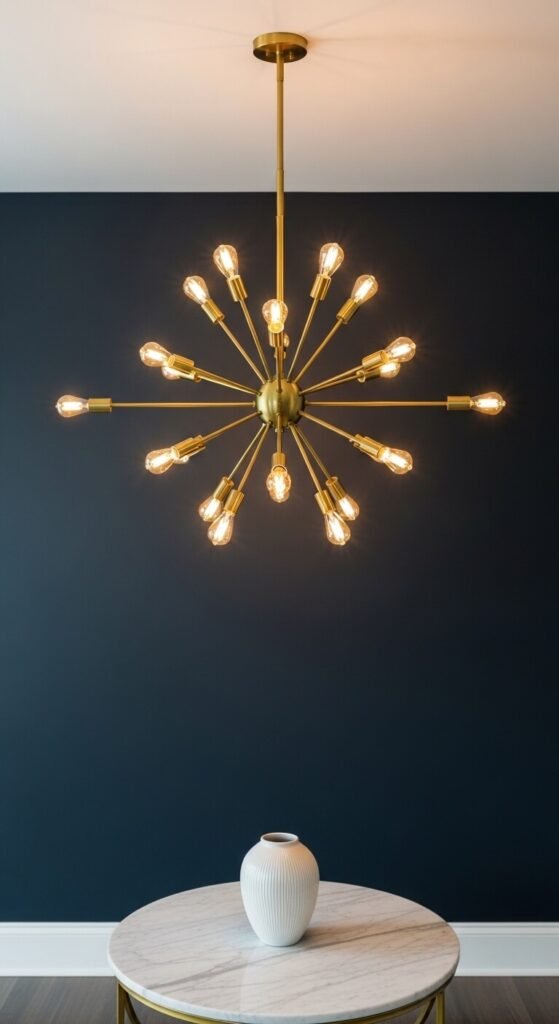
The Sputnik chandelier emerged from the space-age optimism of the late 1950s — all arms, bulbs, and centrifugal energy. It’s one of the easiest ways to add mid-century character to a room without replacing a single piece of furniture. The starburst silhouette works in entryways, dining rooms, and even bedrooms with high ceilings. New versions with brass or antique brass finishes range from $80 to $600 depending on arm count and bulb type. Use warm Edison bulbs — they reinforce the vintage aesthetic. This is also a legitimate DIY project: metal rods, a bulb socket kit, and a ceiling canopy can build one for under $50.
9. Eames Plastic Shell Chair
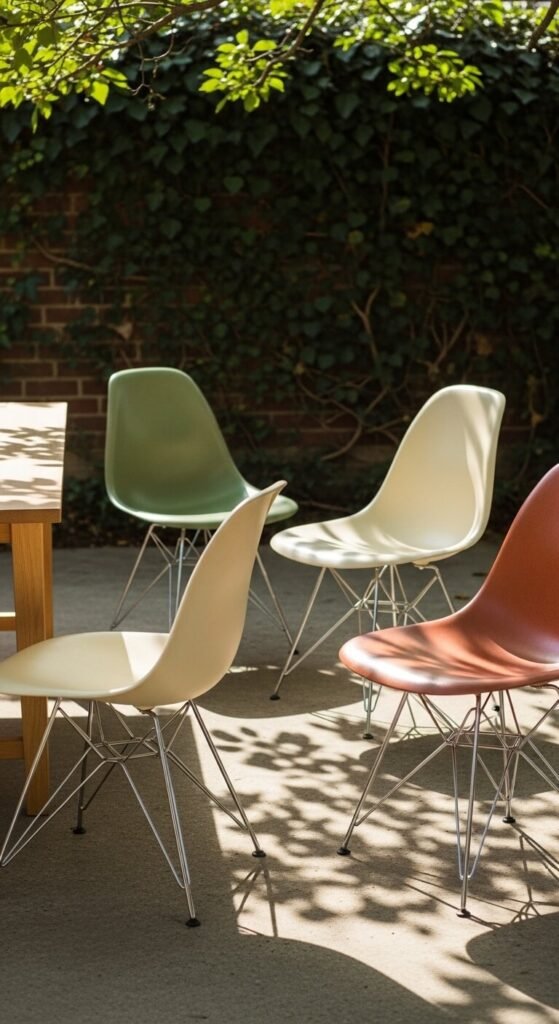
Charles and Ray Eames designed the molded plastic shell chair in 1950 as the first mass-produced fiberglass chair. It sat in schools, airports, and diners across America — and somehow looks better today than it ever did. The organic seat shell, available on wire, wood, or rocker bases, is endlessly configurable. Herman Miller sells originals around $400–$600. Licensed reproductions run $80–$200. Mix and match colors on the same base for a collected, casual look. The DSW (dining side wood base) version works especially well as a desk chair alternative for anyone who wants style without a corporate look.
10. Florence Knoll Sofa
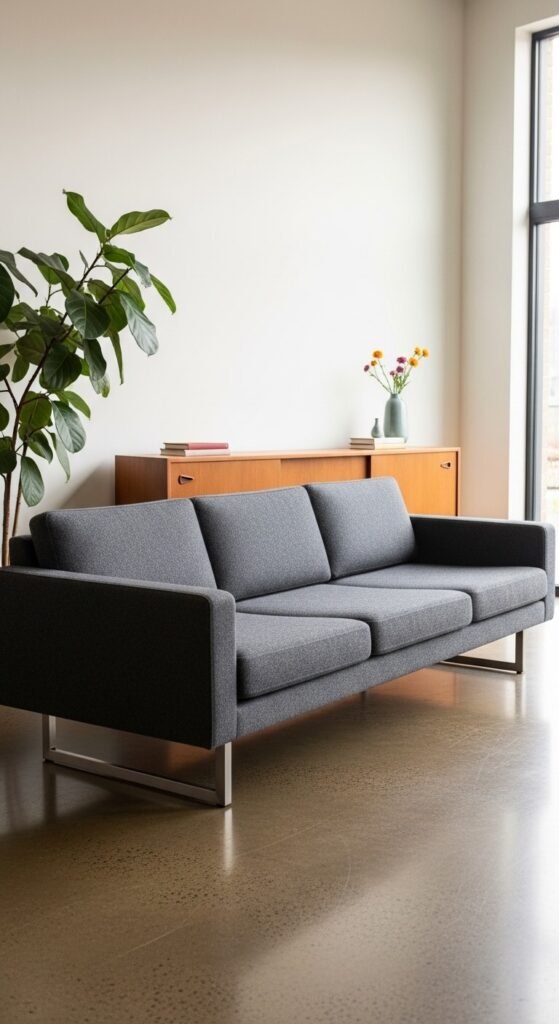
Florence Knoll applied architectural logic to furniture. Her sofa from 1954 — low, rectangular, and severe — looks like a piece of a building rather than upholstered padding. It’s the anti-couch. No rolled arms, no tufting, no fuss. The tight back cushions and straight base make it work in both formal and informal settings. Knoll originals start around $5,000. Quality reproductions in performance fabrics run $800–$2,000. Avoid oversized versions — the proportions matter enormously. Keep legs in chrome or brushed brass. This sofa needs breathing room, so don’t crowd it with too many accent pieces.
11. Bertoia Diamond Chair
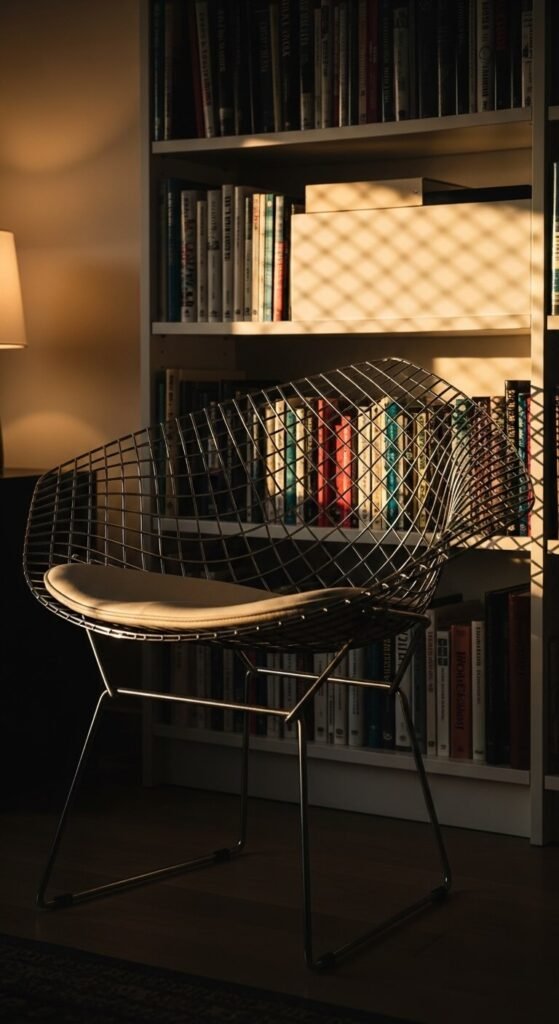
Harry Bertoia was a sculptor who said his wire chairs were “mostly air.” The Diamond Chair from 1952 proves the point — it’s grid-like, weightless, and one of the most recognizable silhouettes in mid-century design. The open wire structure makes it look light even when it’s sitting still. Authentic Knoll versions run $1,000–$1,400. Reproductions start around $150–$400. A seat pad is optional but recommended for longer sits — Bertoia himself included them. Available in dozens of powder coat colors, this chair works particularly well in white or matte black against a bold wallpaper or textured wall.
12. Teak Credenza / Sideboard
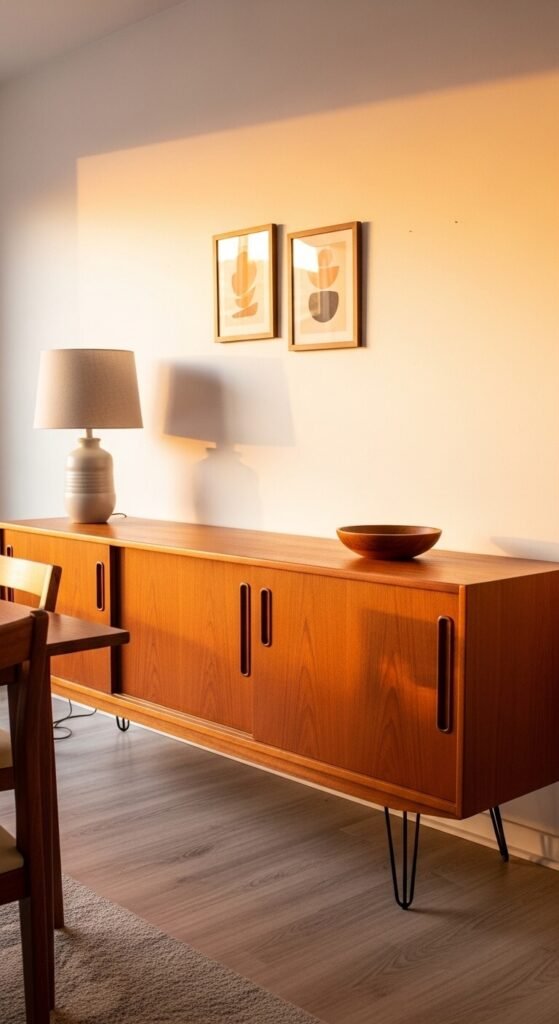
Nothing grounds a mid-century interior faster than a long, low teak credenza. Danish designers loved them — long horizontal lines, sliding or hinged doors, tapered legs, and grain that gets better with age. They’re also practical: media storage, bar cabinets, linen storage, or just a display surface. New reproductions in teak veneer run $400–$1,200. But thrift stores and estate sales regularly surface originals at $100–$500. Look for dovetail joinery, solid teak legs, and drawer slides that still move smoothly. A light sand and a coat of teak oil brings almost any worn piece back to life.
13. Nelson Ball Clock
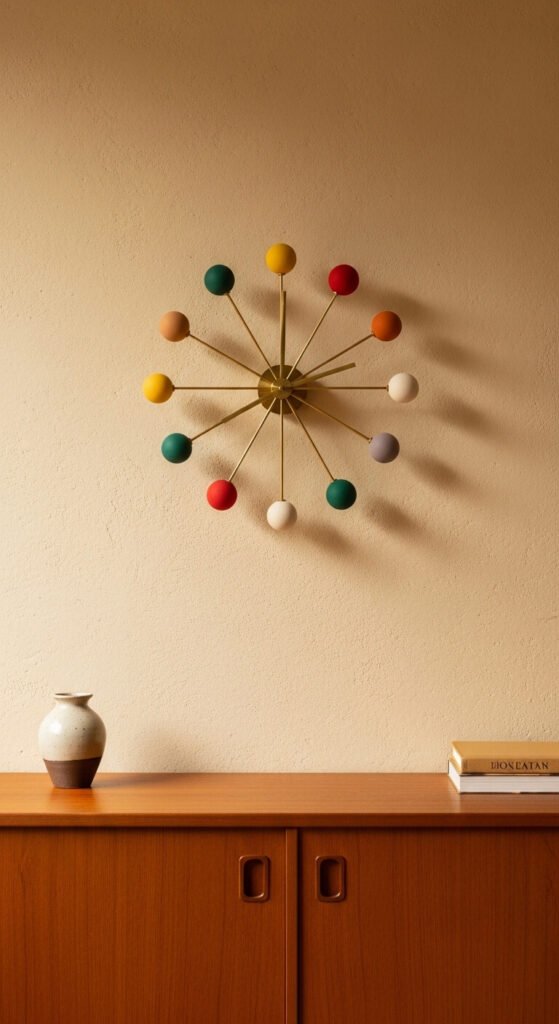
George Nelson designed the Ball Clock in 1947 and it became an instant icon of American postwar optimism. Twelve colored or natural spheres on thin rods, no numerals, pure graphic energy. It’s the piece that says “this person has taste” without saying a word. Licensed versions from Vitra run $200–$350. Unlicensed reproductions with solid wood balls can be found for $30–$80 on major retail sites. The colored ball version adds playfulness; the all-walnut version reads more refined. Hang it over a credenza or in a home office for maximum impact. Scale matters — go bigger than you think you need.
14. Hairpin Leg Table
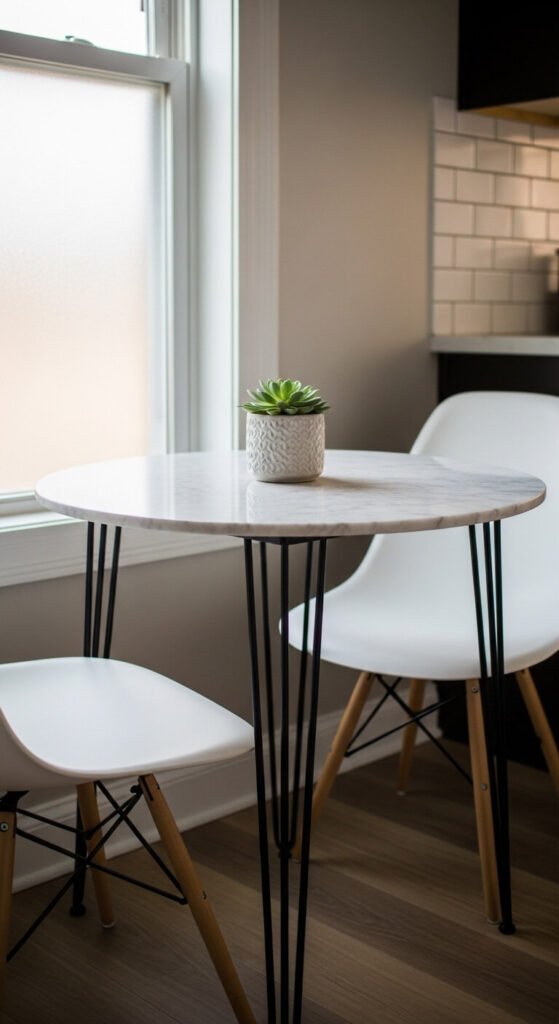
The hairpin leg might be the single most copied mid-century detail in contemporary furniture. Developed in the 1940s, the bent steel rod design made furniture look lightweight and architectural at the same time. Today you can buy sets of four hairpin legs for $30–$80 and attach them to almost any surface — salvaged wood slabs, marble remnants, solid core doors, or old butcher block. This is one of the most accessible DIY furniture moves you can make. Use them for coffee tables, desks, dining tables, or bedside tables. In black or raw steel, they work with nearly any top material.
15. Akari Light Sculptures by Noguchi
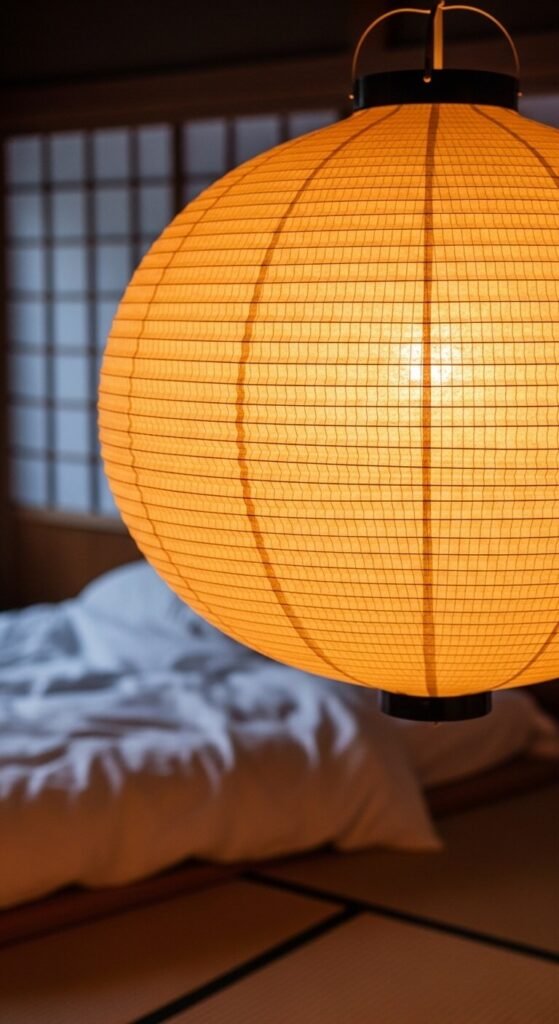
Isamu Noguchi began making Akari lamps in 1951 after visiting Japan and discovering the craft of Gifu paper lanterns. The result — washi paper stretched over bamboo ribbing, backlit with a single bulb — is at once completely humble and completely extraordinary. They cast the most flattering light of any fixture in any room. Authentic Noguchi Museum versions run $200–$800+. Unlicensed reproductions start at $20–$60 and are widely available. The light quality is nearly identical. Use them as pendants, floor lamps, or table lamps. An Akari lamp in a corner transforms the atmosphere of a room more than any paint color.
16. String Shelf System
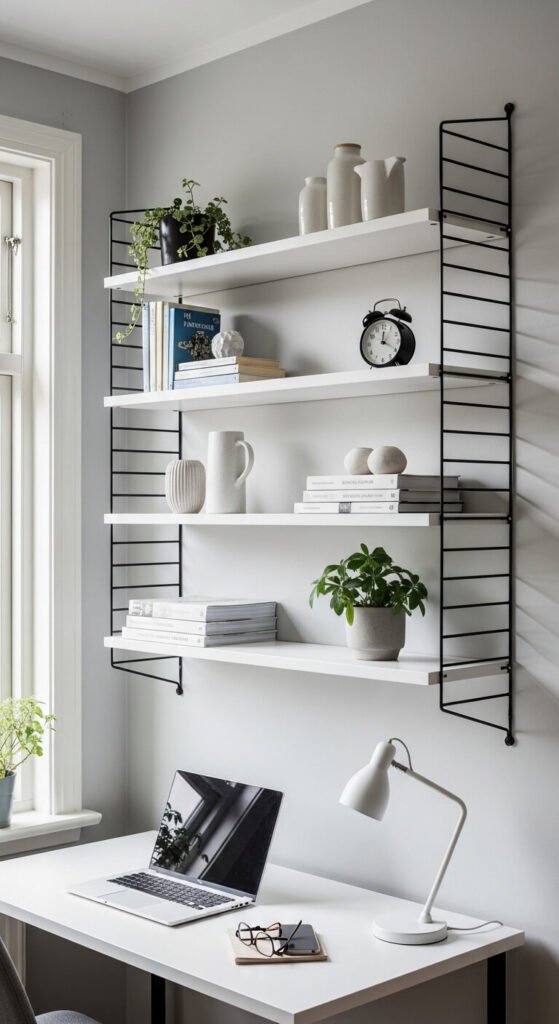
Nisse Strinning designed the String Shelf System in 1949 for a Swedish design competition and won. The open wire side panels and floating wood shelves look like a sketch of a bookshelf rather than the bookshelf itself — minimal, airy, and endlessly configurable. String still makes them today with the same design for around $200–$600 per unit. The system can be extended, stacked, and combined. For a budget alternative, the core concept — wire panel, wood shelf — has been widely replicated at $60–$150. These work in offices, living rooms, nurseries, and hallways equally well. The open design keeps even fully loaded shelves from looking heavy.
17. Womb Chair by Eero Saarinen
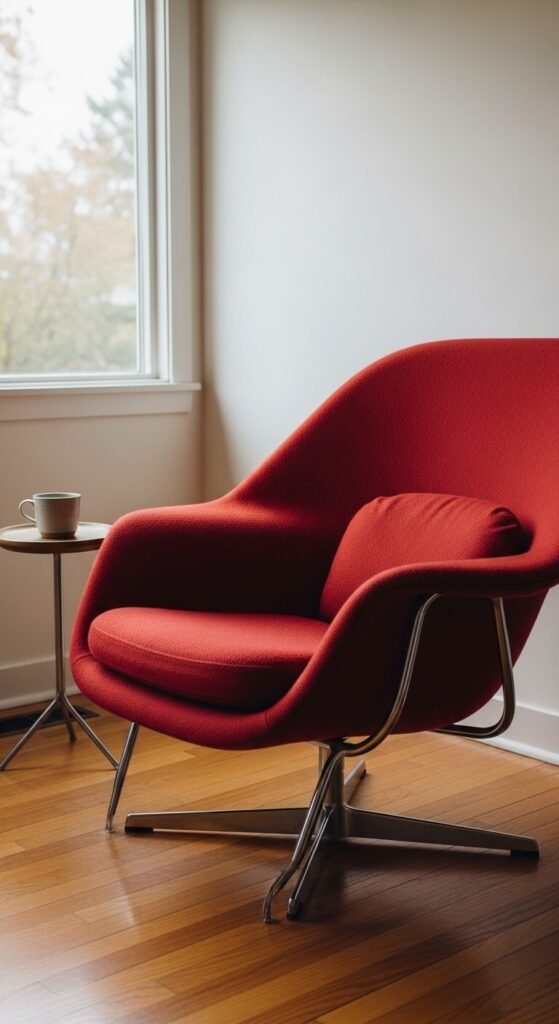
Florence Knoll told Eero Saarinen she wanted a chair she could curl up in like a cat. The 1948 Womb Chair was his answer. A deep, upholstered shell on a thin chrome base, wide enough to sit cross-legged, relaxed enough to read or nap in. It’s a chair that actually holds you rather than just supporting you. Knoll originals run $3,000–$4,500. Authorized reproductions land around $600–$1,500. Red or mustard yellow versions are the most sought after, but the chair reads well in almost any solid color. Pair it with a matching ottoman for the full experience.
18. Panton Chair
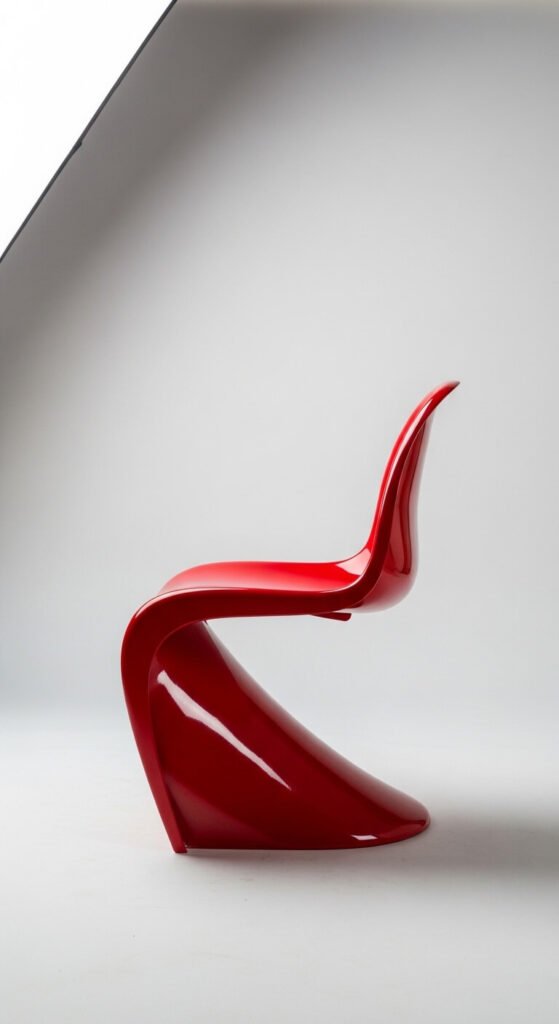
Verner Panton spent nearly a decade trying to make a single-piece injection-molded plastic chair before succeeding in 1967. The result is a flowing S-curve that looks like it was drawn in one stroke — no joints, no legs, no assembly. It was the first chair of its kind and it changed furniture design permanently. Vitra still makes licensed originals for around $500. Reproductions in glossy plastic run $60–$150. The chair only comes in one form but dozens of colors — bright red, white, black, and olive are the most popular. Stack them. Mix colors at a dining table. They’re also lightweight and genuinely comfortable.
19. Eames Storage Unit (ESU)
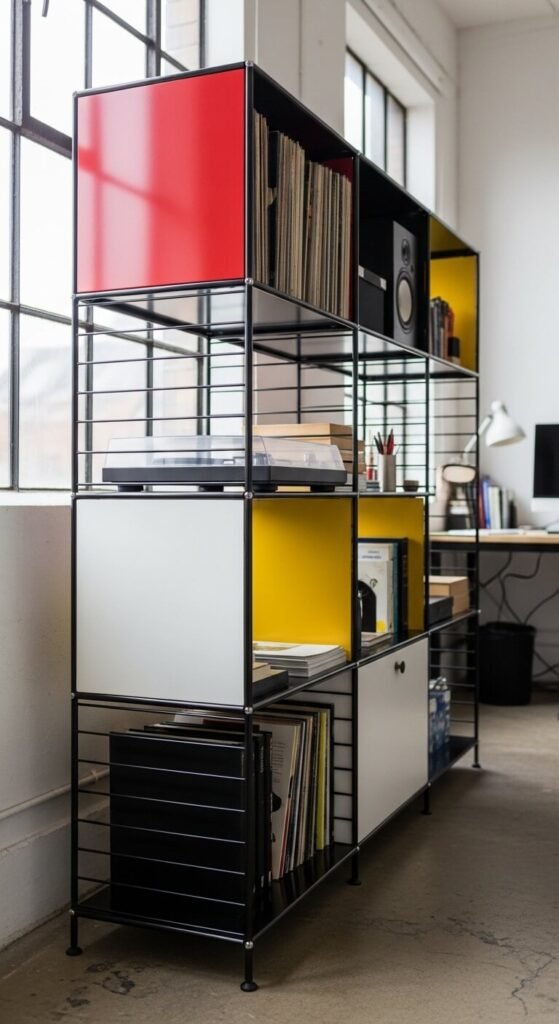
Charles and Ray Eames designed the ESU — Eames Storage Unit — in 1950 as modular, affordable storage for postwar America. Colored fiberglass panels, open or closed compartments, and a black steel frame. It looks like an abstract painting when it’s empty and like an organized life when it’s full. Herman Miller originals run $4,000–$8,000 for full units. For a DIY approach, build or source a black steel shelving frame and add colored panel inserts cut from painted MDF or acrylic sheet. The visual principle is the same. Focus on the black frame and flat color combination — that’s what defines the look.
20. Danish Teak Dining Table
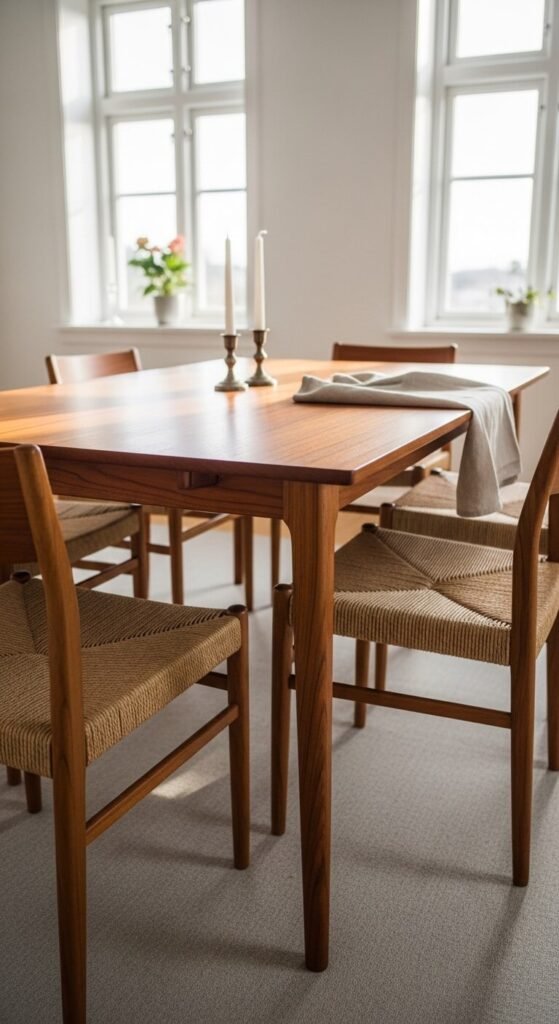
A solid teak dining table with tapered legs is the single most practical mid-century investment you can make. These tables were built to last — proper joinery, solid hardwood, no particle board. They age with use rather than against it. Mid-century Danish teak tables appear regularly at estate sales, antique markets, and online for $200–$800 in excellent condition. Many have built-in extensions. Light sanding and a coat of teak oil restores them completely. Pair with Wishbone Chairs or Eames Shell Chairs for an authentic mid-century dining room. This is the one piece where buying vintage over reproduction genuinely makes sense.
21. Tulip Chair by Saarinen
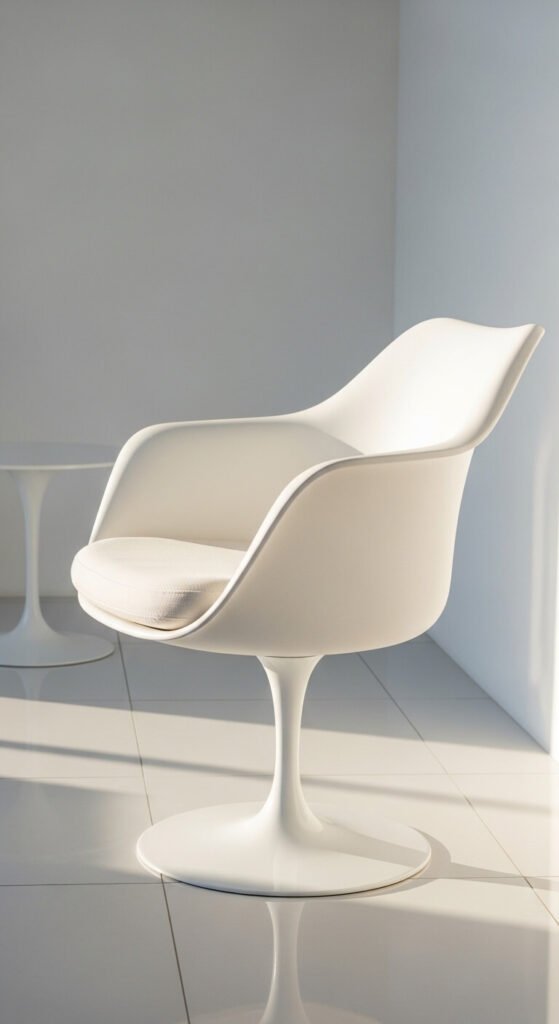
The Tulip Chair came from the same 1956 Saarinen collection as the Tulip Table — same single pedestal base, same organic white shell, same desire to clear the floor of visual noise. The padded seat insert comes in dozens of fabric options. As a dining chair or accent chair, it works equally well. Knoll originals run $1,500–$2,000 each. Reproductions land around $150–$400 and are abundant. This is one of the reproductions where quality varies significantly — look for fiberglass shells rather than plastic, and check that the pedestal base has real weight to it. Lightweight bases tip easily and feel cheap.
22. Sunburst Mirror
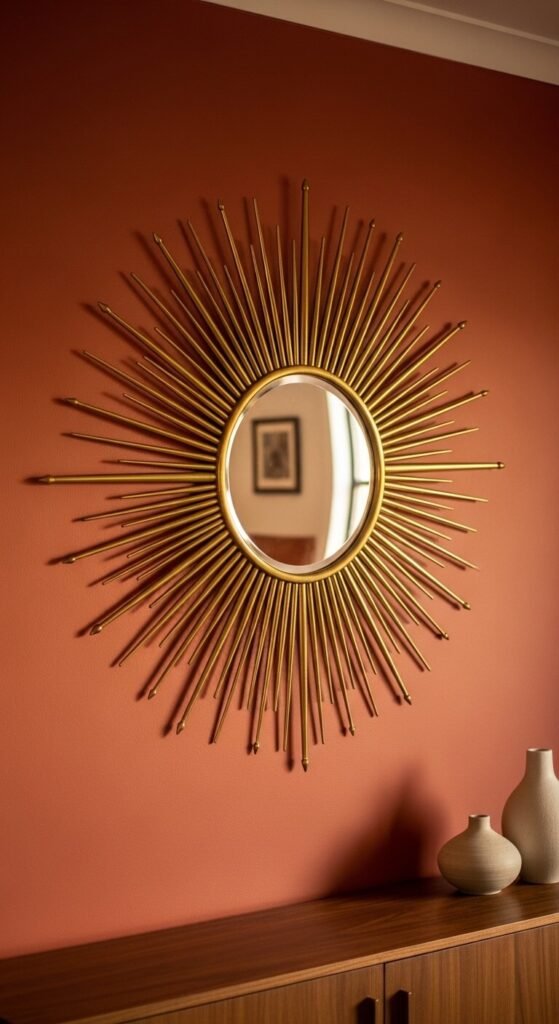
The sunburst mirror is equal parts functional mirror and wall sculpture. Radiating rays in brass, gold, or wood transform a flat wall into a focal point. This is the mid-century piece with the widest price range — from $25 at a thrift store to $2,000 for large brass originals. New versions in a variety of finishes are sold at every major home retailer. For DIY, wooden dowels and a small circular mirror can build a simple version in an afternoon. Scale up rather than down — small sunburst mirrors get lost on a wall. Go for at least 24–36 inches in diameter to make the impact count.
23. Platner Side Table
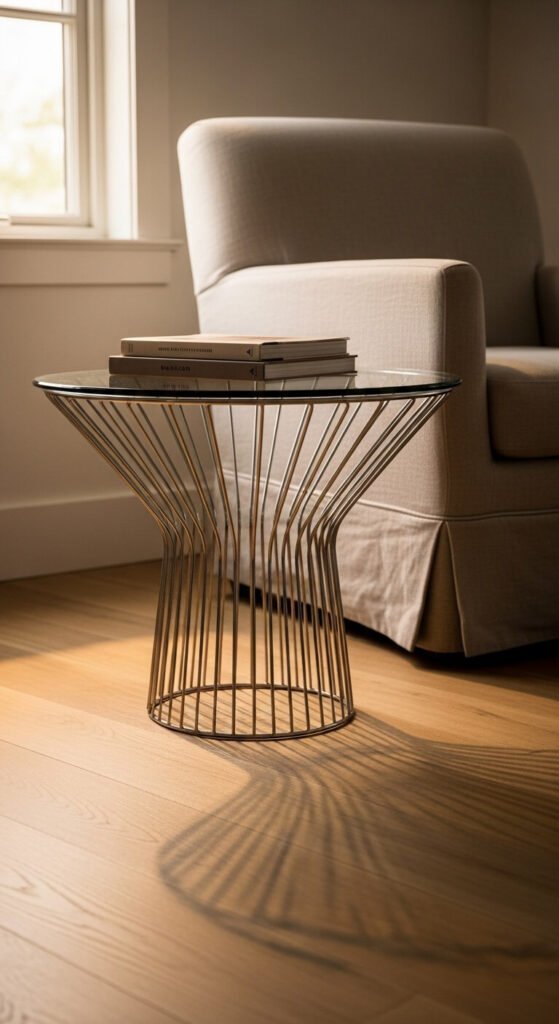
Warren Platner designed his wire collection in 1966 after years of hand-welding prototypes. The Platner Side Table — a dome-shaped wire base supporting a glass top — looks both industrial and delicate at the same time. The welded rod structure has visual texture without visual weight. Knoll originals run $800–$1,200. Reproductions with the same domed wire base run $100–$300 and are widely sold. The glass top is often tempered and interchangeable if it breaks. Use the side table beside an Egg Chair or Womb Chair for a coherent mid-century grouping. The wire base works in both warm and cool room palettes.
24. Low-Profile Platform Bed Frame
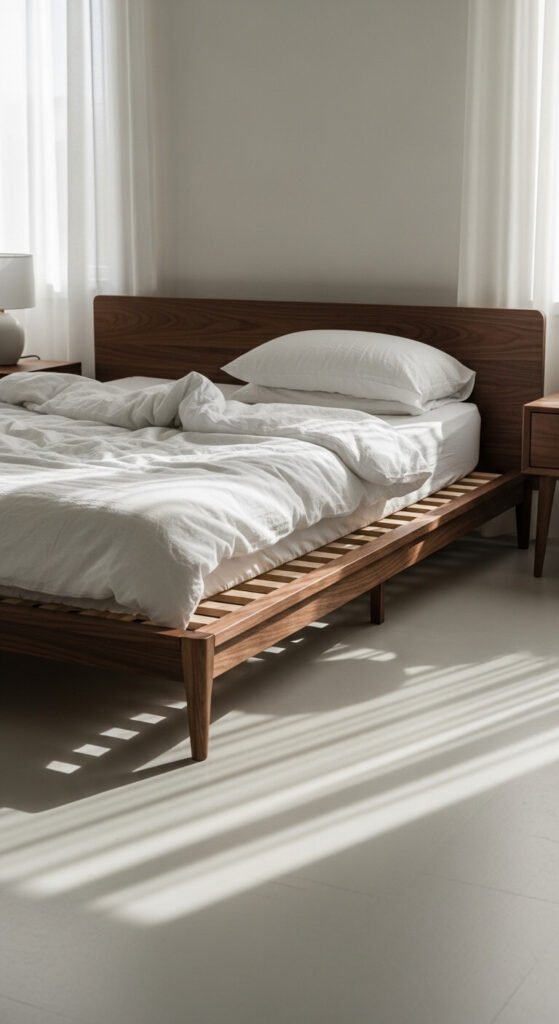
Mid-century bedroom design kept things low to the ground — beds especially. A low-profile platform frame in walnut or teak sets the whole tone of the room. No box spring required, no fussy headboard details. Clean lines, quality wood, and height that makes a room feel expansive rather than cluttered. Solid wood versions from mid-century-inspired brands run $400–$1,200. Vintage originals show up regularly at estate sales for much less. Skip the upholstered headboard and let the wood grain speak. A simple wall-mounted reading light or a ceramic table lamp on a tapered-leg side table completes the look without overcomplicating it.
25. Anglepoise / Architect’s Task Lamp
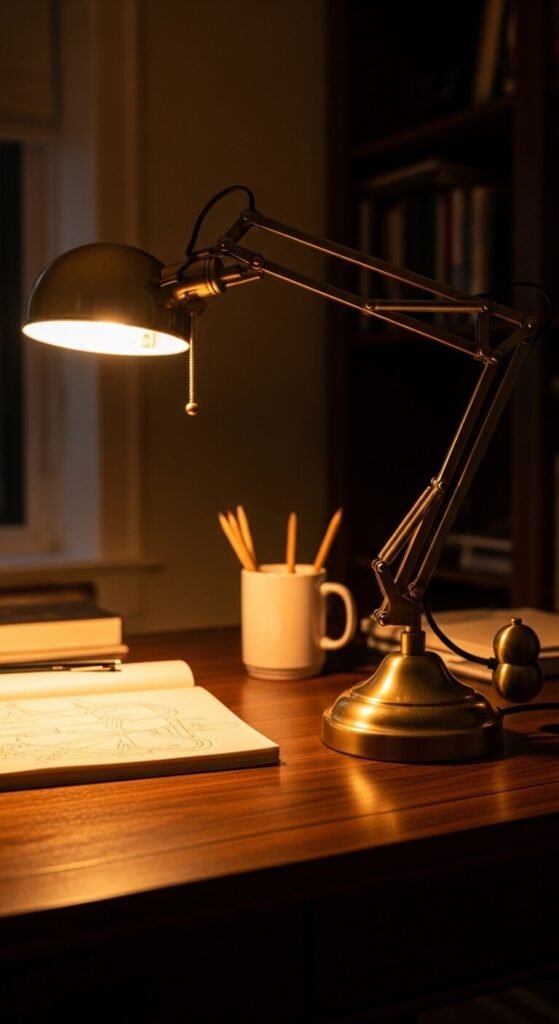
George Carwardine engineered the Anglepoise lamp in 1933 using a spring mechanism modeled on human arm joints. It became the defining work lamp of the mid-century design era — articulated, adjustable, and endlessly practical. It belongs on any mid-century desk, studio table, or beside a reading chair. Original Anglepoise lamps start around $80–$200 new, with vintage versions available for $20–$60 at antique fairs. Brass or matte black finishes read most authentically. This is one of the few mid-century pieces where the modern version is both affordable and genuinely faithful to the original design. Just swap in a warm-toned Edison bulb.
Conclusion
Mid-century modern design holds its ground because it was never about following fashion — it was about solving problems beautifully. Every piece on this list was designed with a specific purpose, built with real materials, and refined until nothing unnecessary remained. That’s why a 1950s teak table or a 1967 plastic chair still looks right in a 2024 room.
You don’t need to buy everything at once. Start with one or two statement pieces — a Sputnik chandelier, a credenza from an estate sale, a set of shell chairs — and build from there. Shop vintage first, reproduction second, and retail last. The most interesting mid-century rooms are assembled gradually, not decorated all at once.
These 25 pieces are a starting point, not a checklist. Pick the ones that solve a problem in your space, fit your budget, and genuinely appeal to you. Mid-century modern at its best is personal, practical, and built to last. That’s not a trend. That’s just good design.