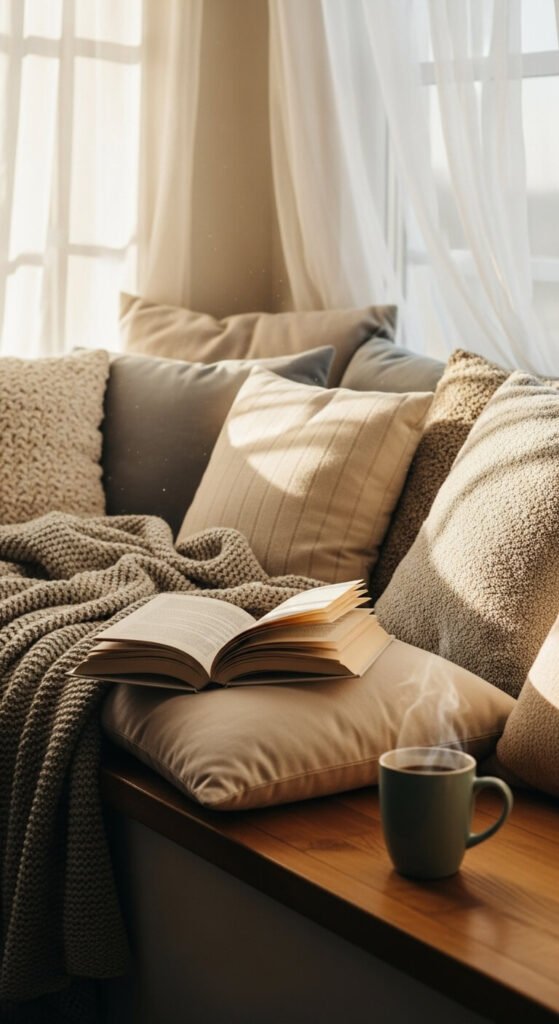
Finding a quiet corner to disappear into a good book can transform your entire day. A dedicated reading spot doesn’t require a spare room or designer budget—just a thoughtful arrangement of light, comfort, and personal touches. Whether you’re working with a forgotten alcove, an unused closet, or a simple chair by the window, these designs prove that cozy reading spaces can fit any home and lifestyle. From hanging chairs to floor cushions, each idea offers practical ways to carve out your literary sanctuary without breaking the bank or hiring a contractor.
Window Seat with Built-In Storage
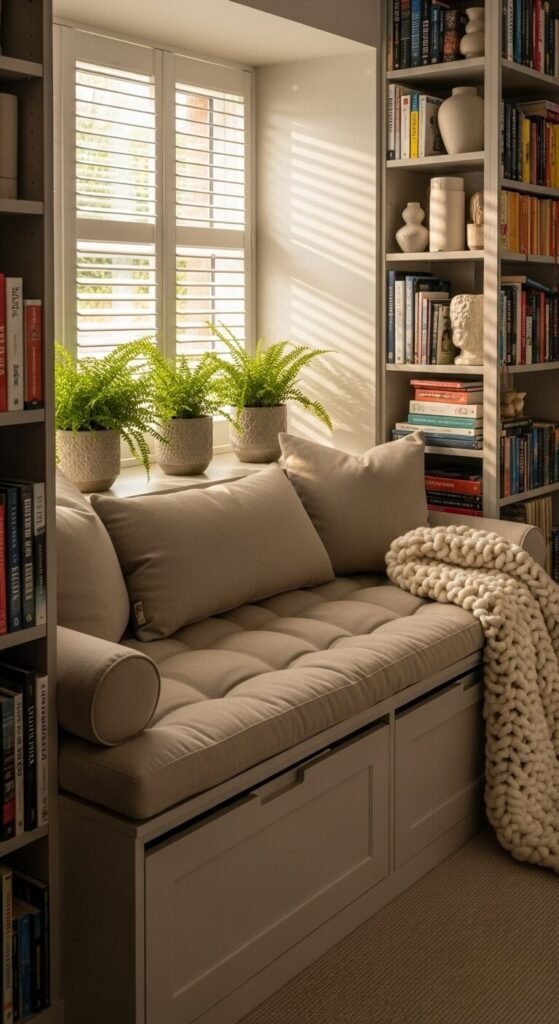
Turn any wide window into double-duty space. Add a hinged bench top over storage boxes or drawers. Line it with a foam cushion cut to size from a fabric store. Ikea cabinets work great as the base—just add a wooden top. Keep extra blankets and books hidden underneath. Install simple brackets and a board if you’re renting. Throw pillows against the wall create instant back support. The natural light makes afternoon reading perfect.
Hanging Egg Chair in the Corner
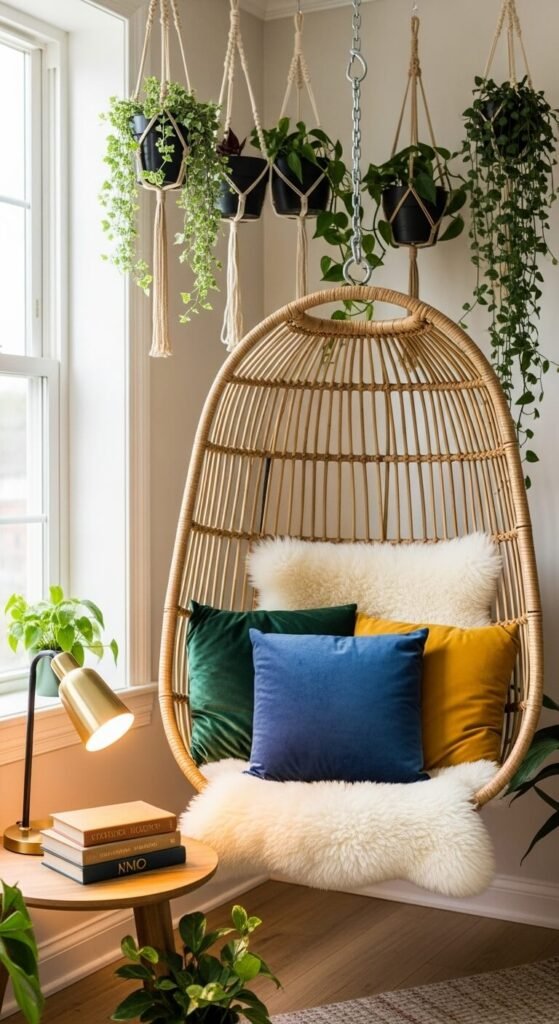
Suspend a rattan or wicker chair from a ceiling beam using a heavy-duty hook. Hardware stores sell kits rated for 300+ pounds. Place it near an outlet for a clip-on lamp. The enclosed shape blocks distractions naturally. Add a floor cushion underneath for foot rest. String lights around the top make evening reading magical. Check your lease before drilling—some apartments allow it with proper anchors.
Closet Conversion Nook
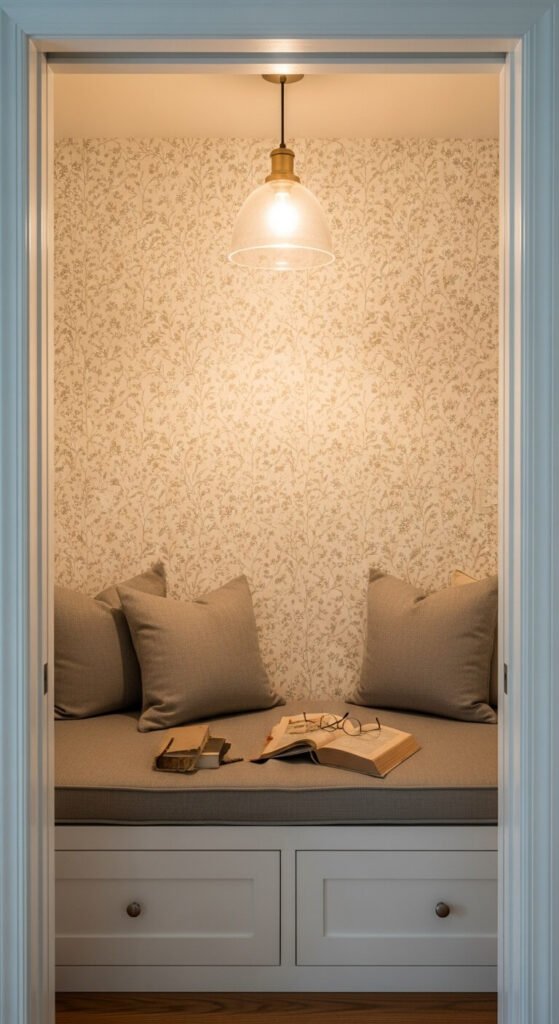
Empty that coat closet you never use. Remove the door and rod. Paint the inside a calming color. Build a simple platform with storage underneath using plywood and crates. Add a thin mattress topper or cushions on top. Mount a battery-operated puck light or small sconce. Peel-and-stick wallpaper adds personality without damage. Keep a basket of throws inside. This works perfectly in studio apartments where space is tight.
Floor Cushion Pile
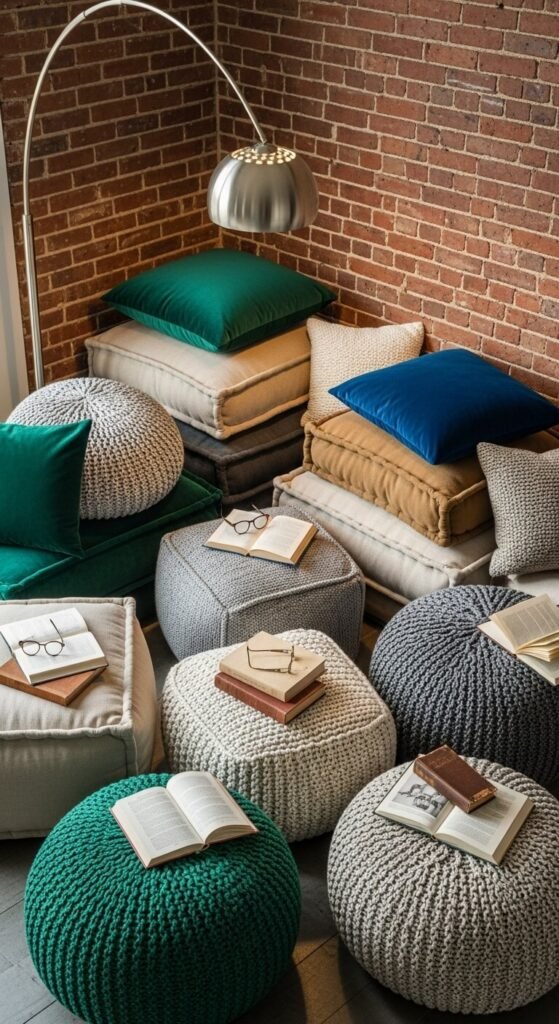
Stack large floor pillows in graduated sizes against a wall. Poufs from HomeGoods or Target cost $30-50 each. Mix textures like corduroy, velvet, and cotton. Place the firmest cushion as back support. The setup moves easily for cleaning or rearranging. Add a lap desk for note-taking while you read. An arc lamp reaches over from behind without taking floor space. This style suits bohemian or minimalist homes equally well.
Under-Stair Hideaway
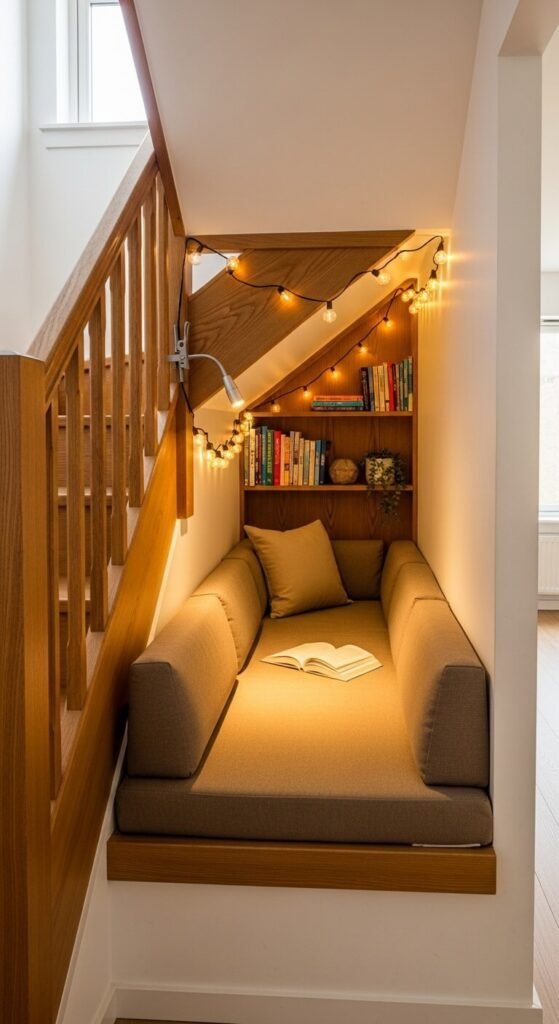
That awkward space under your stairs becomes private quarters. Measure the height carefully—you’ll be sitting, not standing. Install a low bench or place a futon mattress folded in half. Battery-powered stick-on lights work if there’s no outlet. Add a tension rod with a curtain for extra privacy. Kids love this spot too. Use vertical space for narrow shelves. The enclosed feeling makes it wonderfully cave-like for concentration.
Bay Window Bench
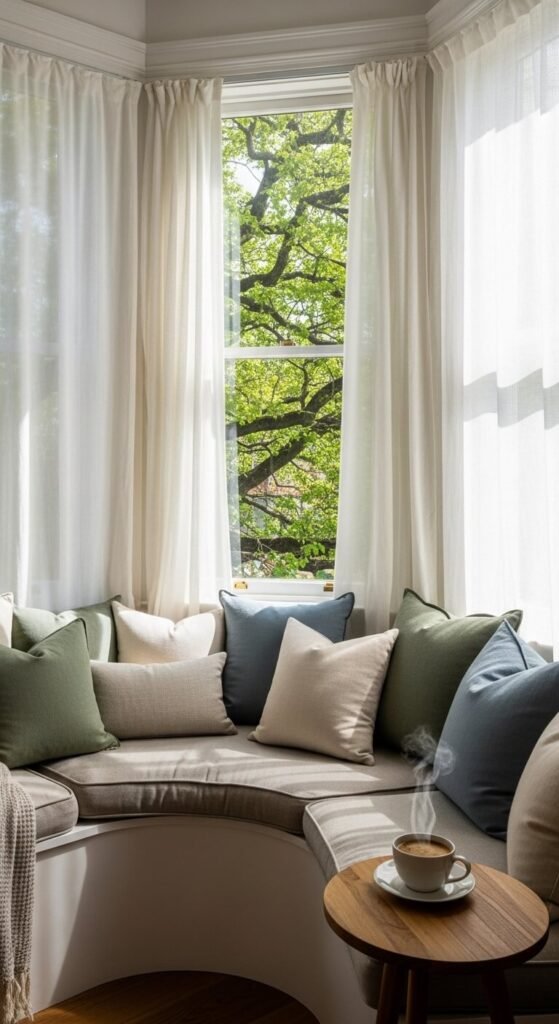
Bay windows beg for seating. Measure each section and order custom cushions from online foam retailers—usually $100-150 total. Or buy separate cushions and connect them with fabric ties. The angles create natural armrests. Mount a cafe rod for privacy curtains. Keep window cleaner handy since you’ll notice smudges more. The multi-directional light means you can read here all day without eyestrain.
Attic Dormer Spot
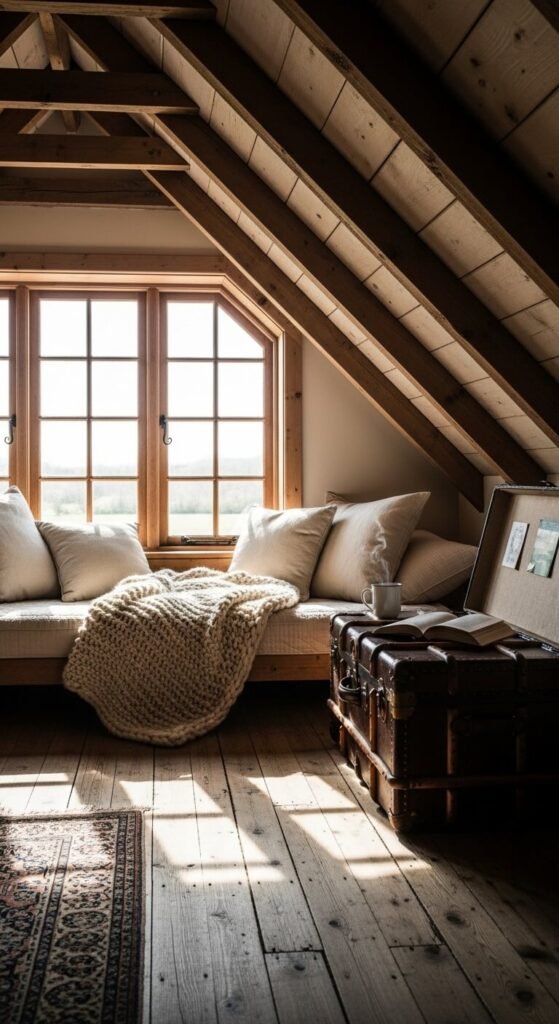
Attic dormers waste space until you add seating. A low daybed or twin mattress fits perfectly. The slanted ceiling feels protective rather than cramped. Hang battery-powered lanterns from the beams. A small fan helps in summer. Area rugs warm up cold floors. Store books in vintage suitcases that double as tables. This works even in unfinished attics if you add proper lighting and comfort layers.
Papasan Chair Setup
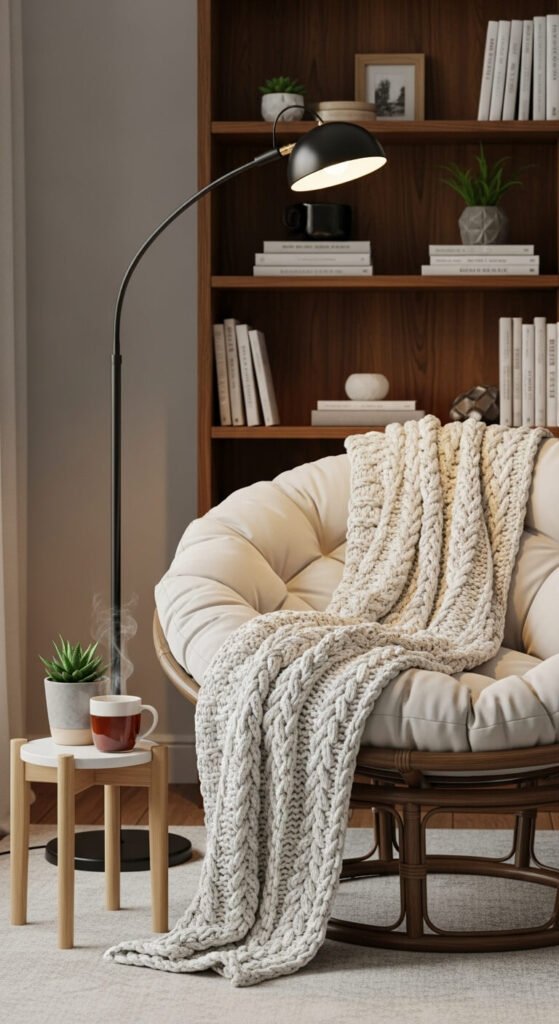
Papasan chairs from Pier 1 or World Market cradle you completely. The bowl shape holds pillows in place naturally. Position it near a corner for back support. A floor lamp reaches over one side. The base spins slightly, which helps you find the perfect reading angle. Extra cushions fill gaps around your body. Machine-washable cushion covers save money on cleaning. At around $200, it’s cheaper than most reading chairs.
Bookshelf Alcove
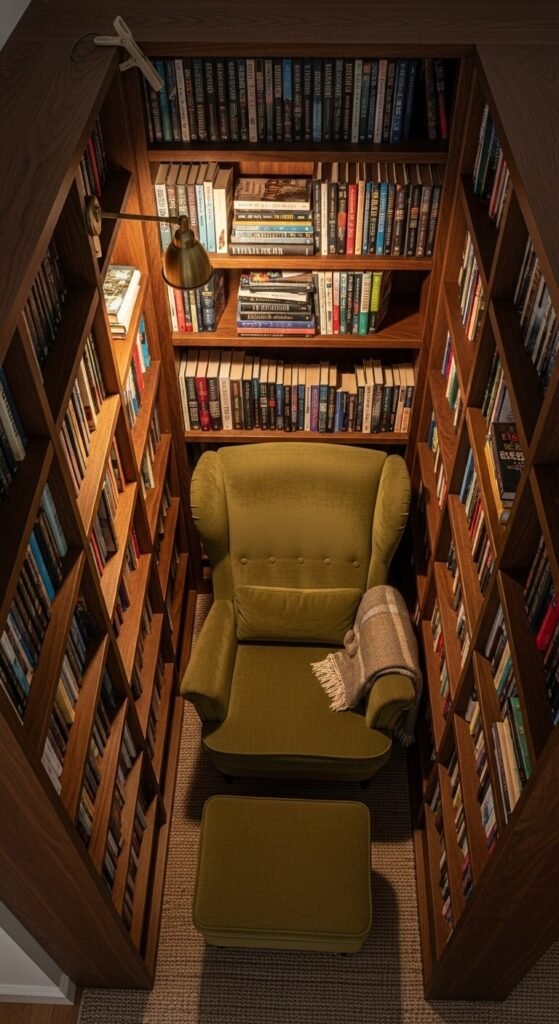
Place two bookshelves perpendicular to a wall, creating three walls. Put your chair in the middle. Books surround you on both sides within arm’s reach. Clip a reading light to a shelf above. The setup blocks visual distractions from the rest of the room. Adjust shelf heights to hold lamps, plants, or tea. This costs almost nothing if you already own the bookcases. Add a small rug to define the space further.
Porch Swing Indoor
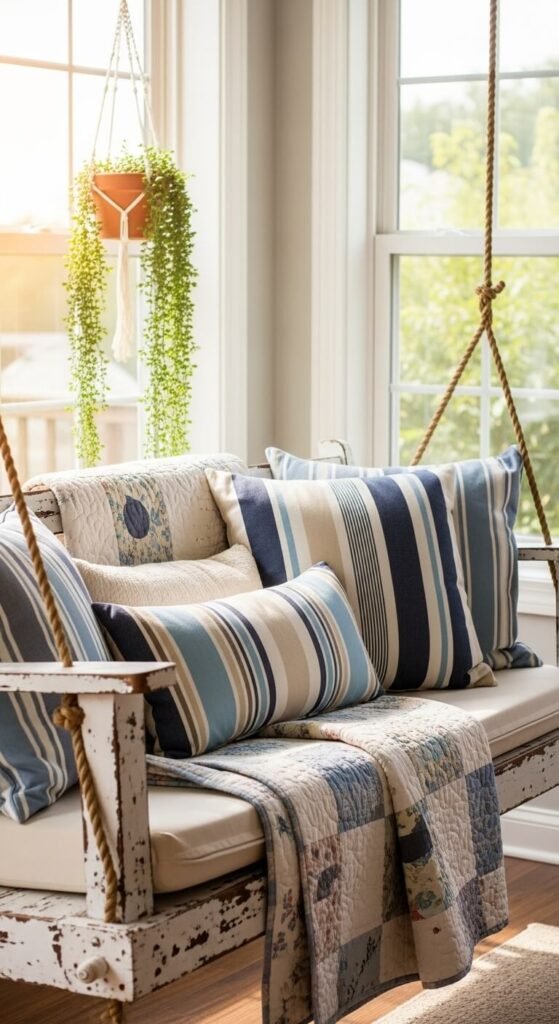
Mount a porch swing from ceiling joists inside your home. Find the joists with a stud finder. Use eye bolts rated for outdoor swings. The gentle motion actually helps some people focus while reading. Place it perpendicular to windows for good light. Waterproof cushions work indoors too and last longer. A small bookcase on wheels slides underneath when not in use. Check weight ratings carefully—most hold 500 pounds safely.
Daybed with Trundle Storage
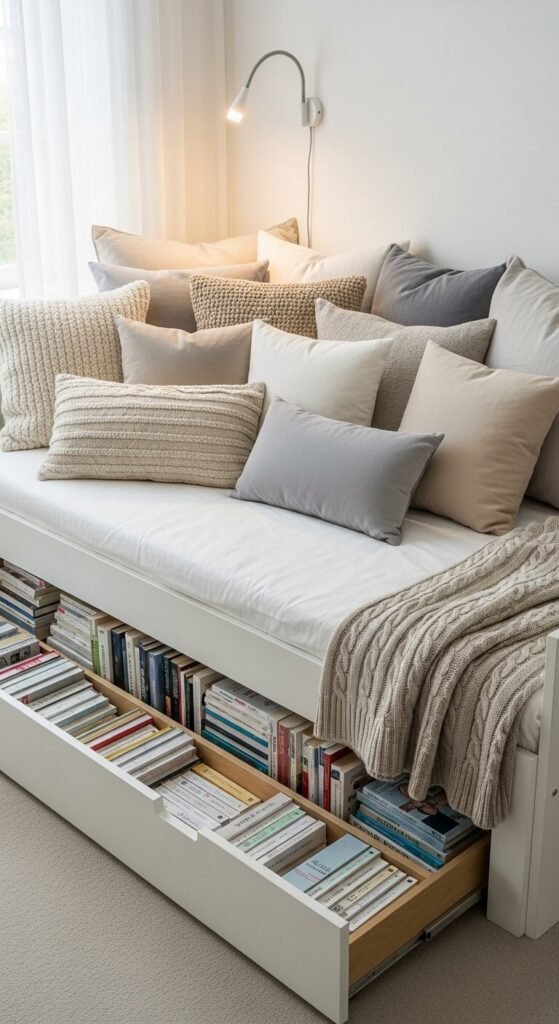
Daybeds work as both seating and spare sleeping spots. Models with trundle drawers keep books organized below. IKEA’s Hemnes daybed costs around $300. Pile one end with pillows for back support. The other end holds your legs stretched out. Mount a swing-arm lamp on the wall above. A fitted sheet and mattress pad make it more sofa-like during the day. This setup suits small apartments perfectly.
Corner Window Wrap
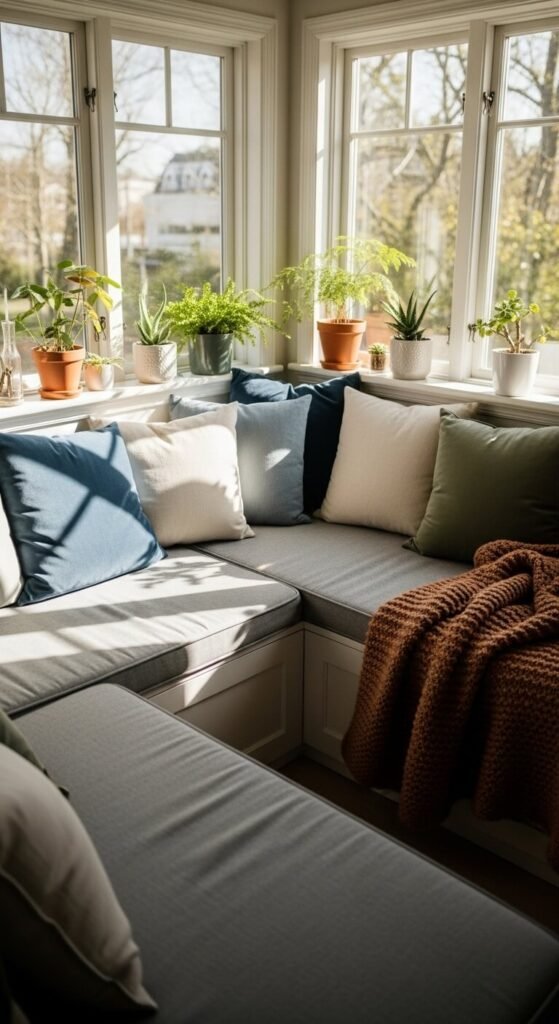
Corner windows offer light from two directions. Build or buy an L-shaped bench to match. Two separate benches pushed together work too. Place pillows in the corner where the sections meet. The double light source means no shadows on your pages. Sheer curtains soften harsh afternoon sun. A small bookshelf fits in the corner behind you. The wrap-around feeling provides surprising privacy even in open-plan spaces.
Hammock Chair Indoors
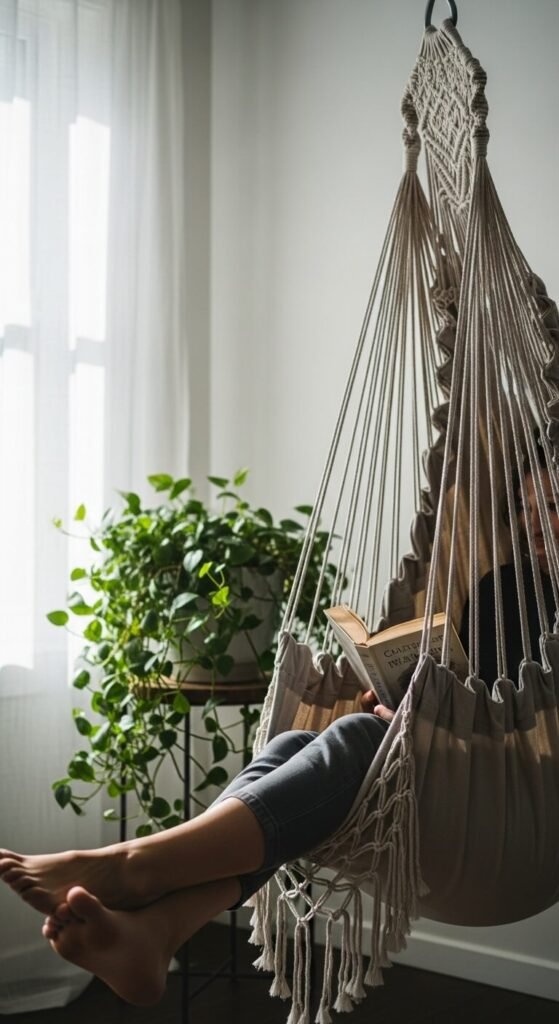
Hammock chairs take less space than full hammocks. Install the ceiling hook into a joist—absolutely required for safety. Cotton rope versions breathe better than synthetic. The swaying motion calms anxious readers. Keep a floor cushion underneath for foot support. String the chair low enough that you can get in and out easily. Some models fold up when not in use. A side table on wheels moves with you as the chair rotates.
Converted Armoire Nook
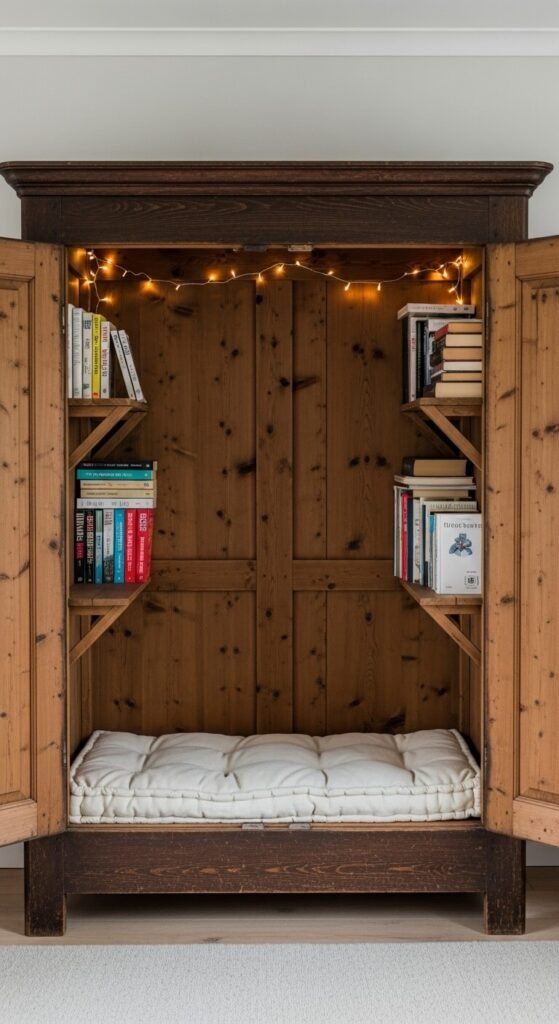
Remove the back panel of an old armoire. Take out the hanging rod. Install a bench seat at the bottom. Add battery-operated lights to the top. The doors close for complete privacy when you want to disappear. Attach small shelves inside the doors using command strips. Paint the interior a different color than the outside. Thrift stores sell old armoires for $50-100. This becomes a literal book box you can hide inside.
Greenhouse Window Extension
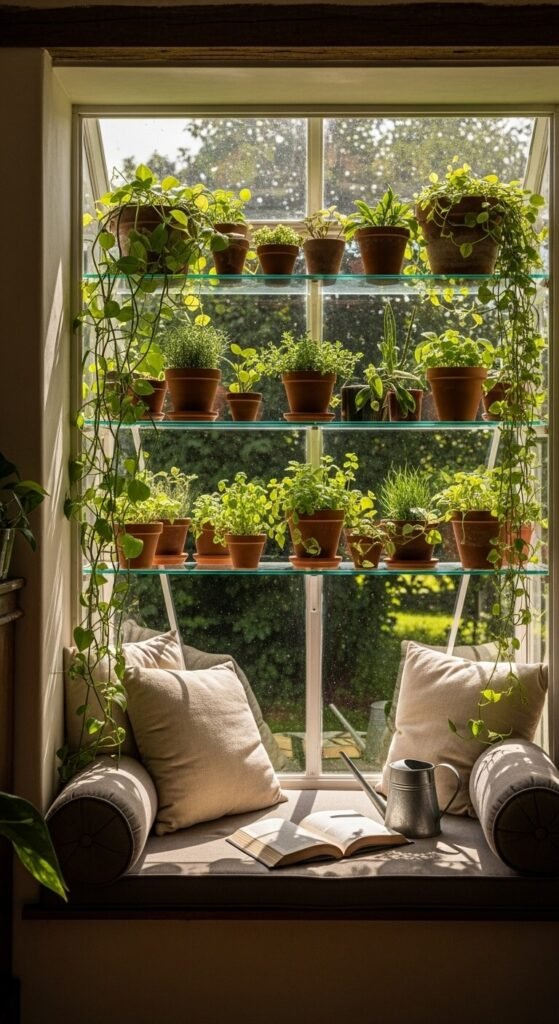
Greenhouse windows project outward like tiny solariums. Add a bench below using the windowsill as a guide. Plants above filter the light naturally. The extra depth keeps you from feeling pressed against cold glass. The humidity from watering plants actually helps prevent dry eyes while reading. Small herbs in the window smell amazing. Installation costs more upfront but adds home value. Even a shallow plant shelf over a regular window mimics this effect.
Murphy Bed Reading Room
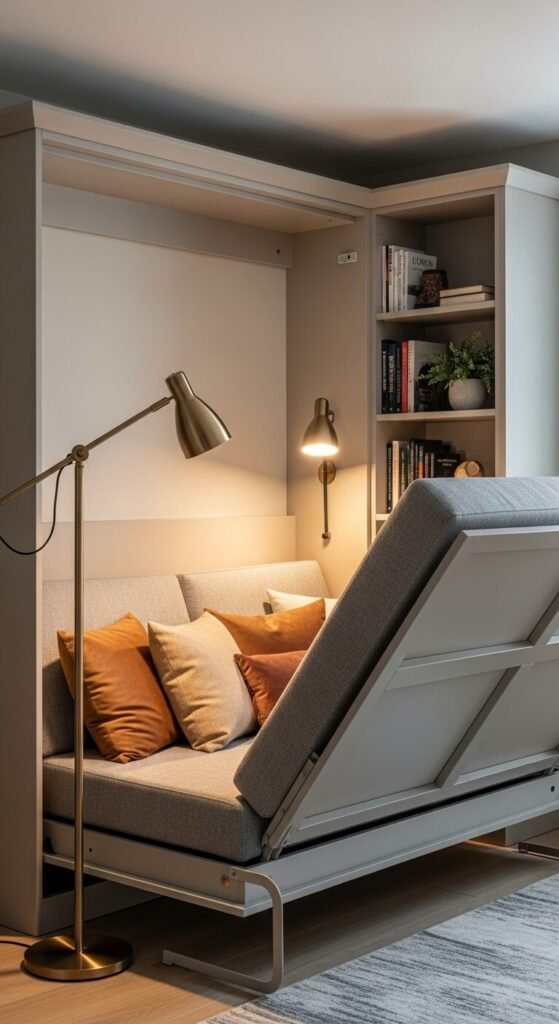
When the Murphy bed folds up, your reading room appears. Mount it against a wall with enough depth behind. The bed conceals everything when guests stay over. Install the seating on a platform that’s the same height as the folded bed. Wall-mounted shelves flank both sides. This solution works brilliantly in studio apartments or converted spaces. The transformation takes seconds. Modern Murphy beds cost $1,500-3,000 installed.
Bathtub Reading Setup
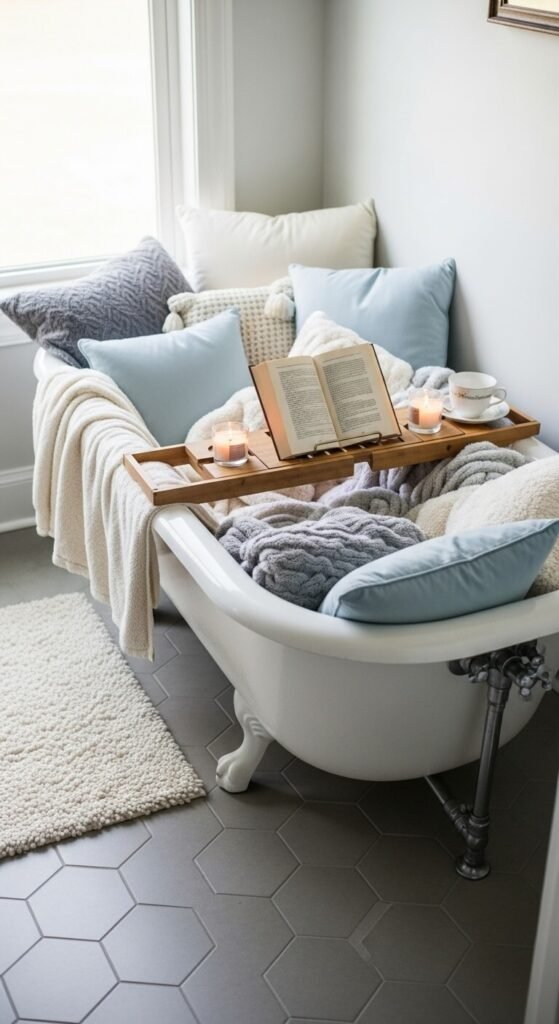
If you have two bathrooms, convert the unused tub. Clean it thoroughly first. Line the bottom with yoga mats for cushioning. Fill with pillows and throws. A bath caddy holds your book and drink. The porcelain sides stay cool, which some people prefer. Hang a curtain for privacy even though it’s not actually a working bath. This quirky solution costs nothing if the tub already exists. The enclosed sides block drafts naturally.
Loft Platform Addition
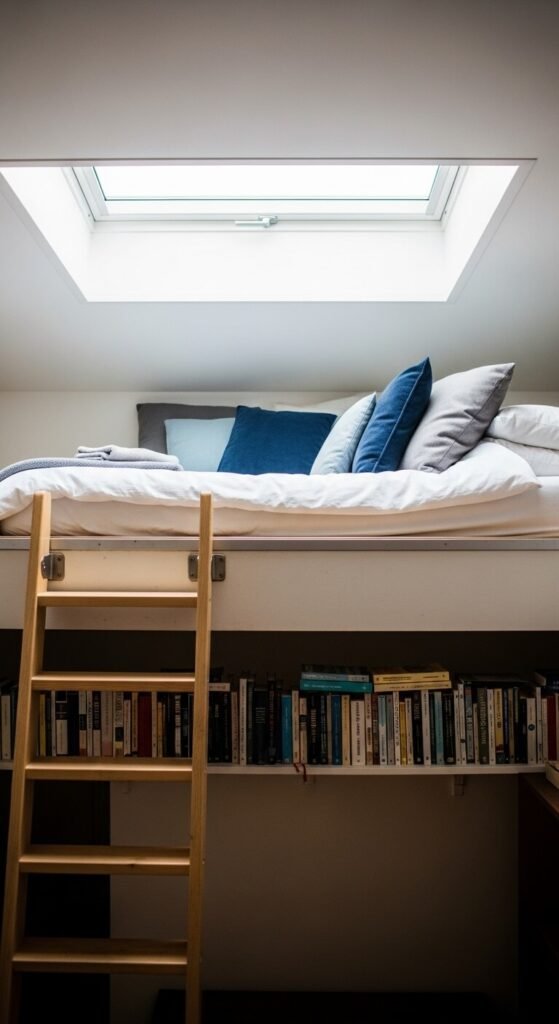
High ceilings allow loft platforms. Hire a carpenter or use strong lumber yourself. The elevated position feels separate from household chaos below. A twin mattress fits most loft builds. Skylights above make daytime reading perfect. String lights work for night. Keep weight limits in mind—code usually requires platforms to hold 40 pounds per square foot. This works best for older kids or adults. Store books up there so you must climb up to retrieve them.
Garden Shed Reading Room
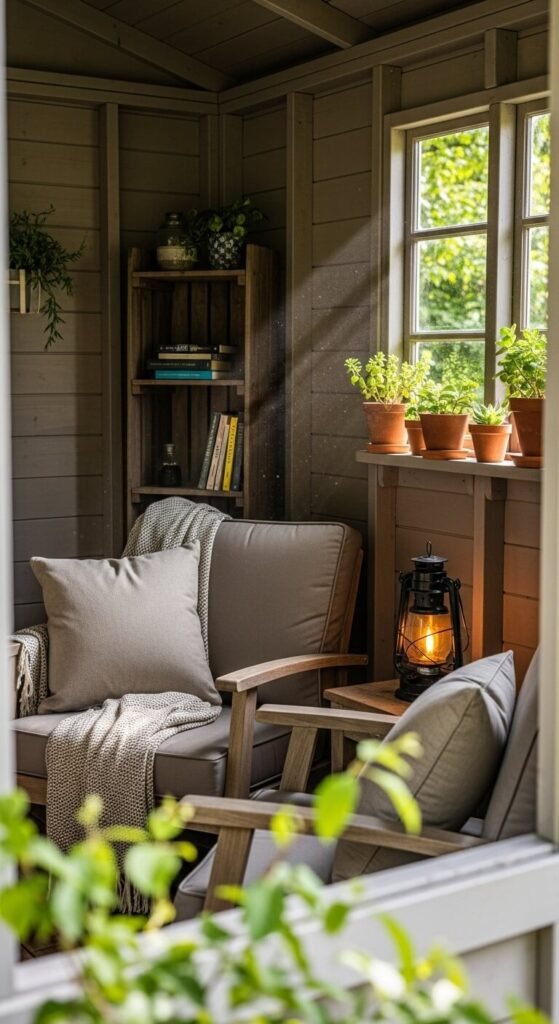
An 8×8 shed becomes your private library. Add insulation if you’ll use it year-round. Battery-powered lights save on electrical work. Weatherproof furniture handles temperature swings. A small space heater works for winter in most climates. The separate building means zero household interruptions. Keep a basket of blankets inside. This costs less than adding interior square footage to your house. Check local codes—some areas require permits for electrical additions.
Stacked Mattress Fort
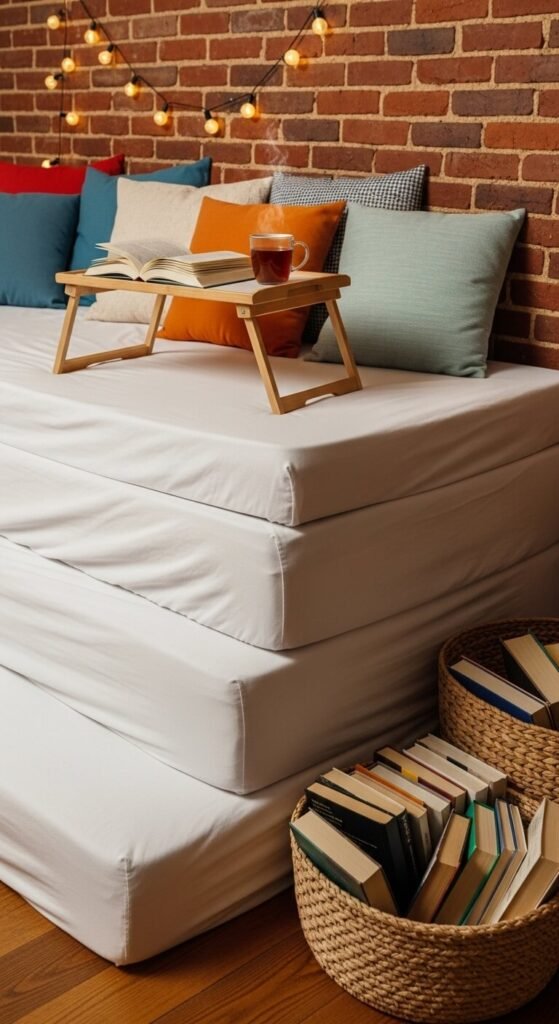
Stack two or three twin mattresses against a wall. Cover with fitted sheets in complementary colors. The height puts you at perfect sitting position. Lean back against the wall with legs stretched out. Place the stack perpendicular to a window for side lighting. This uses old mattresses headed for donation. A lap desk creates a stable reading surface. The extra cushioning beats any regular chair. Disassemble easily when you need floor space.
Kitchen Breakfast Nook
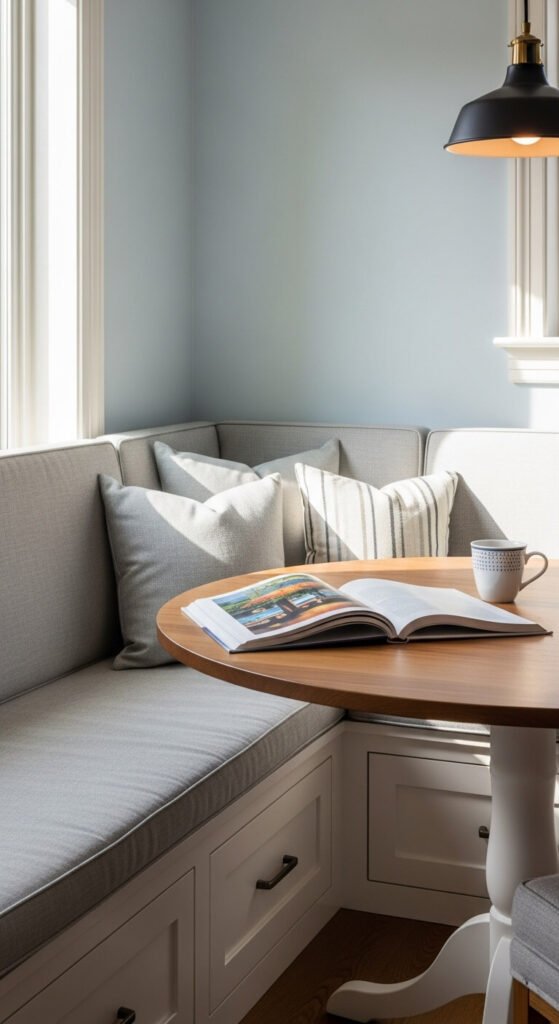
Breakfast nooks work as reading spots outside meal times. Push the table to one side. The booth seating provides back support on two sides. Storage benches hold your book collection underneath. The kitchen location means easy tea refills. A pendant light overhead offers focused illumination. Add a cushion for softer seating. Clean crumbs first—kitchen spaces need regular tidying. This dual-purpose approach maximizes small home functionality.
Converted Entryway Bench
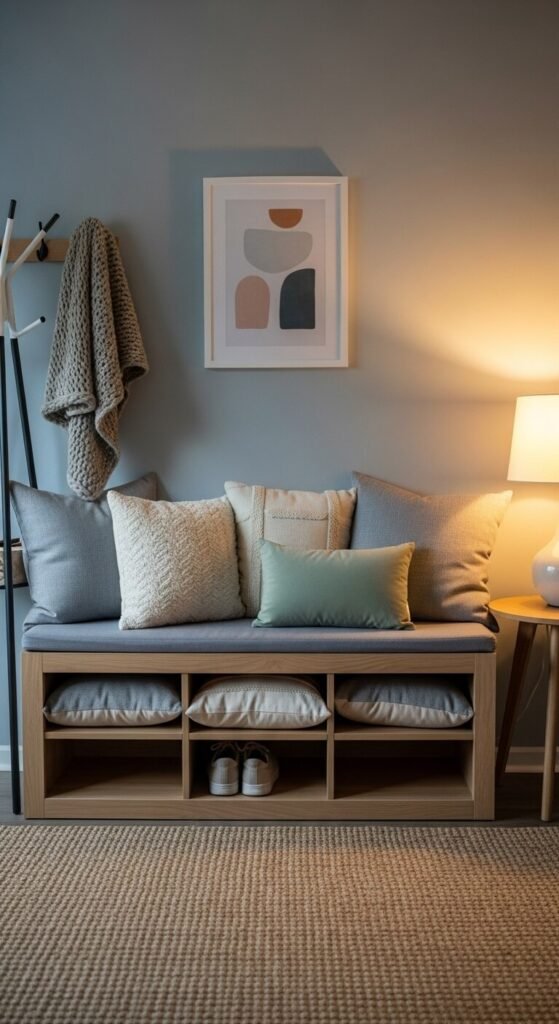
After everyone’s home, the entryway bench becomes reading space. Clear the shoes into nearby storage. Add cushions kept in a basket. The bench sits near the door but away from traffic. A coat rack behind holds your reading throw. The transition zone between outside and inside feels psychologically separate from main living areas. Wall hooks hold a small reading light. Return it to entry function each morning—takes two minutes.
Platform Bed Extended
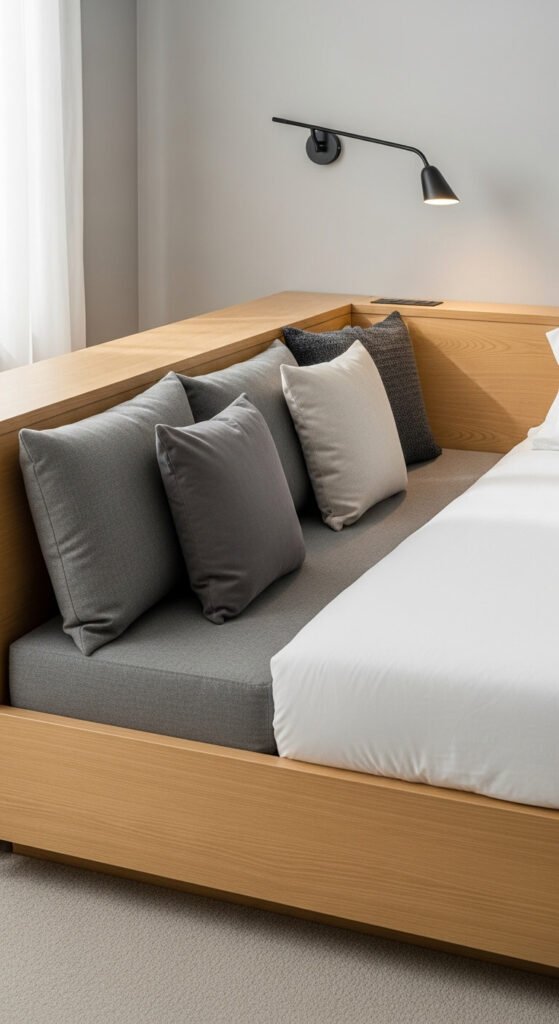
Build your platform bed wider on one side. The extension becomes a reading bench. Install a thin mattress pad on the extended portion. The same height as your bed but feels separate. Mount a reading light directly above the extended section. Storage drawers fit underneath the entire platform. This carpentry project costs $200-400 in materials. The reading spot doesn’t steal any bedroom floor space. Keep sleeping pillows separate from reading pillows for hygiene.
Outdoor Covered Patio
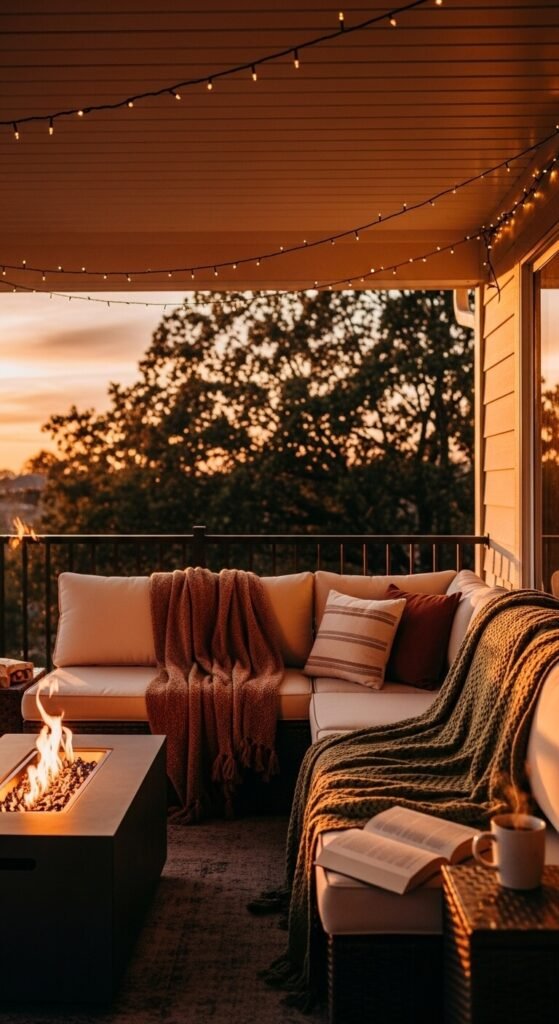
Weather-protected patios extend your reading space outdoors. Waterproof cushions handle occasional moisture. A small heater or fire pit allows three-season use in most climates. The covered roof blocks rain but lets in natural light. String lights make evening reading possible. Keep books in a waterproof bin nearby. The fresh air and nature sounds change the reading experience completely. This requires no construction—just furniture arrangement on existing hardscape.
Conclusion
Creating a personal reading retreat takes more imagination than money. These 25 designs prove any home has potential for a cozy escape—whether you’re working with a forgotten corner, an empty closet, or just a pile of cushions. Start with the space you have available. Add comfortable seating, good lighting, and a place to set your tea. Your reading nook doesn’t need to look like a magazine spread to work perfectly. Pick one idea from this list and start building your daily escape this weekend. Your next favorite book is waiting, and now it has the perfect place to be enjoyed.