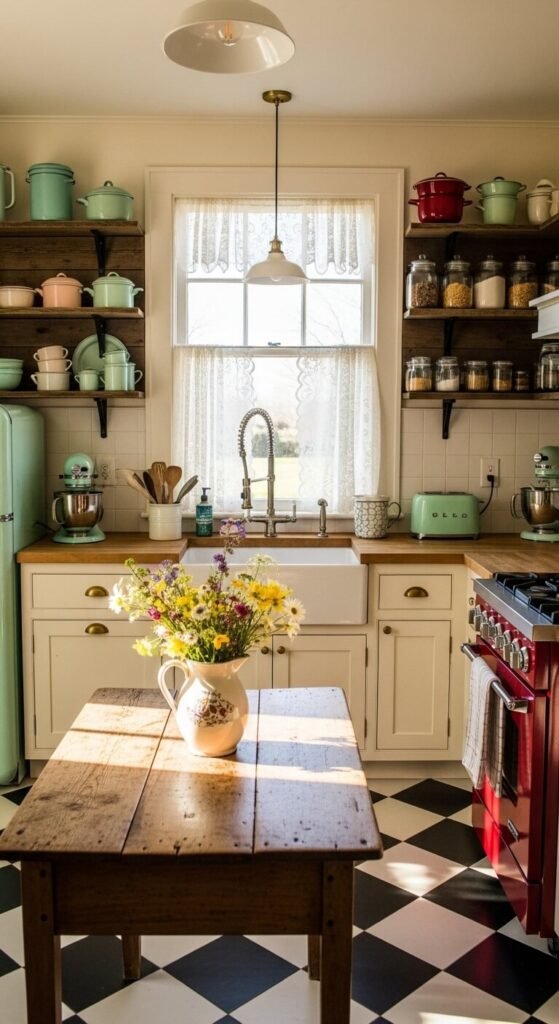
Creating a vintage kitchen brings warmth and personality that modern designs often miss. These classic pieces tell stories through their patina, curves, and craftsmanship. Whether you’re restoring a period home or adding retro touches to a contemporary space, authentic vintage finds and thoughtful reproductions can transform your cooking area into a charming retreat. The best part? You don’t need a huge budget or professional help. Flea markets, estate sales, and online marketplaces overflow with affordable treasures waiting for a new home. Mix eras, experiment with placement, and let each piece shine. Your kitchen deserves character that reflects your style while honoring the past.
Enamelware Canisters for Storage
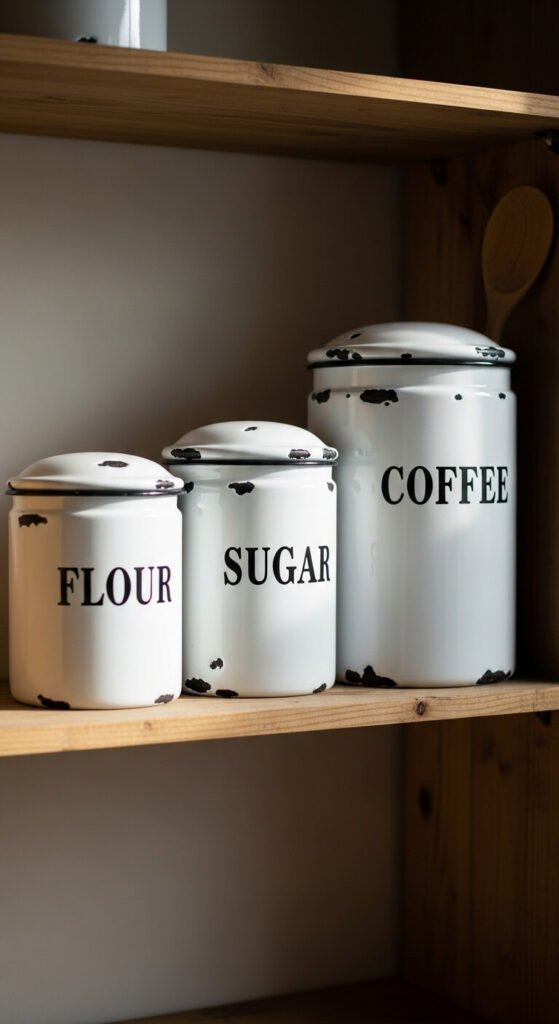
Enamelware canisters bring instant nostalgia to your countertops. Look for sets with original labels or graphics—chips and rust spots add character.
Scour antique shops for mismatched pieces at $8-15 each. They’re perfect for dry goods, utensils, or even fresh herbs. Clean with gentle soap and avoid abrasive scrubbing.
Create uniformity by painting lids the same color if you mix different sets. Group three to five together on open shelves for maximum impact.
These durable pieces survive daily use while keeping staples fresh and visible.
Cast Iron Skillets as Display Art
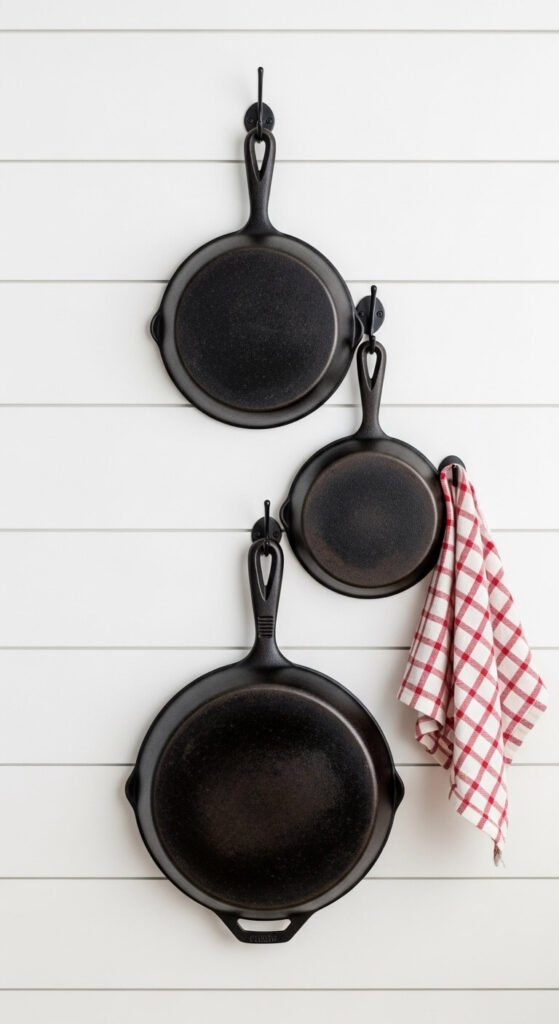
Hang cast iron skillets on your kitchen walls instead of hiding them in cabinets. They’re beautiful, functional, and tell cooking stories.
Hunt for them at yard sales where you’ll pay $5-20 depending on size and condition. Strip rust with vinegar soaks, then re-season with vegetable oil.
Mount sturdy hooks directly into studs. Arrange pans by size or create asymmetrical groupings.
Bonus tip: Actually use these pans. The more you cook, the better the patina develops. Display pieces that work double duty as your everyday cookware. This approach saves cabinet space while showcasing heritage tools.
Vintage Glass Refrigerator Dishes
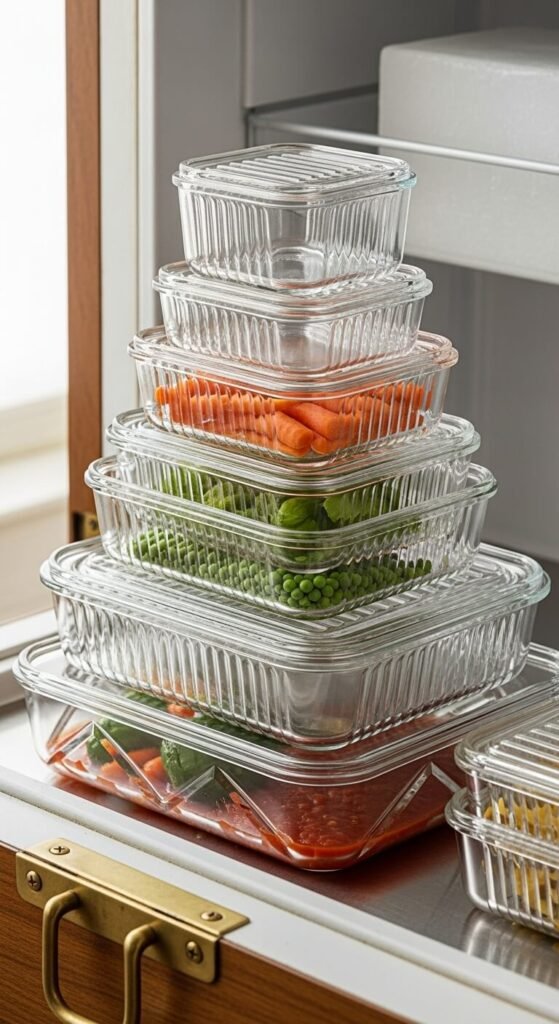
These glass containers from the 1930s-50s store leftovers beautifully. Find them at estate sales for $3-8 per piece.
Inspect for cracks before buying. Original lids increase value but aren’t mandatory—plastic wrap works fine. The ribbed or geometric patterns catch light and add texture to refrigerator shelves.
Start with square or rectangular shapes that stack easily. Mix sizes to accommodate different portion amounts. Unlike modern plastic, these won’t stain or absorb odors.
Run them through the dishwasher without worry. Their durability makes them practical for daily meal prep and storage.
Retro Aluminum Tumblers
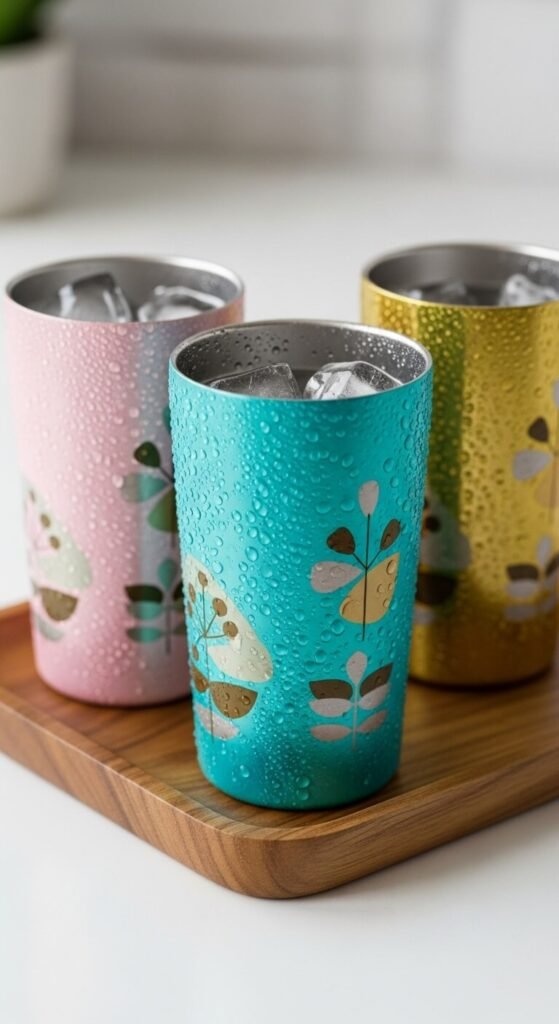
Colorful anodized aluminum cups were everywhere in the 1950s-70s. Now they’re back as quirky drinkware.
Thrift stores sell these for $1-3 each. Choose vibrant colors like pink, turquoise, or gold. They keep drinks cold and never break when dropped.
Perfect for outdoor entertaining or kids’ parties. Hand wash to preserve the anodized finish—dishwashers can dull the color. Display a rainbow collection on a bar cart or open shelf.
Mix with contemporary glassware for an eclectic table setting. Their lightweight construction makes them ideal for picnics and camping trips too.
Farmhouse Apron-Front Sink
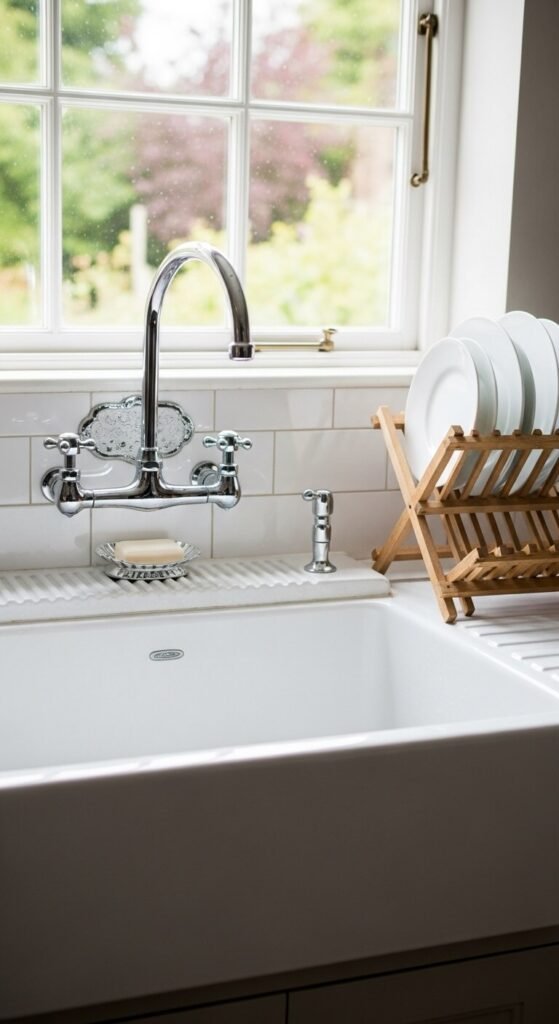
An apron-front sink anchors vintage kitchen design. Original porcelain models surface at salvage yards for $200-600.
Reproduction versions cost less and come in various sizes. The deep basin handles oversized pots and baking sheets easily. Installation requires modified cabinetry—budget $300-500 for professional work or tackle it yourself with online tutorials.
Protect the finish by avoiding abrasive cleaners. Bar Keeper’s Friend removes stains without scratching. Pair with period-appropriate fixtures like bridge faucets or wall-mount taps.
This single change dramatically shifts your kitchen’s entire aesthetic toward authentic vintage charm.
Porcelain Advertising Signs
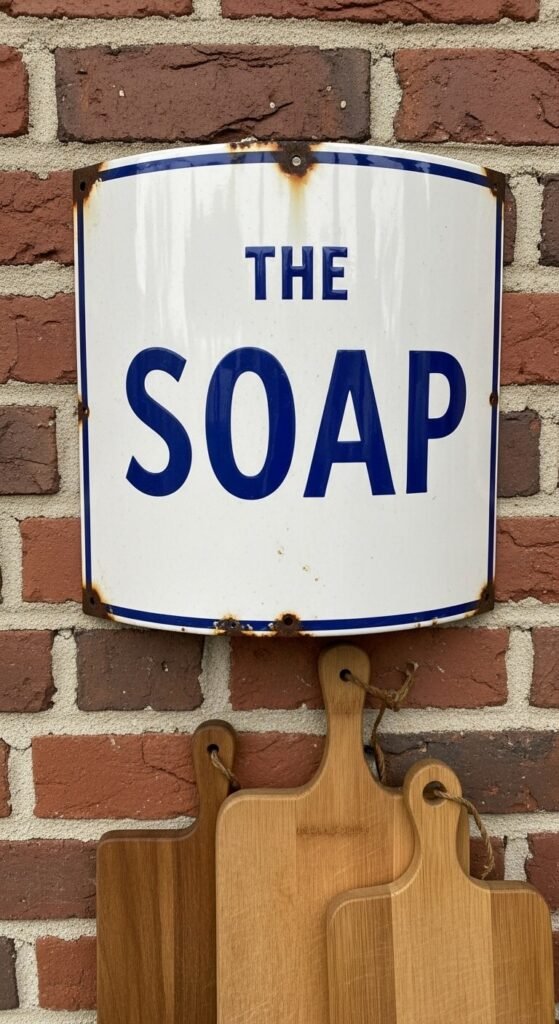
Old advertising signs add graphic punch to blank walls. Look for porcelain or tin versions from food and household brands.
Flea markets price these between $25-150 depending on rarity and condition. Smaller signs (12×18 inches) work better in kitchens than massive versions. Mount with period hardware or lean on open shelving.
Clean gently with damp cloths—never soak or scrub. Some rust and fading actually increases authenticity. Choose brands you recognize or graphics that match your color scheme.
These conversation starters bring commercial history into your home while filling awkward wall spaces.
Butter Churns as Utensil Holders
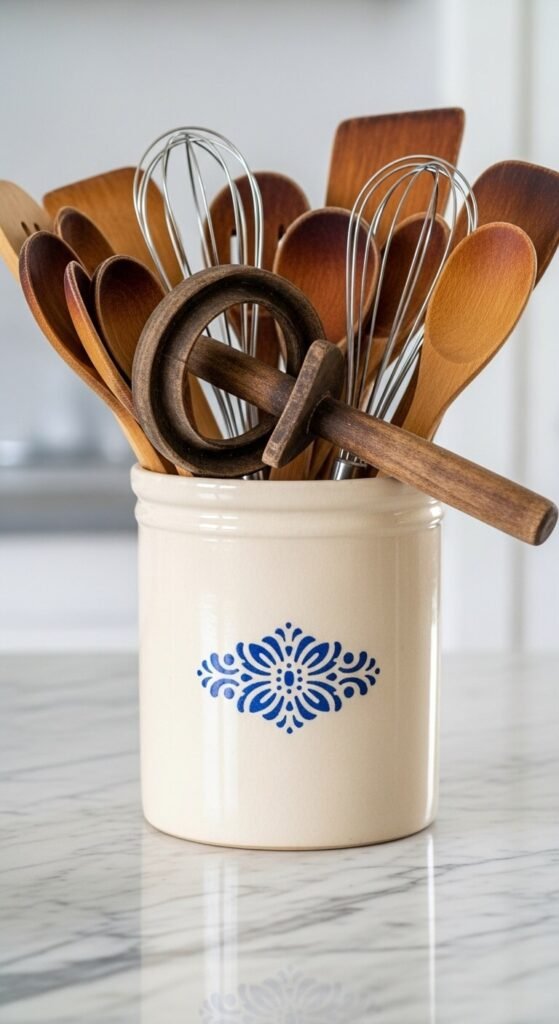
Repurpose old butter churns as utensil crocks. These ceramic vessels stand up to daily use while displaying heritage craftsmanship.
Find them at farm auctions and antique malls for $20-60. Remove the dasher if present, or keep it for visual interest. The wide opening accommodates ladles, spatulas, and wooden spoons perfectly.
Cracks add character but check that the base stays watertight if you’ll add water for fresh flowers occasionally. Their hefty weight prevents tipping when you grab tools quickly.
Position near the stove for easy access during cooking. The folk art designs complement farmhouse and cottage styles beautifully.
Vintage Bread Boxes
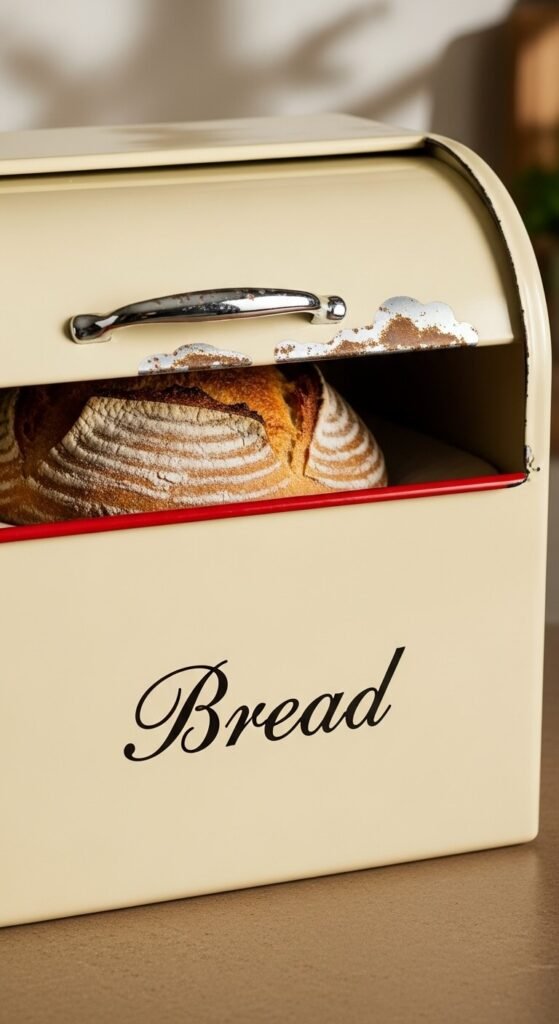
Metal bread boxes from the 40s-60s combine function and style. They keep baked goods fresh while adding counter appeal.
Antique stores stock these for $25-75. Look for enamel finishes in white, yellow, or red. Roll-top versions have more character than hinged lids. Minor dents and scratches prove authenticity.
Clean interiors thoroughly before use. Line with parchment if rust appears inside. The ventilation holes prevent moisture buildup that causes mold.
Place near your coffee station for easy breakfast access. These compact pieces work even in small kitchens where counter space runs tight.
Wire Egg Baskets
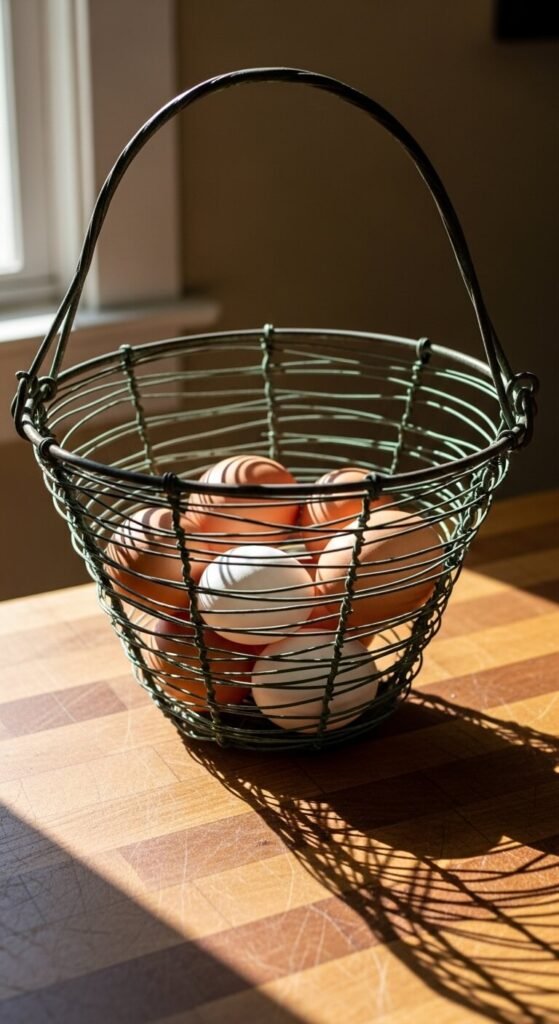
Wire baskets designed for egg collection make charming countertop displays. Hunt for them at farmhouse estate sales.
Prices range from $10-30 depending on size and condition. Choose baskets with tight weaving that won’t let eggs slip through. Some feature collapsible designs or decorative handles.
Use them as originally intended or repurpose for garlic, onions, and citrus fruit. The open construction allows air circulation to extend produce life.
Hang smaller versions on wall hooks to hold kitchen linens or mail. Their sculptural quality works year-round, but they shine during holidays filled with baked goods and fresh ingredients.
Retro Flour Sifters
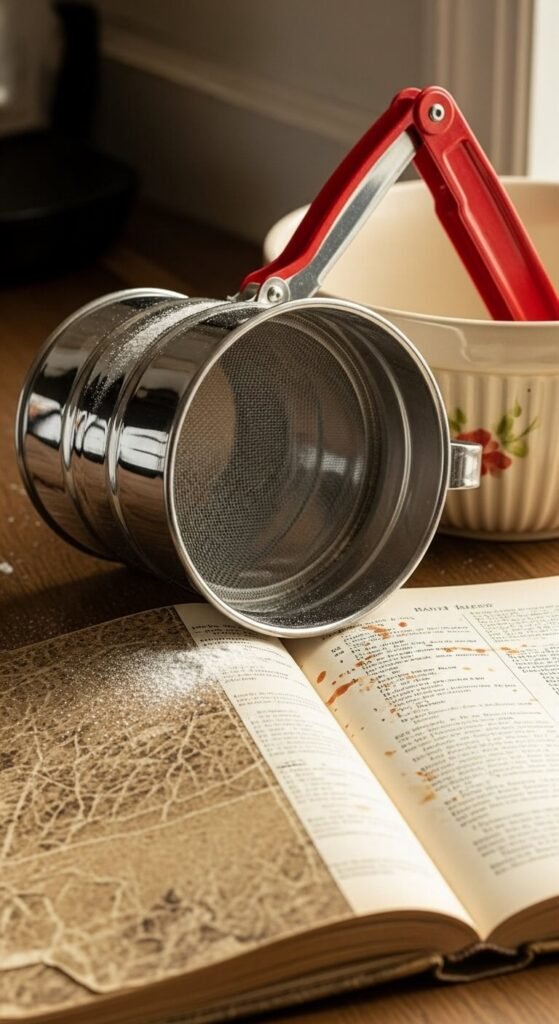
Hand-crank and squeeze-handle sifters deserve counter display. These tools still work perfectly for baking projects.
Thrift stores practically give them away at $3-10 each. Test the mechanism before purchasing—springs should compress smoothly. Red handles are most sought-after, but green and yellow versions appear too.
Actually use your sifter for cakes, cookies, and bread. The repetitive motion connects you to past generations of bakers. When not in use, store on open shelving where the mechanism becomes sculptural.
Pair with vintage measuring cups and mixing bowls to create a baking vignette that stays ready for action whenever inspiration strikes.
Hoosier Cabinet or Reproduction
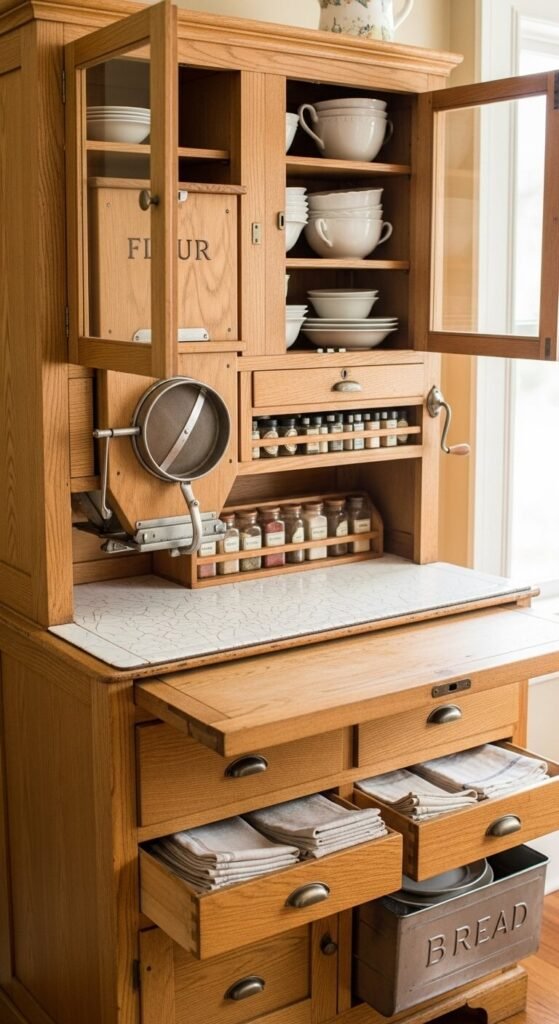
Hoosier cabinets revolutionized 1920s kitchens by consolidating storage and workspace. Originals command $800-2000 at auctions.
Reproductions cost less and skip the restoration headaches. These all-in-one units include flour bins, spice racks, pull-out surfaces, and dish storage. Position against an empty wall to showcase the built-in features.
Stock jars with staples you’ll actually use. The workflow makes baking efficient and enjoyable. Paint or stain to match your existing cabinetry, or leave the natural wood patina alone.
This single piece can anchor your entire vintage kitchen design while providing serious functionality modern cabinets lack.
Vintage Kitchen Scales
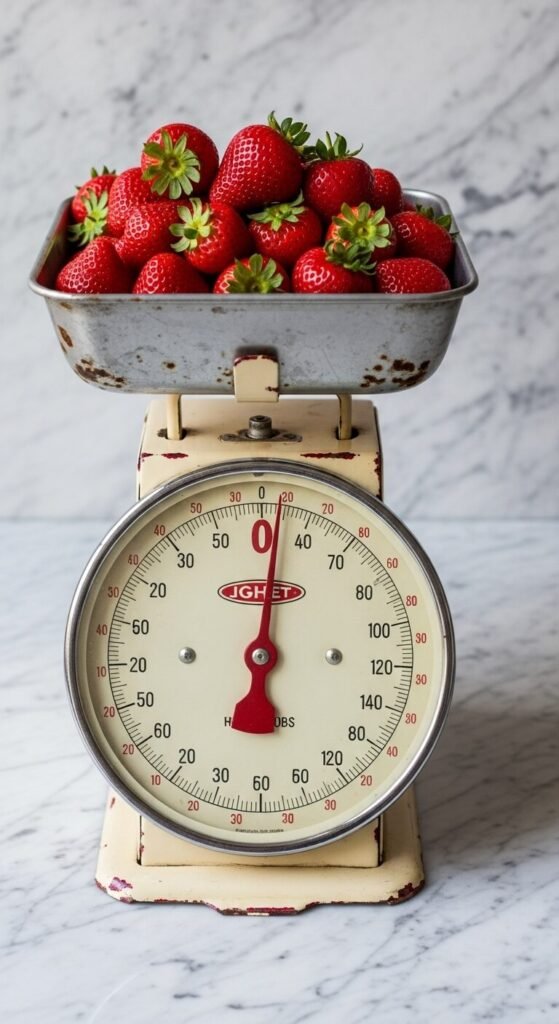
Mechanical scales add both beauty and utility to counters. Look for balance beam or spring-loaded dial versions.
Prices run $15-50 at antique markets. Verify accuracy by testing with known weights. Colorful models in red, yellow, or turquoise make stronger statements than plain white. Some feature removable pans perfect for portioning ingredients.
Use daily for cooking and baking—modern digital versions can’t match their visual appeal. Display permanently or store in a cabinet if counter space runs tight.
Their honest mechanics and solid construction outlast plastic alternatives by decades. Choose brands like Chatillon, Hanson, or American Family for proven reliability.
Depression Glass Serving Pieces
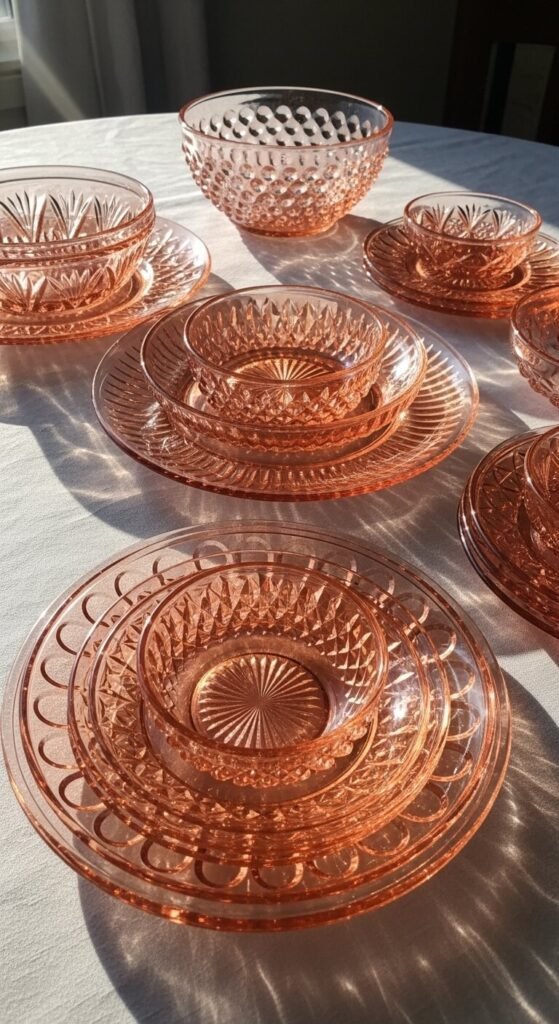
Depression glass brings affordable elegance to your table. Produced during the 1930s, these pieces came in pink, green, amber, and clear.
Start collecting at estate sales where plates cost $2-8 each. Mix patterns freely—uniformity wasn’t the goal originally. Chips decrease value, so inspect carefully. The glass glows beautifully when backlit.
Use serving bowls for salads and sides. Layer smaller plates on shelving for colorful displays. Hand wash only—dishwashers can cloud the finish.
Begin with one color family, then expand. Your collection tells personal stories as you acquire pieces from different sources over time.
Vintage Pyrex Mixing Bowls
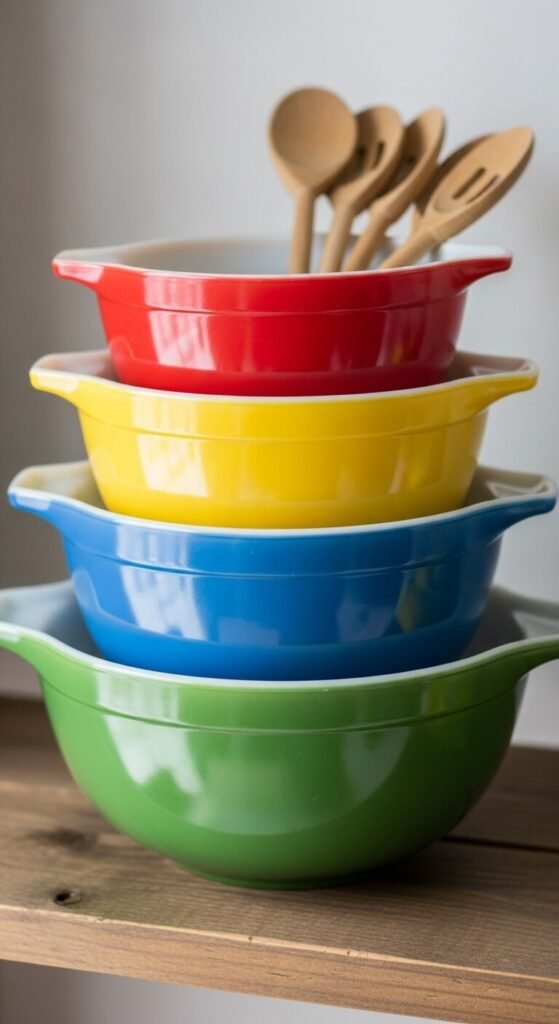
Colorful Pyrex bowls from the 50s-70s remain kitchen workhorses. The primary color sets are most recognizable and collectible.
Thrift stores price them at $5-15 per bowl depending on size and pattern. Complete nesting sets cost more but save searching for individual pieces. Avoid crazing, cracks, or faded colors.
Use these for mixing, serving, and storage. They’re dishwasher-safe and microwave-friendly. Display stacked on open shelves when not in use—the colors pop against white backgrounds.
Other patterns like butterprint, gooseberry, and pink daisy have devoted followers. Collect what speaks to you rather than chasing trends.
Wall-Mount Coffee Grinder
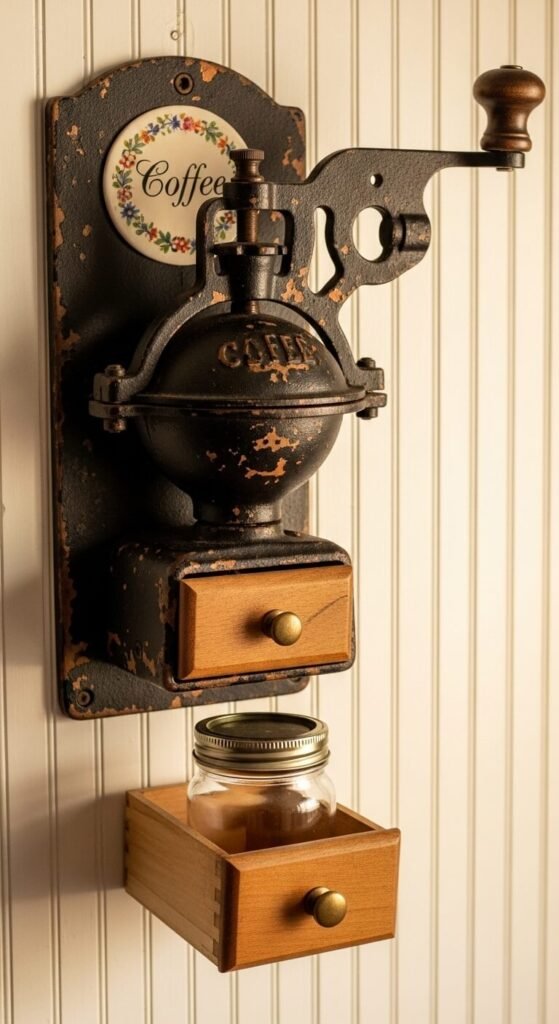
Manual coffee grinders mount beautifully on empty wall sections. These cast iron pieces ground beans for generations before electric models appeared.
Antique shops sell working versions for $40-100. Test the crank mechanism and drawer slide. Clean thoroughly with stiff brushes—old coffee oils turn rancid. Some collectors display these as art rather than using them functionally.
If you grind beans daily, vintage mills produce excellent results with satisfying hand-crank ritual. The drawer catches grounds directly for easy transfer to your brewer.
Choose prominent placement near your coffee station. The sculptural quality and industrial construction make these conversation pieces that earn their wall space.
Vintage Dish Towels
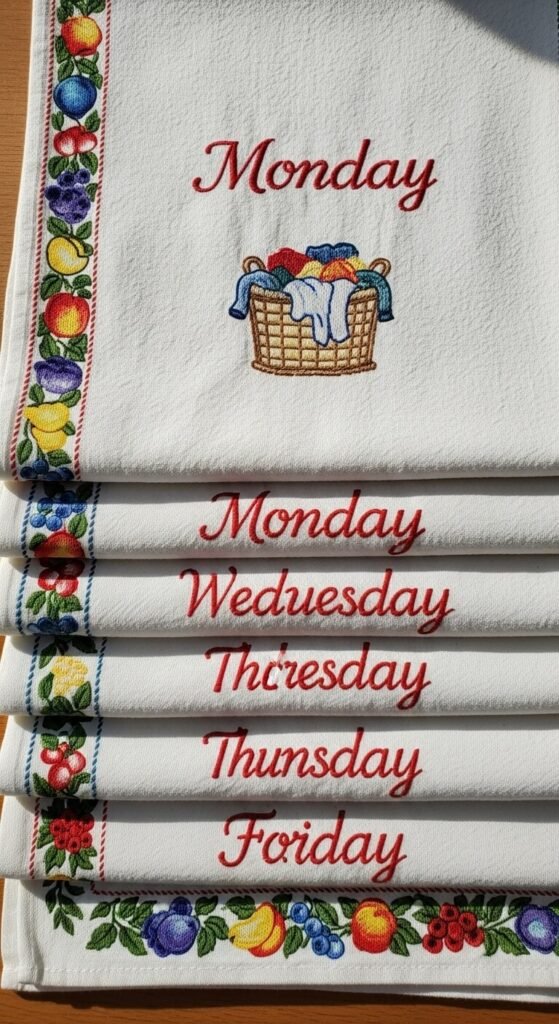
Embroidered dish towels from the 40s-60s add textile softness to kitchens. Days-of-the-week sets and produce motifs are most common.
Estate sales bundle these for $5-20. Wash gently in cold water to preserve embroidery. Some yellowing gives authentic vintage feel—don’t over-bleach. Minor stains usually fade with repeated washing.
Display folded over oven handles or hanging from hooks. Actually use them for drying dishes and hands. The cotton absorbs better than modern microfiber.
Frame damaged towels with beautiful embroidery as wall art. Rotate your collection seasonally to prevent excessive wear on favorites. Their handmade quality connects you to needlework traditions.
Retro Step Stool
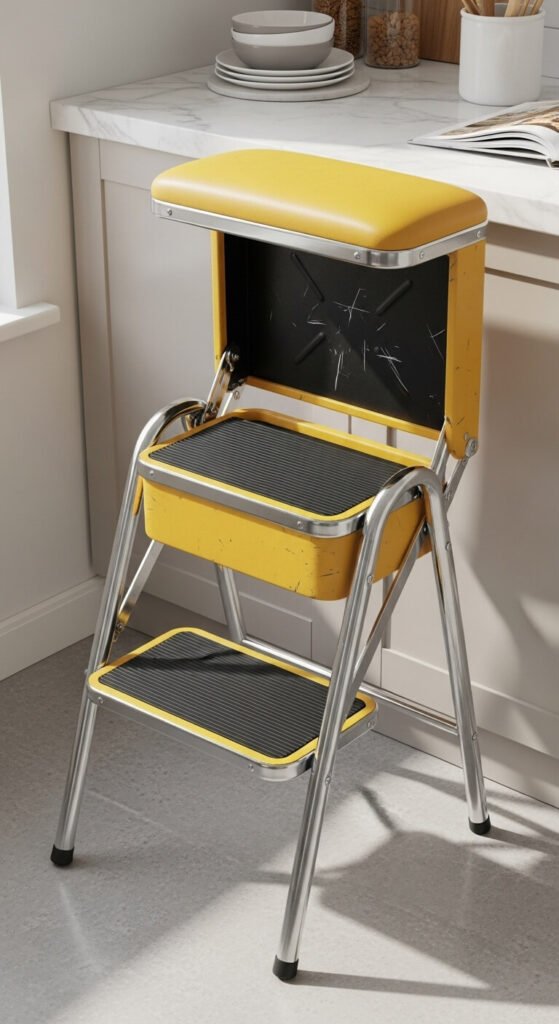
Folding step stools in cheerful colors solve high-shelf access while adding retro flair. Look for metal versions with vinyl seats.
Flea markets price these at $20-60 depending on condition. Test stability before buying—wobbly steps are dangerous. Red, yellow, and turquoise are classic colors. Some include storage compartments under the seat.
Keep near upper cabinets for daily use. The compact fold makes storage easy. Wipe vinyl clean with damp cloths.
Reproduction versions lack vintage charm but offer modern safety features. Choose based on whether you’ll use it regularly or display it as sculptural decor. Either way, the streamlined design fits small kitchens perfectly.
Mason Jars for Everything
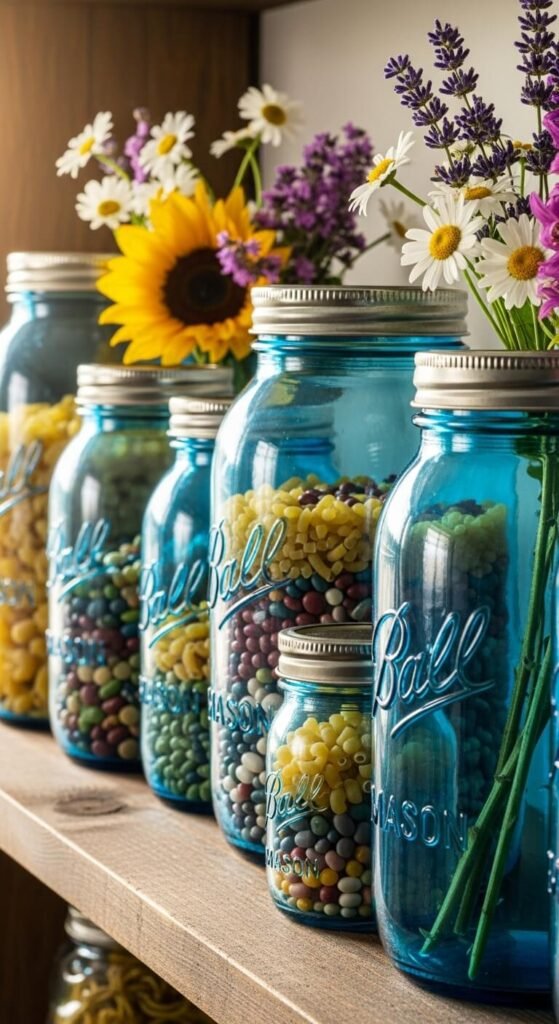
Mason jars transcend storage to become kitchen staples. Vintage blue glass versions add color, but clear jars work beautifully too.
Garage sales offer these for $1-5 each. Check for chips around the rim that prevent sealing. Use them for dry goods, beverages, flower vases, and utensil holders.
Group jars by size or color on open shelving. Fill with ingredients you’ll use—visual appeal shouldn’t override function. The embossed lettering and measurement marks add character.
New lids cost pennies when old ones rust through. These humble vessels adapt to countless purposes while maintaining authentic vintage appeal that plastic containers never achieve.
Vintage Tin Canisters
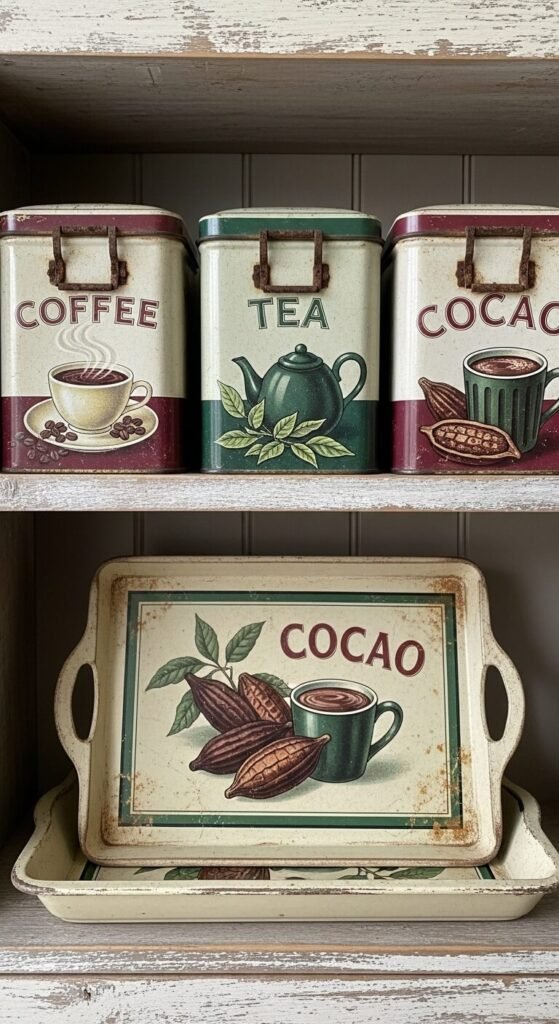
Decorative tins from coffee, tea, and cocoa brands make excellent storage. The lithographed designs showcase graphic art from different eras.
Antique malls stock these for $8-25. Look for intact graphics without excessive rust or dents. Remove old product residue completely before reusing. Some tins still smell like their original contents—charming unless overpowering.
Repurpose for coffee beans, tea bags, or baking supplies. The square shapes stack efficiently. Group by color or theme rather than matching sets.
Smaller tins work for spices, rubber bands, or recipe cards. Their tight lids protect contents from moisture and pests while displaying beautiful vintage advertising art.
Enamel Colanders
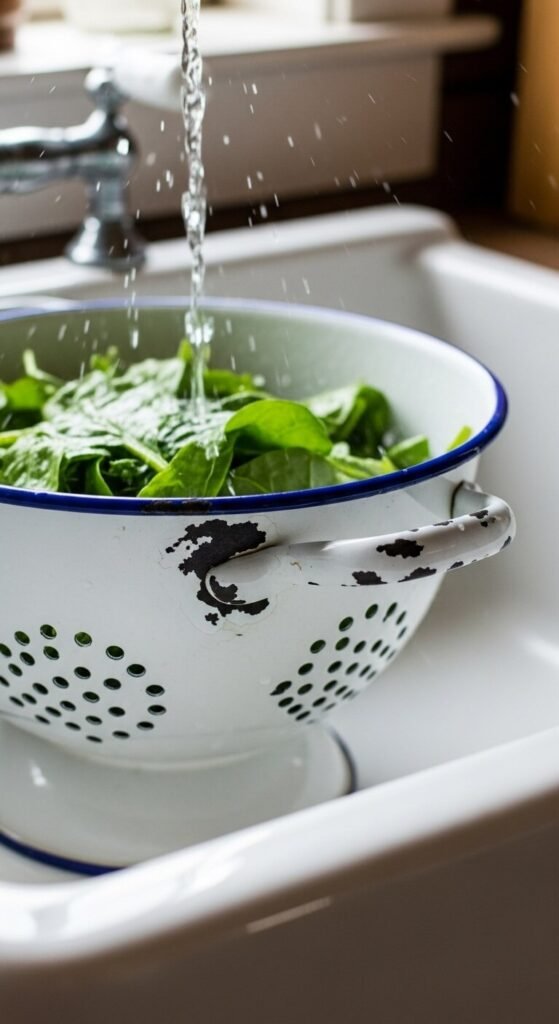
Enamel colanders drain and rinse with vintage style. The speckled or solid finishes come in white, red, yellow, and green.
Find these at yard sales for $10-30. Inspect for rust inside the holes—surface chips are fine. Some feature footed bases that elevate them above counter surfaces.
Use for washing produce, draining pasta, and storing fruits that need air circulation. The enamel won’t react with acidic foods like metal versions sometimes do.
Display hanging from pot racks or wall hooks when not in use. Their sculptural perforations create interesting shadow patterns. These durable pieces handle daily kitchen tasks while bringing authentic period charm.
Vintage Recipe Box
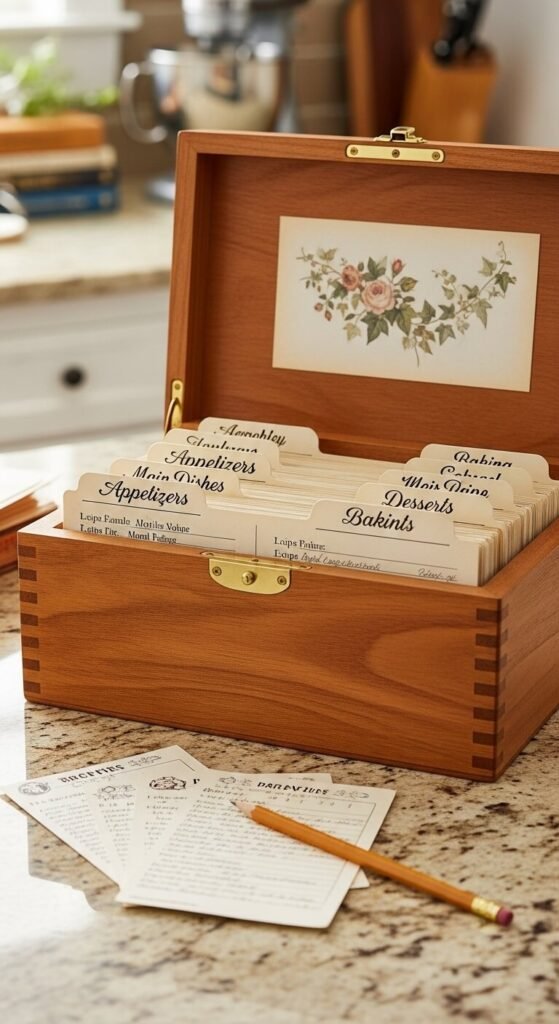
Recipe boxes preserve culinary memories and family traditions. Wood, metal, and plastic versions exist from different decades.
Thrift stores sell these for $5-20. Boxes with cards included cost more but offer instant nostalgia. Read through recipes to discover regional specialties and forgotten techniques.
Add your own recipes to continue the tradition. The tactile experience of flipping cards beats scrolling screens. Organize by meal type or ingredient for easy reference.
Display on counters near your cooking zone. Some boxes feature beautiful graphics or carved details worth showcasing. These humble organizers connect present cooking to past generations who relied on handwritten instructions.
Vintage Kitchen Textiles Set
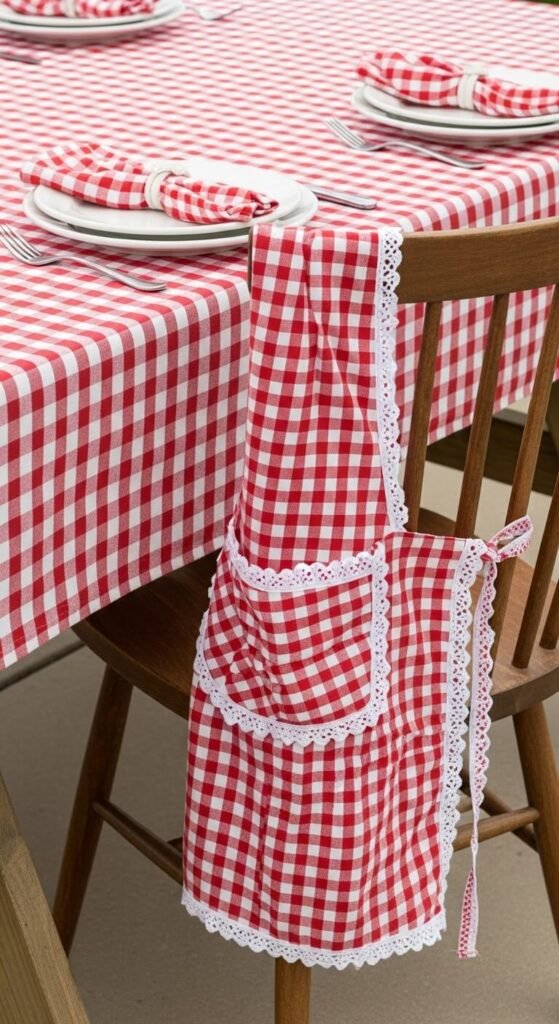
Coordinating textiles create instant vintage atmosphere. Look for tablecloths, napkins, aprons, and potholders in matching patterns.
Estate sales bundle kitchen linens affordably. Gingham checks, fruit prints, and rooster motifs defined mid-century style. Wash thoroughly before use—old fabrics sometimes harbor mildew.
Minor stains and repairs add character. Use table linens for special meals and everyday breakfasts alike. Hang aprons decoratively or wear them while cooking.
Mix patterns from the same era even if they don’t match perfectly. The layered textile approach softens hard kitchen surfaces while introducing color and pattern that modern kitchens often lack.
Cast Iron Trivets
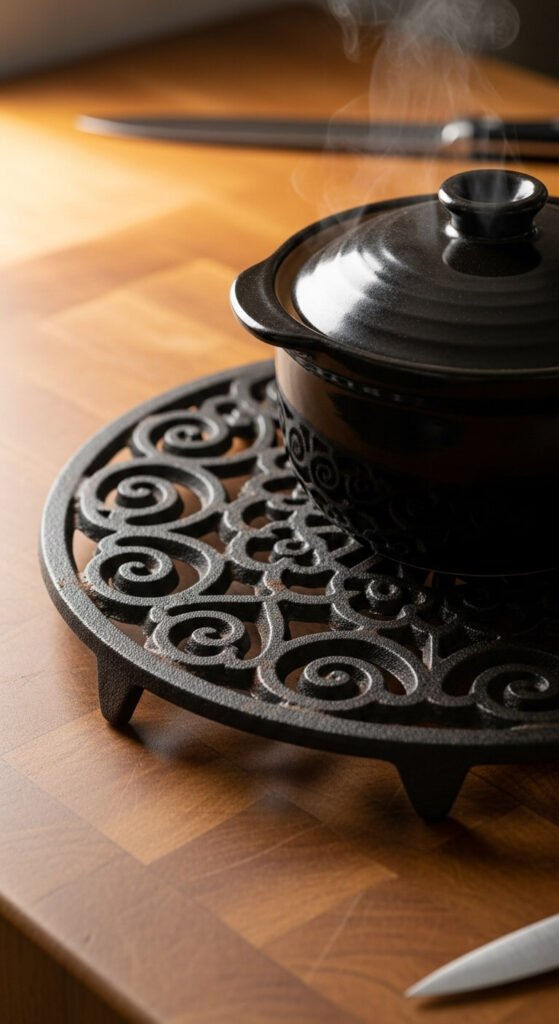
Decorative trivets protect surfaces while adding iron artistry. Collect different shapes and patterns to create wall displays.
Antique stores price these at $8-25 each. Complex designs with scrollwork or figural elements are most desirable. Strip rust with vinegar, then re-season with oil if you’ll use them functionally.
Protect counters from hot pots and baking dishes. The heat resistance prevents burns and marks. When not in use, hang trivets as wall art in groupings of three or five.
Their openwork patterns create visual interest without overwhelming small spaces. These humble tools bridge the gap between functional necessity and decorative appeal beautifully.
Vintage Cookie Jars
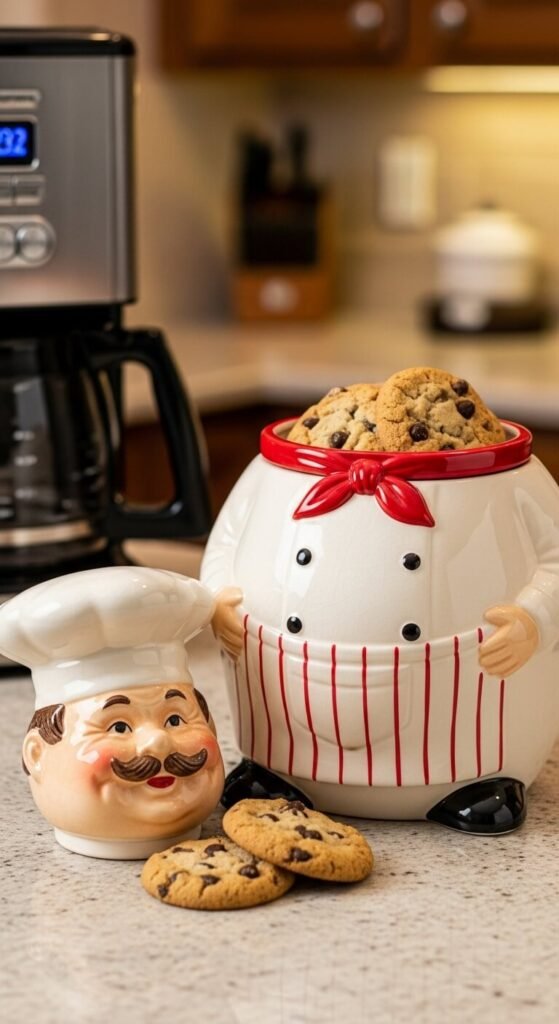
Cookie jars shaped like characters, houses, or animals bring whimsy to counters. Ceramic versions from the 50s-60s are most collectible.
Prices vary wildly—$20-200 depending on rarity and condition. Common shapes cost less than unusual designs. Check for chips on the lid and base. Crazing doesn’t affect function.
Use for cookies, candy, or dry goods. The sealed lids keep contents fresh. Display prominently where guests can appreciate the playful designs.
Start with one special jar rather than building a massive collection. Choose shapes that make you smile. These cheerful vessels prove storage doesn’t have to be boring or utilitarian.
Copper Molds and Pans
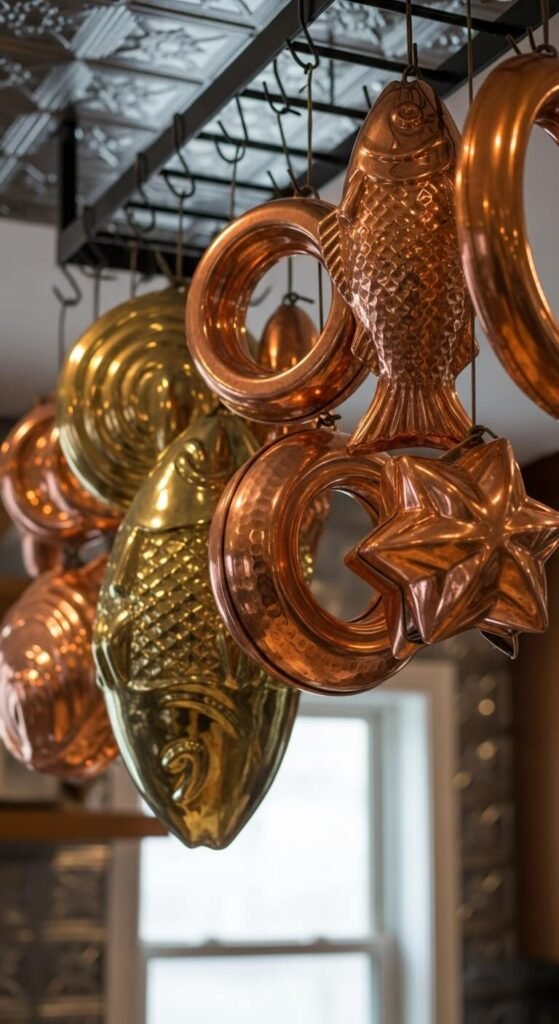
Copper cookware and decorative molds add warm metallic tones. The patina develops beautifully over time, shifting from bright orange to mellow brown.
Find these at estate sales for $15-80 per piece. Tin-lined copper remains safe for cooking. Unlined molds work for display only. Polish with special copper cleaner or embrace the natural aging.
Hang molds as wall art in kitchens or dining areas. Use shallow pans for roasting vegetables and fish. The excellent heat conductivity makes copper prized by serious cooks.
Group pieces of varying sizes and shapes. The mixed patinas create depth and visual interest. These functional sculptures honor European cooking traditions while elevating your kitchen’s aesthetic presence.
Vintage Spice Racks
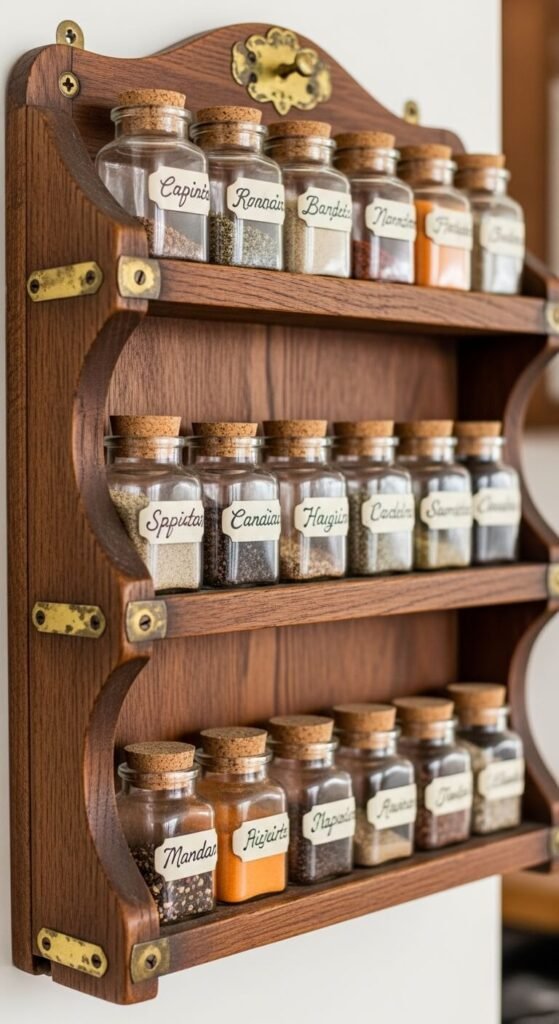
Wall-mount spice racks keep seasonings organized and visible. Look for wood versions with glass jars or metal sets with matching tins.
Antique malls price these at $25-75 complete with jars. Replace contents rather than using decades-old spices. Clean jars thoroughly, then refill from bulk bins to save money.
Mount near your stove for cooking convenience. Alphabetize or group by cuisine type. The uniform presentation looks tidy while providing quick access.
Some racks include decorative elements like carved edges or stenciled designs. Choose based on your wall space and the number of spices you regularly use. These practical organizers prevent cabinet clutter.
Conclusion
Vintage kitchen decor transforms cooking spaces into warm, personal environments rich with history and charm. Each piece carries stories from past owners while serving your daily routines. Start small with affordable finds from thrift stores and estate sales. Mix authentic antiques with careful reproductions based on your budget and preferences. Display collections that reflect your personality rather than recreating museum exhibits. Use these beautiful objects—they were made for kitchens, not shelves. The worn patinas, minor imperfections, and honest construction remind us that kitchens thrive as lived-in spaces where meals and memories happen. Your vintage kitchen awaits, one treasure at a time.