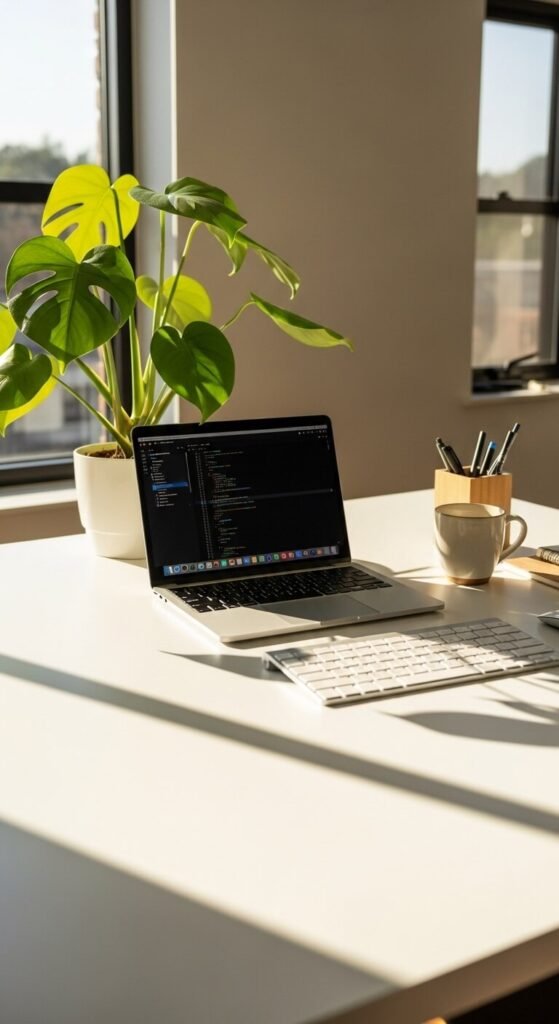
Your workspace shouldn’t drain your energy—it should spark it. The right desk setup transforms daily tasks into something you actually look forward to. Whether you’re working from home, studying, or pursuing creative projects, an aesthetic workspace makes those long hours feel lighter. This guide walks you through 26 practical ideas that combine style with function. No complicated renovations required. Just simple, budget-friendly tweaks that create a space where productivity feels natural and your best work flows easily.
Start with a Clean Slate Desk
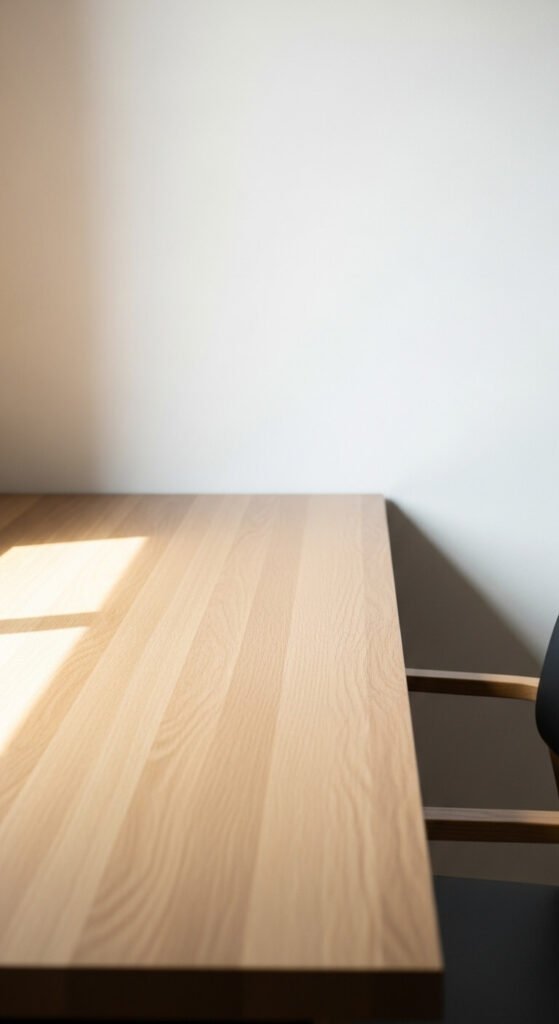
Clear everything off your desk first.
Start with zero items, then add back only what you actually use daily. This prevents clutter from building up again. Keep one notebook, your laptop, and maybe a pen holder.
Store everything else in drawers or shelves. A bare surface lets your brain focus better. You’ll notice the difference immediately.
Try the “one week test”—if you don’t touch something for seven days, it doesn’t belong on your desk.
Layer in Warm LED Strip Lighting
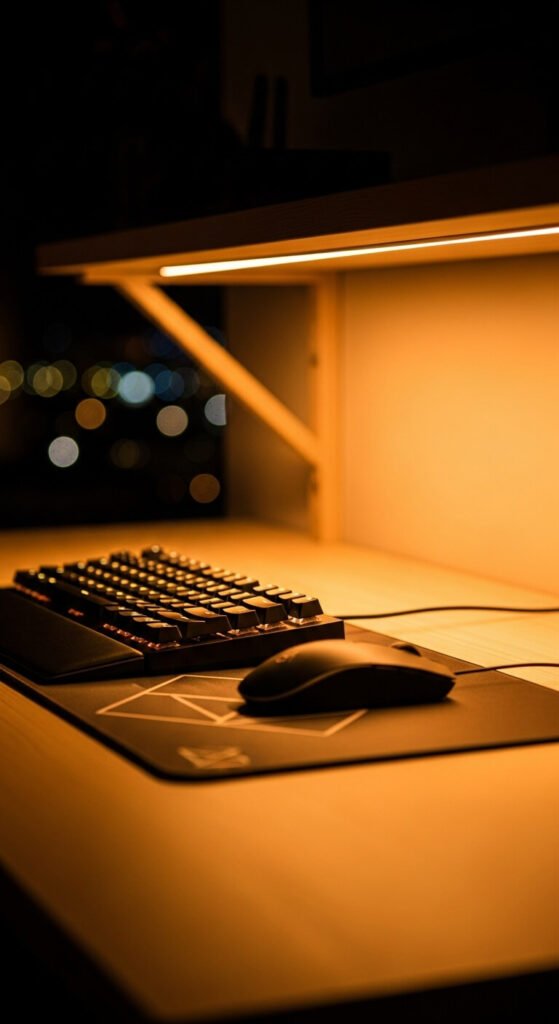
Harsh overhead lights kill the vibe.
Add LED strips under shelves or behind your monitor. Choose warm white (3000K) over cool blue tones. They cost $10-15 and stick on with adhesive backing.
Set them to 60% brightness for daytime work. Dim them in the evening to reduce eye strain.
This small change makes your desk feel cozy instead of clinical. Your eyes will thank you after long work sessions.
Add One Statement Plant
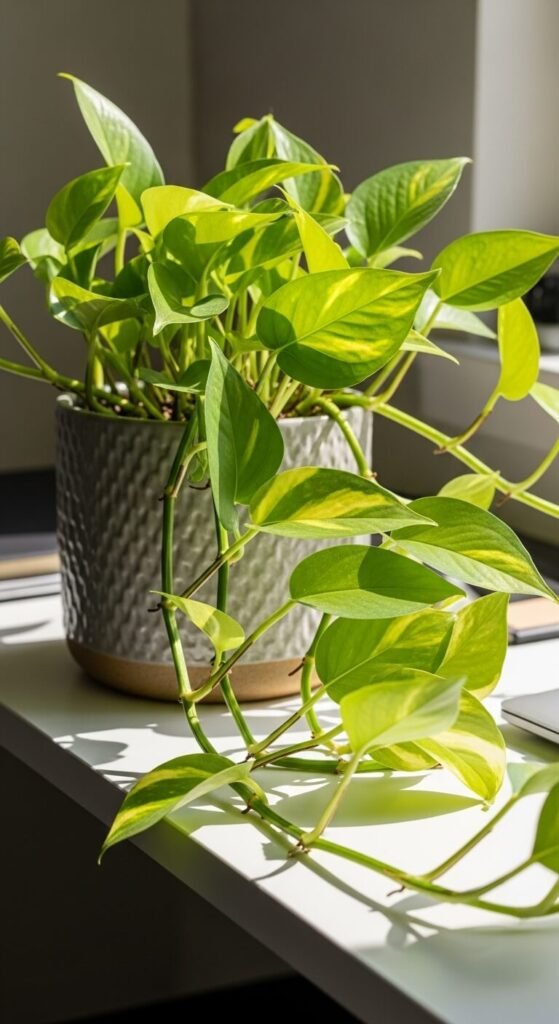
Don’t overcrowd with greenery—pick one winner.
A pothos or snake plant works best. They survive neglect and low light. Spend $8-12 at any grocery store.
Place it where you’ll see it when you look up from your screen. Real plants beat fake ones for air quality.
Water once a week. That’s it. The touch of green breaks up screen monotony and gives your eyes somewhere natural to rest.
Use a Wooden Desk Organizer
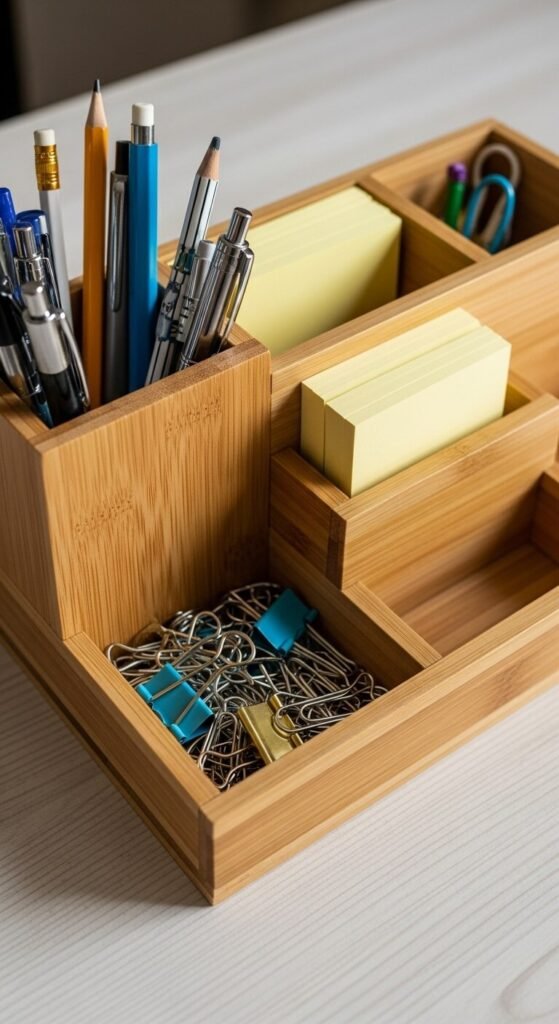
Plastic organizers look cheap fast.
Wood adds warmth and ages better. Get a simple bamboo tray with 3-4 compartments for under $20. Keep pens in one section, sticky notes in another, clips in the third.
This beats random drawers where things disappear forever. Everything stays visible and grabbable.
Your desk looks pulled-together without trying hard. Wood matches almost any setup style.
Mount Your Monitor at Eye Level
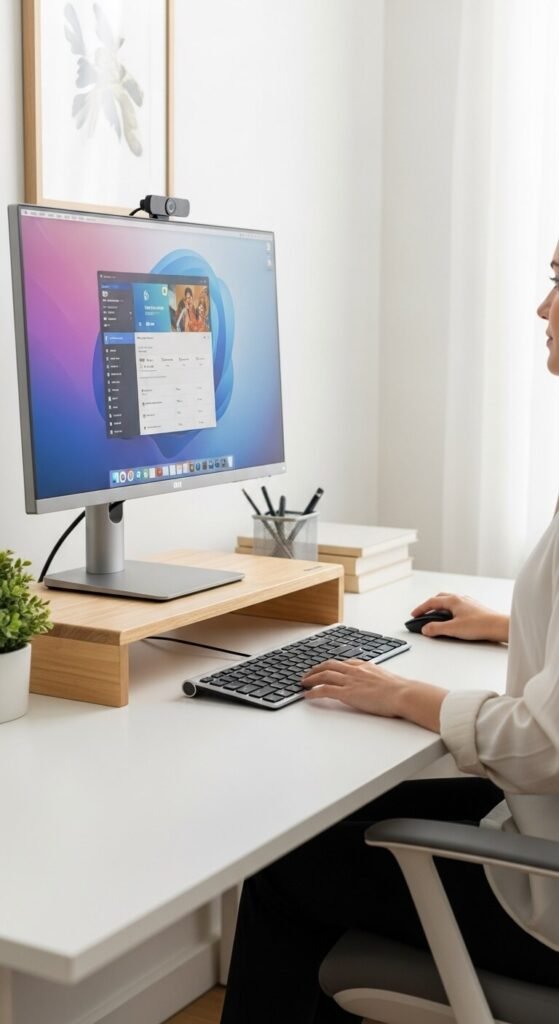
Neck pain starts with bad monitor height.
Stack books or buy a $15 monitor stand. Your eyes should hit the top third of the screen naturally.
No looking down for hours. This single fix prevents headaches and shoulder tension.
Measure with your fist—screen should be about one arm’s length away. Closer causes eye strain. Farther makes you squint.
Adjust now before the damage adds up.
Hang a Peg Board Wall
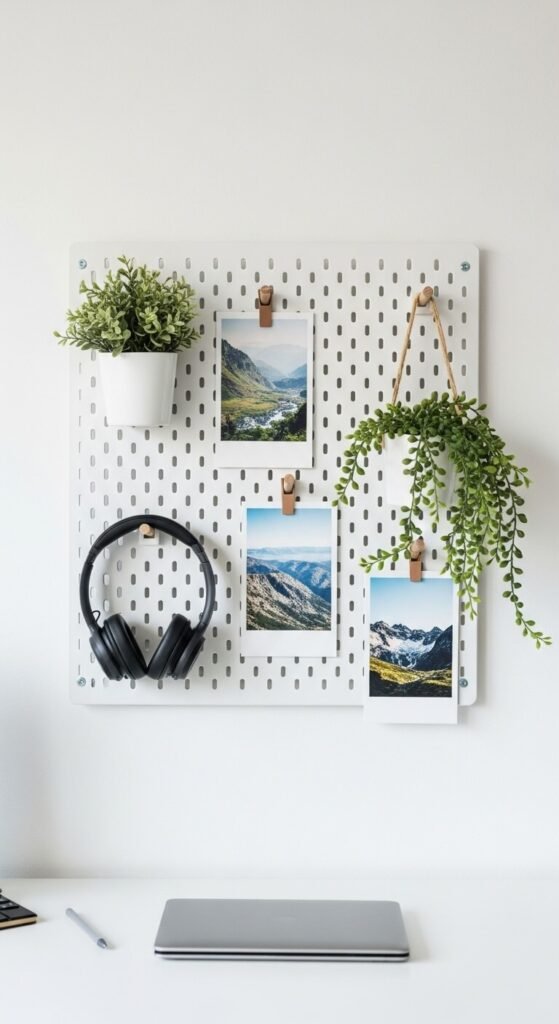
Walls waste space when they’re blank.
A peg board costs $20-30 and installs with basic screws. Hang headphones, plants, calendars, or inspiration photos.
Change the layout whenever you want. No new holes required. This keeps your desktop clear while making supplies accessible.
Paint it to match your wall or leave it natural. The grid pattern adds visual interest without being busy.
Invest in a Quality Desk Mat
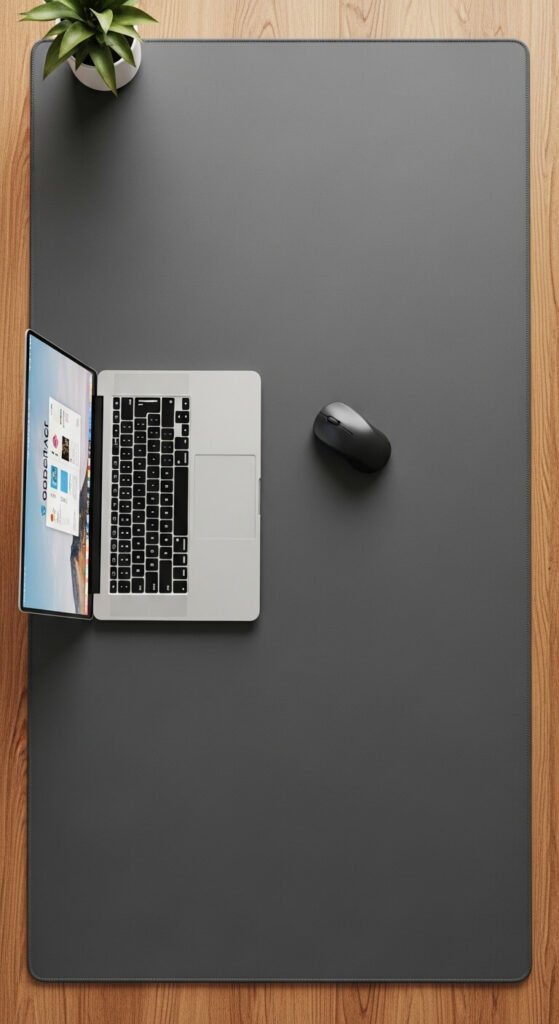
Your mouse deserves better than bare wood.
Get an extended desk mat that fits your keyboard and mouse together. Cork or felt versions cost $15-25.
This protects your desk from scratches and spills. The soft surface feels better under your wrists during long typing sessions.
Neutral colors like gray or tan work with any setup. Skip loud patterns that tire your eyes.
Shake it outside weekly to keep dust away.
Create a Cable Management System
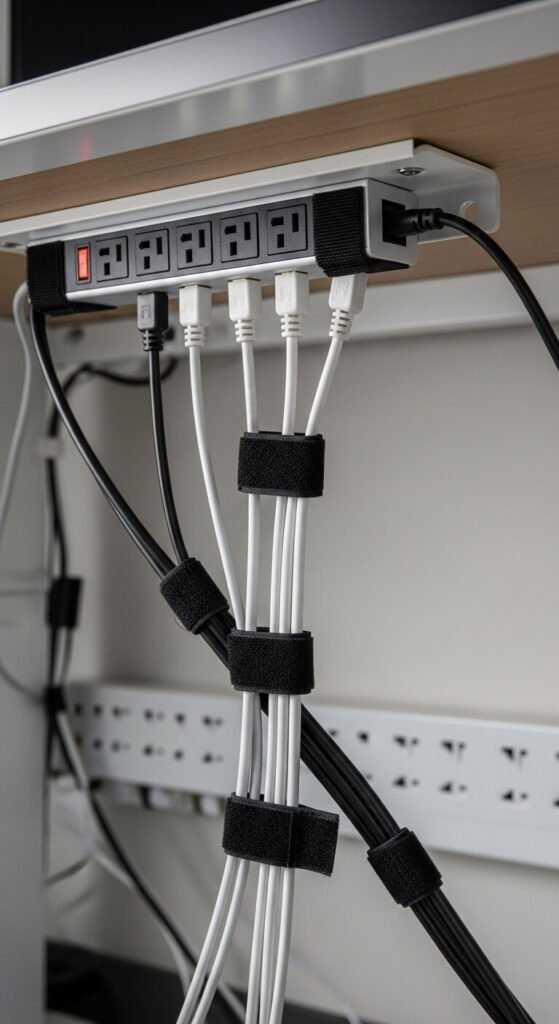
Tangled cables ruin any aesthetic.
Use velcro ties (10 for $6) to bundle cords together. Stick adhesive clips under your desk to route cables along the edge.
Get a surge protector with a long cord and mount it underneath. This hides the mess completely.
Takes 15 minutes to set up. Your desk looks instantly cleaner. You’ll never fish for the right charger again.
Display Books Vertically with Bookends
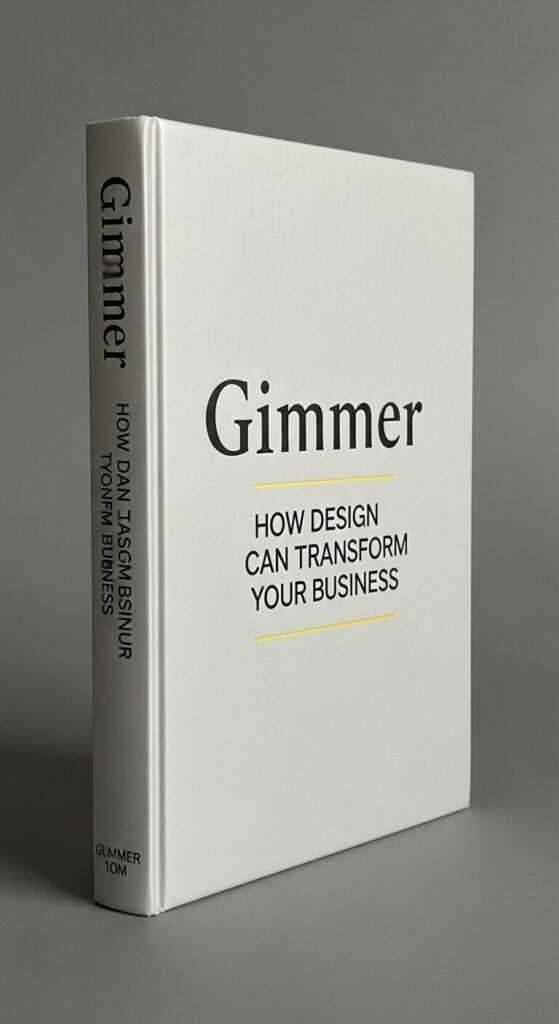
Stacked books topple over constantly.
Stand 3-5 favorite books upright with simple bookends. Metal or marble ones cost $12-18. Choose books you actually reference or ones with beautiful spines.
This adds personality without clutter. Rotate them monthly based on what you’re reading.
Skip the “decorative books nobody reads” trap. Real books you use make the space feel lived-in and authentic.
Add a Small Analog Clock
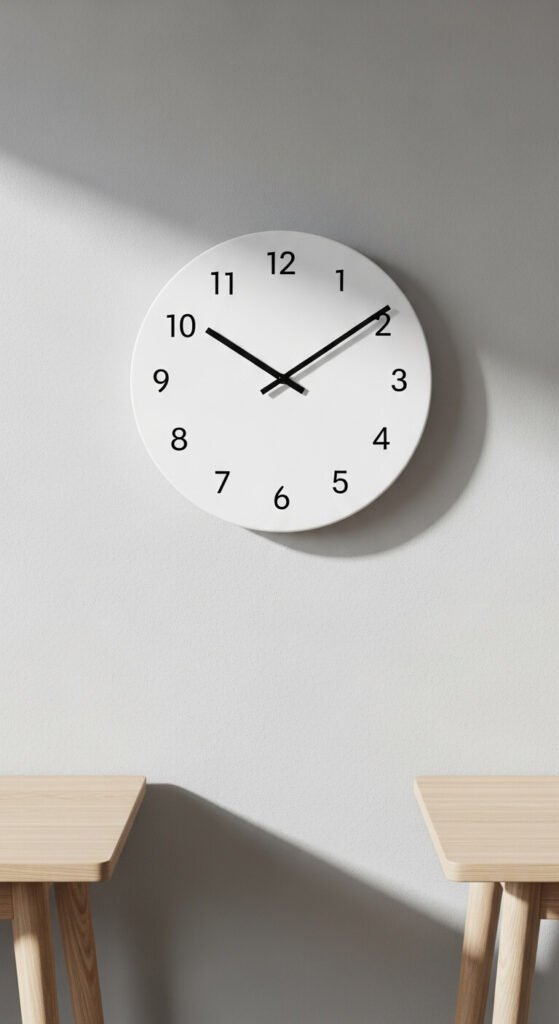
Checking your phone kills focus.
A wall clock keeps you on schedule without screen distraction. Get a silent one (no ticking) for under $15.
Mount it slightly above eye level when seated. This lets you glance up quickly during calls or timed work blocks.
Analog faces somehow feel less stressful than digital numbers. Time passes visually instead of jumping minute by minute.
Use Matching Containers for Supplies
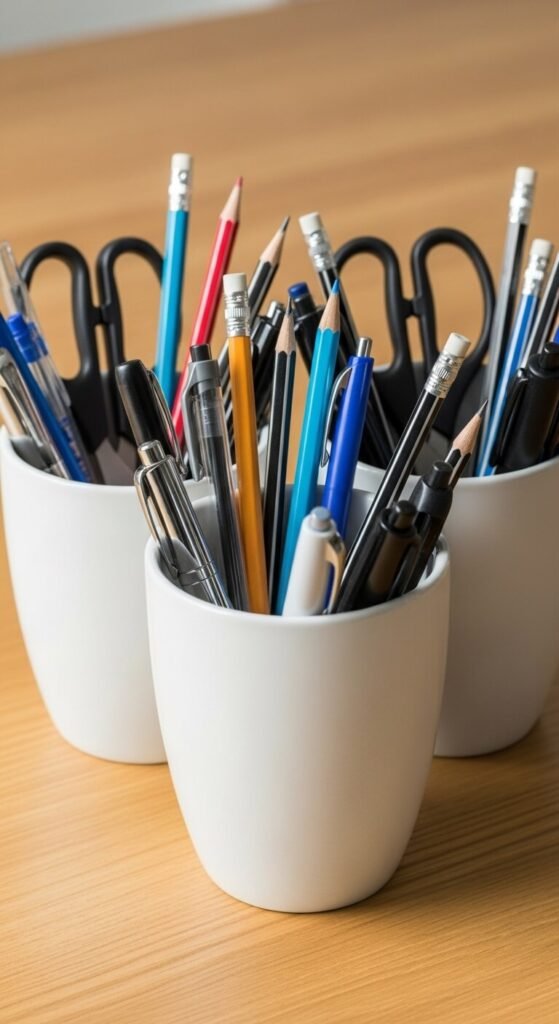
Random cups create visual chaos.
Buy 2-3 identical containers from the dollar store. White ceramic or clear glass work everywhere.
Group pens in one, scissors and tape in another. The matching set calms your visual field.
You’ll grab supplies faster when they have dedicated homes. Everything returns to the same spot automatically.
Costs under $10 total and makes your desk look designed instead of assembled.
Position Desk Near Natural Light
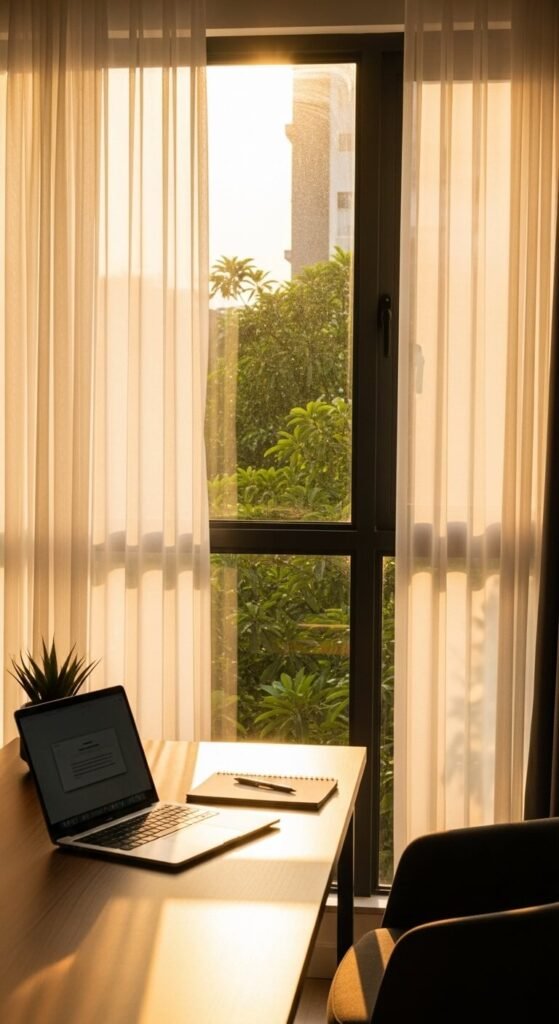
Artificial light can’t replace sunshine.
Move your desk next to a window if possible. Position it perpendicular—not facing directly into glare.
Morning light wakes you up naturally. Afternoon rays keep energy steady. Even overcast days beat fluorescent bulbs.
Use sheer curtains to soften harsh summer sun. This simple rearrangement improves mood and reduces the need for daytime desk lamps.
Free upgrade that pays off every single day.
Choose a Comfortable Task Chair
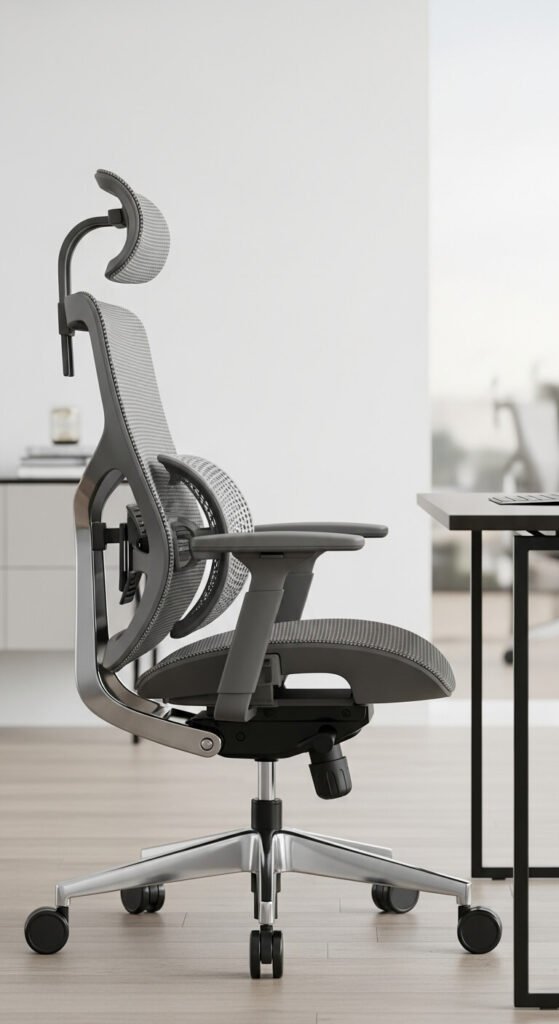
Cheap chairs cause long-term damage.
You don’t need a $500 model, but skip the $40 specials. Find something with lumbar support and adjustable height for $100-150.
Your lower back will hurt less after eight-hour days. Proper arm height prevents shoulder tension.
Test chairs in person when possible. Sit for five minutes in the store.
This matters more than any decoration. Comfort directly impacts how long you can focus.
Add Personal Photos in Simple Frames
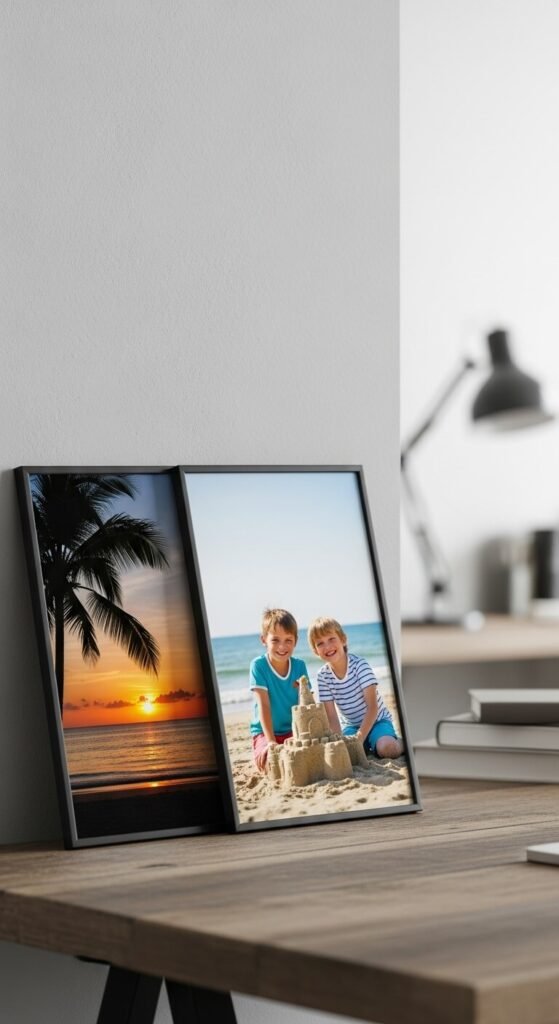
Memories make work feel less isolating.
Pick 1-2 favorite photos and frame them simply. Black or wood frames cost $5-8 each. Prop them against the wall or use small stands.
Change them seasonally to keep your space fresh. Photos remind you why you’re working hard.
Skip the giant gallery wall. Just a couple meaningful images do the job without overwhelming your focus zone.
Keep a Water Bottle at Arm’s Reach
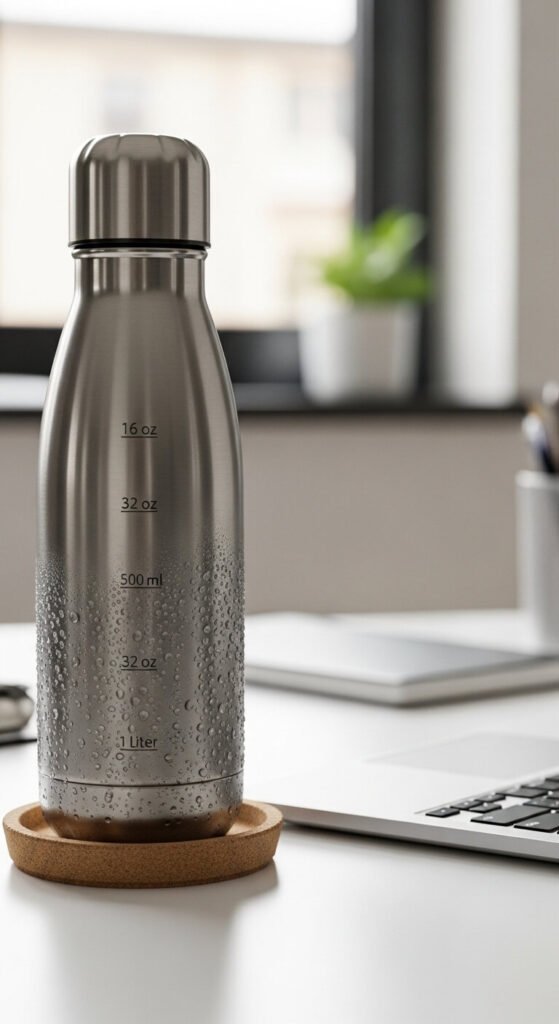
Dehydration kills concentration before you notice.
Get a 32oz reusable bottle and keep it filled on your desk. Metal ones stay cold for hours and cost $15-20.
Set a goal to finish it twice during your workday. You’ll think clearer and get fewer headaches.
No more forgetting to drink water because the kitchen feels far away. It’s right there. Sip between tasks.
Better hydration means better work output.
Use Drawer Dividers for Hidden Storage
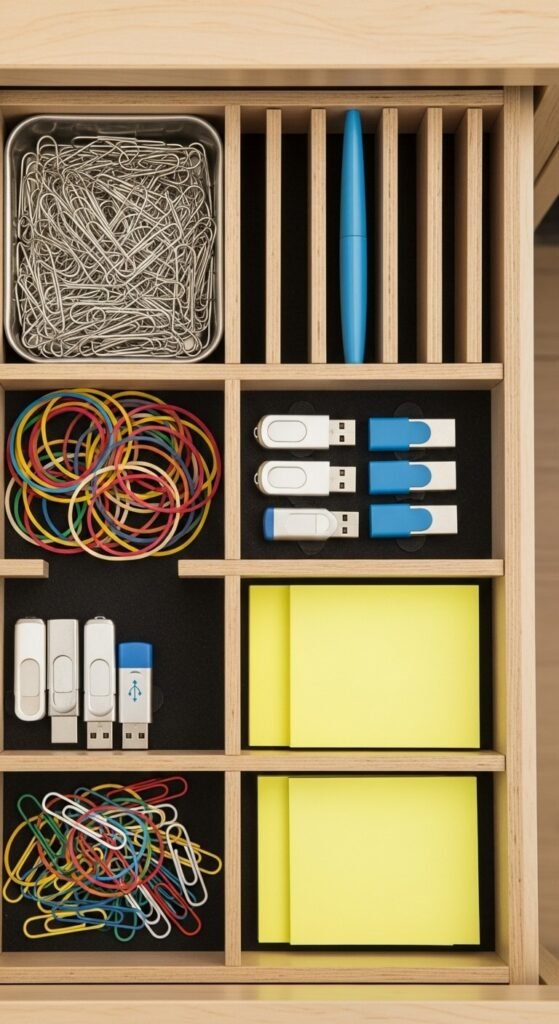
Messy drawers leak stress even when closed.
Buy adjustable drawer dividers for $10-12. Create sections for chargers, notecards, clips, and random small items.
This takes 10 minutes to set up and saves hours of searching later. Everything has an assigned spot.
You’ll stop buying duplicate items you already own but can’t find. Open the drawer and grab exactly what you need first try.
Install a Floating Shelf Above Desk
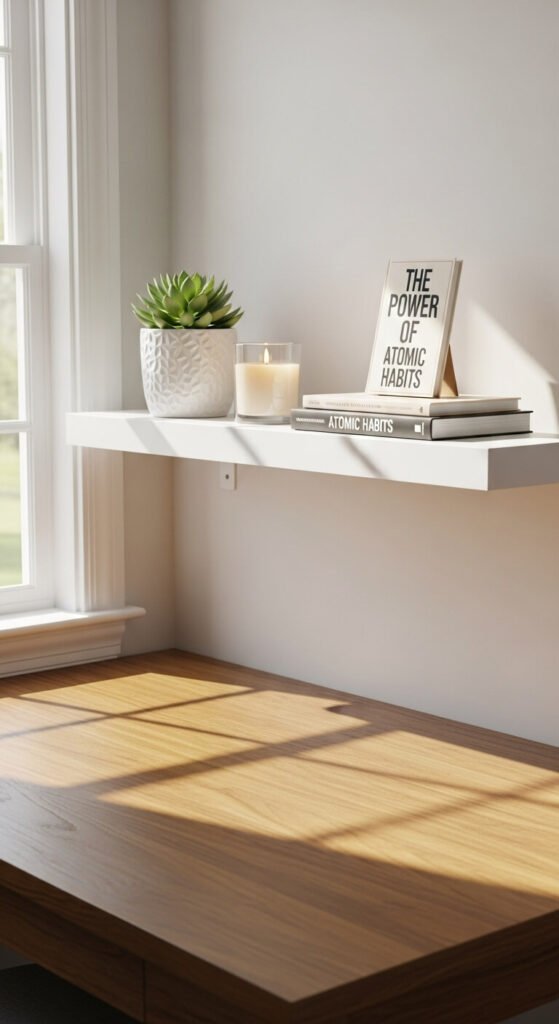
Desk space runs out fast.
Mount a 24-inch floating shelf directly above your workspace for $15-20. Store items you use weekly but not daily.
Keep decorative pieces up here—small plants, a candle, one inspiring book. This frees your desktop for actual work.
The shelf adds dimension to your wall and makes the space feel designed. Install with drywall anchors if you’re not hitting studs.
Try a Standing Desk Converter
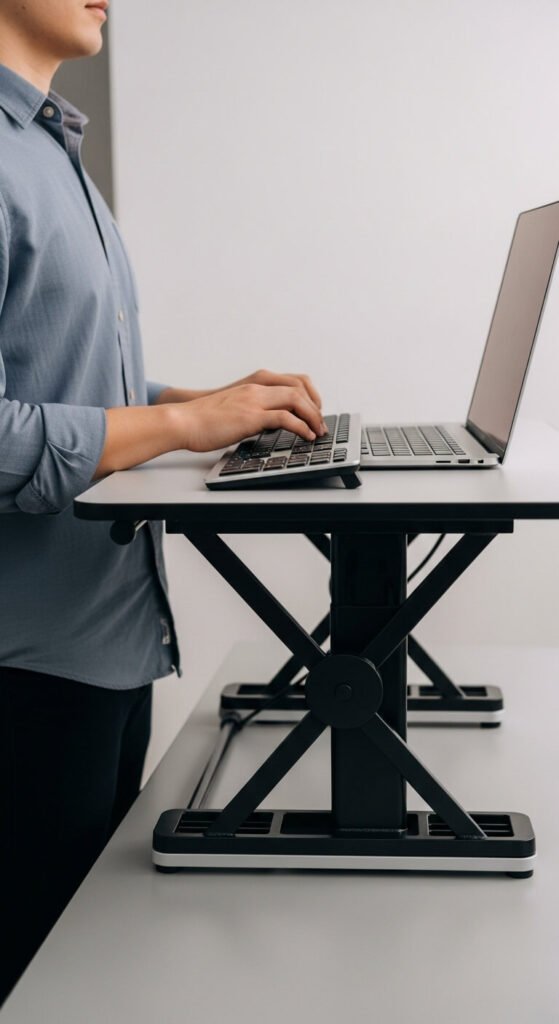
Full standing desks cost $300+.
Get a converter that sits on your current desk for $80-120. Raise it when you want to stand, lower it when you need to sit.
Alternate every hour. Standing improves circulation and focus during afternoon energy dips.
You don’t need to stand all day. Even 2-3 hours makes a difference for back pain and alertness.
Test cheaper options before committing to expensive furniture.
Designate a “Done” Tray
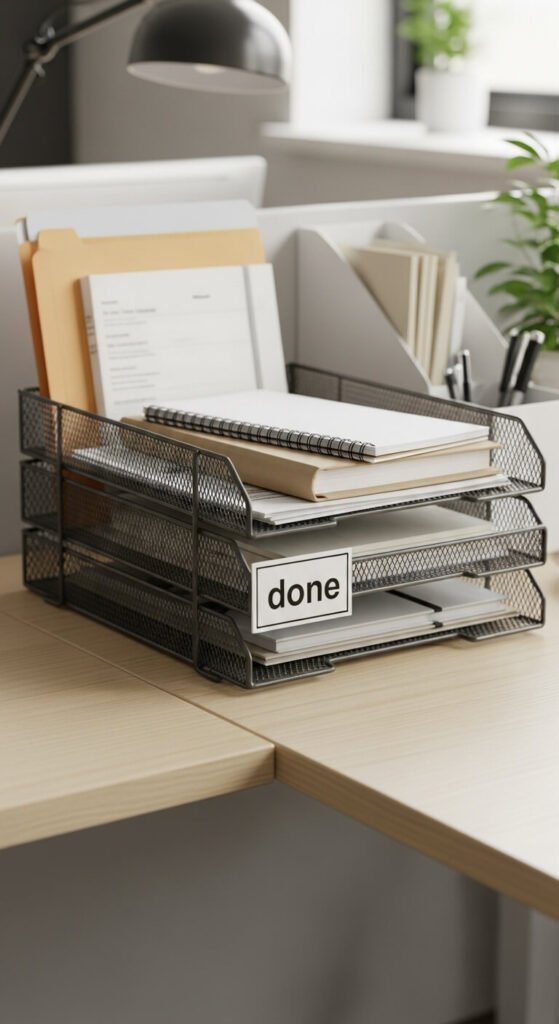
Finished work deserves a landing spot.
Use a simple tray or folder marked “done” for completed tasks and signed papers. Wire mesh ones cost under $10.
This keeps finished items from mixing with active projects. Your brain registers progress visually.
Clear the tray weekly when you file things properly. Seeing accomplishments pile up motivates you through harder tasks.
Small psychological wins matter during long workdays.
Add a Scented Candle (Unlit During Work)

Scent shapes your work environment subtly.
Keep an unlit candle on your desk in scents like eucalyptus or vanilla. The cold scent still provides calming benefits.
Light it only during breaks to avoid fire hazards and distraction. You’ll associate the smell with focused work.
Glass container candles cost $8-12 and look clean on any desk. Replace every 2-3 months to keep the scent fresh.
Use a Wireless Keyboard and Mouse
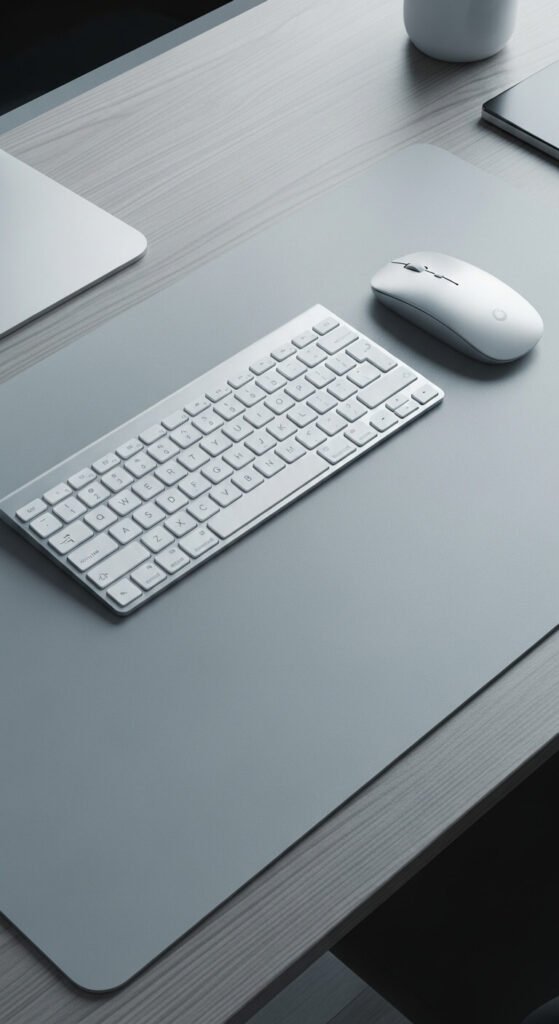
Cables limit your desk arrangement.
Wireless sets start at $25-35 for decent quality. Charge them weekly and forget about cord management.
You can shift your setup around easily. Move the keyboard closer for typing, push it back for reading.
Bluetooth models connect to multiple devices. Switch between your laptop and tablet without unplugging anything.
The clean look alone justifies the upgrade.
Keep a Single Notebook for Brain Dumps
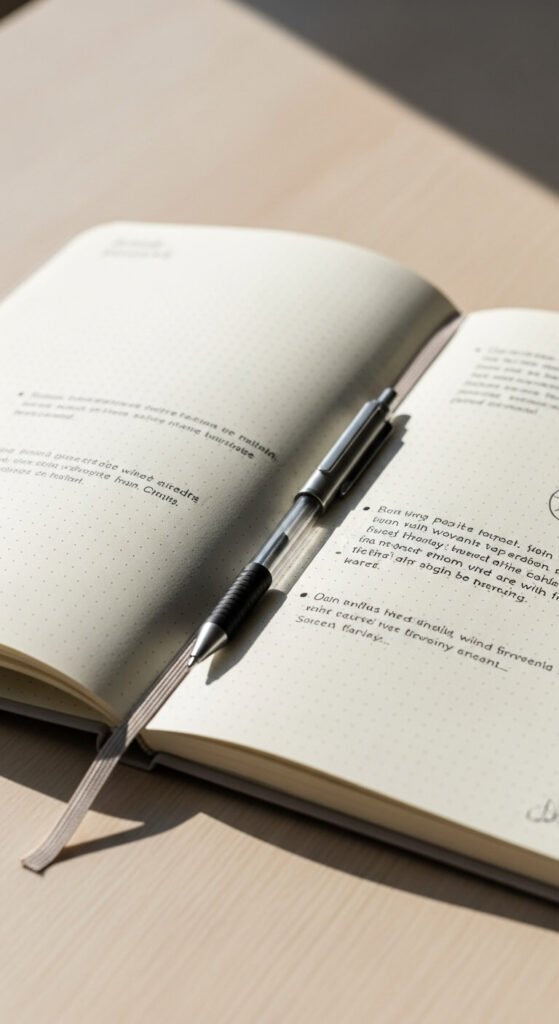
Digital notes disappear in apps.
Use one physical notebook for random thoughts, to-dos, and quick sketches. Dotted journals cost $10-15.
Write the date at the top of each page. Flip through it when you need to remember something you thought of last week.
The act of writing by hand helps ideas stick better than typing. Plus, no notifications interrupt your thinking.
Just one notebook—not five for different topics.
Display a Vision Board Corner
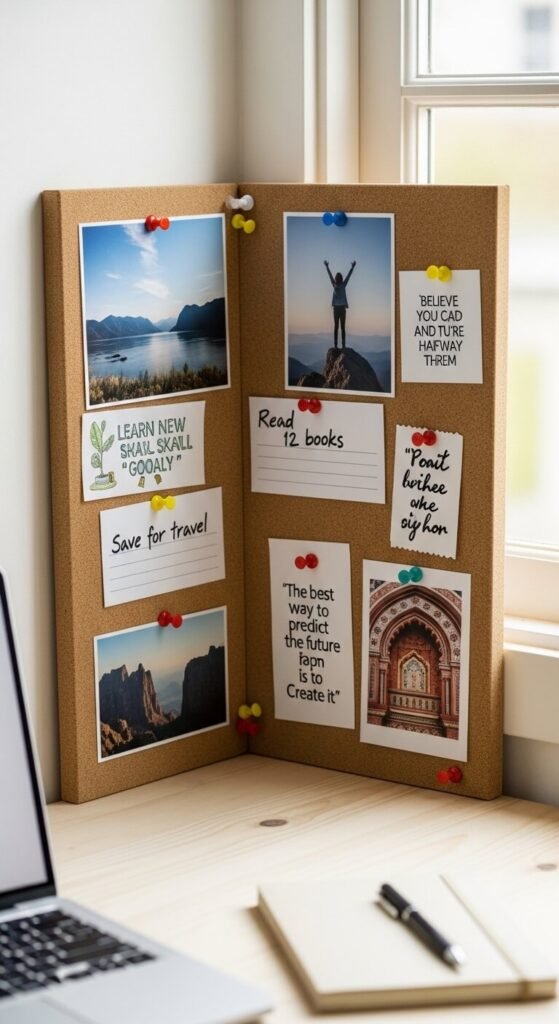
Big vision boards feel overwhelming.
Create a small 12×12 inch corner instead. Pin 3-5 images or quotes that represent your current goals.
Change them every month as your focus shifts. This keeps motivation fresh without becoming wallpaper you stop noticing.
Use a small cork square ($8) or clip photos to a wire grid. Make it personal and meaningful, not Pinterest-perfect.
Set Up a Charging Station Drawer
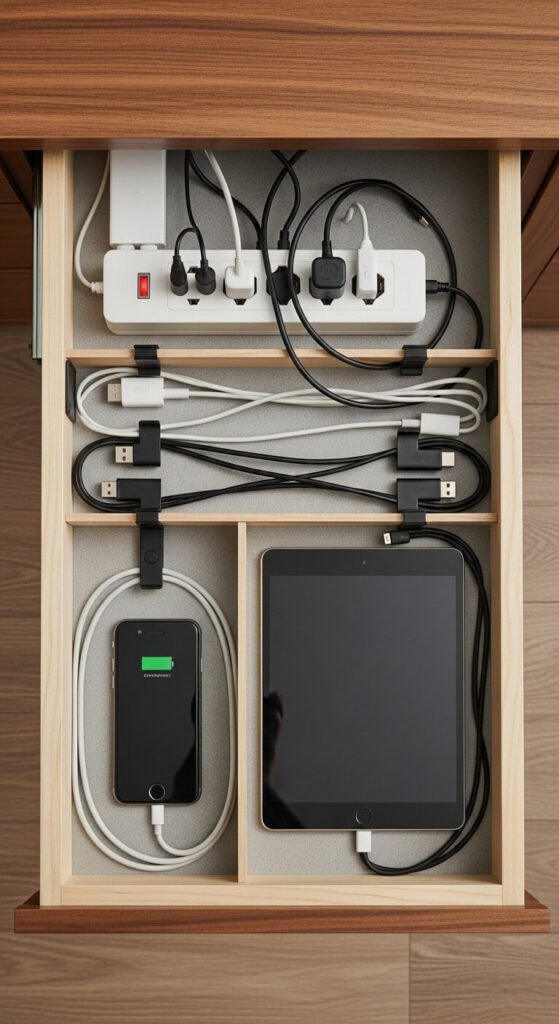
Chargers sprawl across surfaces fast.
Dedicate your top drawer to charging. Put a power strip inside and thread cables through the back.
Drop your phone and tablet in this drawer overnight. They charge hidden away, and your desktop stays clear.
Drill a small hole in the back of the drawer for cables if needed. Takes 20 minutes to set up permanently.
Add Task Lighting with a Desk Lamp
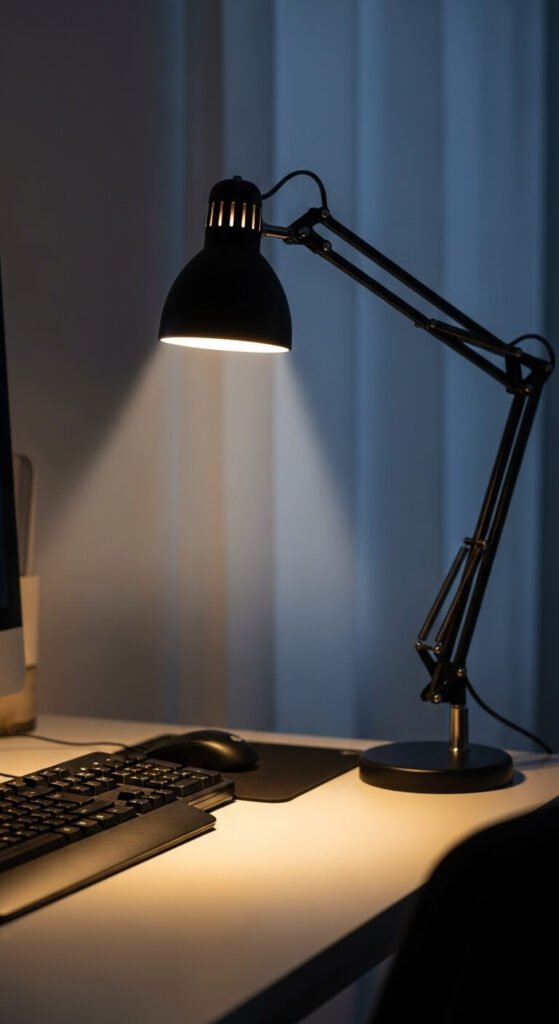
Overhead lights aren’t enough for detail work.
Get an adjustable LED desk lamp for $20-30. Position it to light your keyboard and notebook without screen glare.
Warm bulbs reduce eye strain during evening hours. Adjustable arms let you redirect light exactly where you need it.
This prevents you from hunching forward to see clearly. Better lighting means better posture automatically.
End with a Daily Reset Ritual
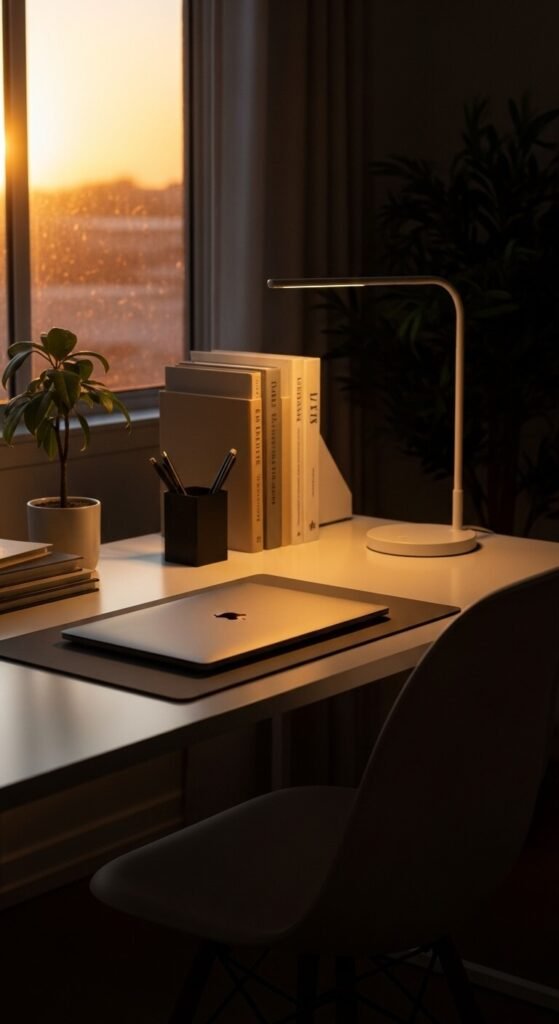
Tomorrow’s focus starts tonight.
Spend five minutes at day’s end returning everything to its spot. Wipe your desk mat. Close all notebooks.
Start each morning with a clean slate instead of yesterday’s mess. This tiny ritual signals your brain that work is done.
You’ll sit down the next day feeling ready instead of overwhelmed. The reset takes less time than the stress of facing clutter.
Conclusion
Your desk shapes your daily experience more than you realize. These 26 ideas aren’t about perfection—they’re about creating a space that works with you, not against you. Start with three changes this week. Maybe it’s clearing your surface, adding a plant, and fixing your monitor height. Small adjustments compound into a workspace that genuinely makes you want to sit down and create. Your most productive days happen when your environment supports your goals instead of fighting them. Build a desk setup that feels like yours, and watch how naturally the good work follows.