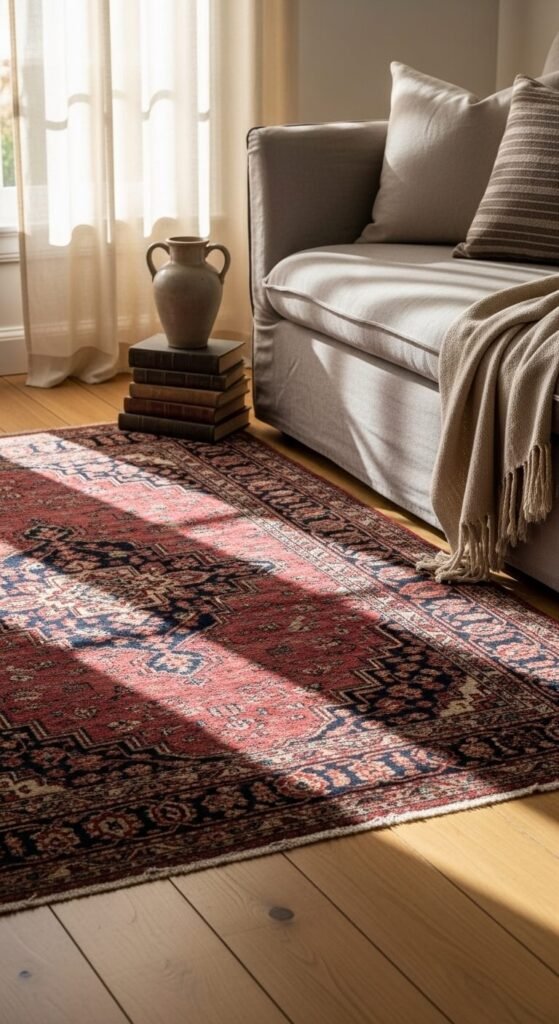
There’s something a vintage rug does that no new piece of furniture can quite match — it tells a story the moment it hits the floor. Whether you picked one up at an estate sale, inherited it from a relative, or scored it at a flea market for $30, a vintage rug carries history, warmth, and character that transforms a plain room into something that feels genuinely lived-in and loved. The good news? You don’t need a designer budget or a perfectly decorated home to make it work. These 26 styling methods will show you exactly how to use what you already have — or find affordably — to let your vintage rug shine.
1. Let the Rug Lead the Color Story
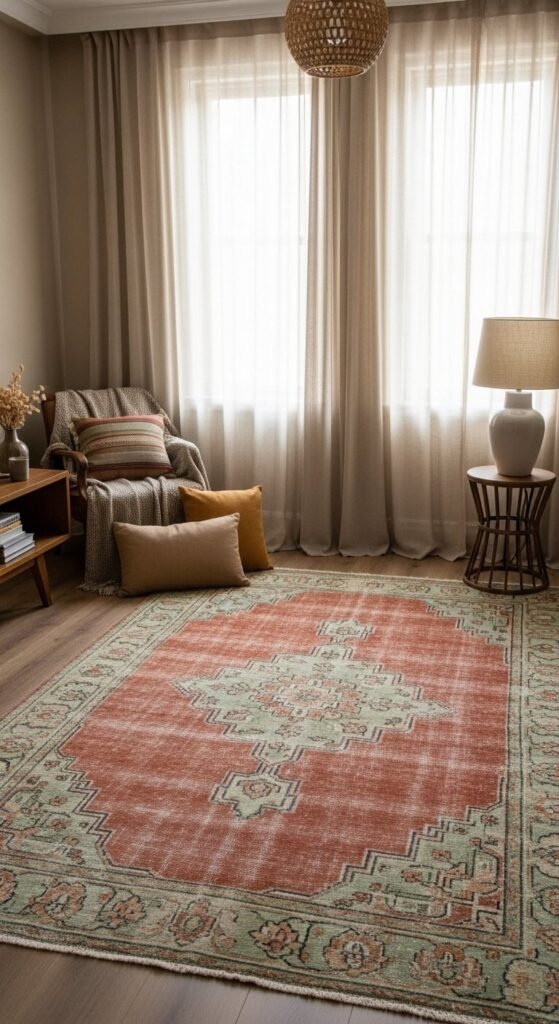
Pull your room’s colors directly from the rug — not the other way around.
Look closely at the rug’s tones. Pick two or three and repeat them in pillows, throws, or even a painted accent wall.
This approach makes the whole room feel intentional.
Budget tip: Swap out just one or two pillow covers in a matching hue. You can find them cheaply at thrift stores. The rug does the heavy lifting. Everything else just supports it.
2. Layer It Over a Natural Fiber Base
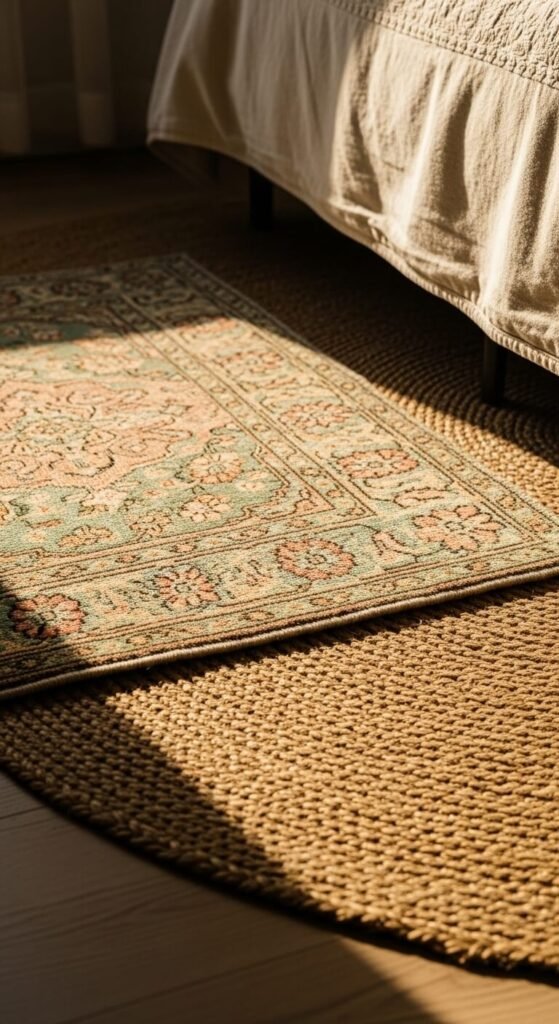
Layering a vintage rug over a jute or sisal base is one of the easiest ways to add depth.
The coarser texture underneath makes the vintage piece pop. It also protects both rugs from wear.
Try this: Find a plain jute rug in a size slightly larger than your vintage piece. Place the vintage rug slightly off-center for a relaxed, collected look.
This works especially well in living rooms and bedrooms. It costs less than replacing a single rug.
3. Use It to Define a Reading Nook
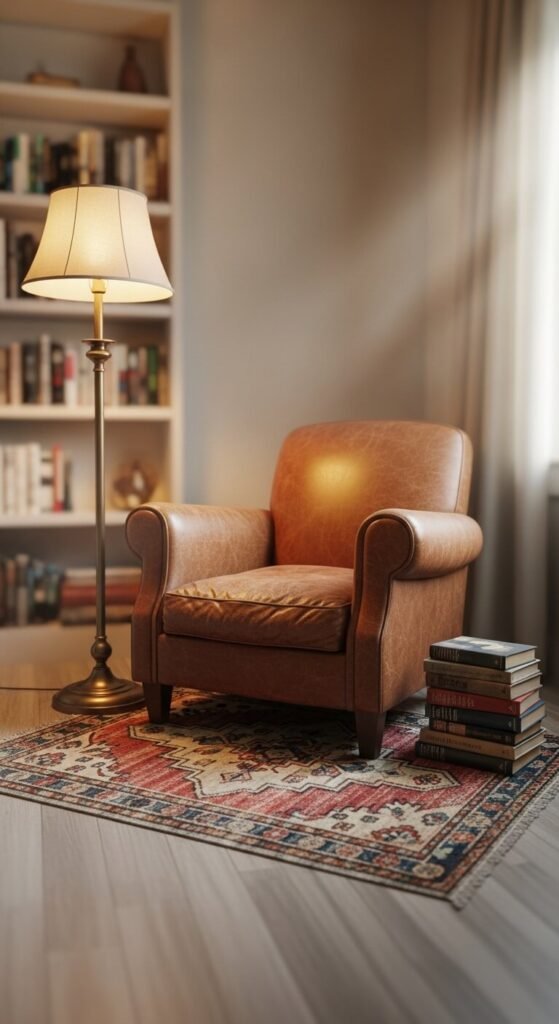
A vintage rug can carve out a cozy reading corner even in a small apartment.
Place a compact rug — even a 2×3 or 3×5 — under a chair and floor lamp.
Suddenly, that corner becomes its own little world.
Realistic DIY: Add a second-hand armchair and a $5 thrift store lamp. The rug acts as the visual anchor that says “this space has a purpose.” No built-ins or custom shelving required.
4. Go Rug-Only in a Minimalist Space
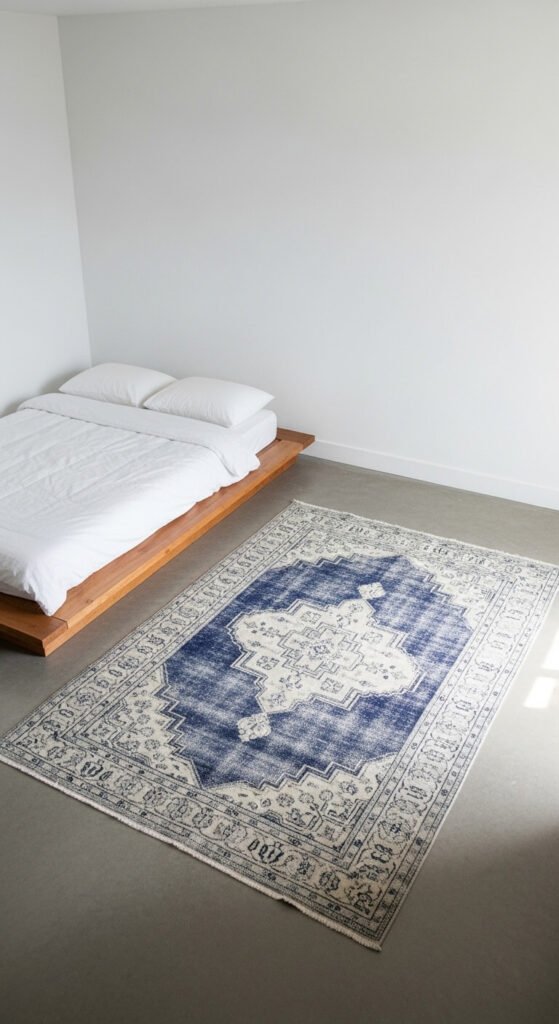
Sometimes, less is more — and the vintage rug is the statement.
In a minimal room with neutral walls and simple furniture, let the rug stand alone.
Don’t crowd it with too many accessories.
Key move: Keep surrounding furniture in raw wood, white, or off-white. The rug’s age and pattern become the artwork. No gallery wall needed. This works beautifully in bedrooms or studios with clean, open floor space.
5. Hang It as Wall Art
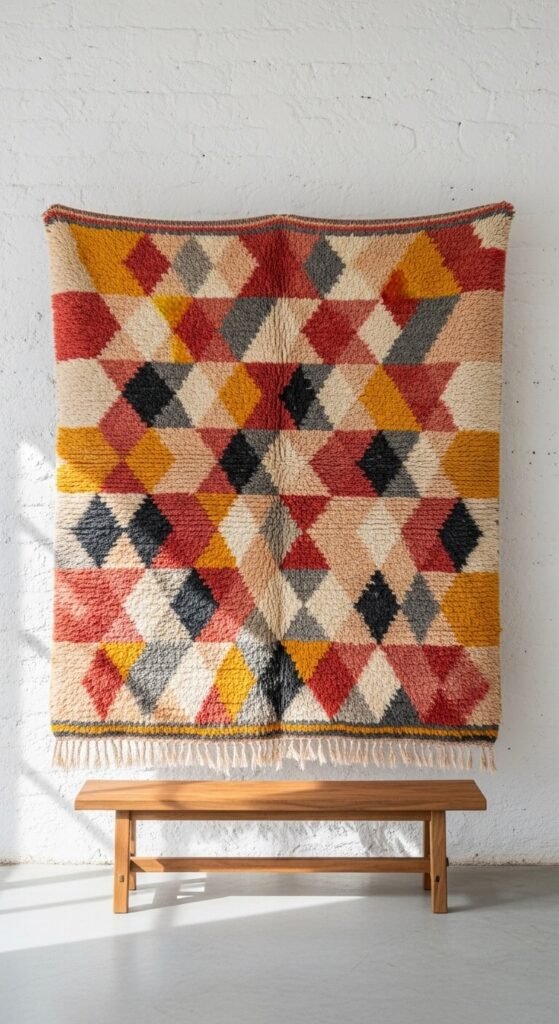
Vintage rugs make extraordinary wall art — especially pieces that are too worn to walk on.
Use a dowel rod or a rug-hanging strip to mount it flat on the wall.
DIY tip: Thread a wooden dowel through the rug’s fringe or top edge. Hang with two simple hooks. Cost: under $10 in supplies.
This works especially well in entryways, above a bed’s headboard, or in a dining room where you want texture without clutter.
6. Place It Under a Dining Table
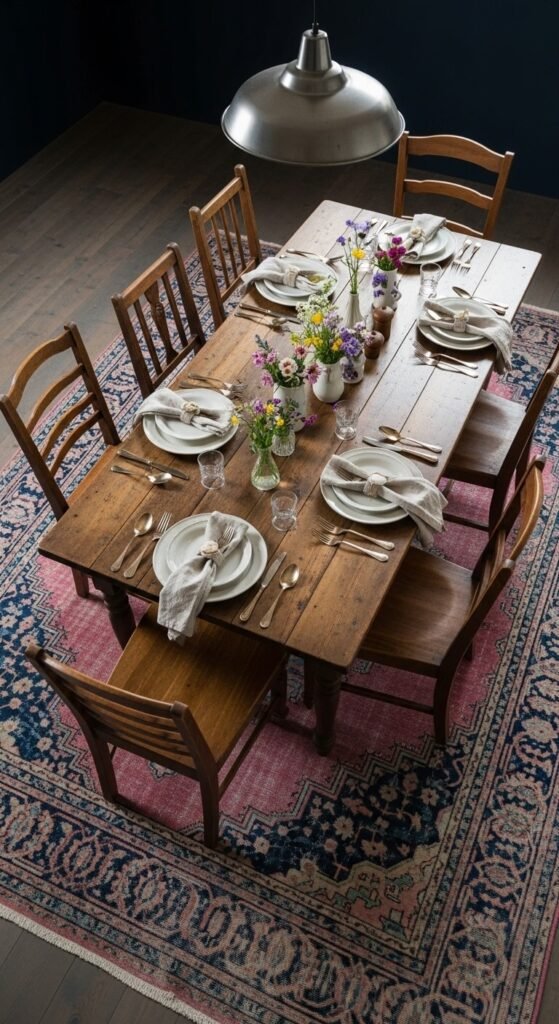
A vintage rug under a dining table grounds the whole eating area.
The key is size — the rug should extend at least 24 inches beyond the table on all sides so chairs stay on the rug when pulled out.
Practical note: Choose a flat-weave vintage rug here. Kilims or dhurries are ideal — they’re thinner and easier to clean under tables.
Don’t fear a little wear. It adds to the charm.
7. Try the Off-Center Placement
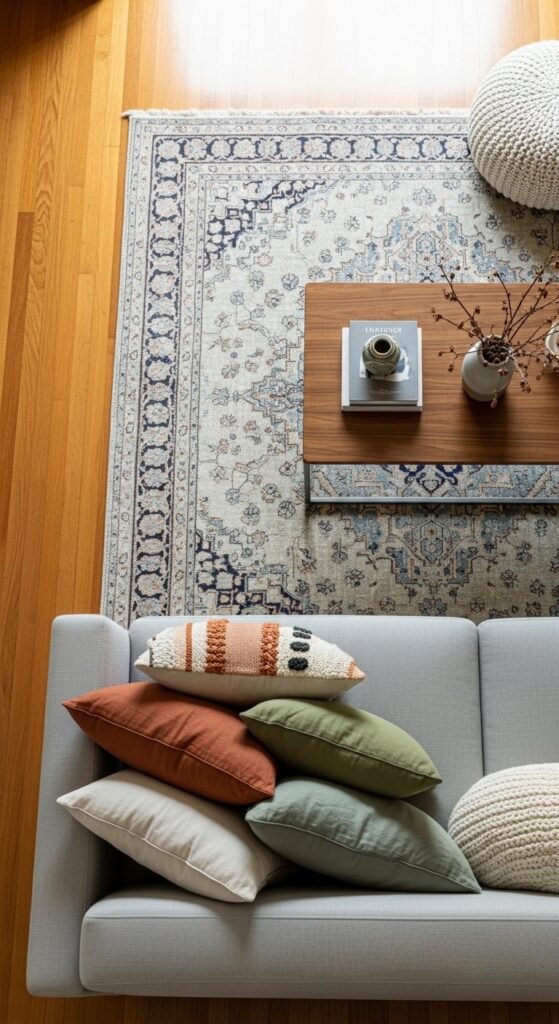
Perfectly centered rugs can feel stiff. Off-center placement feels more organic.
Shift the rug to one side of the coffee table intentionally. Let the hardwood or tile peek through on the other.
This relaxed approach suits vintage pieces perfectly — it mirrors how rugs settle over years of real use.
Try it: Move your rug six inches to the left or right. Step back. It often feels more natural than you’d expect.
8. Pair with Raw or Reclaimed Wood
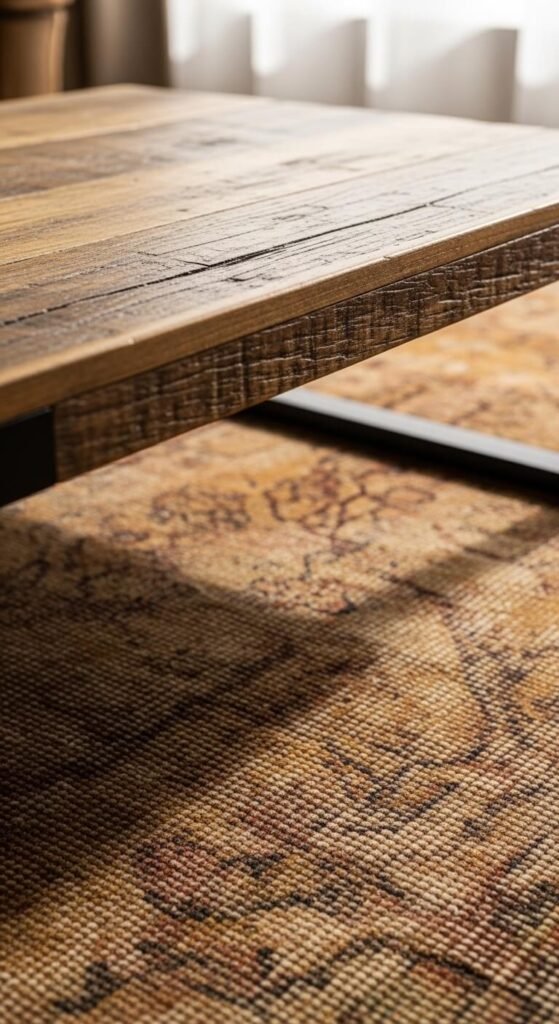
Vintage rugs and reclaimed wood are natural companions.
The aged quality of both materials echoes each other. Neither looks too precious or too new.
Easy win: If you have a worn wooden table or a thrifted wood bench, place your vintage rug underneath or beside it.
The combination looks intentional and expensive — even when it isn’t. Raw, unfinished edges on wood actually enhance the rug’s handmade character.
9. Use a Small Runner in Unexpected Places
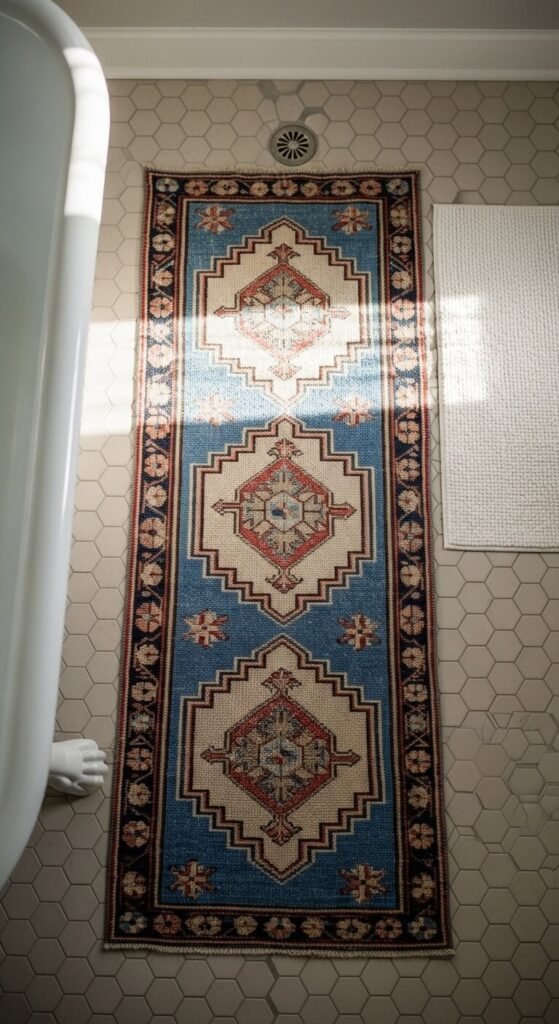
Vintage runners don’t belong only in hallways.
Try them beside your bed, in front of a kitchen sink, next to a bathtub, or along a narrow bookshelf wall.
Sizing idea: A 2×6 or 2×8 runner fits almost anywhere. These are often cheaper than large rugs at estate sales or markets.
Budget move: Look for worn or slightly damaged runners — the price drops significantly, and the wear adds character in smaller applications.
10. Mix Patterns with Confidence
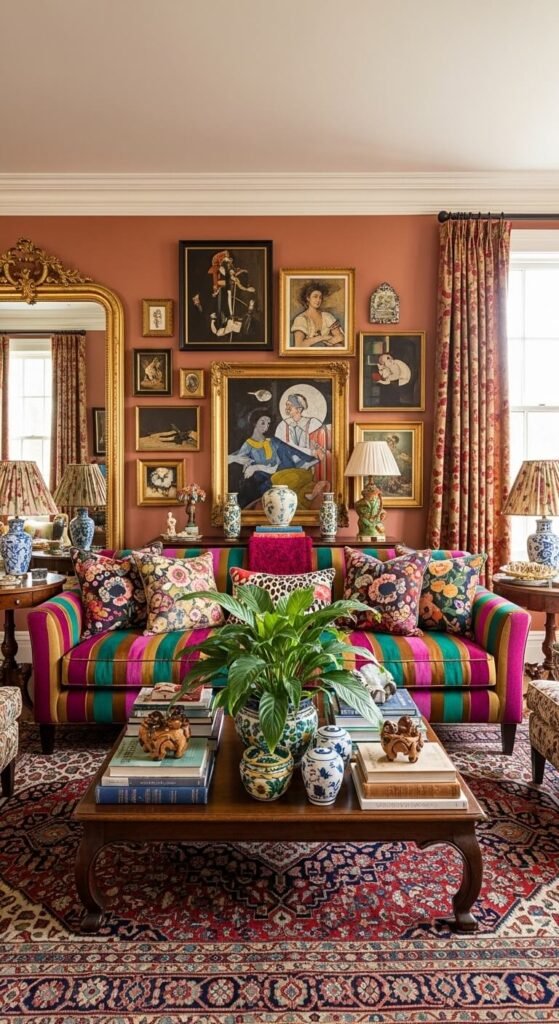
Many people avoid mixing patterns out of fear. But vintage rugs actually mix well — because their faded tones soften the clash.
The rule: Vary the scale. A large floral rug pairs with small geometric pillows. A bold stripe sofa works beside a fine-detailed vintage rug.
Keep at least one shared color between the patterns.
Flea markets are full of vintage rugs with soft, worn-down palettes that play well with almost any existing pattern in the room.
11. Ground an Outdoor Seating Area
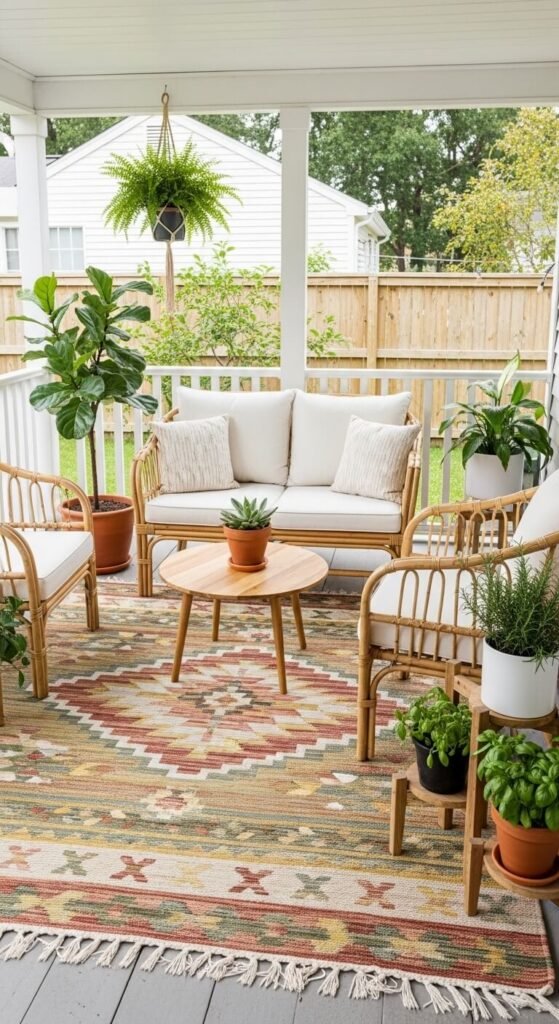
Some vintage flat-weave rugs — especially kilims — can work in covered outdoor spaces.
They add warmth and personality to a patio or porch without requiring expensive outdoor-rated furniture.
Important: Only use them in fully covered spots, away from direct rain.
DIY setup: Pair a vintage kilim with second-hand rattan chairs and potted plants. The natural tones of the rug connect the indoor feel to the outdoor setting beautifully.
12. Stack Two Rugs of Similar Scale
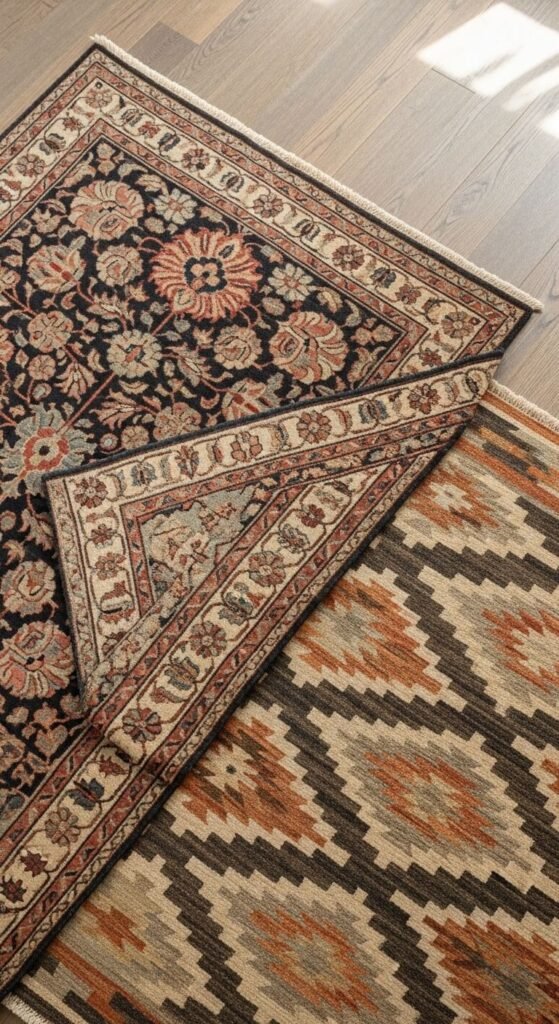
Stacking two vintage rugs at a slight angle creates a gallery-like floor moment.
This works best when both rugs have similar coloring but different patterns — one floral, one geometric, for example.
How to do it: Overlap the corner of one rug over the other by about 8–12 inches.
This is also practical — it hides worn patches on either rug. Stacking makes imperfect vintage pieces look curated rather than tired.
13. Place It at the Foot of the Bed
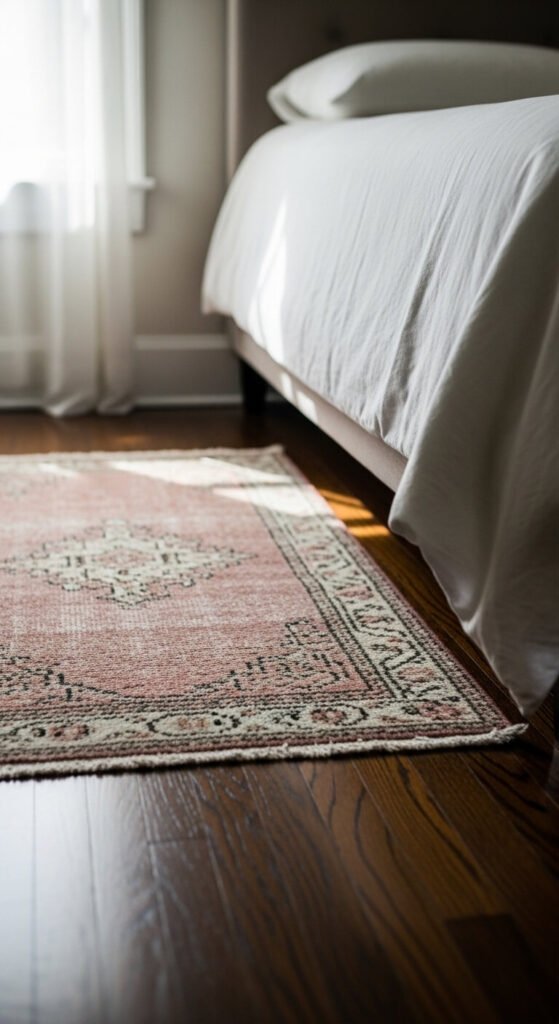
A vintage rug at the foot of the bed makes even a plain bedroom feel considered.
You don’t need to cover the whole bedroom floor. A 4×6 or even a 3×5 is enough.
Positioning tip: Place it so it peeks out on three sides of the bed frame — both sides and the foot.
This works especially well in small bedrooms where a large rug would overwhelm the space or strain the budget.
14. Style Around the Rug’s Flaws
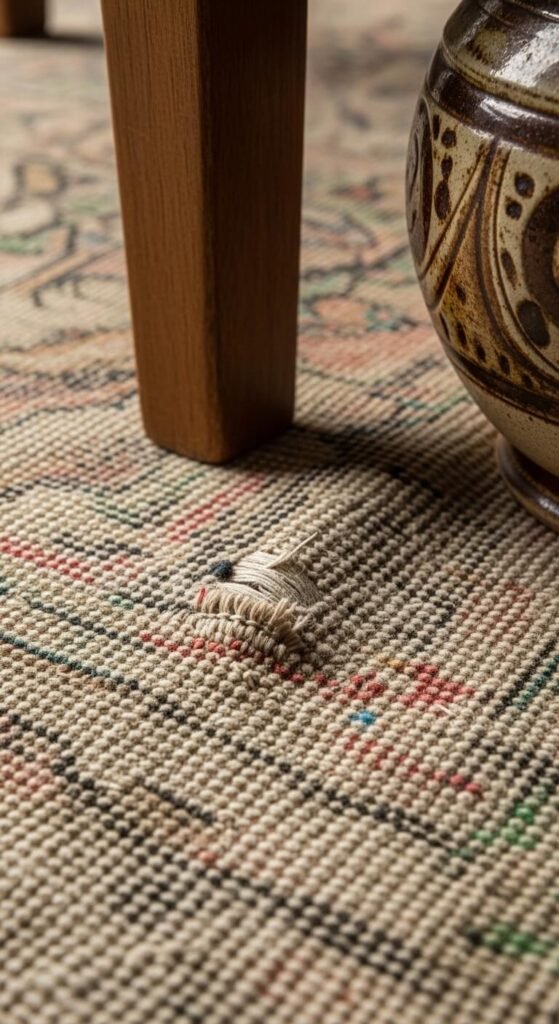
Fading, worn patches, and small repairs aren’t flaws — they’re features.
Don’t hide them. Style around them by placing furniture legs on the worn areas, or by using them as conversation starters.
A visible repair in the center of a rug tells a story.
Mindset shift: When shopping for vintage rugs, imperfect pieces are significantly cheaper. They style just as beautifully — sometimes more so — than mint-condition examples.
15. Create a Gallery Wall That Echoes the Rug’s Palette
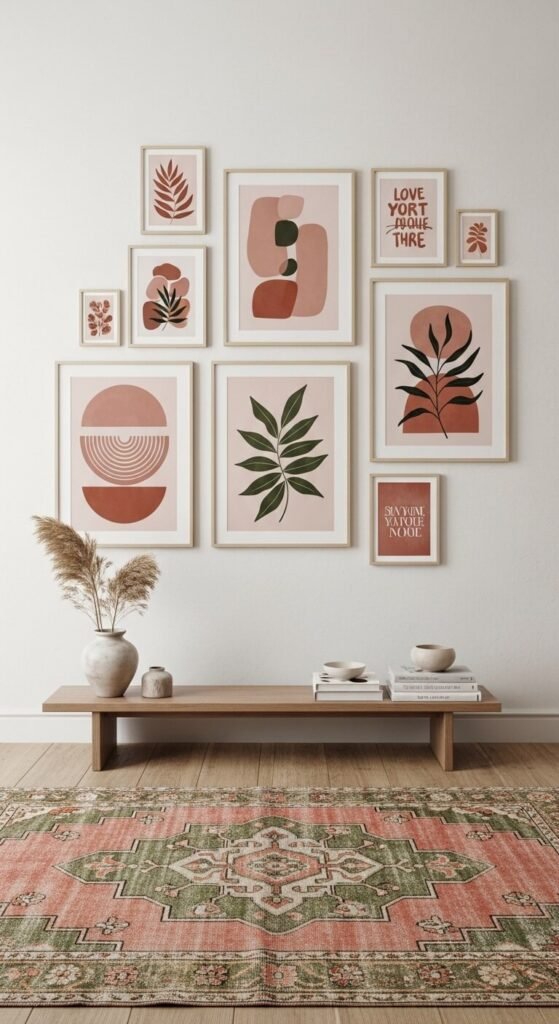
Once you’ve pulled colors from your rug, build a gallery wall around that palette.
Frame prints, postcards, or simple painted paper in hues that match the rug’s tones.
Budget approach: Print free art from public domain archives online. Frame with inexpensive thrift store frames, then paint the frames to match.
The connection between the wall and the floor creates a through-line that makes the room feel designed — not decorated by accident.
16. Use It to Soften a Hard, Industrial Space
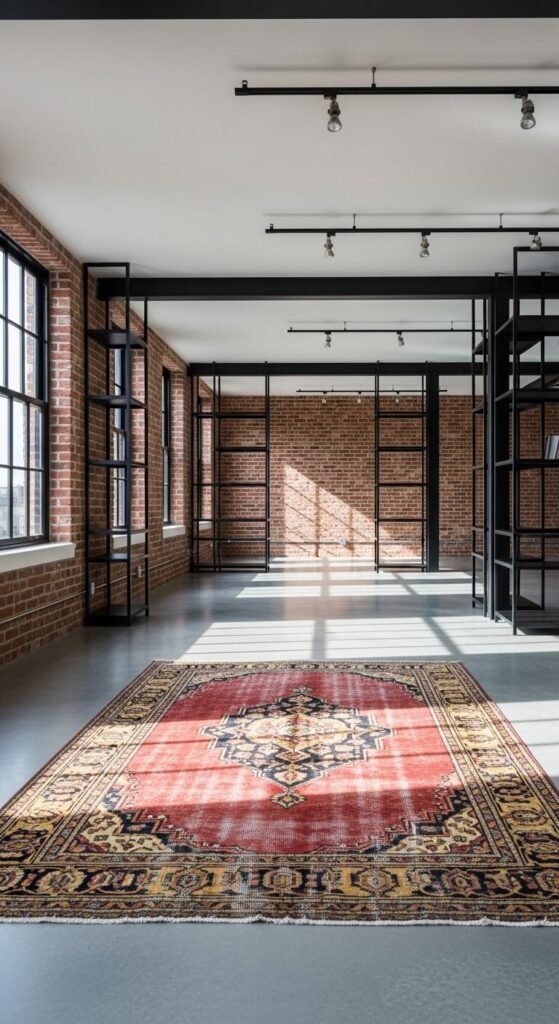
Industrial spaces — concrete, brick, metal — can feel cold.
A vintage rug is one of the fastest fixes.
The contrast between rough surfaces and a soft, patterned rug creates instant balance.
Practical note: In lofts or studios with polished concrete floors, a vintage rug also provides sound dampening — a functional bonus alongside the visual warmth it adds to otherwise hard, echo-prone rooms.
17. Roll One Out in the Entryway
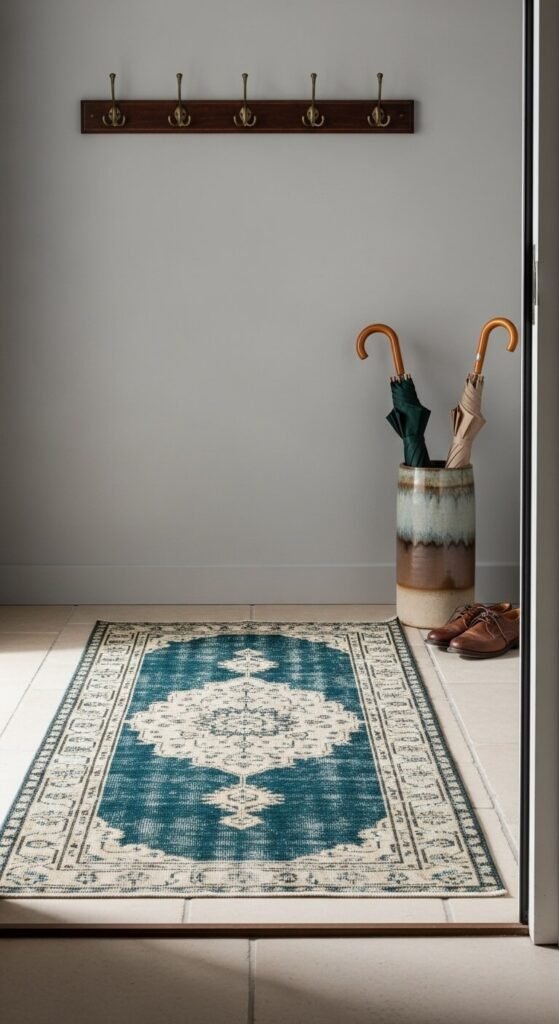
Your entryway is the first thing people see. A vintage rug here sets the entire tone of the home.
Even a small piece — 2×3 — makes an impact in an entry.
Durability tip: Choose a flat-weave vintage rug for entryways. They’re easier to vacuum and handle foot traffic better than thick pile rugs.
A worn vintage runner in an entryway looks like it belongs. Wear in this spot is expected and charming.
18. Anchor a Workspace or Home Office
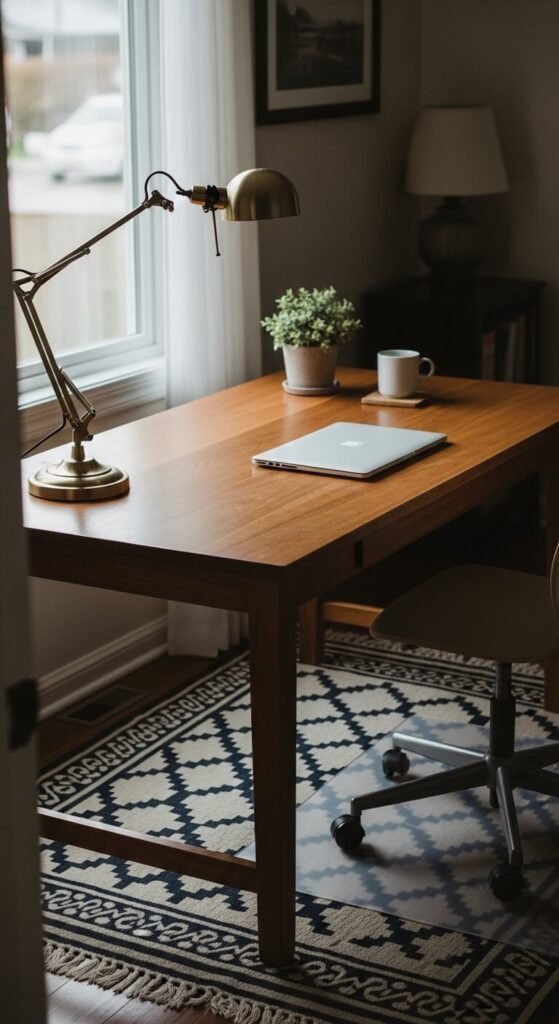
A vintage rug under a desk makes a home office feel intentional — not like a corner of a spare bedroom.
Use a flat-weave rug here so a chair rolls smoothly across the surface.
Sizing guide: A 4×6 works for most single-desk setups. Place it so all four chair legs sit on the rug.
Affordable find: Vintage kilims in this size often run $40–$80 at estate sales or online marketplaces like Facebook Marketplace.
19. Let It Anchor a Kids’ Play Area
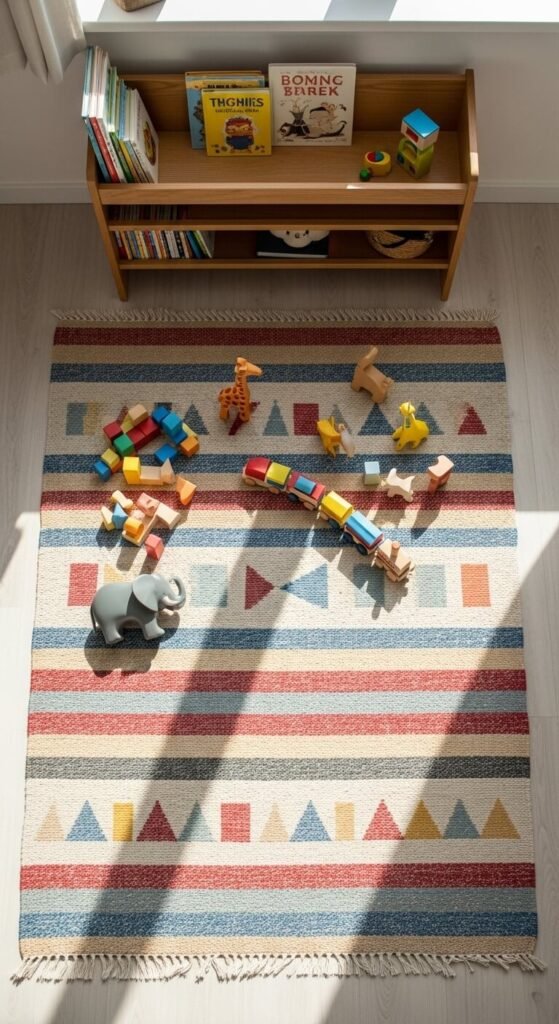
Vintage rugs in children’s play areas are often overlooked — but they’re a perfect fit.
Why? The colors are already muted. A little more wear blends right in.
Flat-weave vintage rugs are also easy to spot-clean and shake out.
Practical tip: Look for vintage pieces with simple geometric patterns in soft reds, blues, or yellows. They’re visually stimulating without being overwhelming — and they cost far less than new children’s rugs.
20. Mix Eras Deliberately
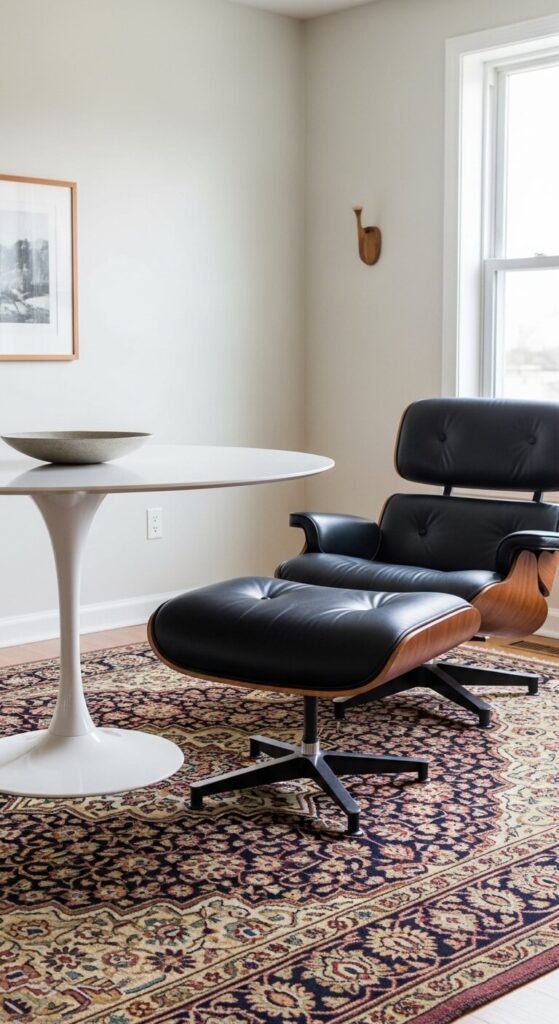
A vintage Persian rug under a mid-century modern sofa. A worn kilim beneath a sleek Scandinavian dining set.
Mixing eras works. The key is contrast — let the rug be old and the furniture be clean-lined. Don’t try to match them. Let them coexist.
This is one of the easiest ways to make a room look like it was assembled over time — which is always more interesting than a room that was bought all at once.
21. Use It to Warm Up a White Kitchen
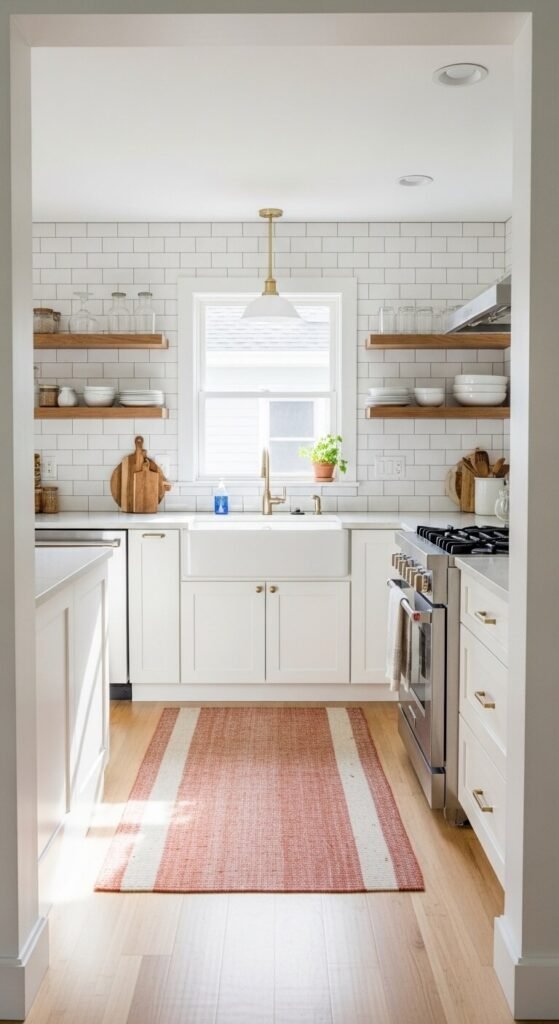
All-white kitchens can feel sterile.
A vintage flat-weave rug placed in front of the sink or stove introduces warmth and pattern without a renovation.
What to use: Kilims or cotton dhurries work best in kitchens — they’re thin, easy to move, and machine washable in many cases.
Color tip: A rug with even a small amount of terracotta, rust, or gold warms up white cabinetry in a way that paint or hardware changes alone cannot.
22. Frame It with Furniture Legs
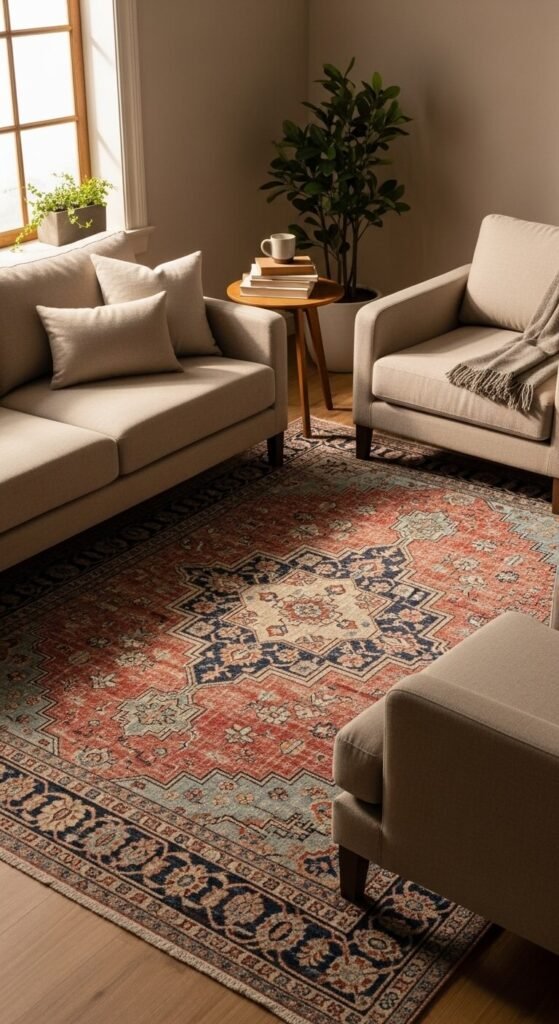
The classic debate: furniture on or off the rug?
For vintage rugs, the best visual answer is front legs on, back legs off — or all four legs on if the rug is large enough.
This frames the rug and connects the furniture to the floor.
Why it works: It keeps the rug from floating in the middle of the room. The furniture acts as a visual border, making the whole seating arrangement feel grounded and connected.
23. Style with Plants to Reinforce an Organic Feel
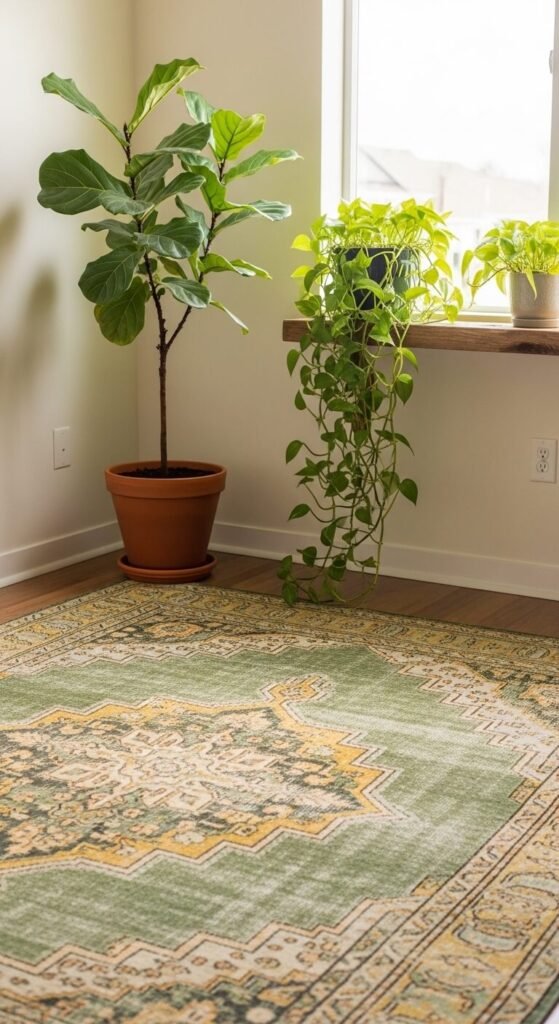
Plants and vintage rugs share the same energy — natural, imperfect, alive.
Place a large leafy plant near the edge of the rug to reinforce an organic, collected atmosphere.
Easy pairing: A fiddle-leaf fig, snake plant, or trailing pothos beside a vintage rug in earthy tones looks effortlessly put-together.
The greens of live plants echo the faded vegetable dyes often found in traditional vintage rugs, creating a visual connection that feels completely natural.
24. Use a Vintage Rug in the Bathroom
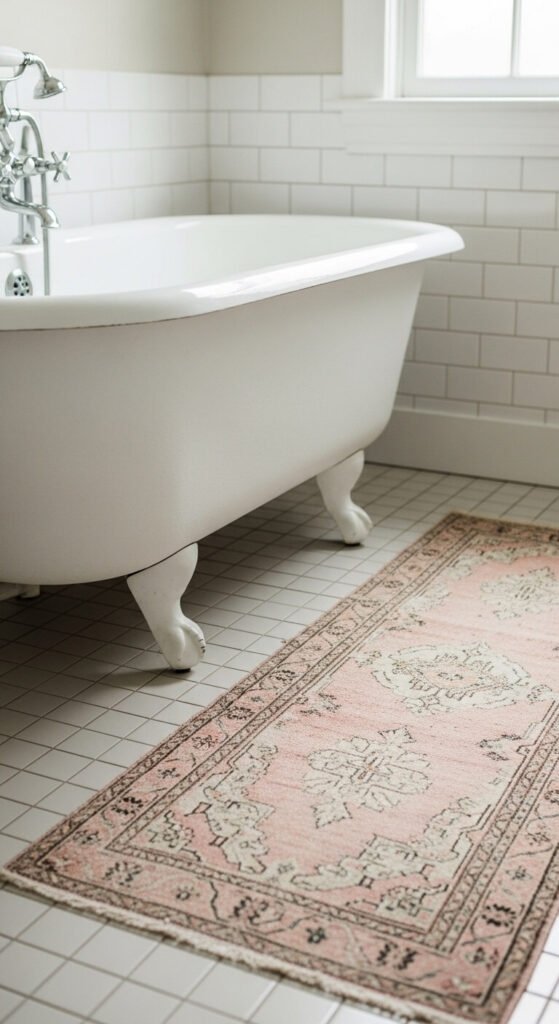
Small vintage rugs — especially those 2×3 or 2×4 — are underused in bathrooms.
Place one beside a bathtub, in front of a vanity, or between a toilet and sink.
What to look for: Flat-weave pieces made from cotton or wool. Avoid thick pile rugs in damp environments.
Budget tip: Small vintage pieces in imperfect condition sell cheaply. A faded or slightly worn small rug is completely appropriate beside a bathtub where dampness and use are expected.
25. Rotate Seasonally for a Fresh Look
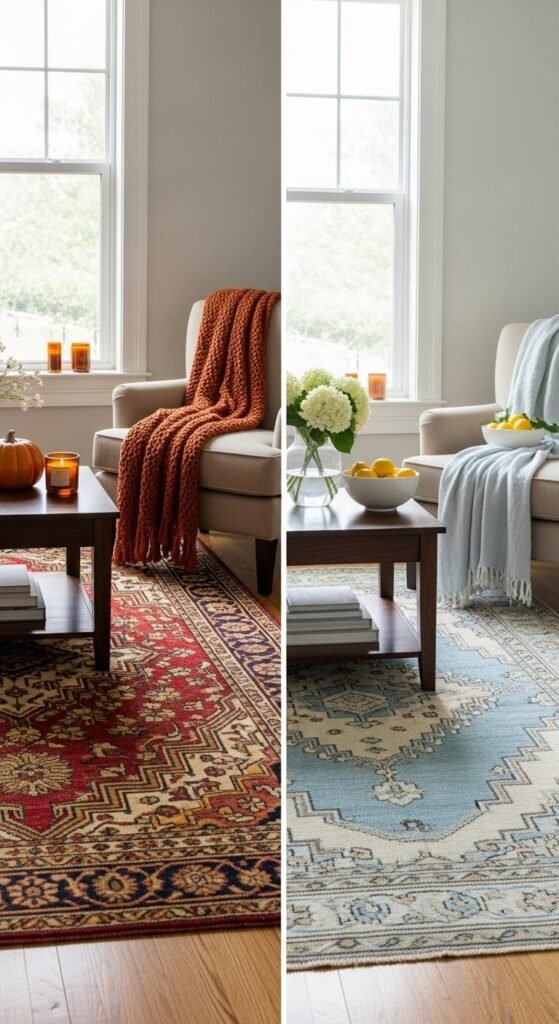
You don’t need to redecorate to refresh a room. Just rotate the rug.
Use a warmer, richer vintage rug — deep reds, burnt orange, gold — in fall and winter.
Swap it for a lighter piece — soft blue, ivory, faded green — in spring and summer.
Storage tip: Roll unused rugs tightly and store them wrapped in cotton fabric, not plastic. This keeps them from developing creases or mildew during off-season storage.
26. Trust the Worn Spots
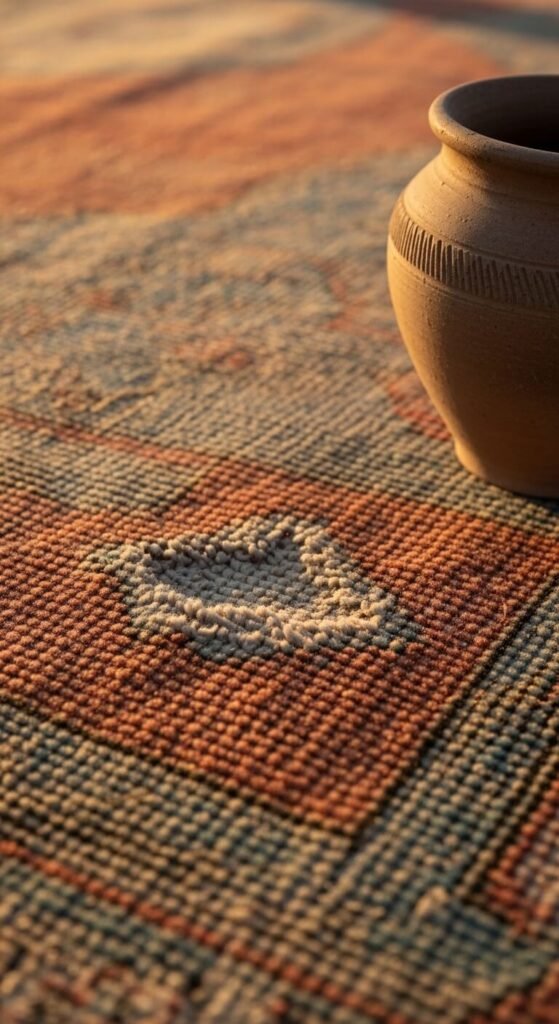
The most styled-looking vintage rugs are often the most worn ones.
Worn centers, faded edges, soft pile — these aren’t damage. They’re proof of a life lived.
Don’t wait for the perfect condition piece to start styling. Work with what you have.
A worn rug placed confidently in a room — with good lighting and intentional furniture placement — looks far better than a pristine rug placed apologetically in a corner.
Trust the wear. It’s the whole point.
Conclusion
Vintage rugs don’t ask for perfect homes. They ask for a floor, a little intention, and the confidence to let something imperfect take center stage. Whether you’re layering rugs for depth, pulling colors into a gallery wall, or simply placing a worn runner beside your bathtub, the goal is the same — creating a space that feels grounded, warm, and genuinely yours. Start with what you have. Shop secondhand. Embrace the faded edges and the mended patches. The most meaningful rooms aren’t designed from scratch — they’re built over time, one honest, layered choice at a time. Your vintage rug is already halfway there.