1. Start With a Neutral Base Palette
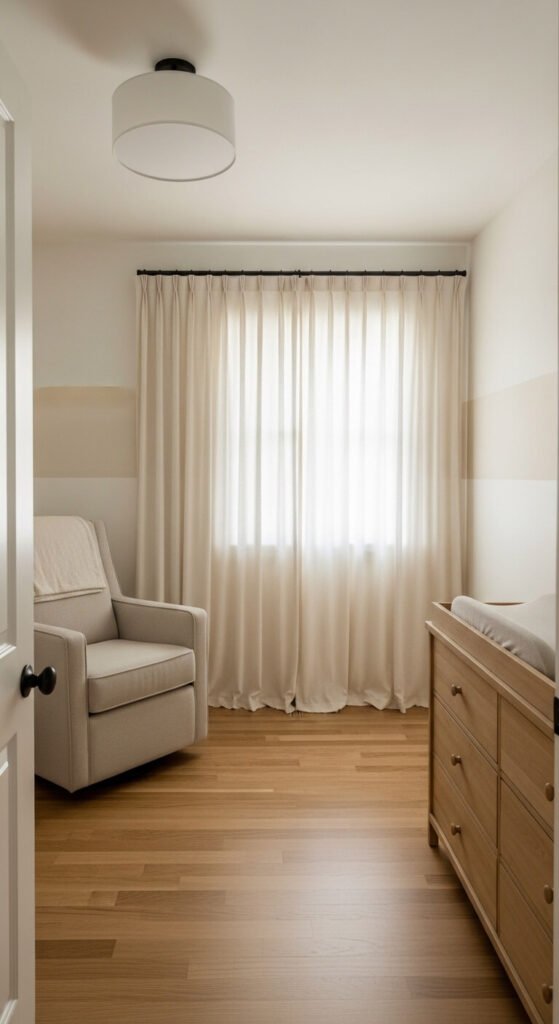
Neutral walls are your secret weapon. They work with every theme, every season, and every age. Choose warm whites, soft creams, or pale greiges over stark bright white — they feel cozier in person. Benjamin Moore’s “White Dove” or Sherwin-Williams “Accessible Beige” are popular picks under $60 a gallon. A neutral base lets you swap out colorful accessories as your child grows without repainting. It’s the lowest-effort, highest-impact starting point for any nursery.
2. Layer in Warmth With a Jute or Wool Rug
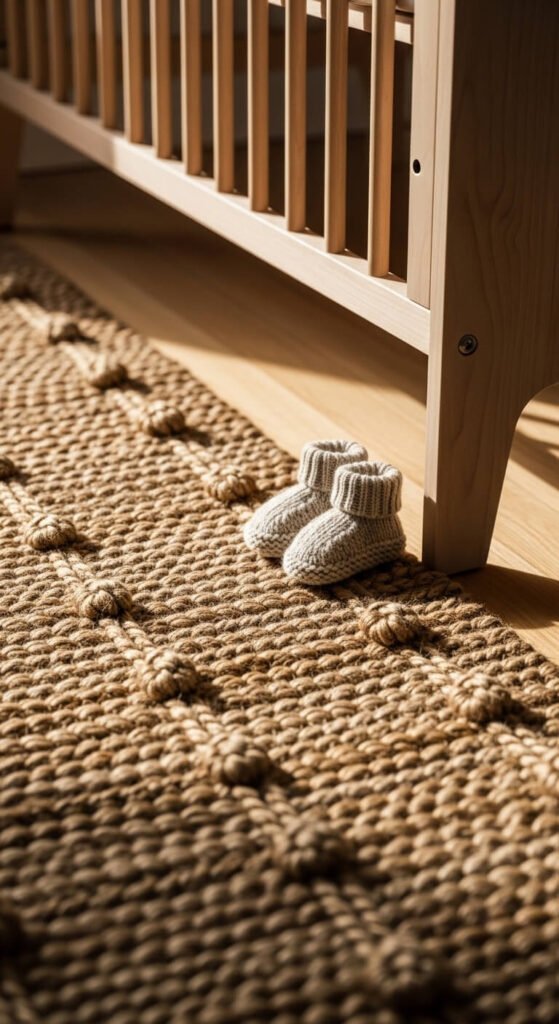
A rug instantly makes a nursery feel pulled together. Jute and wool rugs add warmth without pattern overwhelm. Look for flat-weave options on Amazon or IKEA’s SINDAL range — often under $80. Place the rug so at least two legs of the crib sit on it. This anchors the space visually. Add a thin non-slip pad underneath for safety. Bonus: neutral-toned rugs photograph beautifully and age well into toddler years.
3. Choose a Convertible Crib That Lasts for Years
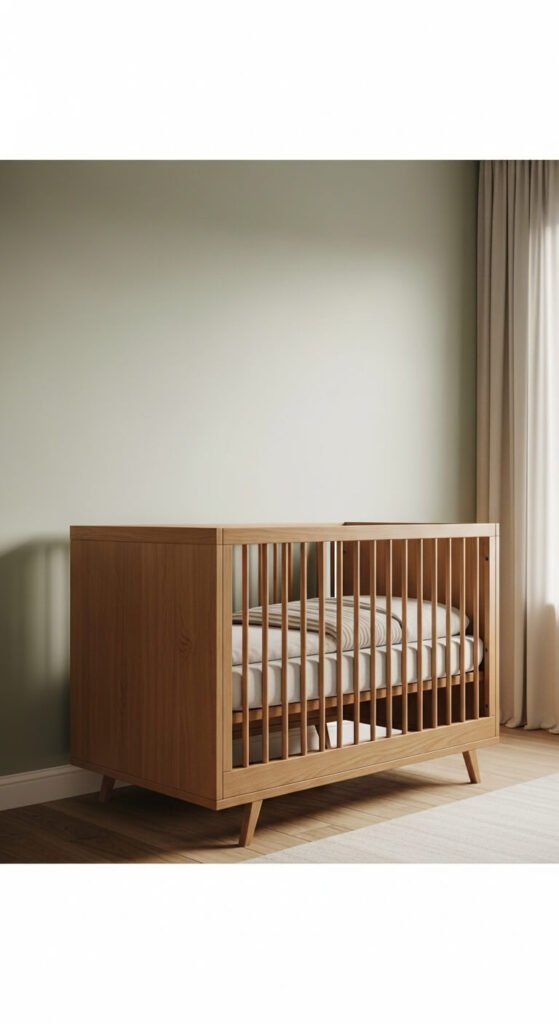
Convertible cribs are the smartest long-term purchase in any nursery. They transform from crib to toddler bed to full bed as your child grows. Brands like DaVinci and Babyletto offer solid options starting around $250. Look for GREENGUARD Gold certification — it means lower chemical emissions. Skip the ornate spindles and go for clean-lined designs that won’t look dated in five years. One good crib easily replaces three separate bed purchases over time.
4. Use a Canopy to Create a Dreamy Focal Point
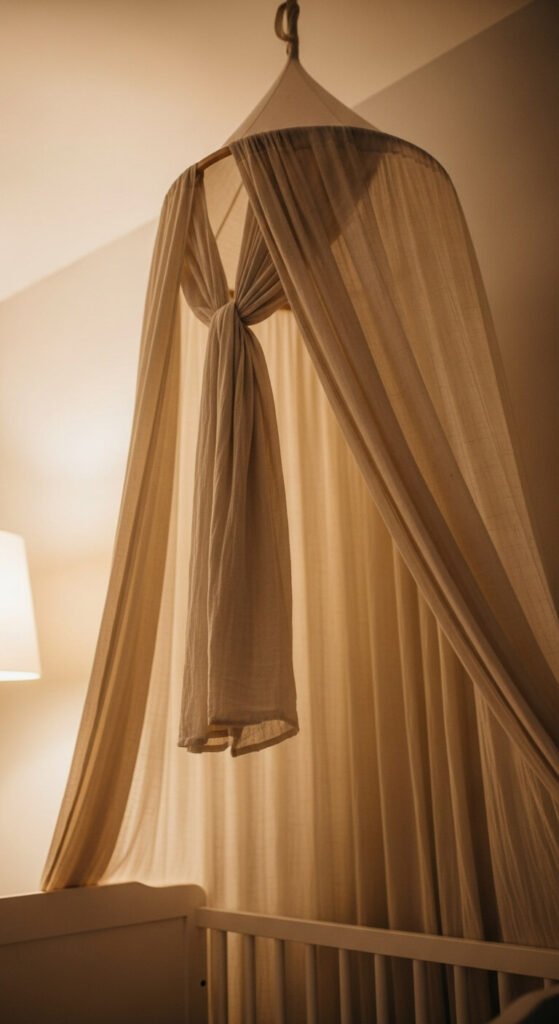
A canopy transforms a plain crib into a visual centerpiece. You don’t need a custom installation — a wooden embroidery hoop ($5 at a craft store) and two yards of sheer muslin fabric works perfectly. Attach to the ceiling with a ceiling hook and adjust the drape to your liking. Keep it soft and simple. Avoid heavy or fluffy canopies that trap dust. A linen or gauze canopy photographs beautifully and is easy to wash when needed.
5. Add a Gallery Wall With Meaningful Prints
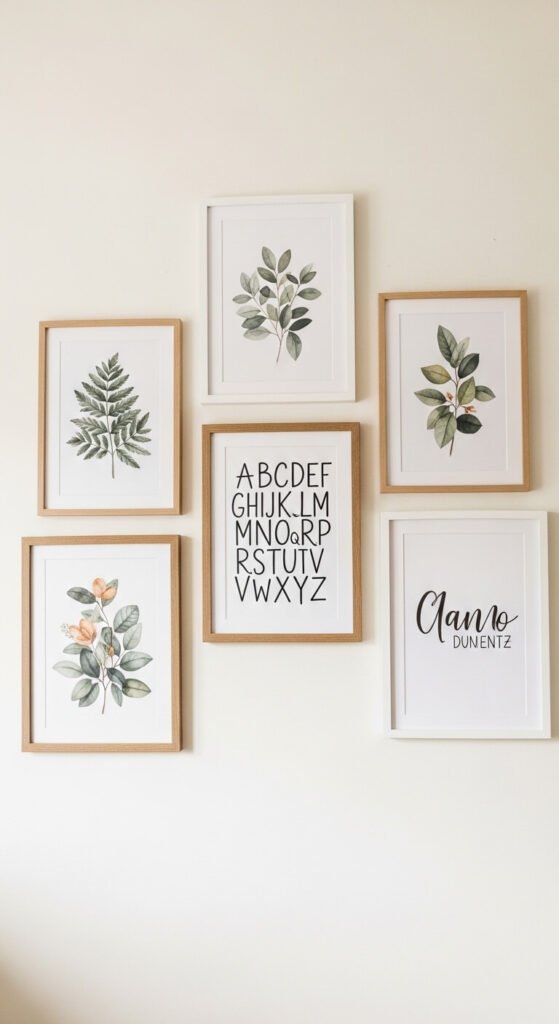
Gallery walls look expensive but rarely are. Print your own artwork from free sites like Canva or Unsplash, frame with IKEA RIBBA frames ($5–$15 each), and hang in an organic cluster above the dresser or changing area. Botanical prints, soft watercolors, and simple line drawings work well. Keep frames in two complementary finishes — like white and natural wood — so it looks intentional. Use removable adhesive strips to hang without damaging walls.
6. Bring in a Rattan or Wicker Chair
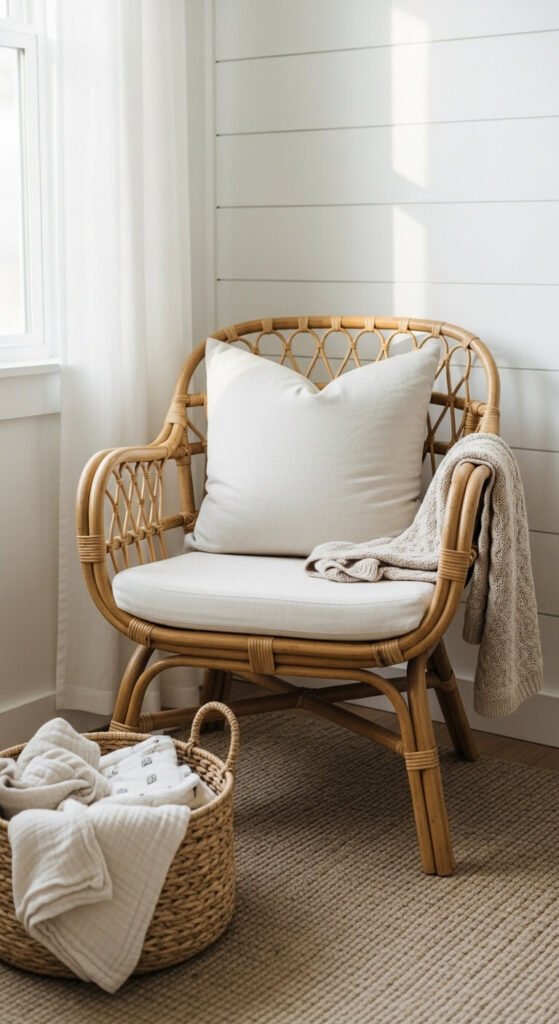
Rattan adds texture and warmth without competing with other décor. It’s also lightweight and easy to move. Look for secondhand rattan chairs on Facebook Marketplace or Kijiji — you can often find beautiful pieces for under $50. Add a linen cushion for comfort. A rattan chair works for nursing, reading, and toddler cuddles. It’s one of those pieces that actually gets better-looking with light wear and age.
7. Install Floating Shelves for Books and Decor
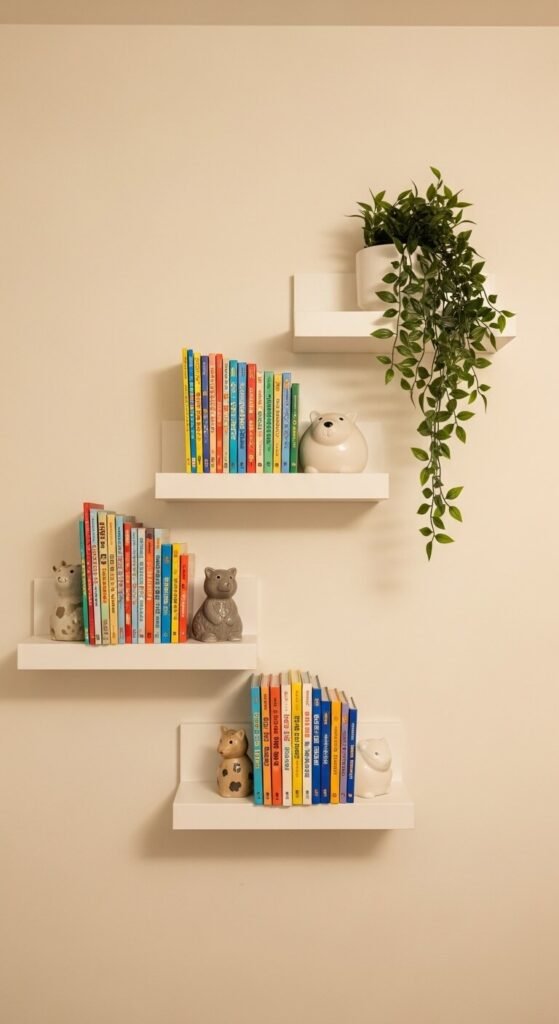
Face-out bookshelves display covers — which kids are far more drawn to than spine-out storage. IKEA MOSSLANDA picture ledges cost around $15 and hold small books and light decor perfectly. Install at a height you can reach easily for nighttime grabs. Keep each shelf to three or four items max so it doesn’t look cluttered. Rotate books seasonally to keep the display fresh. Small ceramic animals or a simple succulent add visual interest without crowding the shelf.
8. Pick Curtains That Go Floor to Ceiling
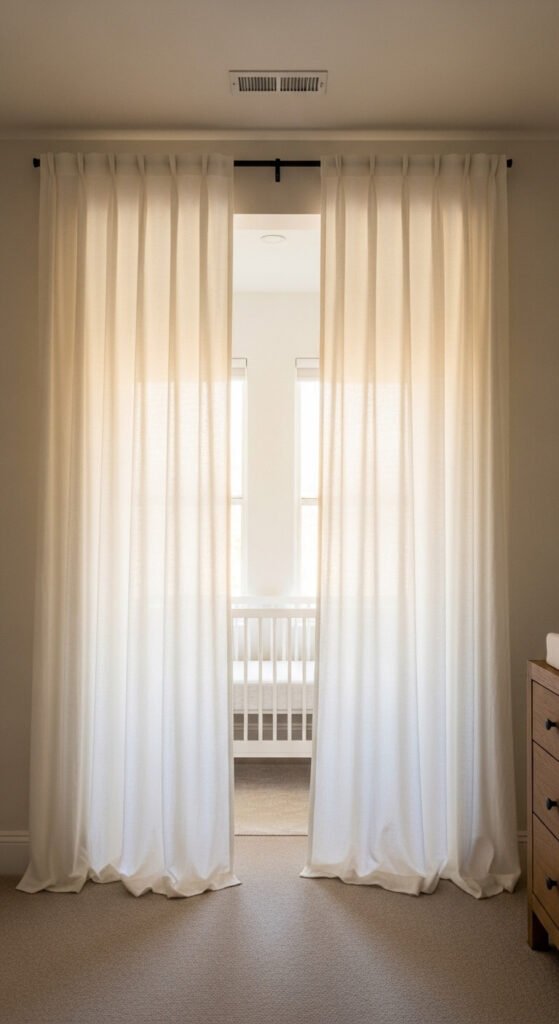
Hanging curtains high and wide — almost at the ceiling — makes any room feel bigger and taller. Use a slim curtain rod mounted just below crown molding or 5–6 inches below the ceiling. Linen or cotton curtains in warm white or oat tones work in almost any nursery palette. IKEA’s HANNALILL or AINA panels are beautiful and affordable (under $40 per pair). Layer blackout liner behind for better nap time darkness. The full-length look always photographs better than short panels.
9. Use a Dresser as a Changing Table
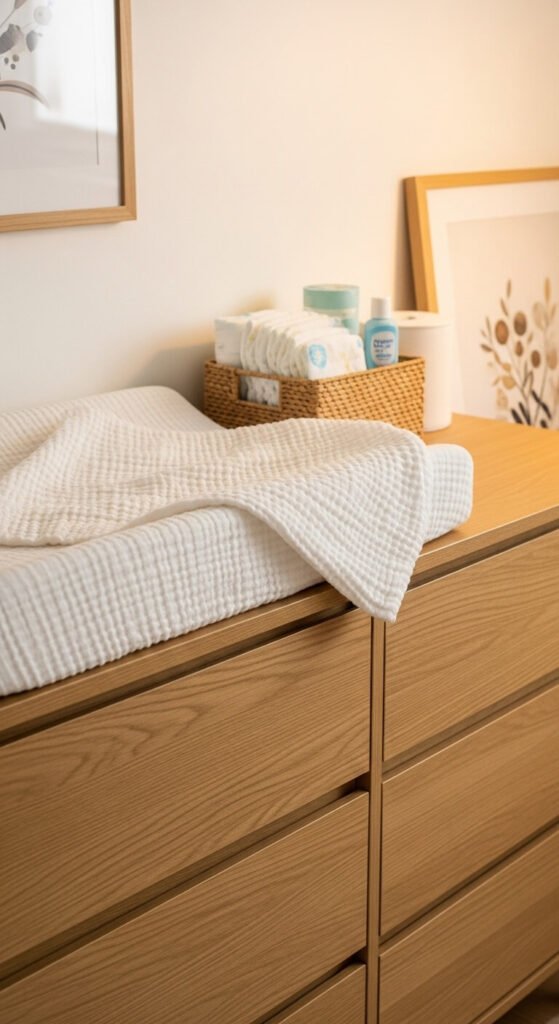
A changing topper on a regular dresser saves you from buying a dedicated changing table that becomes useless in two years. Any dresser that’s at a comfortable standing height works. Add a IKEA SNIGLAR changing pad ($25) and a waterproof cover. Secure the dresser to the wall with an anti-tip strap — this is non-negotiable for safety. The dresser then lives on as functional bedroom furniture long past the diaper phase. Smart and affordable.
10. Try a Soft Sage or Earthy Green Accent Wall
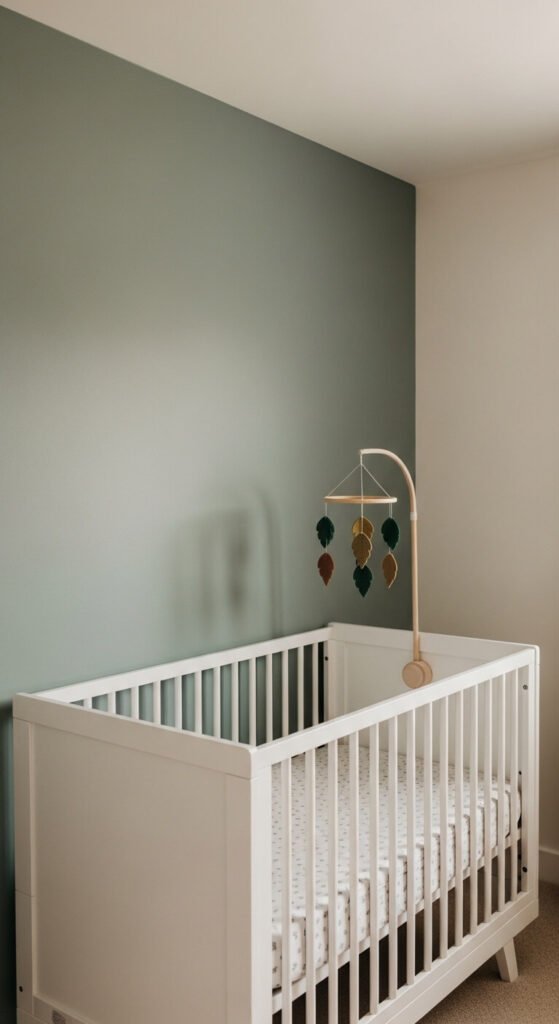
Sage green is the most-searched nursery color for good reason — it’s calming, gender-neutral, and pairs with virtually everything. Paint just one wall behind the crib for impact without commitment. Sherwin-Williams “Evergreen Fog” and Benjamin Moore “Saybrook Sage” are two crowd favorites. Sample pots cost around $5–$8 before you commit to a full gallon. Sage pairs beautifully with natural wood, white, terracotta, and cream. It won’t feel dated as your child moves through different phases.
11. Hang a Macramé or Woven Wall Piece
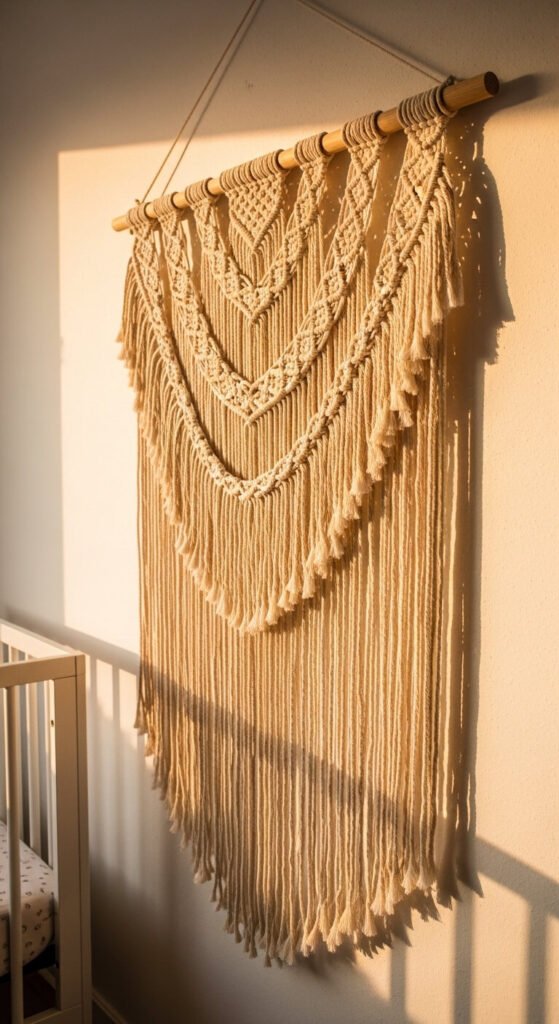
Macramé adds softness, texture, and a handmade feel to bare walls. You can buy pre-made pieces on Etsy for $25–$80 depending on size, or make your own with a macramé kit (many available under $30 with enough cord for multiple projects). Look for simple designs with clean knots rather than overly fussy patterns. Natural cotton cord in off-white or tan tones works with almost any nursery color scheme. Hang over the crib or dresser for maximum impact.
12. Incorporate Indoor Plants Safely
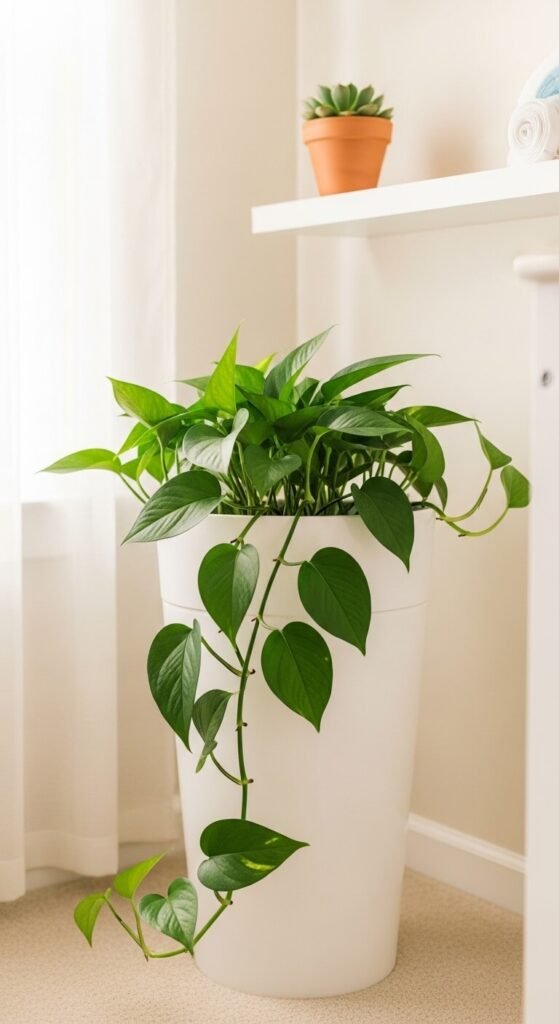
Plants make a nursery feel alive and serene. Stick to low-maintenance, non-toxic varieties like pothos, spider plants, or parlor palms. Keep them on high shelves or mounted to the wall — out of reach completely. A tall fiddle leaf fig in a white ceramic pot adds architectural interest in a corner. Water once a week and wipe leaves with a damp cloth to prevent dust buildup. Even one or two plants make a significant visual difference in photos and real life.
13. Add a Cloud or Star Mobile Above the Crib
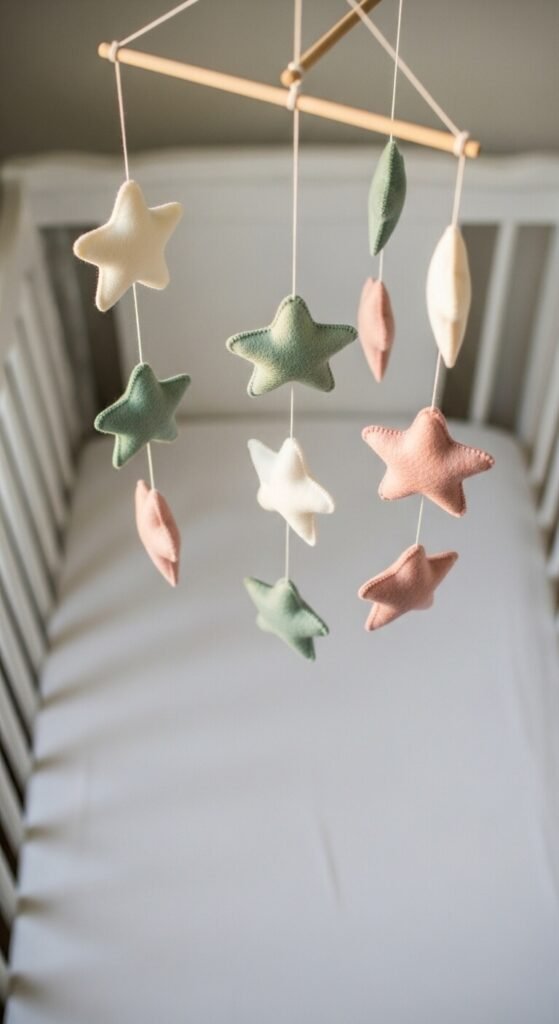
A handmade mobile costs almost nothing but looks incredibly intentional. Use a wooden dowel, thin thread, and felt shapes cut with scissors. Stars, clouds, moons, leaves — all work beautifully. Hang from a ceiling hook centered above the crib mattress. Keep it at least 12 inches above the mattress for safety. Commercial versions from Etsy or Pottery Barn Kids range $20–$60 if DIY isn’t your thing. Mobiles add movement, dimension, and a visual focal point in photos.
14. Go Monochrome for a Modern, Clean Look
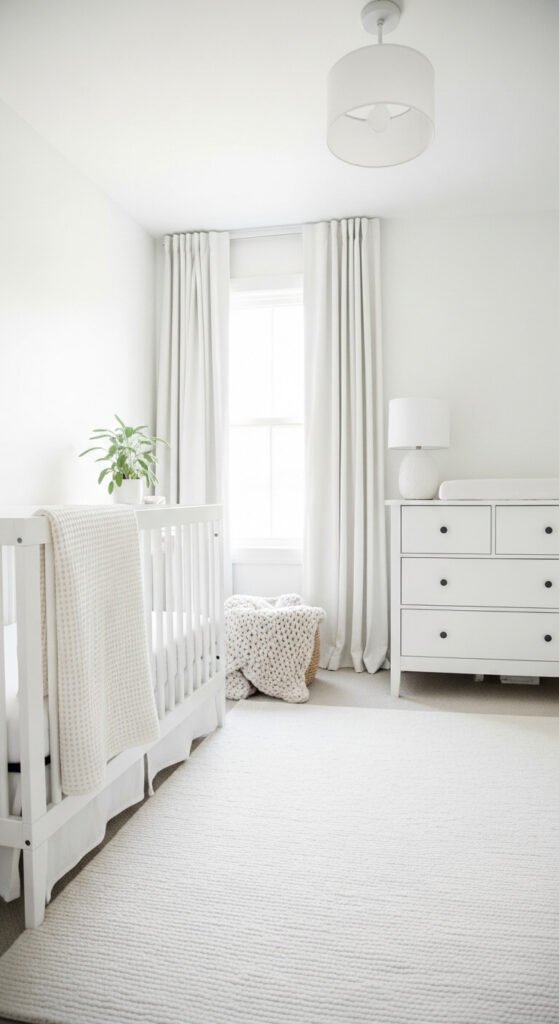
An all-white or tonal nursery never goes out of style. The key is layering textures so the space doesn’t feel flat or sterile. Think waffle knit, bouclé, linen, and smooth ceramics together. Vary the finish of white items — matte walls, glossy lamp base, raw cotton curtain — for interest. Add one or two plants as the only color pop. This style grows effortlessly into a toddler room and eventually a big-kid space with very few changes.
15. Use Pegboards for Flexible Wall Storage
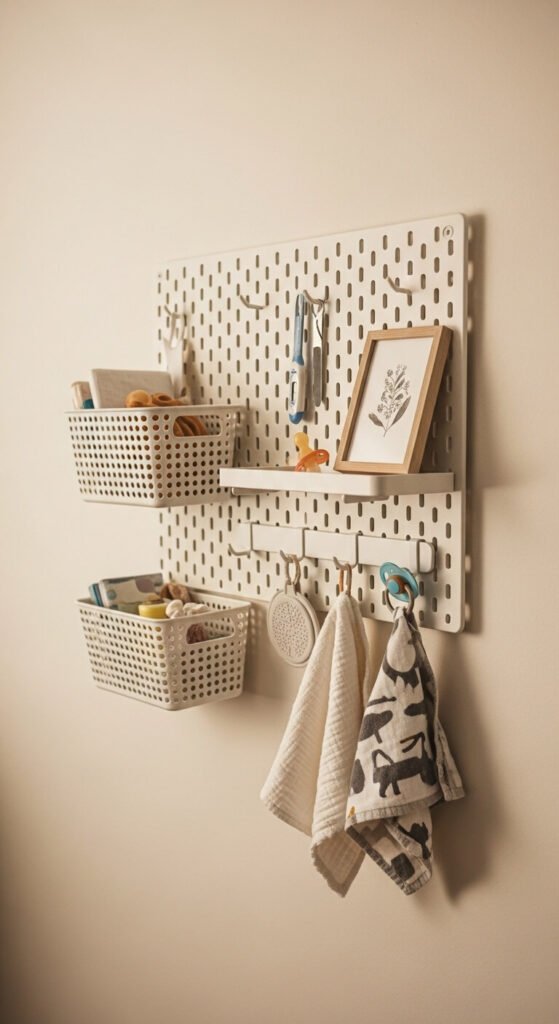
Pegboards put storage on display — which actually encourages you to keep things tidy. IKEA SKÅDIS boards cost around $20 and come with a variety of accessories. Mount beside the changing area or dresser for quick-access essentials. Use small baskets for pacifiers, a hook for the thermometer, and a mini shelf for a plant. Rearrange as your baby’s needs change. Paint the pegboard in a matching wall color if you want it to blend rather than stand out.
16. Layer Textiles on the Crib and Glider
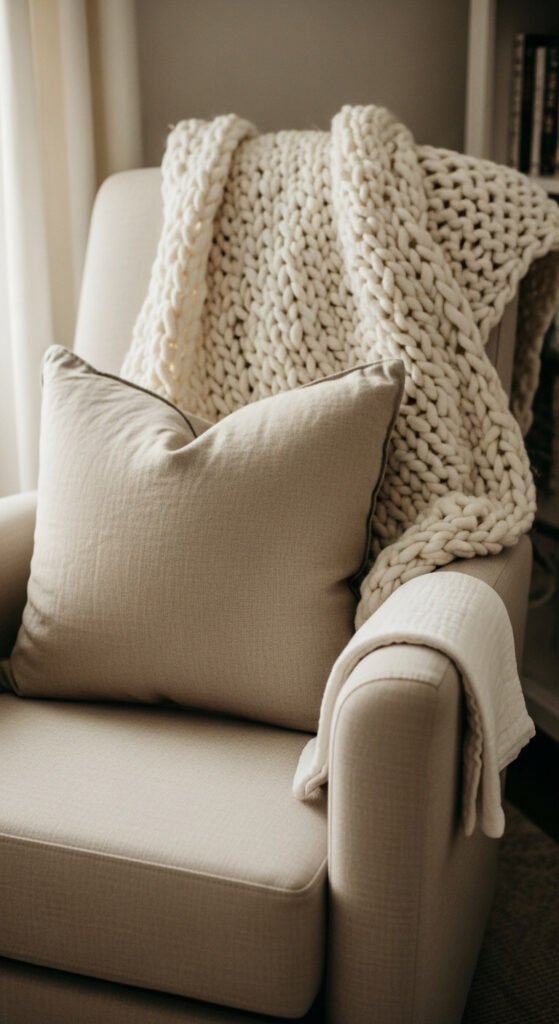
Layered textiles make a nursery feel warm and inviting rather than showroom-stiff. On the glider, add a lumbar pillow and a chunky throw. In the crib, use a fitted sheet with subtle texture (waffle, stripe, or small dot). Stack a few folded muslin blankets on an open shelf. Keep colors within two or three tones of each other to avoid chaos. Buy affordable versions on Amazon or Target — they wash well and photograph beautifully.
17. Create a Mini Reading Nook in a Corner
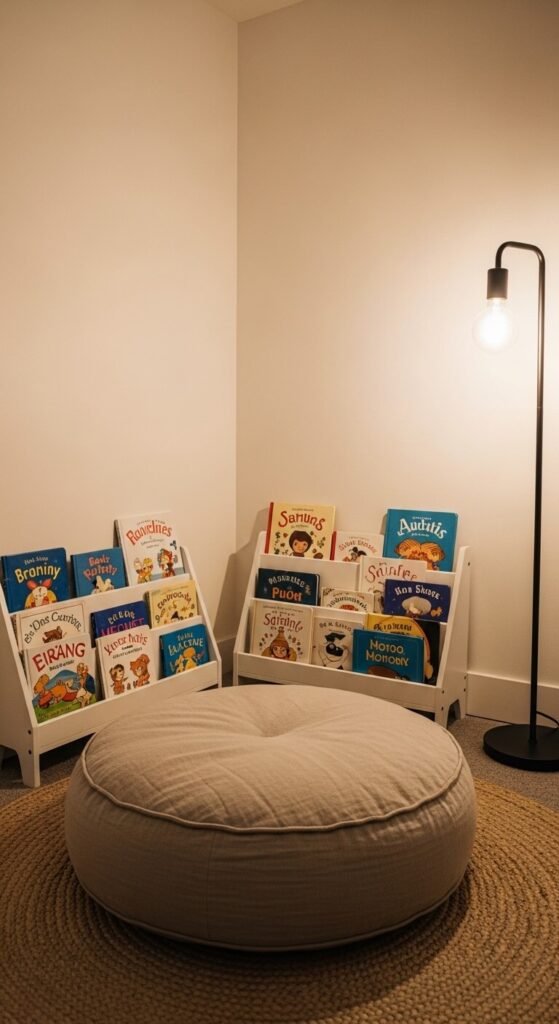
A reading corner doesn’t need much space — even a 4×4 foot corner works. Use a round pouf or floor cushion as the seat. Mount two or three picture ledges above it to display books. Add a small floor lamp for cozy evening reading. As your child grows, this nook becomes their independent reading spot. Start it from birth — it signals that books are a special part of the room from day one. Budget under $100 total for the full setup.
18. Try Removable Wallpaper for a Statement Wall
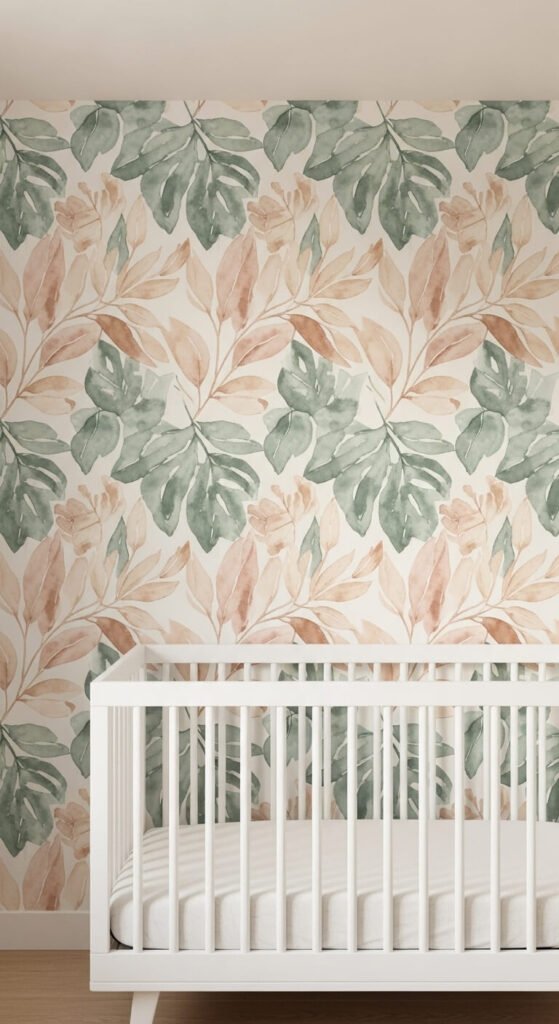
Peel-and-stick wallpaper is a renter’s dream. It comes off cleanly without damaging walls and costs a fraction of traditional wallpaper. Sites like Spoonflower, Tempaper, and Chasing Paper sell stunning designs from $5 per square foot. Botanical prints, arches, clouds, and abstract watercolor designs all work well in nurseries. Install it yourself in a few hours with a squeegee and a partner. When tastes change, peel it off and start fresh. No contractor, no commitment, no mess.
19. Add a Wooden Name or Letter Sign
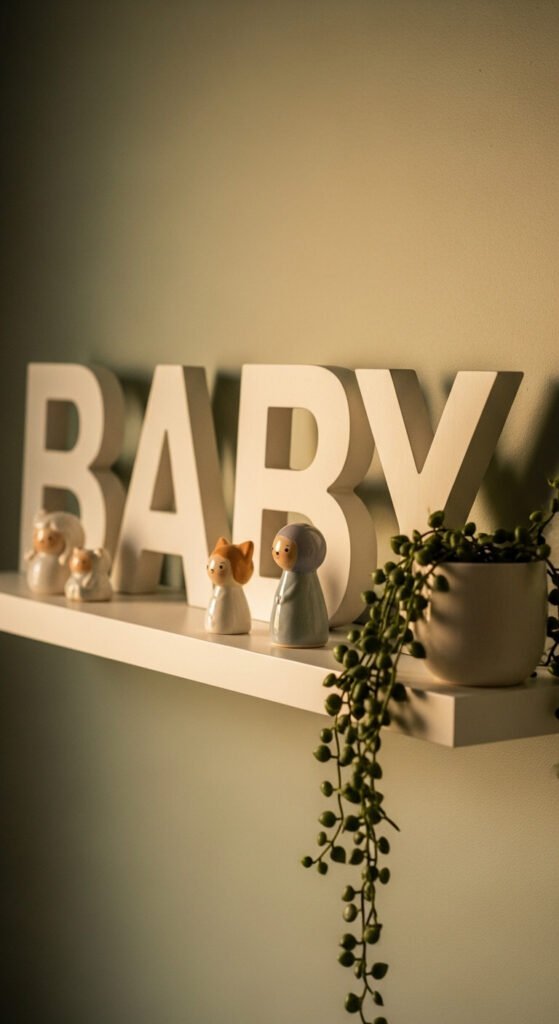
Personalized wooden letters make a nursery feel intentional. You can buy unfinished wood letters at craft stores like Michael’s for $1–$3 each, then paint them in any color. Matte white, sage green, or natural wood finish all work beautifully. Display on a shelf, dresser top, or mount directly to the wall. Tie them together with a thin piece of jute cord for a hanging version. It’s one of the most personal DIY touches you can add for under $20.
20. Use Warm Lighting Instead of Overhead Fluorescents
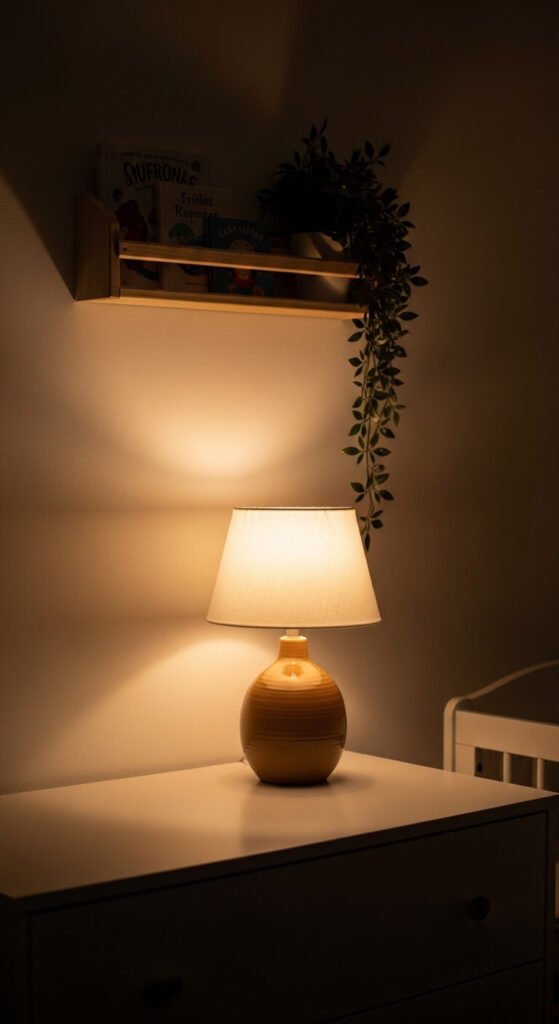
Harsh overhead lights ruin the nursery atmosphere — and can overstimulate a baby at bedtime. Swap them out for warm-toned lamps (2700K or lower). A ceramic lamp on the dresser and a small clip-on or plug-in nightlight near the crib works perfectly. Use dimmer switches where possible — many plug-in adapters cost under $15. Warm lighting helps signal wind-down time naturally. It also makes the room photograph dramatically better than cool fluorescent bulbs.
21. Style the Changing Area Like a Vignette
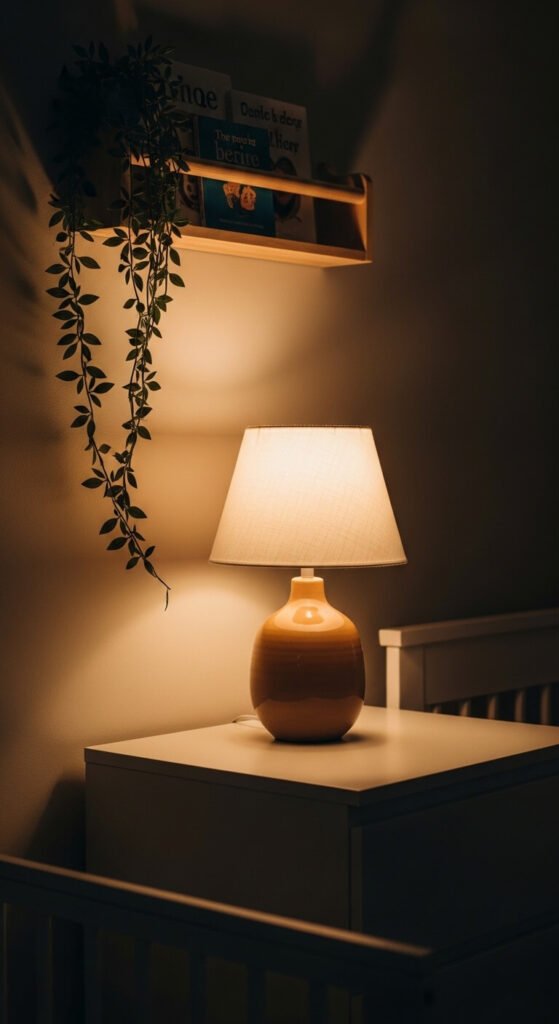
The changing area is where you spend a lot of time — make it pleasant. Style the top of the dresser like a styled shelf: one small basket for diapers, a ceramic dish for cream, and a tiny plant or framed print. Keep only what you use daily on the surface. Store the rest in the drawers below. A styled changing area is calming for both parent and baby. It also photographs well as part of your overall nursery content if you share on social media.
22. Incorporate Earthy Terracotta Tones as Accents
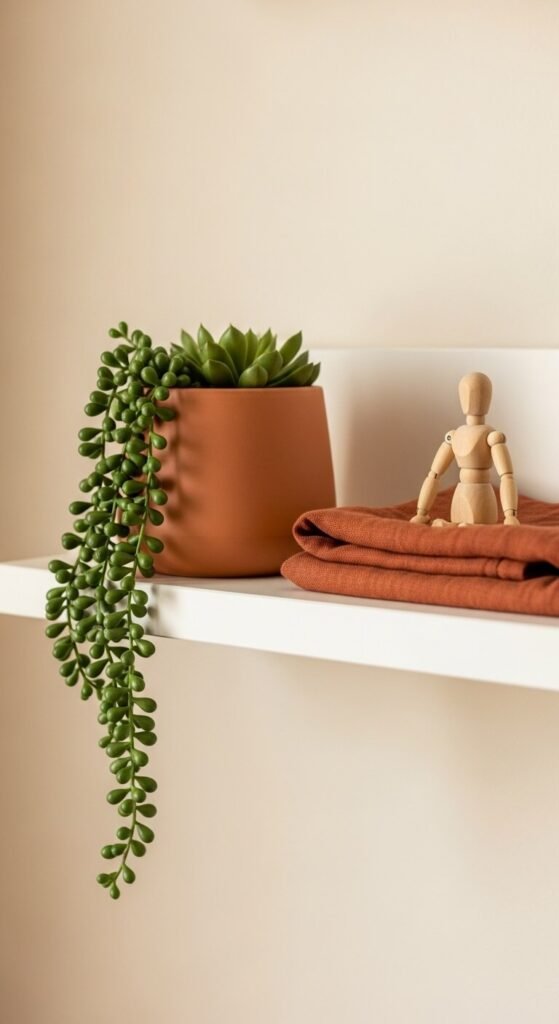
Terracotta is warm, earthy, and pairs with almost every neutral. Use it in small doses — a ceramic pot, a linen pillow, a wicker basket with rust-toned lining. You don’t need to commit to a whole color scheme. A terracotta plant pot from Target costs under $10. This accent color photographs beautifully against white and sage backgrounds. It also works across multiple design styles — boho, Scandinavian, and modern farmhouse all accommodate it gracefully.
23. Mount a Wooden or Acrylic Clock
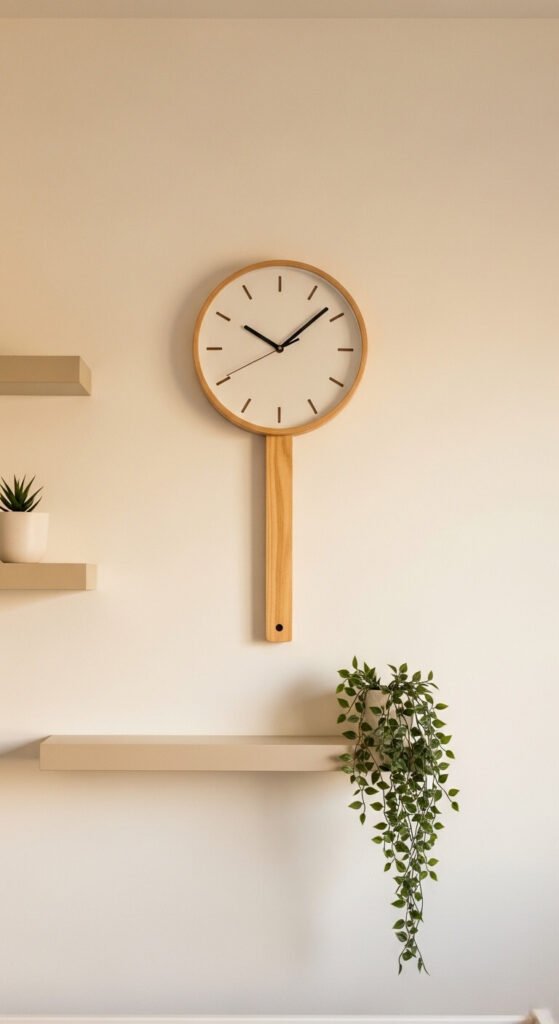
A wall clock is practical and decorative. Choose a simple round clock with a wood or black metal frame — nothing fussy. Mount it at eye level between shelves or above the dresser. It helps you track nap times at a glance without reaching for your phone. Simple clockfaces with no numbers look more modern. Umbra and West Elm both make beautiful options in the $25–$50 range. Skip themed or character clocks that will feel dated quickly.
24. Use Baskets for Soft Storage Everywhere
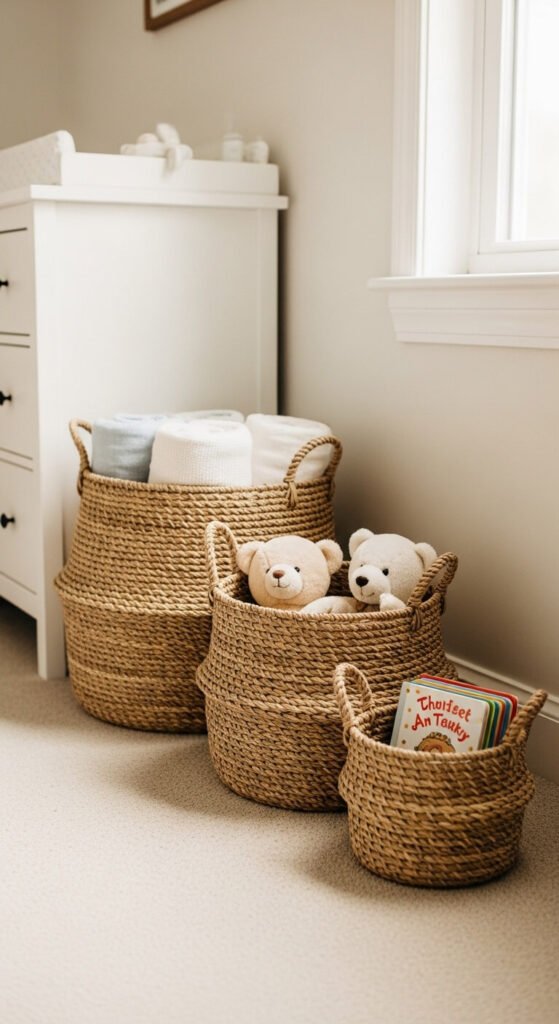
Baskets are the most forgiving storage solution in any nursery — they hide mess while looking beautiful. Use seagrass, cotton rope, or wicker baskets from IKEA, TJ Maxx, or HomeGoods (usually $8–$25 each). Use them for extra blankets, stuffed animals, or toy overflow. Label the inside with a simple folded card if needed. Stack smaller baskets inside larger ones when not in use. Baskets photograph especially well when grouped in threes at varying sizes.
25. Hang a Simple Linen Hammock Chair in a Corner
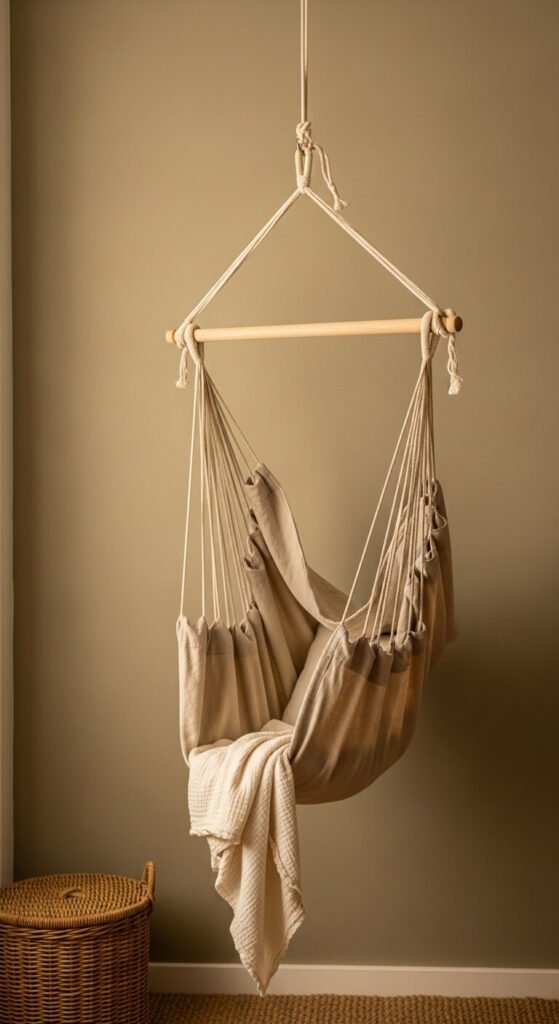
A hanging hammock chair adds drama and function. Install a ceiling anchor rated for at least 250 pounds (about $15 at a hardware store). Choose a simple linen or cotton hammock in a neutral tone. This becomes a cozy reading spot as your child grows — toddlers love the gentle movement. Keep it high enough off the ground while in nursery mode. The silhouette photographs beautifully against a colored accent wall.
26. Create a Cloud Ceiling With Batting and String Lights

A cloud ceiling is a showstopper — and shockingly affordable. Buy polyester quilt batting from a craft store ($8–$15), tear into cloud-shaped pieces, and attach to the ceiling with double-sided mounting tape or fishing line. Weave warm white string lights through for a magical glow. This works best in low-ceiling rooms where the effect is close and enveloping. It photographs beautifully in dim light. The whole project takes about two hours and under $30.
27. Let the Room Grow With Your Child — Don’t Overdesign
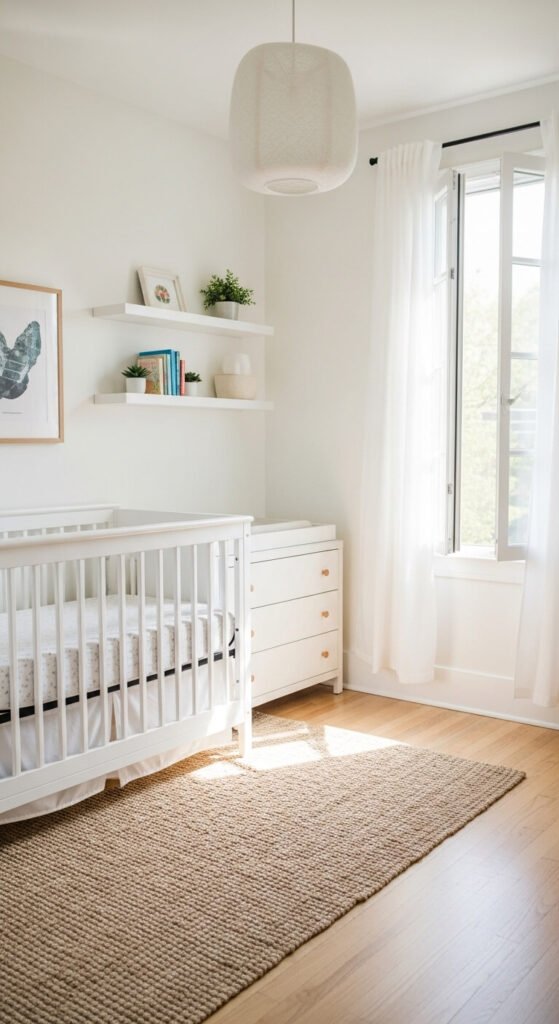
The most beautiful nurseries have breathing room. Don’t fill every shelf, every wall, and every corner right away. Leave space for the room to evolve as your child’s personality emerges. A 2-year-old’s interests are completely different from a newborn’s — and the room should reflect that. Buy one or two statement pieces and let the rest develop organically. Spaces that look the most polished online usually have fewer items, not more. Less truly is more in a well-designed nursery.
Conclusion
Creating an aesthetic nursery is not about spending thousands of dollars or copying a Pinterest board perfectly. It’s about making deliberate choices — a neutral foundation, a few meaningful textures, smart furniture that lasts, and personal touches that feel like you. The ideas in this list are meant to inspire action, not overwhelm you. Start with the walls, add a rug, pick one or two statement pieces, and build from there. Your baby won’t remember the room — but you will. Make it a space you love walking into at 3 a.m., because you absolutely will.