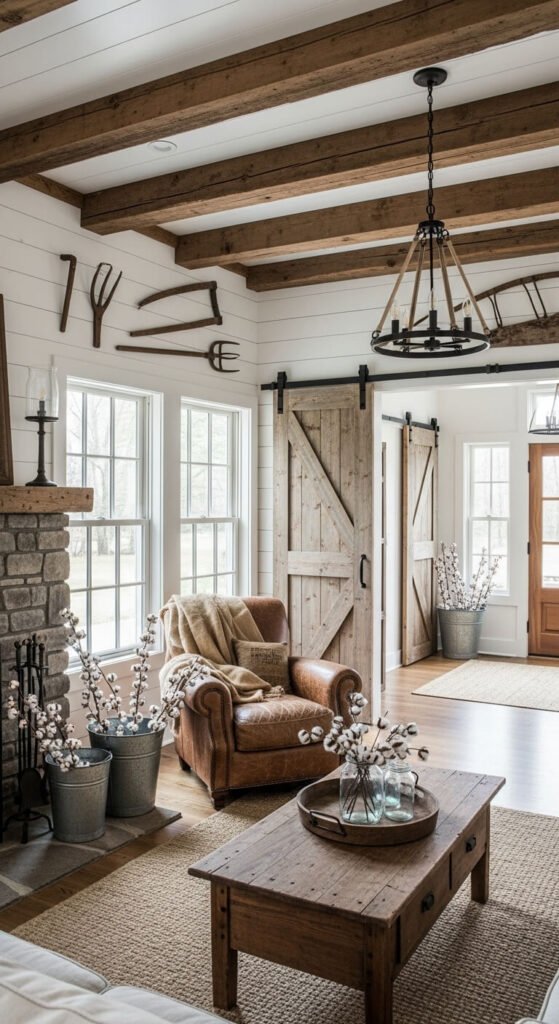
Farmhouse decor captures the warmth and simplicity of country living without requiring a rural address. This style celebrates imperfection through distressed finishes, natural materials, and time-worn pieces that tell stories. Whether you’re working with a starter apartment or a family home, these authentic elements help you create spaces that feel lived-in and loved. From salvaged architectural pieces to budget-friendly DIY projects, each item brings rustic character that makes your house feel like home. Ready to transform your space with genuine farmhouse charm?
Reclaimed Wood Accent Walls
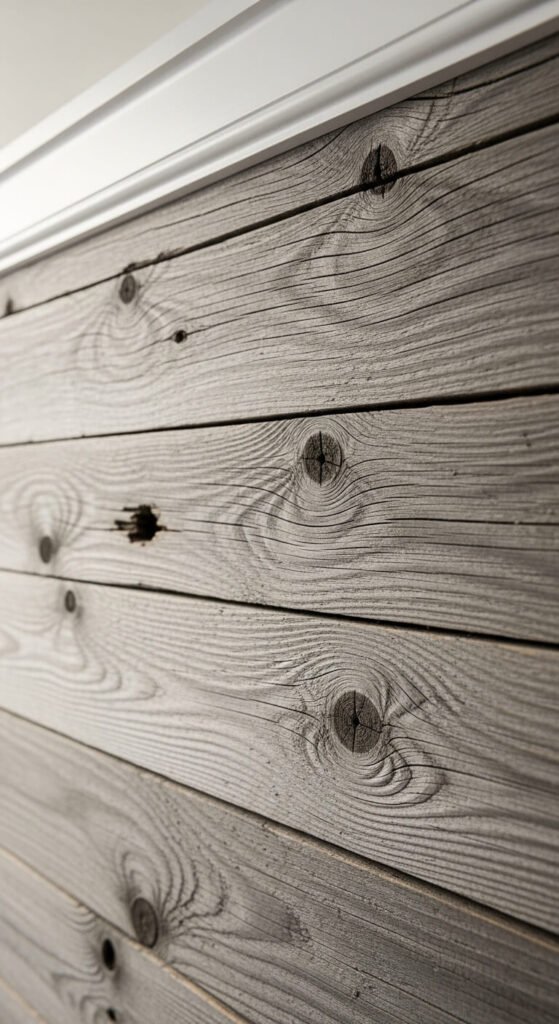
Barn wood creates instant age and character on any wall. Hunt for reclaimed lumber at salvage yards or ask local farmers about old fence posts.
Clean the wood with a wire brush and seal it to prevent splinters. Install boards horizontally using construction adhesive and finish nails.
You can also buy peel-and-stick wood planks that mimic the look for under $50. Focus on one wall behind your bed or sofa for maximum impact without overwhelming the room.
The varying shades and textures add depth that paint can’t match.
Galvanized Metal Storage Pieces
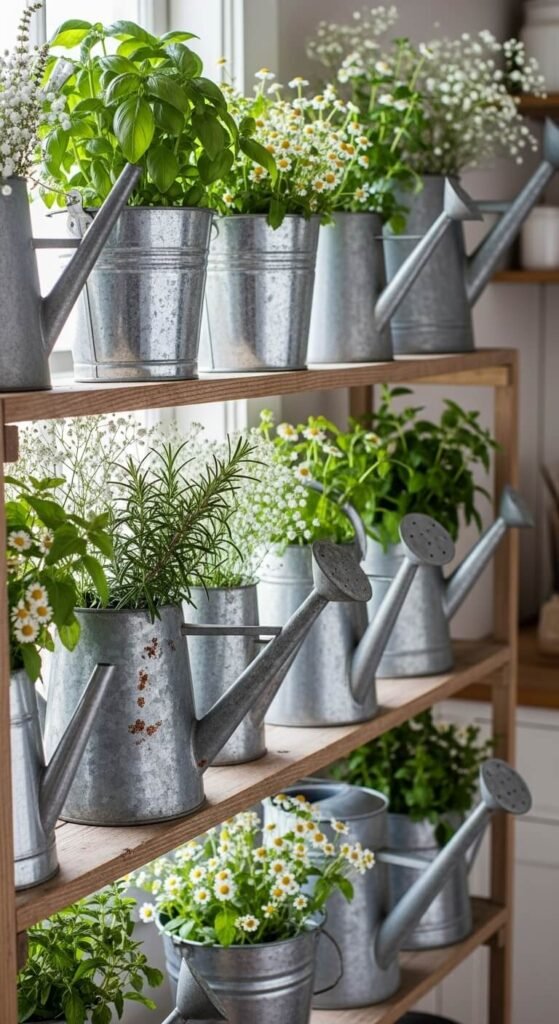
Old metal buckets and tubs bring industrial farmhouse style to any room. Scour flea markets for dented pieces that cost $5-15 each.
Use them as planters on your porch or utensil holders in the kitchen. Larger feed troughs make unique storage for blankets or firewood.
The zinc coating develops a beautiful patina over time that you can’t fake. Stack different sizes for visual interest.
Line them with fabric if you’re storing delicate items. These pieces look right at home whether they’re polished or rusty.
Vintage Mason Jar Collections
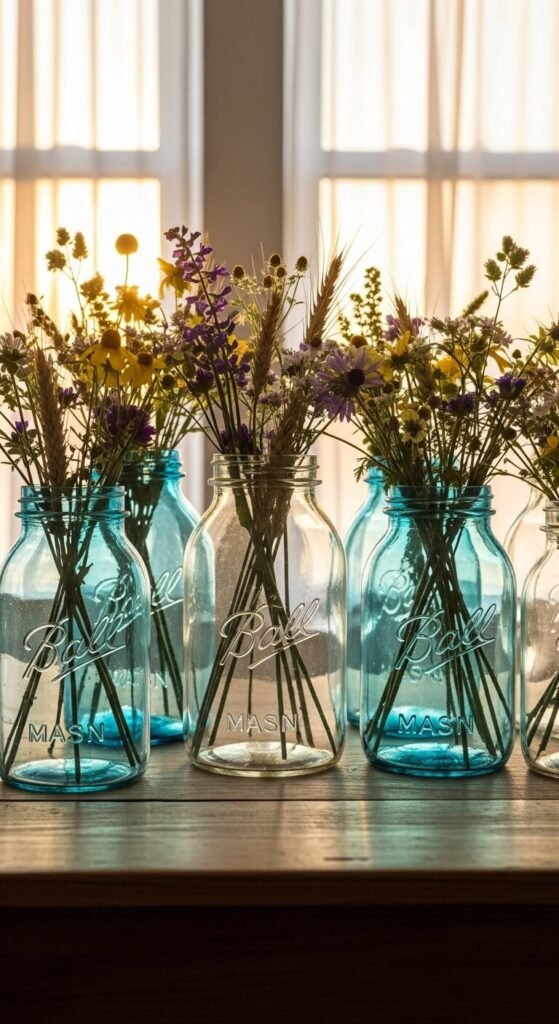
Mason jars defined country kitchens long before they became trendy. Search estate sales for authentic blue jars from the 1900s.
Use them for drinking glasses, flower vases, or bathroom storage. Cluster them on floating shelves or hang them with hose clamps as pendant lights.
New jars work fine but lack the bubbled glass and faint blue tint. Fill them with dried beans, cotton balls, or paintbrushes.
A dozen vintage jars costs around $20 at most sales. They’re practical and pretty in equal measure.
Farmhouse Apron-Front Sinks
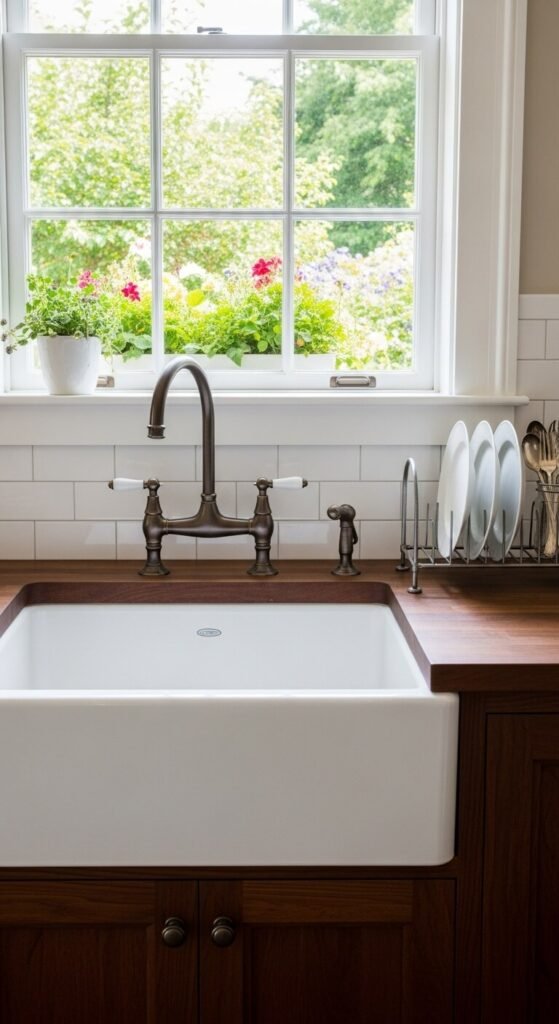
Deep apron sinks became farmhouse staples because they handled large pots and produce washing. Modern fireclay versions start around $300.
The exposed front panel creates a focal point in any kitchen. Install one during a renovation or look for retrofit models that fit standard cabinets.
Budget-friendly stainless steel options cost less but miss that authentic porcelain look. Keep the surrounding area simple with butcher block or soapstone counters.
These sinks hold their value and make daily tasks easier with their generous depth.
Shiplap Wall Treatments
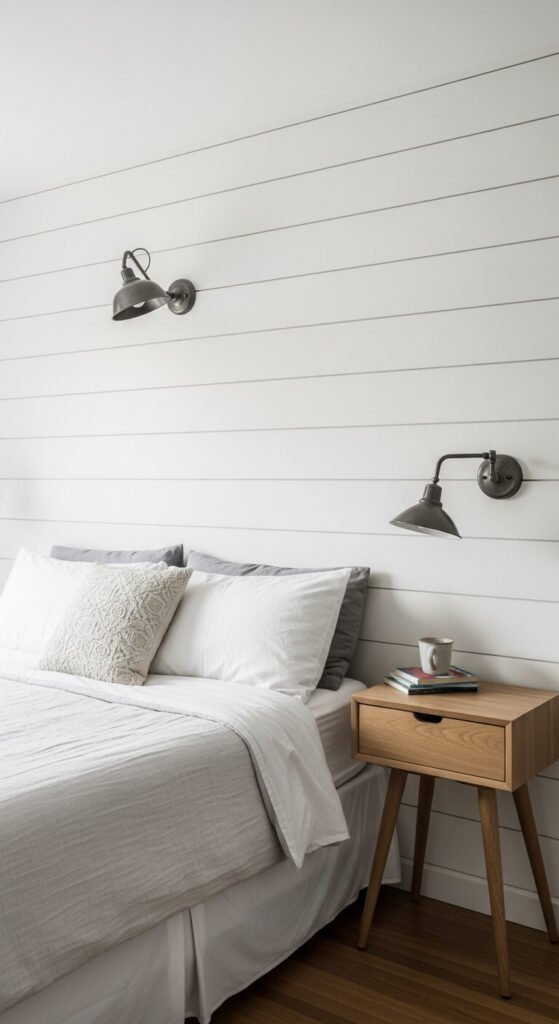
Horizontal planks with small gaps define the shiplap look that Chip and Joanna made famous. Real tongue-and-groove pine costs $1-2 per square foot.
Install it yourself with a nail gun and level over a weekend. Paint it white for clean contrast or leave it natural for warmth.
Plywood with spacing strips creates the same effect for pennies. Focus on high-impact areas like behind your bed or in the entryway.
The texture adds dimension without competing with your furniture. Sand lightly between coats for a smooth finish.
Vintage Ladder Display Stands
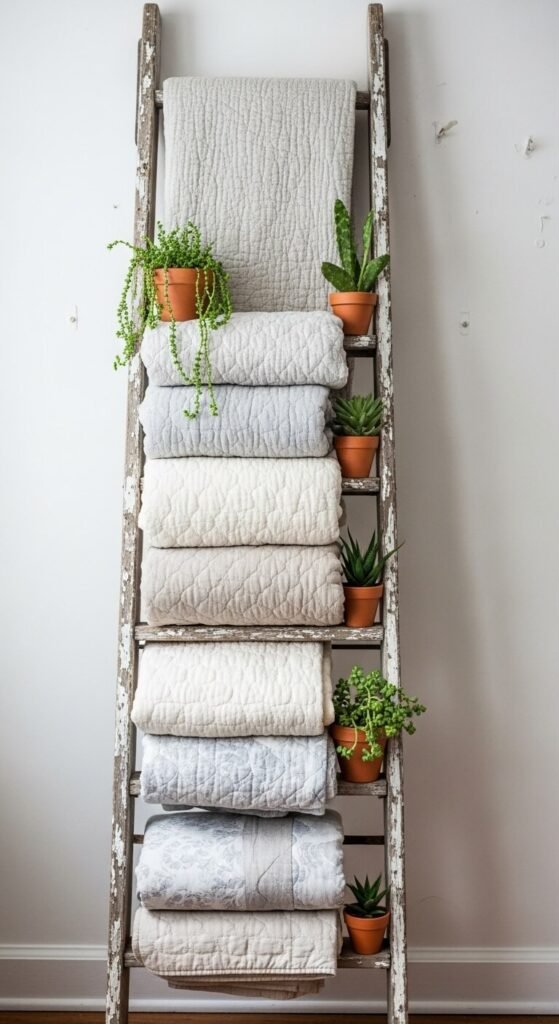
Old orchard and library ladders make perfect rustic displays. Find them at auctions for $20-40 depending on condition.
Lean them against walls to hang quilts, towels, or string lights. The rungs create natural shelving for plants or framed photos.
Sand rough spots but keep the chippy paint that gives them character. Secure them with L-brackets if you have kids or pets.
Shorter stepladders work as nightstands or magazine racks. Each ladder has unique wear patterns that mass-produced furniture can’t replicate.
Antique Milk Can Accents
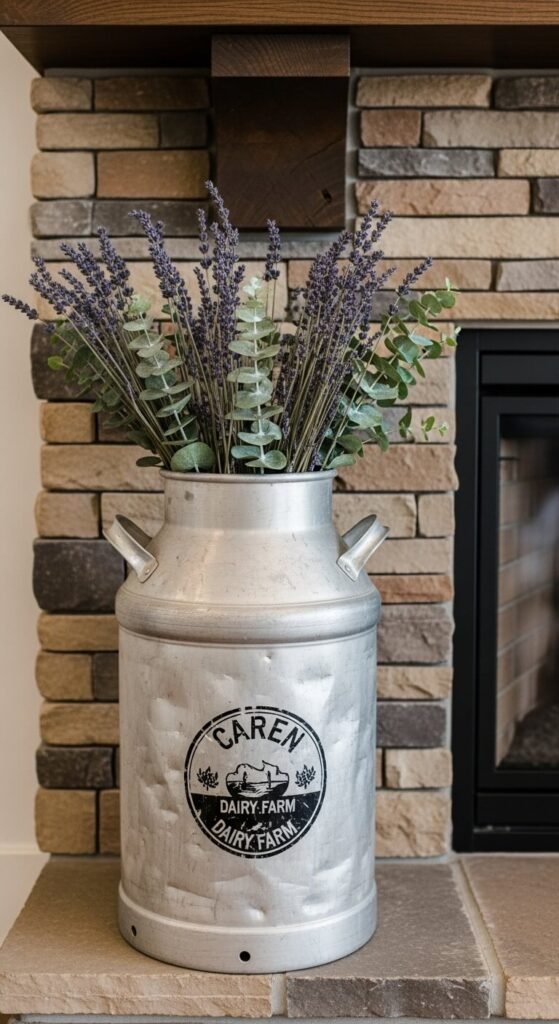
Dairy milk cans from the 1940s-60s add height and history to corners and entryways. Real ones sell for $30-75 at antique shops.
Use them as umbrella stands or oversized vases for dried flowers. The cylindrical shape provides strong vertical lines in low-ceiling rooms.
Look for ones with farm names or dairy logos still visible. Remove the lids to show off what’s inside.
Lighter aluminum versions are easier to move than old steel cans. Group three different heights together for bigger impact.
Chicken Wire Cabinet Inserts
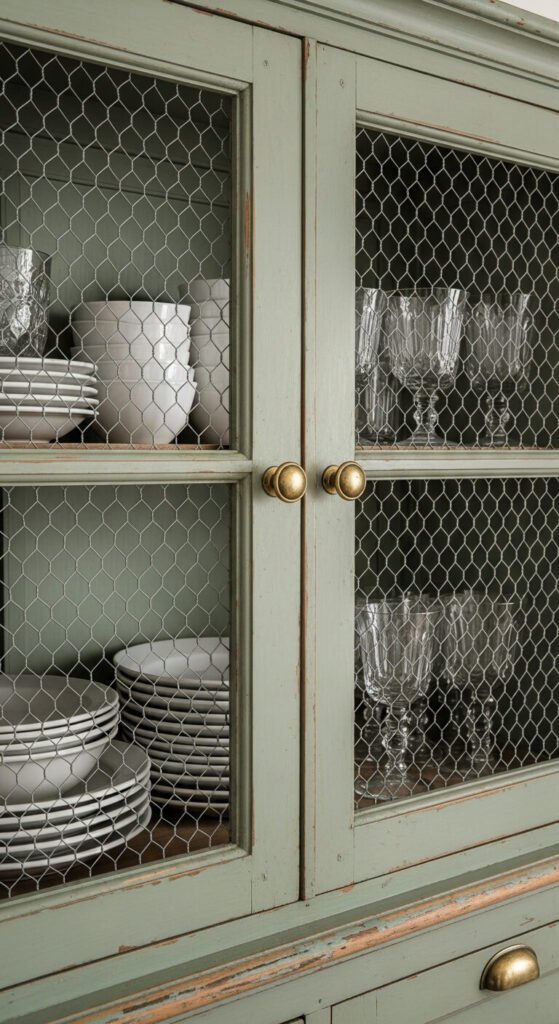
Chicken wire instead of glass gives cabinets rustic texture while keeping contents visible. Buy rolls for $15 at farm supply stores.
Remove glass panes and staple wire to the back of cabinet frames. Paint frames first if you want a fresh look.
This works great on upper cabinets where you display dishes or pantry items. The wire adds farmhouse character without major renovation.
Keep the inside organized since everything shows through. It’s cheaper than new glass and way more interesting.
Enamelware Dish Collections
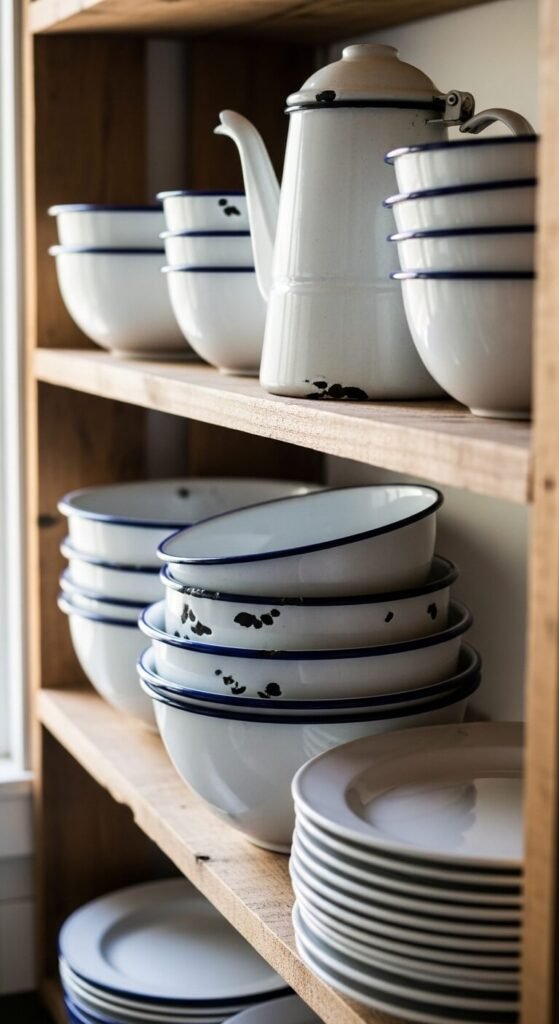
Speckled enamel dishes belonged in every country kitchen before plastic took over. Hunt garage sales for bowls and plates at $3-8 each.
The chips and worn spots prove they’ve been used and loved. Mix white and cream pieces with blue-rimmed ones for variety.
Use them for serving or display them on open shelves. New enamelware looks too perfect and costs three times more.
The metal core makes them nearly indestructible for everyday use. Stick with neutral colors that won’t date your kitchen.
Exposed Ceiling Beams
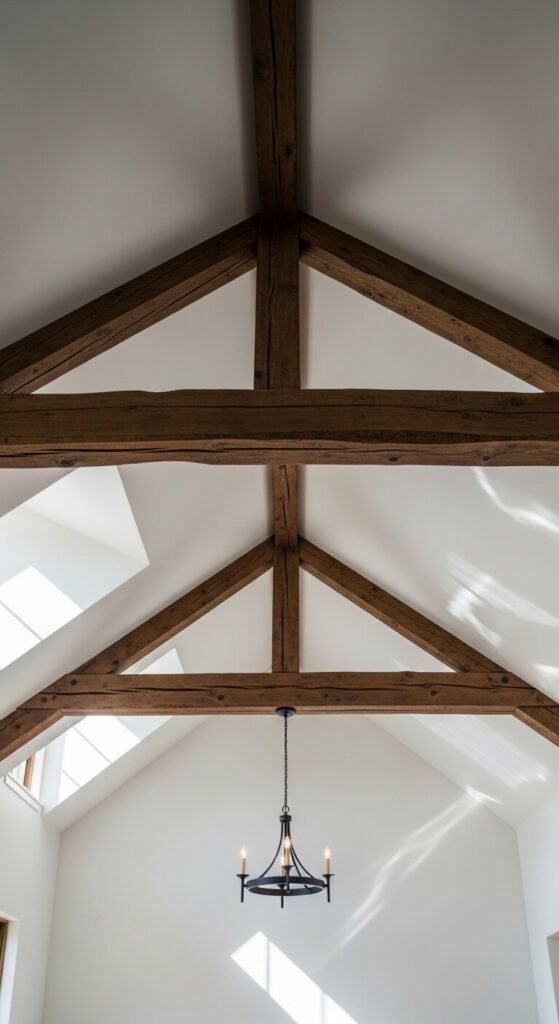
Exposed beams add architectural weight that grounds high ceilings. Real reclaimed timbers cost $8-15 per linear foot installed.
Faux beams made from hollow polyurethane look convincing for $100-200 each. Mount them perpendicular to ceiling joists using lag bolts.
Dark stains create drama against white ceilings. Space beams 4-6 feet apart for balanced coverage.
This single change transforms builder-grade rooms into custom spaces. Consider your ceiling height before adding visual weight above.
Vintage Farm Tools as Wall Art
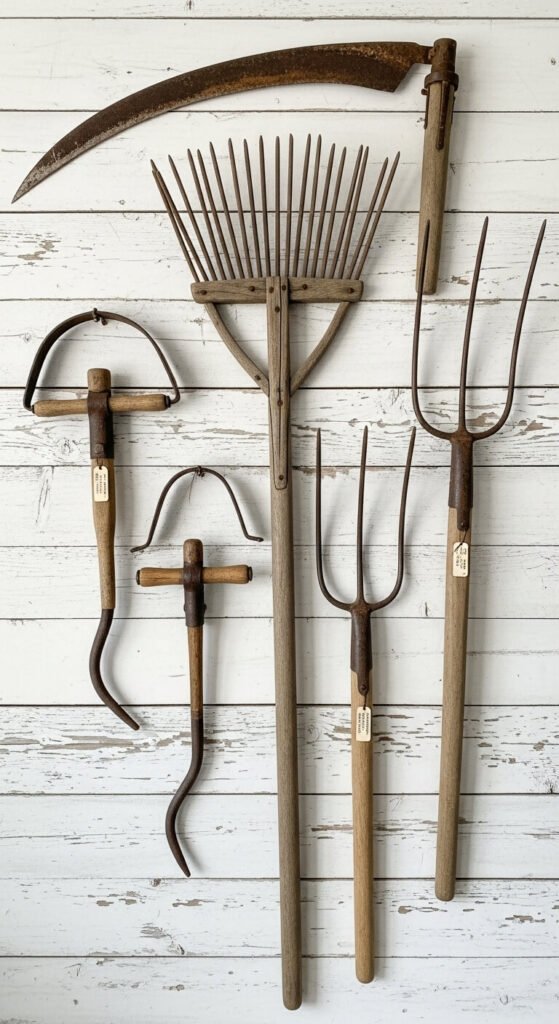
Old implements tell stories of manual labor and simpler times. Find them at estate sales for $5-20 per piece.
Mount hay hooks, corn knives, and hand plows directly on walls with heavy-duty anchors. Group odd numbers together for better composition.
Clean off loose rust but keep the patina that shows their history. Cross two tools over each other for dynamic angles.
These conversation pieces cost less than generic wall art. They work anywhere but look best against neutral backgrounds.
Sliding Barn Doors
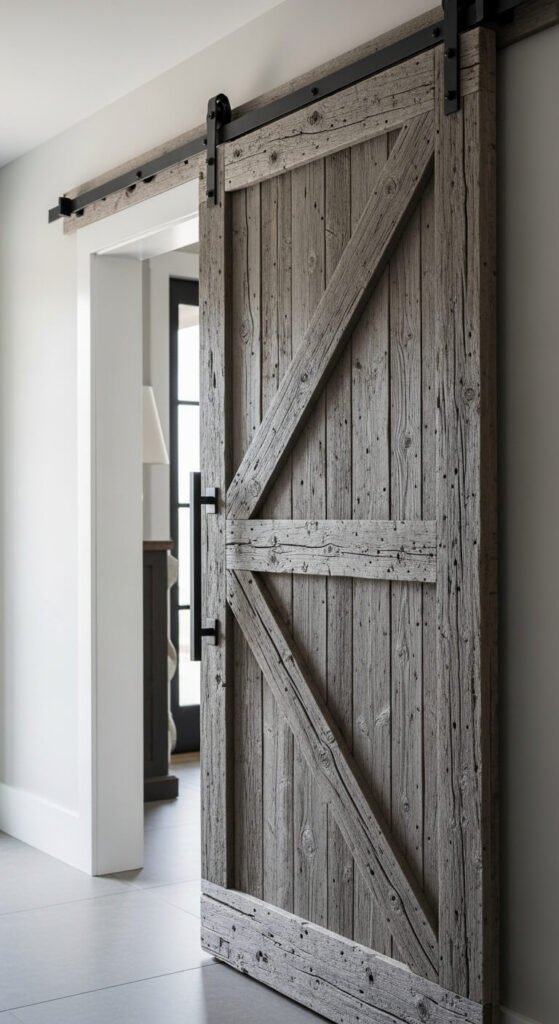
Barn doors save space while adding rustic style to tight areas. Hardware kits start at $100 with doors costing $200-400.
Build your own door from fence boards for under $75 in materials. Mount the track to wall studs rated for the door’s weight.
This works for closets, bathrooms, or room dividers. Soft-close mechanisms prevent slamming and finger pinches.
Seal gaps with weatherstripping if privacy matters. The door becomes a moving architectural feature that defines your farmhouse aesthetic.
Vintage Bread Boxes and Canisters
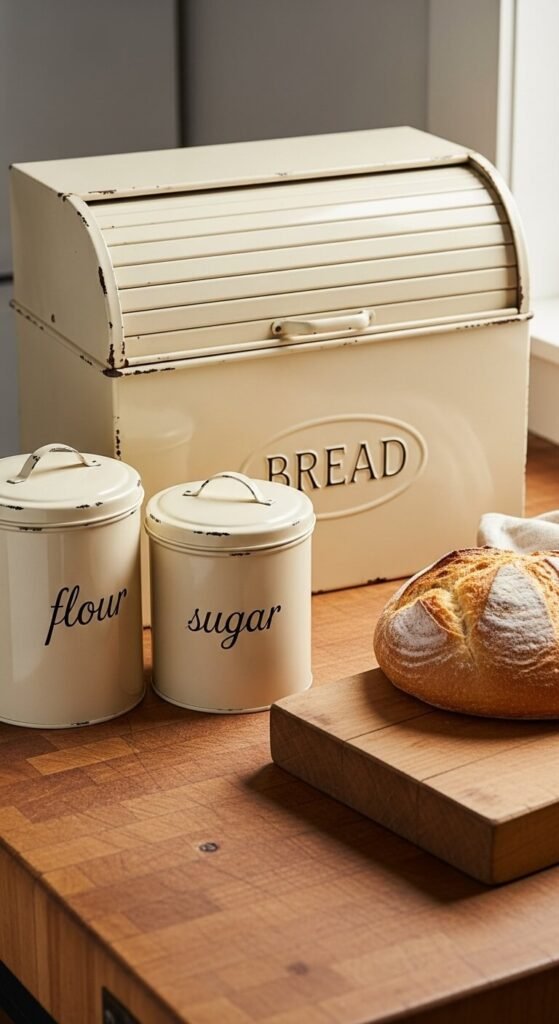
Old bread boxes and canister sets bring functional charm to countertops. Find complete sets for $25-50 at thrift stores.
Metal versions with enamel finishes last longer than new plastic containers. Use them for actual food storage or stash recipes and tea bags.
Mismatched sets from different eras create collected-over-time appeal. Clean them well but don’t repaint original graphics.
These pieces keep bread fresh while looking purposefully old. Place them near your coffee station for morning convenience.
Butcher Block Countertops
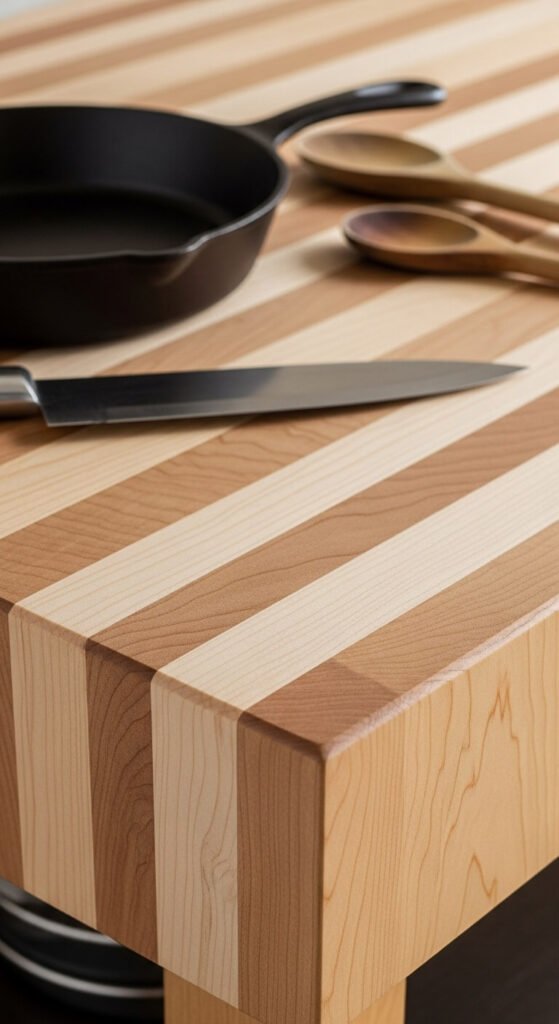
Solid wood counters bring warmth that stone and laminate lack. Maple and walnut blocks run $40-70 per square foot.
Seal them with food-safe mineral oil monthly to prevent stains. They develop character through cutting marks and water rings over time.
Install them on kitchen islands or as desk surfaces in home offices. Sand and re-oil them when they look dry or damaged.
The natural material feels better under your hands during food prep. They complement both modern and traditional farmhouse kitchens.
Vintage Window Frame Mirrors
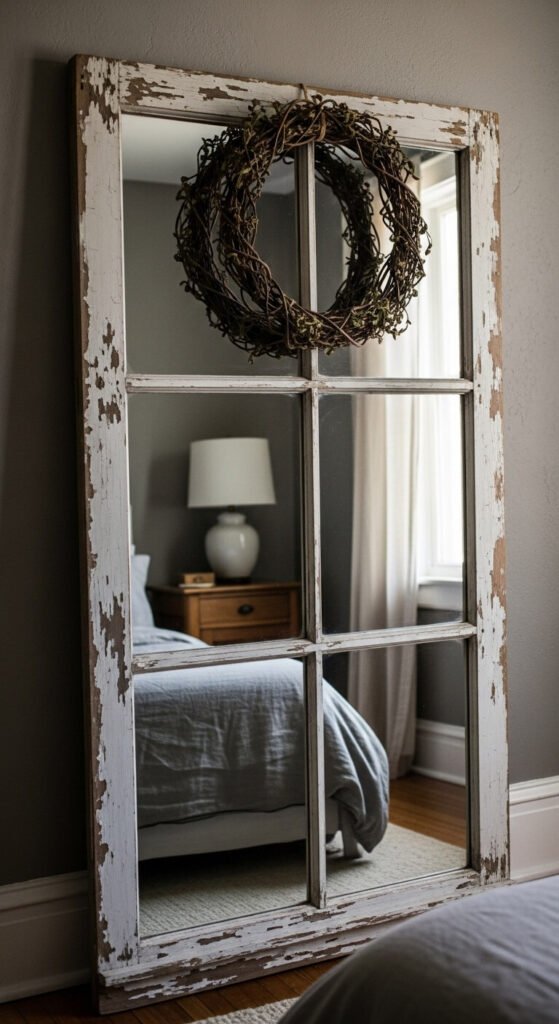
Old windows find new life as decorative mirrors. Grab frames at salvage yards for $15-30.
Remove glass carefully and have mirror cut to fit each pane opening. Secure mirrors with glazing points and caulk.
Hang them horizontally above sofas or vertically in entryways. Leave the paint distressed for authentic farmhouse character.
This project costs half what designer mirrors charge. The divided panes reflect light and views in interesting ways.
Crocks and Stoneware
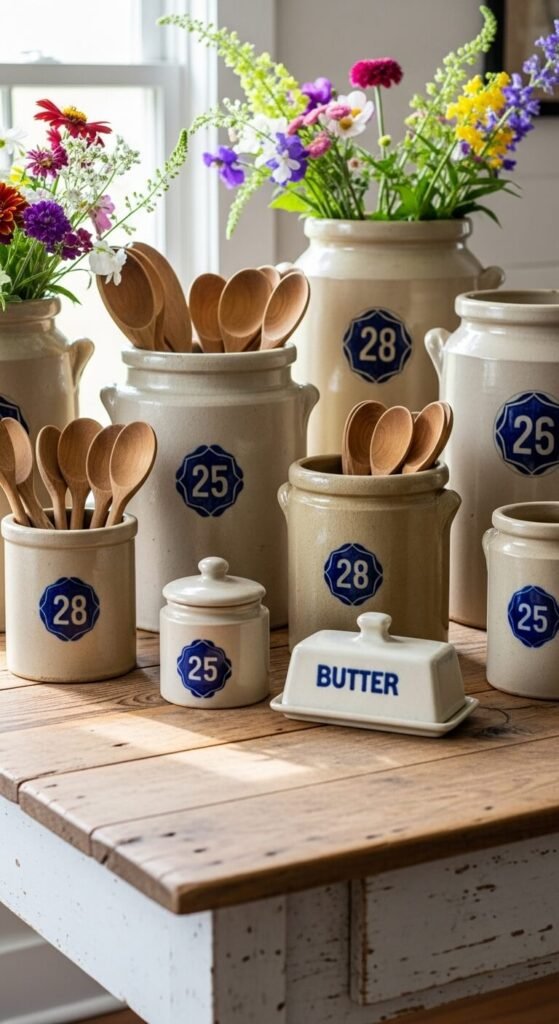
Heavy stoneware crocks anchored country kitchens for generations. Find them at auctions starting around $20 for common sizes.
Use them as utensil holders, flower vases, or pantry storage. The blue stamped designs indicate age and origin.
Cracks lower value but don’t affect decorative use. Larger butter crocks and pickle jars make strong statements on counters.
New reproductions lack the weight and glaze quality of originals. These pieces ground your space with solid, earthy presence.
Open Shelving with Brackets
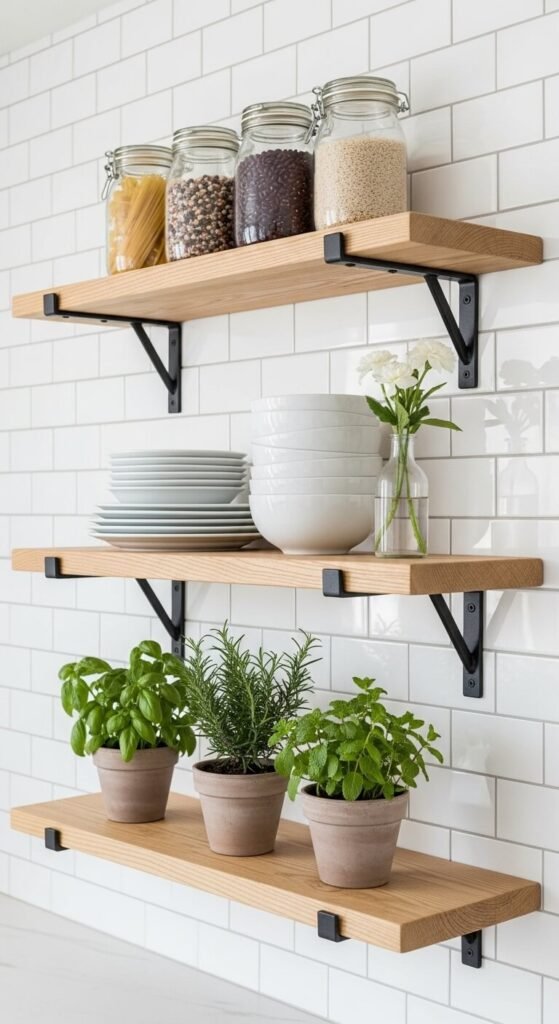
Open shelves force you to keep displayed items tidy and intentional. Install them with iron brackets for $30-50 per shelf.
Use reclaimed wood planks or new pine stained dark. Space shelves 14-18 inches apart for standard dish storage.
Display everyday items you actually use rather than decorative clutter. This setup costs less than cabinets and makes small kitchens feel larger.
Dust them weekly to prevent grime buildup. The exposed storage keeps you honest about what you own.
Vintage Scale Collections
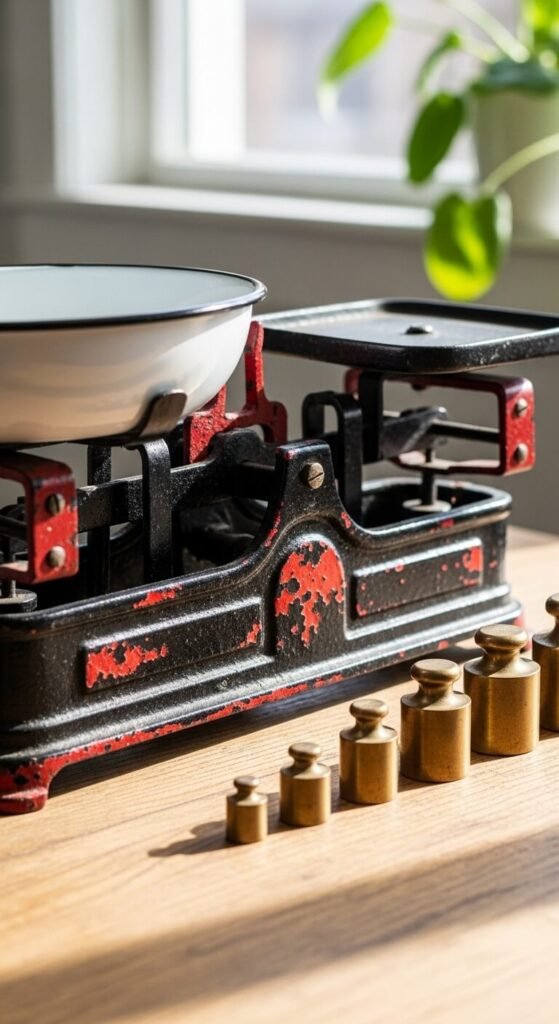
Old kitchen and postal scales add functional sculpture to counters. Find working models for $25-60 at antique malls.
Display them with vintage weights or seasonal decor in the pan. The mechanical parts and worn paint tell decades of stories.
Larger hanging scales work as pot racks or plant hangers. Keep them clean but don’t restore them to mint condition.
These pieces prove that tools can be beautiful. They anchor collections without taking up much space.
Ironstone Dish Sets
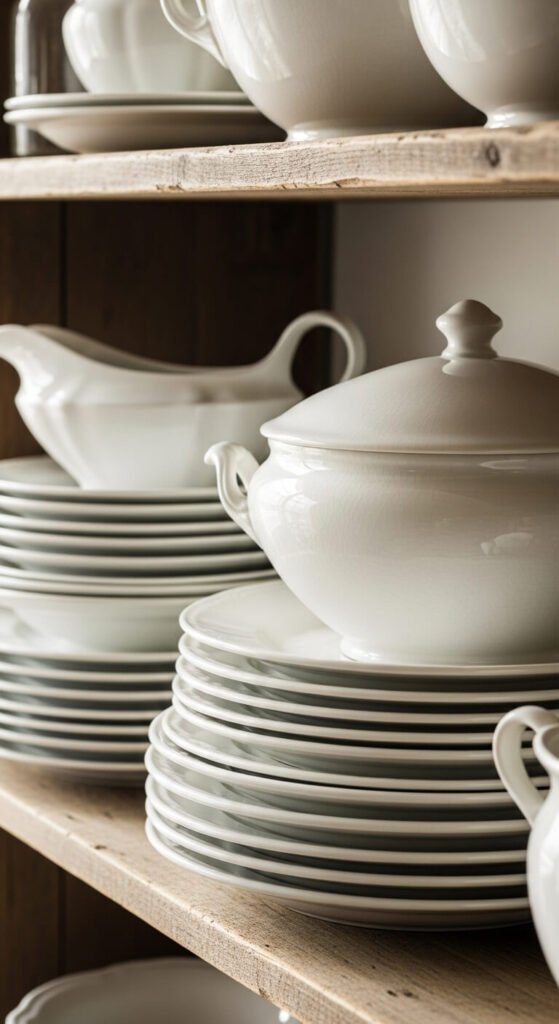
Plain white ironstone dishes defined farmhouse tables for over a century. Collect pieces for $5-15 each at estate sales.
Mix makers and eras since they’re all similar neutral tones. Use them daily or display them on plate racks and shelves.
The thick ceramic withstands dishwashers and microwaves. Small chips add character rather than ruining the look.
Complete sets cost more but you don’t need matching place settings. Start with serving pieces and build from there.
Weathered Shutters as Decor
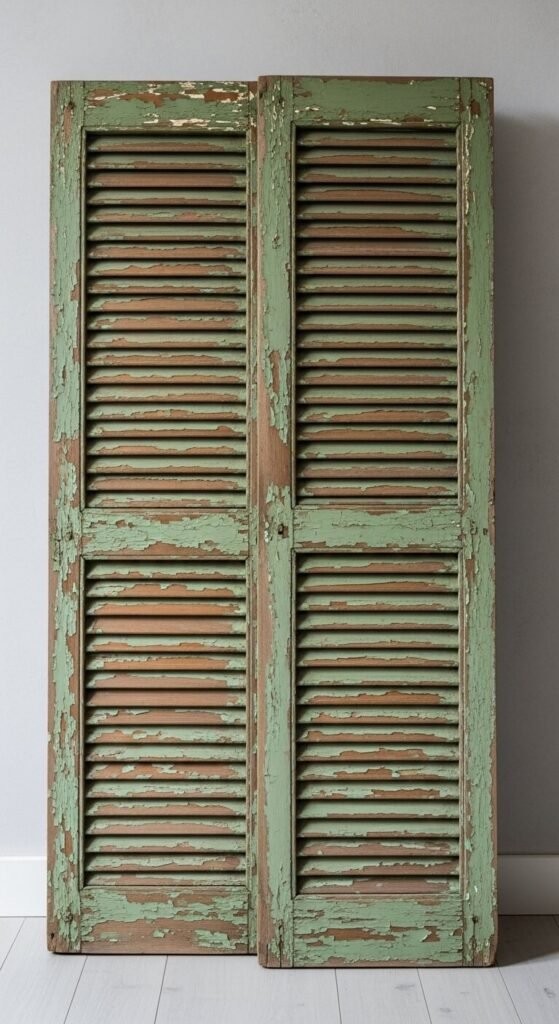
Architectural salvage shutters work as headboards, room dividers, or wall panels. Buy pairs for $20-40 depending on size and condition.
Mount them behind beds or use them to frame doorways. The peeling paint shouldn’t be fixed—that’s the whole point.
Hinge pairs together to create folding privacy screens. Sand any splinters but preserve the layered paint character.
These pieces add height and texture to blank walls instantly. Each set has unique aging patterns worth celebrating.
Cotton Stems and Dried Florals
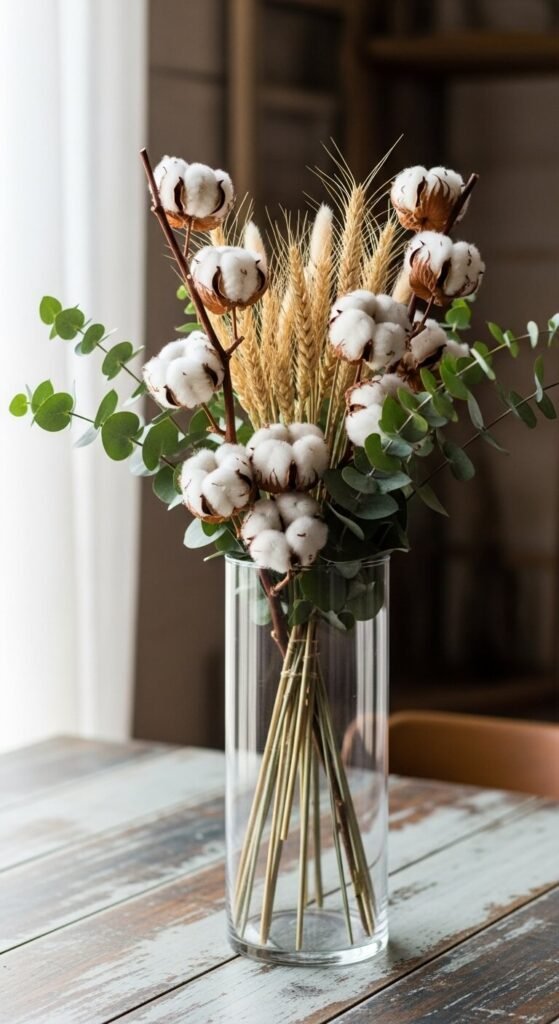
Dried arrangements never wilt and capture the farmhouse aesthetic perfectly. Buy cotton stems for $12-15 per bunch online.
Mix them with wheat, lavender, or eucalyptus in vintage pitchers. The neutral tones work year-round without looking seasonal.
Gather wildflowers and grasses from your yard to dry for free. Hang them upside down for two weeks before arranging.
These displays require zero maintenance beyond occasional dusting. They bring organic texture to tables and mantels.
Wooden Cutting Boards as Decor
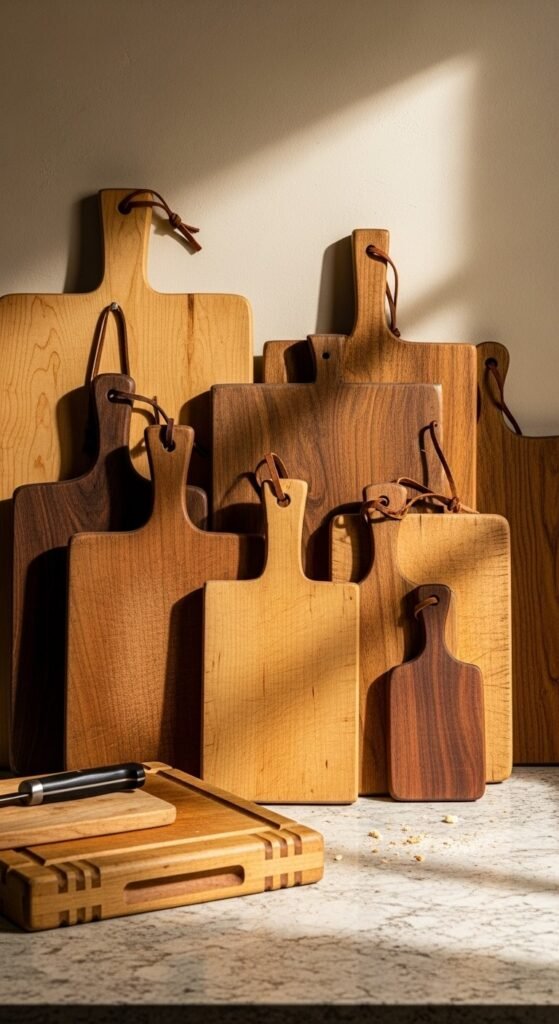
Well-used boards show kitchen history through their scars and stains. Collect them at garage sales for $3-10 each.
Lean them against backsplashes or hang them on walls with cup hooks. The varied wood tones and sizes create organic groupings.
Use them for actual cutting or as serving platters for cheese and bread. Oil them monthly with mineral oil to prevent cracking.
New boards lack the character that comes from years of chopping. Start your collection with different shapes and handle styles.
Vintage Seed and Feed Sacks
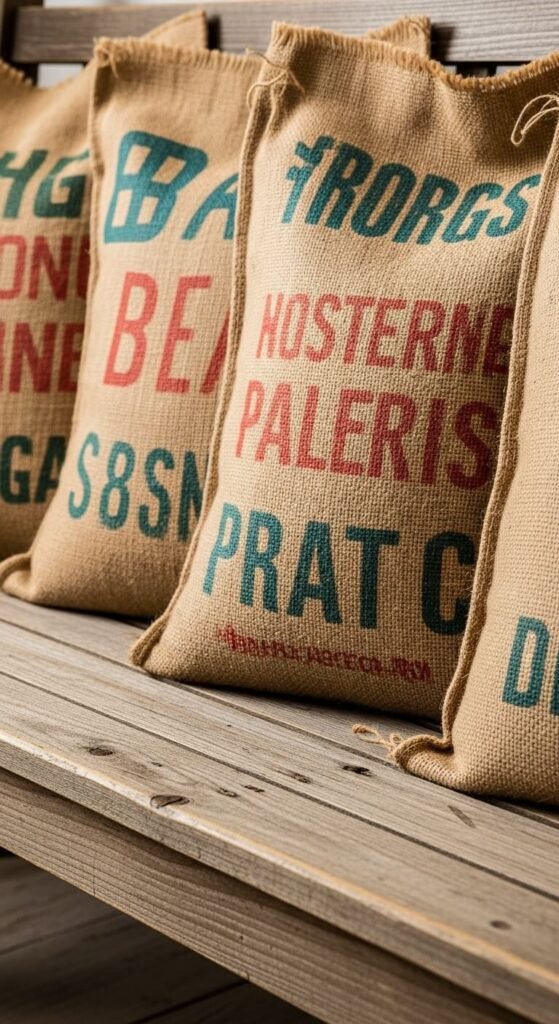
Grain sacks from the 1940s-60s make perfect rustic textiles. Find them online or at flea markets for $15-30 each.
Use them as pillow covers, table runners, or wall hangings. The faded logos and stenciled letters add graphic interest.
Wash them gently since old fabric can be fragile. Frame smaller sections as art or sew them into tote bags.
Modern reproductions print too sharply compared to worn originals. These textiles soften hard surfaces with farm history.
Cast Iron Cookware Display
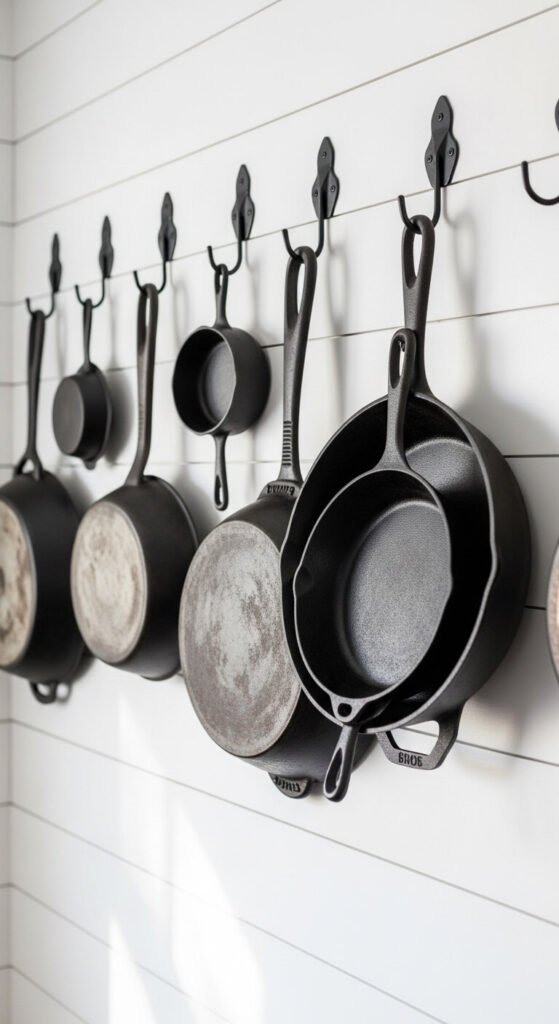
Seasoned cast iron pieces deserve to be seen, not hidden in cabinets. Hang them on wall-mounted hooks for $20 in hardware.
The black patina and varied sizes create interesting wall art that’s actually useful. Keep your most-used pans within easy reach.
Scour estate sales for vintage Griswold and Wagner pieces. Strip and re-season any rusty finds with vegetable oil.
This storage solution saves cabinet space while showing off your collection. The industrial black anchors farmhouse kitchens beautifully.
Vintage Crates and Wooden Boxes
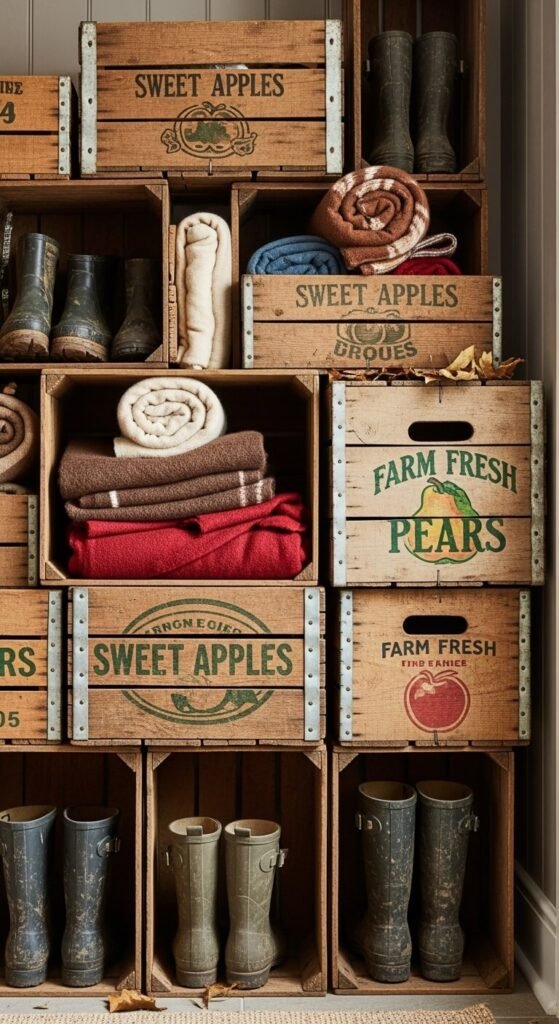
Old shipping crates bring instant texture and flexible storage. Find them for $10-25 at flea markets and salvage shops.
Stack them as open shelving or use single crates as side tables. The stamped logos and weathered wood tell commercial stories.
Reinforce corners with metal braces if they’re wobbly. Line them with fabric if you’re storing delicate items.
These pieces adapt to any space from bedrooms to garages. The rough wood contrasts nicely with smooth modern surfaces.
Farmhouse Pendant Lighting
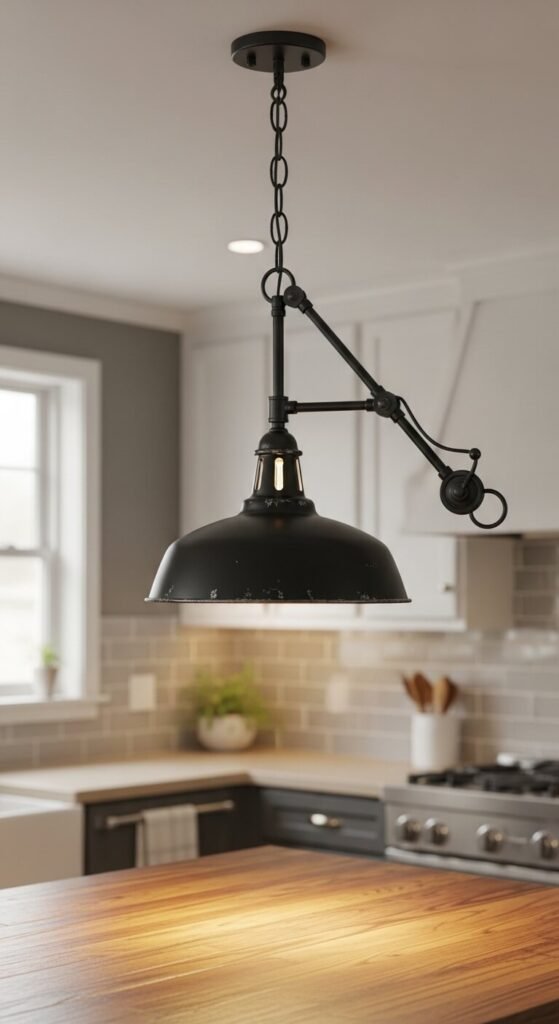
Industrial-style pendants ground farmhouse kitchens with functional style. Quality fixtures start around $50 each at home stores.
Hang them over islands and tables at 30-36 inches above the surface. Black or galvanized metal shades work best.
Mix different sizes over long islands for visual rhythm. Wire them with Edison bulbs for amber-toned light.
This lighting choice defines your farmhouse commitment without renovation. The simple shapes don’t compete with other decor elements.
Conclusion
Farmhouse decor works because each piece serves a purpose beyond looking pretty. These 27 elements prove you don’t need a big budget or rural property to capture country charm. Start with one room and add items gradually as you find them at sales and shops. Mix old and new, perfect and imperfect, until your space feels collected rather than decorated. The best farmhouse homes layer textures and stories over time, creating rooms that welcome you home every single day.