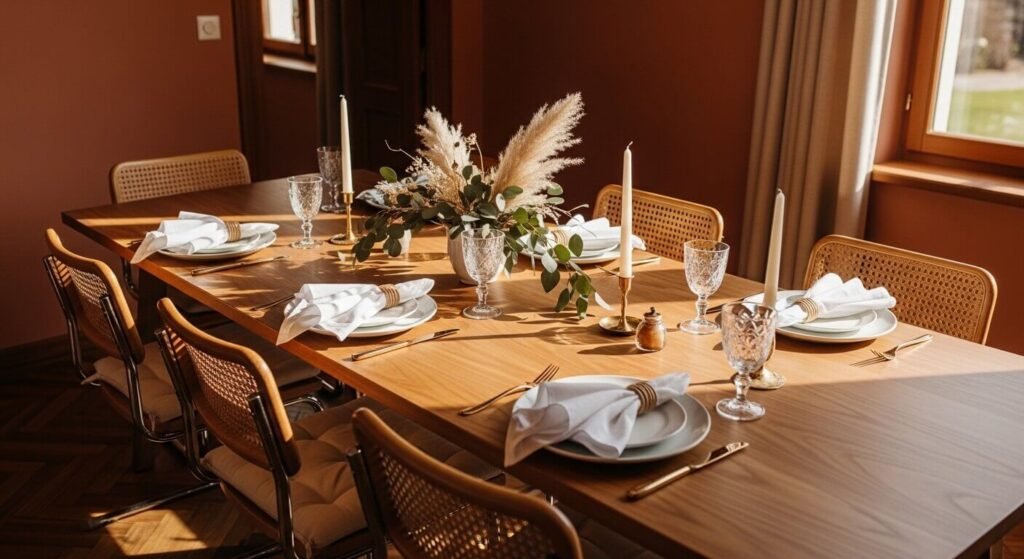
Your dining room is more than a place to eat. It sets the mood for every conversation, every celebration, and every quiet weeknight dinner. The right setting can make a takeout pizza feel like a restaurant experience. Small changes — a candle here, a linen napkin there — create a space that feels put-together without costing a fortune. This guide walks through 27 real, practical ways to make your dining room look and feel more sophisticated, no interior design degree required.
1. Set the Table with Linen Napkins
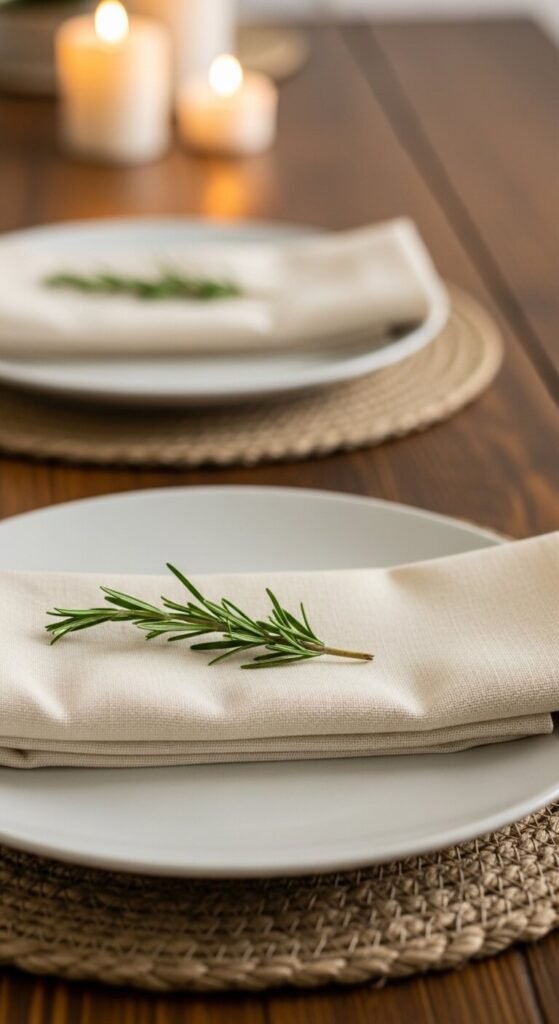
Swap paper napkins for linen or cotton ones. They instantly make a table look polished.
You don’t need matching sets. Mix neutral tones like cream, sage, and dusty rose for an effortless, layered look.
Buy a set of four at a discount home store for under $15. Wash and air-dry — no ironing needed for that relaxed, lived-in aesthetic.
Even a simple fold, like a loose rectangle, looks far more intentional than a paper square.
2. Use Candlelight as Your Primary Ambiance Tool
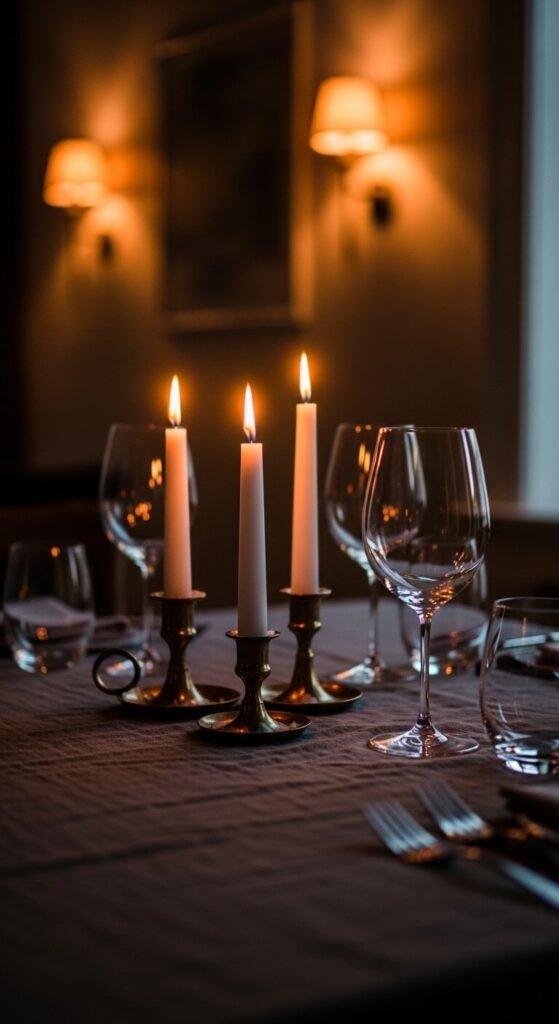
Overhead lighting is often too harsh for dining. Candles change everything.
A cluster of mismatched candlestick holders in brass or black creates a moody, layered centerpiece. Mix heights for visual interest.
You can find taper candles at the dollar store. Use beeswax or unscented soy candles to avoid competing with food aromas.
Dimming or turning off overhead lights and using only candles turns any weeknight dinner into something that feels like a special occasion.
3. Add a Low Centerpiece That Doesn’t Block Conversation
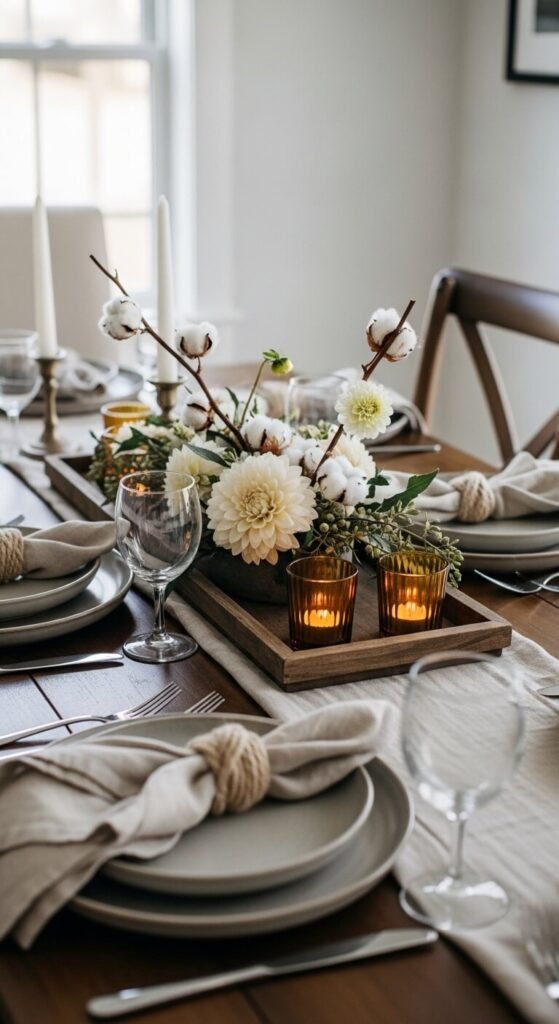
Tall centerpieces block eye contact across the table. Keep it low.
A wooden tray with a few votives, some dried stems, and a small bowl of fruit is simple and effective. Everything fits within a 6-inch height.
This approach lets guests see each other without leaning sideways. It also makes the table feel more curated than cluttered.
DIY option: forage dried seed pods, pinecones, or eucalyptus from a garden or craft store for under $10.
4. Layer Your Table with Placemats and a Runner
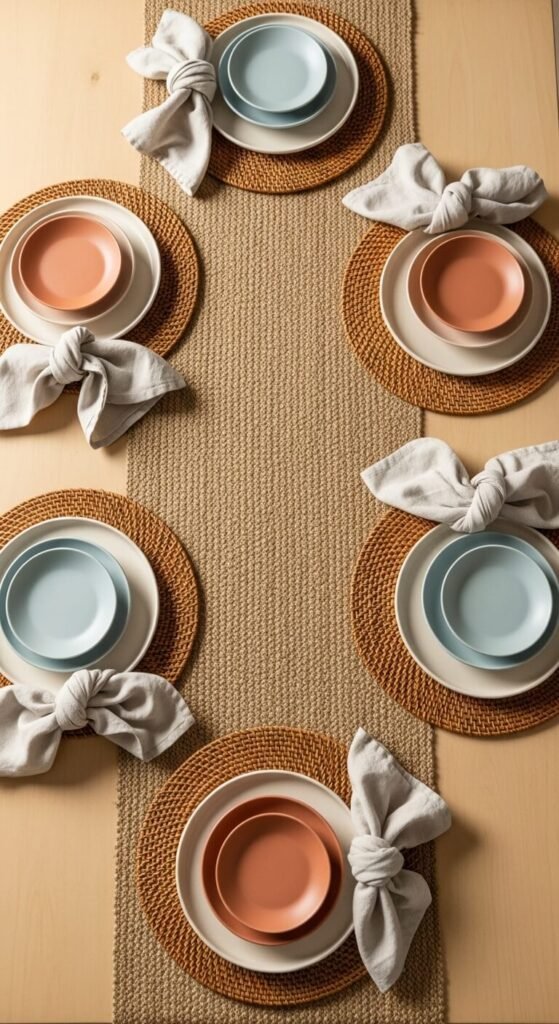
Layering adds depth without complexity. Start with a table runner, then add placemats.
Natural materials — jute, rattan, linen — work well together and don’t need to match perfectly.
A jute runner ($8–$12 at most home stores) and four woven placemats ($3–$5 each) immediately make a bare table look intentional.
The layering also protects your table surface, which is a practical bonus alongside the aesthetic one.
5. Choose Stoneware or Matte Ceramic Plates
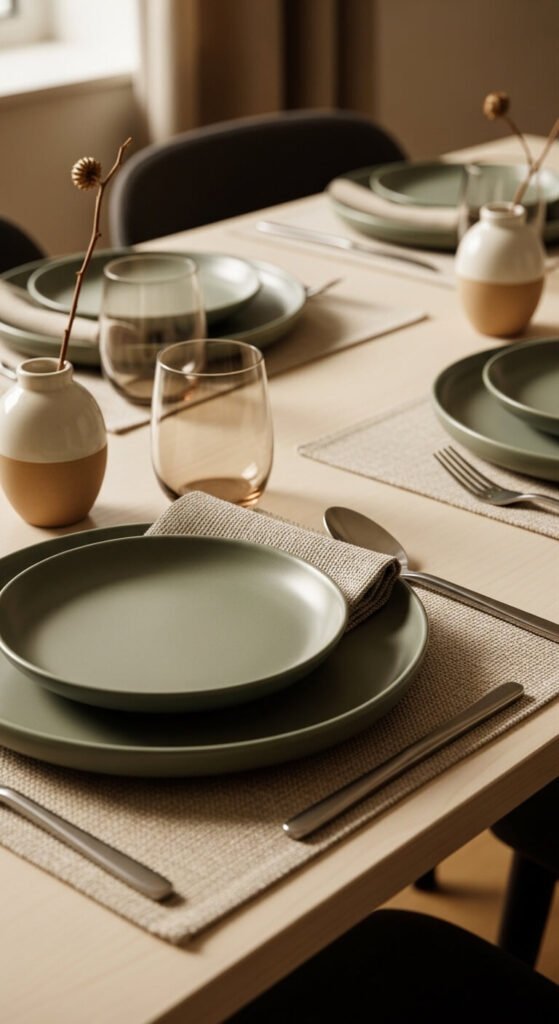
Glossy white plates are fine, but matte stoneware creates a more artisan, elevated look.
Colors like sage green, slate blue, warm terracotta, or speckled cream add personality to any table setting.
Thrift stores frequently carry beautiful stoneware sets. A full set of four dinner plates can be found for $5–$20 in second-hand shops.
Mixing two complementary matte shades — like cream and terracotta — creates an organic, sophisticated feel that looks intentional rather than mismatched.
6. Display Fresh or Dried Flowers Simply
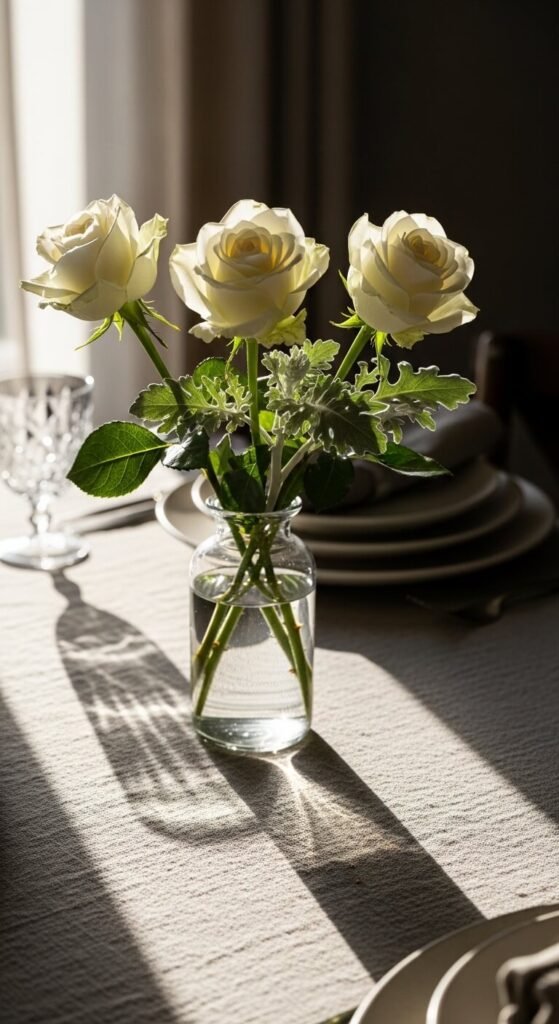
You don’t need an elaborate bouquet. One to three stems in a simple vase is enough.
A single garden rose, a few eucalyptus sprigs, or dried pampas stems create a clean, sophisticated focal point without overpowering the setting.
Grocery store flowers are perfect here. Trim them short and place them in a small bud vase or even a clean jam jar.
Dried arrangements last for months and require no upkeep — a very practical choice for regular table styling.
7. Invest in One Quality Lighting Fixture
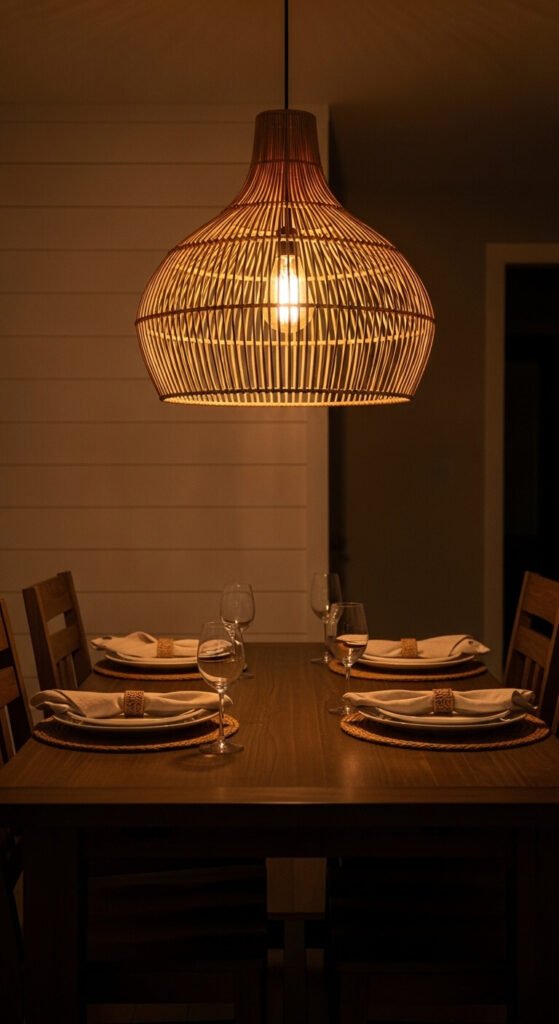
The right pendant light does more for a dining room than almost any other single element.
A statement fixture — rattan, black iron, or sculptural ceramic — anchors the entire room. It tells the eye where to focus.
You don’t have to rewire anything. Plug-in pendant lights are available for under $40 and hang from a simple ceiling hook.
This is the one area where spending a little more makes a visible difference that affects every meal you eat in that room.
8. Use a Wooden or Marble Serving Board as a Centerpiece
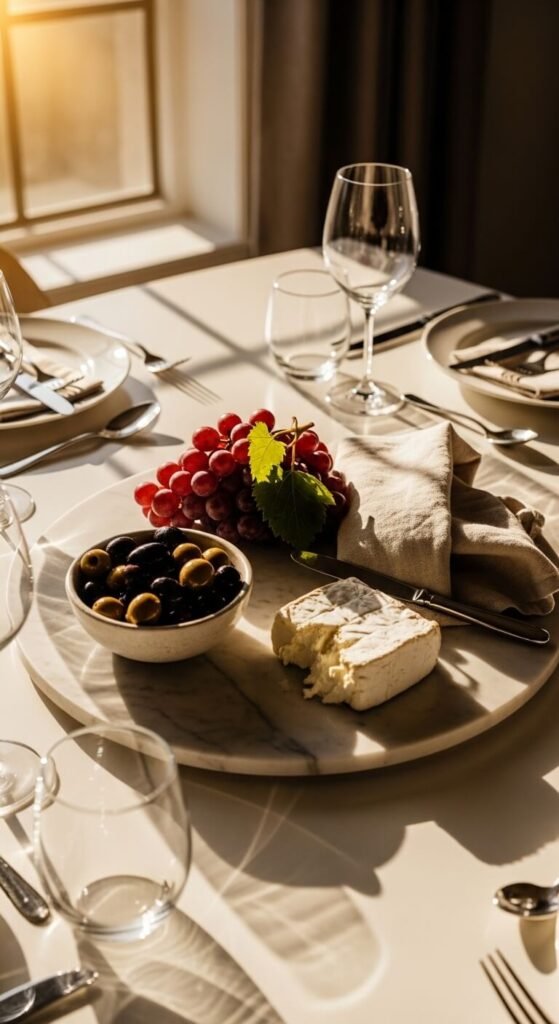
A wooden charcuterie board or marble slab placed in the center of the table functions as décor and serving surface simultaneously.
This dual-purpose approach is both practical and visually striking. Add a small bowl, a cluster of grapes, or a candle on top to complete the look.
Wooden boards range from $10–$25. Marble effect boards made from resin are even more affordable and easier to maintain.
You’re doing two jobs with one object, which keeps the table looking refined without over-decorating.
9. Incorporate Warm-Toned Glassware
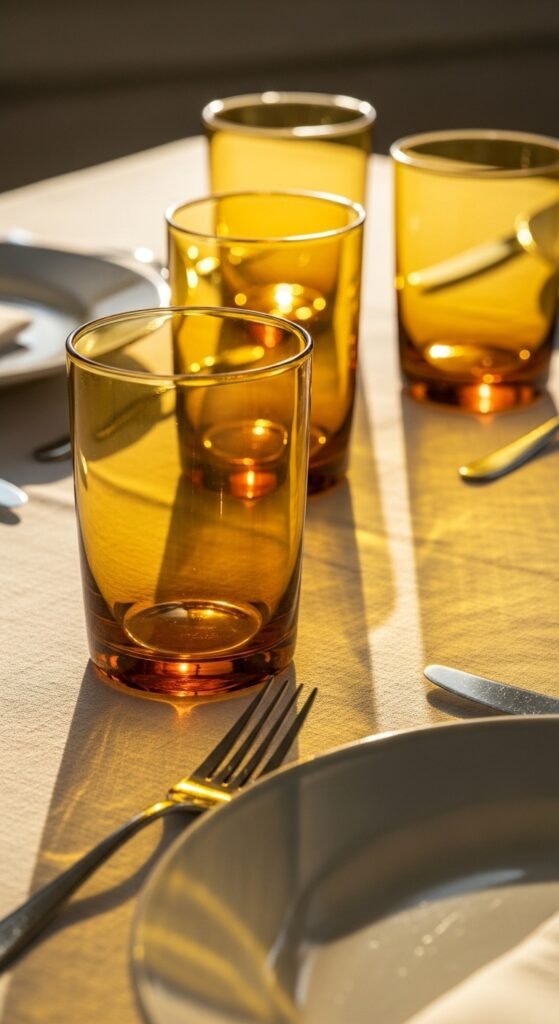
Clear glassware is standard. Amber, smoky, or sage-green glasses are special.
Warm-toned glassware catches light beautifully and adds color to a table without requiring any other changes to your setting.
Thrift stores and vintage markets regularly carry these. A set of four amber tumblers can be found for $3–$8 at second-hand shops.
Even if you mix tones slightly — a smoky grey beside an amber — the effect still reads as curated and sophisticated rather than random.
10. Try a Monochromatic Color Scheme
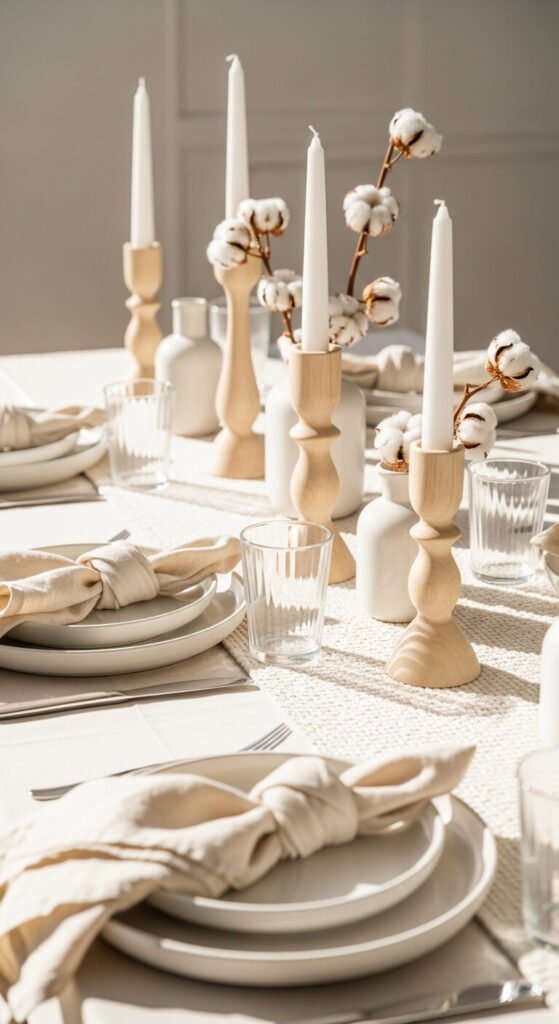
Pick one color and use different shades of it across your table.
All cream and white. All terracotta tones. All shades of green. This creates a calm, cohesive look that feels deliberate and polished.
You don’t need to go out and buy all new items. Pull together things you already own that share a similar color family.
The monochromatic approach is one of the simplest styling tricks because it removes guesswork — any shade within your chosen range works automatically.
11. Use Cloth Napkin Rings for a Finishing Touch
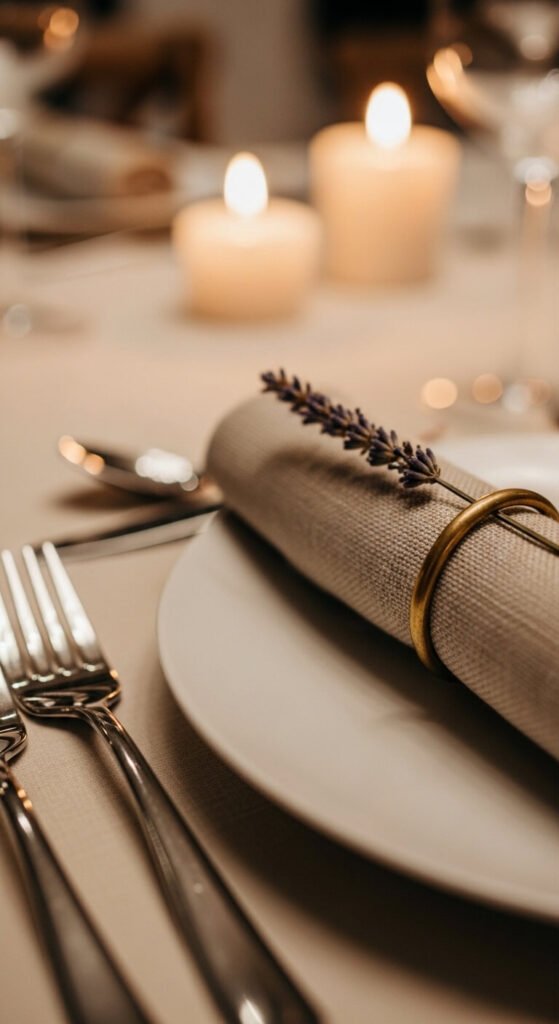
Napkin rings are small but impactful. They tell guests this meal was thought about.
Simple brass, bone, or woven grass rings add texture and formality without requiring any table redesign.
A pack of four to six napkin rings typically costs $8–$15. Alternatively, tie napkins with a piece of twine and tuck in a dried herb sprig — rosemary, thyme, or lavender all work well.
This is a five-second styling move that makes a dinner table look restaurant-worthy.
12. Add a Wall Mirror to Amplify Light and Space
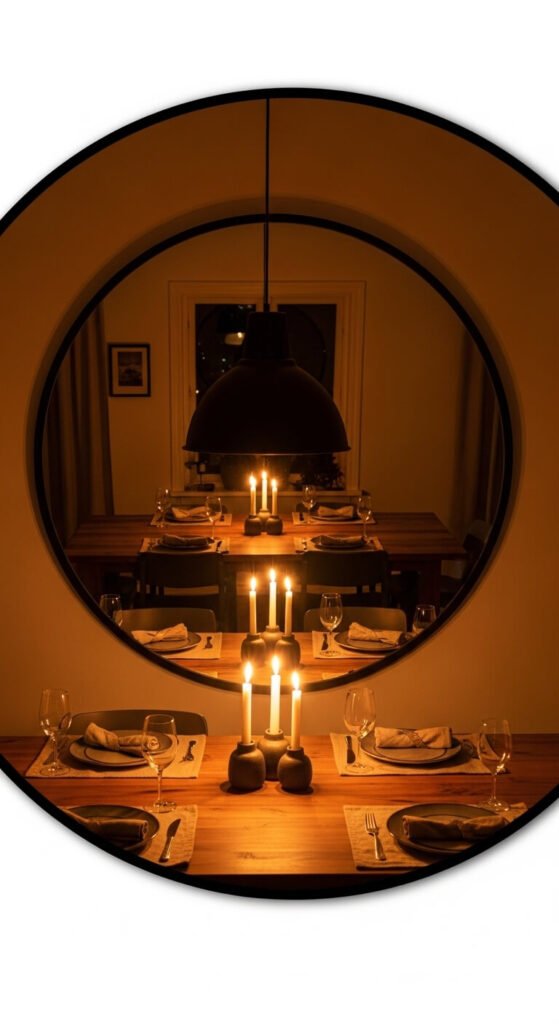
A mirror behind or beside the dining table does two things: it bounces light and it makes the space look larger.
Round mirrors with black or brass frames work particularly well in dining rooms. They soften the walls and add visual weight without taking up floor space.
Secondhand stores often carry mirrors for $15–$30. Look for ones with interesting frames rather than plain beveled styles.
Even a modest-sized mirror, about 24 inches across, makes a noticeable difference in how light and spacious the room feels.
13. Style Your Sideboard or Buffet Table
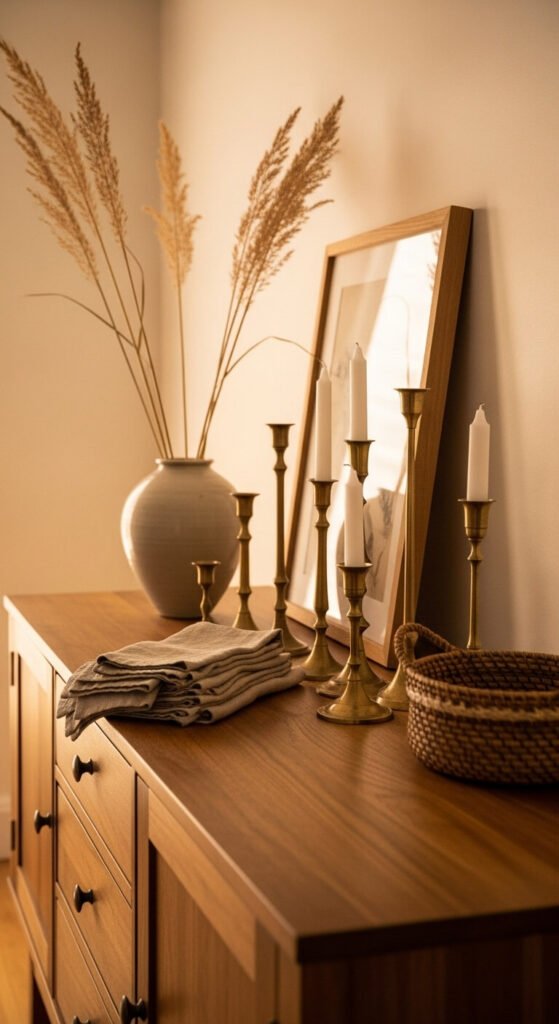
The sideboard is often ignored. But a well-styled sideboard anchors the dining room.
Keep it functional and visual. Stack extra plates, display a vase, and add a few candles. Use a tray to group smaller items so they don’t look scattered.
Lean a framed print or small piece of artwork against the wall behind it — no nails needed.
The rule here is: every item on the sideboard should either be useful, beautiful, or both. Remove anything that doesn’t meet at least one of those conditions.
14. Choose Chairs That Mix Materials
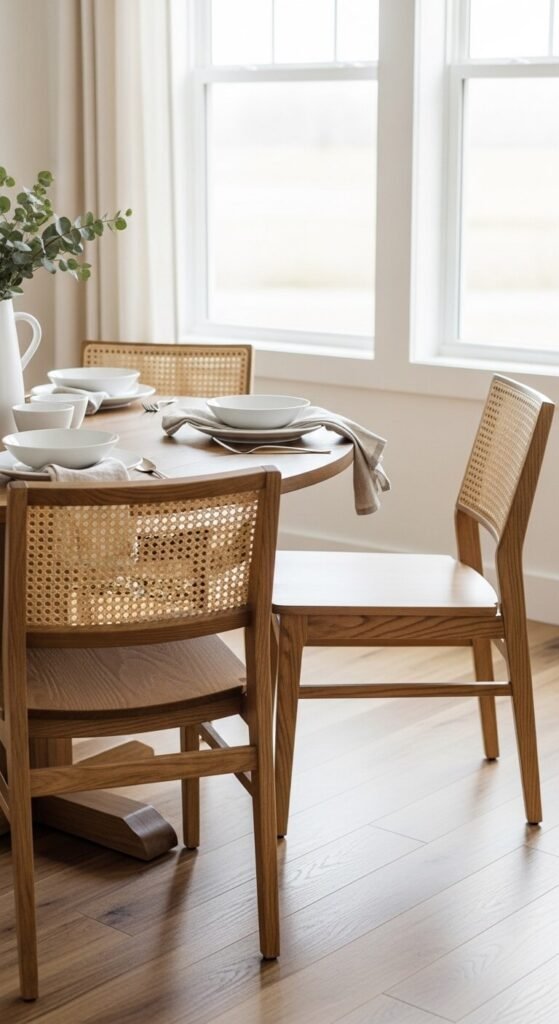
Matching chair sets are predictable. Mixing materials creates a more curated, designer-level look.
Pair wood-frame chairs with cane-back ones, or add a bench on one side. As long as the tones are in the same family — all warm wood, all black — the mix reads as intentional.
Check Facebook Marketplace for individual chairs. You can often build a set of four for under $60 by mixing pieces with similar finishes.
A small matching seat cushion on each ties them together visually without requiring identical frames.
15. Frame the Dining Area with a Rug
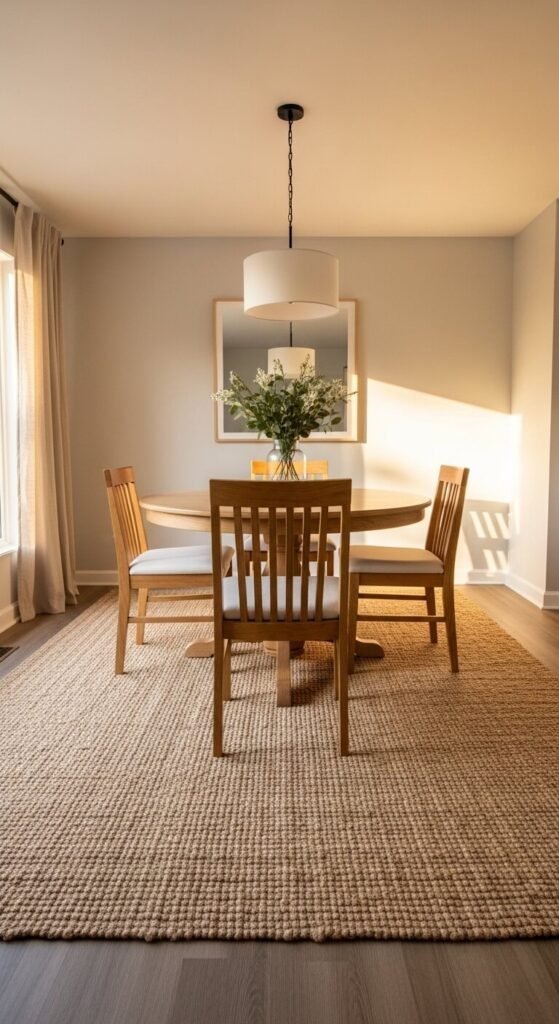
A rug under the dining table defines the space and adds warmth to the room.
The rug should extend at least 24 inches beyond the chairs on all sides so chairs don’t scrape off the edge when guests sit down.
Natural fiber rugs — jute, sisal, seagrass — are affordable and durable. A large jute rug runs $60–$100 at many home stores or online retailers.
This single addition makes an open-plan dining area feel like its own distinct, purposefully designed space.
16. Add Wall Sconces for Layered Lighting
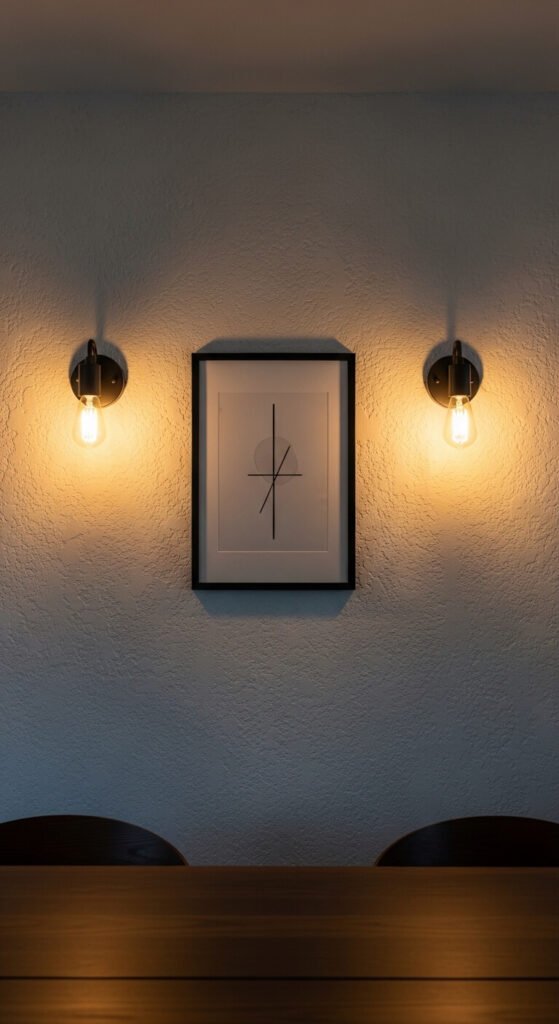
Good dining room lighting isn’t just about the overhead fixture. Layered light — from multiple sources at different heights — creates a more atmospheric, sophisticated feel.
Plug-in wall sconces require no electrician. You run the cord discreetly along the wall and plug into a standard outlet.
A pair of plug-in sconces costs $25–$60 and dramatically changes the mood of the room, especially in the evening.
Place them on the wall flanking an artwork, a mirror, or simply spaced symmetrically to frame the dining area.
17. Use Textured Table Linens
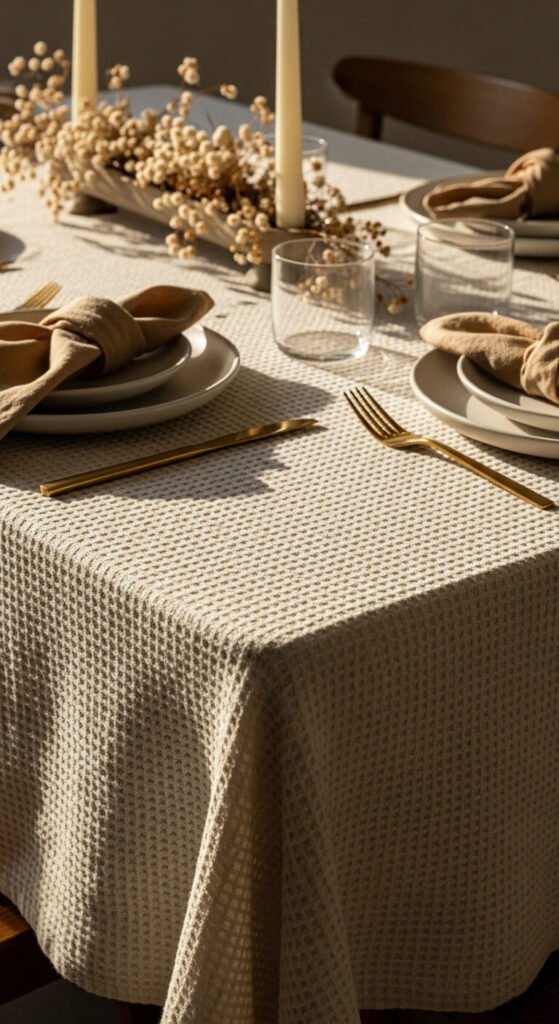
Texture is one of the most underused tools in table styling. A waffle-weave, slubby linen, or embroidered tablecloth adds visual richness that solid-color options don’t.
Texture catches light and creates shadow, giving the table surface movement and depth even before anything is placed on it.
Look for textured tablecloths at linen sales or discount stores. A good quality linen tablecloth can be found for $20–$35.
Pairing a textured cloth with smooth stoneware plates creates a satisfying contrast that makes the whole setting feel more considered.
18. Hang Meaningful Artwork at Dining Room Scale
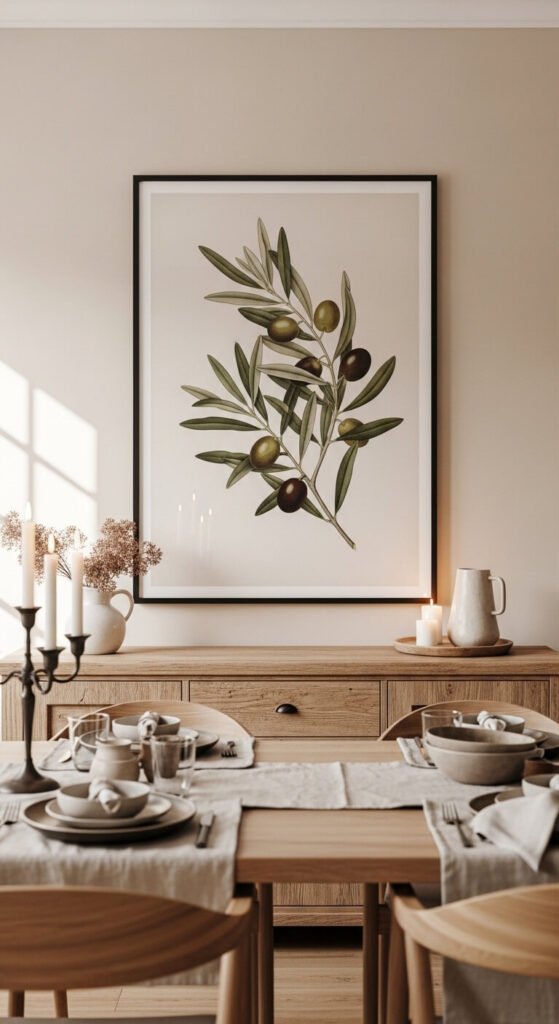
Small artwork in a large dining room looks like a mistake. Scale up.
One large piece, or a tight grouping of three similarly framed prints, makes a strong visual statement. The bottom of the artwork should sit about 8–10 inches above the furniture beneath it.
Print-on-demand services like Printful or Society6 let you order large botanical, abstract, or architectural prints for $15–$40 unframed.
IKEA and Amazon carry large format frames for under $30. One well-placed large piece does more than five small ones scattered randomly.
19. Introduce a Plant or Two for Life and Color
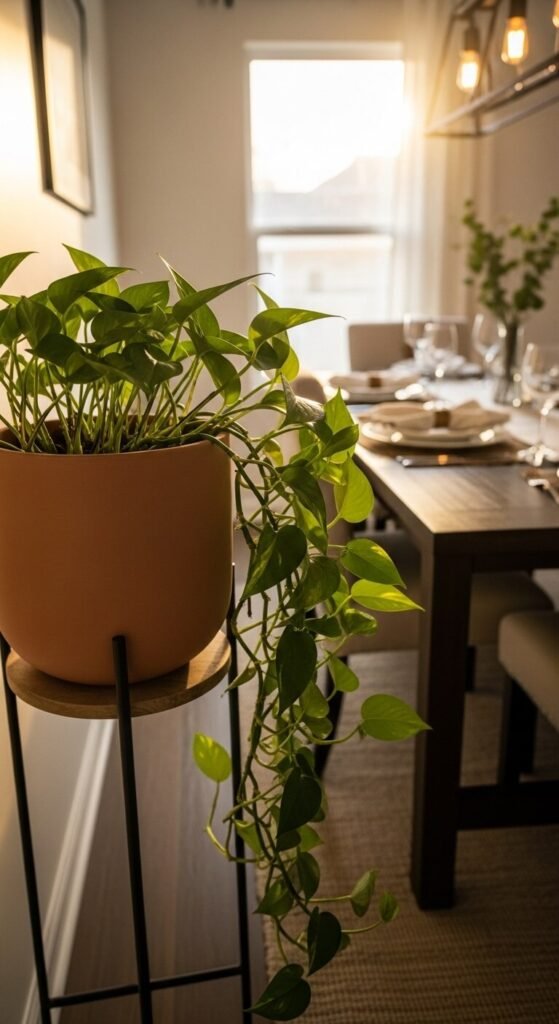
Plants bring something to a room that no décor item can replicate: actual life.
Pothos, fiddle-leaf figs, and ZZ plants are all low-maintenance and thrive in typical dining room conditions. Place one large plant in a corner or a small one on the sideboard.
A terracotta pot from a garden center costs $3–$8. Pothos plants are often available for $5–$10 at grocery stores or hardware stores.
The greenery softens the hard edges of furniture and creates a more organic, welcoming feeling throughout the entire room.
20. Curate a Simple Drink Station
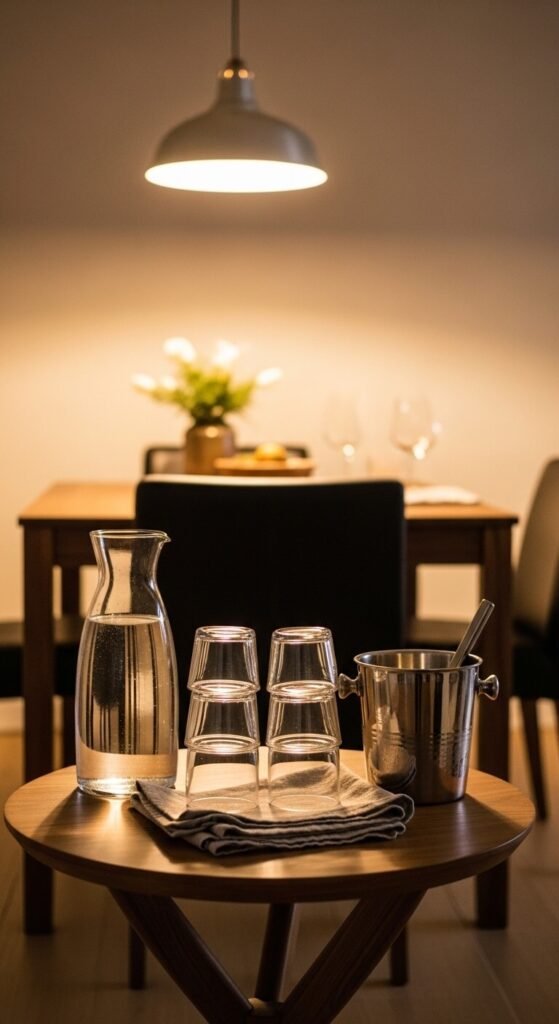
A small designated drink area makes hosting feel seamless and adds a layer of intentionality to your dining setup.
A round side table, a glass pitcher, stacked glasses, and a small tray is all you need. Place it within easy reach of the dining table.
This removes the need for guests to wait for refills and encourages the kind of relaxed, self-serve atmosphere that makes people feel genuinely welcome.
It also just looks great — a styled drink station signals hospitality more clearly than almost anything else.
21. Display a Collection of Objects on the Table
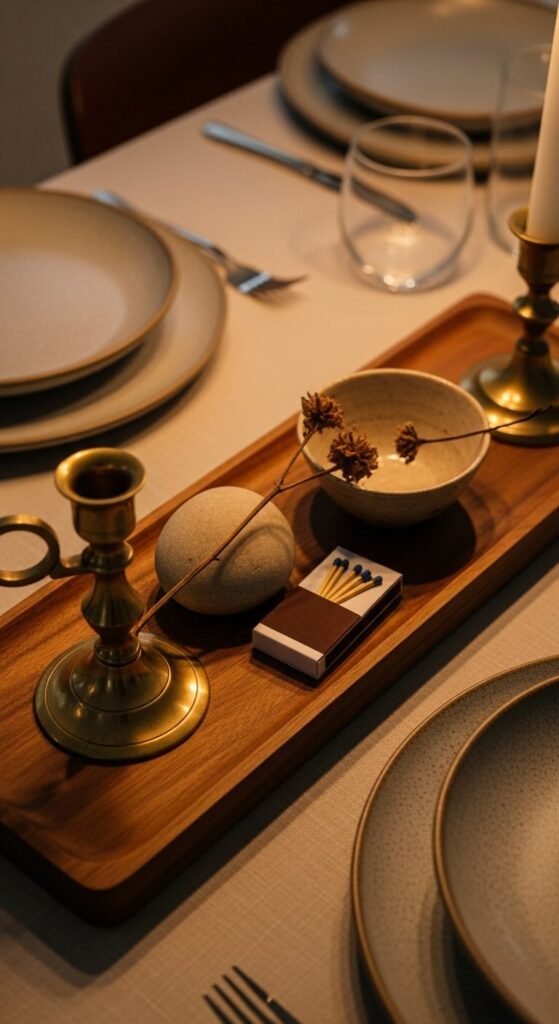
A curated tray of small objects in the center of the table creates a collector’s aesthetic that feels personal and sophisticated.
Mix materials: something metal, something ceramic, something natural, something textured. Keep the total collection to five to seven pieces max.
Items can be sourced from around your home — small stones, a candle, a tiny vase, a found feather. Place them on a tray to give the collection a defined boundary.
The tray is the key element. It unifies random objects into something that reads as intentional.
22. Go Dark on One Wall for Drama
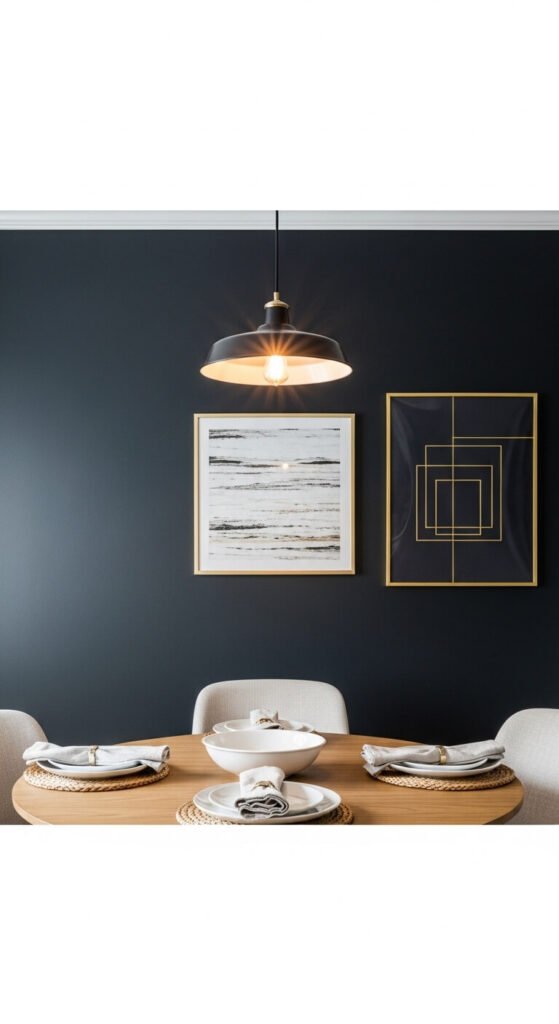
One dark-painted wall behind the dining table creates an immediate, dramatic focal point.
Deep charcoal, navy, forest green, or terracotta all work well. The dark color frames the dining area and makes any décor or lighting placed against it look more striking.
A single quart of sample paint costs $5–$10 at most hardware stores — enough for a small accent wall. No need to commit before testing.
Pair the dark wall with warm lighting and light table linens. The contrast does the visual work for you.
23. Create Atmosphere with a Scent Element
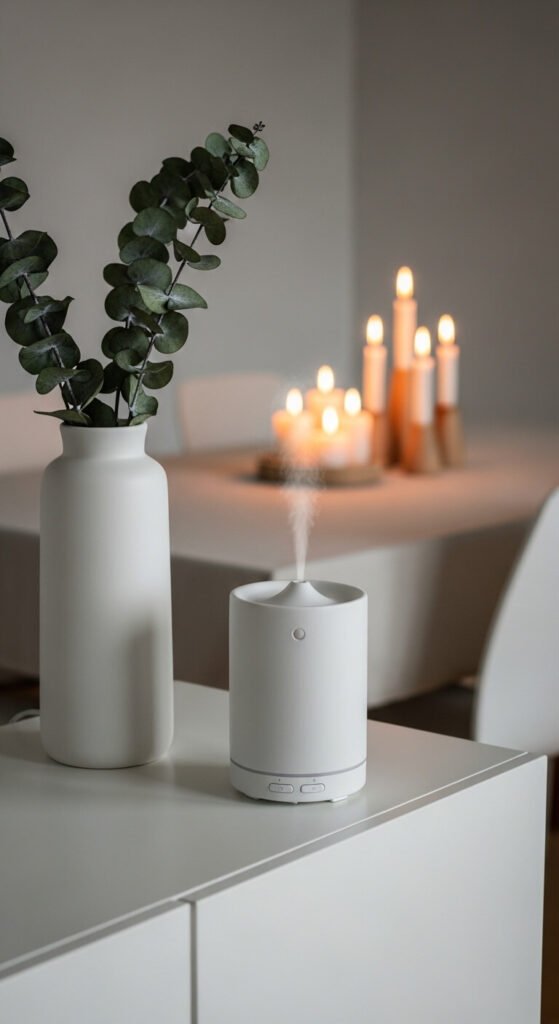
Dining rooms are primarily experienced through sight, but scent dramatically affects mood and appetite.
A subtle reed diffuser on the sideboard or a beeswax candle burning during the meal adds an olfactory layer that most people feel without consciously noticing.
Choose clean, simple scents: linen, cedar, warm amber, or subtle citrus. Avoid floral or strong synthetic fragrances near food.
A reed diffuser runs $8–$15 and lasts two to three months. This is one of the lowest-cost ways to make a meal feel more special.
24. Use Menu Cards for Special Dinners
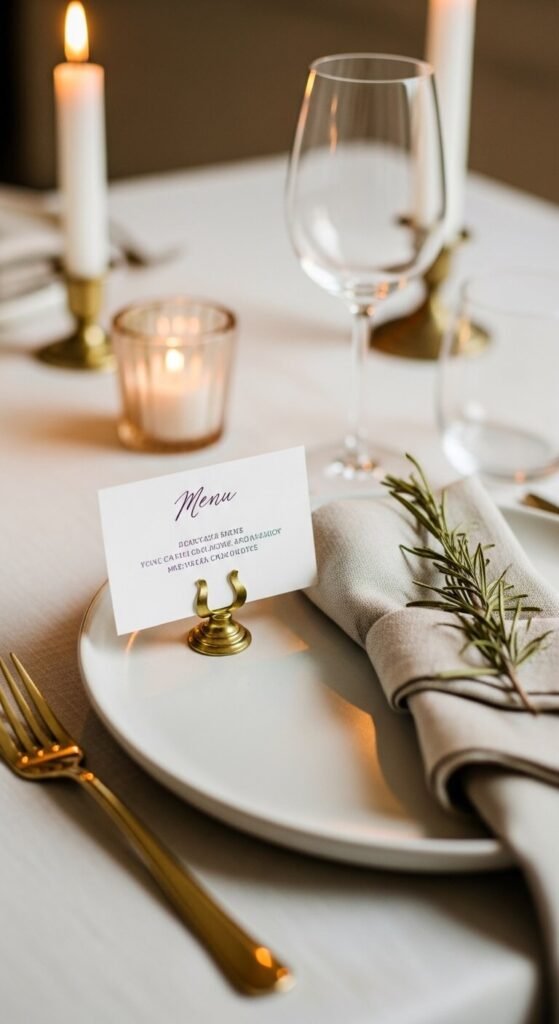
A small handwritten or printed menu card at each place setting instantly signals that a meal was planned with care.
You don’t need to do this every night. Reserve it for dinner parties or special occasions like birthdays, anniversaries, or holiday meals.
Print them from a free template online, or write them by hand on folded card stock. Tuck them into a small brass card holder or rest them against the glass at each seat.
The cost is near zero. The effect is completely disproportionate to the effort.
25. Keep the Table Clear When Not in Use
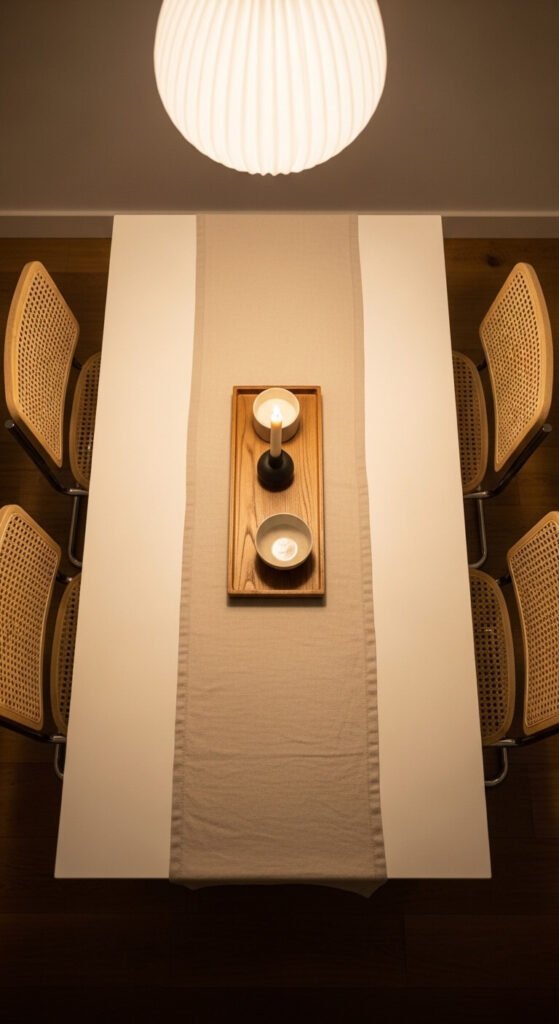
A cluttered dining table between meals undermines even a beautifully decorated room.
Less is more. Between sittings, keep the table clear except for one centerpiece tray with a candle and a small vase.
This approach makes the table look intentional at all times, not just when laid for a meal. It also makes setting the table faster because you’re starting from a clean, organized surface.
Remove mail, laptops, bags, and anything functional that doesn’t belong in a styled dining space. The discipline pays off visually.
26. Add Curtains That Pool Slightly at the Floor
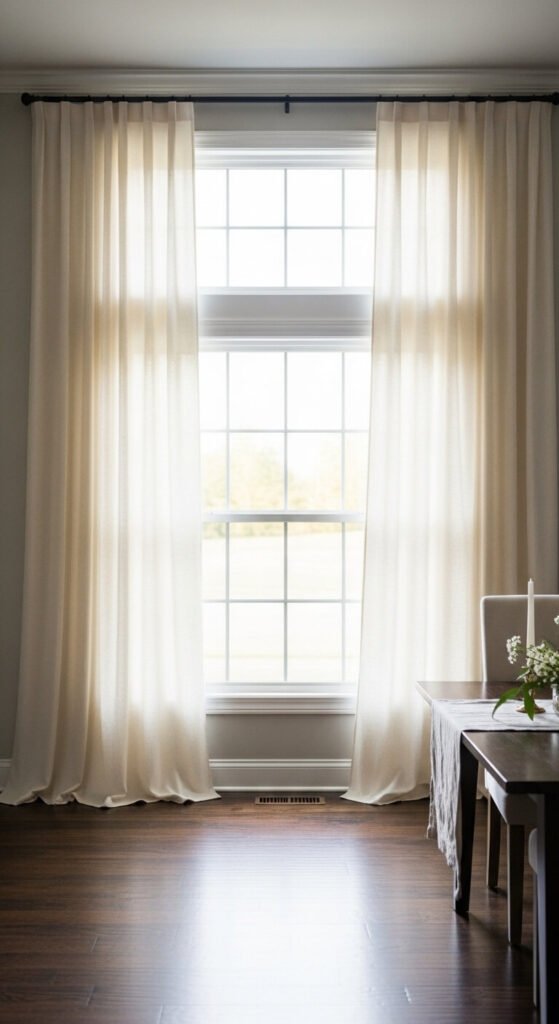
Curtains that graze or pool slightly at the floor make a dining room feel more intentional and softer.
Floor-to-ceiling length (even in a room with shorter windows) creates height and drama. Mount curtain rods as high as possible — even close to the ceiling — to draw the eye upward.
IKEA linen curtains run $15–$30 per panel and work beautifully in dining spaces. Stick to natural materials like linen or cotton in neutral tones.
Avoid polyester or blackout curtains in a dining room — they read as bedroom functional, not dining room atmospheric.
27. Personalize with One Unexpected Element
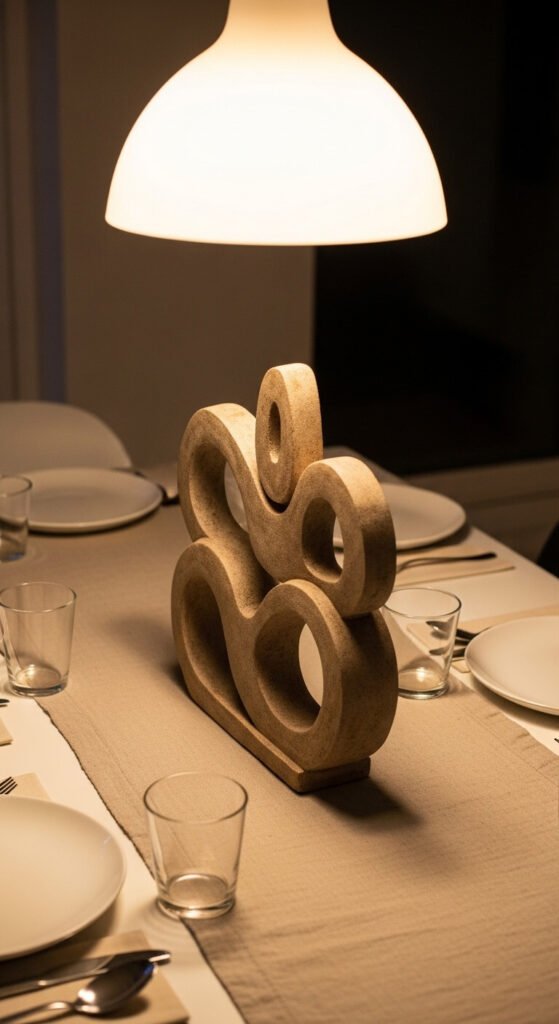
Every well-designed dining room has one thing that doesn’t look like it came from a catalogue.
It could be a ceramic sculpture you bought from a local maker. A single vintage candelabra. An oversize textural woven bowl. An heirloom item from family.
This singular unexpected object gives the room personality. It gives guests something to comment on. It tells a story.
Craft fairs, Etsy, and local pottery studios are great sources for this kind of piece. Spending $20–$50 on one handmade object is worth more to the room’s character than $200 in matching accessories.
Conclusion
Transforming your dining room doesn’t require a renovation or a large budget. It requires small, deliberate decisions made consistently. The right lighting changes the mood. A low centerpiece opens up conversation. Stoneware plates and linen napkins signal care and intention. Layering textures, mixing materials, and keeping the table clear between meals are habits that take minutes but pay off every time you sit down to eat. Start with one or two changes from this list. See how the room responds. Then build on what works. The goal isn’t perfection — it’s creating a space that makes every meal feel worth sitting down for.