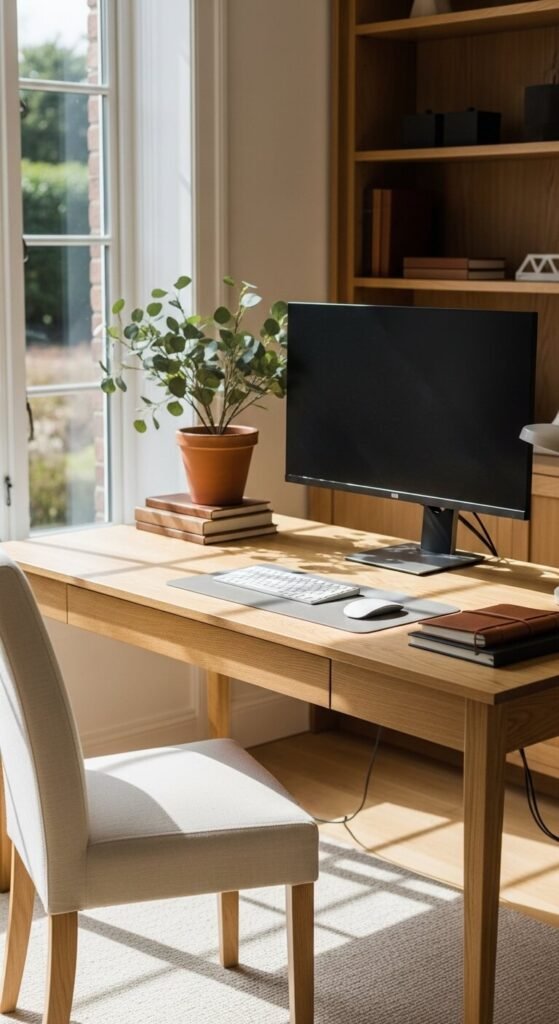
Your home office should work as hard as you do. Whether you’re in a spare bedroom, a closet conversion, or a tiny apartment corner, the right setup changes everything. Functional aesthetic workspaces aren’t about spending thousands — they’re about making smart, intentional choices. The goal is a space that feels good, helps you focus, and reflects how you actually work. This guide walks through 28 real, achievable setups with practical ideas you can act on today.
1. The Minimalist White Desk Corner
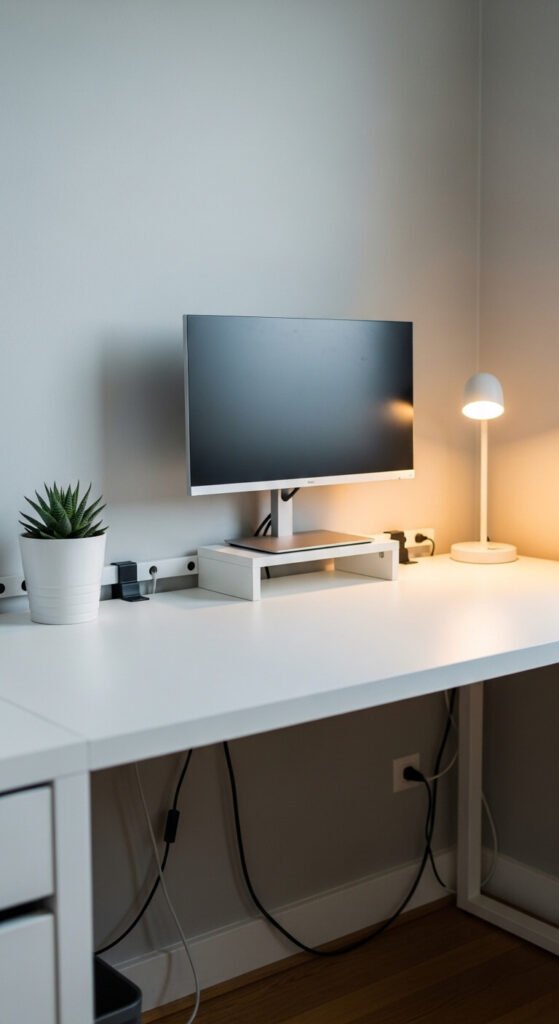
Less is more here. A white desk anchors a calm, distraction-free zone. Pair it with a simple monitor riser made from a few stacked hardcover books. Add one small plant for life. Keep only what you use daily on the surface. Everything else goes in a drawer or box. White reflects light, making even tiny spaces feel open. IKEA’s LINNMON desk starts around $40. Add a $10 cable clip set and the whole setup looks intentional and polished.
2. The Warm Wood and Black Contrast Setup
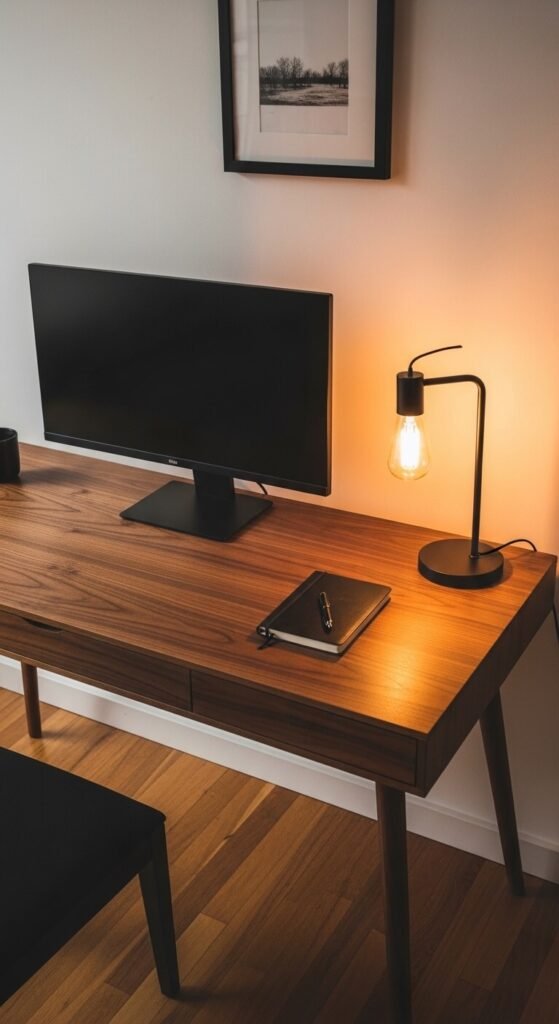
Warm wood tones paired with black accents create a grounded, professional feel. You don’t need a custom desk. A butcher block countertop from a hardware store ($50–$80) laid across two IKEA drawer units gives you a deep, beautiful work surface. Add a matte black desk lamp and a simple black monitor. The contrast does all the visual work. This setup photographs beautifully and feels expensive without the price tag.
3. The Window-Facing Natural Light Station
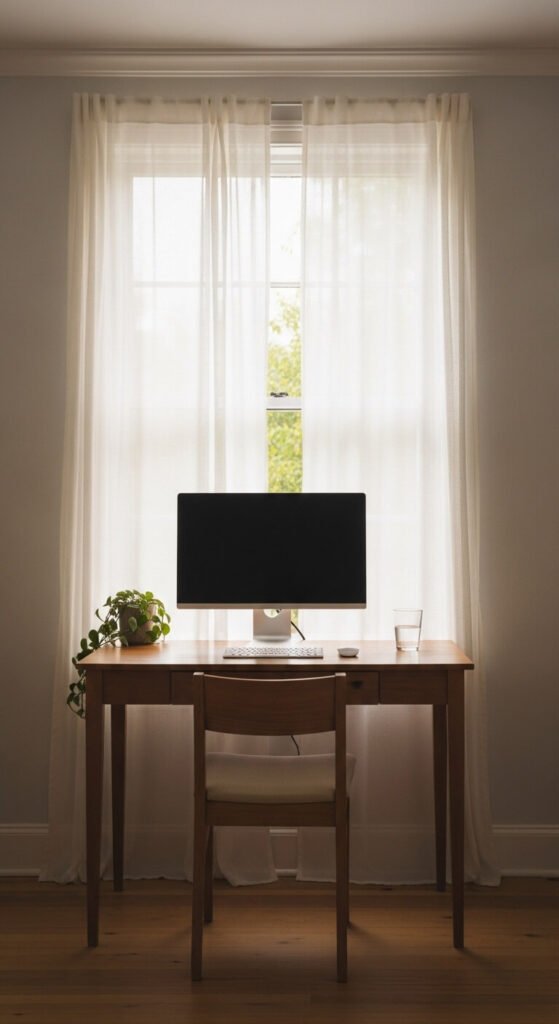
Natural light is the best productivity tool that costs nothing. Face your desk toward the window. Use sheer curtains to soften harsh afternoon sun without losing brightness. This positioning reduces eye strain and keeps your energy up through the day. If glare hits your screen, a simple $15 clip-on monitor hood fixes it. Morning light is ideal — it signals your brain to wake up and focus. Rearranging furniture to face the window is a free upgrade with a big payoff.
4. The Standing Desk Converter Setup
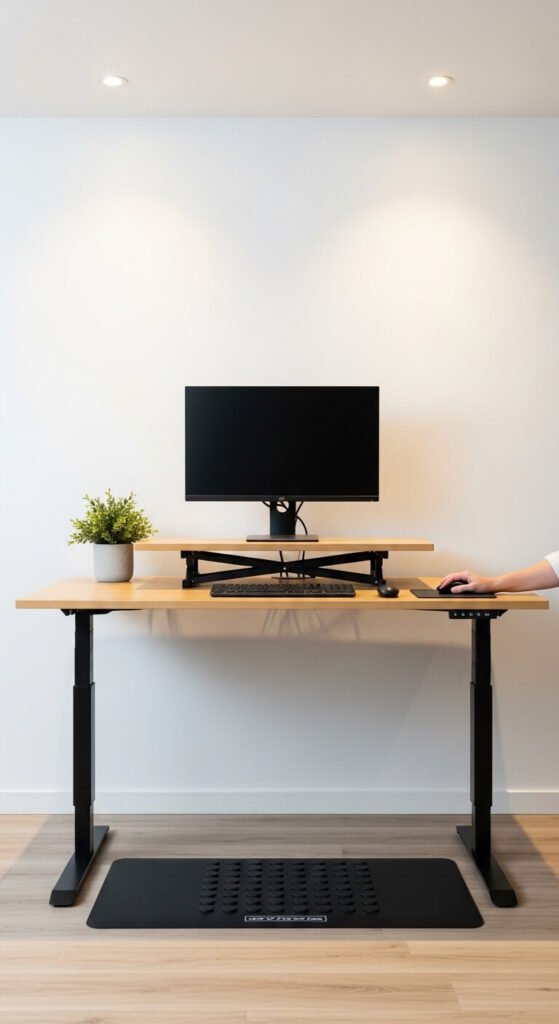
You don’t need a full standing desk. A desk converter sits on top of your existing surface and raises your monitor and keyboard. Budget options start around $60–$80 on Amazon. Pair it with an anti-fatigue mat ($25–$40) and your body will thank you. Alternate between sitting and standing every 30–60 minutes. This single change reduces back pain and afternoon energy crashes. It works on any desk and takes about five minutes to set up.
5. The Dark Academia Reading Nook Office
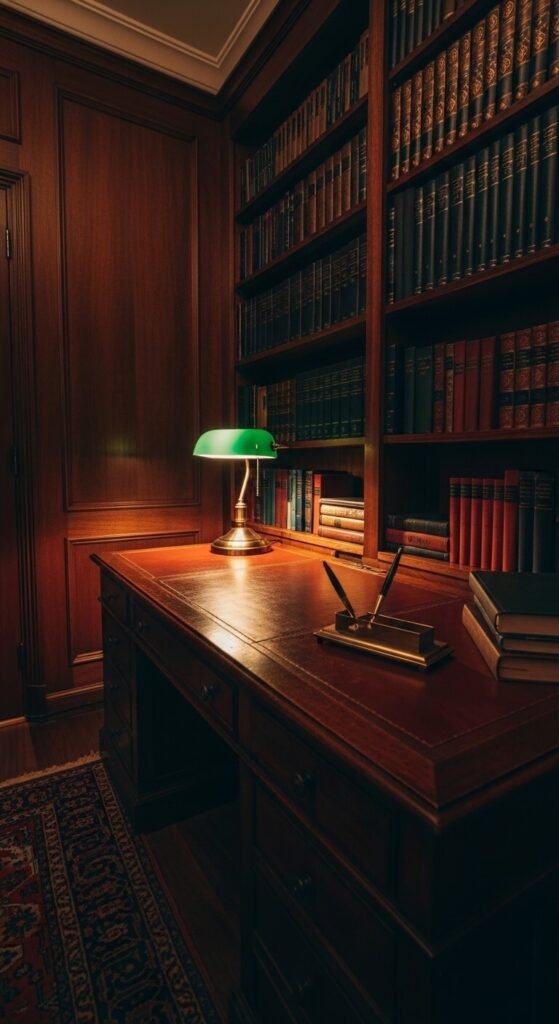
Deep wood tones, stacked books, and warm lamp light define this style. You’re going for a cozy, intellectual atmosphere. A thrifted wooden desk + a green banker’s lamp ($20–$30 at most thrift stores) gets you 80% there. Fill secondhand bookshelves with real books you’ve read or plan to. Add a small brass or bronze desk accessory — a pen cup, a stapler — for that vintage feel. This setup works wonderfully in a home corner with low ceilings.
6. The Pegboard Command Center
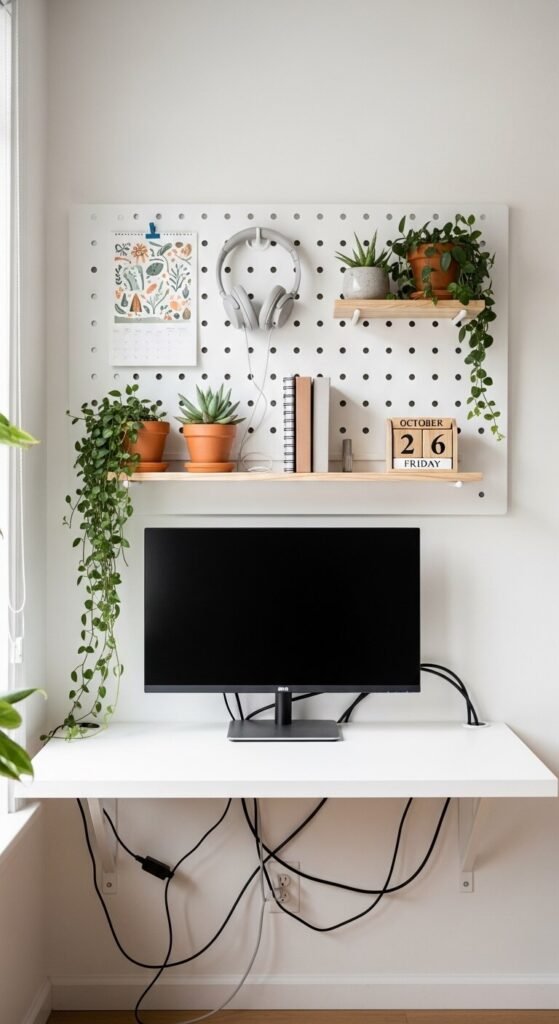
A pegboard above your desk gives you vertical storage without drilling extra holes. IKEA’s SKÅDIS pegboard starts at around $15–$20. Add hooks, small shelves, and bins. Hang your headphones, keep frequently used supplies visible, and pin your weekly goals. Vertical space is often wasted in home offices. Going up instead of out saves desk real estate. This works great in small rooms and rentals where wall space is limited but you still need organization.
7. The Cozy Bedroom Corner Office
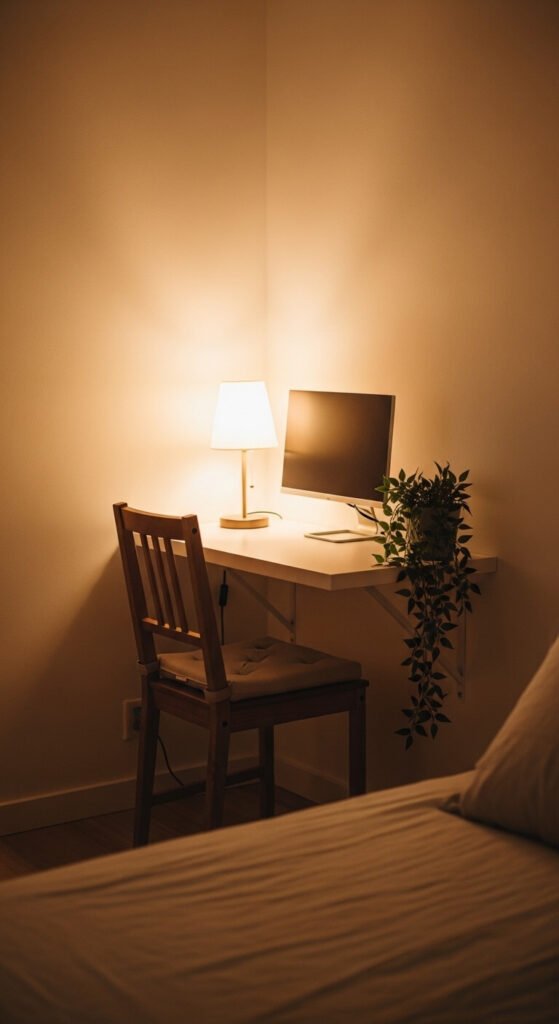
Working from a bedroom corner is common. The key is visual separation. Use a small rug under the desk chair to define the work zone. Face your chair away from the bed when working — this trains your brain to treat the space as an office. A floating wall-mounted desk ($30–$60) keeps floor space open. When work is done, put away your laptop and turn off the desk lamp. That simple ritual signals the end of the workday.
8. The Dual Monitor Productivity Wall
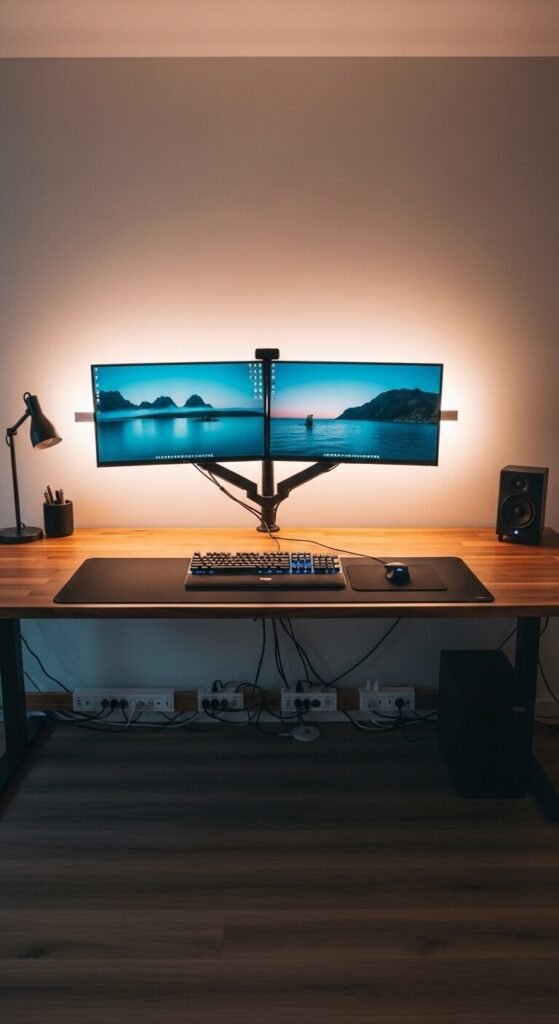
Two monitors sound expensive, but a used second monitor from Facebook Marketplace or OfferUp often runs $30–$60. A dual monitor arm ($25–$40) clears the desk surface and lets you angle screens perfectly. Pair with a long desk mat that covers most of the desk — this pulls the whole look together. Add an LED strip light behind your monitors for bias lighting. It reduces eye strain and makes the setup look cohesive, even in a basic room.
9. The Scandinavian Simplicity Setup
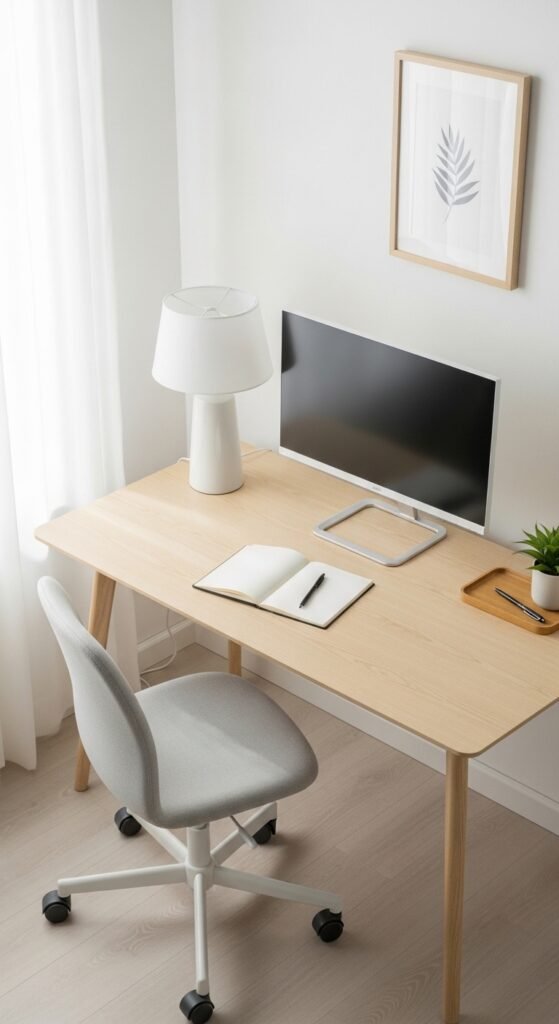
Scandinavian design is about functionality with warmth. Light wood, white walls, and clean lines. Keep accessories to a minimum — one lamp, one plant, one tray for supplies. IKEA and Target carry affordable pieces that nail this look. Avoid decorating with things you don’t use. Every item on the desk should have a job. This style works especially well in small apartments where the workspace doubles as a visible part of the living area.
10. The Creative Studio Desk with Art Supplies
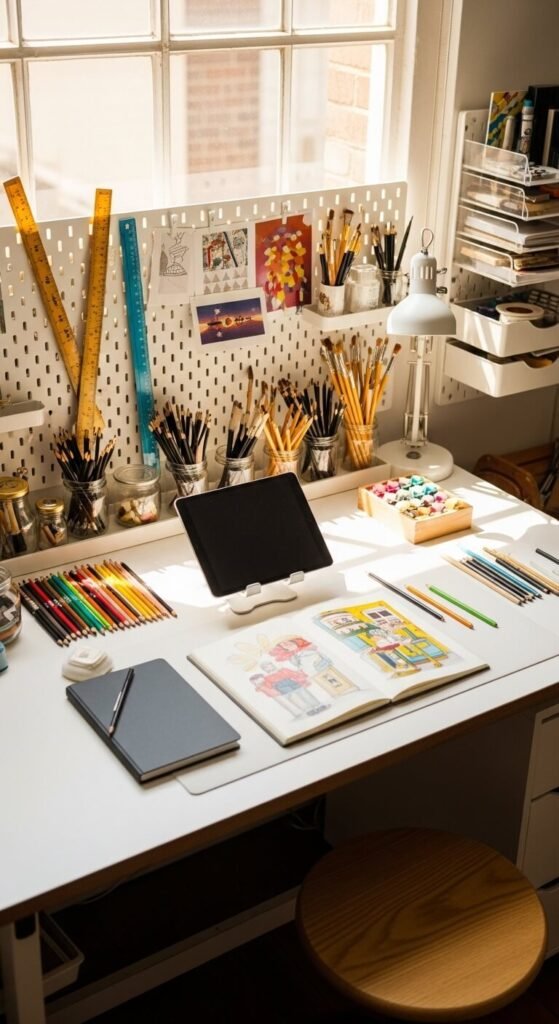
Creatives need more than just a laptop. If you sketch, illustrate, or design, your desk should reflect that. Use glass jars to organize pens and brushes — they’re cheap, clean, and easy to grab from. A drafting table attachment ($30–$50) tilts your surface for drawing. Keep an open sketchbook on the desk as a standing invitation to create between tasks. Clip a task light with a daylight bulb overhead for accurate color when working on physical art.
11. The Plant-Heavy Biophilic Office
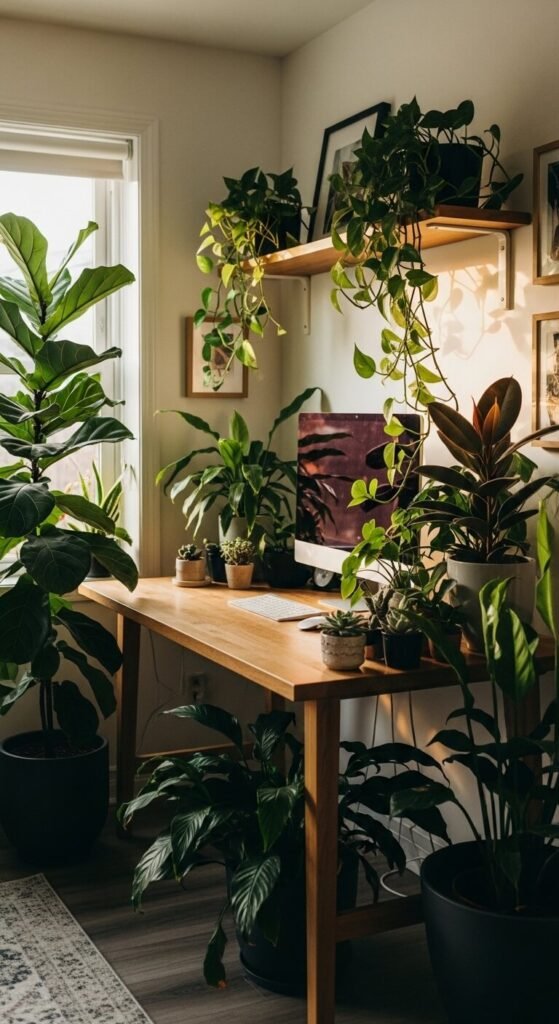
Plants do more than look good. Studies show greenery in a workspace reduces stress and improves focus. Start with low-maintenance options — pothos, snake plants, or ZZ plants. These survive almost anywhere and cost $5–$15 each. Place one at eye level, one on the floor, and one on the desk. Use simple terracotta pots for a warm, earthy feel. A few well-placed plants can completely change the energy of a plain white room.
12. The Closet Office Conversion
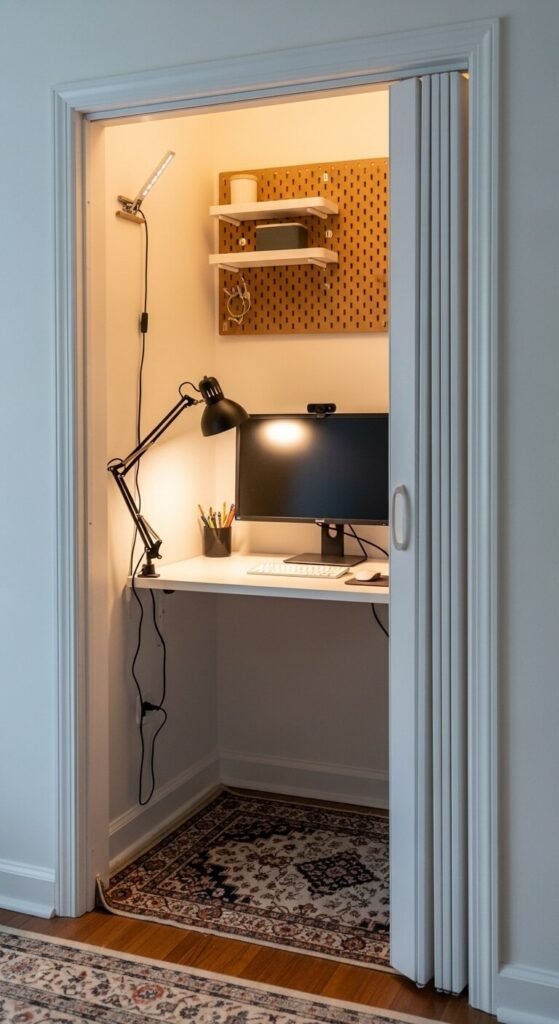
A standard reach-in closet is the perfect size for a compact office. Remove the doors or replace them with bifold ones. Install a floating shelf at desk height ($20–$30 in lumber from a hardware store). Add a power strip inside, a small LED light, and a pegboard on the back wall. When work ends, close the doors and the office disappears. This is one of the most popular setups for apartments where you need physical separation between work and home.
13. The Industrial Pipe and Wood Desk
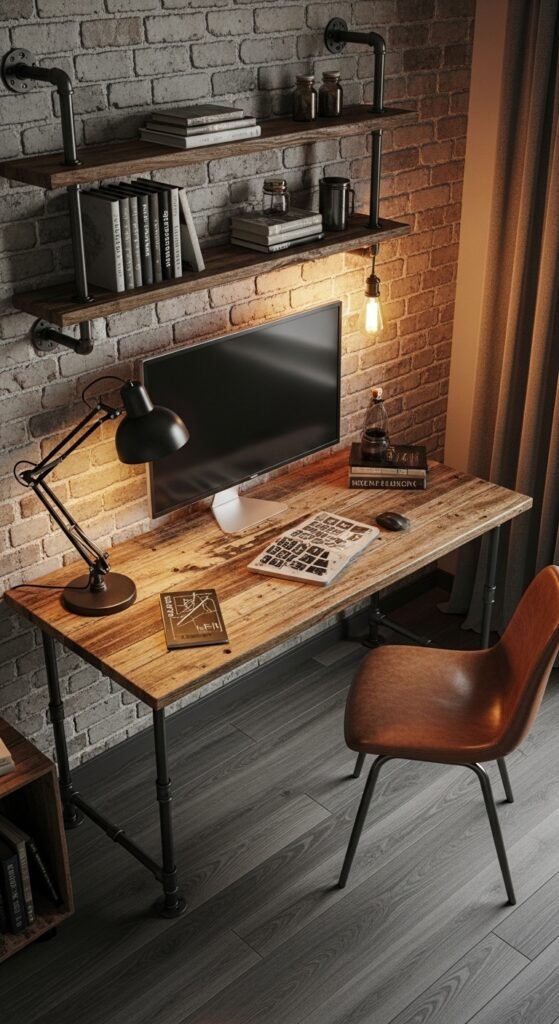
This look costs less than it appears. Buy a pre-cut pine board from a hardware store ($15–$25) and sand it smooth. Legs can be made from black iron pipe fittings — search “pipe desk legs” on Etsy or Amazon for affordable sets ($30–$50). The raw, industrial finish works especially well in rooms with exposed brick or dark walls. Seal the wood with Danish oil for a warm, rich finish. Bonus: the desk is incredibly sturdy and holds up long-term.
14. The Color-Blocked Accent Wall Office
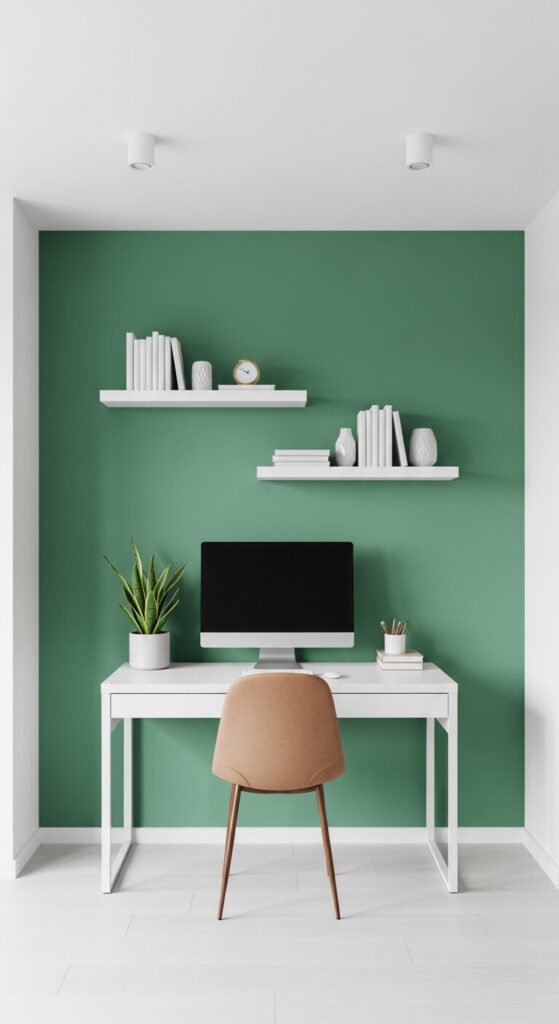
One bold wall color transforms a generic workspace into something that feels designed. Sage green, dusty blue, and terracotta are popular choices that feel calm without being boring. Paint just the wall behind your desk — a small can of paint is $15–$25 and covers one wall easily. No need to paint the whole room. Add white floating shelves on the accent wall for contrast. This single change makes the space feel curated and intentional.
15. The Floating Shelf Gallery Wall Office
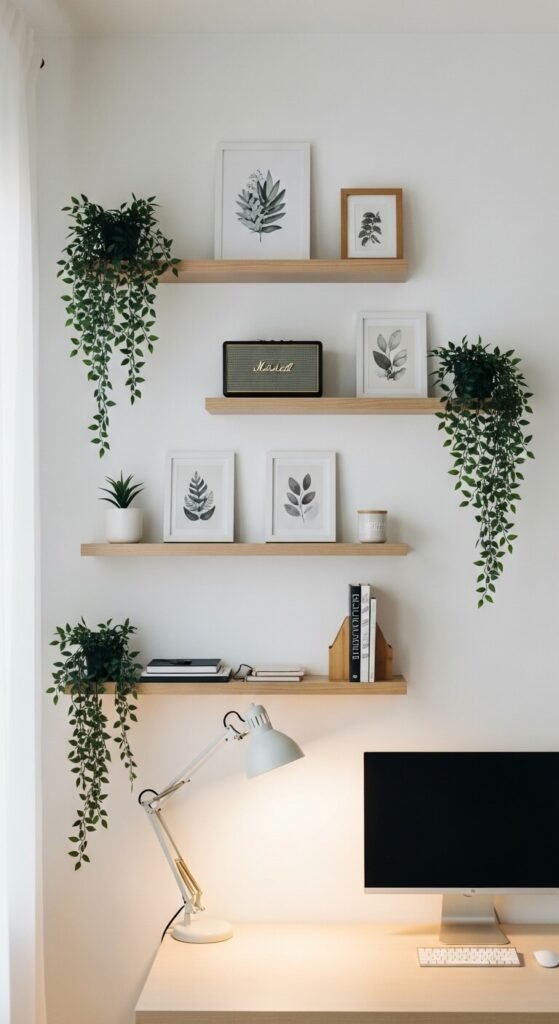
Gallery walls behind your desk create visual depth without taking up floor or desk space. Use floating shelves instead of frames for a mix of function and style. Arrange a combination of small plants, books, framed prints, and useful objects like a small Bluetooth speaker or wireless charger. Command strips work for lighter shelves in rentals — no wall damage. Keep to 2–3 shelf levels. The layered look adds personality while keeping your actual desk clean.
16. The Budget IKEA Hack Desk
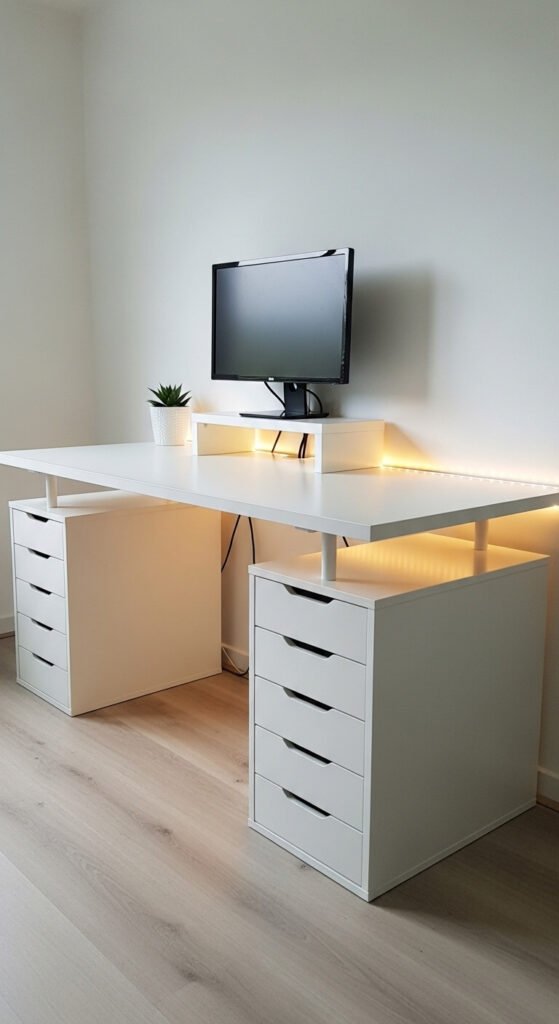
IKEA hacks are everywhere for a reason — they work. The classic combo is a LINNMON tabletop ($30–$40) across two ALEX drawer units ($80 each). This gives you a wide, stable desk with built-in storage. Customize the look with contact paper on the drawers, new handles, or LED strips underneath the desk edge. Total cost for the full setup runs $200–$250 — a fraction of most comparable desks. Add a monitor arm and cable management tray to finish it off cleanly.
17. The Luxe Velvet Chair Statement Office
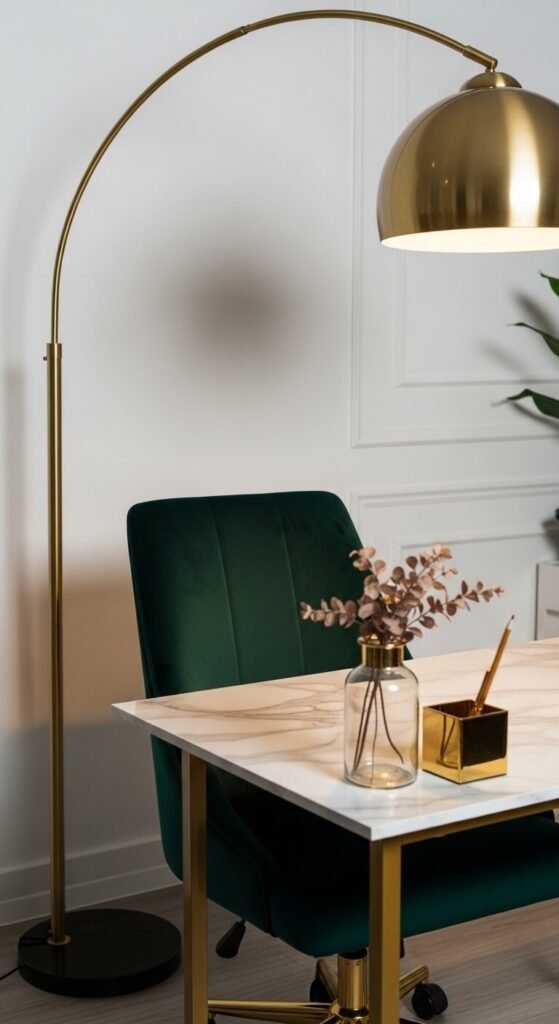
Your chair is the one thing you sit in all day — it deserves attention. A velvet accent chair in a jewel tone (emerald, navy, dusty rose) instantly makes an office feel styled. Comfortable velvet desk chairs are available on Wayfair and Amazon starting around $80–$120. Pair with a simple neutral desk and your chair becomes the focal point. Add a matching velvet pillow or footrest for comfort. Function and style, covered in one furniture choice.
18. The Cable-Free Wireless Desk Setup
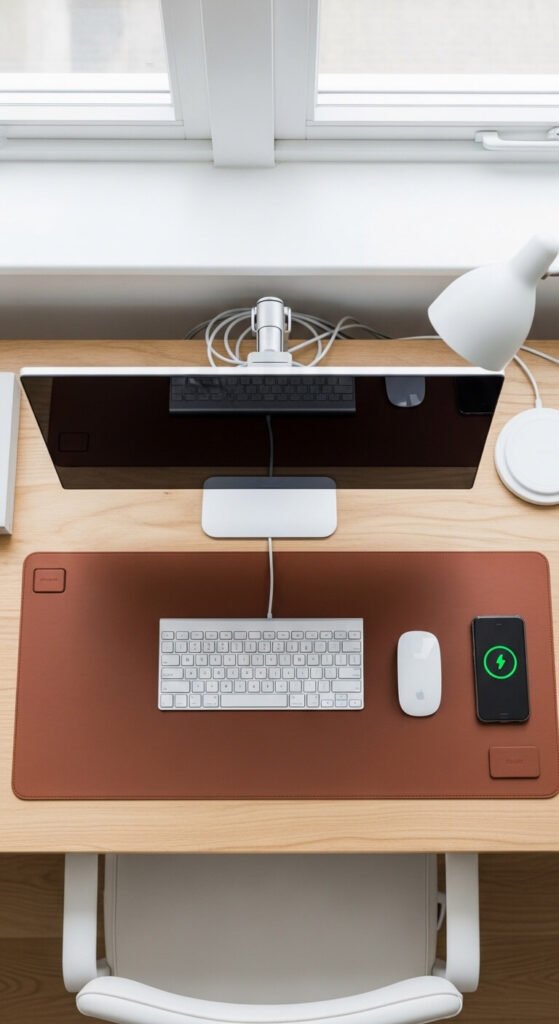
Visible cables are the fastest way to make a nice setup look messy. Go wireless where you can — wireless keyboard and mouse combos start at $30–$40. Run remaining cables through a cable management sleeve ($8–$10) and clip them to the back of the desk leg. A wireless charging pad replaces a charging cable on the surface. A monitor arm with built-in cable channels hides your display cable completely. A clean desk surface takes five minutes to set up and changes everything visually.
19. The Moody Dark Mode Office
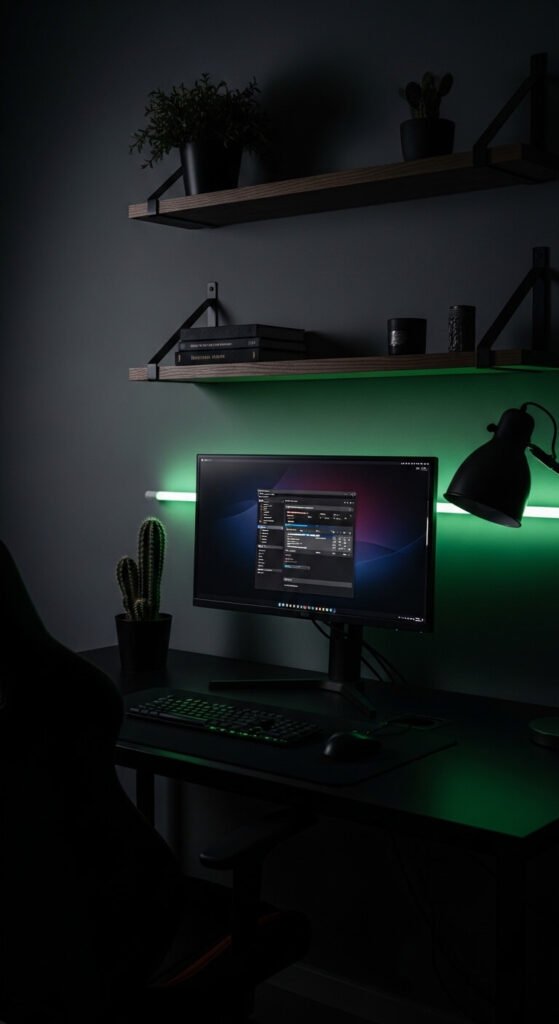
Not every home office needs to be bright and white. Dark setups feel focused, dramatic, and intentional. Use a dark desk (or wrap a light one in dark contact paper) against dark grey or charcoal walls. Add an LED strip behind the monitor in cool white or soft green for ambient glow. Use matte black accessories throughout. This setup works well for late-night workers, gamers, or people who find bright rooms distracting. Dark mode everywhere — the screen and the room.
20. The Wall-Mounted Fold-Down Desk
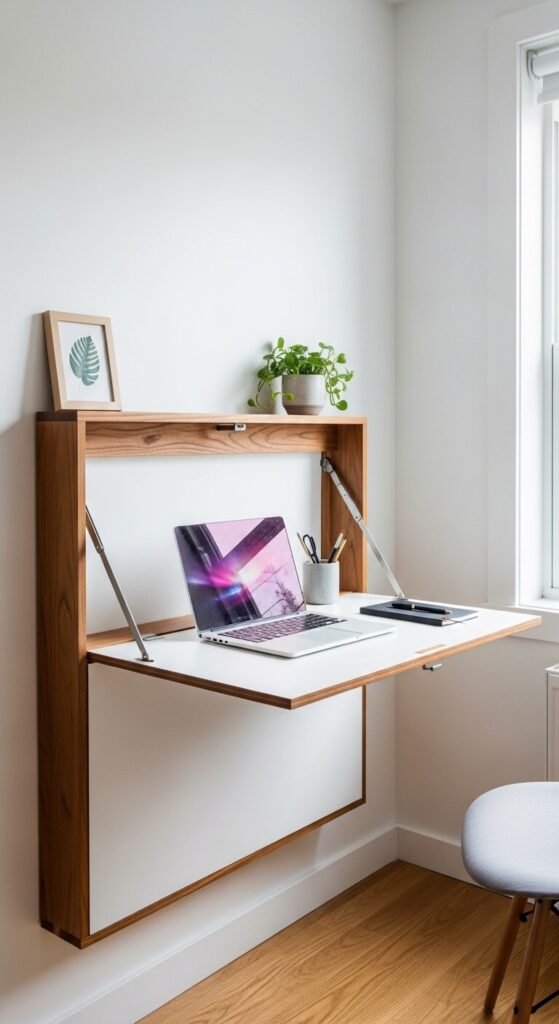
Perfect for studio apartments and shared living spaces. A wall-mounted fold-down desk folds flat against the wall when not in use — it disappears completely. DIY versions using a hinged shelf bracket and a wood panel cost $30–$50 in materials. Pre-made versions like the IKEA NORBERG wall table run about $40. When folded up, it looks like a wall panel. This is the ultimate space-saving solution for anyone without a dedicated room for a home office.
21. The Natural Rattan and Linen Setup
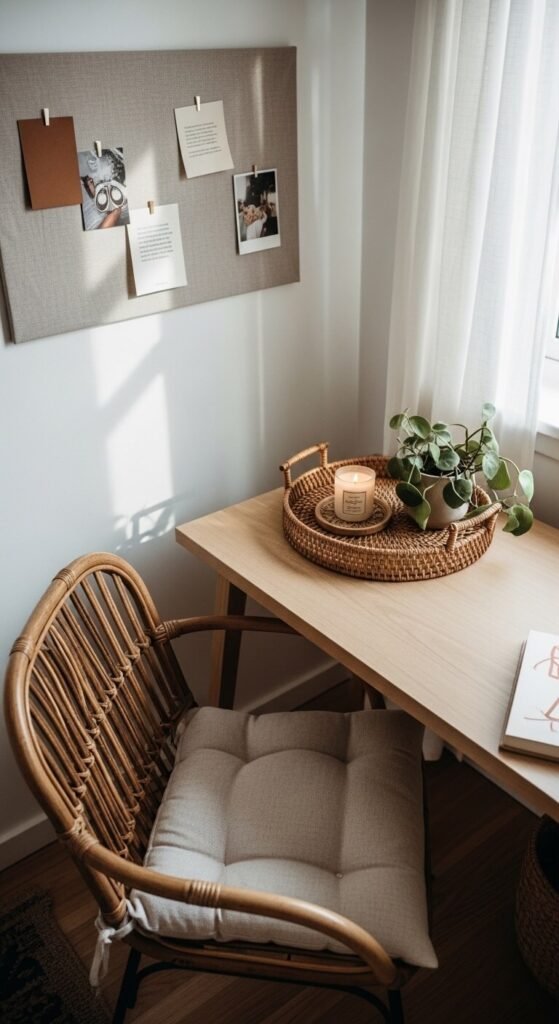
This setup leans into natural, organic materials. Rattan chairs are widely available at Target, World Market, and thrift stores — often between $50–$120. Pair with a light wood desk and linen accessories (a pinboard covered in linen fabric, a woven tray, a cotton cord lamp). The textures do the styling work. Everything feels soft, warm, and handmade. This is a great option for creative freelancers or people who want their office to feel like an extension of their living room rather than a corporate corner.
22. The Maximalist Shelf-Display Office
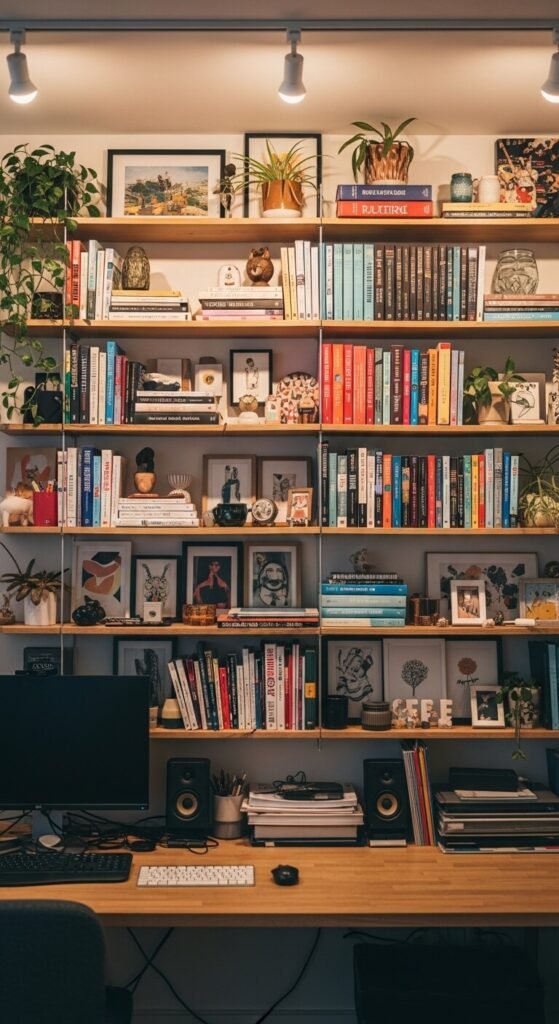
Not everyone wants minimal. If you love having things around you, lean into it with intentional maximalism. Fill open shelves with a mix of books organized by color, framed prints, small collectibles, and plants. The key is grouping similar items and using consistent shelf heights to avoid visual chaos. A wall of organized, curated stuff can feel inspiring rather than overwhelming. This setup rewards your personality and makes video call backgrounds genuinely interesting.
23. The Under-the-Stairs Home Office
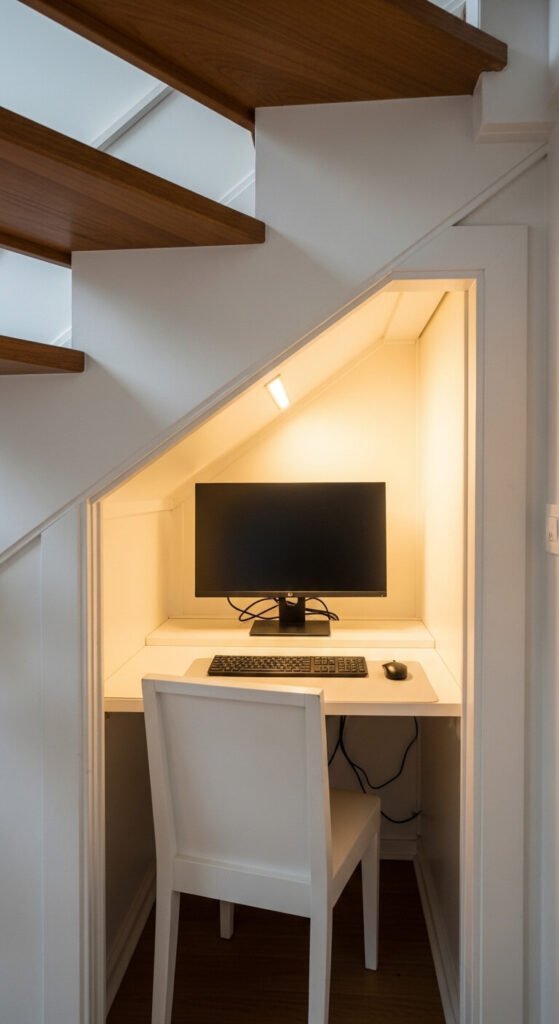
Dead space under stairs is one of the most overlooked home office locations. Build or buy a custom desk to fit the angled ceiling — a carpenter can do this affordably, or DIY with cut lumber. Paint the interior white to brighten the enclosed space. Add a recessed LED light strip along the top. Use wall-mounted storage on the flat wall section. The result is a completely private, defined work zone that takes zero space away from the rest of your home.
24. The Zen Garden Desk Setup
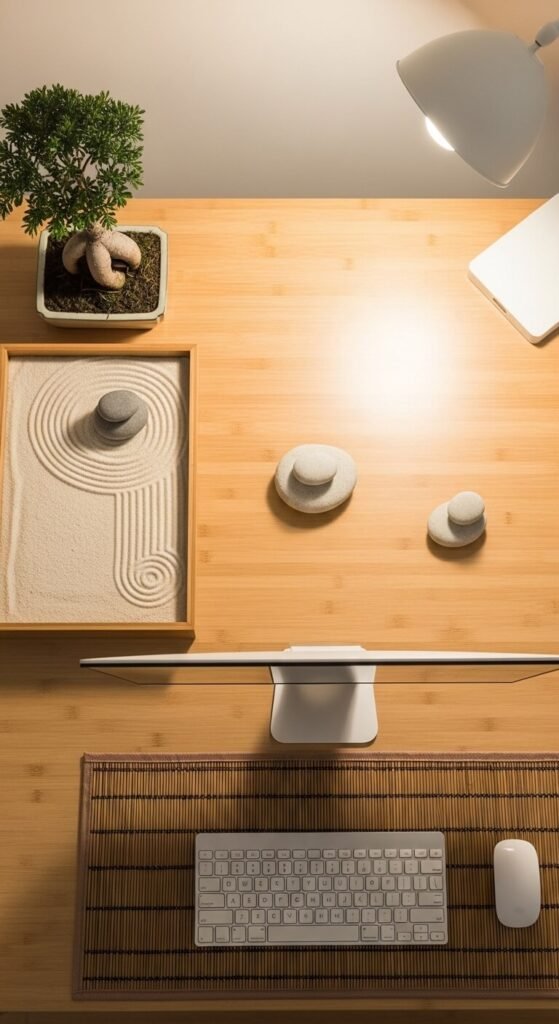
This setup is about calm. A small zen garden tray ($10–$20) with sand and a tiny rake sits at the edge of the desk — rake it during breaks to reset mentally. Add a small bonsai or air plant. Use natural materials: bamboo accessories, a jute or woven mat, smooth stones. Avoid anything plastic or synthetic on the surface. The goal is a desk that feels peaceful to sit at. If your work is high-stress, the environment you work in matters more than you might think.
25. The Podcast / Content Creator Corner
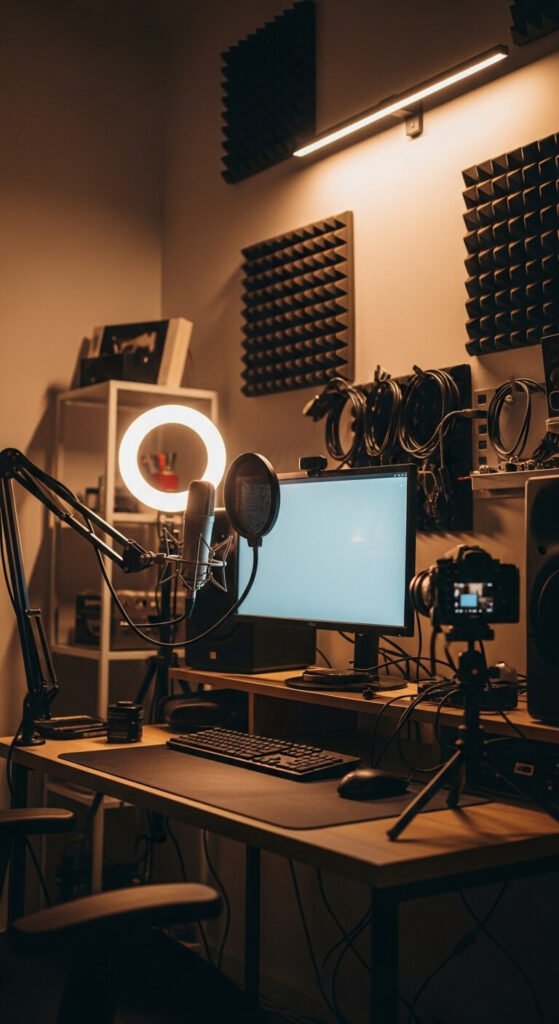
If you record audio or video, your setup needs to do double duty. Mount a USB mic on a boom arm ($15–$30) to keep the desk clear and get better sound. Add a small ring light or softbox for video calls and recordings. Acoustic foam panels ($20–$30 for a pack) on the wall behind you improve sound quality dramatically. This doesn’t need to look like a radio station — keep the rest of the desk minimal so your setup works both for working and for recording.
26. The Vintage Eclectic Mix Office
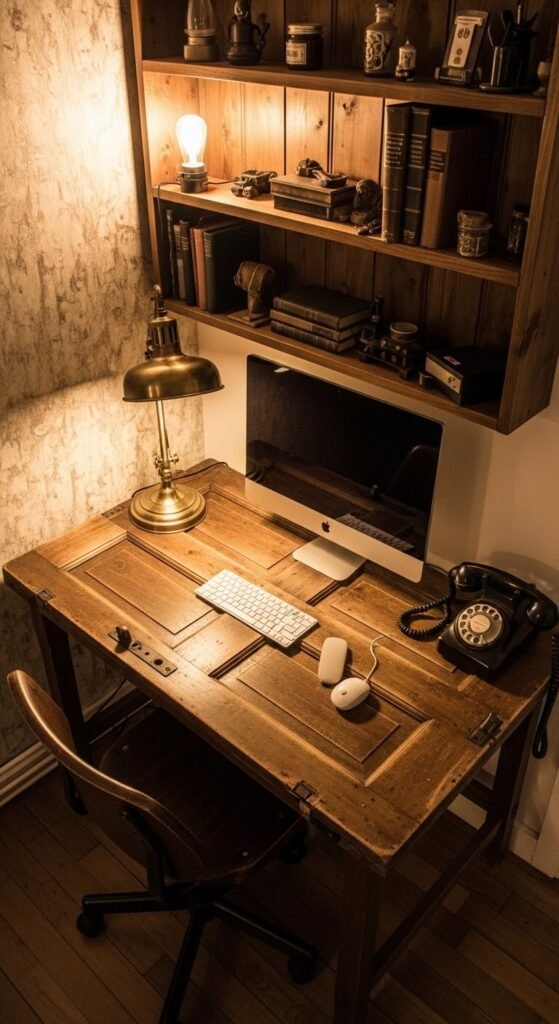
Vintage pieces tell a story. A repurposed door laid across vintage filing cabinets makes a wide, character-filled desk. Mix old and new freely — a brass antique lamp next to a modern monitor, a vintage map print beside a current calendar. Hit thrift stores for interesting objects: old books, brass accessories, small sculptures. The rule: if it makes you smile when you sit down, it belongs. This style rewards patience and low-budget sourcing.
27. The Kids-Adjacent Family Home Office
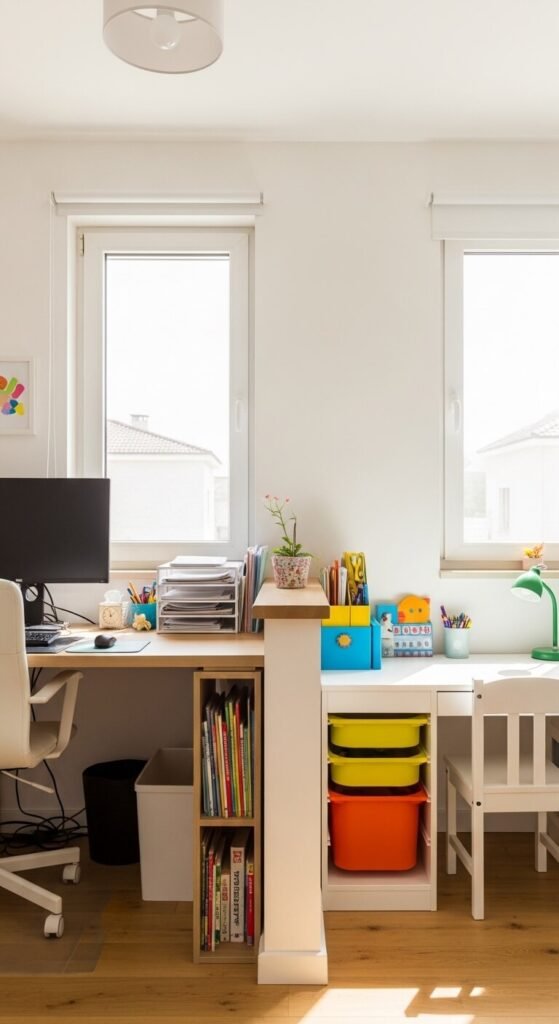
Working with kids around is one of the hardest home office challenges. Design a dual-zone space — one side for your work, one small desk or activity table for a child. Keep the two areas visually distinct with a small bookshelf divider or a rug under each zone. Stock the kids’ area with self-directed activities so they can be nearby without constant interruption. A shared space that acknowledges both realities works far better than pretending kids don’t exist during work hours.
28. The Rotating Seasonal Desk Refresh
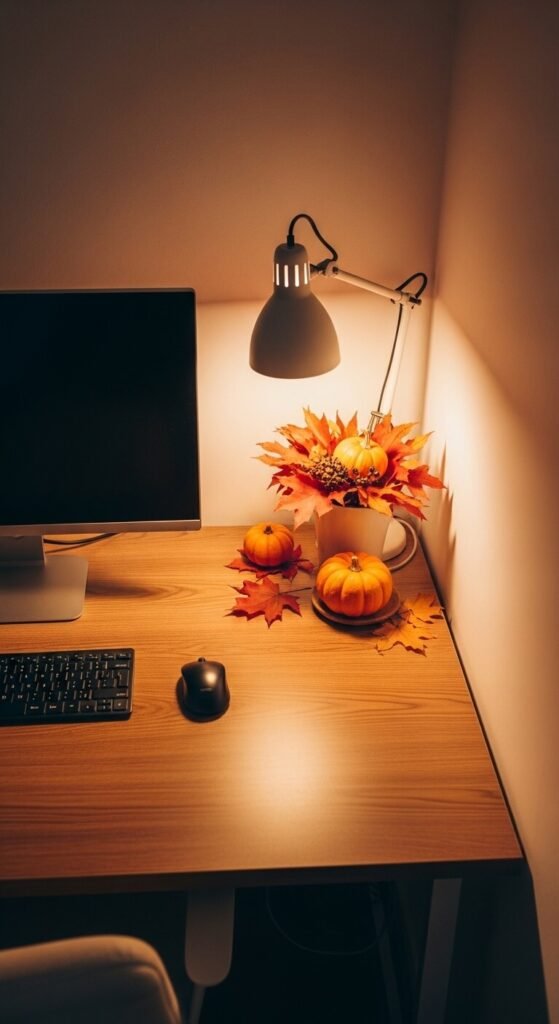
Your desk doesn’t need a permanent aesthetic. A seasonal refresh keeps your workspace feeling current and interesting without redesigning it each month. Swap out one small vignette on the corner of your desk — pumpkins in fall, a small vase of tulips in spring, pinecones in winter. Change your desktop wallpaper to match. Update your desk plant or candle scent. These tiny, low-cost changes (usually $5–$15) make your workspace feel maintained and personal, which actually affects how motivated you feel sitting down each day.
Conclusion
A great home office doesn’t require a renovation budget or a Pinterest-perfect room. It requires thought. Every setup in this list proves that a few affordable, intentional choices — the right desk position, a single accent color, a plant or two, better cable management — add up to a space that genuinely supports your work. Start with one change. Rearrange the desk to face the window. Pick up a $15 pegboard. Hang one floating shelf. Small moves made consistently create the workspace you actually want. Your environment shapes your output more than any app or habit ever will. Make it work for you.