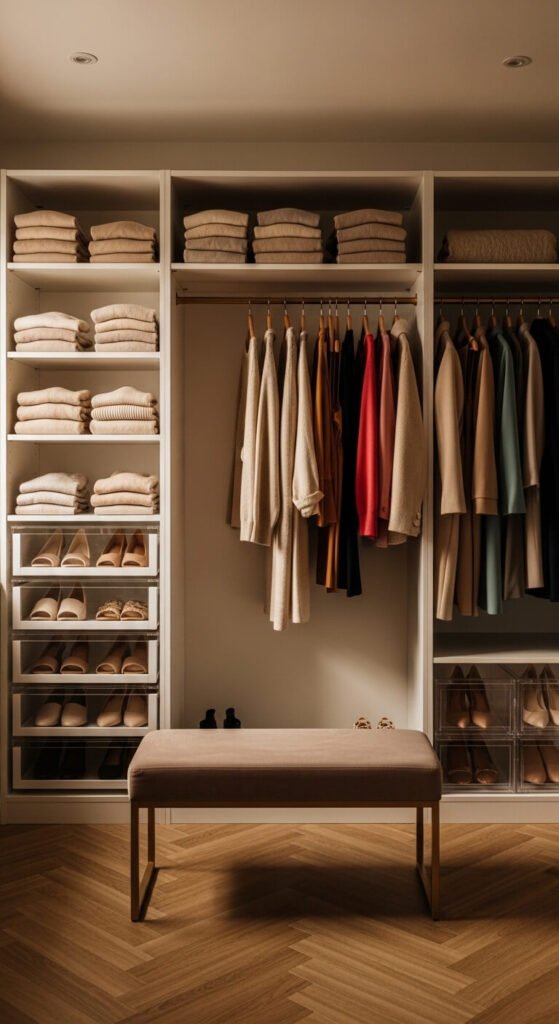
Your closet should feel like the best part of waking up — not the most stressful. When your clothes have a real home, getting dressed stops being a chore and starts being something you actually enjoy. The systems in this list are designed for real spaces, real budgets, and real people who want things to look put-together without spending a fortune. Whether you have a small reach-in or a roomy walk-in, there’s a setup here that fits your life. Pick one idea, start small, and watch how quickly it changes your mornings.
1. The Open Shelf Wardrobe Wall
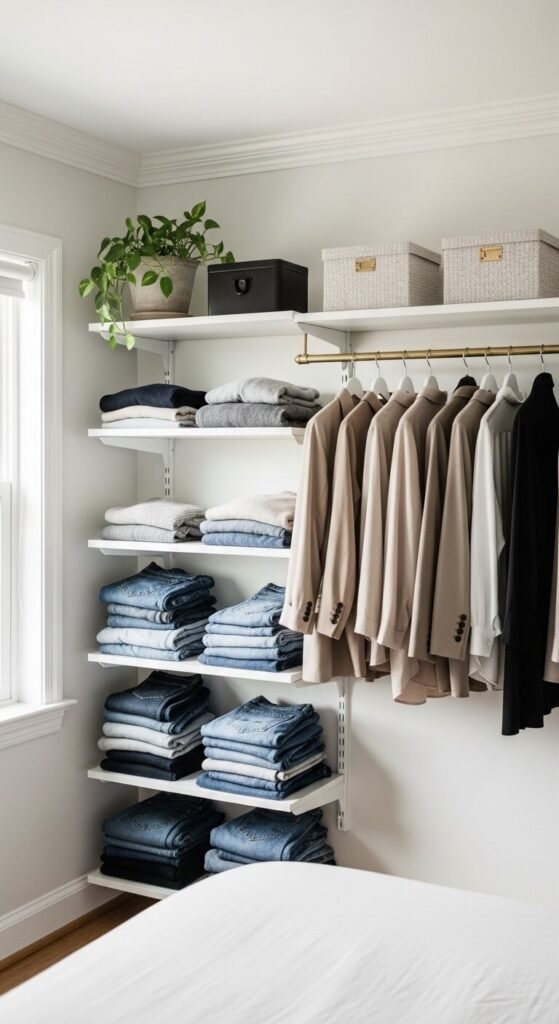
An open shelf wardrobe wall turns your clothes into décor. No doors, no mystery — just clean rows of folded items and hanging pieces you can actually see. Use IKEA KALLAX units or basic pine boards from a hardware store. Add a slim clothing rod for hanging. The key is folding everything the same direction so it stays tidy. This works especially well in small apartments where a traditional closet simply isn’t an option. Budget tip: pick up secondhand shelving units and spray-paint them white for a fresh, cohesive look.
2. Color-Coded Clothing Sections
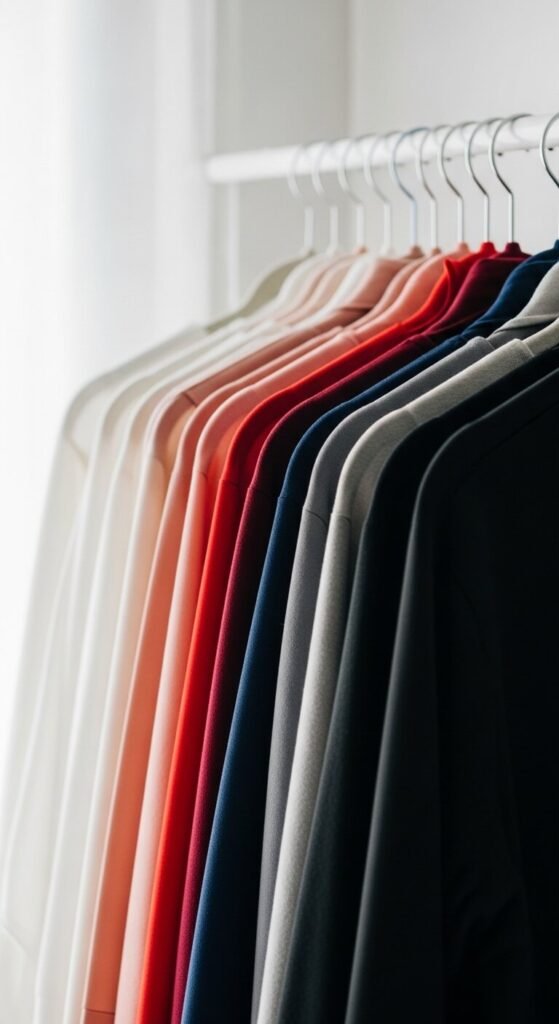
Sorting clothes by color is the simplest change that makes the biggest visual difference. It takes about 20 minutes and costs nothing. Work left to right: whites and creams first, then neutrals, then colors, then darks. When everything has a color zone, you stop buying duplicates and start actually wearing what you own. It also makes getting dressed faster because you can see every option at a glance. Pair this with matching slim velvet hangers for a polished, magazine-worthy look that doesn’t require a big budget.
3. The Capsule Closet Display Rack
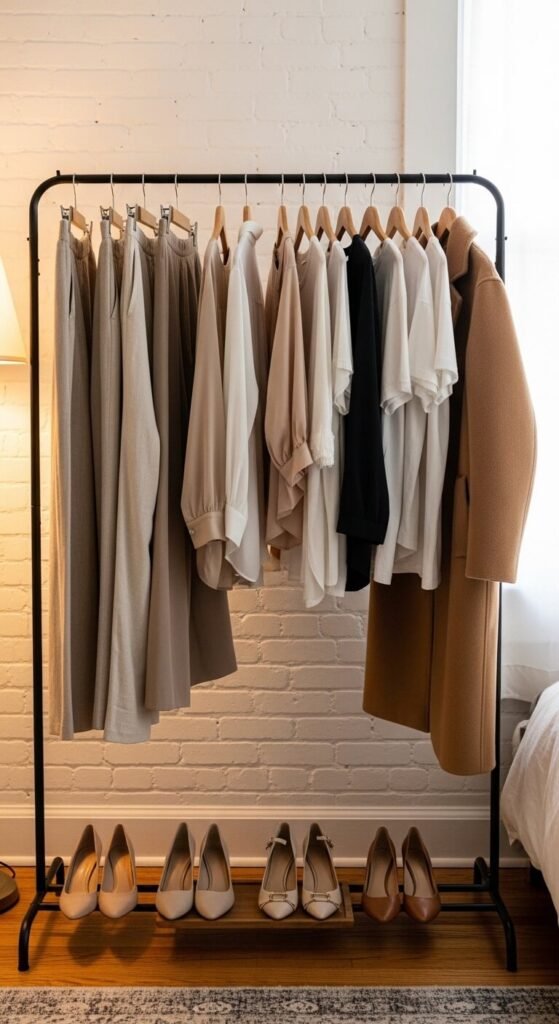
A capsule closet is just a small, curated collection of items you actually wear. Put these pieces on a freestanding clothing rack in your room. It keeps your daily options visible and easy to grab. This setup works perfectly in studio apartments or small bedrooms where closet space is limited. Start with 15–20 pieces you reach for every week. A metal rack from Amazon runs about $30–$50. Style the base with a wooden tray holding two or three pairs of shoes for a boutique-style finish that feels intentional, not cluttered.
4. Clear Bin Storage for Accessories
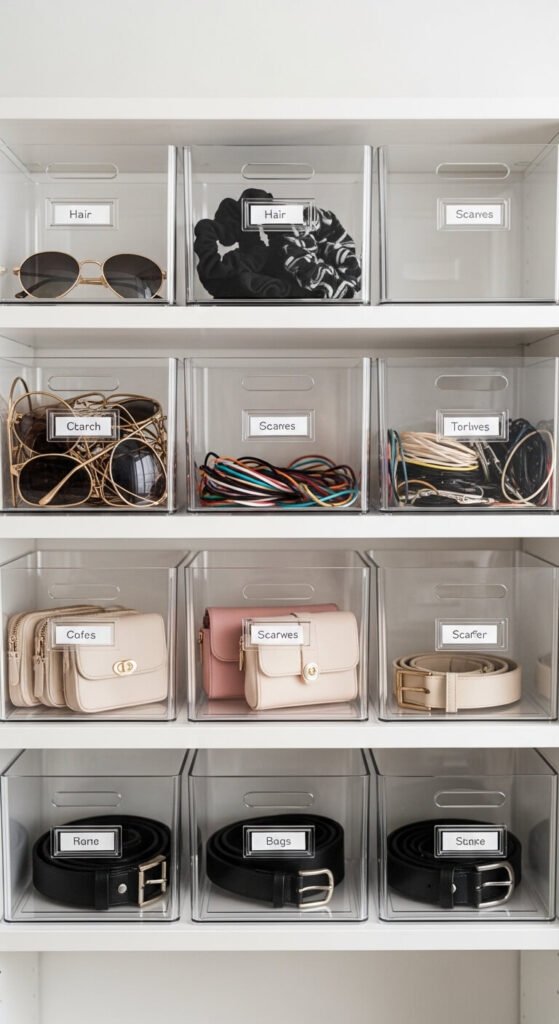
Accessories are the hardest things to keep organized because they’re small and easy to toss anywhere. Clear bins solve this immediately. You can see everything without digging. Assign one bin per category: sunglasses, belts, hair accessories, scarves, small bags. Label each one with a simple tag. Dollar Tree and IKEA both carry affordable clear bins that stack neatly on shelves. Once everything has a bin, you’ll stop losing things and start styling outfits with accessories you forgot you owned.
5. Floating Shelves for Shoe Display
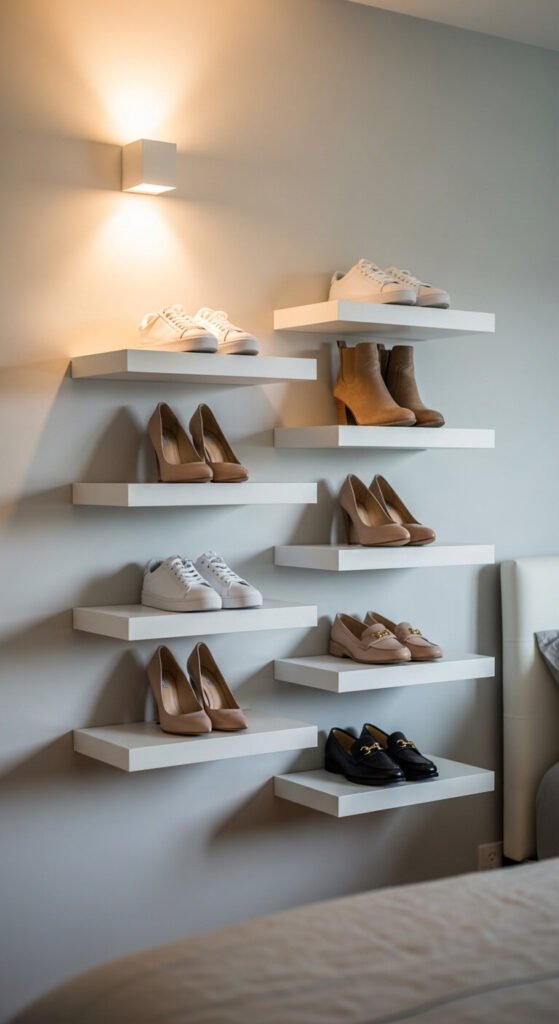
Shoes stored in a pile on the floor never get worn. Put them on the wall. Floating shelves turn your shoe collection into a display. Space each shelf about 7–8 inches apart so most shoes fit without stacking. Mount them in your closet, bedroom, or even a hallway. This works even better with a shoe ledge — a narrow shelf just wide enough for one pair. IKEA LACK shelves cost under $15 each and hold up to 22 lbs. Pick your favorite pairs to display and box the rest underneath.
6. The Pegboard Accessory Wall
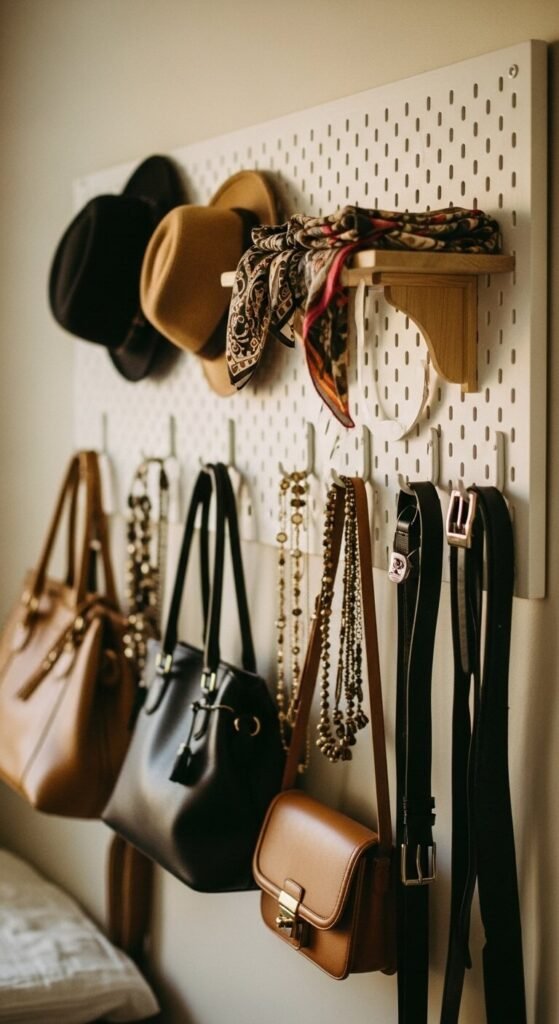
A pegboard is one of the most flexible organizational tools you can buy. It adapts to anything. Mount it on a wall in or near your closet and use hooks to hang bags, hats, necklaces, and belts. Add a small shelf bracket for scarves or folded items. A 2×4 foot pegboard costs around $15–$25 at hardware stores. Paint it white or a soft color to match your room. Rearrange the hooks whenever your needs change. This is a great DIY weekend project that makes a huge visual impact with minimal effort.
7. Velvet Hanger Upgrade
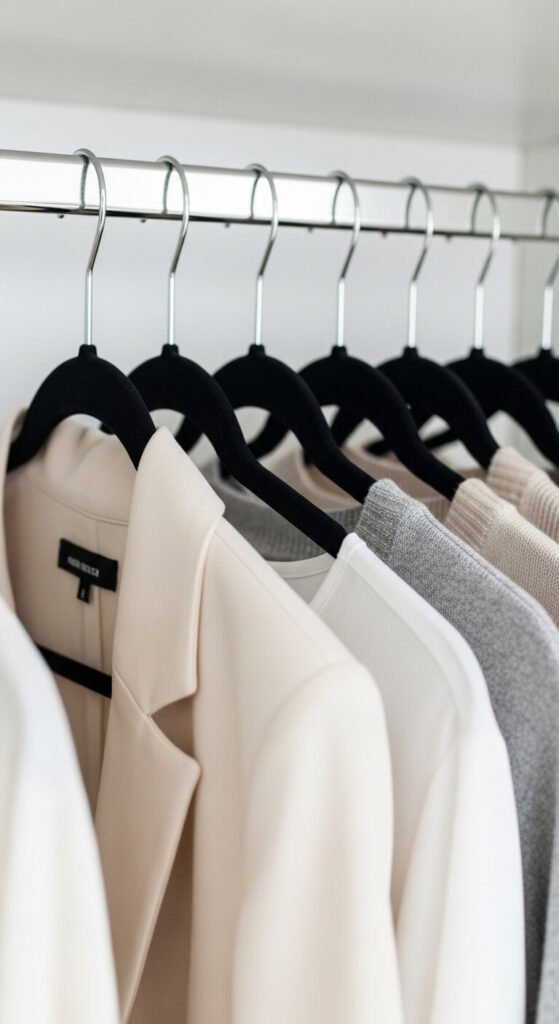
Old plastic or wire hangers are the enemy of a good-looking closet. Swap them out for velvet. Slim velvet hangers take up half the space of bulky plastic ones and keep slippery items from falling off. When every hanger matches, your closet immediately looks more organized — even if nothing else changes. A pack of 50 velvet hangers costs around $12–$15 on Amazon. Do one section at a time if a full swap feels overwhelming. Start with your most visible hanging area first and work back from there.
8. The Vintage Wardrobe + Trunk Combo
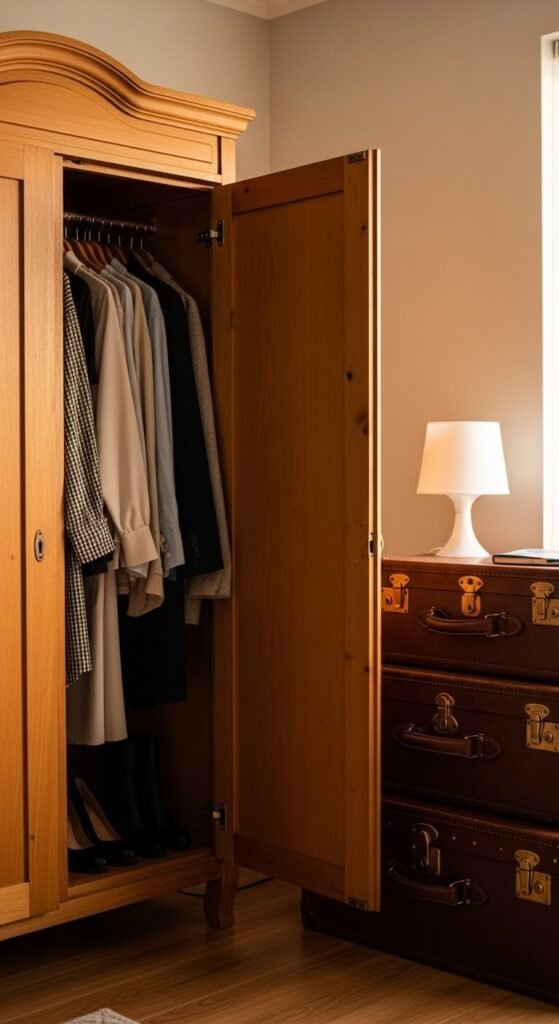
Not every closet has a door — or even walls. A vintage wardrobe paired with a storage trunk solves both problems. Thrift stores and Facebook Marketplace regularly have armoires for $50–$150. Use the armoire for hanging clothes and the trunk at the foot of your bed for off-season items or extra linens. This setup is especially practical in older homes without built-in closets. Style the top of the trunk with a lamp and tray for a finished, lived-in look that also pulls double duty as furniture.
9. Drawer Divider System for Folded Items
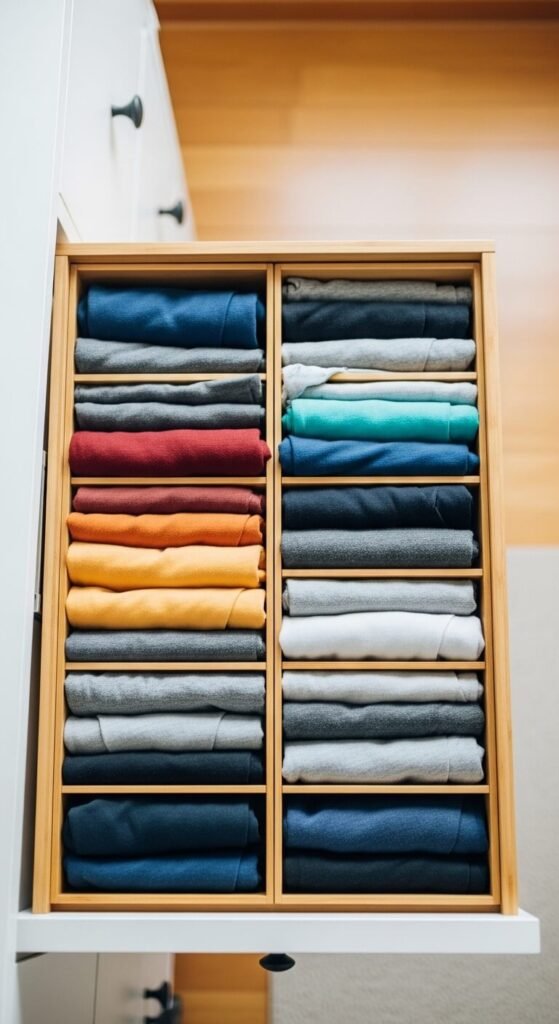
Folded clothes in drawers turn into chaos fast without structure. Drawer dividers fix this. Bamboo or plastic divider sets split one drawer into small sections, each holding one category: socks, underwear, tanks, tees. Fold items vertically (like filing) so you can see every single piece at once without disturbing the rest. This is the KonMari method and it genuinely works. Bamboo dividers run $10–$20 and fit most standard dresser drawers. Once you set this up, drawers stay tidy with almost no maintenance required.
10. The Rolling Rack Setup
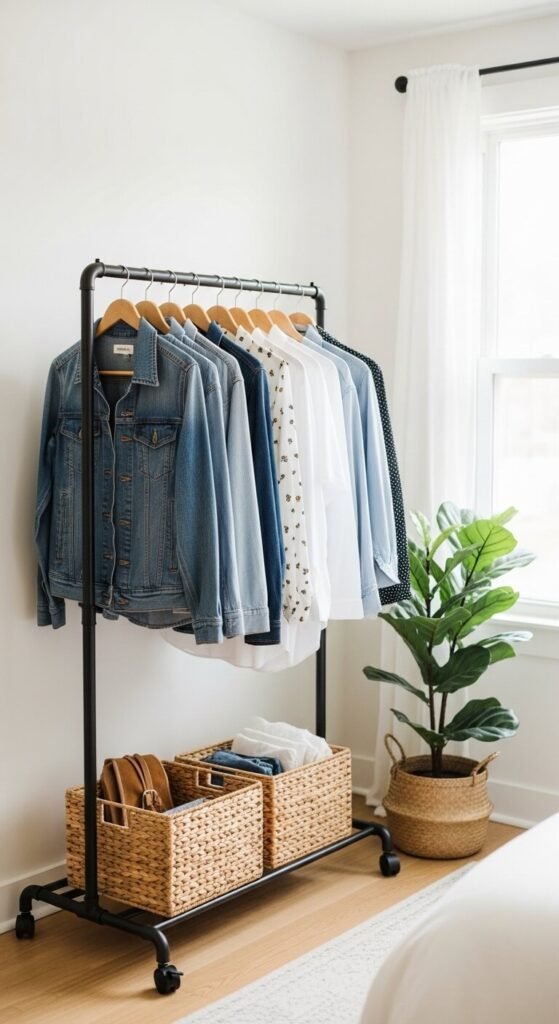
A rolling rack is the most flexible closet solution available. Move it anywhere. Use it in a spare room, bedroom corner, or even a hallway. Rolling racks are perfect for seasonal pieces, a current-week outfit edit, or extra hanging space when your built-in closet overflows. Add woven baskets underneath for folded items or shoes. Most rolling racks cost $25–$60 and take under 10 minutes to assemble. Style yours by keeping only your current season’s pieces on it — that one rule alone keeps it looking intentional rather than cluttered.
11. LED Lighting Inside Your Closet
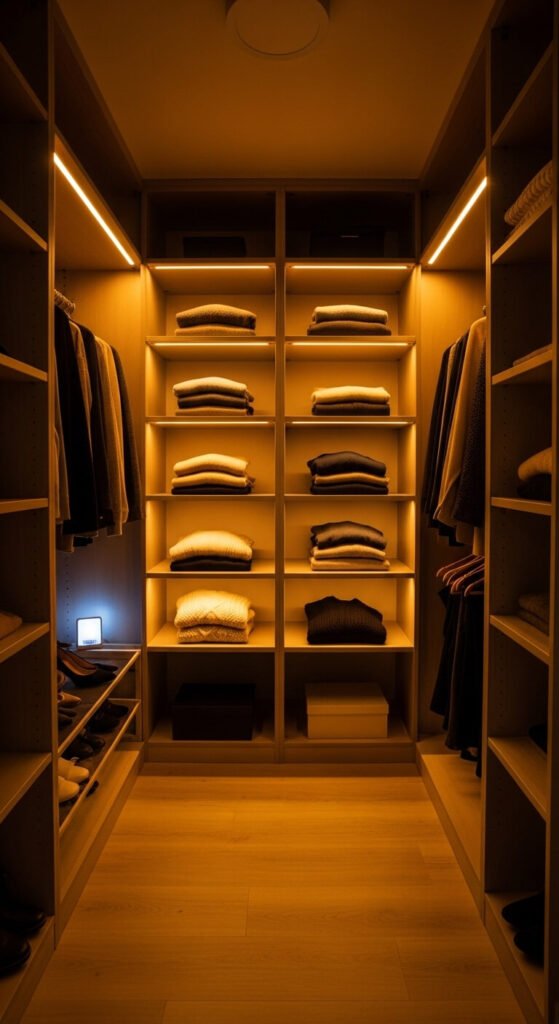
Bad lighting makes even a well-organized closet feel depressing. Good lighting changes everything. Stick-on LED strip lights under shelves cost $10–$20 and are battery-powered, so no wiring needed. Warm white light (2700K–3000K) makes colors easier to see and makes the whole space feel like a boutique dressing room. Add a simple battery-powered puck light if one shelf is always in shadow. This is one of the cheapest upgrades with one of the most dramatic results — especially in reach-in closets with no natural light.
12. The “Outfit of the Week” Planner Section
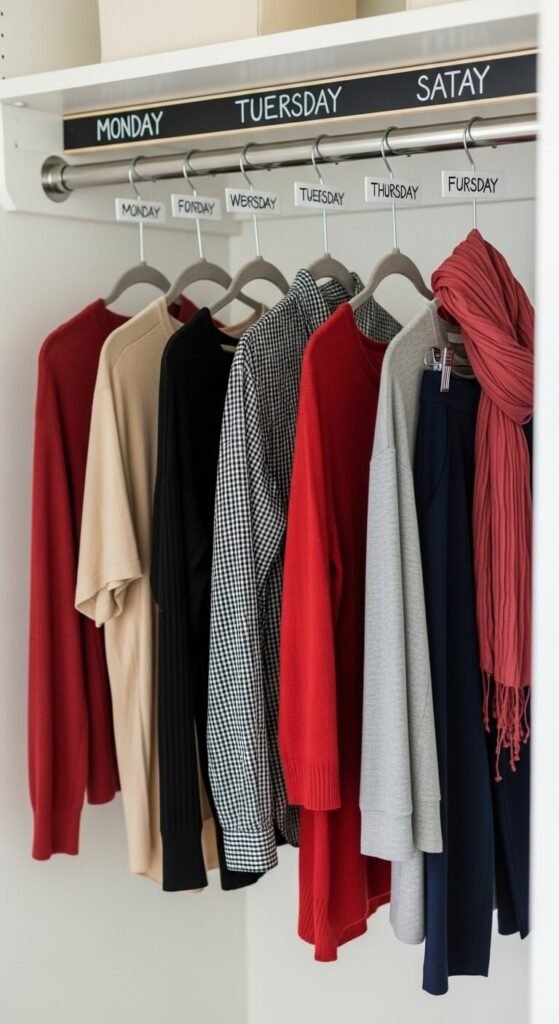
This is the hack that saves the most time on busy mornings. Pre-plan five outfits on Sunday. Hang each complete look together on one hanger — top, bottom, and a folded accessory. Label them Monday through Friday with small tags or clips. When you wake up, just grab the day’s hanger and go. No decisions, no chaos. This works inside any closet with a spare section of rod. It also helps you see gaps in your wardrobe because you’ll quickly notice if you’re pulling from the same five pieces every week.
13. Basket and Bin Labeling System
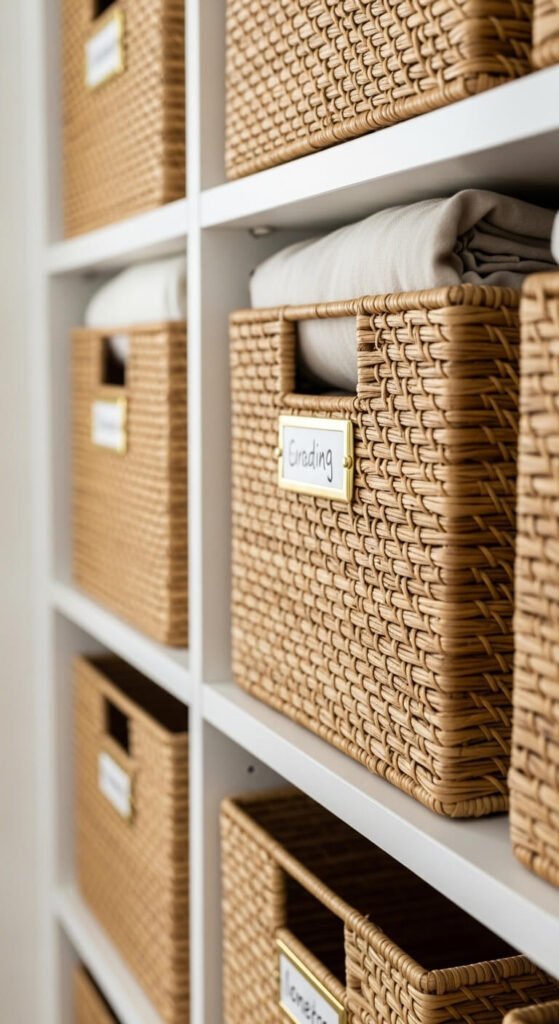
Bins without labels always end up as catch-all clutter zones. Labels make the system stick. When every basket has a clear name, you always know where things go — and so does everyone else in your household. Use a label maker, printed tags, or even handwritten kraft labels attached with twine. Woven rattan bins from IKEA (the KNIPSA or TJOG range) run $5–$15 and look warm and natural on shelves. Group by type: gym clothes, scarves, loungewear, special occasion pieces. Label at eye level so it’s readable without bending or pulling out the bin.
14. Mirror + Hooks Entryway Closet
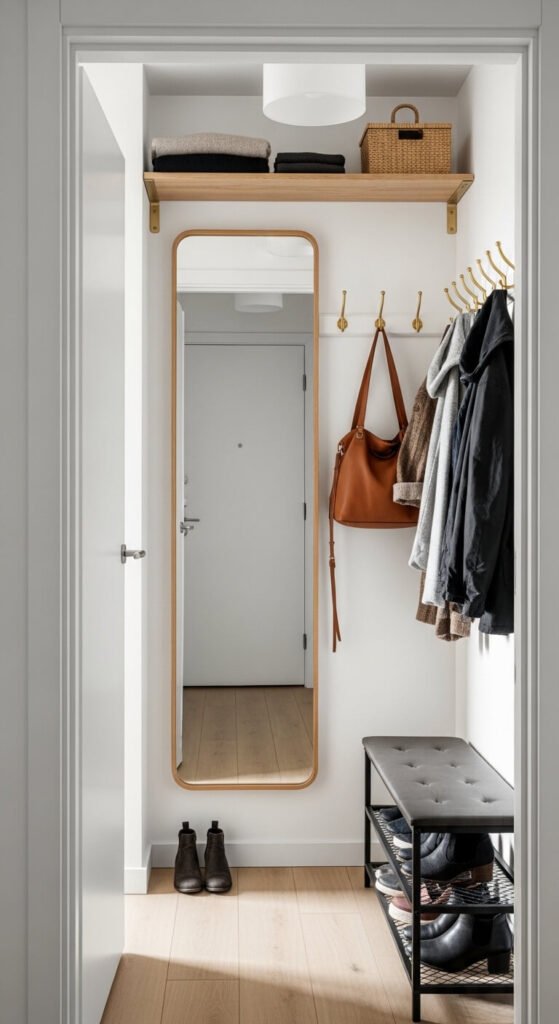
If you have a coat closet near your front door, consider removing the door and turning it into a styled open wardrobe. Mount a full-length mirror on the back wall. Add brass hooks on the side wall for bags and jackets. Put a small shelf up top for everyday accessories. This transforms dead storage space into a functional dressing area right at your exit point. Total cost: $30–$60 in hardware store supplies. It also makes your entryway feel more open and intentional, like a boutique mudroom rather than a forgotten closet.
15. Over-the-Door Organizer for Small Spaces
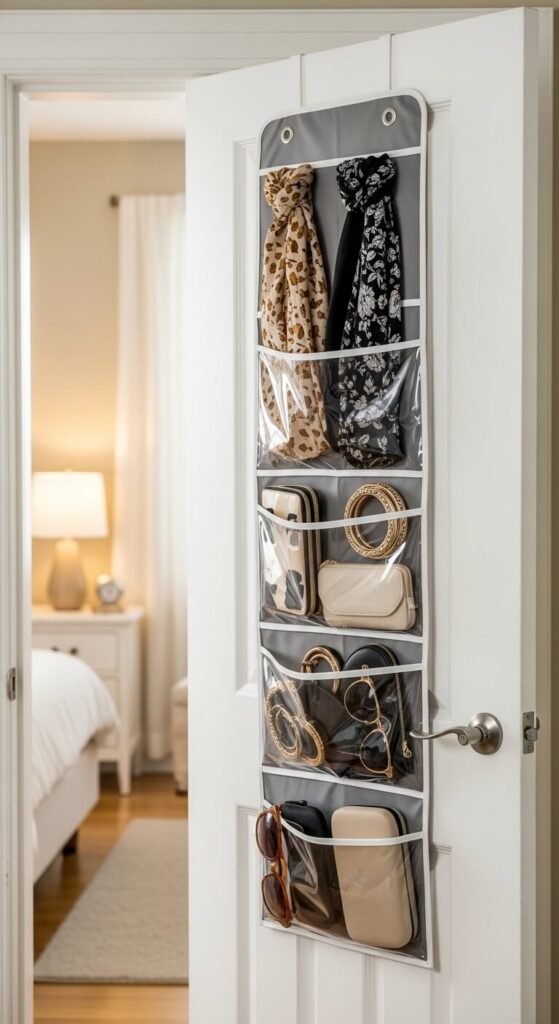
The back of your closet door is prime storage real estate. Most people never use it. An over-the-door organizer with clear pockets holds scarves, sunglasses, small bags, jewelry pouches, and hair accessories. Clear pockets mean you see everything immediately. Fabric versions run $15–$25 and hang in seconds with a hook over the door — no tools needed. This is one of the best solutions for small closets with no extra shelf space. Use one for accessories and a separate one inside a bathroom door for beauty products.
16. Acrylic Drawer Towers for Accessories
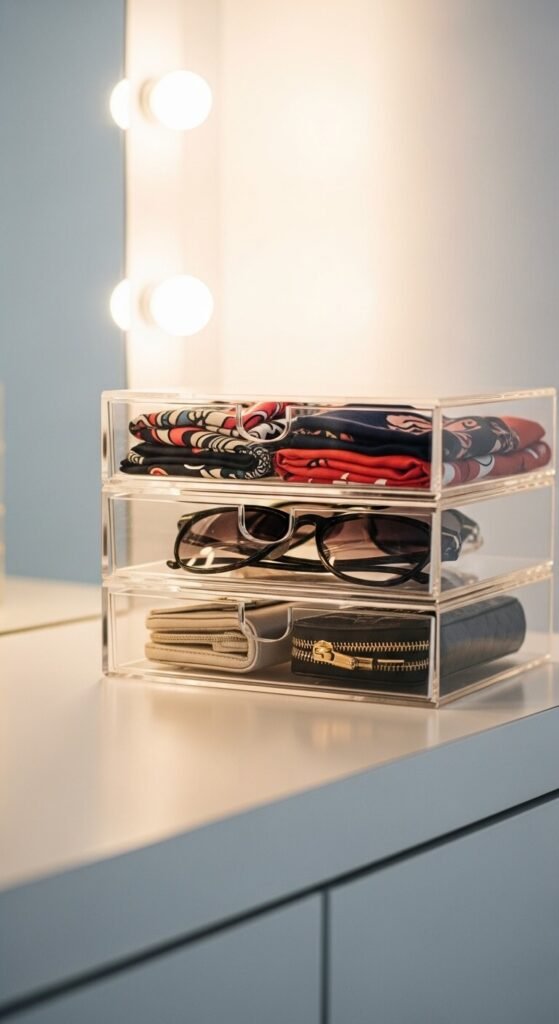
Acrylic drawer towers look expensive but are actually affordable when you shop smart. Clear drawers mean zero guessing. Assign one drawer per category: silk scarves, small clutches, costume jewelry, sunglasses, hair clips. Stack three to five drawers on a dresser or shelf. Amazon and IKEA both carry clear plastic drawer sets for $20–$40. The visual clarity means you’ll actually use what you own instead of forgetting it exists in a bin somewhere. These work especially well on a vanity or the top of a dresser where you get ready every morning.
17. The Jewelry Display Frame
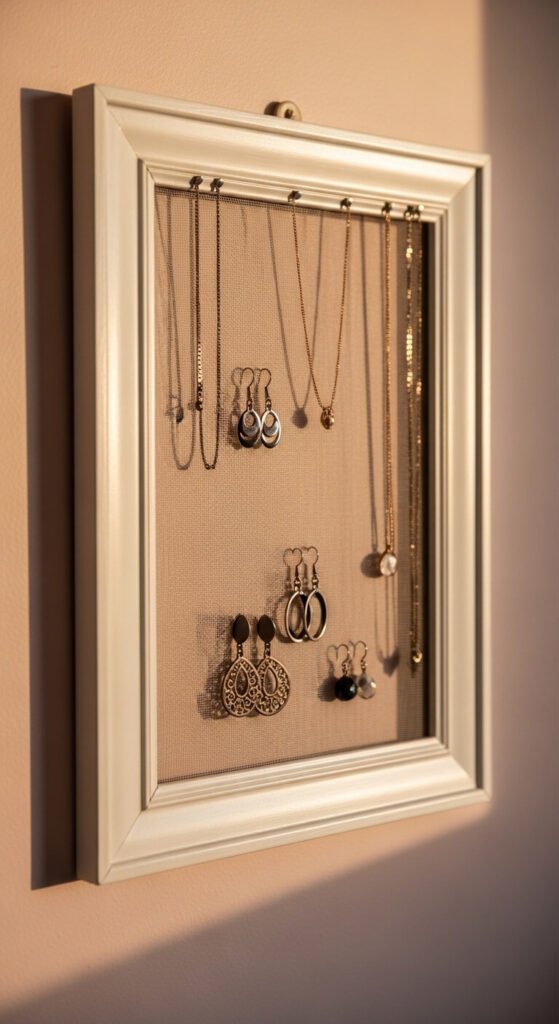
Jewelry tangled in a box never gets worn. Put it on the wall. A DIY jewelry display frame is one of the easiest crafts in this list. Take an old picture frame, add a piece of window screen mesh or stretched burlap, and mount it to your wall. Earrings hook through the mesh holes. Necklaces drape over the top bar or hang on small added hooks. Total cost: $0–$15 depending on what you already have. This also acts as wall art — especially when you use a painted frame that matches your room’s color palette.
18. Seasonal Rotation System
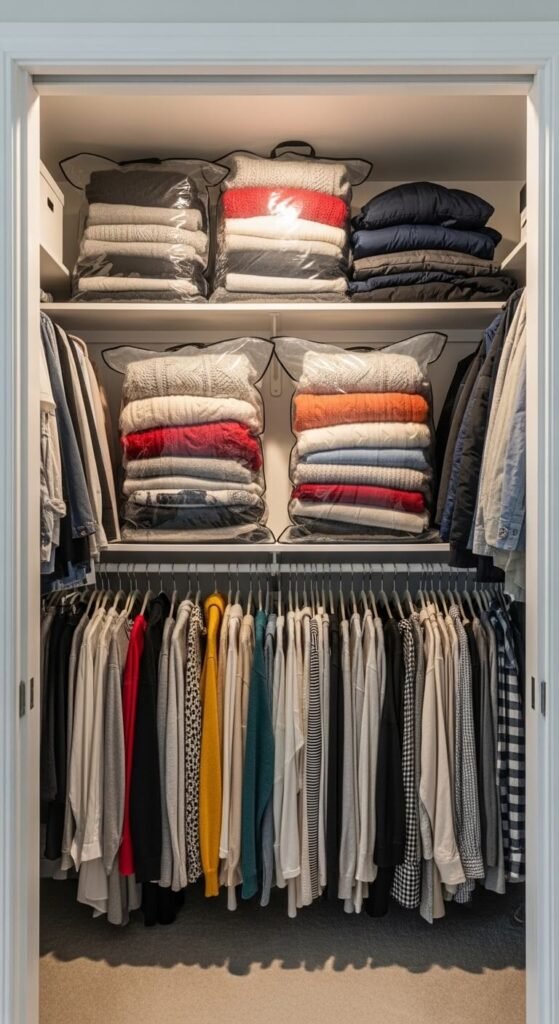
Seasonal rotation is what keeps a closet from overflowing year-round. Store off-season clothes somewhere out of sight. Vacuum-seal bags compress bulky sweaters and coats to a fraction of their size — great for under-bed or top-shelf storage. Clear bins with lids work well for folded items. Label each bin with the season. Rotate twice a year: once in spring, once in fall. This alone can double the usable space in your closet without buying a single shelf or hanger. It also makes getting dressed easier because you only see what’s currently wearable.
19. The Double Hang Rod Hack
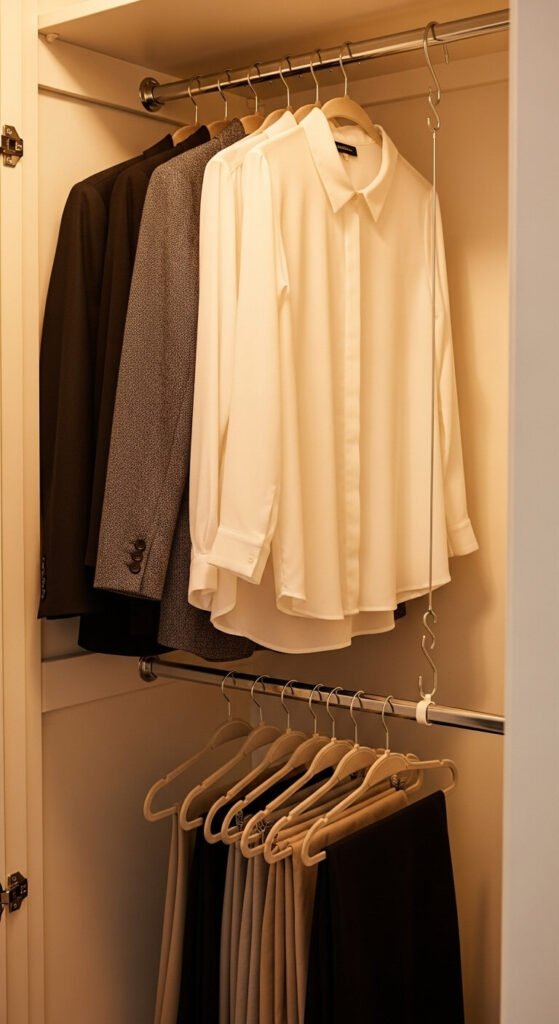
Most closets waste the bottom half of their hanging space. Add a second rod below the first. You can buy a hanging double rod extender for under $20 — it clips onto the existing rod and drops down to create a second hanging level. Use the top rod for longer items like dresses and coats. Use the bottom one for shirts, blazers, and folded pants hung over a hanger. This simple fix can almost double your hanging capacity without any drilling or permanent changes to your closet. It’s one of the highest-impact, lowest-cost upgrades available.
20. Scarf and Belt Wall Hooks
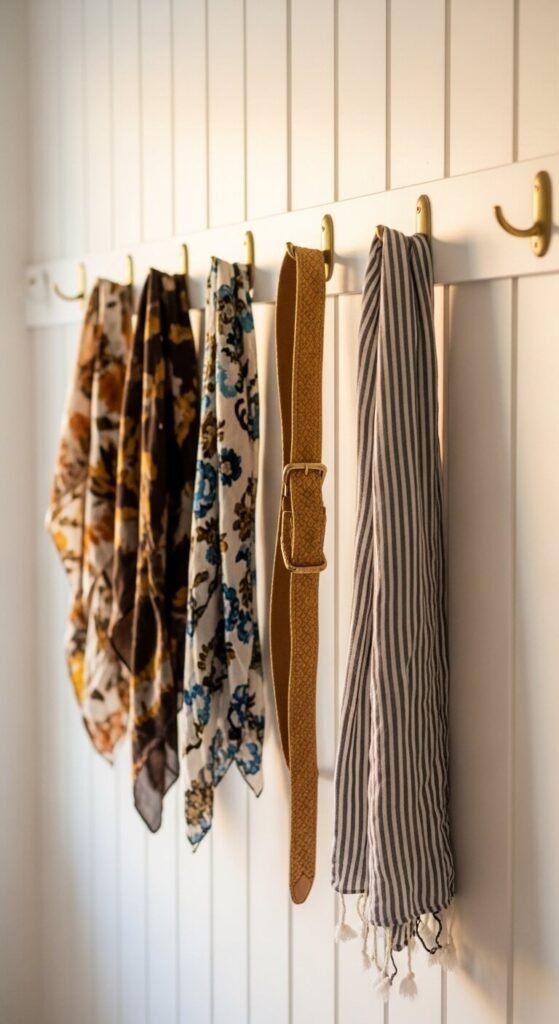
Scarves and belts are two of the most disorganized items in most closets. A row of small wall hooks solves both. Mount five to seven hooks in a horizontal line on any open wall near your closet. Hang scarves looped in half and belts buckled over the hook. This keeps them visible, tangle-free, and easy to grab. Small brass or black matte hooks cost $1–$3 each at hardware stores. Mount them at eye level so you see every option while deciding on an outfit. This also adds a decorative touch that feels intentional rather than improvised.
21. The Shoe Pocket Organizer
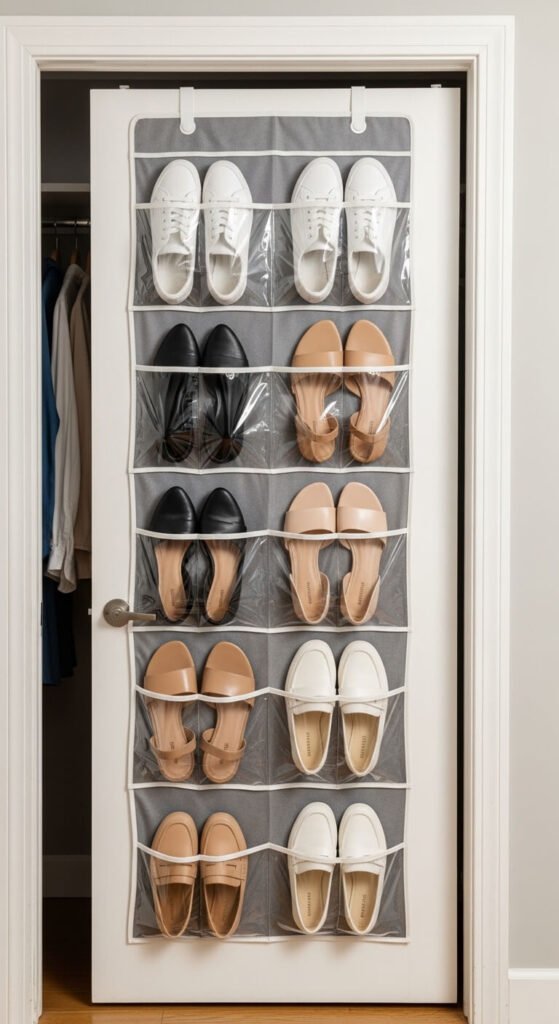
Running out of shoe storage is a universal problem. A hanging shoe pocket organizer is the fastest fix. It hangs over a door or rod, holds 12–24 pairs depending on size, and takes up zero floor space. Clear pockets mean you see every pair without searching. These run $15–$25 on Amazon and come in fabric or plastic versions. Use one on the back of your closet door for everyday shoes, and store seasonal or rarely-worn shoes in labeled boxes stacked on the shelf above. This setup alone can clear your entire closet floor.
22. Repurposed Linen Closet for Clothing
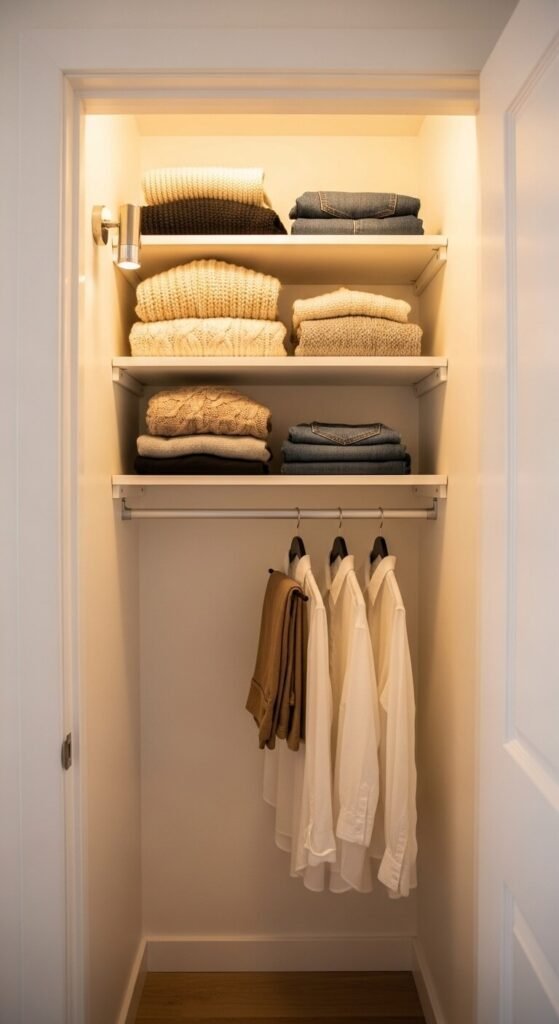
If you have a spare linen closet and not enough bedroom closet space, repurpose it for clothing. Remove a shelf, install a rod at the right height, and suddenly you have bonus wardrobe space. Use the remaining shelves above for folded items. This works especially well for a spare bedroom or home office where you need a place to store extra clothing without a built-in wardrobe. The total cost is the price of one rod and two rod holders — usually under $15. Add a battery-operated LED light inside for a complete, usable space.
23. The Corner Closet Shelf Tower
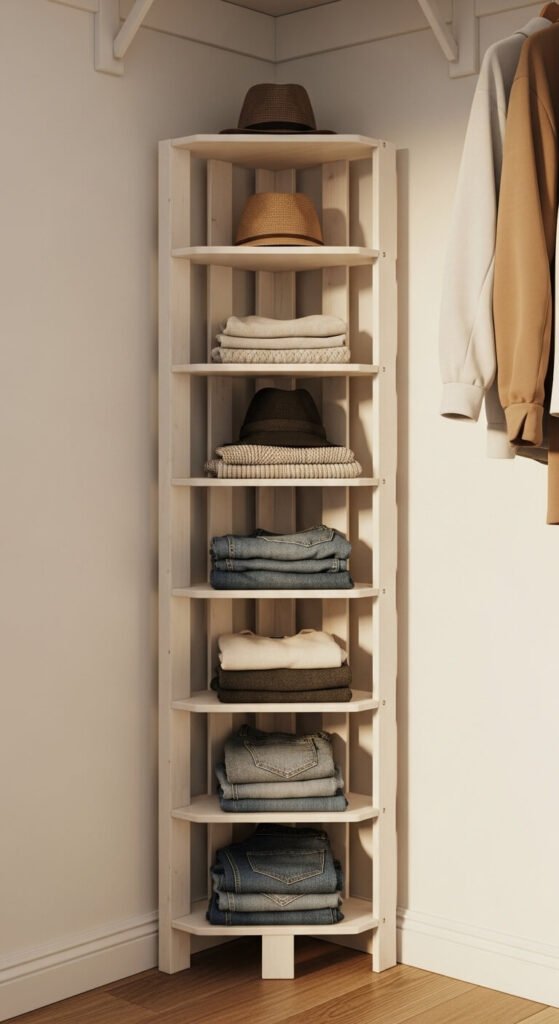
Corner spaces in closets are almost always wasted. A freestanding corner shelf tower claims that real estate back. These units fit snugly into a 90-degree corner and usually offer five to seven shelves for folded items. Use each shelf for one category: jeans, sweaters, workout clothes, loungewear, hats. White-painted pine versions can be found at IKEA or Target for $30–$60. They’re freestanding, so no drilling. If your closet has two corners, put one in each for a dramatic increase in total storage without touching your hanging rod space.
24. Fabric Bin Storage for Knits and Sweaters
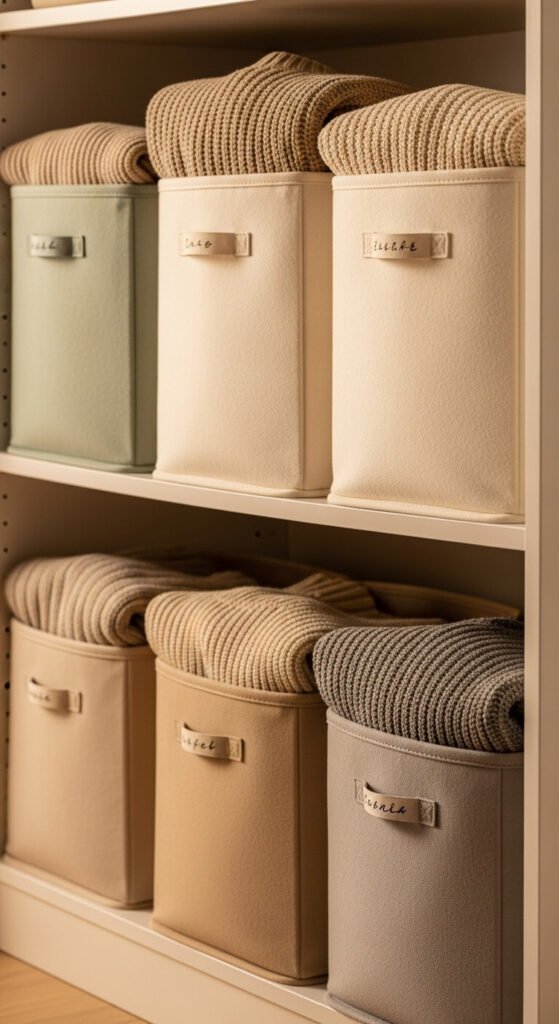
Heavy knits, sweaters, and hoodies fold better than they hang — but they also need containment. Large fabric bins keep them from becoming a pile. Use one bin per category: heavy knits, lightweight sweaters, hoodies, cardigans. Stack two to three bins per shelf. Choose neutral colors so the bins themselves don’t add visual clutter. IKEA DRÖNA bins fit perfectly inside KALLAX shelving units and cost about $7 each. Label each one clearly. This system is especially helpful in winter when bulky items take over and shrink your available closet space.
25. The Minimalist Monochrome Closet
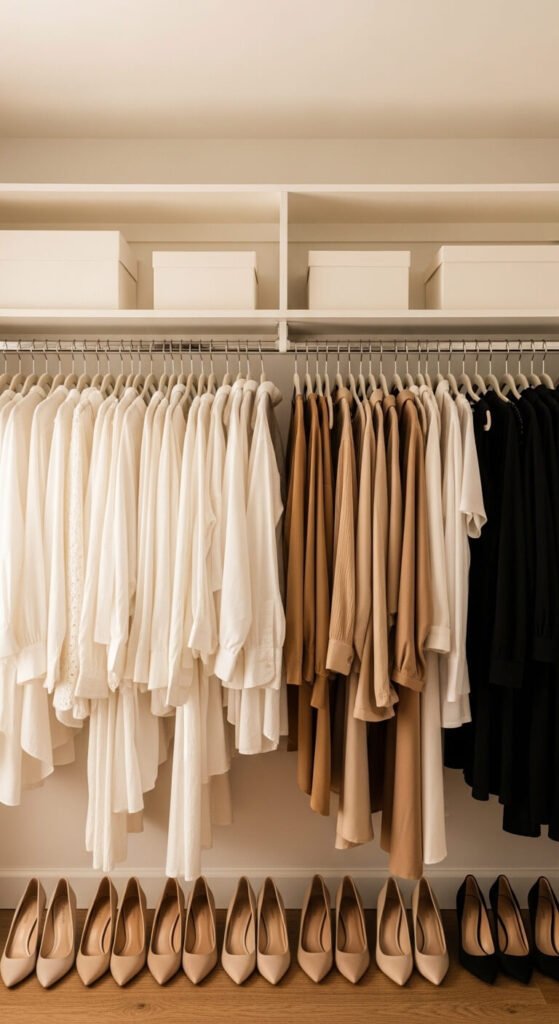
A monochrome or neutral color palette in your closet isn’t just aesthetic — it makes every piece mix-and-match. If every item you own works with every other item, getting dressed becomes effortless. This doesn’t mean you have to throw out your color. It means intentionally shopping within a tighter range so that your closet functions like a curated wardrobe rather than a random collection. When everything coordinates, the space looks stunning and getting dressed requires almost no mental effort. Start by pulling out five “wild card” pieces you never wear and donating them.
26. Clip-On Closet Dividers
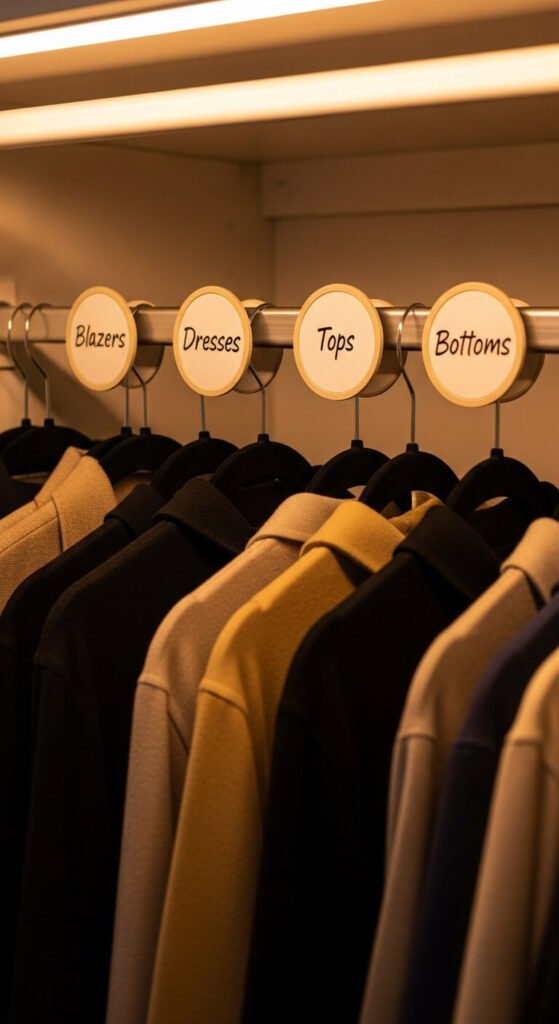
Closet dividers are small, cheap, and wildly underused. They clip right onto your rod and create labeled sections for each clothing category — blazers, dresses, work tops, casual tops, bottoms. No more having to remember where each zone ends and another begins. You can find a set of six dividers for about $8–$12 on Amazon. Write the category name on each with a fine-tip marker or use adhesive labels. Once the sections are defined, it’s much easier to put things back in the right place, and the whole closet stays organized with almost no extra effort.
27. The Dressing Room Vanity Corner
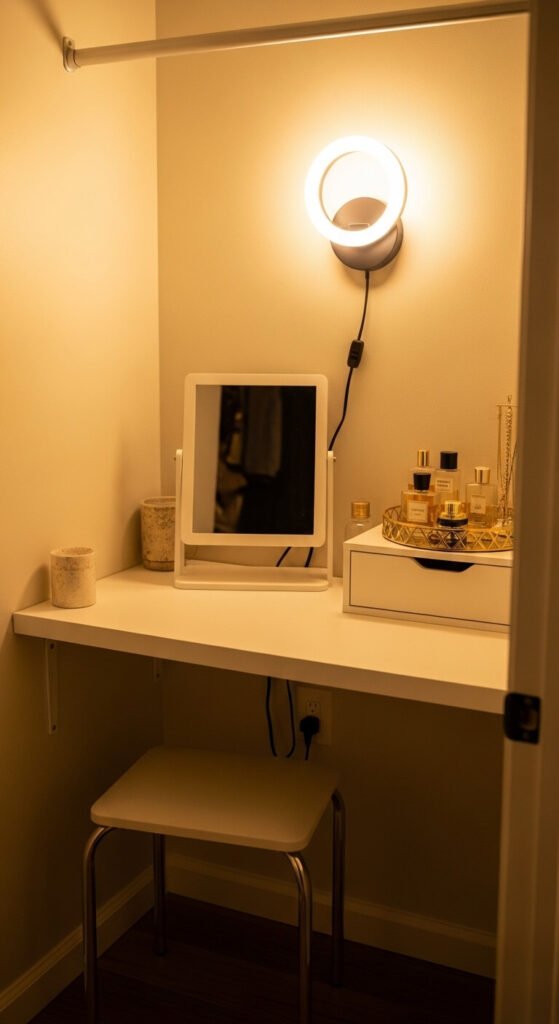
Having a designated “getting ready” corner inside or next to your closet changes the whole ritual of dressing. Mount a floating shelf at desk height. Add a tabletop or wall-mounted mirror, a small jewelry tray, and a perfume or fragrance display. Tuck a stool underneath. You now have a proper dressing area that makes mornings feel intentional rather than rushed. Total cost can be under $50 using IKEA parts. A battery-powered ring light clipped to the mirror adds flattering light. This simple setup makes getting dressed feel like a daily self-care moment, not a chore.
28. The Pallet Wood Shoe Rack
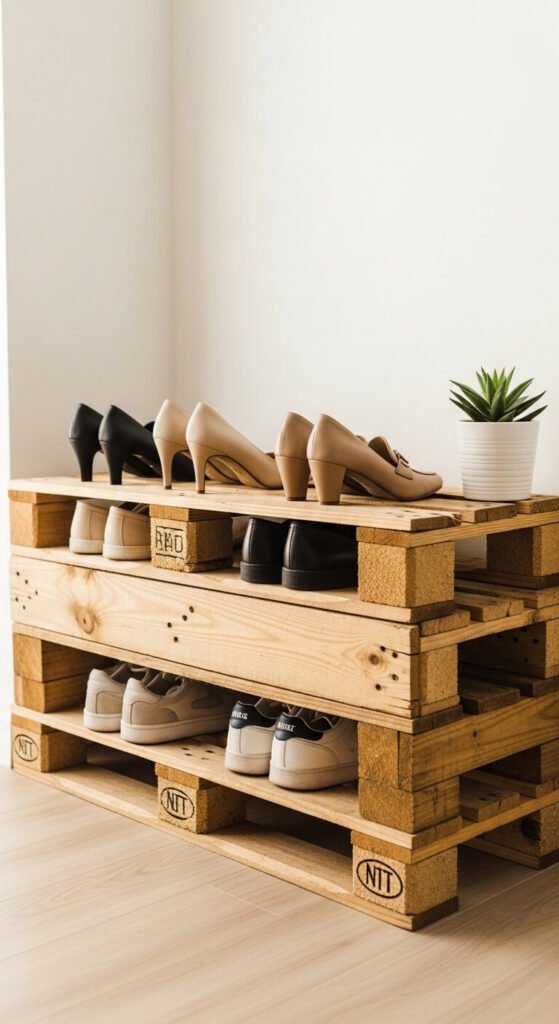
Wooden pallets are one of the most affordable DIY materials available — and they make a surprisingly attractive shoe rack. Sand, paint or stain, and stack two pallets. The natural slats become rows for displaying shoes. Each slat holds a row of flats, sneakers, or boots perfectly. Many businesses give away pallets for free, so the only cost is sanding supplies and paint or stain ($10–$20 total). Mount it against a wall for stability. This works in a bedroom, closet, or even an entryway. It’s a budget-friendly project with a finished look that feels intentional and handcrafted.
Conclusion
A well-organized closet doesn’t require a renovation or a big budget. It just requires small, intentional choices made one at a time. Start with a single system — matching hangers, a clear bin, a new set of shelf dividers — and build from there. The 28 ideas in this list work for apartments, starter homes, tiny closets, and sprawling walk-ins. The goal isn’t perfection. It’s a space that makes you feel calm, in control, and ready to put together an outfit you actually love. Pick one idea today and start. That’s all it takes.