1. Concrete Planters for Indoor Greenery
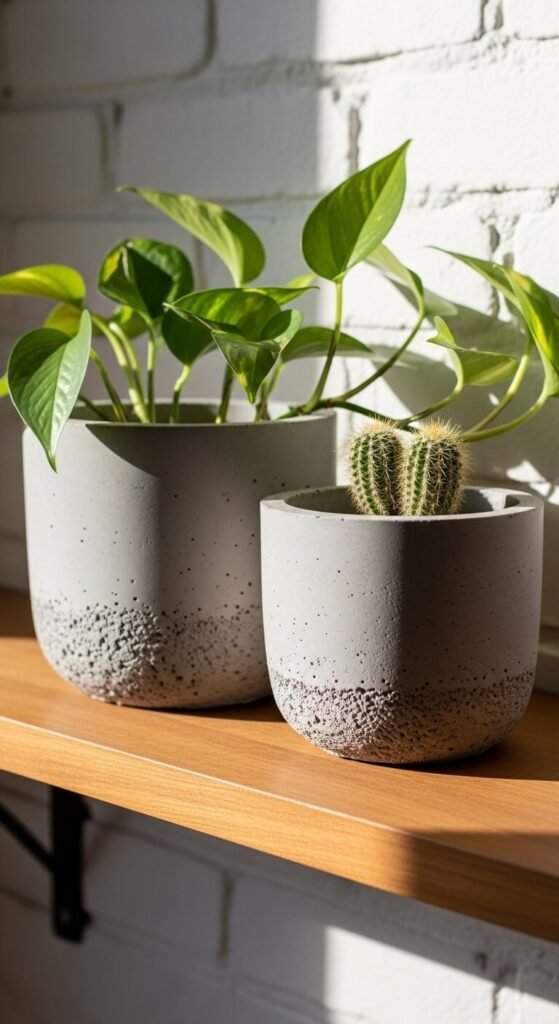
Concrete planters are one of the easiest entry points into this style. You can buy them affordably at most home stores or cast your own using a bag of cement mix and a plastic cup mold. The rough, uneven texture looks intentional — not accidental. Pair them with trailing plants for contrast. A small succulent in a concrete pot on a windowsill makes a big visual statement. Cost to DIY: under $5 per pot.
2. Polished Concrete Floors
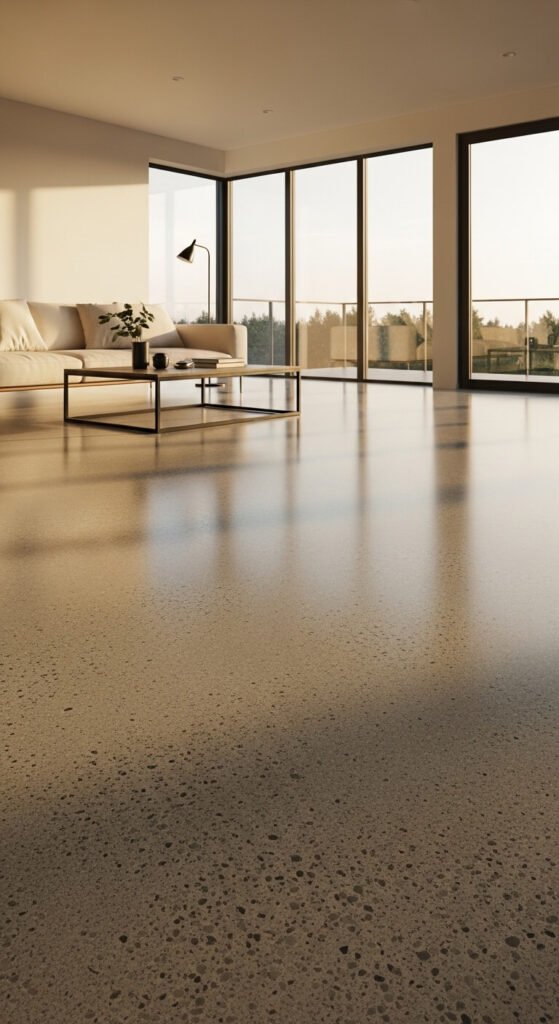
Polished concrete floors work in almost any room. They’re durable, low-maintenance, and age beautifully. If you already have a concrete slab, a concrete floor grinder and sealer can transform it for a fraction of tile costs. For renters, large-format concrete-effect porcelain tiles give the same look without permanence. Add a thick wool rug to soften the space and reduce sound. This is one of the highest-impact changes you can make.
3. Concrete Feature Wall Panel
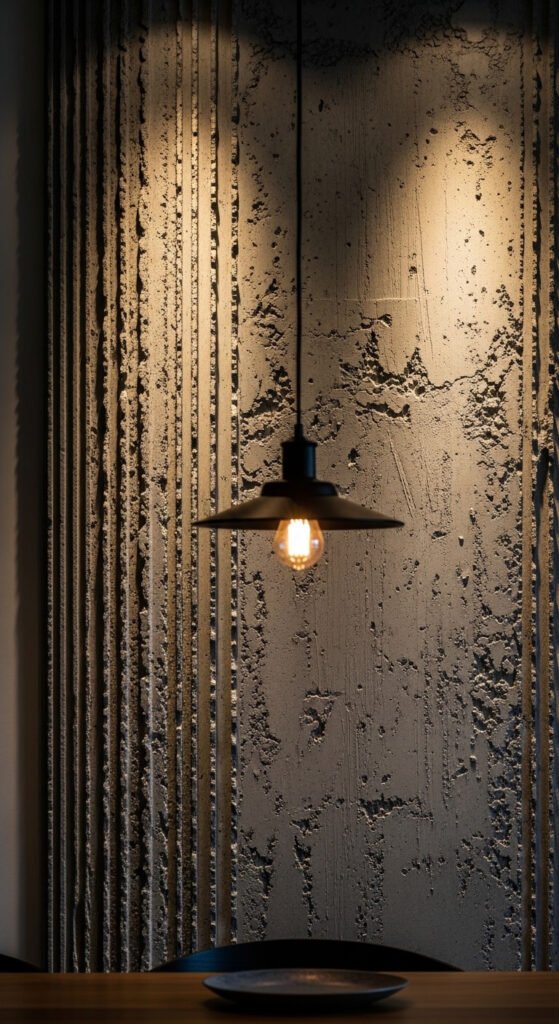
A single concrete accent wall anchors a room instantly. You don’t need to pour real concrete — microcement or concrete overlay products apply directly over drywall or existing tiles. They’re thin, lightweight, and come in multiple finishes. One wall in a dining room or bedroom is all it takes. YouTube tutorials make the application very learnable. Budget: roughly $3–8 per square foot depending on the product.
4. DIY Concrete Coffee Table Top
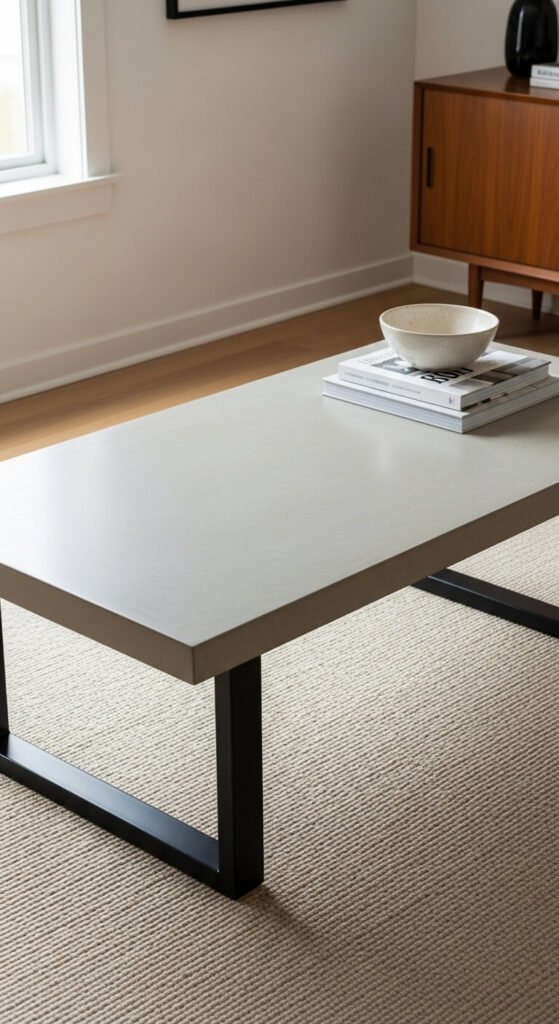
A concrete coffee table top is a weekend project that looks custom-made. Use a melamine mold, fiber-reinforced concrete mix, and a basic sander for the finish. You can set it onto thrifted metal legs or repurpose a base you already own. The finished weight feels solid and intentional. Sand to 400 grit and seal with matte concrete sealer for a smooth, non-porous surface. Total material cost: around $40–80.
5. Concrete Kitchen Countertops
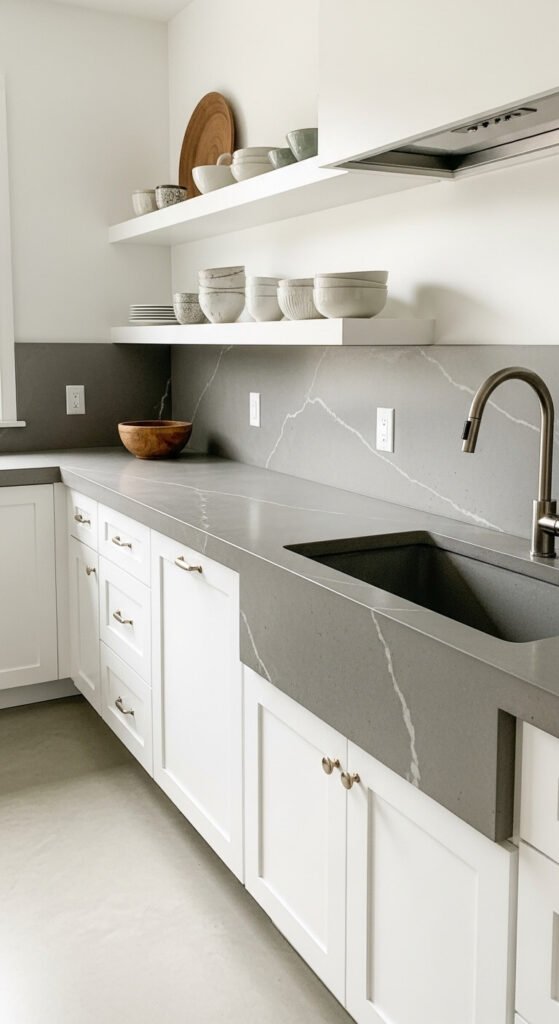
Concrete countertops have a warmth that cold stone doesn’t always deliver. Cast-in-place concrete can be tinted, textured, and shaped around sinks and edges. They do require sealing annually, but the upkeep is simple. For a lower-commitment approach, concrete resurfacing kits can go over existing laminate or tile counters. The result reads as fully custom. This works particularly well in kitchens with white or navy cabinetry.
6. Concrete Bathroom Sink Basin
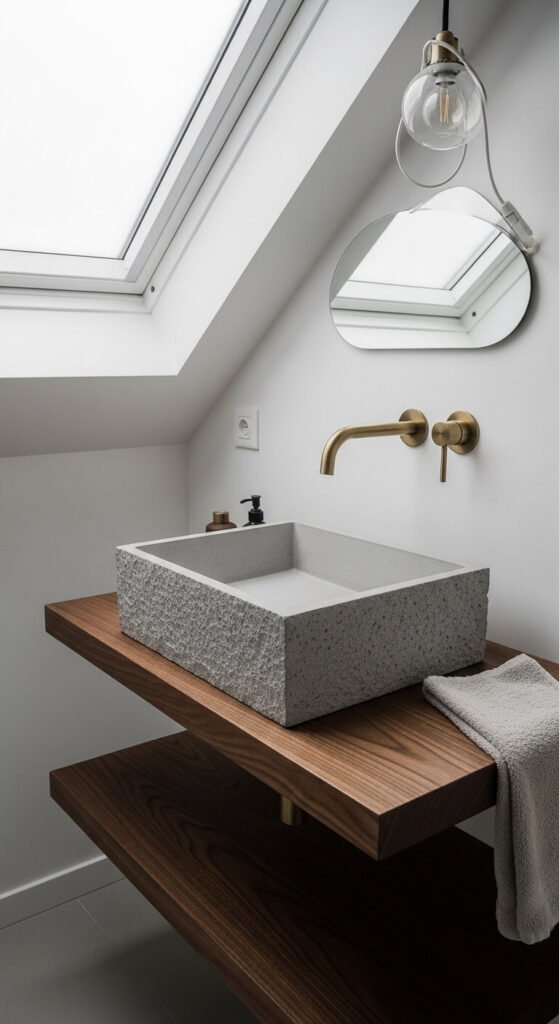
A concrete sink basin is one of the most striking bathroom upgrades available. Pre-cast basins are sold by specialty suppliers, or you can cast your own using concrete countertop mix and a foam mold. The key is getting the thickness right — too thin and it’ll crack. Seal thoroughly with a penetrating concrete sealer to protect against water. Pair with a wall-mounted brushed brass tap for a high-end look at a low price.
7. Concrete Pendant Light Shade
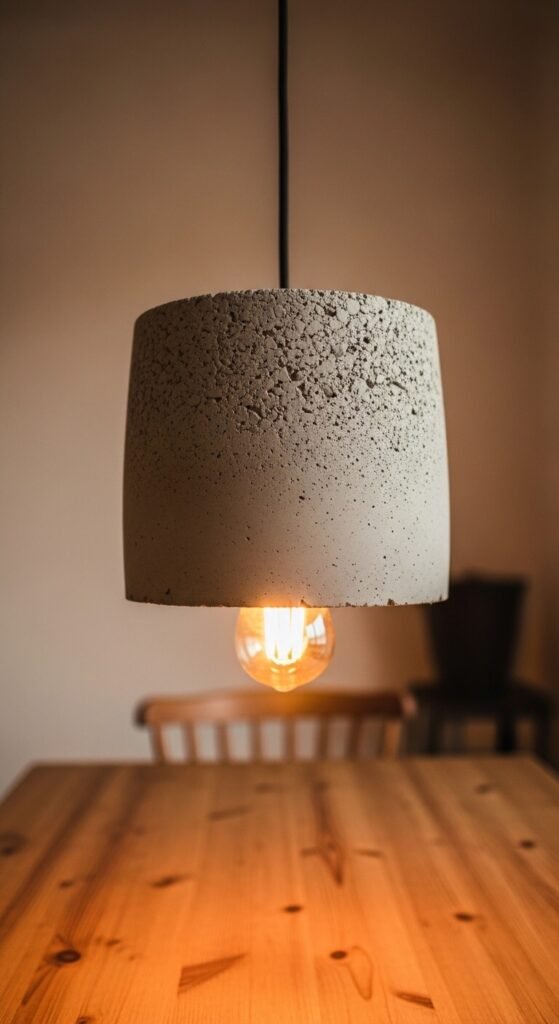
Concrete lamp shades have a sculptural quality that changes the whole mood of a room. They’re surprisingly lightweight when made with lightweight concrete or a GFRC mix (glass fiber reinforced concrete). The DIY version uses a balloon or plastic container as a mold. Once cured and drilled for a cord fitting, they work as pendants or wall sconces. The rough exterior against a warm bulb glow creates a striking contrast.
8. Exposed Concrete Ceiling Beams
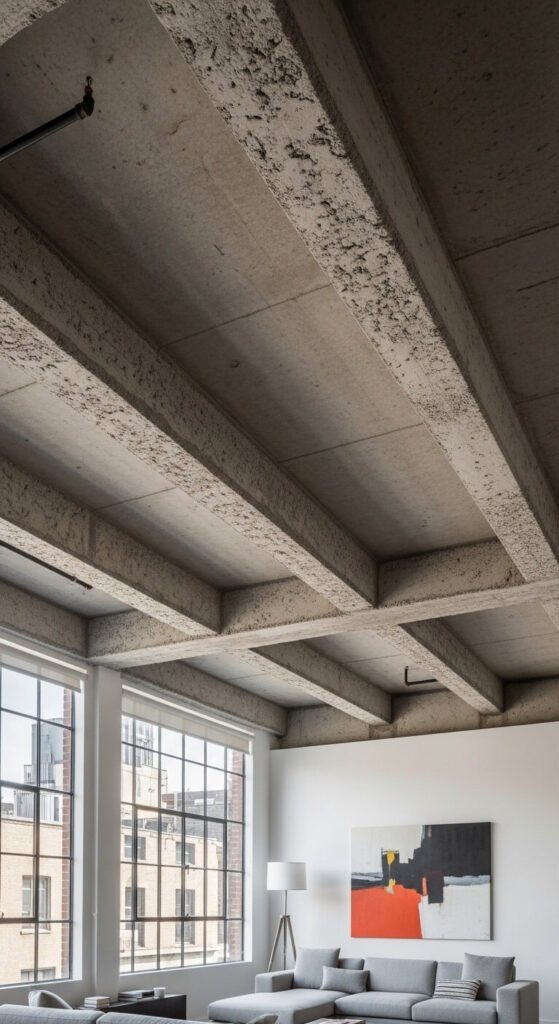
Exposed concrete ceiling beams read as architectural confidence. In older buildings, you may already have them hidden under drywall — worth investigating before renovating. In new builds, leaving formwork concrete exposed costs less than plastering over it. For a faux concrete beam effect, lightweight polystyrene beam wraps with a concrete-look finish are available online and take an afternoon to install. The visual impact is substantial.
9. Concrete Bookshelf Brackets
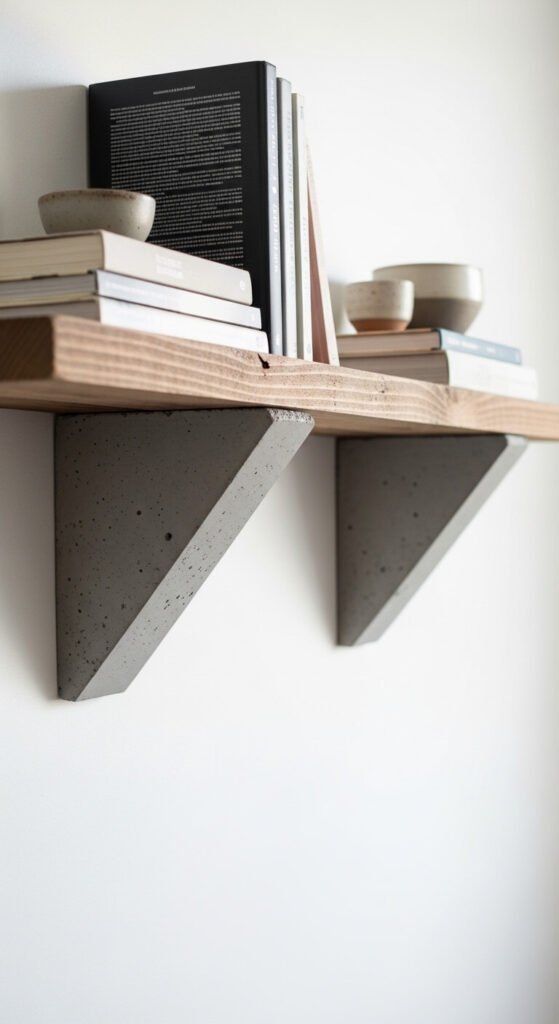
Concrete shelf brackets are a small detail that reads as very intentional. Cast them in a silicone mold using fast-setting concrete — the whole process takes about 48 hours including cure time. Use threaded rod inserts while the concrete is wet for a secure wall anchor. These work beautifully under reclaimed wood shelves in a home office or kitchen. Cost per bracket: under $8 in materials.
10. Concrete Fireplace Surround
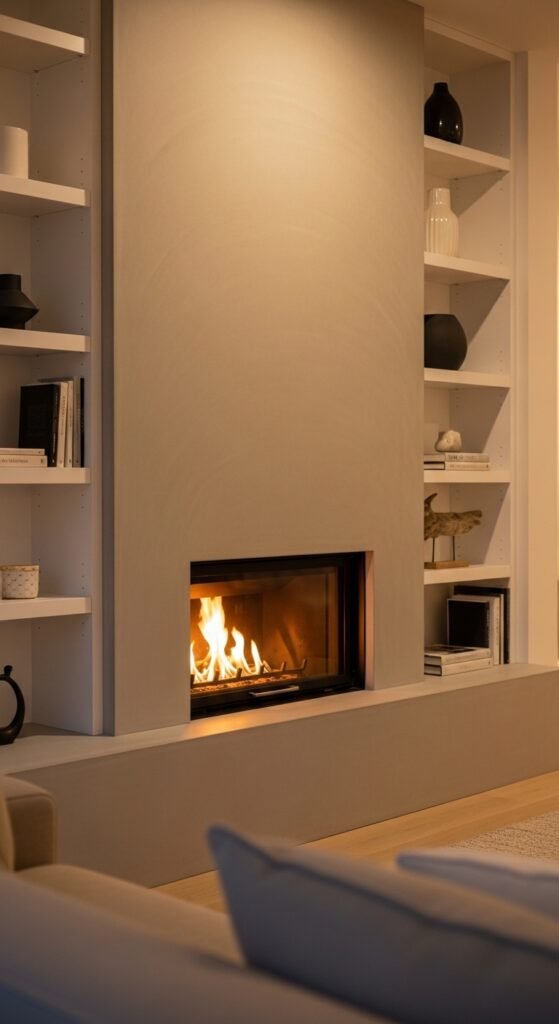
A concrete fireplace surround grounds the whole room. Microcement overlay applied over an existing brick or drywall surround is the most accessible approach — it’s thin, heat-tolerant (when used away from the firebox opening), and looks like poured concrete. Finish with a matte sealer. Alternatively, prefabricated concrete fireplace surrounds are available from specialty suppliers and install like any standard surround. This single change can redefine the character of a living room.
11. Concrete Tile Backsplash
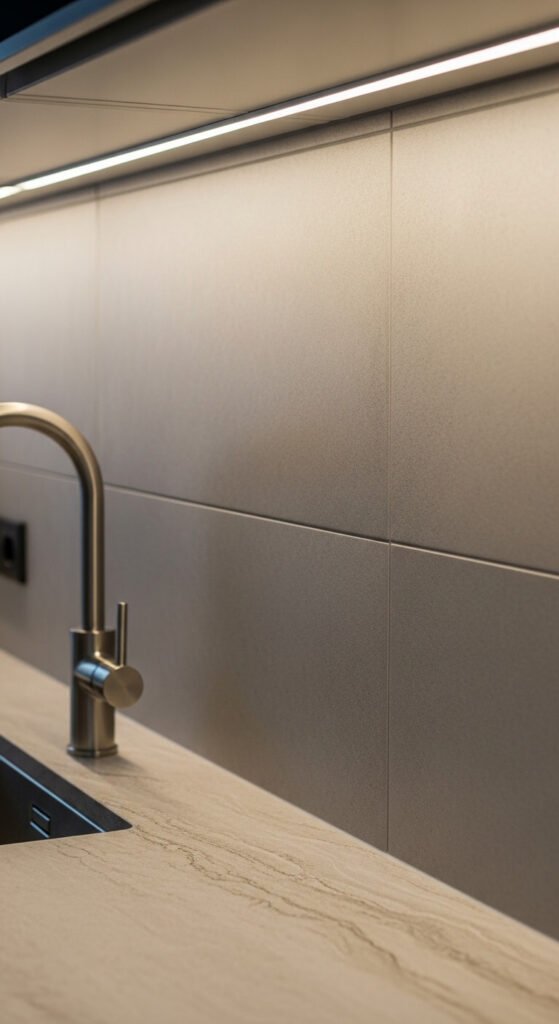
Concrete-effect tiles give you the look without the sealing and maintenance demands of real concrete. Large-format matte porcelain tiles with a concrete texture finish are widely available at tile shops and online. A 60x60cm format minimizes grout lines for a more seamless effect. This works particularly well in kitchens and bathrooms where real concrete would demand frequent sealing. Installation is standard tile work — a confident DIYer can handle it over a weekend.
12. Concrete Side Table
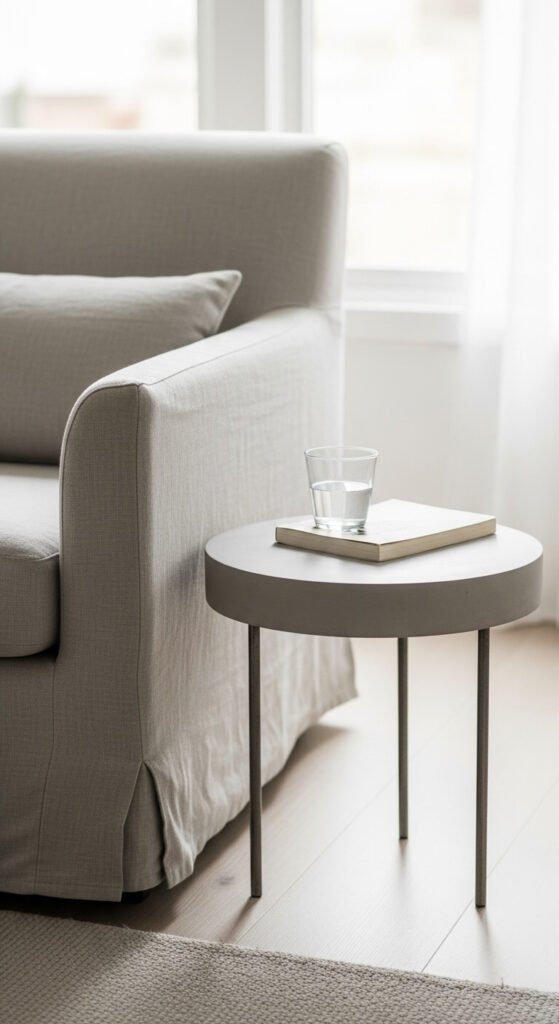
A concrete side table is compact enough to be a manageable first casting project. Use a circular plastic container lid as a mold, pour a fiber-reinforced concrete mix, and embed a threaded steel rod for the leg while still wet. Sand smooth once cured. The finished piece weighs just enough to feel substantial. Paint the leg matte black or leave raw steel for an industrial look. Total cost: under $25.
13. Concrete Stair Treads
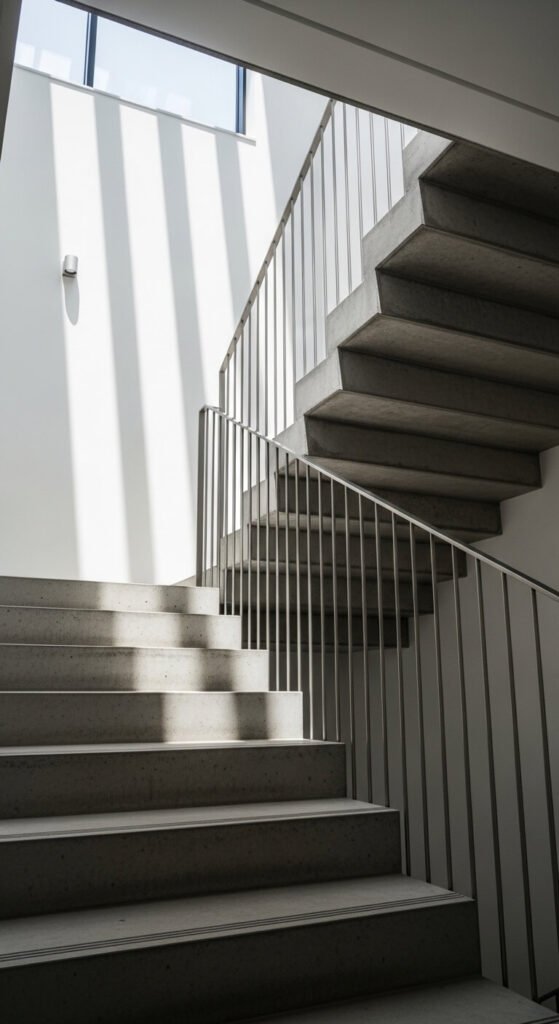
Concrete stair treads are a bold structural statement. In a renovation, concrete overlays can be applied over existing timber treads to give the look without a full rebuild. They need to be sealed with a non-slip additive in the sealer coat for safety. Precast concrete treads are also available and can be set onto existing stringers. The combination of concrete treads with a steel or glass balustrade is a classic industrial chic pairing.
14. Concrete Herb Planter Box for the Kitchen
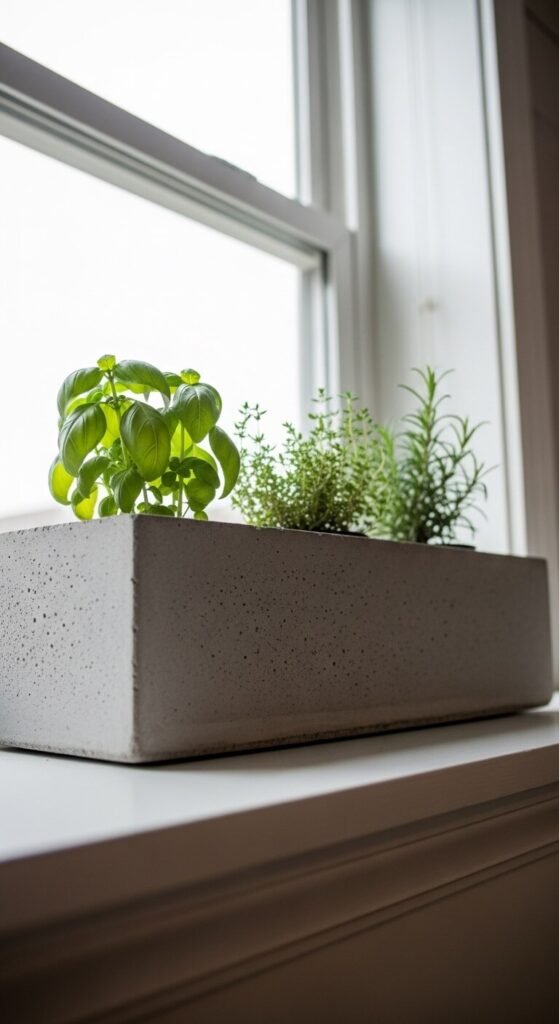
A concrete herb planter box combines function with style. Cast one using a cardboard box as a mold — line it with plastic, pour the concrete, and let it cure for three days before removing the box. Drill drainage holes before the concrete fully hardens. The rough-cast look suits a kitchen shelf or windowsill perfectly. Growing fresh herbs steps away from the stove is practical and the concrete texture makes it feel deliberate, not afterthought.
15. Concrete Bathroom Accessories Set
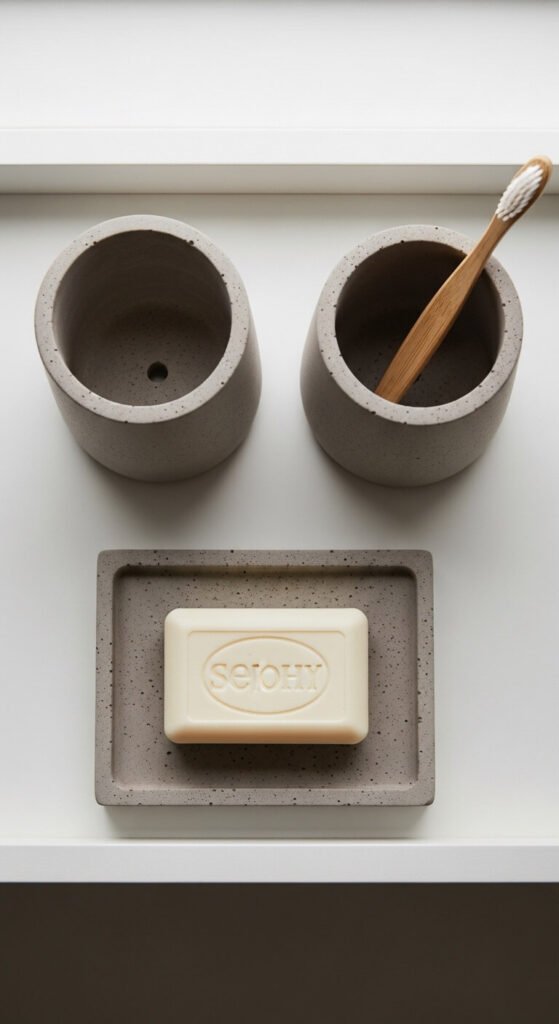
Matching concrete bathroom accessories tie a room together instantly. Sets including soap dishes, toothbrush holders, and small trays are widely available for under $40 from homeware stores. If you want to DIY, small silicone molds and a bag of concrete mix produce the whole set in an afternoon. Seal each piece with a penetrating concrete sealer before use. The cohesion of a matched set in raw concrete against white subway tile is a timeless pairing.
16. Concrete Candle Holders
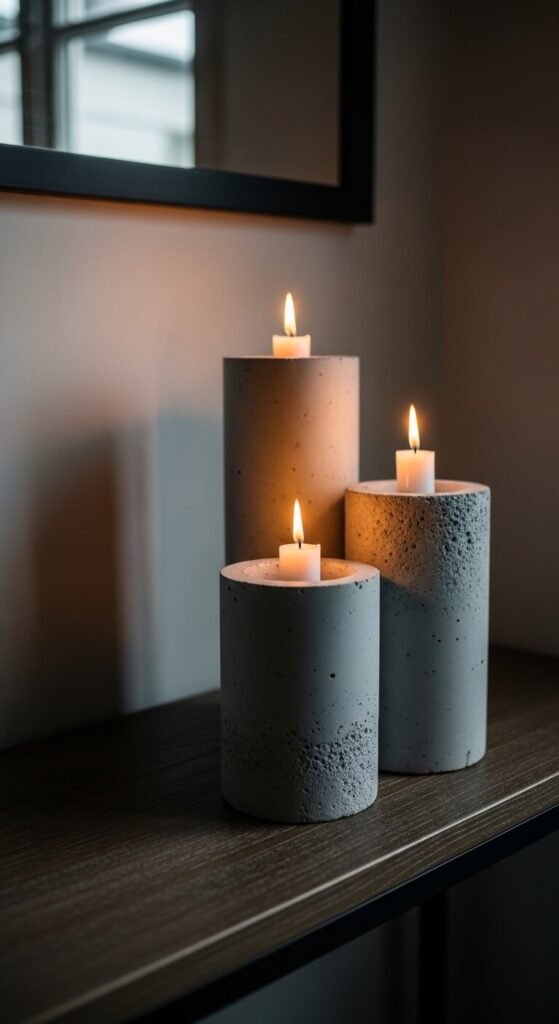
Concrete candle holders are an ideal beginner project. Use cardboard toilet paper rolls lined with cling wrap as molds — fill with concrete, push a smaller roll into the centre to form the candle recess, and let cure for 48 hours. Sand lightly and seal. A set of three in varying heights arranged on a console table looks considered and styled. These also make thoughtful handmade gifts. Material cost per holder: around $1.
17. Concrete and Wood Dining Table
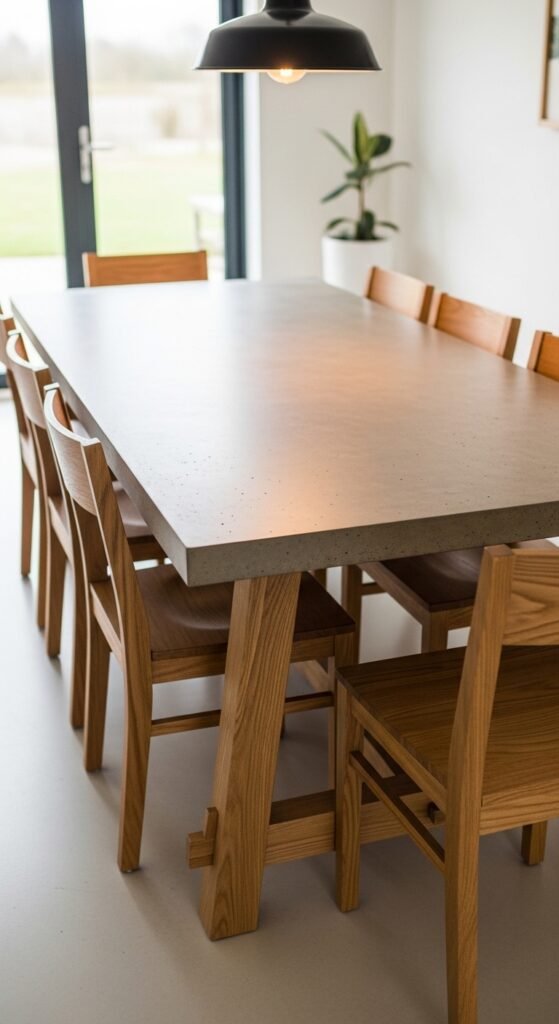
The combination of concrete and natural wood is one of the most enduring pairings in industrial chic design. A dining table with a concrete top on solid timber or steel trestle legs feels custom and grounded. Precast concrete table tops are available from specialist furniture makers, or you can cast directly into a melamine form built to your required dimensions. The wood legs add warmth that stops the look from feeling cold.
18. Concrete Accent Vase
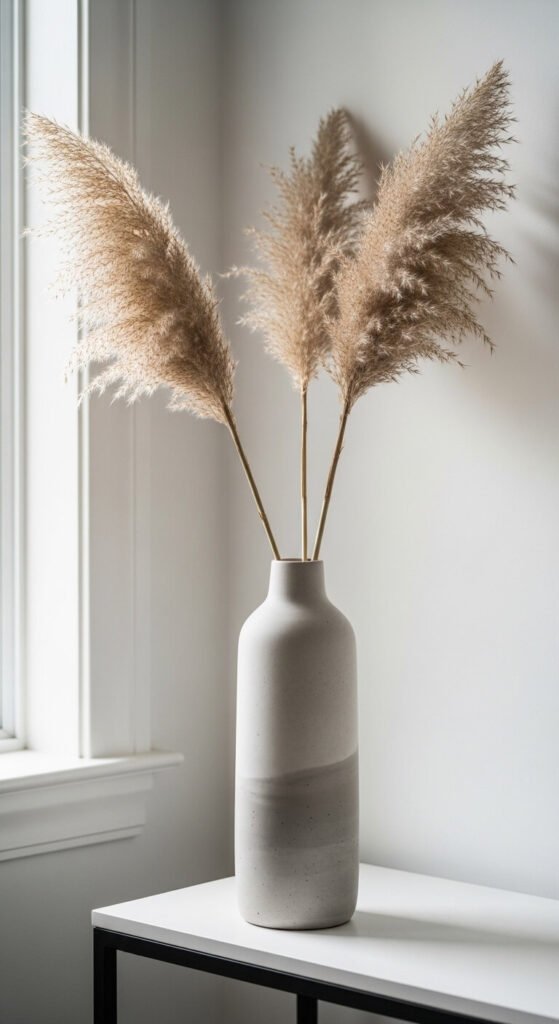
A concrete accent vase is both sculptural and functional. You can buy them from homeware stores or cast a simple cylinder using a PVC pipe as the outer mold and a smaller tube for the inner void. Seal the interior only — leave the outside raw for texture. Dried flowers, pampas grass, or bare branches suit this style perfectly. The rough grey exterior against a white wall creates a graphic composition that needs very little else around it.
19. Concrete Door Stopper
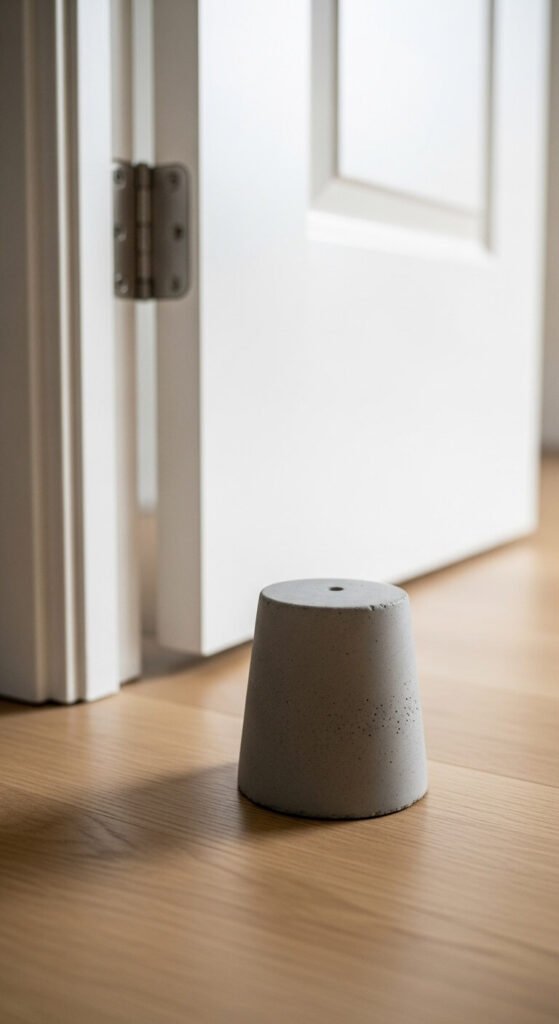
A concrete door stopper is the smallest, most achievable project on this list — and surprisingly satisfying. Pour a fast-set concrete mix into a wide-mouthed glass jar, let it cure, then remove and sand smooth. Attach a felt pad to the bottom to protect floors. The weight alone does the job without any additional hardware. This tiny detail is the kind of thing that makes visitors quietly notice the level of thought in your home.
20. Concrete Kitchen Island Waterfall Edge
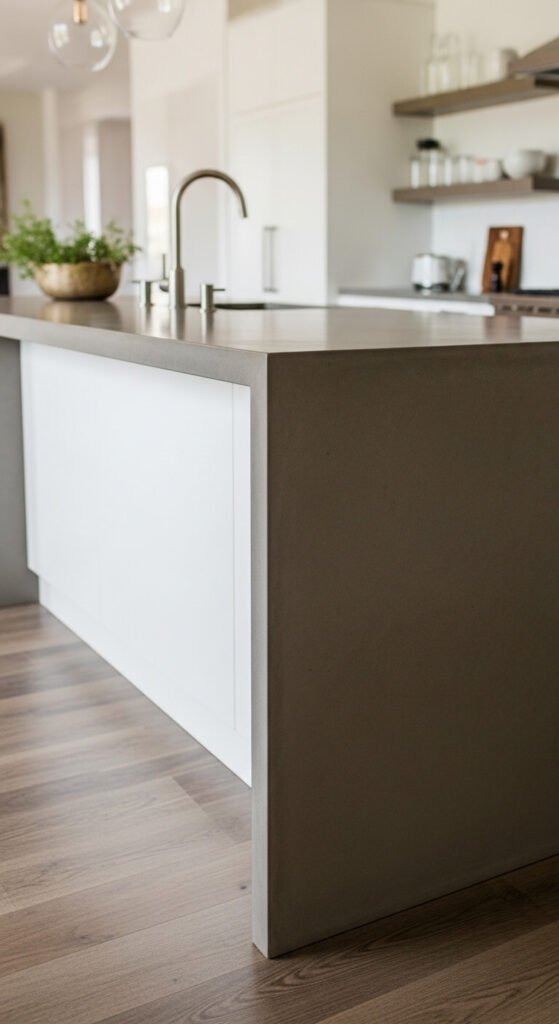
A concrete waterfall edge on a kitchen island is a high-end detail that reads as architect-designed. The concrete surface runs continuously from the horizontal top down the vertical end panel to the floor, giving the impression of a solid slab. This is achievable with cast-in-place concrete or microcement overlay. The key is getting a clean, sharp 90-degree corner at the turn. Pair with handleless cabinetry to keep the look clean.
21. Concrete Wall Clock
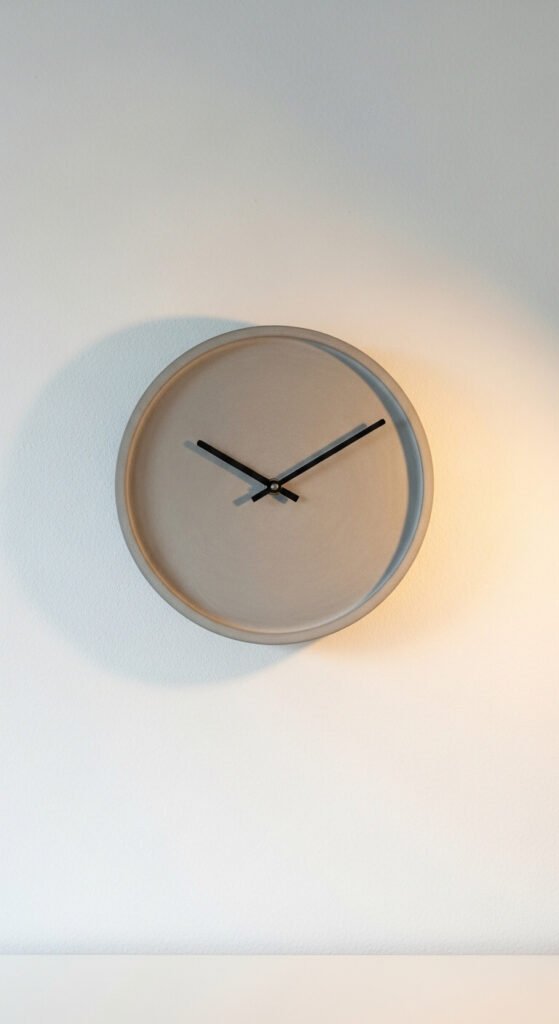
A concrete wall clock is a functional object that doubles as wall art. Silicone clock molds are sold on craft sites for under $15 — pour your concrete mix, insert a clock mechanism fitting while wet, and leave to cure. Once finished, add clock hands and a battery. The absence of numbers on a concrete face looks particularly clean and intentional. This suits a home office, hallway, or living room wall without competing with other décor.
22. Concrete Bathroom Floor Tiles
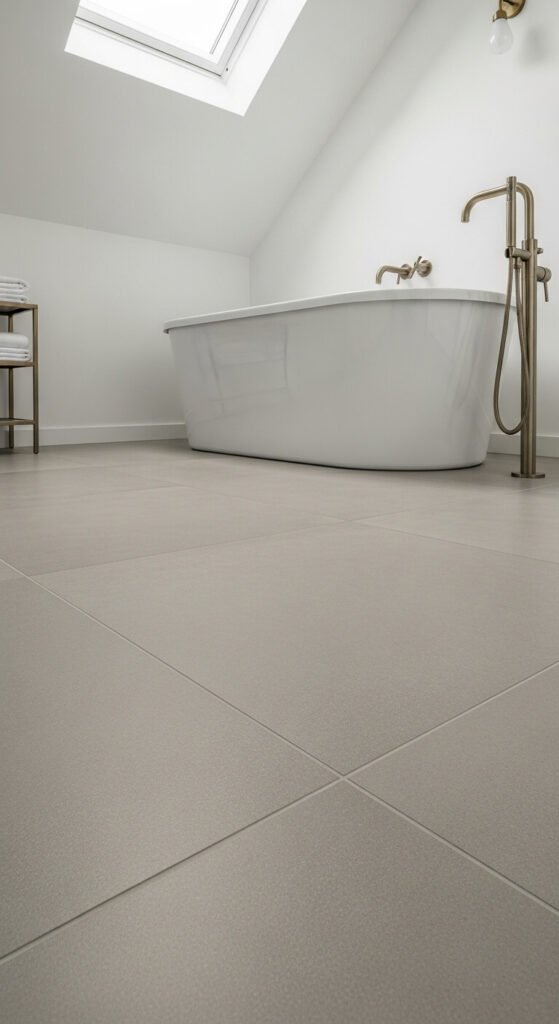
Concrete-effect floor tiles in a bathroom are a long-lasting design decision that won’t date. Large-format matte porcelain with a concrete-finish surface in a warm grey works better than a cold blue-grey in bathrooms — it pairs with skin tones and white fixtures more naturally. Use a large format (80x80cm or larger) to reduce grout lines. Non-slip rating is important for wet areas — check the PEI rating before purchasing.
23. Concrete Floating Shelves
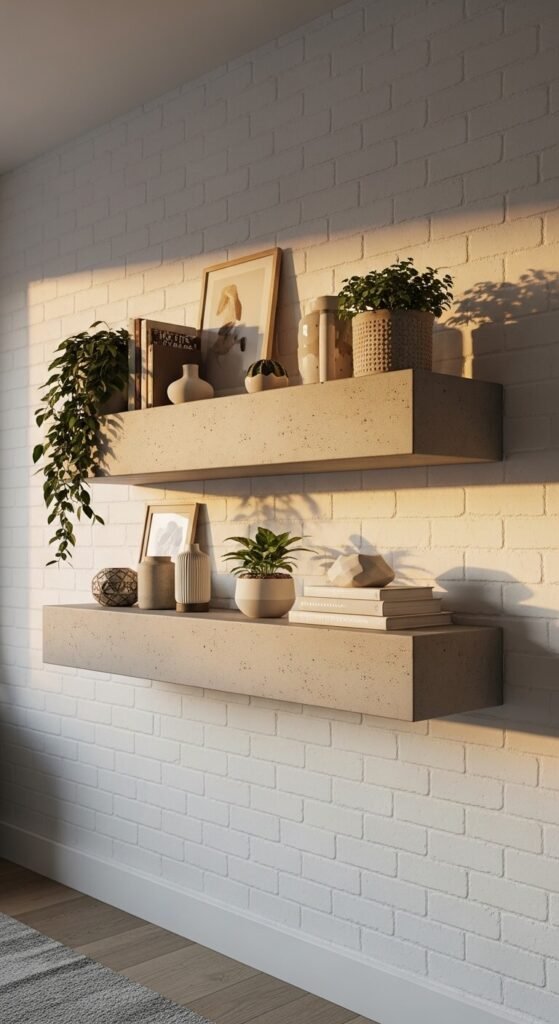
Thick concrete floating shelves have a presence that timber shelves simply don’t. Cast in a melamine-lined mold with embedded metal hanging hardware (threaded rod anchors set into the back edge while wet), these feel solid and permanent. The visual weight of a thick concrete shelf reads as intentional and considered. For a lighter option, use a concrete overlay over a hollow timber shelf — the look is identical, the weight much lower.
24. Concrete Soap Dispenser
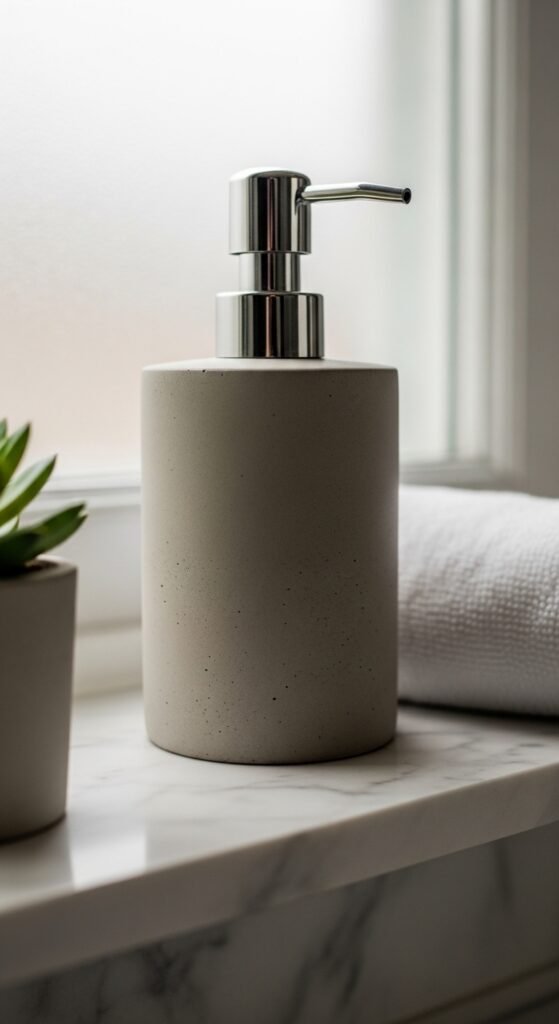
A concrete soap dispenser is the kind of small upgrade that makes a bathroom feel curated. Cast the body using a small plastic bottle as an interior mold and a PVC pipe as the exterior — the gap between them fills with concrete. Once cured, fit a standard pump mechanism through the top. These are also widely available pre-made for around $20–35. The weight and texture on the shelf communicates quality without any additional effort.
25. Concrete TV Console or Media Unit
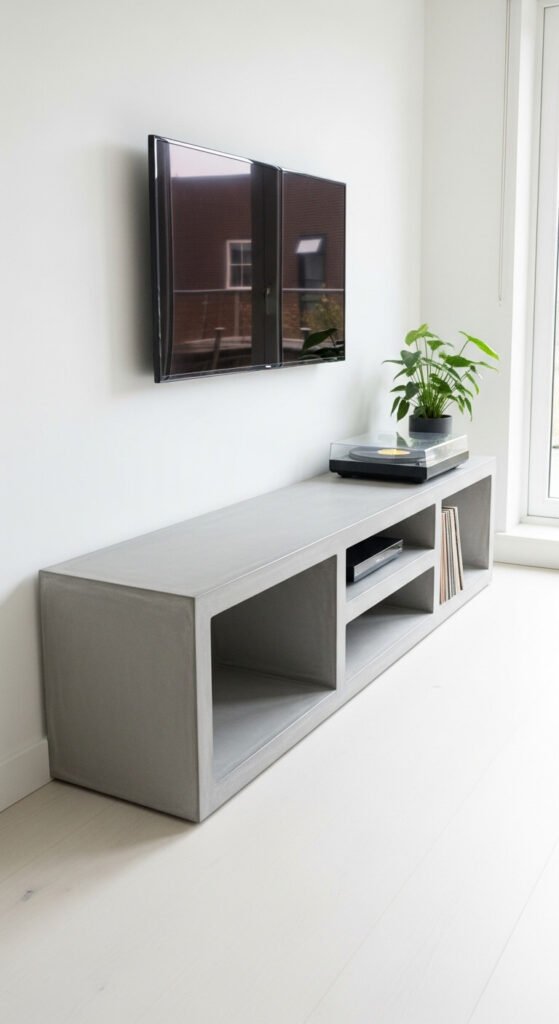
A concrete media console is a furniture statement. The options are cast-in-place over a timber frame (the frame stays inside as a structural core), or precast concrete panels assembled into a unit. Both approaches give that seamless slab-like look. Unlike timber, concrete doesn’t warp with heat from electronics. Add rubber feet to protect floors. The low, horizontal profile of a concrete media unit suits the proportions of a modern living room particularly well.
26. Concrete Framed Mirror
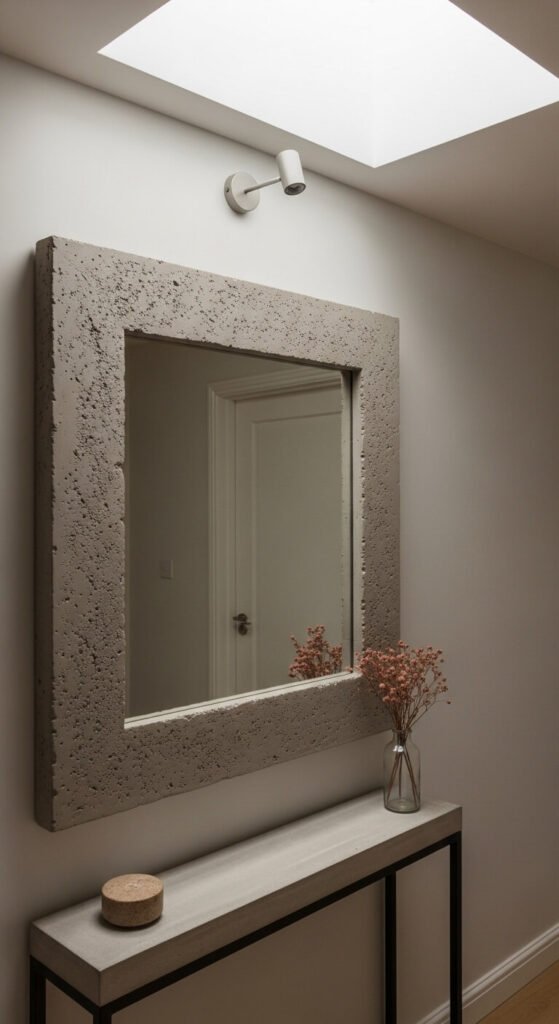
A mirror with a concrete frame adds industrial weight to an otherwise standard bathroom or hallway feature. You can cast a concrete frame around an existing mirror by building a mold around the glass edge and pouring directly — protect the mirror surface with masking tape first. Or buy a concrete-framed mirror from a homeware supplier. The thick, raw border draws the eye and makes the reflection feel framed by something real and tactile.
27. Concrete Outdoor Stepping Stones
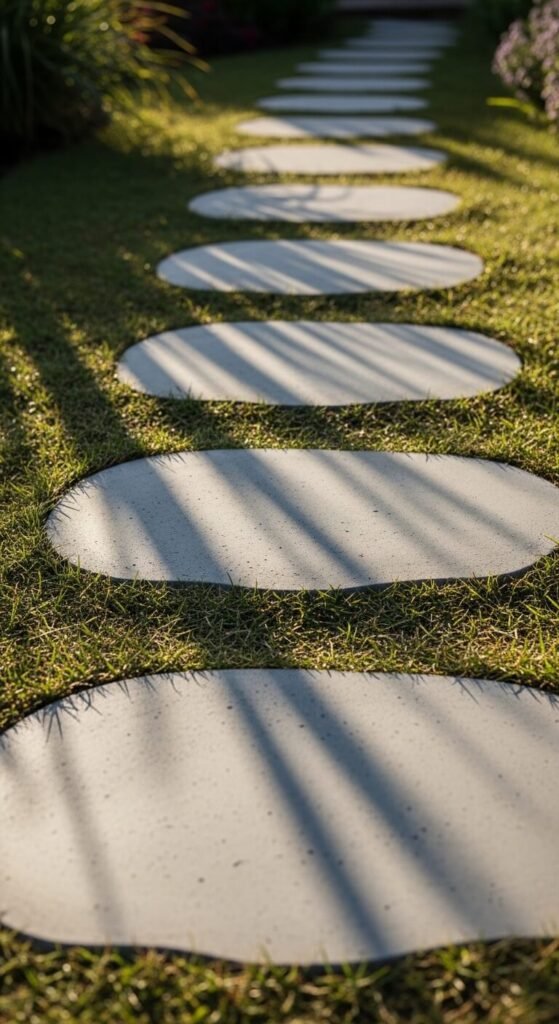
Concrete stepping stones are a weekend outdoor project with a long useful life. Use timber framing lumber to build simple square or rectangular molds, pour standard concrete mix, and smooth the surface with a float. Add a non-slip aggregate finish by pressing fine gravel into the wet surface. Let cure for a full week before placing. Irregular placement through a garden or lawn gives a naturalistic, intentional feel that complements planting rather than competing with it.
28. Concrete Kitchen Splashback
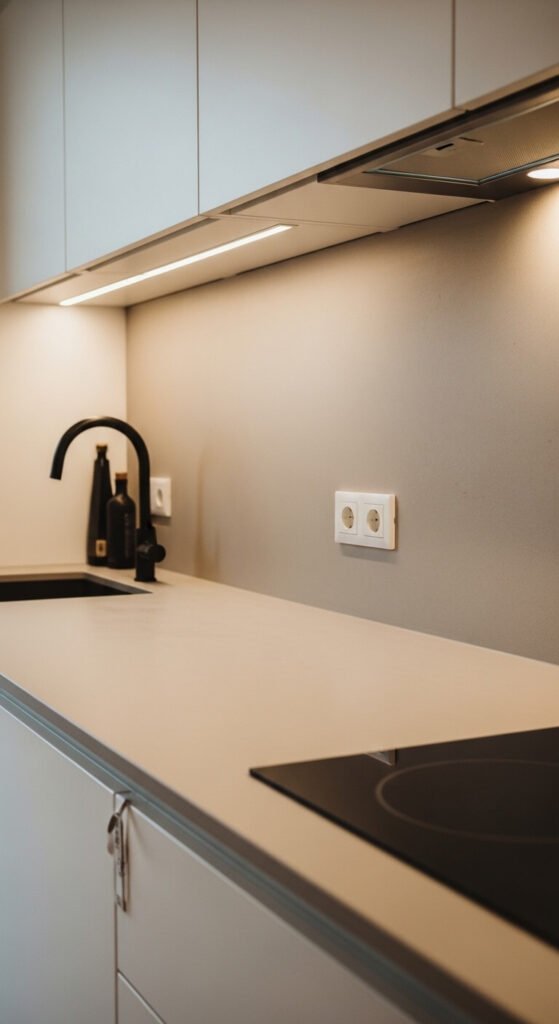
A microcement kitchen splashback is one of the cleanest looks in modern kitchen design. Unlike tiles, microcement creates a fully seamless surface with no grout lines to clean. It applies over existing tiles or bare plaster and cures to a durable, wipeable finish. The key is getting two or three thin coats rather than one thick application. Use a penetrating sealer rated for kitchen use. The seamless grey expanse behind a hob or sink reads as high-specification design.
29. Concrete Bedside Table
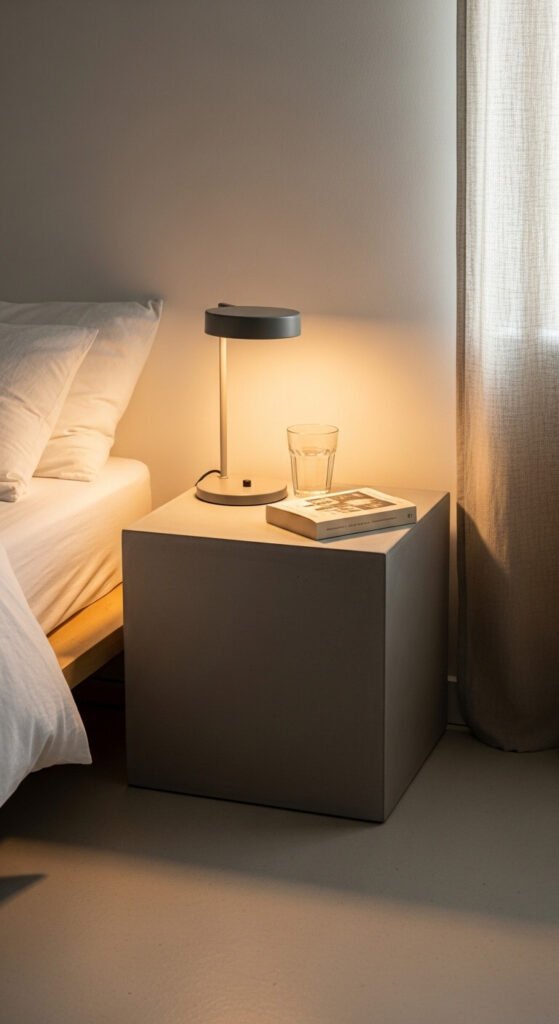
A concrete bedside table is small enough to be a manageable casting project but large enough to make a real impression in a bedroom. Cast in a simple box mold, roughly 35x35x40cm, using fiber-reinforced concrete for crack resistance. Add rubber feet to protect flooring and seal the surface to prevent dusting. The visual weight of concrete beside a light, linen-dressed bed creates a contrast that feels very deliberately styled. This is the kind of detail that makes a bedroom feel designed, not just decorated.
Conclusion
Concrete accents aren’t about making your home feel cold or industrial — they’re about bringing in honest materials that carry real weight and character. Whether you start with a $5 DIY planter or invest in a cast countertop, every concrete element you add gives your space a grounding quality that painted walls and lightweight furniture can’t deliver on their own. The raw texture, the muted grey tones, the satisfying heaviness of the material — it all adds up to a home that feels considered and lasting. Start with one piece, live with it, and you’ll likely find yourself reaching for more.