Your walls are blank canvases — and yet most of us stare at them for months before hanging a single thing. Sound familiar? The good news is that professional galleries have cracked the code on displaying art beautifully, and their secrets are surprisingly simple to steal. Whether you’re working with a single statement piece or an eclectic mix of frames you’ve collected over the years, these techniques will transform your walls from “meh” to museum-worthy.
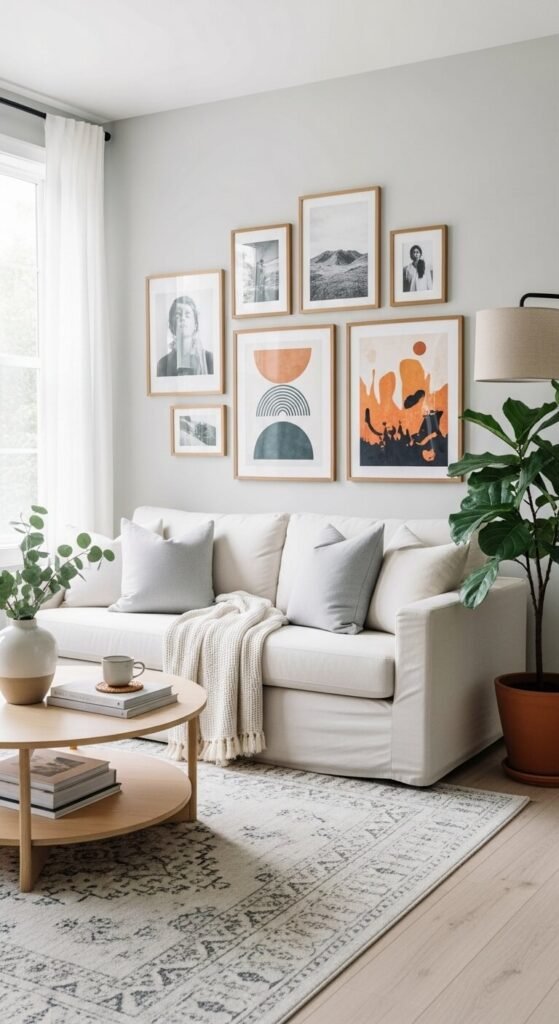
Start With the “Visual Weight” Rule
Before you hammer a single nail, think about visual weight — the way certain pieces feel heavier or lighter to the eye.
- Larger, darker, or busier pieces carry more visual weight.
- Smaller, lighter, or simpler pieces feel airy and delicate.
- The goal is balance, not symmetry. A large dark painting on the left can be balanced by two or three smaller pieces on the right.
Professional galleries never hang art randomly. They think of each wall as a composition, the same way a photographer thinks about a shot. Before anything goes up, lay all your pieces flat on the floor in front of the wall and experiment with arrangements.
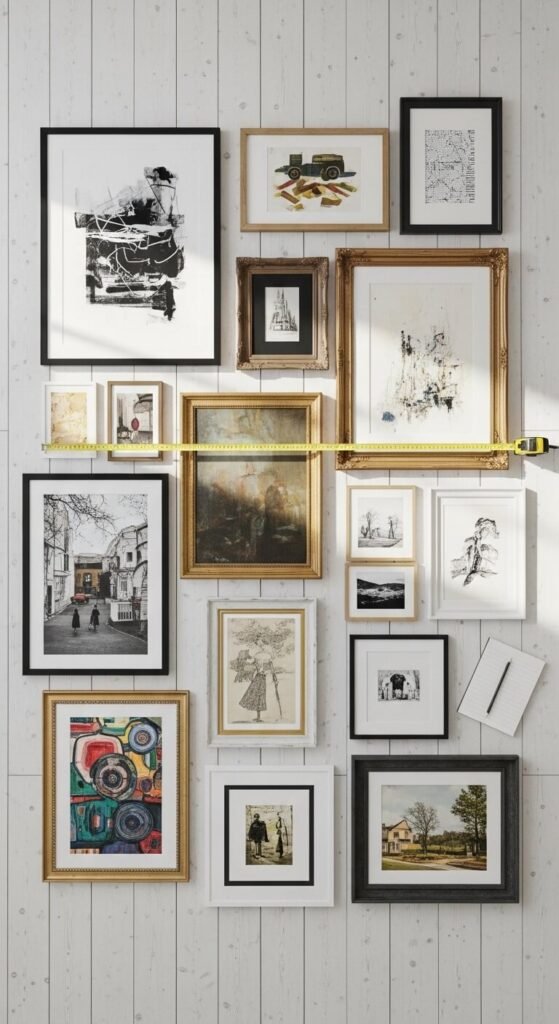
The Golden Rule: Eye Level Is Everything
Gallery curators follow one universal rule — hang art at eye level. The standard is the center of the artwork sitting at approximately 57–60 inches from the floor. This is the average human eye level and the height most major museums use.
Common mistakes to avoid:
- Hanging art too high (the most frequent error in homes)
- Placing pieces so low they compete with furniture
- Ignoring the relationship between furniture and art — ideally, the bottom of a frame should sit 6–8 inches above a sofa or console table
If you’re creating a gallery wall with multiple pieces, treat the entire arrangement as one single artwork, centering the grouping at eye level rather than each individual frame.
Master the Gallery Wall Layout
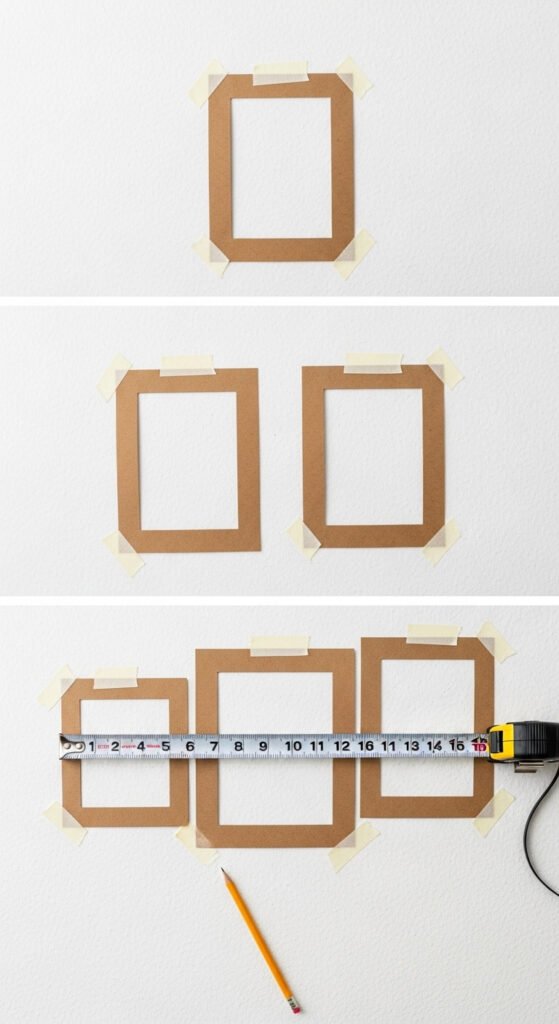
A curated gallery wall looks effortless — but it’s carefully planned. Here’s the professional method:
- Trace your frames onto kraft paper or newspaper and cut them out.
- Tape the paper templates to your wall with painter’s tape.
- Step back and evaluate — live with the layout for a day or two before committing.
- Nail through the templates so your holes are perfectly placed, then tear away the paper.
For the layout style itself, choose one of these tried-and-true gallery formats:
- Grid: Perfect rows and columns — clean, modern, and ideal for matching frames.
- Salon style: A richly layered, floor-to-ceiling mix of sizes and orientations — maximalist and dramatic.
- Linear: A single horizontal or vertical line of frames — sleek and architectural.
Mix Frames Like a Pro
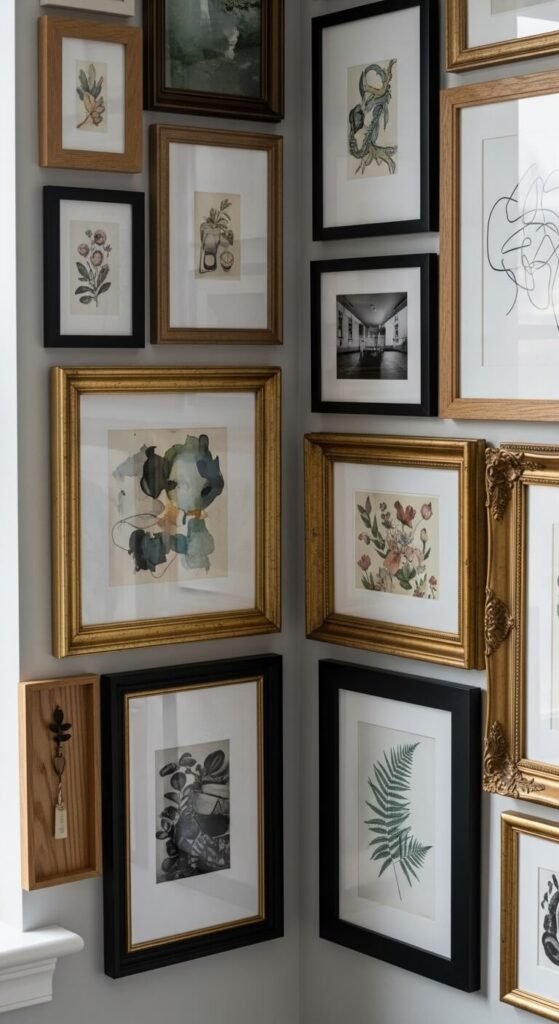
One of the biggest myths in home décor is that all your frames need to match. Galleries rarely use identical frames — instead, they create cohesion through color, finish, and intention.
Try these combinations:
- All black frames with varied sizes for a bold, graphic look
- Natural wood tones mixed with brass or gold for warmth
- Matte white and off-white frames for a soft, editorial feel
The trick is to pick one unifying element — whether that’s color, finish, or matting style — and let everything else vary freely. This gives the wall a collected, personal feel rather than a catalog-bought look.
Use Lighting to Elevate the Art
Even the most beautifully arranged wall falls flat without good lighting. Professional galleries use directional picture lights and track lighting to make each piece sing.
At home, you can recreate this effect with:
- Picture rail lights clipped above the frame
- Adjustable track lighting angled at a 30-degree angle toward the art
- Warm-toned bulbs (2700–3000K) to bring out rich colors in paintings and prints
Avoid hanging art in direct sunlight — UV rays fade prints and paintings over time. If a sunny wall is your only option, use UV-protective glass for your frames.
Save This for Your Next Rearranging Day!
Great gallery walls aren’t built in an afternoon — they evolve. Start with a few pieces you love, use these professional techniques as your foundation, and let the collection grow organically over time. The most stunning walls always tell a personal story.
Pin this article, grab your kraft paper and painter’s tape, and start planning your perfect arrangement today. Your walls have been waiting long enough. 🎨