Ever walked into a room and just felt like something was off? Maybe you’re constantly bumping into the coffee table, or your living room feels more like an obstacle course than a cozy hangout spot. The truth is, great furniture arrangement isn’t about having expensive pieces—it’s about creating a layout that actually works for how you live.
Whether you’re moving into a new space or giving your current room a refresh, smart furniture placement can completely transform how a room feels and functions. Let’s break down the essential steps to arrange any room like a pro.
[Image Prompt] A bright, airy living room with furniture arranged in a conversational grouping around a focal point fireplace, showing clear pathways between seating areas and an open, inviting flow.
Start with Your Room’s Purpose
Before you move a single piece of furniture, ask yourself: What actually happens in this room?
- Living rooms are for conversation, TV watching, or reading
- Bedrooms need to prioritize rest and storage
- Dining rooms are all about gathering and eating
- Home offices require focus and functionality
Once you’re crystal clear on your room’s main purpose, every furniture decision becomes easier. A bedroom that doubles as a workspace needs different arrangements than one that’s purely for sleeping.
Find Your Focal Point
Every well-arranged room has a star of the show—a focal point that anchors the entire space. This could be:
- A fireplace
- A large window with a great view
- Your TV or entertainment center
- A statement piece of art
- An architectural feature like built-in shelving
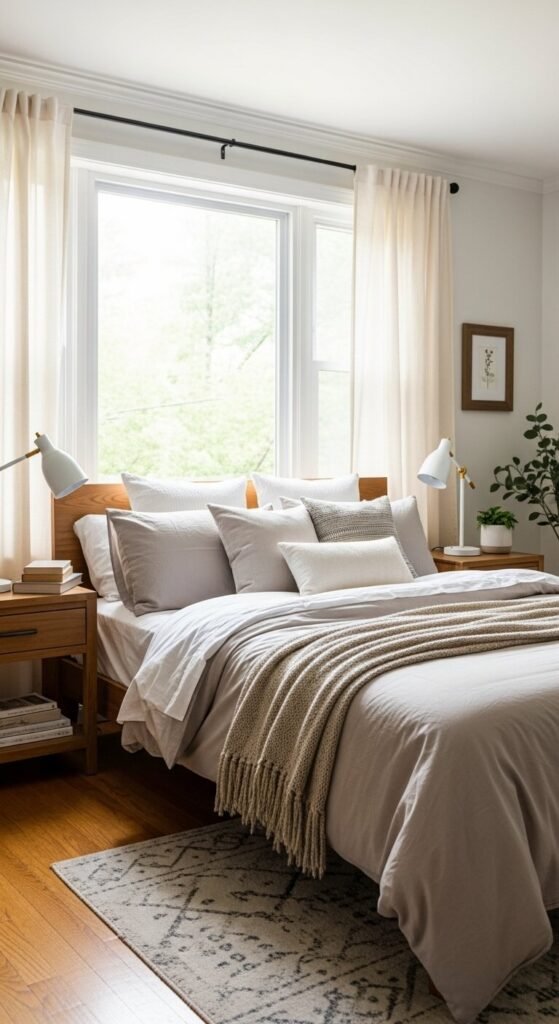
Arrange your main furniture pieces to face or complement this focal point. In living rooms, this usually means angling your sofa and chairs toward it. In bedrooms, your bed typically becomes the focal point itself.
Create Clear Pathways
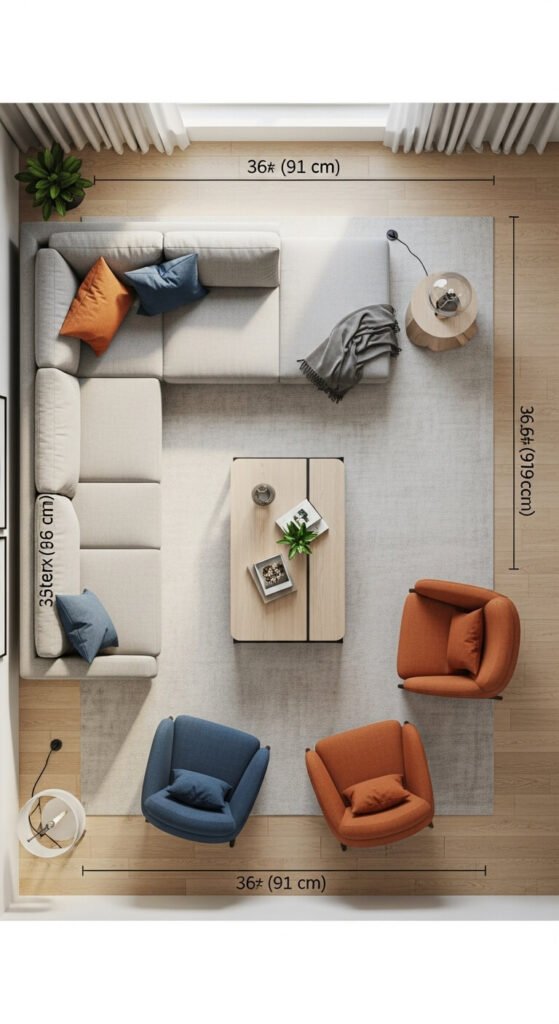
Here’s a game-changer: You need at least 30-36 inches of walking space between furniture pieces. This magic number ensures you can move through the room without doing an awkward sideways shuffle.
Think of your room’s traffic patterns like invisible highways:
- Where do people naturally enter and exit?
- What’s the most direct route through the space?
- Are there any bottlenecks you’re creating?
Float furniture away from walls when possible—yes, really! Pulling your sofa a few inches off the wall can actually make a room feel bigger and more intentional. Just make sure you’re not blocking natural pathways in the process.
Balance Your Layout
Visual balance keeps a room from feeling lopsided or chaotic. You don’t need everything to be perfectly symmetrical, but you do want to distribute visual weight evenly.
Try this trick: Stand in your doorway and imagine dividing the room into quadrants. Does one corner feel super heavy with furniture while another looks bare? Aim for a more even distribution.
Mix heights, textures, and sizes:
- Pair a tall bookshelf with a low-profile media console
- Balance a chunky sofa with lighter accent chairs
- Use vertical elements like floor lamps to add height where needed
Create Conversation Zones
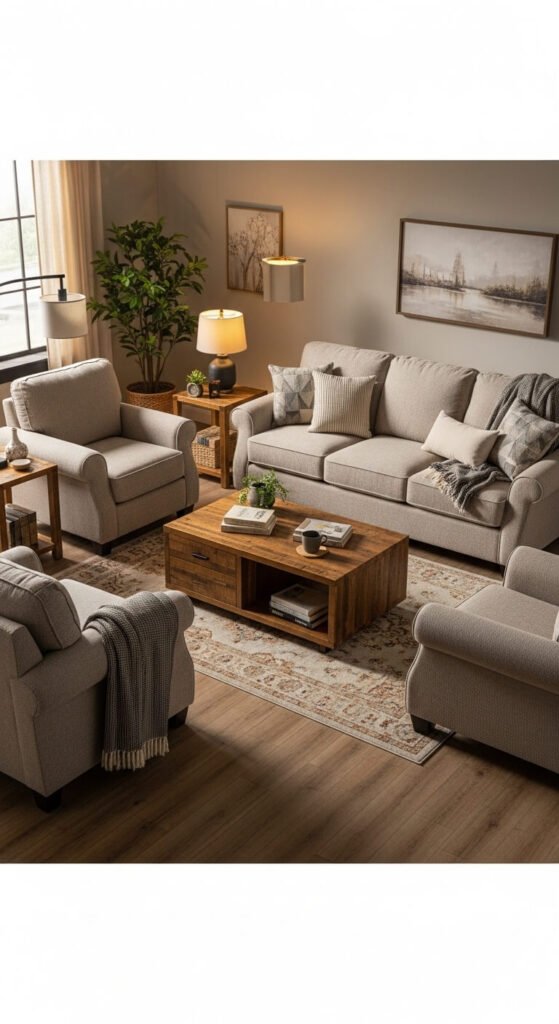
Nobody wants to shout across the room during game night. Arrange seating so people can actually talk without straining their necks or raising their voices.
The ideal distance between seating pieces? About 8-10 feet. Any closer feels cramped; any farther feels disconnected.
Consider creating multiple zones in larger rooms:
- A main seating area around the TV
- A reading nook by the window
- A game table in the corner
Measure Everything (Yes, Everything)
This step isn’t glamorous, but it’ll save you from so many headaches. Before you buy new furniture or start rearranging:
- Measure your room dimensions
- Note where windows, doors, and outlets are located
- Measure doorways and hallways (for moving furniture in!)
- Know the exact dimensions of your current furniture
Pro tip: Use painter’s tape on the floor to map out furniture footprints before committing to a layout. This lets you “see” the arrangement without the heavy lifting.
Don’t Forget Lighting and Breathing Room
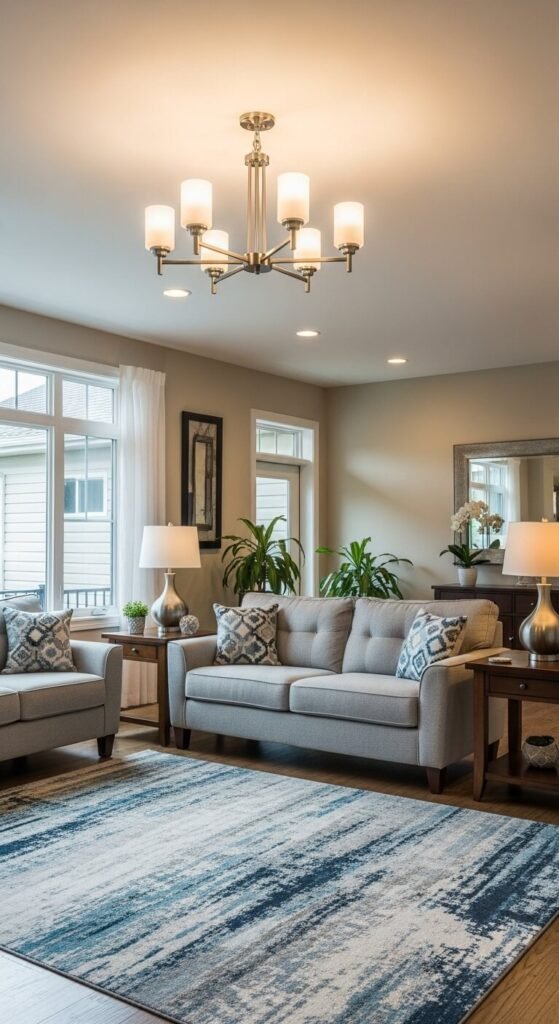
Even the best furniture arrangement falls flat without proper lighting. Layer your lighting with:
- Overhead fixtures for general illumination
- Table and floor lamps for task lighting
- Accent lighting for ambiance
And remember: Negative space is your friend. A room crammed with furniture feels chaotic, no matter how well it’s arranged. Leave some breathing room—your space will feel more open and intentional.
Ready to give your space a fresh start? Remember, great furniture arrangement is part science, part art—and totally achievable for anyone. Start with these principles, trust your instincts, and don’t be afraid to experiment until it feels just right.