Ever walked into a room and felt instantly drawn to a corner filled with lush greenery? That’s no accident—it’s the magic of strategic plant placement. Creating visual drama with plants isn’t just about choosing the right species; it’s about playing with height, texture, and layering to transform any space into a botanical masterpiece.

Whether you’re a seasoned plant parent or just starting your indoor jungle journey, mastering the art of height variation will take your plant displays from “nice” to “wow.” Let’s dig into how you can create eye-catching arrangements that bring depth, dimension, and that coveted Pinterest-perfect aesthetic to your home.
The Rule of Three: Your Foundation for Success
Think of arranging plants like styling a bookshelf—you need variation to keep things interesting. The rule of three is your best friend here:
- Tall plants (floor-standing, 4-6 feet): These are your anchors
- Medium plants (2-3 feet on stands or tables): Your supporting cast
- Low or trailing plants (ground-hugging or cascading): The finishing touches
This trio creates what designers call the “visual triangle,” naturally guiding the eye through your space. Start with one tall statement plant, add a medium-height companion, then fill in with smaller accents. It’s that simple!
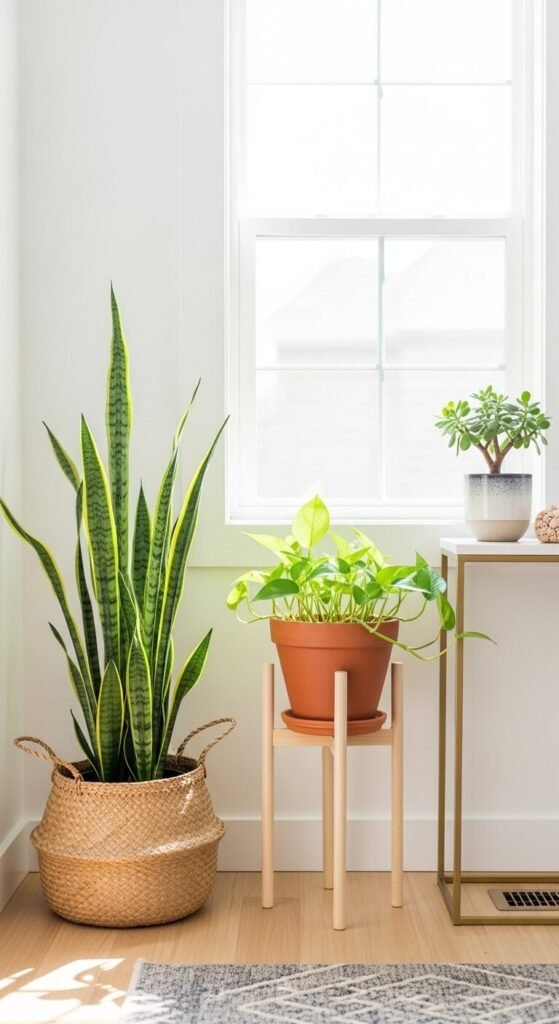
Elevate with Plant Stands and Stools
Plant stands are absolute game-changers. They instantly add architectural interest while solving that “everything’s at the same level” problem.
Mix different stand heights and materials:
- Tall bamboo stands for trailing plants (let those vines cascade!)
- Mid-height wooden stools for statement foliage
- Metal geometric stands for modern spaces
- Vintage ladders for multiple plants at staggered heights
Pro tip: Group three plants on stands of varying heights (say, 12″, 18″, and 24″) to create an instant focal point. The uneven heights create movement and keep your eye dancing around the display.

Work Your Vertical Space
Don’t forget to look up! Vertical space is prime real estate that most people completely overlook.
High shelves and tops of bookcases: Perfect for trailing plants like string of pearls, philodendrons, or pothos. Let them spill over for that effortless, overgrown look.
Wall-mounted planters: Install these at varying heights to create a living wall effect without the commitment of a full vertical garden.
Hanging planters: Suspend them at different drop lengths—one high in a corner, another lower near a window—to add dimension throughout the room.
The key is breaking up that boring middle zone where most furniture lives. By adding plants both above and below eye level, you create a fully immersive green space.
Create Depth with Strategic Placement
Height isn’t just about vertical measurement—it’s also about how far forward or back plants sit in your space.
Layer your plants from front to back:
- Place shorter plants at the front of tables or shelves
- Position medium plants slightly behind
- Tuck tall plants in the background
This creates a sense of depth that makes even small spaces feel lush and abundant. In corners, try placing a tall plant in the back corner with medium plants flanking the sides and small plants at the base—instant botanical paradise!

Mix Textures and Forms at Every Level
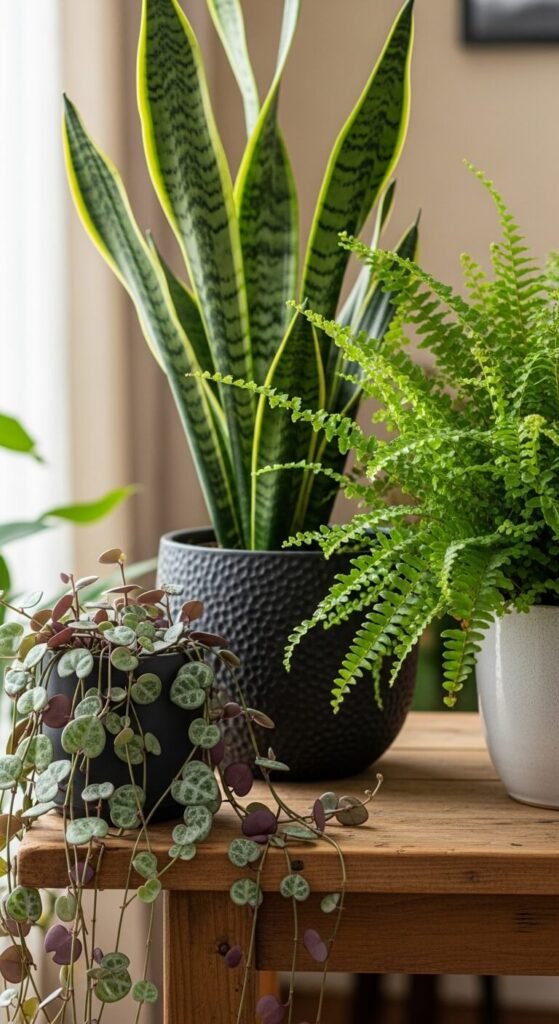
Height variation works best when paired with textural diversity. At each level of your arrangement, think about the plant’s form:
- Tall level: Upright and structural (fiddle leaf fig, snake plant, bamboo palm)
- Medium level: Full and bushy (monstera, rubber plant, Chinese evergreen)
- Low level: Spreading or trailing (pothos, spider plant, string of hearts)
This combination of heights AND textures creates visual richness that keeps the eye engaged. Avoid placing two plants with identical forms right next to each other—mix a spiky plant with something soft and trailing for contrast.
The Finishing Touch: Balance, Not Symmetry
Here’s the secret professional designers know: perfect symmetry can actually look stiff and boring. Instead, aim for visual balance.
If you have a tall plant on the left side of a room, balance it with a cluster of medium plants on the right. A heavy grouping in one corner can be balanced by a single dramatic tall plant on the opposite side. Think of it like balancing a scale—the weight should feel even, but the elements don’t need to mirror each other.
Play around with your arrangements. Step back, squint your eyes, and see where the visual weight falls. Adjust until it feels right—trust your instincts!
Your Plant Styling Journey Starts Now
Arranging plants at different heights transforms any space from flat and forgettable to dynamic and design-forward. Remember: tall anchors, medium supporters, low finishers, and plenty of vertical interest. Mix textures, create depth, and trust your eye.
Start with what you have, experiment with stands and shelves, and don’t be afraid to move things around until it feels just right. Your perfectly layered plant paradise is just a few strategic placements away!