Ever stared at a blank wall, hung something in the middle, and thought “that still looks… wrong”? You’re not alone. The secret most interior designers quietly use isn’t expensive art or a perfectly matched color palette — it’s a simple visual principle borrowed straight from photography: the Rule of Thirds. Master this one trick, and your walls will go from awkward to effortlessly curated.
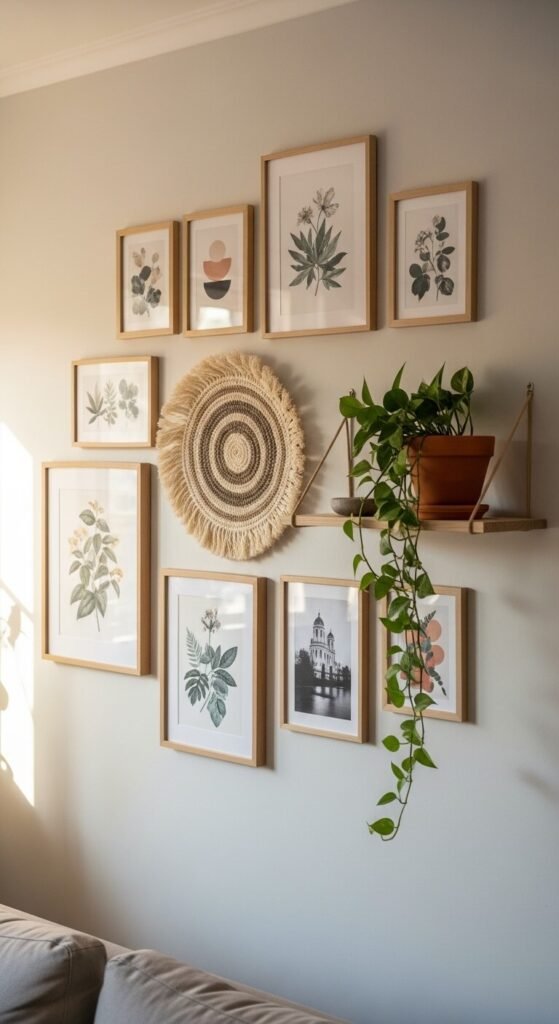
What Is the Rule of Thirds?
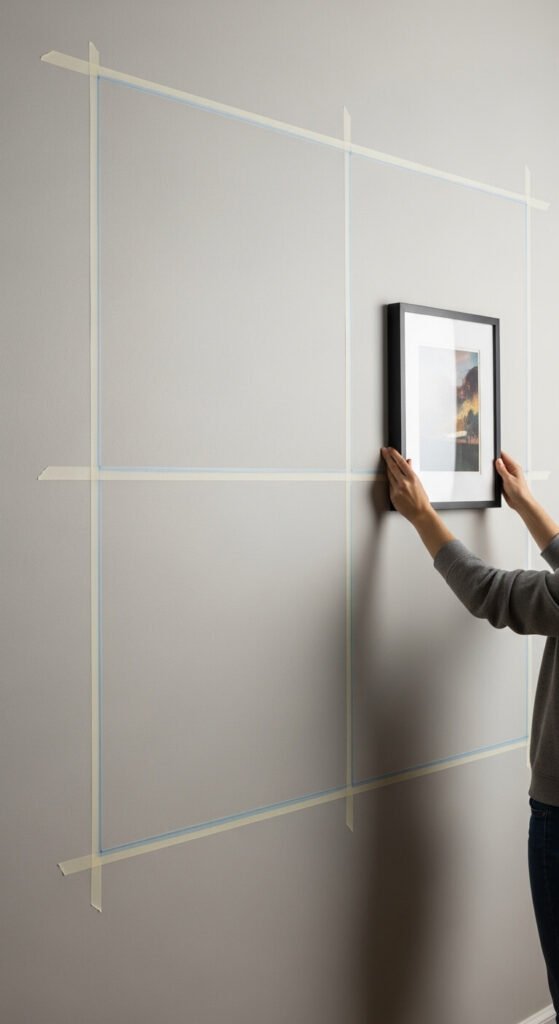
The Rule of Thirds divides any space — a canvas, a photo, a wall — into a 3×3 grid using two horizontal and two vertical lines. That gives you nine equal sections and, most importantly, four intersection points.
These intersections are where the human eye naturally lands first. Placing your focal pieces at or near these “power points” creates a composition that feels balanced and intentional without being stiff or perfectly symmetrical.
Think of it this way:
- Center-only arrangements feel static and flat.
- Rule of Thirds arrangements feel dynamic, layered, and alive.
Step 1 — Map Your Wall Into a Grid
Before you hammer a single nail, grab a measuring tape (or just eyeball it — yes, that works too).
- Mentally divide your wall into three equal columns and three equal rows.
- Identify the four intersection points — these are your visual “sweet spots.”
- Decide which intersection will anchor your largest or most eye-catching piece.
Pro tip: Use painter’s tape directly on the wall to mark your grid lines. It peels off cleanly and saves you from a wall full of ghost holes.
Step 2 — Choose Your Anchor Piece First
The Rule of Thirds works best when you start big and build outward. Your anchor piece — whether it’s a large framed print, a mirror, or a statement canvas — should sit at or near one of the four intersection points, not dead center.
- A piece anchored to the upper-left intersection draws the eye in from a natural reading direction.
- Anchoring to the lower-right creates a grounded, cozy feel — great for bedroom walls.
- Avoid centering the anchor unless you’re intentionally going for a formal, symmetrical look.
Step 3 — Layer in Supporting Pieces
Once your anchor is placed, fill the remaining grid sections with smaller supporting elements. These can be:
- Smaller framed photos or prints
- Woven baskets, macramé, or textile art
- Floating shelves with decorative objects
- Mirrors, clocks, or botanical prints
The key rule here: no section should feel completely empty, and no section should feel overcrowded. Aim for visual breathing room — let each piece have space to exist without competing.
Step 4 — Play With Height and Depth
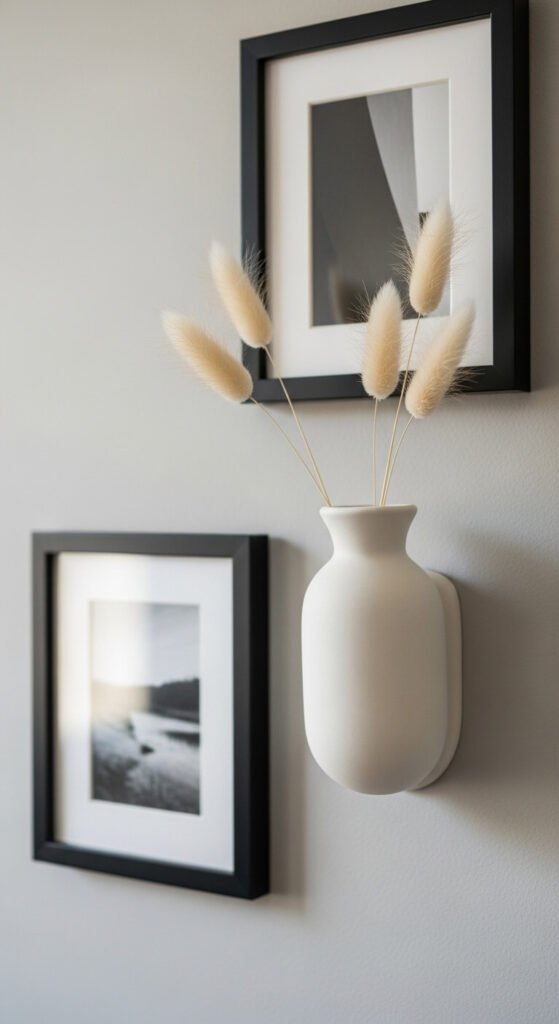
Flat arrangements = forgettable walls. Add visual depth by varying the height of your pieces across the grid:
- Hang some pieces higher in their grid section, others lower.
- Mix 2D pieces (prints, paintings) with 3D elements (shelves, baskets, sconces).
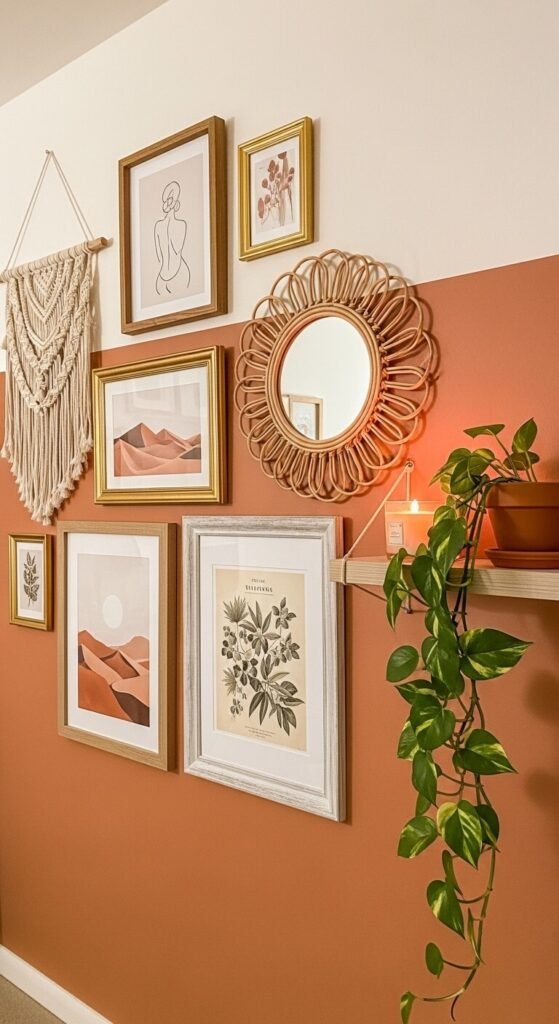
- Use odd numbers — groups of 3 or 5 items almost always look more natural than even groupings.
This layering effect mimics how our eyes move across a landscape, creating a wall that feels rich and lived-in rather than catalogue-perfect.
Step 5 — Step Back and Adjust
This is the most underrated step. Once everything is roughly in place:
- Stand back at least 8–10 feet and squint slightly — this blurs the details and lets you see the overall composition.
- Ask yourself: Does my eye travel across the whole wall, or does it get stuck in one spot?
- If something feels heavy or off, shift it one grid section over before deciding it’s wrong entirely.
Small adjustments make a huge difference. Trust your gut — the Rule of Thirds is a guide, not a rigid law.
The Takeaway
The Rule of Thirds is your cheat code for walls that look like they were styled by a pro. It’s not about perfection — it’s about intentional placement that guides the eye and creates harmony without rigidity.
Start with one wall, map your grid, anchor your hero piece off-center, and build outward with layers and varying heights. You’ll be amazed at how different the same pieces look once they’re placed with purpose.
Save this guide, pin it for your next room refresh, and go turn that blank wall into your favorite thing in the house. 🖼️