The right curtains can completely transform a room — and the wrong ones? They can quietly ruin everything you’ve worked so hard to design. Curtains are one of those interior details that people often treat as an afterthought, yet they frame your windows, soften your walls, and tie your entire color palette together.
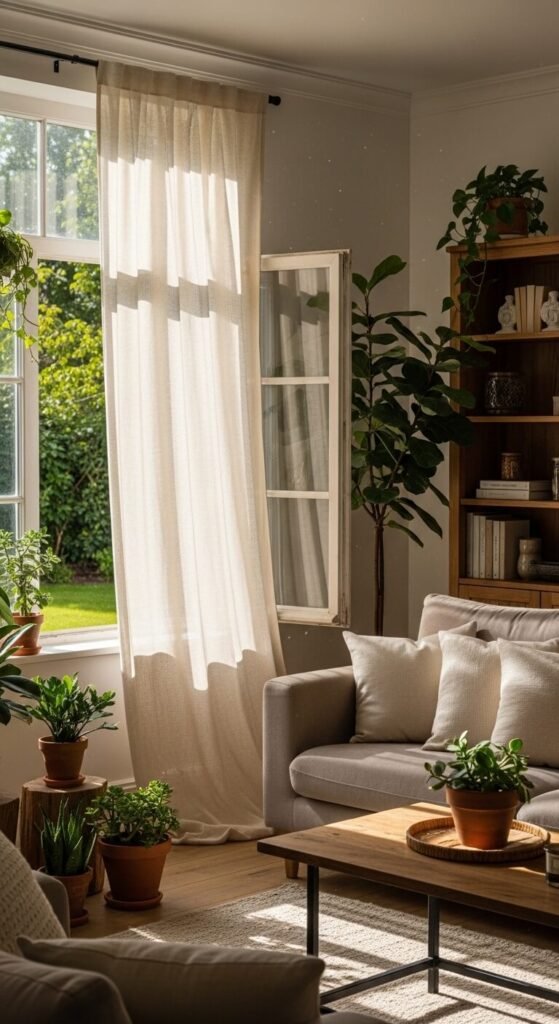
Whether you’re going for moody and dramatic or light and airy, this guide will walk you through every step of choosing curtains that make your space feel intentional, pulled-together, and utterly Pinterest-worthy.
Start With Your Room’s Existing Aesthetic
Before you even open a browser tab or step into a home store, take a good look at your room. Ask yourself:
- What’s the dominant color palette? (Warm tones, cool tones, neutrals?)
- What’s the overall vibe? (Minimalist, maximalist, bohemian, coastal, modern?)
- What textures are already present — linen, velvet, wood, metal?
Your curtains should feel like they belong in the room, not like they were added later. A room filled with rattan furniture and earthy tones calls for natural linen or cotton. A sleek, modern space with marble and matte black hardware? Crisp white or charcoal panels will feel right at home.
Get the Length and Hanging Height Right
This is where most people make a critical mistake — and it’s an easy fix once you know the rules.
Golden Rule: Always hang curtain rods 4–6 inches above the window frame, not directly on it. This tricks the eye into thinking the ceiling is higher than it actually is.
For length, here are your main options:
- Just to the floor — clean, classic, and works in almost any style
- Slight puddle (2–3 inches) — romantic and luxurious, perfect for bedrooms or formal spaces
- Floating (½ inch above floor) — practical for high-traffic areas like kitchens or kids’ rooms
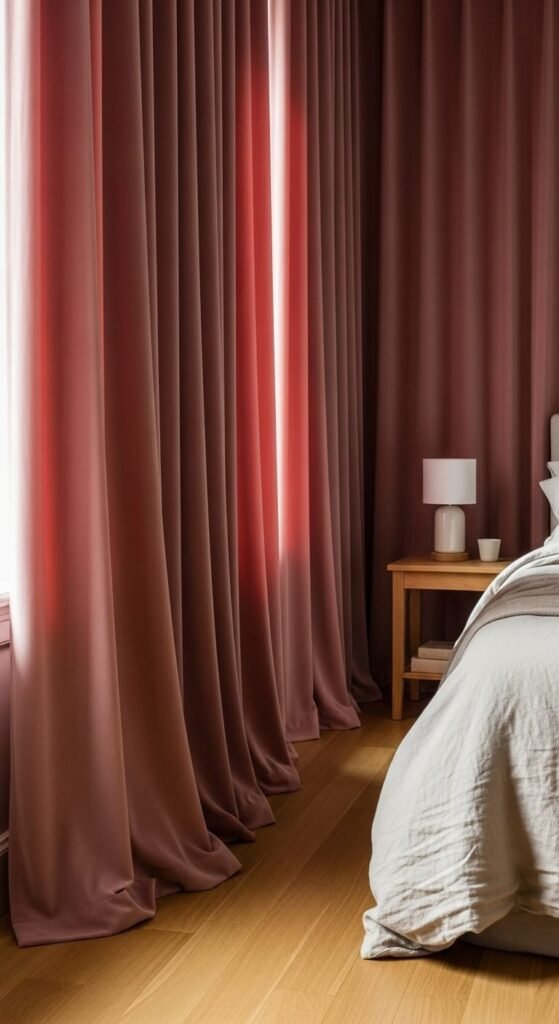
Avoid curtains that hover awkwardly mid-window or stop right at the sill — they make ceilings feel lower and rooms feel unfinished.
Choose Fabric Based on Function and Feel
The fabric you choose affects not just how the curtains look, but how the room feels to be in.
- Linen & Cotton — breathable, relaxed, ideal for casual or Scandinavian aesthetics
- Velvet — rich and insulating, perfect for dramatic or glam interiors
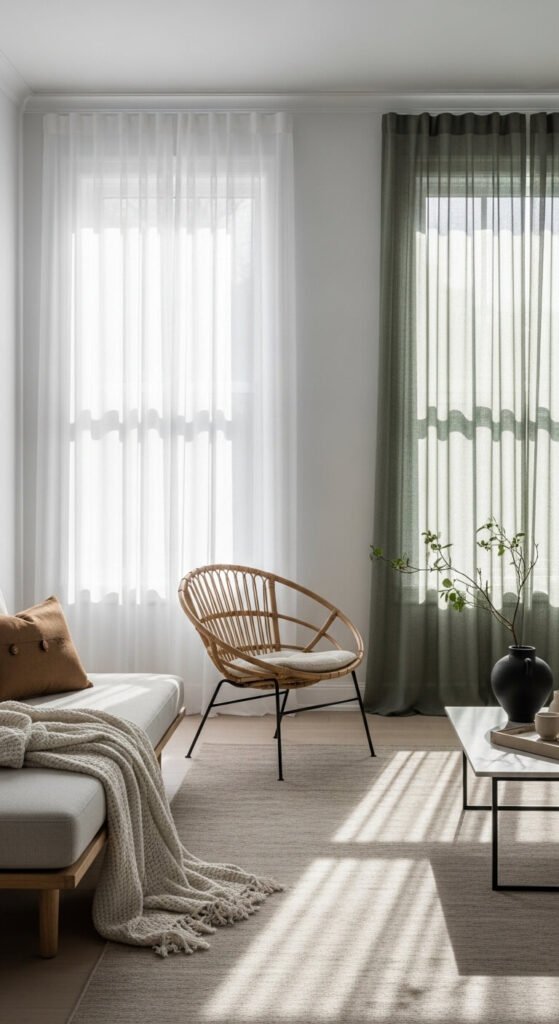
- Sheer Voile — lets in diffused light, great for layering or bohemian spaces
- Blackout Fabric — functional first, stylish second — best for bedrooms or media rooms
Don’t be afraid to layer — a sheer panel underneath a heavier drape gives you total control over light and privacy while adding visual depth.
Match (or Thoughtfully Contrast) Your Color Palette
Here’s a simple formula that works every time:
- Tone-on-tone — choose curtains one or two shades deeper than your wall color for a seamless, sophisticated look
- Neutral anchor — when your room has bold furniture or art, let the curtains stay quiet in cream, oatmeal, or soft grey
- Bold statement — if your walls and furniture are neutral, curtains in a deep jewel tone (emerald, navy, terracotta) become the focal point
Avoid matching curtains exactly to your walls — it tends to look flat rather than intentional.
Don’t Forget the Hardware
Curtain rods, rings, and finials are the jewelry of your window treatment. Brushed brass feels warm and elevated. Matte black is sleek and contemporary. Chrome reads as cool and modern.
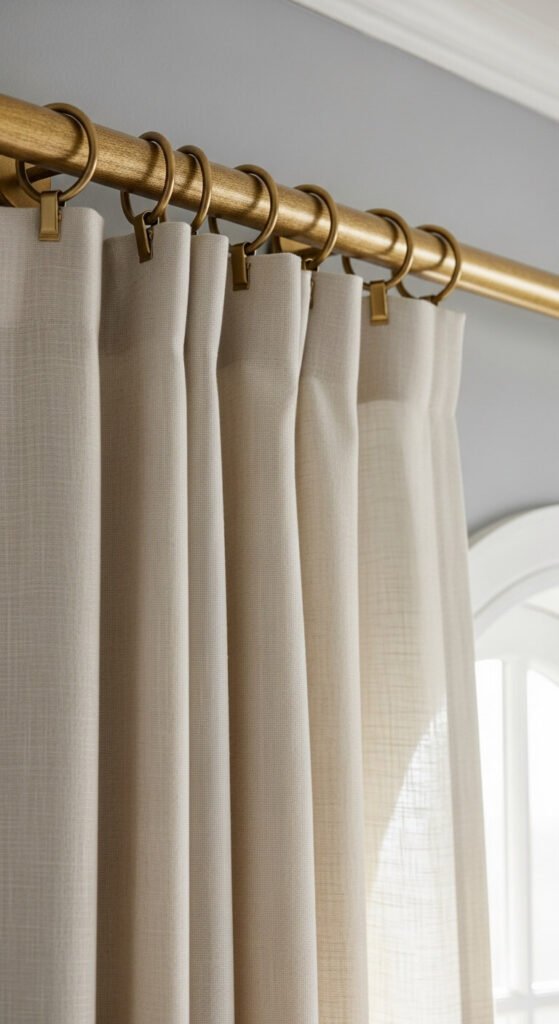
Match your hardware finish to other metals in the room — light fixtures, cabinet pulls, faucets — for a cohesive, designer-level look.
The Final Word
Choosing curtains doesn’t have to be overwhelming. Start with your aesthetic, get the proportions right, then layer in fabric and color with confidence. When in doubt, go longer, go lighter, and always hang higher than feels natural.
The perfect curtains are out there — and now you know exactly how to find them.