You know that Pinterest-perfect bookshelf look? The one where books are artfully arranged with pretty objects, everything has breathing room, and somehow it all looks effortlessly chic? Yeah, that’s not an accident. The difference between a styled bookshelf and a cluttered mess comes down to a few simple design principles that anyone can master—no interior designer required.
If your shelves currently look like a game of Tetris gone wrong, don’t worry. I’m breaking down exactly how to transform your bookshelf from chaotic to curated, one shelf at a time.
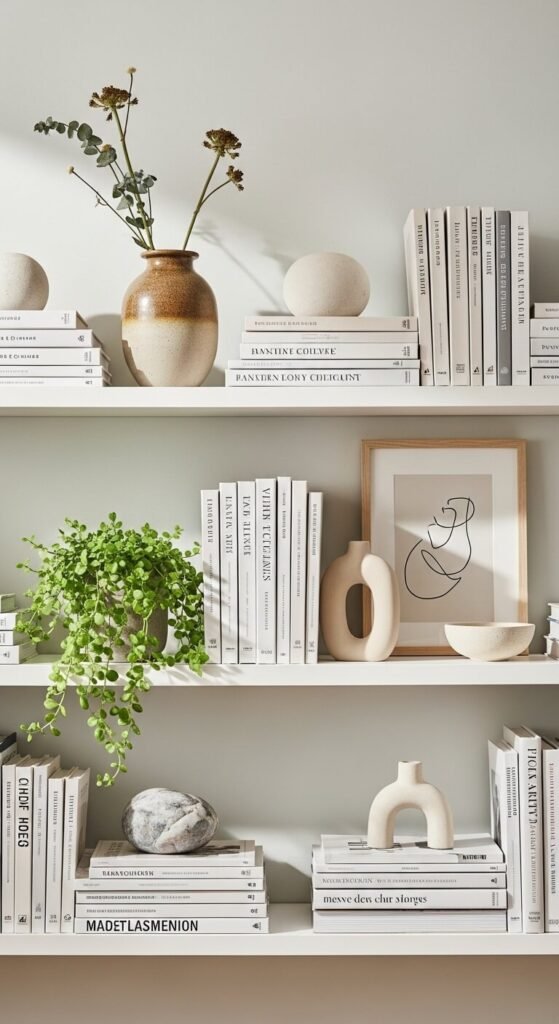
Start with a Clean Slate
Before you start styling, you need to empty everything off your shelves. Yes, everything. This gives you the chance to dust (let’s be honest, it’s been a while) and evaluate what you actually want to display.
As you remove items, sort them into three categories:
- Keep and display: Books you love, decorative objects that bring you joy
- Keep but store elsewhere: Reference books, paperwork, items you need but don’t love looking at
- Donate or toss: Anything you haven’t touched in over a year
This editing process is crucial. A styled bookshelf isn’t about fitting everything you own onto the shelves—it’s about showcasing your favorite pieces with intention.
Follow the Rule of Thirds
Here’s a game-changing tip: aim for roughly one-third books and two-thirds decorative space (including breathing room). This ratio keeps your shelves from looking like a library and gives you room to incorporate personality.
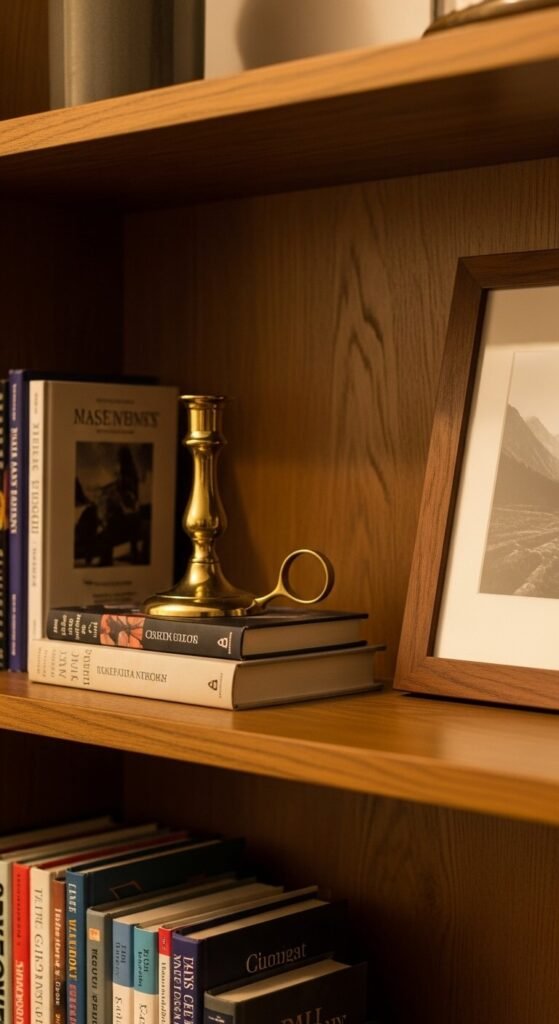
That “decorative space” includes actual objects AND empty space. White space is not wasted space—it’s what makes everything else look intentional rather than crammed.
Vary Your Book Arrangements
The secret to interesting bookshelves? Mix up how you arrange your books.
- Stack some horizontally in groups of 2-4 books—this creates different heights and platforms for small objects
- Line up others vertically like a traditional bookshelf
- Group books by color for a cohesive, visually calming look (yes, it’s okay to organize by color instead of author!)
- Face a few books outward to show off beautiful covers
Don’t let books dominate every inch of every shelf. Break up long rows with bookends or decorative objects to create visual interest.
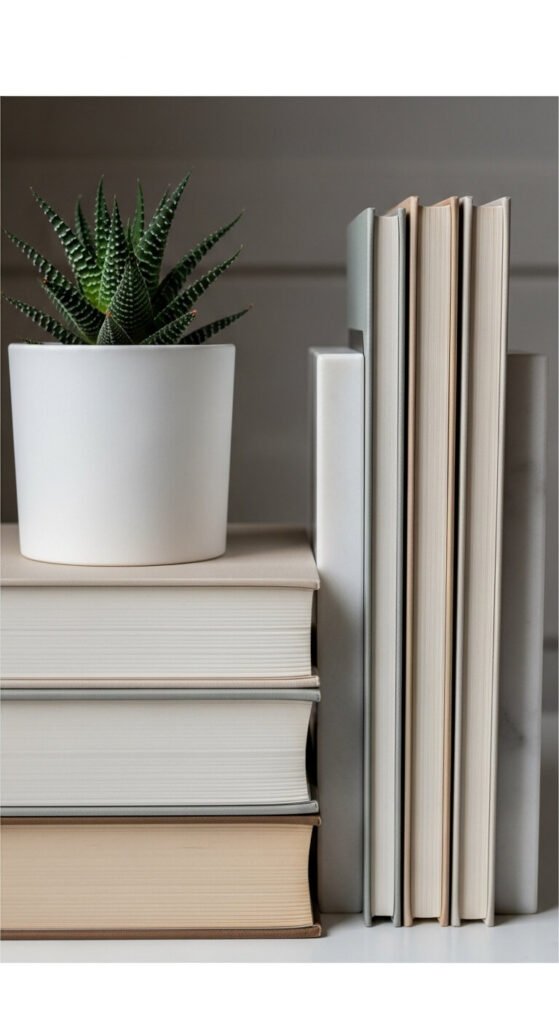
Add Decorative Objects Thoughtfully
This is where your personality shines through. Choose objects that mean something to you, but be selective. A few well-chosen pieces will always look better than a crowded collection.
Great items to include:
- Small plants or fresh greenery (real or faux—no judgment)
- Candles in interesting vessels
- Small sculptures or pottery
- Framed photos or art prints
- Vintage finds or travel souvenirs
- Decorative boxes (perfect for hiding small clutter)
Pro tip: Vary the height, texture, and shape of your objects. If everything is the same size and material, it’ll look flat and boring.
Create Layers and Depth
Instead of lining everything up against the back of the shelf, try layering objects. Lean a small piece of art behind a stack of books. Place a tall candlestick behind a small plant. This creates depth and makes your shelves feel more dynamic.
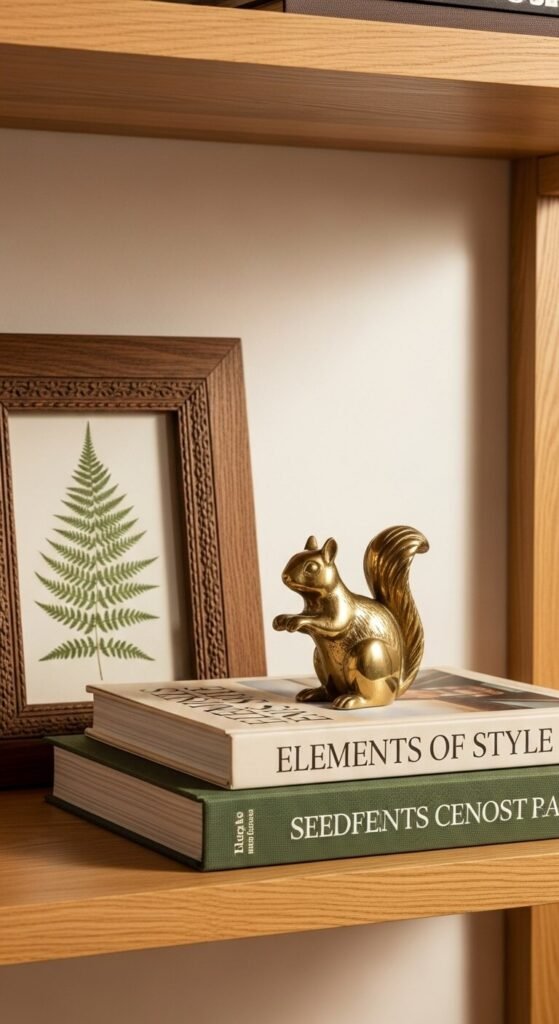
Just remember: you should still be able to see everything. Layering doesn’t mean hiding things completely.
Balance Each Shelf
Step back and look at each shelf individually. Does one side feel heavier than the other? Are all your tall items on the left? Balance doesn’t mean symmetry—it means visual weight is distributed evenly.
If you have a large object on the left, balance it with either another large object on the right OR a grouping of smaller items. Think of it like a scale.
Leave Breathing Room
This cannot be stressed enough: empty space is your friend. If every inch of your shelf is covered, it looks cluttered no matter how thoughtfully you’ve arranged things.
Aim to leave at least 20-30% of each shelf empty. This breathing room is what transforms “a lot of stuff” into “a styled vignette.”
Creating a beautifully styled bookshelf isn’t about having the perfect pieces—it’s about editing what you have, arranging thoughtfully, and giving everything room to breathe. Start with one shelf, step back and evaluate, then move to the next. Before you know it, you’ll have a bookshelf that looks like it belongs in a magazine spread.