You know that feeling when you walk into a room and it just breathes? Even if it’s not huge, it somehow feels open, airy, and inviting. That’s not magic—it’s smart design. And the best part? You don’t need to knock down walls or blow your budget to make your small space feel like it doubled in size overnight.
Whether you’re working with a tiny apartment, a cramped bedroom, or a cozy living room, these design tricks will help you create the illusion of space while keeping your style intact. Let’s dive in!
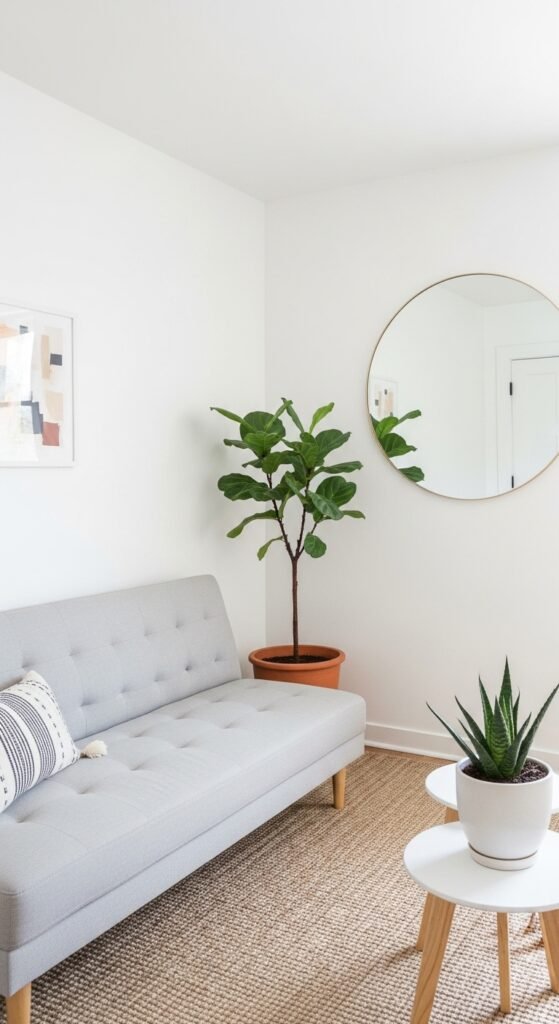
Choose Light Colors for Walls and Furniture
This is Interior Design 101, but it works like a charm. Light colors—think whites, creams, soft grays, and pastels—reflect light instead of absorbing it. This makes your walls “recede” visually, creating the perception of more space.
Pro tips:
- Paint your walls and ceiling the same light color to blur the boundaries of the room
- Choose furniture in similar light tones to keep everything cohesive
- Don’t be afraid of all-white—it’s not boring when you layer textures like linen, wood, and rattan
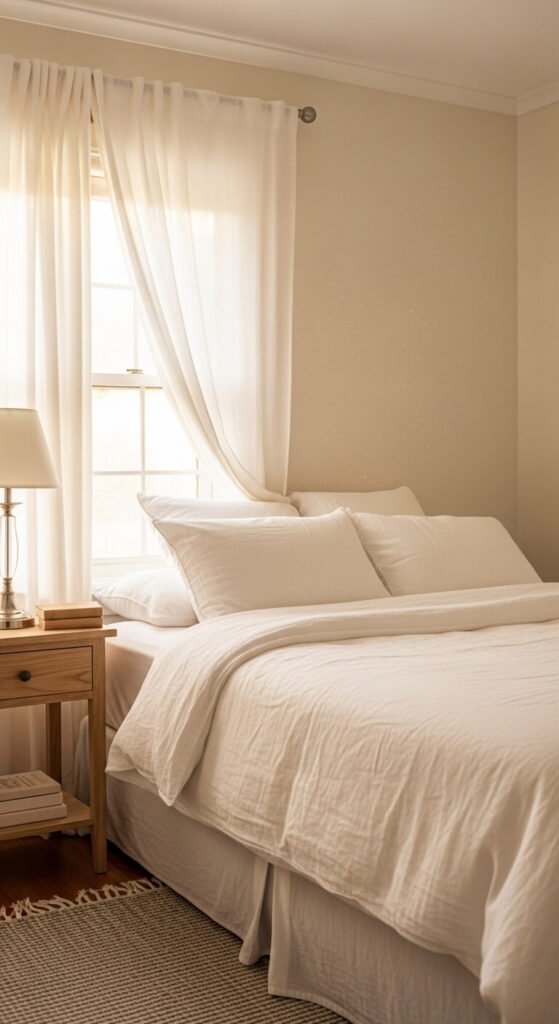
Use Mirrors Strategically
Mirrors are the secret weapon of small space decorating. They reflect light and views, instantly making a room feel larger and brighter. But placement is everything!
Here’s how to maximize their impact:
- Hang a large mirror opposite a window to bounce natural light around the room
- Use mirrored furniture (like a console table or closet doors) for subtle reflection
- Create a gallery wall with different-sized mirrors for visual interest
- Avoid placing mirrors where they reflect clutter—you’ll just double the mess!
Embrace Vertical Space
When you can’t go out, go up! Drawing the eye upward creates the illusion of height and makes ceilings feel taller than they actually are.
Smart vertical strategies:
- Install floor-to-ceiling curtains (even if your windows are shorter)
- Add tall bookshelves or storage units that reach the ceiling
- Hang artwork higher than you think—about 6-8 inches above furniture
- Use vertical striped wallpaper or patterns to elongate walls

Choose Furniture with Legs
Bulky furniture that sits directly on the floor makes a space feel heavy and cramped. Instead, opt for pieces with visible legs—sofas, chairs, tables, and even beds.
Why does this work? When you can see the floor underneath furniture, it creates visual flow and makes the room feel less cluttered. Bonus: it’s easier to clean under!
Best options:
- Mid-century modern style furniture (naturally elevated on legs)
- Glass or lucite tables that feel almost invisible
- Wall-mounted desks and floating shelves
Keep It Minimal (But Not Empty)
You’ve heard it before: less is more. But that doesn’t mean your space needs to look like a sterile showroom. The key is intentional minimalism—keeping only what you love and what serves a purpose.
How to curate your space:
- Follow the “one in, one out” rule when buying new items
- Display collections in groups rather than scattered around
- Use closed storage to hide everyday clutter
- Leave some surfaces completely clear for visual breathing room

Layer Your Lighting
Good lighting is transformative, especially in small spaces. Relying on a single overhead fixture creates harsh shadows and makes rooms feel flat and smaller.
Create depth with multiple light sources:
- Combine overhead lighting with table lamps and floor lamps
- Use wall sconces to save floor space while adding ambiance
- Install dimmer switches to control mood and brightness
- Place lamps in corners to push out the perceived boundaries of the room
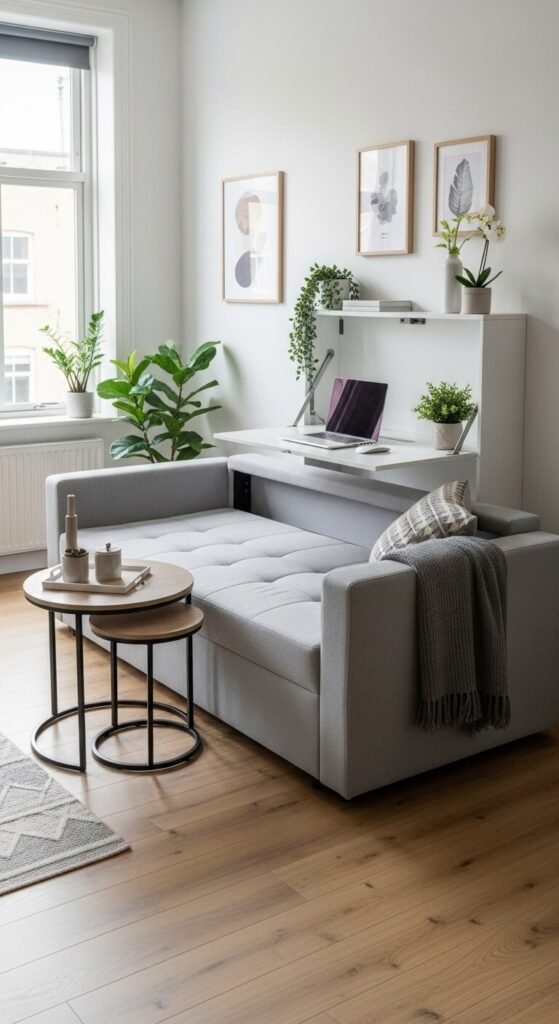
Use Multi-Functional Furniture
Every piece in a small space should earn its keep. Multi-functional furniture lets you have it all without overcrowding.
Smart picks:
- Ottoman with hidden storage that doubles as a coffee table
- Murphy bed or sofa bed for studio apartments
- Nesting tables you can pull out when needed
- Dining table that extends for guests
Final Thoughts: Small Space, Big Impact
Decorating a small space doesn’t mean sacrificing style or comfort—it’s about being smart with your choices. Light colors, strategic mirrors, vertical thinking, and the right furniture can completely transform how your space feels.
Remember: it’s not about the square footage you have, but how you use it. Start with one or two of these tricks, see what works for your space, and build from there.