Walk into any beautifully designed room and chances are, a mirror played a starring role. Mirrors are one of the most underrated decorating tools — they’re part art, part architecture, and completely transformative. Whether you’re working with a cramped studio apartment or a dim hallway that feels like a cave, the right mirror in the right spot can make your space feel twice as large and twice as bright. Ready to unlock this design secret?
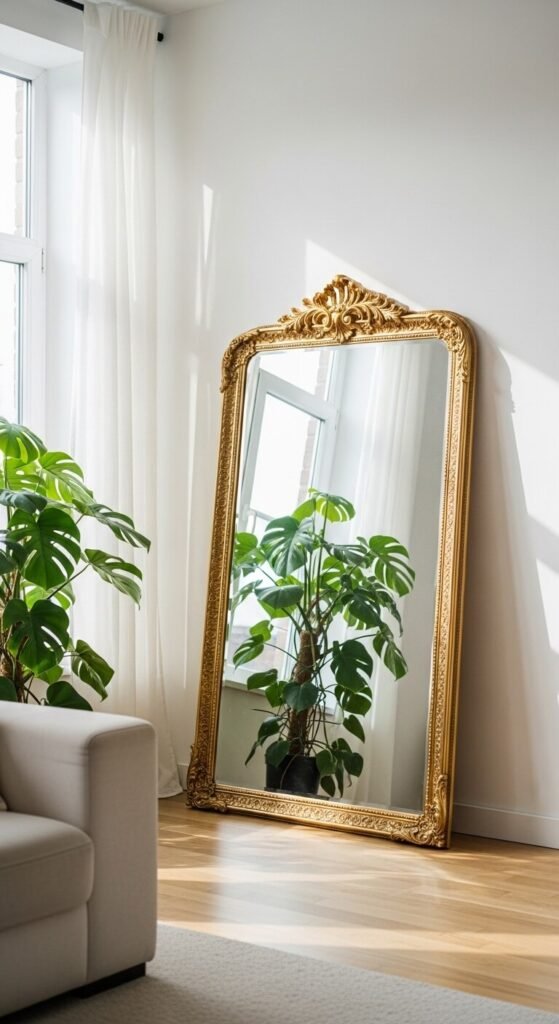
Choose the Right Size (Bigger Is Almost Always Better)
One of the biggest mirror mistakes people make is going too small. A tiny mirror on a large wall looks timid and does almost nothing for light or space.
- In living rooms, lean toward oversized mirrors — think at least 24″ x 36″ or larger.
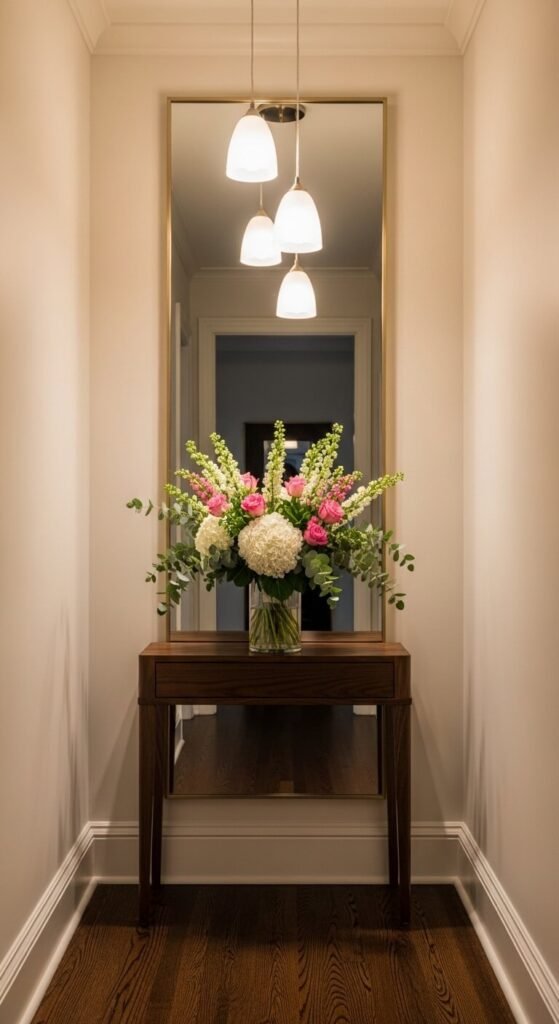
- In hallways, a full-length mirror can completely open up the space.
- In dining rooms, a wide horizontal mirror above the sideboard creates a luxurious, expansive feel.
The golden rule: when in doubt, size up.
Position Mirrors to Capture and Bounce Light
Placement is everything. A mirror hung on a dark interior wall won’t do much — but position it strategically and watch the magic happen.
The best spots to place mirrors for maximum light:
- Directly across from a window — This is the classic move. The mirror catches natural light and throws it back into the room.
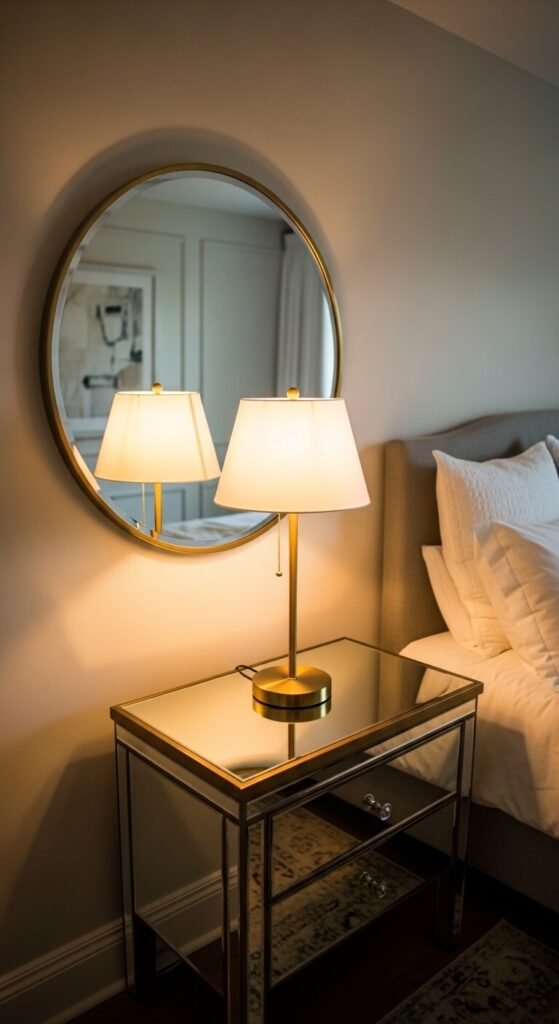
- Adjacent to a lamp or sconce — Perfect for evenings; the mirror multiplies artificial light beautifully.
- At the end of a narrow hallway — Draws the eye forward and makes the corridor feel longer and brighter.
Use Mirrors as Focal Points, Not Afterthoughts
Stop treating mirrors like fillers. Lean into them as statement pieces.
- A sunburst mirror above a fireplace becomes instant wall art.
- A collection of small decorative mirrors arranged in a gallery-wall style adds personality and dimension.
- A leaning floor mirror in the bedroom corner adds height and a relaxed, editorial feel.
Think of your mirror the way you’d think of a painting — it deserves a prime spot on your best wall.
[Image Prompt] A gallery wall arrangement of five mismatched decorative mirrors in varying shapes — round, arched, hexagonal — hung on a warm beige wall above a linen sofa with neutral cushions.
Match the Frame to Your Aesthetic
The mirror itself amplifies light, but the frame tells your design story.
| Style | Frame to Choose |
|---|---|
| Modern / Minimalist | Thin black metal or frameless |
| Bohemian | Rattan, macramé, or raw wood |
| Glam / Art Deco | Antique gold or brass |
| Rustic / Farmhouse | Whitewashed or reclaimed wood |
| Coastal | Rope-wrapped or driftwood |
A well-chosen frame elevates a mirror from functional to fabulous.
Layer Mirrors with Other Reflective Surfaces
Want to go all in? Mix mirrors with other light-bouncing elements for a compounding effect.
- Metallic accents like brass vases or chrome lamps work in harmony with mirrors.
- Glass coffee tables keep the floor visible and make the room feel more open.
- Mirrored furniture — a bedside table or cabinet — adds depth without overwhelming.
Just be careful not to overdo it. Two or three reflective elements per room is the sweet spot.
Avoid Common Mirror Mistakes
A few things to watch out for:
- Don’t reflect clutter — Mirrors amplify everything, including mess. Make sure yours is reflecting something beautiful.
- Avoid placing mirrors directly facing each other — The endless reflection tunnel can feel unsettling.
- Don’t hang mirrors too high — The center of the mirror should sit at roughly eye level (around 57–60 inches from the floor).
The Takeaway
Mirrors are one of the most affordable, flexible, and impactful tools in any decorator’s toolkit. With the right size, placement, and frame, a single mirror can transform a dark, cramped room into a bright, airy retreat — no renovation required.