There’s something magical about walking into a space filled with lush greenery—the air feels fresher, the atmosphere calmer, and suddenly, your home feels like a retreat. If you’ve been scrolling through Pinterest dreaming of that jungle-chic vibe, you’re in the right place. Transforming your home into a green oasis isn’t just for expert gardeners or people with endless budgets. With a few strategic choices and creative placement, you can bring life, color, and personality into every corner of your space.
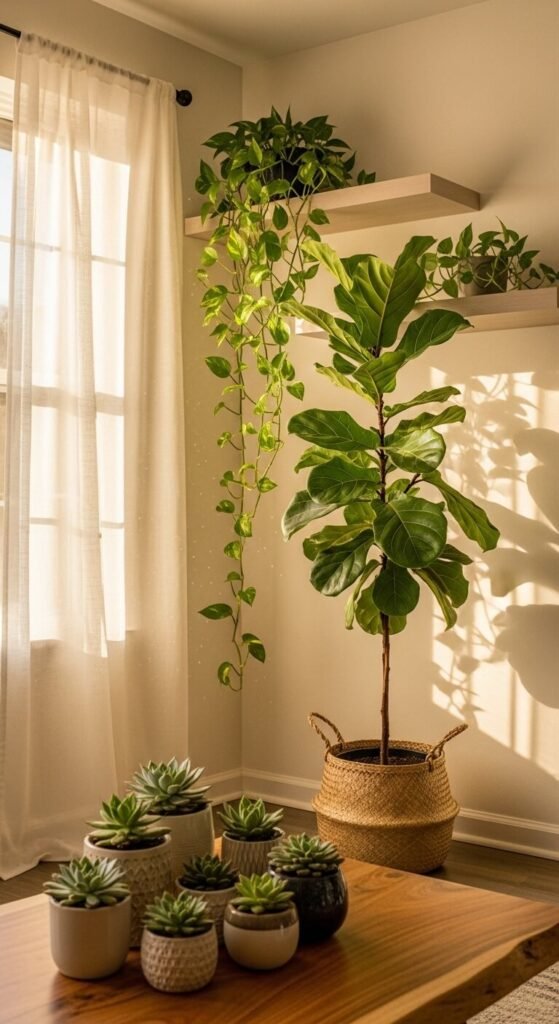
Ready to turn your home into a botanical paradise? Let’s dig in.
Start With the Right Plants for Your Space
Not all plants are created equal, and the first step to success is choosing varieties that actually thrive in your home’s conditions.
Consider your lighting:
- Bright, direct light: Snake plants, succulents, cacti, and fiddle leaf figs
- Indirect or medium light: Pothos, philodendrons, spider plants, and peace lilies
- Low light: ZZ plants, snake plants (yes, they’re versatile!), and cast iron plants
Think about your lifestyle: If you travel often or tend to forget watering, opt for low-maintenance plants like pothos, snake plants, or succulents. They’re forgiving and practically thrive on neglect.
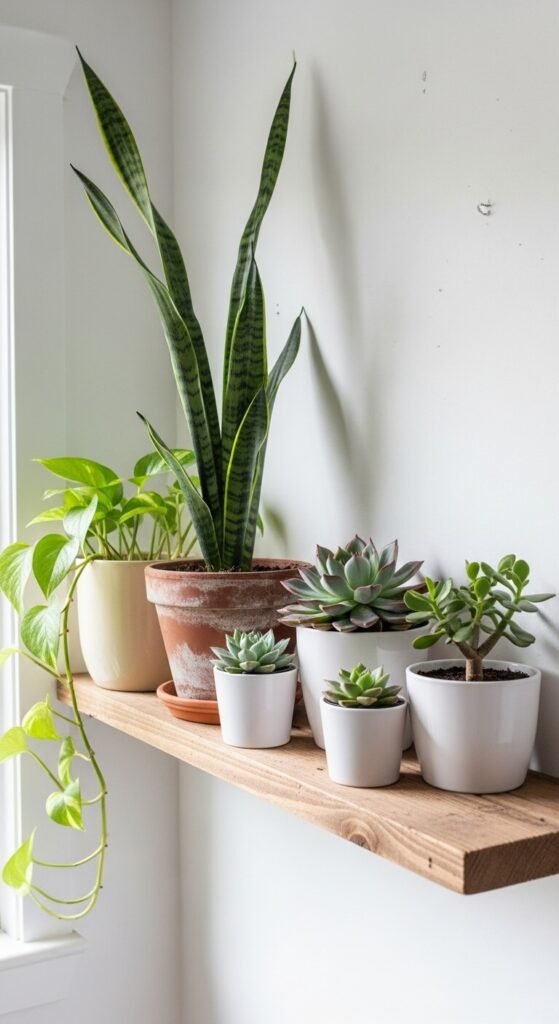
Create Visual Layers With Different Heights
One of the biggest mistakes people make is placing all their plants at the same level. To create that lush, dimensional look, think in layers.
Mix it up:
- Use tall floor plants like fiddle leaf figs, bird of paradise, or rubber trees to anchor corners
- Place medium-sized plants on plant stands, side tables, or credenzas
- Add trailing plants on shelves, wall-mounted planters, or hanging baskets
This layered approach mimics how plants grow in nature and creates visual interest that draws the eye throughout the room.
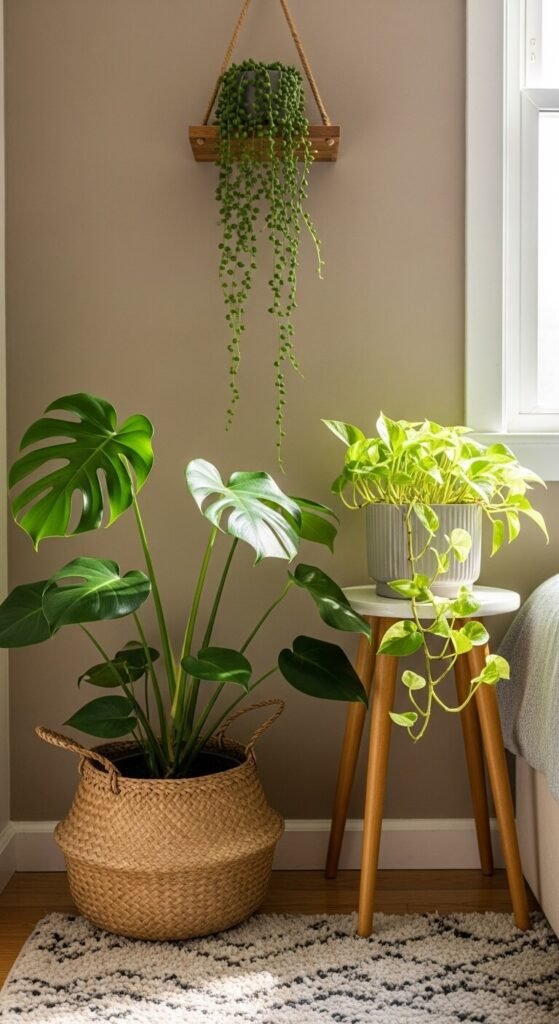
Choose Planters That Match Your Style
Your planters are just as important as the plants themselves—they’re the jewelry of your green oasis.
Style guide:
- Modern/minimalist: White ceramic pots, concrete planters, or sleek black containers
- Bohemian: Woven baskets, macramé hangers, and terracotta with natural textures
- Scandinavian: Light wood stands with simple white or gray pots
- Eclectic: Mix and match vintage finds, colorful glazed ceramics, and unique thrifted containers
Don’t be afraid to repurpose items you already own—vintage tins, ceramic bowls, or even teacups can become charming planters for small succulents.
Designate a Plant Corner or Statement Wall
Sometimes the biggest impact comes from clustering plants together rather than spreading them thin throughout your home.
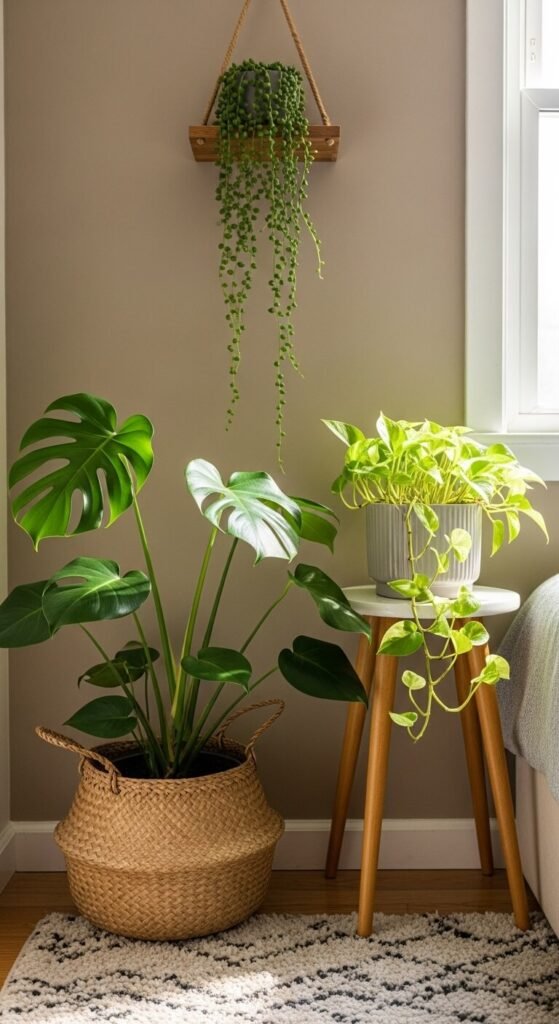
Create a designated “plant corner” by grouping 5-10 plants of varying heights in one area. This creates an instant focal point and makes plant care easier since everything’s in one spot.
Another showstopper option? A living wall or vertical garden. You can use:
- Wall-mounted planters in a grid pattern
- A large shelving unit styled exclusively with plants
- Hanging planters at staggered heights
Don’t Forget These Often-Overlooked Spaces
Your bathroom, kitchen, and entryway are prime real estate for plants that often get ignored.
Bathroom: The humidity makes it perfect for ferns, orchids, and peace lilies. Place them on the counter, windowsill, or even on a shower shelf (if there’s enough light).
Kitchen: Grow fresh herbs like basil, rosemary, and mint on your windowsill—functional AND beautiful.
Entryway: Make a statement immediately with a tall plant near the door or a collection of small plants on a console table.
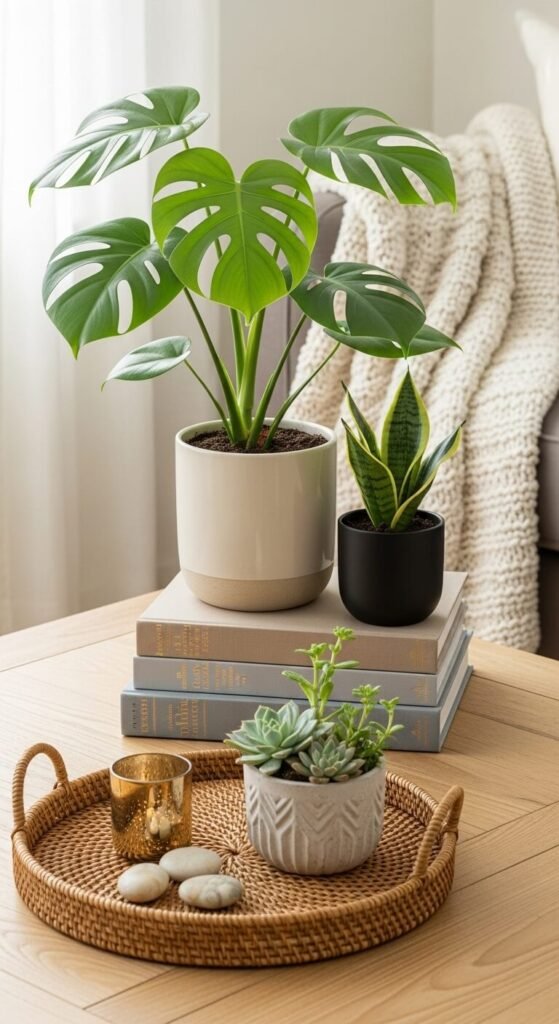
Style Your Plants Like a Pro
The finishing touches matter. Here’s how to make your plants look Instagram-worthy:
- Group plants in odd numbers (3, 5, or 7 looks more natural)
- Mix different leaf shapes and textures for contrast
- Add decorative elements like pebbles, moss, or small stones on top of the soil
- Use plant stands and risers to create elevation
- Keep leaves clean and dust-free for that healthy, glossy look
Keep Your Oasis Thriving
The secret to a long-lasting green oasis? Consistent care without overthinking it.
- Water most plants when the top inch of soil feels dry
- Rotate plants occasionally so all sides get light
- Fertilize during growing season (spring and summer)
- Prune dead leaves to keep plants looking fresh
- Watch for signs of overwatering (yellow leaves) or underwatering (crispy, brown edges)
Transforming your home into a green oasis doesn’t happen overnight, but that’s part of the fun. Start with a few easy-care plants, experiment with placement, and watch as your space evolves into the peaceful, vibrant sanctuary you’ve been dreaming about. Your home (and your mental health) will thank you.