Your tiny room doesn’t need a renovation — it needs a little visual magic. The truth is, professional interior designers use simple optical illusion tricks every day to make cramped spaces feel open, airy, and surprisingly spacious. And the best part? Most of these tricks cost little to nothing. Ready to fool the eye and transform your space?
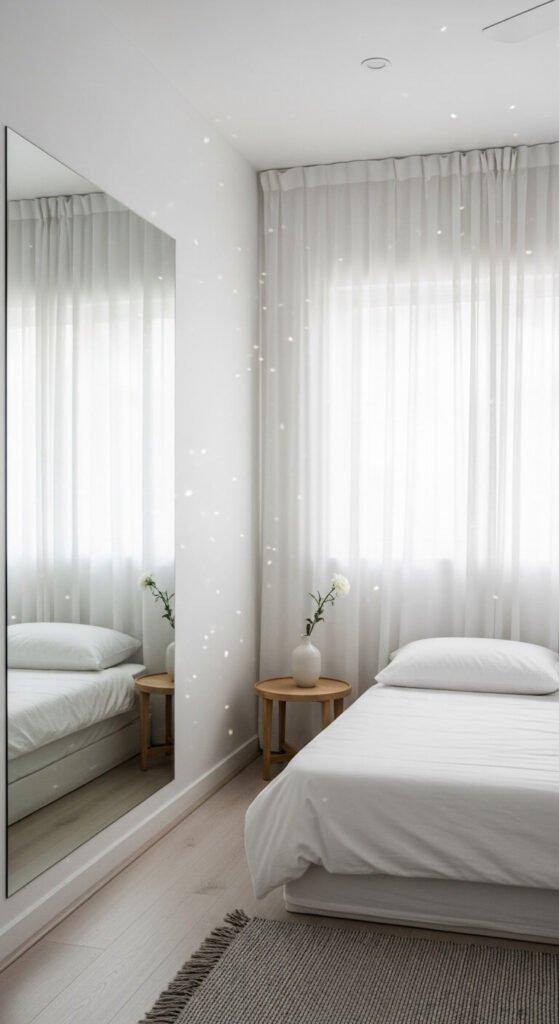
Use Mirrors Like a Pro
Mirrors are the oldest trick in the interior design book — and they work every single time. A well-placed mirror essentially doubles your visual space by reflecting light and depth back into the room.
- Go large. A big, floor-length mirror on one wall creates the illusion of an entire extra room behind it.
- Place mirrors opposite windows to bounce natural light deep into the space.
- Try a mirrored furniture piece — like a mirrored dresser or side table — for a subtle, stylish effect.
Avoid cluttering mirror surfaces with too many decorative items. Let them breathe and do their job.
Choose the Right Paint Colors
Color is one of the most powerful tools you have. Dark, saturated tones close a room in. Light, cool tones push the walls outward — at least to your brain.
- Stick to whites, soft grays, pale blues, and creamy neutrals.
- Paint the ceiling the same color as the walls (or even slightly lighter) to eliminate visual boundaries and make the room feel taller.
- Consider a monochromatic color scheme — using varying shades of one color throughout removes visual “stops” that make spaces feel chopped up.
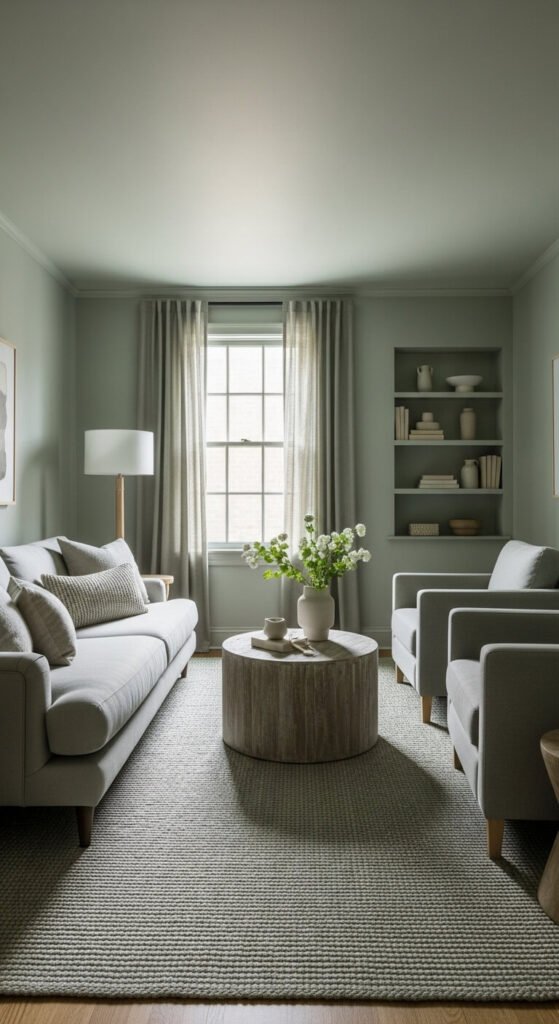
Hang Curtains High and Wide
This single trick can make a window — and the entire room — look dramatically larger. Most people hang curtain rods just above the window frame. Don’t do that.
- Mount your curtain rod close to the ceiling, not above the window.
- Extend the rod at least 6–12 inches beyond each side of the window frame.
- Use floor-length curtains that pool slightly at the bottom.
This draws the eye upward and outward, creating the impression of soaring ceilings and wide windows.
Embrace Vertical Lines
Your eyes naturally follow lines — and you can use that to your advantage. Vertical lines trick the brain into perceiving more height, while horizontal lines suggest width.
- Hang tall, narrow artwork or gallery walls that stretch upward.
- Use vertically striped wallpaper or rugs to elongate walls.
- Choose tall, slim furniture like a bookcase that reaches toward the ceiling rather than a low, wide credenza.
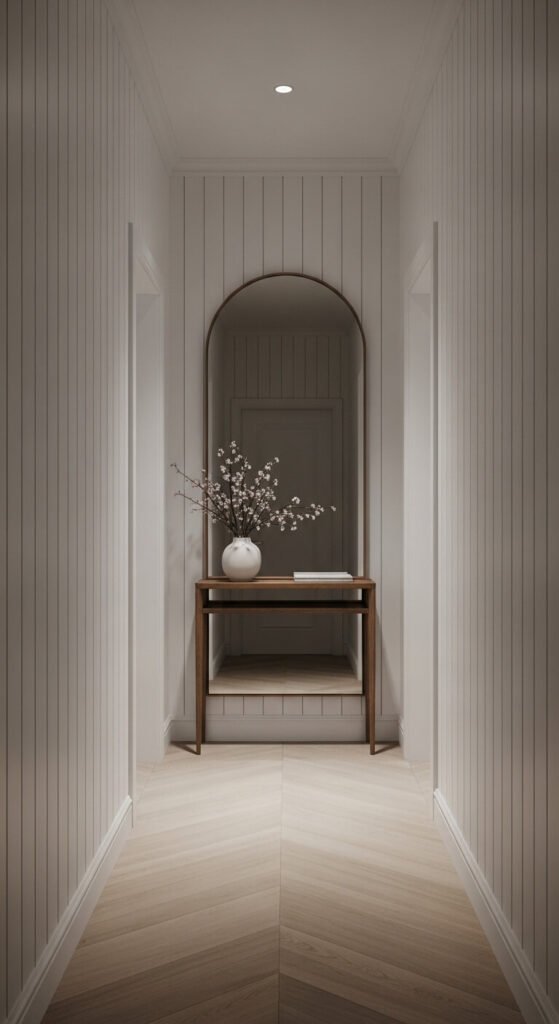
Declutter and Go Furniture-Light
No optical illusion can save a room drowning in stuff. Visual clutter is the number one enemy of a spacious-feeling room.
- Choose fewer, larger pieces of furniture rather than many small ones. Lots of small pieces fragment the eye and make a room feel busier.
- Raise furniture off the floor — sofas and chairs with visible legs create breathing room underneath, which reads as more space.
- Use hidden storage: ottomans with lids, beds with drawers, floating shelves instead of bulky bookcases.
The goal is to keep floor space visible. The more floor you can see, the bigger the room feels.
Let the Light In (All of It)
Natural light is your best friend in a small room. The more light, the more expansive everything looks.
- Swap heavy drapes for sheer or linen curtains that filter light without blocking it.
- Remove window coverings entirely if privacy allows.
- Layer your lighting with multiple sources — floor lamps, table lamps, and wall sconces — to eliminate dark corners that shrink a space visually.
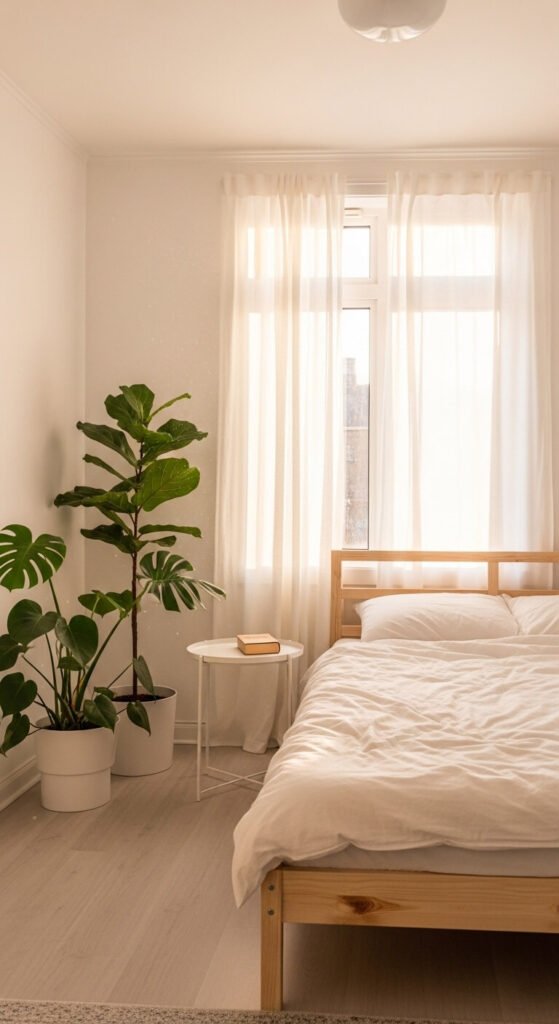
The Takeaway
Making a small room feel bigger isn’t about knocking down walls — it’s about being intentional with light, color, proportion, and placement. Start with one or two of these tricks and watch your space transform before your eyes.
Save this article and pin it for your next room refresh! Whether you’re styling a studio apartment, a guest bedroom, or a compact living room, these optical illusion secrets will make every square foot count