There’s something almost magical about a well-styled tray. One moment you have a cluttered coffee table or a chaotic bathroom counter — and the next, with just a tray and a few intentional objects, it looks like a page straight out of an interior design magazine. The best part? You don’t need a big budget or a design degree. You just need a little know-how.
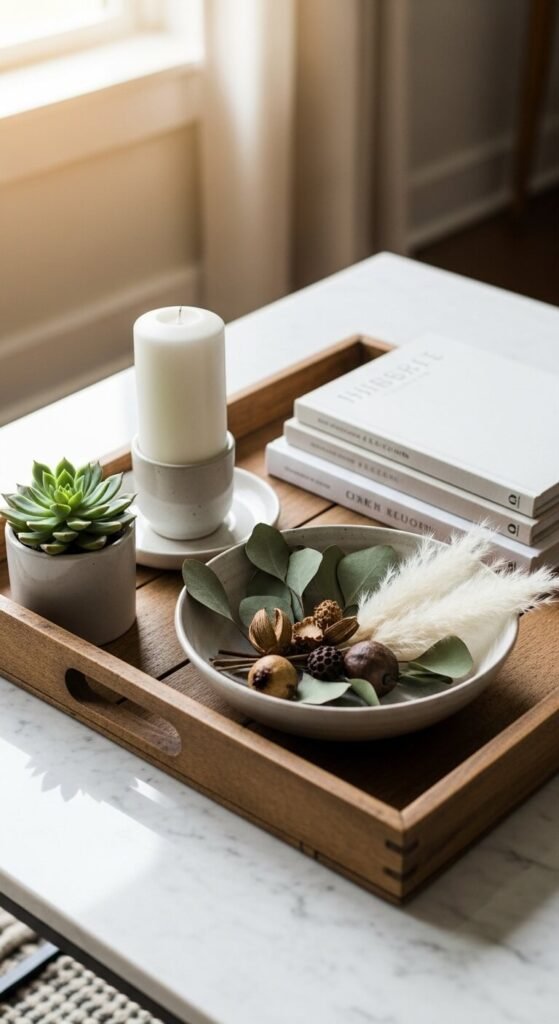
Start With the Right Tray
Before you start arranging, the tray itself matters. Think of it as the frame for a painting — it sets the tone for everything inside it.
- Material: Wood feels warm and organic. Acrylic or mirrored trays feel modern and glam. Woven or rattan trays bring a coastal, bohemian vibe.
- Size: Choose a tray that’s proportional to your surface. A tiny tray on a large ottoman will look lost; an oversized tray on a small side table will feel cramped.
- Shape: Rectangular trays are the most versatile. Round trays work beautifully on circular tables or ottomans.
Quick tip: Don’t overlook thrift stores and vintage markets — some of the most character-filled trays come from unexpected places.
Follow the Rule of Odd Numbers
Designers swear by it: odd numbers just look better. When grouping items on a tray, aim for three or five objects rather than two or four. This creates visual interest and prevents your arrangement from looking too symmetrical and stiff.
Think of it as a triangle — place one taller item, one medium item, and one low item. The eye travels naturally from point to point, making the whole thing feel dynamic and intentional.
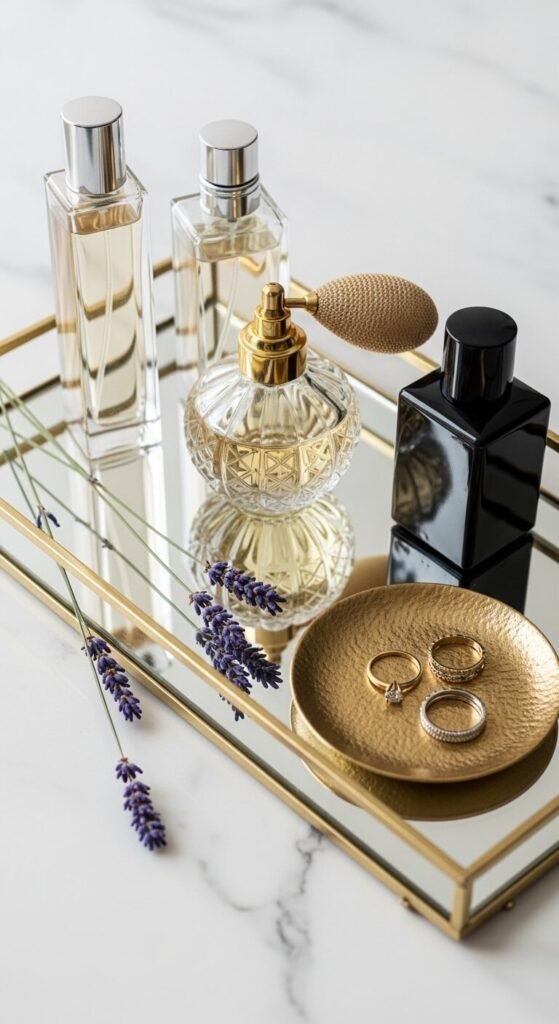
Play With Height and Texture
A flat, same-level arrangement is the quickest way to make a tray look boring. Instead, layer different heights and mix contrasting textures to create depth.
Here’s how to build your layers:
- Anchor with height — Start with your tallest item. A candle, a small vase with stems, or a lantern works perfectly.
- Add a mid-height object — A small plant, a decorative bottle, or a stack of two or three books.
- Fill in the low layer — A small dish, a coaster, a crystal, or a candle votiv.
Mixing textures is equally important. Pair something smooth (glass, ceramic) with something rough (linen, wood, stone). The contrast is what makes the eye linger.
Choose a Color Story
A tray that looks pulled-together usually has a quiet color story — two or three tones that complement each other without competing.
- Neutral palettes (white, beige, warm grey) feel calm and timeless
- Earthy tones (terracotta, olive, rust) feel cozy and grounded
- Monochromatic (varying shades of the same color) feel sophisticated and editorial
You don’t have to be rigid about it — one unexpected pop of color can actually make a tray look more curated, not less. A single deep green plant against a neutral backdrop, for example, is endlessly pleasing.
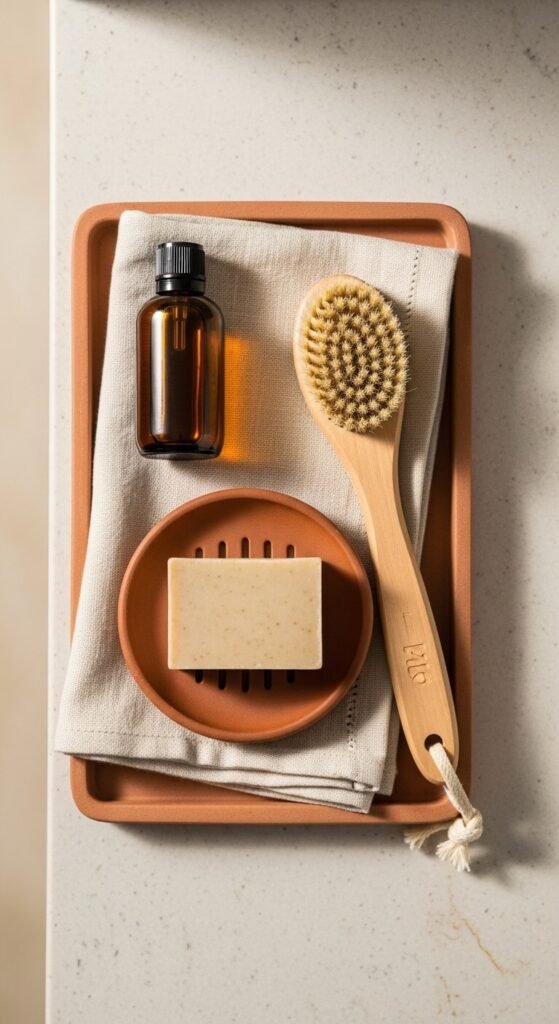
Add Something Living
If there’s one secret weapon in tray styling, it’s this: add something alive. A small plant, a succulent, a stem of eucalyptus, or even a bundle of dried flowers instantly makes a tray feel fresh and intentional rather than staged.
Living elements bring softness and a touch of unpredictability — which, ironically, is exactly what makes a styled space feel real and livable rather than like a showroom.
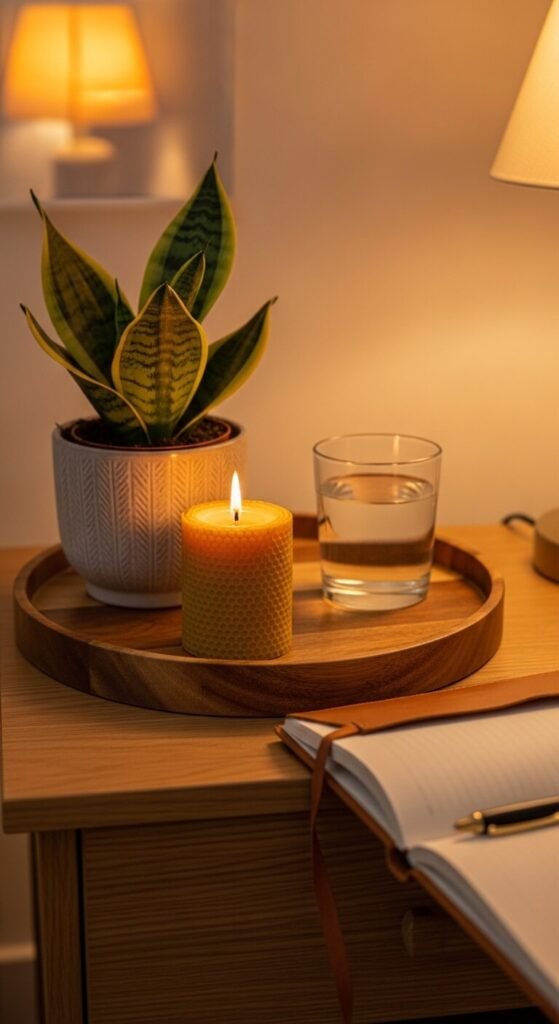
Keep It Functional, Not Just Pretty
The most beautiful tray arrangements are the ones that actually work for your daily life. If you style a kitchen tray, make sure the items you use every morning — your coffee pods, your hand lotion, your keys — are part of the arrangement, not pushed aside to make room for decor.
A tray should make your routine easier, not compete with it. When form follows function, the result always feels more authentic.
Your Surface, Transformed
Styling a tray is one of the simplest, most satisfying ways to bring order and beauty into your home — without a single renovation required. Start with one surface, one tray, and a handful of objects you already love. Edit ruthlessly. Leave a little breathing room. And don’t overthink it.
The best-styled trays look effortless because they were made with intention, not perfection.