Your kitchen counters are prime real estate — and most of us are wasting them on a graveyard of appliances, mail piles, and mystery gadgets. But here’s the thing: a beautifully styled counter doesn’t mean a sterile, empty one. The magic lies in the balance between function and beauty, between “lived-in” and “curated.” If you’ve ever scrolled through home décor photos wondering how people actually cook in those kitchens, this guide is your answer.
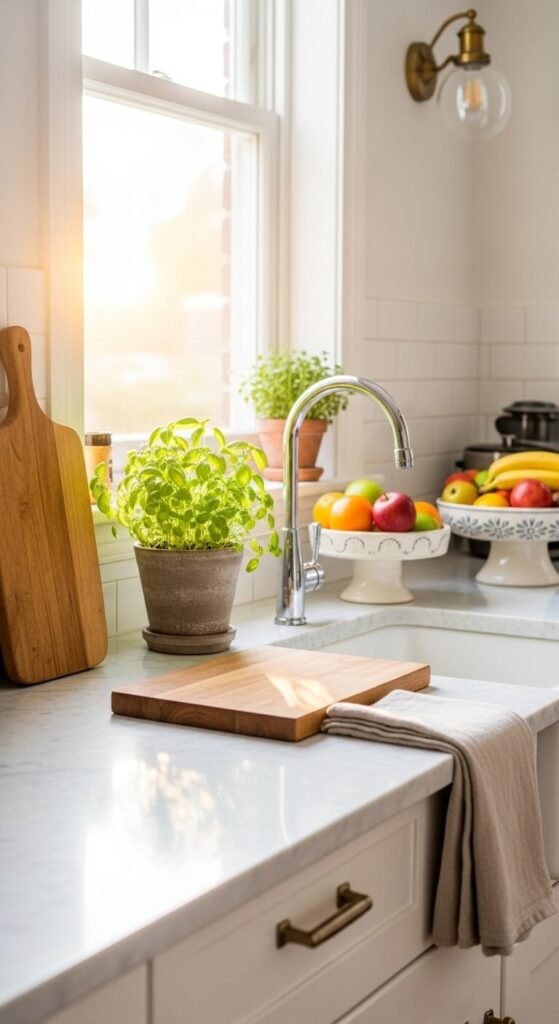
Start With a Full Clear-Out
Before you can style anything, you need a blank slate. Pull everything off your counters — yes, everything — and lay it on the floor or kitchen table.
Now ask yourself three questions about each item:
- Do I use this daily? (Coffee maker: yes. Bread maker you used once in 2019: no.)
- Does it belong in a cabinet? Most things do.
- Does it add beauty and function? Only keep what earns its spot.
This step alone is transformative. Most people discover they can reclaim 60–70% of their counter space just by relocating things that crept out of cupboards over time.
Choose a “Counter Capsule” — Your Essential Everyday Items
Think of this like a capsule wardrobe, but for your kitchen. Identify the 3–5 items that genuinely live on your counter because you use them every single day. Common examples include:
- Coffee or espresso machine
- Kettle
- A knife block or magnetic strip
- A fruit bowl
- A small dish for keys or everyday items near the entry point
Everything else gets stored. The rule is simple: if it’s not used daily, it doesn’t deserve counter space.
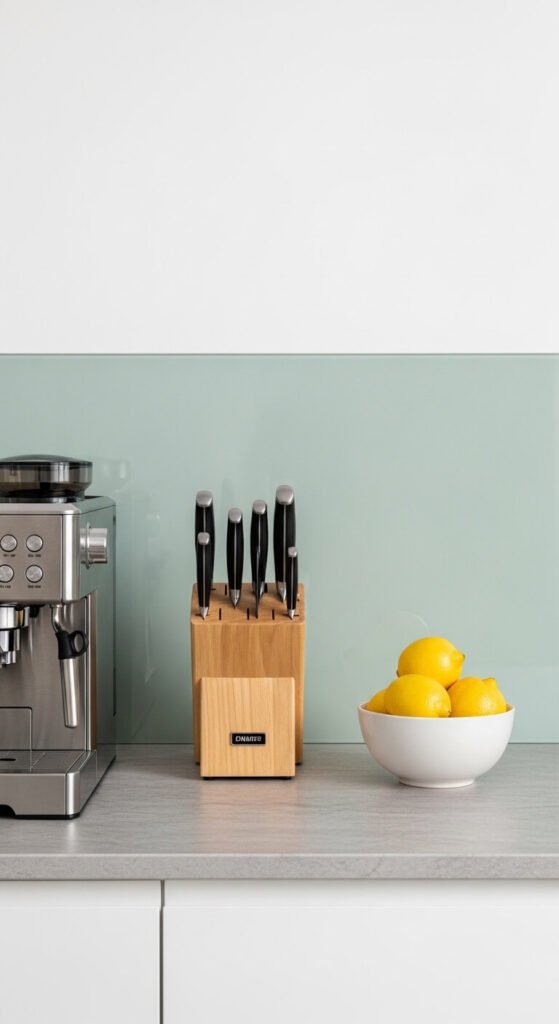
Group Items Into “Zones” for a Styled Look
Random items scattered across a counter always look messy, even if there aren’t many of them. The trick designers use? Grouping.
Cluster your items into intentional zones:
- The Coffee & Morning Zone — machine, mugs on a small tray, a canister of beans
- The Prep Zone — cutting board propped vertically, olive oil, a small herb plant
- The Display Zone — a bowl of seasonal fruit, a candle, a cookbook propped open
Trays are your best friend here. Corralling a few items on a wooden board or marble tray instantly transforms a cluster of objects into a vignette.
Add Life With Natural Elements
This is the secret ingredient that separates a styled counter from a showroom counter. Natural elements make a space feel warm, real, and inviting — not like a catalog page.
Try adding:
- A potted herb like basil, rosemary, or thyme (functional and beautiful)
- A bowl of seasonal fruit — oranges in winter, peaches in summer
- Fresh flowers in a simple vase — even a single stem makes a difference
- A wooden or stone element like a cutting board or a small mortar and pestle
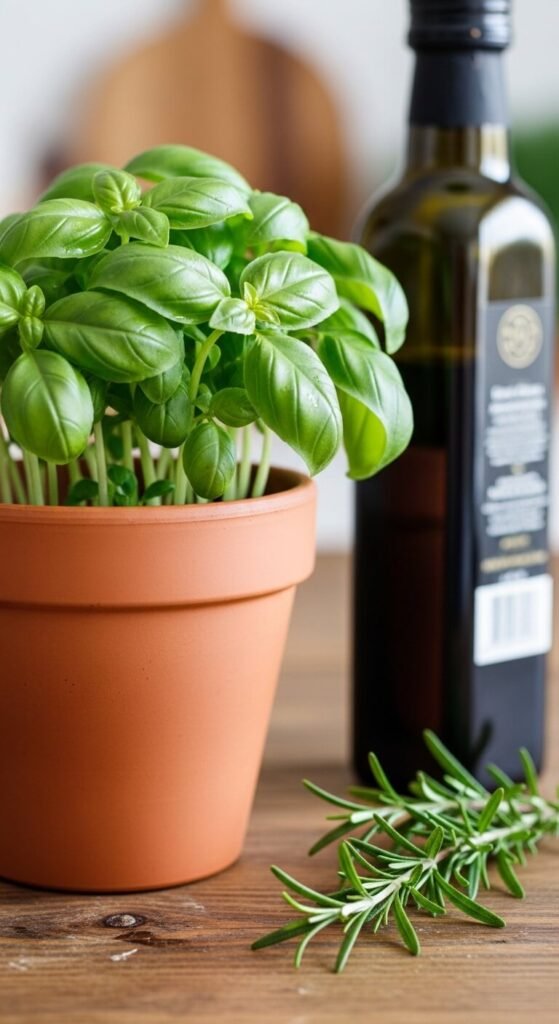
Play With Height and Texture
A flat, same-height lineup of objects always looks dull. Interior designers think in levels — tall, medium, and low — to create visual interest.
A simple formula:
- Tall — a plant, a tall bottle of olive oil, or a canister
- Medium — a fruit bowl, small appliance, or cookbook
- Low — a tray, folded linen towel, or small dish
Mix textures too: wood alongside ceramic, marble next to linen, matte beside shiny. Contrast is what makes a counter feel curated rather than cookie-cutter.
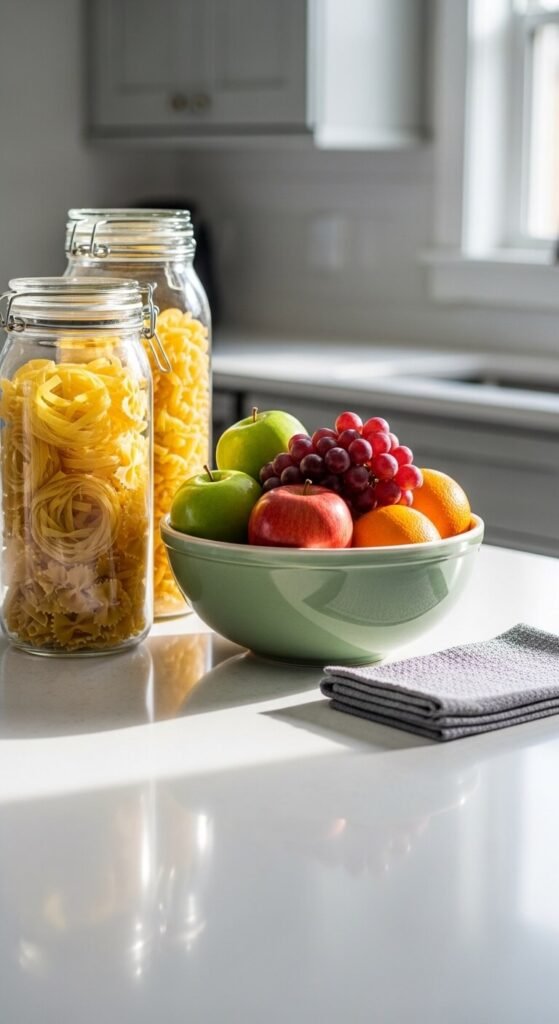
Keep It Maintained With a Weekly Reset
Even the most beautiful counter can slide back into chaos. The solution isn’t more storage — it’s a simple habit: a 5-minute counter reset every Sunday evening.
Wipe it down, return anything that wandered, and refresh your natural elements. Swap out dying flowers, replenish the fruit bowl, and straighten your tray. Think of it as a weekly edit, not a chore.
Your Counter, Your Calm
A clutter-free counter isn’t about perfection — it’s about intention. When you choose what earns a place on your counter, you’re choosing how your kitchen feels every single morning. And that energy sets the tone for the whole day.
Save this article for your next kitchen refresh, and pin your favorite tip to come back to it later! Your dream kitchen isn’t a renovation away — it might just be a clear-out and a fruit bowl away