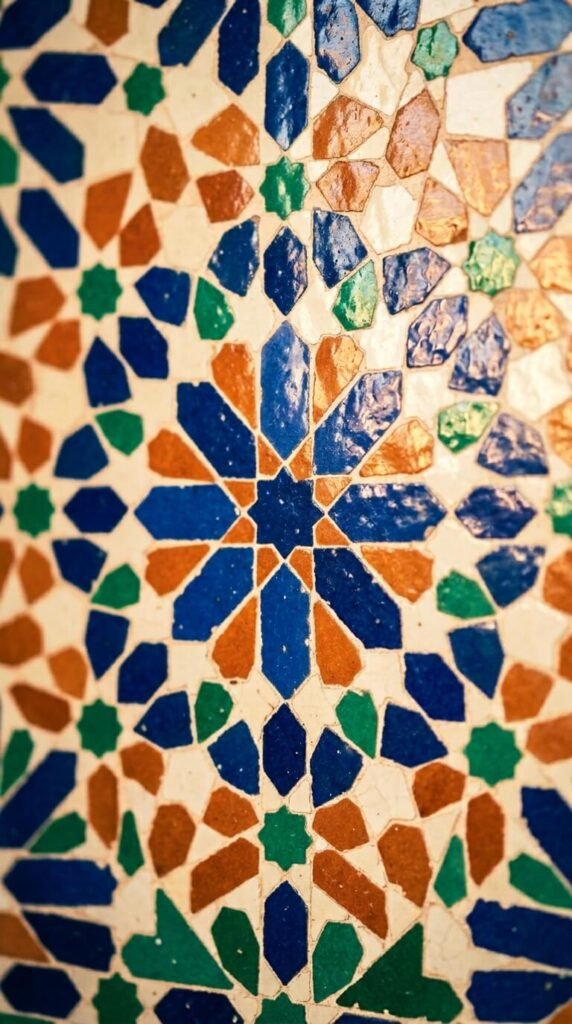
Zellige tiles have been transforming ordinary spaces into something extraordinary for over a thousand years. These hand-cut Moroccan ceramic pieces carry soul in every chip and glaze variation — no two are exactly alike. Whether you’re planning a full kitchen backsplash, a bathroom accent wall, or just a small decorative panel, zellige brings warmth and artistry that machine-made tiles simply can’t replicate. This guide walks you through 22 real design ideas you can actually use, with practical tips for every budget.
1. Classic Star and Cross Pattern in Cobalt Blue
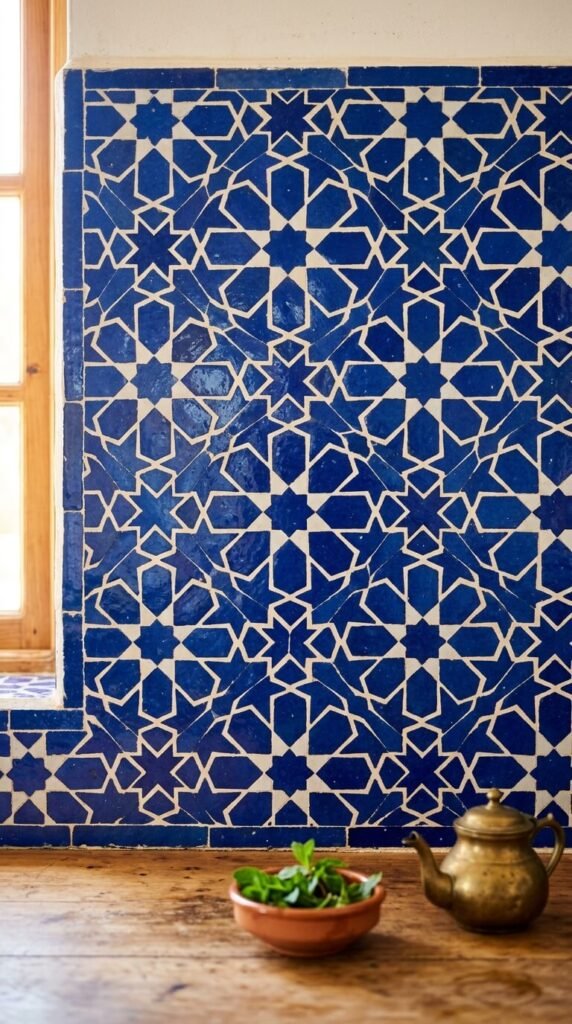
This is the pattern most people picture when they think of Moroccan tile. The eight-pointed star repeats across the wall in deep cobalt blue. It pairs beautifully with white plaster walls and raw wood. You don’t need a full wall to make it work. Even a 3-foot section behind a stove creates a strong focal point. Budget tip: source zellige off-cuts from specialty tile importers — they sell smaller lots at a fraction of full-panel prices.
2. Earthy Terracotta Mosaic for a Warm Kitchen Floor
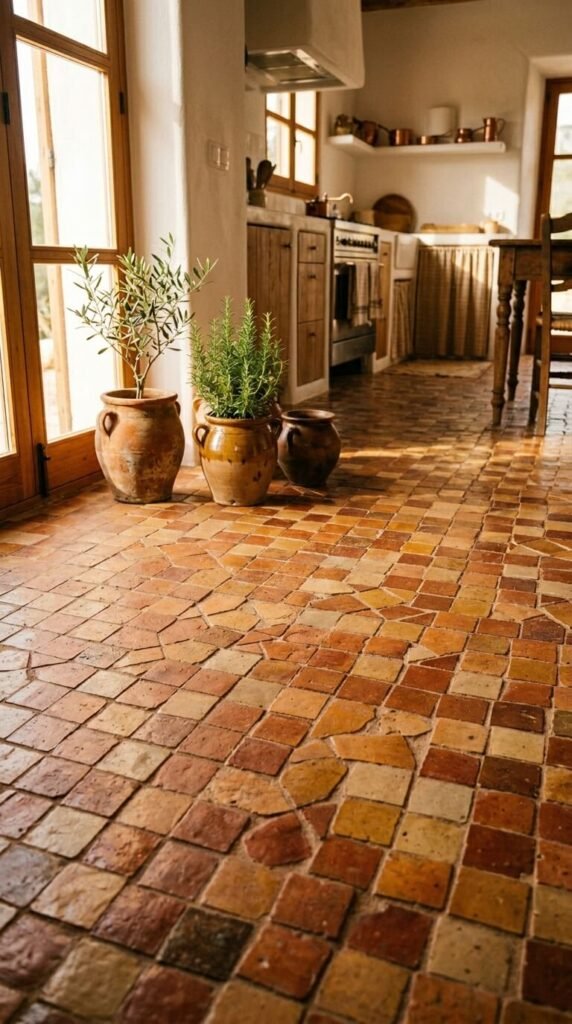
Terracotta zellige on a kitchen floor feels like stepping into a farmhouse in Marrakech. The warm rust and sand tones age beautifully. Foot traffic actually improves the look over time. Seal the tiles before grouting to prevent staining — this is the most important DIY step people skip. Use a penetrating sealer, not a surface coat. For a budget version, look for unglazed terracotta zellige that costs 30–50% less than glazed options.
3. White and Ivory Zellige Shower Wall
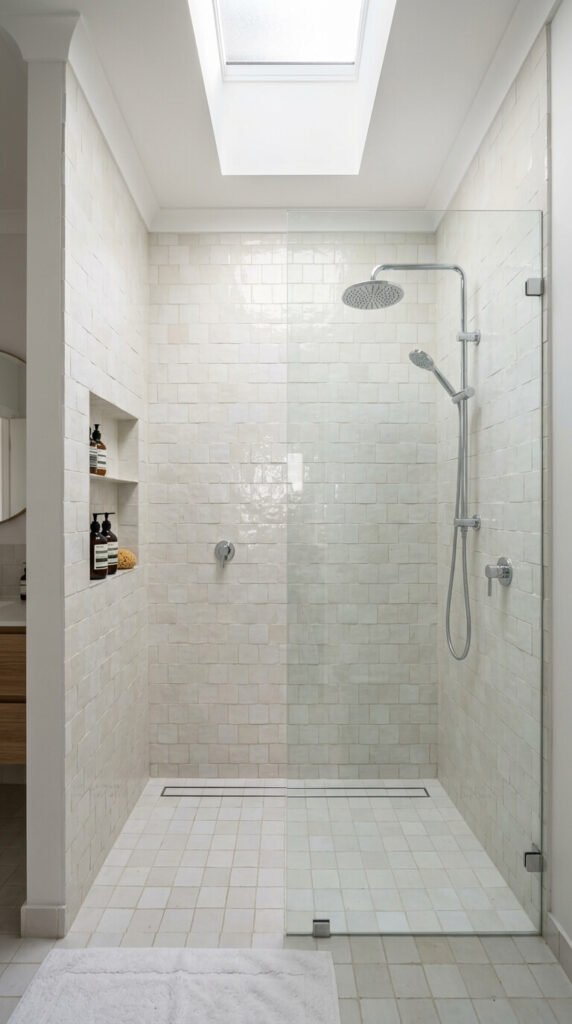
All-white zellige isn’t boring — it’s quietly stunning. The slight variations in glaze tone give the wall movement without chaos. This works especially well in small showers where bold color might feel overwhelming. Use unsanded grout in tight joints to keep the surface smooth and easy to clean. A DIY-friendly tip: start your tile layout from the center of the shower wall so cuts end up in corners where they’re less visible.
4. Emerald Green Backsplash with Brass Fixtures
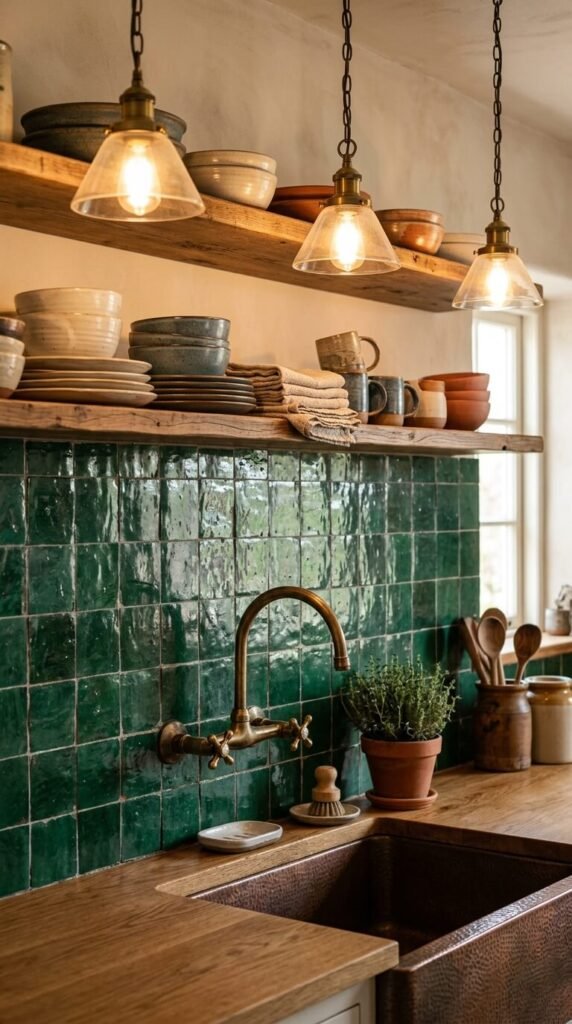
Emerald zellige against brass hardware is one of the most requested kitchen looks right now. The green deepens near grout lines and catches light differently throughout the day. This combination works in both modern and traditional kitchens. For a DIY approach, start with just the backsplash between the counter and upper cabinets. That small area uses fewer tiles and is a manageable weekend project. Shop Moroccan import stores online for better prices than local tile showrooms.
5. Black and White Geometric Floor Medallion
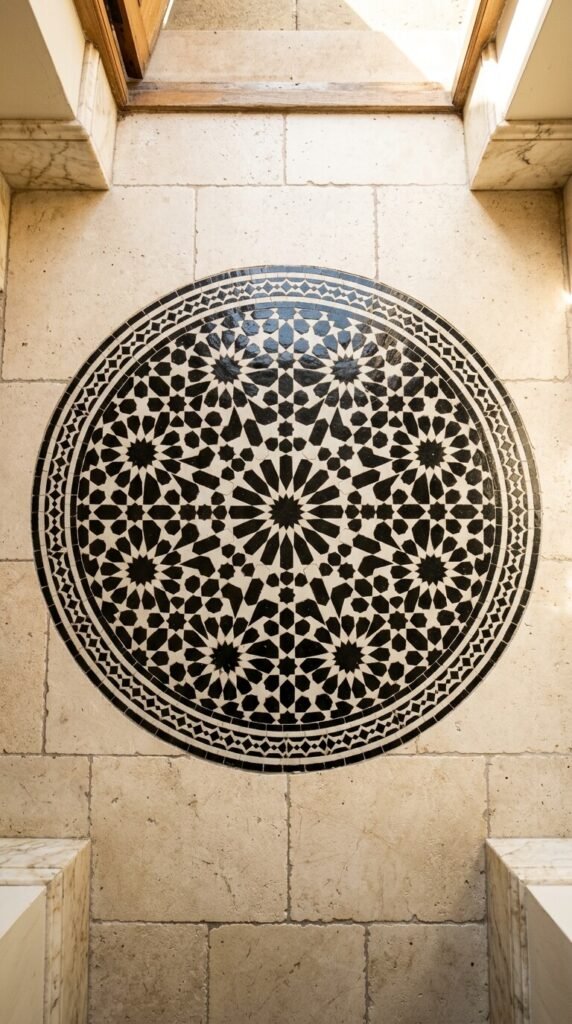
A zellige medallion in an entryway makes an immediate statement. Black and white star patterns feel bold but timeless. This works best when the surrounding floor is neutral — pale stone or light hardwood. Installing a pre-assembled medallion mesh sheet is the most DIY-friendly option; you don’t have to hand-set each piece. Most medallions come in 12″x12″ mesh-mounted sections that you install like regular tile.
6. Multicolor Patchwork Accent Wall in a Dining Nook
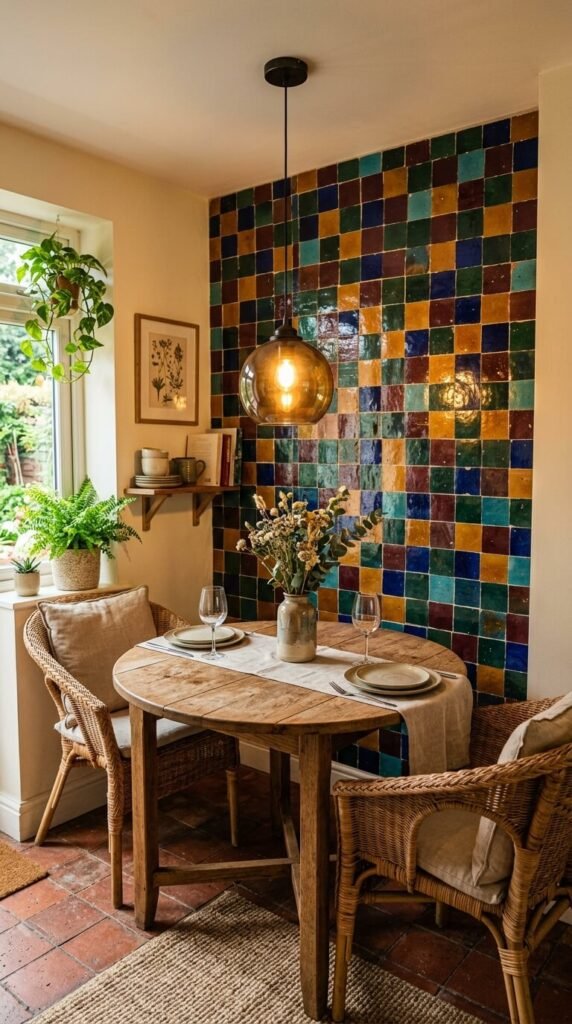
Patchwork zellige uses mixed colors and sizes in an intentionally varied layout. It looks collected and layered — not chaotic. This is actually a budget-friendly option because you can use tile remnants and off-cuts from different batches. The random mix hides imperfect cuts better than a uniform pattern. Keep your grout color neutral — a warm gray or putty shade ties the colors together without competing with them.
7. Pale Blue Bathroom Floor with Penny Tile Border
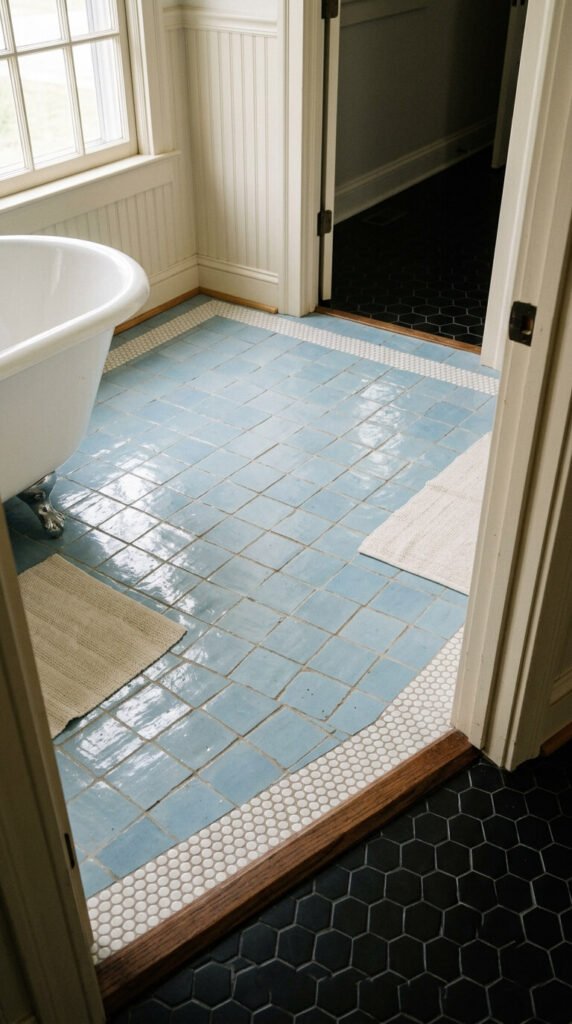
Pale blue zellige feels fresh and clean in a bathroom without being stark. Pairing it with a penny tile border adds a collected, vintage feel. Keep the wall tiles simple — white subway or plaster — so the floor does the talking. This is a realistic DIY floor project for a small bathroom. A 5’x8′ bathroom uses roughly 40 square feet of tile. Order 15% extra to account for cuts and breakage.
8. Burnt Orange Zellige Around a Fireplace
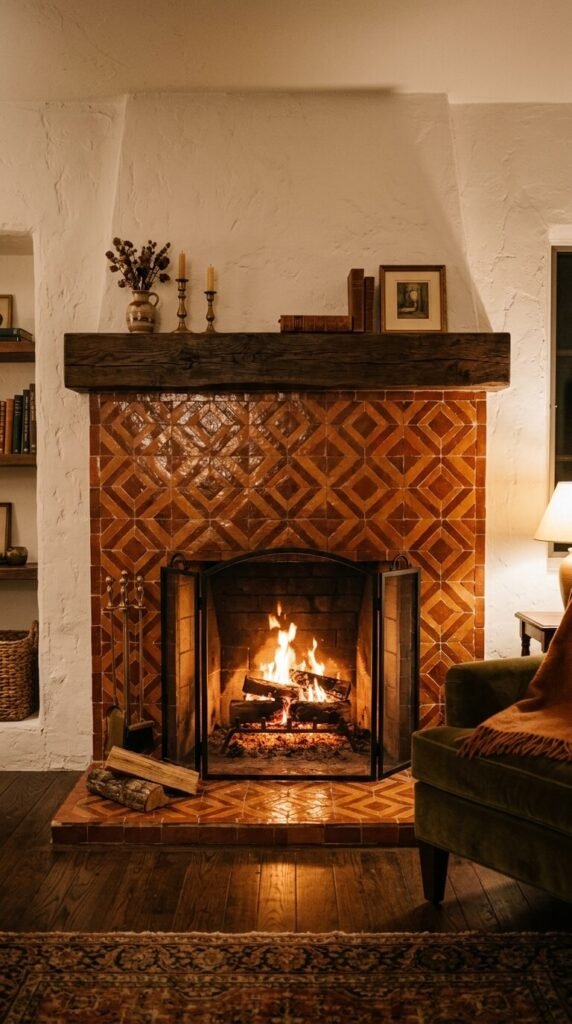
A fireplace surround is one of the best low-commitment zellige projects. The area is small, so material costs stay manageable. Burnt orange and rust tones deepen in firelight — they look even better at night. Use a heat-rated tile adhesive for anything within 6 inches of the firebox opening. Standard mastic isn’t rated for heat exposure. The surround itself (away from direct flame) is fine with regular thin-set mortar.
9. Teal and Gold Hammam-Inspired Bathroom
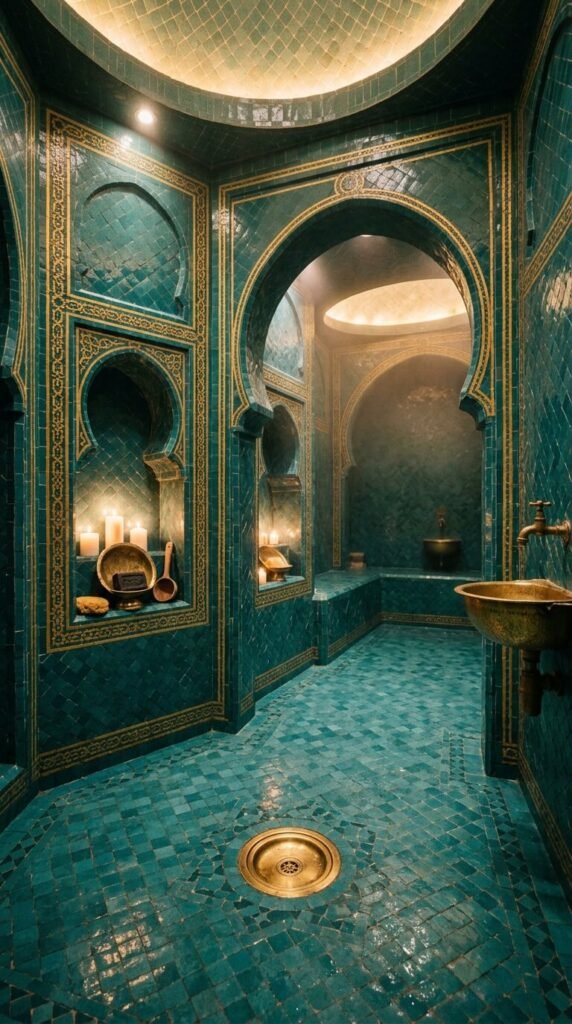
A hammam-style bathroom wraps the whole room in zellige — floor, walls, and ceiling. Teal is the anchor color, with gold border tiles adding richness. You don’t need to tile every surface to get this effect. Tiling just the shower and floor already reads as a full hammam aesthetic. For gold accents, look for brass-glazed zellige border pieces or hand-painted Moroccan border tiles sold by the linear foot.
10. Ivory and Sage Zellige Kitchen Island Sides
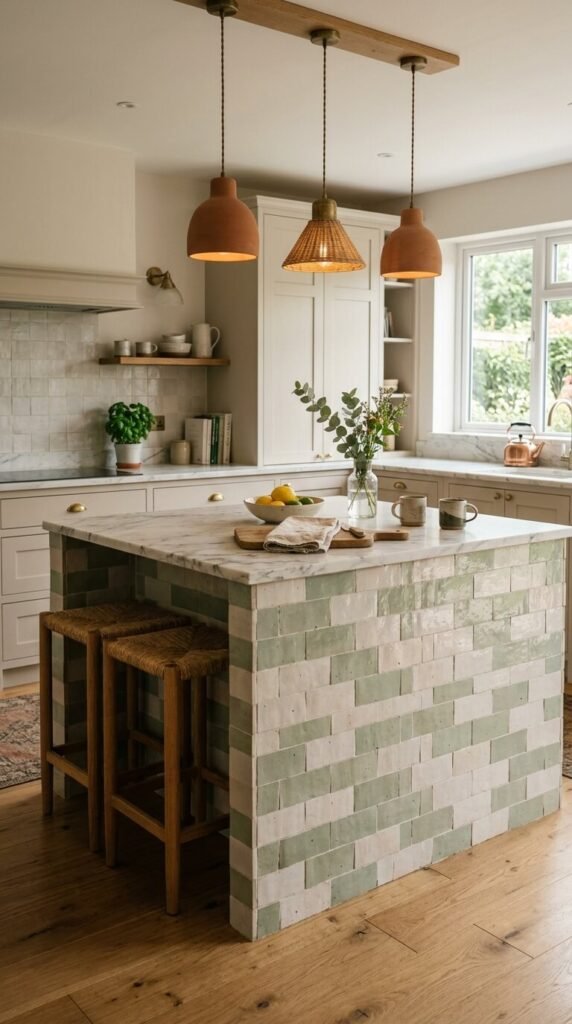
Tiling just the sides of a kitchen island is a smart, low-cost way to add zellige to your space. The island becomes a furniture-like focal point without requiring you to re-tile an entire room. Ivory and sage read as calm and organic — good for kitchens that lean Scandinavian or French country. The running bond (brick) layout is easier to execute than geometric patterns, making this a solid beginner DIY project.
11. Navy Zellige Powder Room Floor-to-Ceiling
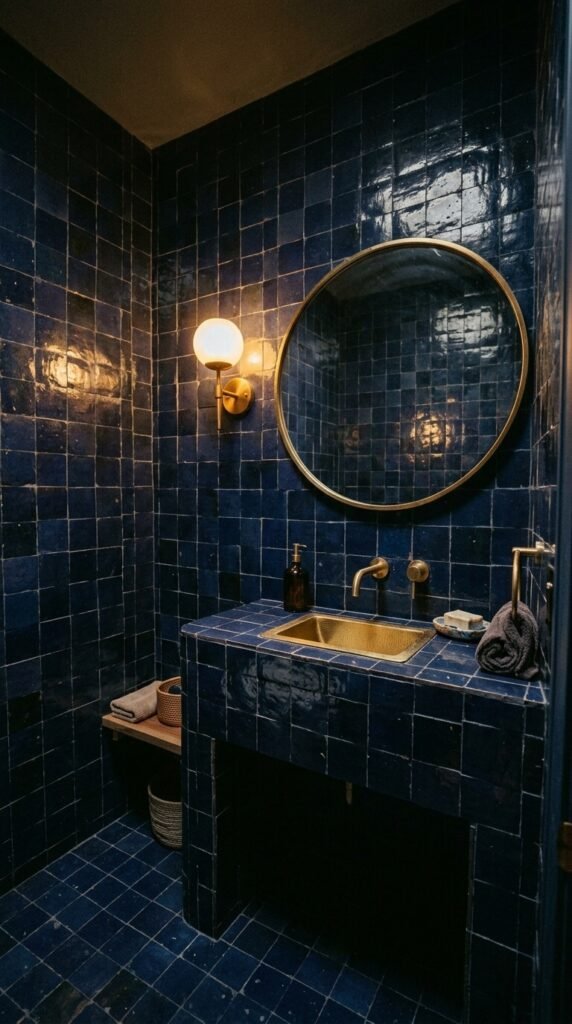
Powder rooms are the one space where going all-in on bold tile is always the right call. Floor-to-ceiling navy zellige feels like stepping inside a jewel box. The small square footage makes this project affordable — most powder rooms are under 25 square feet. Use a glossy zellige to bounce light in this typically windowless space. Add a simple brass mirror and a single wall sconce to finish the look without cluttering the room.
12. Faded Rose Zellige in a Primary Bedroom Niche
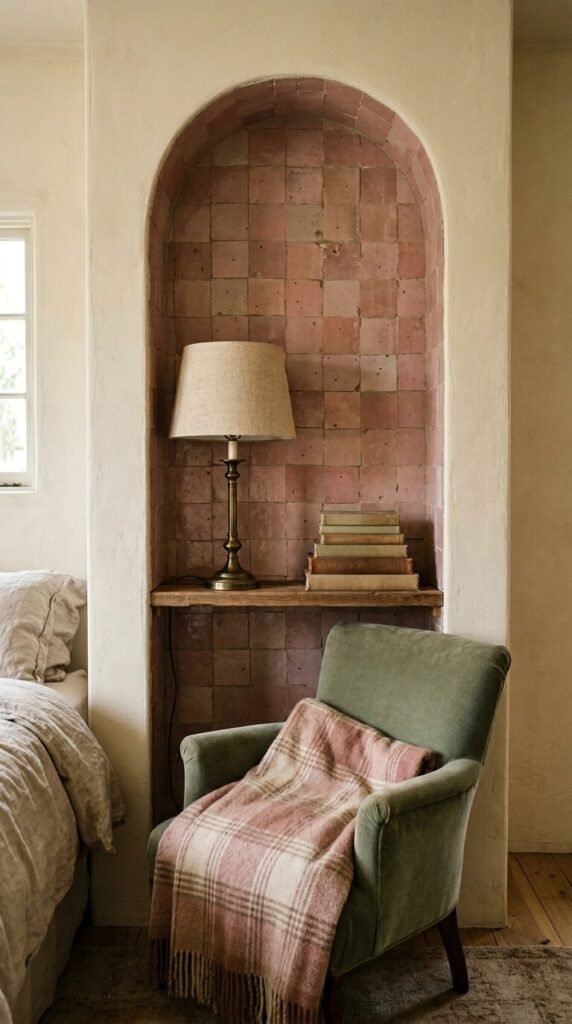
A tiled niche behind a bed or inside a built-in shelf is one of the most underused design details. Dusty rose zellige in a matte finish feels warm, not precious. This is a small enough project to do in a single weekend. Most niches are 2–4 square feet. That means you’re buying very little tile — a great way to afford premium zellige you couldn’t use on a full wall. Keep surrounding walls in cream or warm white.
13. Charcoal Zellige Outdoor Courtyard Path
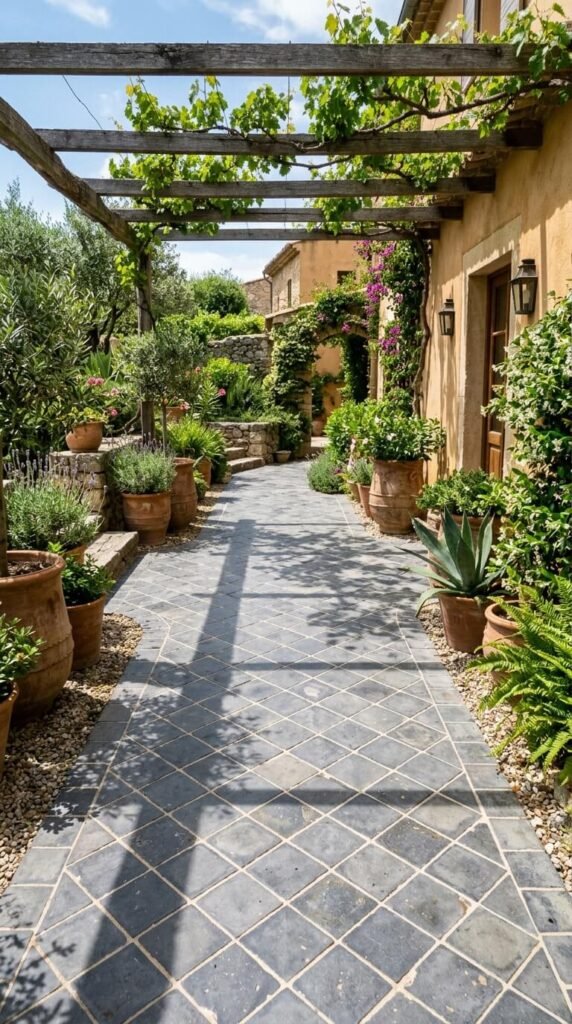
Zellige works outdoors too — but only when installed with the right materials. Charcoal tones look sharp against green planting and natural stone. Use frost-rated zellige for outdoor applications if you live somewhere with freezing winters. Standard glazed zellige can crack in freeze-thaw cycles. For a path, limit the design to a simple grid or diamond pattern — complex geometric cuts are harder to maintain and replace if a tile breaks.
14. Mustard Yellow Zellige Stair Risers
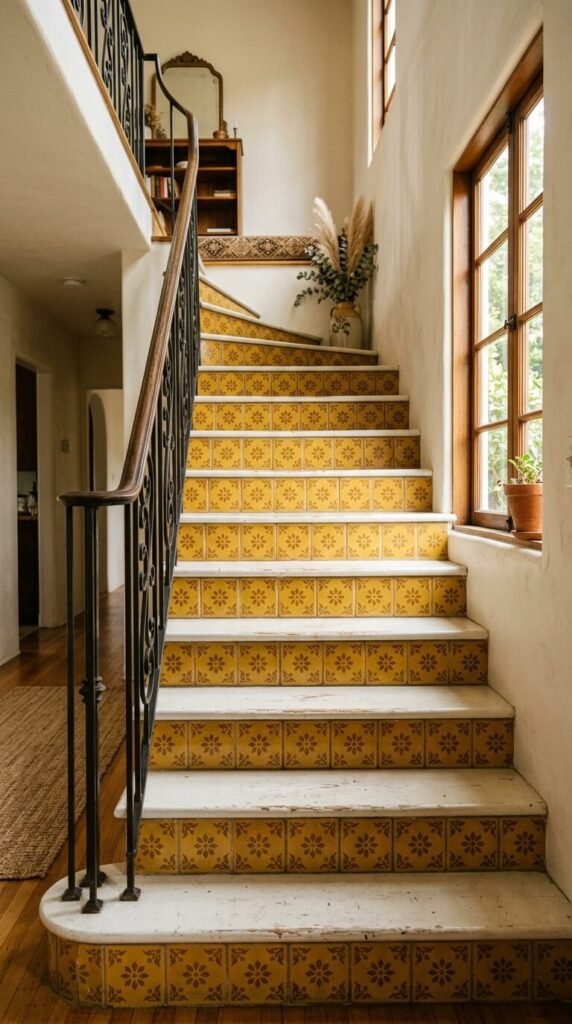
Stair risers are one of the most impactful low-cost zellige projects. You only tile the vertical face — not the tread — so the tile area is minimal. Mustard yellow adds warmth to a staircase without feeling heavy. A typical 12-step stair uses less than 15 square feet of tile. Each riser is about 1 square foot. That’s very affordable even with premium zellige. Cut risers to size with a wet tile saw and use standard thin-set adhesive.
15. Sage and White Herringbone Kitchen Backsplash
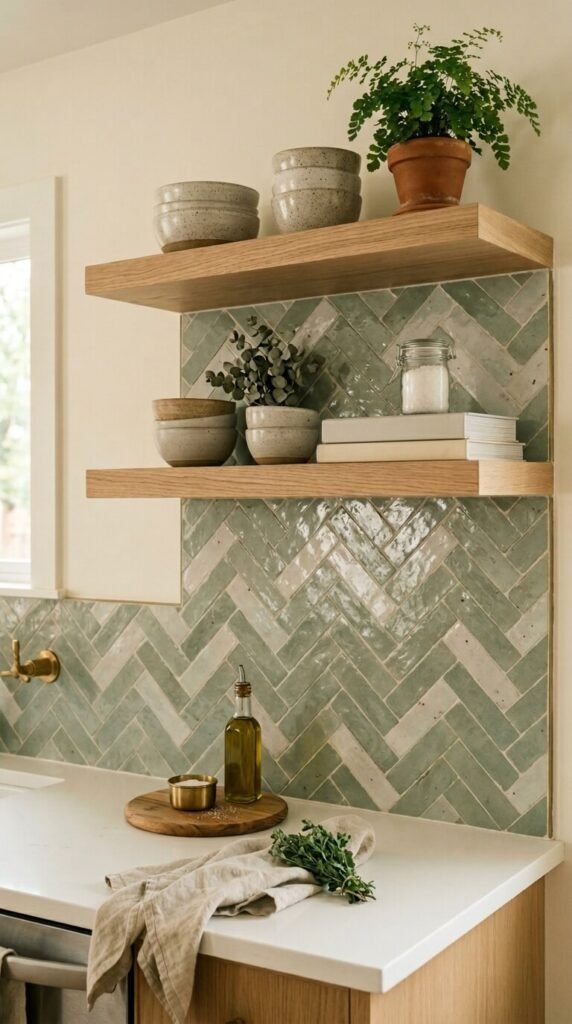
Herringbone layout gives standard rectangular zellige tiles a dynamic, woven look. Alternating sage and white creates a two-tone pattern without using specially shaped tiles. This layout takes more time to install than a grid, but the visual payoff is significant. Mark your center line carefully before starting — a crooked herringbone is difficult to fix mid-project. For beginners, practice the layout dry on the floor before committing to adhesive.
16. Rust and Indigo Diamond Floor in a Sunroom
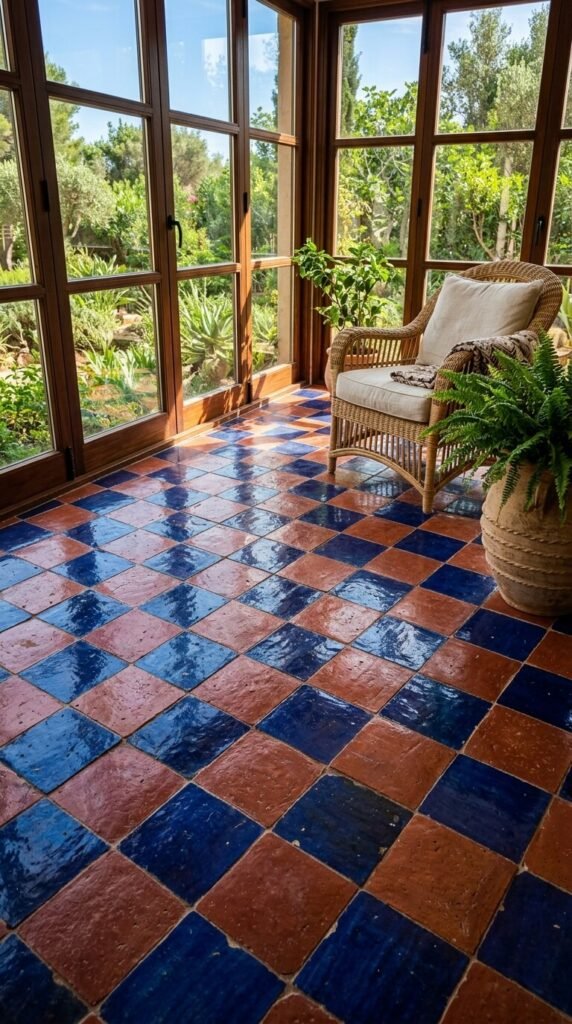
This color pairing feels directly lifted from a Moroccan riad — but it works just as well in a sunroom addition or enclosed porch. Rust and indigo are natural complements. The diamond layout is set at 45 degrees, which means more angled cuts at the walls. Factor in extra tile and extra time. A premixed diamond pattern is sometimes available from Moroccan tile importers, saving you the cutting work entirely.
17. Turquoise Zellige Pool Liner Accent Strip
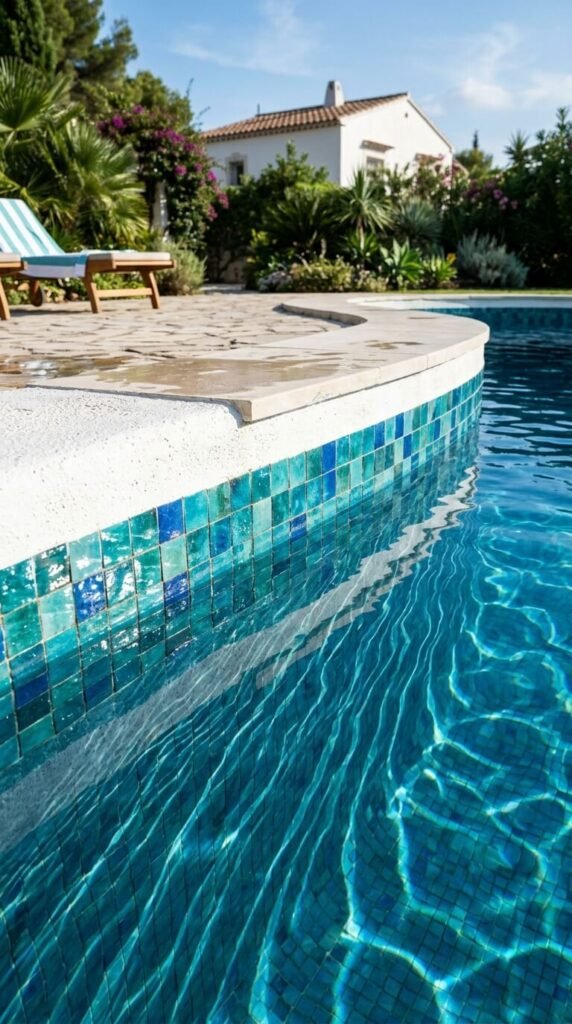
A waterline accent strip of zellige makes a backyard pool look like something out of a Moroccan palace. Use only pool-rated zellige — standard glazed tiles aren’t made for constant water contact and chemical exposure. Specialty suppliers carry pool-safe versions. This accent strip runs along the tile band just above the waterline. It’s typically 6 inches tall and runs the perimeter of the pool — a manageable installation for a professional tile setter.
18. Cream Zellige with Hand-Painted Blue Motif Borders
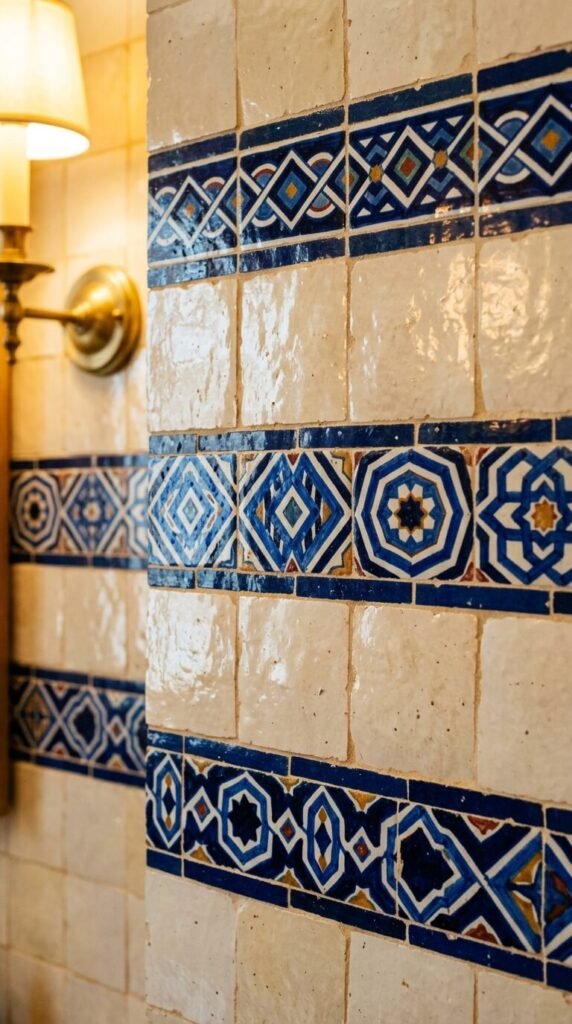
Combining plain field zellige with decorative hand-painted borders is a classic Moroccan technique. The borders break up a large wall and add detail without overwhelming the space. Hand-painted border tiles are sold by the linear foot at most Moroccan tile importers. One or two horizontal bands around a shower or bathroom is all you need. This approach keeps labor simple — the field tile goes up fast, and borders are placed at set heights.
19. Matte Black Zellige Kitchen Countertop
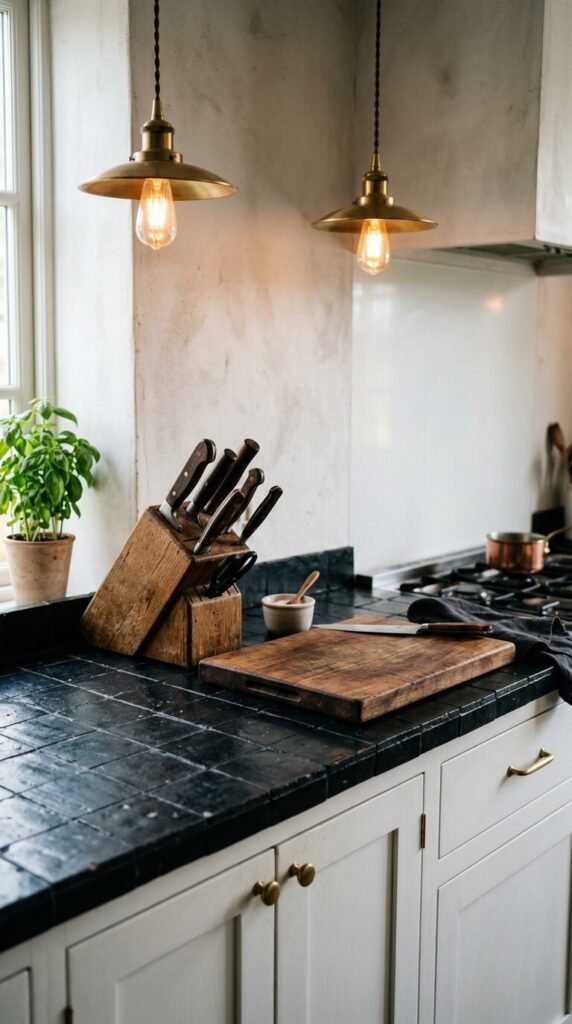
Zellige countertops aren’t as common as backsplashes, but they’re stunning when done right. Matte black zellige gives a countertop serious visual weight. Seal the surface with an epoxy-based countertop sealer, not a standard tile sealer — this prevents water and stain penetration in a high-use surface. The grout joints on a zellige counter do require regular maintenance. Go in knowing it’s a high-character surface that shows life — not a polished slab.
20. Olive Green Zellige in a Mudroom Wet Area
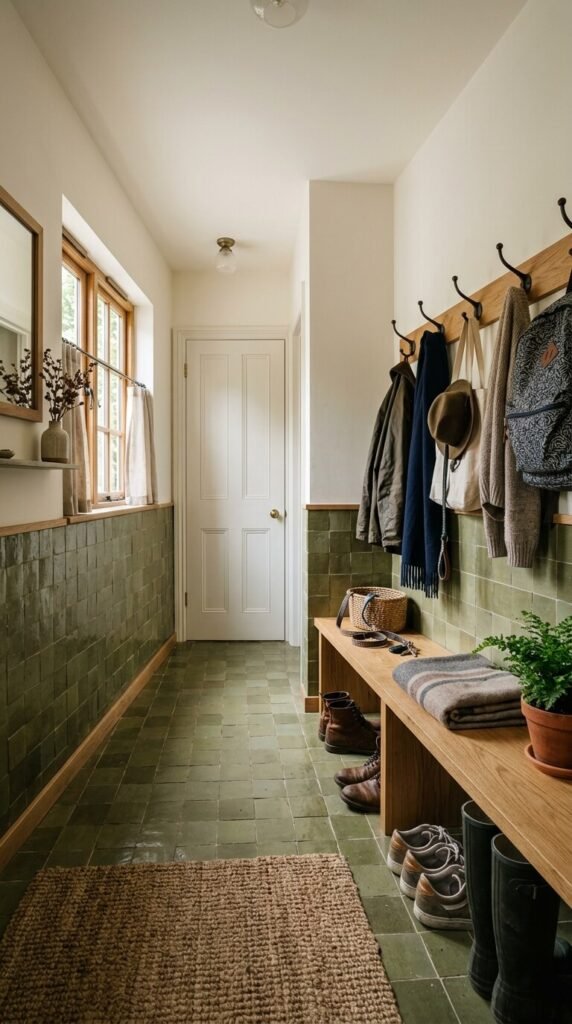
A mudroom sees heavy traffic and moisture — zellige handles both well when properly sealed. Olive green tiles in a wainscot installation (floor plus lower 36 inches of wall) create a practical, attractive barrier. Cap the wainscot with a simple bullnose tile or a thin wooden ledge to create a clean top edge. Keep upper walls in painted plaster or limewash to let the tile do the work below. This is a weekend project for an experienced DIYer.
21. Lavender and White Zellige Bathroom Vanity Surround
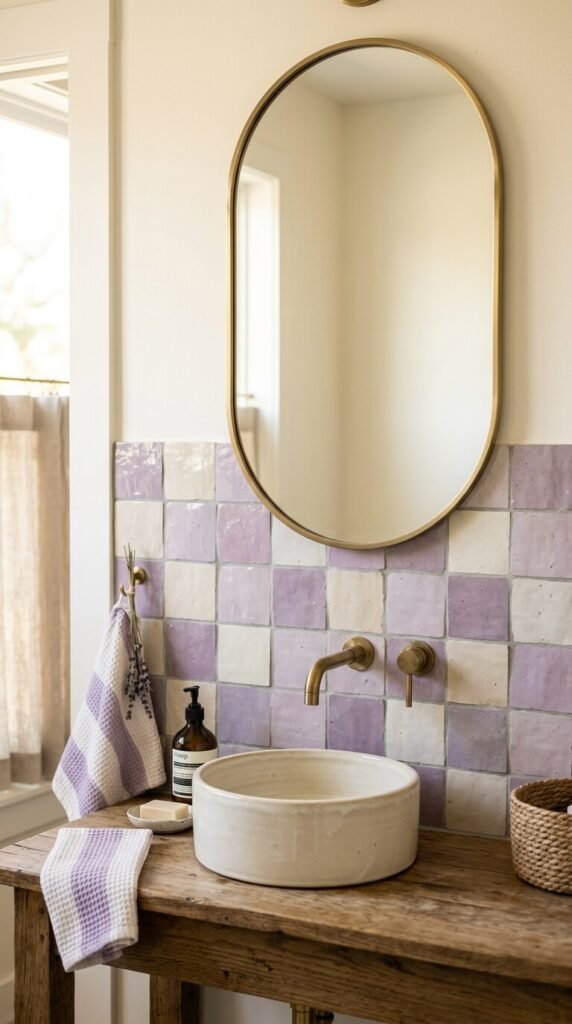
Lavender zellige is harder to find but absolutely worth the search. Paired with white, it stays sophisticated rather than sweet. The vanity surround is a contained project — typically just a few square feet of tiling around a sink area. This makes it an ideal first zellige project for someone new to tile installation. Soft grout in a warm ivory or pale gray keeps the look cohesive without darkening the lavender tones.
22. Zellige Feature Wall Behind a Freestanding Bathtub
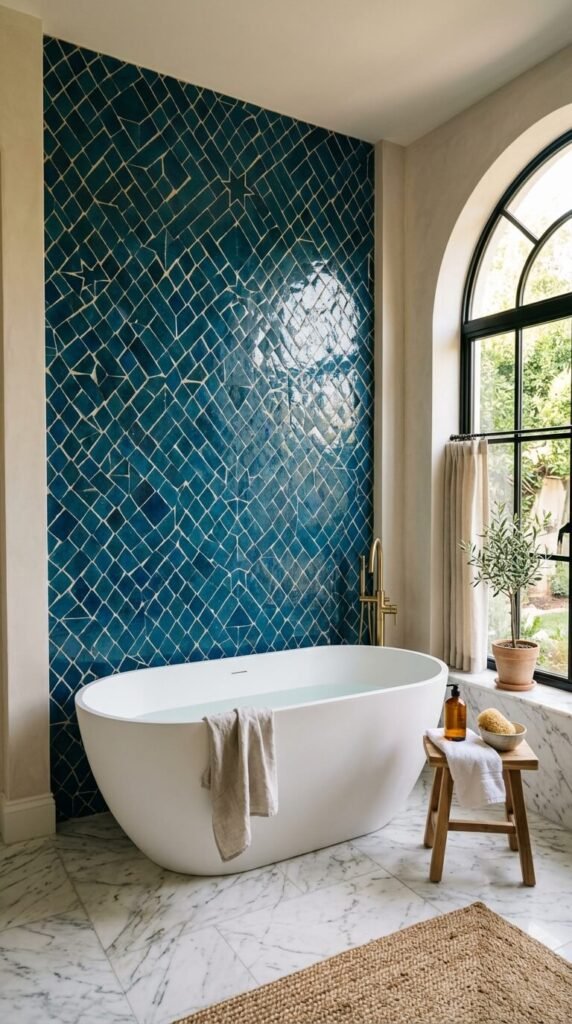
A zellige wall behind a freestanding tub is the ultimate bathroom statement. The tub floats in front of the tile — no built-in surround needed. Deep teal and cobalt make the wall feel like a piece of art. This is one project where hiring a professional tiler pays off. Large-format walls in geometric patterns require precise layout planning. The tile cost alone is significant, so getting the installation right the first time matters. Budget around $25–$60 per square foot installed.
Conclusion
Zellige tiles bring a quality to a room that’s difficult to put into words — but easy to feel the moment you walk in. The slight irregularities in glaze and cut are the point. They make your space feel made, not manufactured. Whether you start small with a stair riser project or go big with a floor-to-ceiling bathroom installation, the key is choosing the right space, planning your layout before you pick up a trowel, and sourcing your tile from a reputable Moroccan importer. Start with one room. See how it changes the way you feel about your home. Then go from there.