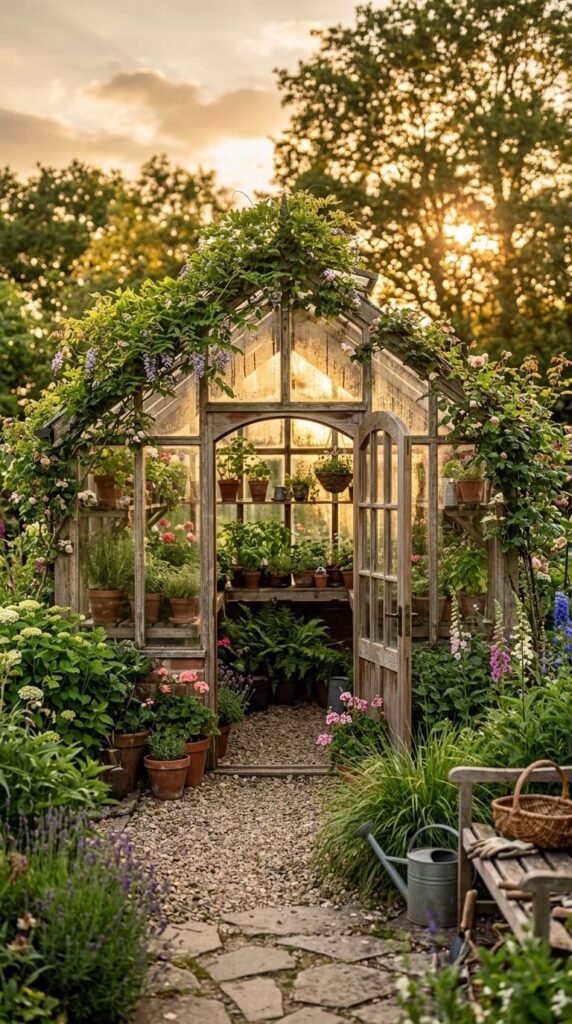
Growing food and flowers all year sounds like a dream — but it’s more possible than most people think. A greenhouse doesn’t have to be a giant commercial structure or a massive investment. It can be a simple lean-to against your fence, a reclaimed window cold frame, or a full glass cathedral in your backyard. The right design fits your space, your climate, and your budget. Whether you have a tiny urban plot or a sprawling rural yard, there’s a setup that works. These 23 greenhouse designs are practical, beautiful, and built for real gardeners who want results every single month of the year.
1. The Classic Victorian Glass House
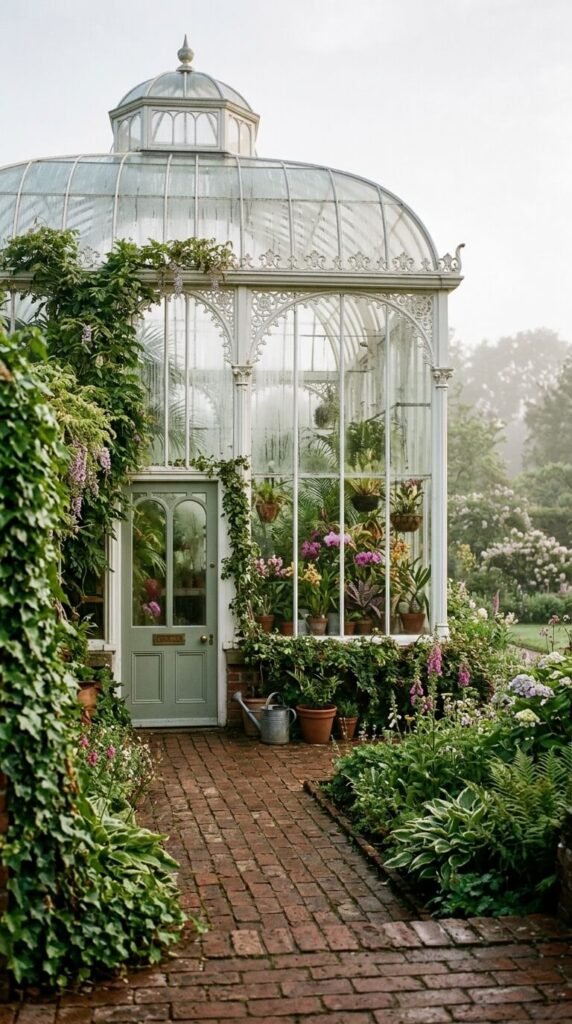
This style never goes out of fashion — and for good reason. The steep pitched roof sheds rain and snow naturally. The tall glass walls let in maximum light from every angle. Cast iron or aluminum framing keeps it sturdy for decades. You don’t need to buy new either. Many salvage yards sell reclaimed Victorian greenhouse frames at a fraction of the cost. Pair it with brick flooring and aged timber benches for a look that’s timeless. Even a small 8×10 ft version feels grand and grows a surprising amount year-round.
2. The Lean-To Greenhouse Against a South-Facing Wall
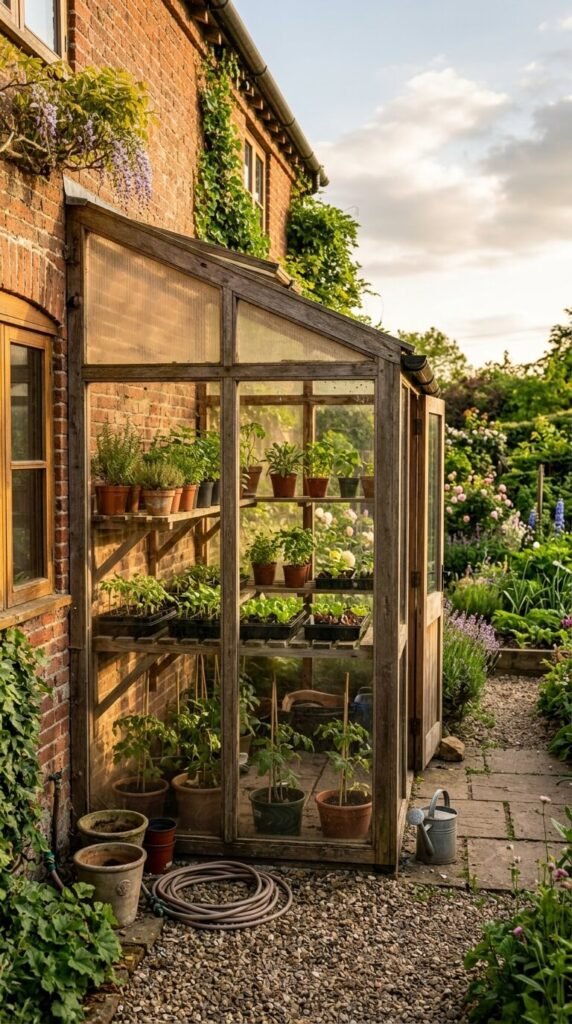
If space is tight, this is your best option. A lean-to greenhouse is built against an existing wall — usually the south-facing side of your house or garage. The wall acts as a heat sink, absorbing warmth during the day and releasing it at night. That means lower heating bills in winter. You only need to build three sides and a roof. Polycarbonate panels are lightweight and affordable. A basic 6×8 ft lean-to can cost under $500 to build yourself with salvaged timber and standard-size panels from a hardware store.
3. The Cold Frame Starter Greenhouse
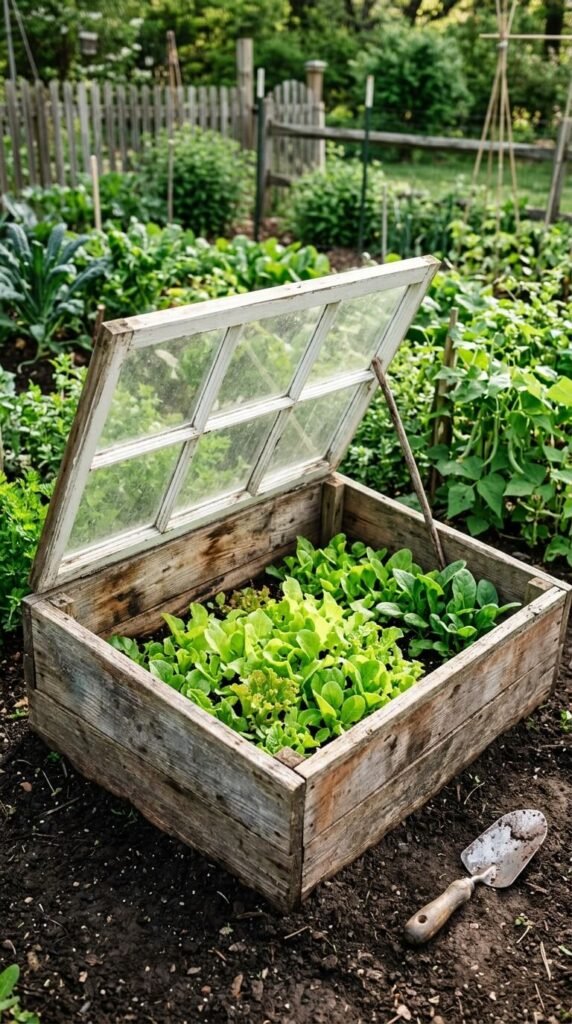
This is where most gardeners begin — and honestly, it’s underrated. A cold frame is basically a bottomless box topped with an old window or clear lid. It protects plants from frost without any heating at all. Perfect for starting seeds 6-8 weeks early or overwintering hardy greens like kale and spinach. You can build one in an afternoon from scrap wood and an old window sash. Cost? Sometimes free. Place it on a south-facing slope for extra warmth. Even beginners get impressive results from this humble setup.
4. The A-Frame Mini Greenhouse
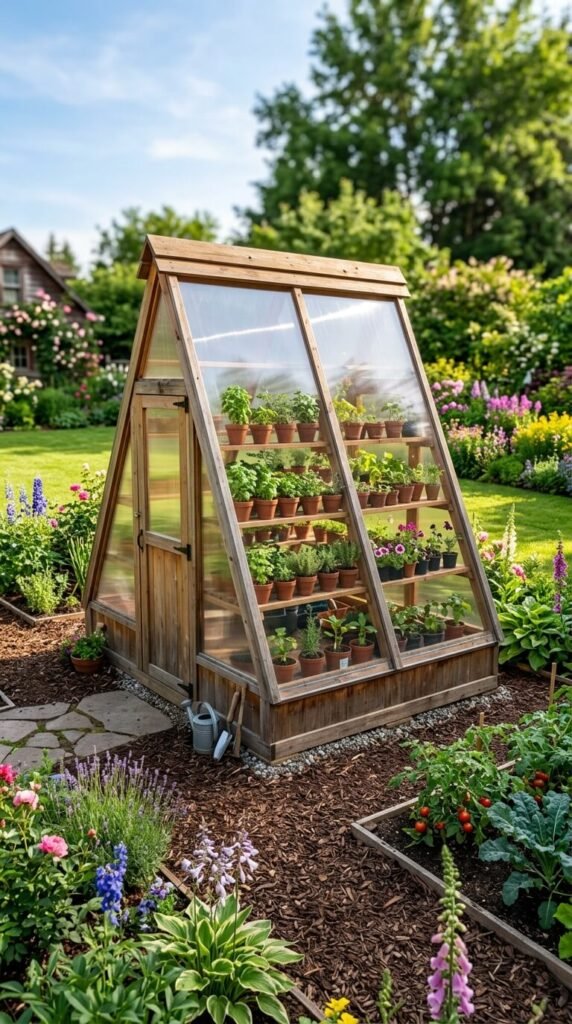
The A-frame shape is sturdy, simple, and sheds water beautifully. Because the walls slope inward, there’s less glazing material needed than a traditional upright design. Kits start around $200-$400, but a DIY version with timber framing and polycarbonate sheeting can be even cheaper. The sloped sides mean snow slides right off in winter. Great for climates that get heavy precipitation. Inside space is best used in the center where ceiling height is greatest — ideal for taller tomato plants or climbing cucumbers on central trellises.
5. The Gothic Arch Hoop House
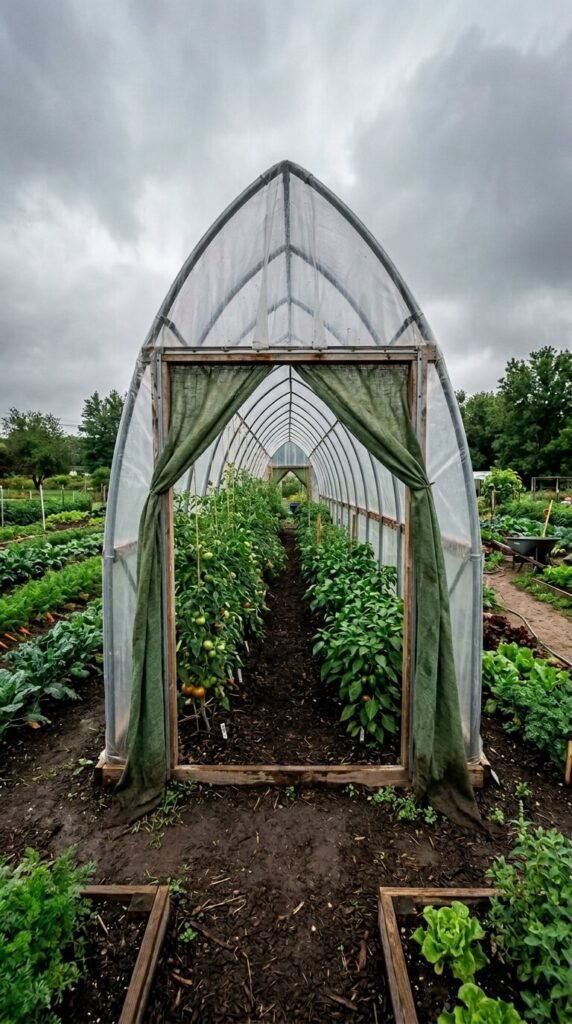
The gothic arch — that slight pointed curve at the top — is stronger than a standard hoop and sheds rain better. It’s popular on market farms but works just as well in a home garden. Galvanized steel ribs form the arch and can be covered with greenhouse poly film or shade cloth depending on the season. A 14×48 ft version can be built for around $800-$1,200 with basic tools. The inside height at the peak is usually 8-10 feet, giving plenty of room for tall crops, suspended baskets, and vertical growing systems.
6. The Geodesic Dome Greenhouse
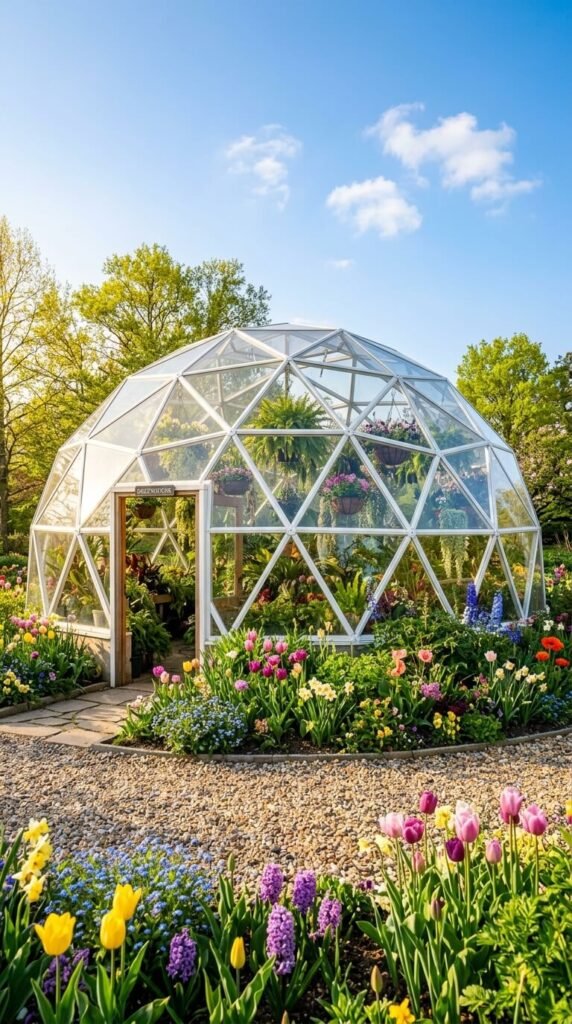
Round structures are naturally strong — and a geodesic dome is one of the most structurally sound shapes you can build. No internal columns means every inch of floor space is usable. The curved shape reduces wind resistance, making it ideal for exposed or windy sites. DIY dome kits are available online starting around $1,500. Experienced builders tackle them as weekend projects. The interior temperature stays more even than rectangular structures because warm air circulates without getting trapped in corners. It also just looks stunning in any garden.
7. The Reclaimed Window Greenhouse
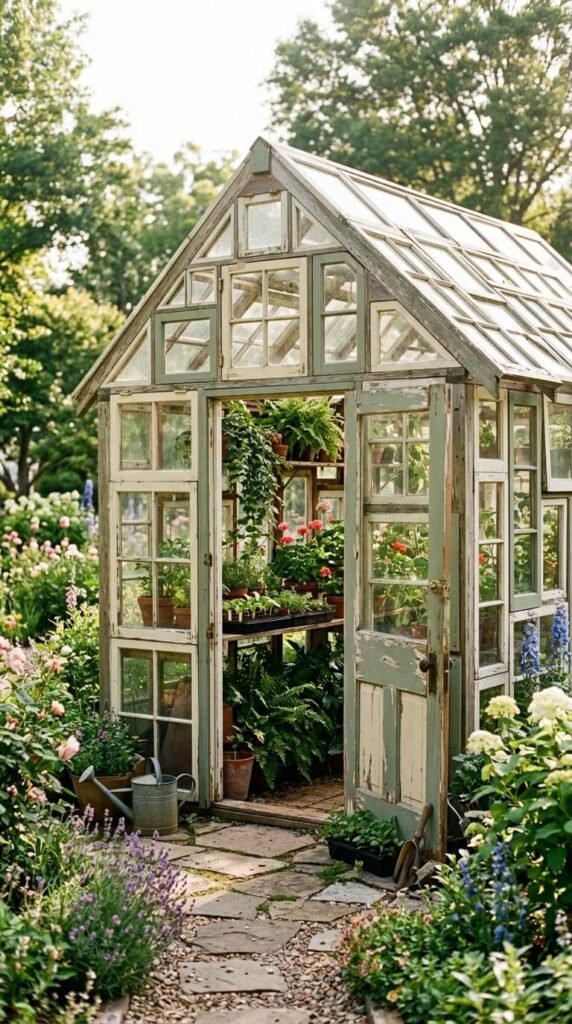
This is the most budget-friendly greenhouse you can build — and arguably the prettiest. Collect old wooden window frames from salvage yards, Facebook Marketplace, or demolition sites. Many are free or just a few dollars each. Frame them into a simple box structure on a treated timber base and you have a greenhouse that’s completely one-of-a-kind. The mismatched panes actually add charm. Gaps between frames can be sealed with weatherstripping or clear silicone. It won’t be perfectly airtight, but it extends your season significantly and costs almost nothing to build.
8. The Attached Sunroom Greenhouse
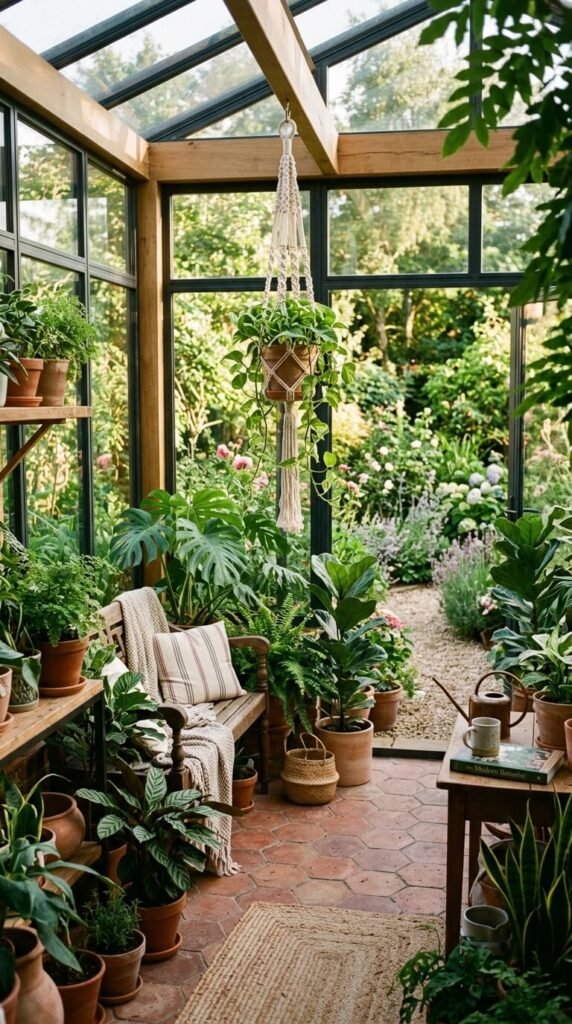
Your existing sunroom or conservatory can double as a serious greenhouse. South or west-facing sunrooms get enough light to grow herbs, citrus trees, succulents, and even some fruiting plants. Add supplemental grow lights on a timer for the shortest winter days. A small electric fan maintains air circulation and prevents mold. Lining the floor with gravel trays filled with water adds humidity for tropical plants. This setup costs little beyond the grow lights and has the added bonus of making your living space feel like a botanical garden.
9. The Underground Walipini Greenhouse
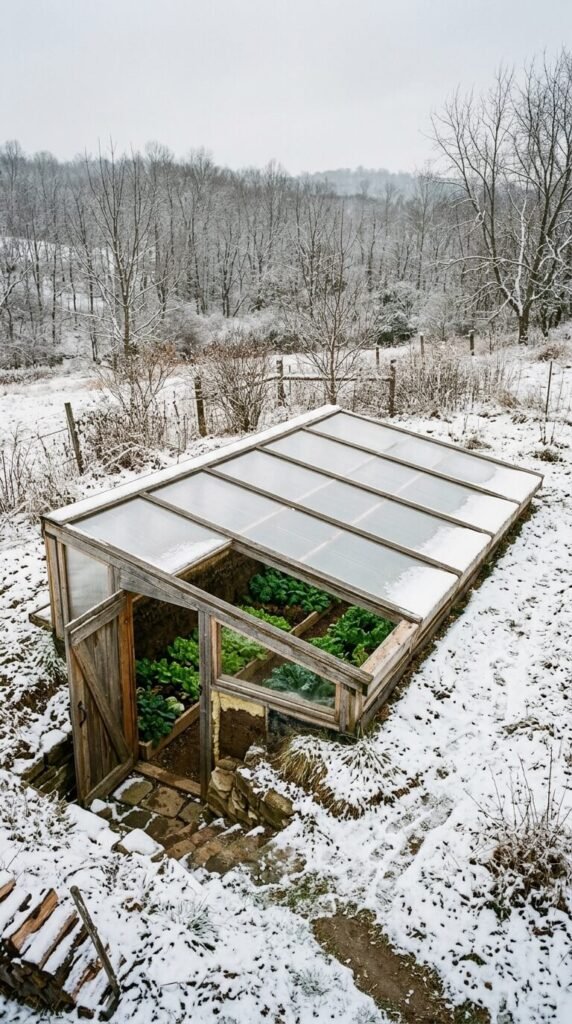
Built below grade, a walipini uses the Earth’s stable temperature to keep plants warm all winter — without any heating system at all. You dig a pit 6-8 feet deep, line the walls with adobe or packed earth, and top it with a glazed or polycarbonate roof angled toward the sun. The ground stays around 50-60°F even in freezing temperatures. Traditional in South America, this design is gaining fans in cold climates worldwide. It takes real digging effort or a mini excavator rental, but operating costs are nearly zero once it’s built.
10. The PVC Pipe Hoop House
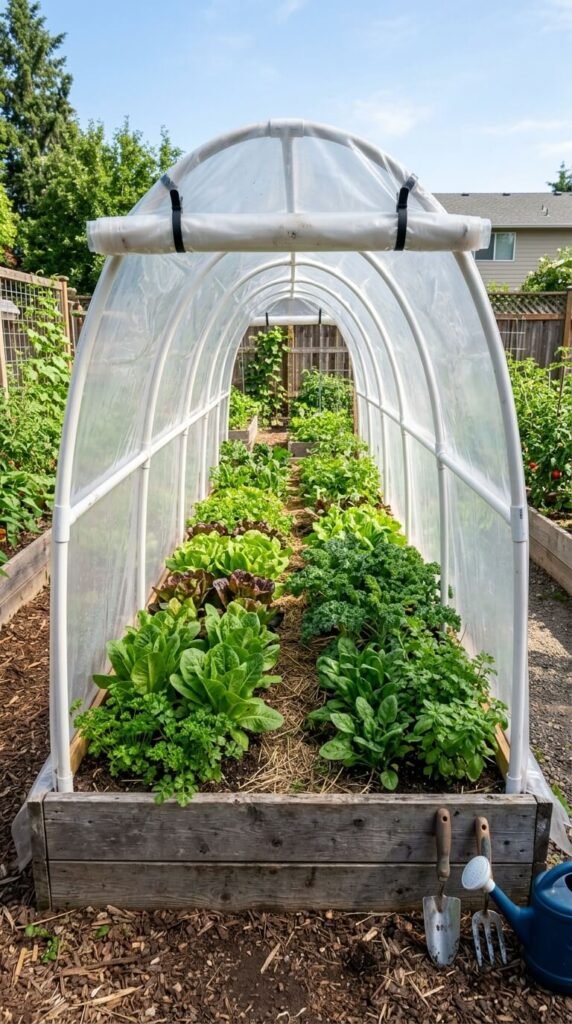
PVC pipe is lightweight, cheap, and flexible — perfect for a beginner greenhouse structure. Bend ¾-inch schedule 40 pipe into arches by pushing each end into rebar stakes driven into the soil. Cover with 6-mil greenhouse poly film and secure with clips or bungee cords. A 4×12 ft hoop house costs around $50-$80 in materials. It’s not permanent, which is actually a plus — you can move it to a different bed each season. Great for season extension in spring and fall, and can handle light snow loads if you keep the film taut.
11. The Timber Frame Post-and-Beam Greenhouse
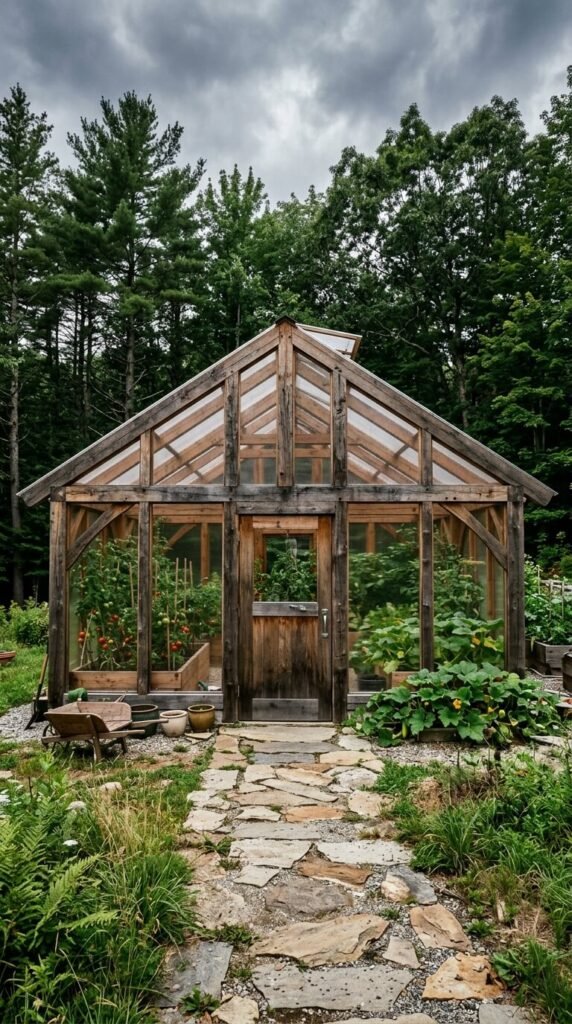
If you want something that lasts 50 years, a timber frame is the way to go. Douglas fir or cedar beams create a structure that’s beautiful, strong, and naturally rot-resistant. The bays between posts are glazed with polycarbonate or tempered glass. This style suits larger plots and serious growers. It’s a bigger investment — typically $3,000-$8,000 depending on size — but can be built in stages. Many timber framers offer barn-raising style builds where friends or community members help assemble the frame in a single weekend. It becomes a focal point of any property.
12. The Shipping Container Greenhouse Conversion
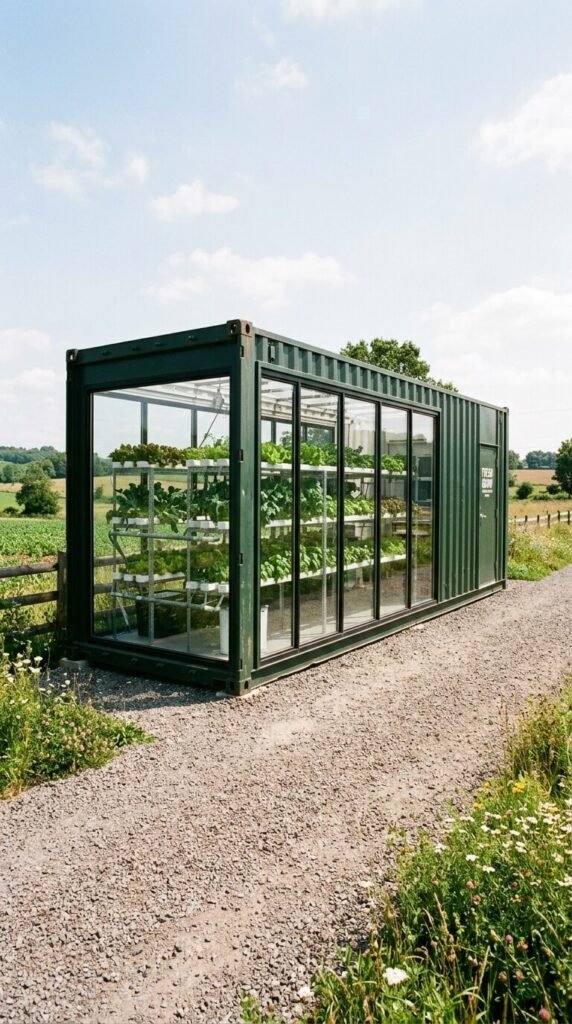
Shipping containers are structurally solid, weatherproof, and increasingly affordable. Cut one long wall out and replace it with glass or polycarbonate panels to create an instant growing space. The steel shell insulates surprisingly well and the container can be positioned to face south for maximum sun exposure. Used 20-ft containers cost $2,000-$3,500. Adding glazing and basic ventilation brings the total to around $5,000-$7,000. The remaining walls make great mounting surfaces for shelving, irrigation lines, and grow lights. A popular choice for urban rooftops and industrial spaces.
13. The Herb Tower Vertical Greenhouse
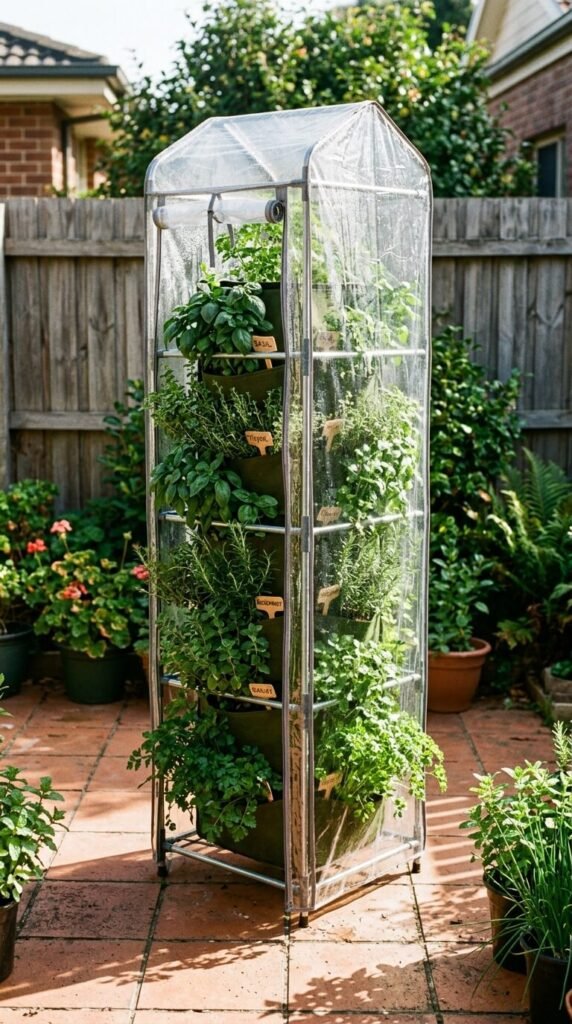
Limited floor space? Go vertical. A vertical greenhouse stacks growing pockets or shelves upward rather than outward. Four square feet of ground footprint can yield growing space for 30-40 herb plants. Simple versions use a steel shelving unit covered with a custom polycarbonate frame and clear side panels. Add a grow light overhead for indoor versions. These work beautifully on apartment balconies, small patios, or tight side passages. You can build one for under $150 using a metal shelving unit, zip ties, and a polycarbonate sheet cut to size.
14. The Polytunnel Market Garden Style
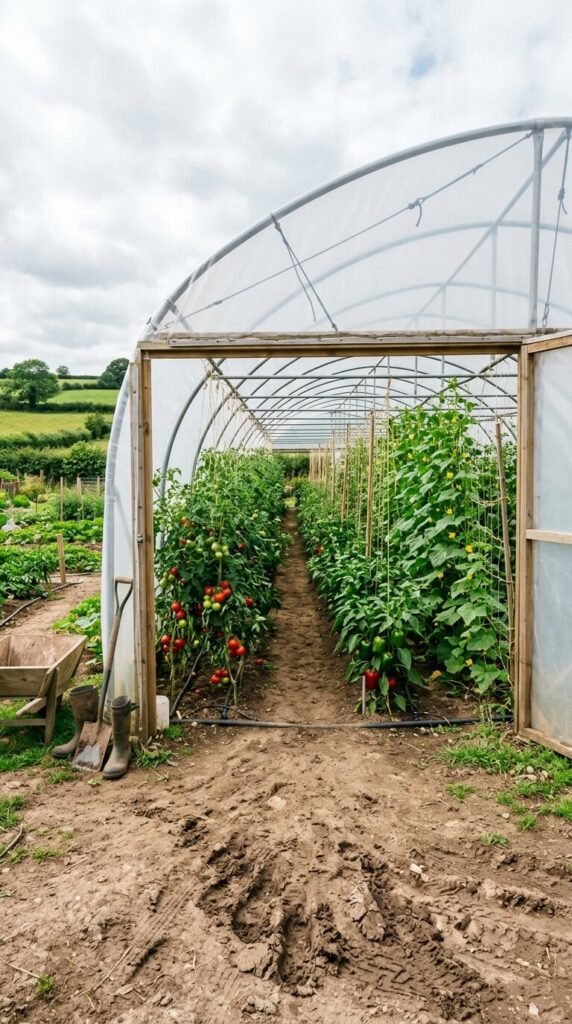
A polytunnel is the workhorse of serious home growers. Prices start around $400-$600 for a 14×25 ft tunnel with everything included — hoops, cover, doors, and anchors. Setup takes a weekend with two people. Inside, you can grow almost anything year-round, especially if you add a simple electric fan heater for the coldest nights. Tomatoes, peppers, cucumbers, and melons thrive in polytunnels because they trap heat and humidity perfectly. Many home gardeners say their polytunnel pays for itself in just one growing season through produce savings.
15. The Passive Solar Greenhouse With Thermal Mass
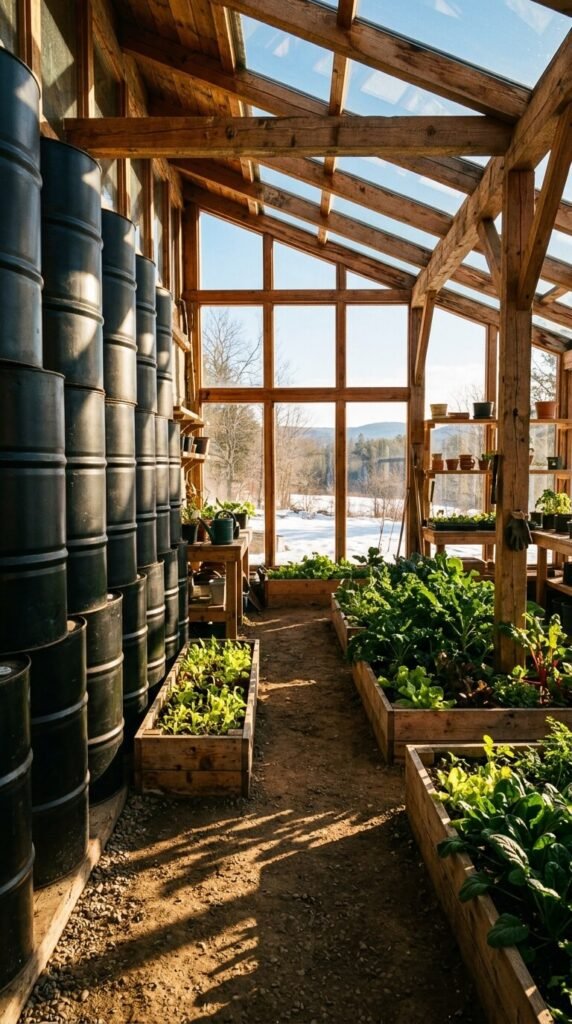
Passive solar greenhouses use smart design instead of electricity to stay warm. The key is thermal mass — materials like water barrels, stone walls, or brick floors that absorb heat during the day and release it slowly overnight. A north wall insulated with straw bales keeps heat from escaping. The south wall is fully glazed to capture winter sun. No heater required in many climates. This design takes more planning upfront but costs almost nothing to run. Even in zones with hard winters, a well-designed passive solar greenhouse can stay frost-free without any power source.
16. The Raised Bed Cloche Tunnel
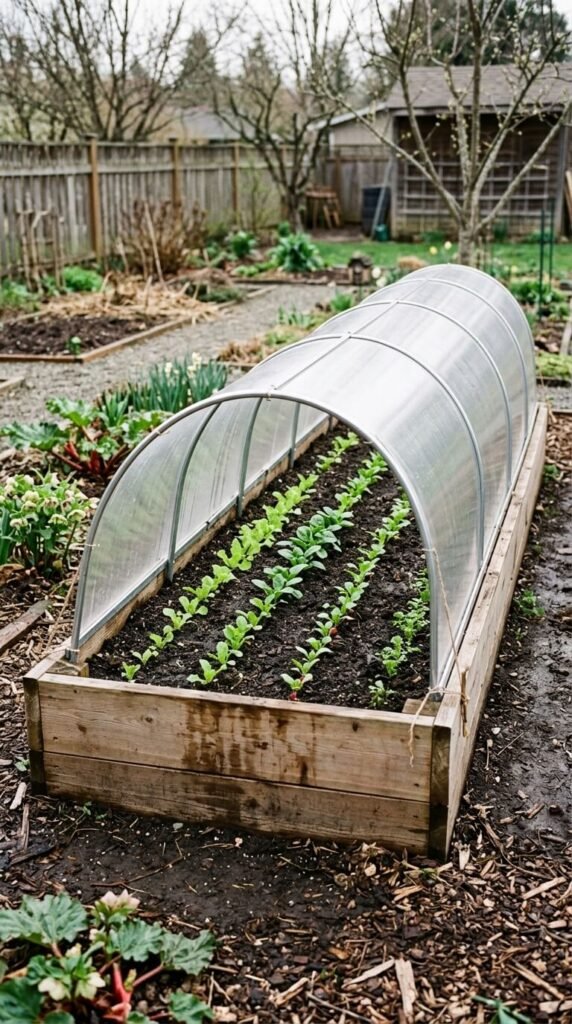
Not quite a full greenhouse, but far more useful than leaving beds exposed. A raised bed cloche is a series of low hoops covered with clear polycarbonate or heavy-duty plastic fitted directly over an existing raised bed. It extends your growing season by 4-6 weeks on each end — that’s nearly three extra months of growing time per year. Cost is minimal: hoops and a sheet of polycarbonate or row cover fabric. You can clip one side to hinge open for easy access. Ideal for overwintering hardy crops like carrots, beets, and winter lettuces.
17. The Indoor Grow Tent Greenhouse
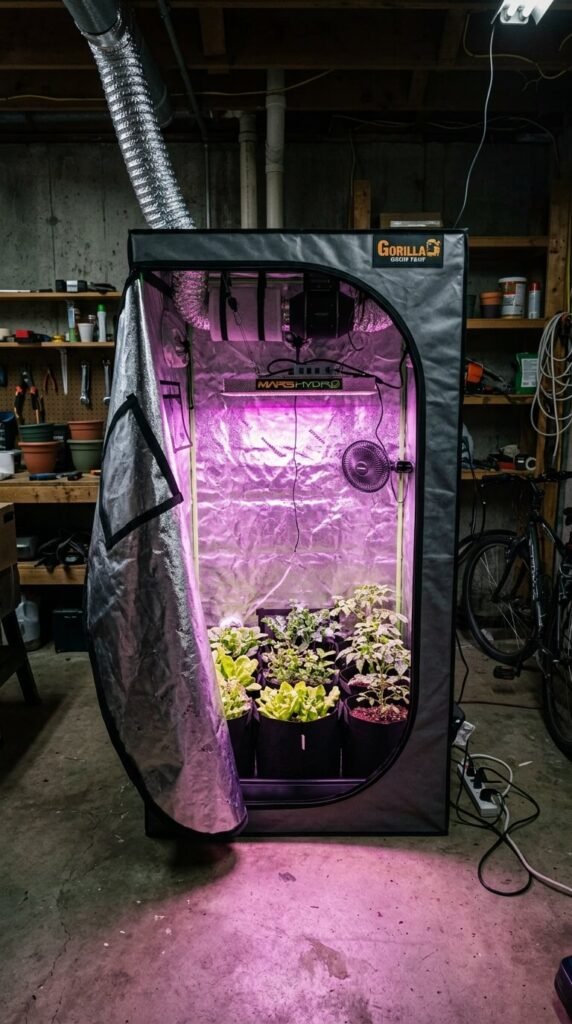
A grow tent lets you create a controlled greenhouse environment anywhere indoors — a garage, basement, or spare room. Reflective interior lining bounces light back onto plants from every angle, increasing efficiency. A 4×4 ft tent with an LED grow light, fan, and carbon filter costs around $300-$500 complete. You control temperature, humidity, and light cycles precisely. Perfect for year-round seed starting, growing microgreens, or maintaining tropical plants through winter. No weather dependency at all. It’s the most controllable growing environment possible short of a full commercial climate-controlled facility.
18. The Straw Bale Greenhouse
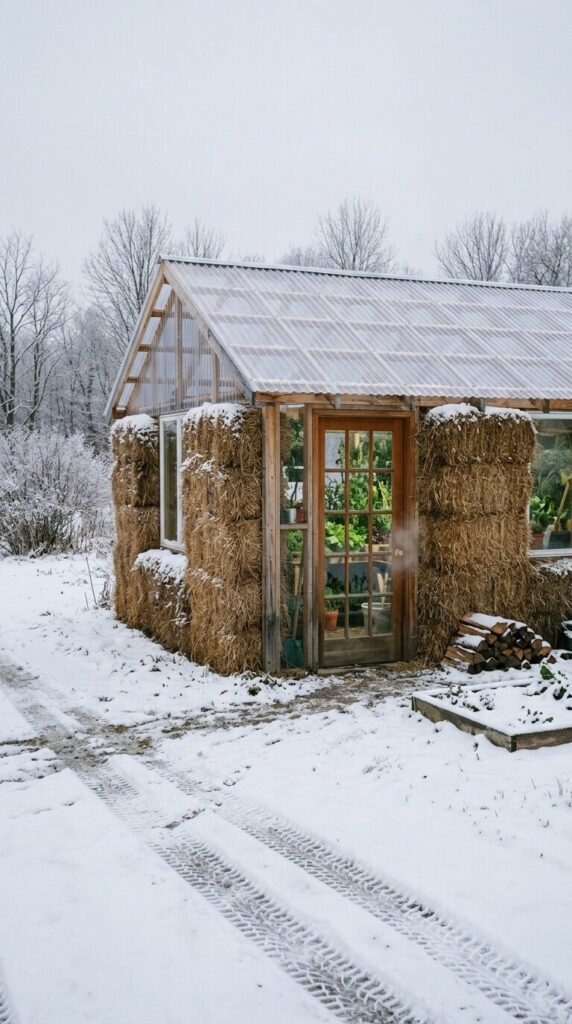
Straw bales are one of the best natural insulating materials available. A greenhouse with straw bale walls stays dramatically warmer than a glazed structure alone because the bales slow heat loss significantly. The roof and south-facing wall are glazed. The remaining three walls are bales stacked two high and plastered with clay or lime to seal them. Cost is very low — bales cost $5-$10 each, and you need around 30-40 for a small structure. It’s not permanent (bales break down after 3-5 years) but it’s a genuinely warm and effective growing space.
19. The Bamboo Frame Greenhouse
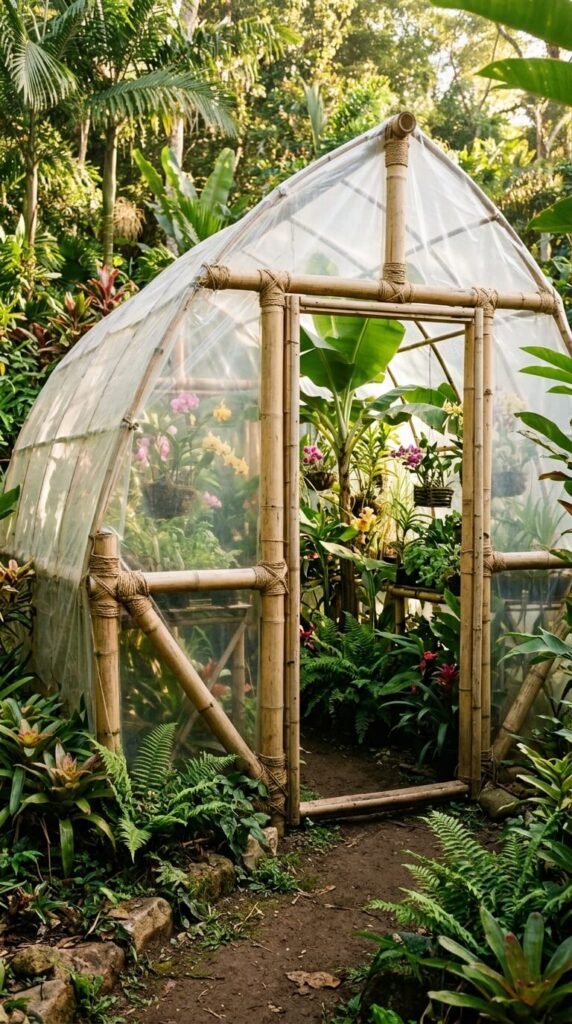
Bamboo is one of the strongest natural building materials on Earth — and it grows fast, making it genuinely sustainable. Thick-walled bamboo culms can be lashed together to form arches, A-frames, or box structures. Cover with greenhouse poly film or shade cloth depending on your climate. This approach works especially well in subtropical climates where bamboo grows locally and costs nothing. Even bought in bulk, bamboo poles are far cheaper than steel. It’s lightweight enough to move if needed and biodegrades naturally at end of life. An eco-friendly choice with real structural strength.
20. The Repurposed Old Shed Greenhouse
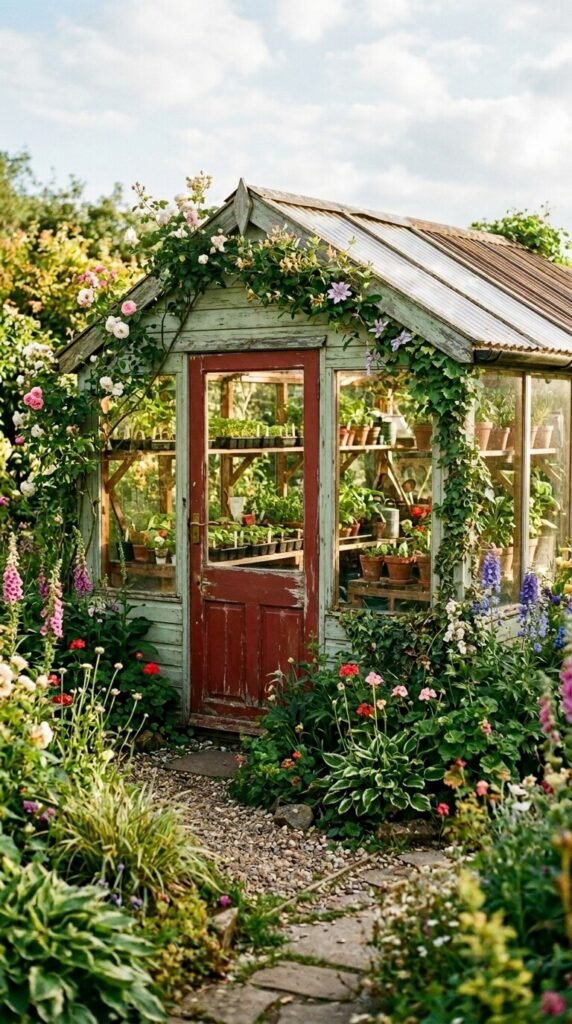
That old shed sitting unused at the back of your garden? It can become a greenhouse in a weekend. Cut rectangular openings in the south and east-facing walls and fit polycarbonate sheets in the openings using simple timber frames. The existing roof can be partially replaced with clear panels to add overhead light. The solid walls provide insulation on the cold north and west sides — better than a fully glazed structure. Cost is mostly materials for the polycarbonate panels, which run about $1.50-$3.00 per square foot. A genuinely clever reuse of an existing structure.
21. The Glass Bottle Wall Greenhouse
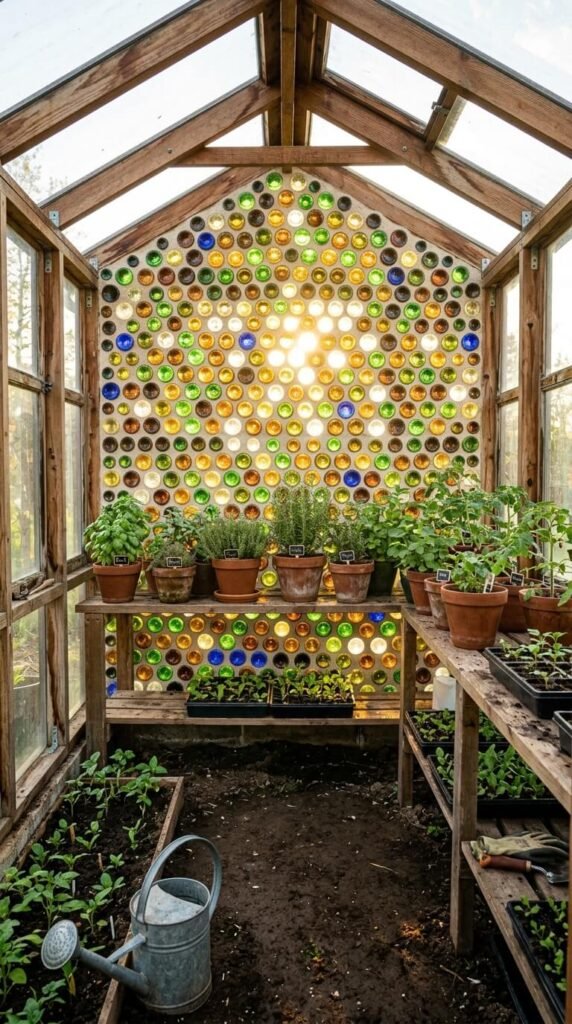
This is the most artistic greenhouse design on this list. Collect wine bottles, beer bottles, or mason jars and set them in lime mortar to build a solid, insulating wall that also transmits diffused light. The bottles come in green, brown, and clear, creating a stained-glass effect inside. The wall insulates better than a single layer of glass and the effect on winter mornings is genuinely beautiful. It takes time to collect enough bottles and lay the wall, but material cost is almost nothing. Great as the back wall of a lean-to or end wall of a small structure.
22. The Mobile Rolling Greenhouse
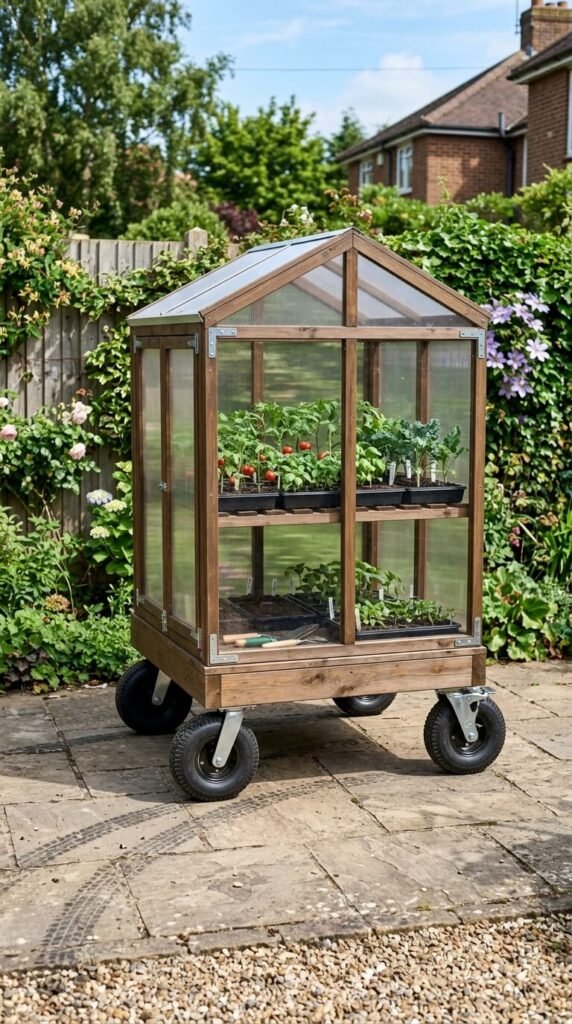
A rolling greenhouse is one of the most practical ideas for small gardens. Build a simple polycarbonate frame on a heavy-duty wheeled base — a wooden platform with four large caster wheels. Roll it over your raised beds in spring to warm the soil and protect early seedlings. Move it again when frost threatens in autumn. It acts like a portable season extender that you can position wherever it’s needed. No fixed foundation required. A 4×6 ft version can be built for around $200-$300. It’s light enough for one person to move easily across a flat surface.
23. The Aquaponic Greenhouse System
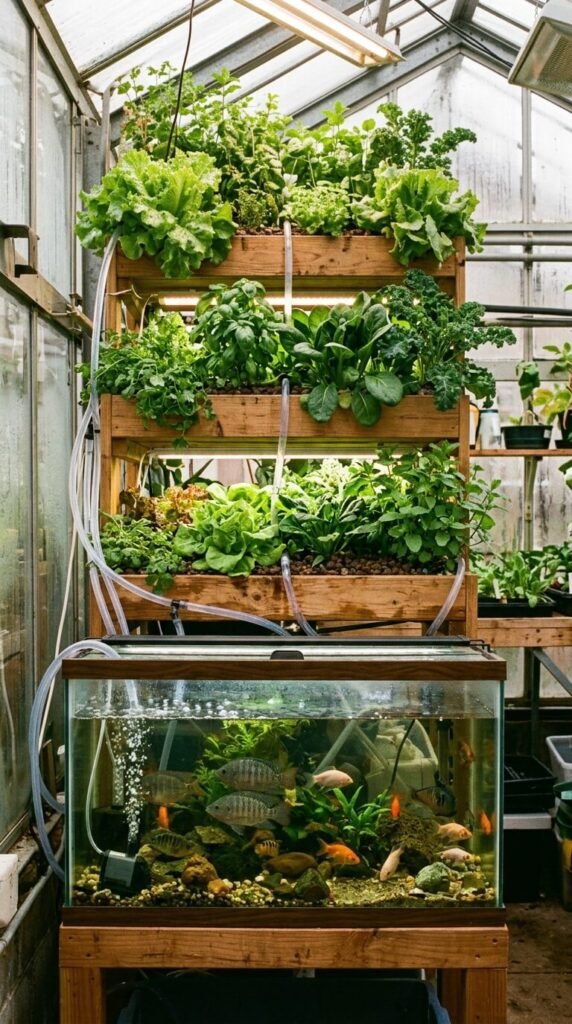
An aquaponic greenhouse combines fish farming with plant growing in a closed-loop system. Fish waste feeds the plants. Plants clean the water for the fish. It sounds complex, but starter systems are surprisingly approachable. A 200-gallon fish tank below grow beds planted with lettuce, herbs, and spinach can produce both protein and vegetables year-round. Tilapia and goldfish are the easiest fish to start with. Kits start around $1,000, or you can build from scratch for less. The system runs largely on its own once balanced. Water use is 90% lower than soil gardening.
Conclusion
A greenhouse doesn’t have to be expensive, complicated, or even permanent to change the way you grow food and plants. The 23 designs here prove that with creativity and a willingness to start small, almost any gardener can grow year-round — regardless of climate or budget. Start with a cold frame or a PVC hoop house this season. See how it changes your relationship with growing. Then scale up when you’re ready. The best greenhouse is the one you actually build, not the perfect one you keep planning. Pick one design, gather your materials, and start growing.