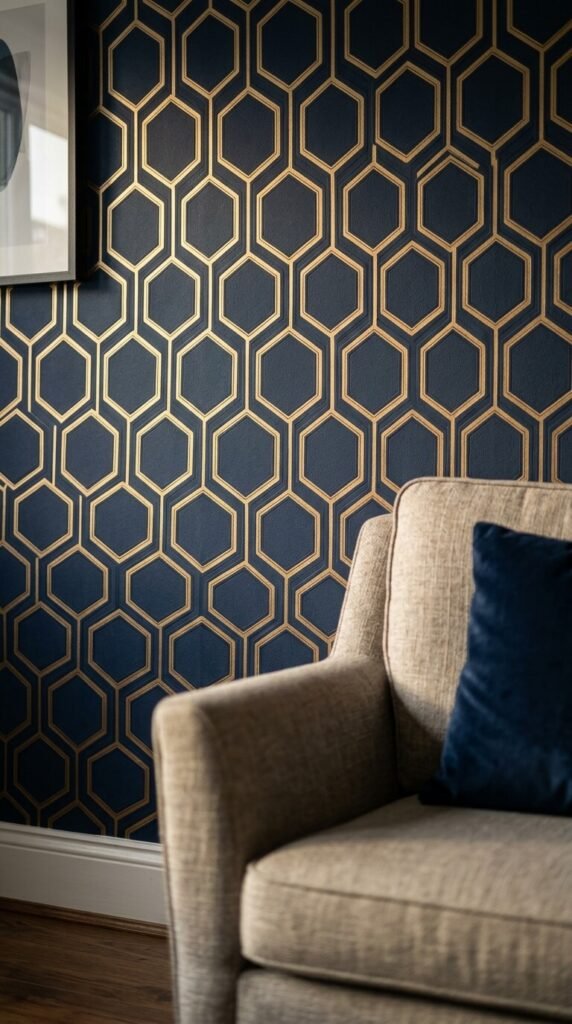
Geometric wallpaper is one of the fastest ways to change the personality of a room. The right pattern doesn’t just sit on the wall — it moves, pulses, and sets a rhythm that your eye follows around the space. Whether you’re redecorating a rental apartment on a tight budget or planning a full room makeover, bold geometric patterns give you maximum visual impact with minimal effort. This guide covers 24 standout geometric wallpaper styles, what makes each one work, and how to use them without overcomplicating your space.
1. Classic Black-and-White Houndstooth
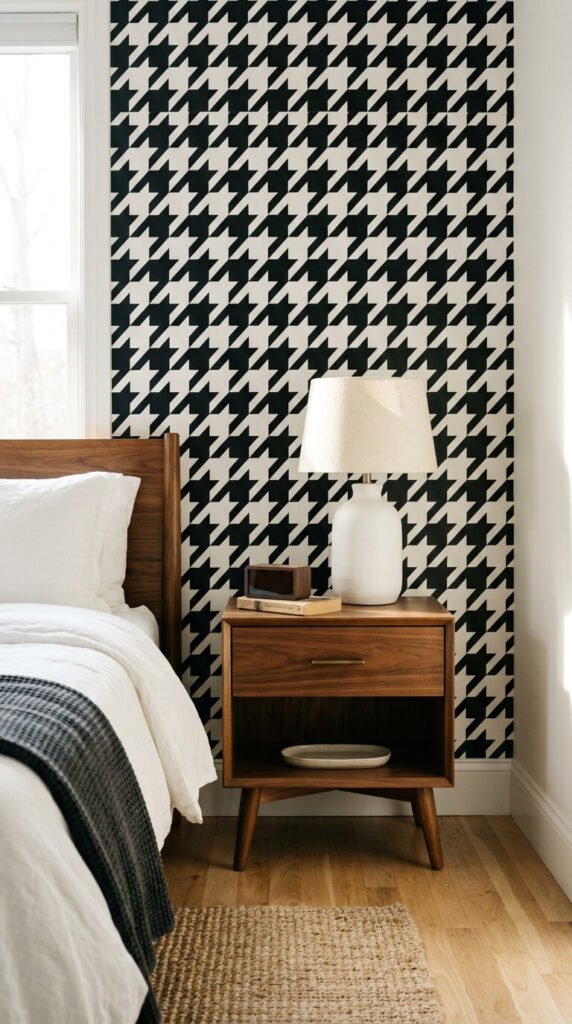
Houndstooth is one of the most recognizable geometric prints ever created. Scaled up for walls, it stops being a fabric pattern and becomes a bold architectural statement. Use it on a single accent wall behind your bed or sofa. Keep the rest of the room neutral — white, cream, or warm grey — so the pattern has room to breathe. You can find peel-and-stick houndstooth wallpaper starting around $25 per roll, making it a great low-commitment option for renters.
2. Oversized Hexagon Grid
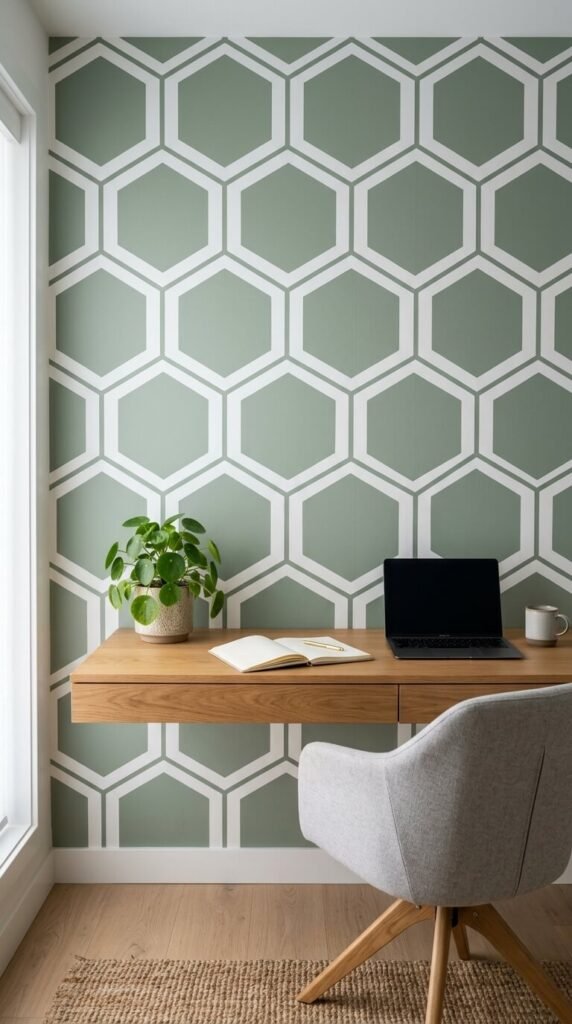
Hexagons feel both natural and mathematical at the same time. Large-scale hexagon grids work especially well in home offices, bathrooms, and kitchens. The repeating structure creates calm visual rhythm without feeling chaotic. Try a two-tone version — soft olive and cream, or charcoal and off-white — for balance. DIY tip: use a hexagon stamp and chalk paint on a plain wall for a budget alternative under $15. The result looks intentional and handcrafted.
3. Diagonal Stripe with Color Blocking
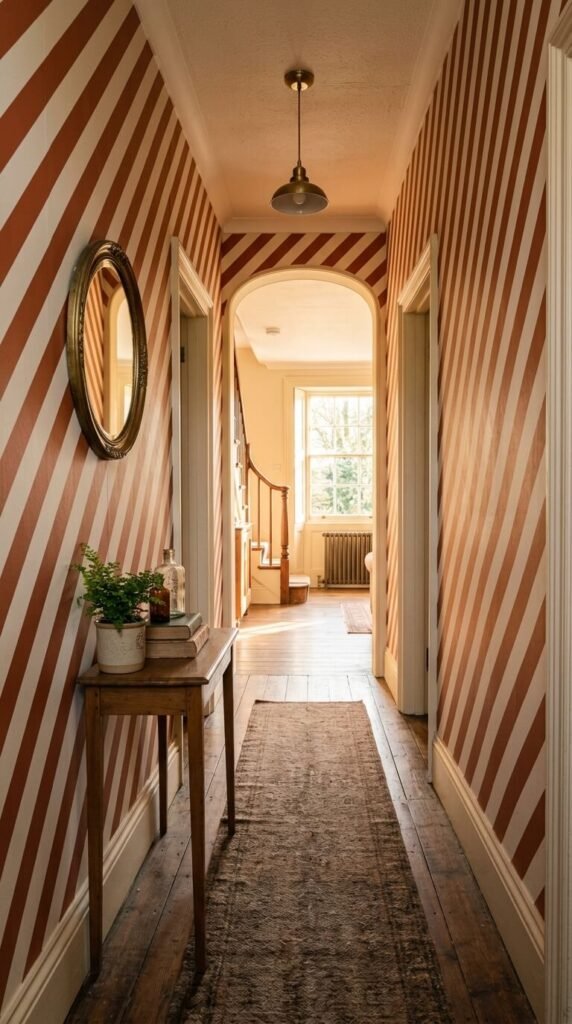
Diagonal stripes do something vertical or horizontal stripes can’t — they add kinetic energy. The eye travels along the angle, making a room feel dynamic rather than static. In narrow hallways, diagonal stripes distract from the tunnel effect. In a bedroom, they add drama without weight. Stick to two colors maximum. Bold contrast like navy and white reads sharply from across the room. A softer pairing like dusty rose and blush creates a quieter rhythm.
4. Moroccan Trellis (Quatrefoil)
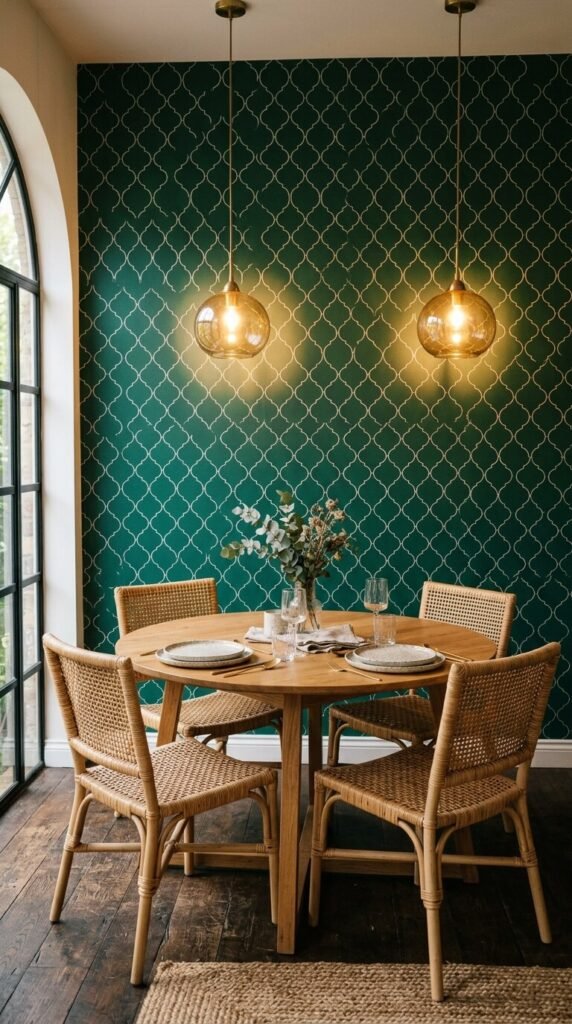
The quatrefoil has been used in architecture for centuries. On a wall, it becomes a geometric tapestry that feels simultaneously classic and current. The repeating curved diamond shapes create a trellis-like structure that draws the eye inward. Deep jewel tones — emerald, sapphire, or burgundy — make it feel rich. Lighter versions in blush or mint feel more playful. This pattern works best in dining rooms and entryways where you want to make a strong first impression.
5. Isometric Cube Illusion
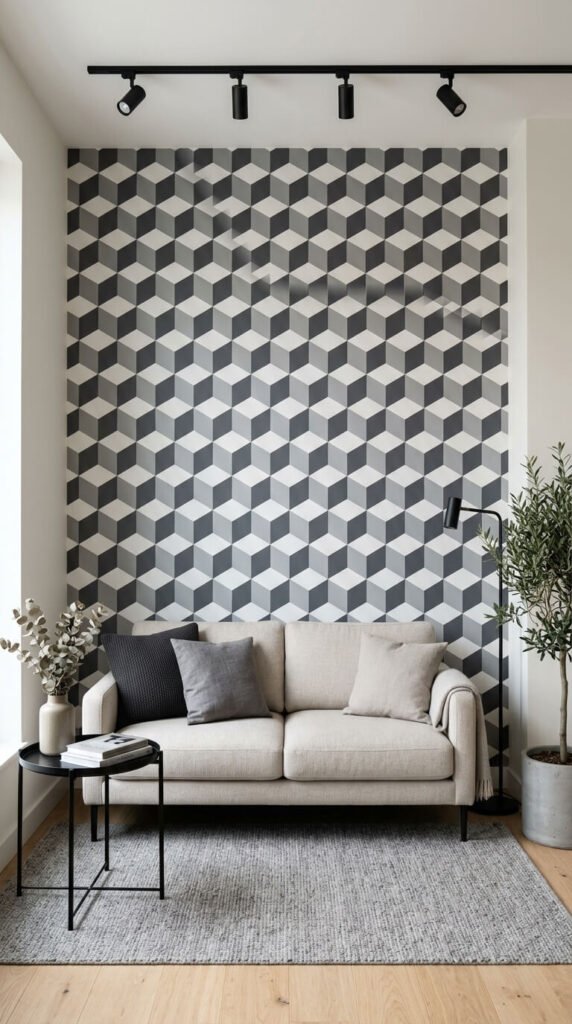
The isometric cube pattern is a visual trick — a flat wall that appears three-dimensional. Three tones of the same color (light, mid, dark) are arranged into cube faces, creating depth. It works brilliantly in small rooms because it makes walls feel recessed rather than close. Stick to a monochromatic palette to keep it sophisticated. Grey, navy, or forest green all work well. Peel-and-stick versions are widely available online and removable, making this great for renters.
6. Art Deco Fan (Scallop) Pattern
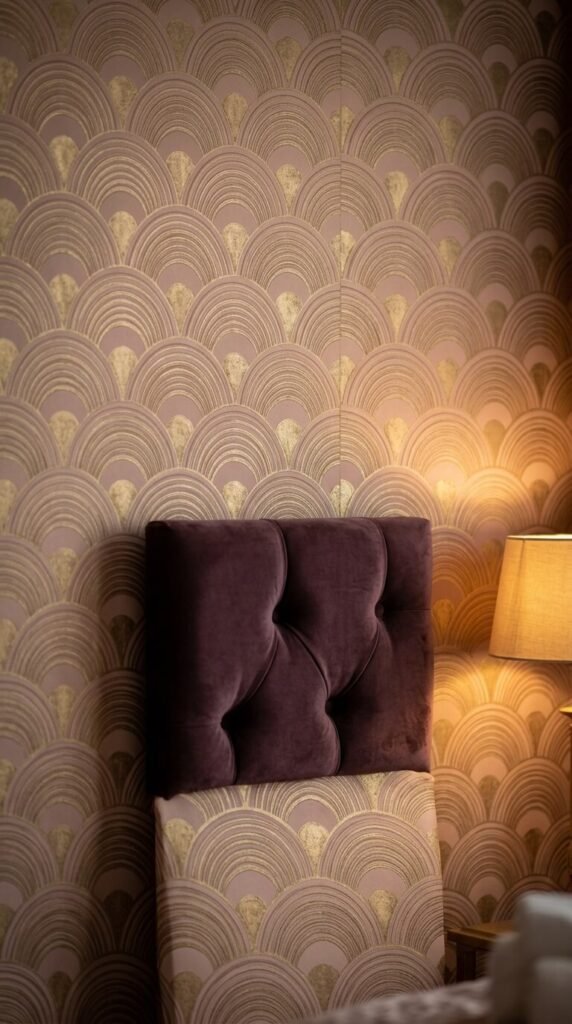
Fan patterns from the Art Deco era feel simultaneously glamorous and geometric. Overlapping scallops or fan shapes stack into rows, creating a rhythmic wave that moves across the wall. The pattern is especially striking in bedrooms and powder rooms. Choose matte finishes for a subtle look or metallic accents (gold, bronze) for drama. Budget tip: removable scallop-patterned wallpaper is available from many online shops for around $30–$45 per roll.
7. Thin-Line Grid (Graph Paper Aesthetic)
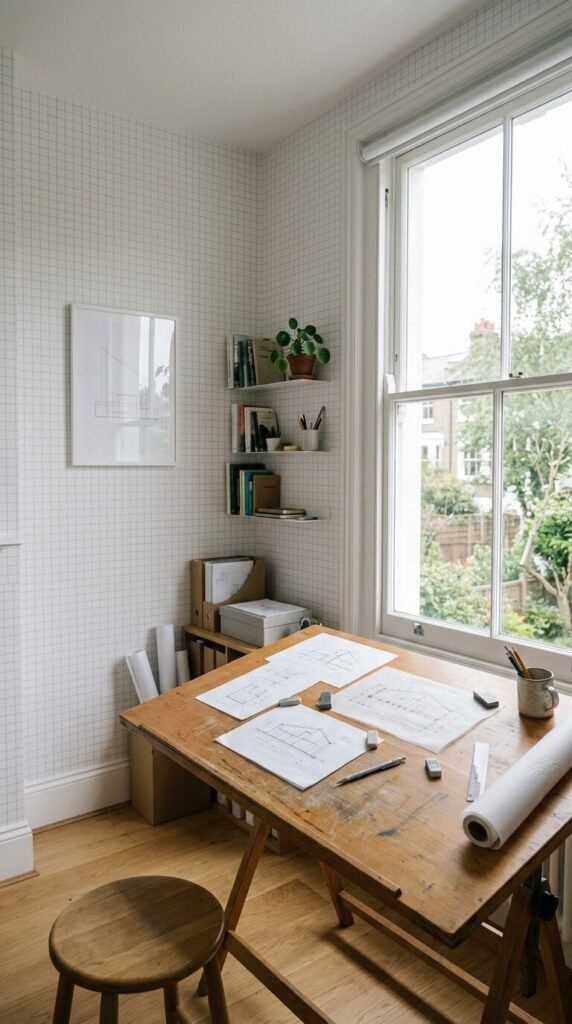
Graph paper walls have become popular in home offices and creative studios because they communicate structure without loudness. Thin grey lines on a white background create a grid that feels technical and clean. The pattern disappears into the background from far away but rewards a closer look. It pairs beautifully with natural wood furniture and potted plants. You can DIY this with painter’s tape and a light grey paint — run tape lines every six inches vertically and horizontally, paint, then peel.
8. Chevron in Earthy Tones
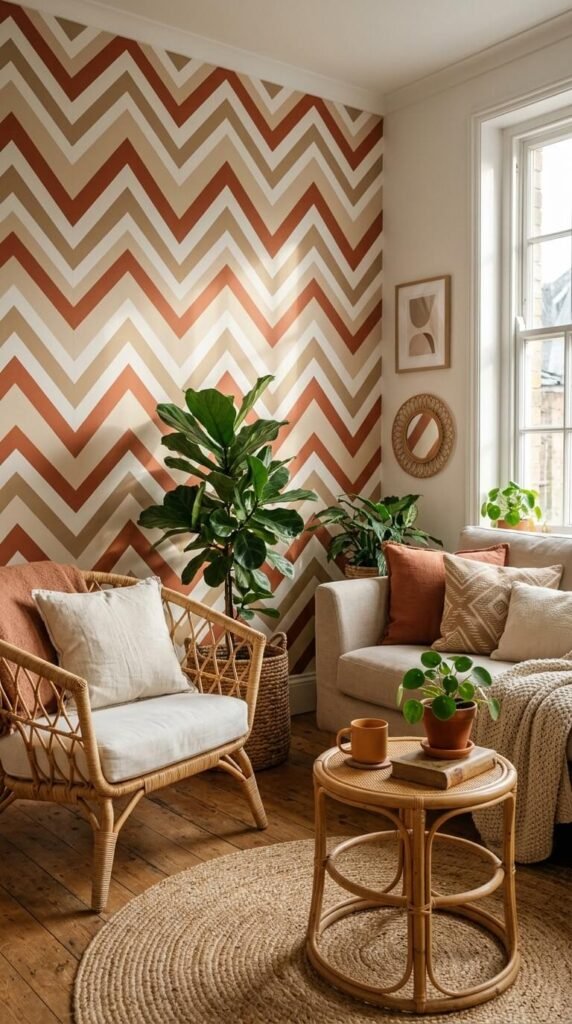
Chevron is a zigzag pattern where the points align perfectly, creating a continuous arrow movement across the wall. In earthy tones — terracotta, sand, warm white — it feels organic and grounded rather than aggressive. Use it in living rooms or bedrooms where you want rhythm without tension. Wider chevron stripes feel more relaxed; narrow ones feel more precise. Mix with woven textures like jute rugs and rattan chairs to balance the geometry with warmth.
9. Stacked Brick Geometry
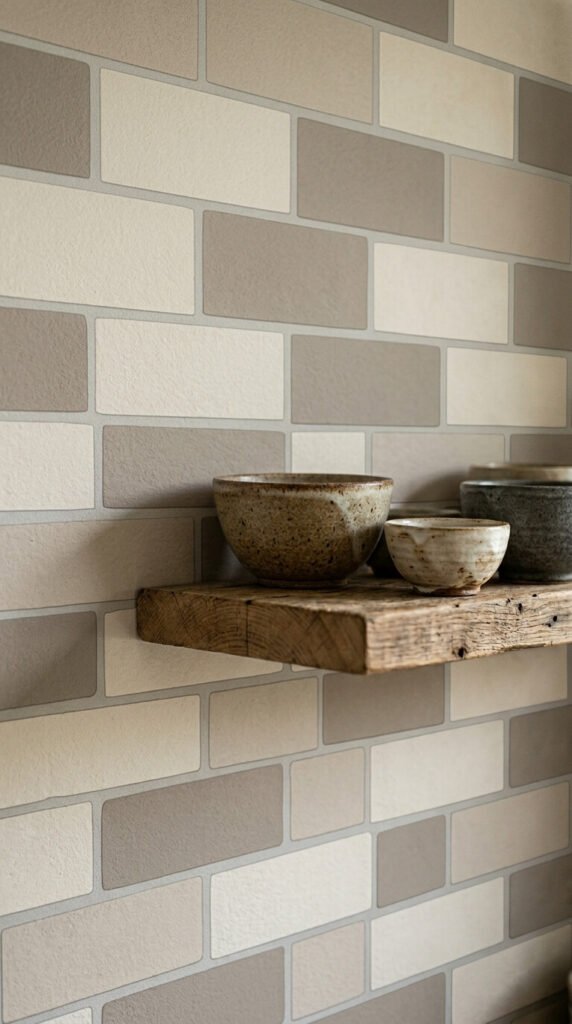
Brick-inspired geometric wallpaper captures the orderly rhythm of masonry without the weight or cost. The stacked rectangular blocks create horizontal movement and a sense of stability. It works in kitchens, bathrooms, and utility spaces where you want an industrial-but-warm feel. Choose a matte finish with subtle texture variation to make it feel more realistic. This pattern is widely available as self-adhesive wallpaper for under $20 per roll and requires no special tools to install.
10. Triangle Mosaic (Low-Poly Look)
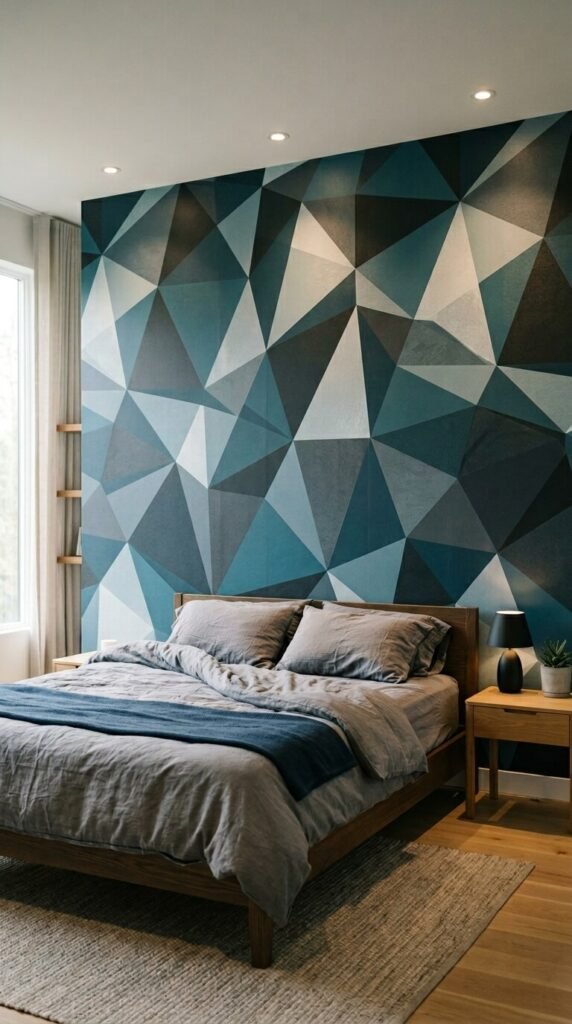
The low-poly triangle pattern is inspired by 3D computer graphics and feels simultaneously futuristic and artistic. Adjacent triangles in closely related colors create a faceted surface that mimics the look of cut stone or polished gemstone. It works especially well in bedrooms and teen rooms where a bit of edge is welcome. Stick to a limited color family — cool blues and silvers, or warm ochres and rusts — to keep the mosaic cohesive rather than chaotic.
11. Diamond Lattice in Two Colors
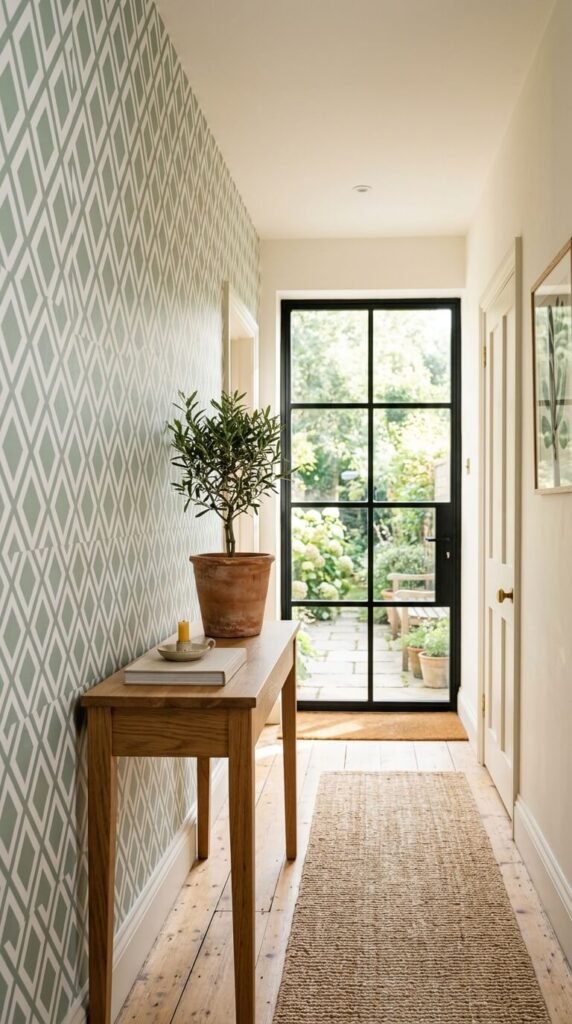
A diamond lattice is a grid rotated 45 degrees — simple, structured, and endlessly elegant. Two-color versions are the easiest to execute and the most impactful. White and sage, black and cream, or navy and gold all read beautifully. The pattern suits hallways and entryways particularly well because it creates rhythm along a linear path. Many retailers sell diamond lattice peel-and-stick wallpaper. Budget option: use masking tape and paint to DIY the pattern on any smooth wall surface.
12. Sunburst and Radial Fan Pattern
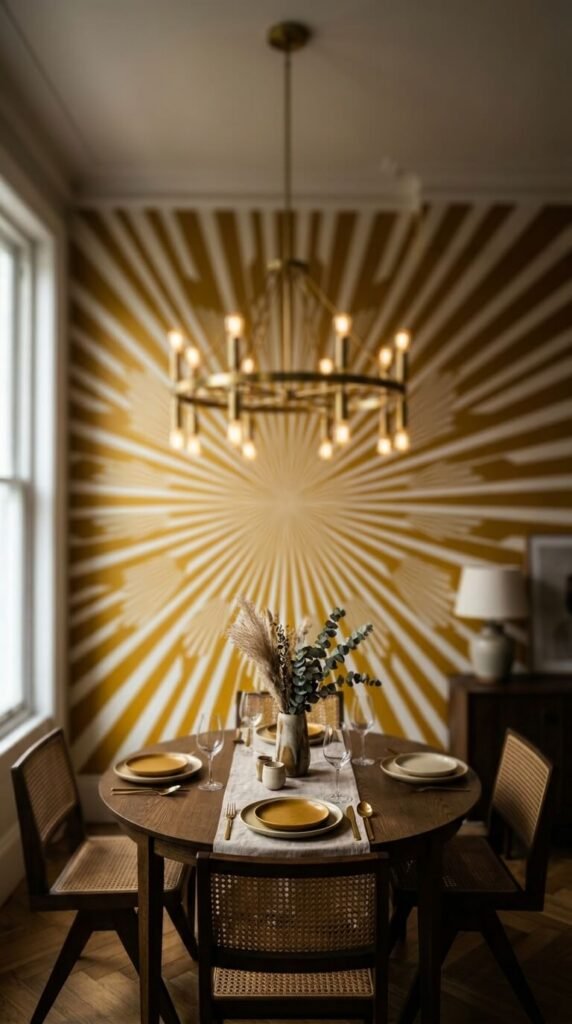
Sunburst patterns radiate outward from a central point, creating a sense of expansion and energy. When used as a full wall mural-style pattern, the room feels like it’s opening up. In a dining room, center the sunburst behind the table so the rays frame the space naturally. Mustard yellow and white is a classic combination. Deep rust on a cream background feels vintage and warm. Available as custom-printed wallpaper murals from many online vendors for $80–$150 per panel.
13. Interlocking Circles (Chain Link Geometry)
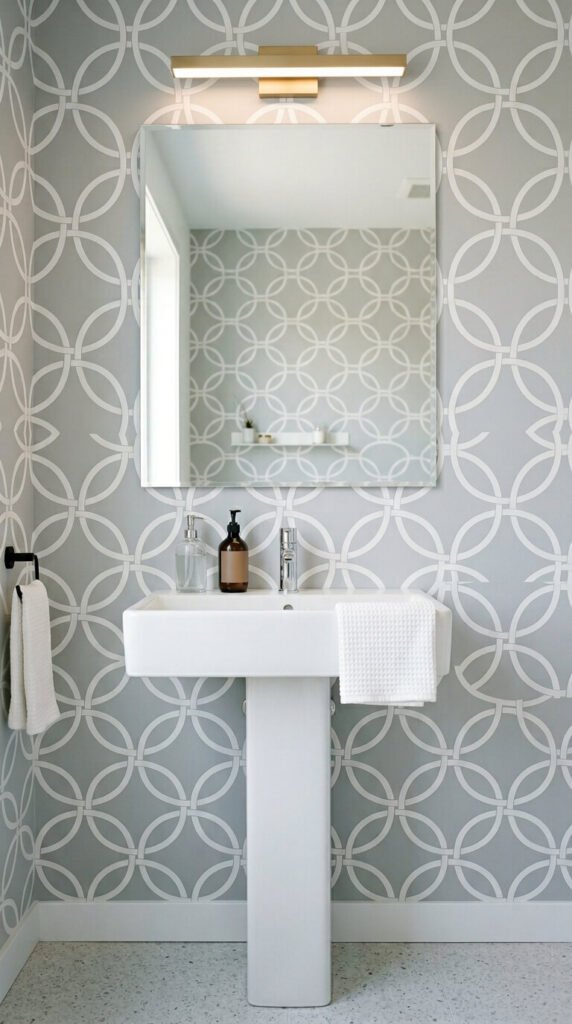
Interlocking circle patterns — sometimes called chain link or bubble geometry — bring a softness to geometric wallpaper that more angular patterns don’t have. The curves create gentle, flowing rhythm without sacrificing structure. It works particularly well in bathrooms and powder rooms where you want interest without intensity. White on grey is serene and spa-like. Black on white is graphic and bold. The pattern pairs naturally with round mirrors, oval basins, and curved furniture.
14. Plaid-Inspired Geometric Grid
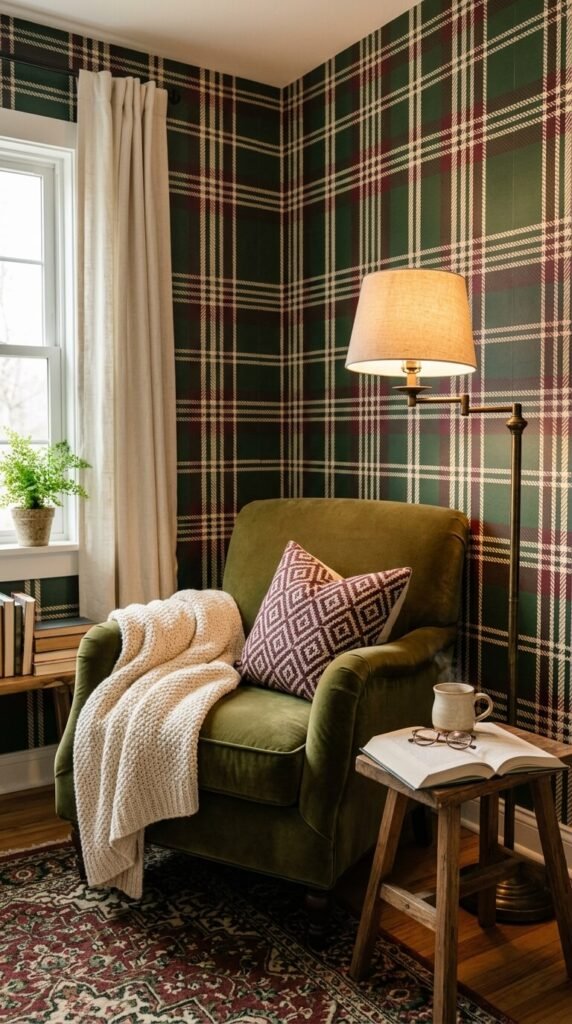
Plaid on a wall sounds loud — but at the right scale, it becomes structured and cozy rather than overwhelming. Large-scale plaid-inspired geometric wallpaper in muted heritage colors (forest green, burgundy, navy, cream) suits reading rooms, home libraries, and dens beautifully. The crossing lines create a sense of containment and warmth. Keep furnishings simple and solid-colored so the wall does the talking. This pattern is widely available and often comes in moisture-resistant finishes suitable for kitchens.
15. Pinwheel and Windmill Tessellation
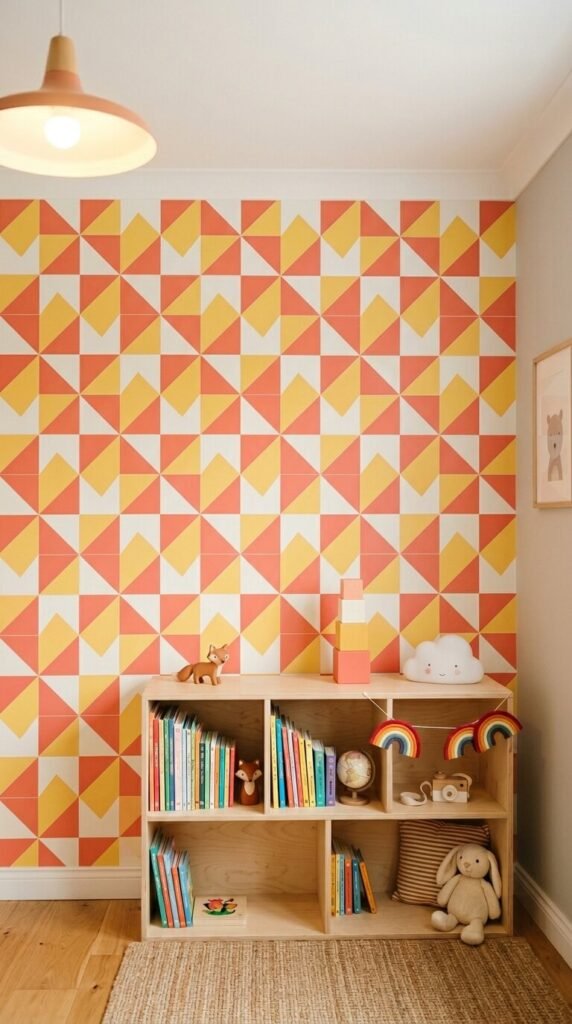
Pinwheel patterns are made from four-sided shapes that rotate and interlock like windmill blades. The effect is playful and optical — the eye wants to spin the shapes. In children’s rooms, this pattern is pure magic. In a more grown-up space, choose muted tones (sage, cream, blush) to tone down the playfulness and emphasize the graphic structure. The pinwheel shape also appears in traditional quilt designs, giving it an appealing handmade quality that warms up modern interiors.
16. Concentric Square (Bullseye) Repeat
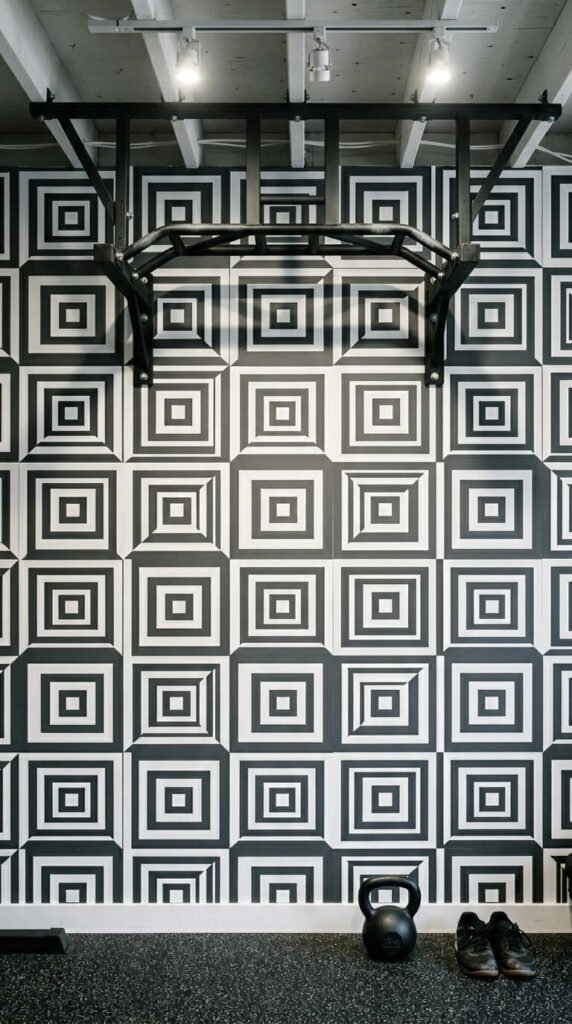
Concentric squares create a tunnel-like depth illusion on a flat surface. Each ring pulls your eye inward toward a central point, creating focused, intense visual rhythm. In a home gym or creative workspace, this pattern channels energy and focus. In a bedroom, it can feel overwhelming — use with caution. For a DIY version, use painter’s tape to create nested square outlines and paint alternating rings in two tones. Start from the center and work outward for precision.
17. Herringbone in Monochrome
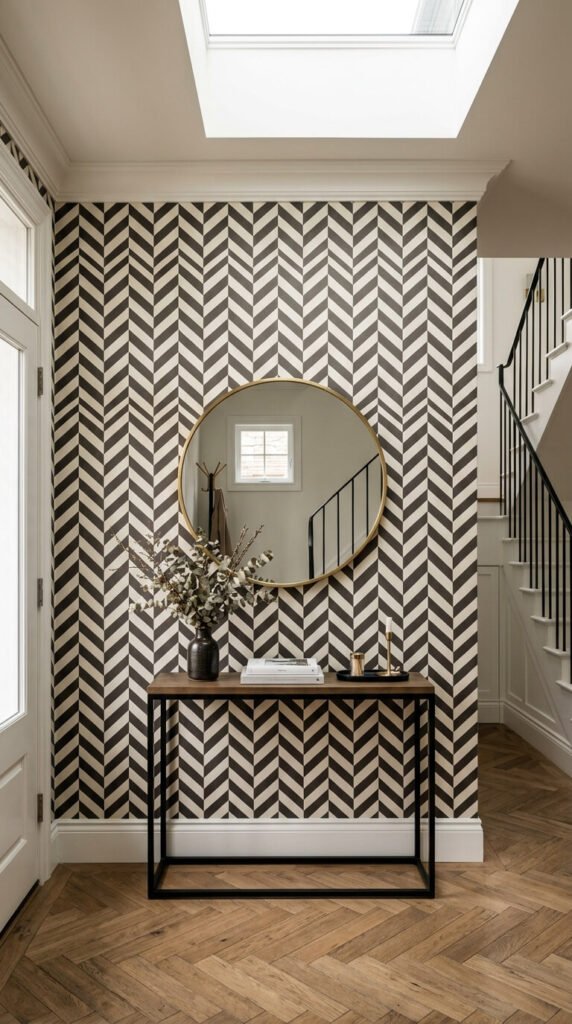
Herringbone is a zigzag pattern made from staggered rectangles, creating diagonal arrows that move across the wall in alternating directions. Monochrome herringbone — charcoal on white, or navy on cream — is one of the most sophisticated geometric wallpaper options available. It suits entryways and dining rooms especially well, where it reads as both contemporary and classic. Many tile-inspired wallpaper designs mimic the look of herringbone stone or wood flooring, giving you a material-rich feel at a fraction of the cost.
18. Polka Dot Grid (Circular Repeat)
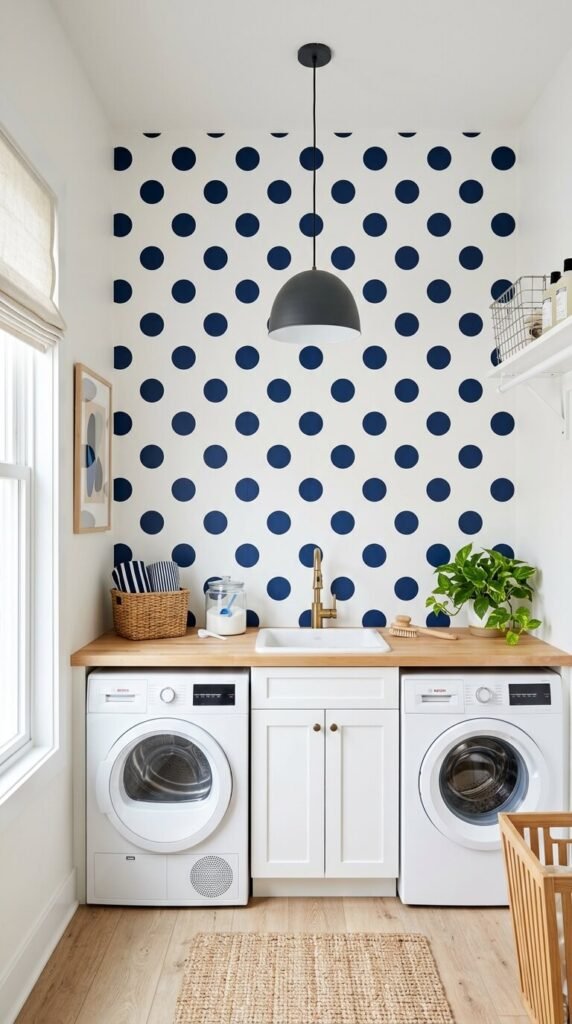
Polka dots are circles arranged in a repeating grid — which makes them geometric wallpaper in the purest sense. Oversized dots in high-contrast colors (navy on white, black on cream, forest green on blush) make a strong statement without any complexity. In kitchens, laundry rooms, and bathrooms, they add personality without competing with fixtures or appliances. Smaller dot grids feel more subtle and work in living rooms and bedrooms. Peel-and-stick polka dot wallpaper is one of the most affordable geometric options available.
19. Half-Drop Rectangle Brick Shift
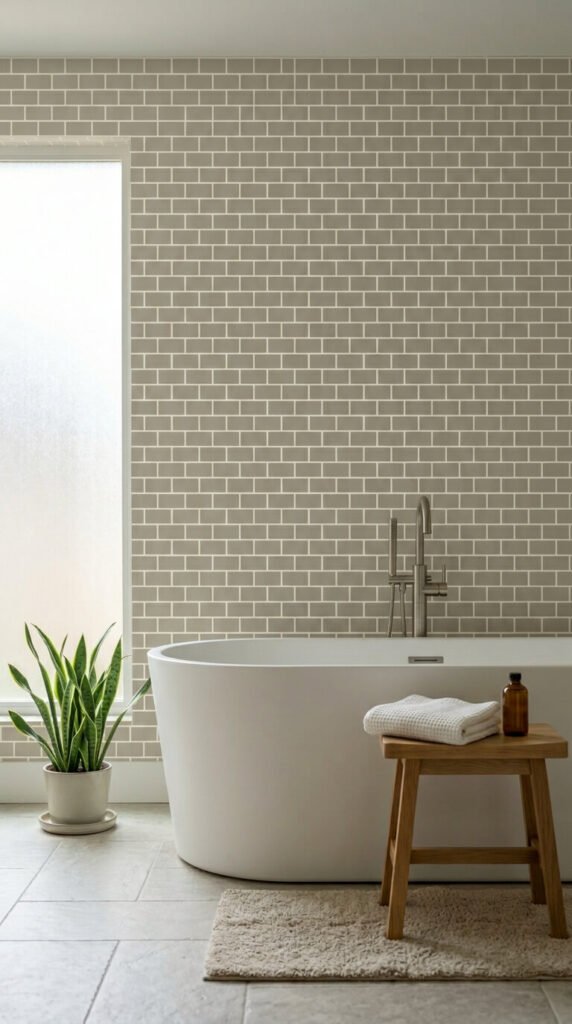
The half-drop brick pattern shifts each row by half a unit, creating a gentle stagger that feels more relaxed than a straight grid. It mimics the look of natural stone or wide-format tile without the installation complexity. In soft stone tones — warm ivory, grey, greige — it reads as calm and spa-like. In bolder colors, it becomes more graphic. This pattern is a great choice for bathrooms and kitchens where you want geometry without intensity. Self-adhesive moisture-resistant versions are easy to find.
20. Abstract Geo Patchwork
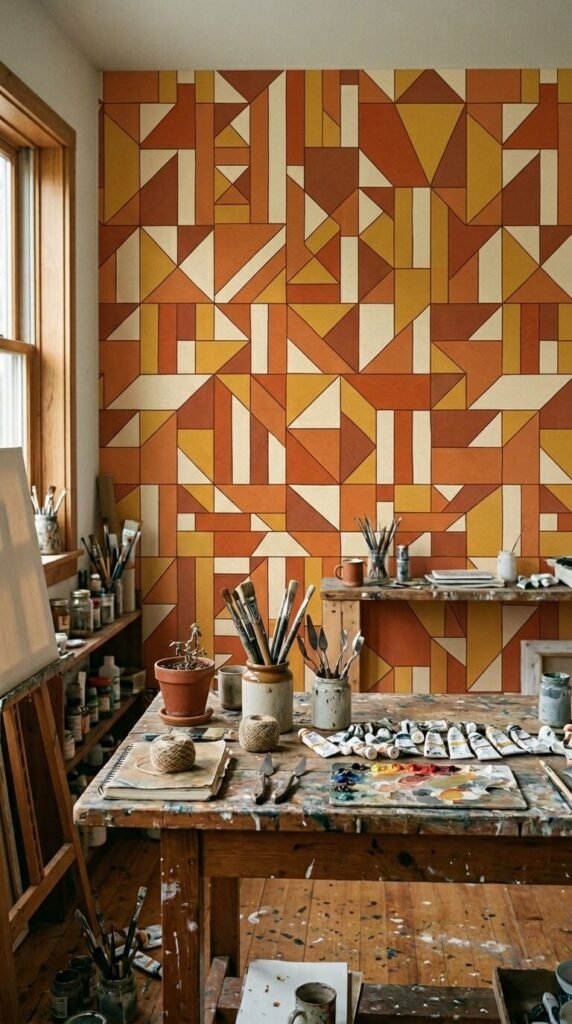
Abstract patchwork patterns don’t follow a single repeating unit — instead, different geometric shapes tessellate together like a puzzle, each in its own color. The result is a wall that feels artistic and handcrafted rather than mechanical. Earthy tones (burnt orange, rust, mustard, cream) give it a warm, artisanal quality. Cool tones (cerulean, slate, sand) feel more contemporary. This pattern works in creative studios, living rooms, and dining spaces. Look for it in custom-print wallpaper services for around $90–$130 per panel.
21. Star and Cross Geometric (Islamic-Inspired)
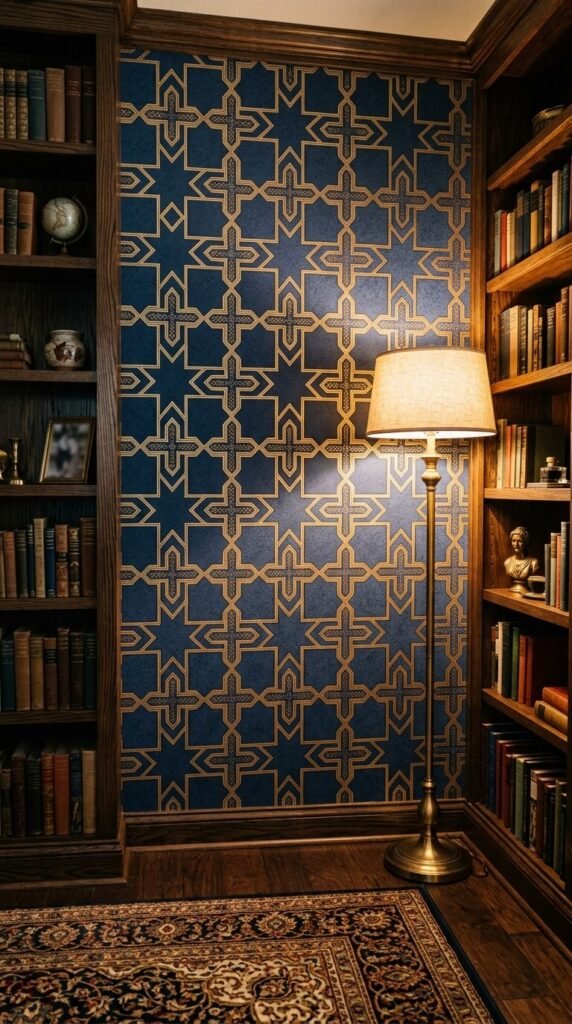
Star-and-cross geometric patterns draw on centuries of Islamic architectural tradition, where geometry was used to create infinite, sacred patterns. The eight-pointed star interlocks with cross-shaped negative space, creating a repeating field of extraordinary complexity. At wall scale, the pattern reads as deeply ornate and richly detailed. Pair it with natural wood, leather, and woven textiles for warmth. In a home library or study, it creates a space that feels both intellectual and beautiful. Available from specialty wallpaper retailers.
22. Thin Diagonal Crosshatch
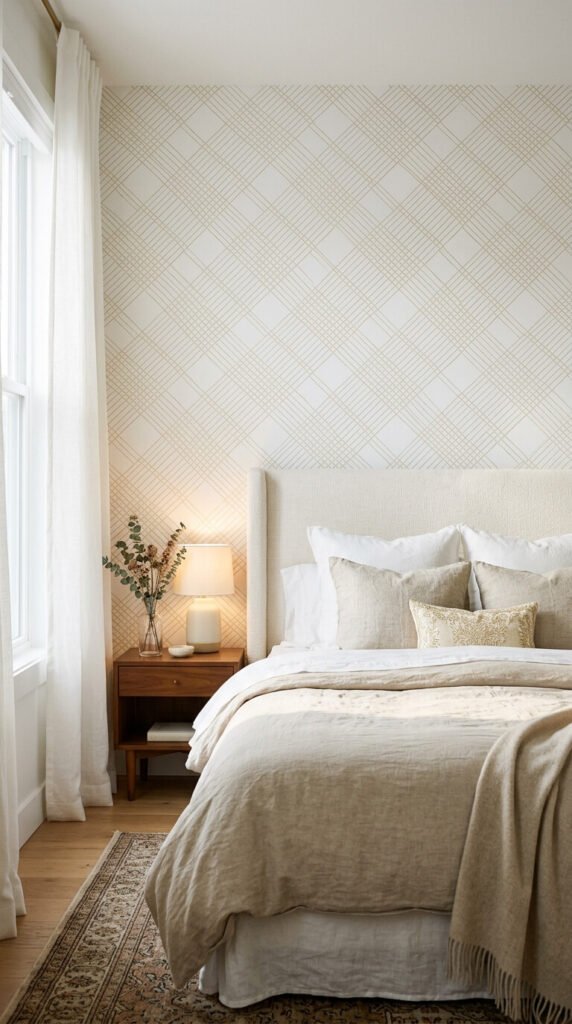
Crosshatch patterns — two sets of parallel lines crossing at angles — mimic the look of hand-drawn illustration or woven fabric. At a fine scale, they feel soft and almost textile-like. Thin gold lines on white, or charcoal on cream, create a subtle but sophisticated surface. This is a great choice for bedrooms where you want something interesting without being visually aggressive. The pattern is quiet during the day but catches light beautifully in the evening, especially under warm lamp light.
23. Mod Circles and Squares (Op-Art Repeat)
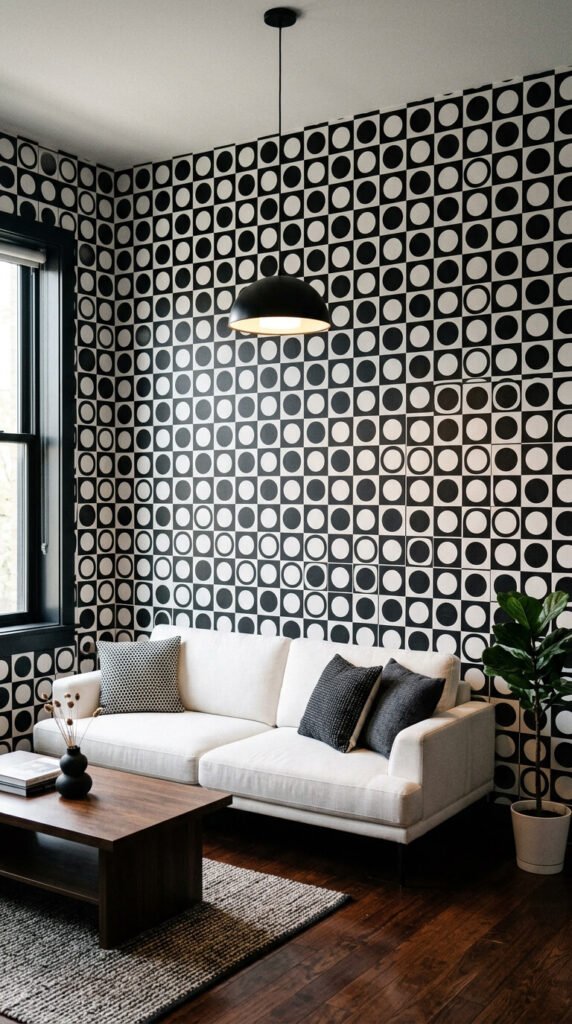
Op-art geometric wallpaper is designed to trick your eyes. Alternating circles inside squares in inverse colors (black circle in white square, white circle in black square) creates a pulsing, vibrating visual effect that shifts as you move through the room. This is a bold, committed choice — it dominates a room entirely. Use it on one wall only in a space with simple, minimal furniture. It works best in living rooms, hallways, and entertainment spaces where energy and impact are the goal.
24. Terrazzo-Inspired Geometric Scatter
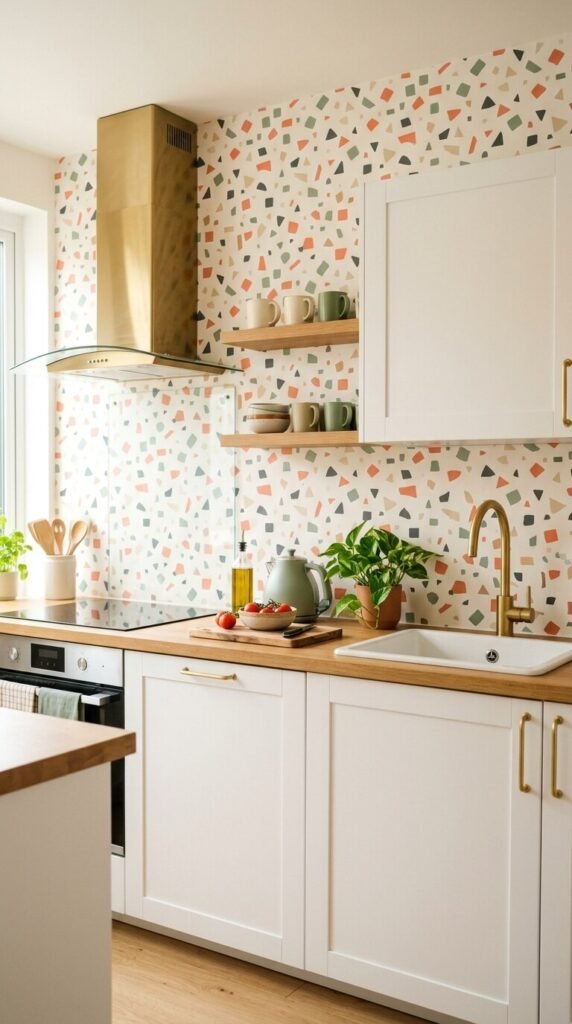
Terrazzo-inspired wallpaper takes the scattered chip patterns of polished concrete floors and brings them to your walls in a lighter, more colorful form. Small geometric shapes — squares, triangles, tiny parallelograms — float across the background in a controlled random scatter. It feels simultaneously retro and current. Kitchens and bathrooms love this pattern because it’s busy enough to hide splashes but not so overwhelming it competes with cabinetry. Choose a warm white background to keep the space feeling light and open.
Conclusion
Geometric wallpaper works because it speaks in a visual language everyone understands instinctively — rhythm, order, pattern, and contrast. From the quiet logic of a graph-paper grid to the eye-bending pulse of op-art circles, every pattern on this list has a specific personality and a specific job to do in a room. The good news is that you don’t need a big budget or a professional installer to get started. Peel-and-stick options, DIY tape techniques, and affordable self-adhesive rolls mean that any of these patterns is within reach for most homes. Pick the pattern that matches the energy you want your room to have, commit to one wall, and let the geometry do its work.