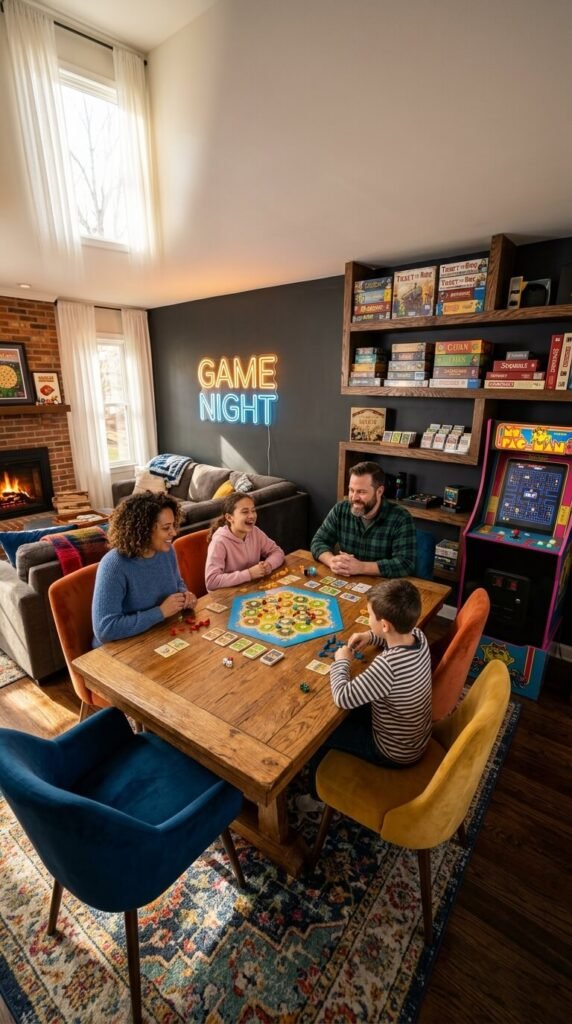
Walking into a well-designed game room feels different. The energy shifts. Kids put down their phones. Adults pull up a chair. The right space makes that happen — not by accident, but by design. Whether you have a spare bedroom, a basement corner, or just one wall to work with, there are real, affordable ways to build a game room your whole family actually wants to use. These 24 ideas cover everything from budget DIY setups to simple style upgrades that make a big difference. No renovation required. Just smart choices that bring people together.
1. Go Bold with a Dark Accent Wall
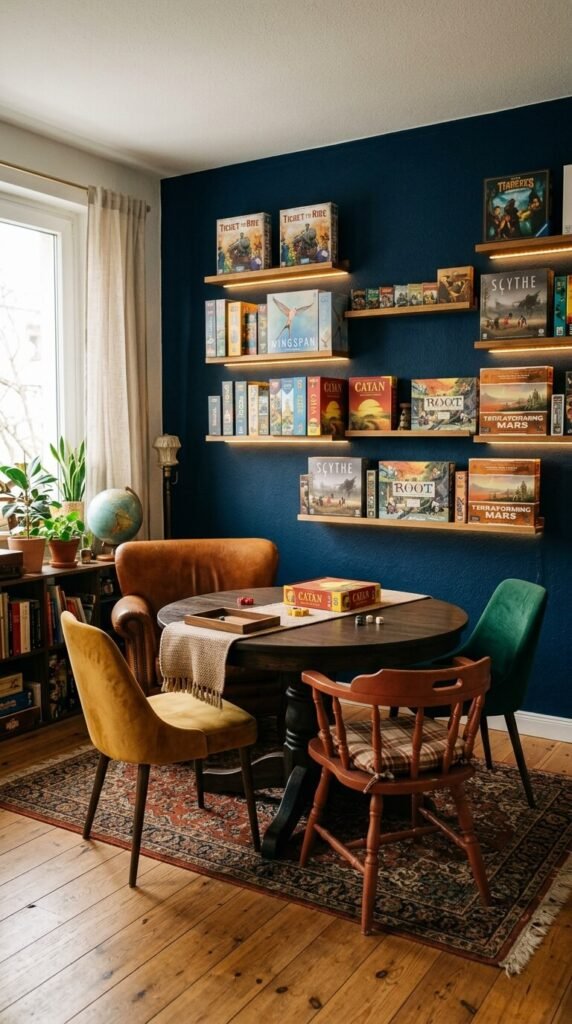
A single dark wall can completely change a room’s personality. Deep navy, forest green, or charcoal work great. You don’t need to repaint everything — just one wall. Add floating shelves on it to display games. The contrast makes the space feel intentional and cool. Paint is one of the cheapest upgrades you can make. A quart can covers a standard accent wall for under $20. This one move sets the tone for the whole room without touching anything else.
2. Build a Game Shelf Wall
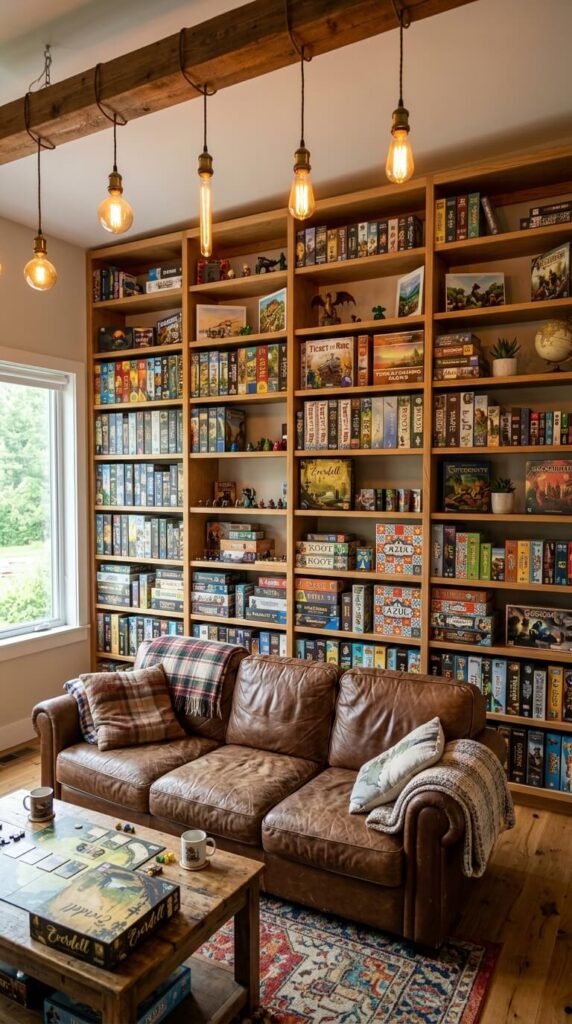
A dedicated shelf wall makes your game collection look like a feature, not clutter. Use IKEA KALLAX units stacked side by side — they’re perfectly sized for most board games. Label each cube or use baskets for smaller items. This setup keeps everything visible so family members can grab a game without digging through boxes. It also doubles as a display. You can add a small lamp on top for ambiance. Total cost for two 4-cube units: around $80–$100.
3. Add a Neon Sign for Instant Vibe
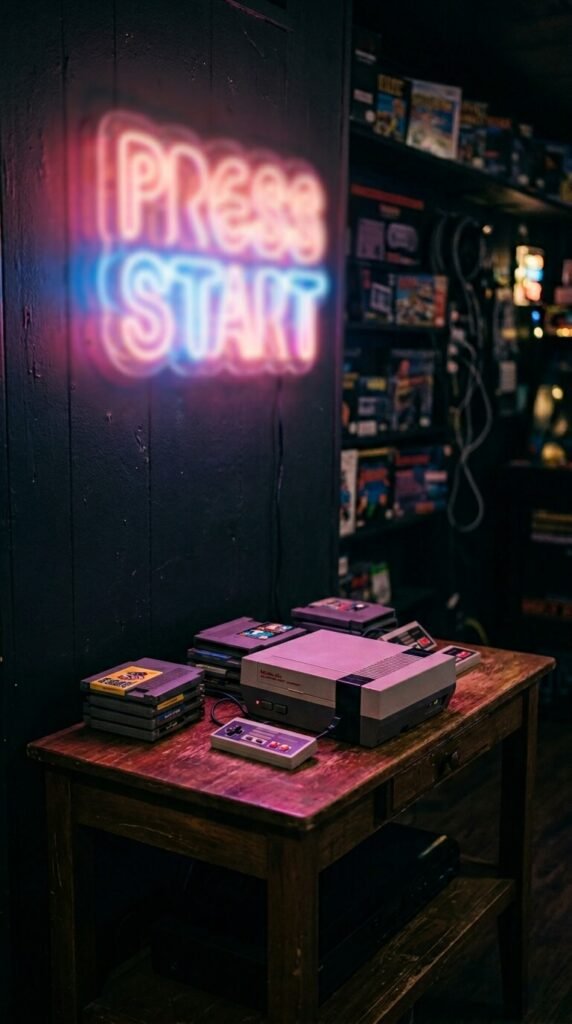
A neon sign turns any wall into a focal point. You don’t need a custom order. LED neon signs on Amazon or Etsy start around $25–$50. Look for gaming-themed shapes — controllers, stars, lightning bolts. Mount it above your main game table or TV setup. The soft glow adds warmth without being harsh. It also photographs beautifully, which kids love. This one addition makes the room feel like a real destination, not just a repurposed spare bedroom.
4. Use a Round Table for Better Game Play
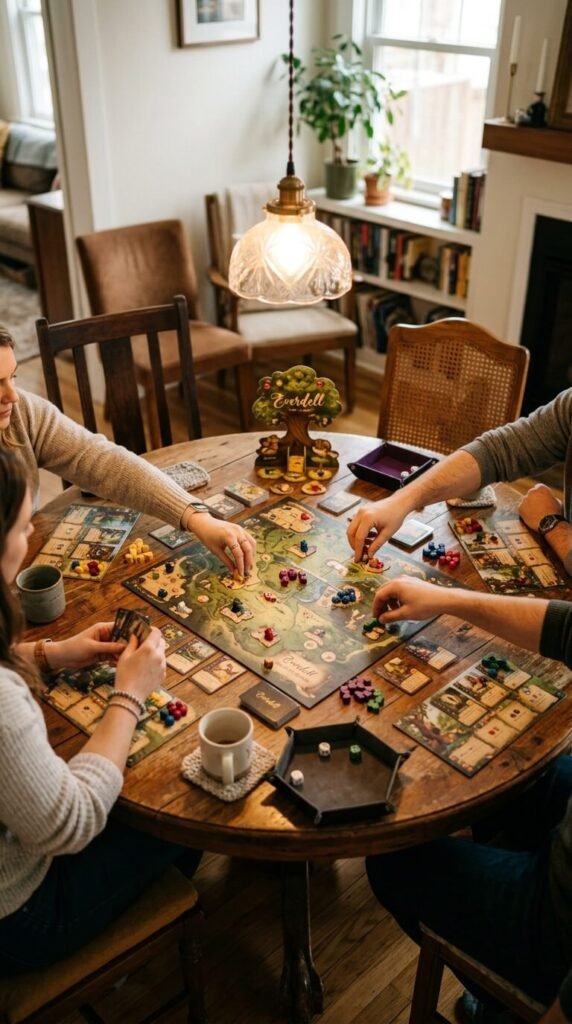
Square tables cut people off. Round tables bring everyone in. A 48-inch round table seats four comfortably and keeps games accessible from every side. You can find secondhand round dining tables at thrift stores or Facebook Marketplace for $20–$60. Add a lazy Susan in the center to spin game pieces or snack bowls within reach. This simple furniture swap changes how families interact during game night. No one is stuck in a corner. Everyone feels included.
5. Create a Retro Arcade Corner
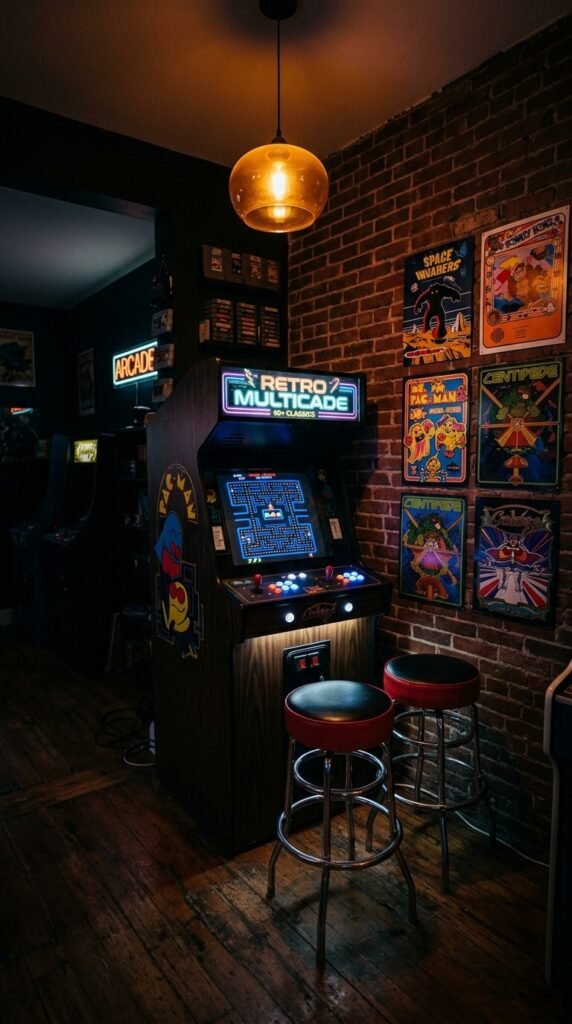
You don’t need a whole arcade room. One arcade cabinet in a corner does the job. Multicade machines run classic games and start around $300–$400 for basic models. If budget is tight, a Raspberry Pi arcade build costs under $100 with a DIY cabinet kit. Pair it with two bar stools and a small shelf for quarters or tokens. Even a decorative touch like retro gaming posters beside it pulls the whole corner together. Kids and adults both love the novelty of it.
6. Hang a Pegboard for Game Organization
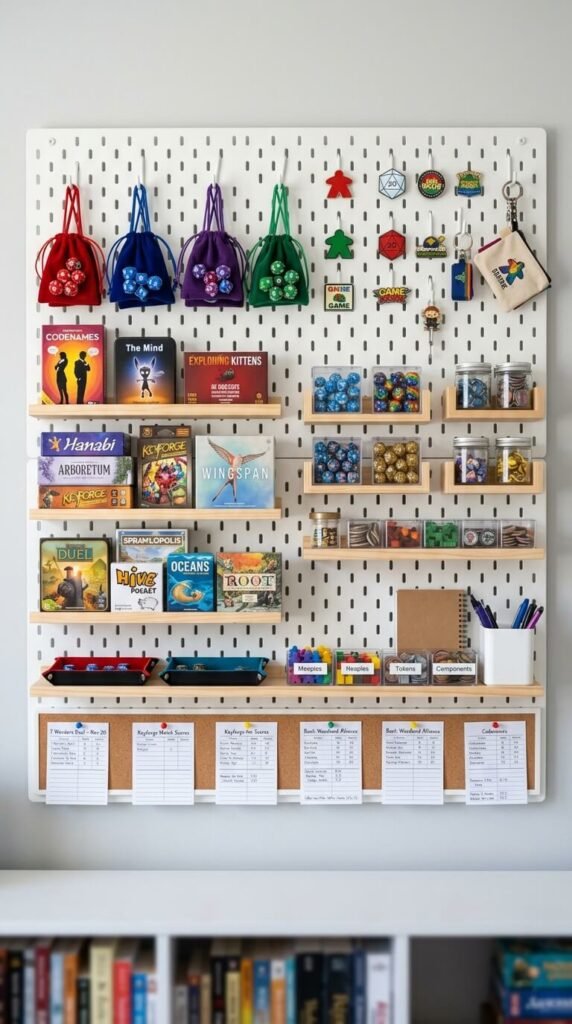
Pegboards are wildly underrated for game rooms. A 4×4 pegboard sheet costs around $15 at any hardware store. Paint it to match your wall, then add hooks and small shelves for card decks, dice, tokens, and game accessories. It keeps small items visible and off surfaces. Kids can actually put things back because it’s easy to see where everything goes. Mount it at kid height so everyone can participate. It’s functional, cheap, and looks great with a little planning.
7. Set Up a Dedicated Snack Station
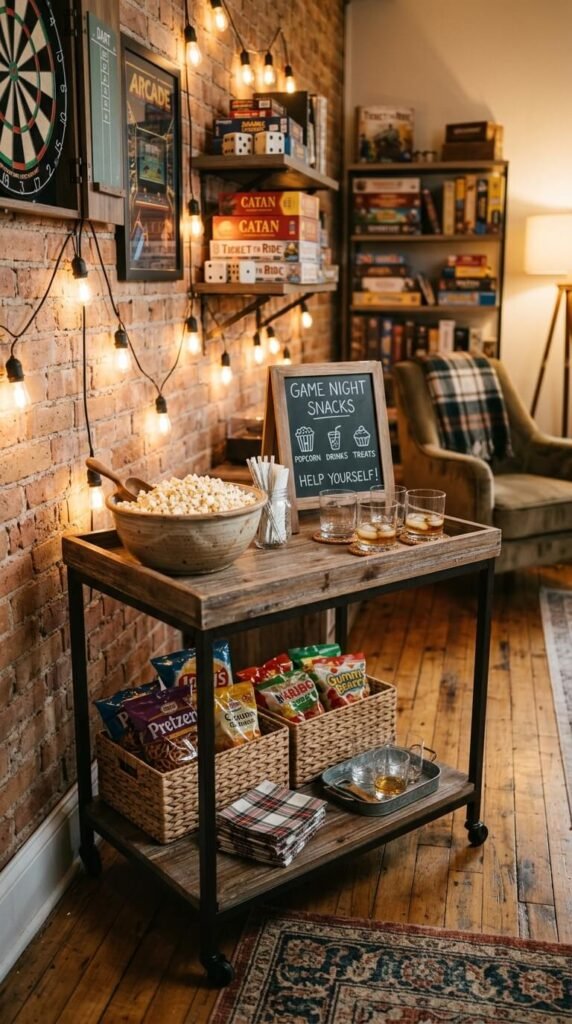
Game nights are better with snacks nearby. A small bar cart or side table works perfectly as a snack station. Load it with a popcorn maker, drink dispensers, and labeled snack bins. Add a small chalkboard to write the night’s menu — kids get a kick out of that. This keeps people from leaving the game room every five minutes. You can find bar carts at thrift stores for $15–$30. Clean it up, spray paint it, and it looks like a intentional design choice.
8. Install String Lights for Soft Ambiance
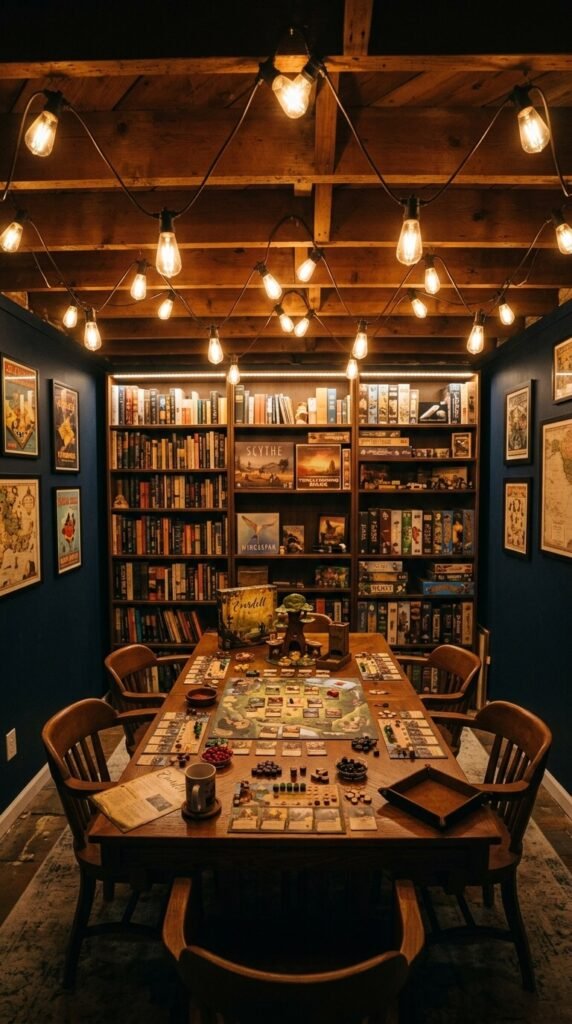
Overhead lighting kills the mood. Warm string lights fix that fast. Drape them across the ceiling in rows or zigzag patterns. Edison bulb strings give off a golden glow that feels relaxed and welcoming. A 50-foot string costs around $12–$20. You can also line shelves or frame a window with them. The difference in atmosphere is immediate. Game rooms lit this way feel intentional and cozy. It’s one of the most affordable upgrades with the biggest visual payoff.
9. Add a Chalkboard Wall for Scorekeeping
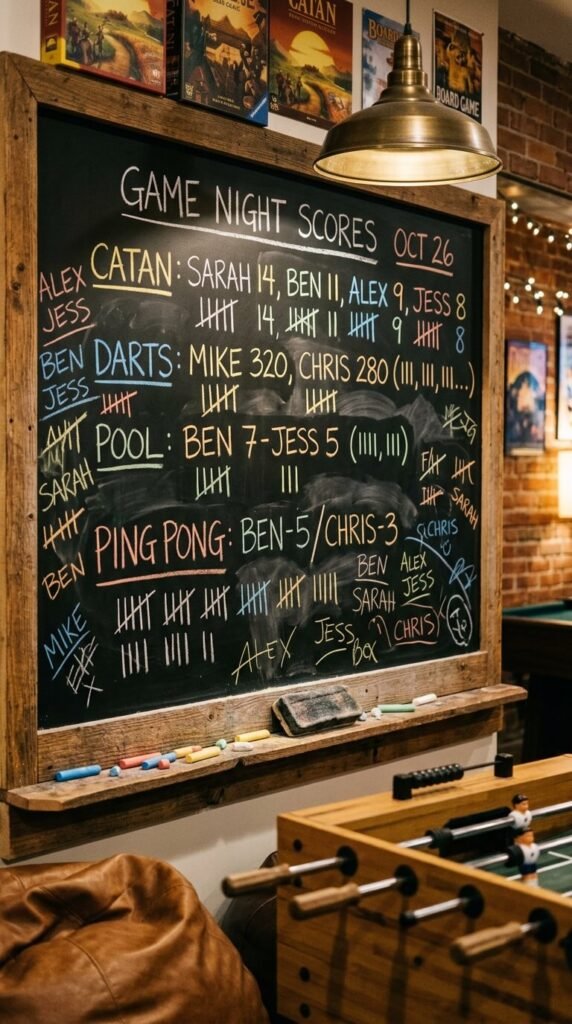
Skip the paper scoresheets. A chalkboard wall is a game room staple. Chalkboard paint costs around $15 for a quart — enough for one large wall section. Let family members keep running tallies, draw game boards, or doodle between rounds. Kids especially love having a wall they’re allowed to write on. It’s interactive and doubles as decor. Use colorful chalk to make it pop. Erase and start fresh each game night. Practical, fun, and genuinely useful.
10. Choose Comfortable, Flexible Seating
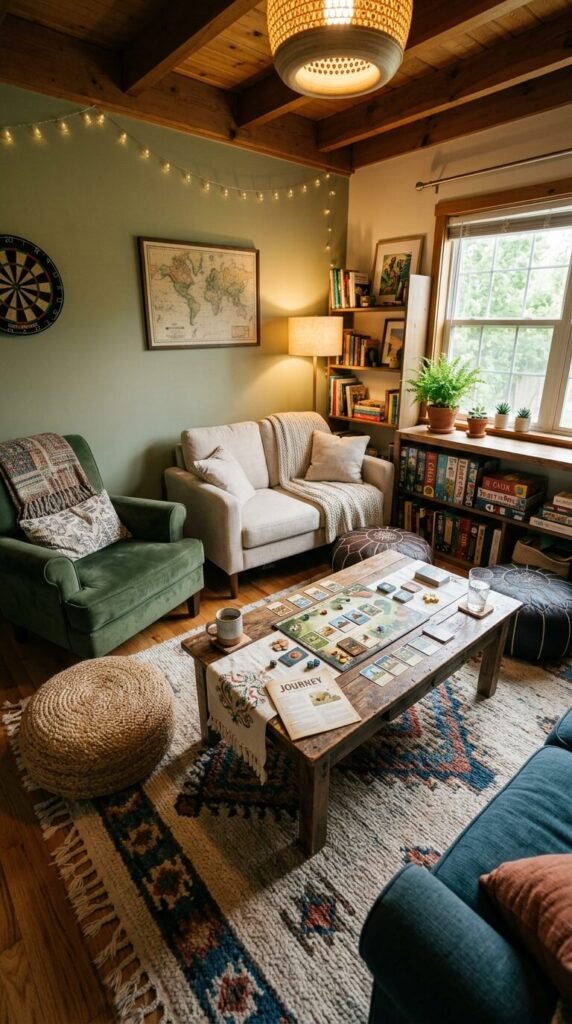
Hard chairs kill long game nights. Mix seating types so everyone can get comfortable. Floor poufs for kids, upholstered chairs for adults, and a small loveseat for spectators. Make sure chairs have wheels or are lightweight — you’ll rearrange often depending on the game. Look for secondhand chairs at thrift stores and recover them with inexpensive fabric. A matching throw blanket on each seat adds warmth and ties the look together. Comfort keeps people in the room longer.
11. Use Area Rugs to Define the Space
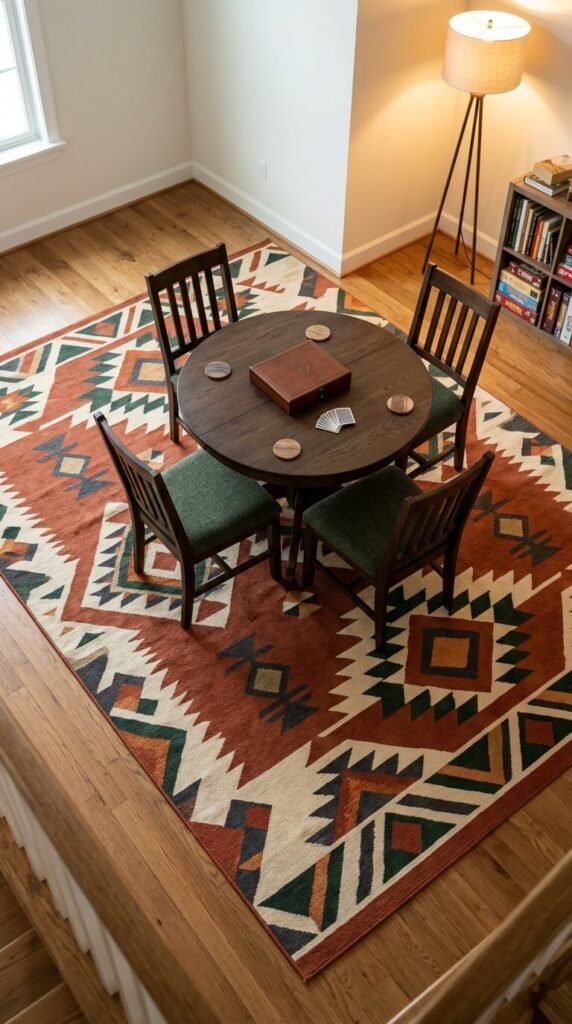
Rugs do two things: they look great and they define zones. In an open basement or large room, a bold patterned rug under the game table signals this is the game zone. It also softens the space acoustically — important when kids are excited and loud. Look for geometric or vintage-style rugs on Ruggable or Overstock for $60–$120 in a 6×9 size. Bonus: many are washable. Spilled drinks during intense card games are a fact of life.
12. Hang Framed Game Art on the Walls
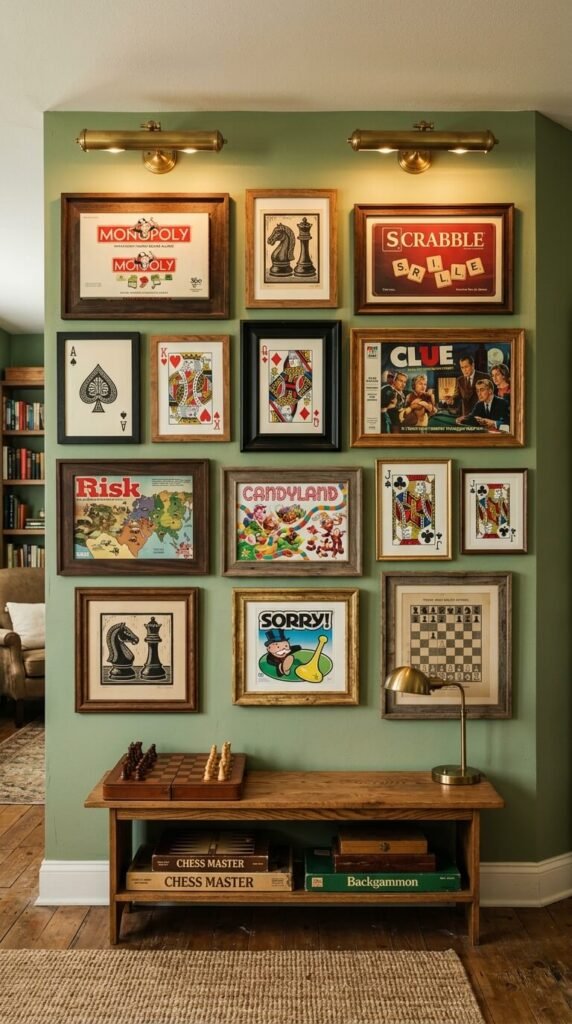
Blank walls make a room feel unfinished. Frame vintage game artwork — old board game covers, playing card suits, chess piece illustrations. You can find free printable vintage game art on sites like Etsy or public domain archives. Print at home or at a local print shop for a few dollars each. Buy simple frames from the dollar store or thrift shops. A gallery wall of 6–8 pieces fills a space beautifully and shows personality. It’s a great rainy-day DIY project.
13. Build a Card and Dice Drawer Station
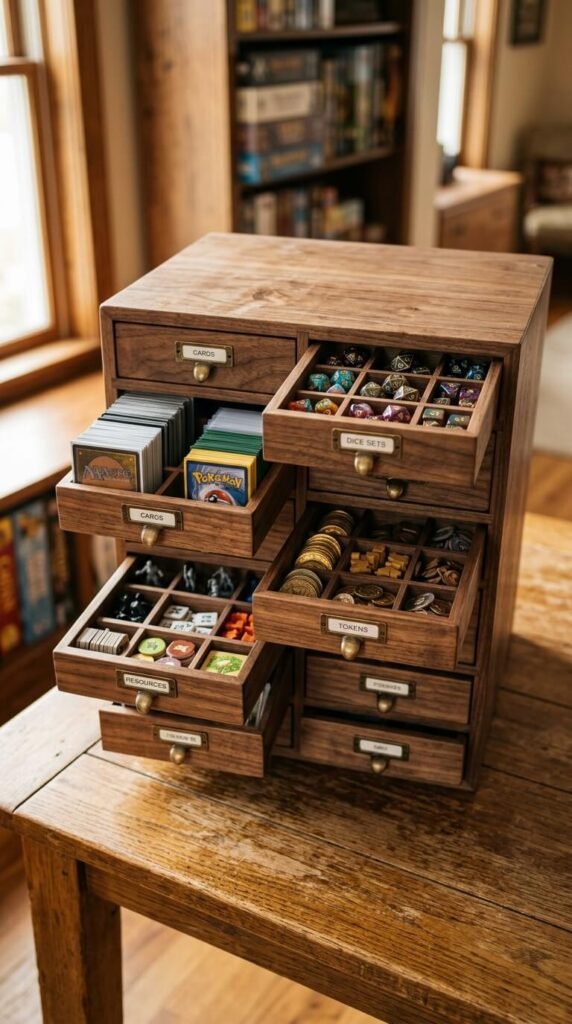
Loose cards and dice are the enemy of game night. A shallow drawer organizer solves this permanently. Build one from a cheap craft store wood kit or repurpose an old spice rack drawer unit. Sort everything by type — cards, dice, tokens, timers. Label each drawer with a label maker or hand-written card. When everything has a home, setup takes minutes instead of half an hour of searching. This makes the difference between a game room that gets used and one that doesn’t.
14. Install a Wall-Mounted TV for Video Game Nights
A wall-mounted TV opens up floor space and looks far cleaner than a TV on a stand. Mount it at seated eye level for comfortable viewing. Run cables through the wall or use a cable management kit from Amazon for under $15. Add LED backlighting behind the TV for a polished, gaming setup look — Govee light strips cost around $20. Pair it with a small console shelf below and hooks for controllers. This setup works for both video games and movie nights between board game rounds.
15. Create a Kids’ Low-Level Game Zone
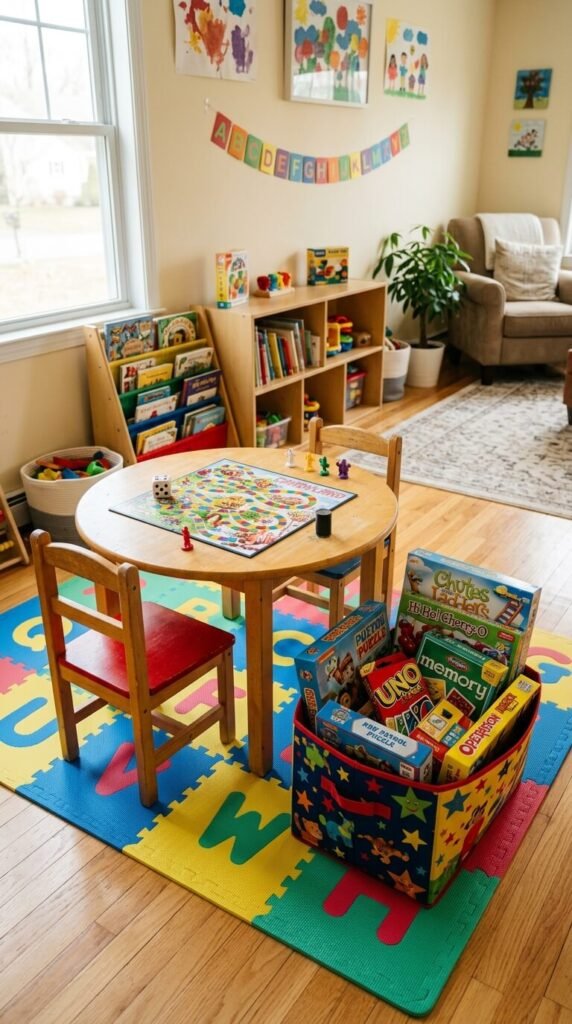
Kids play differently than adults. Give them their own low game zone within the larger room. A small table and chairs at kid height, a bin of age-appropriate games, and foam floor tiles underneath. This keeps younger children engaged without disrupting the adult game table. It also teaches kids to set up and clean up their own games independently. Look for secondhand kids’ furniture on Facebook Marketplace. A $15 IKEA stool and a $10 plastic table do the job perfectly.
16. Use Vertical Space with Ladder Shelves
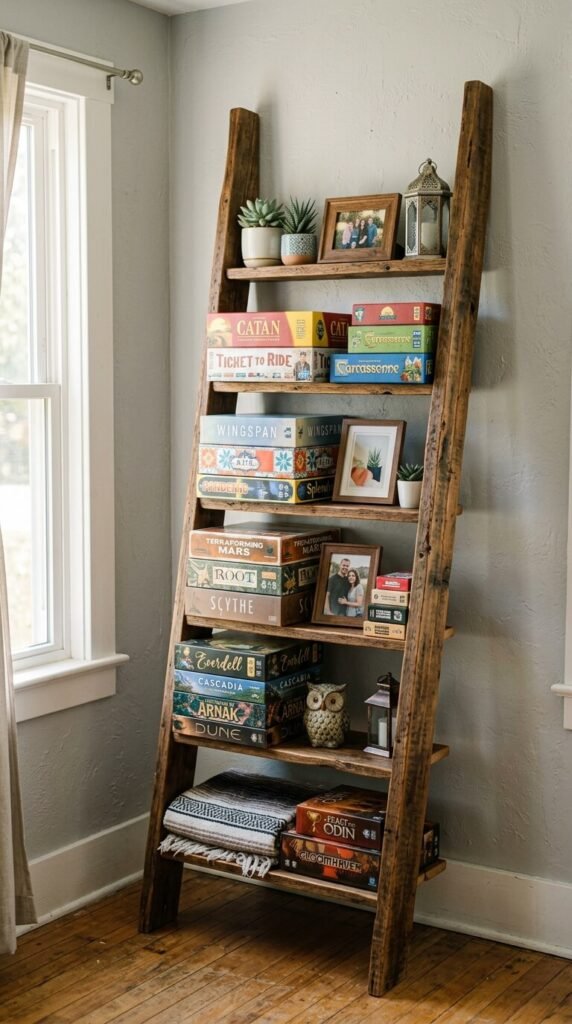
Ladder shelves use height without taking up floor space. A 5-tier ladder shelf ($50–$80 at most home goods stores) leans against the wall and holds games, decor, and small accessories. Mix game boxes with a plant or two and a few framed photos to break up the stack. It keeps things off the floor while looking intentional. Lean it in a corner for maximum space efficiency. Thrift stores often have these for $15–$25. A coat of spray paint refreshes the look completely.
17. Add a Magnetic Board for Game Planning
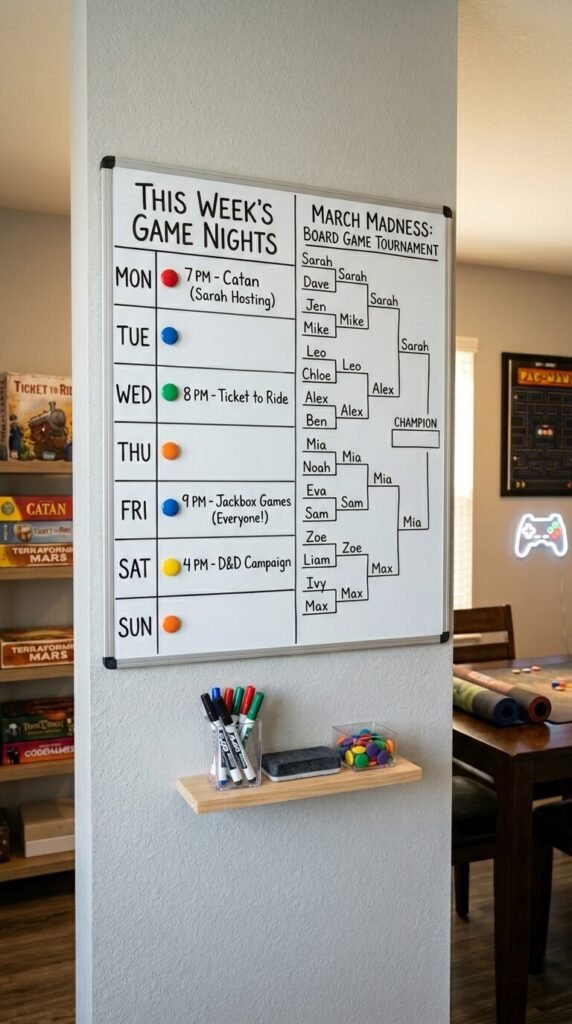
Magnetic whiteboards serve double duty in a game room. Use them for tournament brackets, game night schedules, or team assignments. Kids can help set up the board before game night, which builds excitement. A 24×36 magnetic whiteboard costs around $25–$40. Mount it at a height everyone can reach. Add a set of colorful magnets and dry-erase markers in a small cup on the side. It keeps game nights organized and gives everyone a role in the planning.
18. Go for a Forest or Nature Theme
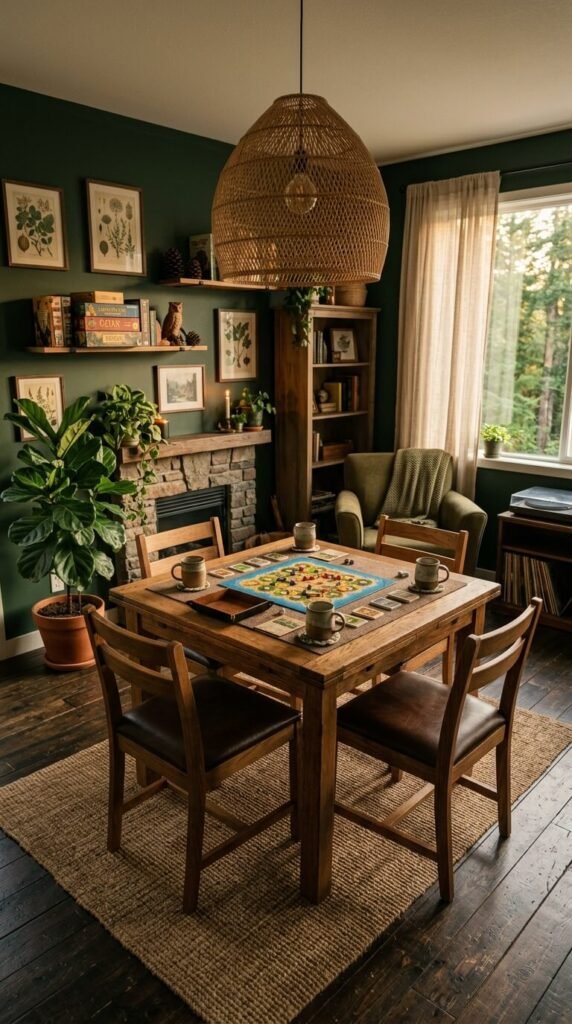
Nature-themed rooms feel calm and cozy — perfect for long game nights. Deep green walls, wood furniture, and natural textures (jute, linen, rattan) create this look without a major budget. Add a large potted plant — a snake plant or fiddle leaf fig — for a living design element. A rattan pendant light overhead ties it all together. This theme works beautifully in basements or rooms with limited natural light because the warm tones counteract the darkness. It feels like a retreat.
19. Build a DIY Giant Game Corner
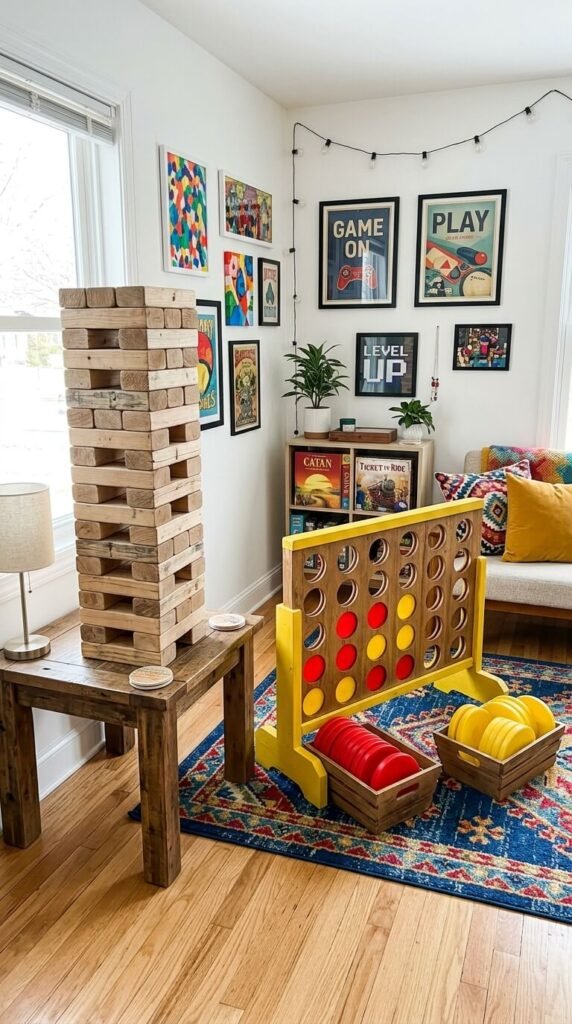
Giant games are a game room showstopper. Giant Jenga can be DIY’d from 2×4 lumber cut into 54 pieces — total cost around $20. Giant Connect Four kits are sold on Amazon for $30–$50. These work for all ages and immediately become a conversation piece. Stack them in a corner when not in use. Bring them out during parties or family nights. They look impressive but are genuinely simple to make. The payoff in fun is enormous for very little investment.
20. Use a Pegboard for Controller Storage
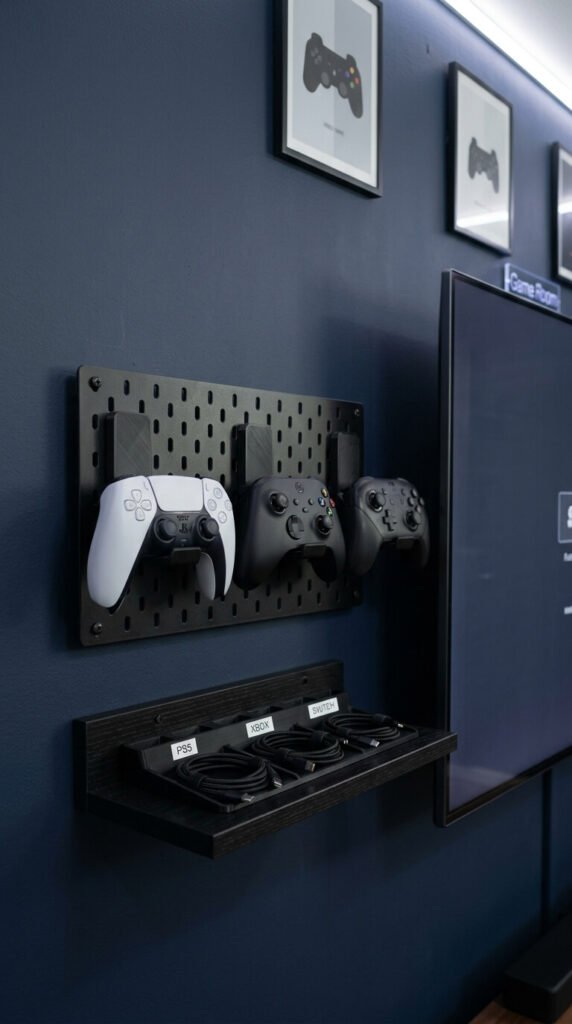
Tangled controllers on the floor are a hazard. Mount a small pegboard beside the TV just for controller storage. Add custom 3D-printed hooks (available on Etsy for $10–$15) or simple wire hooks from any hardware store. Label each hook per player. Add a charging dock shelf below. This keeps the game area clean and means no one’s hunting for a controller when it’s their turn. It’s a small change that makes the whole setup feel organized and ready for action.
21. Install Dimmable Lighting for Mood Control
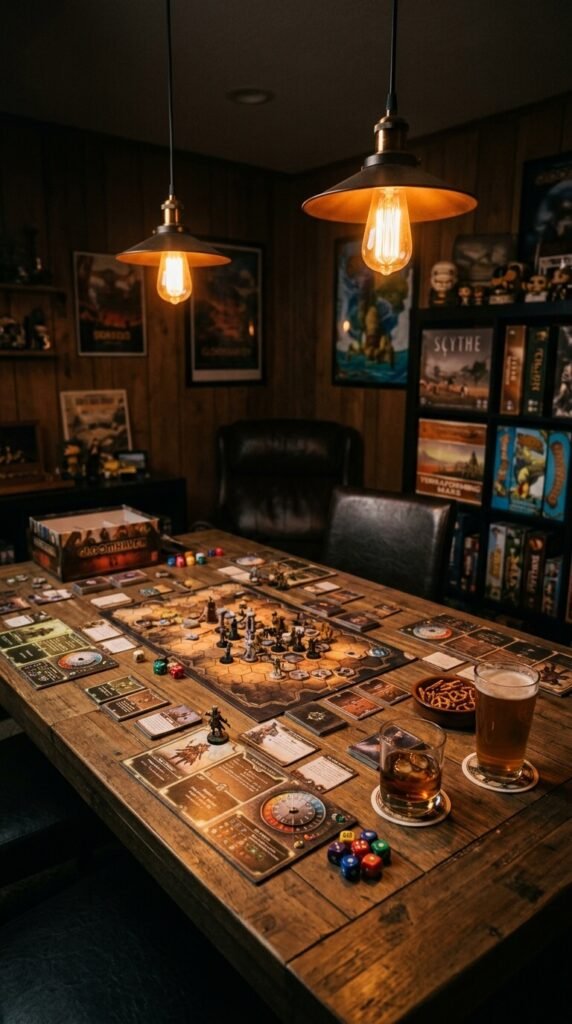
Lighting sets the mood faster than any other element. Dimmable bulbs and smart switches let you dial in the atmosphere. Bright for setup and cleanup. Warm and dim for actual play. A Kasa smart dimmer switch costs around $15. Pair it with warm-tone LED bulbs. For the game table specifically, a pendant light directly overhead at around 30–36 inches above the surface gives focused light without glare. This small investment makes game nights feel like a real experience rather than just sitting under a harsh overhead fixture.
22. Create a Wall-Mounted Cribbage or Chess Board Display
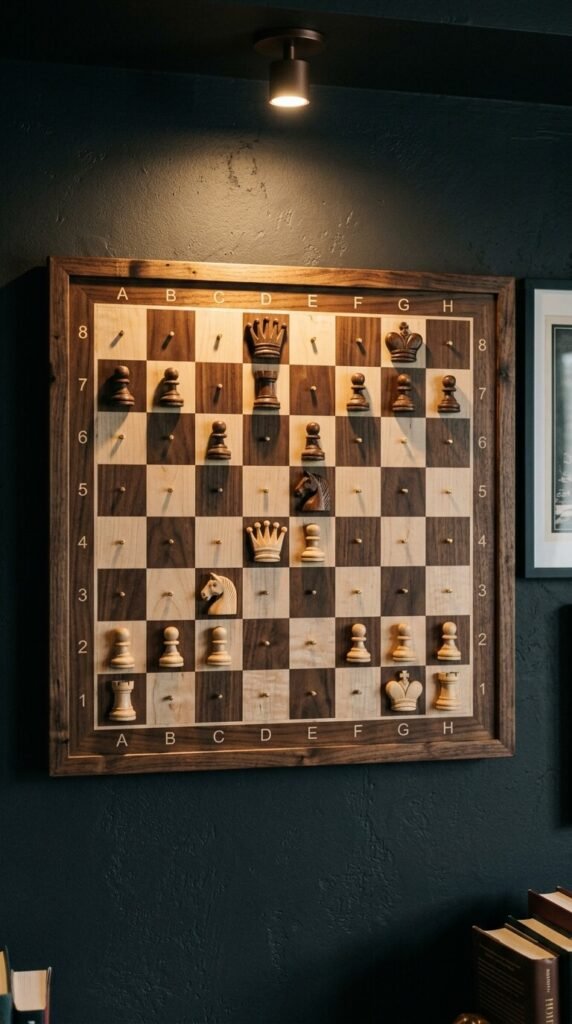
A beautifully made game board is art. Mount a chess, cribbage, or backgammon board on the wall as a display piece. Use small pegs or museum putty to keep pieces in place. Leave it mid-game — it’s a conversation starter. Thrift stores often have wooden board games for $2–$10. Sand, stain, and mount with a French cleat for a clean flush look. It fills a wall with something meaningful rather than generic decor. It also signals what this room is all about the moment someone walks in.
23. Add a Mini Fridge for Game Night Drinks
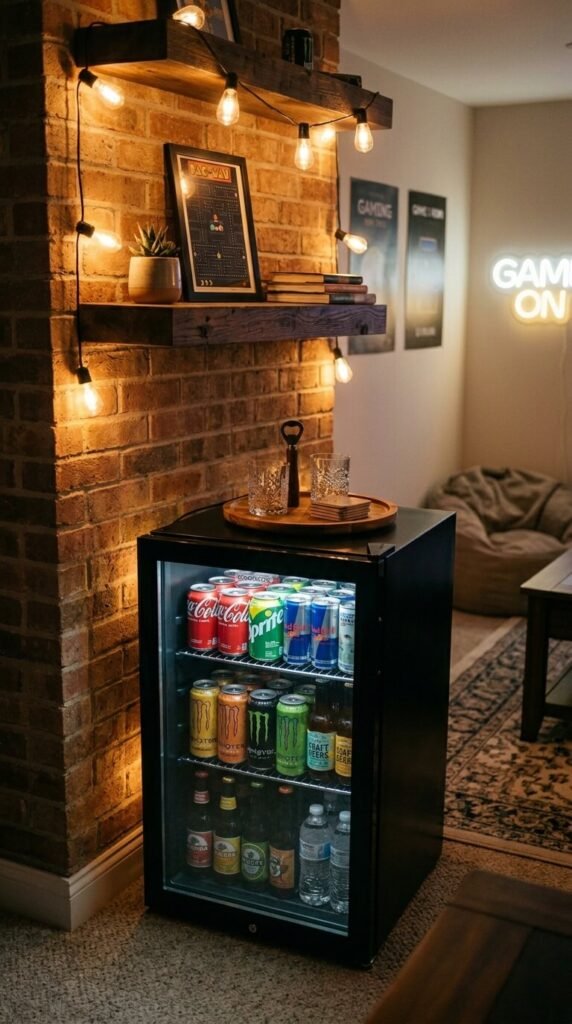
Leaving the game room for drinks breaks momentum. A mini fridge in the corner solves this completely. Compact countertop models start around $60–$80. Stock it with drinks and keep snacks nearby. Add a small tray on top with cups, a bottle opener, and napkins. It elevates game nights into a genuine experience. Kids love having their own drinks accessible without asking. It also signals that this room was designed for spending real time in — not just passing through.
24. Personalize with a Family Name Sign
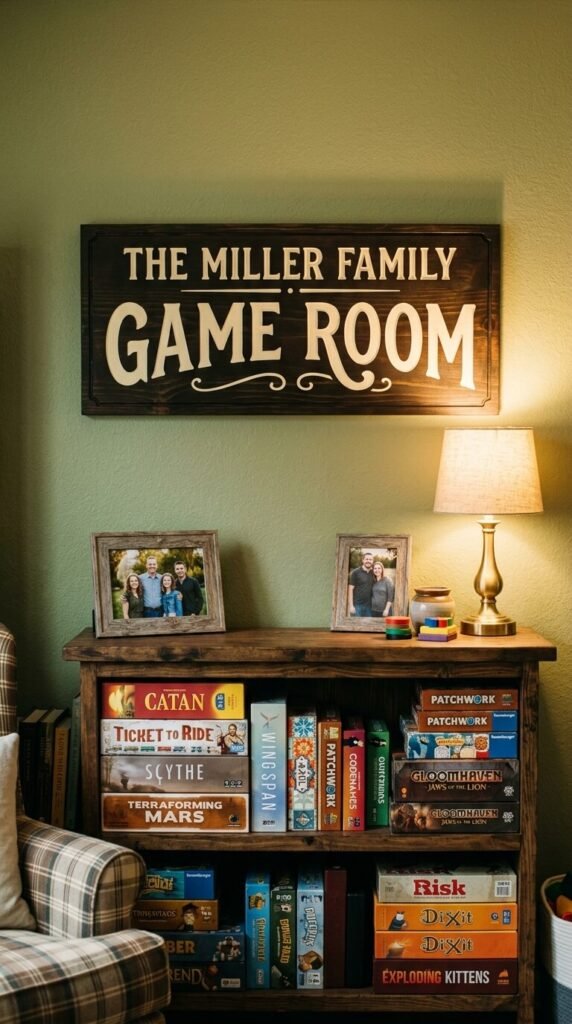
The final touch is ownership. A personalized family name sign above the door or shelf makes the space feel truly yours. You can order custom wood signs on Etsy for $20–$40, or make one yourself with a piece of plywood, a stencil, and some paint. Something as simple as “The Johnson Game Room” tells everyone this space was made on purpose — for this family. It’s the finishing detail that pulls everything together and makes kids proud to show their friends the space.
Conclusion
A great game room doesn’t require a big budget or a complete renovation. It requires thoughtful choices — the right table, a shelf for your games, good lighting, and a few personal touches that make the space feel like it belongs to your family. Start with one or two of these ideas and build from there. A dark accent wall and a round table might be all you need to transform a forgotten room into the spot everyone wants to hang out in. Game night is worth investing in. The memories made around a good game table last far longer than any screen time. Pick an idea, start small, and enjoy the process of building a space that brings your people together.