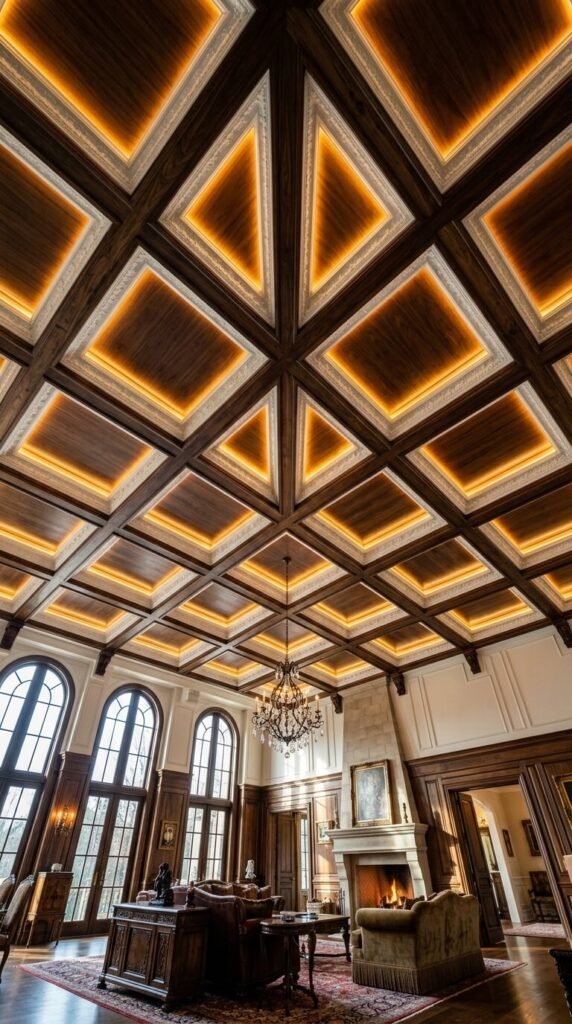
Coffered ceilings have been turning ordinary rooms into showstopper spaces for centuries — from Roman basilicas to Gilded Age mansions. Today, they’re more accessible than ever. Whether you want deep wood beams in a rustic farmhouse or painted white grids in a coastal cottage, there’s a coffered ceiling style that fits your home and your budget. This guide walks through 26 real, doable design ideas — with practical tips on materials, costs, and clever shortcuts so you can get that architectural wow factor without the architectural budget.
1. Classic Square Grid in White
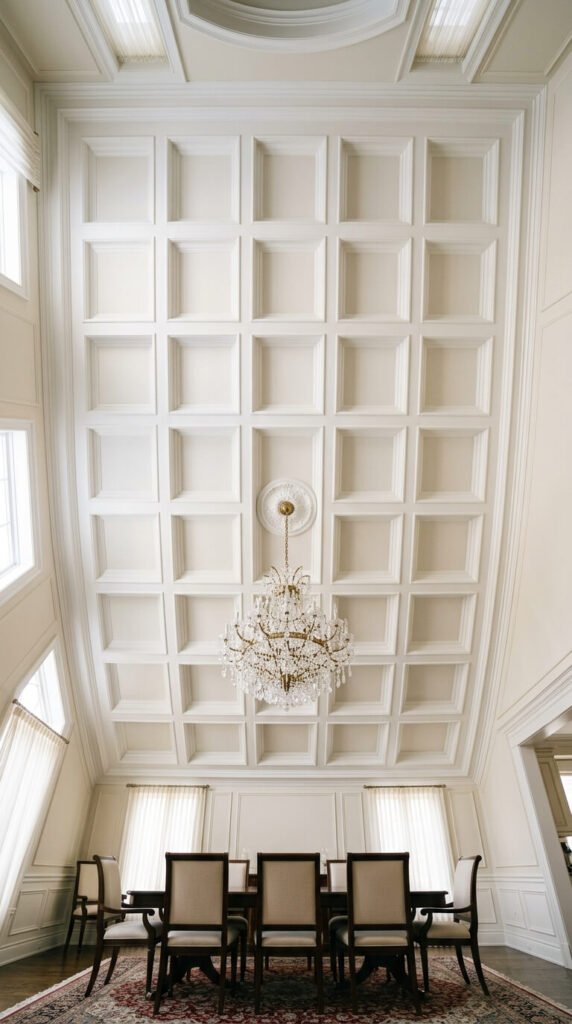
White-on-white coffered ceilings never go out of style. The trick is depth — shallow coffers look flat, so aim for at least 3–4 inches of recess. Paintable MDF molding kits from home improvement stores can create this look for under $500 in a standard dining room. No carpentry degree required. Map out your grid on paper first, use a laser level, and work in sections. The payoff is massive. This is the single highest-impact ceiling upgrade for the money.
2. Dark Walnut Wood Panels
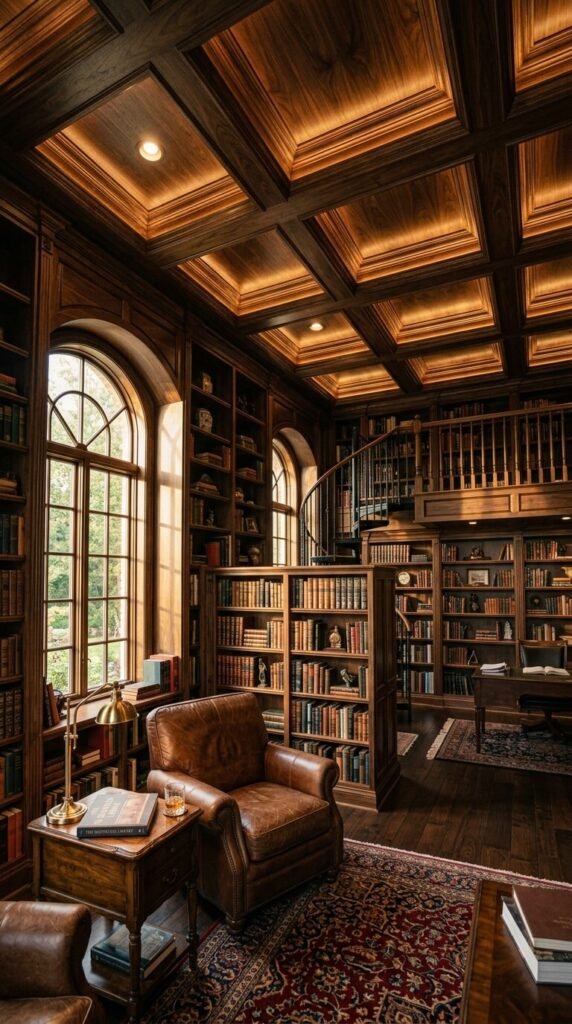
Dark wood coffers feel like something out of a private London club. Real walnut is expensive, but walnut-veneer plywood gives the same look at a fraction of the cost. Cut panels to size, stain before installation, and attach with construction adhesive and finish nails. This works especially well in home offices, libraries, and dining rooms. Pair with leather furniture and brass light fixtures to lean into the richness. Keep walls lighter so the ceiling becomes the focal point rather than overwhelming the room.
3. Painted Geometric Coffers in Navy
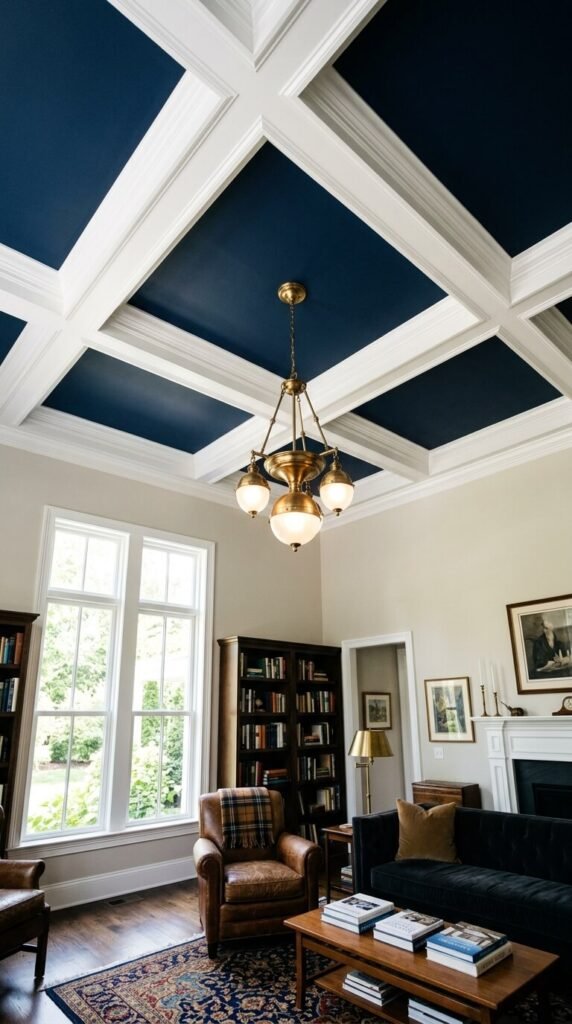
Navy coffers make a bold, confident statement. Paint just the ceiling field (the flat interior of each coffer) in a deep color while keeping the beams white. This two-tone technique adds color without commitment — it’s one coat of paint to change your mind later. Benjamin Moore’s “Hale Navy” or Farrow & Ball’s “Hague Blue” are top picks. This approach costs almost nothing if your coffers are already built. It works brilliantly in rooms that get a lot of natural light, where the dark ceiling grounds rather than crushes.
4. Shallow Tray Coffer Hybrids
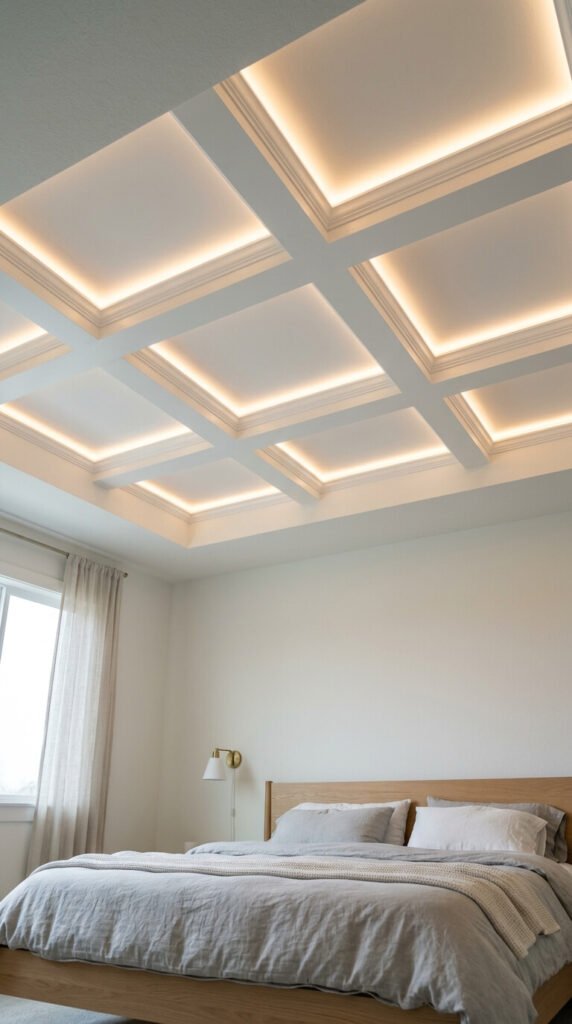
Not every room can handle deep coffers. If you have 8-foot ceilings, shallow tray-coffer hybrids give you the architectural look without eating headroom. These are essentially a single large tray ceiling with a lightweight grid overlay. The inner tray drops 2–3 inches; the grid is surface-applied. LED strip lighting in the tray perimeter does the heavy lifting visually. Total DIY cost in a bedroom: around $300–$600 depending on room size. The result looks like a custom build but takes a weekend.
5. Rustic Rough-Sawn Timber Beams
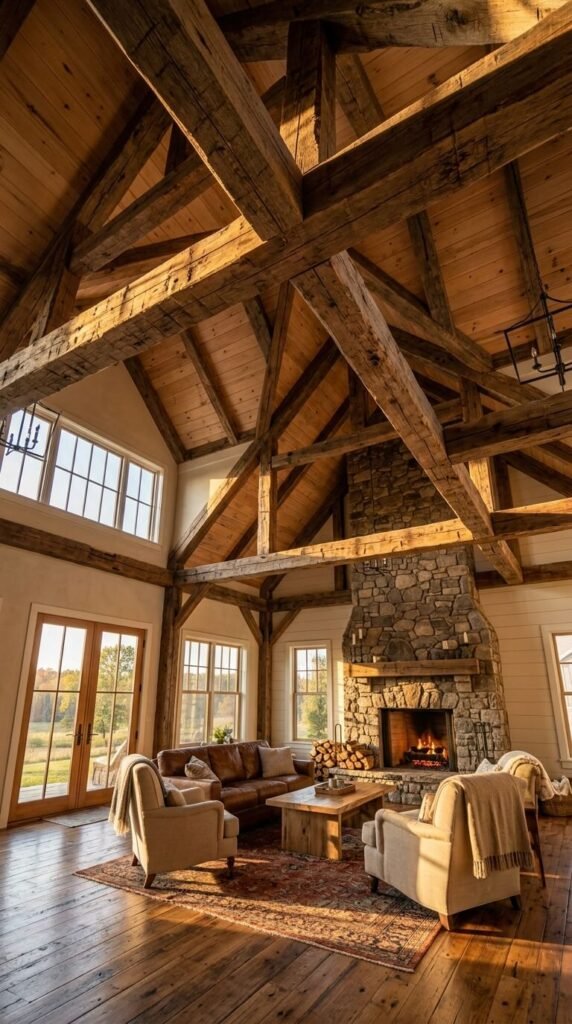
Rough-sawn timber coffers belong in farmhouses, mountain cabins, and anything with a great room. The beauty is in the imperfection — knots, saw marks, and natural variation are the point. Faux timber beams made from polyurethane have gotten surprisingly convincing and weigh almost nothing, making installation a one-person job. Real rough-sawn Douglas fir is also relatively affordable if you source from a local sawmill. Space beams 3–4 feet apart for maximum drama. Keep the ceiling field white or natural plaster for contrast.
6. Coffered Ceiling with Grasscloth Insets
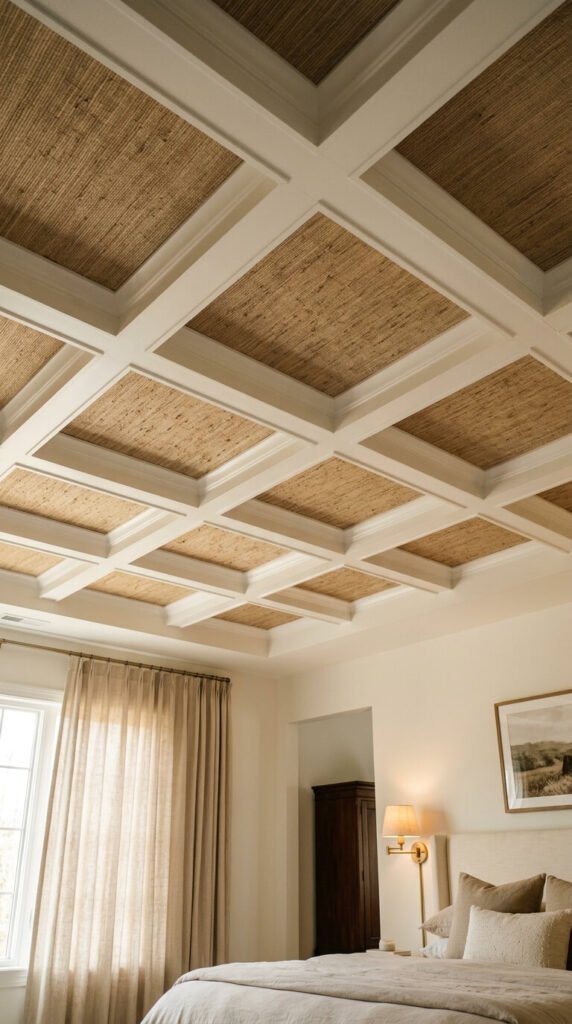
Grasscloth insets inside coffers add texture that paint simply can’t match. The woven weave catches light differently throughout the day, giving the ceiling a living quality. Buy grasscloth wallpaper by the roll, cut panels to fit each coffer’s flat field, and apply with wallpaper paste. One roll usually covers several panels. This works best in bedrooms and formal sitting rooms where the ceiling gets lingering attention. Pair with linen, wood, and stone elsewhere in the room to keep the organic theme coherent.
7. Gold Leaf Accent Coffers
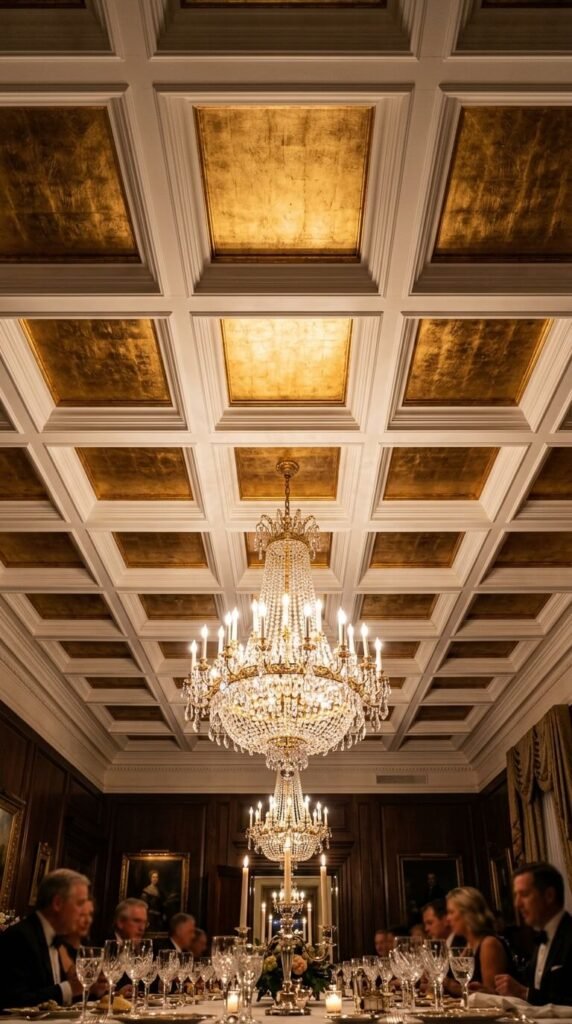
Gold leaf inside coffers is pure old-world drama. You don’t need to gild every surface — just the flat interior panels. Imitation gold leaf (composition leaf) costs about $15 for 25 sheets and is almost indistinguishable from the real thing at ceiling height. Apply size (adhesive), press the leaf on, then seal with a matte varnish. The shimmer changes with the light all day long. This is a brilliant DIY weekend project with a high-end result. It pairs beautifully with chandeliers, dark walls, and velvet furniture.
8. Modern Black Steel Coffered Grid
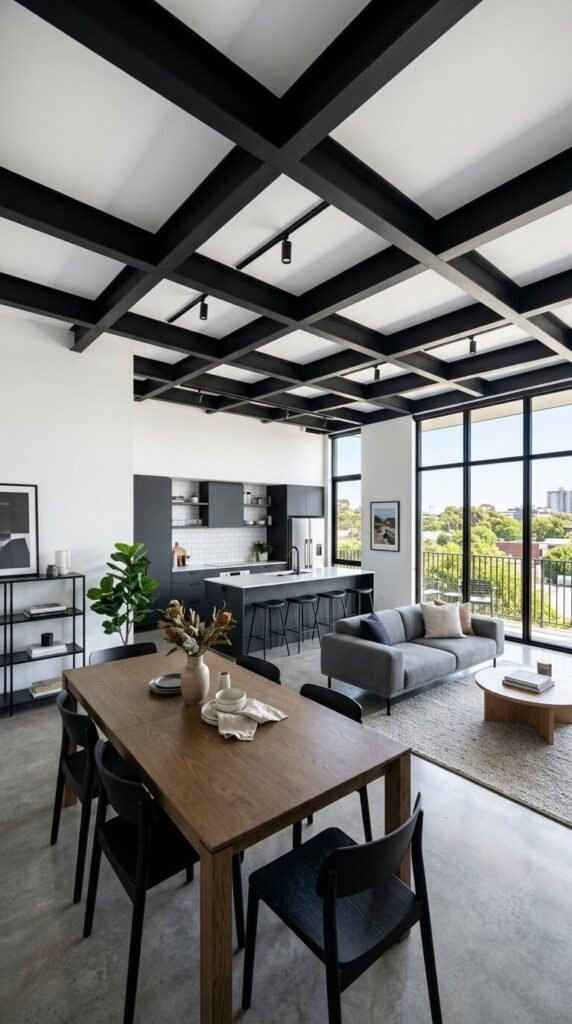
Black steel-look coffers belong in modern industrial and contemporary spaces. The key is matte finish — gloss reads cheap, matte reads architectural. Achieve this with painted MDF beams in Sherwin-Williams “Iron Ore” or similar near-black tones. Keep the ceiling field white or concrete-look grey. This style suits high ceilings (9 feet minimum) where the dark grid doesn’t feel oppressive. Open-plan spaces with large windows carry this best. Pair with exposed concrete, raw oak, and simple black hardware throughout the room.
9. Octagonal Coffered Pattern
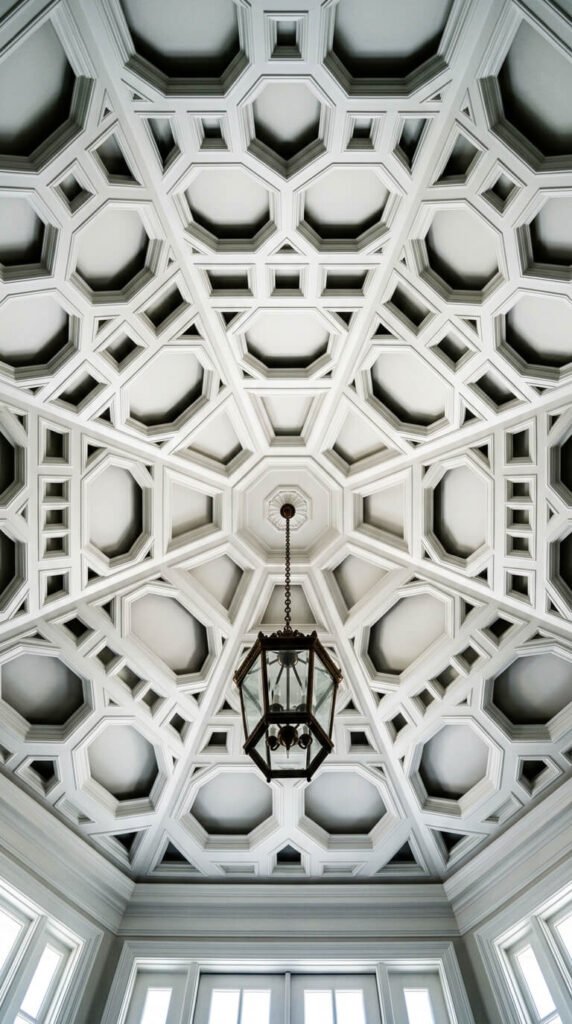
Octagonal coffers feel genuinely historic — they’re pulled straight from Italian Renaissance architecture. They’re harder to DIY than square grids but still achievable with patience and a good miter saw. Pre-made octagonal ceiling medallion kits exist, though for a full coffered field you’ll be cutting custom angles. This pattern suits foyers, formal dining rooms, and any space under a dome or high ceiling. The more complex the pattern, the more important it is to work from a scaled drawing and take your time during layout.
10. Painted Mural Inside Coffer Panels
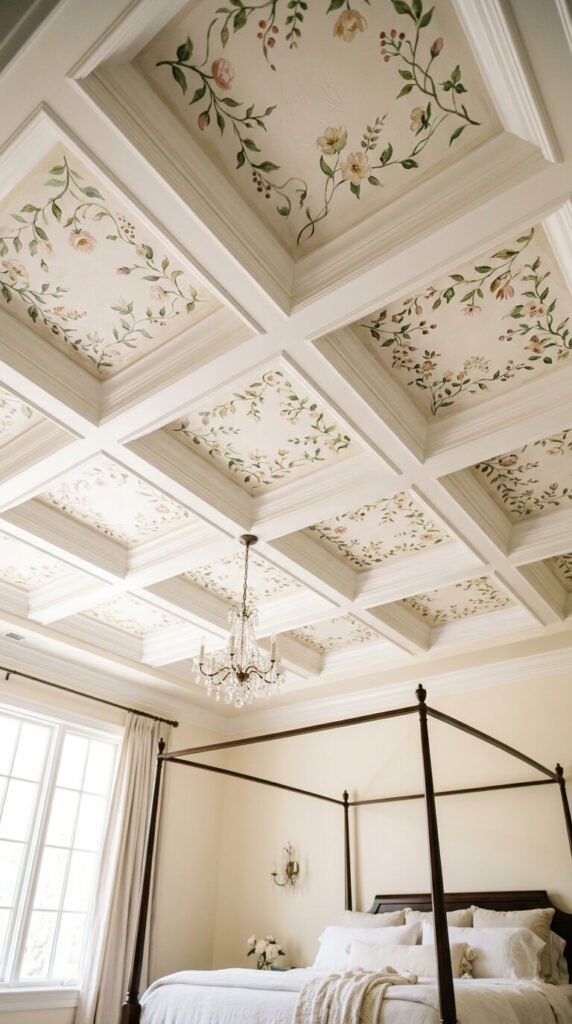
Turn each coffer into a tiny canvas. Hand-painted murals inside coffer panels — botanical motifs, geometric patterns, sky-and-cloud scenes — create a ceiling that feels genuinely one-of-a-kind. You don’t need to be a professional muralist. Simple repeating botanical stamps or stencils give a hand-painted feel with far less skill required. Use an artist’s brush for touch-ups. This works best in bedrooms and sitting rooms where people actually look up. Budget: mostly your time and a few tubes of acrylic paint.
11. Beadboard Inset Coffered Ceiling
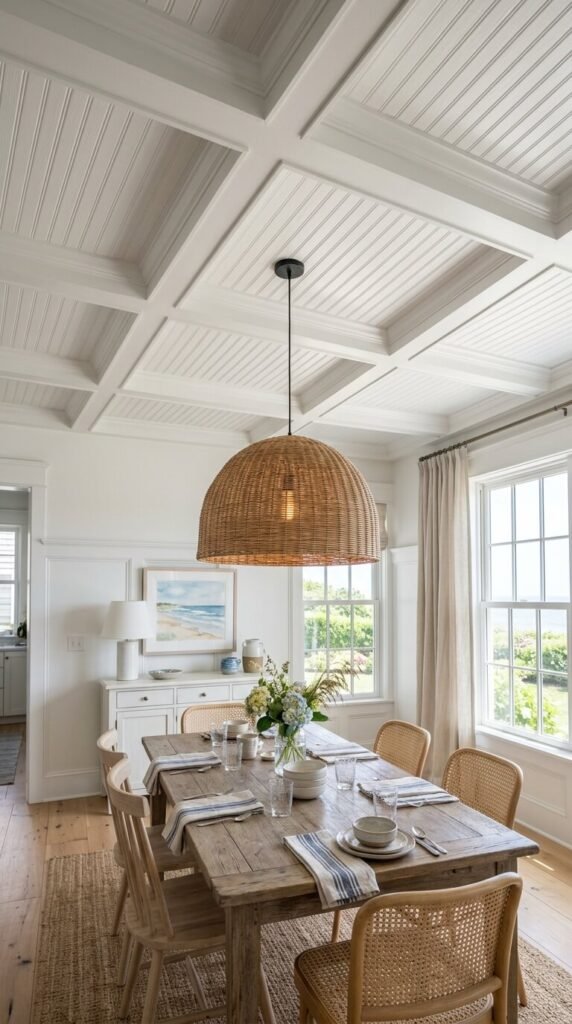
Beadboard insets are the coastal and cottage world’s answer to gold leaf. Cut beadboard panels to fit each coffer’s flat field and paint them the same white as the rest of the ceiling for a subtle texture pop, or paint them a soft contrasting color like seafoam or pale blue for more personality. 4×8 sheets of beadboard paneling cost around $25 each — one sheet covers several coffer panels. This is an excellent beginner-level ceiling upgrade. It works in kitchens, bathrooms, dining rooms, and sun porches.
12. Coffered Ceiling with Integrated Speakers
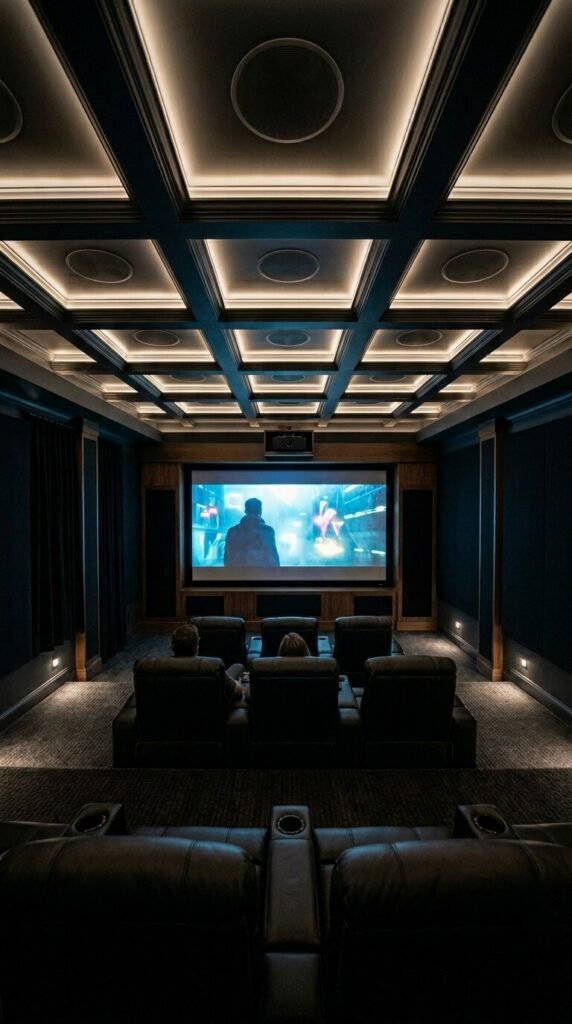
Plan your audio system into your coffered ceiling from the start and you’ll never see a speaker wire again. In-ceiling speakers fit neatly inside coffer panels, and when painted to match they’re practically invisible. The coffer’s depth acts as a natural acoustic baffle, improving sound quality. This works best in home theaters, living rooms, and covered outdoor spaces. Coordinate with your AV installer before framing the coffers — rough-in speaker locations need to land inside a coffer field, not on a beam. The result is a completely clean, architectural look.
13. Double-Layered Deep Coffers
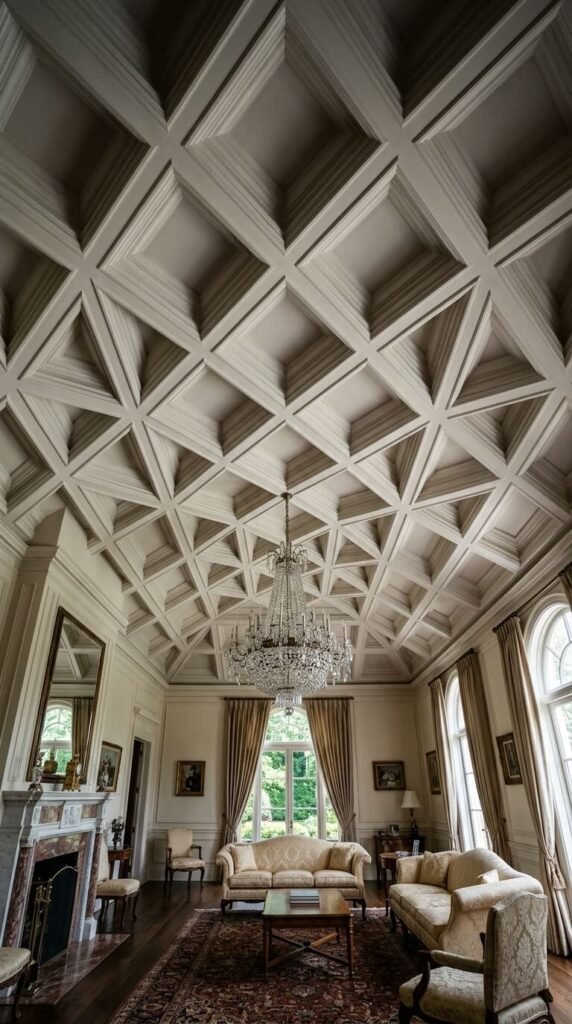
Double-layered coffers create a level of shadow depth that flat or single-layer coffers simply cannot match. Each coffer steps in twice — a larger outer frame, then a smaller inner recess. The result is genuinely dramatic, even at modest ceiling heights. Build the first layer from 1×6 boards and the inner layer from 1x4s, stepping them in by 2 inches on each side. Paint uniformly white to let the shadow do all the work. This is intermediate-level carpentry but requires no special tools beyond a miter saw and nail gun.
14. Reclaimed Wood Coffered Ceiling
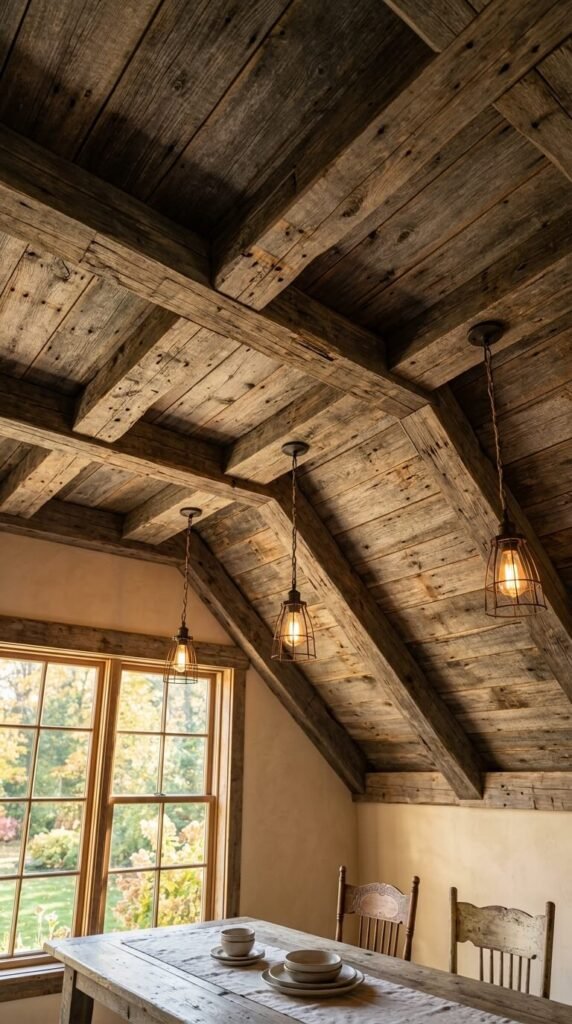
Reclaimed wood coffers carry decades of character that no new lumber can replicate. Grey barn wood, old-growth pine, and weathered oak all work beautifully. Source from architectural salvage yards, Craigslist, or local barn demolitions — prices vary widely but reclaimed wood often costs less than you’d expect. The imperfections (nail holes, checks, stain marks) are selling points, not flaws. This style suits farmhouses, craftsman bungalows, and any home that values authenticity over perfection. Sand lightly, seal with a matte finish, and let the history show.
15. Coffered Ceiling with Rope Lighting
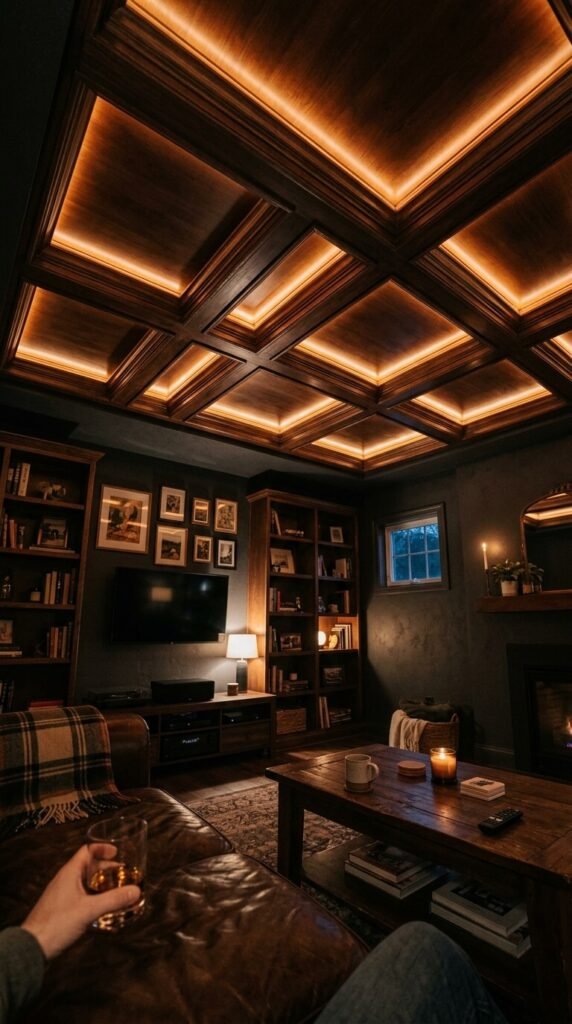
Rope lighting hidden inside coffers creates one of the most atmospheric lighting effects possible in a home. The light is indirect — it washes the coffer surface rather than shining directly into your eyes. LED rope light is inexpensive, flexible, dimmable, and easy to tuck behind a small ledge strip inside each coffer. Total cost for a medium living room: $80–$150 in lighting. Run all zones to a single dimmer. This transforms a room for evening entertaining and is hands-down one of the best bang-for-buck upgrades in this entire list.
16. Coffered Ceiling in the Kitchen
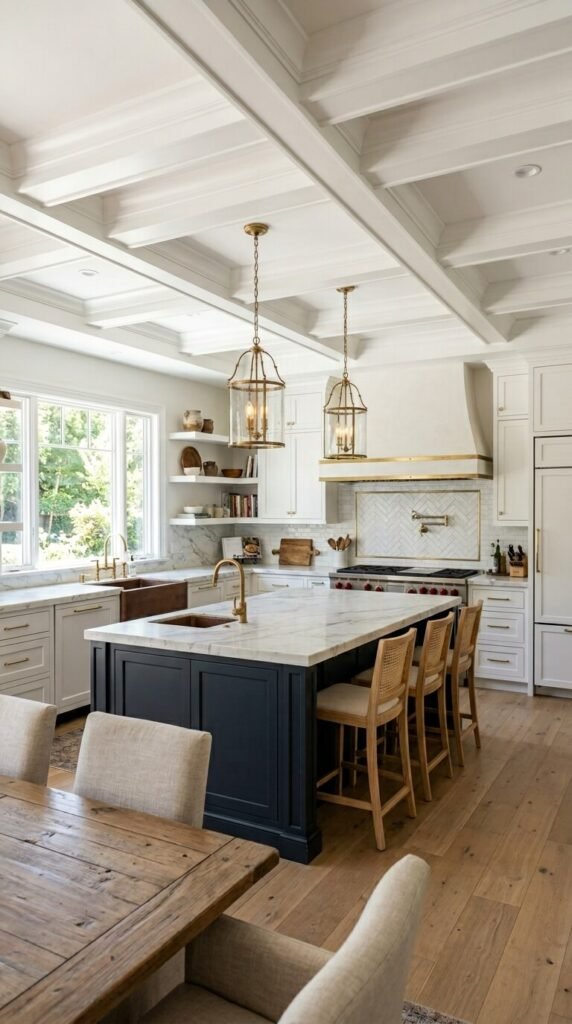
Coffered ceilings in kitchens feel unexpected and that’s exactly why they work so well. Most kitchens get flat, ignored ceilings — adding a simple 3×3 grid above the island creates instant architectural presence. Use moisture-resistant MDF in kitchens rather than solid wood (expansion and contraction from heat and steam can cause cracking). Keep coffers shallow — 2–3 inches — so they don’t compete with pendant lights over the island. Paint everything the same white as your cabinets for a seamless, built-in look that makes the whole kitchen feel custom.
17. Grasshopper Green Painted Coffers
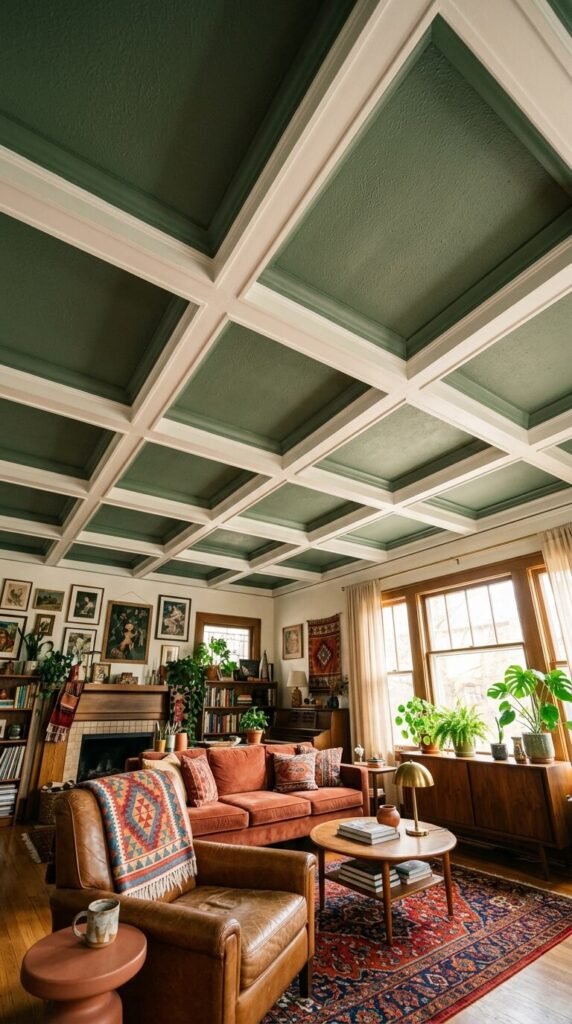
Saturated color on coffered ceilings is having a major moment in interior design. Deep sage, hunter green, terracotta, and dusty rose all work surprisingly well inside a white-beamed coffer grid. Paint only the flat ceiling field between beams, not the beams themselves. This keeps the structure readable and the color contained. Use a good ceiling paint in eggshell finish — it holds color better than flat and is easier to clean. Start with a sample pot. Live with it for two days before committing. Color on ceilings reads darker in person than on paint chips.
18. Minimalist Japanese-Inspired Coffered Ceiling
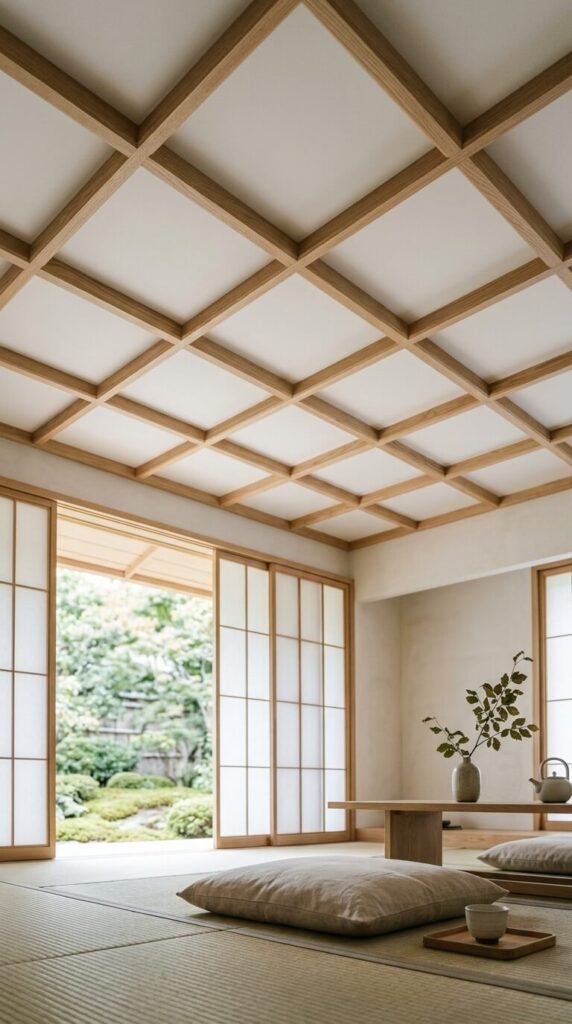
Japanese aesthetic principles — restraint, precision, natural material — translate beautifully to coffered ceilings. Use thin, perfectly proportioned beams in natural oak or hinoki (Japanese cypress), spaced widely apart rather than densely packed. The wide negative space between beams is as important as the beams themselves. Finish in clear matte oil rather than a film finish so the wood looks alive, not plastic. Keep the rest of the room absolutely spare. This style fails when surrounded by clutter but sings in a thoughtfully edited space.
19. Wallpapered Coffers in Geometric Print
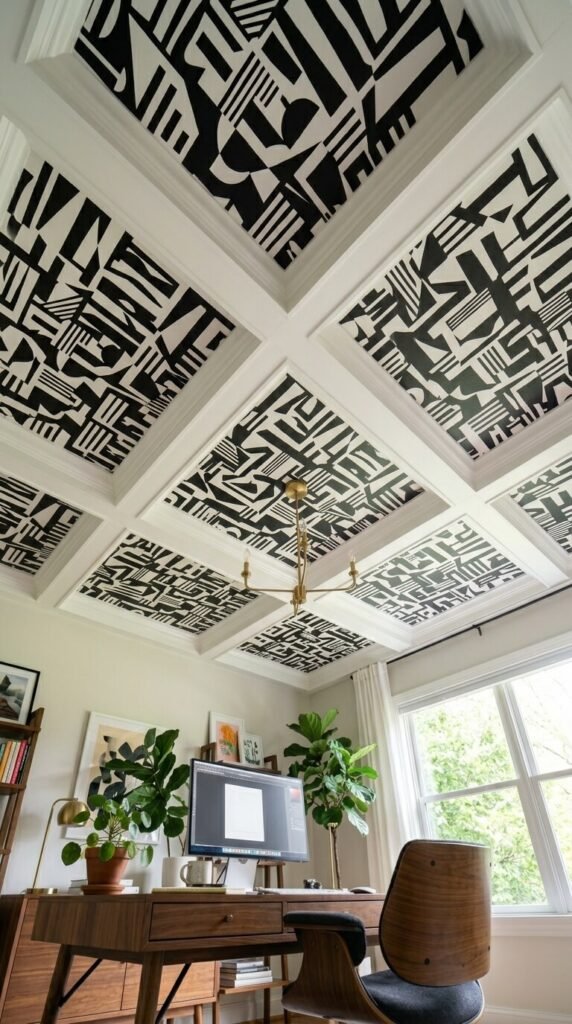
Bold geometric wallpaper inside coffered panels turns a ceiling into a piece of graphic art. Each coffer becomes its own framed panel — like hanging art, but on the ceiling. Peel-and-stick wallpaper has made this project dramatically easier; no paste, no mess, repositionable if you misalign. Pick a pattern that references something already in the room — a fabric, a rug, a tile. Scale matters: a large geometric repeat needs larger coffers (at least 24 inches square). This is a weekend project with massive visual impact for very little money.
20. Coffered Ceiling with Antique Mirror Insets
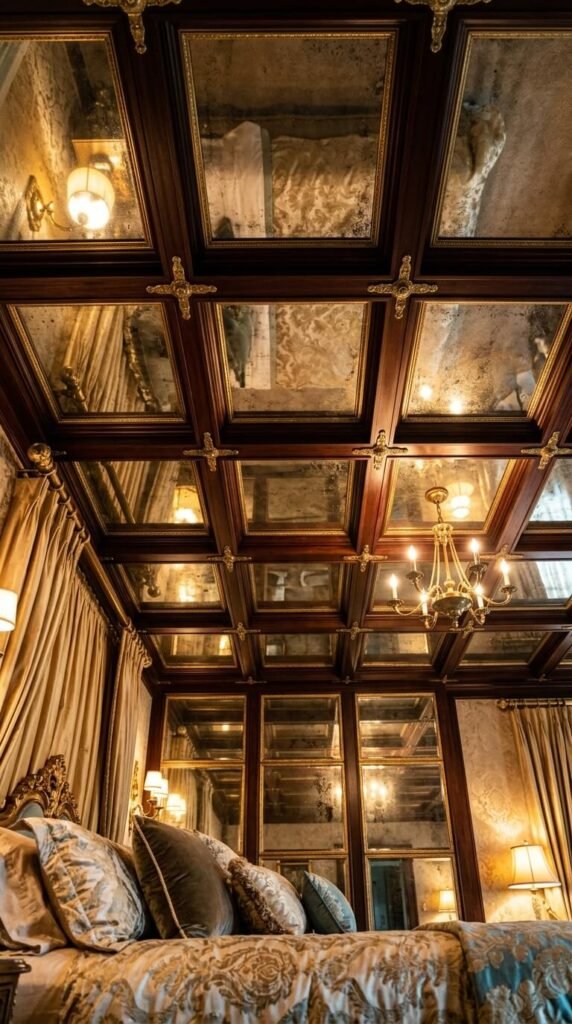
Antique mirror inside coffers is one of the most theatrical ceiling moves in residential design. The foxed, aged glass reflects light imperfectly — which is actually the point. It catches light without being harsh, and the reflection adds apparent height to the room. Antique mirror tiles are sold by the square foot at glass suppliers and are surprisingly affordable. Have panels cut to fit each coffer exactly, then secure with mirror mastic adhesive. This is best suited to bedrooms, dressing rooms, and dining rooms with controlled lighting.
21. Farmhouse Shiplap Coffered Ceiling
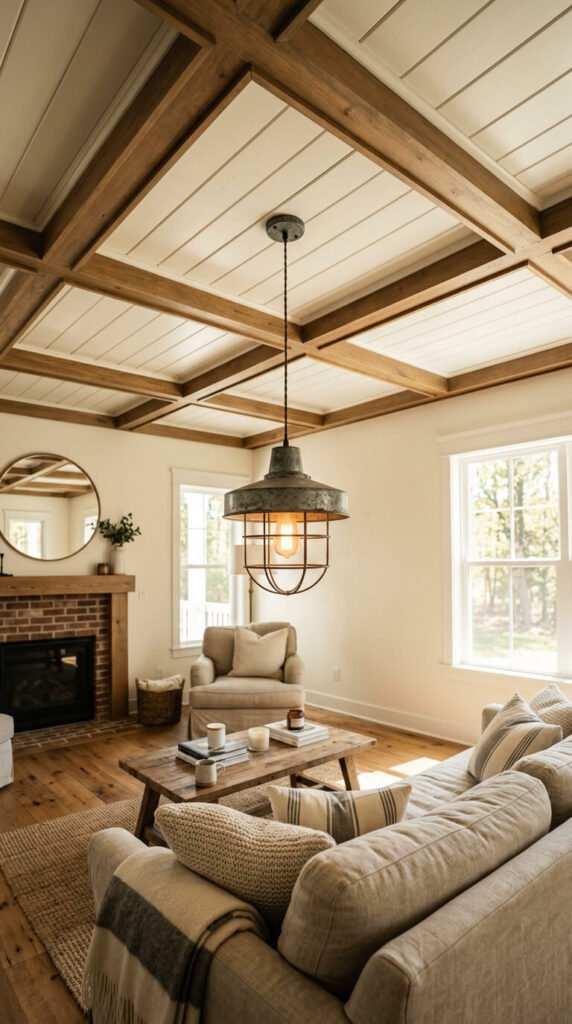
Shiplap inside coffered panels is peak farmhouse style — but it works in modern cottage and transitional spaces too. Cut shiplap boards to fit horizontally inside each coffer’s flat field. Leave a nickel-width gap between boards (use an actual nickel as a spacer) for that authentic shiplap reveal line. Paint everything the same color for a subtle textured look, or paint the shiplap one shade lighter than the beams for more dimension. Total cost for a dining room ceiling is typically $200–$400 in shiplap plus your time.
22. Coffered Ceiling in a Bathroom
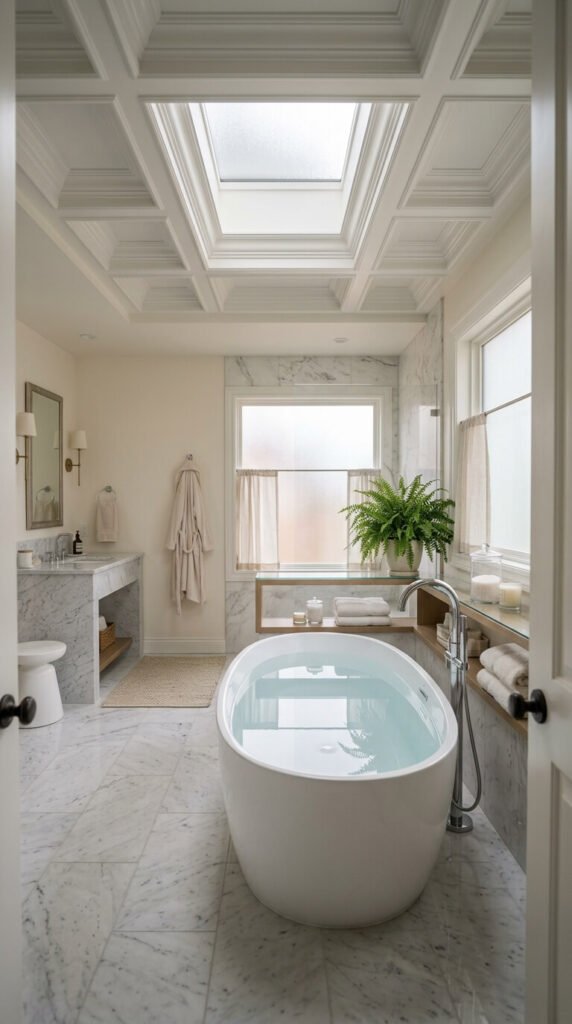
A coffered ceiling in a bathroom signals serious luxury. Most people don’t go there — which is exactly why you should. Use moisture-resistant MDF and prime all cut edges thoroughly before installation to prevent swelling. Ventilation is non-negotiable; run a strong exhaust fan and let it run after every shower. Keep coffers relatively simple in bathrooms — a 2×3 or 3×3 grid without insets or wallpaper is most practical. Paint in a semi-gloss for easy cleaning. The payoff is a bathroom that feels like a boutique hotel, for the price of molding and a weekend.
23. Painted Ombre Coffered Ceiling
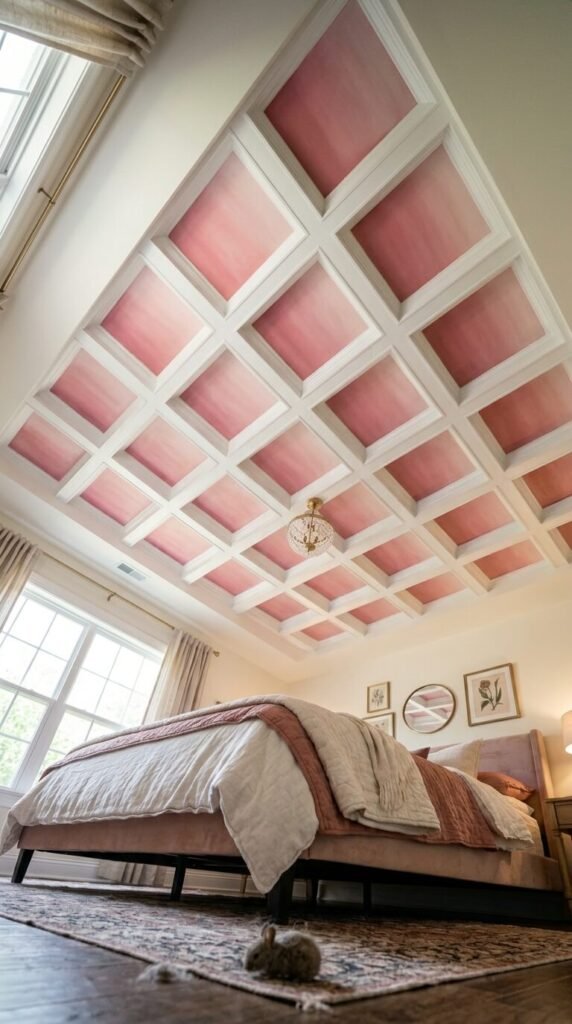
Ombre painting inside coffers is an advanced DIY project but produces a genuinely unique result. Each coffer’s flat panel fades from one tone at the edges to a deeper version of the same color at center — or from one color to another. Mix two shades of the same paint family and blend while wet using a damp roller and dry brush. Work one coffer at a time so paint stays wet enough to feather. Practice on cardboard first. This works best in bedrooms and sitting rooms where the ceiling is a deliberate focal point.
24. Industrial Pipe-and-Beam Coffered Ceiling
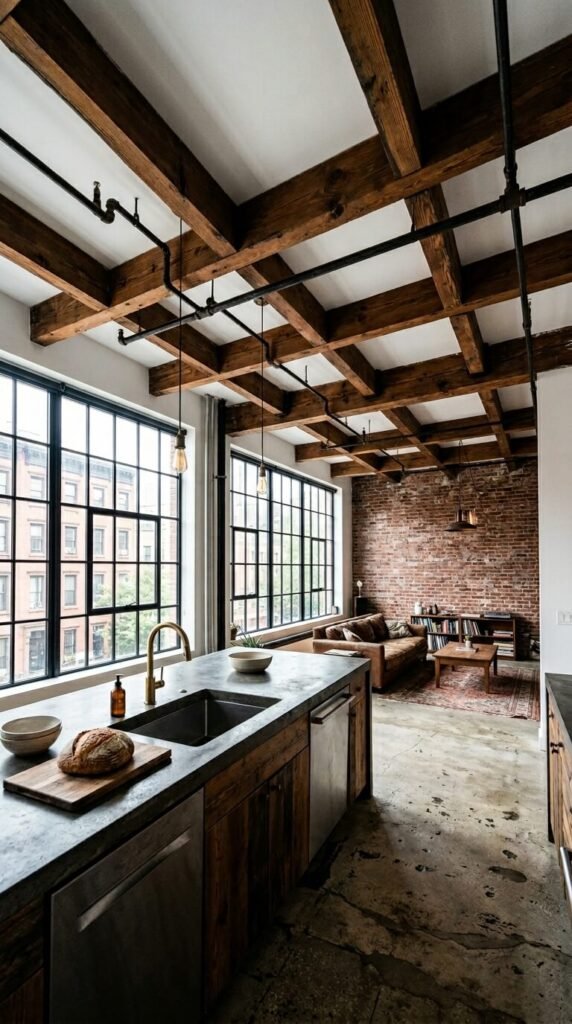
Industrial pipe grids aren’t traditional coffered ceilings, but they achieve the same architectural effect with an entirely different personality. Black iron pipe fittings and flanges from a plumbing supplier combine with rough fir or pine boards to create a ceiling grid that feels genuinely raw and intentional. Pre-plan all pipe lengths before purchasing — measure twice, cut once. This suits lofts, converted spaces, and any home leaning into industrial or urban aesthetics. Paint the ceiling field above the grid white to make the pipe structure pop against it.
25. Coffered Ceiling with Linen Fabric Insets
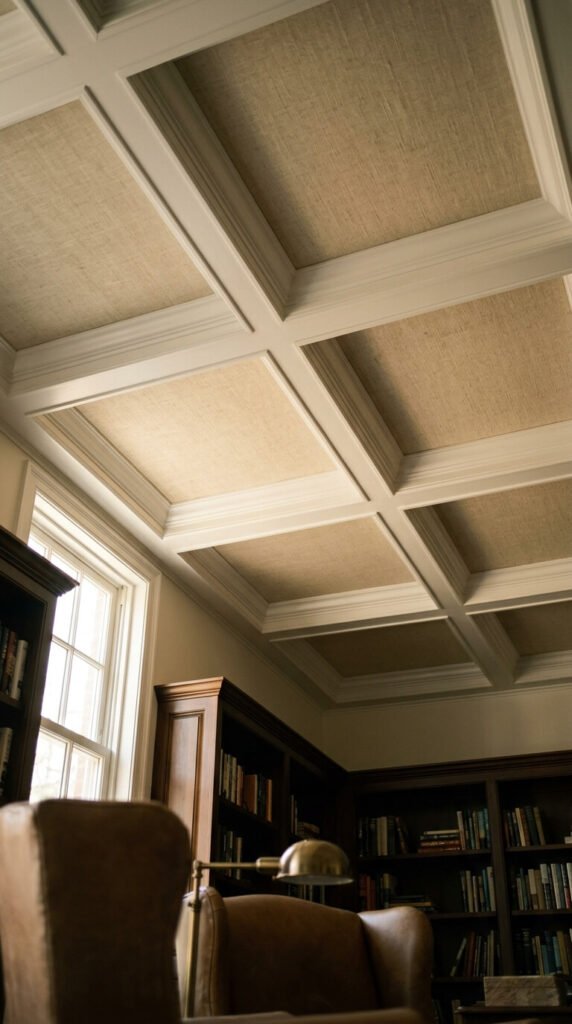
Stretched fabric inside coffers is a technique borrowed from high-end acoustic panel design — and it works beautifully in residential spaces. Natural linen, Belgian cotton, or even muslin can be stretched over a thin foam backing and stapled into each coffer frame. Use a staple gun and a stretching tool (similar to canvas stretching). Fabric absorbs sound, reducing echo in rooms with hard floors. This is particularly clever in home offices, music rooms, and open-plan living spaces. The texture adds warmth that paint, wood, or wallpaper simply cannot match.
26. Coffered Ceiling with Skylights
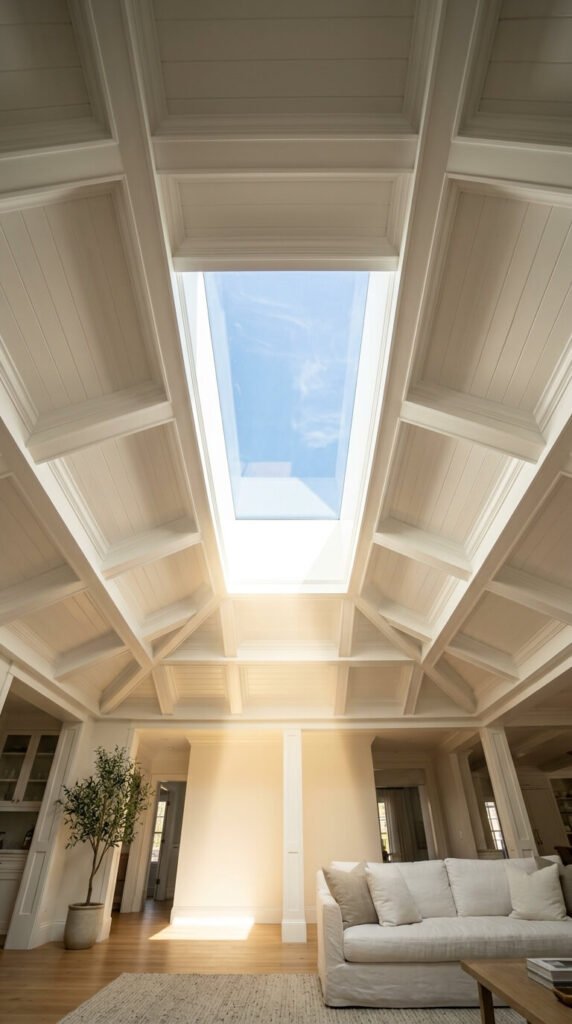
Replacing one central coffer with a skylight is the most dramatic thing you can do to a coffered ceiling. The surrounding grid frames the skylight like an architectural picture frame, and natural light fills the room with a quality no artificial source can replicate. Flat skylights from brands like Velux can be site-fitted into an existing coffer opening if your roof structure allows it. This requires professional involvement for the roof penetration, but the coffer grid itself can still be DIY. The result is a room that feels open to the sky while still feeling structured and designed.
Conclusion
Coffered ceilings work because they do something most design elements can’t — they make the architecture of a room feel intentional. Whether you go full walnut panels in a library or a simple painted grid in a dining room, the effect is the same: a space that looks and feels considered. The good news is that most of these ideas are far more accessible than they appear. MDF molding kits, peel-and-stick wallpaper, LED rope lighting, and a weekend of careful work can get you most of the way there. Start with one room, one grid, one coat of paint. The ceiling you’ve been walking under without noticing is about to become the first thing guests look up at.