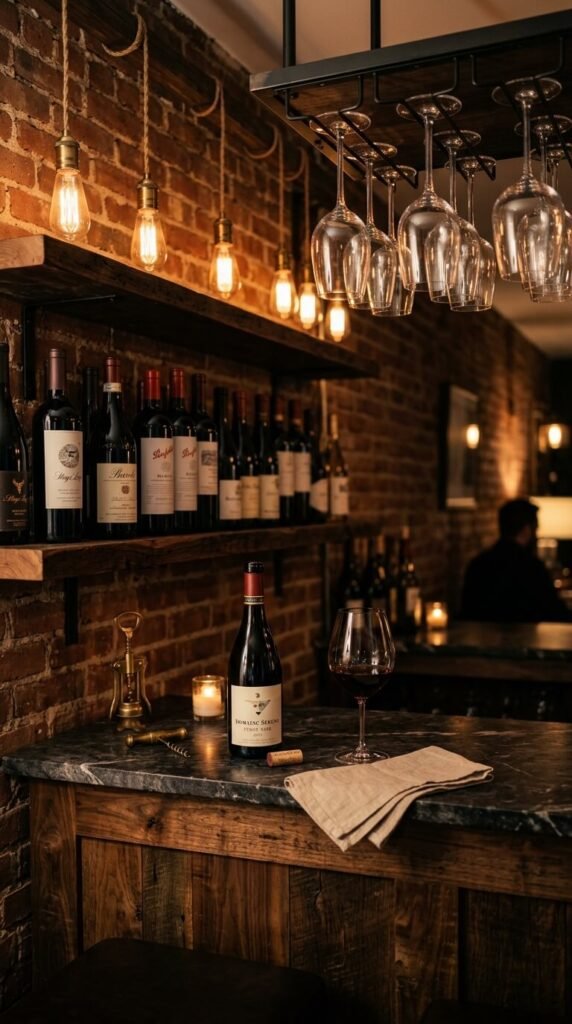
You don’t need a restaurant budget or a sprawling cellar to create a wine bar that feels genuinely refined. Whether you’re working with a spare corner, an unused bookshelf, or an entire dedicated room, the right details make any space feel intentional. This guide walks through 27 specific, actionable setups that home sommeliers — beginners and serious collectors alike — are actually using. Each idea is grounded in real design thinking, honest price points, and the small choices that separate a cluttered wine corner from something worth showing off.
1. The Floating Shelf Wine Wall
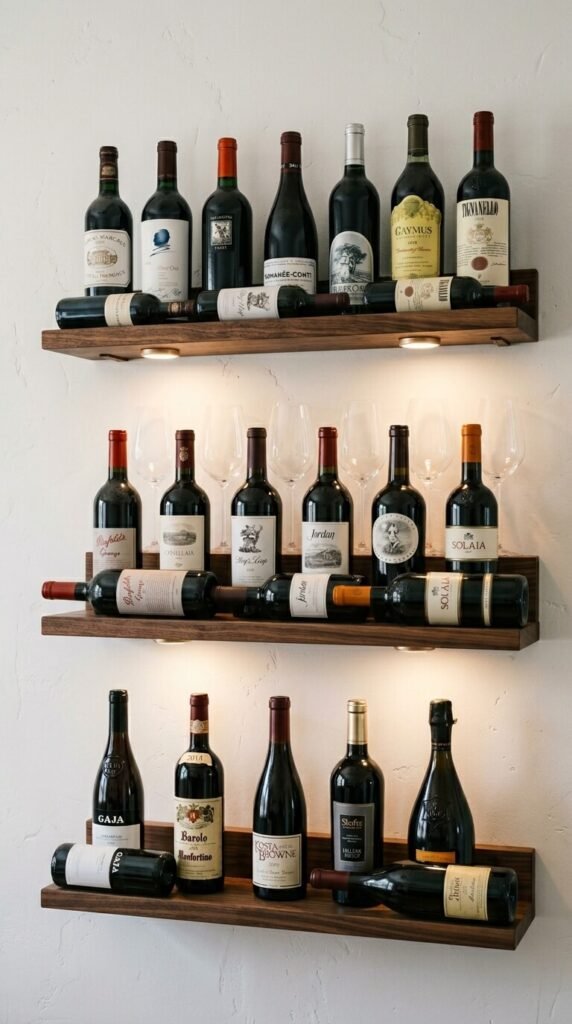
A floating shelf wine wall turns blank vertical space into your best design feature. Use three staggered shelves at different heights — it reads more like art than storage. Walnut or oak shelves from a hardware store run $20–$40 each. Mount them with heavy-duty anchors rated for 50 lbs. Add small puck lights underneath each shelf. The glow on the bottle labels creates atmosphere without any extra effort. Keep stemware between the bottles for a layered look. This works beautifully in dining rooms, kitchens, or even a bedroom corner.
2. The Repurposed Bar Cart Station
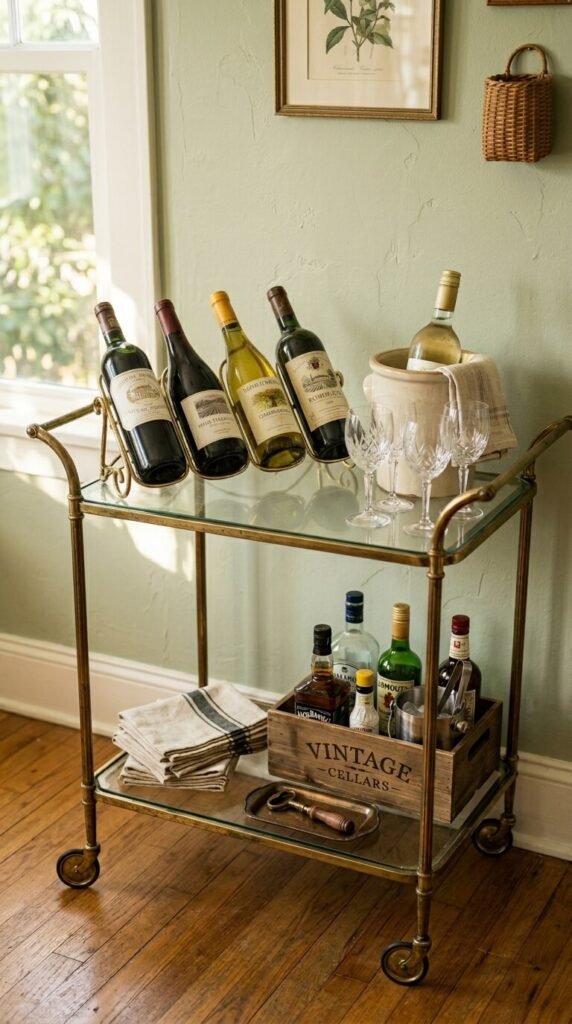
A bar cart is the most flexible wine setup you can own — move it anywhere in minutes. Look for vintage brass or matte black carts at thrift stores or on Facebook Marketplace for $30–$80. The top tier holds your open bottles and glasses; the bottom tier stores extras. Add a small ceramic wine chiller for your whites. Tuck a linen napkin and a quality wine key into the corner. The cart becomes a full wine service station without claiming any permanent wall space. It’s the right answer for renters or anyone who rearranges often.
3. The Under-Stair Wine Cellar Nook
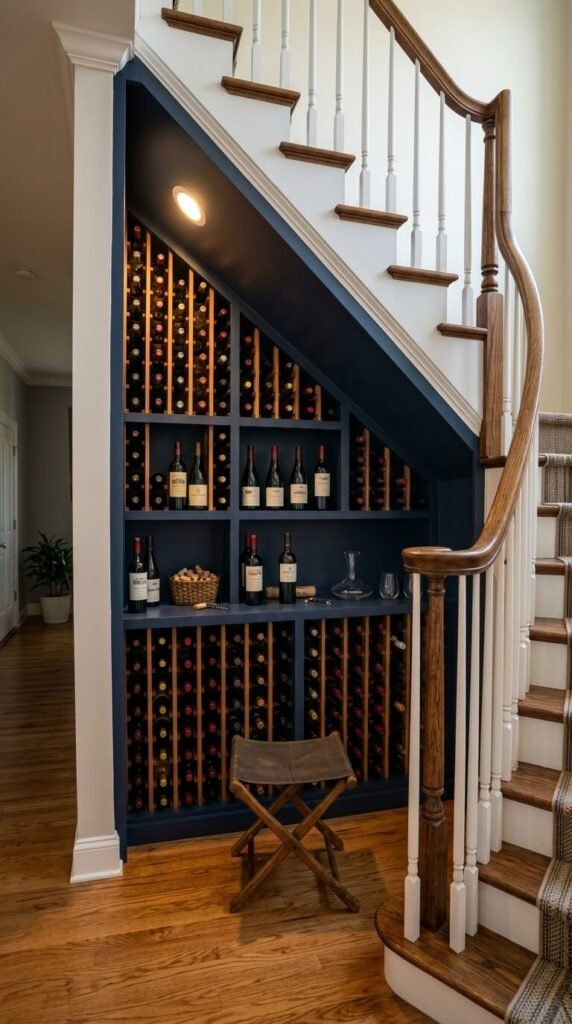
The dead space under your stairs is one of the best-kept secrets in home wine storage. Build simple wooden lattice cubbies using $50 worth of pine and some wood glue — there are free templates online. Paint the interior a deep navy or forest green to make it feel like a proper cellar. Install a single recessed LED puck light at the top. The enclosed space naturally stays cooler than the rest of the room. This holds 30–60 bottles depending on your stair width. It also adds real perceived value if you ever sell the home.
4. The Marble-Top Wine Credenza
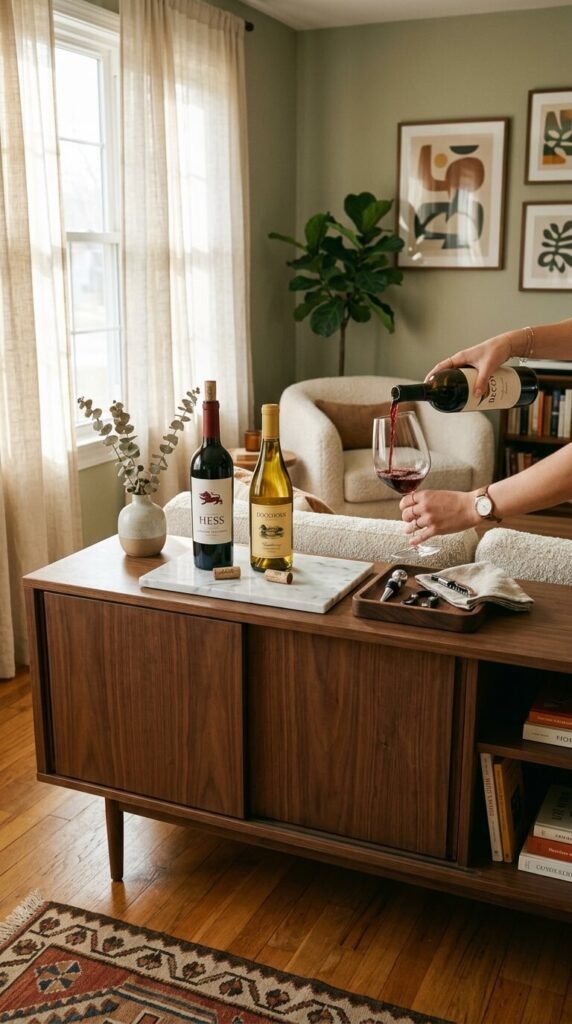
A credenza does double duty — storage inside, staging surface on top. Look for secondhand mid-century credenzas at estate sales for $100–$300. Line the interior shelves with wine racks made from stackable wooden X-frame inserts ($15–$25 each). The top becomes your pouring surface. A small marble or slate board ($20 at a kitchen store) makes it look expensive immediately. Style it with just two or three bottles, a glass, and your accessories. Less is more on the surface. Keep the rest stored inside for a clean, curated look.
5. The Pegboard Wine Accessory Wall
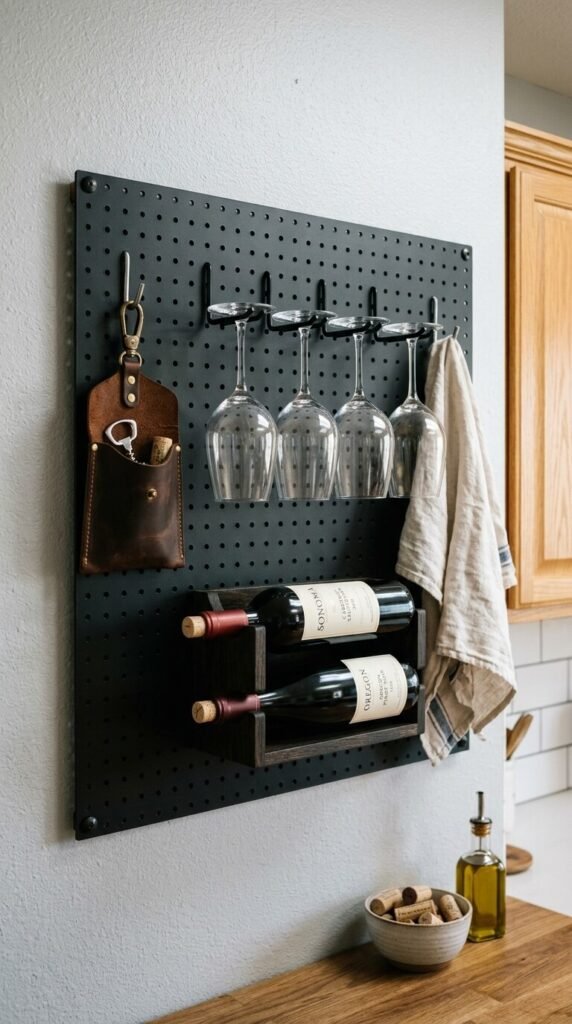
Pegboard isn’t just for garages. Painted in matte black or deep charcoal, it becomes a seriously stylish wine accessory wall. A 2×4 ft pegboard panel costs under $15 at any hardware store. Add J-hooks to hang stemware upside down, small shelf inserts for a couple of bottles, and a hook or two for your wine key, foil cutter, and aerator. Paint it first, let it cure fully, then mount it. The modular system means you can rearrange whenever your collection or routine changes. It works especially well in small kitchens where cabinet space is tight.
6. The Illuminated Glass-Door Cabinet
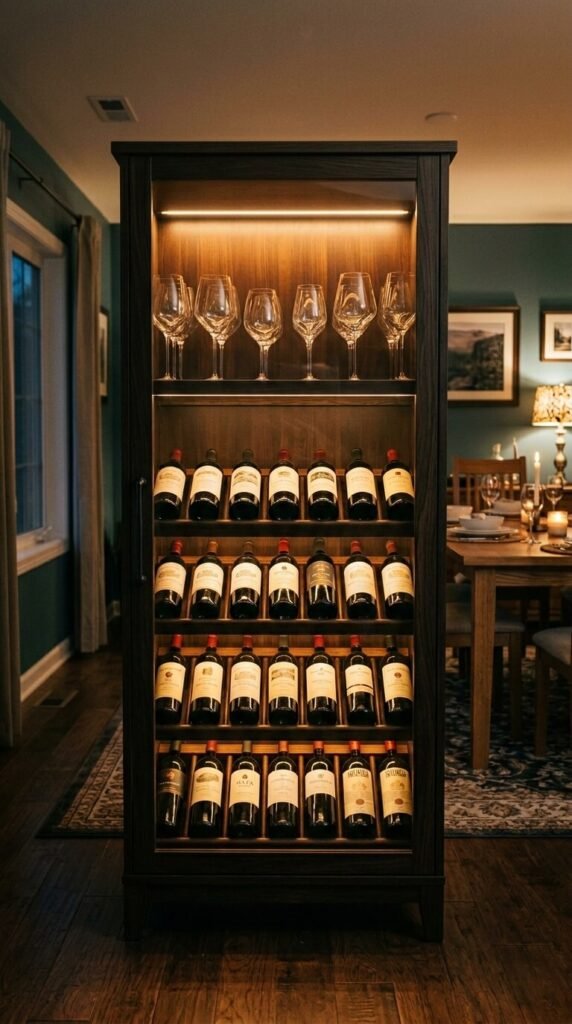
A glass-door cabinet with interior lighting turns your wine collection into a display. IKEA’s FABRIKOR or STOCKHOLM cabinets work perfectly and run $80–$300. Add an LED strip light inside along the top edge — peel-and-stick warm white strips cost about $12. Store bottles horizontally on wooden dowel racks placed on each shelf. The glass doors keep dust off your stemware while making everything visible. It looks like a custom built-in at a fraction of the cost. Style the top shelf with your best glasses for a polished final layer.
7. The Reclaimed Wood Wine Rack Shelf
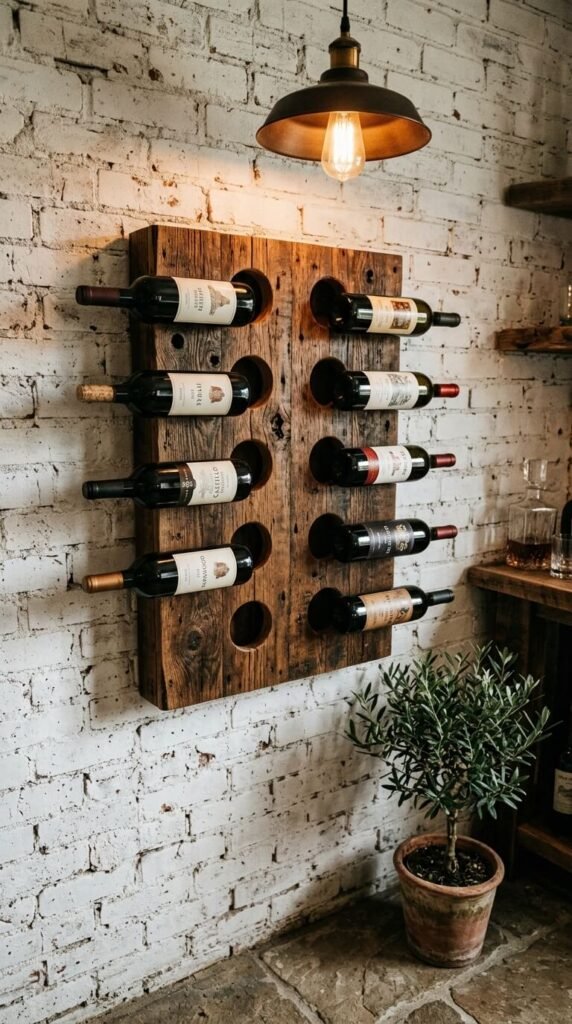
Reclaimed wood brings warmth and character that no flat-pack shelf can replicate. You can buy reclaimed wood planks from salvage yards or Etsy shops for $20–$60 per board. Cut round openings with a hole saw attachment on a drill — each opening holds one bottle horizontally. Sand the edges smooth, apply a clear matte sealant, and mount directly to studs. The natural grain variation makes every rack unique. Pair it with a whitewashed or exposed brick wall behind it for maximum visual contrast. This is a genuine weekend DIY project with a high-end result.
8. The Dedicated Wine Fridge Styling Station
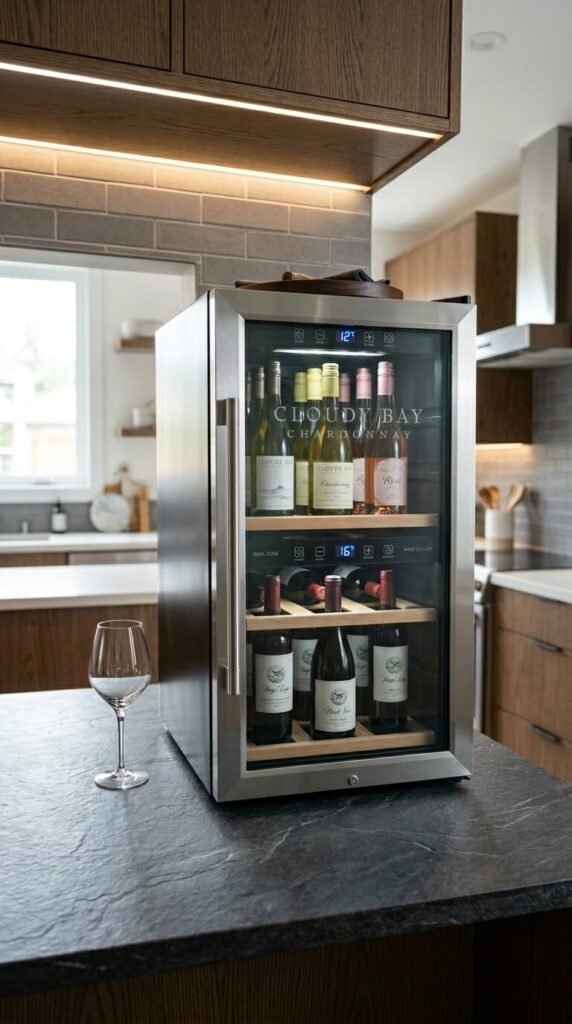
A countertop wine fridge is the single biggest upgrade for serious home sommeliers. Dual-zone models that hold 18–24 bottles start around $100–$150. Once you have it, style the top surface like a mini service station — a wooden tray, your best wine key, a napkin, and one clean glass. Keep reds in the upper zone at 60–65°F and whites below at 48–55°F. Label each zone with a small handwritten card. The fridge becomes a focal point rather than an appliance when you treat the top surface intentionally.
9. The Cozy Reading Nook Wine Corner
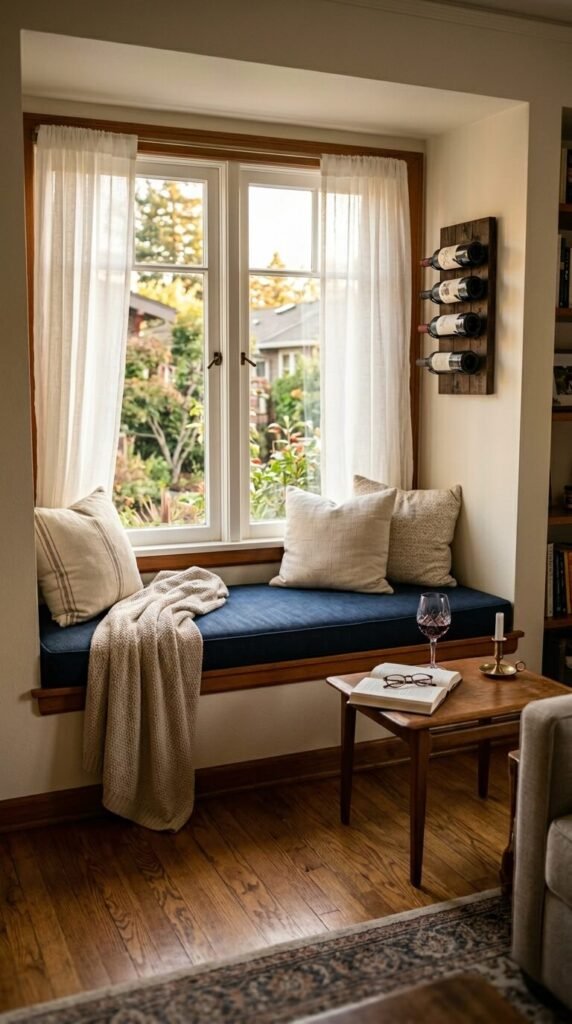
The reading nook wine corner works because it ties wine to the ritual of relaxing. Mount a small 4–6 bottle wall rack beside or above the nook seating area. Keep it stocked with whatever you’re currently working through — no need for a grand collection. A small side table holds your glass and book. Add a dimmer switch to the overhead light for instant atmosphere. This setup signals to everyone who sees it that you take your leisure seriously. It’s the most personal and inviting of all the formats in this list.
10. The Industrial Pipe Wine Rack
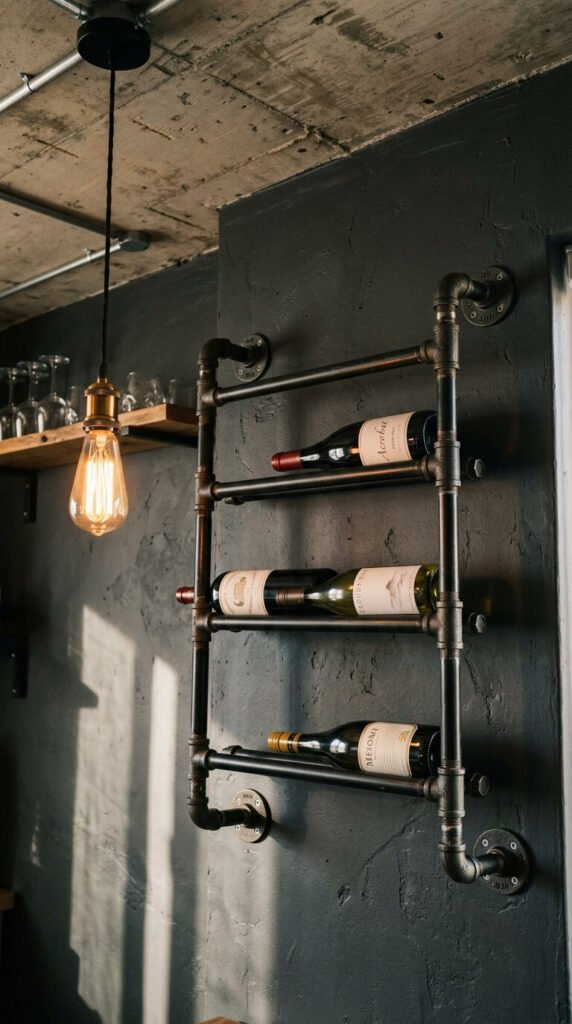
Industrial pipe racks have a raw, intentional aesthetic that pairs beautifully with modern and loft-style spaces. Buy black iron pipe and flanges from a hardware store — a three-rail rack holding 12 bottles costs about $40–$60 in materials. Mount the pipe flanges directly into studs with lag bolts. The horizontal pipes hold bottles by their necks without any additional hardware. The exposed iron oxidizes slightly over time, adding patina. Pair this with dark walls and Edison bulb pendants for a cohesive look. This is a two-hour project with permanent results.
11. The Herringbone Tile Backsplash Wine Bar
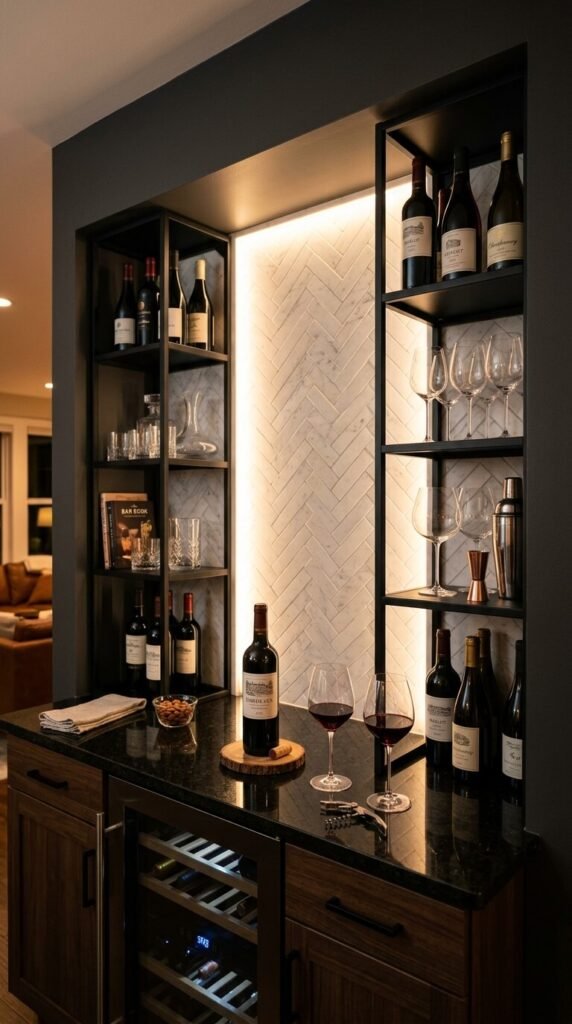
A tile backsplash instantly signals that the space was designed, not assembled. Peel-and-stick herringbone tile sheets cost $15–$25 per square foot and require no grout or professional installation. Install them on the wall section between your counter and upper shelves. White marble pattern, black slate, or warm terracotta all work depending on your palette. Add under-cabinet lighting below the upper shelf to wash the tile in warm light. The combination of texture, light, and geometry makes even a small wine corner look architectural.
12. The Sommelier’s Tasting Tray Setup
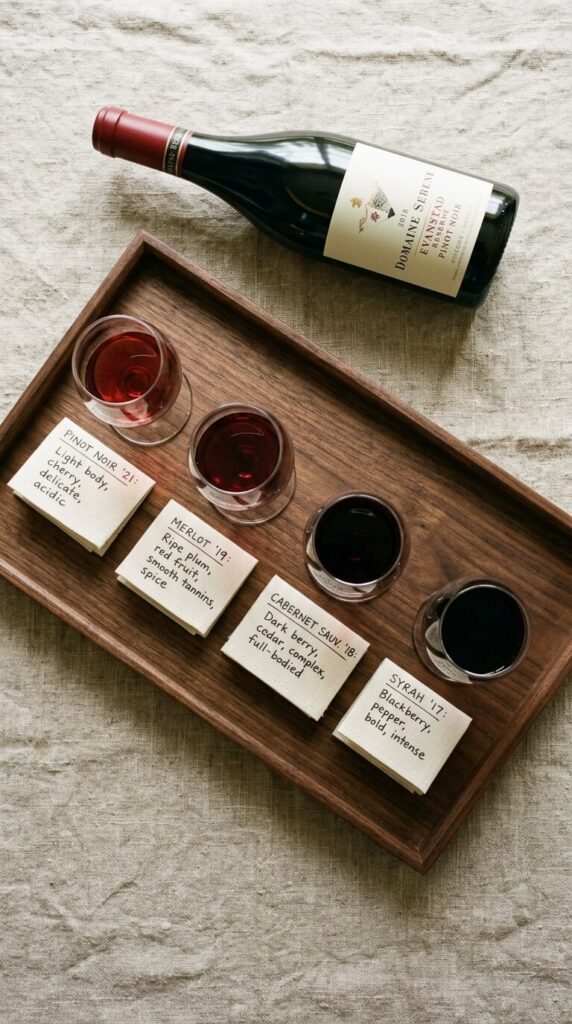
A proper tasting tray turns any wine session into an experience. Use a dark wood or slate serving tray ($15–$30) and invest in a set of four ISO-standard tasting glasses ($20–$40 for a set). Pre-pour small 2 oz tasting portions before guests arrive. Lay out small folded cards for notes beside each glass. Include a palate cleanser — plain crackers or a small piece of bread — in one corner of the tray. This format encourages conversation and slows the pace of drinking in the best way. It signals that you know what you’re doing without saying a word.
13. The Arched Niche Wine Display
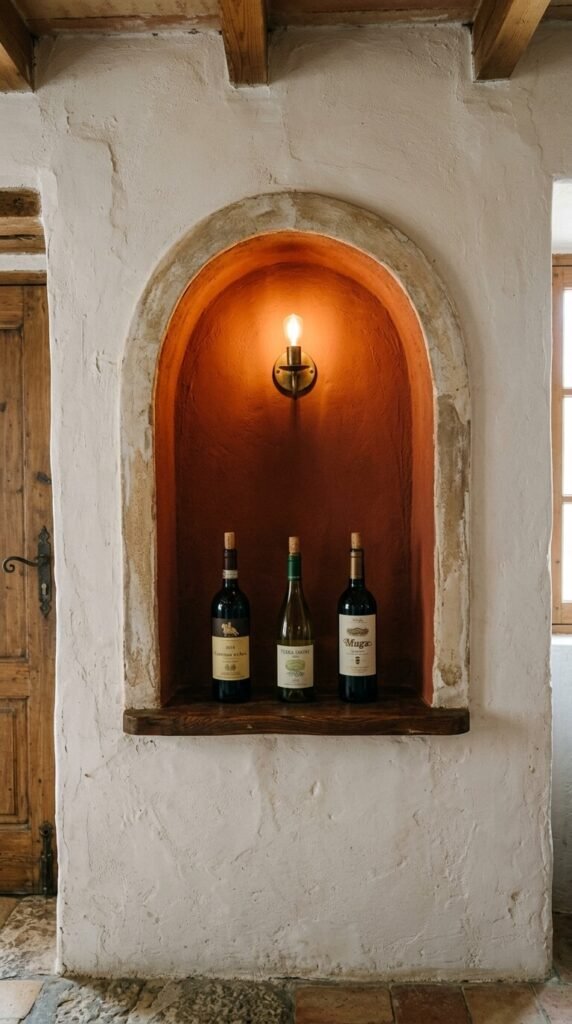
Arched niches are an architectural detail that immediately elevates any room. If you have an existing niche, paint the interior a contrast color — deep terracotta, dusty sage, or midnight navy. A small wooden shelf cut to size and mounted inside holds three to five bottles upright. Add a single small brass sconce or LED candle inside for warm light. If you don’t have a niche, faux arched frames made from MDF and molding can be mounted flat against a wall and painted to mimic the look for about $80 in materials. This is a slow, considered display — not a storage rack.
14. The Dark Moody Gallery Wall Wine Bar
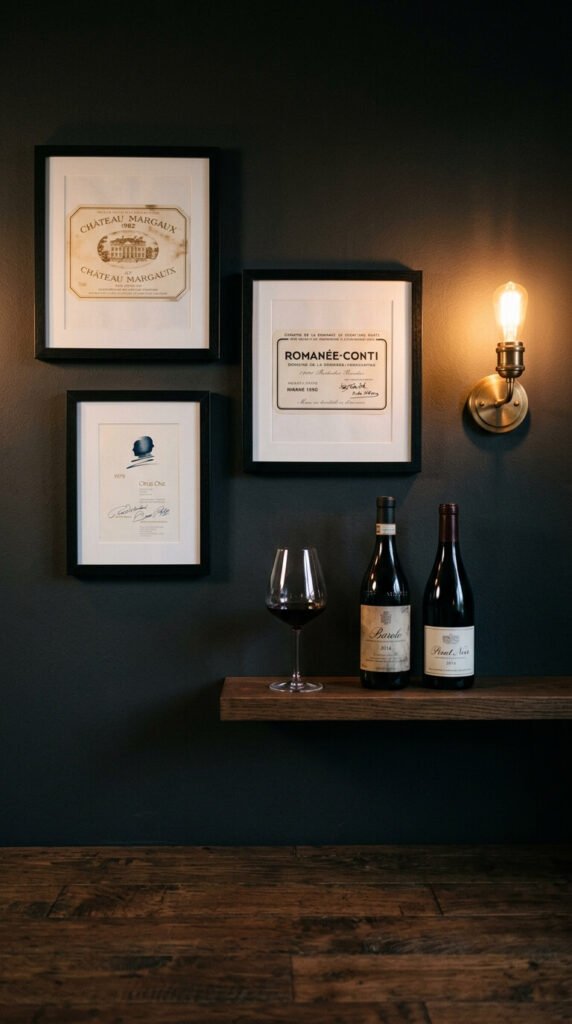
The gallery wall approach treats your wine corner as a curated installation. Paint a section of wall in deep charcoal, forest green, or oxblood. Frame three or four vintage wine labels, botanical prints, or vineyard photography in matching matte black frames. Arrange them asymmetrically — even numbers feel static. Mount a narrow floating shelf below to hold your bottles and one glass. Add a single brass wall sconce for warm directional light. The artwork creates context for the wine without being literal or cheesy. It feels collected, not decorated.
15. The Vintage Wooden Crate Storage System
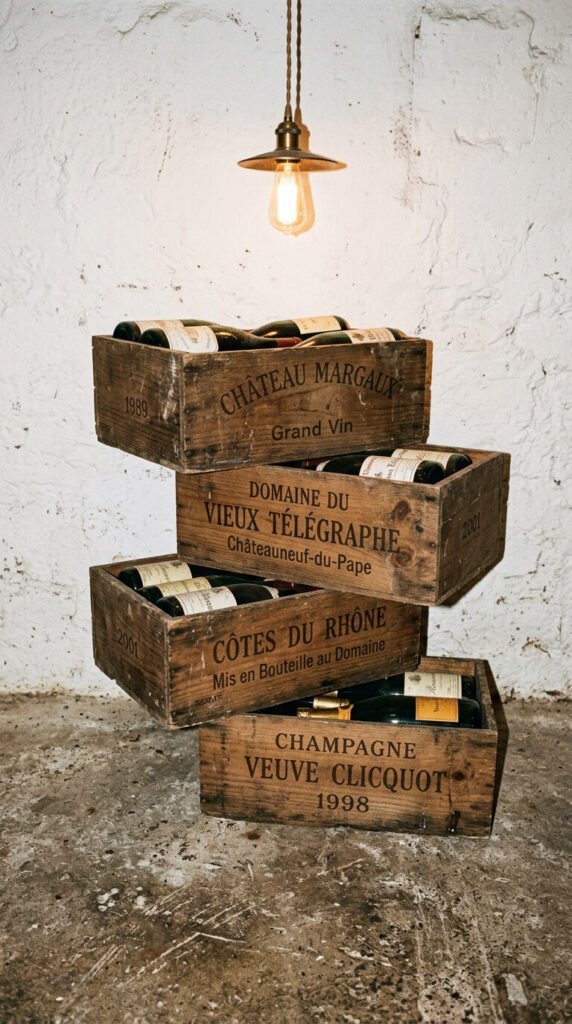
Vintage wooden wine crates are one of the most honest and affordable storage solutions available. You can find them at wine shops, flea markets, or online for $5–$20 each. Stack them in a staggered offset pattern — alternating directions — to create a sculptural column. The original winery stenciling on the sides adds authenticity you can’t fake with new materials. Each crate holds three to four bottles horizontally. The system grows with your collection: add a crate, add more storage. It’s genuinely modular and requires zero tools.
16. The Kitchen Island Wine Station
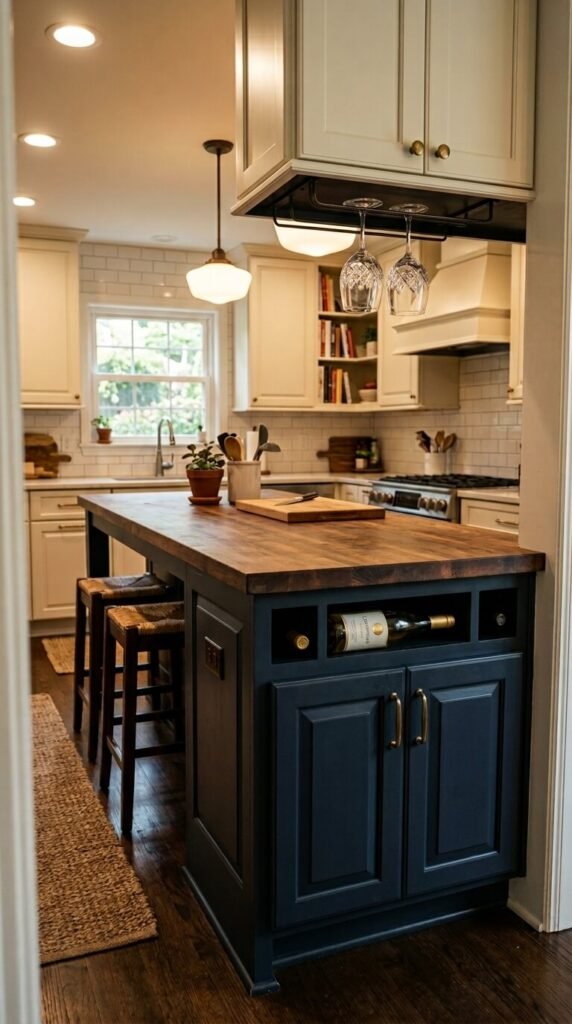
The kitchen island is already where people gather — building a wine station into it makes total sense. Add X-shaped wine cubby inserts into two or three base cabinet openings on one end of the island. Mount a hanging stemware rack ($20–$40) on the underside of the upper cabinets directly above. You now have a fully integrated pour station without a single extra piece of furniture. Keep a wine key in a small drawer nearby. When entertaining, this setup means everything is in one place and the host never has to leave the room.
17. The Linen-and-Leather Wine Accessory Tray
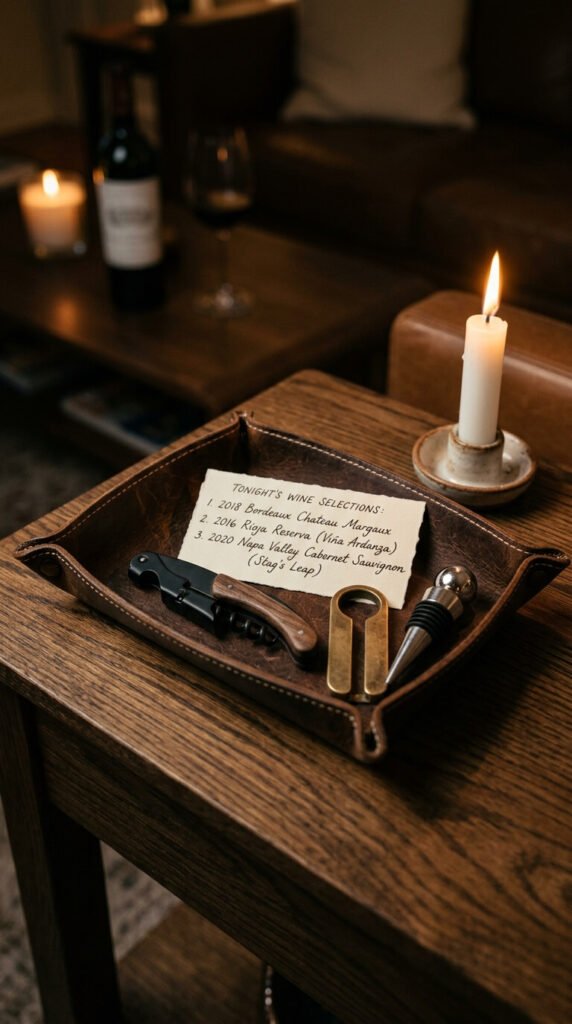
The accessory tray is the detail that separates a casual setup from a considered one. Choose a leather or dark wood tray ($15–$35) and limit it to only five items: wine key, foil cutter, stopper, aerator, and one small card. The edit matters. A tray with too many objects looks like a junk drawer. A tray with just the essentials looks like it was styled by someone who has thought carefully about what they actually use. Place it on your credenza, bar cart, or kitchen island. Replace the card each time you open a new bottle — date it and write the wine name.
18. The Candlelit Dinner Wine Staging Area
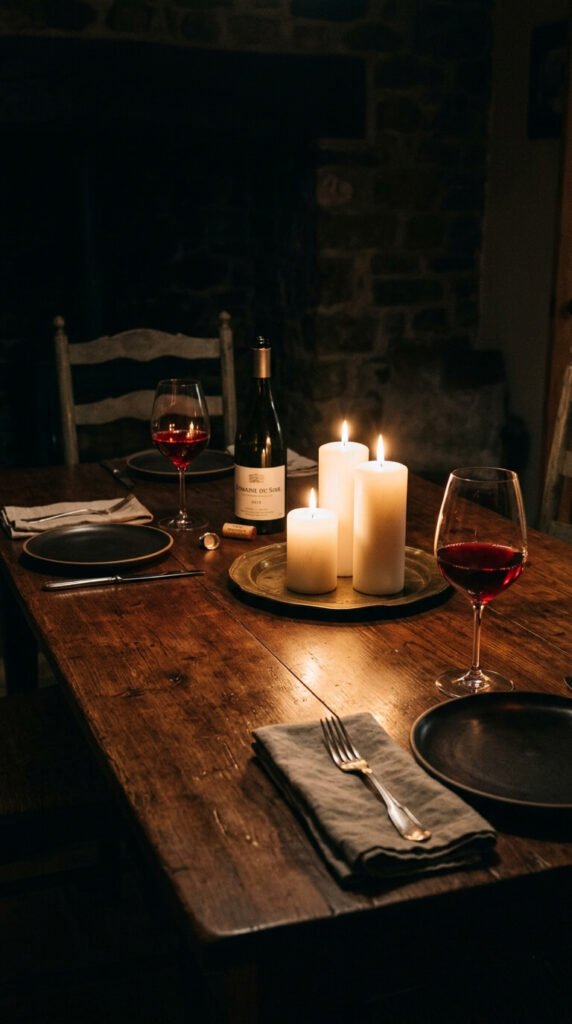
The staging area around your dining table is as much a part of the wine bar experience as the storage. Use a brass or slate tray as a centerpiece base and arrange three candles at different heights around your open bottle. The candlelight catches the wine in the glass beautifully. Decant your red 30–45 minutes before sitting down and place the decanter in the center. This format costs almost nothing if you already have candles and a tray, but it completely transforms the atmosphere of a meal. The wine becomes part of the table design.
19. The Chalkboard Label Wine Wall
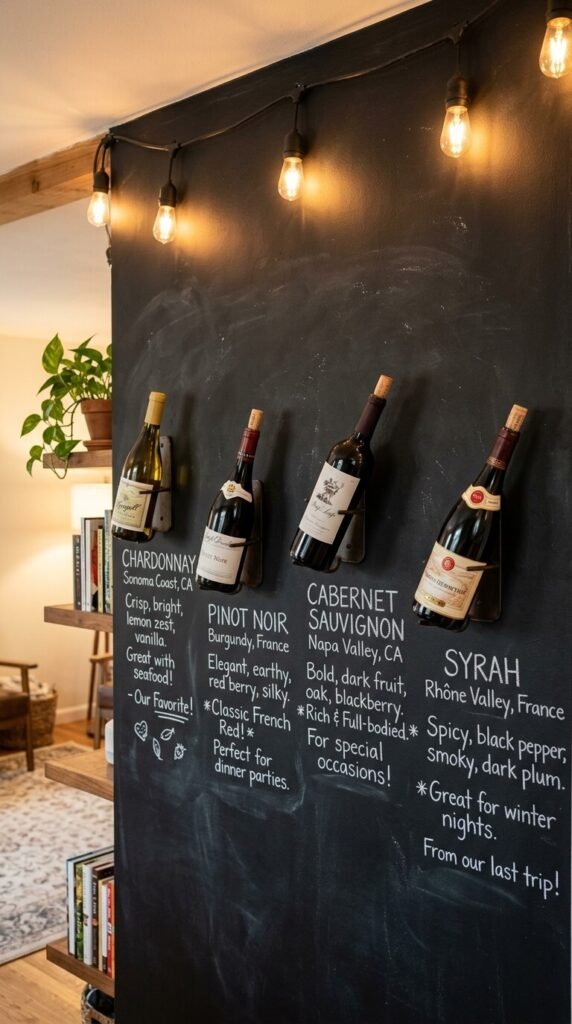
Chalkboard paint transforms a flat wall into a living wine menu. Paint a 4×6 ft section of wall with chalkboard paint ($15–$20 per quart). Mount angled bottle display clips to the wall — each holds one bottle facing outward so you can see the label. Write the region, grape, and a two-word tasting note in chalk beside each bottle. Change the notes as you change the bottles. The handwriting itself adds personality that no printed label can match. Add Edison string lights along the top edge for warm ambient light. This is the most personal and adaptable format in the list.
20. The Japandi-Style Minimal Wine Shelf
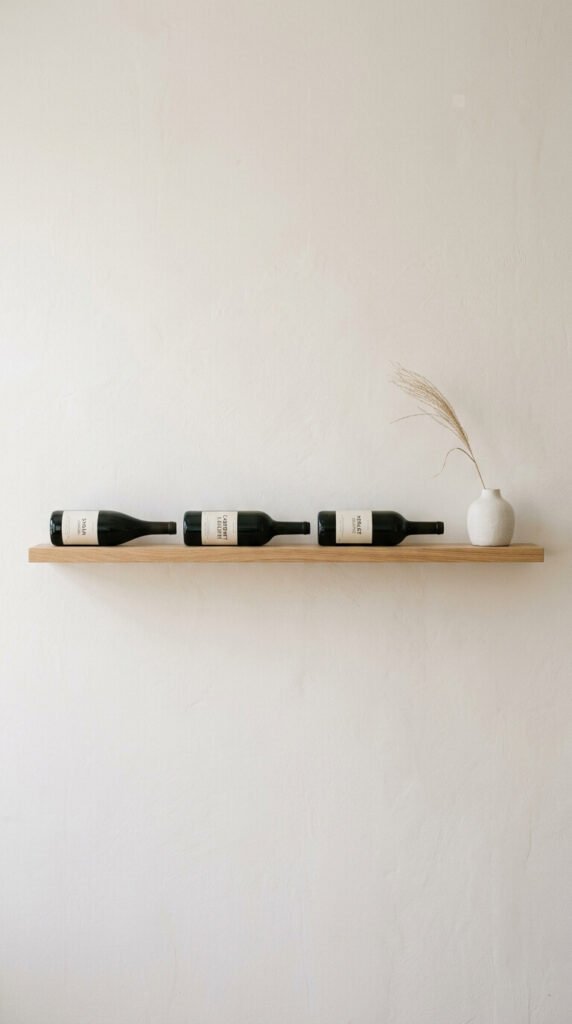
The Japandi approach applies Japanese minimalism and Scandinavian warmth to your wine display. One shelf. Three bottles. One small object. Nothing more. Choose a light oak or ash wood shelf — the grain should be visible and clean. Leave meaningful space between each bottle. Add a single small ceramic object: a bud vase, a rough stone, a small candle. The restraint is the point. This format works best as a complement to a larger storage solution elsewhere. It’s the display piece, not the cellar. It communicates taste through what you leave out.
21. The Built-In Wine Column Refrigerator Alcove
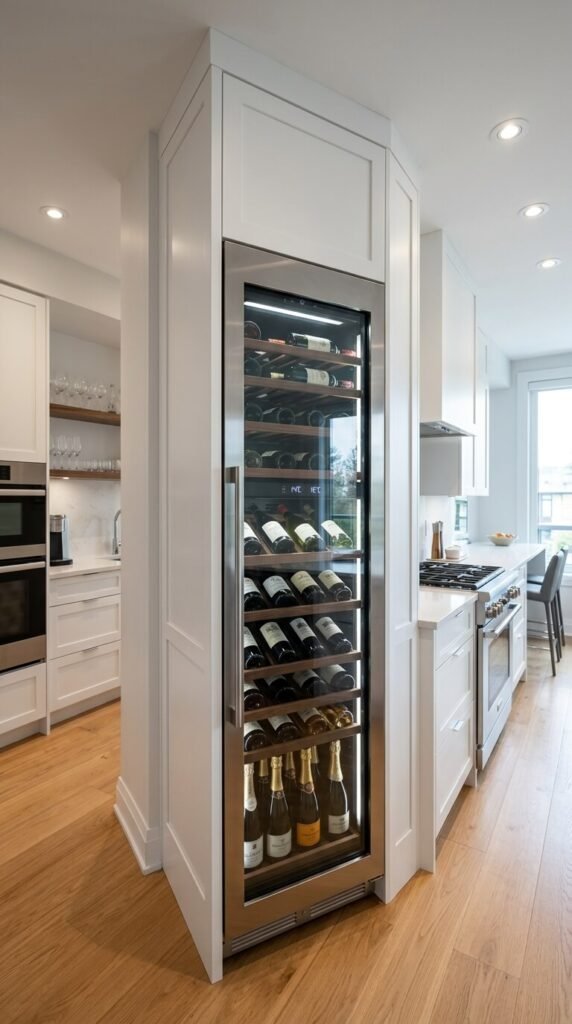
A built-in wine column refrigerator is the most permanent and impressive upgrade a serious home sommelier can make. Undercounter units start around $500–$700; full column units run $1,500–$3,000. Have cabinetry panels built on either side to frame it as a built-in feature. The result looks like it was part of the original architecture. This is the right investment when your collection regularly exceeds 30 bottles and you care about proper temperature storage. If a full unit is out of budget, undercounter models fit in a standard 24-inch cabinet opening and work exactly the same way.
22. The Entryway Wine Welcome Station
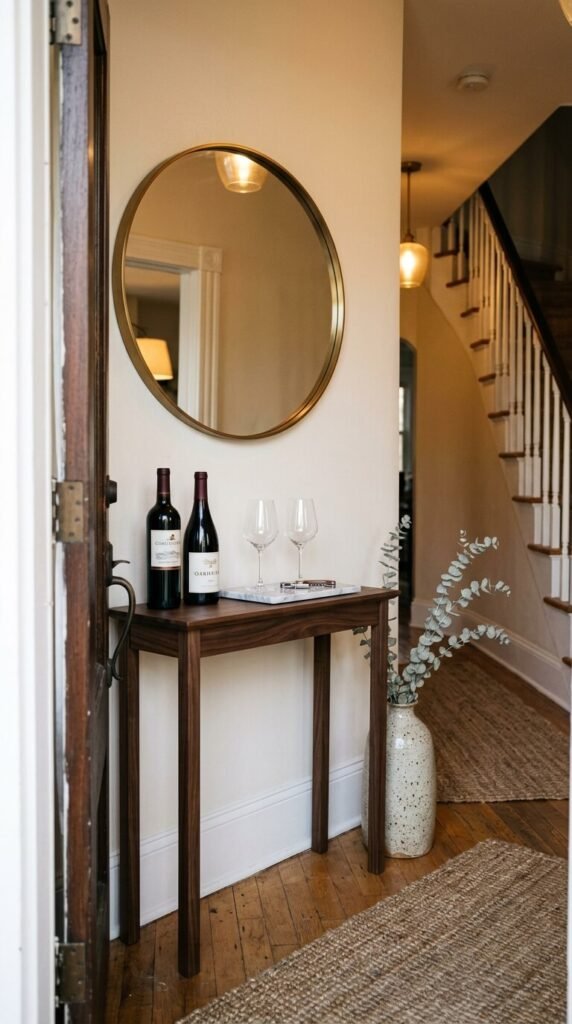
The entryway wine station greets guests before they even reach the living room. Use a slim console table — 12–14 inches deep — so it doesn’t block the hallway. Style the top with two bottles, two glasses, your accessories tray, and one organic element like a small plant or dried branch. Mount a mirror above to visually expand the space. This setup works as a drop zone for tonight’s bottles and signals to guests that the evening has a certain intention. It’s also a natural place to open the first bottle while people are still arriving and getting settled.
23. The Outdoor Covered Patio Wine Bar
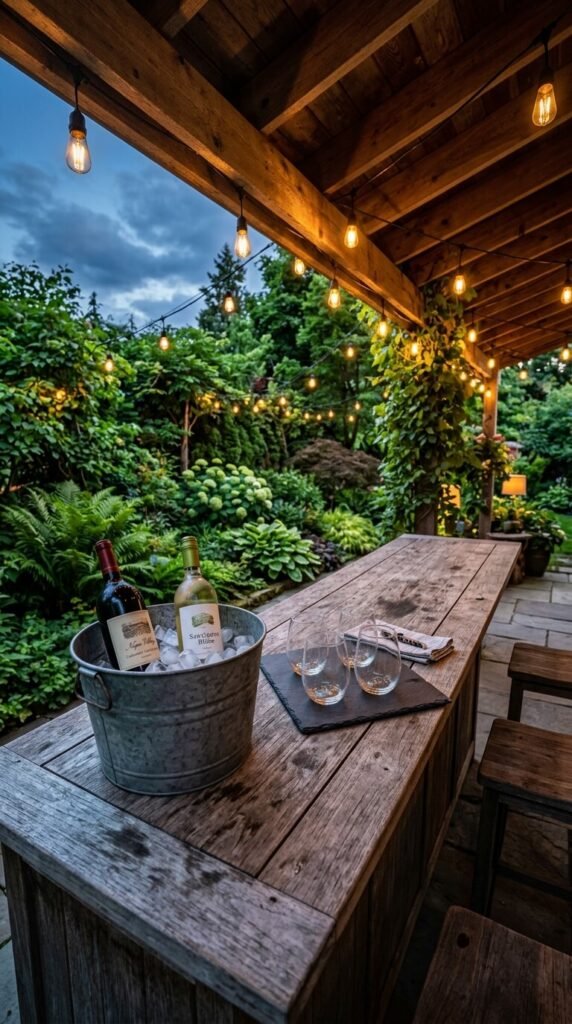
The outdoor wine bar is underused and underrated. A covered patio or pergola with string lights is already most of the way there. Add a weatherproof teak or resin bar counter ($80–$200 from outdoor furniture stores) and a galvanized ice bucket for whites and rosé. Stemless glasses are the right call outdoors — they’re harder to knock over and easier to store. Keep a small outdoor-rated cabinet or cooler below the counter for extra bottles. The outdoor setting does most of the atmospheric work for you. You just need the right surface and the right lighting overhead.
24. The Copper Accent Wine and Spirits Bar
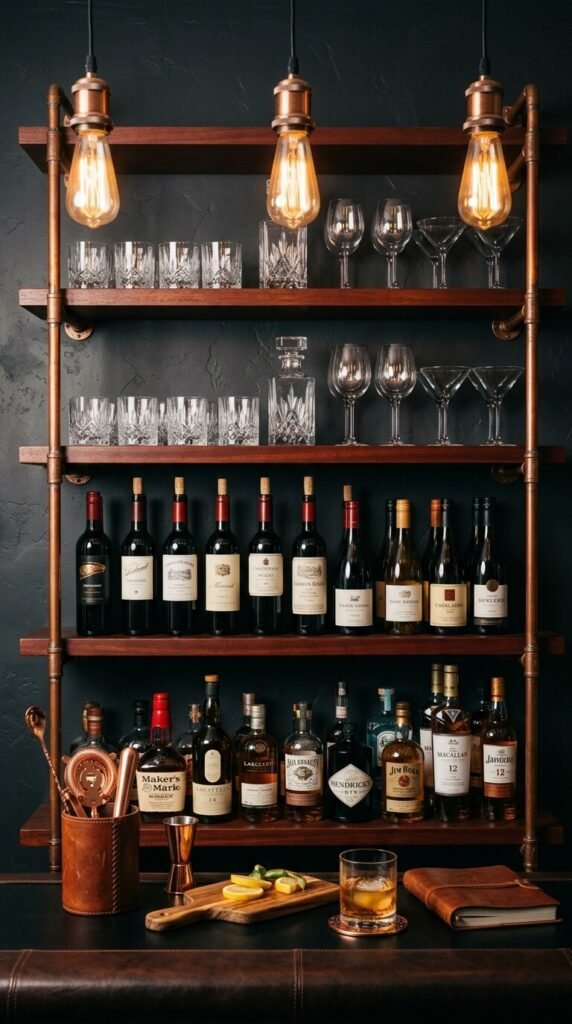
Copper accents add warmth and a sense of craft that stainless steel and chrome rarely achieve. Use copper pipe as the rail supports for open shelving — it’s available at any plumbing supply store for a fraction of what decorative versions cost. Pair with mahogany or dark walnut boards for the shelves themselves. Add copper bar tools in a leather cup: wine key, stopper, and aerator. The combination of warm metal and dark wood reads as serious without being stuffy. This format works beautifully for someone who also keeps spirits — the aesthetic unifies wine and cocktail culture in one setup.
25. The Harvest Table Wine and Charcuterie Station
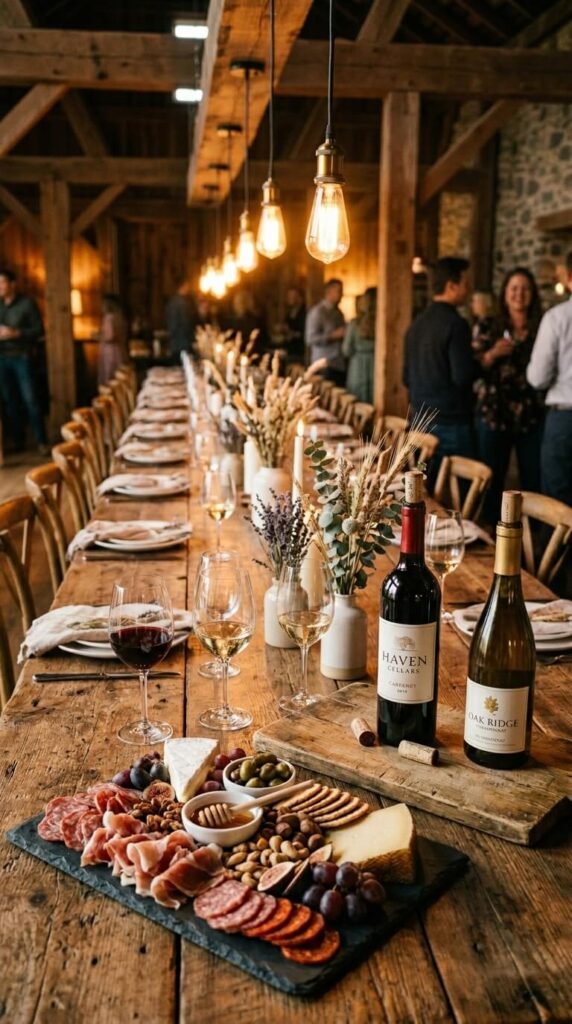
The harvest table format merges wine service and food in a way that invites people to linger. Use a large wooden board or slate slab as the anchor — 18×24 inches minimum. Build the cheese and charcuterie around the board, then position the open wine bottles at each end. Set three to four glasses per bottle. This isn’t about storage — it’s about the moment of service. Rent or borrow extra glasses if needed. The harvest table wine station works for dinner parties, holiday gatherings, or any occasion where the food and wine are meant to be part of the same conversation.
26. The Wallpaper Accent Wall Wine Nook
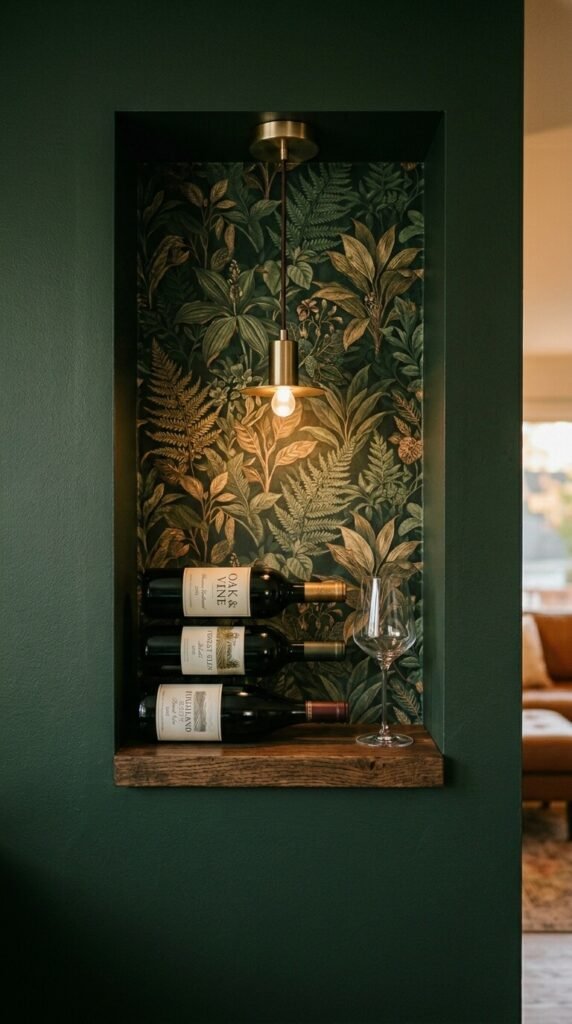
An accent wall with bold wallpaper behind your wine display changes the entire character of the space. Peel-and-stick wallpaper panels cost $30–$60 and require no adhesive, tools, or commitment. Choose a pattern with depth — dark botanicals, abstract watercolor, or vintage map prints all work. Hang it in a defined section or alcove, then mount your wine shelf directly in front of it. The wallpaper becomes the backdrop that contextualizes the bottles. Even a narrow 3-foot wide panel behind a single shelf creates the visual effect of a purpose-built bar without any structural work.
27. The Personalized Cellar Book and Tasting Journal Corner
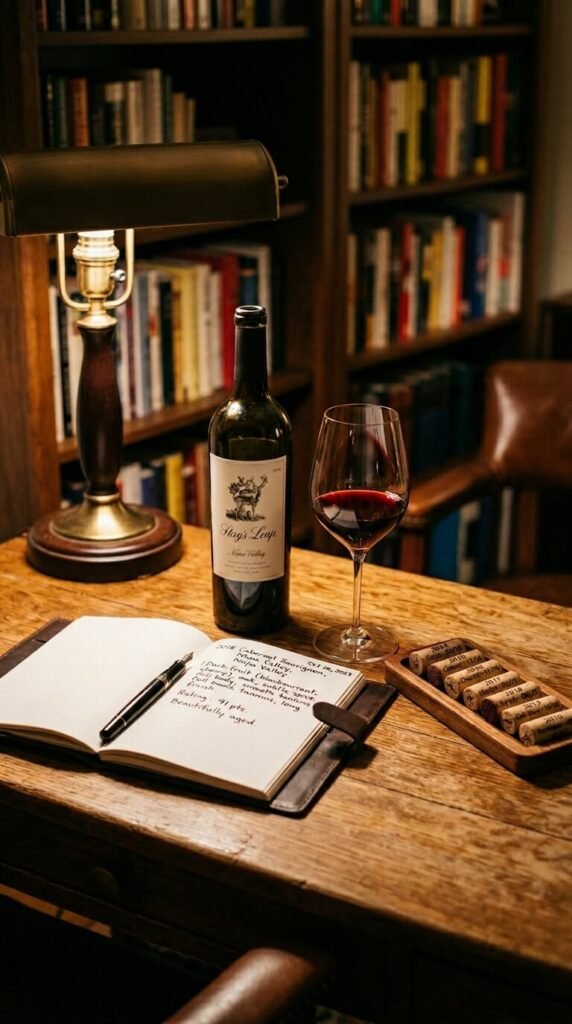
The tasting journal corner is the soul of the home sommelier’s setup — and the most overlooked. Buy a dedicated wine journal ($15–$30 on Etsy or at kitchen stores) and keep it beside your regular opening spot. Date each entry. Write the producer, region, vintage, and three words about what you tasted. Collect the corks in a small wooden tray beside the journal. Over time, the journal becomes a personal record of your palate evolving — no app can replicate that. The cork tray becomes a physical archive. This corner costs almost nothing and adds more meaning to your wine practice than any piece of furniture.
Conclusion
A home wine bar doesn’t require a renovation budget, a dedicated room, or a collection of rare bottles. It requires attention to the right details — light, materials, organization, and the small rituals that turn drinking wine into something more deliberate. Start with one setup from this list that fits your current space and budget. Mount one shelf. Style one tray. Open one bottle and pour it properly. The sophistication comes from consistency and care, not from spending more. Pick the format that matches how you actually live, and build from there. Your space will tell you what it wants next.