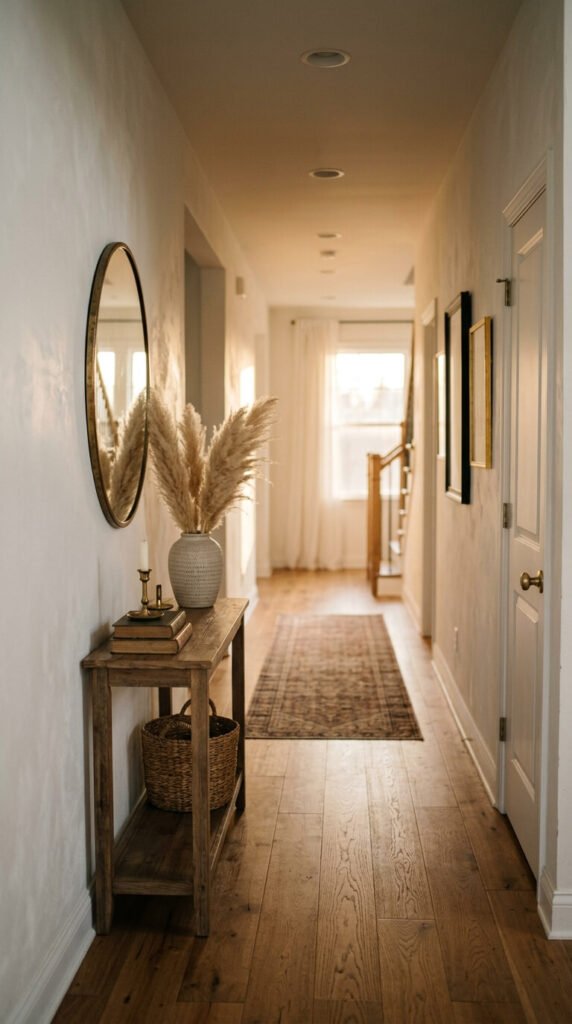
Your hallway is the first thing people see — and the last thing they remember. It sets the mood before a single word is spoken. Yet most hallways are ignored, painted a forgettable white, and packed with clutter. That’s a wasted opportunity. Whether you’re working with a narrow corridor, a short entry stretch, or a long bare passage, there are simple, affordable ways to make it feel intentional. You don’t need a big budget or a designer. You just need a few smart choices and the confidence to treat this little stretch of floor as a real room worth caring about.
1. Limewash Walls for Texture Without Wallpaper
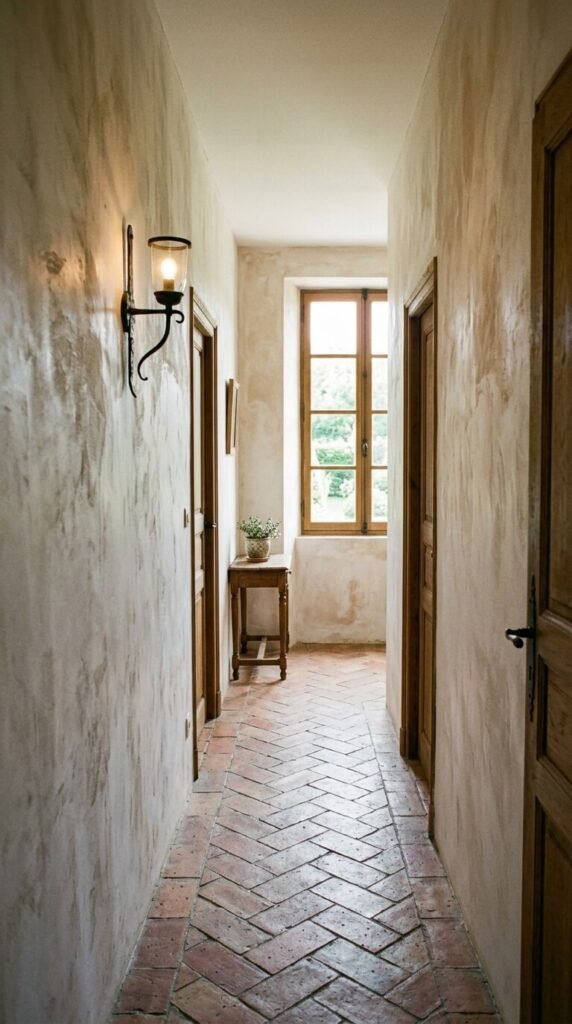
Limewash paint creates a layered, organic texture that looks like aged European plaster. It costs about the same as regular paint — sometimes less. You apply it yourself with a wide brush using uneven strokes. No special skills required. One coat gives a light effect; two coats go deeper. It hides imperfections beautifully. In a hallway, this texture adds depth without making the space feel heavy. Stick to warm whites, soft clay, or muted sage for the most timeless results.
2. A Single Statement Mirror to Open the Space
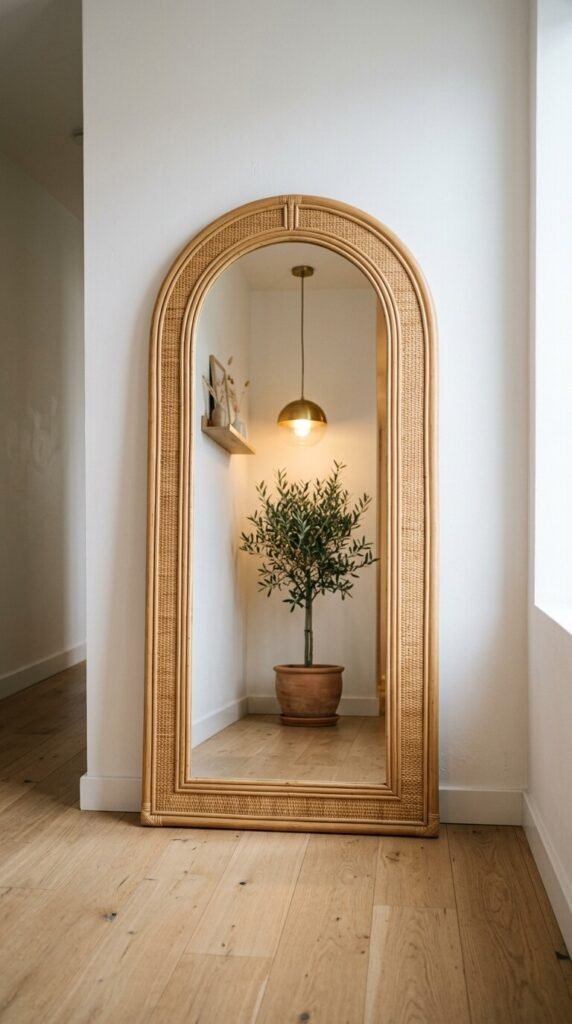
One large mirror does more for a hallway than most people realize. It doubles the perceived width and bounces light into dark corners. You don’t need anything expensive. Thrift stores, Facebook Marketplace, and IKEA all have solid options under $50. An arched or oval shape softens the look. Lean it against the wall for a casual feel or hang it centered above a console. The rattan-framed style is especially popular right now and stays affordable. Size up — a small mirror barely registers.
3. Warm Pendant Lighting Instead of Overhead Flush Mounts
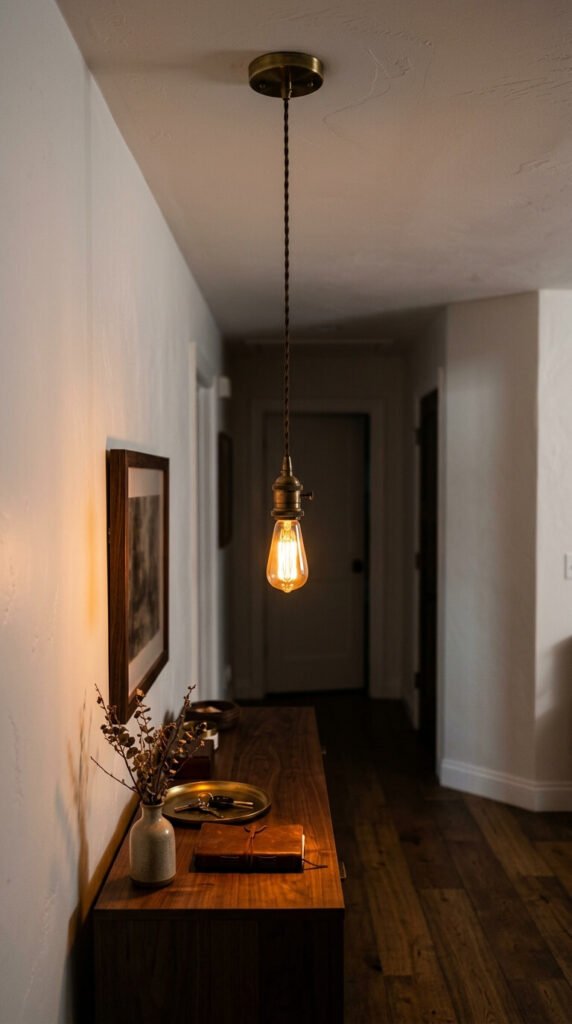
Harsh overhead lighting flattens a hallway and makes it feel clinical. A warm pendant light changes the entire mood. Pendants with amber or Edison-style bulbs cast a soft, directional glow that makes walls look richer and the floor feel warmer. You can find plug-in pendant kits that require no electrician — they hook over a ceiling hook and plug into an outlet. Brass, black iron, and natural rattan shades are all under $40–80 at most home stores. Swap the bulb to 2700K for the warmest tone.
4. A Slim Console Table That Earns Its Spot
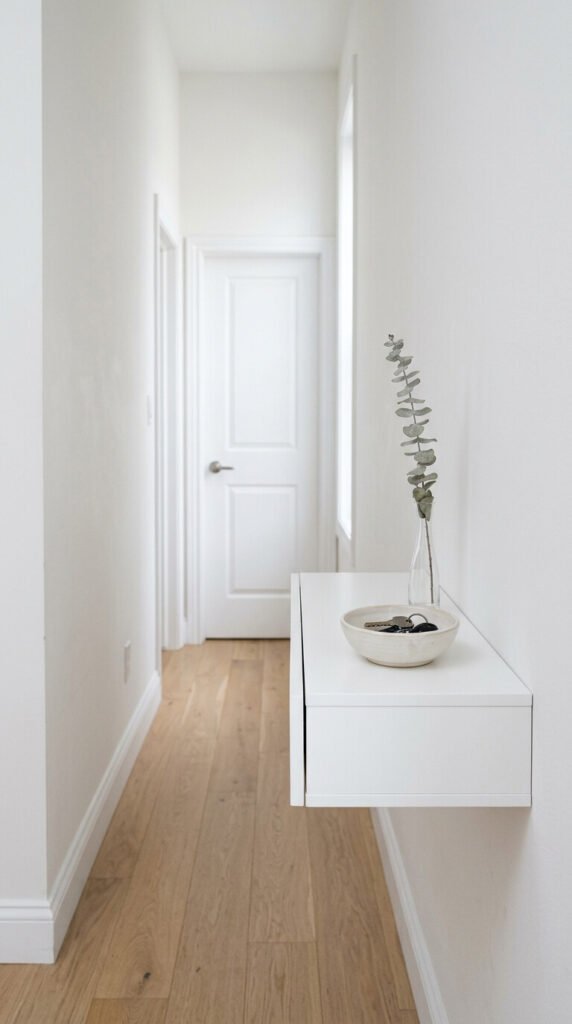
A console table gives the hallway a purpose. Choose one that’s no deeper than 10–12 inches so it doesn’t block traffic. A floating wall-mounted version is even smarter in tight spaces — it keeps the floor clear and looks intentional. Style it simply: one small tray for keys, one small plant or dried stem, one candle or sculptural object. Avoid piling things on top. The restraint is what makes it look designed. You can find slim console tables at IKEA or Amazon for under $60.
5. Geometric Tile at the Entry Point
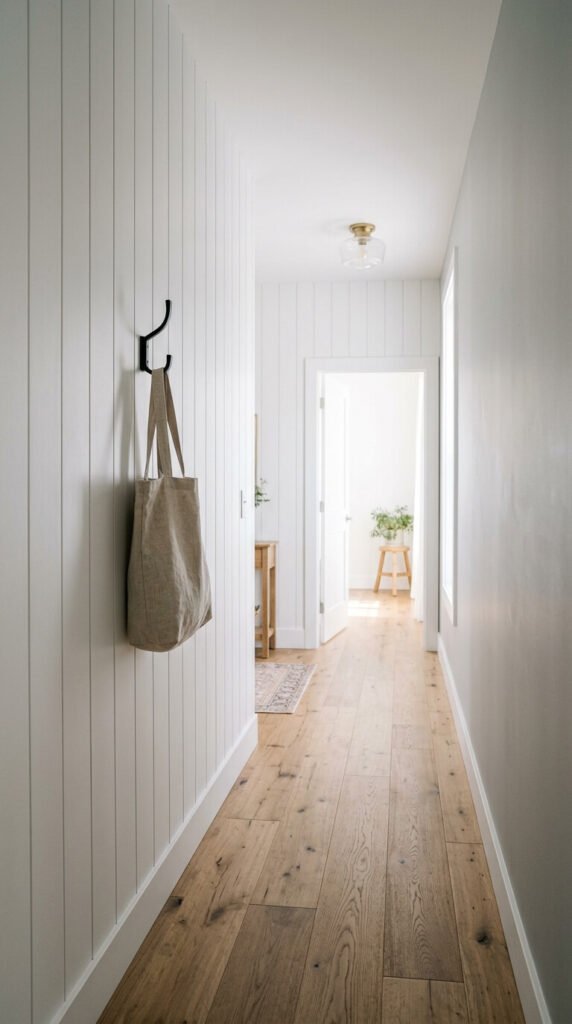
A tile inset at the entry creates a natural landing zone and defines the hallway’s start. You don’t have to tile the whole floor — just a 2–4 foot section at the door. Black and white hex tiles, checkerboard patterns, or simple terracotta squares all work well. Peel-and-stick tiles have improved dramatically and cost under $2 per square foot. They work on existing floors without grout or adhesive. This trick makes a plain hallway feel like it was thoughtfully designed from the beginning.
6. Vertical Shiplap for Height Illusion
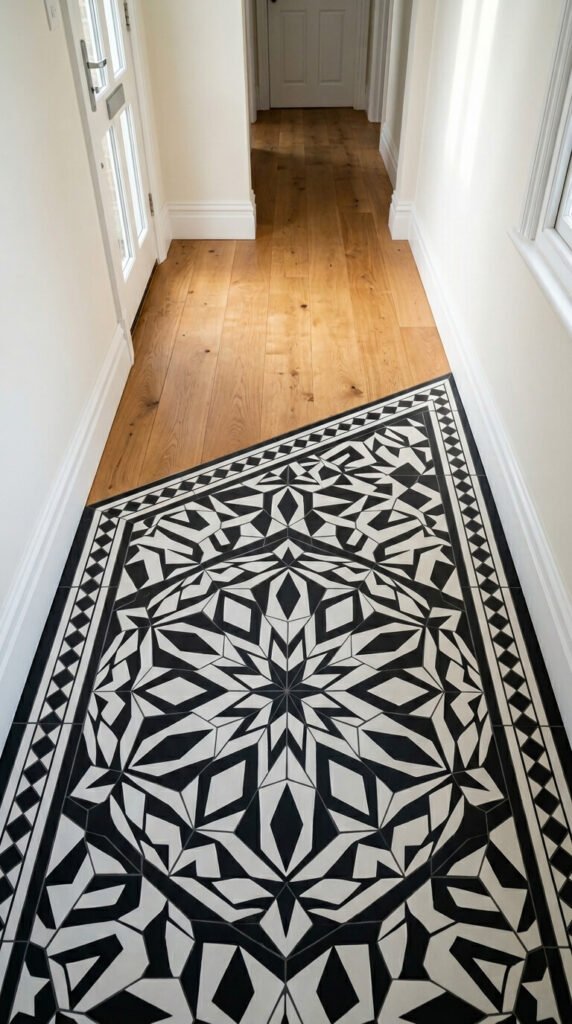
Most people use horizontal shiplap, but vertical boards draw the eye upward and make low ceilings feel taller. You can DIY vertical shiplap with thin MDF strips or pre-primed pine boards from any hardware store. Space them 1–2 inches apart for shadow gaps. Paint everything the same color — wall and boards — for a clean, monolithic look. White and soft cream are classic. The whole project for a small hallway wall runs $50–150 in materials and a weekend of work.
7. A Gallery Wall That Tells a Story
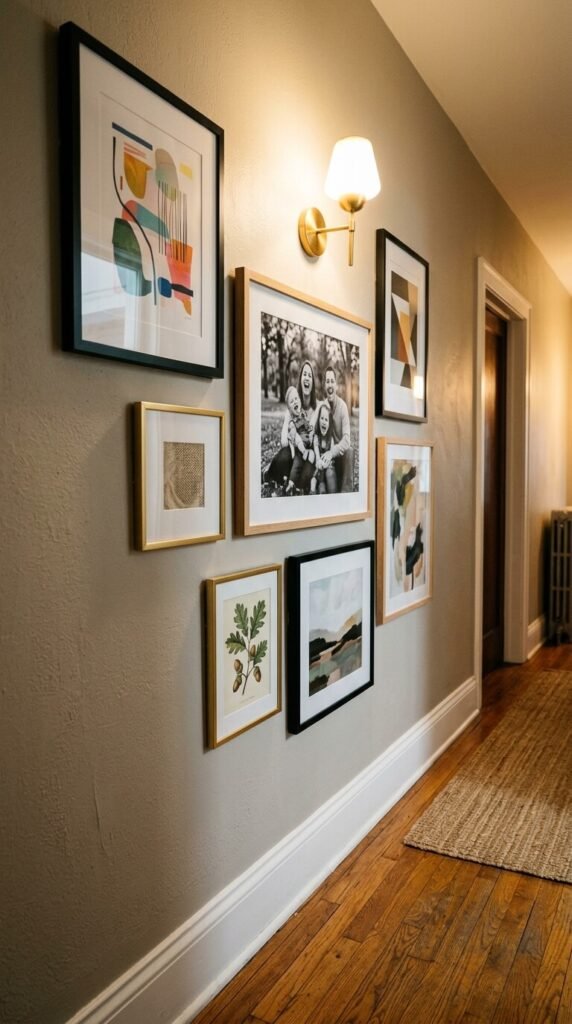
A gallery wall turns a blank stretch into something personal. The secret is mixing frame sizes, not matching them. Use a mix of black frames, natural wood, and thin gold for a collected look. You don’t need expensive art — print free downloads from Unsplash or Canva, frame pages from old books, or display your own photos. Lay the arrangement on the floor first before hammering anything. Keep the spacing tight (3–4 inches between frames) for a curated, intentional feel rather than scattered.
8. Painted Arches for Architectural Drama
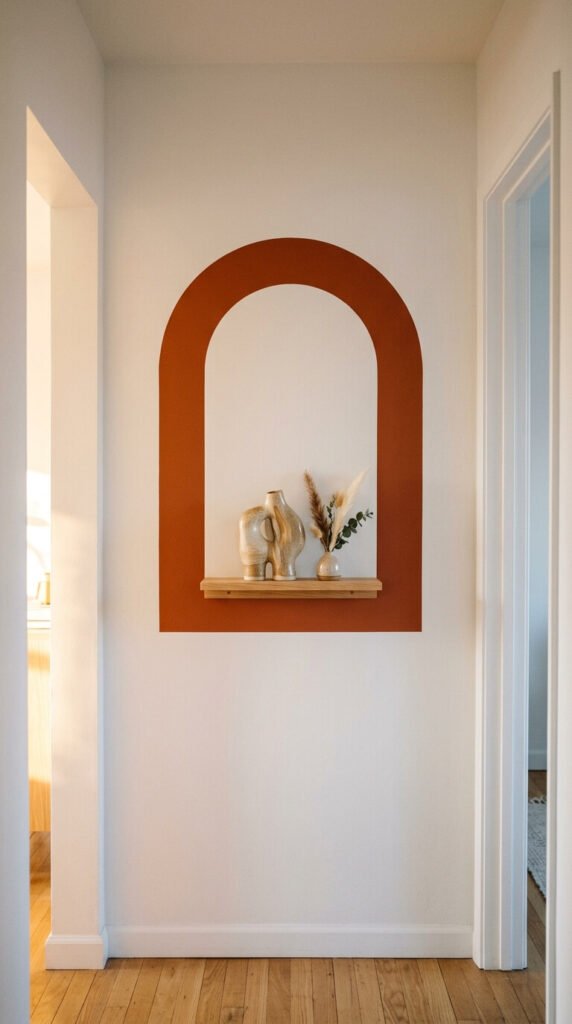
You don’t need to build anything. A painted arch is just a shape made with paint and a steady hand. Use a pencil, string, and thumbtack to trace a perfect curve. Then fill it in with a contrasting color — terracotta, dusty sage, deep navy. Place a small shelf, mirror, or artwork inside the arch to give it purpose. This trick adds the look of architectural detail for the cost of a quart of paint. It photographs beautifully and feels far more expensive than it is.
9. Dark Moody Paint for a Dramatic Corridor
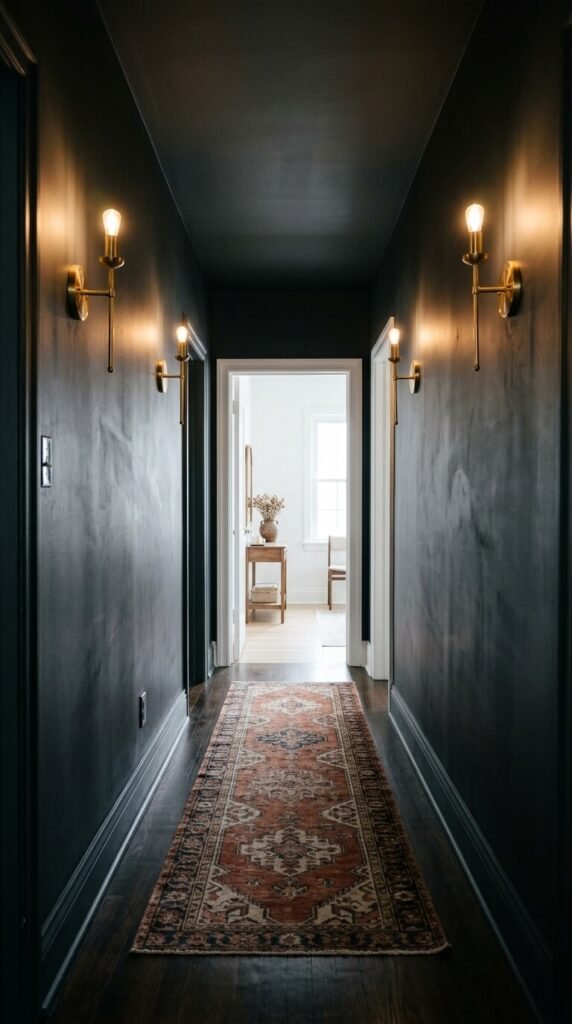
Dark paint in a hallway feels counterintuitive — but it works. Painting the walls, ceiling, and trim all the same deep color creates a cocooning effect that feels intentional and moody. Deep greens, charcoal, navy, and even black all perform well. The key is pairing dark walls with warm lighting and a light-colored rug to balance the depth. This works especially well in narrow hallways where there’s not much natural light anyway. The drama becomes the feature instead of the flaw.
10. A Runner Rug to Define the Path
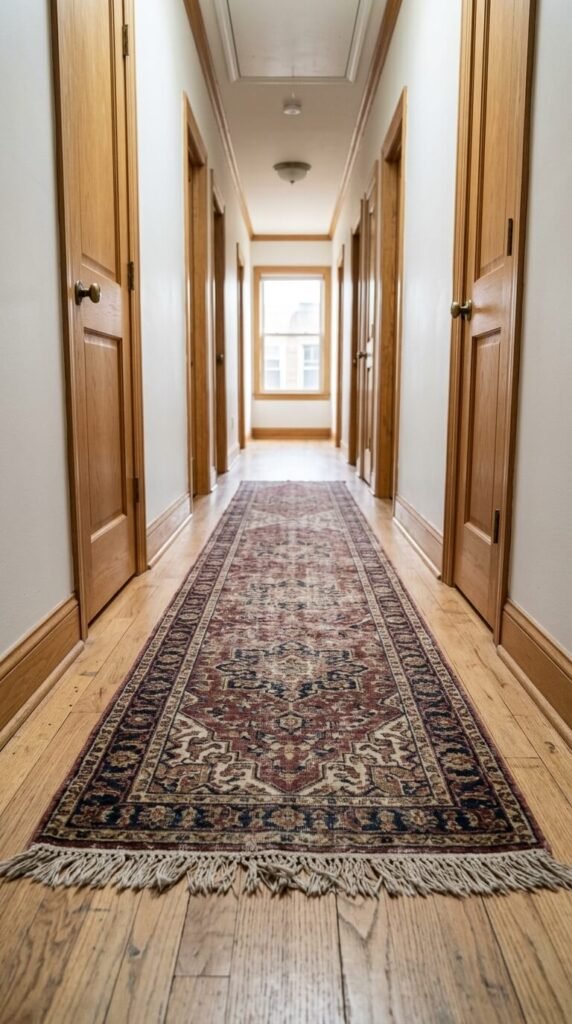
A runner rug is one of the easiest, most affordable hallway upgrades. It adds warmth, noise reduction, and a clear visual line through the space. Natural fiber runners like jute look great and cost $40–80. Persian-style flatweave runners bring color and pattern for $60–120. Choose a rug at least two-thirds the width of the hallway for proper proportion. Use a non-slip pad underneath — it protects the floor and keeps the rug from bunching. Replace it every few years as styles shift.
11. Built-In Floating Shelves for Storage + Style
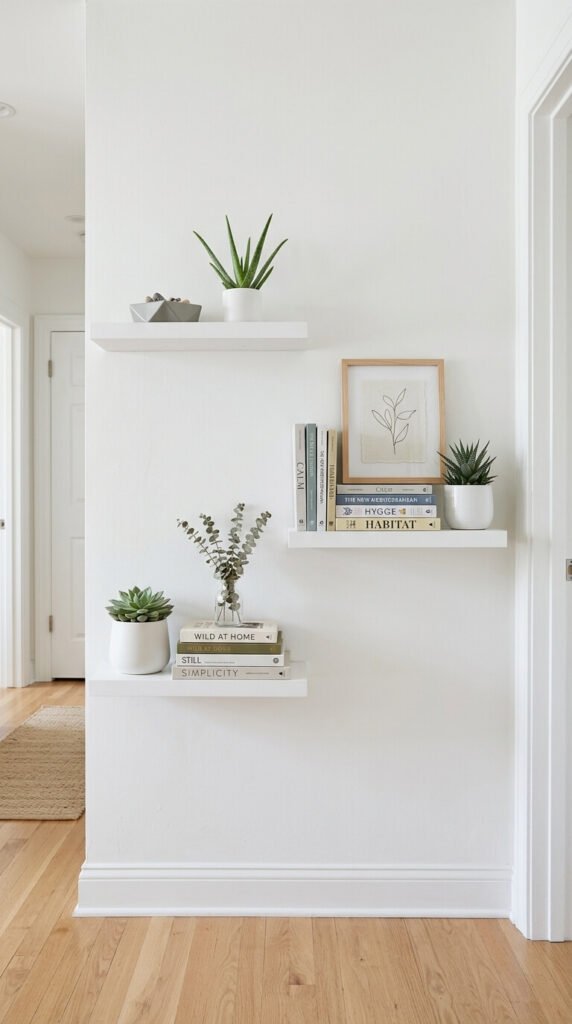
Floating shelves make a hallway functional without adding bulk. Install them at staggered heights to avoid a rigid, office-like look. Style them with a mix of practical and decorative items: a small dish for keys, a plant, a book. Don’t overfill. Three items per shelf is usually the right number. IKEA’s LACK shelves run about $10–15 each and hold more than they look like they should. For a more custom feel, cut raw pine boards to length and mount on simple L-brackets painted to match the wall.
12. Wainscoting Panels for Classic Structure
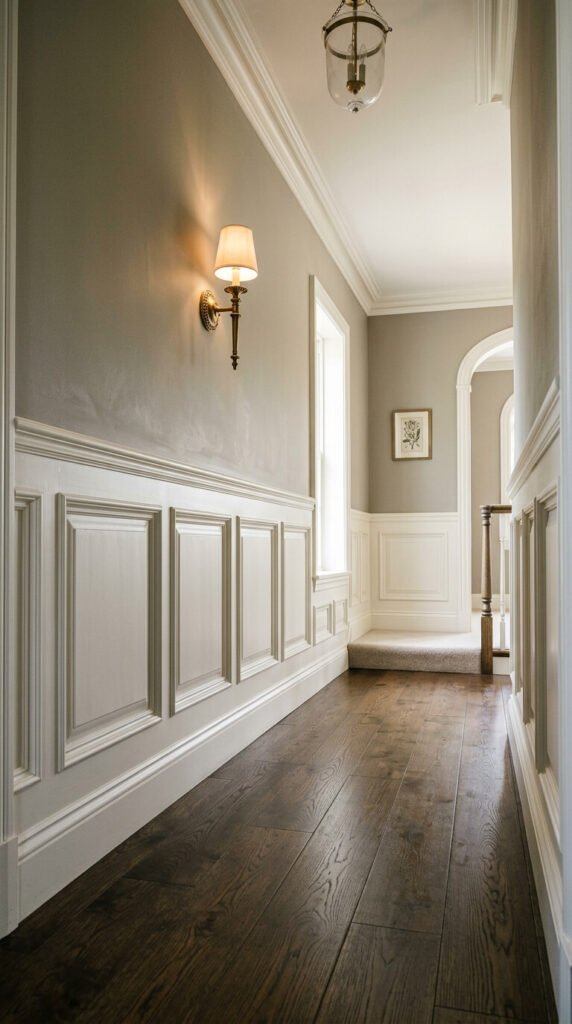
Wainscoting instantly makes a hallway feel more considered. You can DIY board-and-batten or raised panels for under $100 in materials. MDF strips, a nail gun, wood filler, and paint are all you need. Run the panels to chair-rail height (about 32–36 inches). Paint the panels white and the upper wall a soft contrasting color for classic two-tone appeal. Or paint everything the same color for a more modern, seamless look. This is one of the highest-impact DIY projects per dollar in any home.
13. Hooks and Pegs Instead of a Coat Closet
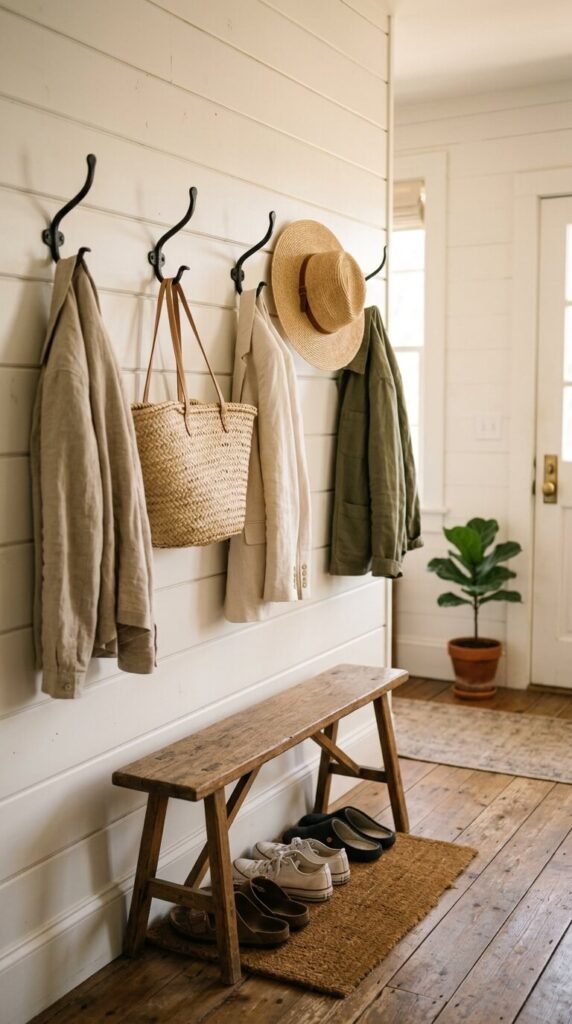
If you don’t have a coat closet, don’t hide the chaos — style it. A row of hooks mounted on a plank or directly on the wall becomes an intentional display. Mix hook heights for a layered look. Use matte black, brushed brass, or natural wood hooks depending on the style of your home. Add a small bench or even a low shoe shelf below. This works especially well near the front door. A pack of 5 hooks runs $15–25 at most hardware stores.
14. Wallpaper on One Accent Wall Only
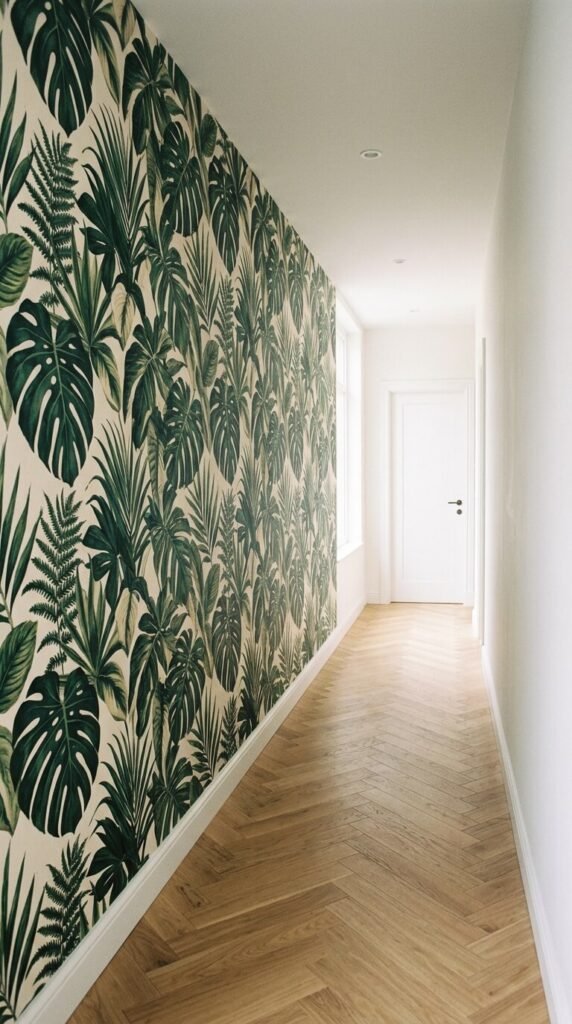
You don’t need to paper the whole hallway. One wallpapered wall is enough to make a serious statement. Pick a pattern that’s bold enough to carry the room — large botanicals, abstract shapes, or graphic tile prints. The other walls stay plain, which keeps the space from feeling claustrophobic. Peel-and-stick wallpaper has improved significantly and costs $30–60 per roll. It removes cleanly, making it perfect for renters or anyone who wants to refresh things seasonally without commitment.
15. Exposed Brick or Faux Brick for Raw Texture
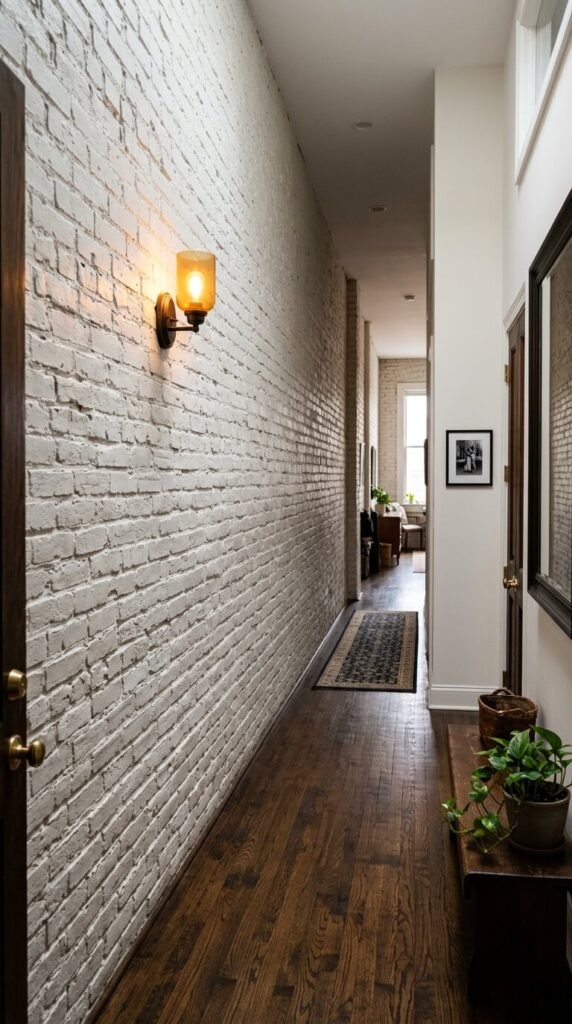
Exposed brick brings warmth and history to a hallway. If you don’t have real brick, faux brick panels from home improvement stores cost $30–50 per sheet and install in hours. Paint them white or soft cream to keep things bright and modern. Or leave them raw for an industrial, warehouse feel. A single textured wall in an otherwise smooth hallway creates contrast that feels deliberate. Mount a simple wall sconce directly onto the brick for a cohesive, editorial look.
16. A Built-In Bench With Hidden Storage
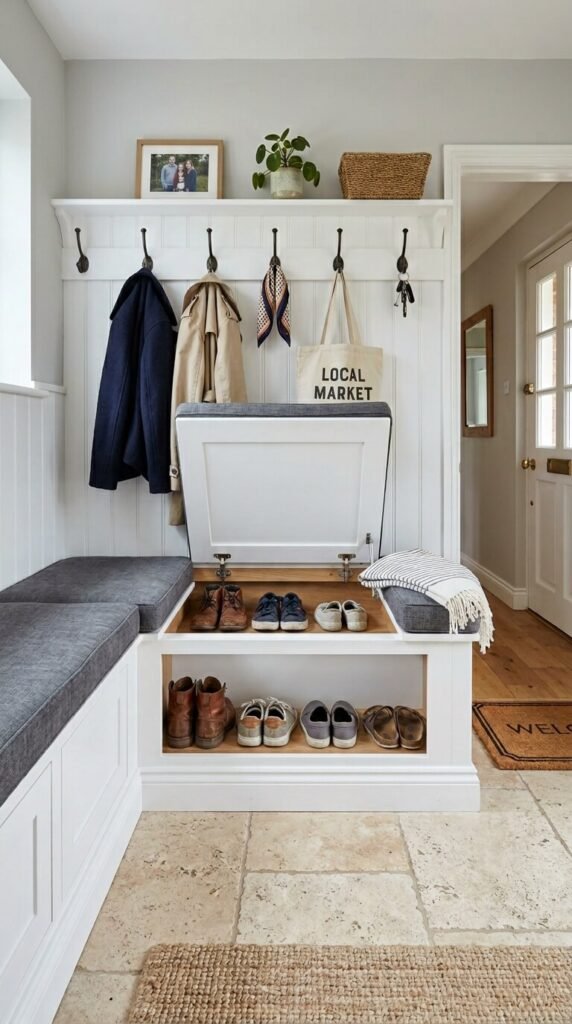
A bench with storage under the seat solves the hallway clutter problem beautifully. You can build a simple version using two IKEA Kallax cubbies laid on their sides, topped with a plywood seat and cushion. Total cost: $80–150. It gives you a place to sit while putting shoes on, hides shoes or seasonal items inside, and creates a focal point at the entry. Add hooks above it for a complete drop zone that looks custom-built even when it’s not.
17. Ceiling Molding to Draw the Eye Upward
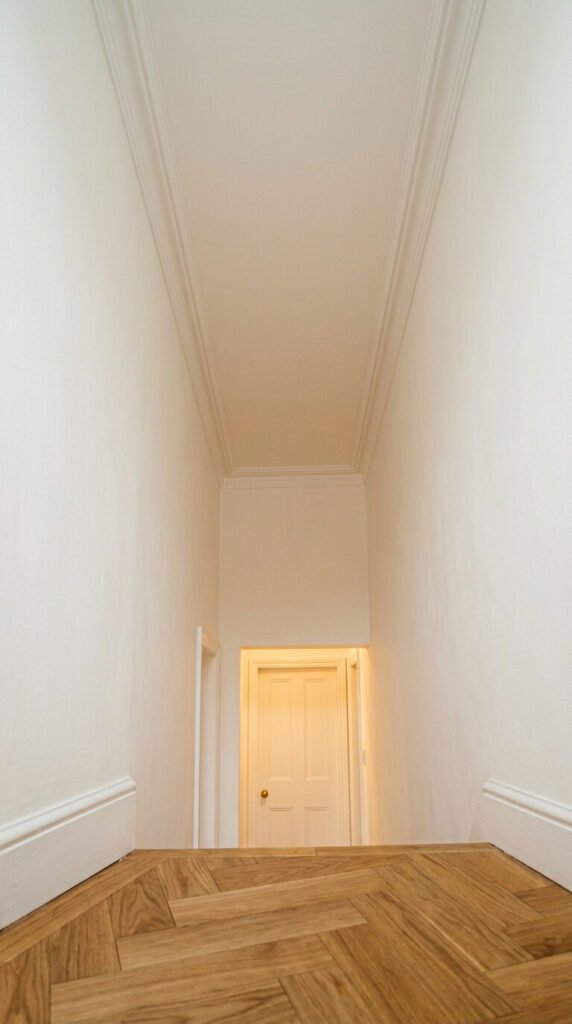
Crown molding is one of the most underrated hallway upgrades. Lightweight foam molding costs $10–20 for a 6-foot strip and installs with construction adhesive — no nails needed. Painting it the same color as the walls and ceiling makes it look architectural rather than decorative. This works especially well in older homes with flat, characterless walls. It draws the eye upward and makes the hallway feel more complete. You can do a small hallway in a single afternoon.
18. Oversized House Numbers or Lettering as Art
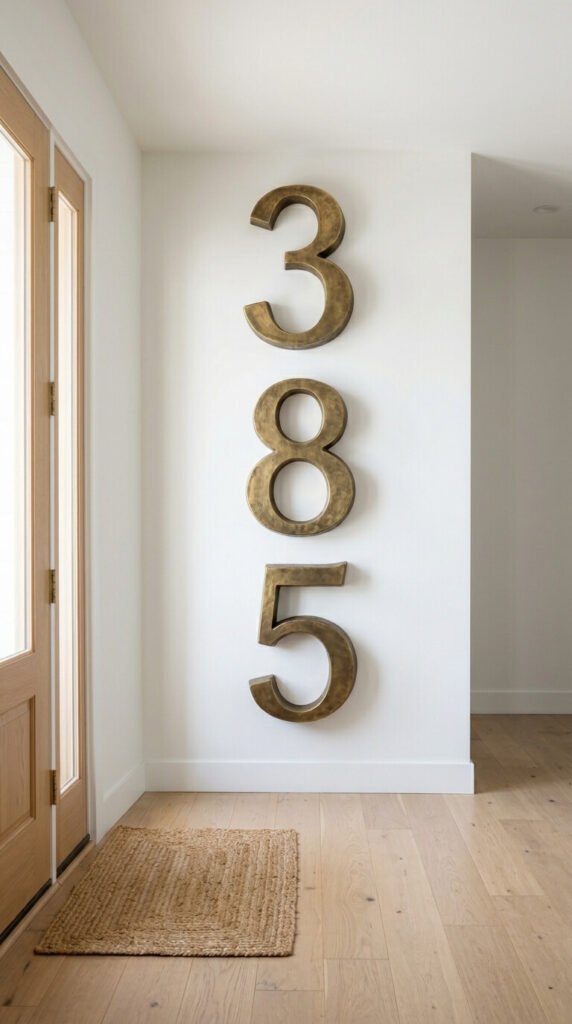
Large-scale numbers, initials, or a single word mounted on the wall act as functional art. Oversized metal letters in brass or black iron run $15–40 each and come in a range of fonts. Mount your house number, a family initial, or even a simple word like HELLO near the entry. The scale matters — bigger is better. Space them 2–3 inches apart for breathing room. This kind of detail photographs well and makes a strong first impression without requiring any additional styling around it.
19. Herringbone Wood Floor Pattern for Visual Interest
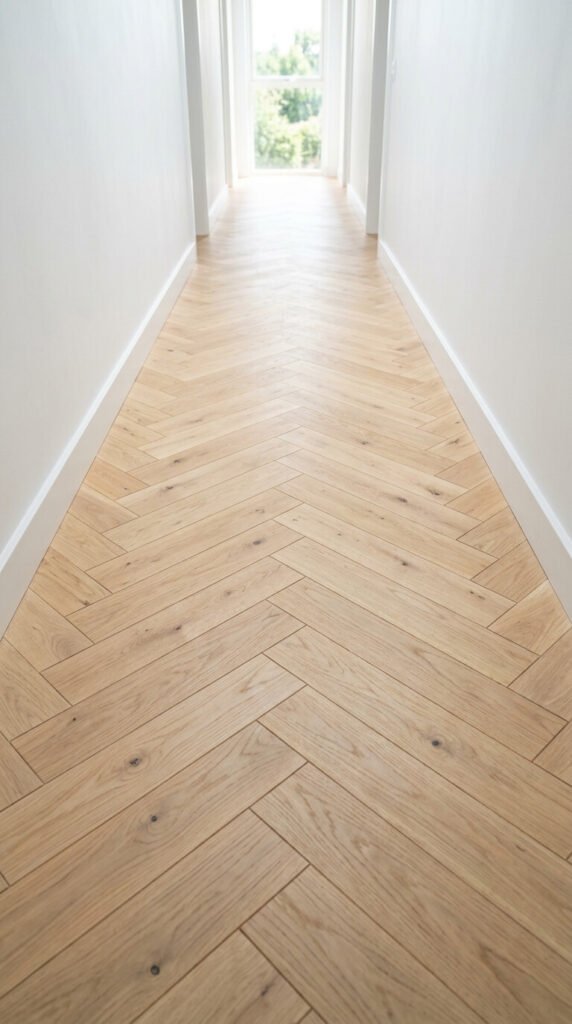
Herringbone flooring turns a plain stretch of floor into a design feature. If you’re replacing flooring, choose peel-and-stick or click-lock vinyl planks in herringbone format — they’re DIY-friendly and cost $2–5 per square foot. The diagonal pattern creates motion and direction that naturally guides the eye forward. Lighter tones make a narrow hallway feel wider; darker tones add richness and grounding. The herringbone pattern looks far more expensive than it is and works in both traditional and modern homes.
20. Sconce Lighting at Eye Level for Drama
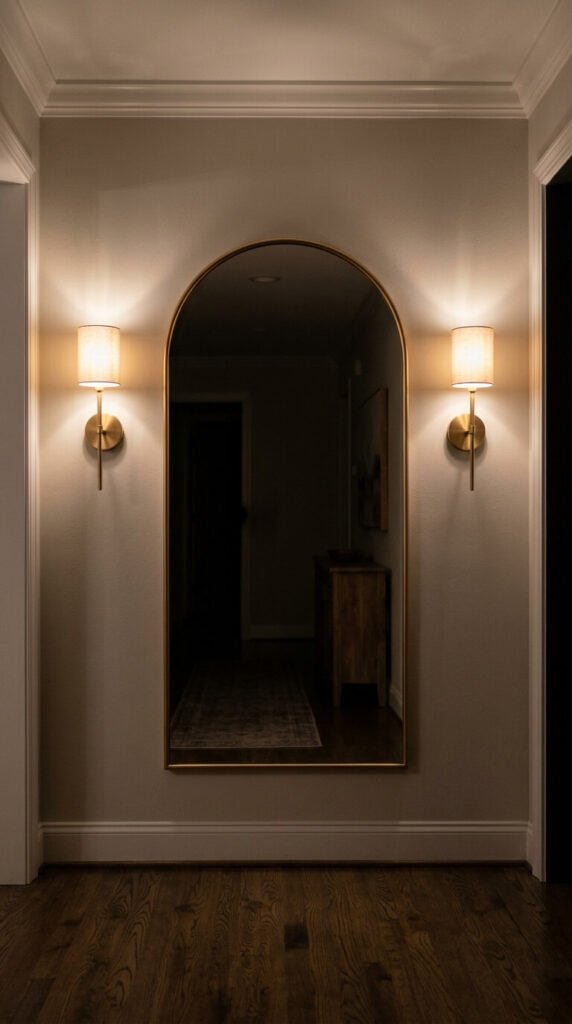
Wall sconces at eye level create a completely different atmosphere than ceiling lights. They cast light downward and sideways, which flatters the walls and makes the hallway feel like a designed interior space. Plug-in sconces (no electrician needed) run $40–80 each. Hardwired options allow cleaner installation if you’re comfortable with basic wiring. Brushed brass and matte black are the most popular finishes right now. Mount them at 60–65 inches from the floor for the most flattering angle — same height as a light switch.
21. Potted Plants and Greenery in Corners
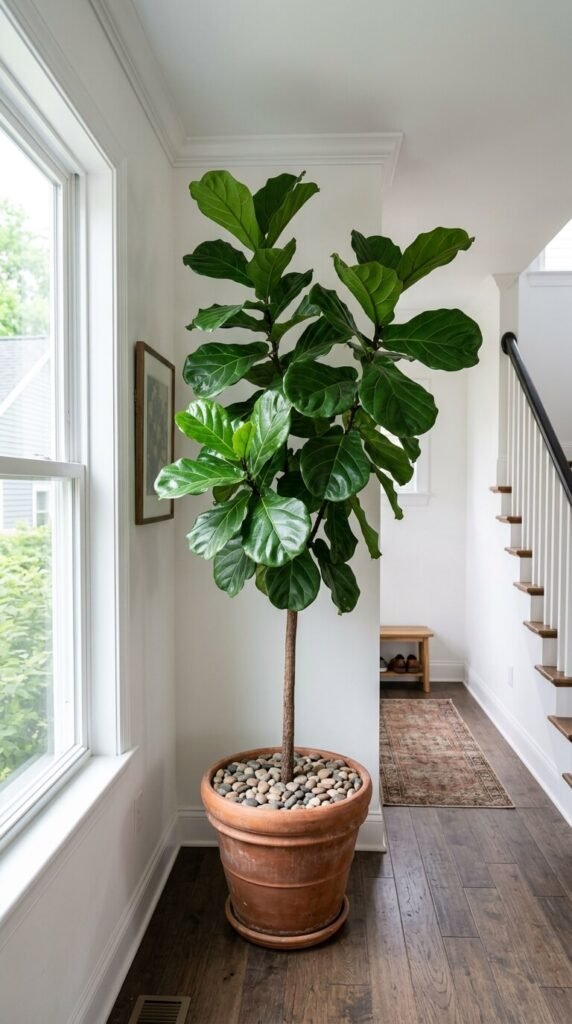
Plants make hallways feel alive. A tall plant in a corner fills vertical space without taking up floor area. Fiddle-leaf figs, snake plants, and cast-iron plants all handle lower-light hallway conditions well. A large pot with a single dramatic plant reads better than several small ones. Use terracotta or matte ceramic pots to keep the look grounded and natural. Faux plants have also improved considerably — quality dried pampas or silk fiddle figs from Amazon or TJ Maxx look realistic and require zero maintenance.
22. Narrow Bookcase as a Library Moment
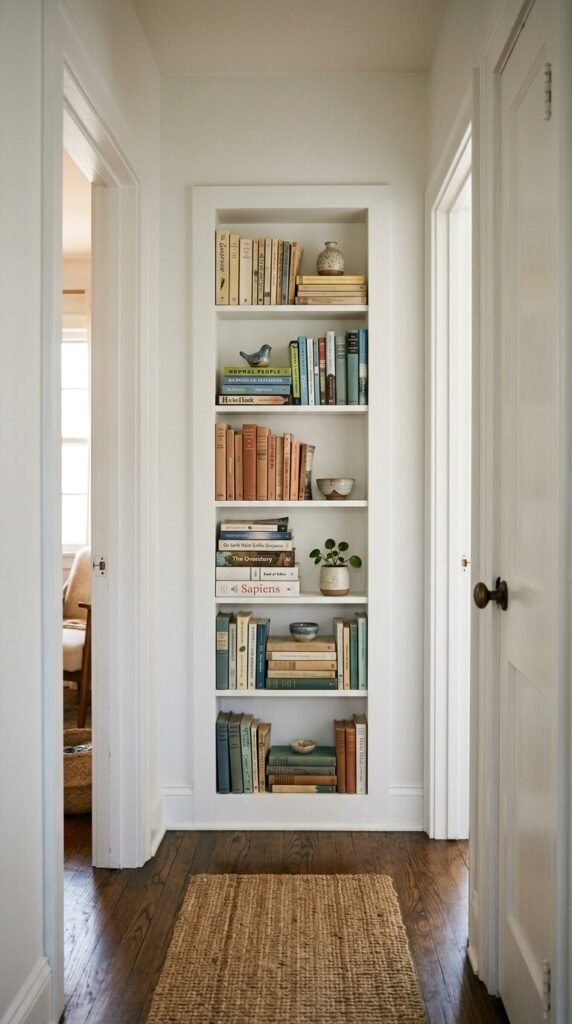
A slim bookcase tucked into a hallway wall creates a library feel without needing a dedicated room. Look for bookcases that are 10–12 inches deep — IKEA’s Billy bookcase has a perfect hallway footprint. Style books spine-in for a color-coordinated look or face-out for titles that double as decor. Break up the rows with small plants, candles, or ceramics. Painting the inside back of the bookcase a dark color (even navy or forest green) makes the objects pop and the whole unit look more finished.
23. A Dramatic Door Color to Anchor the End
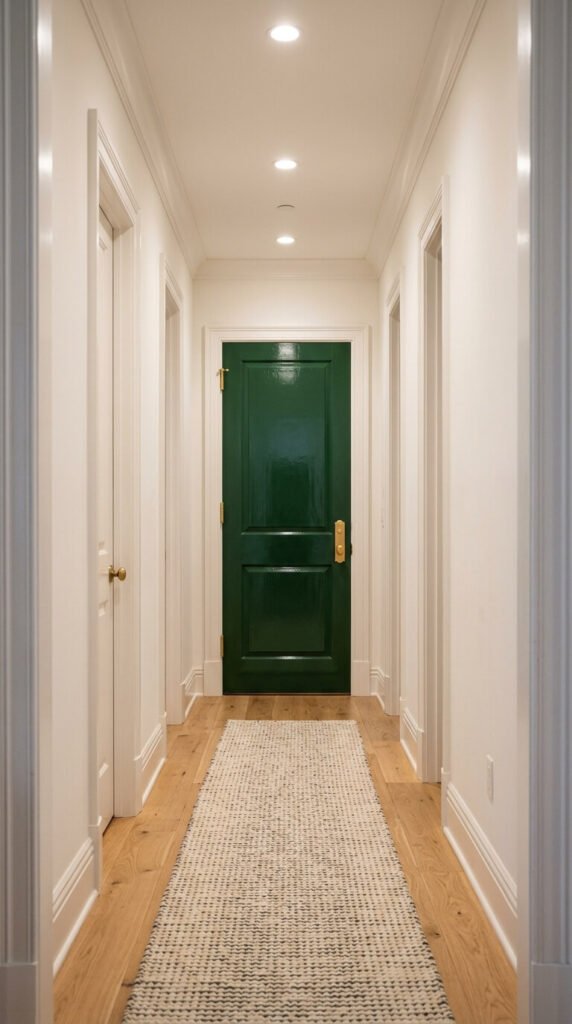
The door at the end of a hallway is prime real estate. Paint it a bold color — deep green, navy, terracotta, black — and it becomes a visual anchor that makes the whole hallway feel designed. Use semi-gloss or high-gloss finish for the door so it reflects light and stands out from the matte walls. Swap out builder-grade hardware for something with more character: brass, aged bronze, or matte black. This is a one-quart paint job that completely changes the feeling of the space.
24. Rope or Macramé Wall Hanging for Texture
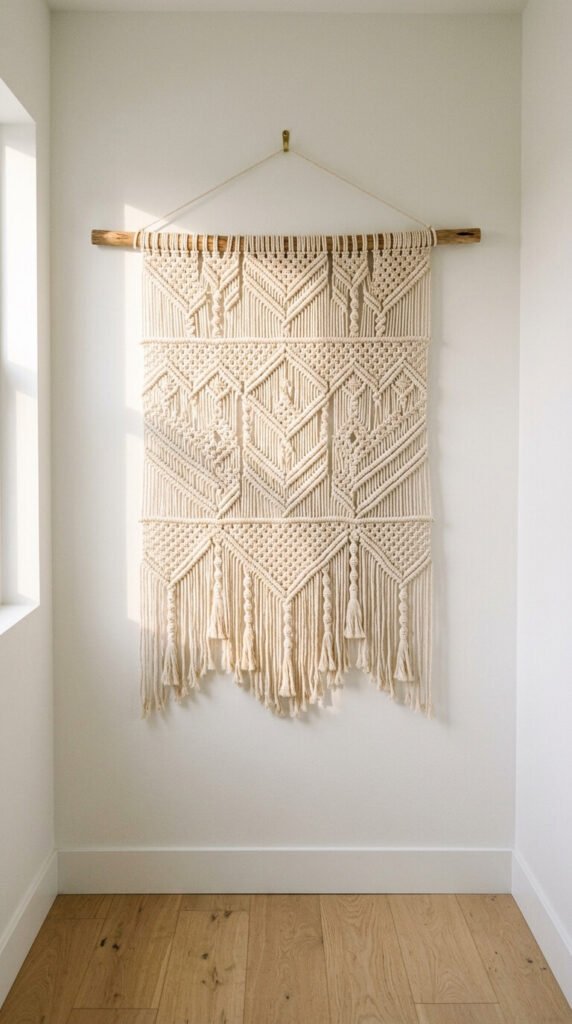
Textile wall art softens a hallway that feels too hard or clinical. A large macramé piece brings natural texture and a handcrafted quality that no print or mirror can replicate. You can find them on Etsy for $40–120 depending on size, or make your own with a simple YouTube tutorial and $15 in cotton rope. Go large — a piece at least 18 inches wide makes an impact. Natural cotton, linen, and jute all work well. Hang it centered between two doors or as the main feature on a blank wall.
25. Contrasting Baseboards and Trim Color
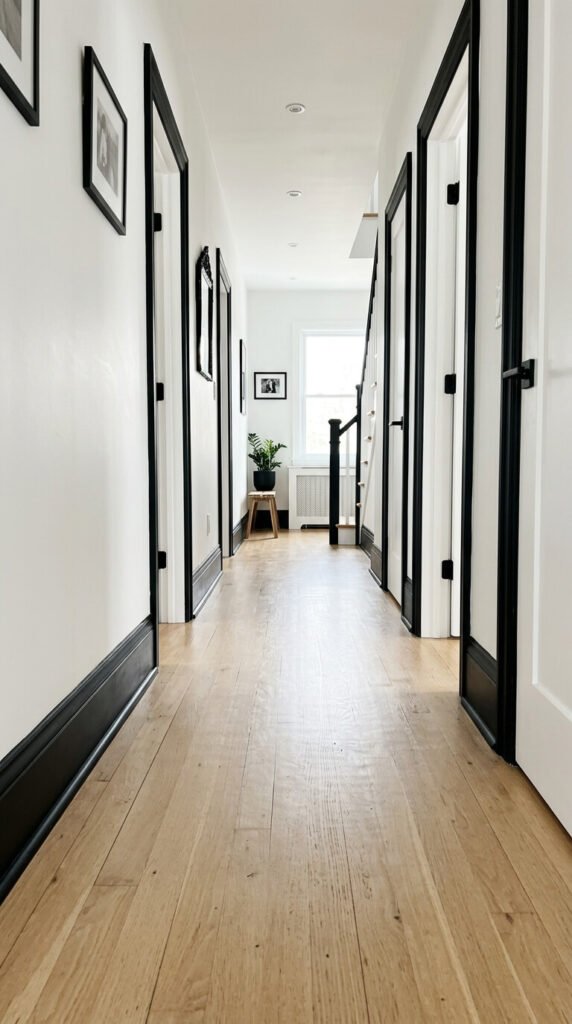
Most people match their baseboards and trim to the wall color. Painting them a contrasting color — typically black, charcoal, or a deep tone against white walls — creates a graphic, editorial look that feels architectural. This works especially well with white walls and light floors. Black trim grounds the space and makes the room feel more serious. It’s just paint, so the commitment is low. A small hallway requires less than a quart of trim paint. Start with the baseboards only to test the look before moving to door frames.
26. A Cane or Rattan Accent Cabinet
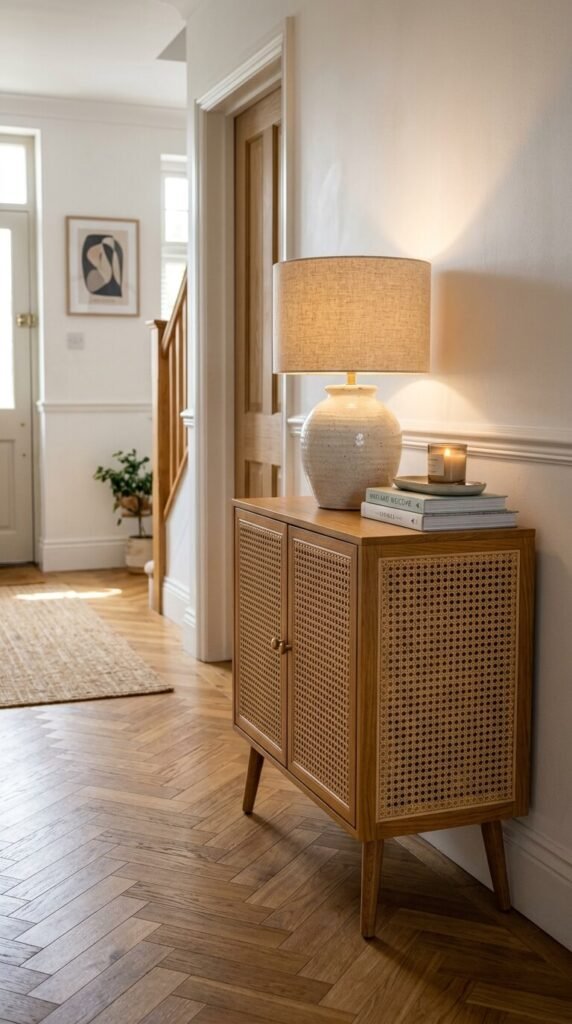
A cane-front cabinet adds storage and warmth in one piece. The woven texture softens hallways that feel too stark or bare. Use it to store shoes, scarves, or extra items behind the door — hidden but accessible. Style the top simply: a small lamp, a plant, a bowl. Cane-front furniture is widely available now at Target, IKEA, and Amazon for $80–200. The natural material pairs well with both warm and cool wall colors. It’s one of the few furniture pieces that looks more expensive in person than it does online.
27. Layered Lighting With a Dimmer Switch
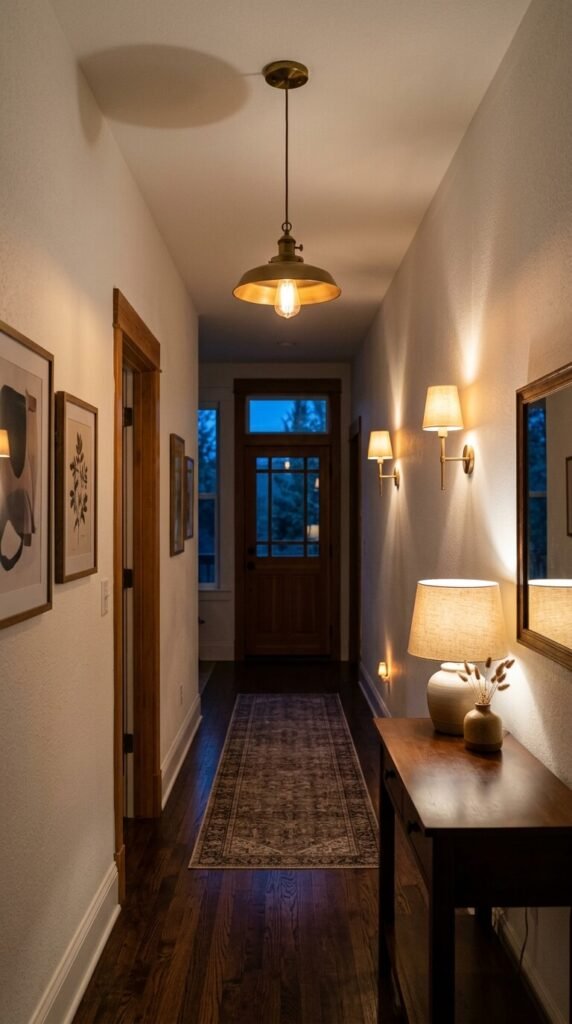
One overhead light is never enough. Layered lighting — a pendant or flush mount, plus wall sconces, plus a lamp on a console — creates depth and makes the hallway feel like a proper room. Add a $15 dimmer switch to your overhead fixture and the whole mood becomes adjustable. At full brightness it’s functional; dimmed low it’s atmospheric. This is the single most underused hallway trick. You don’t need to run new wiring — plug-in sconces and a table lamp give you layers without any electrical work.
Conclusion
Your hallway doesn’t have to be an afterthought. Every idea in this list is something you can act on this weekend — most for under $100. Start with one change. Pick a paint color, hang a mirror, or lay down a runner. See how much that one thing shifts the feeling of the whole space. Small hallways respond dramatically to even minor improvements because every inch is visible. The goal isn’t a perfect showroom — it’s a space that feels like it belongs to you. That’s what good design actually is.