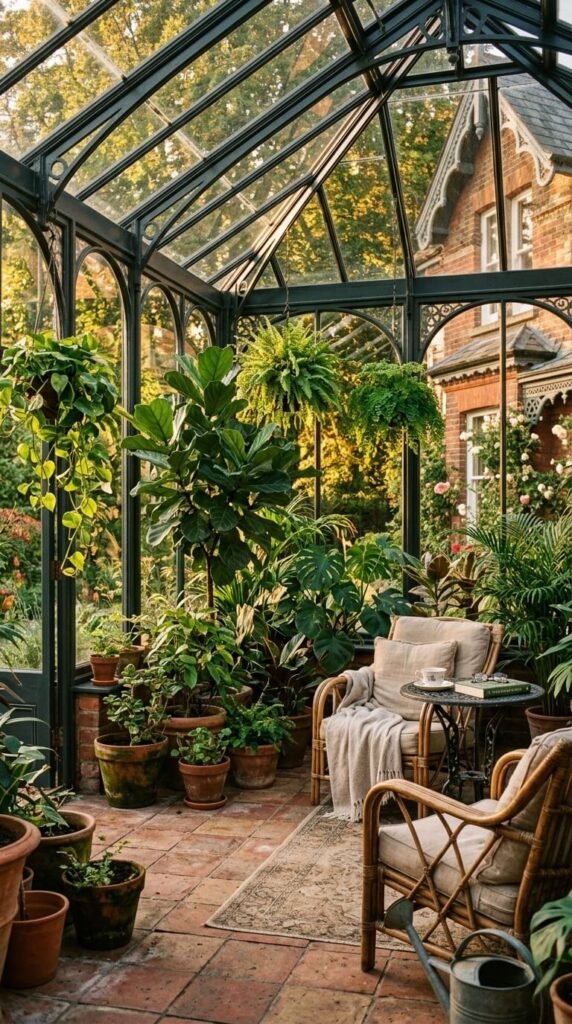
A conservatory is one of those rare spaces that earns its keep every single season. It keeps you close to plants and natural light even when the weather outside refuses to cooperate. Whether you have a sprawling glass room or a compact lean-to attached to a brick wall, the right touches can make it feel like a living garden retreat. These ideas range from simple weekend projects to thoughtful long-term styling choices — each one rooted in real-life plant love and practical design thinking.
1. Let Climbing Plants Take the Lead
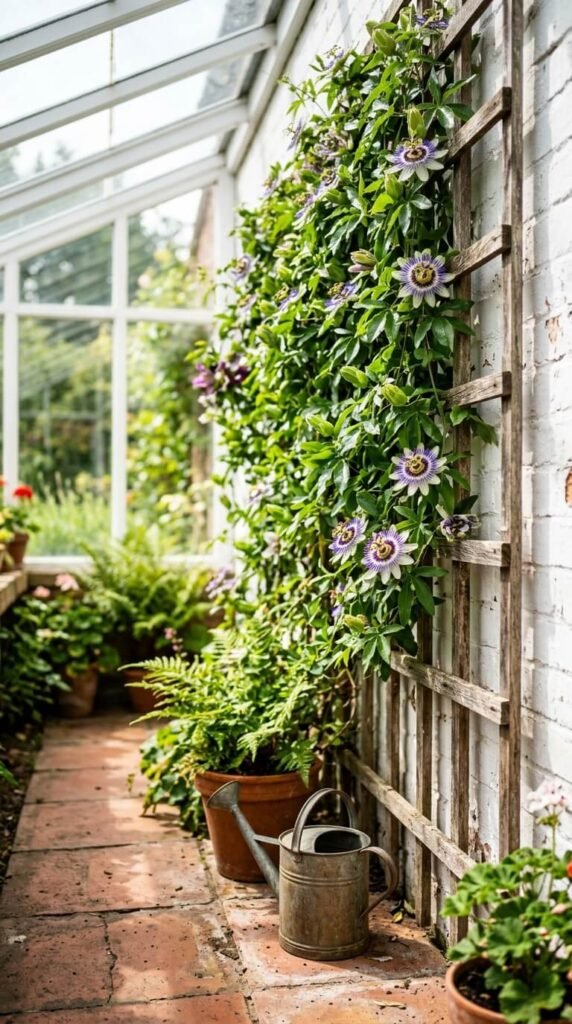
Climbing plants give a conservatory a wildly romantic look without costing much. Fix a simple wooden trellis to one wall — the kind sold at most garden centres for under $20. Then train a passionflower, jasmine, or climbing rose up it. These plants grow fast and fill vertical space beautifully. Over a single summer, a bare wall can become a green curtain. Water regularly, give it full sun, and the trellis does the rest.
2. Use Mismatched Vintage Pots for Character
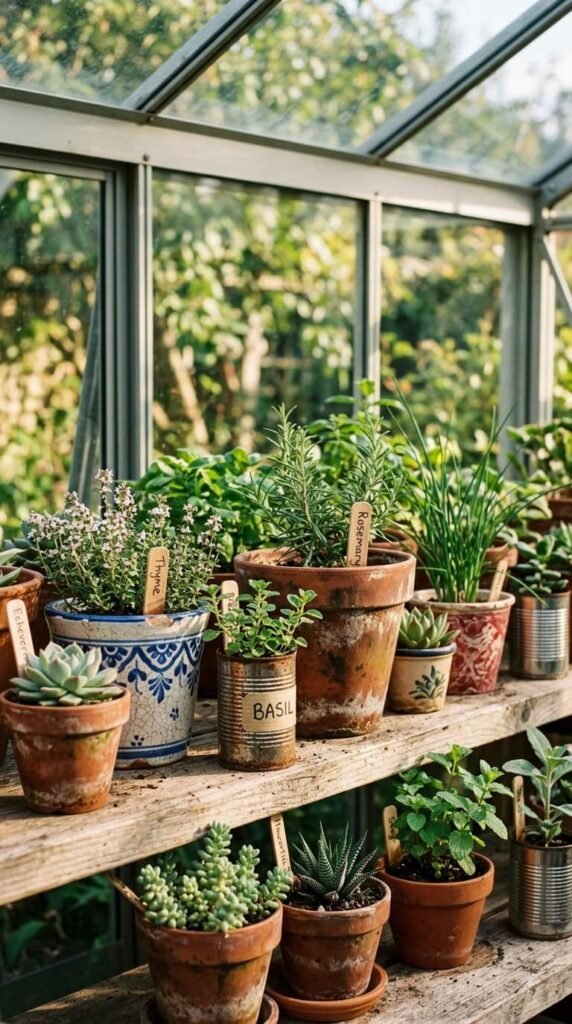
Matching pots are forgettable. Mismatched vintage containers instantly tell a story. Hit charity shops, estate sales, or even your own kitchen cupboards. Old tin cans, chipped enamel jugs, and cracked terracotta all work brilliantly as plant homes. Drill one small drainage hole at the base. Plant a small succulent or trailing ivy. Arrange them at different heights on a wooden shelf. The layered look feels collected and lived-in — far more interesting than a matching set.
3. Install a Simple Water Feature for Sound
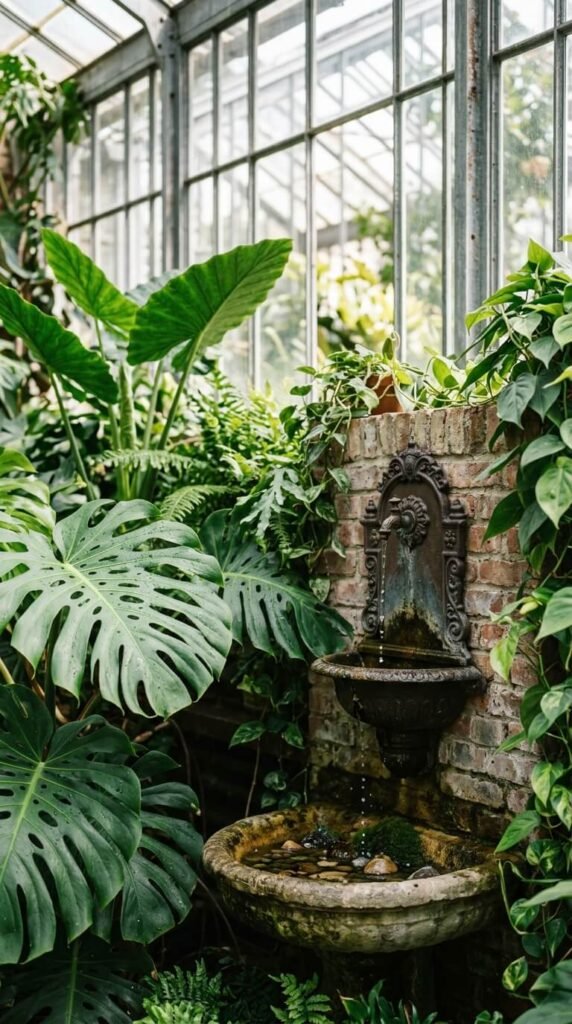
Moving water changes a conservatory entirely. Even a tiny wall-mounted fountain creates a gentle background sound that makes the space feel alive. You can find small plug-in water features for around $30–$60 at garden shops. Place it against a brick wall or prop it on a wooden stand. Surround it with large-leafed plants like monstera or caladium. The combination of sound and greenery makes the whole room feel like a quiet outdoor escape — even in January.
4. Hang a Macramé Plant Shelf for Vertical Greenery
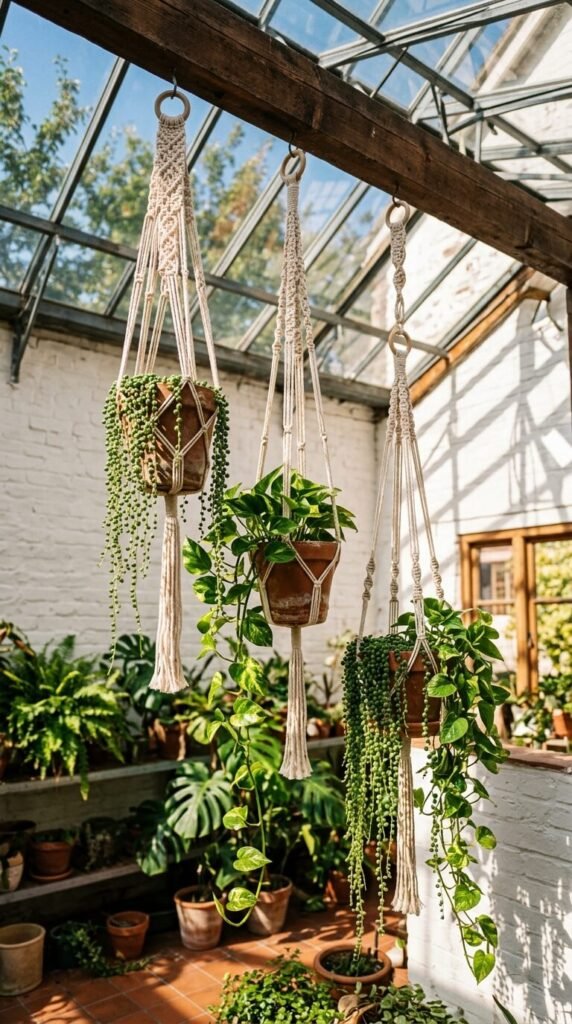
Wall space and floor space are both valuable. Going vertical with macramé shelves gives you more planting room without crowding the floor. Macramé hangers are widely available for $10–$25 each, or you can make a simple one with cotton rope. Hang three at staggered heights from a ceiling beam. Fill them with trailing plants — pothos, string-of-pearls, or small philodendrons all work well. The movement of trailing leaves catches light differently throughout the day.
5. Create a Citrus Corner
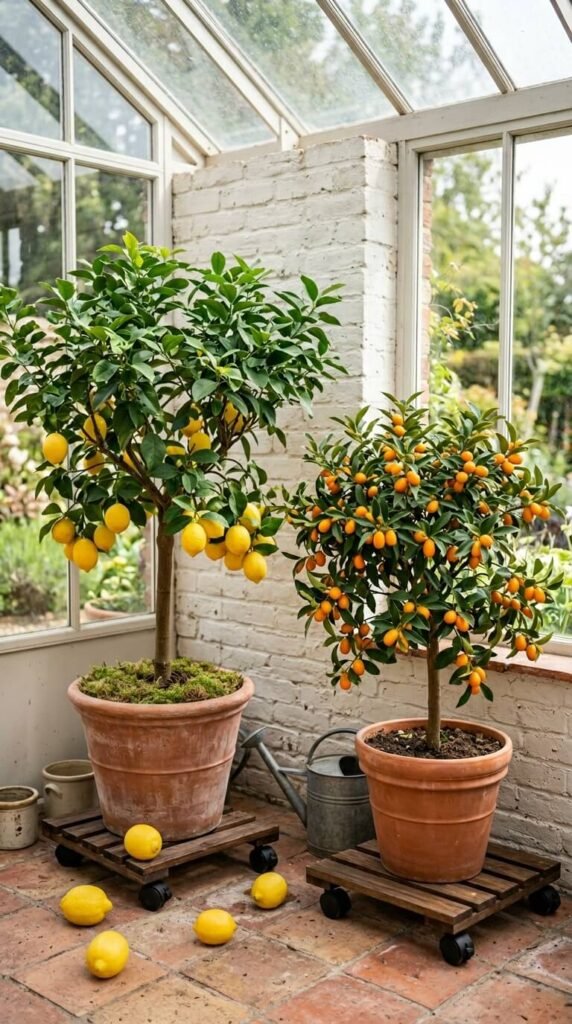
Citrus trees in a conservatory are both decorative and edible. A dwarf lemon or kumquat tree costs around $30–$50 from a garden centre and will fruit year after year. Place it in a large terracotta pot on a wheeled caddy — so you can move it closer to the glass in winter. Feed monthly with citrus fertiliser. The waxy leaves, fragrant blossom, and bright fruit make this corner feel abundant. Guests always stop to admire it.
6. Build a Reclaimed Wood Potting Bench
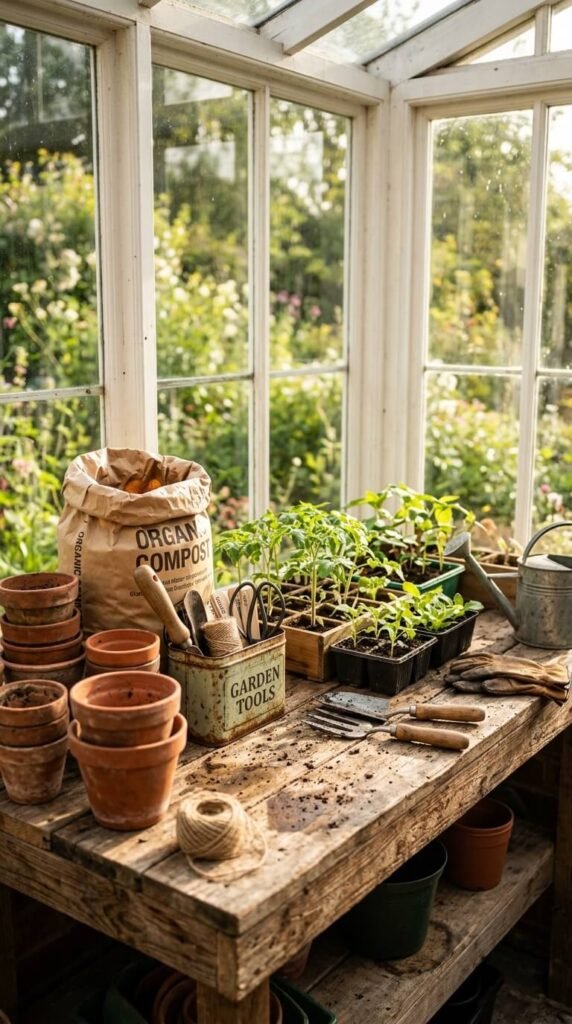
A potting bench turns a conservatory into a proper working garden room. You don’t need to buy one — a simple version can be made from two scaffold boards and a pair of trestle legs. Sand it smooth, leave it bare or seal it with linseed oil, and it’ll last for years. Store small pots underneath, hang tools from a pegboard above, and keep a small compost bin close by. It looks brilliant and actually makes potting plants far more enjoyable.
7. Layer Plants at Three Heights
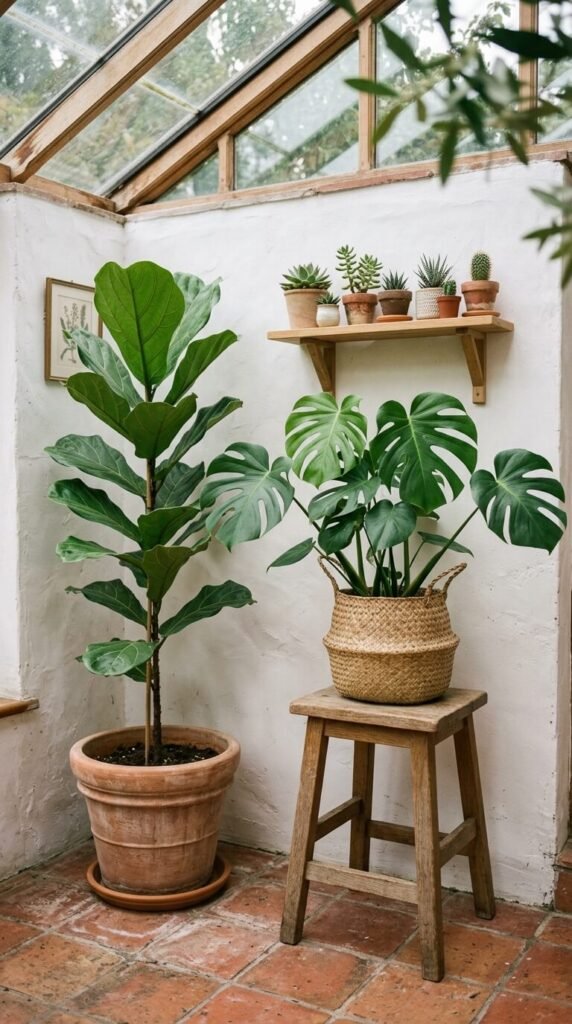
One of the simplest tricks for a lush-looking conservatory is layering your plants at three different heights. Put tall plants — fiddle-leaf figs, olive trees, or palms — on the floor. Place mid-height plants on stools or wooden crates. Then put small trailing plants and succulents on shelves or window ledges. This mimics how plants grow naturally in a forest, and it fills the space with greenery without creating clutter.
8. Introduce a Day Bed for Afternoon Naps
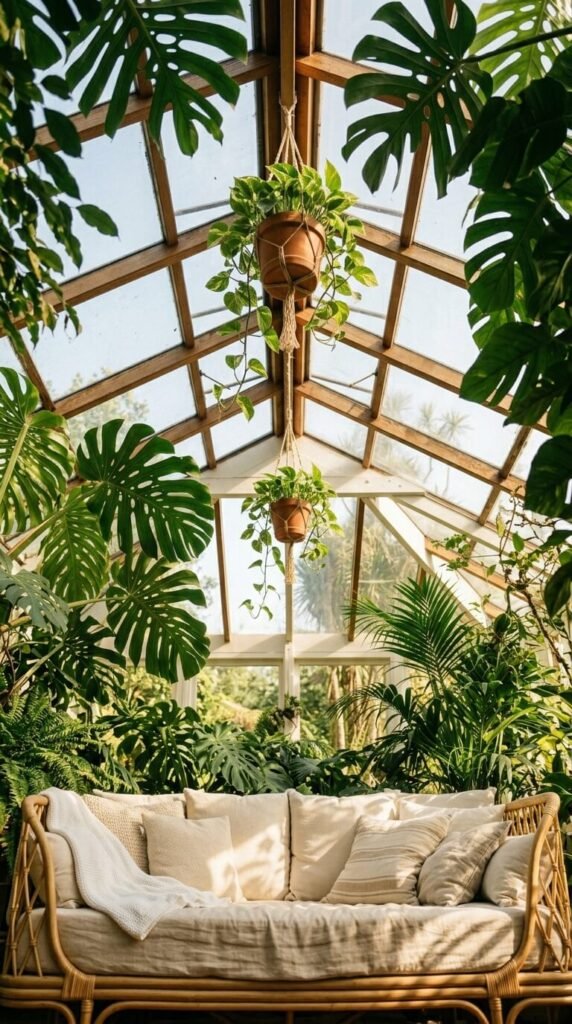
A conservatory without somewhere to lie down and look up at the sky is a missed opportunity. A simple day bed or reclining garden chair turns the space into a proper retreat. Rattan frames are affordable and hold up well in glasshouse humidity. Layer it with weatherproof cushions or outdoor-rated linen. Hang a trailing pothos directly above it. On sunny afternoons, light filters through the plants and glass in a way that feels almost magical.
9. Display Ferns on a Ladder Shelf
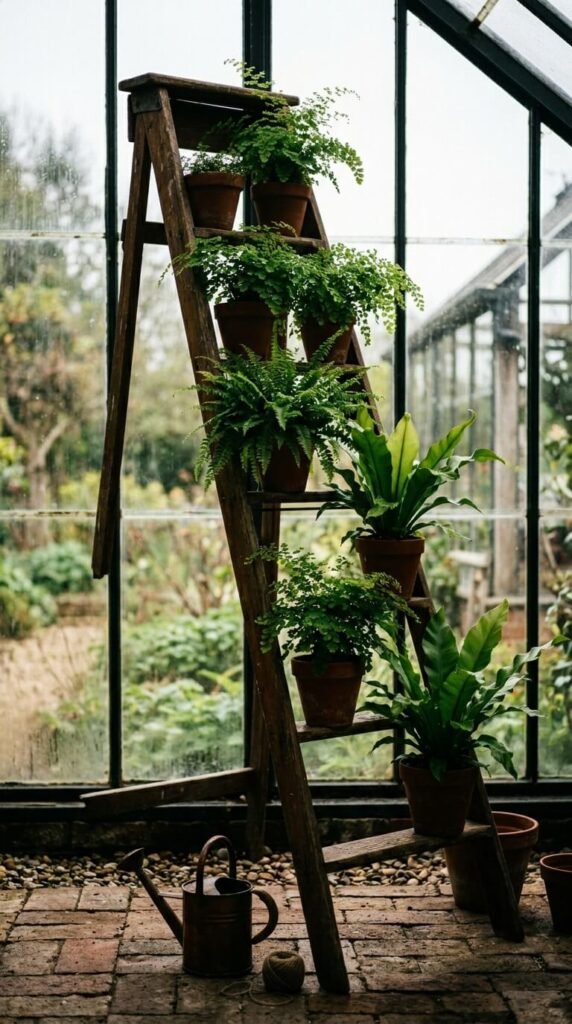
An old wooden ladder costs almost nothing at a car boot sale or junk shop. Leaned against a wall, it becomes an instant tiered plant display. Ferns are the perfect choice for ladder shelves — they love humid, bright-but-indirect light, which is exactly what most conservatories offer. Maidenhair ferns, Boston ferns, and bird’s-nest ferns all work well. Place one pot per rung at different depths to create a layered, slightly wild look.
10. Use String Lights for Evening Atmosphere
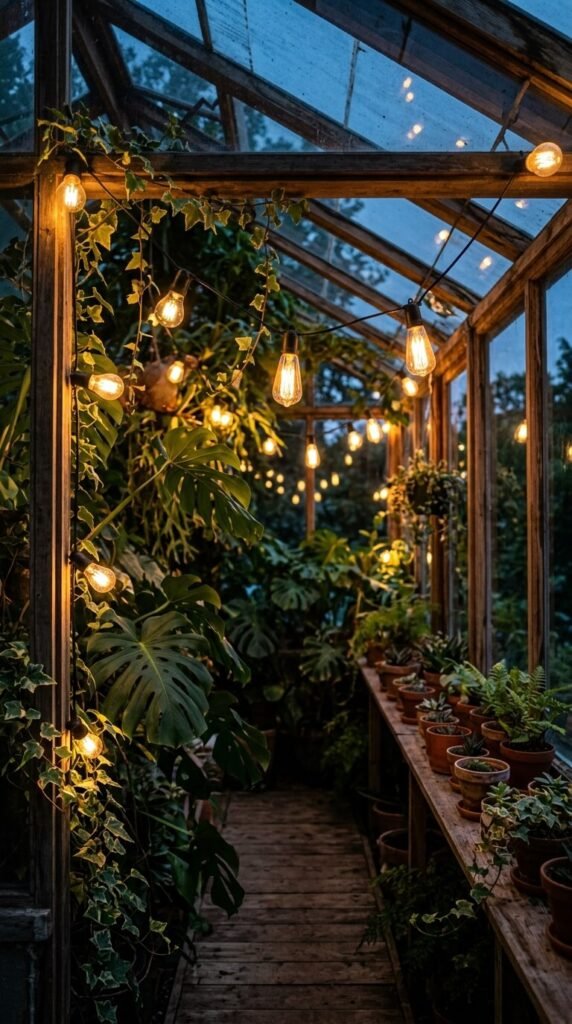
The right lighting completely transforms a conservatory after dark. Warm Edison-style string lights draped through plant canopies cost as little as $10–$20 and last for years. Weave them through large-leafed monstera plants or thread them along a ceiling beam. When the evening light drops, the glow turns the whole space golden. Pair with a few candles on a low shelf. The contrast between the glass ceiling and warm light below feels genuinely special.
11. Grow a Small Herb Garden in Terracotta
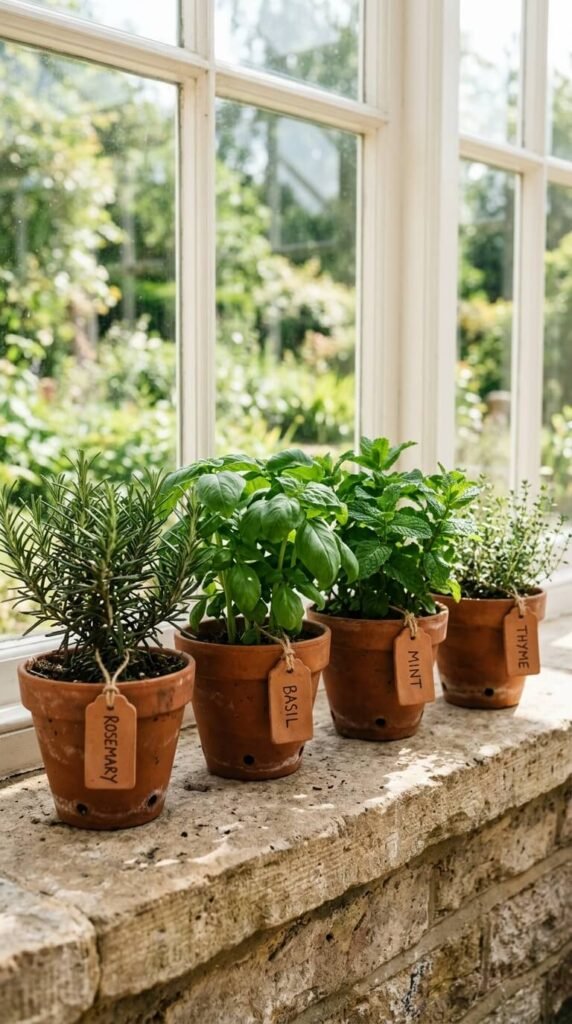
A herb garden on a conservatory window ledge is both practical and beautiful. Terracotta pots cost almost nothing — pick up a dozen for under $15 at garden centres. Grow rosemary, thyme, basil, and mint. Label each pot with a small handwritten clay tag pushed into the soil. Keep the ledge in full sun and water little but often. Within a few weeks, you’ll have fresh herbs to cook with daily. The smell alone makes the conservatory feel alive.
12. Create a Moss Wall Panel
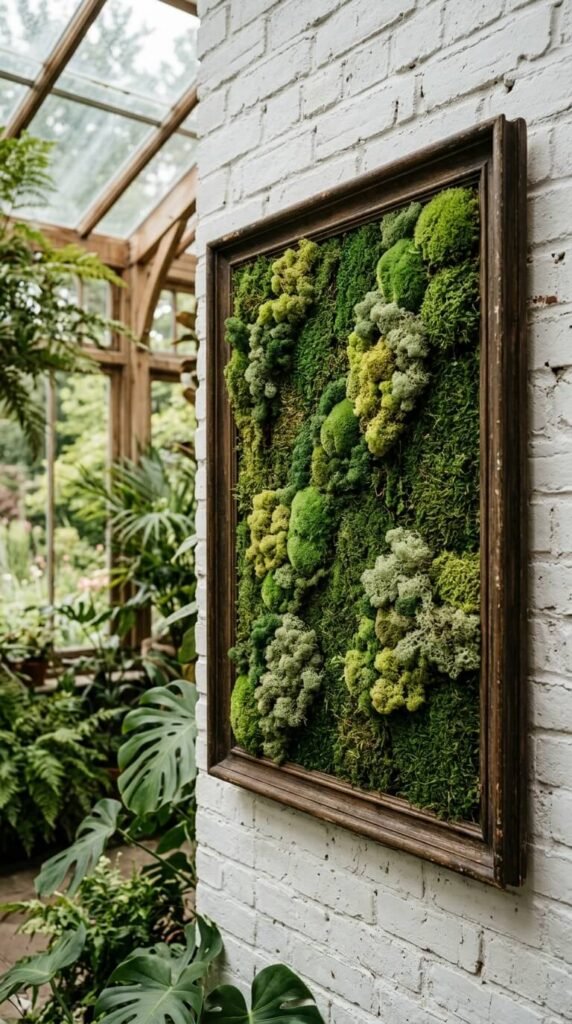
A preserved moss panel is one of the most striking things you can put in a conservatory — and it needs zero watering. Preserved moss stays permanently green without any care. Buy a ready-made panel for around $40–$80, or make your own using a shallow wooden frame and craft glue. Mix different moss types for texture — flat sheet moss alongside pillow moss and reindeer moss. Mount it on a plain wall. It works as both botanical art and a natural focal point.
13. Add a Statement Palm Tree
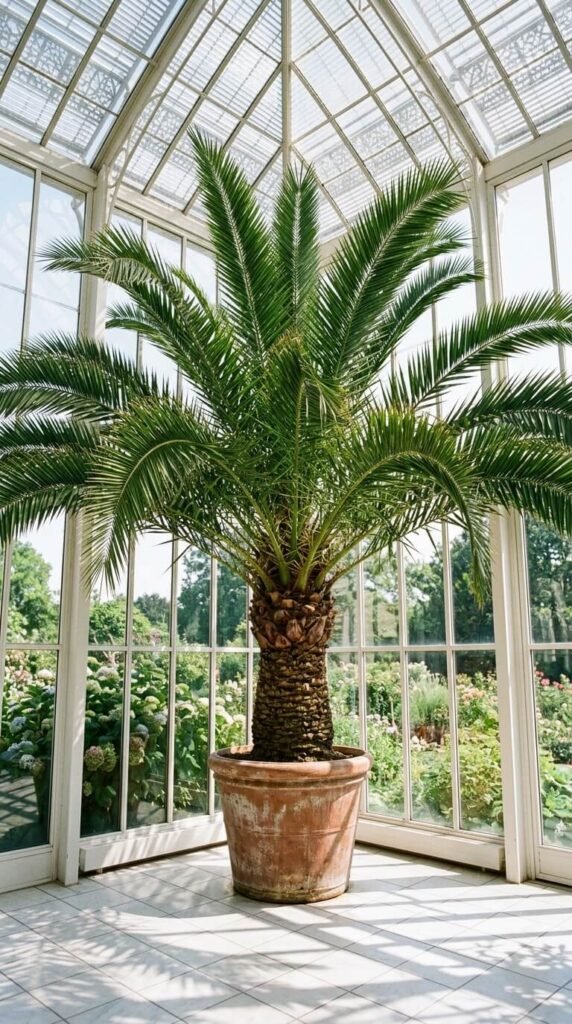
One large palm tree does more for a conservatory than ten small plants. A good-sized parlour palm or Canary Island date palm in a wide terracotta pot commands the room immediately. Palms tolerate indoor conditions well, grow slowly, and rarely ask for much beyond water and occasional feeding. Position yours in a corner where it has room for fronds to arch outward. The tropical silhouette against glass instantly makes a space feel more dramatic and considered.
14. Repurpose a Birdcage as a Planter
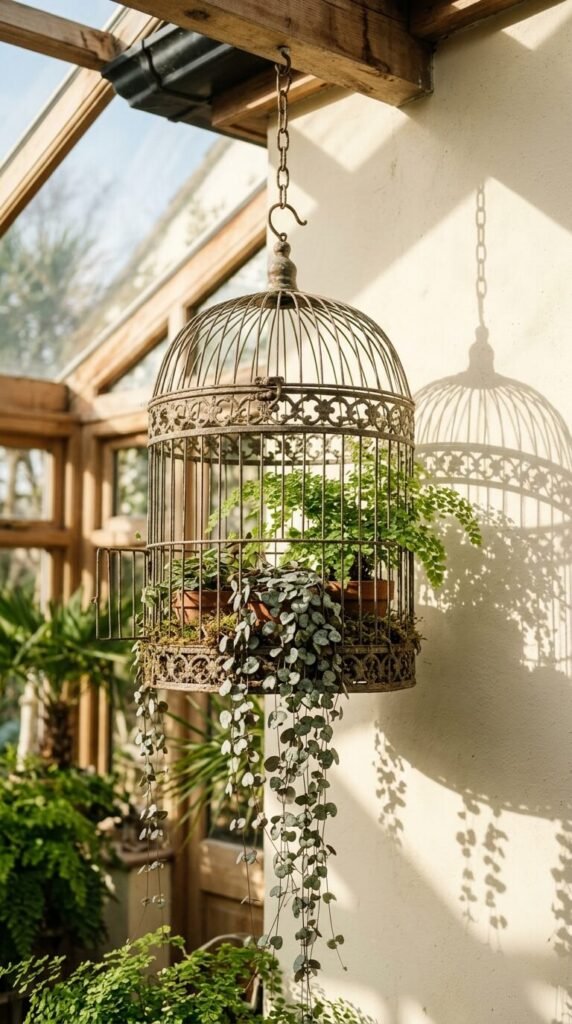
Old birdcages make extraordinarily good plant displays. Hang a large vintage cage from a ceiling hook and fill it with trailing plants — string-of-hearts, creeping fig, or small ferns spilling through the bars looks wonderful. Charity shops and antique markets often have ornate metal cages for under $20. Line the base with moss or a small tray. The intricate shadows the cage casts on walls and floors as light shifts throughout the day are an unexpected bonus.
15. Paint One Wall in Deep Botanical Green
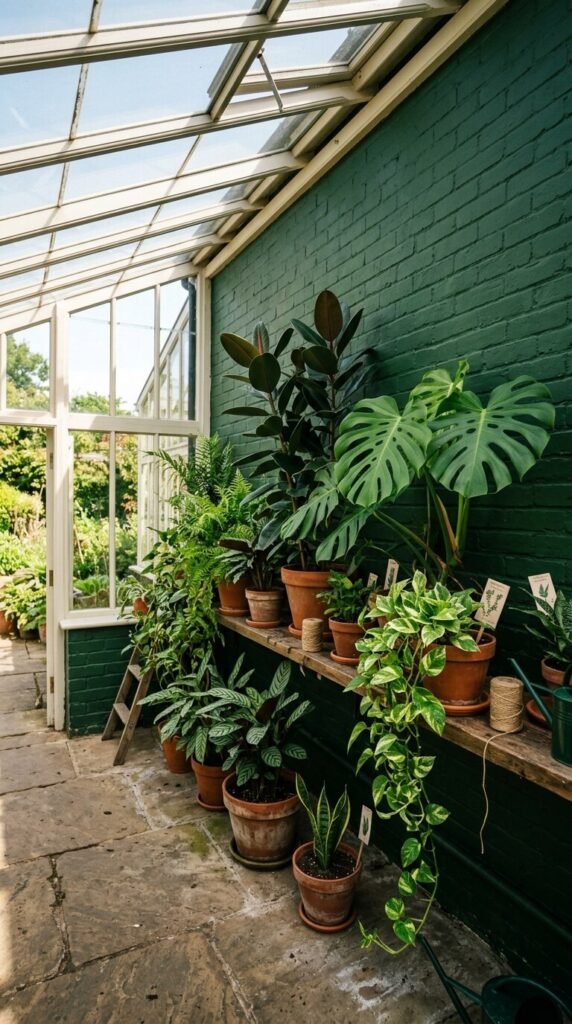
White walls are safe. A single deep green painted wall is bold and extraordinary. Colours like forest green, dark sage, or hunter green create a backdrop that makes every plant pop. You only need to paint one wall — the others can stay white or brick-exposed. The contrast between the dark wall, bright glass panels, and rich plant foliage creates a look that feels curated and intentional. A tin of paint costs around $20–$40 and the transformation is immediate.
16. Cluster Succulents on a Windowsill Tray
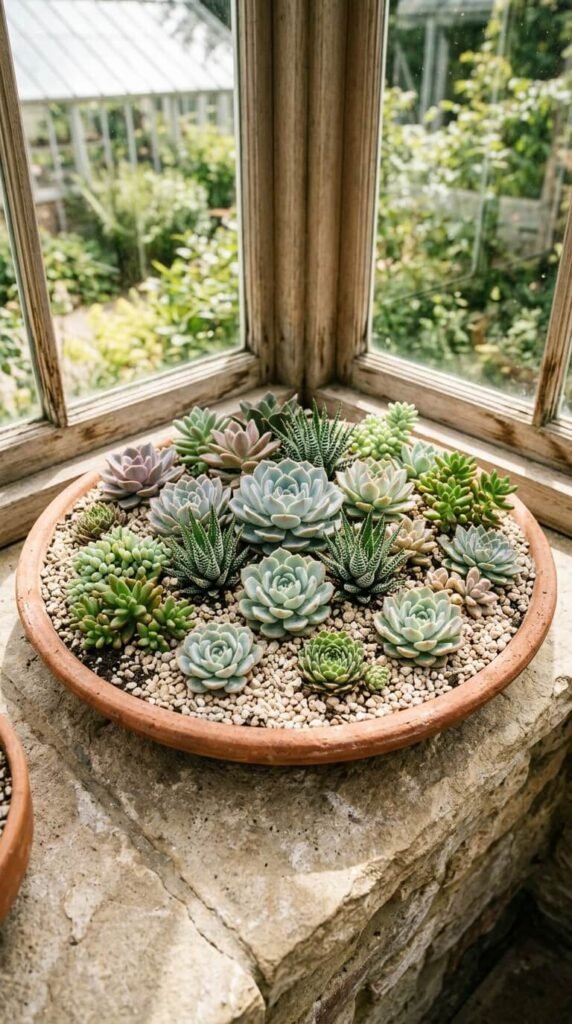
Succulents are genuinely the most forgiving plants for busy people. Arrange a dozen different varieties in a wide tray filled with gritty compost and finished with pale gravel. The varied shapes — rosettes, spires, pudgy little pads — create natural interest without any styling effort. A tray of twelve small succulents can cost as little as $15 at a market. Place it on the sunniest windowsill. Water once every two to three weeks. They do everything themselves.
17. Introduce Rattan and Cane Furniture
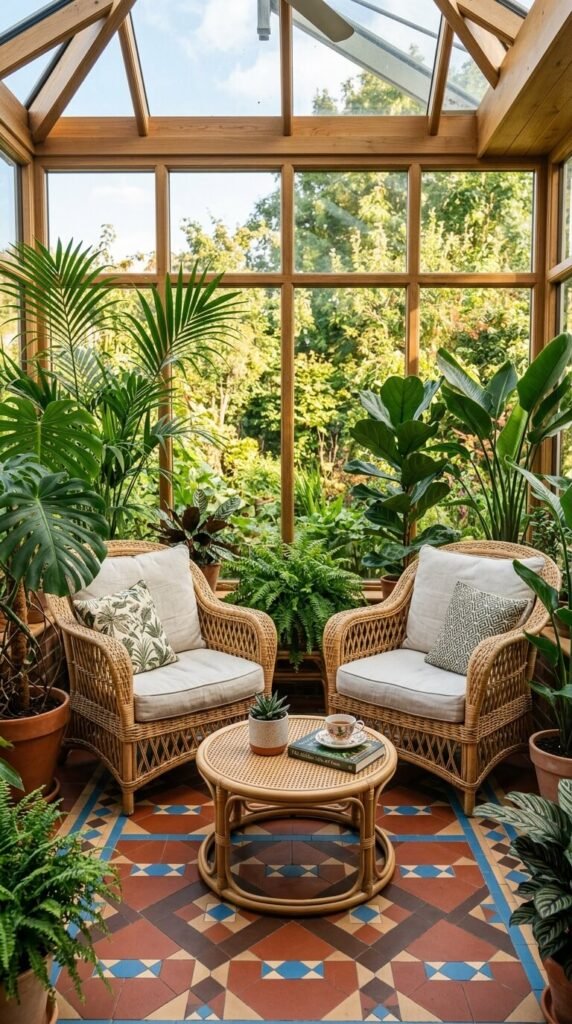
Material choices matter in a conservatory. Rattan and cane furniture have an honest, botanical quality that looks completely at home surrounded by plants. Both materials are lightweight, durable, and usually far cheaper than solid wood. A pair of rattan armchairs can be found second-hand for $30–$60 each. Add simple weatherproof cushions in a linen or canvas fabric. The pale, woven texture connects the furniture to the plant world in a way that heavier materials simply don’t.
18. Hang Air Plants Without Any Pots
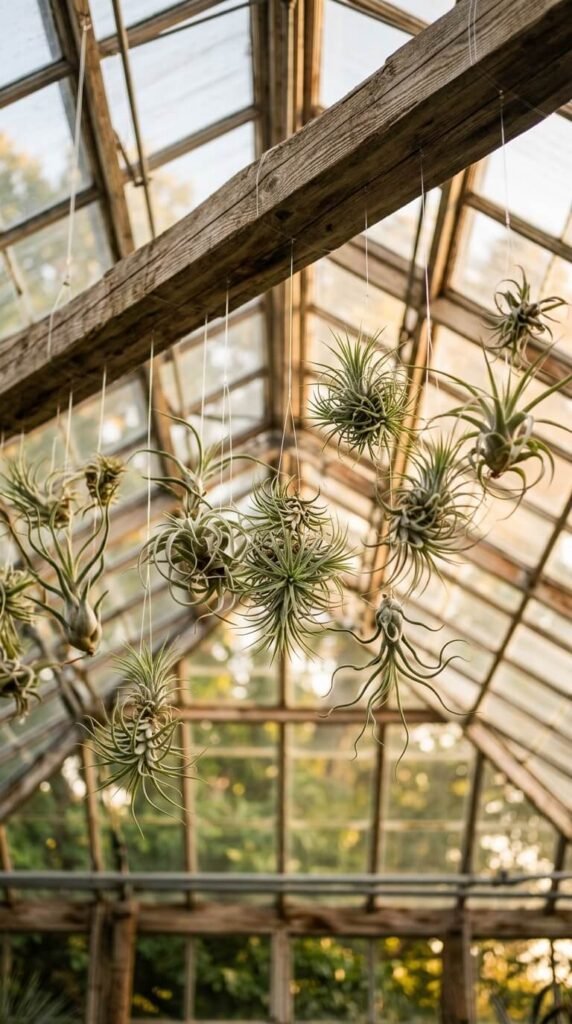
Air plants (tillandsia) grow without soil and can be hung directly from a ceiling beam using clear fishing line. The effect is almost otherworldly — plants seemingly floating in mid-air. Suspend them at different heights for a layered installation. Care is simple: mist them lightly two or three times a week. A bag of ten tillandsia costs around $15–$25 online. They thrive in the bright, humid conditions that a conservatory naturally provides.
19. Use Scented Plants Near the Doorway
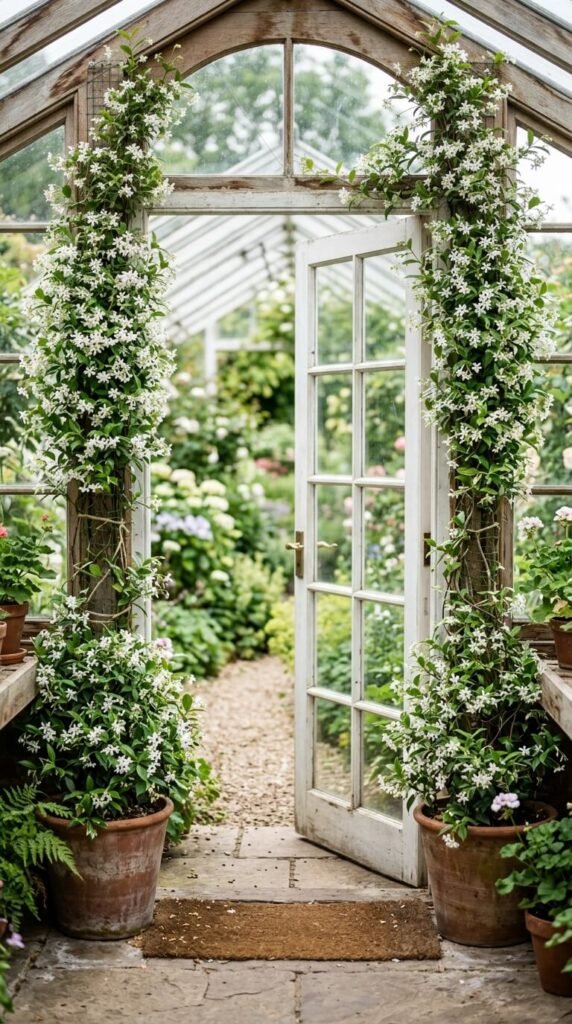
Walking into a conservatory that smells incredible is an entirely different experience. Place scented plants near the doorway so the fragrance hits immediately upon entry. Jasmine, gardenia, sweet peas, or scented-leafed pelargoniums all work brilliantly. Train a jasmine up either side of the door frame with a few simple wire guides. The white flowers and fragrant cloud feel genuinely luxurious. These plants cost very little but deliver a sensory reward completely out of proportion to their price.
20. Create a Propagation Station
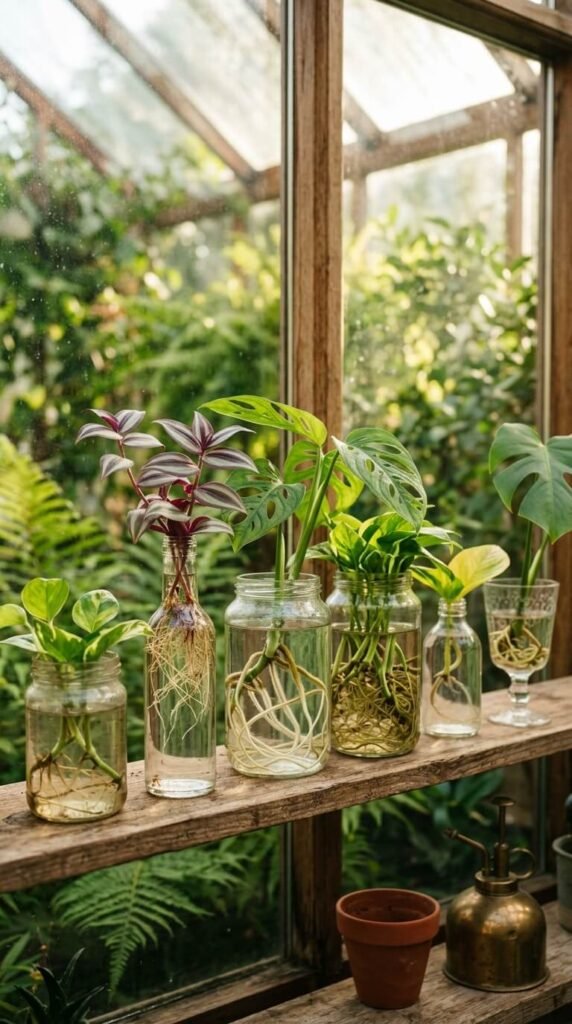
A propagation station is both a functional gardening tool and a beautiful display. Line a shelf with glass bottles of different shapes and sizes, each holding a cutting in water. Watch the roots develop over weeks — it’s surprisingly absorbing. Pothos, tradescantia, spiderwort, and philodendron all propagate easily in water. Label each jar with a small clip-on tag. Once rooted, pot them up and share with friends. It costs almost nothing and keeps the space feeling productive and alive.
21. Install Terracotta Tile Flooring
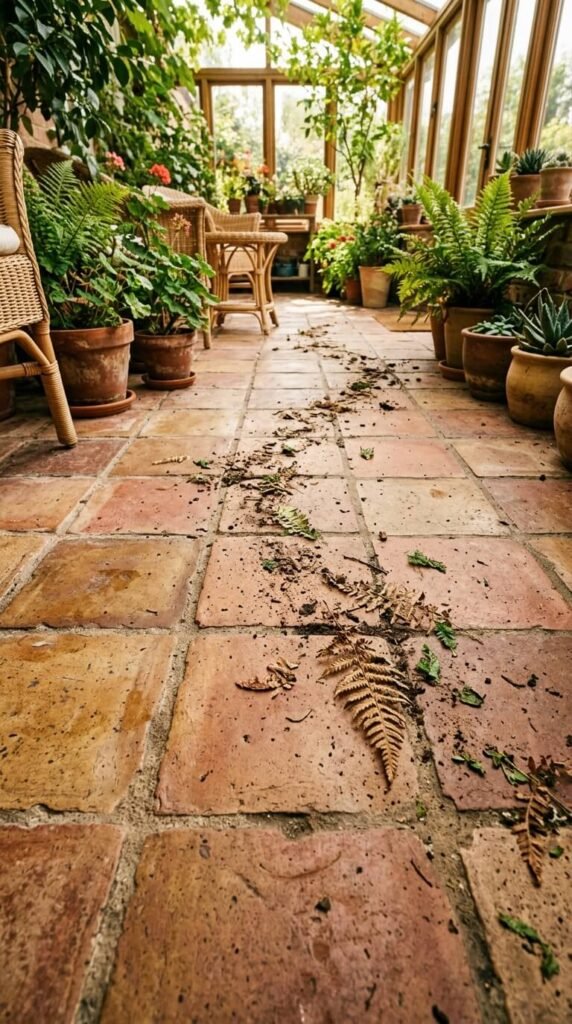
Flooring is often overlooked, but it’s the foundation of the whole room’s aesthetic. Terracotta tiles are the single most practical and beautiful choice for a conservatory. They handle soil, water spills, and heavy pots without complaint. They warm in the sun and release that warmth slowly. Imperfections in old or handmade tiles make them look more authentic. Reclaimed terracotta tiles can be bought cheaply from salvage yards. Even a small area laid in terracotta looks grounded and genuinely earthy.
22. Grow Tomatoes and Peppers Alongside Ornamental Plants
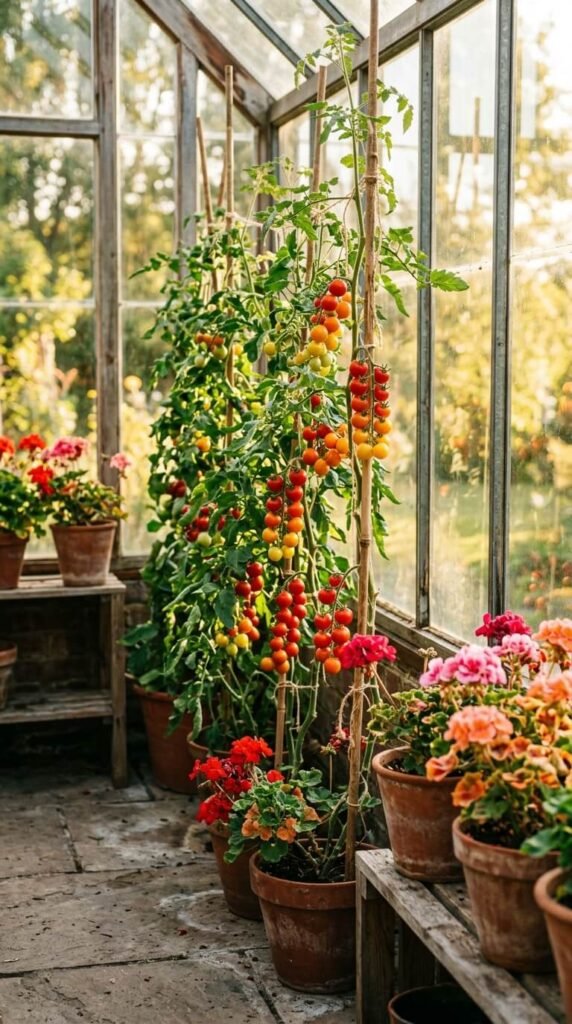
There is no rule that says a conservatory has to be purely decorative. Growing edible plants alongside ornamental ones makes the space feel productive as well as beautiful. Cherry tomatoes, peppers, aubergines, and cucumbers all thrive in the warm, sunny conditions a conservatory provides. Train them up bamboo canes. Mix them in among your ornamental plants. The combination of fruit, flower, and foliage creates a space that feels genuinely abundant rather than purely styled.
23. Add a Vintage Botanical Print Gallery Wall
Plants in frames belong alongside living plants in pots. A gallery wall of vintage botanical prints connects the indoor garden to the broader history of plant science and exploration. Antique botanical prints can be found on Etsy or at market stalls for very little. Print and frame digital versions for almost nothing. Mix frame sizes and keep the frames dark or natural wood for warmth. The prints reference real plant specimens — which gives them more meaning than generic art when hung in a plant-filled space.
24. Build a Simple Cold Frame Shelf for Seedlings
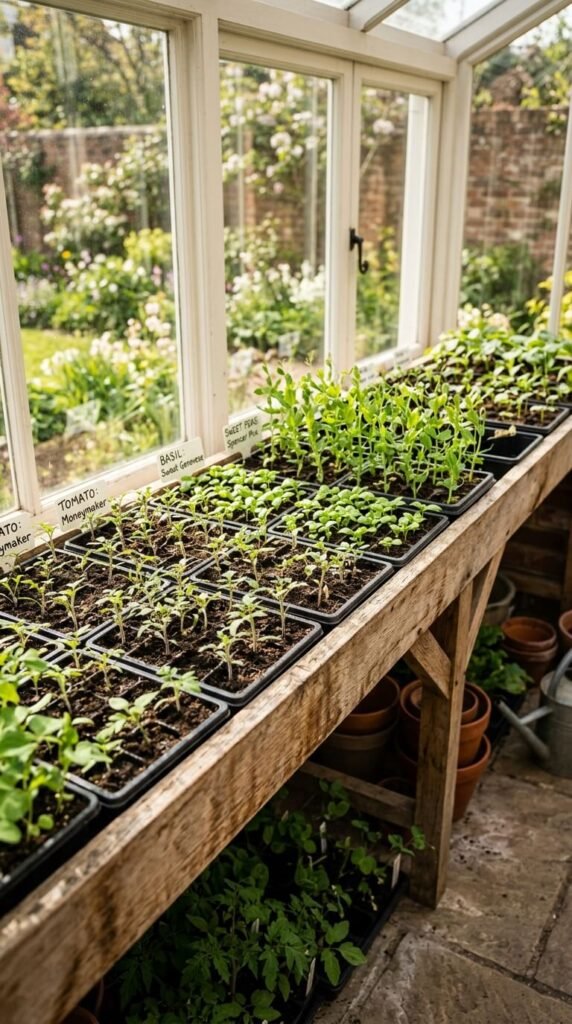
If you want to grow plants from seed, a conservatory gives you a serious head start on the season. A simple cold frame shelf — made from a wooden pallet base and a few low timber sides — keeps seedlings warmer and protected from draughts. Fill it with seed trays from January onward. The extra warmth and light compared to a windowsill makes a real difference to germination rates. It costs almost nothing to build, and by March you’ll have more seedlings than you know what to do with.
25. Hang a Woven Plant Canopy Overhead
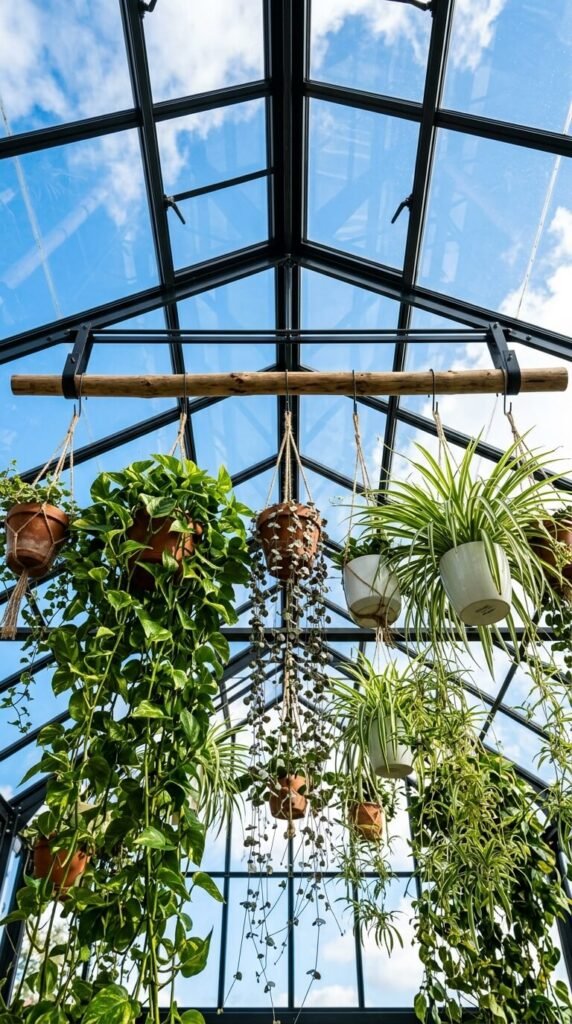
Looking up in a well-planted conservatory should be just as rewarding as looking around. Hang a simple wooden dowel from the ceiling and suspend a row of trailing plants from it. Space them at different lengths so the plants cascade at staggered levels. Pothos, string-of-hearts, and spider plants all trail naturally and grow quickly. The overhead greenery softens the hard lines of the glass structure above and creates a sense of being genuinely inside a living canopy.
26. Style a Reading Nook With Plants as Walls
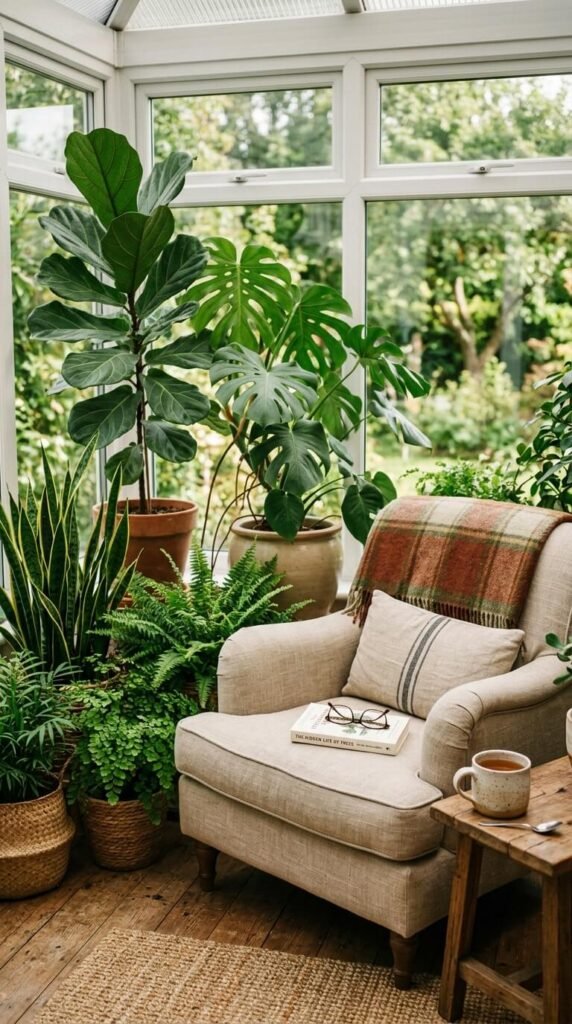
The most appealing conservatory corners have a sense of enclosure within the wider glass space. Use tall plants — fiddle-leaf figs, snake plants, large monstera — to create living walls around a single armchair. Position them close enough that the leaves frame the seat. Add a side table for drinks and a floor lamp for evening reading. The plants absorb sound, soften light, and create a genuinely separate feeling within the room. It’s a simple arrangement that makes an enormous difference.
27. Use Rain Chains Instead of Drainpipes
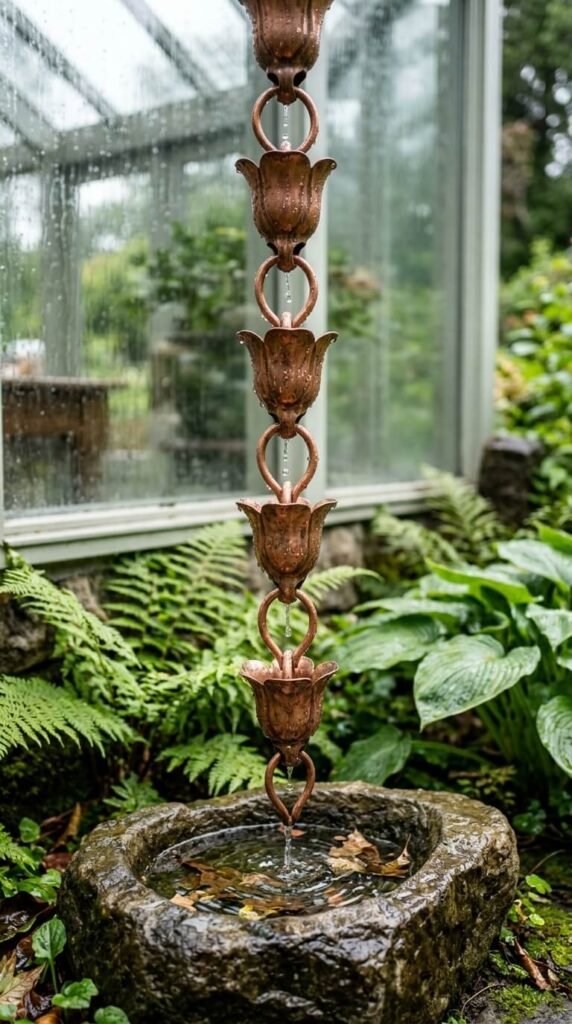
Rain chains are a Japanese alternative to standard drainpipes. Where a conservatory roof drains, a rain chain turns falling water into a slow, visual, meditative stream. Copper rain chains cost around $20–$50 and oxidise beautifully green over time. Fix one where your gutter downpipe would usually sit and let it feed into a barrel or stone basin planted with ferns. On rainy days, watching the water travel slowly down each link is unexpectedly satisfying and gives the outside of the conservatory real character.
28. Display Pressed Flowers in Glass Frames
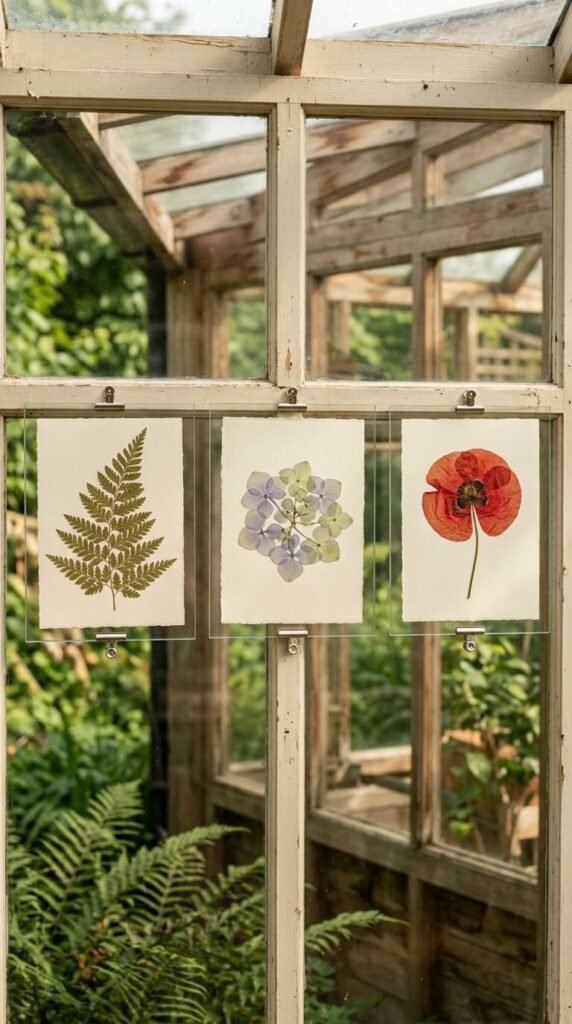
Pressed flower frames let you bring the garden inside in a completely different way. Press large fern fronds, hydrangea heads, or poppy petals between heavy books for a few weeks, then mount them on watercolour paper inside a simple clip frame. The results look extraordinary. Natural light shining through the translucent petals makes the colours glow. It costs virtually nothing — just patience. Hang three in a row on a white wall between living plants. The combination of living and preserved botanicals feels rich and layered.
Conclusion
A conservatory earns its name when it actually celebrates plants — not just tolerates them. The ideas here range from a $5 shelf of succulents to a full mossy wall panel, but they share a common thread: they treat greenery as the point, not an afterthought. Start with one or two changes. Move your tallest plant to a corner. Add a handful of mismatched pots. Let a climber loose on a wall. Small actions in a glass room add up quickly, and before long the space becomes somewhere you genuinely want to spend time — not just pass through.