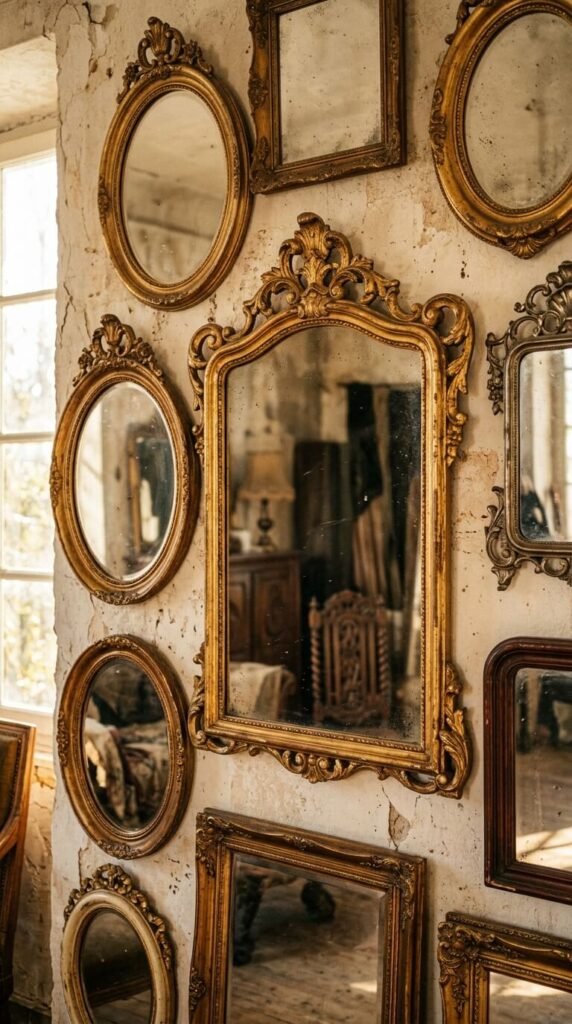
Vintage mirrors do something no other décor piece can. They bring history into a room while making it feel bigger, brighter, and more layered. Whether you’re decorating a tiny apartment or a sprawling farmhouse, an ornate vintage mirror changes the entire energy of a space. The frame does the heavy lifting — carved wood, gilded plaster, beveled glass, wrought iron — each one tells a story. You don’t need a designer’s budget to pull this off. Thrift stores, estate sales, and online marketplaces are full of hidden gems waiting for the right wall. This guide walks you through 29 distinctive styles, with practical tips to help you find, style, and even restore them yourself.
1. The Gold Leaf Baroque Mirror
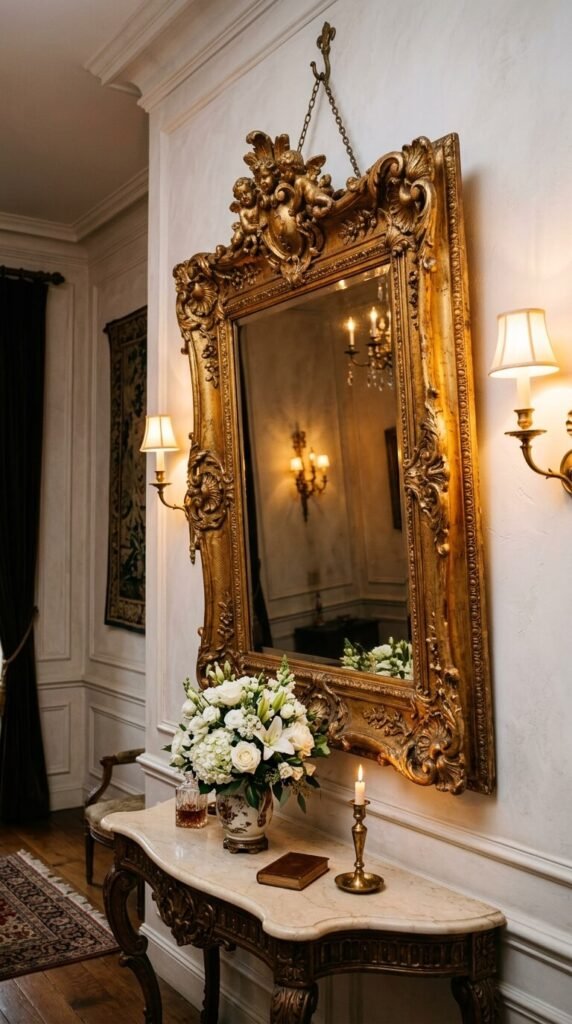
Baroque mirrors are the most recognizable vintage style. They go big, bold, and dramatic.
The frames are carved with scrolls, flowers, and classical figures. Gold leaf gilding gives them that warm, aged glow you can’t fake with spray paint.
You’ll spot these at estate sales for $40–$150, even in rough shape. A little gold leaf repair kit from a craft store costs about $12 and covers chips easily.
Hang one above a fireplace or console table for maximum impact. The bigger the mirror, the better it works.
2. The Venetian Etched Glass Mirror
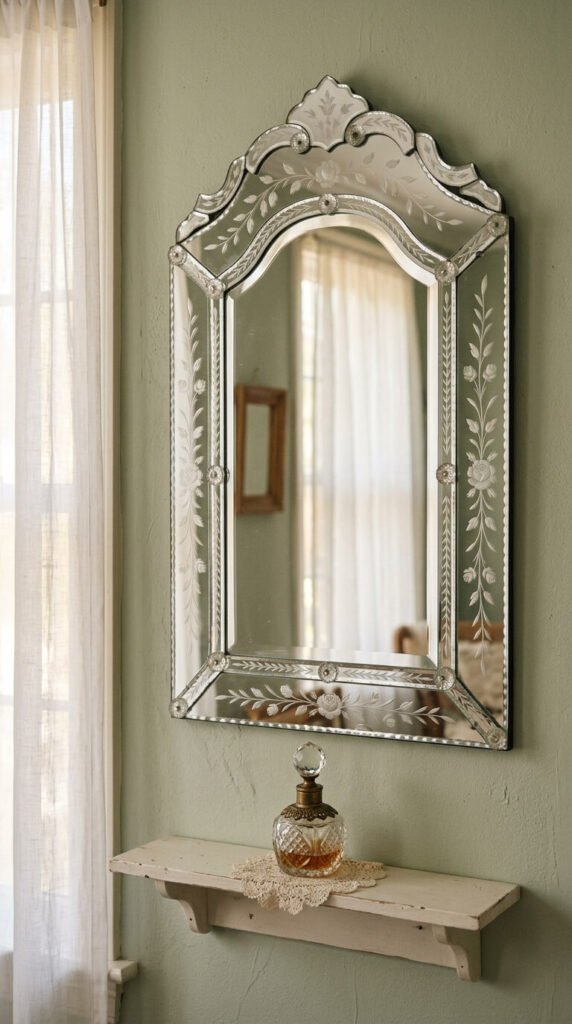
Venetian mirrors skip the heavy frame. The decoration lives in the glass itself.
Delicate etched patterns — vines, roses, geometric borders — are cut directly into the mirror surface. The result feels airy and refined at the same time.
These work beautifully in bathrooms and dressing rooms. Look for authentic pieces at antique fairs, or buy affordable reproductions from import home goods stores.
Pair with soft lighting to let the etching catch the glow. Even a small Venetian mirror over a pedestal sink feels luxurious.
3. The Rustic Farmhouse Chippy Mirror
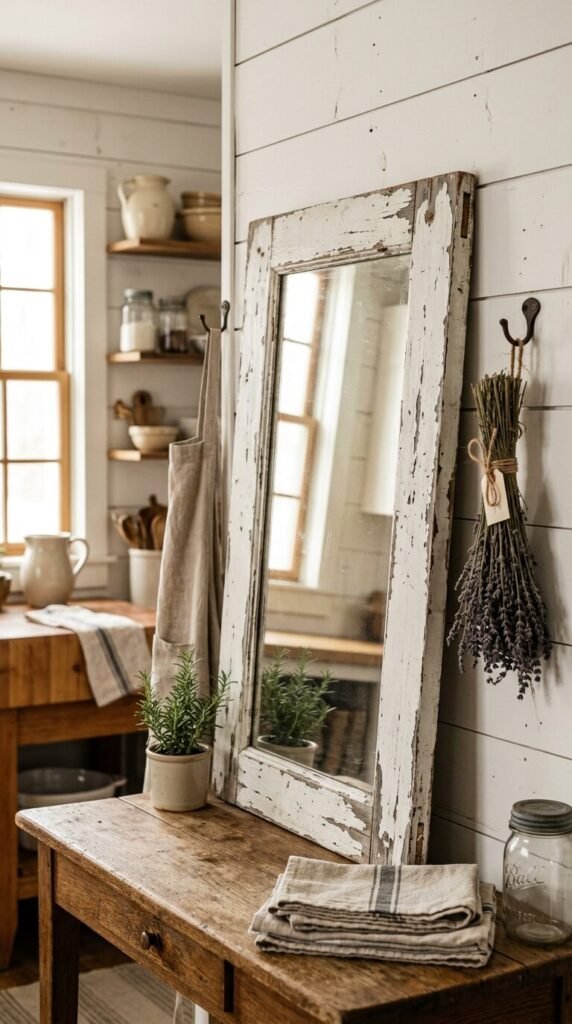
Not every vintage mirror needs to be glamorous. Chippy farmhouse mirrors have a humble, honest charm.
The paint is intentionally worn — or genuinely aged — showing wood grain, old color layers, and imperfections. That roughness is the point.
These are easy to DIY. Find a basic wood-framed mirror at a thrift store for $5–$15. Layer two colors of chalk paint, let dry, then lightly sand to reveal the bottom layer.
Hang in a mudroom, kitchen, or laundry room. They look like they’ve been there forever.
4. The Sunburst Brass Starburst Mirror
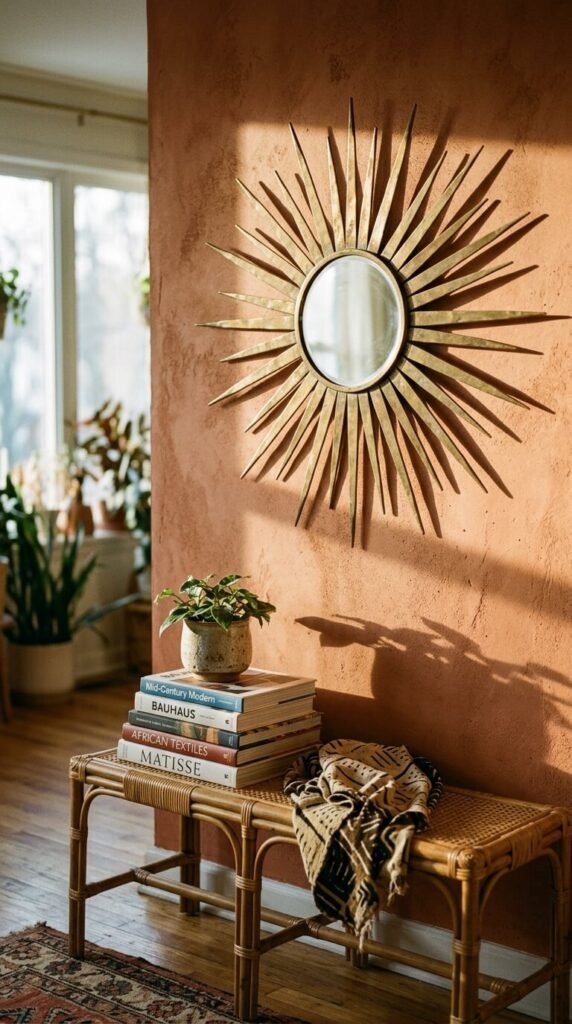
Sunburst mirrors are statement pieces that punch above their price point.
Rays of brass, wood, or resin shoot outward from a small central mirror. The silhouette is bold and sculptural — it looks expensive on any wall.
Vintage versions from the 1950s–70s show up frequently at thrift stores and flea markets. Expect to pay $20–$80 for authentic pieces with a beautiful patina.
Don’t polish the brass. That aged finish is exactly what makes it look rich. Hang alone — it doesn’t need company.
5. The Ornate Victorian Mahogany Mirror
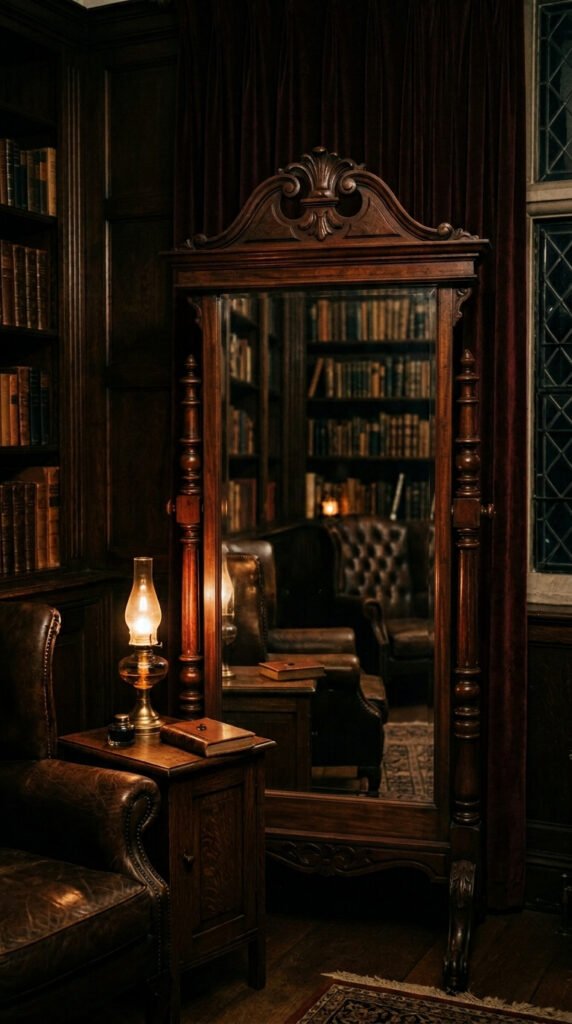
Victorian mahogany mirrors are serious pieces of furniture.
These tall, dark frames feature carved pediments, turned columns, and sometimes small shelves built into the bottom. They feel substantial and permanent in a room.
You’ll find these at antique shops or estate auctions, usually priced $75–$300 depending on size and condition. A good furniture wax polish brings tired wood back to life quickly.
Use them in a study, bedroom, or hallway. They anchor a space with quiet authority.
6. The Louis XVI Oval Mirror
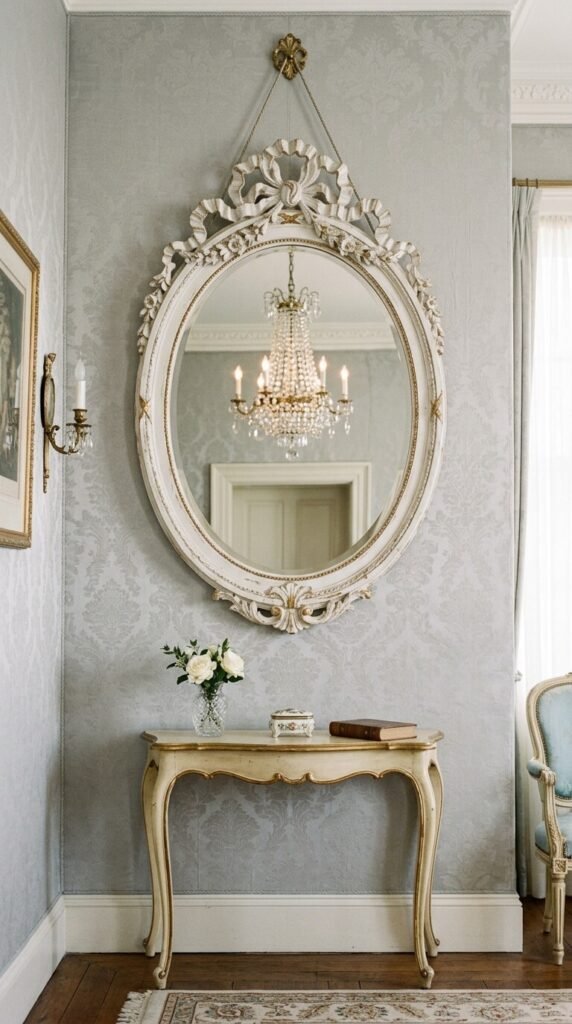
Oval mirrors with carved frames bring French elegance to any room.
The Louis XVI style is softer than Baroque — think ribbons, laurel wreaths, and bow motifs instead of heavy scrolls. The shapes are more refined and restrained.
Look for these at French antique dealers or online vintage shops. Reproductions are widely available and often beautifully made for $60–$120.
They work best in formal living rooms, dining rooms, or above a dressing table. Pair with pale walls and crystal lighting.
7. The Tarnished Silver Leaf Mirror
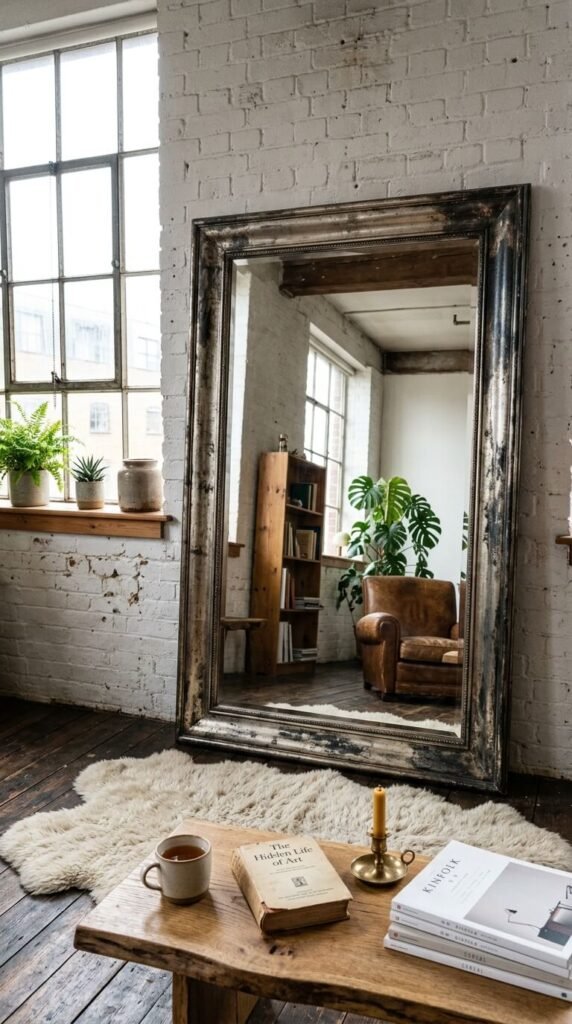
Silver leaf mirrors feel cooler and more modern than gold — but still unmistakably vintage.
The tarnish on aged silver leaf creates a moody, shifting surface that catches light differently throughout the day. No two pieces look identical.
These show up in estate sales and online marketplaces regularly. Budget around $50–$180 for a genuine piece. To DIY, apply silver leaf over a primed frame, then use a dark furniture wax to age it.
Silver works especially well in grey, navy, and white color schemes.
8. The Art Nouveau Floral Mirror
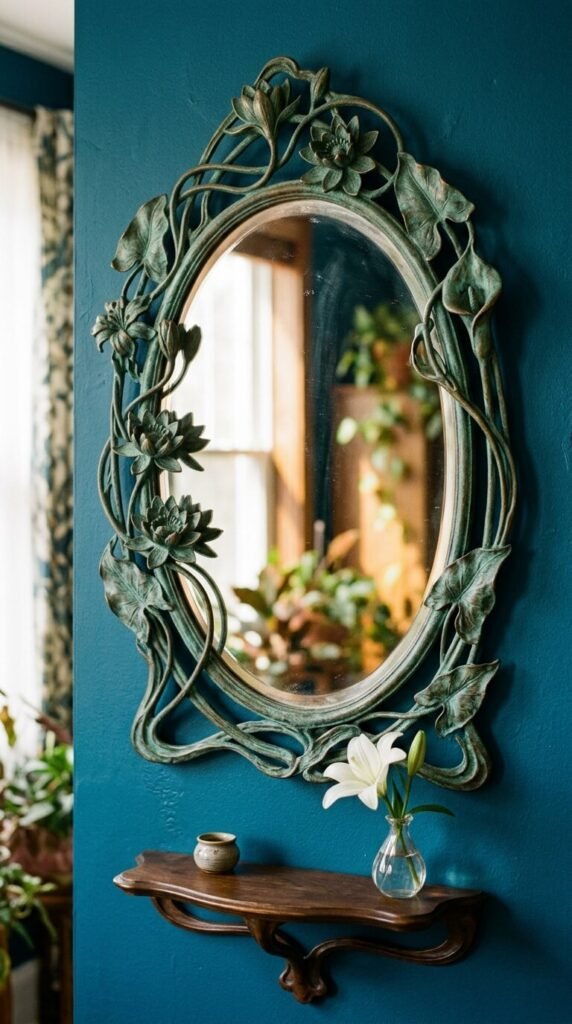
Art Nouveau frames look like they grew out of the wall.
The designs pull directly from nature — lily stems, dragonfly wings, flowing hair, water ripples. Nothing is straight or rigid. The frame itself is the art.
Cast metal or carved wood pieces from this era (roughly 1890–1910) are collector’s items. Expect $100–$400 at serious antique dealers.
Affordable cast resin reproductions exist and look convincing with a light patina finish applied by hand. Display in a reading nook or bedroom for a romantic, organic touch.
9. The Reclaimed Wood Plank Mirror
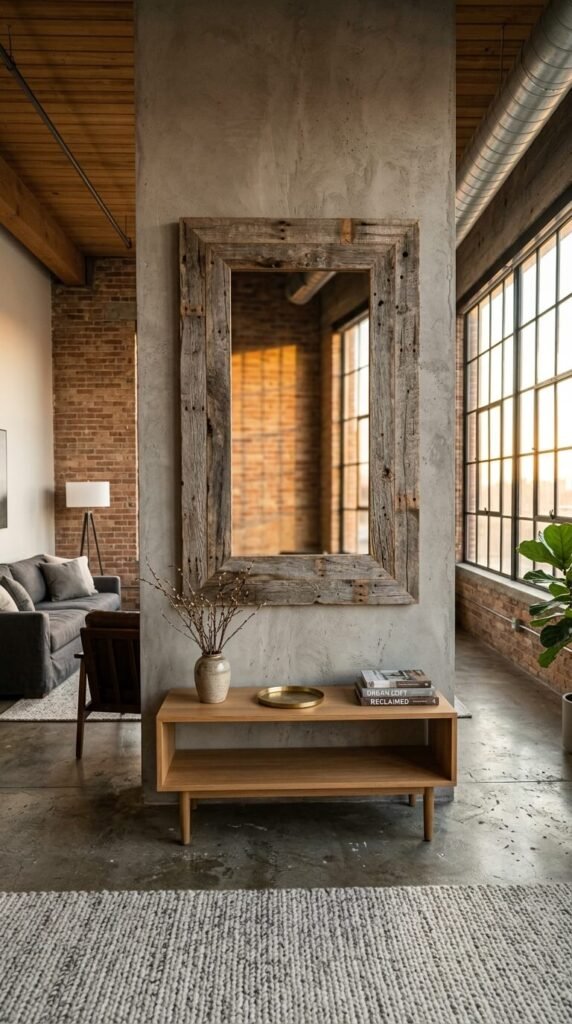
Reclaimed wood frames bring outdoor texture indoors.
Old barn wood, pallet slats, or salvaged floorboards create deeply textured frames with built-in character. Each board has history — nail holes, saw marks, weathered grain.
This is one of the easiest DIY projects for vintage mirror lovers. Buy a basic frameless mirror ($15–$30), cut wood scraps to size, and attach with construction adhesive. Total cost: under $40.
These look stunning in industrial lofts, cabins, and modern farmhouse spaces.
10. The Gilded Rococo Mirror
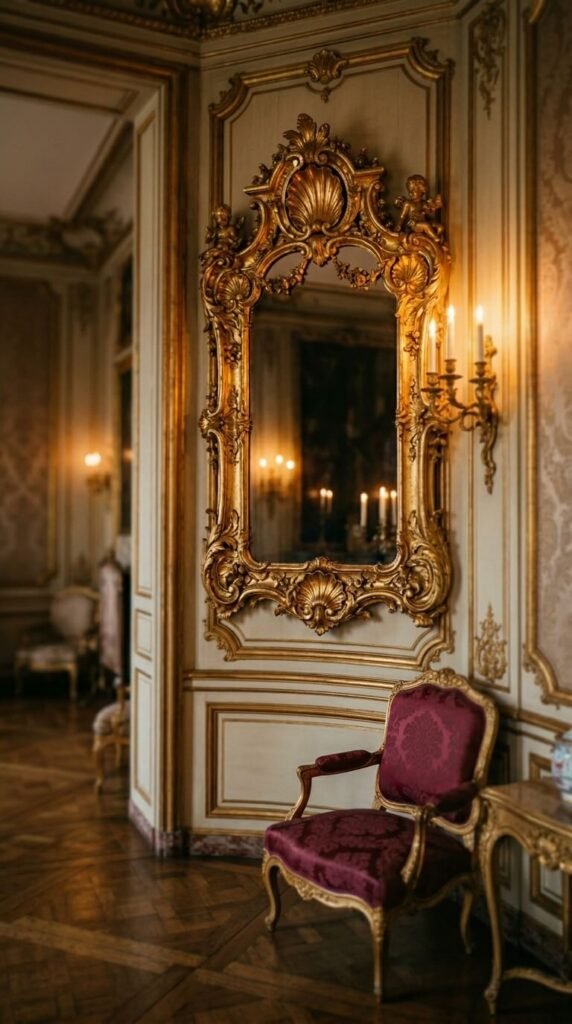
Rococo goes further than Baroque — it’s deliberately asymmetrical and almost theatrical.
Frames feature shells, C-curves, foliage, and whimsical creatures that tumble and twist around the glass. The overall shape is rarely a simple rectangle.
These are showpieces. Authentic 18th-century pieces fetch thousands, but beautifully crafted reproductions exist for $150–$400.
Place in a formal dining room or grand entryway. Don’t overcrowd with other décor — let the mirror be the conversation.
11. The Distressed Black Iron Mirror
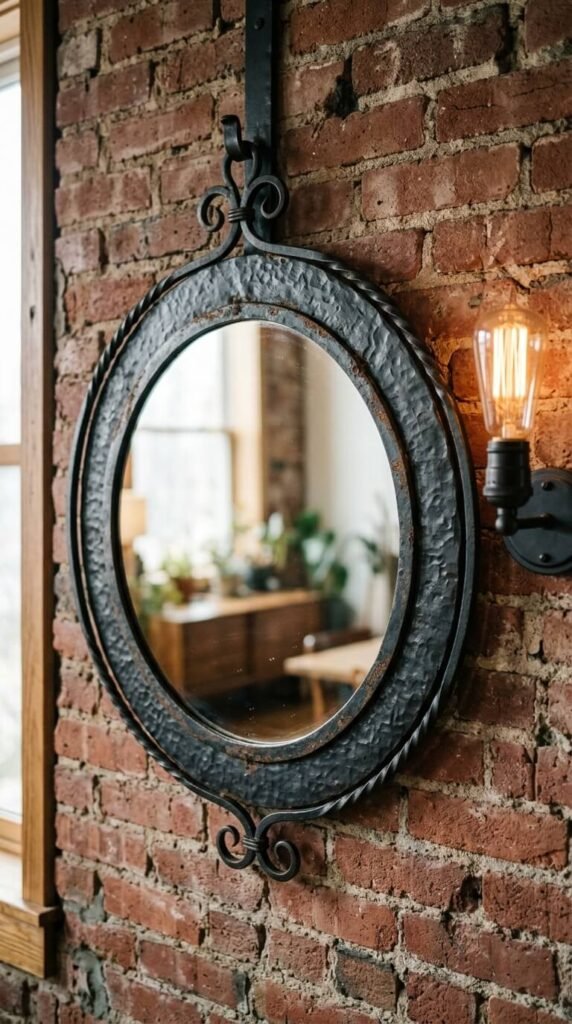
Wrought iron mirrors carry industrial strength with vintage soul.
The hand-hammered texture of forged iron frames shows real craftsmanship — irregular, slightly rough, genuinely made by hand. Rust patches add authenticity rather than damage.
Look for these at architectural salvage stores or garden antique markets. Prices range from $30–$150 depending on size.
They work especially well in industrial-style spaces, rustic kitchens, or outdoor-adjacent rooms like sunporches. Pair with exposed brick and leather for maximum effect.
12. The Gilded Bamboo Chinoiserie Mirror
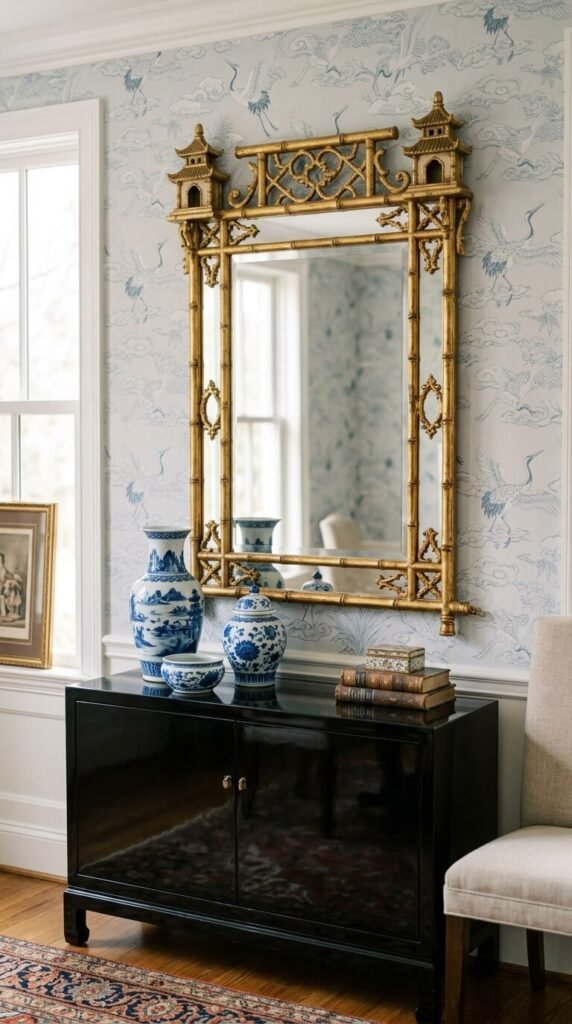
Faux bamboo frames with gilded finishes sit in a unique cultural crossroads.
The frame mimics real bamboo joints and nodes in carved wood, then lacquers them gold or cream. Small pagoda finials and chinoiserie details complete the look.
These were especially popular in the 18th century and again in the mid-20th century. Thrift stores occasionally yield these for $25–$60.
They pair beautifully with blue and white ceramics, lacquered furniture, and silk textiles in any room of the house.
13. The Aged Trumeau Mirror
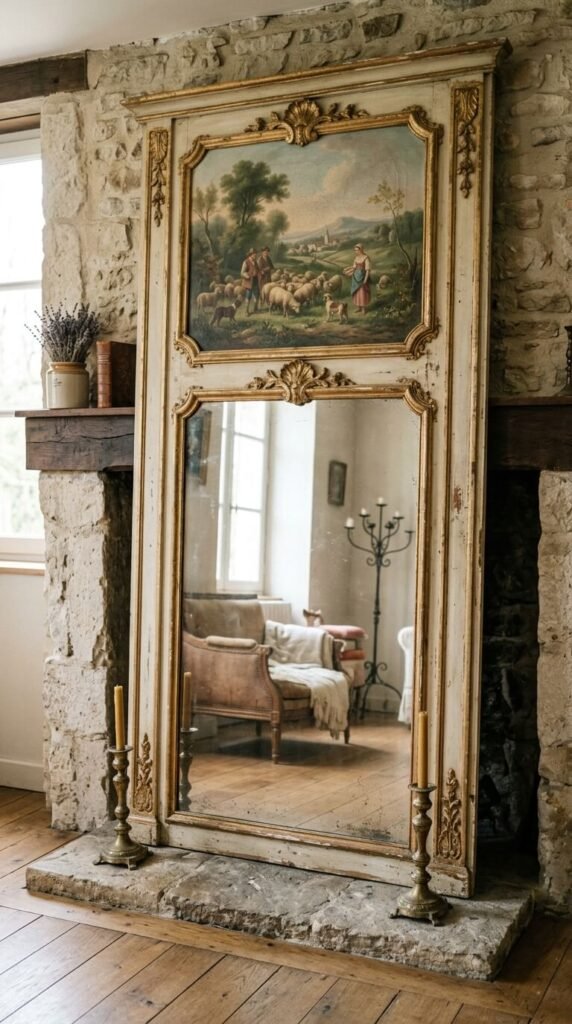
Trumeau mirrors are half mirror, half painting — a uniquely French concept.
The top panel holds a painted scene — landscapes, pastoral figures, architectural views — while the mirror glass occupies the lower half. Together they form a single decorative panel.
Genuine antique trumeaux are statement investments ($300–$1,500), but quality reproductions exist for under $200.
These work beautifully above fireplace mantels or as a focal point in a formal sitting room. The painted panel draws the eye up and adds a narrative element.
14. The Convex Bullseye Mirror
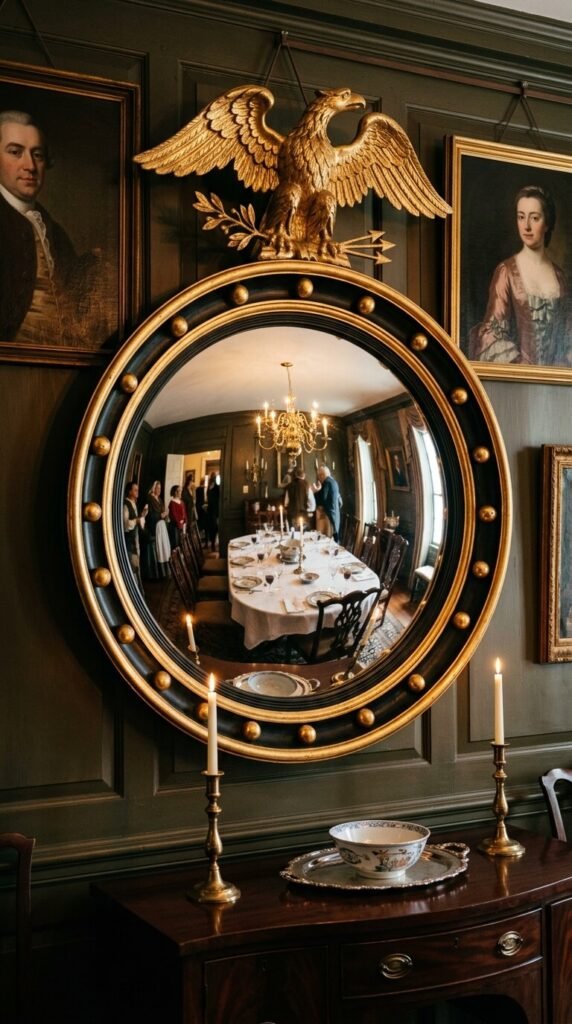
Convex mirrors distort the reflection — and that’s exactly what makes them interesting.
The curved glass captures a wide-angle view of the room in miniature. An ornate eagle crest, ebonized frame, and gold ball ornaments complete the traditional Federal style.
These were status symbols in the early 19th century. Antique versions run $150–$500. Good reproductions are available for $60–$120.
Hang at eye level in a dining room or library. The circular silhouette breaks up rectangular furniture arrangements naturally.
15. The French Gilt Oval Vanity Mirror
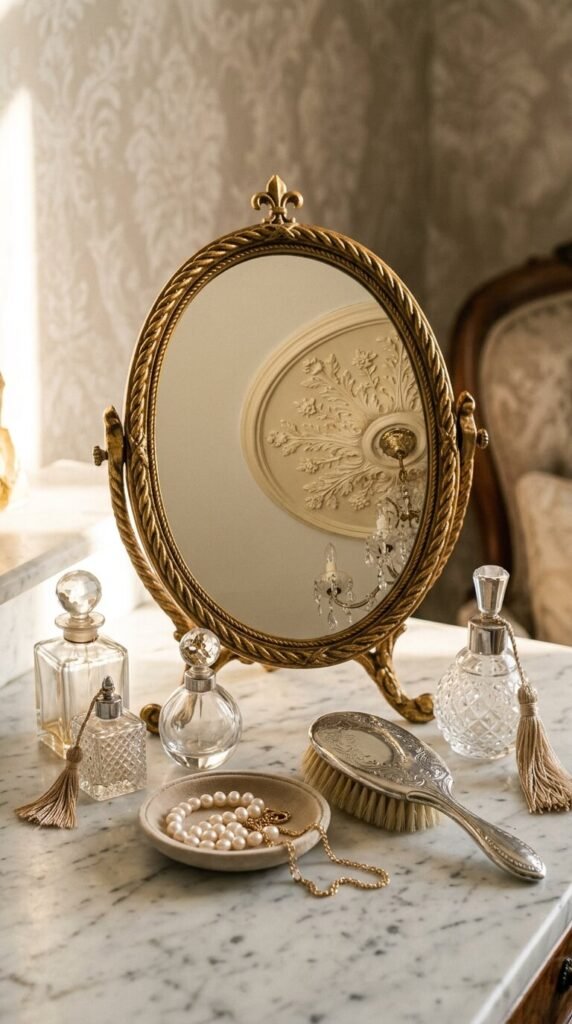
A small oval vanity mirror on a dressing table is one of the most personal décor choices.
The rope-twist or ribbon frame in gilt plaster or wood feels tactile and hand-crafted. Proportions are intimate — these mirrors are meant to be held or placed, not hung.
Find them at flea markets for $10–$40. They need little restoration — just a soft cloth clean and maybe a touch of gold wax pen on chips.
Style with crystal bottles, silver brushes, and small flowers for a genuine vintage dressing table moment.
16. The Gothic Arch Mirror
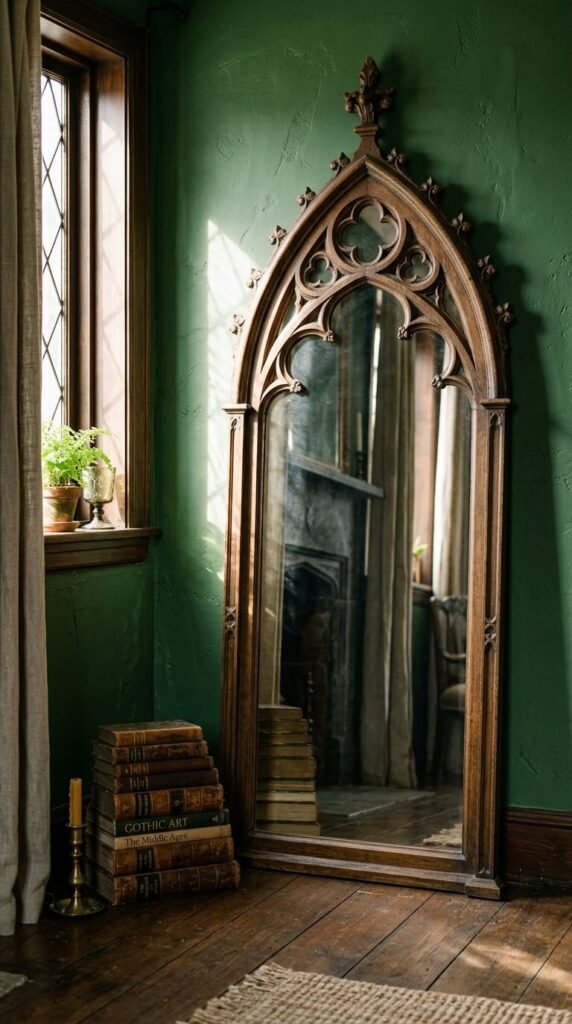
Gothic arch mirrors bring architectural drama to a wall.
The pointed arch silhouette references cathedral windows — tall, serious, and quietly spiritual in feeling. Slim dark wood frames keep the look structural rather than decorative.
These are among the easiest shapes to DIY. Buy a frameless arch mirror, then build a simple painted wood frame around it. Total materials: $25–$50.
They look best leaning against a wall in a bedroom or reading room. The vertical line makes ceilings feel higher instantly.
17. The Mercury Glass Foxed Mirror
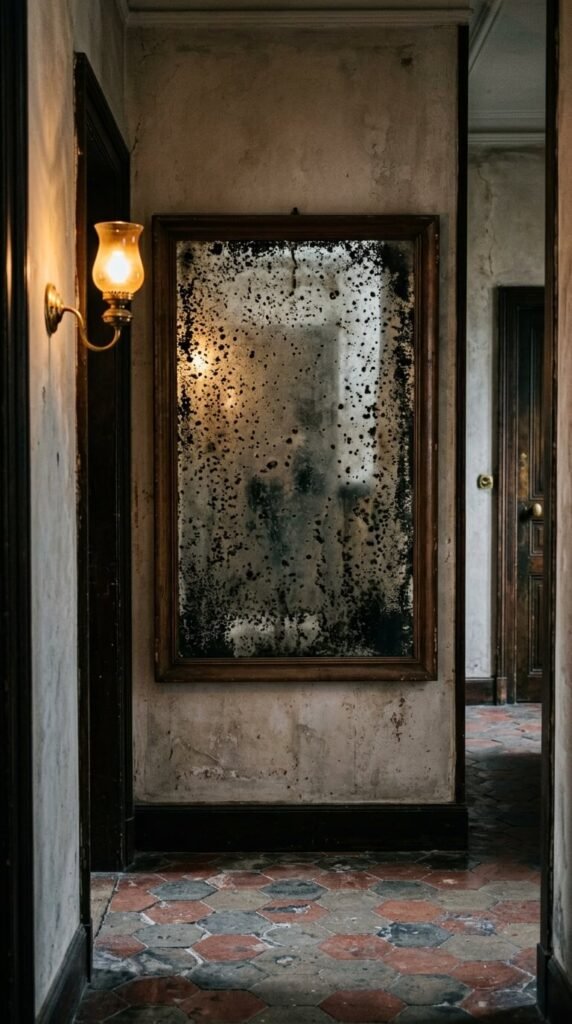
Foxed mercury glass is one of the most atmospheric effects in vintage décor.
As old mirror backings deteriorate, dark spots and cloudy patches spread across the surface. The reflection becomes partial, dreamlike, and layered. It looks like time itself is visible in the glass.
You can create this effect on a new mirror using a vinegar spray technique — lightly mist the silver backing after removing it, then reseal. Tutorials are widely available online.
These mirrors work best in hallways, powder rooms, and any space where mystery is welcome.
18. The Regency Giltwood Pier Mirror
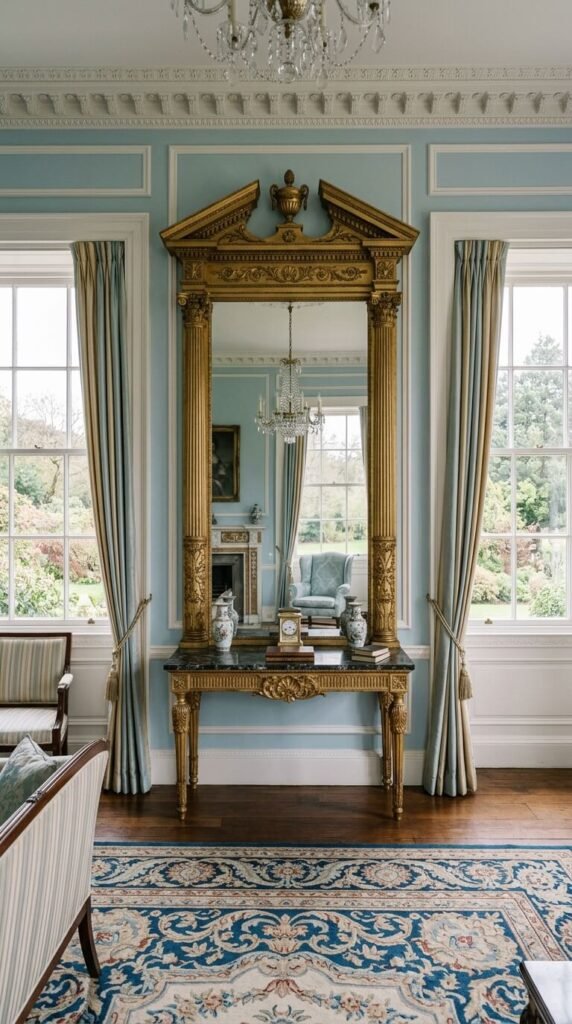
Pier mirrors were designed for a specific architectural purpose — to hang between windows.
The tall, narrow proportions fill exactly the space between two window frames, catching and bouncing light across the room. Regency versions feature pilasters, pediments, and restrained gilding.
Authentic pier mirrors are genuine antiques worth investing in ($300–$2,000 at auction). Reproductions fill the gap for around $150–$400.
They work best in formal living rooms with good natural light. The design multiplies daylight beautifully.
19. The Bohemian Mosaic Mirror
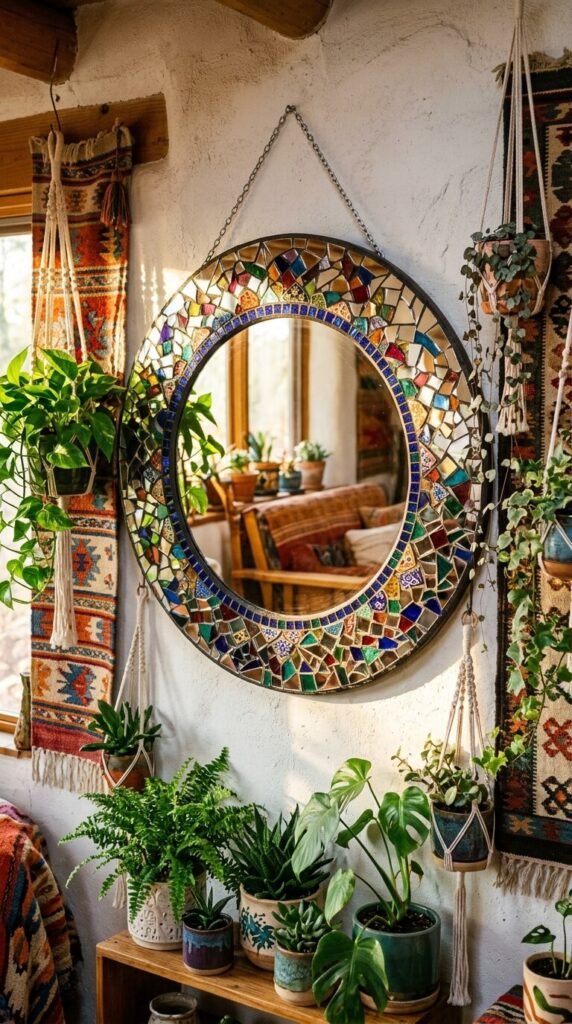
Mosaic mirrors are unapologetically handmade and joyful.
Small pieces of mirror tile, colored glass, and ceramic shards are set into grout around a central mirror. Each piece catches light differently — the whole thing sparkles.
This is a genuinely beginner-friendly DIY project. Start with a basic round mirror ($10–$20), add tile adhesive and broken mirror or tile pieces, then grout. Total cost: $25–$50.
These work in bohemian living rooms, outdoor spaces, and any room that could use more life and color.
20. The Ornate Picture Frame Mirror
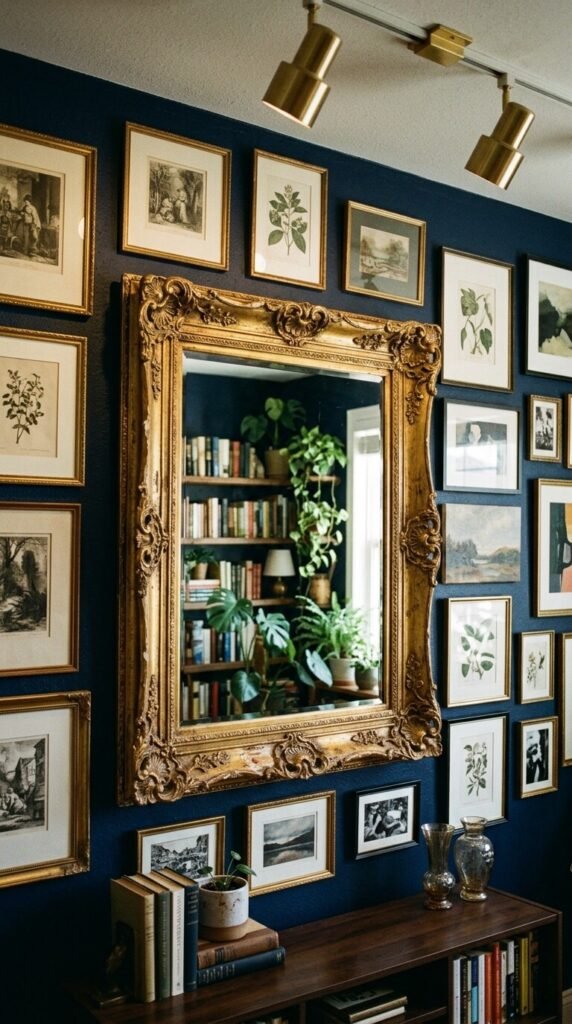
One of the cleverest vintage tricks: old picture frames become mirrors.
Ornate picture frames — especially large oil painting frames — can be fitted with custom-cut mirror glass from any glass shop. The result looks intentional and genuinely antique.
Frames are easy to find at thrift stores for $5–$30. Mirror glass cut to size costs $20–$50 depending on dimensions. Total investment stays well under $100 for a stunning piece.
Hang in a gallery wall arrangement or alone as a focal point.
21. The Dressing Room Triple Mirror
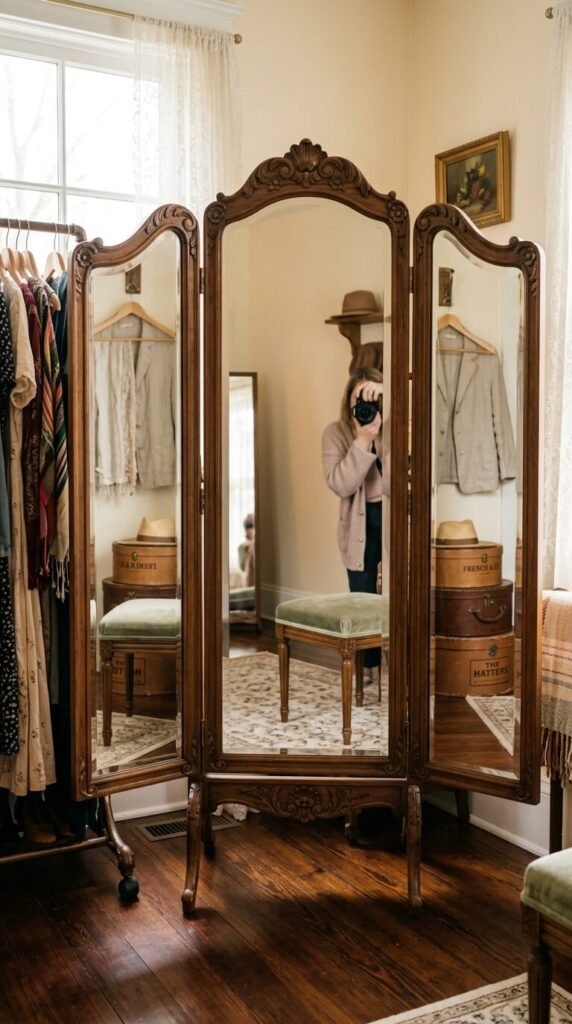
A triple-panel dressing mirror is both functional and deeply nostalgic.
Three hinged panels — one central, two angled — let you see all sides at once, the way tailors and seamstresses have worked for centuries. Walnut or mahogany frames are the most common.
These show up regularly at estate sales and antique shops, priced $80–$250 depending on condition. Tightening the hinges with a screwdriver is often the only repair needed.
Place in a dressing room or bedroom corner. They add architecture and purpose simultaneously.
22. The Shell and Coral Mirror
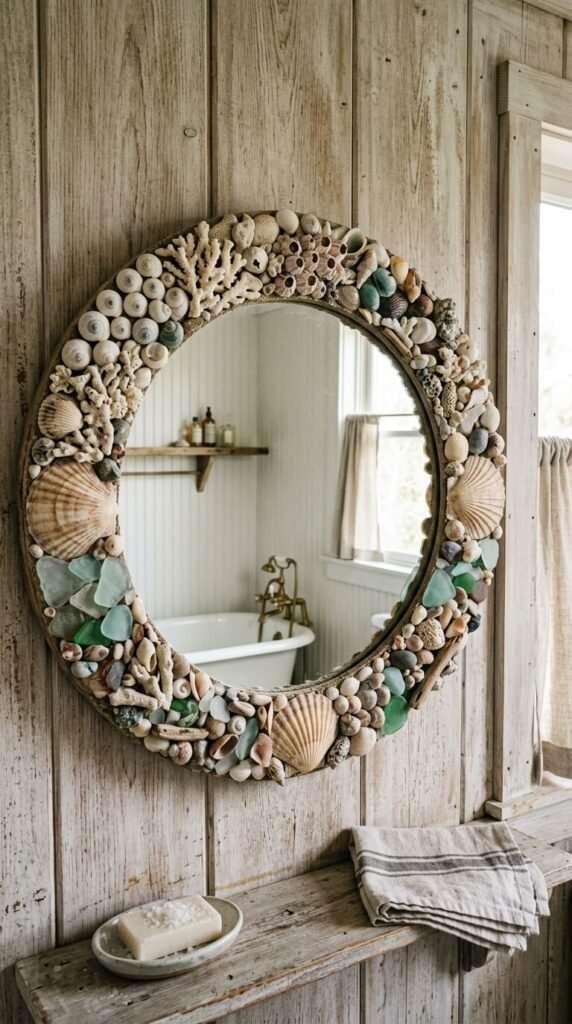
Shell mirrors channel the texture and romance of the sea.
Real shells, coral fragments, and sea glass are pressed into adhesive or grout to cover the frame completely. The result is dense, textural, and deeply personal — especially if you collect the shells yourself.
DIY cost is minimal if you gather materials from beaches. A base frame ($10), adhesive ($8), and collected shells make a unique piece for almost nothing.
These belong in beach cottages, coastal bathrooms, and any room where you want to feel the ocean nearby.
23. The Tapestry-Framed Wall Mirror
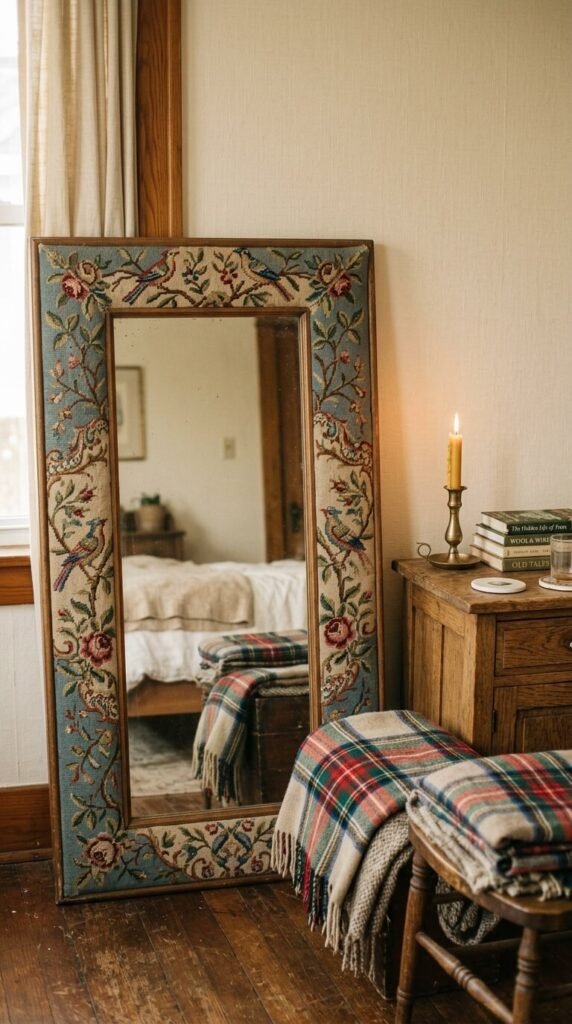
Tapestry-covered frames sit at the intersection of textile and furniture traditions.
Old needlepoint or tapestry fabric — pulled from a fire screen, a pillow, or a vintage panel — is stretched over a flat frame and sealed with fabric adhesive. The result is unlike anything you can buy new.
Hunt for vintage needlepoint at thrift stores for $3–$15. A basic wood frame costs $10–$20. Assembly takes an afternoon and basic craft supplies.
Display in a bedroom or sitting room where soft textures are already layered.
24. The Industrial Pipe Frame Mirror
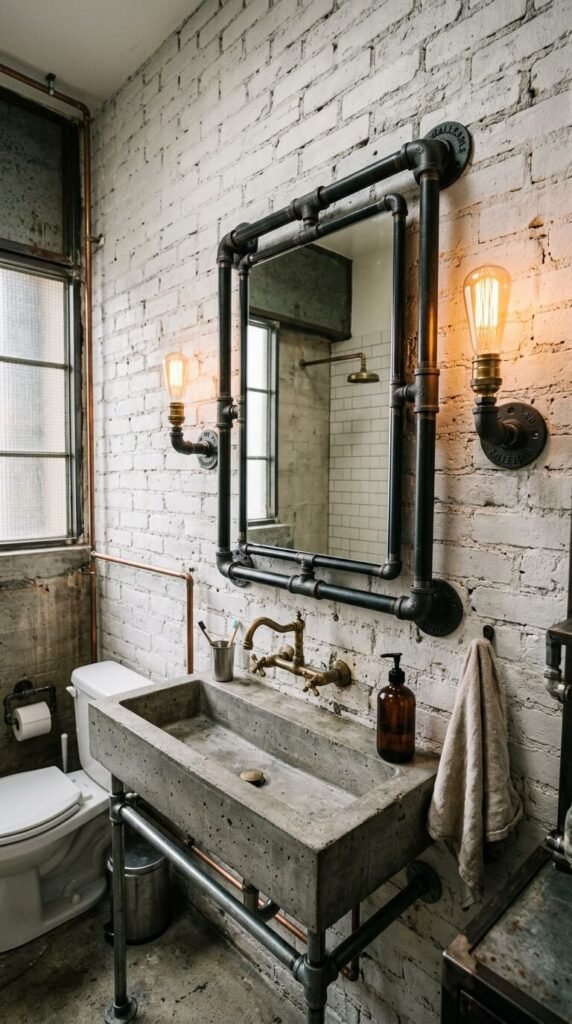
Pipe frame mirrors take industrial materials and make them deliberately decorative.
Black steel pipe, flanges, and fittings normally used for plumbing get assembled into a frame around a frameless mirror. The hardware store becomes your design source.
This is a popular DIY for good reason — total materials cost $30–$60, and assembly requires just a wrench and pipe sealant. Full tutorials exist on every major DIY platform.
These look sharp in industrial bathrooms, garage workshops turned home offices, and loft apartments.
25. The Wicker and Rattan Mirror
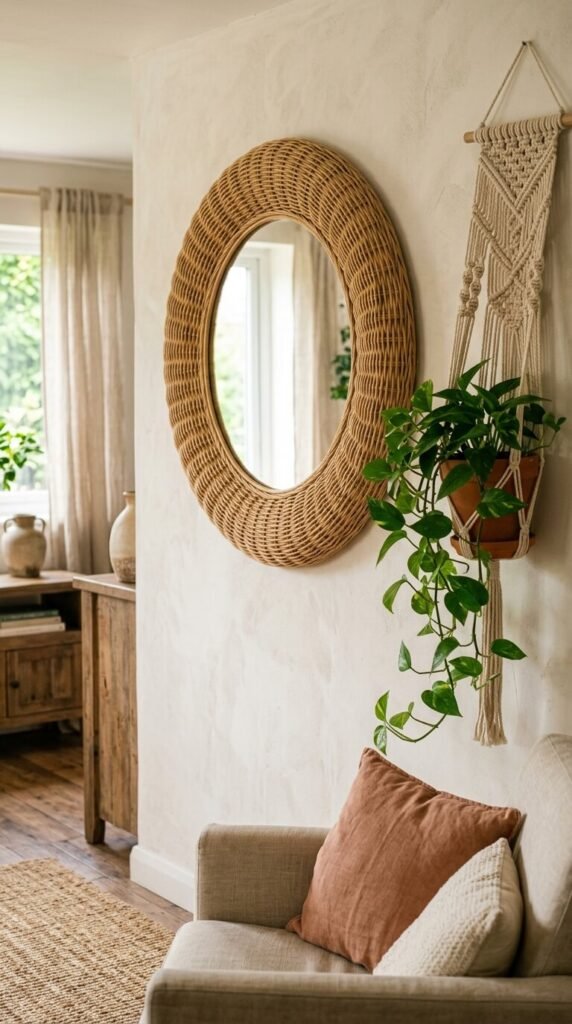
Rattan and wicker mirrors bring natural warmth without weight.
The woven fiber frame is lightweight, tactile, and naturally warm in color. Round shapes are most common and most popular — the circular form softens any wall.
These are widely available at import home goods stores for $25–$80, and they’re among the easiest vintage-adjacent pieces to find affordably new.
Hang in living rooms, bedrooms, or sunrooms. They pair especially well with linen, cotton, and other natural textiles throughout the space.
26. The Antique Hand Mirror Wall Display
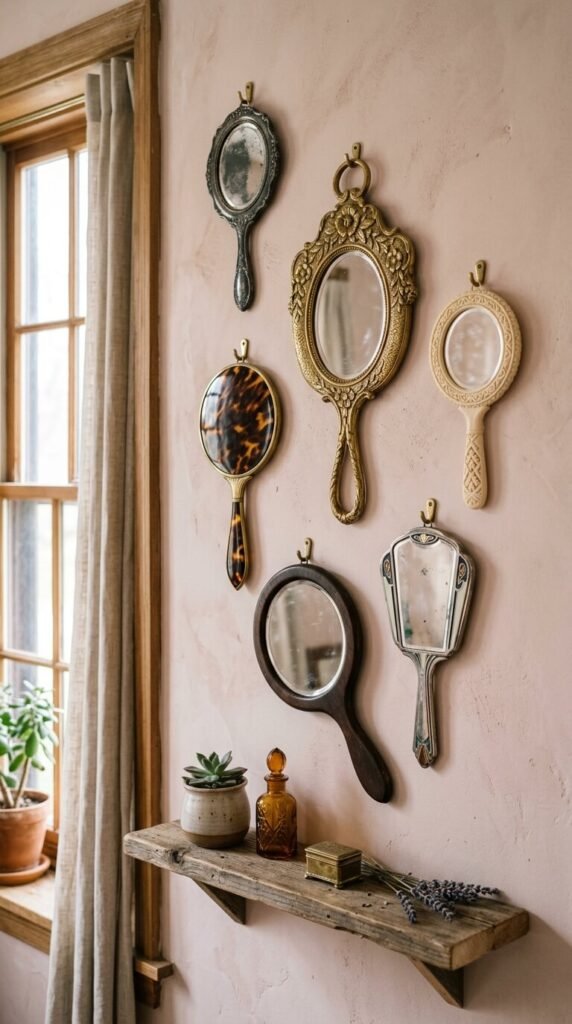
A gallery wall made entirely of antique hand mirrors is an unexpected and personal choice.
Mix frames freely — silver plate, tortoiseshell, carved wood, gilded brass — in different sizes and shapes. The variety is what makes it work.
Start collecting at thrift stores and flea markets for $3–$20 per piece. Arrange on the floor first before committing nails to the wall.
Group in a bedroom, bathroom, or hallway. The effect is more intimate than a single large mirror and tells a story of patient collecting over time.
27. The Painted Chinoiserie Lacquer Mirror
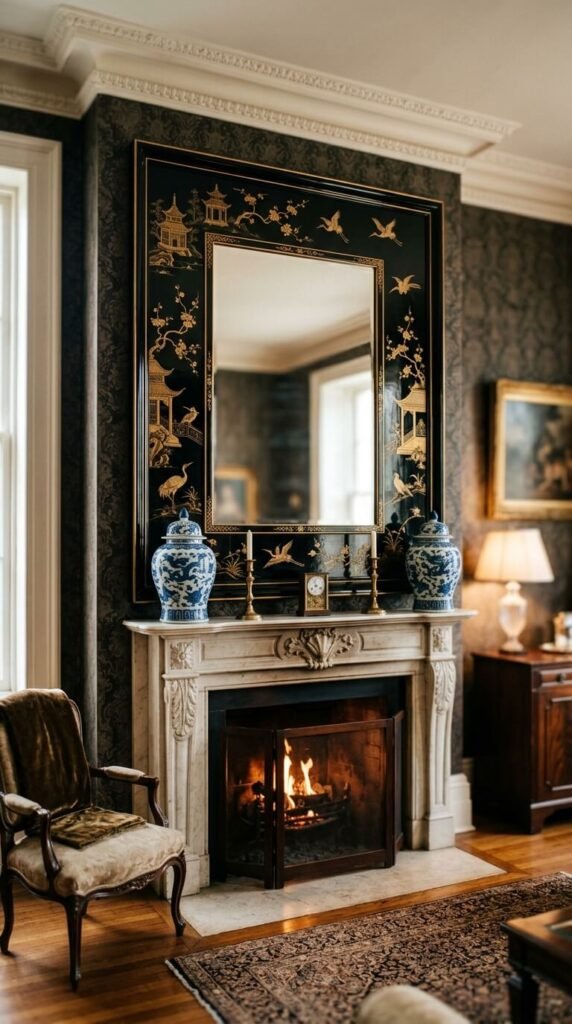
Lacquered frames with hand-painted chinoiserie decoration are rare and deeply striking.
Black lacquer acts as a background for delicate gold-painted scenes — pagodas, cranes, flowering prunus branches, and distant mountains. The contrast is sharp and arresting.
Genuine antique pieces command high prices ($400–$2,000+). For a DIY version, paint a wide flat frame with black chalk paint, seal it, then use a fine brush and gold craft paint to add simple motifs.
Place above a fireplace or in a formal dining room for drama.
28. The Hammered Copper Mirror
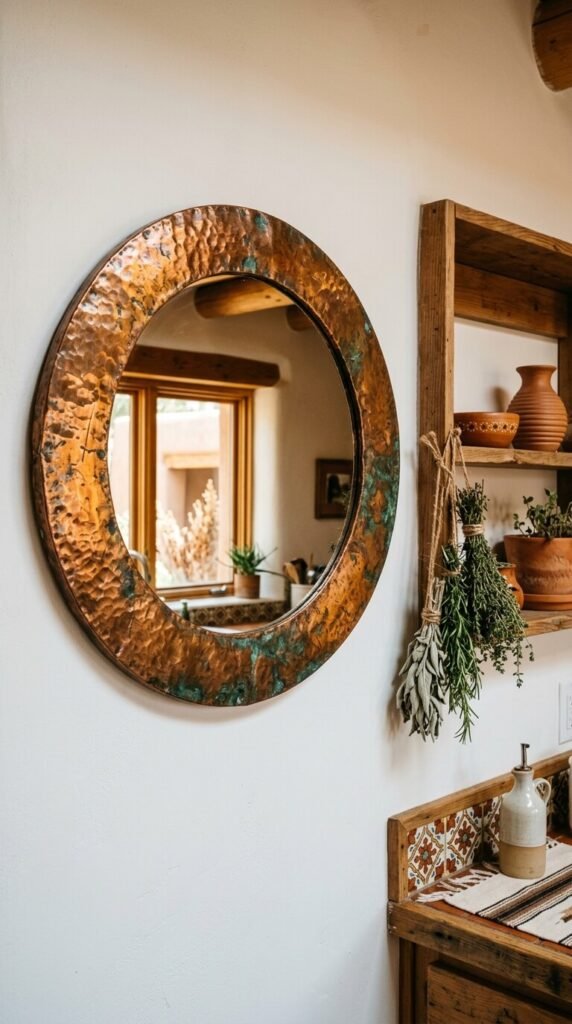
Hammered copper frames age in a way no other metal quite matches.
As copper oxidizes naturally, it shifts from bright penny-orange through warm amber into green verdigris patches. Each mirror ends up looking unique over time — the aging is the design.
Look for these at Southwestern gift shops, import stores, or Mexican folk art dealers. Prices range from $40–$150.
They work especially well in kitchens, bathrooms, and spaces with terracotta, adobe, or warm earthy tones. Don’t seal the copper — let it keep aging.
29. The Leaning Floor Mirror with Carved Frame
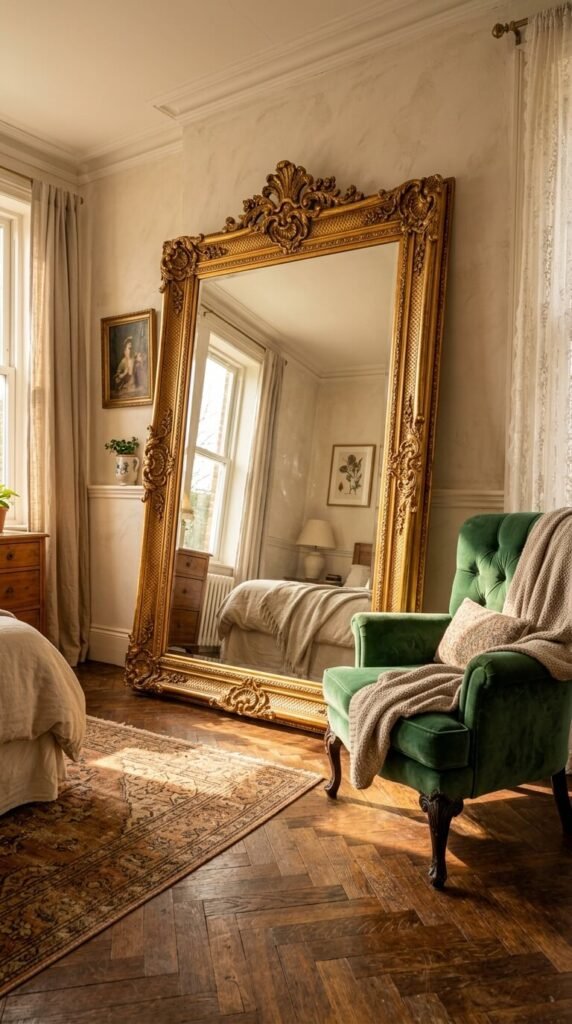
A large leaning floor mirror in an ornate frame is the ultimate vintage statement piece.
The sheer scale changes a room — it adds height, depth, and reflected light all at once. Leaning (rather than hanging) makes it feel casual and deliberate at the same time.
These are among the most commonly found antique pieces at estate auctions. Budget $100–$400 for a genuinely old frame in good condition.
Place in a bedroom corner, dressing room, or living room wall. Add a small rug beneath the base to keep it from sliding and complete the styled look.
Conclusion
Ornate vintage mirrors are one of the most rewarding things to collect and style. They bring history, light, personality, and scale to any space — and they rarely cost as much as people assume. Whether you’re hunting a Baroque gilded frame at an estate sale, building a reclaimed wood border around a thrift store find, or slowly gathering antique hand mirrors for a gallery wall, the process is half the pleasure. Start with one piece that genuinely speaks to you. Learn where it came from. Figure out the right wall. Then let it work. A good vintage mirror doesn’t just reflect the room — it reflects the eye of the person who chose it.