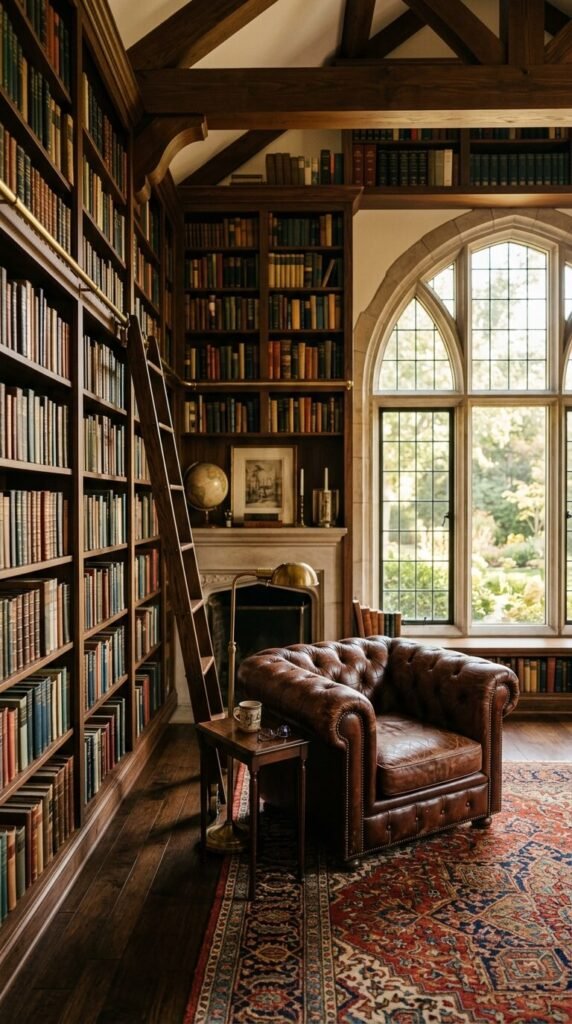
Your book collection deserves more than a shelf. It deserves a space that breathes with the same quiet intelligence those books carry. A scholarly aesthetic library is part sanctuary, part identity — a room that says something before you even open a cover. Whether you have a spare bedroom, a narrow hallway, or just one deep wall, the right design choices can turn it into something extraordinary. This guide walks you through 30 specific, achievable ideas — from lighting to ladders, color to carpets — to help you build the library of your dreams on any budget.
1. Floor-to-Ceiling Built-In Shelving
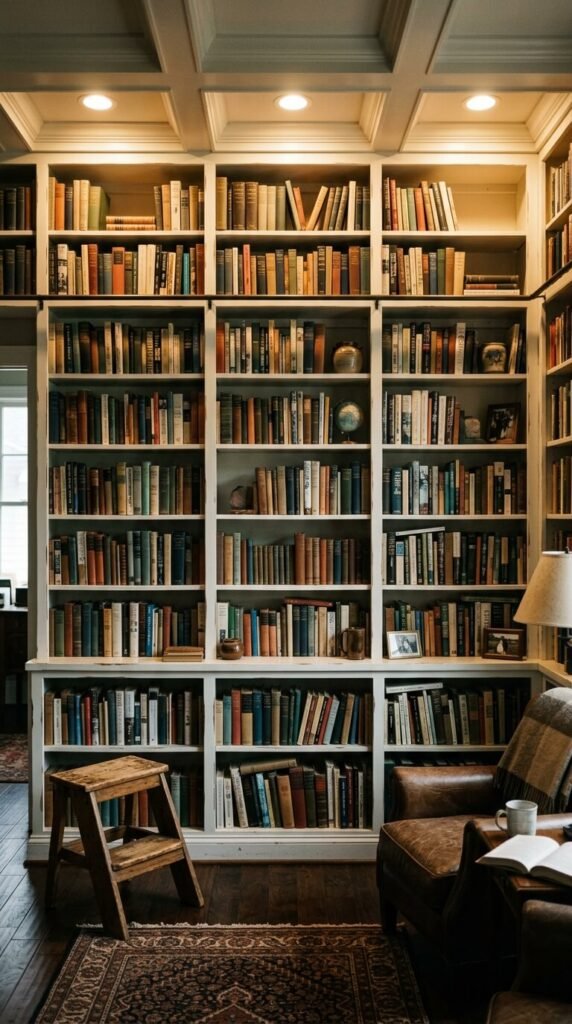
Built-ins make a room feel intentional. They transform a wall into a statement. You don’t need a contractor for this. IKEA Billy bookcases trimmed with crown molding and painted to match the wall create a convincing built-in look for under $500. Fill them tight. Sparse shelves look accidental; full shelves look purposeful. Leave a small section for objects — a globe, a candle, a framed print. The rest? Books, spines out, all the way up.
2. The Rolling Library Ladder
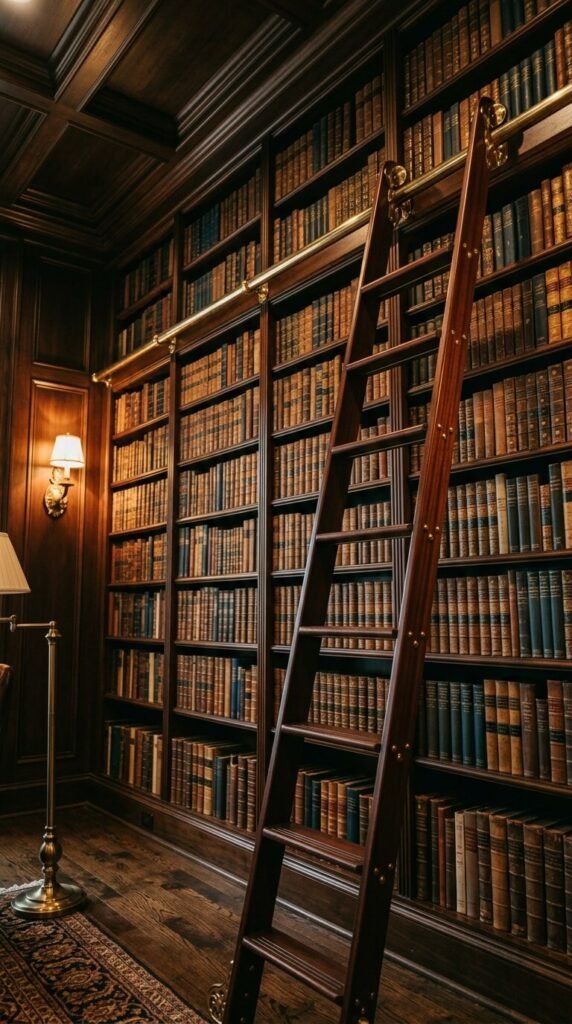
Nothing signals “serious library” quite like a rolling ladder. It’s functional and theatrical at once. Library ladders on rail systems can be sourced from specialty retailers like Rockler or House of Antique Hardware for $300–$800 depending on wood and finish. DIY versions using closet rod hardware exist for half that. Pair a dark walnut ladder with brass hardware for a classic look. Paint it matte black for something more modern. Either way, it earns every inch of the room it occupies.
3. Deep, Dark Paint Colors on the Walls
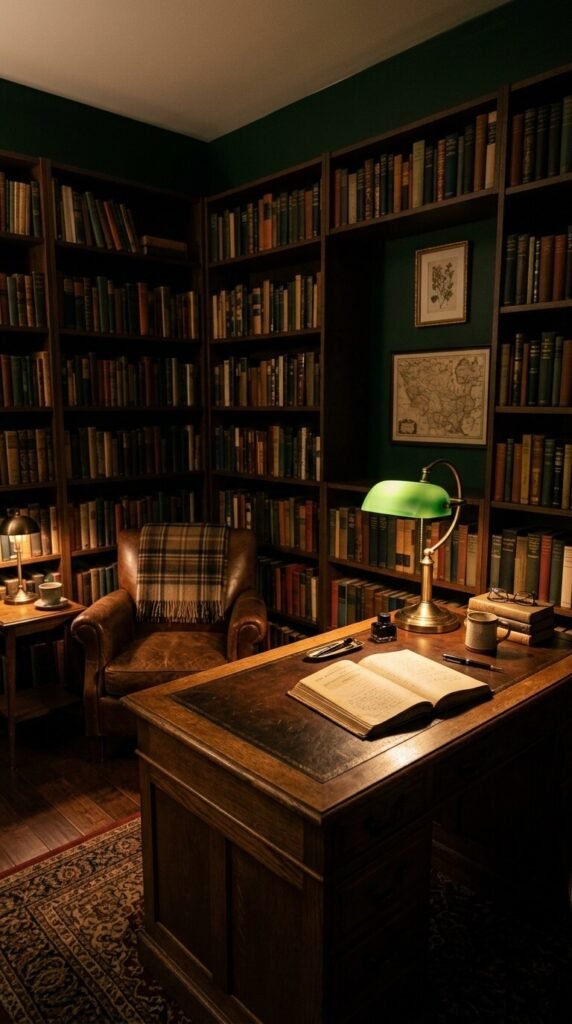
Dark walls make books pop. Forest green, navy, oxblood, and charcoal are the gold standard for scholarly library aesthetics. They absorb light in a way that makes the room feel like a refuge. Don’t fear the darkness — a small room painted deep green feels like a jewel box, not a cave. Use eggshell or satin finish for slight light reflection. Test a large swatch before committing. One gallon of quality paint costs $50–$70 and changes everything.
4. A Proper Reading Chair with Ottoman
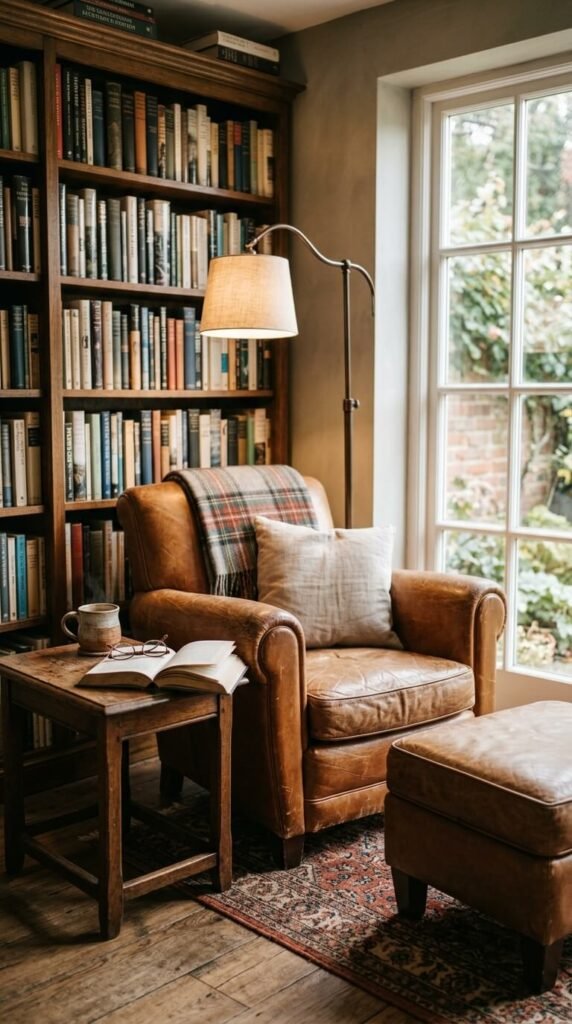
The reading chair is the heart of any library. It should feel like it’s been there for decades. Look for club chairs, wingbacks, or Chesterfield-style armchairs in leather or bouclé fabric at thrift stores, estate sales, or Facebook Marketplace. A good chair for $80 reupholstered in a rich fabric becomes something special. Pair it with an ottoman at the right height. Add a side table within arm’s reach. This corner becomes the room’s gravitational center.
5. Brass and Antique Gold Lighting Fixtures
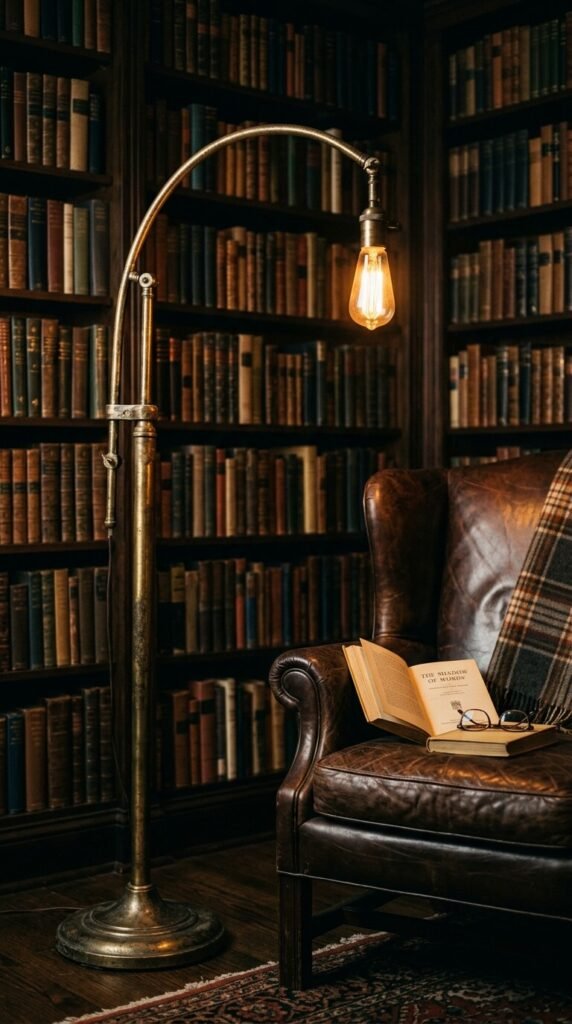
Lighting sets the entire mood. Brass and antique gold fixtures — floor lamps, sconces, picture lights — create that warm, amber glow associated with old institutions and private studies. Avoid cold white LEDs. Use 2700K warm bulbs in Edison or globe styles. Plug-in sconces mounted between shelves require no electrician. Clip-on brass picture lights above artwork or maps cost $30–$60 each. The goal is pools of warm light, not uniform brightness.
6. A Dedicated Writing Desk
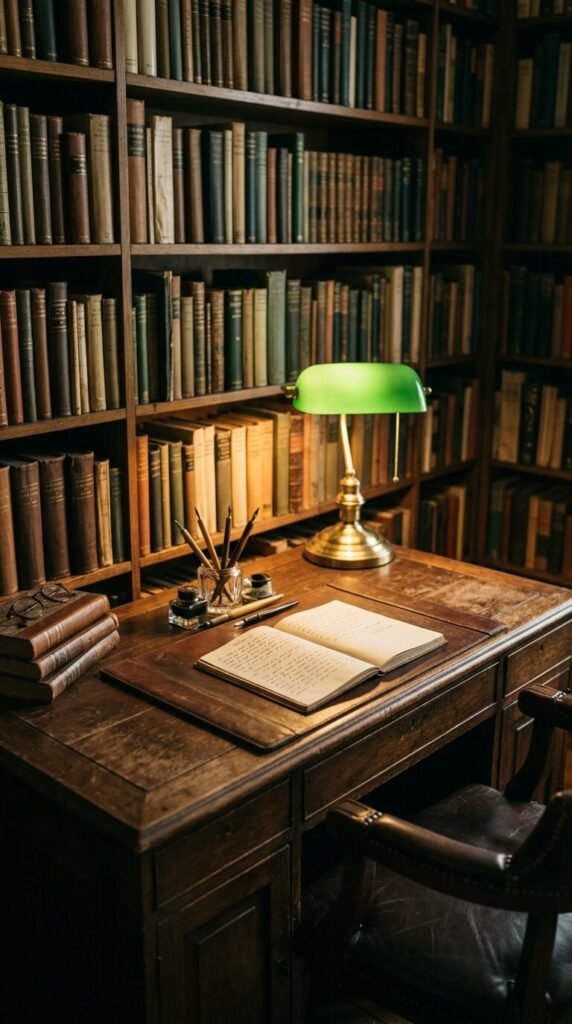
Every proper library has a place to write. A desk anchors the room with purpose. Roll-top desks, secretaries, and flat-top partners desks all work beautifully. Thrift and antique stores are full of solid wood desks for $50–$200. Pair yours with a green-shaded banker’s lamp — the most iconic library accessory in existence, available new for $40–$80. A leather desk pad ($25–$50) completes the look. Keep the surface curated: a pen cup, a notebook, one lamp. Resist clutter.
7. Organizing Books by Color
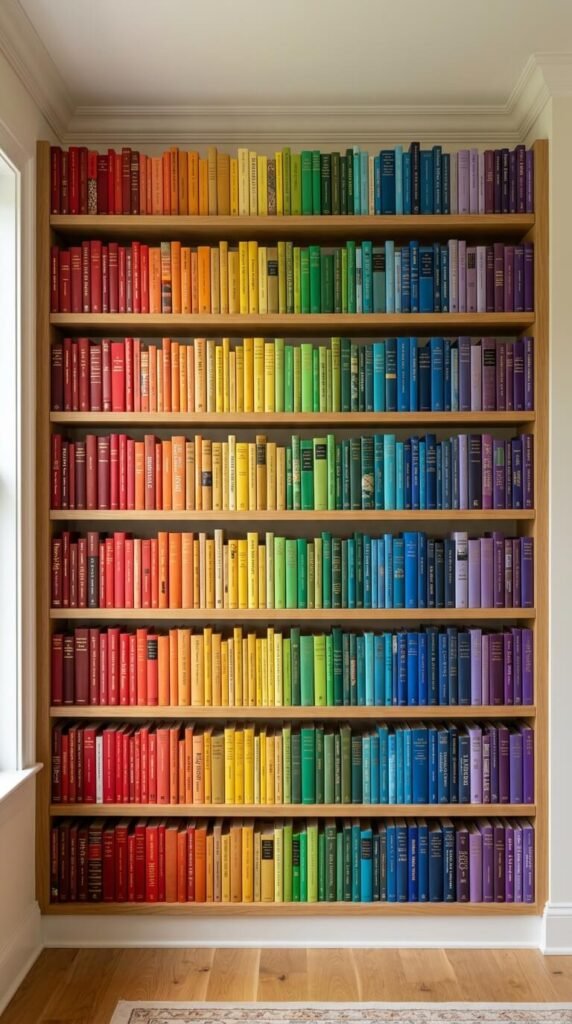
Color-organizing your books is controversial among serious readers but undeniably striking. It turns shelves into living gradients. You don’t have to sacrifice findability — group by color within subjects or genres. Or dedicate one visible shelf to a color arrangement purely for aesthetics. It costs nothing. It takes an afternoon. The visual payoff is immediate. Warm tones — red, orange, gold — photograph especially well against dark walls. It’s one of the easiest, fastest ways to transform a shelf.
8. A Vintage Globe or Celestial Map
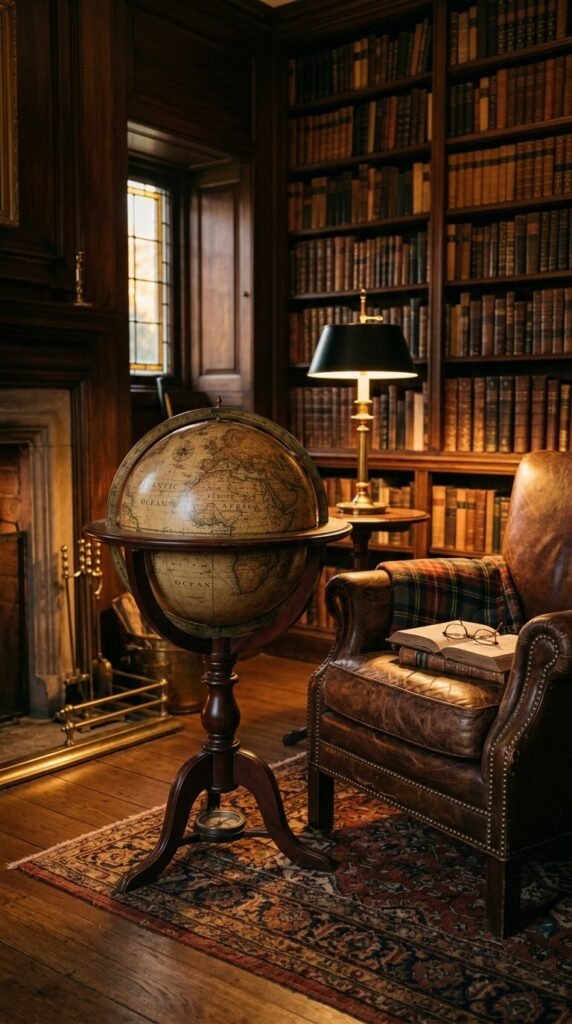
Globes and maps signal intellectual curiosity in a way that few other objects do. A standing globe beside a reading chair or on a shelf feels like it belongs in a private study. Decorative globes start around $40 online. Vintage globes at thrift stores are underpriced — watch for them. Celestial maps and antique-style cartographic prints, framed simply in black or gold, add a similar sense of timeless inquiry. One good map on the right wall completes an entire aesthetic.
9. A Persian or Oriental-Style Rug
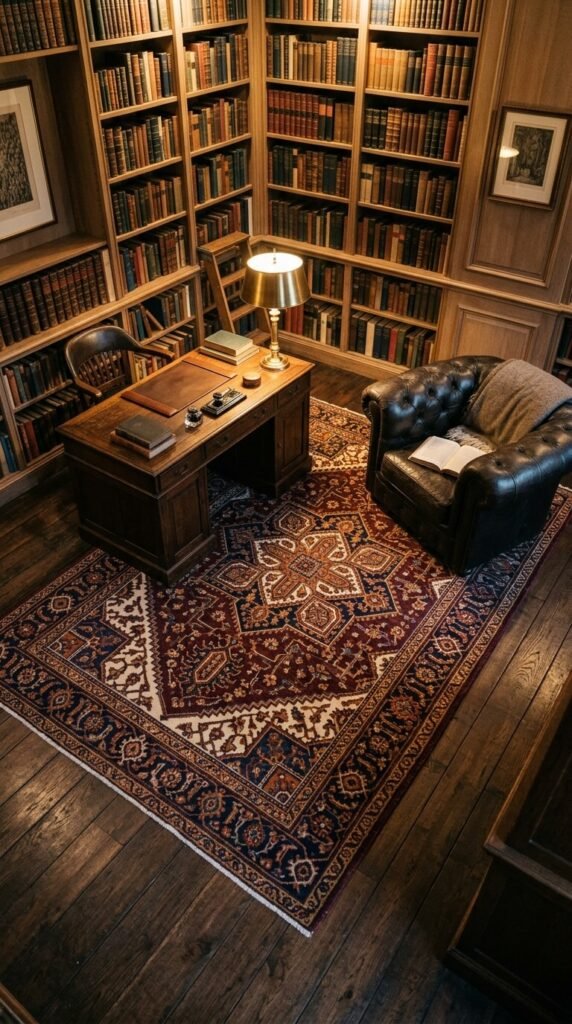
Rugs ground a room. In a library, they define the space and add warmth underfoot. Persian and oriental-style rugs — real or reproduction — bring deep reds, navies, and golds that harmonize perfectly with dark walls and wood. New machine-made reproductions start at $80–$150 for a good 5×8. Vintage hand-knotted pieces from estate sales or eBay can be surprisingly affordable and far more interesting. Look for worn, slightly faded examples — they feel authentic rather than brand-new.
10. Floating Shelves in Alcoves and Awkward Spaces

Not every library lives in a dedicated room. Hallways, alcoves, stair walls, and closets all become library space with floating shelves. A hallway lined floor-to-ceiling with books on both sides becomes a tunnel of ideas — one of the most dramatic library effects possible. IKEA Lack shelves cost $10 each. Solid pine floating shelves from a hardware store, sanded and stained, cost $15–$30 per shelf. Use heavy-duty wall anchors into studs. Books are heavy — mount everything properly.
11. Framed Vintage Book Covers as Art
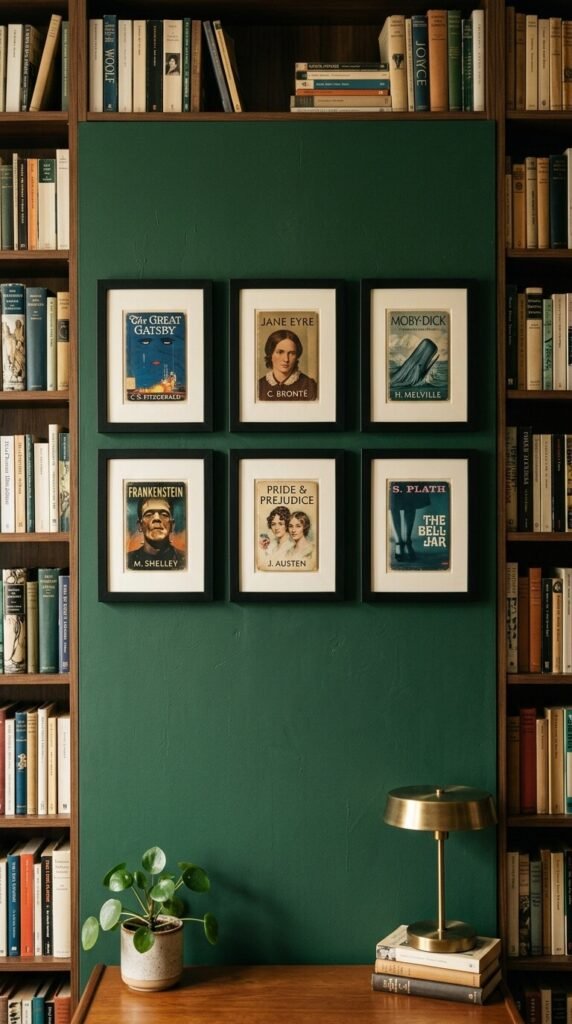
Vintage book cover art is a library-specific decorative genre all its own. First-edition covers from the 1920s–1960s are visually rich — illustrated, typographic, and full of character. Print them for free from public domain sources like the Internet Archive or Project Gutenberg cover galleries. Frame in simple black or gold frames from discount stores. Group them in a tight grid between shelving sections. They connect the art on the wall to the books on the shelves in an elegant, cohesive way.
12. A Library Card Catalog as Storage
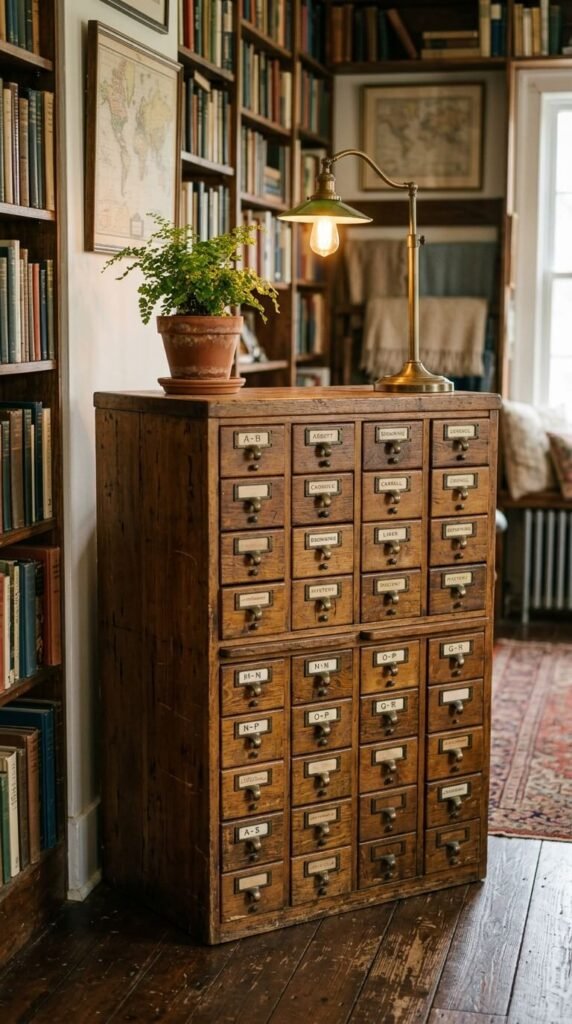
Library card catalogs are functional furniture turned art objects. They store letters, stationery, art supplies, or small keepsakes in those satisfying small drawers. Authentic wooden card catalogs surface regularly at estate sales, library deaccessions, and antique markets for $100–$400 depending on size. They add an immediate layer of institutional authenticity to any library space. Even a small 15-drawer version on a shelf or side table communicates the right message: this is a person who takes information seriously.
13. Leather-Bound or Uniform Book Sets
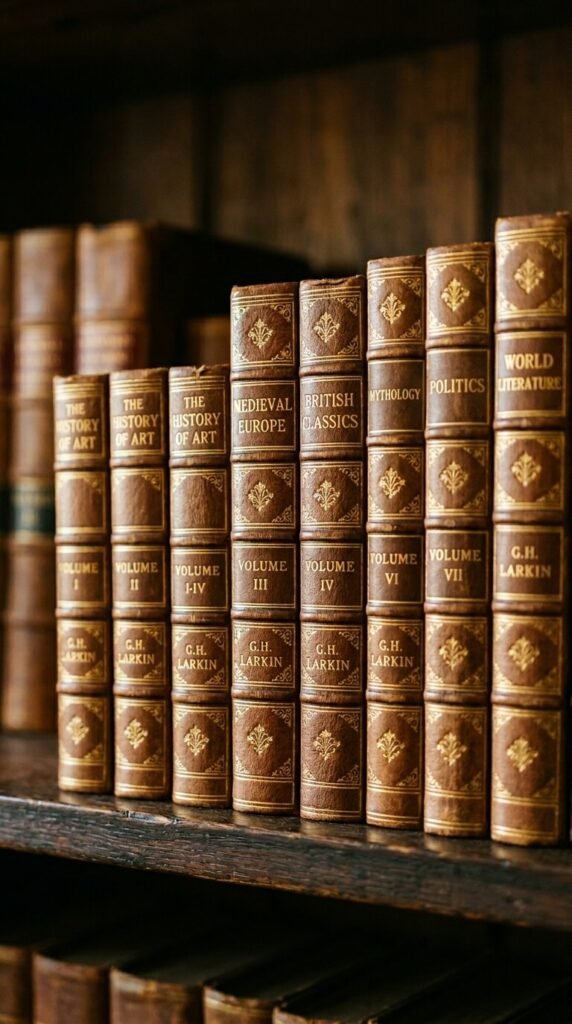
A section of matched, leather-bound books brings instant visual cohesion to any shelf. You don’t need to spend thousands. Easton Press and Franklin Library editions appear constantly on eBay and ThriftBooks for $5–$20 each. Buy by color: all burgundy spines, all navy, all forest green. You don’t need to read them all — though you might. The goal is one shelf of visual rhythm amid the beautiful chaos of a real collection. It creates an anchor the eye returns to.
14. Architectural Molding and Trim Details
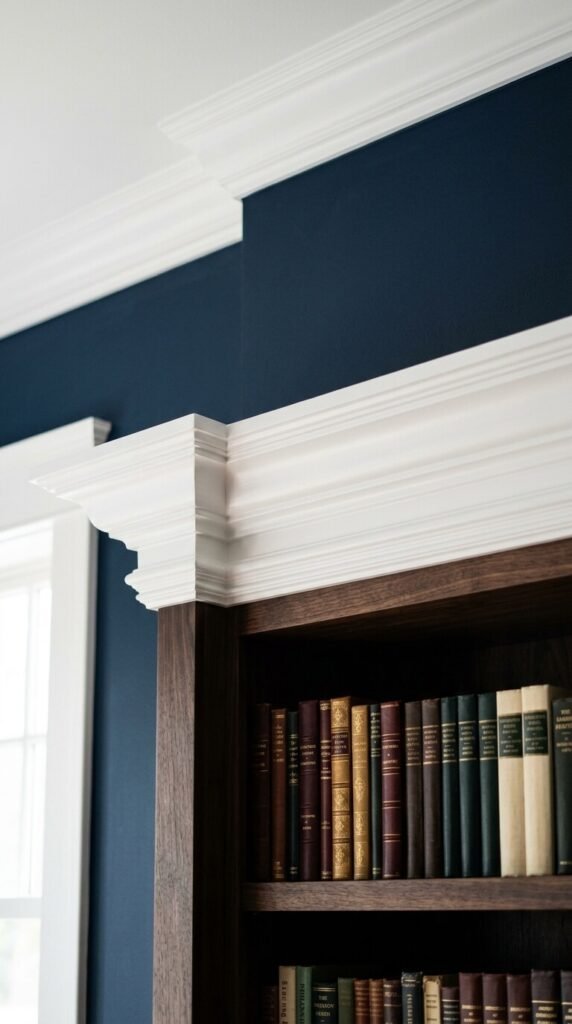
Crown molding, baseboard trim, and panel molding are the details that separate a DIY shelf from a built-in that looks original to the house. Add crown molding to the top of freestanding bookcases with construction adhesive and a nail gun. Add panel molding to plain flat walls to create a wainscoting effect below the shelves. Molding from a hardware store costs $1–$3 per linear foot. Paint it the same color as the wall for a subtle effect, or white for contrast. Small detail, large result.
15. An Antique Typewriter on Display
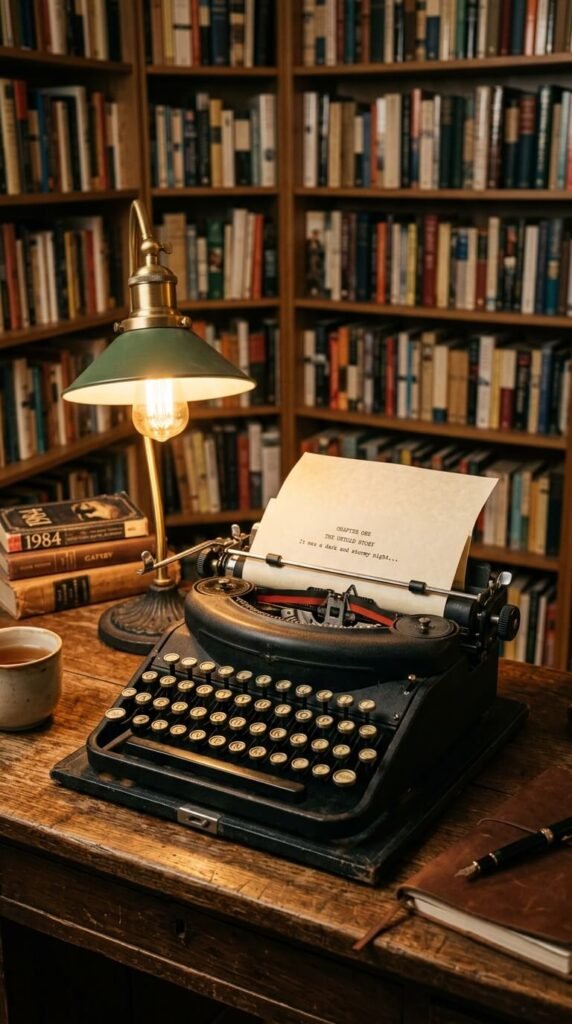
A typewriter on a desk is a story told in a single object. It communicates a relationship with language, craft, and the physical act of writing. Functional vintage typewriters — Olivetti, Hermes, Royal — can be found at thrift stores, Goodwill, and estate sales for $20–$80. Have it cleaned and serviced if needed (usually $40–$60 from a local repair shop). Keep a sheet of paper loaded. Whether you use it or not, it earns its spot as the most characterful object in the room.
16. A Sliding Barn Door to a Reading Room
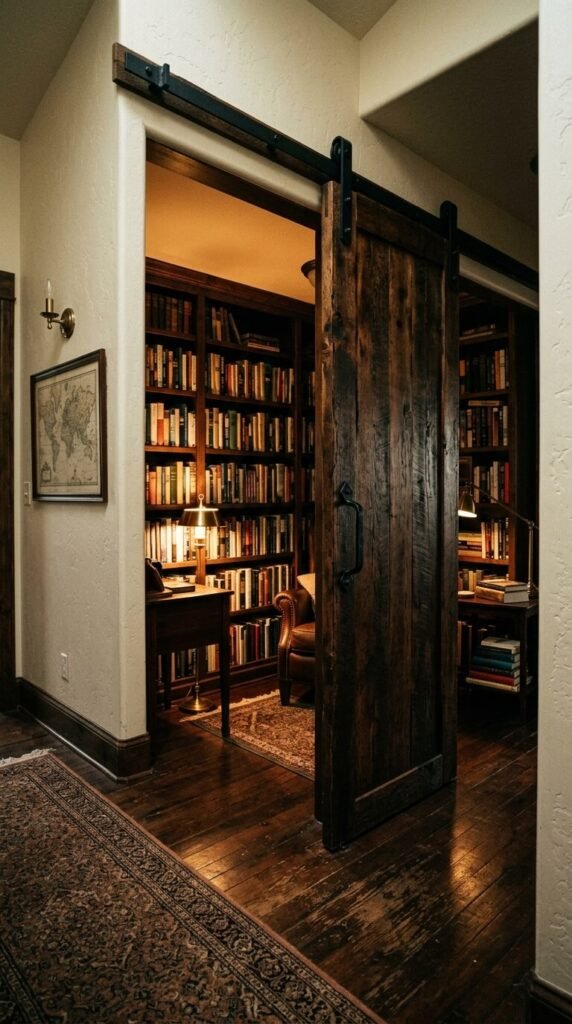
Barn doors are a practical and atmospheric way to define a library space. A heavy wood sliding door on a black iron track closes off a reading room without swinging into the space — ideal for small rooms. Barn door hardware kits cost $80–$150. The door itself can be a reclaimed wood panel, a solid core interior door, or a custom build. Paint or stain it to match the library’s color palette. The drama of sliding a heavy door shut to enter a reading room is entirely worth the installation effort.
17. A Dedicated Rare Books or Display Shelf

Not every shelf needs to be filled edge to edge. One curated display shelf — slower, more deliberate, more museum-like — changes the visual rhythm of the entire room. Reserve it for your most meaningful books: a first edition, an inherited collection, a beloved signed copy. Add a few complementary objects: a magnifying glass, a small sculpture, a handwritten note. This shelf is not about quantity. It’s about honoring the individual life of specific books. It gives guests something to stop and ask about.
18. Built-In Window Seat with Book Storage Below
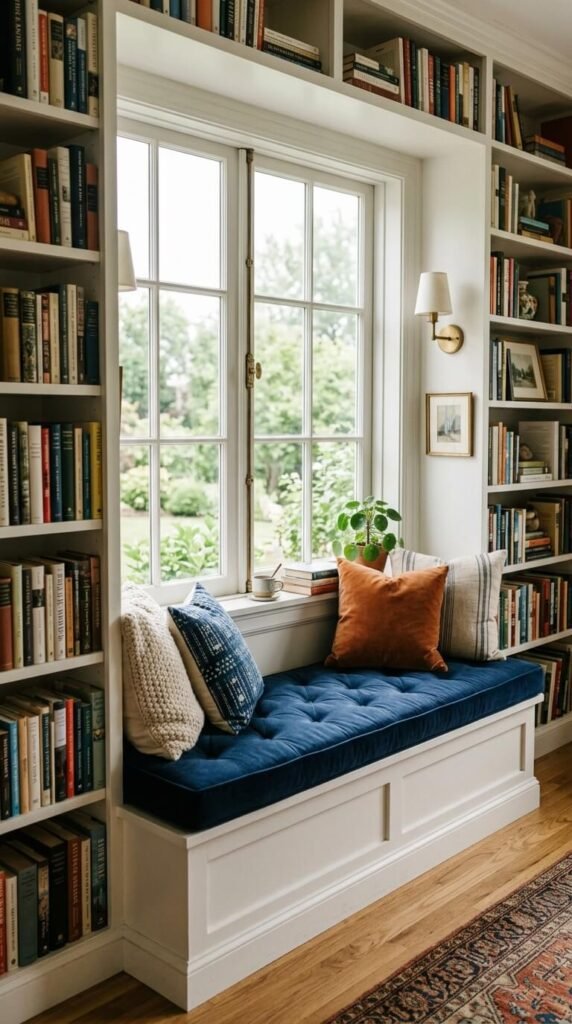
A window seat built into a bay window or alcove is one of the most beloved library features. The storage drawers or cabinets beneath the seat are a practical bonus — excellent for oversized books, blankets, or board games. Build the base from plywood and 2×4 framing, add a piano hinge lid, and top with a custom foam cushion in a durable fabric. Total material cost: $150–$400 depending on size. Add bookshelves flanking both sides and the reading nook becomes a self-contained world.
19. A Vintage Library or Academic Map as Focal Point
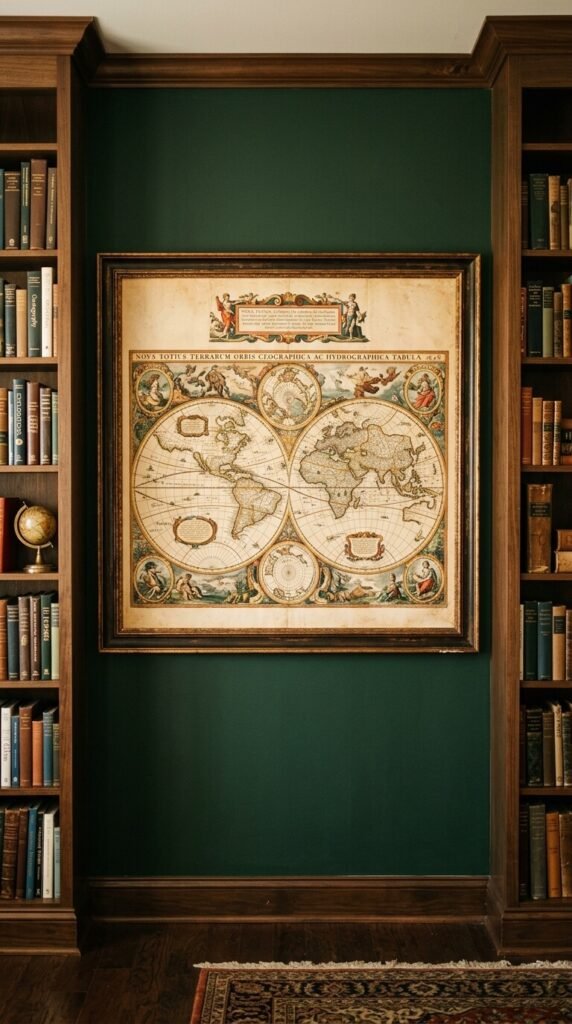
A large framed map — historical, celestial, or anatomical — commands attention on a library wall in a way that generic art cannot. Print a high-resolution public domain map from David Rumsey Map Collection or the Library of Congress digital archives for free. Have it printed at FedEx or a print shop on matte paper for $15–$40 at poster sizes. Frame in a simple profile frame or even clip it to a wood backing. Position it on the wall directly between two bookshelves. It becomes the room’s centerpiece.
20. Bookends That Mean Something
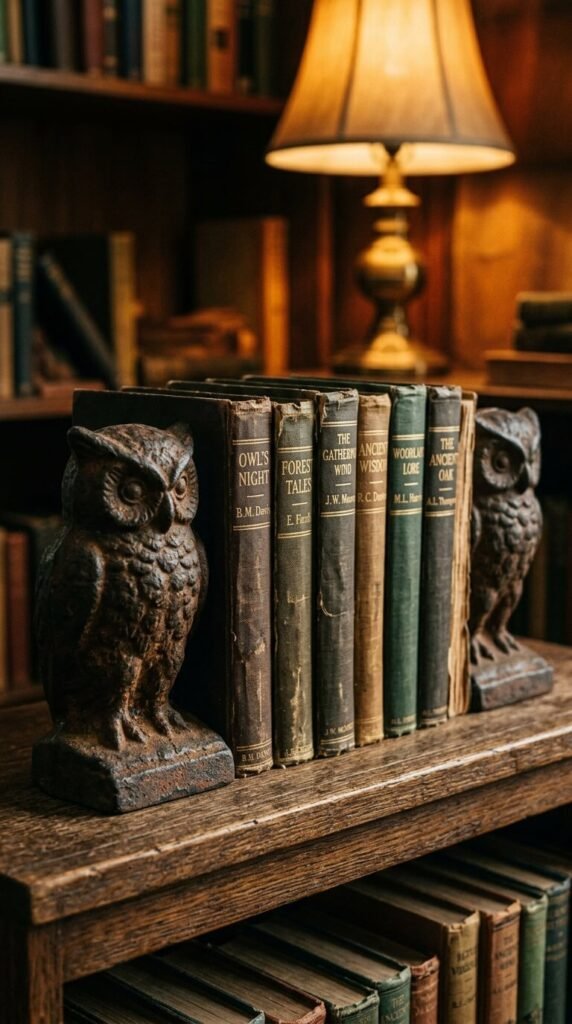
Bookends are a small detail that, chosen well, say a lot. Brass lions, cast iron owls, marble obelisks, bronze hands — each carries its own visual language. Avoid generic chrome or plastic. Thrift stores, antique shops, and Etsy are full of interesting bookends for $10–$40. Use them to close off sections of shelving or to bracket a curated display. They function as punctuation marks on your shelves. Every library needs at least three or four pairs. They’re the easiest way to add character shelf by shelf.
21. A Library-Themed Corner Bar or Drinks Trolley
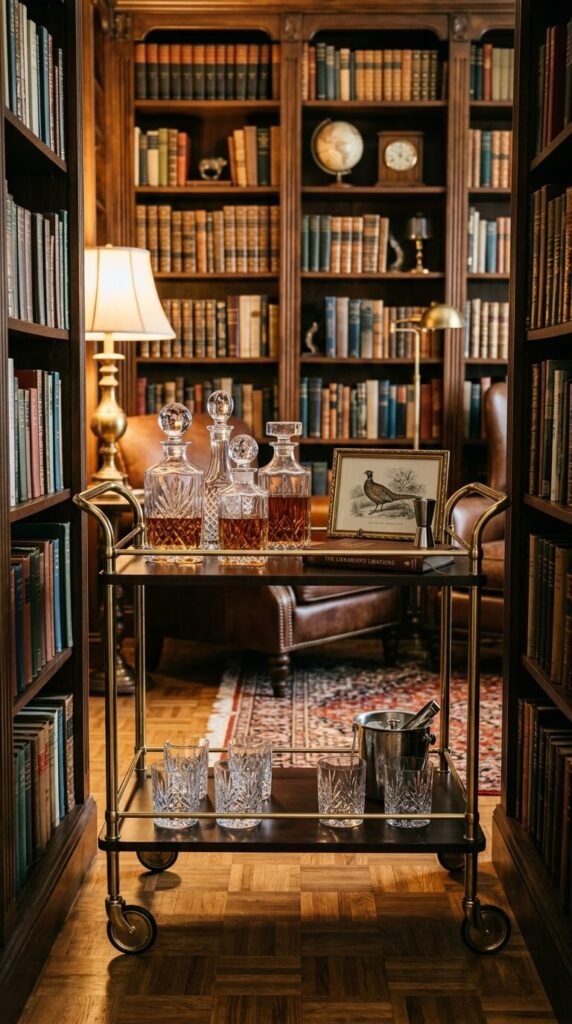
A drinks trolley in a library is the most civilized thing imaginable. It says: reading and a measure of whiskey go together. Vintage brass bar carts appear regularly at estate sales and thrift stores for $30–$80. Stock it with decanters (glass, not necessarily filled with alcohol), a few crystal glasses, and a small ice bucket. Position it between two sections of shelving. It creates a social moment in a solitary room. It makes the library feel like a place where interesting conversations happen.
22. Exposed Brick as a Library Backdrop
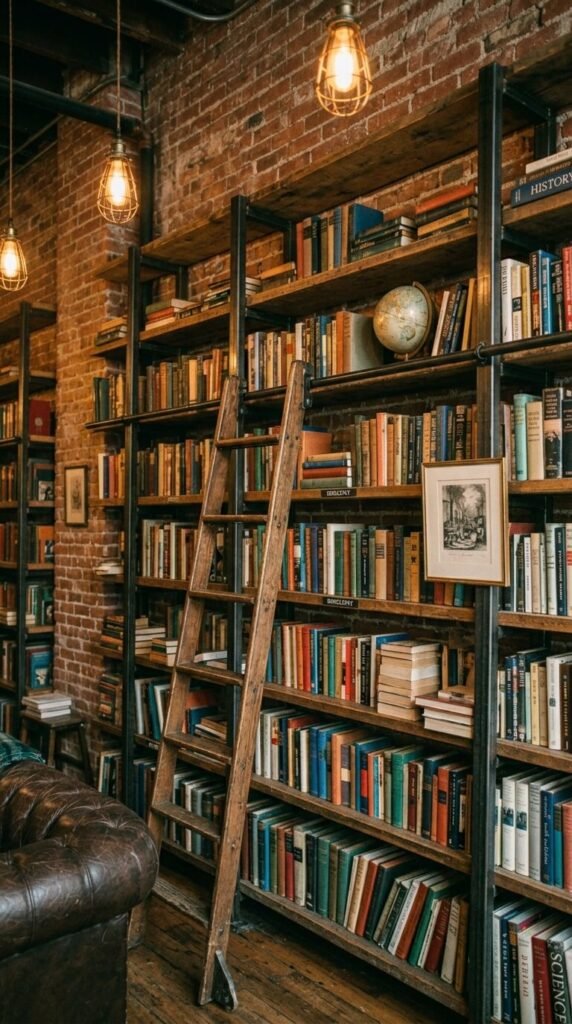
Exposed brick and books are a natural pairing. The texture and warmth of brick against the clean lines of shelving creates a compelling contrast — raw material meeting refined knowledge. If your space has brick that’s currently painted or drywalled over, investigate uncovering it (it’s a weekend project). If not, brick veneer panels cost $3–$8 per square foot and install directly over drywall with adhesive. Even one accent wall of brick behind a shelf section is enough to shift the entire character of the room.
23. Aromatherapy and Sensory Details

A great library doesn’t just look right — it smells and feels right. Old books have a distinct scent (lignin and vanilla, as it happens). Enhance it with beeswax candles, cedar accessories, and leather oil on your chair. A cedar wood shelf liner adds fragrance and deters insects. Beeswax taper candles in brass holders cost $8–$15 for a set. They create the right light and the right scent simultaneously. The sensory experience of a room matters as much as the visual. Build it intentionally.
24. A Spiral Staircase or Mezzanine Level
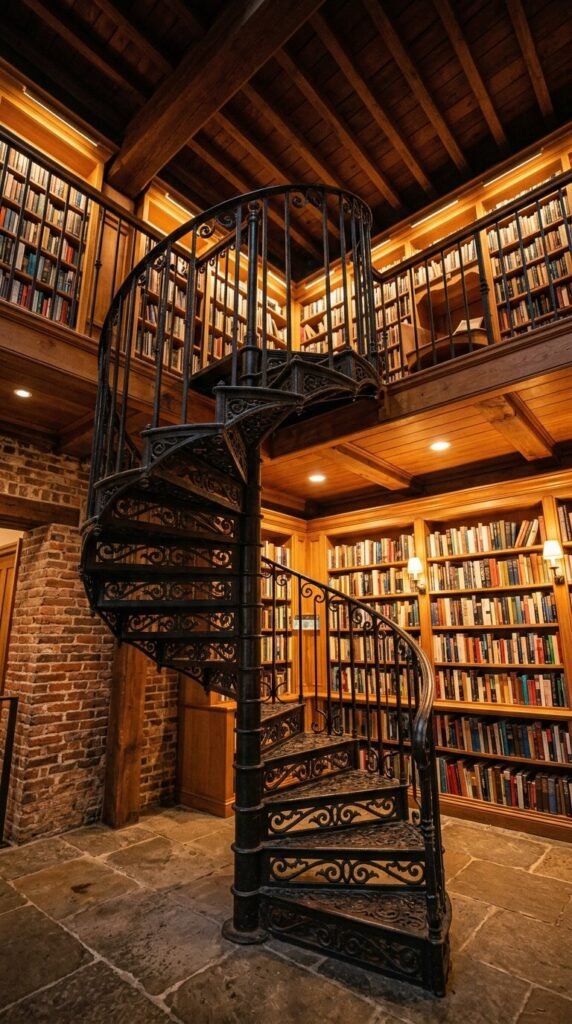
For those with double-height ceilings or the ability to add a mezzanine level, a spiral staircase leading to an upper book gallery is the ultimate library statement. Cast iron spiral stair kits start at around $1,500 installed — a serious investment, but one that doubles your shelving space and creates an architectural moment unlike anything else. Even in a modest space, a partial mezzanine accessed by a ship’s ladder (far cheaper) adds vertical drama and library density that no other single feature can match.
25. A Chalkboard or Slate Wall for Book Lists
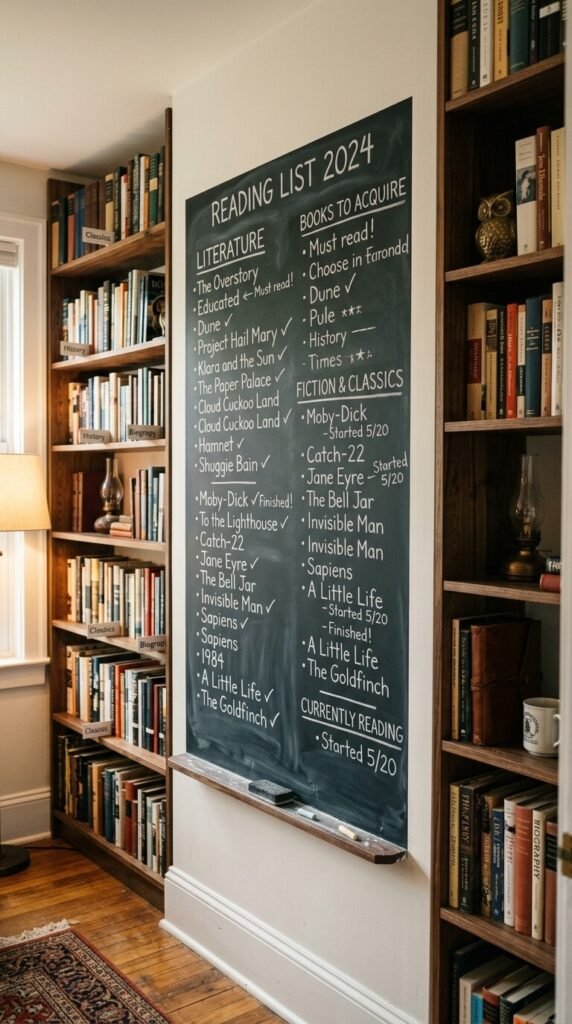
A chalkboard wall in a library is both functional and atmospheric. Use it to track your reading list, quote favorite passages, sketch maps from novels, or write the names of books to find. Chalkboard paint costs $15–$20 a quart and goes on any wall surface. Designate a section of wall between shelves — even a 3×4-foot panel is enough. Frame it with simple wood trim. Use high-quality chalk markers for clean lettering. It makes the library interactive and personal in a way that no art print ever could.
26. A Vintage Library Clock
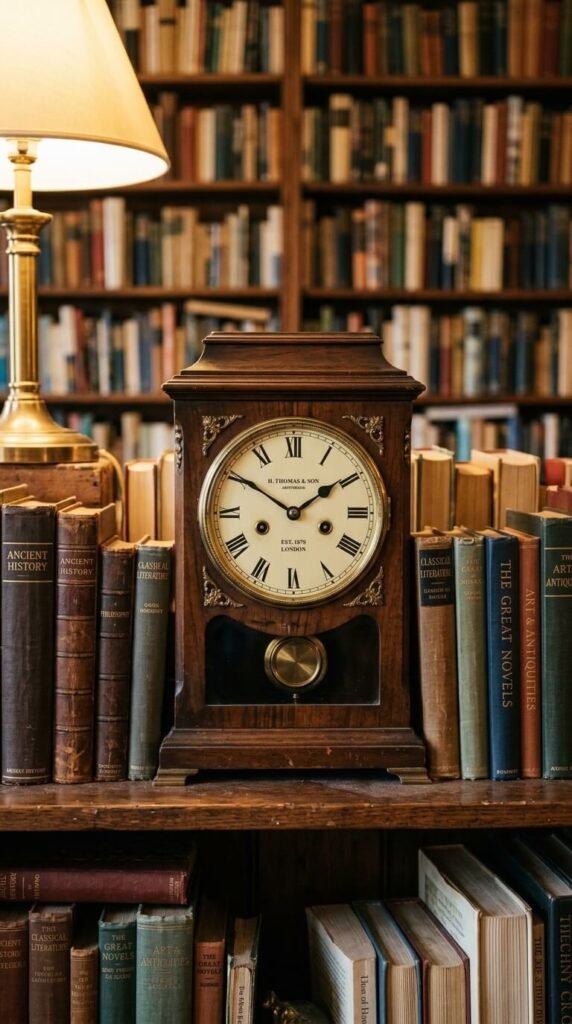
Libraries have always measured time differently. A vintage clock — mantel style, schoolhouse style, or wall-mounted with a pendulum — brings an institutional quality to the room. The sound of ticking is part of it. Look for Seth Thomas, Sessions, or Gilbert mantel clocks at antique stores and online auctions for $30–$120. Have a clock maker service the mechanism if needed (often $30–$50). Position it on a shelf at eye level between books. It marks the room as a place where hours are spent with intention.
27. Custom Bookplates Inside Your Books
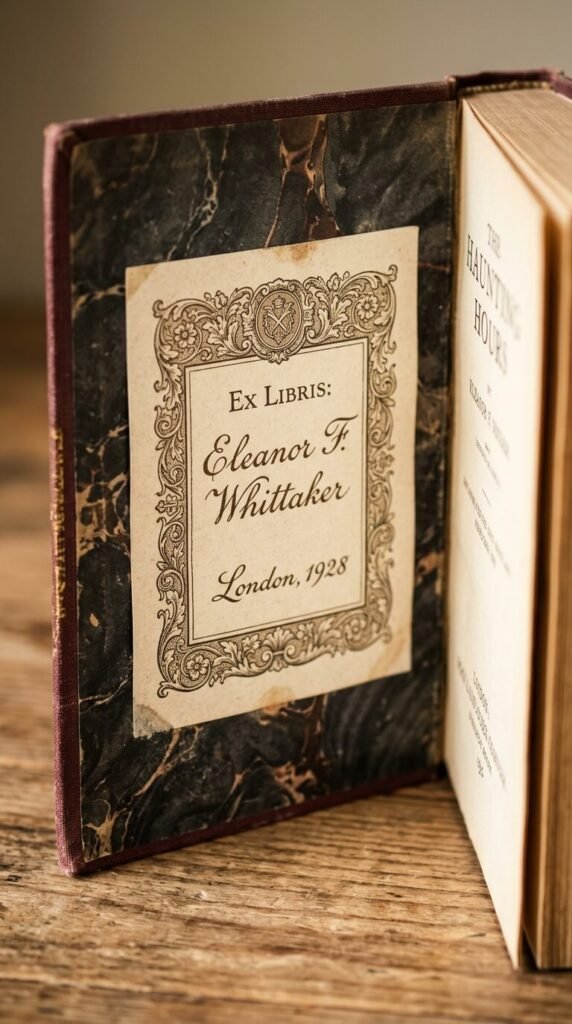
Bookplates are the bibliophile’s personal seal. A custom bookplate — a small label affixed to the inside front cover — marks a book as yours in a tradition that dates to the 15th century. Design your own online through Moo, Zazzle, or Etsy for $15–$40 per sheet of 30. Choose a design with personal symbols: an animal, a landscape, a monogram in an antique typeface. Affix them to every book in your collection. They’re invisible from outside, but opening any book and finding your mark transforms ownership into something ceremonial.
28. A Portrait Gallery Wall of Authors
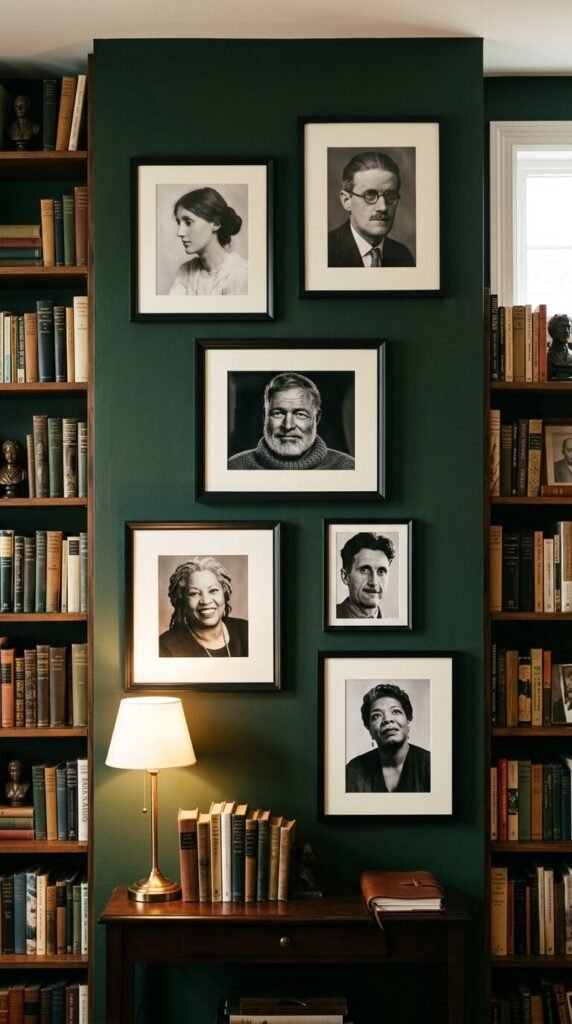
Author portraits — framed simply in black and white — create a gallery of intellectual ancestry. Public domain photographs of Virginia Woolf, James Baldwin, Zora Neale Hurston, Tolstoy, Borges, and others are freely available through Wikipedia and the Library of Congress digital archive. Print at 5×7 or 8×10, frame in matching black frames, and arrange in an asymmetric grid between shelving sections. They make the room feel inhabited by ideas. They remind you, every time you sit down, whose company you keep.
29. A Ladder-Accessed Attic Book Room
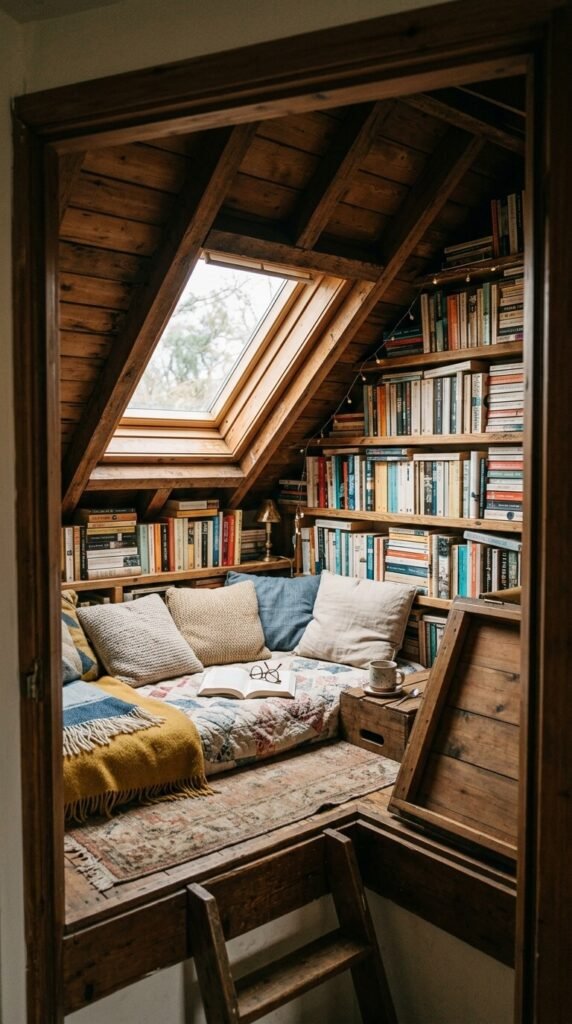
If your home has an attic with enough headroom, it can become the most private library of all. Knee walls and sloped ceilings that make normal attic rooms awkward are perfectly proportioned for low bookshelves. Add a skylight if possible — natural light from above is the most flattering reading light in existence. Line every available wall and kneewalls with simple pine shelving. Add a daybed or floor cushion. The inaccessibility is a feature, not a bug. A library you have to climb to reach is a library you’ll actually use.
30. A Living Plant Wall Beside the Shelves
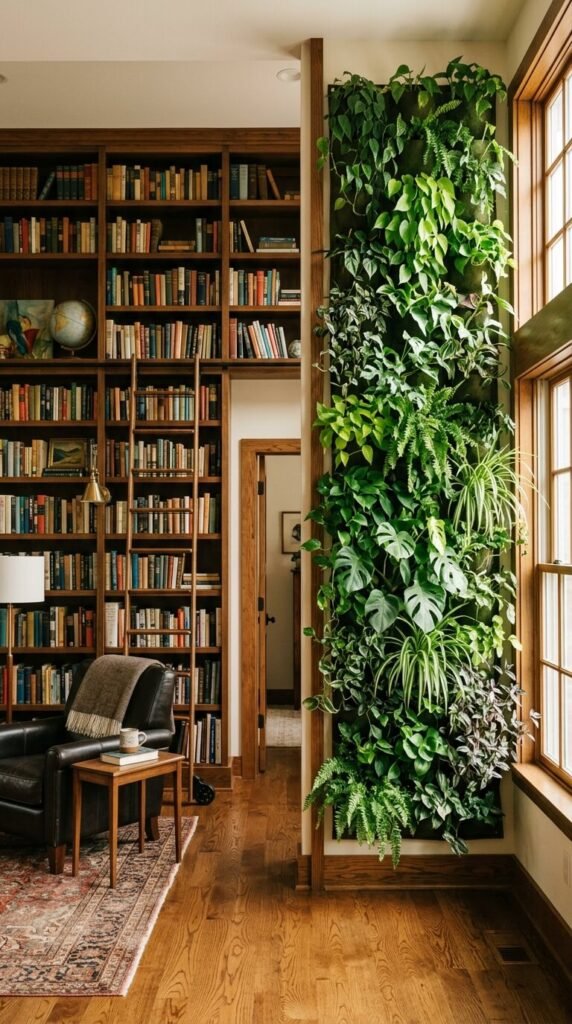
Green plants and books occupy the same intellectual aesthetic: living, growing, requiring attention. A vertical plant wall or arrangement of potted plants beside shelving brings life to a room that could otherwise feel static. Use pothos, philodendron, and ferns — all low-light tolerant. Wall-mounted planter pockets cost $20–$40 for a set of 12. A simple wooden shelf dedicated entirely to plants flanking a reading chair costs almost nothing to build. The contrast of green against dark walls and book spines is exactly as striking as it sounds.
Conclusion
A scholarly aesthetic library isn’t built in a weekend, and it doesn’t require a renovation budget. It’s assembled over time, one decision at a time: a chair found at an estate sale, a rug rolled out on a Saturday, a wall painted on a Sunday afternoon. Every item in this list is achievable on a real budget. The through-line is intentionality — making choices that reflect how seriously you take your books, your reading life, and the room that holds them. Start with the one idea in this list that felt most immediately like yours. Build from there. The best libraries always grow.