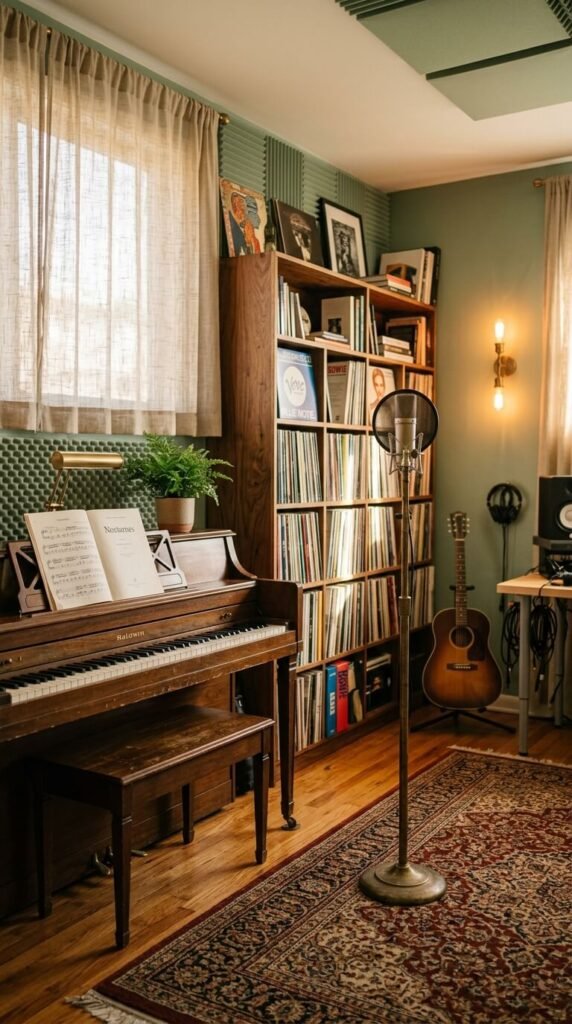
Your music room should do two things at once — sound great and look even better. Whether you play guitar at midnight or spin records on lazy Sunday mornings, the space around you shapes how you feel and how you create. The good news? You don’t need a massive budget or a professional designer. Small, thoughtful changes make a huge difference. This guide walks you through 22 real, doable design ideas that balance acoustics with aesthetics — so your music room becomes the most inspiring corner of your home.
1. Anchor the Room with a Statement Instrument
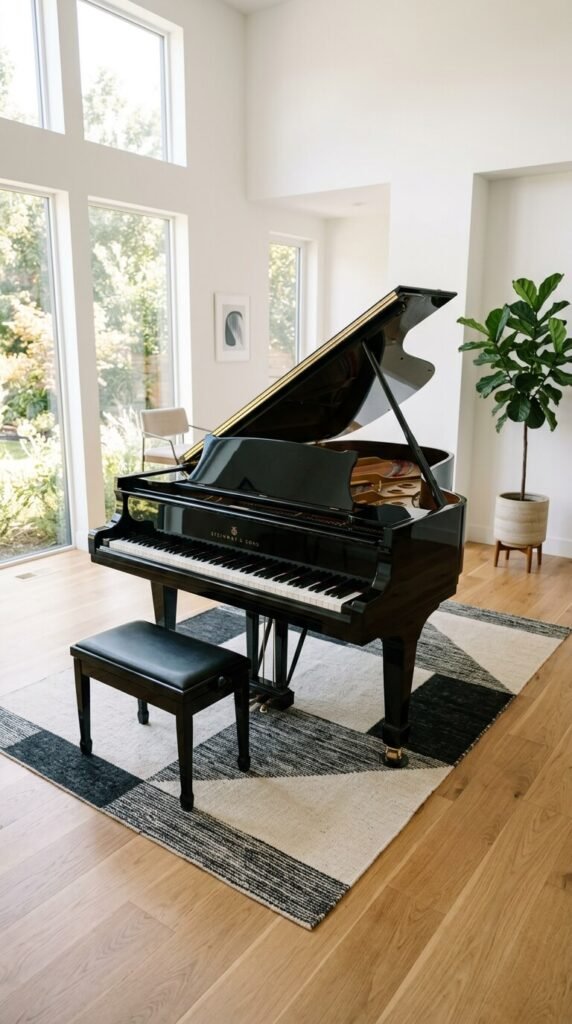
Make your main instrument the visual centerpiece. Place it where the eye naturally lands — against a clean wall or in the middle of the room. A piano, drum kit, or guitar stand can anchor the whole design. Position matters more than price. A secondhand upright piano in the right spot looks more intentional than an expensive one shoved in a corner. Style around it — a rug underneath, a lamp beside it, maybe one piece of art above it. Let the instrument lead.
2. Use Acoustic Panels as Wall Art
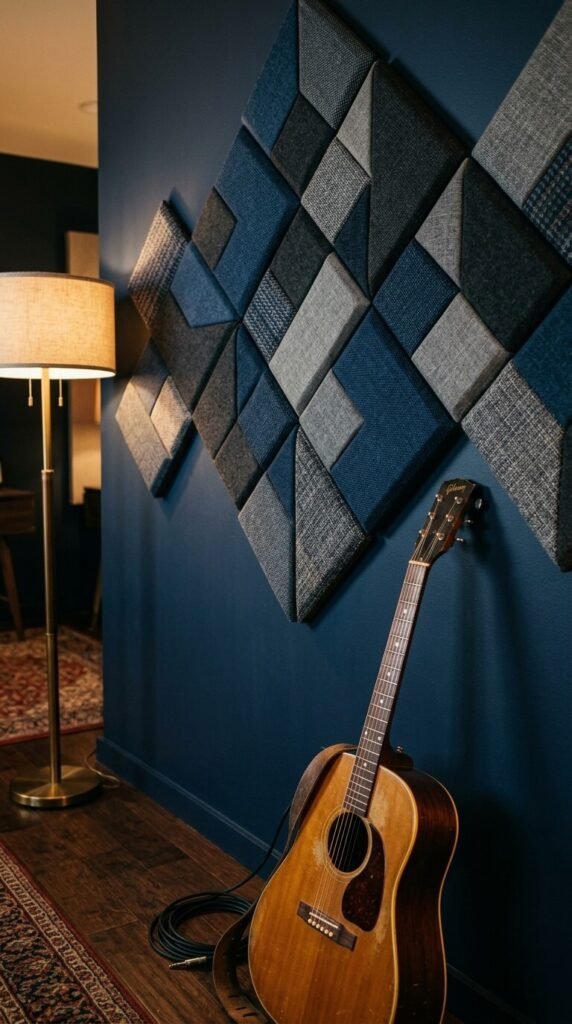
Acoustic panels don’t have to look like soundproofing. Wrap them in fabric — velvet, linen, or canvas — and arrange them in a pattern. Diamonds, grids, or asymmetric clusters all work well. Choose colors that match your palette. DIY versions cost as little as $15 per panel using rigid fiberglass insulation and fabric from a craft store. Mount them at ear height for the best sound absorption. Suddenly, your functional treatment becomes a feature wall that guests actually compliment.
3. Build a Vinyl Record Display Wall
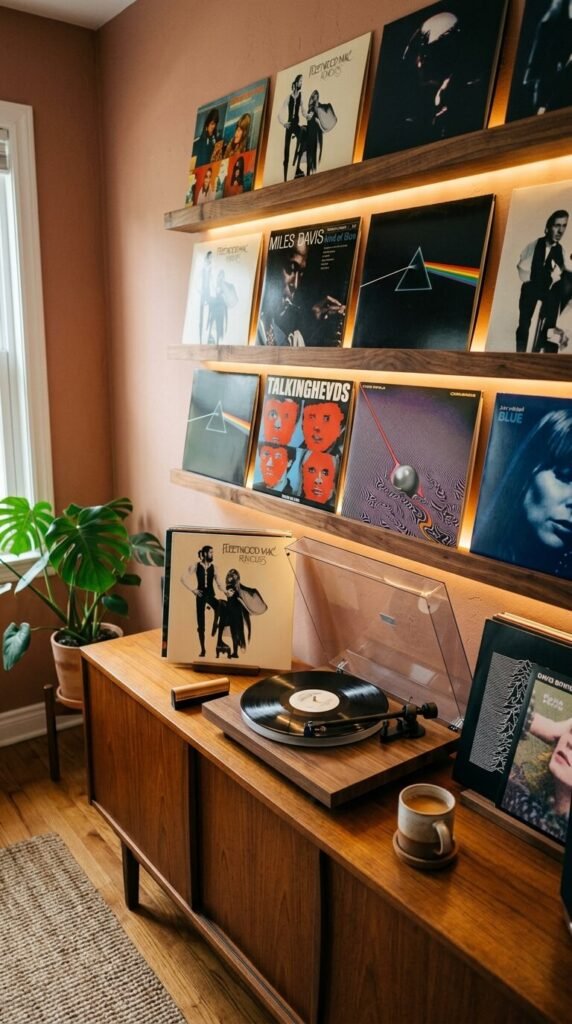
Vinyl records are visual objects. Stop hiding them in crates. Mount simple wooden ledges — even IKEA picture rails work perfectly — and face your favorite album covers outward. Rotate them seasonally to keep the wall fresh. Group by color for a graphic look, or by era for a storytelling feel. Add warm LED strip lighting behind the shelf for a backlit glow effect that costs under $20. This wall becomes functional decor — your music collection on display, every day.
4. Layer Rugs for Sound and Style
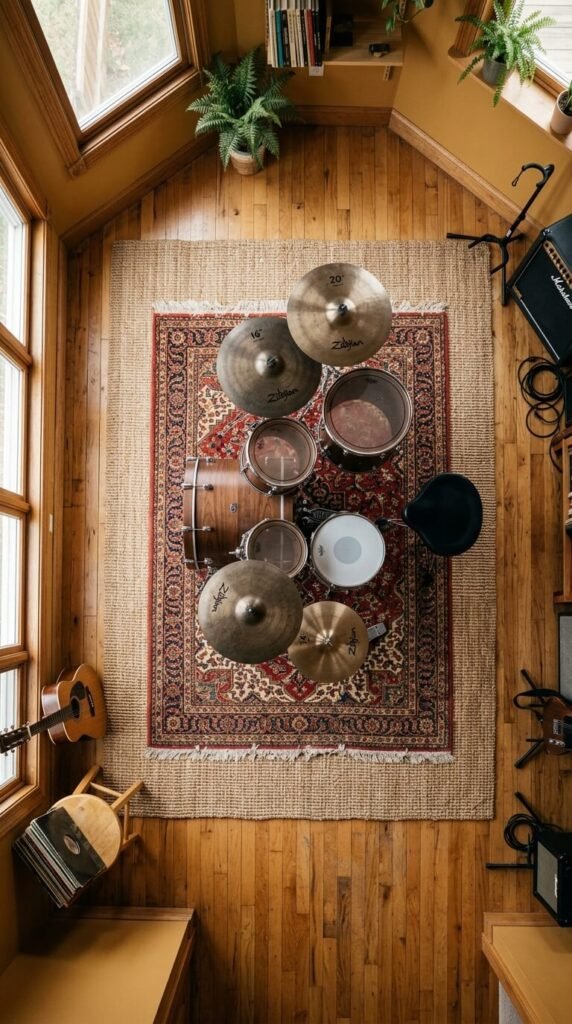
Hard floors reflect sound and make a room feel cold. Layering rugs fixes both problems at once. Start with a large, low-pile base rug for coverage, then layer a smaller vintage or patterned rug on top for personality. Thicker rugs absorb more sound. Check Facebook Marketplace or thrift stores — vintage rugs are often cheap and character-rich. Under a drum kit or piano, a good rug dampens vibration and ties the room together visually without a single nail in the wall.
5. Install Warm, Dimmable Lighting
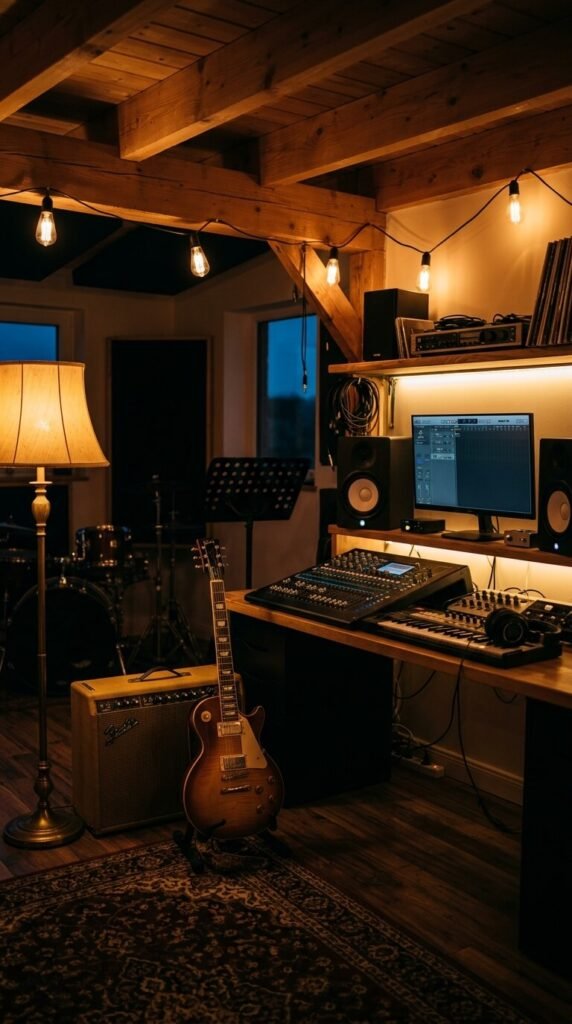
Harsh overhead lighting kills the mood in any creative space. Swap it for layered, dimmable sources — a floor lamp, LED strip lighting under shelves, and a desk lamp near your workspace. Warm white (2700K–3000K) bulbs feel inviting and flattering. Smart bulbs like IKEA’s Tradfri line let you adjust brightness and warmth cheaply. The right lighting makes even a basic room feel curated and professional. It also reduces eye strain during late-night sessions — a practical bonus.
6. Create a Dedicated Listening Corner
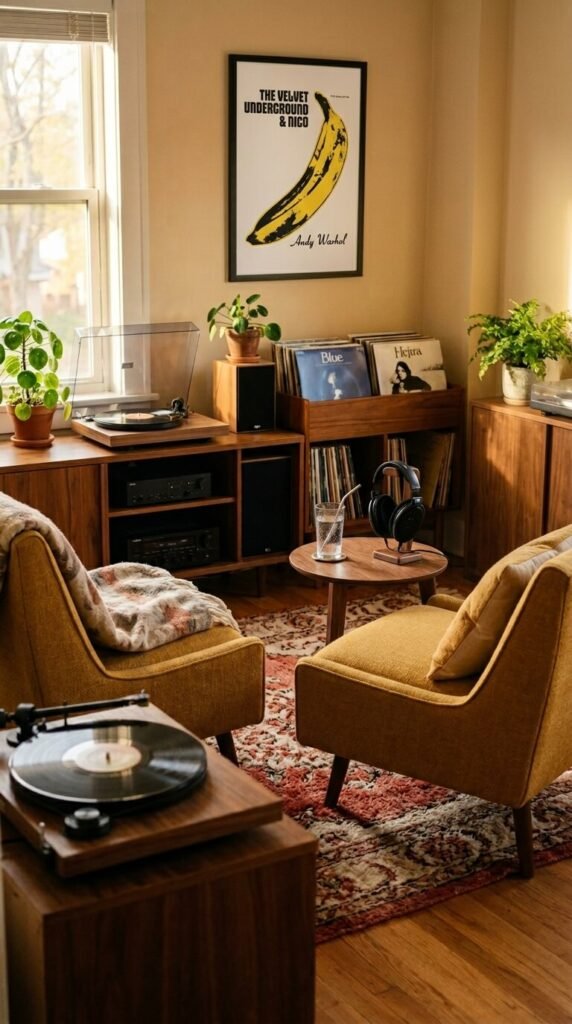
Not every music room moment involves playing. Sometimes you just want to listen. Carve out a small corner with a comfortable chair, a side table, and a pair of quality speakers or headphones. Even a tight 6×6 foot space works. Angle the speakers toward the chair for the best stereo imaging. Add a small table for a drink or notebook. A listening corner gives the room a second function — and signals that this space is truly for music, not just instrument storage.
7. Go Dark with Moody Wall Colors
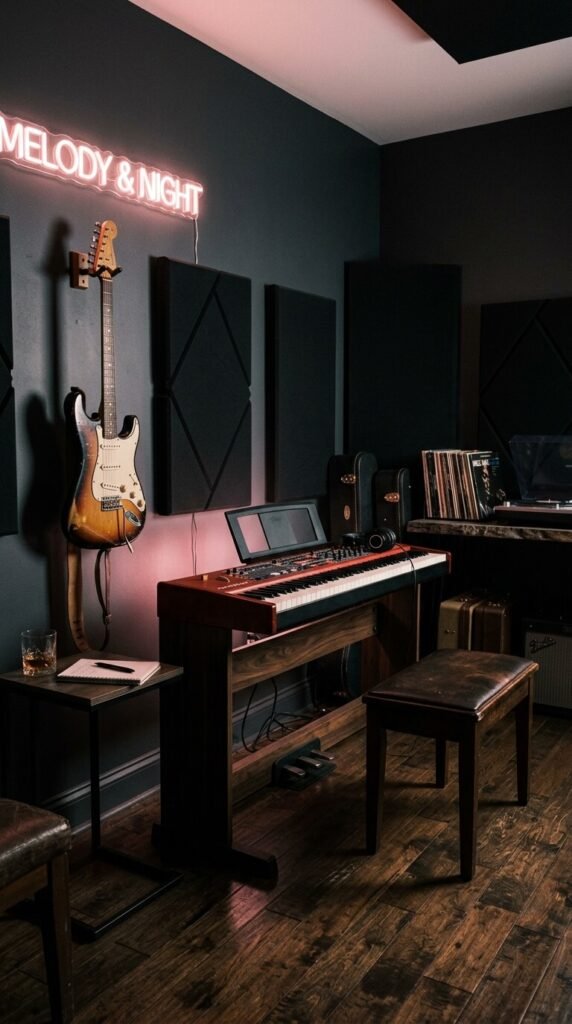
Dark walls make a music room feel intentional and immersive. Colors like deep charcoal, forest green, navy, or terracotta create a cocooning effect that suits creative work. Dark walls also hide acoustic panel hardware and reduce visual clutter. A single accent wall is enough to transform the feel if you’re hesitant. Pair with warm lighting to avoid a cave-like result. This is one of the highest-impact, lowest-cost changes you can make — a gallon of paint and a weekend afternoon.
8. Mount Guitars as Wall Sculpture
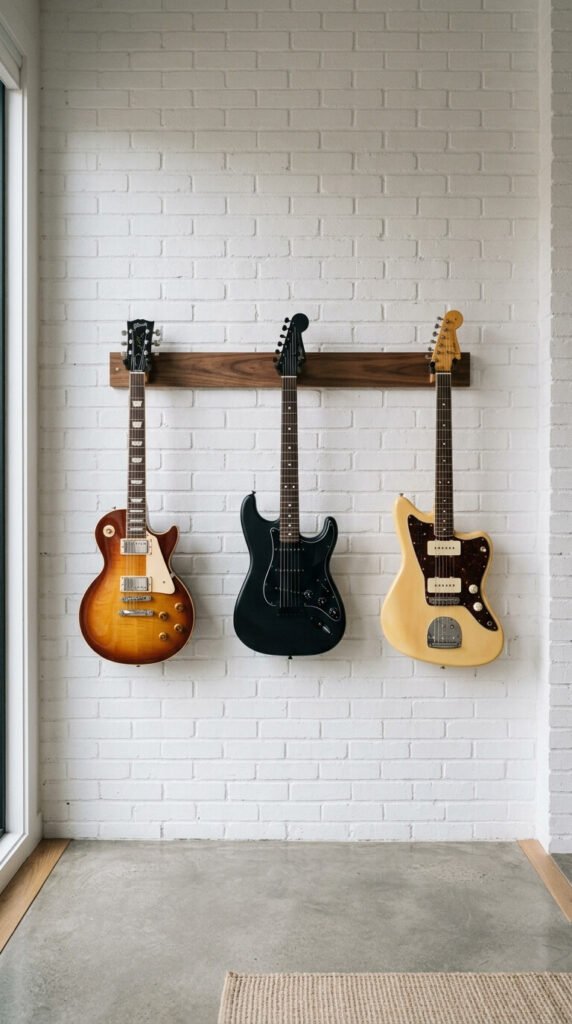
A guitar on a wall hanger is both storage and art. Guitar wall mounts cost $10–$20 each and keep instruments safe, accessible, and on display. Group two or three guitars at different heights for a composed, gallery-style look. Mix finishes — matte, sunburst, vintage cream — for visual contrast. Leave breathing room between each instrument. Add a small spotlight above for a gallery effect. Your wall of guitars becomes the first thing visitors notice — a genuine conversation starter.
9. Use Open Shelving for Gear and Decor
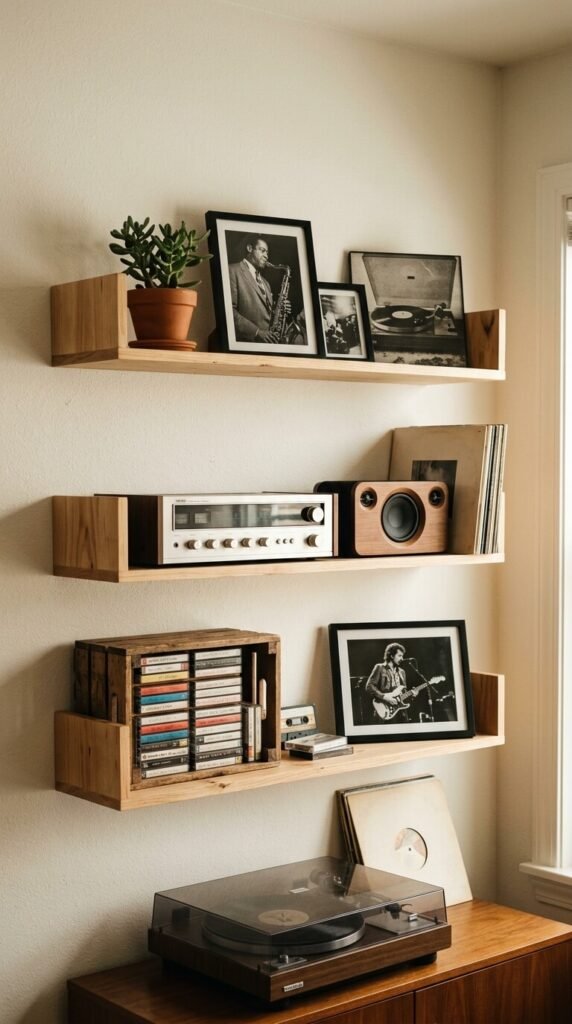
Open shelving gives your gear a home while keeping it visible. Float two or three shelves on a blank wall and mix functional items with decorative ones — a small speaker next to a plant, your audio interface beside a framed photo. Keep it edited. Too much stuff reads as clutter; too little feels sterile. Use baskets or small wooden crates to corral cables and accessories. Floating shelves from IKEA or a local hardware store cost under $30 and install in under an hour.
10. Add a Neon Sign for Personality

A neon sign adds instant personality and makes the room feel designed rather than accidental. LED neon signs are affordable — custom ones start around $40–$80 online. A music note, a waveform, or a meaningful lyric phrase works well. Mount it on a dark or textured wall for maximum impact. Use it as your room’s mood light during sessions. It also photographs beautifully — which matters if you share your space online. Simple, striking, and completely personal.
11. Hang Vintage Music Posters in Matching Frames
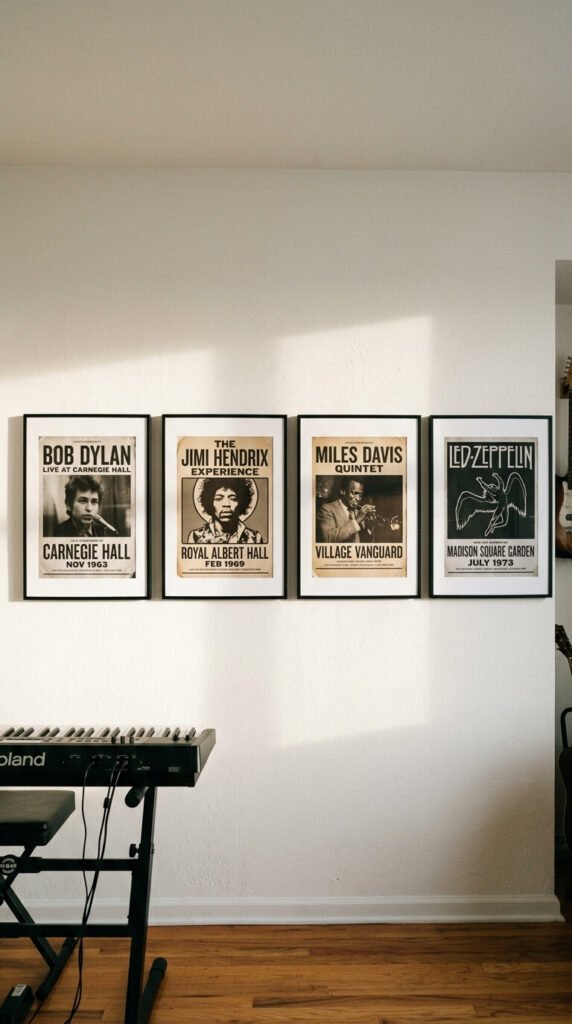
Concert posters, album art prints, and vintage music advertisements are affordable and deeply personal. Frame them consistently — matching thin black or natural wood frames — for a gallery-wall effect that looks intentional. Consistent framing is the trick. Mix sizes but keep the frame style the same. Print your own at a local shop from free public domain images if budget is tight. Space frames evenly, or cluster them tightly for a denser look. Your music heroes become part of your room’s identity.
12. Bring in Natural Wood Elements
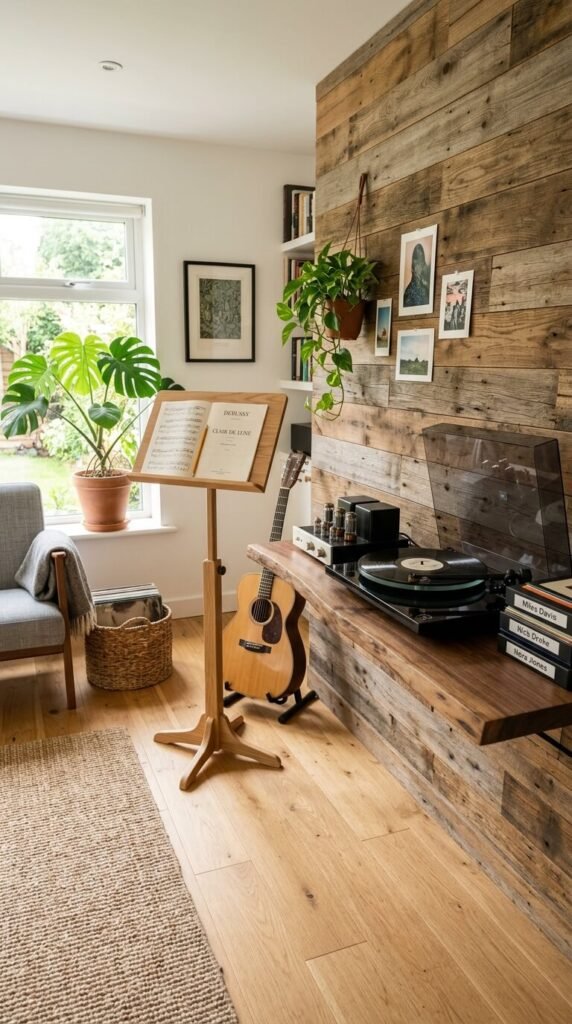
Wood adds warmth and organic texture that cold, modern gear often lacks. Use it in shelving, a music stand, a side table, or even a reclaimed wood accent wall. You don’t need expensive custom pieces. A butcher block shelf from a hardware store, sanded and oiled, looks stunning for under $50. Natural wood balances the hard edges of amps, keyboards, and cables with something soft and tactile. It also photographs beautifully — warm, natural, and never trendy.
13. Hide Cable Clutter with Simple Solutions
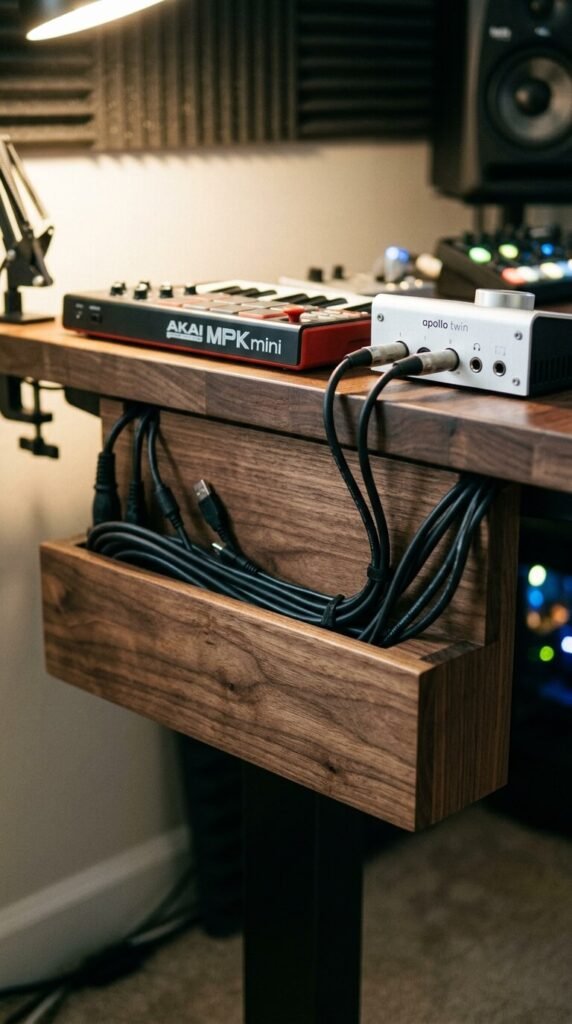
Cables are the enemy of a beautiful music room. Cable clutter makes even expensive setups look messy. Use simple solutions: adhesive cable clips along the baseboards, a cable management box under your desk, or a cable sleeve for bundling multiple cords together. Velcro cable ties cost almost nothing and make a significant difference. Paint the cable clips to match your wall color for near-invisibility. A tidy room looks more professional and feels calmer — which directly affects how you work in it.
14. Add Plants for Life and Acoustic Softness
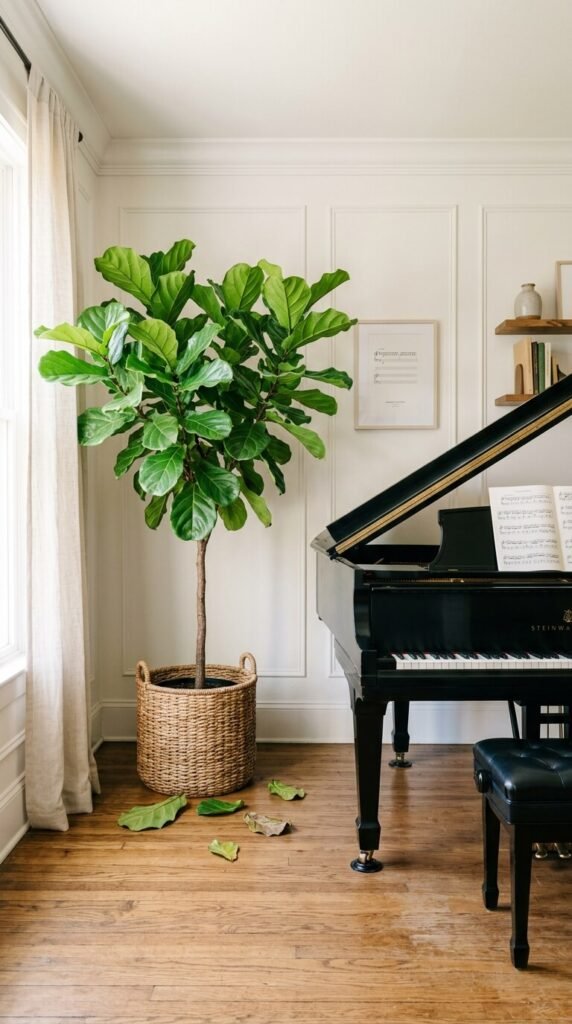
Plants soften hard surfaces and reduce echo in a room — a small acoustic benefit with a big visual payoff. Large-leafed plants like fiddle-leaf figs or monsteras work especially well in corners beside instruments. They add color, life, and scale. A large plant in a woven basket costs $30–$60 at a garden center. If you’re not a plant person, high-quality faux options look convincing at a distance. Either way, greenery makes a music room feel alive rather than clinical.
15. Design a Productive Recording Nook
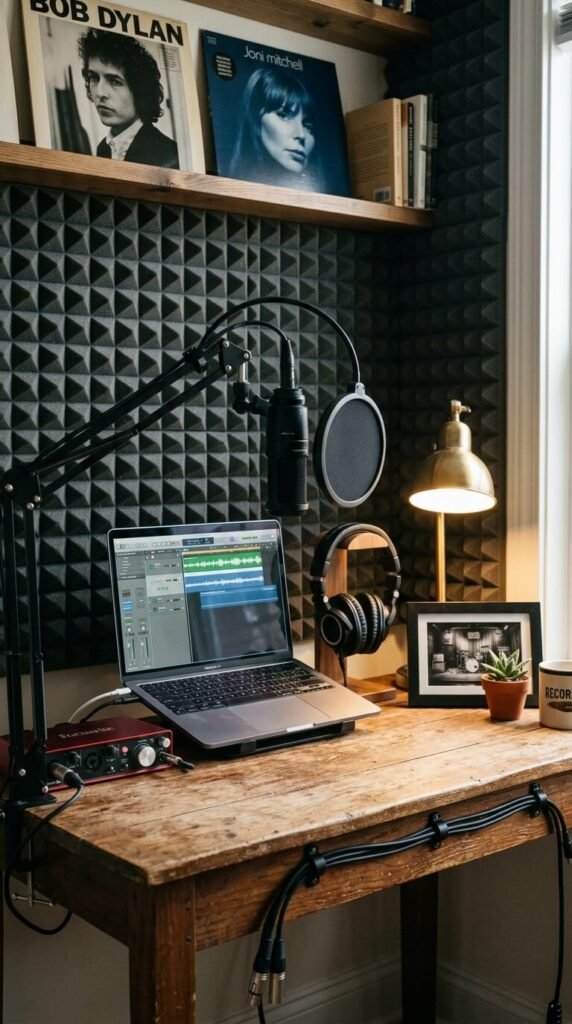
A dedicated recording nook — even a small desk setup — signals serious intent and keeps your workflow organized. It doesn’t require a separate room. A corner desk, a boom arm mic stand, a compact audio interface, and a couple of foam panels on the wall create a functional home studio setup for under $300 total. Keep this area separate from your playing zone if possible. A defined workspace helps your brain switch into recording mode the moment you sit down.
16. Use Curtains to Control Sound and Light
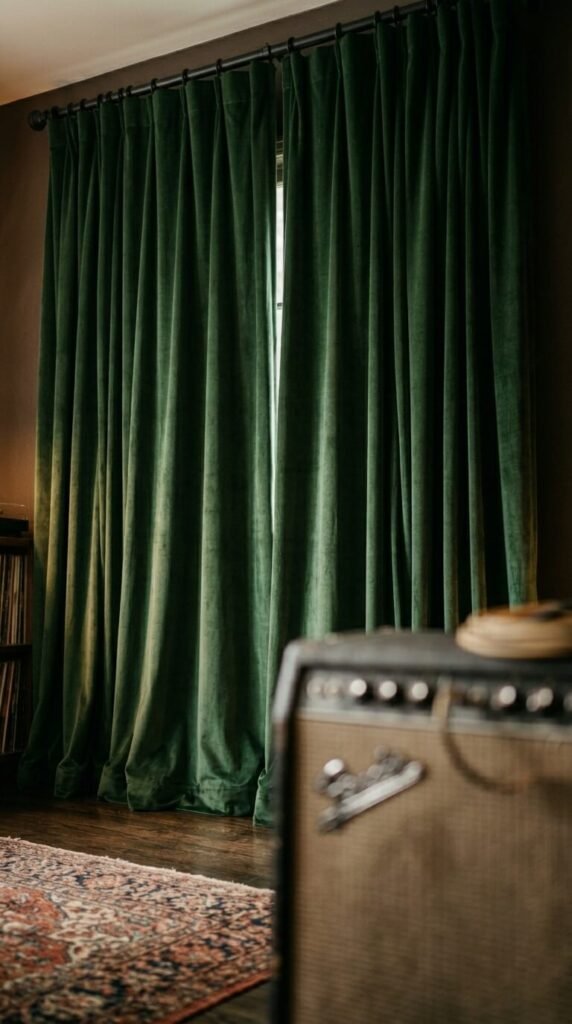
Heavy curtains serve double duty — they block outside noise and soften interior reflections. Velvet or thick blackout curtains are especially effective. Floor-to-ceiling lengths look dramatic and add height to any room. They also give you control over natural light, which matters during recording. IKEA’s Sanela velvet curtains cost under $50 per panel and come in jewel tones that look genuinely luxurious. Hang the rod high and wide — close to the ceiling, beyond the window frame — for the most polished effect.
17. Create a Themed Color Palette
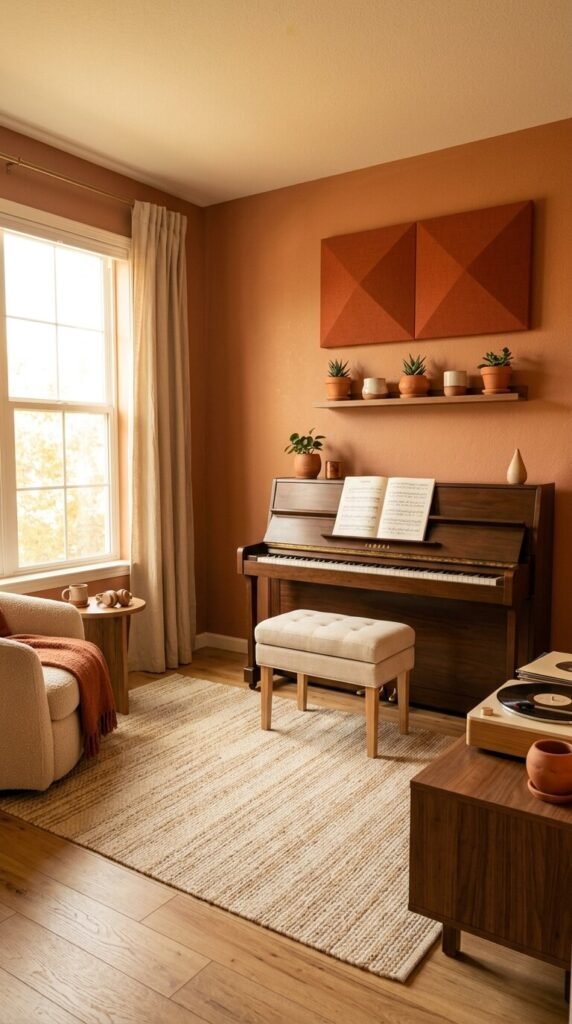
Random colors make a room feel chaotic. A defined palette — two or three colors that work together — makes everything feel designed. Pick a dominant color, a secondary, and one accent. Earthy palettes (terracotta, cream, warm wood) feel grounded and timeless. Cool palettes (navy, gray, white) feel clean and modern. Use your palette across walls, rugs, cushions, and small decor items. It doesn’t require repainting everything — even choosing a rug and curtains in complementary tones creates visible harmony throughout the room.
18. Install a Pegboard for Gear Organization
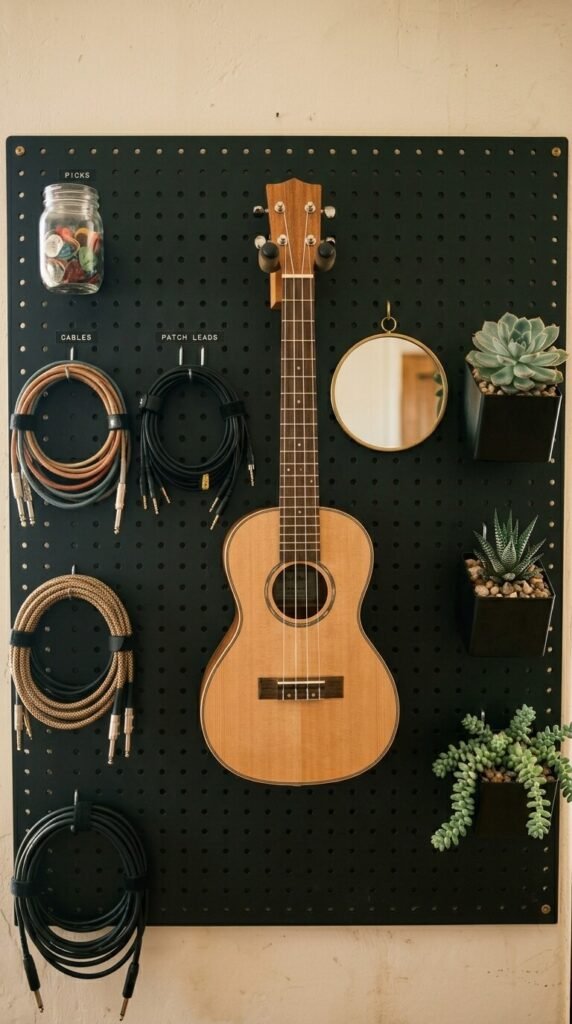
A pegboard wall is one of the most practical things you can add to a music room. Paint it to match or contrast your wall color — a black pegboard on a white wall looks modern and graphic. Hang picks, cables, small instruments, a mirror, and even plants using pegboard accessories. A 4×4 foot pegboard sheet costs around $20 at a hardware store. It keeps frequently used items accessible, reduces desk clutter, and adds visual texture to a blank wall all at once.
19. Style Your Mixing Desk Like a Feature
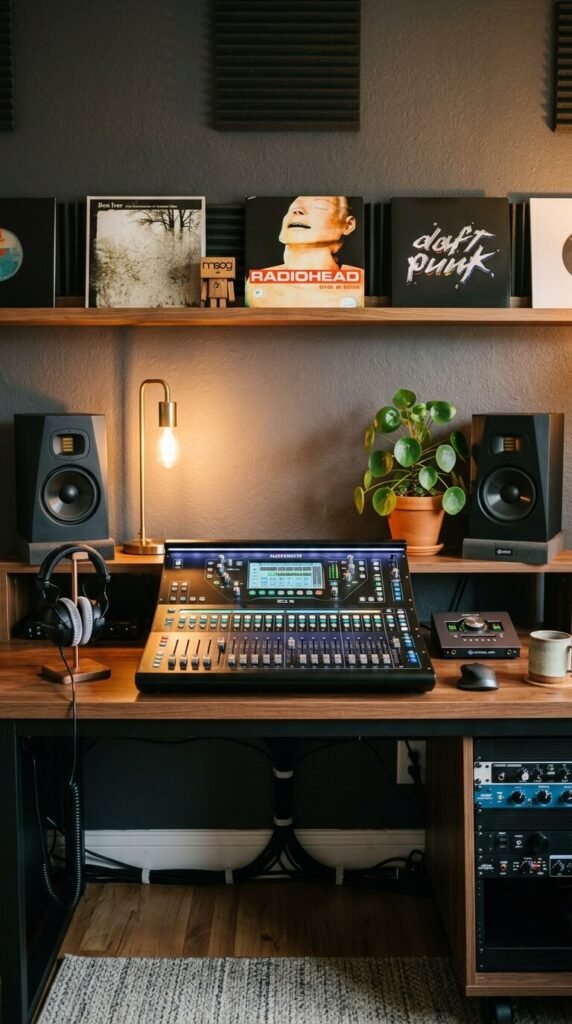
Your mixing desk or audio interface setup doesn’t have to look like an afterthought. Style the area around it intentionally. Add a small plant to one side, a framed piece of art above, and proper lighting. Use a monitor shelf riser to lift your speakers to ear height — this improves sound and creates space underneath for a keyboard or storage. Matching your desk setup to the room’s overall color palette makes it feel like a designed workstation, not just dropped equipment.
20. Repurpose Vintage Furniture as Equipment Stands
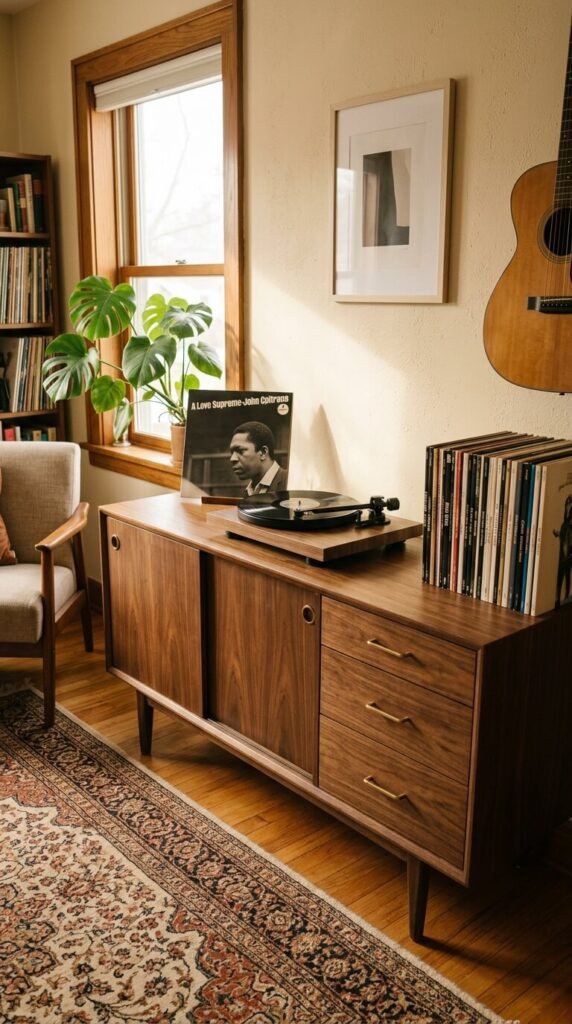
Old furniture becomes instantly interesting when repurposed. A mid-century sideboard makes a beautiful turntable stand. A vintage school locker stores cables and accessories with character. Thrift stores and estate sales are full of options for $20–$100. The worn patina of old furniture contrasts beautifully with the sleek surfaces of modern music gear. It also adds story and personality to a room that could otherwise feel generic. Look for pieces with good structural bones — surface imperfections just add charm.
21. Frame and Display Your Sheet Music or Lyrics
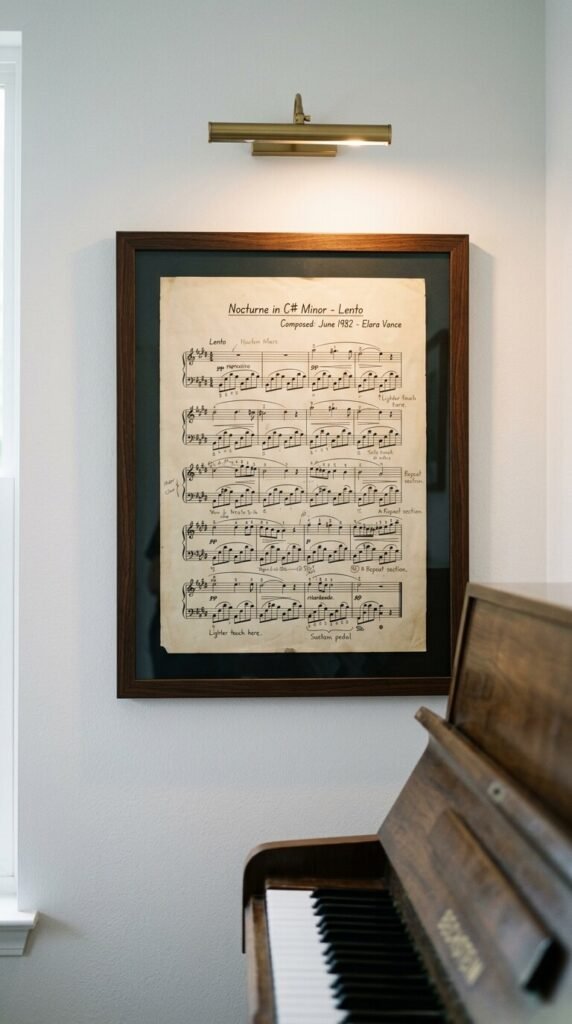
Personal work deserves to be on display. Frame a piece of handwritten sheet music, a set of lyrics, or even a printed score that means something to you. This adds narrative to your room’s walls — something no store-bought decor can replicate. Even a simple black frame from a dollar store works. It signals that this is your creative space, not a showroom. Rotate what’s displayed as you work on new pieces. Your room’s walls document your creative life in real time.
22. Layer Textures for a Finished, Warm Look
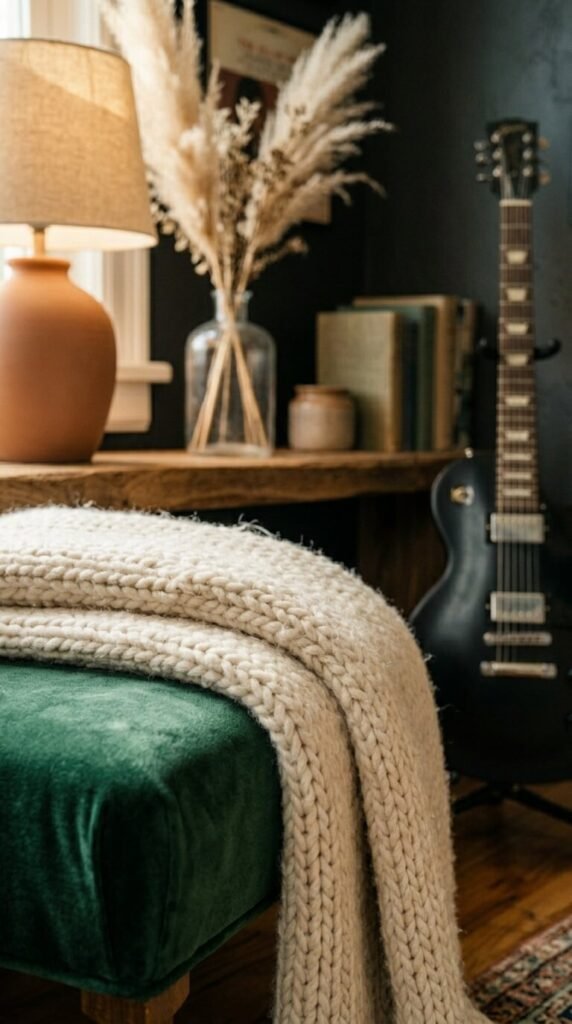
Texture is what separates a finished room from a flat one. Mix smooth, rough, soft, and hard surfaces throughout the space. A velvet cushion on a wooden stool. A chunky knit throw on a leather chair. A ceramic lamp beside a metal microphone stand. These combinations create visual depth without adding more color or furniture. Most texture additions cost very little — a throw blanket, a ceramic pot, some dried pampas grass. But together, they make a room feel warm, layered, and completely intentional.
Conclusion
A music room that looks as good as it sounds doesn’t happen by accident — but it also doesn’t require a big budget or a professional designer. The ideas in this guide are meant to be mixed, matched, and made your own. Start with one or two changes that feel manageable: a new rug, a guitar on the wall, a dimmer switch. See how the room shifts. Then build from there. The best music room is one that reflects who you are as a musician and makes you want to walk in and create every single day. That’s the real goal — and it’s completely within reach.