Ever walked into a room and felt something was off — but couldn’t quite put your finger on it? Nine times out of ten, the culprit is proportion. A sofa that swallows the room. A dining table that feels like it belongs in a cafeteria. A coffee table so tiny it looks like it wandered in by mistake. Getting furniture proportions right is the single most transformative thing you can do for your space — and it’s easier than you think.
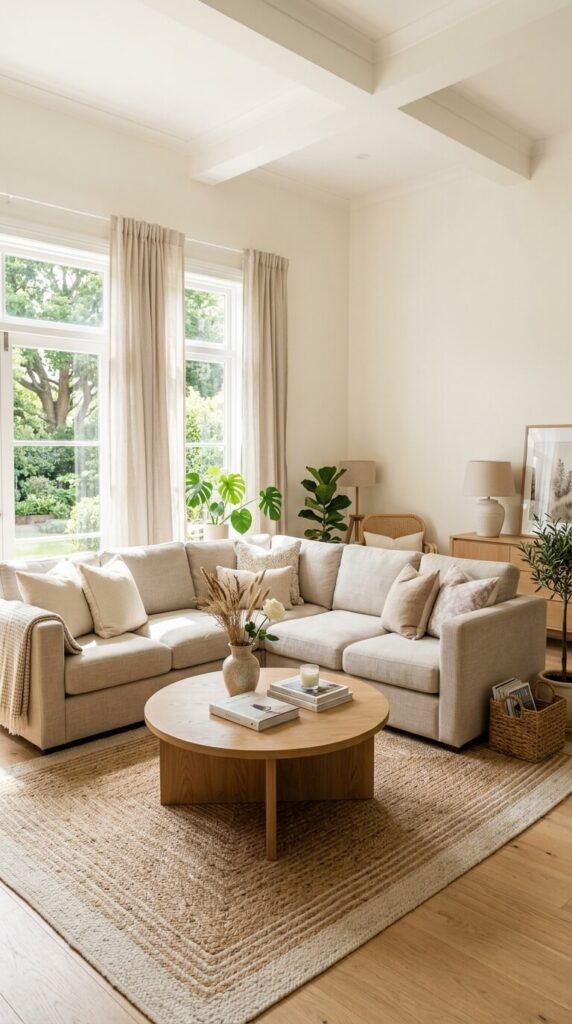
Start With Your Room’s Measurements (Yes, Every Single One)
Before you fall in love with anything on a showroom floor, grab a tape measure. This step sounds obvious, but it’s the one most people skip — and the one they regret most.
Measure:
- Total room dimensions — length and width
- Ceiling height — this affects how tall your furniture should be
- Door and window placements — these dictate traffic flow and natural focal points
- Architectural features — fireplaces, alcoves, built-ins that anchor the layout
Write these down and keep them on your phone. You’ll thank yourself later.
Follow the 2/3 Rule for Sofas and Rugs
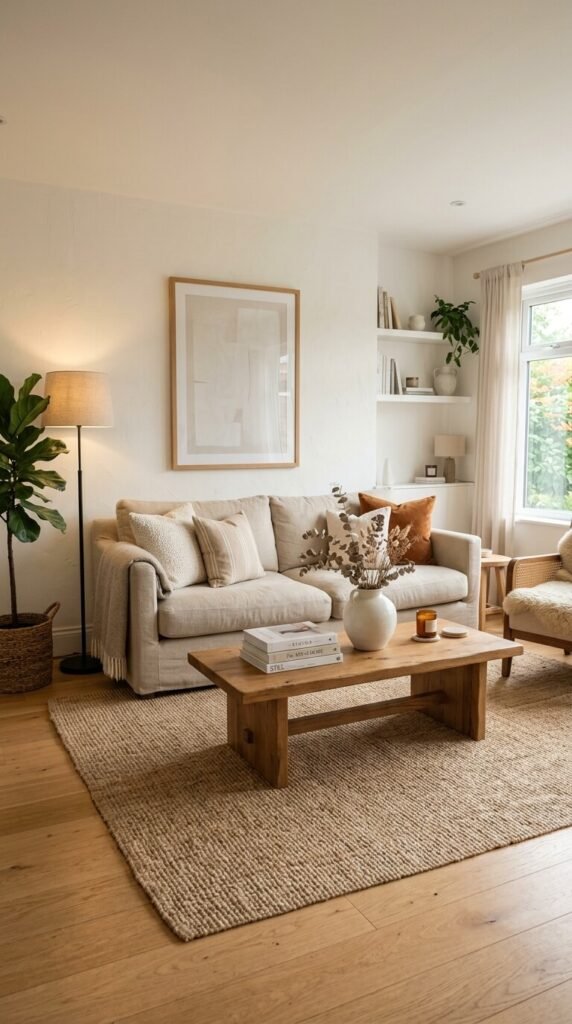
One of the most reliable rules in interior design is the 2/3 proportion guideline. It works like this:
- Your sofa should take up roughly two-thirds of the wall it sits against — not the whole thing, not a sliver.
- Your area rug should be about two-thirds the size of your seating arrangement — large enough that at least the front legs of every piece rest on it.
This ratio creates visual balance without overcrowding. It’s the sweet spot between “this room looks sparse” and “I can’t breathe in here.”
Match Furniture Scale to Room Size
Here’s a mistake that trips up even confident decorators: choosing furniture based on how it looks alone rather than how it’ll look in context.
For smaller rooms:
- Choose furniture with exposed legs — it creates visual breathing room
- Opt for sleeker profiles and fewer pieces overall
- A loveseat often works better than a full sofa
For larger rooms:
- Don’t be afraid of oversized pieces — they fill the space with intention
- Layer multiple seating options (sofa + armchairs + ottoman) to avoid that “furniture island” effect
- Tall bookcases and statement wardrobes help draw the eye up and fill vertical space
Scale is about relationship — not just size in isolation.
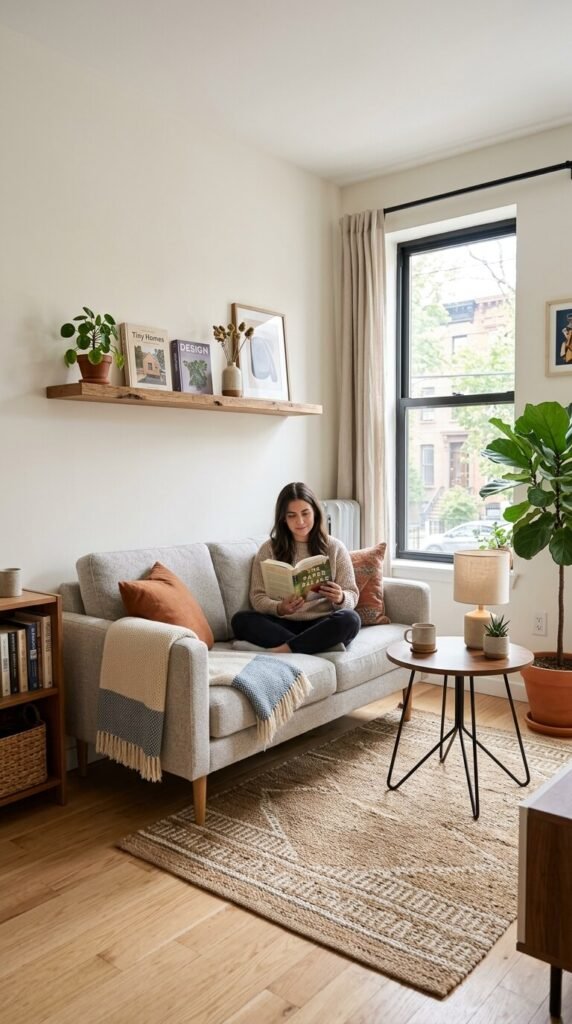
Use the “Clearance” Numbers Designers Actually Use
Beyond visual proportion, there are functional measurements that every room needs to feel right to live in — not just look at.
Keep these in mind:
- 18 inches between your sofa and coffee table — close enough to reach, not so close you’re climbing over it
- 36 inches of clearance for main walking paths through a room
- 24 inches between a dining chair (pulled out) and the wall behind it
- 12–18 inches between the bottom of a pendant light and the top of a dining table
These numbers turn a pretty room into a functional one.
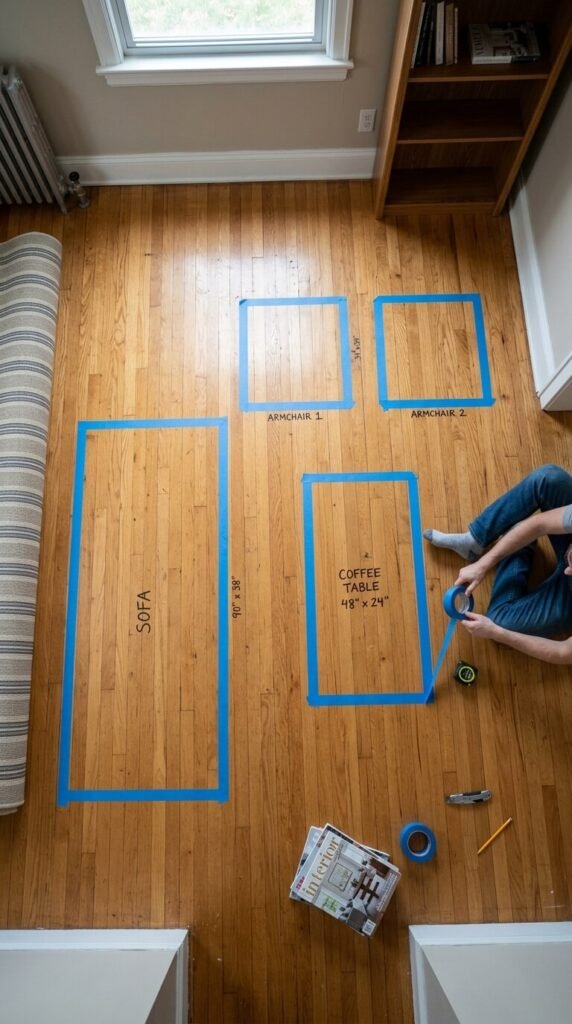
Test Before You Commit With Painter’s Tape
This is the pro trick that costs nothing and saves everything. Before buying a single piece, use painter’s tape on the floor to map out the exact footprint of your furniture.
Live with it for a day or two. Walk around it. Sit in the space. You’ll instantly feel whether a sofa is too long, a dining table too wide, or a bed frame too dominant for the bedroom.
Don’t Forget Vertical Proportion
Most people think about floor space — and forget to look up. Vertical proportion matters just as much.
- Hang artwork so its center sits at eye level (around 57–60 inches from the floor)
- Choose curtains that hang from ceiling to floor — it makes ceilings feel taller
- If your ceilings are low, avoid tall, heavy furniture that competes with the room’s height
- If your ceilings are soaring, use taller furniture and stack décor to fill the vertical story
Getting the vertical balance right is what makes a room feel complete rather than just furnished.
The Bottom Line
Perfect proportions aren’t about following rigid rules — they’re about understanding how furniture relates to the space around it. Measure your room, trust the 2/3 rule, clear your walkways, and always test with tape before you buy.
When everything is in proportion, you stop noticing the furniture — and start simply enjoying the room.
Save this guide and pin it for your next room refresh — your future self will be so glad you did! 📌