Have you ever walked into a room and immediately felt something — a warm pull, a sense of calm, or even pure excitement — before you could explain why? Chances are, it wasn’t the furniture or the paint color doing the heavy lifting. It was the lighting. The right light can transform a bland box into a sanctuary, a dinner table into a romantic experience, or a home office into a creative refuge. And the best part? You don’t need a designer’s budget to make it happen.
Understand the Three Layers of Light
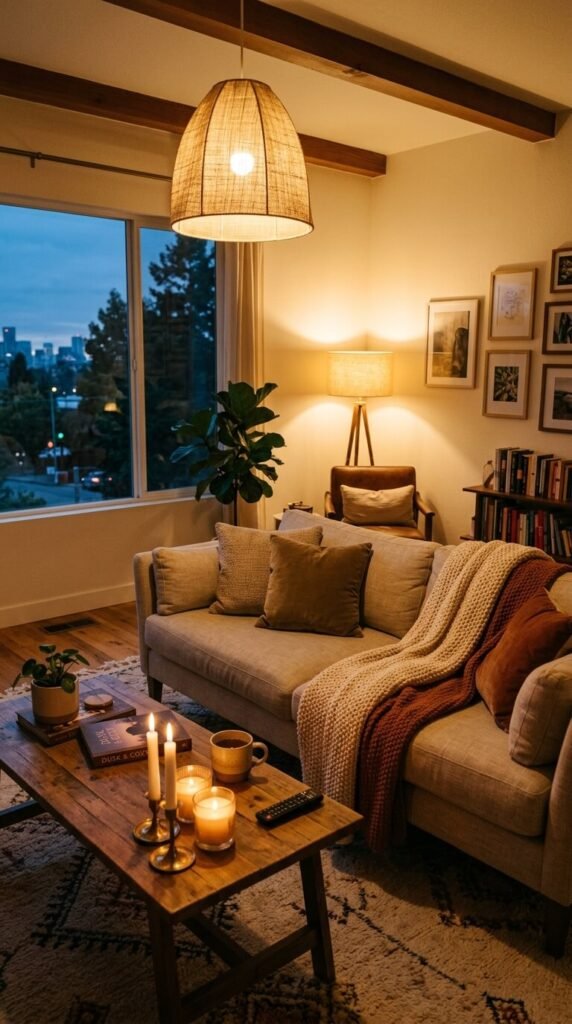
Before you buy a single bulb, it helps to know the basic framework designers use. Every well-lit room relies on three layers working together:
- Ambient lighting — the base layer. Think overhead fixtures, recessed lights, or flush mounts. This is your general illumination.
- Task lighting — focused and functional. Desk lamps, under-cabinet lights, and reading lamps fall here.
- Accent lighting — the mood-maker. This includes wall sconces, picture lights, strip lighting behind shelves, and candles. Accent light adds depth and drama.
Most rooms only use ambient lighting — and that’s exactly why they feel flat. The magic happens when all three layers play together.
Start with Dimmers — Seriously
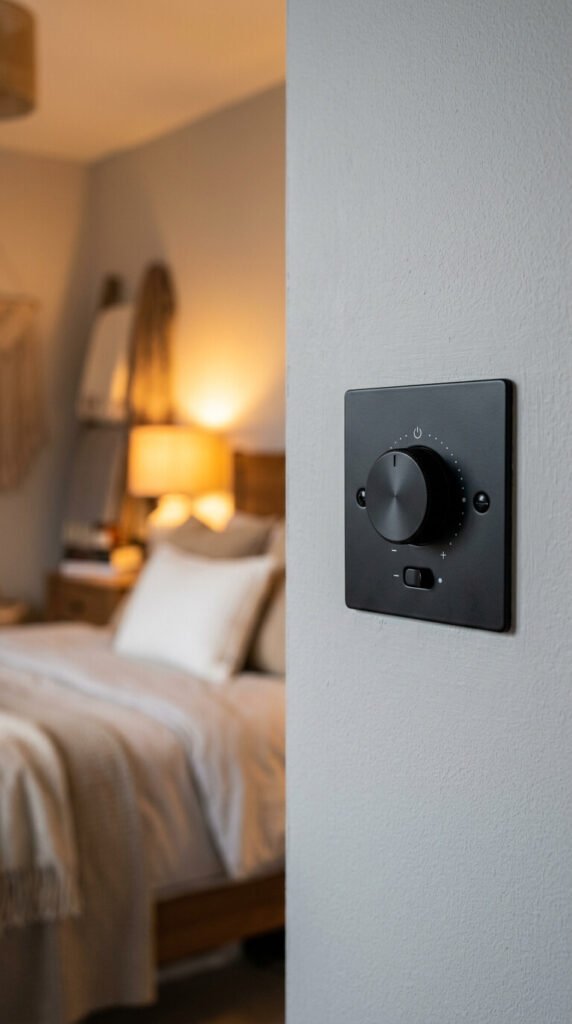
If you do one thing after reading this article, install dimmer switches. They’re inexpensive, easy to swap in, and completely change how a room feels from morning to night.
Bright light for productivity. Soft, warm light for evenings. Dim, candlelit glow for dinner parties. One room, three different atmospheres — no rearranging required.
Choose the Right Color Temperature
Not all “white” light is the same. Bulb color temperature — measured in Kelvins — makes an enormous difference in how a space feels.
- 2700K–3000K (warm white): Cozy, golden, romantic. Perfect for bedrooms, living rooms, and dining areas.
- 3500K–4000K (neutral white): Clean and balanced. Great for kitchens and bathrooms.
- 5000K–6500K (cool/daylight): Crisp and energizing. Best for home offices or garages.
A common mistake? Mixing cool overhead lights with warm lamps. Your eye immediately notices the clash — even if you can’t name it. Keep temperatures consistent within a room for a cohesive, intentional feel.
Layer in Accent Lighting for Instant Depth
This is where ambiance truly comes alive. Accent lighting draws the eye, creates focal points, and adds dimension that flat overhead lighting simply cannot.
Try these ideas:
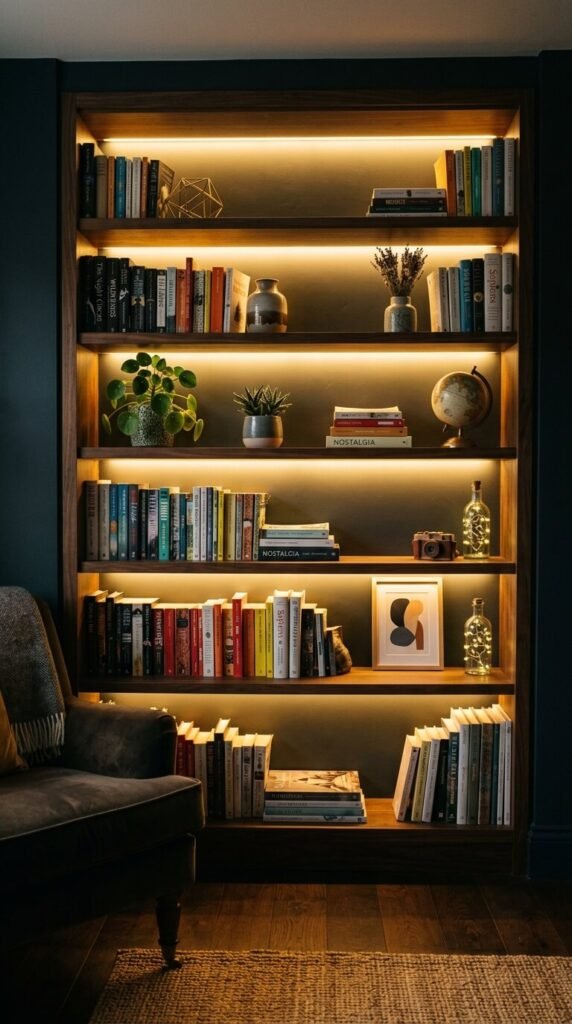
- LED strip lights behind shelves or a TV unit for a subtle backlit glow
- A table lamp with a linen or warm-toned shade in a corner that tends to go dark
- Candles or LED candles grouped on a tray as a centerpiece
- A floor lamp angled toward the ceiling to bounce soft light and make ceilings feel higher
Use Light to Define Zones
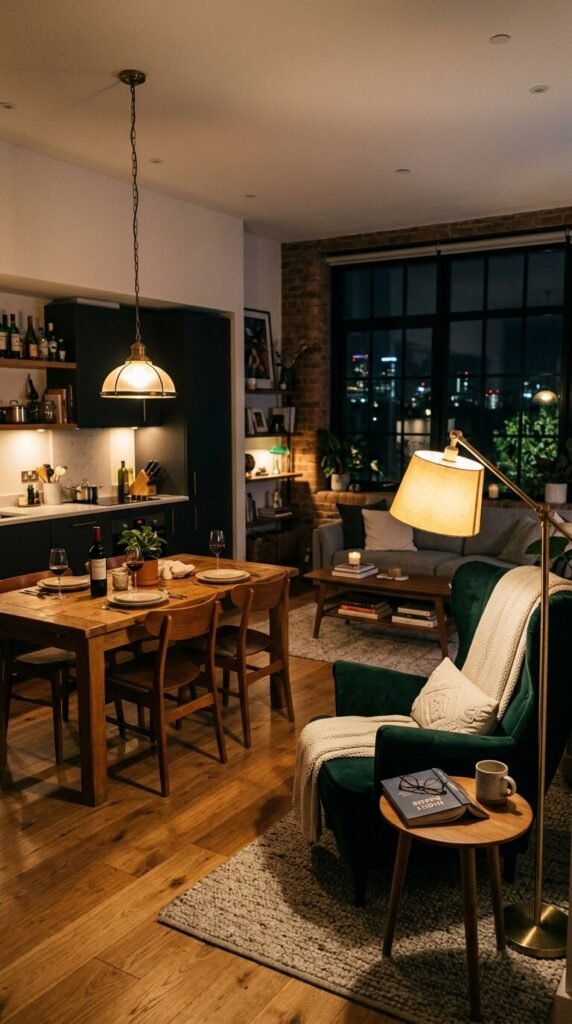
In open-plan spaces, lighting is one of the most powerful tools for visually separating a living area from a dining area or a workspace from a lounge zone — no walls needed.
A pendant light hung low over a dining table instantly says this is the dining zone. A reading lamp beside an armchair carves out a cozy nook. Strategic placement of light tells your eye where one space ends and another begins.
Don’t Forget Natural Light
Ambiance isn’t just a nighttime project. During the day, natural light is your greatest asset — and how you frame it matters.
- Sheer curtains soften harsh sunlight into a dreamy, diffused glow.
- Mirrors placed opposite windows double the natural light and brighten dark corners.
- Keep window ledges clear so light can travel deeper into the room.
Work with your natural light, and your artificial lighting will have an easier job in the evenings.
Final Thoughts
Great lighting doesn’t shout — it whispers. It sets the tone before a single word is spoken or a candle is lit. The key is layers: build from ambient to task to accent, get your color temperature right, and let dimmers do the heavy lifting the rest of the way.
Your space doesn’t need a renovation. It just needs the right light.
✨ Save this guide and come back to it next time you’re redecorating — because the right lighting changes everything.