There’s a reason you walk into certain rooms and immediately exhale. The tension in your shoulders drops. Your eyes don’t know where to look — because everything is exactly where it should be. That quiet magic? It’s symmetry at work. And the best part is, you don’t need to hire an interior designer or gut your entire space to get it. A few intentional moves can completely transform how a room feels.
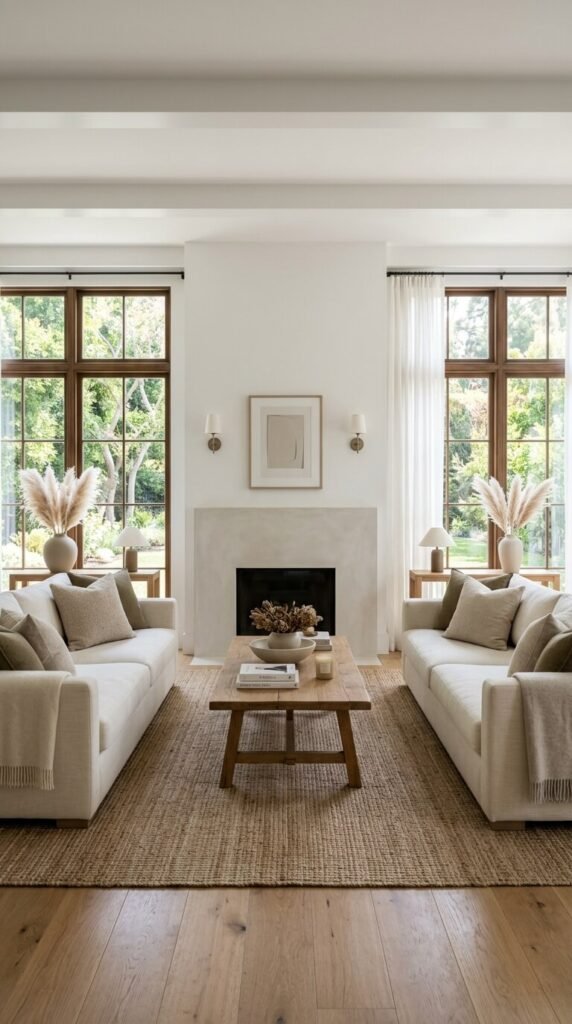
Why Symmetry Feels So Good
Our brains are literally wired to love balance. Symmetry signals safety, order, and calm — which is exactly why balanced rooms feel like a deep breath. When your eye travels around a space and finds a natural rhythm, it relaxes. When it hits something jarring or mismatched, it snags. That little snag? That’s low-key stress.
Symmetry doesn’t mean everything has to be identical or stiff. It means your space has a visual anchor — a center point your eye returns to naturally.
Start With a Focal Point
Every symmetrical room needs a star. This is your anchor.
- In a living room: the fireplace, a large piece of art, or a TV console
- In a bedroom: the headboard wall
- In a dining room: the table itself, or a statement light fixture above it
Once you’ve identified your focal point, everything else radiates out from there in mirror-image balance. Think of it as the spine of the room — everything hangs off it.
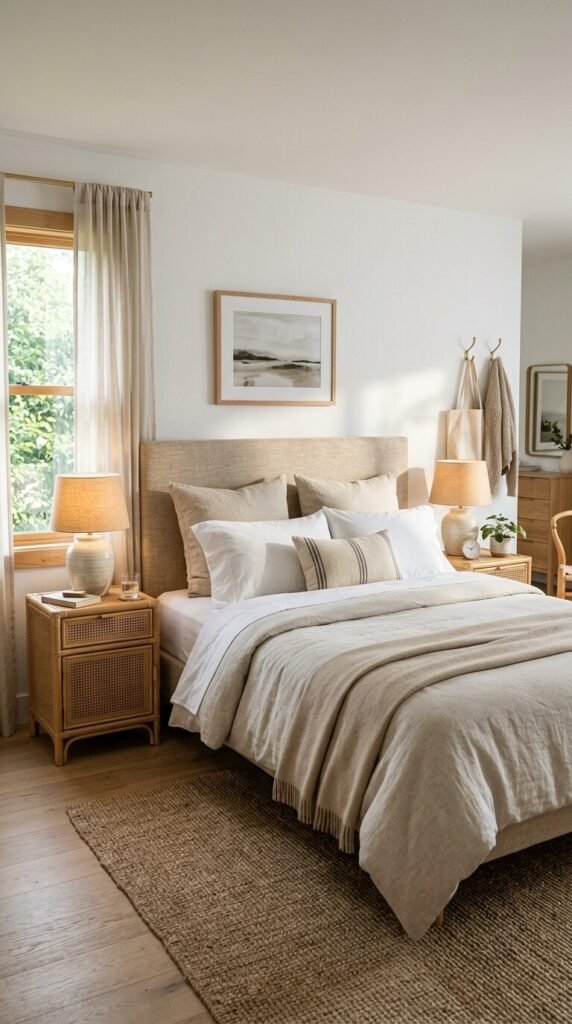
Mirror It: The Furniture Formula
The simplest way to create symmetry is through matching or complementary furniture pairs. Try these combinations:
- Two matching sofas or armchairs flanking a central coffee table
- Identical nightstands and lamps on both sides of a bed
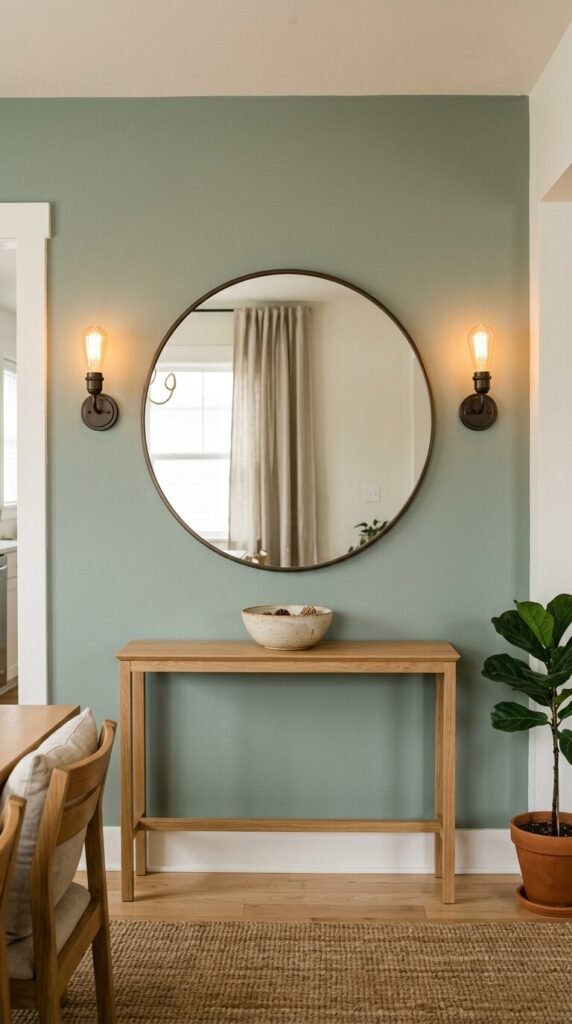
- Matching console table lamps framing a hallway mirror
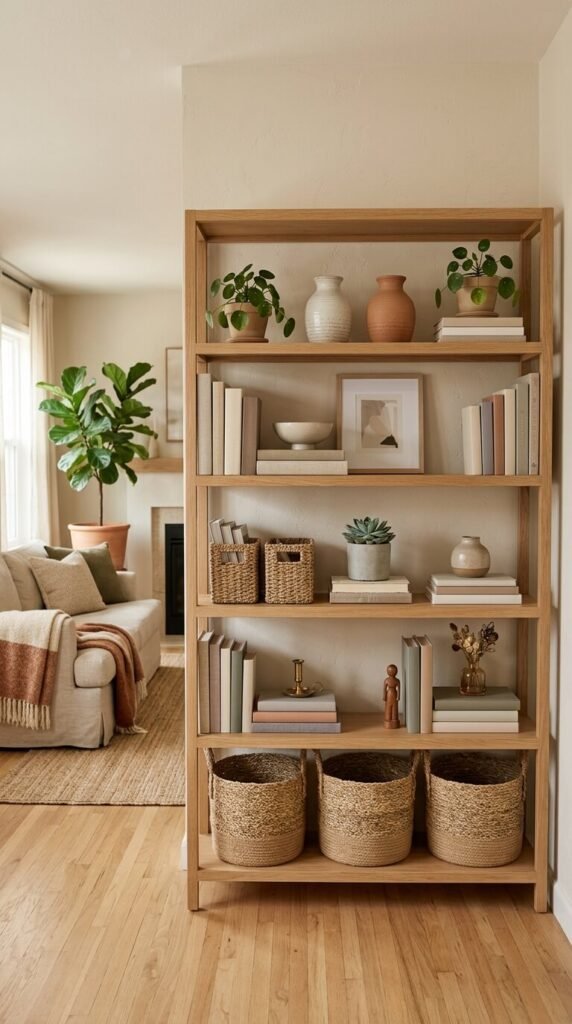
- Twin bookshelves on either side of a doorway or fireplace
You don’t have to spend a fortune on matched sets. Even two chairs in different styles can feel balanced if they share the same height, color family, or visual weight. Visual weight (how “heavy” something looks) matters more than literal matching.
Use Decor to Balance, Not Clutter
Here’s where a lot of people go wrong: they achieve furniture symmetry, then sabotage it with chaotic accessories. Decor should reinforce balance, not fight it.
A few rules to live by:
- Odd numbers work on surfaces, even numbers work in pairs. A trio of candles on a shelf looks curated; a single lamp flanked by matching small plants looks intentional.
- Repeat colors and textures. If you use a warm terracotta pot on the left side, echo it on the right — even if the object is different.
- Keep height variation consistent. Varying heights add interest, but both “sides” of a room should have roughly the same visual height range.
Don’t Forget the Walls
Walls are some of the easiest places to create symmetry — and the most overlooked.
- Hang a large piece of art dead center above a sofa or console and flank it with two smaller prints at equal height
- Create a grid gallery wall with even rows and consistent spacing
- Use matching sconces on either side of a mirror or headboard
- Frame a window with two identical curtain panels, hung at the same height
Even something as simple as moving a single frame from an off-center position to a centered one can make a room feel instantly more put-together.
A Little Asymmetry Keeps It Human
Here’s the secret: perfect symmetry can feel cold. The goal isn’t a showroom — it’s a home that feels calm and lived in.
Allow one intentional break in the pattern:
- A throw blanket draped casually over one armchair
- A plant that’s a little taller on one side
- A stack of books that sits slightly differently
That one “off” note is what makes a space feel curated by a person, not a machine.
The Takeaway
Symmetry isn’t about perfection — it’s about intention. When your eye has a clear path to follow and a center to return to, your whole nervous system settles. And that’s what a home should do: make you feel calm the moment you walk through the door.
Ready to transform your space? Save this article to your home decor board and start with just one room — you’ll be amazed at the difference one balanced wall can make.