Ever stare at your shelves and feel like something’s off — but you can’t figure out what? Chances are, your shelves are missing one simple design secret: the Rule of Threes. This timeless principle says that objects arranged in groups of three are more visually appealing, balanced, and interesting than any other grouping. Once you learn it, you’ll never look at a shelf the same way again.
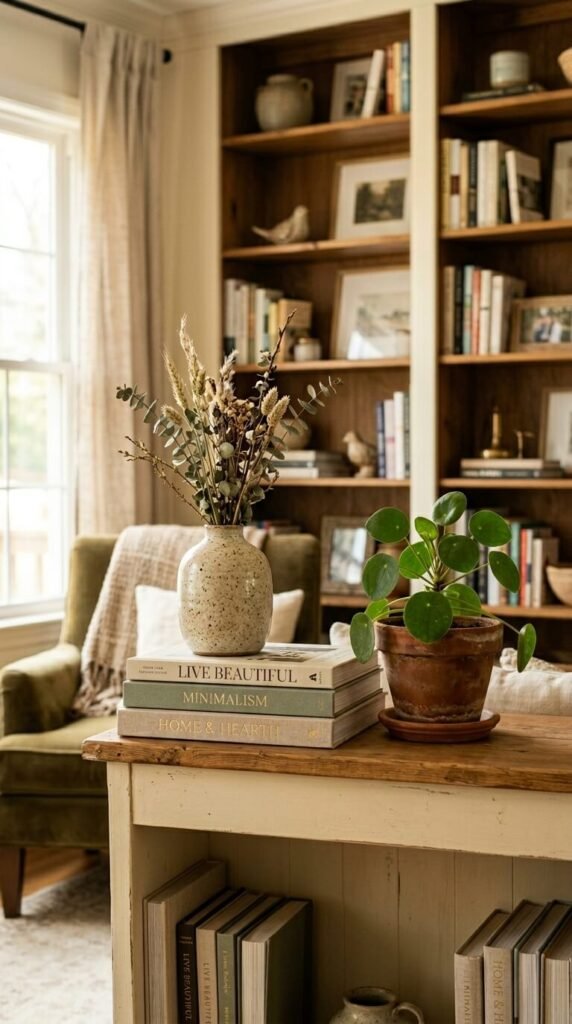
What Is the Rule of Threes?
The Rule of Threes is a design concept borrowed from art, photography, and even storytelling. In home décor, it simply means grouping items in sets of three to create a natural sense of rhythm and balance on your shelves.
Why three? Our brains find even numbers too symmetrical (read: boring) and large odd numbers too chaotic. Three hits the sweet spot — it feels intentional but effortless, curated but lived-in.
Think of it like a visual triangle: your eye moves naturally between three points, creating flow instead of stopping at a single static object.
Step 1: Start With a Strong Anchor Piece
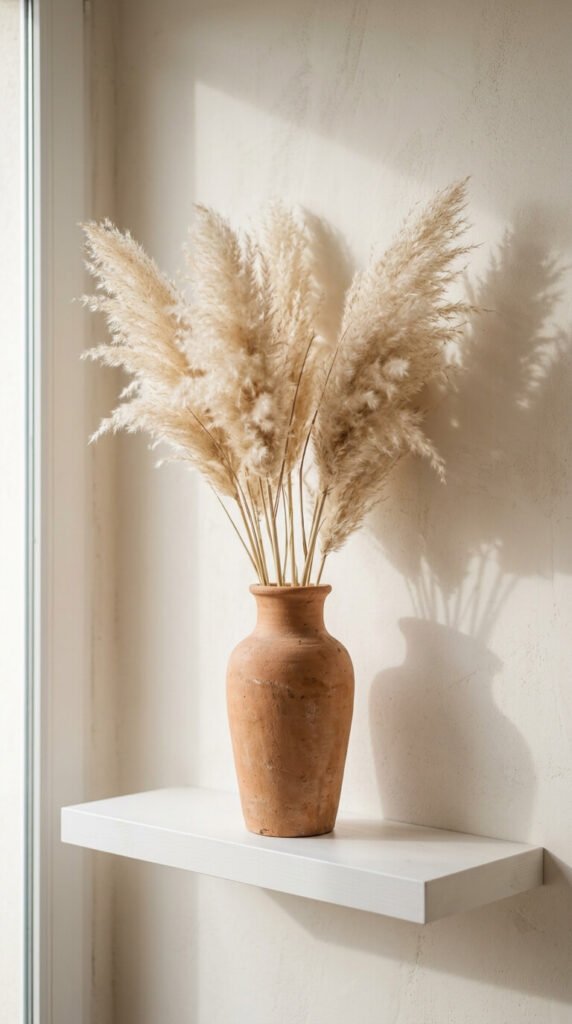
Every group of three needs a star. Choose one tall or bold item to anchor the arrangement — this is your focal point.
Great anchor options include:
- A tall ceramic vase or sculptural vessel
- A framed piece of art leaning against the back of the shelf
- A large trailing plant or a structural potted succulent
- A stack of three to four hardcover books
Your anchor draws the eye first and sets the tone for the entire vignette.
Step 2: Add a Mid-Height Companion
Once your anchor is placed, bring in a medium-height object to create visual movement. This piece bridges the gap between your tallest and shortest items, guiding the eye smoothly up and down.
Good mid-height companions:
- A small framed photo or print
- A candle in a decorative holder
- A woven basket or small decorative bowl
- A short potted plant like a succulent or trailing ivy
Place this piece slightly overlapping or close to your anchor — not too far away, or it’ll feel disconnected.
Step 3: Ground It With a Low, Layered Element
Now finish the trio with something small and low to anchor the base of your grouping. This final piece adds depth and stops the arrangement from feeling like it’s floating.
Try these grounding items:
- A small sculptural object (a stone, a crystal cluster, a figurine)
- A few small books stacked horizontally
- A tiny tray with a few minimalist objects on top
- A chunky pillar candle or decorative paperweight
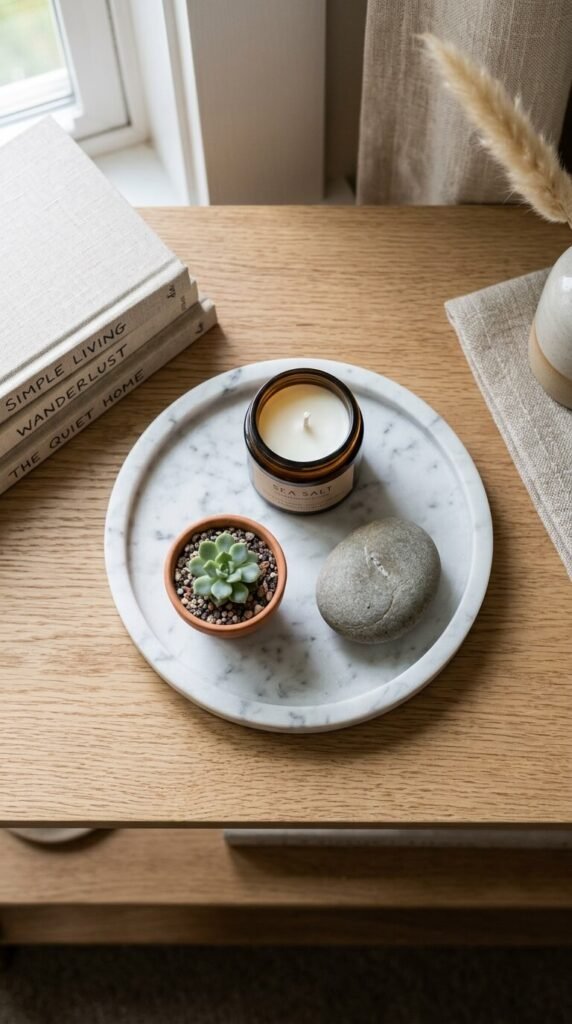
Mix Texture, Height, and Material
The real magic of the Rule of Threes isn’t just how many items you use — it’s what you choose. For maximum visual harmony, vary these three elements within every grouping:
- Height: Tall + medium + short
- Texture: Smooth + woven/rough + soft (e.g., glass + rattan + linen)
- Material: Natural + ceramic + metal or wood
Avoid using three items that are all the same height or the same material. Sameness reads as flat. Contrast creates life.
Repeat the Groupings Across Your Shelves
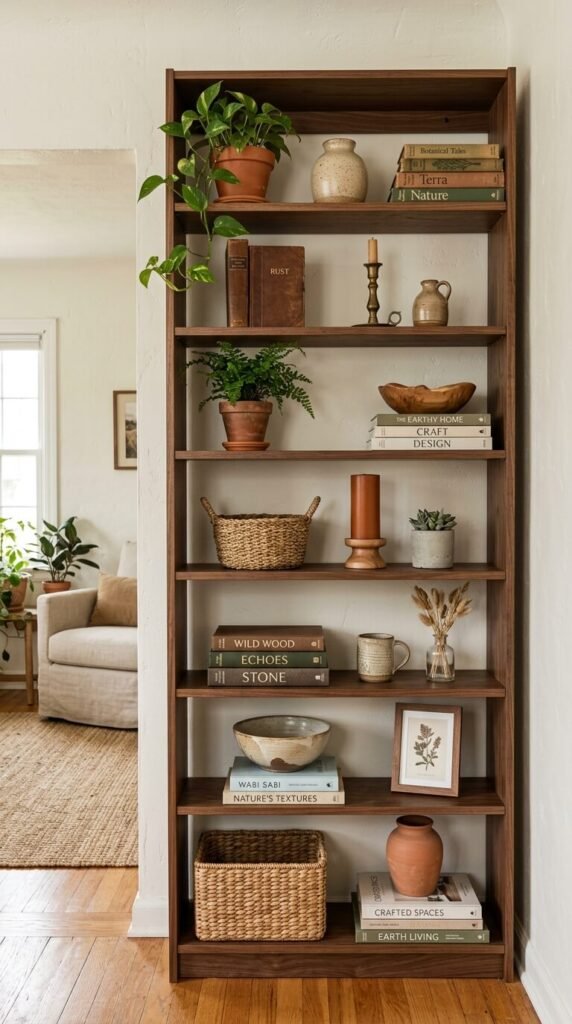
Here’s where it really comes together. Once you’ve nailed one trio, repeat the pattern across your other shelf sections — but don’t copy it exactly. Vary the colors, swap the textures, and keep the heights similar but not identical.
This repetition creates rhythm across the whole shelf unit without making it feel cookie-cutter.
Quick Styling Checklist
Before you step back and admire your work, run through this fast checklist:
- [ ] Every group has three items (or a multiple of three)
- [ ] Heights vary within each grouping
- [ ] At least two different textures appear in each vignette
- [ ] No two sections are identical — but all feel connected
- [ ] You’ve left a little breathing room (negative space is your friend!)
Final Thoughts
Decorating shelves doesn’t have to feel overwhelming or expensive. The Rule of Threes is your cheat code for shelves that look intentional, stylish, and uniquely you — no interior design degree required.
Start with just one shelf. Group three items you already own, play with height and texture, and see the difference for yourself. Once you feel it click, you’ll be restyling every surface in your home.
Save this guide and try it this weekend — your shelves will thank you! 🌿