You’ve found the perfect piece of art. You’re excited to hang it. But then you stand there, hammer in hand, second-guessing every mark on the wall. Too high? Too low? Why does it feel… off?
Here’s the truth: most people hang their art way too high. Like, way too high. But there’s a simple golden rule that interior designers swear by, and once you know it, you’ll never eyeball it wrong again.

Let me walk you through exactly how to hang wall art at the perfect height every single time—no measuring tape anxiety required.
The Golden Rule: 57-60 Inches to Center
Here it is: the magic number that will change your gallery wall game forever.
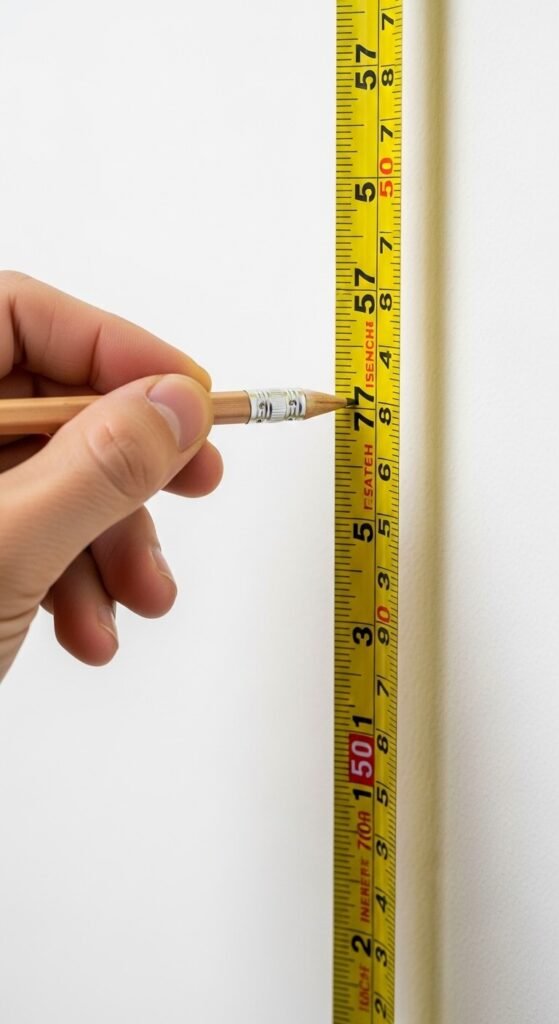
Hang your art so the center of the piece sits 57-60 inches from the floor.
Why? Because 57 inches is the average human eye level, which is the standard height used in museums and galleries. When art is positioned at this height, it feels natural and comfortable to view—like it was meant to be there.
This rule works for:
- Single statement pieces
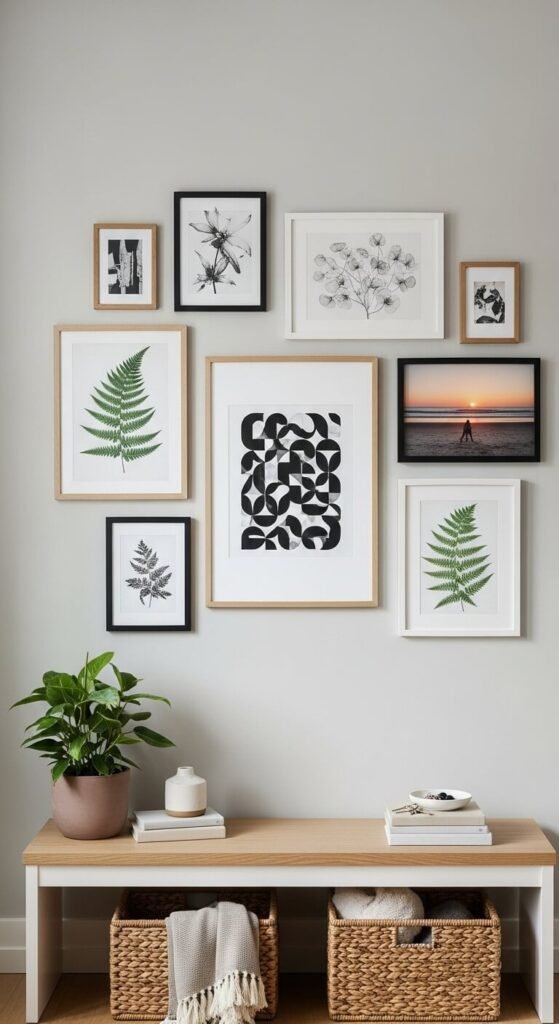
- Gallery walls (measure to the center of the entire arrangement)
- Hallways and entryways
- Bedroom art above dressers
How to Measure and Mark Like a Pro
Ready to put this into action? Here’s your step-by-step:
- Measure your artwork – Find the total height of your frame
- Divide by two – This gives you the center point
- Add 57 inches – Measure up from the floor and mark lightly with a pencil
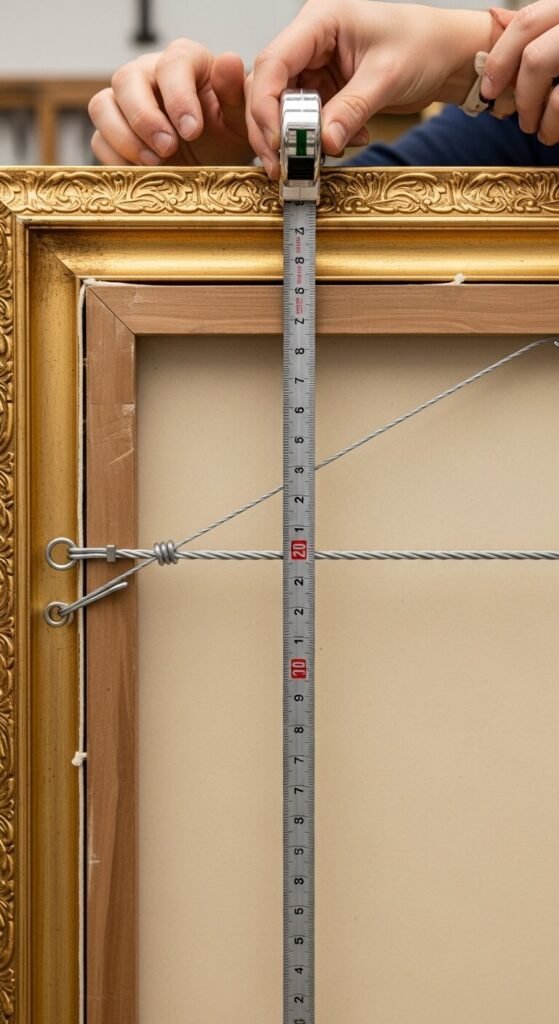
- Account for the hanging hardware – Measure from the top of your frame to where the wire or hook sits when pulled taut
- Subtract that measurement – This is where your nail or hook should go
For example: If your frame is 24 inches tall, the center is at 12 inches. At 57 inches from the floor, your center should sit. If your wire hangs 3 inches from the top, place your hook at 60 inches (57 + 12 – 3 = 66, wait… 57 – 12 + your hook distance).
Actually, let’s make this clearer: Mark 57 inches on the wall. Measure down half the height of your artwork, then add back the distance from the frame top to the wire. That’s where your hook goes.
When to Break the Golden Rule
Rules are made to be broken—sometimes. Here’s when to adjust:
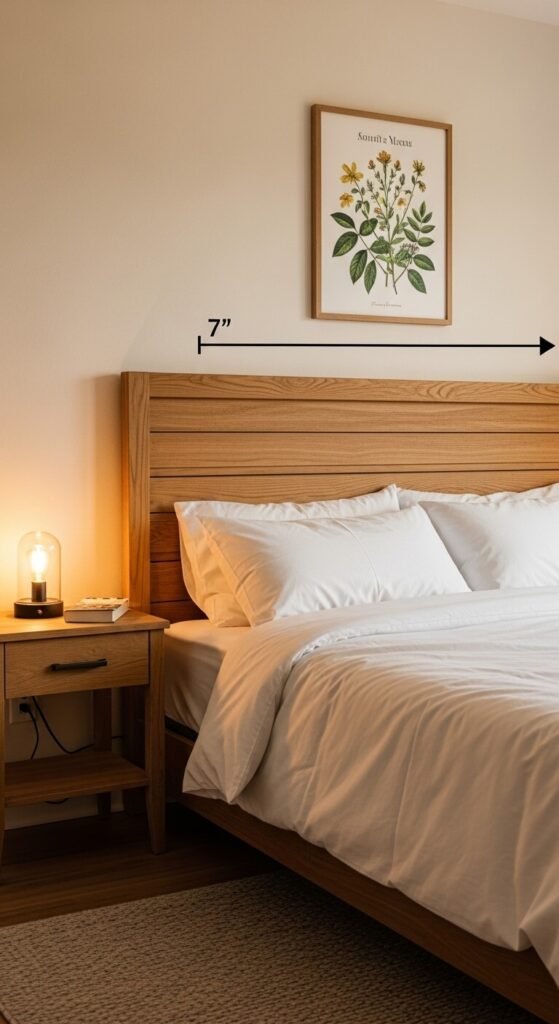
Above furniture: If you’re hanging art above a sofa, console table, or bed, leave 6-8 inches between the furniture top and the bottom of the frame. The art should feel connected to the furniture piece, creating a cohesive look.
In dining rooms: Art above a sideboard or buffet can sit slightly lower so seated diners can enjoy it comfortably.
For kids’ spaces: Lower art in children’s rooms so it’s at their eye level—this makes the space feel more personal and accessible.
High ceilings: In rooms with 10+ foot ceilings, you can go slightly higher than 57 inches to maintain visual balance, but don’t exceed 60 inches.
Gallery Wall Game-Changer
Planning a gallery wall? The 57-inch rule still applies—but with a twist.
Treat your entire gallery wall as one piece of art. Arrange all your frames on the floor first, measure the total height and width of the arrangement, then find the center of that entire collection. Position that center point at 57 inches.
Pro tip: Use painter’s tape to outline your arrangement on the wall before hammering a single nail. You’ll save yourself so many holes.
The Final Takeaway
The 57-60 inch rule isn’t just some random number—it’s the secret to making your space feel professionally designed and visually balanced. Your art deserves to be seen at its best, and now you know exactly how to make that happen.
Stop second-guessing. Grab your tape measure, find that 57-inch sweet spot, and transform your bare walls into a curated gallery you’ll love coming home to.