A single vase can completely transform a shelf, mantel, or dining table — and the best part? You don’t even need flowers to make it work. Whether you’re going for lush and abundant or sleek and sculptural, vases are one of the most versatile decorating tools in any home. Here’s exactly how to style them beautifully in every season, with or without blooms.
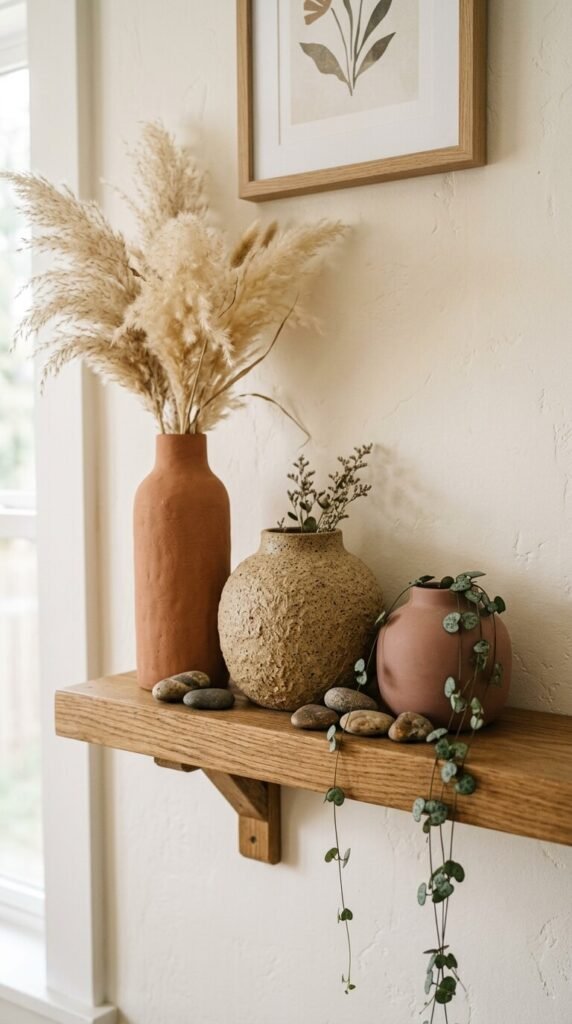
Start With the Right Vase Shapes and Sizes
Before you style anything, the foundation matters. A single vase rarely looks as impactful as a grouping, so think in odd numbers — threes and fives work best.
- Vary the heights: Pair a tall, narrow vase with a mid-height rounded one and a small bud vase.
- Mix materials: Combine glass, ceramic, terracotta, and stone for a collected, layered look.
- Consider the neck: Wide-mouth vases are forgiving with big bouquets; narrow necks are perfect for a single dramatic stem.
The goal is contrast — height against height, matte against glossy, organic shapes against geometric ones.
Styling Vases Empty: The Art of Sculptural Display
Empty vases are criminally underrated. When styled intentionally, they become art objects in their own right.
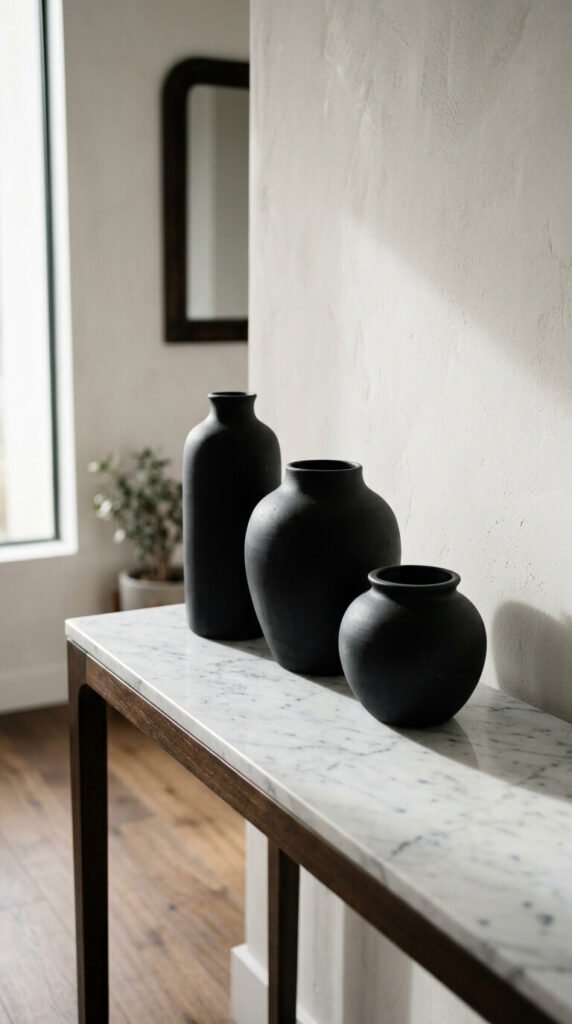
Tips for making empty vases look intentional:
- Group with purpose: Cluster them close together rather than spacing them far apart. Proximity reads as a cohesive arrangement.
- Add organic elements nearby: A stack of books, a smooth river stone, or a single dried branch alongside empty vases anchors the display.
- Play with color blocking: Three vases in the same color family but different shades create a sophisticated, tonal look.
- Use a tray or surface: Placing vases on a wooden tray or marble slab instantly elevates the grouping and defines the “zone.”
Empty vases work beautifully in minimalist or Scandinavian-style interiors where negative space is part of the aesthetic.
Styling Vases Full: Flowers, Branches, and Beyond
When it comes to filling vases, fresh flowers are just the beginning. Think seasonally and you’ll always have something beautiful.
Spring & Summer:
- Lush peonies, ranunculus, or garden roses stuffed into a wide ceramic vase
- A single oversized allium or artichoke bloom in a narrow glass cylinder
Fall:
- Dried wheat stalks, cotton stems, or preserved magnolia leaves
- Branches of orange bittersweet berries in a tall stoneware vase
Winter:
- Eucalyptus and pine sprigs mixed with white amaryllis
- Simple bare branches with lights threaded through them
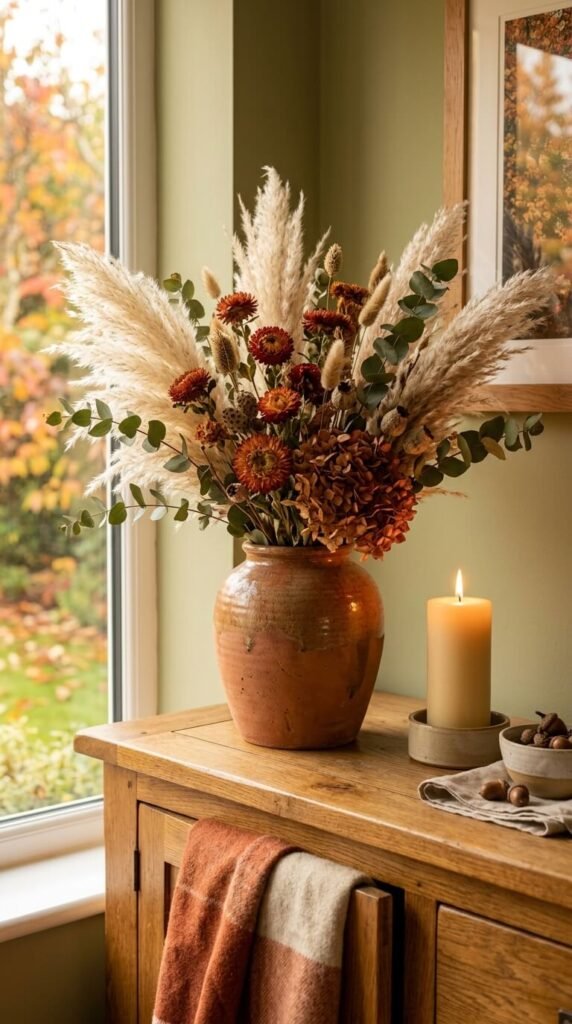
The one-stem rule: Don’t underestimate a single dramatic stem. One long-stemmed rose, a tropical bird-of-paradise, or a branch of cherry blossoms in a tall, simple vase can be more striking than an elaborate arrangement.
The Grouping Formula That Always Works
When you’re arranging multiple vases together — filled or empty — follow this simple formula:
- Anchor the group with the tallest piece at the back or side.
- Layer a medium vase slightly in front and to one side.
- Accent with the smallest vase or object in the foreground.
- Vary the fill: Mix one empty vase with one filled vase and one holding just a single stem. The variety keeps the eye moving.
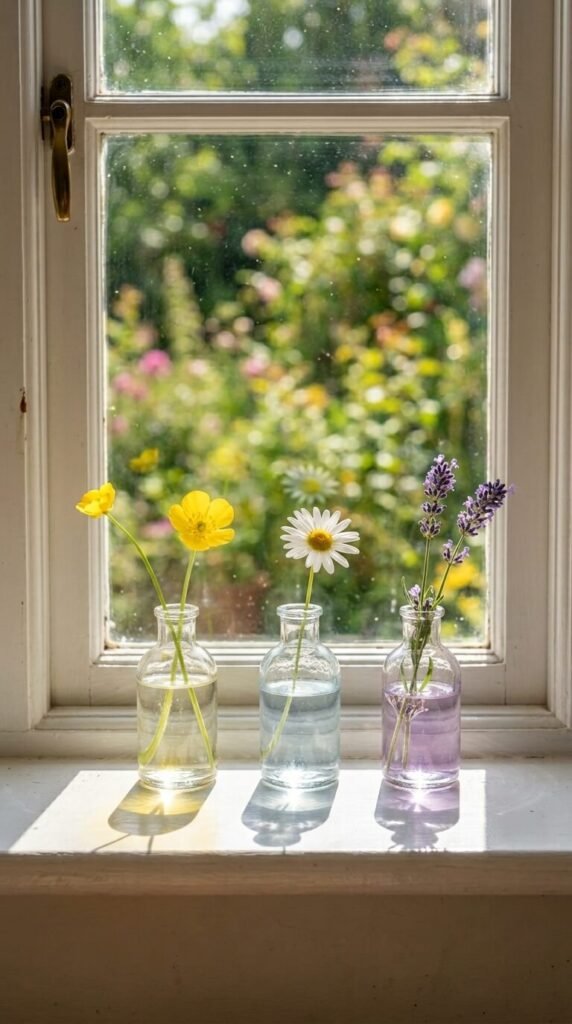
This triangular approach creates depth and flow without looking stiff or overly arranged.
Seasonal Refresh Without Buying New Vases
You don’t need a new vase for every season — just swap what’s in them and what’s around them.
- Spring: Bring in fresh stems, switch to glass or white ceramic, add light linen fabric nearby.
- Summer: Go tropical with bold leaves and bright blooms in bold, colorful vases.
- Fall: Shift to warm terracottas and stonewares; fill with dried botanicals.
- Winter: Go dark and moody — dark glazed vases, evergreen sprigs, metallic accents.
A small rotation of accessories (candles, books, trays) around the same vases makes the whole display feel brand new.
Final Thoughts
Styling vases is one of the simplest, most affordable ways to keep your home feeling fresh and intentional all year long. The secret isn’t having the most expensive pieces — it’s knowing how to group, layer, and mix what you already own.
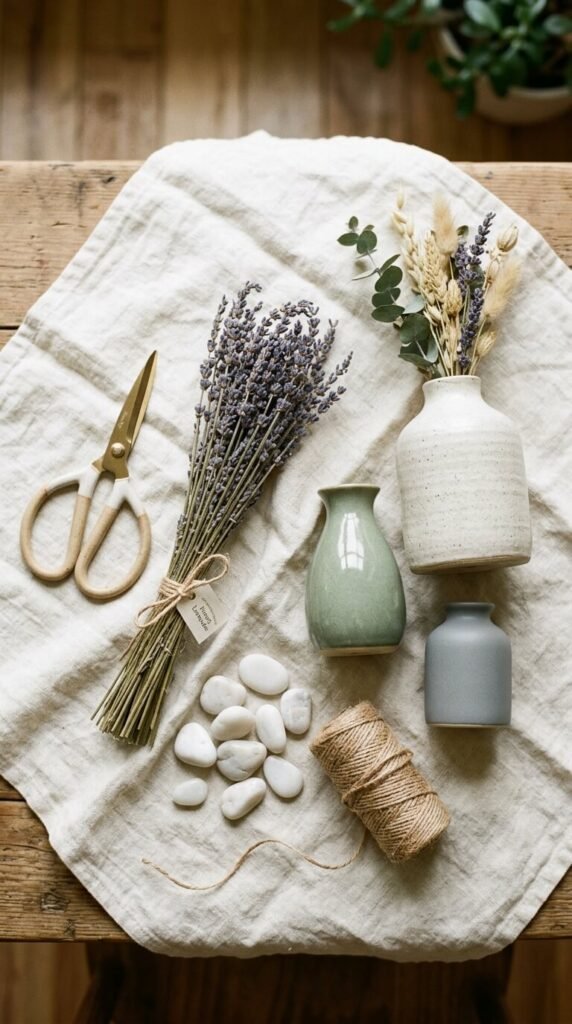
Save this article for your next decorating refresh — and pin it so you always have a go-to guide when you want to give your shelves or tables a quick, beautiful update!