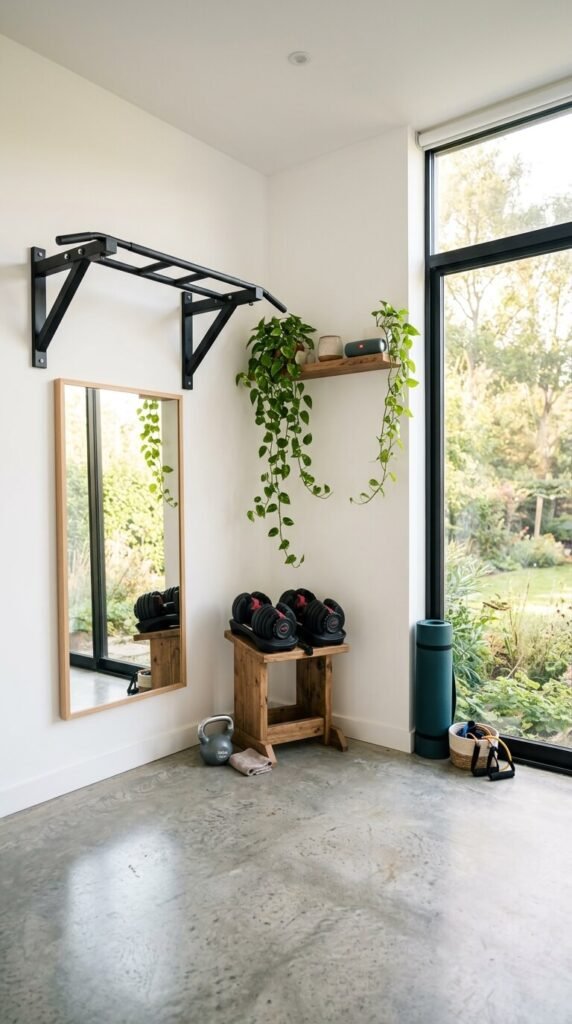
Working out at home hits different when your space actually looks good. The truth is, most people skip gym days not because they lack motivation — they skip because their “gym” is a dusty corner with a forgotten resistance band. When your home gym feels inviting, calm, and well put-together, showing up becomes the easy part. You don’t need a massive budget or a dedicated room. A few smart choices — the right colors, good lighting, one or two pieces of quality equipment — can turn any small space into a place you genuinely want to be. These 27 setups prove it’s absolutely doable, no matter your space or budget.
1. The Minimalist White Wall Setup
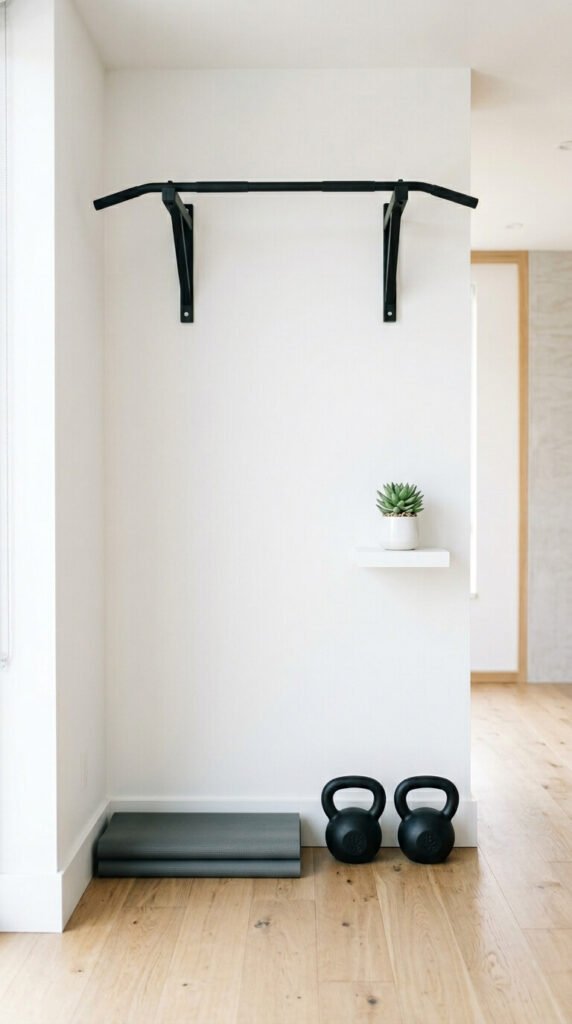
Less is genuinely more here. White or off-white walls make any room feel open and clean. You don’t need much equipment — a pull-up bar, a kettlebell, and a mat are plenty to start. Keep surfaces clear. A floating shelf with a small plant adds life without clutter. This setup works perfectly in a spare bedroom or even a wide hallway. Paint is cheap. A fresh coat of white can transform a dingy space for under $30. Start there, then add pieces slowly.
2. The Garage Gym With Exposed Brick
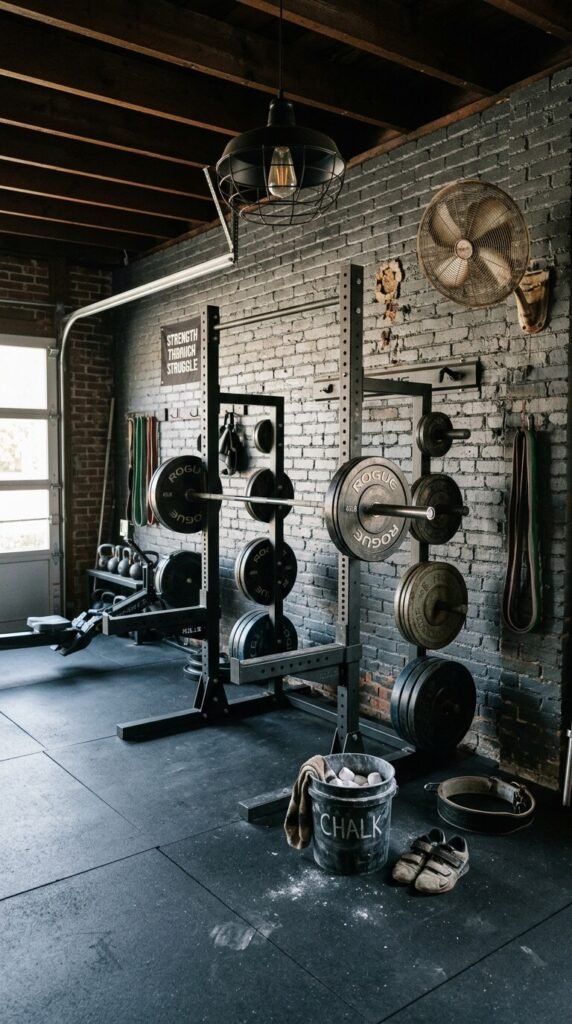
Garages are goldmines for home gyms. Exposed brick adds character without any extra effort or cost — just leave it bare or paint it a dark, moody tone. Rubber floor tiles protect the concrete and muffle sound. You can buy them in packs for around $1–2 per square foot. Add a basic barbell set and a squat rack, and you have a serious lifting space. An industrial-style pendant light ($25–$40 on Amazon) pulls the whole look together and makes the space feel intentional rather than makeshift.
3. The Mirror Wall Illusion
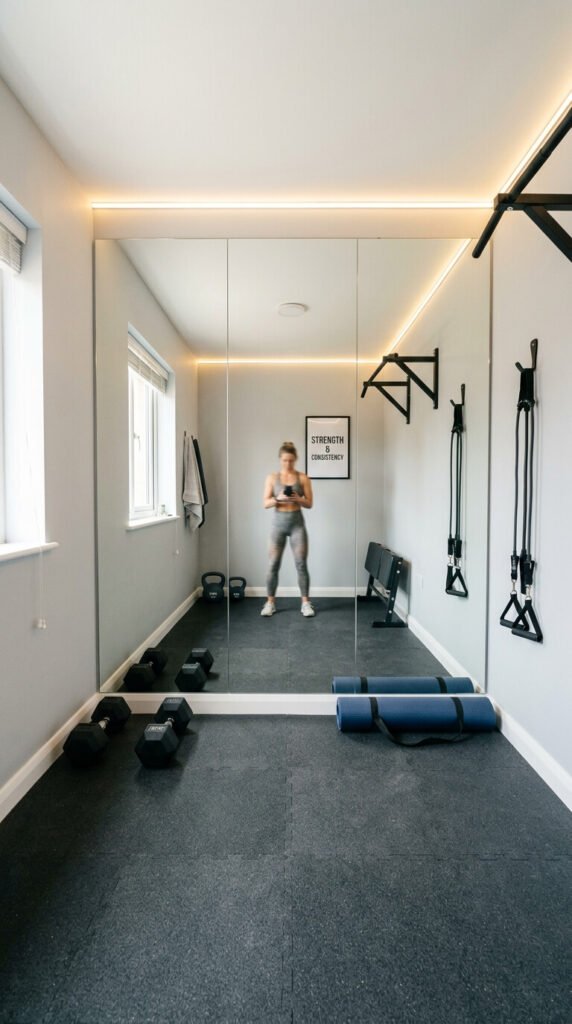
Mirrors are the single best investment for a small home gym. They double the visual size of any room and let you check your form during every rep. You don’t need custom glass — large frameless mirrors from IKEA (the HOVET mirror, around $130) leaned against a wall look clean and modern. Line up two or three side by side for a near-seamless wall effect. Add warm LED strip lighting along the top edge for a polished studio finish. Total cost for the mirror wall look: under $400.
4. The Boho Plant Gym
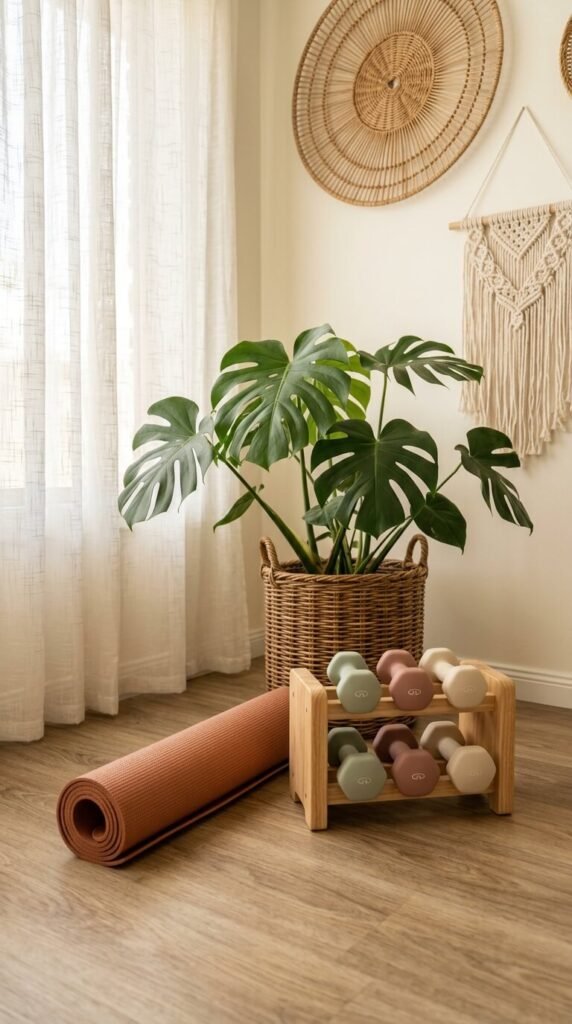
Who says gyms have to feel cold or clinical? Plants change the entire vibe of a workout space. They clean the air, reduce stress, and make any room feel alive. Go for low-maintenance options like pothos, snake plants, or a big monstera in a wicker basket. Pair them with warm wood tones and neutral workout gear in terracotta or sage. This setup works beautifully in a living room corner. A few plants from a local nursery cost $10–$20 each — one or two is all you need.
5. The Dark Moody Powerlifting Den
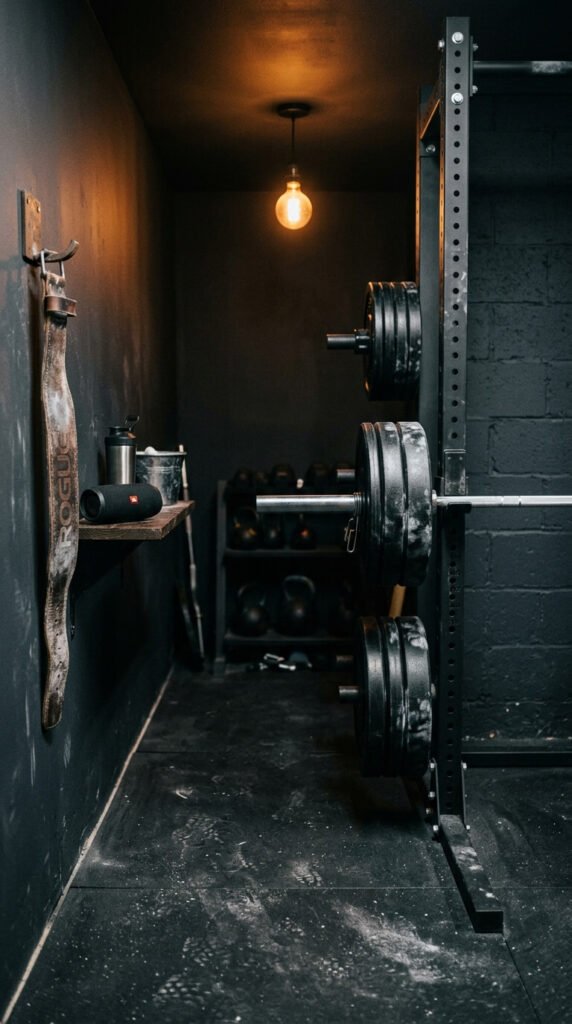
Dark walls and moody lighting create a space that means business. Charcoal, deep navy, or forest green walls pair perfectly with black equipment and chrome accents. This look is especially popular for powerlifting setups where the goal is performance over aesthetics. Use a single warm Edison bulb or a pendant lamp for dramatic effect. Keep the floor covered in thick rubber mats for sound dampening. Dark wall paint is no more expensive than light — a gallon runs $25–$40 at any hardware store.
6. The Functional Floating Shelf System
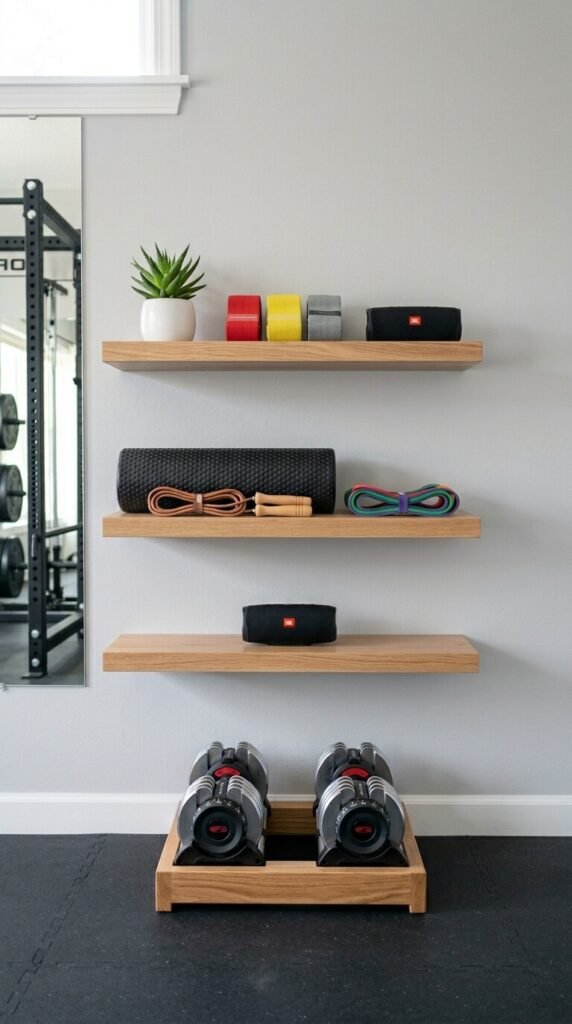
Storage solves half your aesthetic problems. Floating shelves keep equipment off the floor and make the space feel curated rather than chaotic. Use three shelves at different heights — one for small gear like bands and jump ropes, one for your speaker and water bottle, one for a plant or a candle. IKEA LACK shelves cost around $10 each. Pair them with simple hooks for resistance bands or towels. When everything has a place, the room looks intentional and clean — even with a small footprint.
7. The Yoga and Meditation Corner
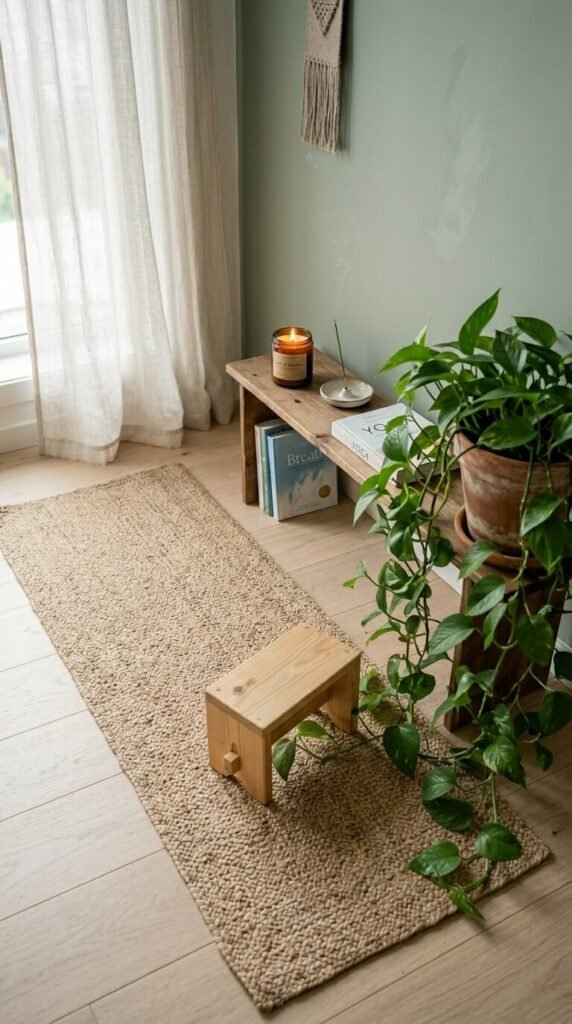
Not every home gym needs heavy iron. A dedicated yoga corner costs almost nothing and pays off daily. All you need is a quality mat ($20–$40), a block, a strap, and a quiet corner. Sage green or pale blue walls set a calming tone. Add a low shelf with a candle and a small plant. Use a tension rod with sheer linen curtains to separate the space from the rest of the room. It feels like a real studio without building anything permanent.
8. The Neon Accent Light Gym
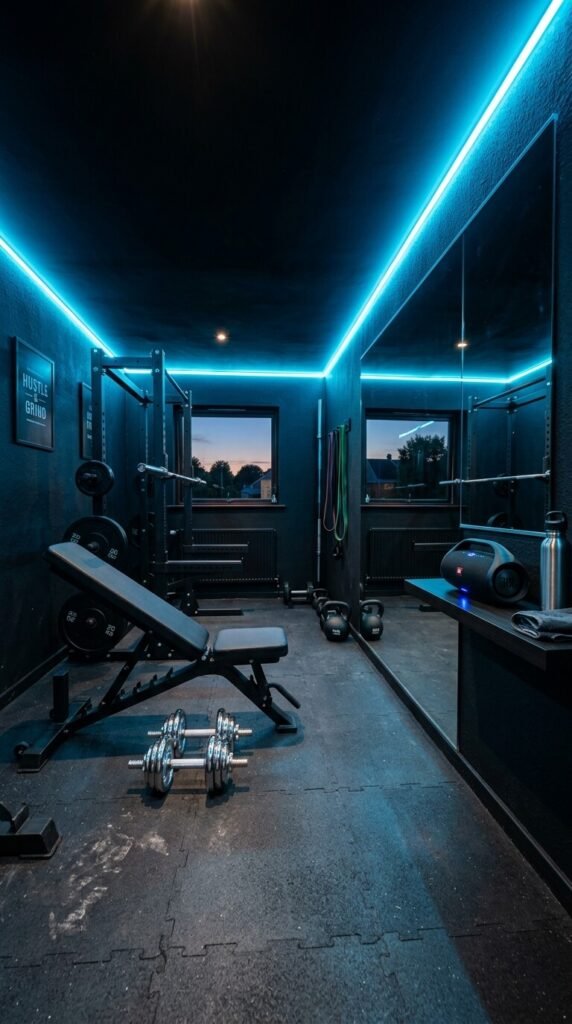
LED neon strips change the entire energy of a room. A smart LED strip light kit (around $20–$40 on Amazon) lets you switch between colors depending on your mood — energizing blue for HIIT, soft white for stretching, red for heavy lifts. Mount them along the ceiling perimeter or behind your mirror for a glow effect. Pair with dark walls for maximum visual impact. This is one of the easiest and cheapest upgrades you can make to an existing space. Takes about 20 minutes to install.
9. The Spare Bedroom Conversion
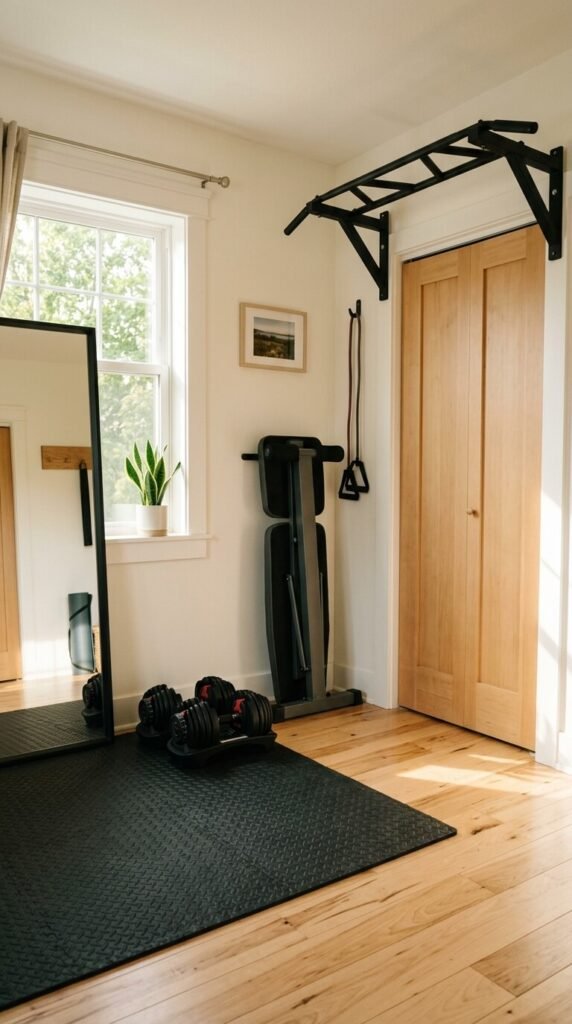
A spare bedroom is the easiest room to convert. Remove the bed, add a mat and some equipment, and you’re done. Keep the walls light and neutral so the space feels open. A wall-mounted pull-up bar over the door frame uses dead space brilliantly. Leave the closet for storing gear, bands, and accessories. A folding weight bench ($80–$150) is ideal — it tucks away when you want the room back. The best part: the door closes and your gym disappears when guests arrive.
10. The Basement Gym With Proper Lighting
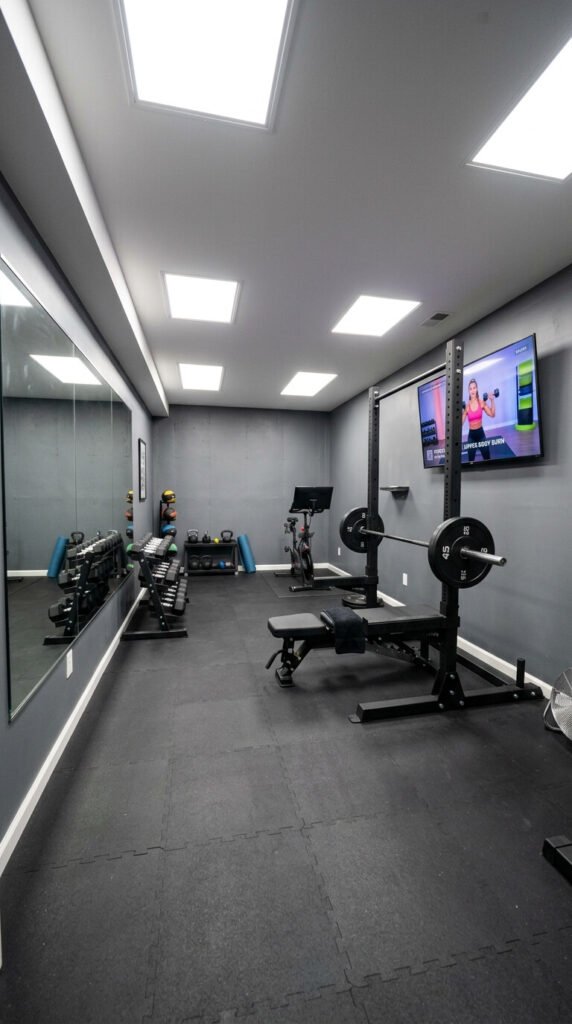
Basements have one real problem: bad lighting. Fix that and everything else falls into place. Bright, even LED panel lights ($30–$60 each) eliminate the dungeon feel completely. Paint the walls a light grey or warm white to bounce light around. Lay rubber flooring tiles for comfort and to protect the concrete. A flat screen on the wall for workout videos adds function and makes the space feel less isolated. With proper lighting and light walls, a basement gym can feel just as good as any above-ground space.
11. The Pegboard Equipment Wall
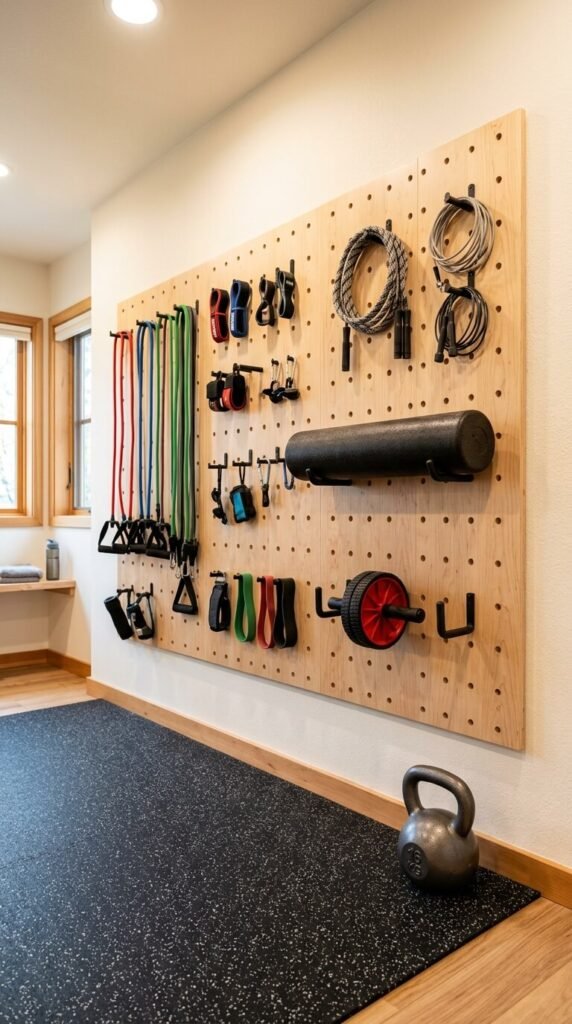
Pegboards are the ultimate DIY storage solution. A single 4×8 sheet of pegboard costs about $15 at a hardware store. Mount it on the wall, paint it white or leave it natural wood, and hang all your small accessories on metal hooks. Resistance bands, jump ropes, ab wheels, foam rollers — everything has a visible home. No more digging through bins or piling things in corners. The organized wall becomes a visual statement. It also makes grabbing gear mid-workout effortless, which keeps your momentum going.
12. The Jungle Gym (Maximum Plants)
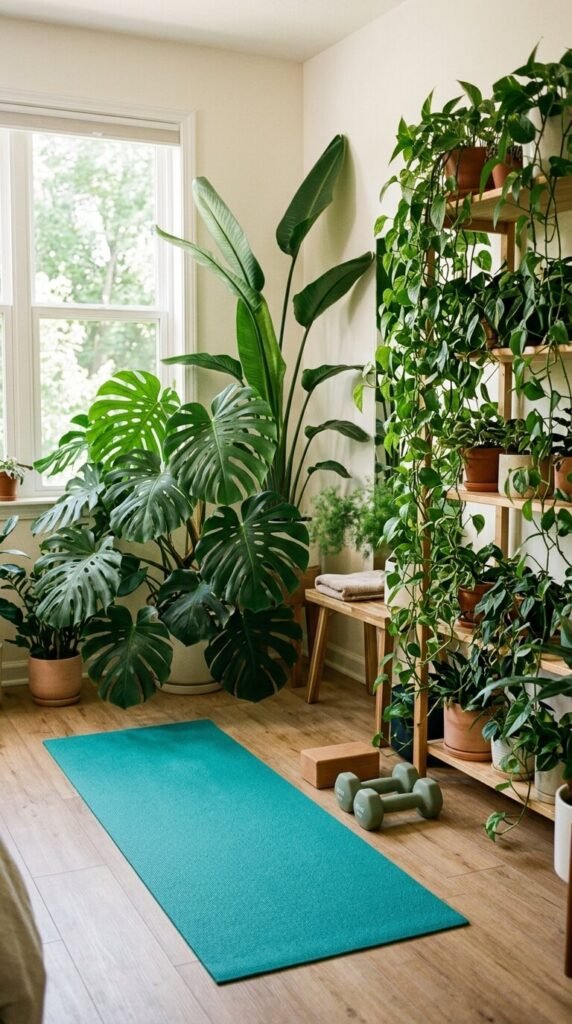
More plants, more peace. A heavily planted home gym reduces cortisol (the stress hormone) and makes exercise feel less like a chore. Go big — a bird of paradise, a monstera, and two or three hanging pothos create a genuine jungle feel. Group them around your workout area rather than spreading them across the room. Use matching terracotta or wicker pots for a cohesive look. Most of these plants thrive in bright indirect light — perfect for a room with one or two windows. Start with three plants and grow from there.
13. The Wall-Mounted Foldable Rack Setup
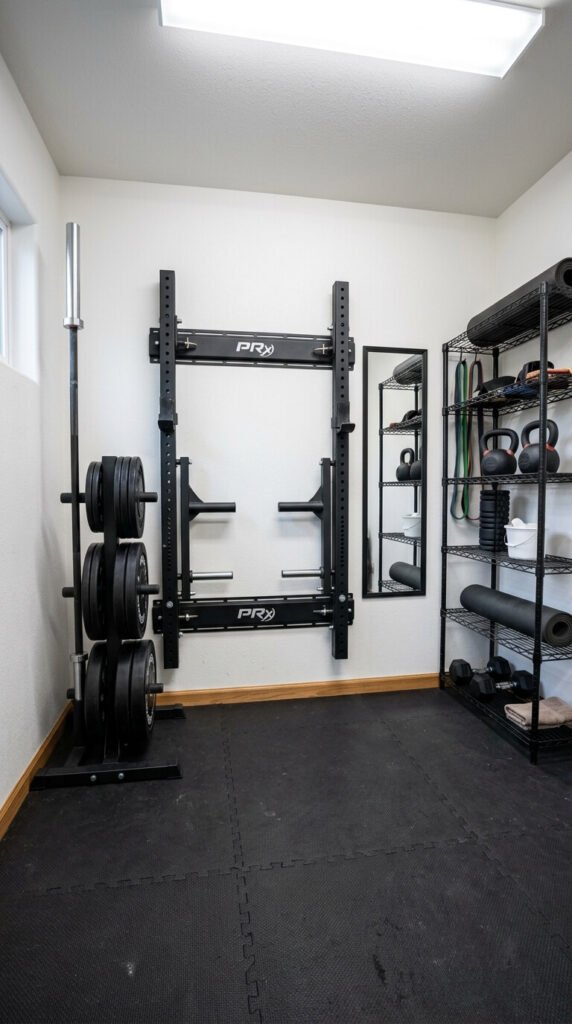
Foldable wall-mounted racks are the secret weapon for small spaces. When folded flat, they stick out only 3–4 inches from the wall. Open them up and you have a full squat rack. Brands like Rogue and Titan make quality options, but budget versions run $200–$350 on Amazon. Pair with a few weight plates stored vertically on a floor holder, and your gym footprint drops to almost nothing. This setup is perfect for apartments or single-car garages where every square foot matters. You get a real lifting setup without sacrificing your space permanently.
14. The Scandinavian Aesthetic Gym
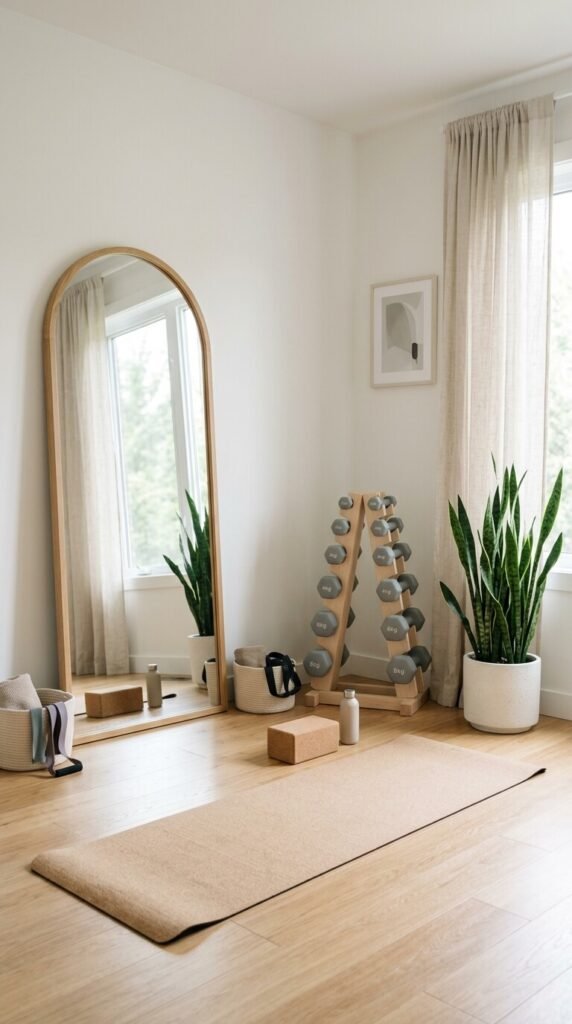
Clean lines, natural materials, and a neutral palette — that’s the Scandinavian gym in three phrases. Light wood, white walls, and muted tones create a space that feels both calming and aspirational. Look for a birch wood dumbbell rack (or DIY one with pre-cut lumber from a hardware store). Keep equipment in matching neutral tones — matte grey, ivory, or warm beige. A large arched mirror ($100–$200) is the defining piece. Add a tall snake plant in a white ceramic pot and the look is complete.
15. The Corner Calisthenics Setup
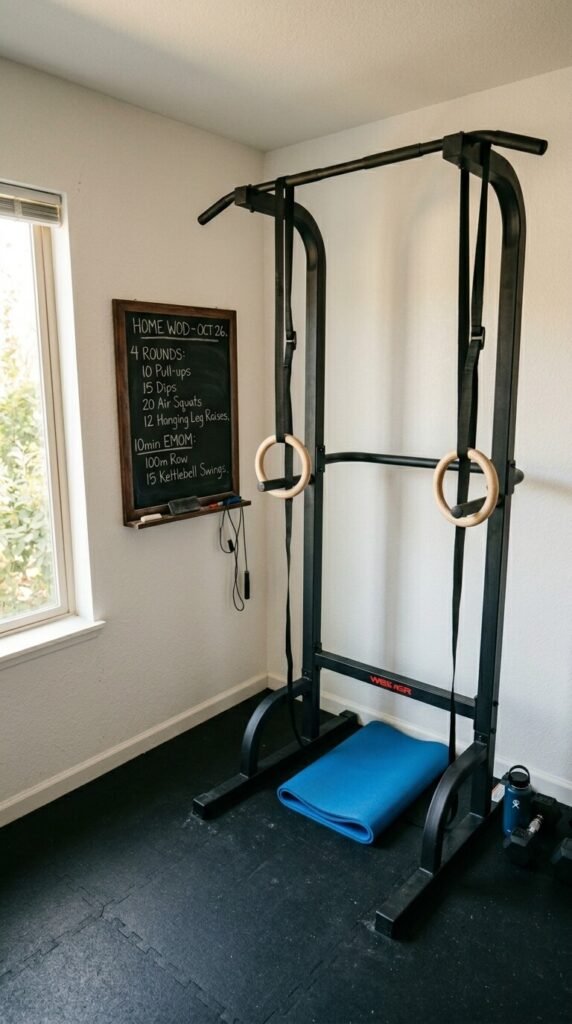
You genuinely don’t need weights to build a serious body. A calisthenics corner only needs about 6×6 feet. A freestanding pull-up and dip station ($100–$200) fits in any corner and handles pull-ups, dips, and ring work. Add a gymnastics ring set ($30) and you have a full upper-body rig. A small chalkboard for writing your workout is a charming, budget-friendly touch. Dark rubber mats protect the floor. This setup is clean, functional, and looks fantastic — especially in minimal, white-walled spaces.
16. The Vintage Retro Gym
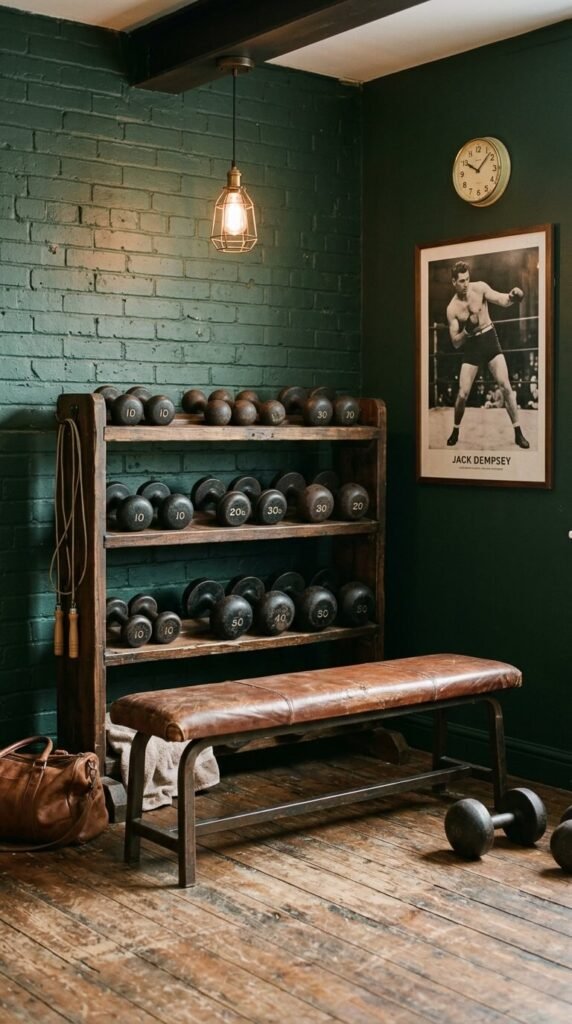
Vintage gyms have soul that modern spaces often lack. Dark green or burgundy walls, leather equipment, and Edison bulbs take your gym back a few decades — in the best way. Hunt for cast iron dumbbells at thrift stores or Facebook Marketplace (often $0.25–$0.50 per pound). A leather-look bench ($80–$150) is the centerpiece. Frame a couple of black-and-white athletic posters for the walls. A cage-style pendant light ($25–$40) completes the look. This style rewards patience and secondhand shopping.
17. The Floating Wood Floor Gym
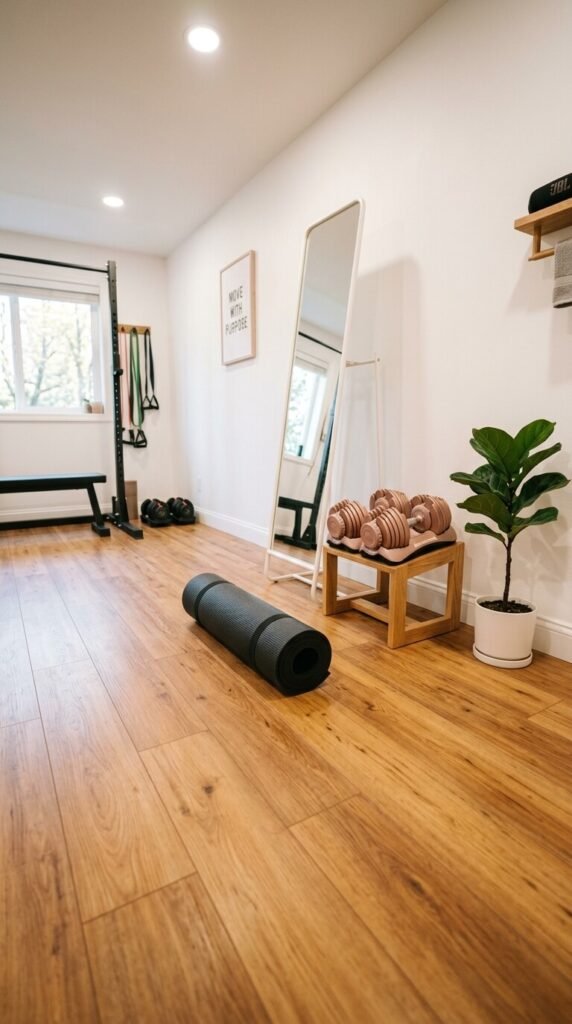
Wood-look flooring makes a gym feel like a real room rather than a utility space. Floating laminate or LVP (luxury vinyl plank) goes over concrete, carpet, or existing flooring with no permanent changes. It costs $1–$3 per square foot and installs in an afternoon without professional help. Pair it with white walls and warm overhead lighting for a studio feel. Add a tall mirror and some matching accessories in neutral tones — rose gold, brass, or matte black — and the space looks genuinely designed rather than thrown together.
18. The Audio-Forward Gym
Sound makes workouts. A dedicated speaker setup changes how your gym feels before you even pick up a weight. Mount a quality Bluetooth speaker at ear height on the wall — brands like JBL, Ultimate Ears, or Sonos all have wall-mountable options. Pair with a smart LED bulb set to change color with the music. Run your workout playlist through a proper speaker and the space transforms from a room to an experience. Budget option: JBL Flip 6 ($120) on a small shelf bracket does the job extremely well.
19. The Small Apartment Studio Gym
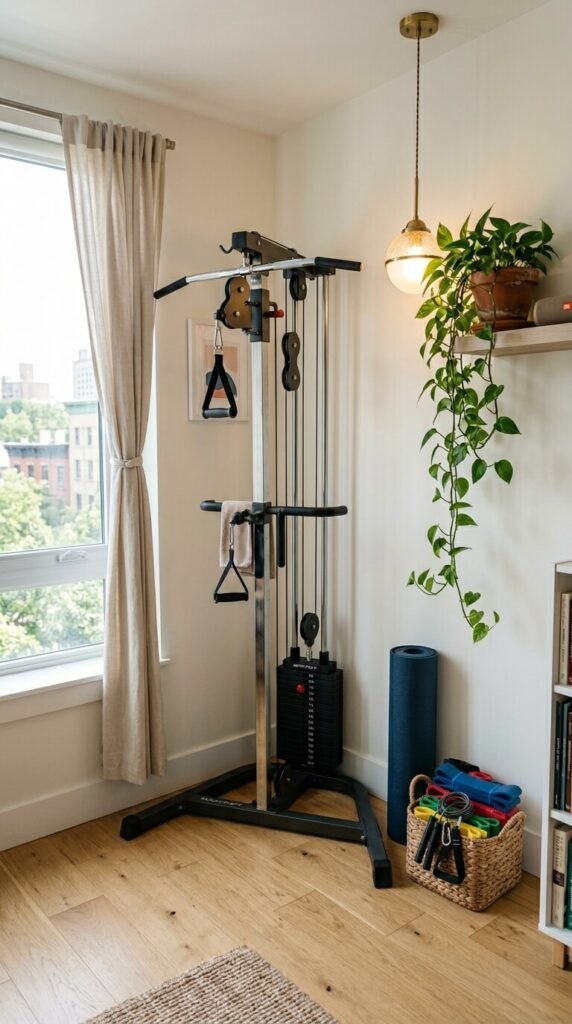
Small spaces demand smart choices. The goal is zero wasted square footage. Choose a compact all-in-one cable machine ($300–$600) that fits in a 3-foot footprint. Store bands, sliders, and accessories in a small wicker basket on the floor. A foldable yoga mat hangs on a wall hook when not in use. One floating shelf above holds your speaker, phone, and a plant. When the workout is done, everything tucks away and the corner goes back to being a corner. Apartment gyms thrive on intentional organization.
20. The Functional Art Wall Gym
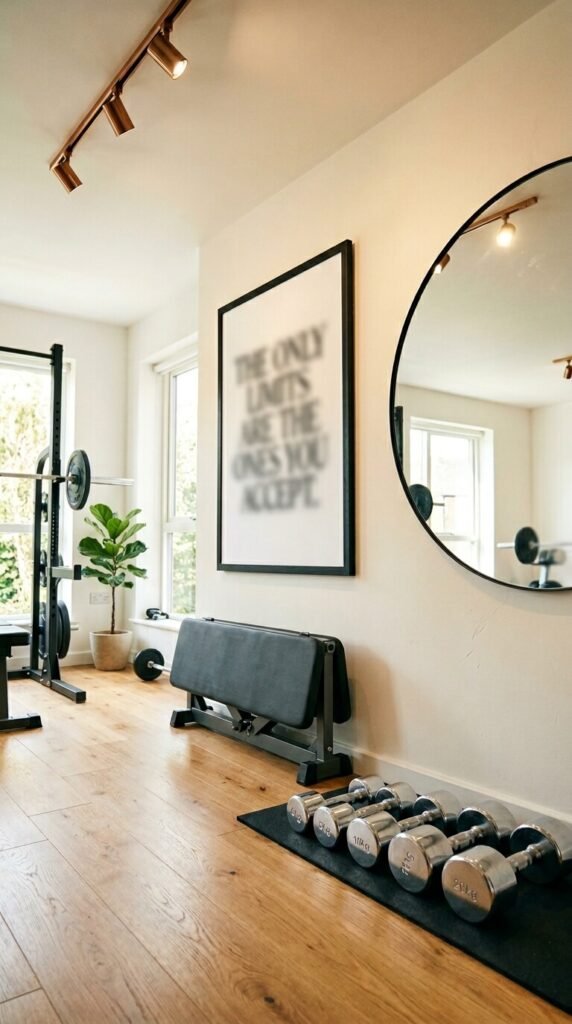
Your gym walls don’t have to be blank or covered in generic posters. Large-format art prints make the space feel personal. Look for abstract sports photography, graphic prints, or oversized black-and-white pieces on Etsy or IKEA. Frame them simply in thin black or natural wood frames. A round mirror beside a large print adds depth and balances the wall. The combination of art and mirror signals that this is a space you care about — which makes you care about the workouts you do there too.
21. The Turf Floor Training Space
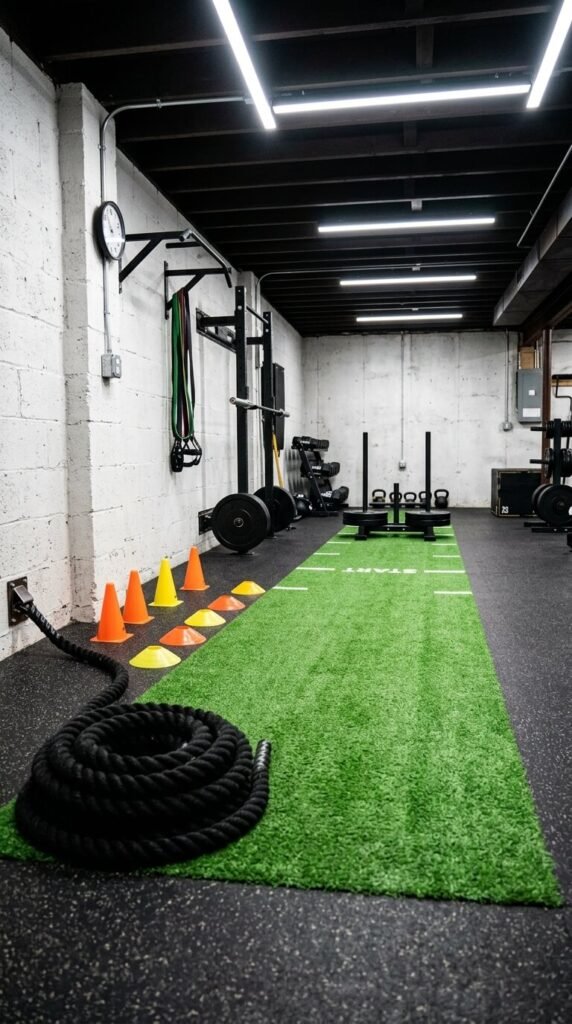
A turf strip turns any room into an athletic training space instantly. Artificial turf rolls ($1–$2 per square foot) are widely available online and come in any length. Lay a 4×10-foot strip down the center of your gym for sled pushes, bear crawls, and agility drills. Pair it with a weighted sled ($80–$150), a battle rope ($40–$80), and agility cones. The green turf against dark rubber flooring creates a striking two-tone look. This setup works especially well in garages or basements with more floor space to play with.
22. The Bright Color Accent Gym
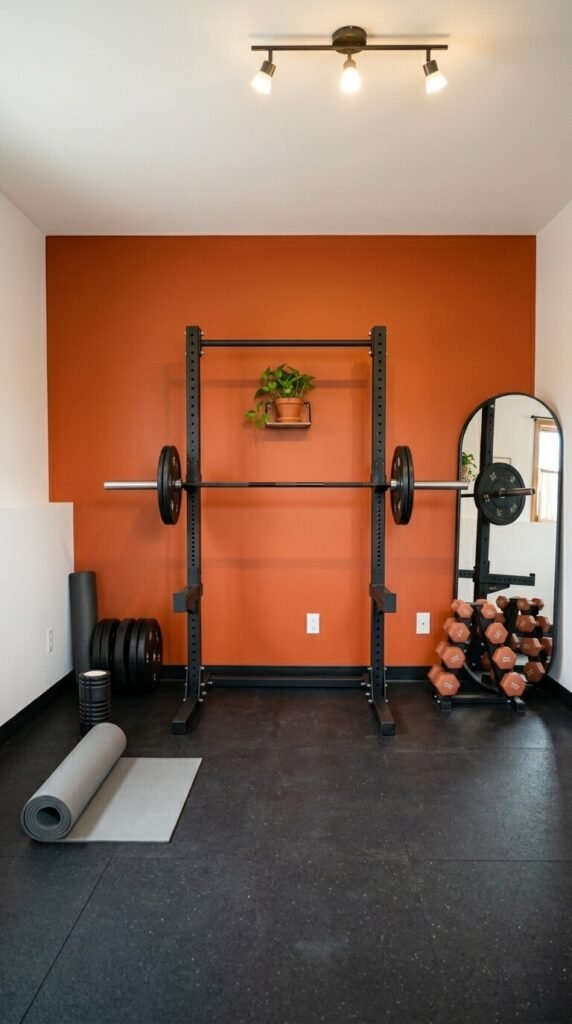
One bold wall changes everything. Painting a single accent wall in a strong color — deep terracotta, forest green, cobalt blue, or mustard yellow — gives your gym a personality without overwhelming the space. Keep the other three walls white or light grey. Place your main equipment against the accent wall to frame it like a feature. The color also makes your mirror, rack, and mats pop visually. A gallon of paint costs $25–$40 and takes two hours. It’s the single highest-impact change you can make for the lowest cost.
23. The Outdoor Covered Patio Gym
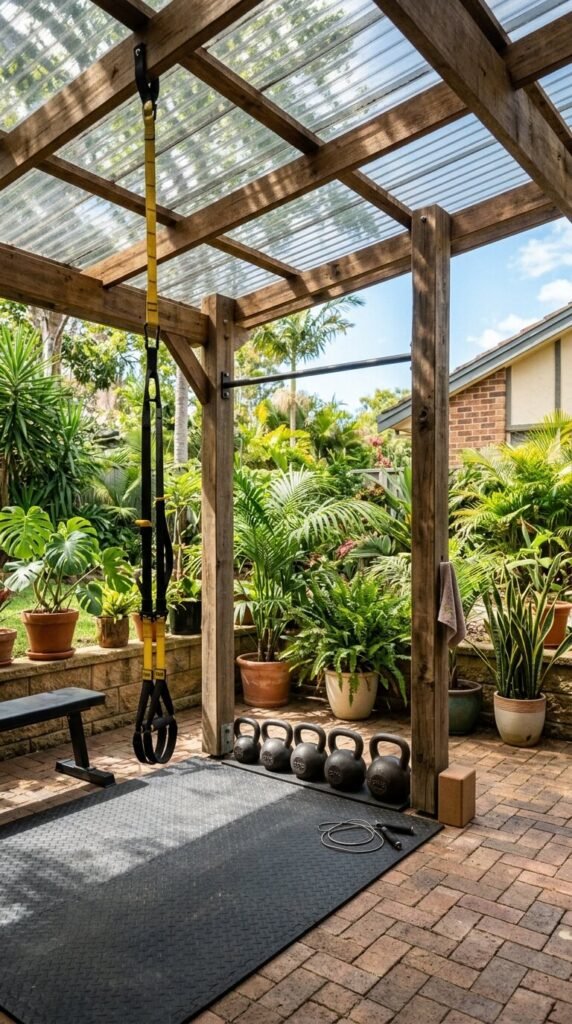
Fresh air is free — and highly underrated as a workout environment. A covered patio or pergola becomes a gym with minimal investment. Mount a pull-up bar between existing posts, hang a suspension trainer from an overhead beam, and lay a rubber mat on the pavers. Keep kettlebells in a weatherproof storage box when not in use. Add some large potted plants along the edges for an outdoor studio feel. This setup costs almost nothing if you already have a covered patio — and working out outside, even in light rain, is genuinely energizing.
24. The Monochrome Black and White Gym
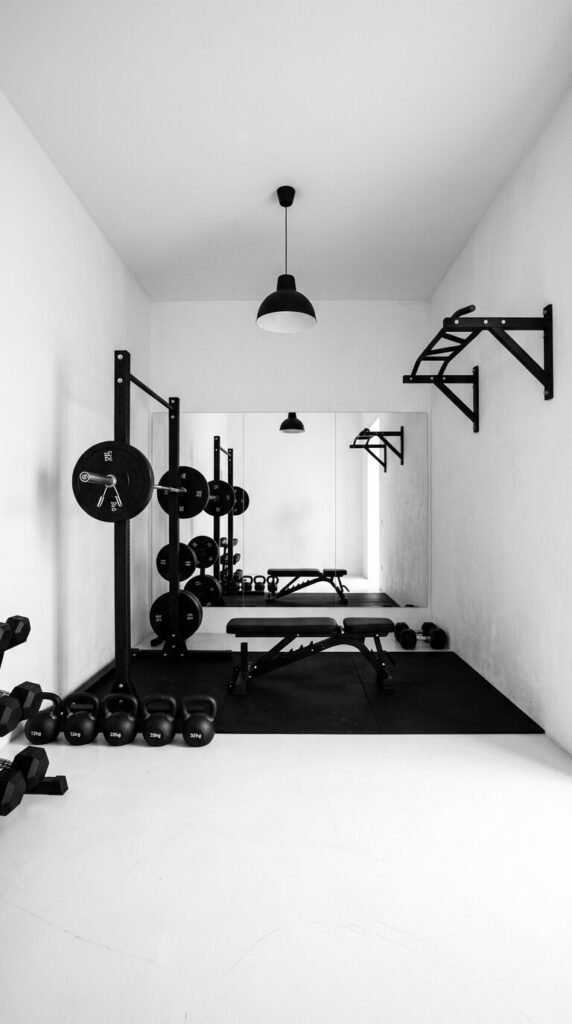
Black and white never goes out of style. Choose matte black for all equipment — kettlebells, barbell, racks, hooks, and frames. Keep walls and floors stark white. Add a single black pendant lamp as the only overhead light. The graphic contrast looks sharp in person and even better in photos. This palette is easy to maintain — everything either black or white, nothing in between. No mismatched colors or clashing tones. It forces a certain discipline in how you curate the space, which tends to make the setup look more considered than most.
25. The Under-Stair Gym Nook
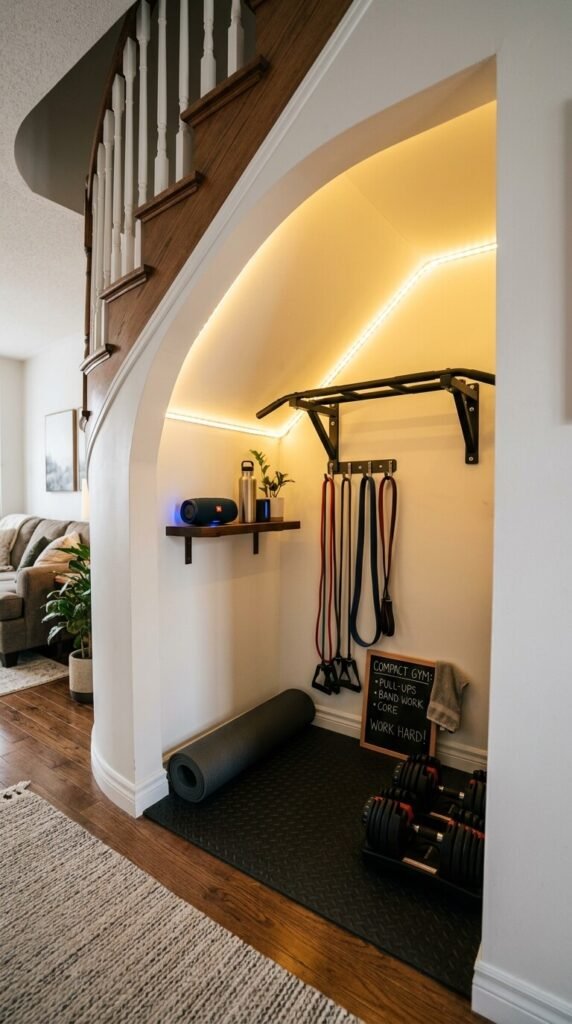
The space under your stairs is a hidden gym waiting to happen. Most under-stair areas are 4–6 feet deep and wide enough for a mat. Mount a pull-up bar at the back, line the walls with hooks for bands and accessories, and lay down a rubber mat. Add an LED strip light inside for brightness — the nook lighting makes it feel like a designed space rather than an afterthought. A small shelf for your speaker and water bottle completes it. No structural changes needed — just hooks, a bar, and a mat.
26. The Hybrid Home Office Gym
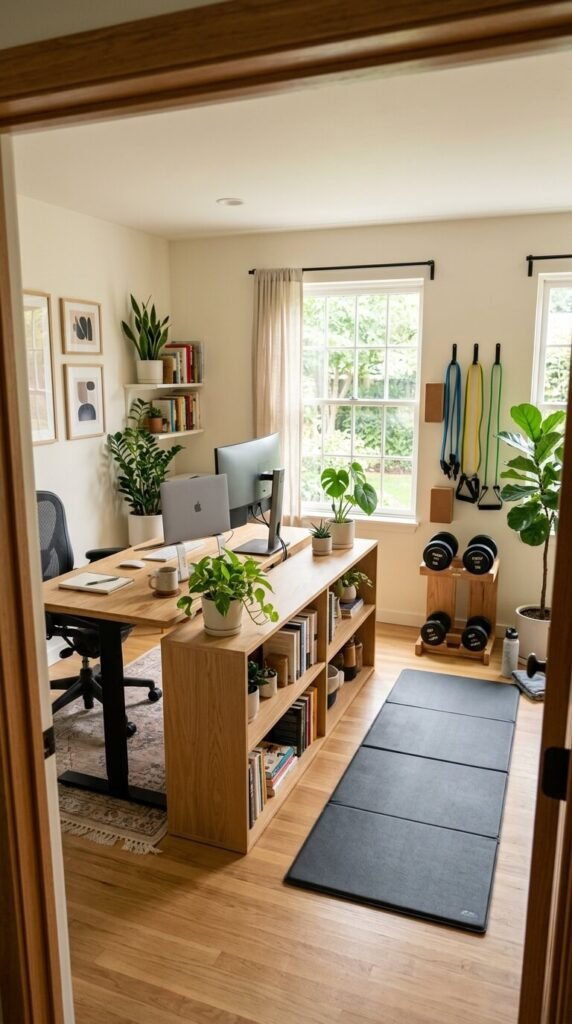
Work from home doesn’t mean choose between desk and dumbbells. A hybrid space splits the room deliberately. Use a low open bookshelf as a room divider — office on one side, gym on the other. Choose compact, foldable equipment: adjustable dumbbells, a foldable mat, and resistance bands. Keep everything on one side of the shelf so the visual separation feels clean. Standing desks let you stretch and move during the day. A plant on the shelf ties both zones together. The key is keeping both sides tidy so neither zone feels cluttered or neglected.
27. The Ceiling-Hung Gymnastics Ring Setup
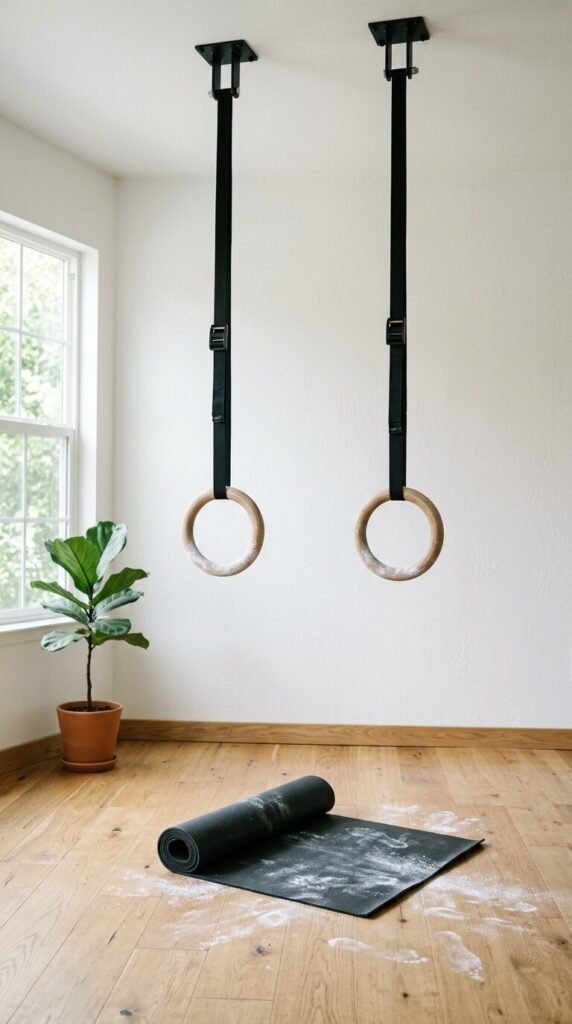
Gymnastics rings are the most underrated home gym tool — and one of the most affordable. A quality set costs $25–$40 and mounts to ceiling joists with two simple screw-in hooks. They handle rows, push-ups, dips, and advanced movements that most machines can’t replicate. When not in use, they hang flat and barely take up visual space. Pair with a yoga mat below and a single plant in the corner, and this setup looks like something from a high-end athletic studio. The simplicity is the aesthetic. Nothing extra. Just the rings and the work.
Conclusion
Your home gym doesn’t have to be expensive, spacious, or Pinterest-perfect to work. What matters is that it feels like yours — a space that invites you in rather than guilt-trips you from across the hallway. Whether you’re working with a garage, a spare bedroom, a patio corner, or literally the space under your stairs, there’s a setup on this list that fits your reality. Pick one idea that resonates, start with the simplest version, and build from there. A coat of paint, a floating shelf, or a set of rings mounted to the ceiling — small changes compound quickly. Make the space feel good, and the workouts follow.