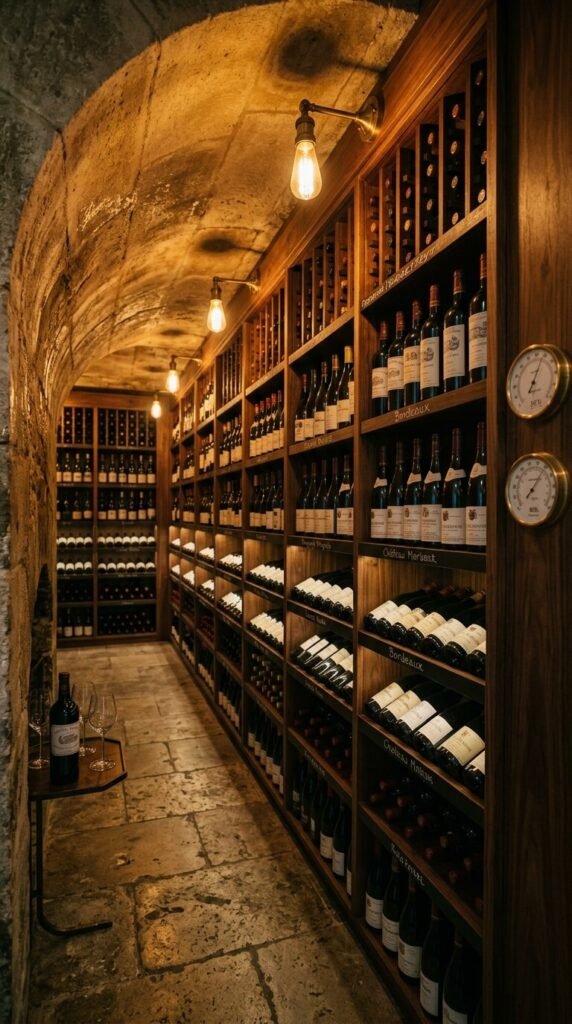
If you take wine seriously, your storage space should say so. A well-designed wine cellar is more than a place to stash bottles — it’s a statement about your palate, your patience, and your passion. Whether you’re working with a spare closet, a full basement, or a custom-built room, the right design can change how you experience your collection every single day. This list covers 28 real, buildable aesthetic wine cellar ideas — from budget-friendly DIY setups to high-end showstoppers — so you can find one that fits your space, your taste, and your bottles.
1. The Classic Stone Archway Cellar
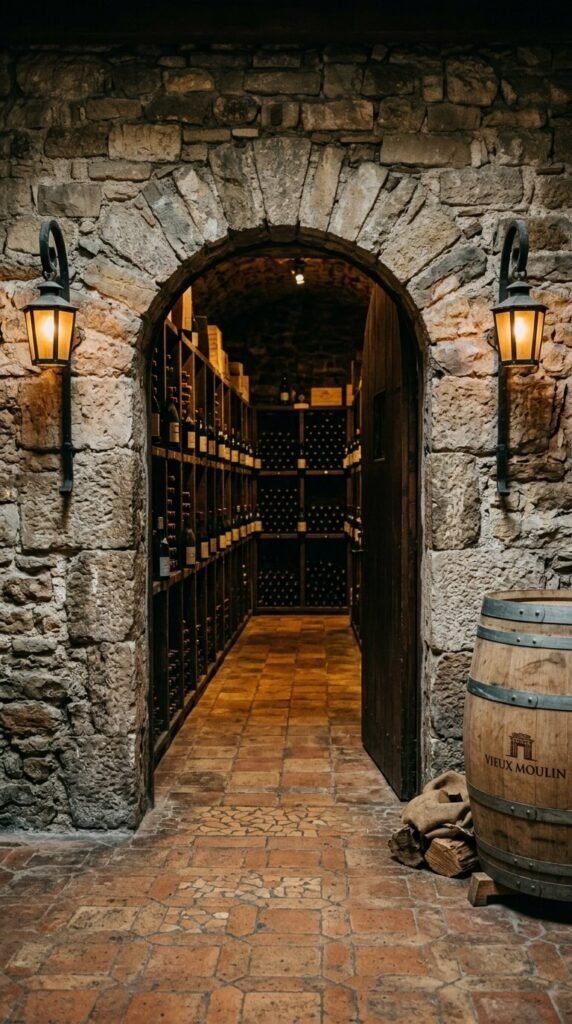
Stone archways never go out of style. They signal permanence and tradition — two things serious collectors appreciate. Cut or stacked stone around your cellar entrance instantly adds architectural weight. You don’t need a full renovation. Faux stone panels from a home improvement store can replicate the look affordably. Pair with wrought iron sconces and terracotta flooring for a complete effect. This works especially well for basements with an existing doorway. Budget tip: reclaimed fieldstone from a salvage yard costs a fraction of new stone.
2. Industrial Pipe Rack System
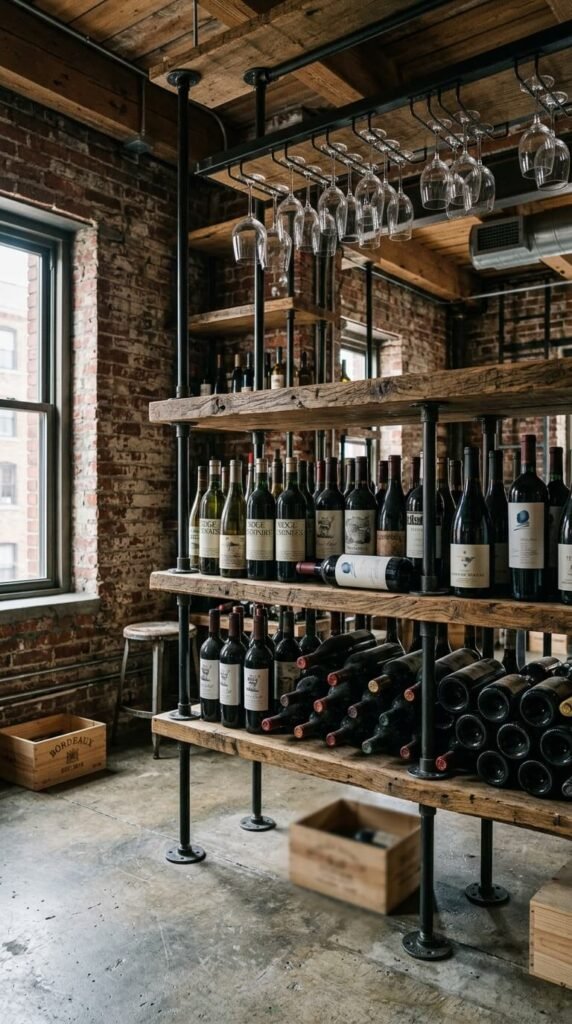
Black iron pipe shelving is one of the most cost-effective DIY wine rack options available. It’s sturdy, scalable, and looks intentional — not budget. The pipe fittings are available at most hardware stores. Pair them with rough-cut pine or reclaimed lumber shelves for a rugged, industrial look. This style works perfectly in basements, garages, or any room with exposed brick or concrete. Total DIY cost can come in under $300 for a 100-bottle setup. It photographs beautifully, too — a bonus if you love sharing your collection online.
3. Backlit Glass Wine Wall
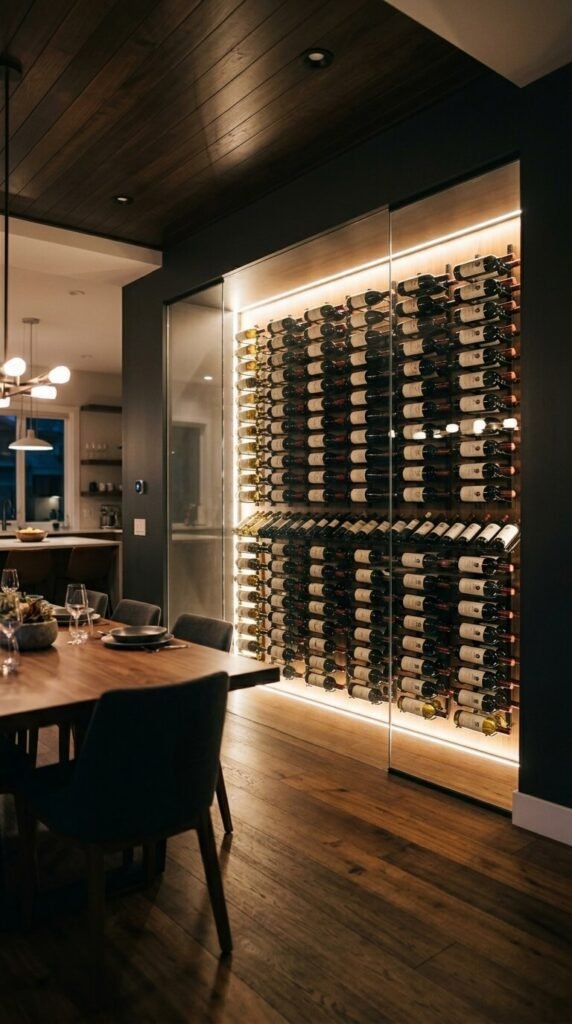
A glass wine wall makes your collection part of the room’s decor. LED strip lighting inside a glass enclosure creates a dramatic backlit effect that looks like it belongs in a restaurant. Modular glass wine room kits are available from wine storage companies starting around $3,000–$5,000. For a DIY version, a repurposed HVAC-cooled cabinet with glass doors and LED strips achieves 80% of the effect for far less. Place it in a dining room or kitchen for maximum visual impact and daily enjoyment.
4. Rustic Barrel Cellar
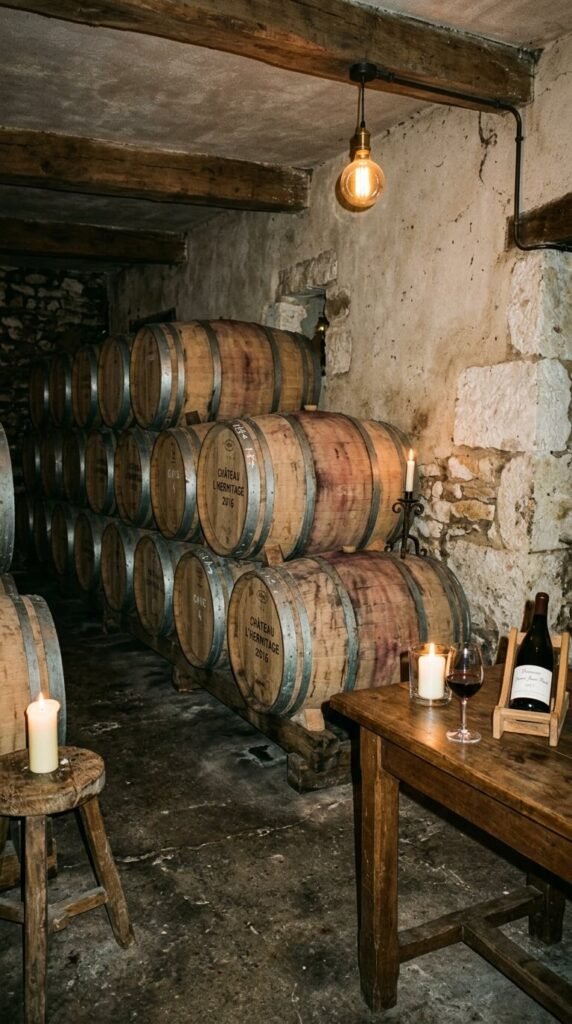
Used wine barrels are cheap, heavy, and full of character. Half-barrels and full casks stacked in a cellar create an old-world winery atmosphere with very little effort. Contact local wineries or homebrew supply shops for used barrels — they often sell them for $30–$80 each. Stack them as decorative features or repurpose them as countertops and storage bases. They add natural wood scent too, which deepens the sensory experience of the space. This aesthetic is hard to fake and impossible to ignore.
5. Minimalist White Cube Cellar
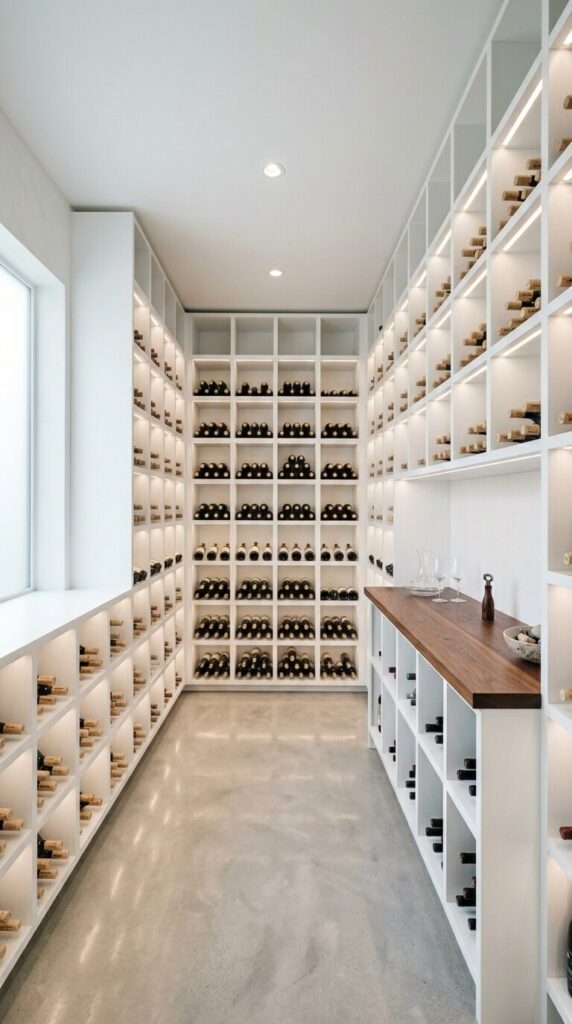
White cubes are the anti-rustic. They’re clean, sculptural, and contemporary. Modular wine cube systems from brands like Modulorack or custom-built MDF cubbies painted in matte white create an almost gallery-like feel. This works best in modern homes or urban apartments. Keep the lighting cool-white and recessed. Add a single dark wood countertop for contrast. Label-down storage adds to the visual minimalism. The beauty here is in restraint — every bottle becomes part of a pattern, not just a product.
6. Reclaimed Wood Plank Cellar
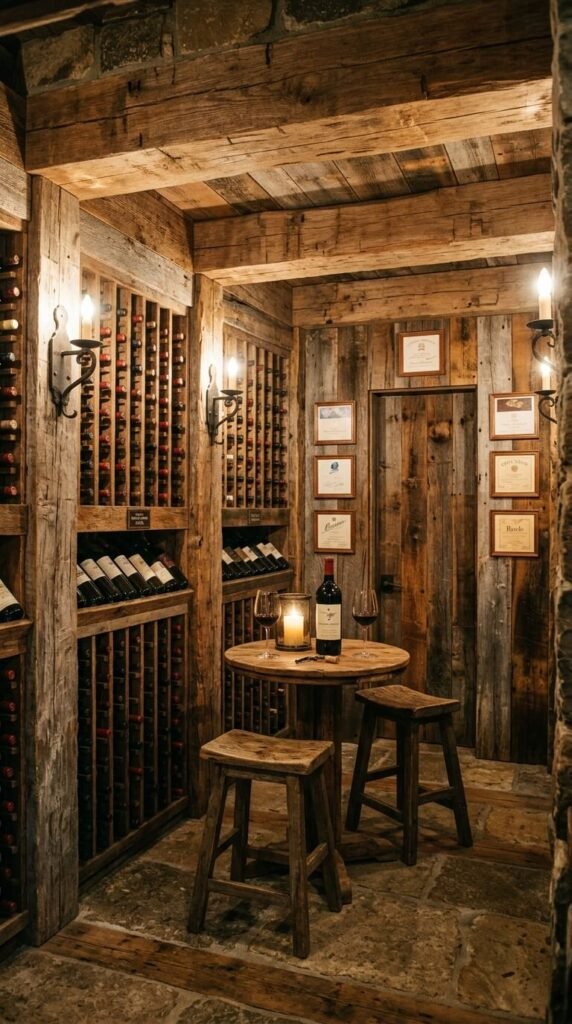
Reclaimed wood brings real history into your cellar. The weathered grain and natural color variation of old barn planks cannot be replicated by new lumber — and that’s the whole point. Source reclaimed wood from architectural salvage shops or online marketplaces. A skilled carpenter can route individual bottle slots directly into the planks. This style pairs naturally with Edison bulbs and iron hardware. It’s warm, tactile, and genuinely unique. Expect to spend $500–$2,000 on materials depending on your room size and wood source.
7. Cave-Style Underground Cellar
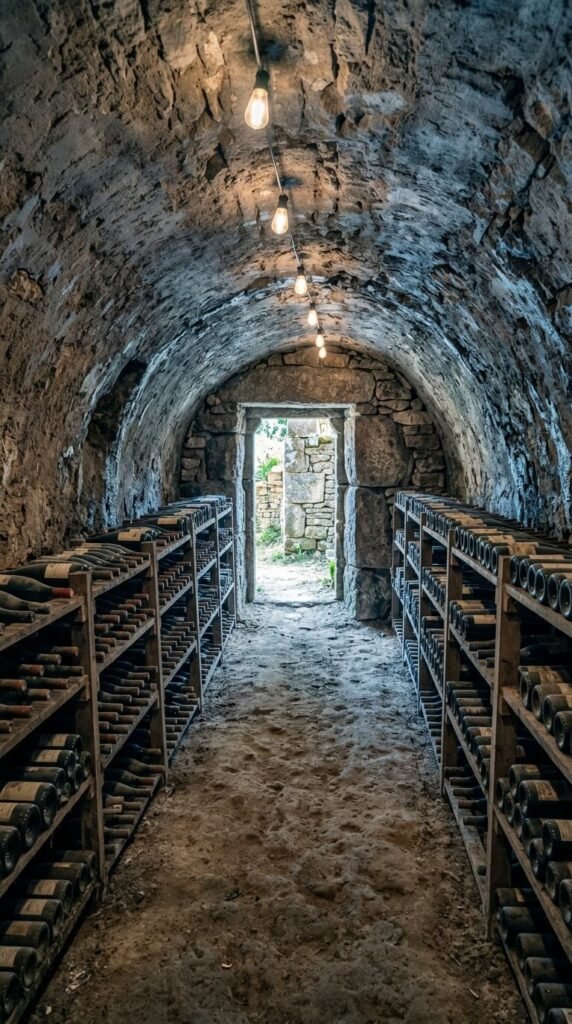
If you have a sloped yard or hillside, you may be sitting on the perfect natural cellar. Earth-sheltered spaces maintain near-constant temperatures and humidity without mechanical help. Hobbit-door style cellar entrances built into a hillside are increasingly popular with serious collectors. The upfront excavation cost is significant ($5,000–$20,000), but the operating savings over time are real. Inside, simple wooden racks are all you need — the stone and earth do the heavy lifting aesthetically. This is the most authentic wine cellar you can build.
8. Spiral Staircase Underground Cellar
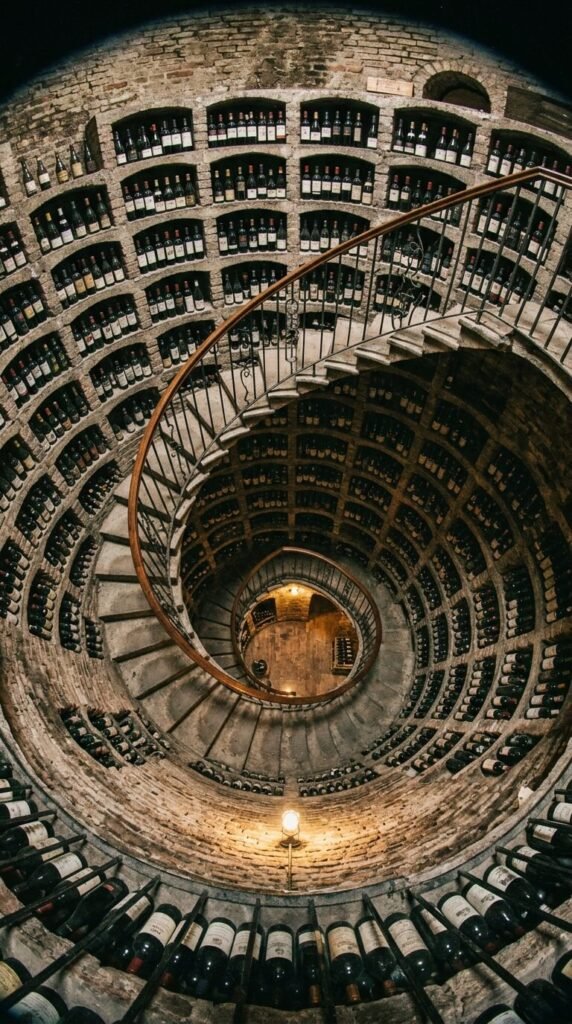
Spiral underground cellars are one of the most dramatic wine storage solutions available. Prefabricated spiral wine cellars — made by companies like Spiral Cellars — are installed directly through your kitchen or dining room floor. They hold 1,000+ bottles in a compact footprint. Access is via a hidden hatch and a corkscrew staircase. The visual impact when you open the hatch is extraordinary. These are not budget options ($10,000–$30,000 installed), but they turn the cellar itself into the conversation piece at every dinner party.
9. French Limestone Cave Aesthetic
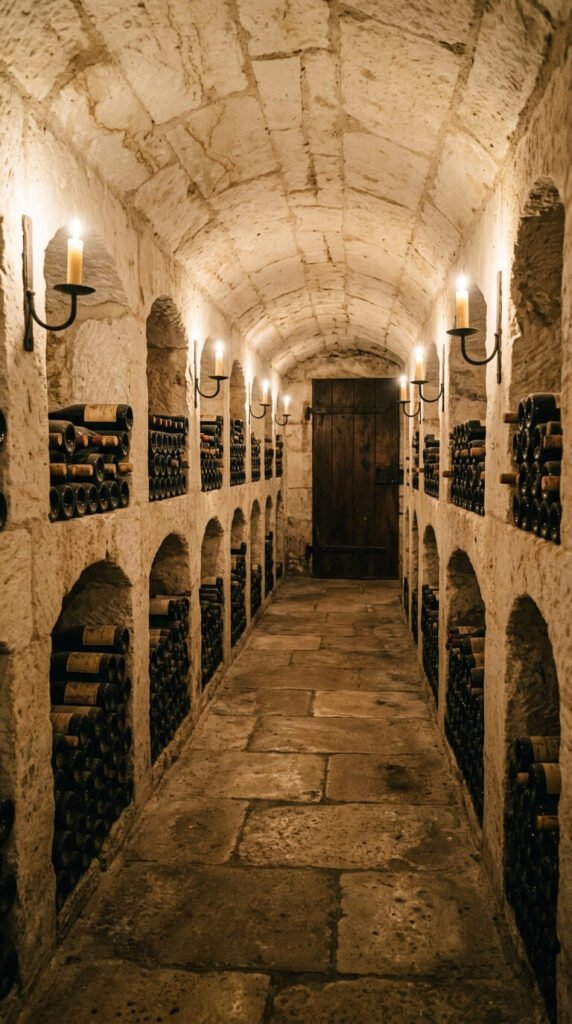
Southern France’s wine caves are carved from limestone — and that material has a specific look that signals wine heritage instantly. Limestone block or faux limestone panels in warm cream-white tones create that old-world cave atmosphere. Real limestone panels are available from stone importers. Faux panels from polyurethane foam replicate the look affordably. Cut arched niches into the wall for individual bottle storage — it’s architecturally beautiful and practical. Finish with iron fixtures and stone floors. This is one of the most photographed wine cellar aesthetics for good reason.
10. Mid-Century Modern Wine Bar Cellar
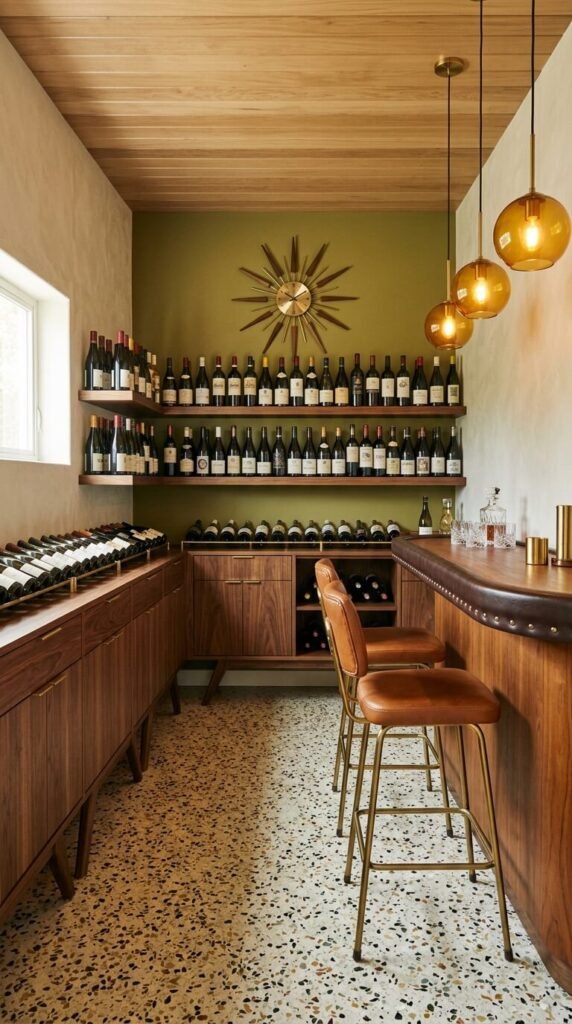
Mid-century modern is having a major moment in home design — and it translates beautifully into wine cellar aesthetics. Walnut cabinetry with tapered legs, brass hardware, and amber glass pendant lights create a sophisticated, lounge-like feel. This works well in combined wine room and bar setups. Floating shelving units with angled wooden dowels hold bottles horizontally. Keep the palette warm: walnut, cognac leather, olive green, and brass. IKEA’s KALLAX system with wood veneer contact paper is a surprisingly convincing budget-friendly base for this look.
11. Steel and Concrete Collector’s Vault
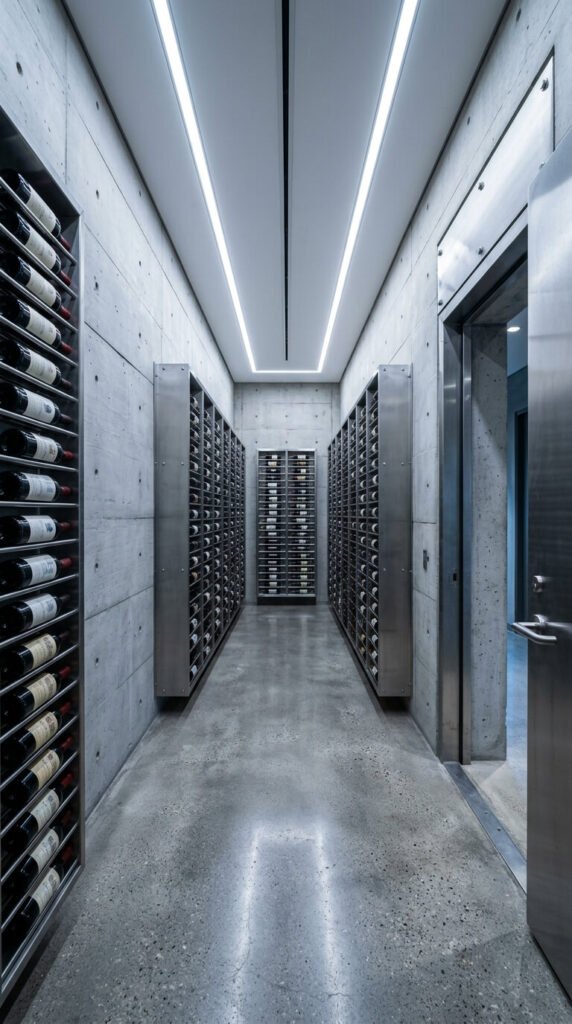
This one is for collectors who want their cellar to feel more like a vault than a room. Brushed steel racks mounted on raw concrete walls create an architectural, gallery-quality aesthetic. The materials are honest — no decoration, no nostalgia. This works especially well in converted basements with existing concrete structure. Steel wine rack panels can be custom-fabricated or sourced from commercial wine storage suppliers. Cool-white LED lighting keeps the palette sharp. The result is a serious, focused space that says the wine is the only art on display.
12. Scandinavian Birch Wood Cellar
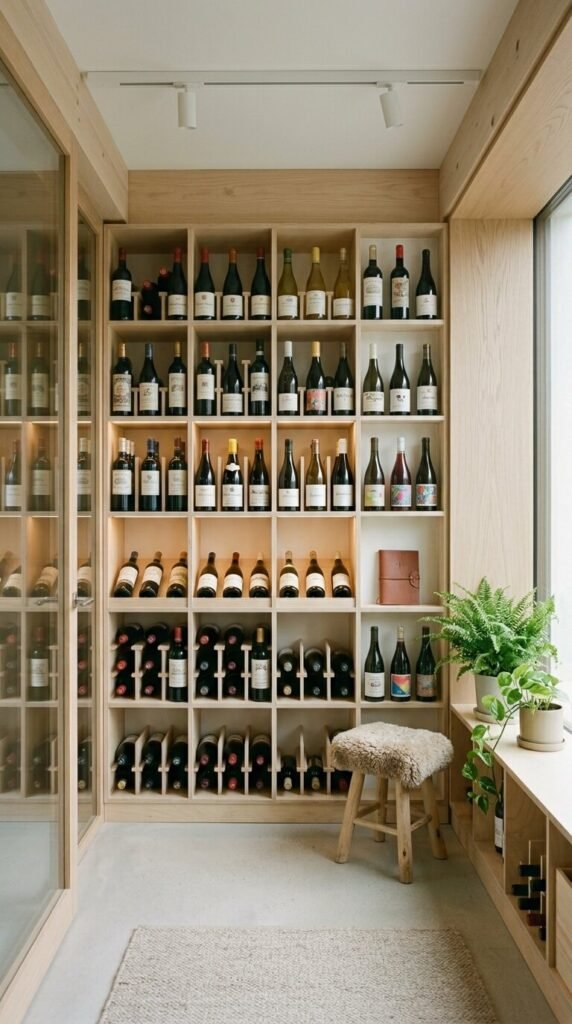
Scandinavian design philosophy — functional, calm, nature-connected — translates into a cellar that feels like a retreat. Light birch plywood and white walls keep the space airy and clean. The storage is modular: individual dowel cradles, flat-front shelving, no ornamentation. This style works well in smaller spaces where heavy wood tones would feel claustrophobic. IKEA’s IVAR and KALLAX shelving systems are the Scandi collector’s best friend. Add a single sheepskin stool and a small potted plant. The result is a cellar you’ll actually want to spend time in.
13. Old European Brick Cellar
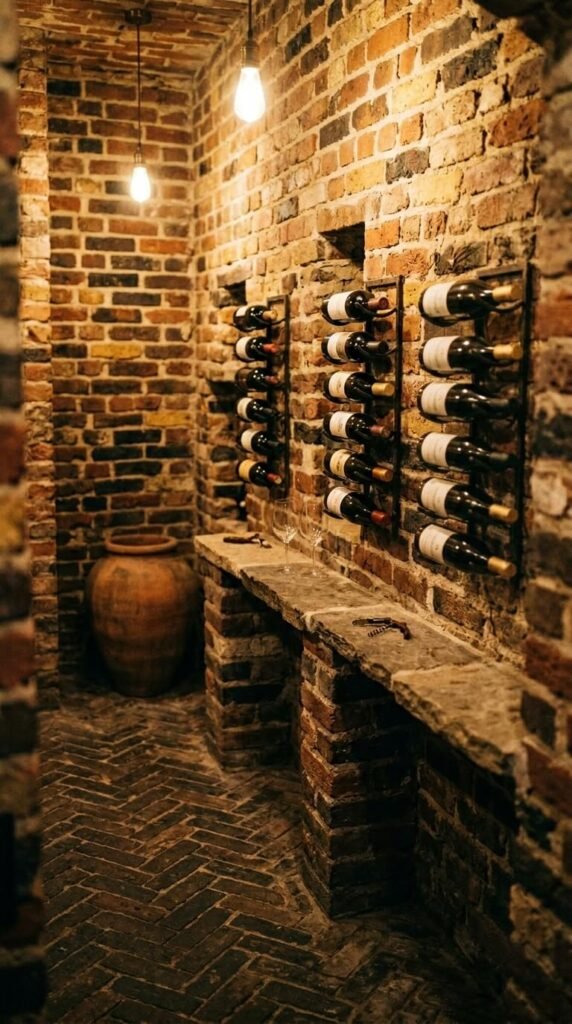
Old brick has a warmth that no paint or panel can replicate. Exposed handmade or reclaimed brick with thick mortar joints is a classic cellar backdrop for serious collectors. If your basement has brick you’ve been covering up, tear the drywall off — you may find gold. Iron rod bottle holders mounted between bricks at regular intervals cost very little and hold bottles securely. A herringbone brick floor completes the look. If starting from scratch, reclaimed Chicago common brick is widely available and full of character.
14. Backyard Wine Cave Shed
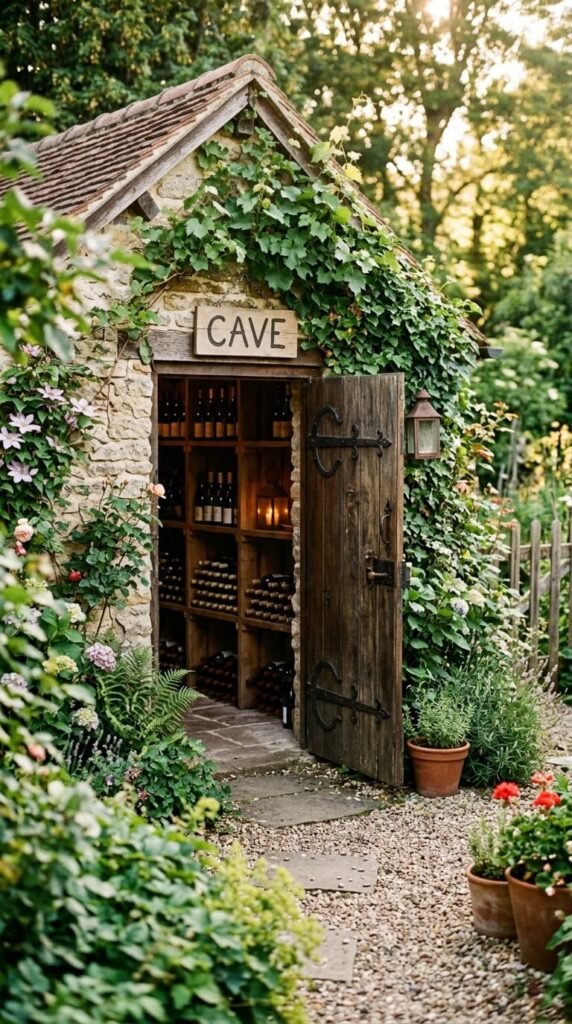
You don’t need to go underground to get cellar-level storage. A converted backyard shed with added insulation and a small window AC or cooling unit can hold a serious collection affordably. Stone cladding panels on the exterior give it a European cave appearance. Inside, line the walls with simple pine racks. Add a vapor barrier, rigid foam insulation, and a dedicated wine cooling unit. Total build cost for a 200-bottle shed cellar can stay under $1,500 with careful planning. It’s also a great excuse to spend time in the garden.
15. Dark Moody Gothic Cellar
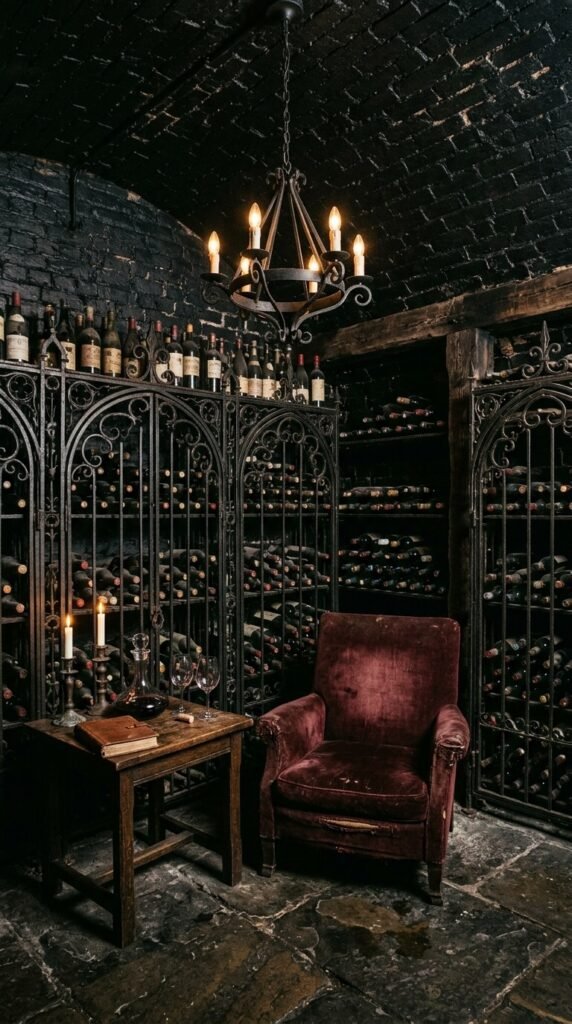
For the collector who wants atmosphere above everything else, the dark gothic cellar is unmatched. Black-painted walls, wrought iron fixtures, velvet seating, and candlelight transform a wine room into a scene. This isn’t a production cellar — it’s a consumption space. Black brick paint is inexpensive. Gothic-style wrought iron wine racks are available from specialty metal suppliers. Add a single statement armchair in deep burgundy or charcoal. The lighting should always be low and warm. This aesthetic rewards slow evenings and quiet company.
16. Hidden Door Speakeasy Cellar
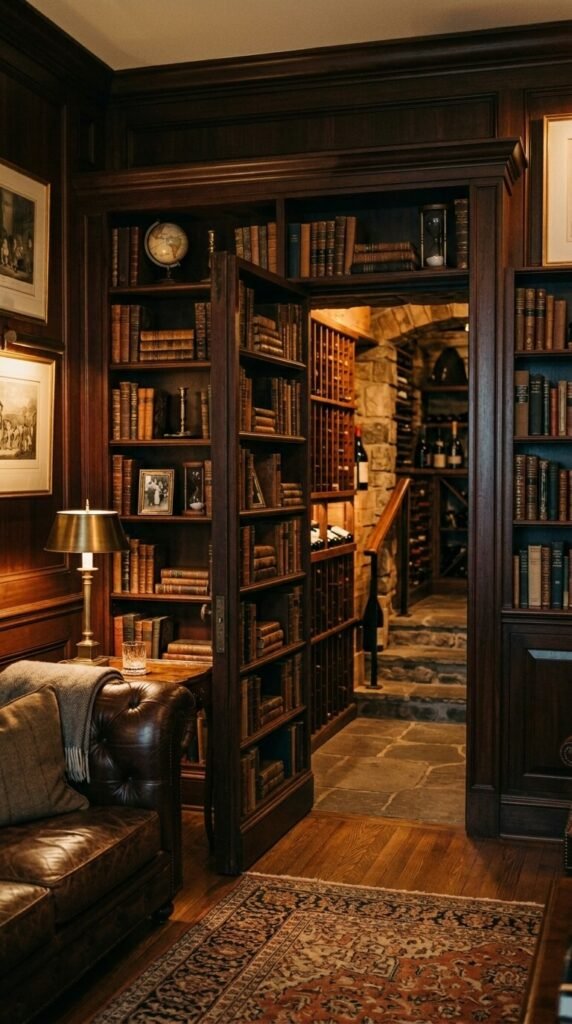
The hidden door cellar is pure theater — and collectors love it. A bookcase, mirror, or paneled wall that swings open to reveal a cellar feels like something from a film. Murphy Door and other hardware suppliers sell complete hidden door kits that mount to standard doorways. The bookcase can hold real books, wine accessories, or decorative objects. Behind the door, your cellar can be any style you choose — the drama is entirely in the reveal. This is one of the most talked-about home features a collector can add.
17. Mediterranean Courtyard Wine Cellar
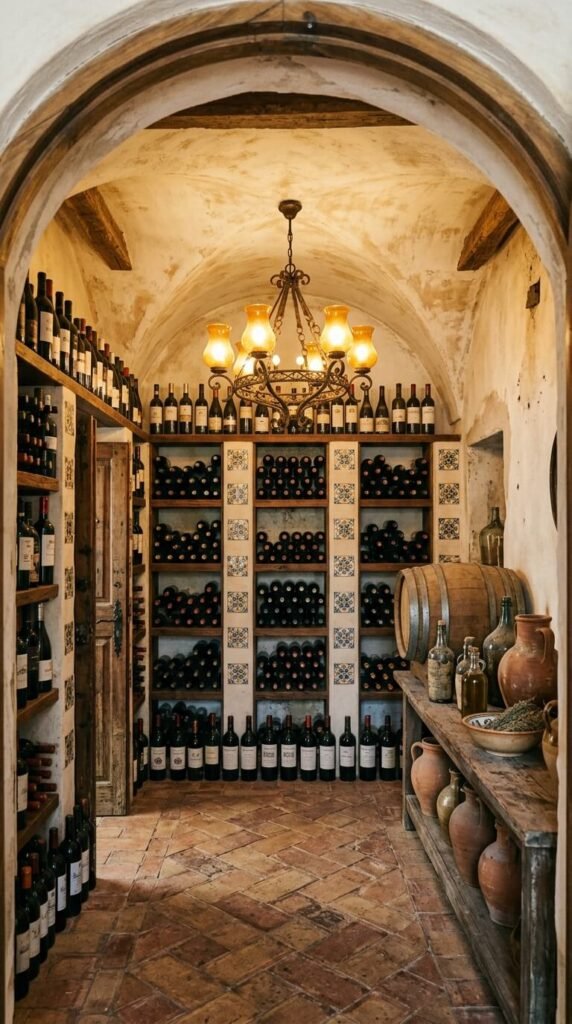
Mediterranean cellar design draws from Spain, Portugal, and Southern Italy — all places with serious wine culture. Terracotta tile floors, blue and white decorative tile accents, and plaster arches create a sensory richness that feels authentic. Talavera tiles are available from specialty importers at reasonable prices. Plaster archways can be faux-finished affordably. Wrought iron chandeliers are widely available in this style. Pair with natural cork accents and clay vessels. This is a warm, layered aesthetic that gets better as it ages — much like the bottles inside.
18. Floating Glass Shelves with LED Underlighting
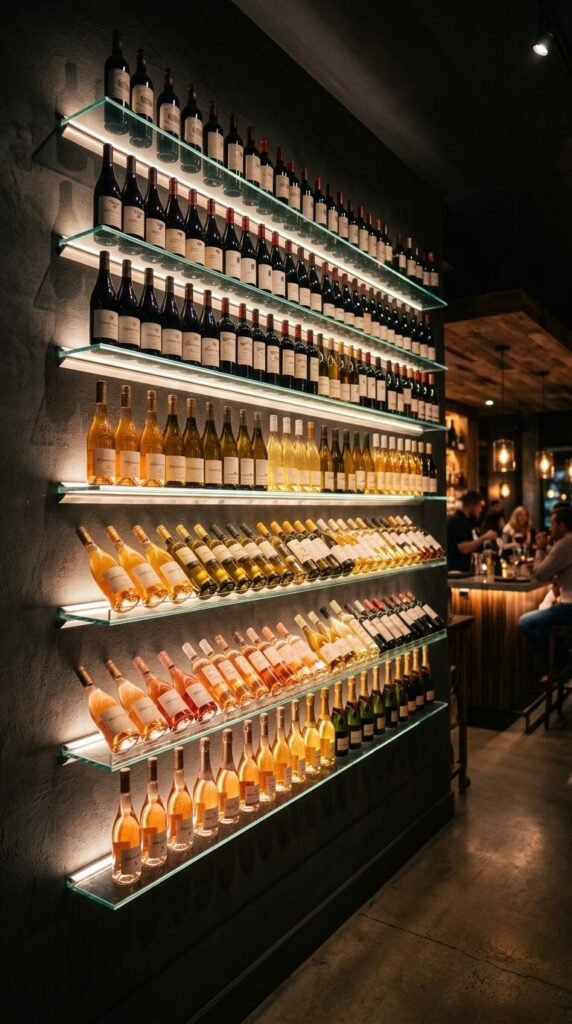
Floating glass shelves with LED strips underneath are one of the most affordable ways to create a high-end wine display wall. The glass appears to disappear, letting the bottles and light do the visual work. Hidden bracket systems are available at home stores. LED strip lighting installs with adhesive backing and a simple dimmer switch. Dark walls behind the display amplify the glow effect significantly. This works beautifully in dining rooms, kitchens, or home bars. A 20-bottle display wall can be built for under $400 with careful material selection.
19. The Tasting Room Cellar Hybrid
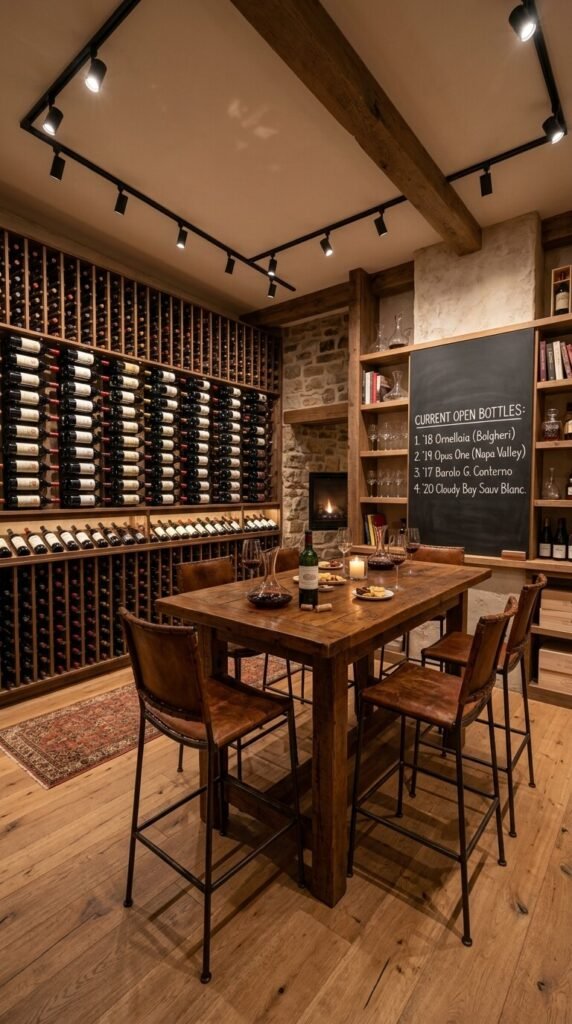
The best wine rooms do double duty: store and serve. A tasting room hybrid has floor-to-ceiling racks on one wall and a solid tasting table or bar counter in the center or along the opposite wall. Track lighting over the racks lets you read labels easily. A chalkboard for notes adds personality. Keep your glassware on open shelves — accessible and decorative. This design works best with 150 square feet or more, but smaller versions work too. It’s a room where every visit feels purposeful and every bottle gets the attention it deserves.
20. Copper Pipe Wine Rack Wall
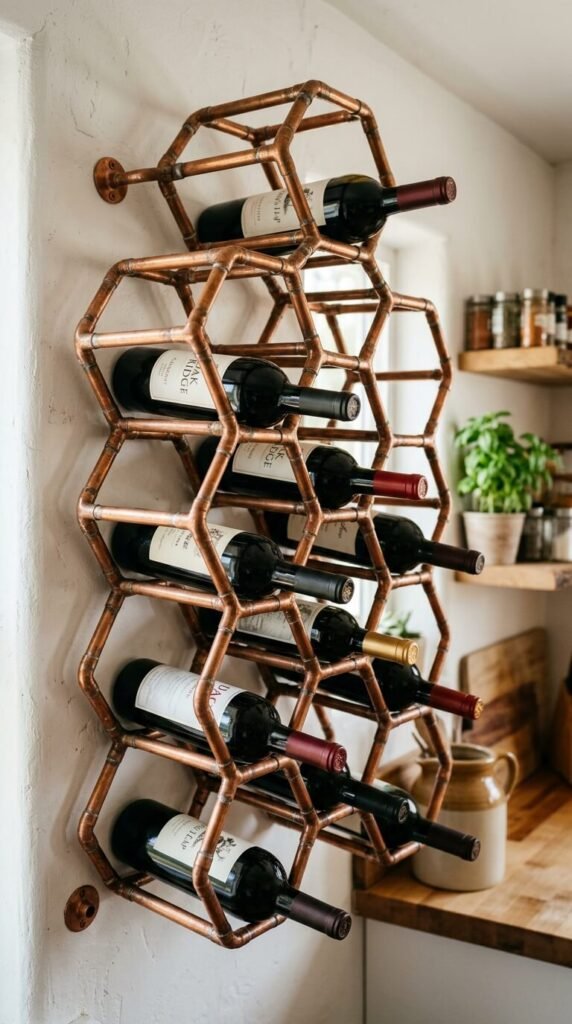
Copper pipe racks are one of the most visually striking DIY projects a collector can take on. Copper plumbing pipes and hex fittings create a honeycomb grid that holds individual bottles at a slight angle. Copper patinates naturally over time, developing a warm, living finish that looks better every year. A basic 30-bottle copper rack costs around $150–$250 in materials. Installation is straightforward: mount a backing board, then attach the copper grid. This works as a standalone wall feature in kitchens, dining rooms, or bars. No skill level required beyond basic patience.
21. Tuscan Villa Cellar
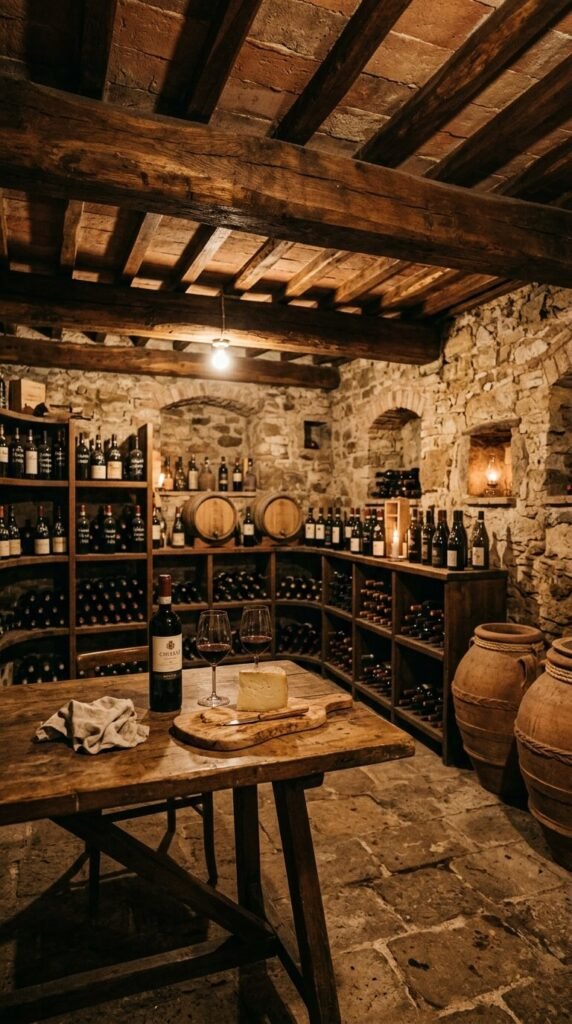
Tuscan design is defined by imperfection done beautifully. Rough stone, dark ceiling beams, terracotta, and simple dark wood racks come together to create a cellar that feels like it’s been there for centuries. Wide plank wood or flagstone floors are ideal. Exposed beam ceilings can be faked with decorative faux beams from specialty retailers — they’re lightweight and install in hours. Large terracotta floor vessels used as decorative elements are widely available. This aesthetic rewards restraint: don’t over-decorate. Let the materials carry the room.
22. Temperature-Controlled Closet Cellar
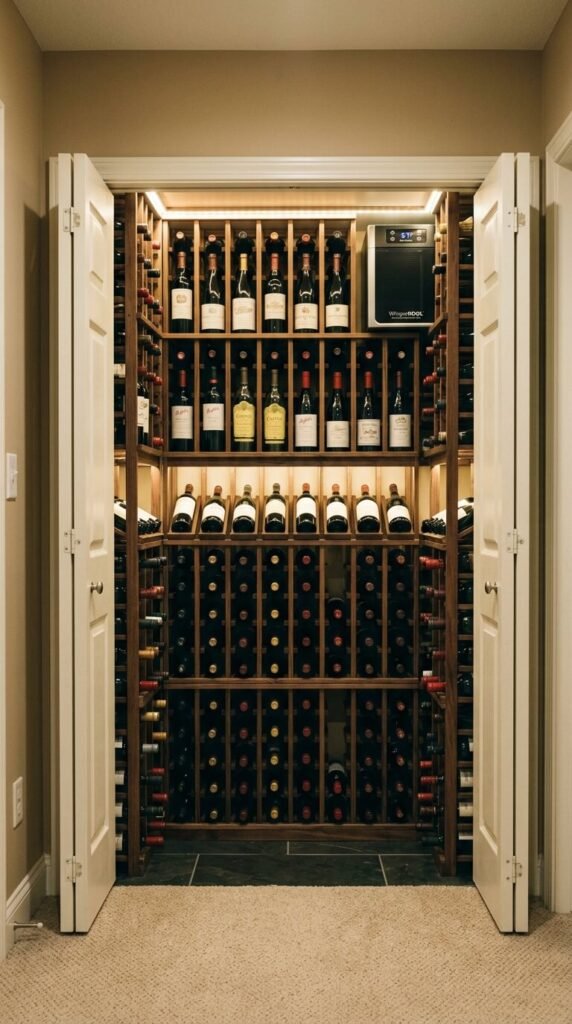
You don’t need a dedicated room to build a serious cellar. A standard bedroom or coat closet can be converted into a functional, temperature-controlled wine storage space with a few hundred dollars in materials. Add rigid foam board insulation to all walls, a vapor barrier, a dedicated wine cooling unit (Breezaire and WhisperKool both make closet-sized units), and modular wooden racks. A 200-bottle closet cellar conversion typically costs $500–$1,500 total. It’s the most practical entry point for collectors who want proper storage without a full renovation.
23. Art Deco Wine Lounge Cellar
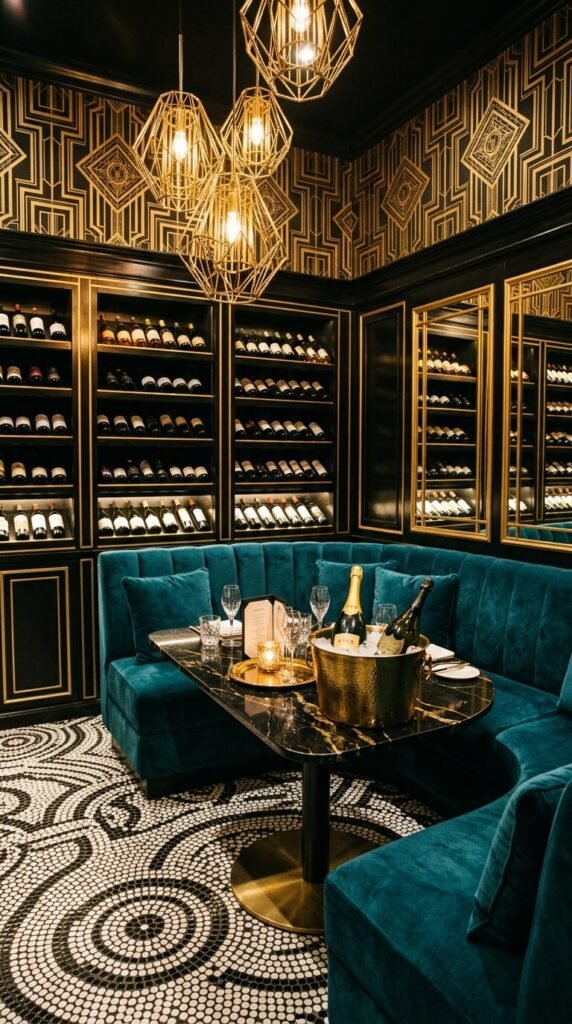
Art Deco wine rooms feel like private clubs — and that’s exactly the point. Gold hardware, dark lacquered cabinetry, geometric tilework, and velvet seating create a glamorous setting for wine consumption and storage alike. Black and gold wallpaper sets the palette. Dark lacquered wine cabinets with gold-finish bar pulls are available from high-end furniture retailers. Penny tile in black and white is a classic Deco floor choice. This is an investment aesthetic — expect to spend $5,000–$15,000 for a full room — but the payoff in atmosphere is remarkable.
24. Alpine Lodge Wine Cellar
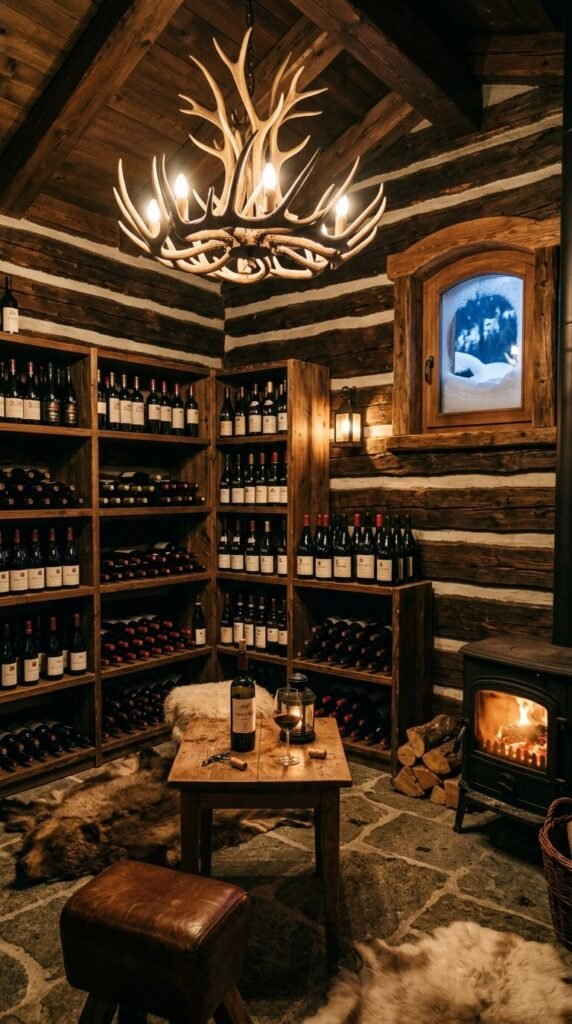
Alpine lodge cellars lean into warmth, texture, and coziness. Knotty pine log walls, antler or branch light fixtures, and hide rugs create a mountain retreat atmosphere. This style works well in ski homes, mountain cabins, or any space where cold-weather comfort is the goal. Rough-sawn pine wine racks are inexpensive and fit the style perfectly. A small cast iron stove in the corner adds authenticity — and the warmth is pleasant if your cellar is used as a tasting space. This aesthetic is deeply personal and deeply specific: it rewards commitment.
25. Vertical Garden Wine Cellar
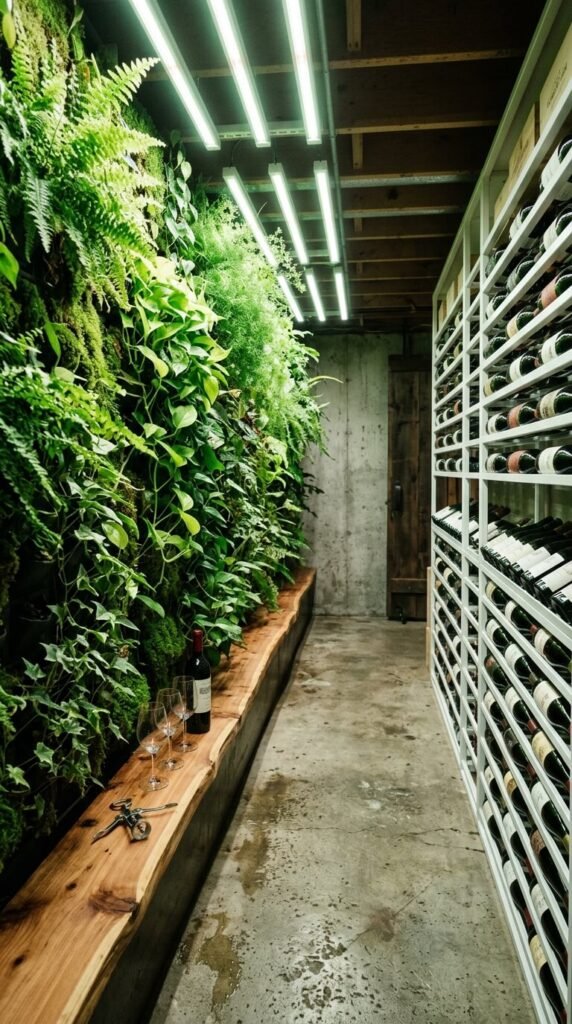
A living plant wall inside a wine cellar is unusual, but the concept is sound. Moisture-loving ferns and mosses thrive in the same cool, humid conditions ideal for wine storage. Modular living wall systems from companies like Florafelt or LiveWall can be installed on one wall while the others hold your racks. The visual contrast between green living texture and horizontal bottle storage is dramatic and unexpected. It also helps regulate humidity naturally. This is a bold choice that earns instant attention — and it keeps the air fresh in an enclosed space.
26. Gallery-Style Wine Room with Curated Art
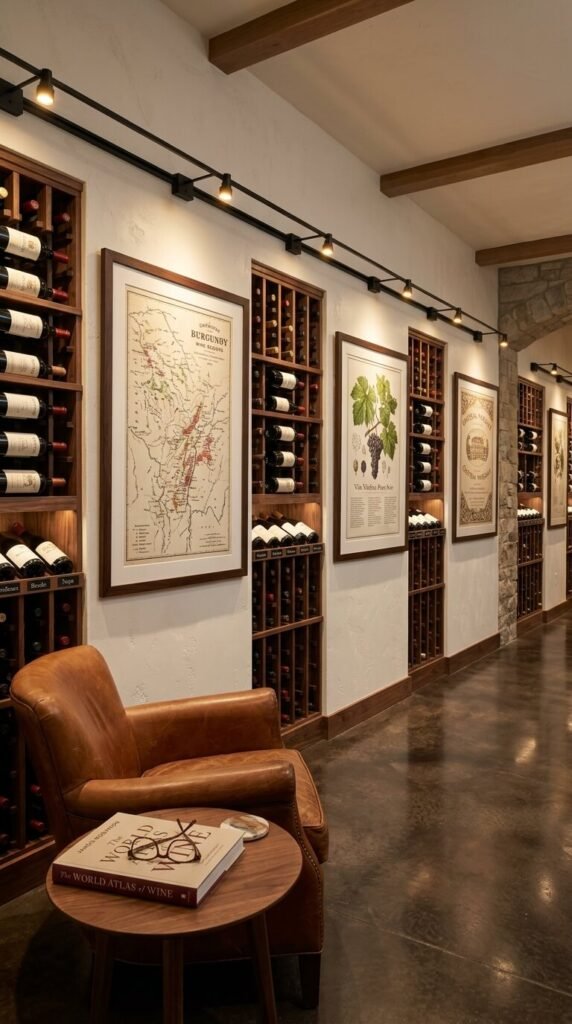
A cellar can double as a gallery. Alternating wine rack sections with curated framed prints — vineyard maps, grape botanical illustrations, vintage label reproductions — creates a room that rewards slow exploration. White walls keep the art visible and the bottles easy to read. Track lighting on a dimmer handles both storage and display lighting needs. This is an affordable way to add depth and personality to a simple cellar. Prints from wine regions, old viticultural charts, and estate label art are widely available as fine art reproductions at modest prices.
27. Exposed Concrete Modern Cellar
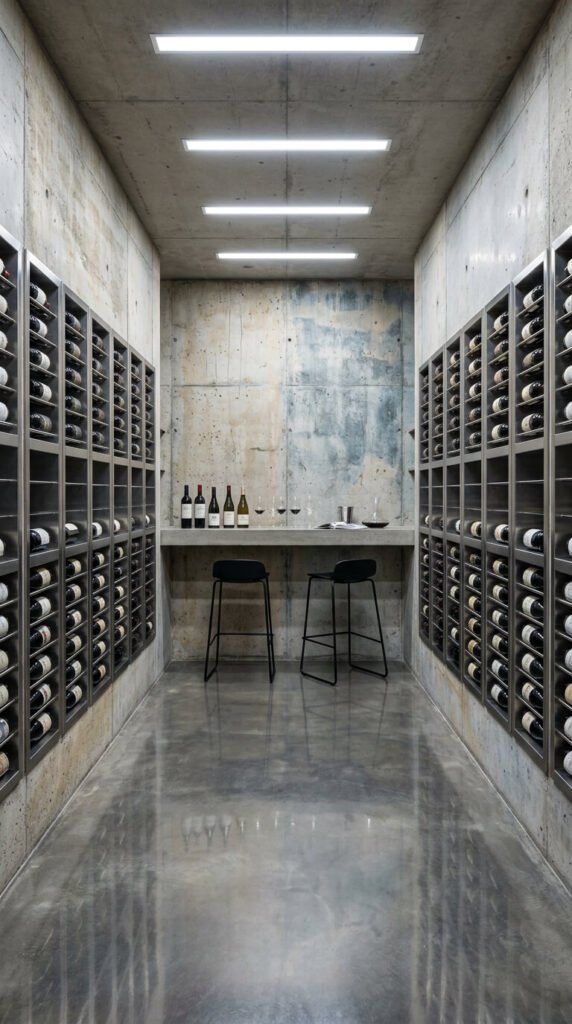
Exposed concrete is the architect’s material — and serious collectors are using it to make a statement. Formed concrete walls with visible pour lines and embedded steel rack systems create a cellar that looks like a museum installation. Polished concrete floors reflect the light and amplify the minimal aesthetic. This requires skilled concrete work and is not a casual DIY project. But if you’re building or finishing a basement, leaving the concrete exposed instead of covering it saves money and creates a genuinely distinctive result. The wine becomes sculpture in this context.
28. The Collector’s Library Cellar
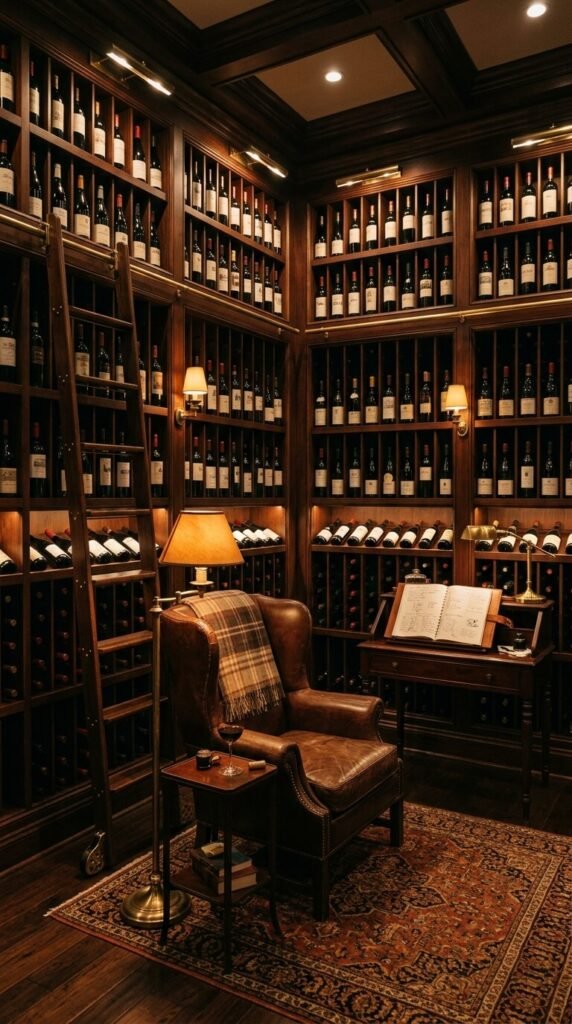
The library cellar treats every bottle like a rare volume worth protecting and studying. Floor-to-ceiling mahogany shelving, a rolling library ladder, leather armchairs, and a writing desk create a space where collecting and reflection happen together. This is for the collector who keeps tasting notes, tracks vintages obsessively, and thinks of wine as literature. Library ladder rail systems are available from woodworking suppliers and can be adapted for wine shelving. Dark mahogany stain on standard oak cabinetry achieves the look at a fraction of the custom cost. This is the most personal cellar on this list.
Conclusion
Your wine cellar doesn’t have to be expensive to be extraordinary. The designs on this list range from $200 DIY pipe racks to $30,000 spiral underground vaults — and what they all share is intentionality. The best cellar is the one that reflects how you actually collect, consume, and think about wine. Pick an aesthetic that excites you, start with the elements that fit your current budget, and build from there. Good wine storage is an investment in every bottle you’ve already bought and every one you haven’t opened yet. Start with one wall, one rack, one well-lit corner — and let the collection grow from there.