Your windows are the eyes of your home — and what frames them changes everything. The right window treatment can soften harsh light, add warmth, and make a room feel pulled-together without a full renovation. Whether you’re renting a small apartment or styling a spacious living room, there’s a window treatment idea that fits your space, your light, and your budget. This guide walks you through 30 real, doable options that look expensive but won’t break the bank. Each one is practical, approachable, and genuinely beautiful.
1. Sheer Linen Curtains for Soft, Diffused Light
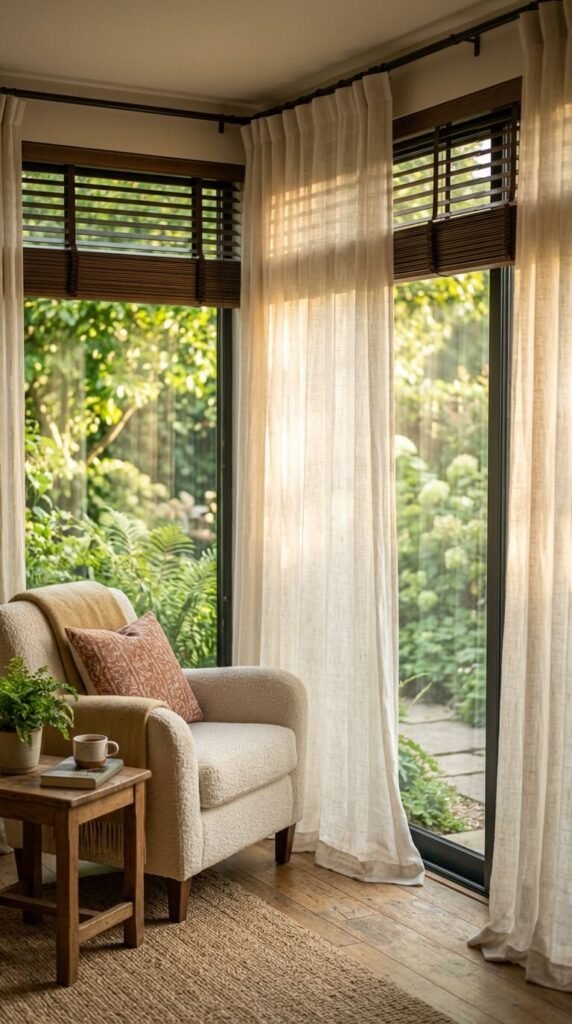
Sheer linen curtains are one of the simplest ways to make a room feel calm and intentional. They filter sunlight beautifully without blocking it entirely. Hang them high — mount the rod close to the ceiling and let the panels drop to the floor. This tricks the eye into seeing taller ceilings. IKEA’s LISELOTT or Amazon’s budget linen sheers work surprisingly well. Add a second blackout layer behind them for nighttime privacy. Total cost: often under $40 for a full window.
2. Roman Shades with a Textured Fabric
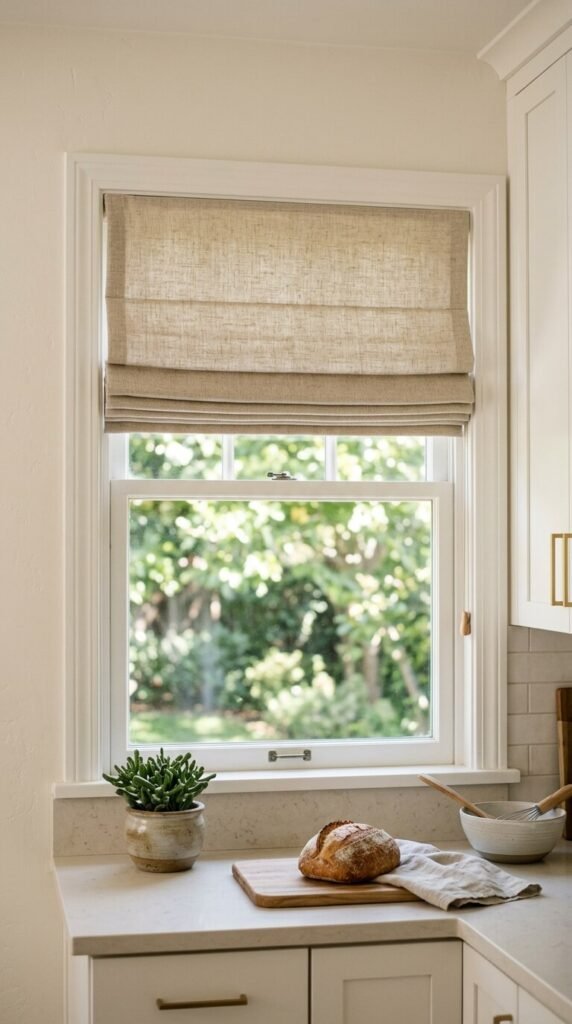
Roman shades look custom and structured without the bulk of curtains. When they’re up, they fold into clean horizontal layers. When down, they lie flat and smooth. Choose a textured fabric — linen, jute, or a subtle weave adds visual interest without being loud. You can buy ready-made ones from Target or H&M Home at reasonable prices. For a real DIY version, roller shade kits + fabric from a craft store get the job done for under $30 per window.
3. Bamboo or Woven Wood Shades
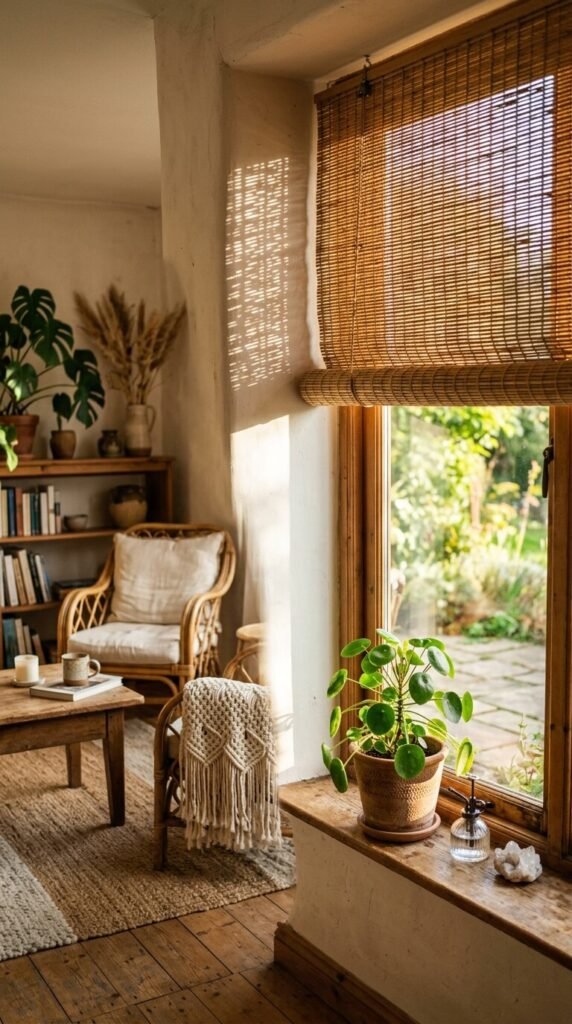
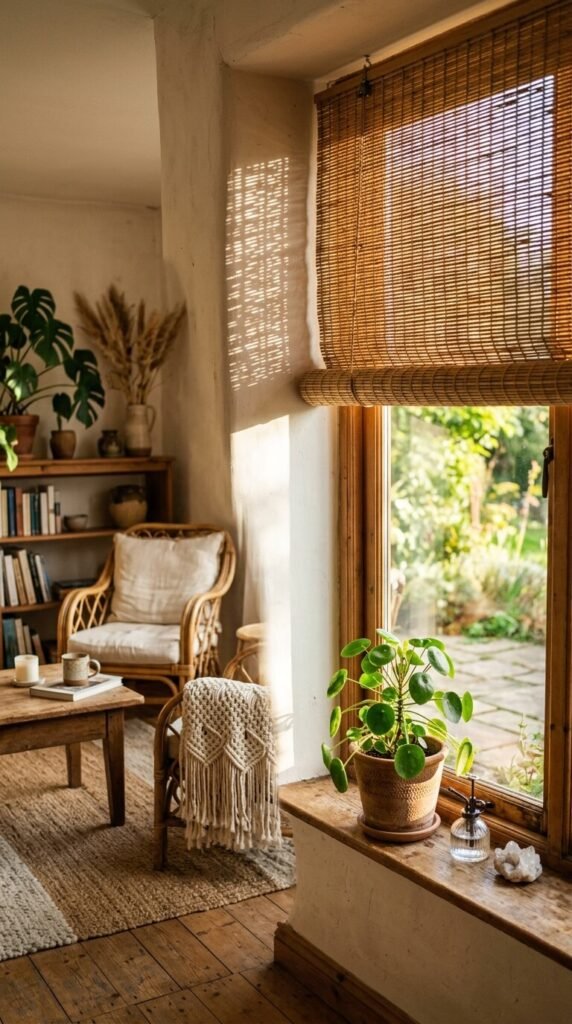
Woven wood shades bring an organic warmth that painted walls simply can’t. The natural fibers — bamboo, jute, rattan — filter light in a speckled, golden way that feels like being outside. They work in almost any room: bedroom, living room, kitchen, even bathrooms with good ventilation. Buy from Blinds.com or World Market to keep costs down. Many styles are available for $25–$60 per shade. Add clip-on liner fabric behind them for privacy without losing the texture.
4. Velvet Curtains for Drama and Warmth
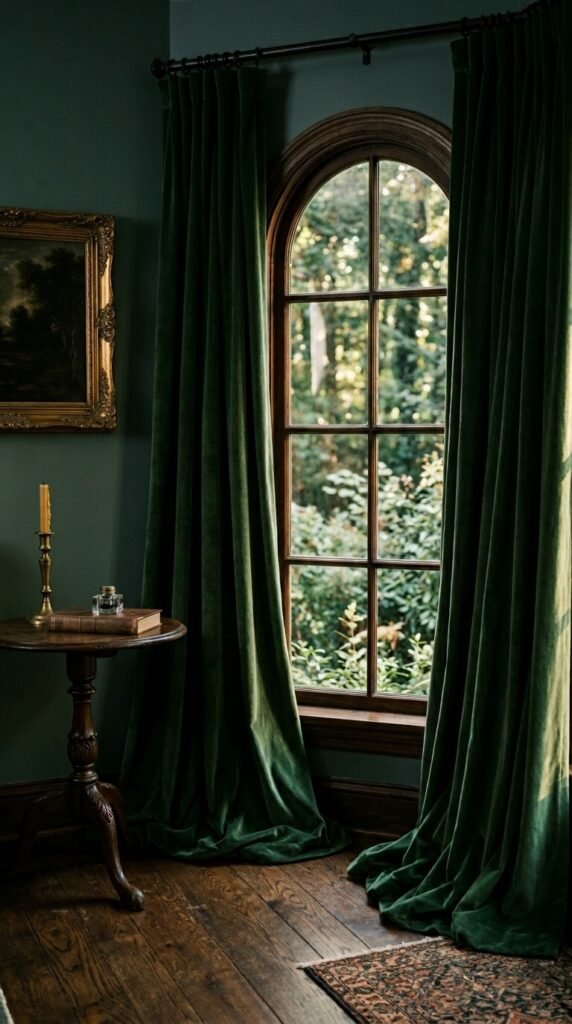
Velvet curtains feel like a splurge, but they don’t have to be. The heavy fabric does three jobs at once: blocks light, absorbs sound, and insulates the room. A darker velvet — forest green, navy, burgundy — makes a bold architectural statement. A lighter blush or ivory velvet feels soft and romantic. Look for velvet curtain panels on Amazon, Wayfair, or during HomeGoods clearance. A set of two panels often runs $40–$80. Hang them high and wide for maximum effect.
5. Cafe Curtains for Kitchens and Bathrooms
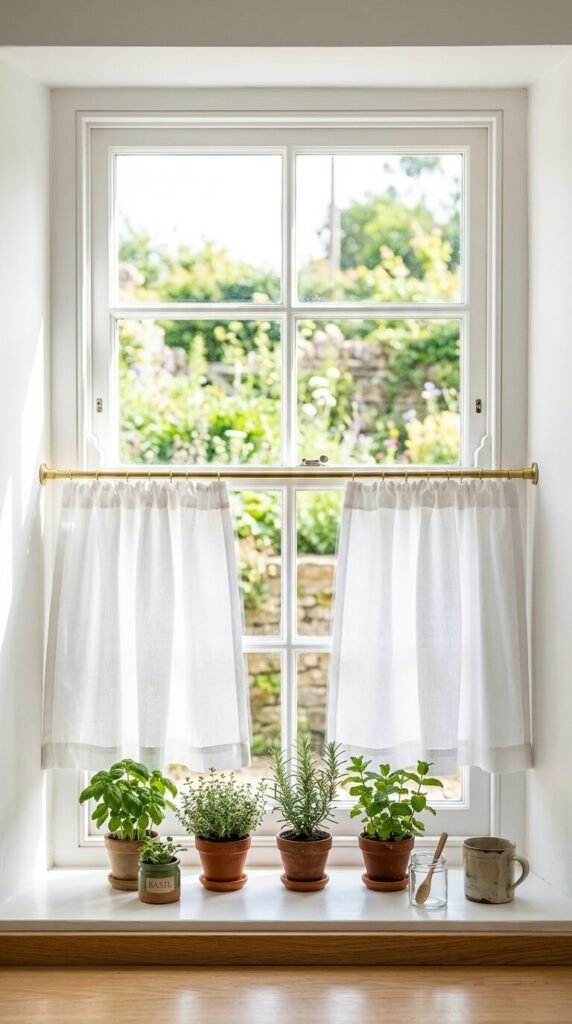
Cafe curtains cover only the bottom half of the window — giving you privacy at eye level while letting natural light pour in from above. They’re perfect for kitchens, bathrooms, and street-facing rooms. Use a simple tension rod and skip the drill entirely. Cotton, linen, or even tea towels work as fabric. A neutral white or ticking stripe pattern keeps things classic. This is one of the easiest DIY window treatments: hem any fabric panel, thread the rod through, and hang.
6. Motorized Roller Shades
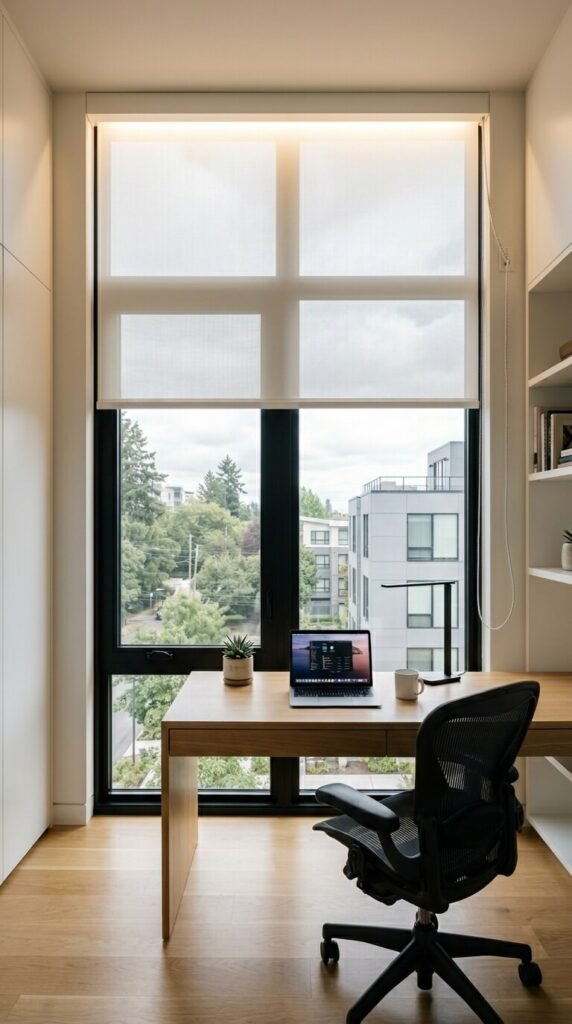
Motorized shades look like something out of a design magazine. But entry-level smart shades from IKEA (FYRTUR series) or Lutron’s Serena line are genuinely affordable and work with most smart home systems. Set schedules so shades rise with the sunrise and lower at dusk automatically. They’re especially practical in hard-to-reach windows over beds, above staircases, or behind large sofas. Installation is easier than it looks — most clip onto the window frame without any drilling.
7. Layered Curtains with Blackout and Sheer Panels
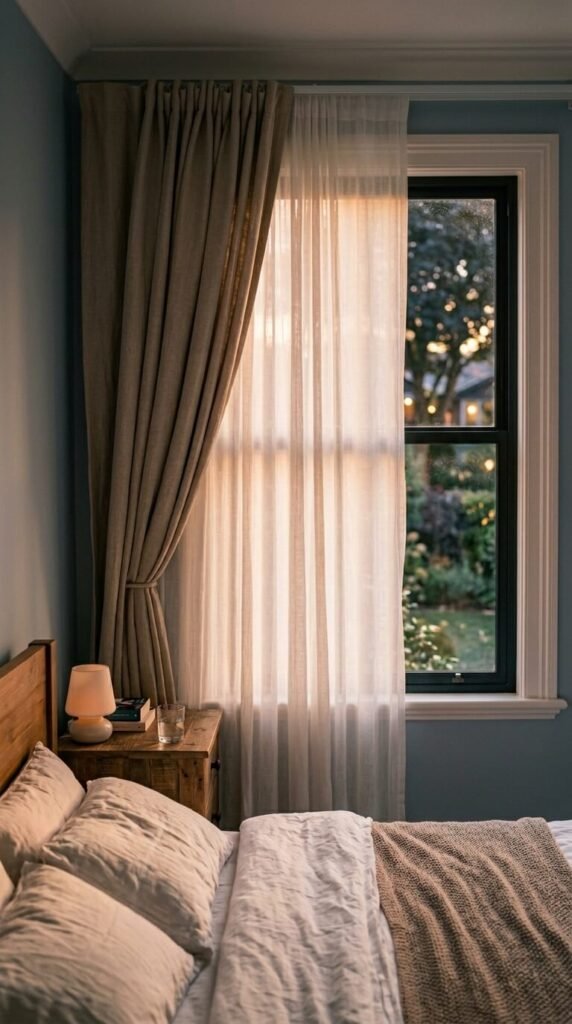
Layering curtains gives you full control over light and privacy at any time of day. The formula is simple: hang sheer panels closest to the glass, blackout panels on the outside. During the day, close the sheers for soft filtered light. At night, close the blackouts for full darkness. Use a double curtain rod to make this easy. Most double rods are under $20 at hardware stores. Mix fabrics and colors — a white sheer with a textured grey blackout looks collected and intentional.
8. Wooden Shutters with a Painted Finish
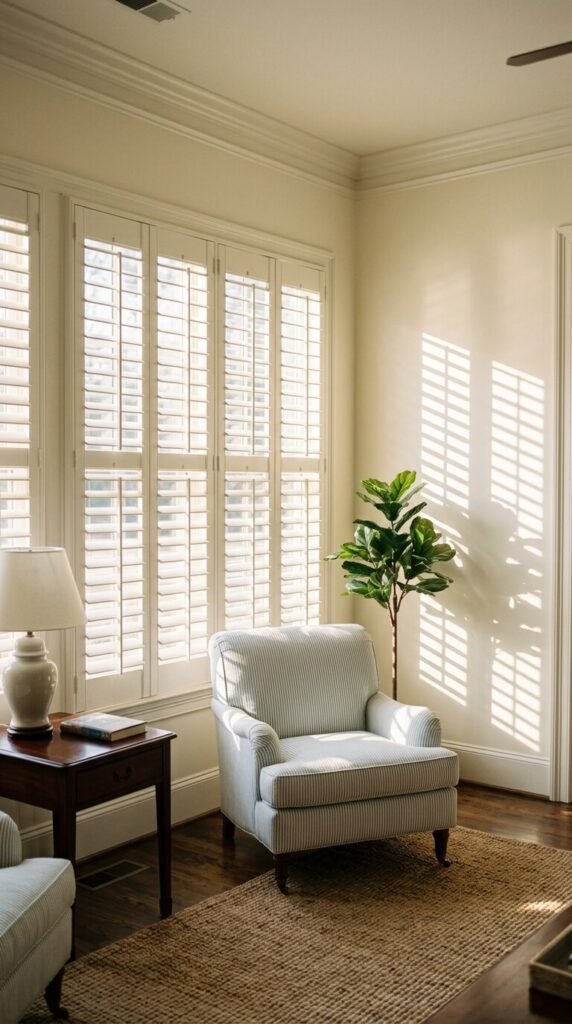
Plantation shutters are classic for a reason — they age beautifully and never go out of style. Real wood shutters are expensive, but faux-wood composite versions look nearly identical and hold up better in humid rooms like kitchens and bathrooms. Check IKEA, Home Depot, or Overstock for budget-friendly options. You can also paint existing shutters to refresh them: a fresh coat of white, warm cream, or sage green transforms the whole room. Shutters also add resale value to a home.
9. Macramé or Woven Wall Hangings as Window Accents
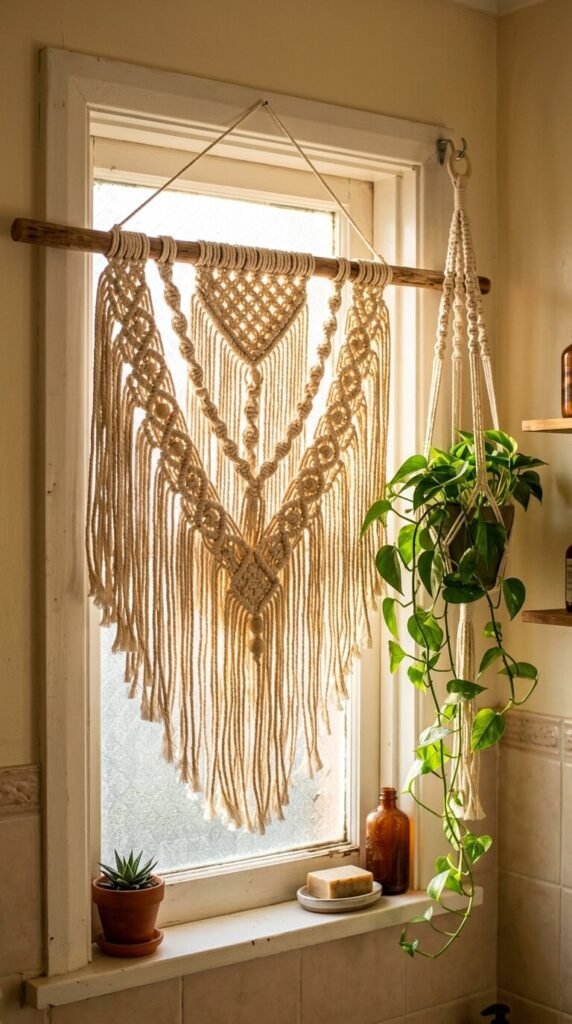
Macramé panels aren’t traditional curtains — but they work beautifully for decorative privacy in rooms where you don’t need complete coverage. A large knotted macramé piece over a bathroom window or a small kitchen window filters light softly and adds sculptural texture. You can buy ready-made ones on Etsy or Amazon for $20–$50. Or try a beginner macramé kit — the knots are easier than they look. Pair with a simple tension rod and leave the sides open for a relaxed, layered effect.
10. Curtain Panels Hung from Ceiling to Floor
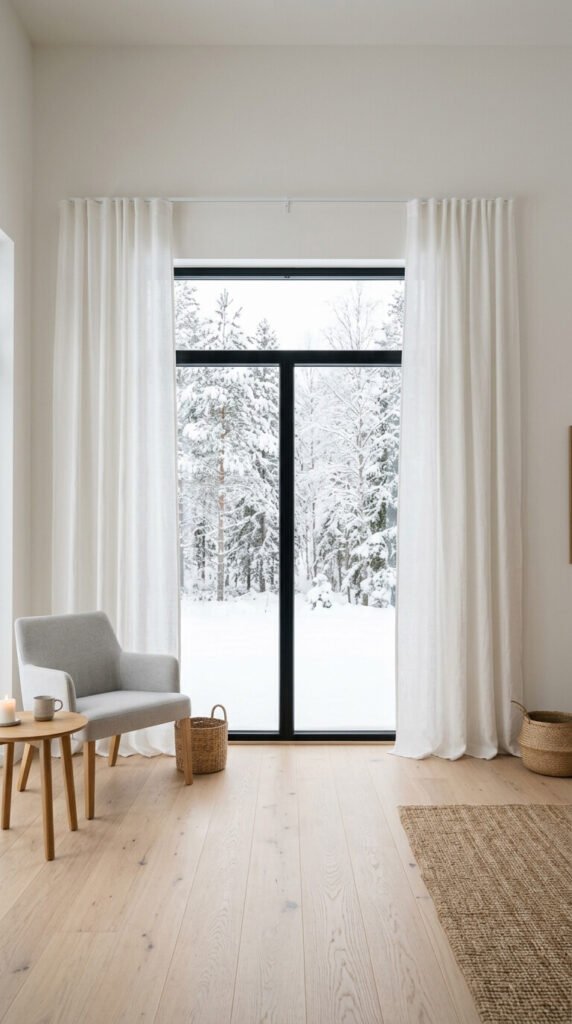
This is the single biggest trick for making a room feel larger and more refined. Mount your curtain rod as close to the ceiling as possible, and let the panels hang all the way to the floor. The unbroken vertical line makes ceilings feel higher. It doesn’t matter if the window itself is small — the curtains can extend far beyond the frame on either side. Use two or three panels per side for a gathered, full look. Budget curtain panels from IKEA do this beautifully at under $20 per panel.
11. Inside-Mount Roller Shades in a Bold Pattern
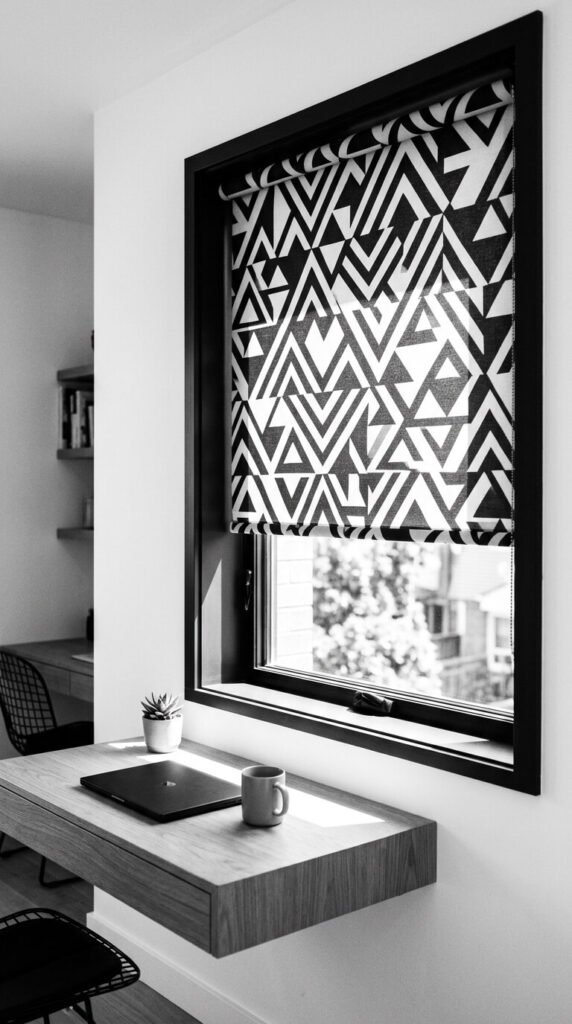
Most roller shades come in plain white or grey — but patterned roller shades completely change the personality of a room. A bold stripe, a geometric print, or a nature-inspired botanical pattern turns a window covering into a piece of art. Inside-mount installation (within the window frame) gives the room a clean, precise look. Sites like The Shade Store or Spoonflower-partnered vendors let you customize. For a DIY version, print fabric and use a roller shade kit — the process takes under an hour.
12. Bamboo Beaded Curtains for Doorways and Openings
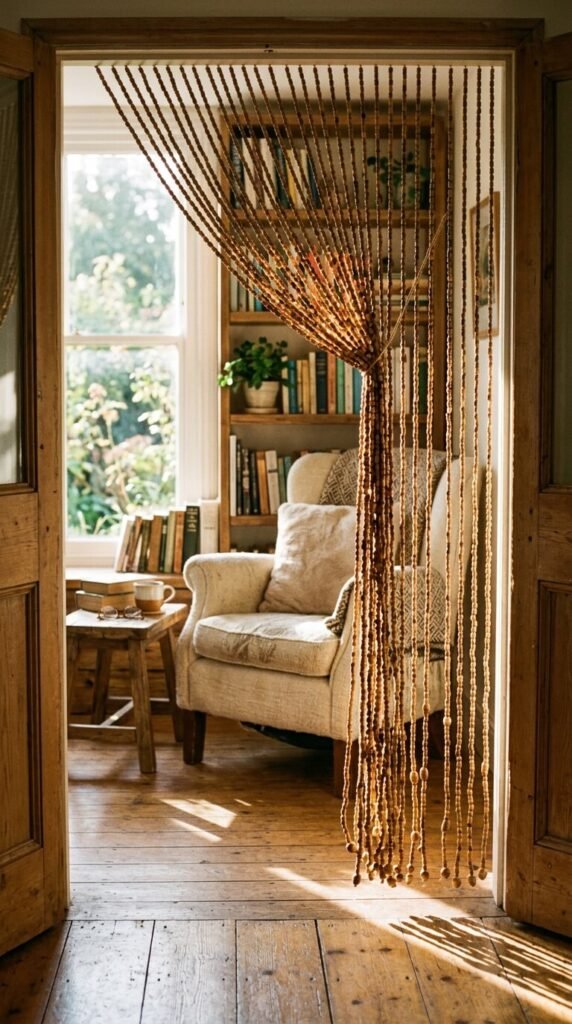
Bamboo bead curtains aren’t just for the 1970s. When used thoughtfully, they add a relaxed, organic room divider without blocking light or airflow. Try them in a doorway to a sunroom, a reading nook, or between a kitchen and dining area. Choose natural bamboo over plastic for a more refined look. They’re easy to hang with a simple curtain rod or tension rod. Cost is typically $15–$30. Trim the strands shorter to customize the length for your space.
13. Gathered Voile Panels for a Romantic Look
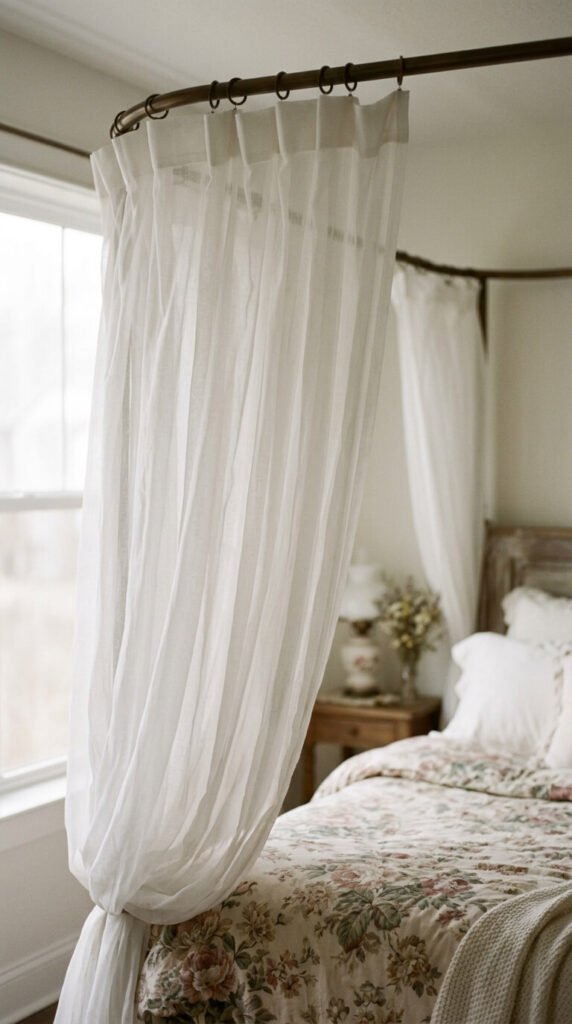
Voile is an ultra-lightweight, semi-sheer fabric that gathers beautifully into soft folds. Unlike flat sheers, gathered voile panels create a romantic, billowing effect — especially when styled on a curved or decorative rod. They work in bedrooms, sitting rooms, and sunlit dining spaces. The fabric is inexpensive and widely available by the yard at fabric stores or pre-made online. For a DIY version, buy extra length, gather it into a rod pocket, and hang with a slight pile on the floor for a flowing, effortless look.
14. Tension Rod Curtains for Renters
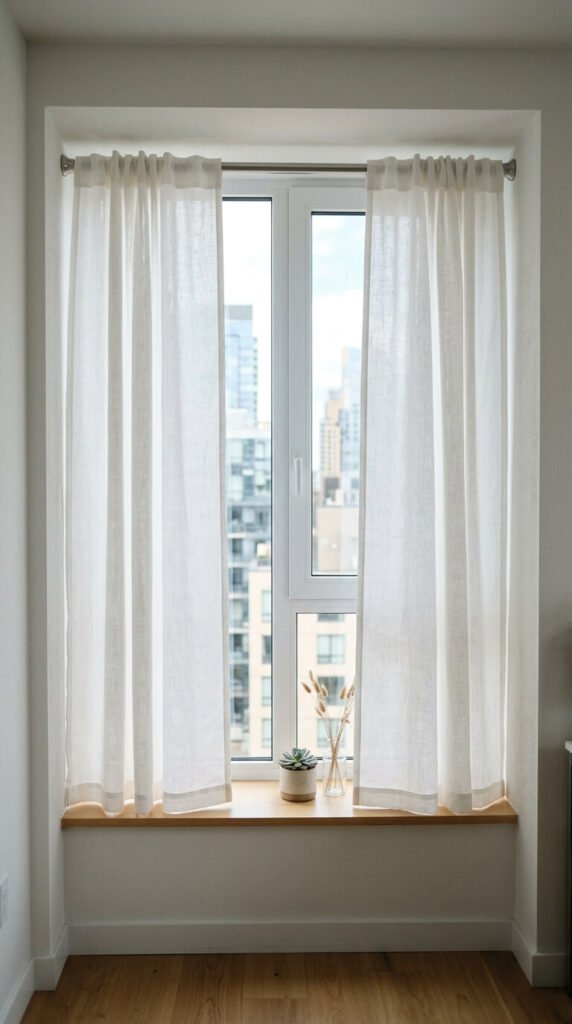
If drilling holes isn’t an option, tension rods are your best friend. They hold light to medium-weight curtain panels with zero damage to walls or window frames. Spring tension rods fit inside the window frame; adjustable tension rods with grip feet can span the full width outside the frame. Pair with lightweight linen, cotton, or voile panels. This setup works in rentals, dorms, and temporary spaces. The entire setup — rod and two panels — can cost under $25 and be removed without any trace.
15. Outdoor-Inspired Solar Shades
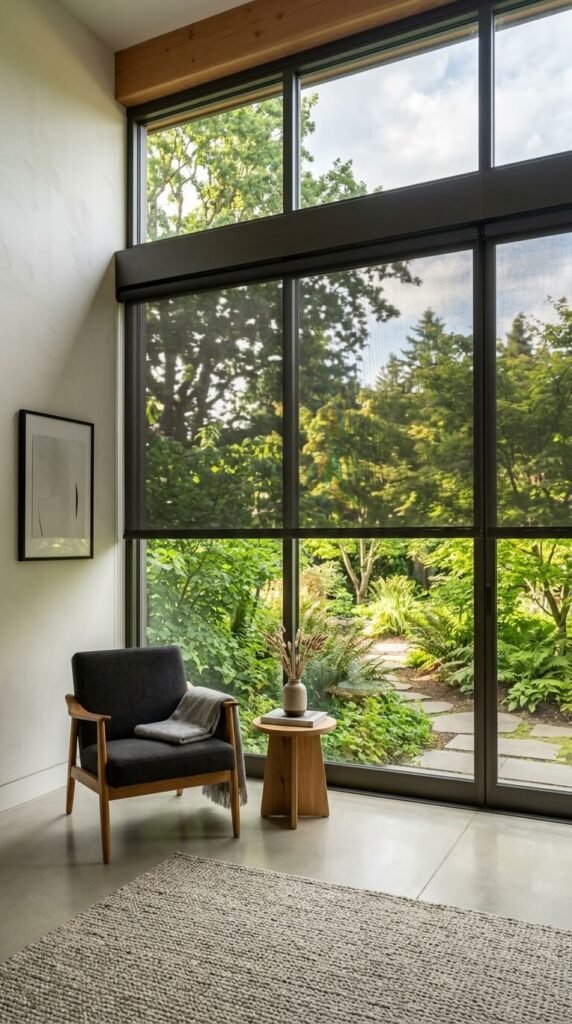
Solar shades are designed to block UV rays and reduce screen glare while keeping your view clear. Unlike regular blackout shades, you can still see outside through a solar shade even when it’s fully lowered. They’re made from an open-weave mesh fabric in varying opacities (1%–14%). Great for home offices, living rooms with TV screens, and sun-drenched bedrooms. Available from most online shade retailers. A 5% opacity solar shade is a good balance between glare control and visibility.
16. Curtain Tiebacks Made from Unexpected Materials
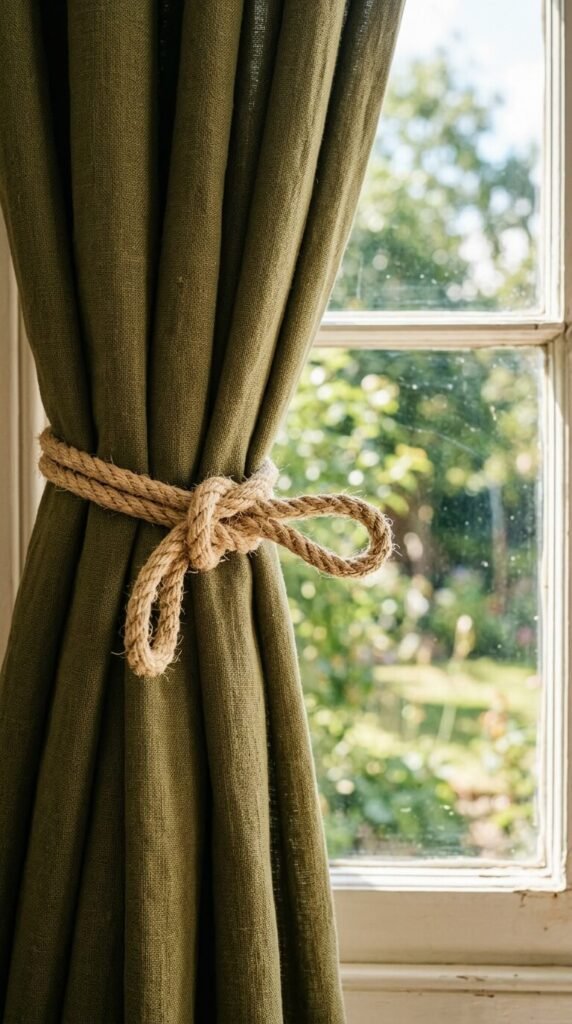
Tiebacks are a small detail that make a big visual difference. Instead of the standard plastic or metal hardware, use something with texture: a thick jute rope, a length of leather, a bundle of dried eucalyptus, or even a wide grosgrain ribbon. These DIY tiebacks cost almost nothing and make curtains look intentional and styled. Loop the material around the bunched curtain and secure to a small hook on the wall. Change them seasonally to refresh the look without buying new curtains.
17. Sheer Curtains in Earthy, Moody Colors
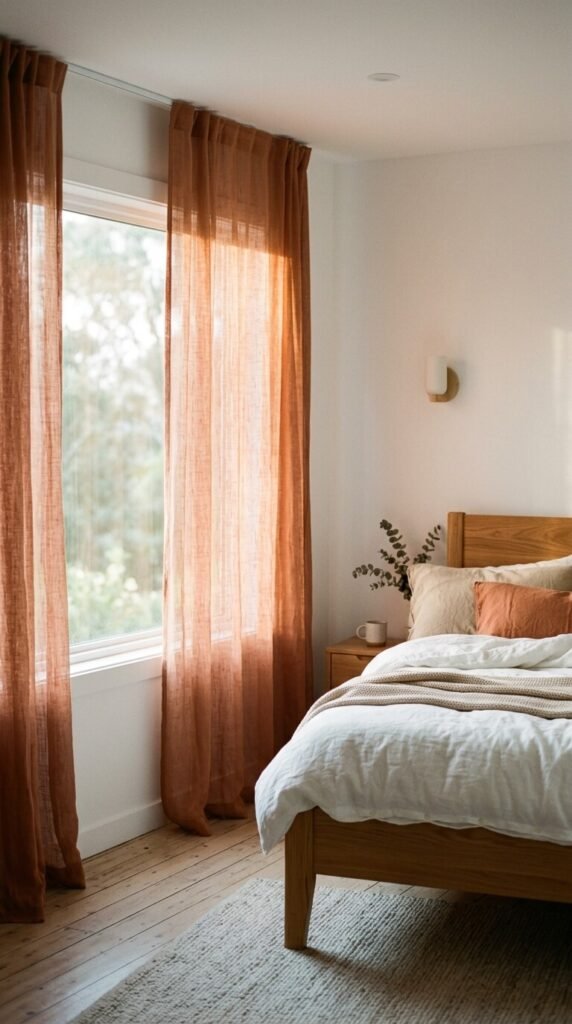
Sheer curtains don’t have to be white. Earthy sheers — terracotta, sage, warm ochre, dusty rose — filter sunlight through a subtle color that tints the whole room in a warm, cozy tone. It’s a moodier, more layered effect than standard white sheers. Look for these on Amazon or at stores like H&M Home. A pair of terracotta sheers in a neutral room immediately adds warmth without any other changes. They pair beautifully with white walls, natural wood, and linen upholstery.
18. Folding Shoji-Style Panels
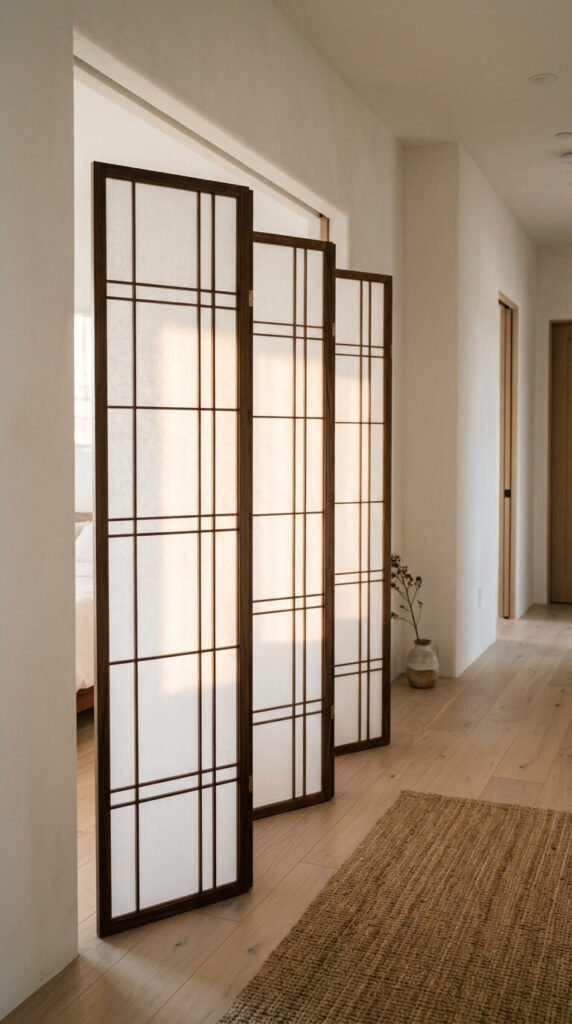
Shoji screens use a translucent paper or fabric panel inside a grid of wooden frames. They’re a signature element of Japanese design — quiet, minimal, and deeply calming. You can use them as window coverings, room dividers, or closet door replacements. Ready-made shoji panels are available at IKEA (KVARTAL tracks work well), Asian home stores, and Amazon starting at around $30. For a DIY version, build simple frames from balsa wood and stretch Japanese kozo paper or sheer fabric across them.
19. Pinch-Pleat Curtains for a Tailored Finish
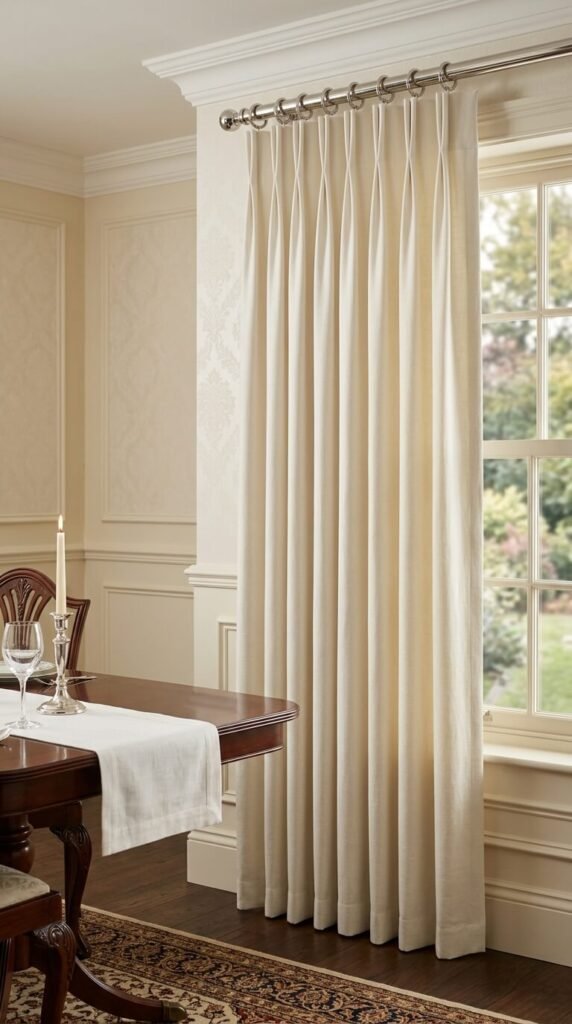
Pinch-pleat curtains have a structured, tailored appearance that signals quality. The triple-pinch at the top creates even, defined folds that stay in place — unlike standard grommet curtains that can look uneven. They work best in formal rooms: dining rooms, home offices, primary bedrooms. You’ll need rings or hooks to hang them. Pre-made pinch-pleat panels are available from Pottery Barn, Restoration Hardware, and Amazon. For a budget option, buy standard panels and hand-pleat them using curtain tape and heading tape — a simple weekend project.
20. Hobbled or Waterfall Roman Shades
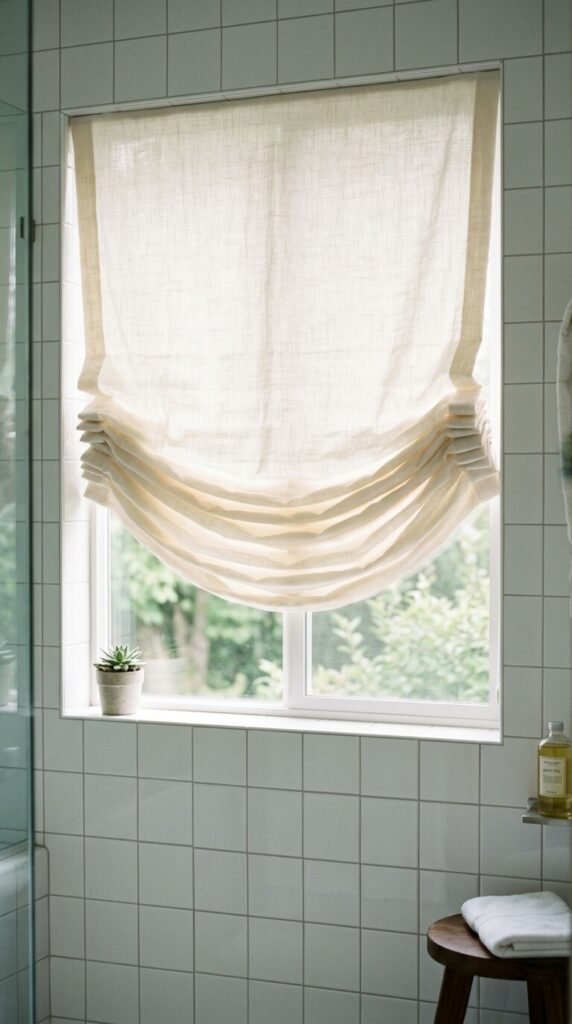
Unlike flat Roman shades, hobbled (or waterfall) Roman shades have soft, cascading folds even when fully lowered. They look like a series of gentle billowing loops. This style adds softness to kitchens, bathrooms, and bedrooms where you want warmth without heavy drapes. The extra fabric used in hobbled shades makes them slightly pricier than flat versions — but they’re dramatically more elegant. Look for ready-made options at Smith+Noble or online fabric shade retailers. Solid fabrics and subtle textures work best.
21. Window Film for Privacy with Pattern
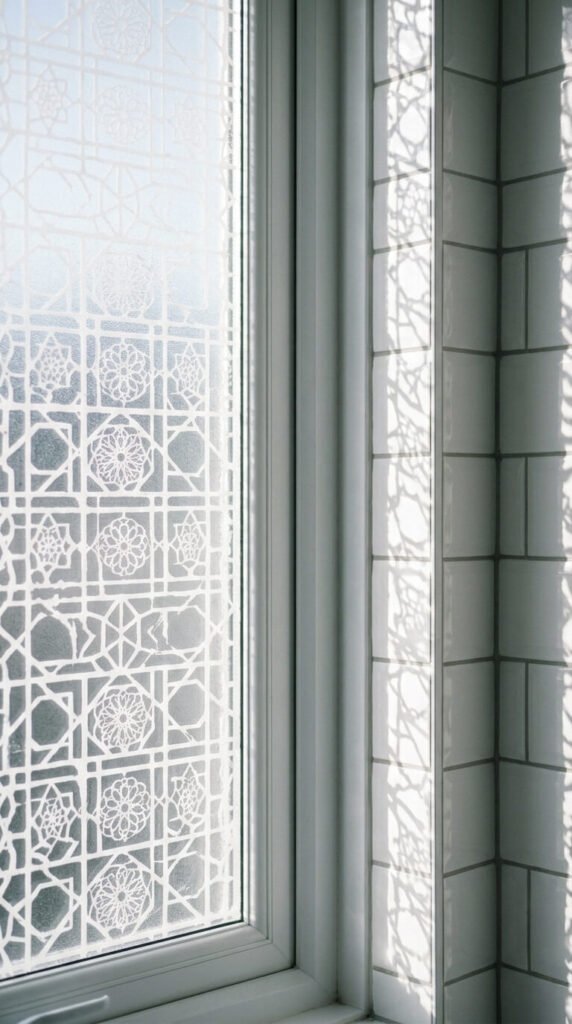
Window film is one of the most underrated treatment options. Static-cling films with frosted, floral, or geometric patterns stick directly to glass — no adhesive, no damage, and completely removable. They provide privacy during the day while still letting light through. A leaded glass or Art Deco-style film can make a plain window look custom. Rolls are available on Amazon for $10–$20 and cover most standard windows. This works especially well in bathrooms, stairwells, and street-facing windows where full curtains aren’t practical.
22. Curtains with Embroidered or Printed Borders
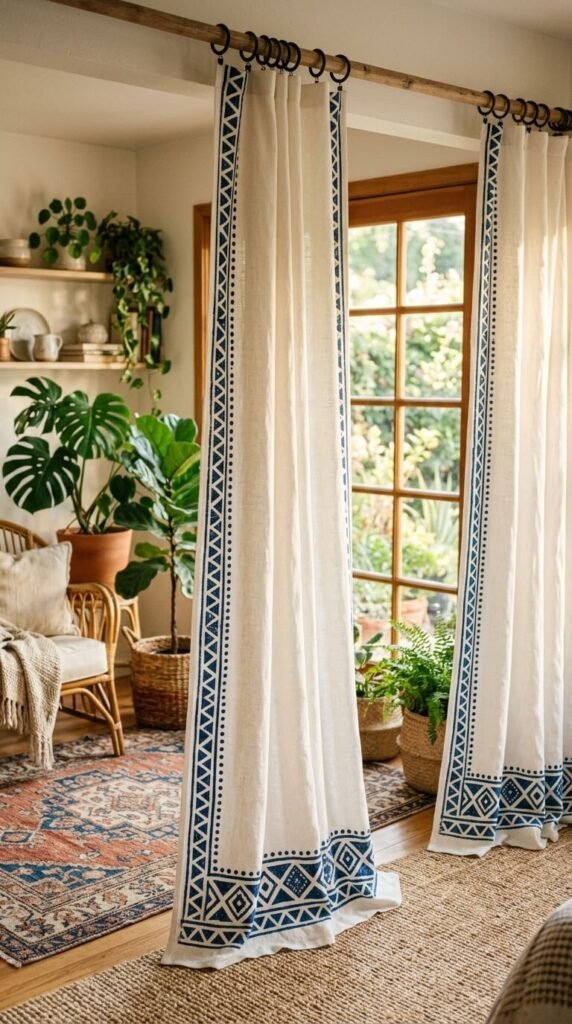
A plain panel becomes something special with a decorative border. You can buy curtains that come with a printed or embroidered edge, or you can DIY it: use fabric paint, iron-on trim, or hand-stitch a contrasting ribbon along the bottom and sides. An indigo stripe, a floral embroidered trim, or even a simple black border completely changes the look of a basic white linen panel. This is a great project for beginner sewers and costs under $10 in materials.
23. Reclaimed Wood Cornice Boards
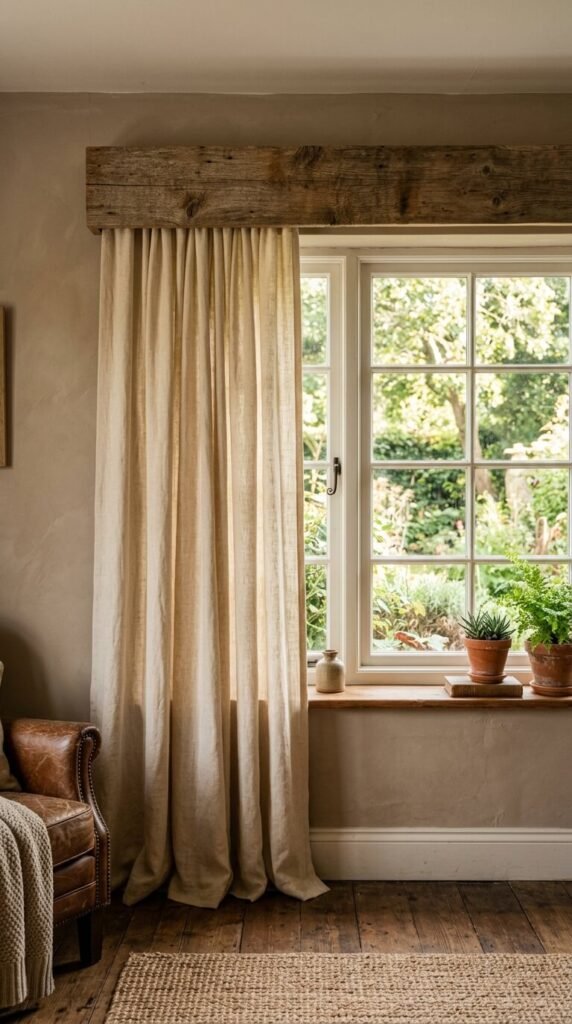
A cornice board is a shallow box mounted above the window to conceal the curtain rod and add a finished, architectural look. Reclaimed wood cornices are especially popular in farmhouse and rustic spaces. Cut a simple U-shaped box from a 1×6 plank, wrap it in fabric or leave it raw for a natural look, and mount it above the window frame. This hides curtain hardware and makes the whole setup look more polished. Total material cost is often under $20 for a standard window.
24. Curtain Rods in Unlacquered Brass or Black Matte
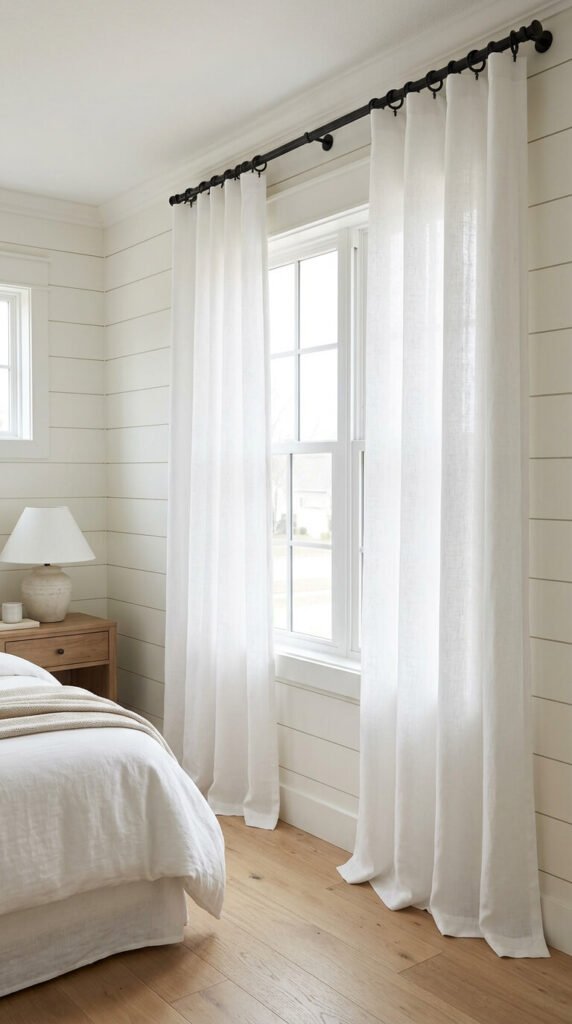
The rod is part of the design. Switching from a cheap silver-chrome rod to a matte black or unlacquered brass rod changes the feel of the entire window instantly. Matte black suits modern, industrial, and farmhouse aesthetics. Unlacquered brass suits warm, eclectic, and vintage-inspired spaces. Both are available at hardware stores and online for $15–$40 for most standard widths. Pair with matching ring clips and simple finials for a complete, curated look. This one swap costs under $30 and makes a visible difference.
25. Balloon Curtains for a Soft, Sculptural Look
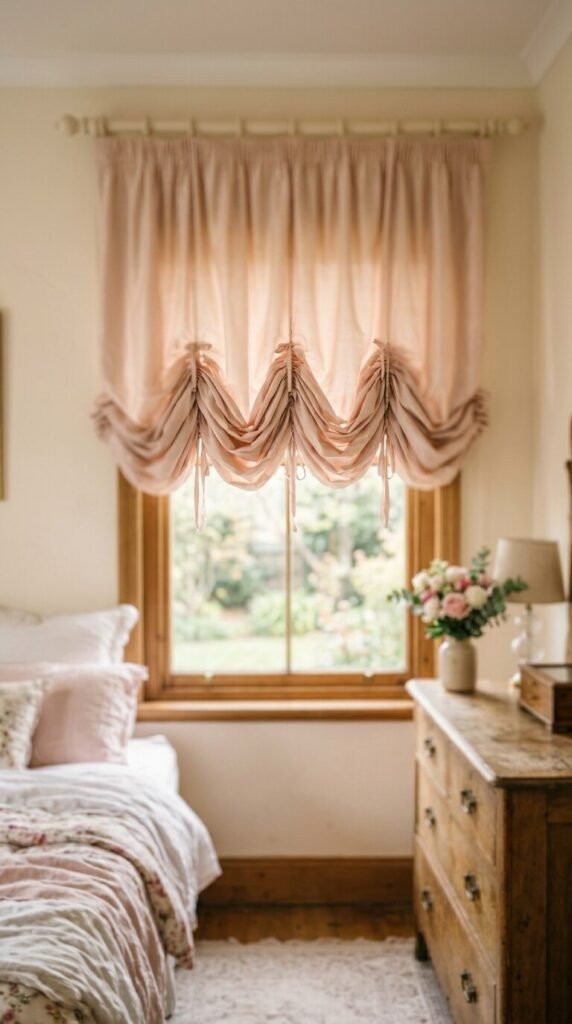
Balloon curtains are gathered both horizontally and vertically, creating poufy, cloud-like folds at the bottom when raised. They’re romantic and slightly theatrical — perfect for a bedroom or formal sitting room where you want a bit of drama. They work best in lightweight fabrics: silk, satin, voile, or cotton lawn. You can find ready-made balloon shades or create them with a sewing machine and ring tape (basic straight-stitch sewing required). Keep the color soft and the room minimal so the curtain stays the focal point.
26. Layered Shades and Curtains Together
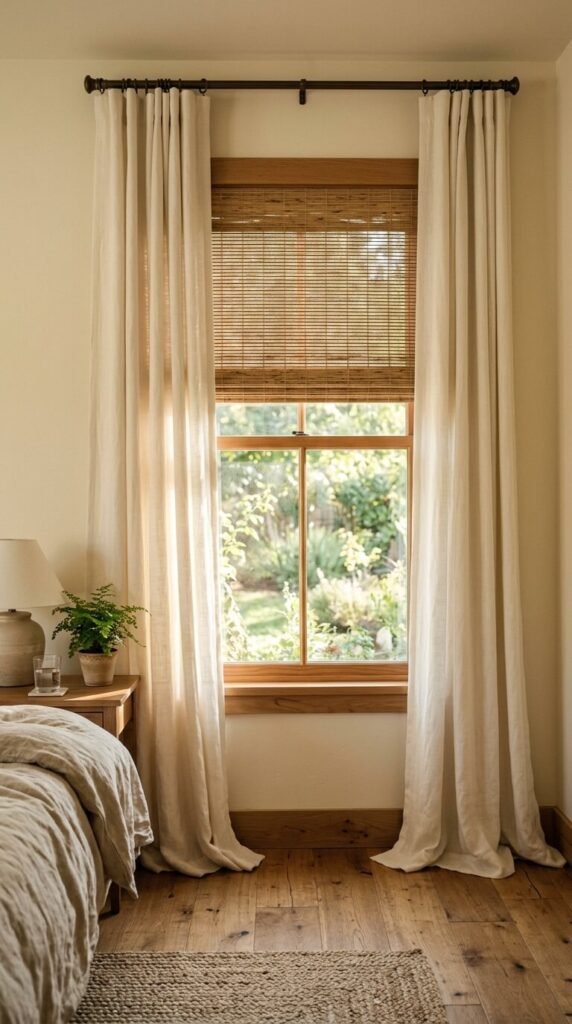
Layering a shade and curtain together is a design-forward approach that also solves real problems. The shade handles the practical work — privacy, light control — while the curtains add softness and frame the window. Common pairings: bamboo shade + linen panels, roller shade + velvet curtains, cellular shade + sheer voile. Use a double bracket system or mount each at a different height. This layered look is what you see in high-end interior design photos — and it’s achievable on a regular budget by mixing mid-range pieces.
27. Geometric or Ikat Patterned Curtains
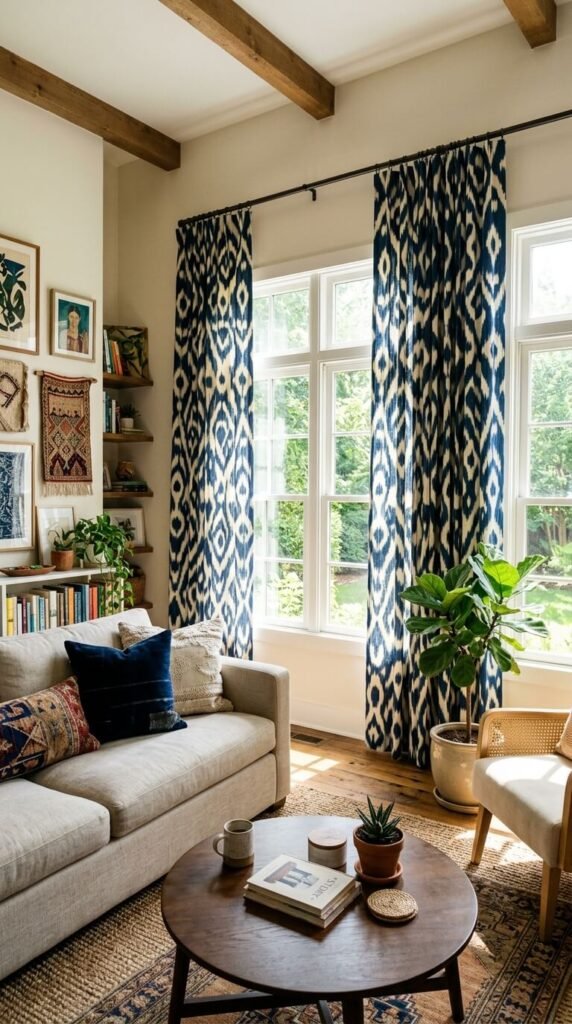
A patterned curtain does the decorating for you. Ikat, block print, or geometric patterns add color, energy, and a sense of handcraft to an otherwise plain room. Choose a pattern that pulls from two or three existing colors in the room so it feels connected rather than random. Keep everything else neutral when using a bold patterned curtain — it should be the main character. World Market, Anthropologie Home, and Amazon are good sources for patterned panels without luxury pricing.
28. DIY Drop Cloth Curtains
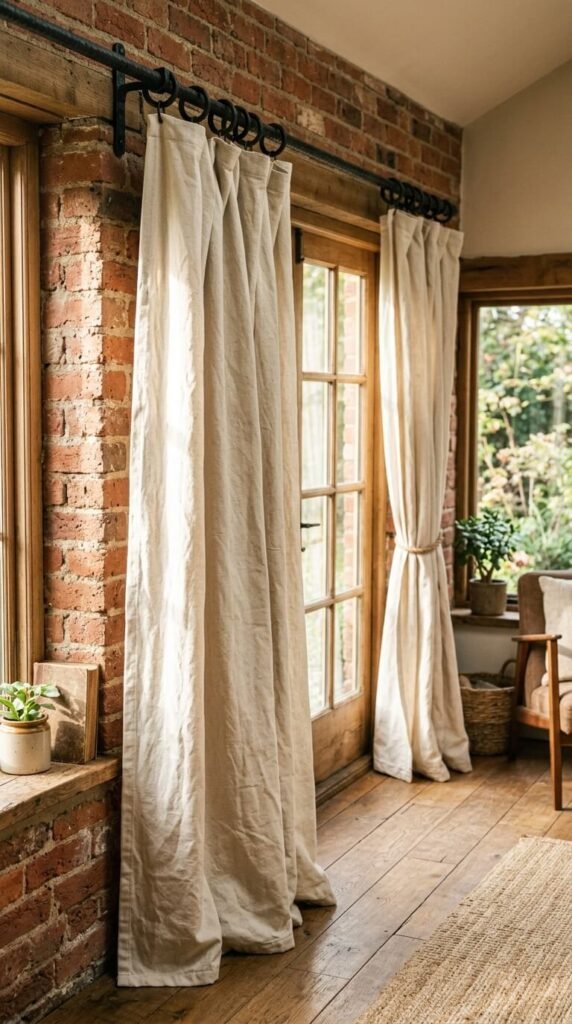
Painter’s drop cloths are made from heavy canvas cotton — and they make stunning budget curtains. A standard 9×12 drop cloth costs around $10 and can be cut to size and hemmed for two full-length panels. The natural off-white color is warm and neutral. You can leave them raw for a relaxed, linen-like look, or stamp and stencil a pattern for something more personalized. Wash and dry them before hanging to soften the fabric and remove any stiffness. This is one of the most popular DIY curtain hacks — for very good reason.
29. Scalloped or Arched Valances
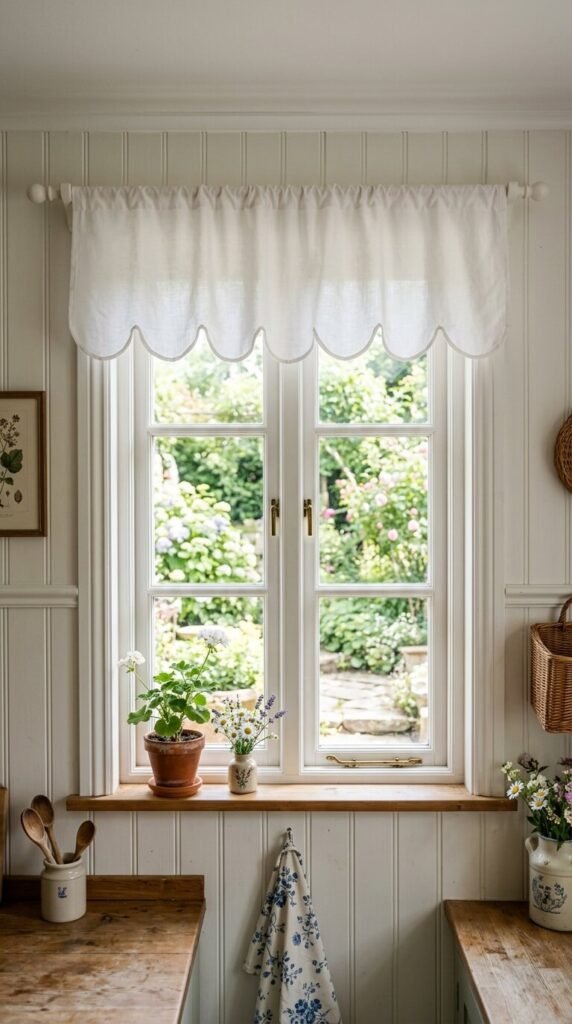
A valance is a short decorative panel mounted only at the top of the window. A scalloped valance — with curved, arched, or pointed hems — adds charm and a handmade quality that straight edges can’t replicate. They work well in kitchens, bathrooms, and country-style bedrooms. You can make one by cutting a scalloped hem from any fabric using a plate as a stencil, then mounting it on a standard tension rod. No-sew versions use iron-on hem tape. Cost: under $10 in fabric.
30. Curtain Canopies Over Beds as Window Framing
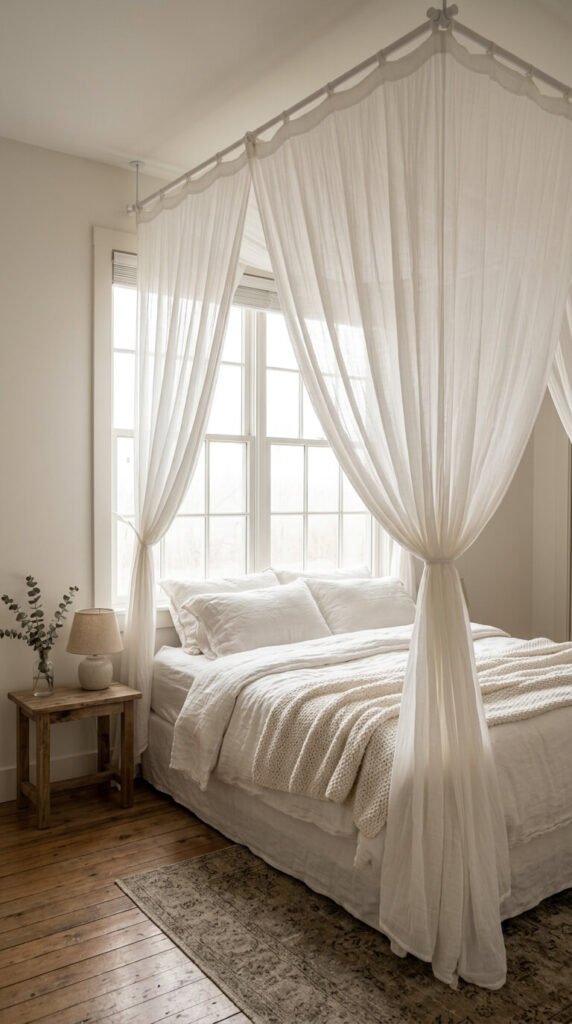
When a bed sits in front of a window, you can use the window as a backdrop and frame the whole vignette with curtain panels hung from a ceiling-mounted rod above the headboard. The curtains act as both a bed canopy and a window treatment in one. This is especially striking with sheer white fabric — the light comes through beautifully and makes the whole corner feel like a sanctuary. Use a simple ceiling canopy rod kit (available on Amazon for under $30) and two to four sheer panels.
Conclusion
Window treatments are one of the highest-impact, lowest-cost changes you can make to any room. A well-chosen curtain, shade, or layered combination reframes your view, softens the light, and gives a space a sense of intention that’s hard to achieve any other way. You don’t need a designer budget — you need a good idea and a little patience. Start with one window. Choose a treatment that fits your light, your privacy needs, and your aesthetic. Hang it high, let it fall long, and see how much a single change can shift the feeling of an entire room.