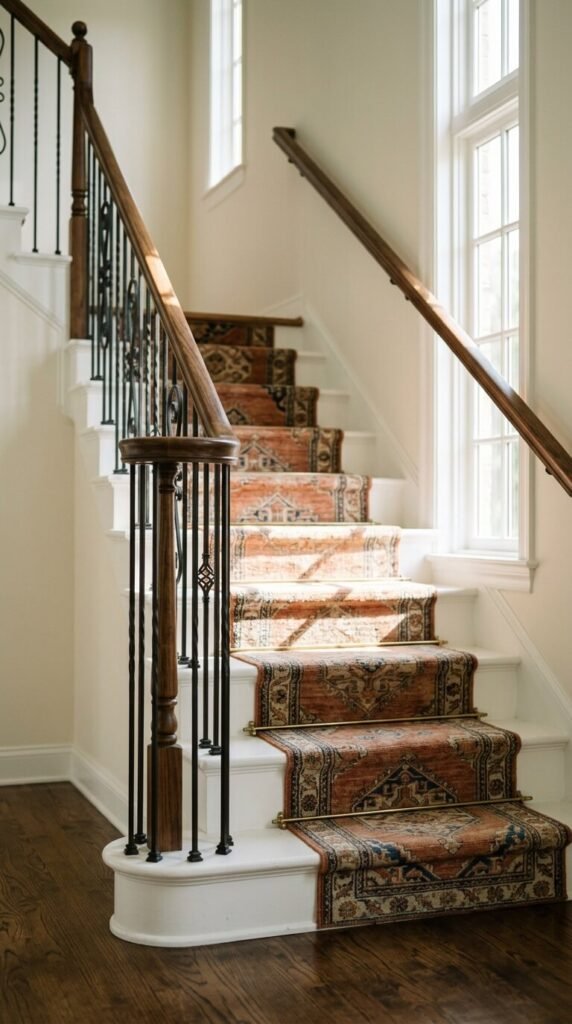
Your staircase is one of the most visible parts of your home — yet most people ignore it for years. A worn handrail, scuffed treads, or plain white risers can drag down the entire look of your entryway. The good news? You don’t need a full renovation to make a dramatic change. From painted risers to statement runners, there are dozens of smart, affordable ways to turn a forgettable staircase into something people actually notice. This list walks you through 22 real, doable makeover ideas — with practical tips and budget-friendly options at every step.
1. Paint the Risers a Bold Accent Color
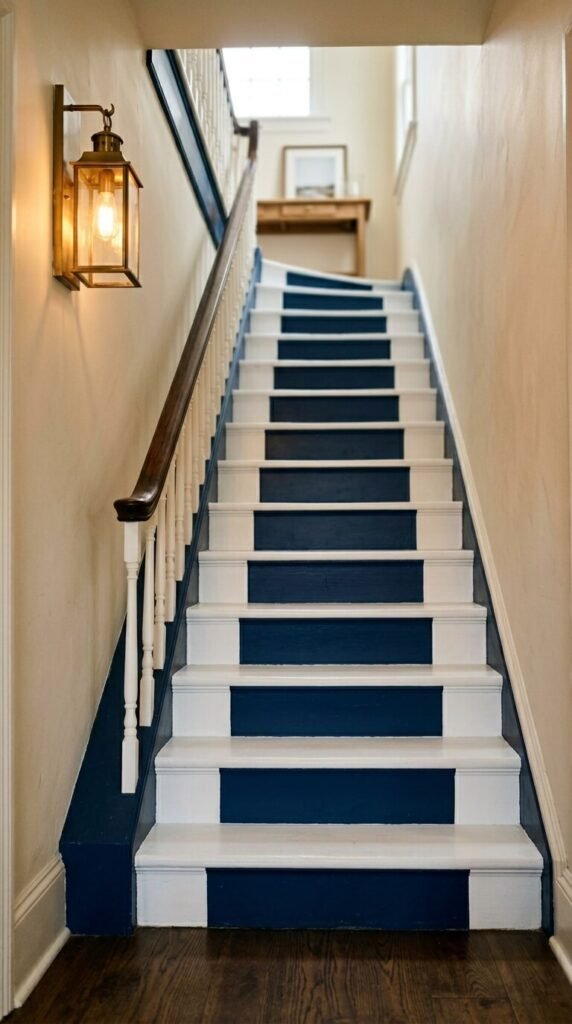
This is one of the easiest and cheapest upgrades you can make. Remove everything from the stairs, clean the risers, sand lightly, and apply two coats of bold-colored paint. Navy, black, sage green, and terracotta all work beautifully. Use porch and floor enamel for durability — it holds up to foot traffic. Total cost? Often under $30. The contrast between painted risers and natural wood treads looks intentional and high-end. No professional needed.
2. Add a Stair Runner for Warmth and Texture
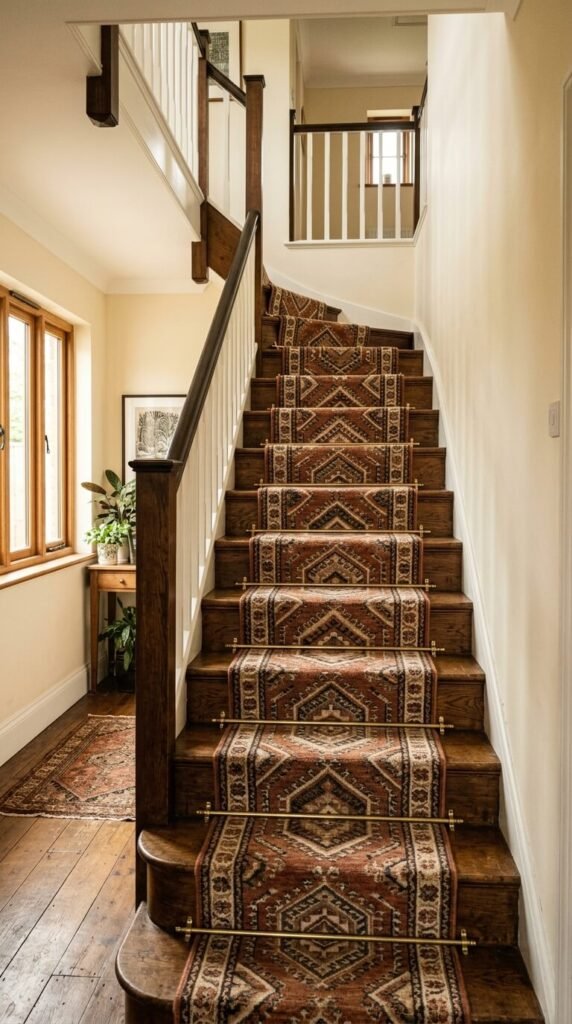
A stair runner adds color, softness, and grip all at once. You can find affordable options at IKEA, Amazon, or your local rug store. Choose a flatwoven or low-pile rug for easier installation. Stair rods hold it in place and add a polished look. No adhesive required. If you’re handy, this is a weekend DIY project. It instantly makes stairs feel quieter underfoot and more welcoming. Patterns like stripes, geometric prints, or Persian-inspired designs work really well.
3. Whitewash or Limewash the Wooden Steps
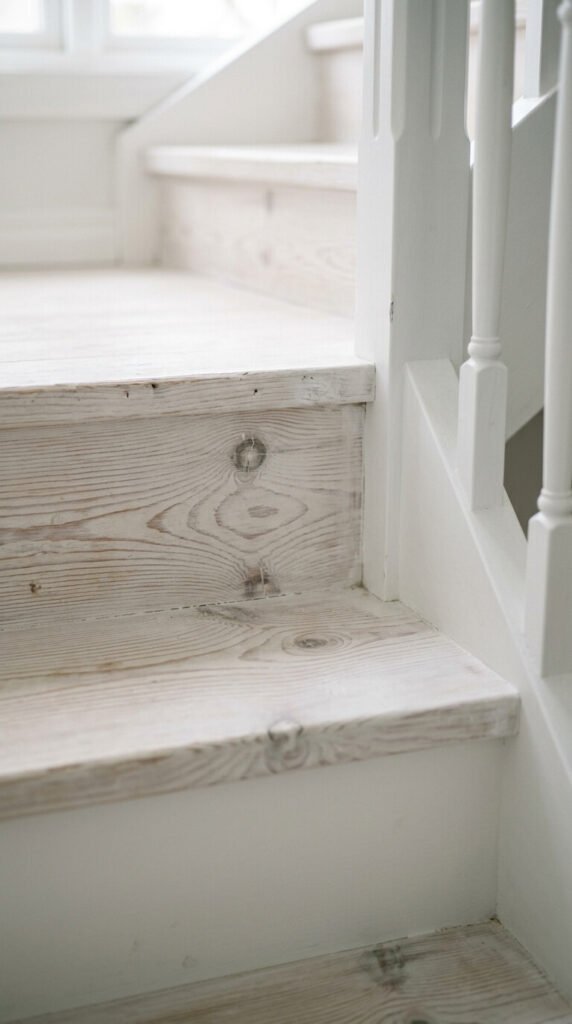
Whitewashing keeps the natural wood grain visible while brightening the look dramatically. Mix white latex paint with water at a 1:1 ratio, then brush it on and wipe back lightly before it dries. The result is soft, lived-in, and effortlessly stylish. It works on oak, pine, and most softwoods. Sand lightly beforehand and seal with a matte clear coat after. This is a great option if you love the look of natural wood but want something lighter and more airy.
4. Install Peel-and-Stick Tile on the Risers
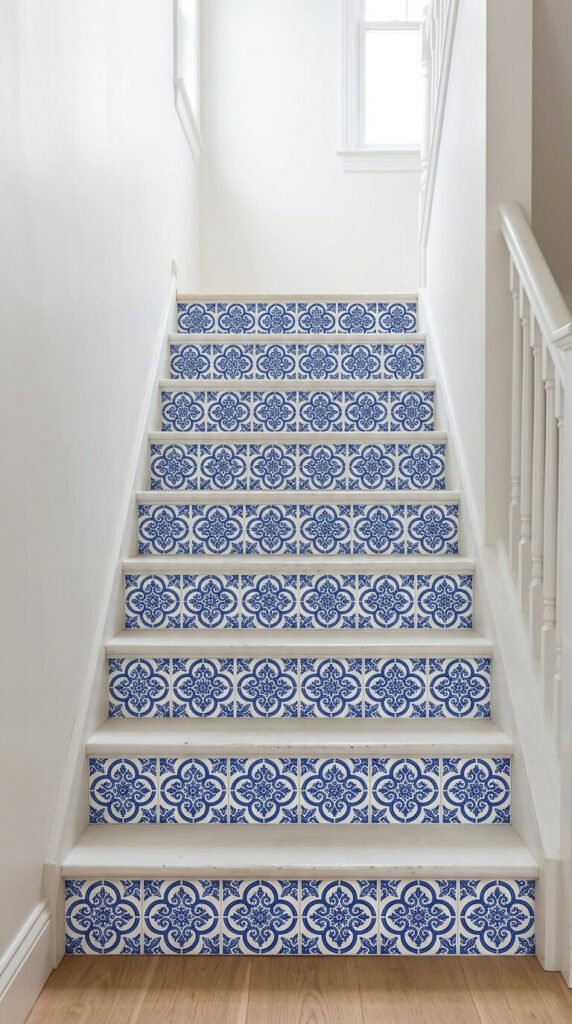
Peel-and-stick tiles are a renter-friendly, no-mess way to add serious personality to your risers. Look for Moroccan, geometric, or Portuguese-style patterns. They’re widely available on Amazon or at home improvement stores. Clean the risers, cut tiles to size, press firmly, and you’re done. No grout, no mess. One box covers several steps. When you move or want a change, they peel off cleanly. The visual impact is massive for very little effort.
5. Replace Builder-Grade Balusters with Iron or Wood Alternatives
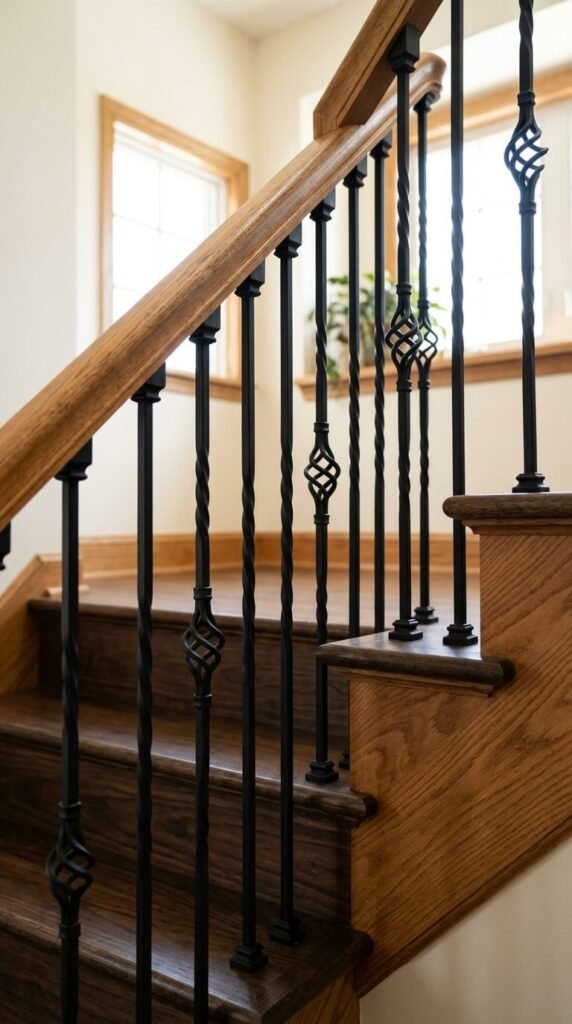
Swapping out plain square balusters for something more decorative makes a huge difference. Wrought iron options with twists, baskets, or simple straight lines are available at most home improvement stores for $3–8 each. This is a DIY job if you’re comfortable with basic carpentry. Remove old spindles, cut new ones to height, and secure them with construction adhesive or screws. The change makes your staircase look custom-built without a contractor.
6. Stain the Treads a Richer, Darker Tone
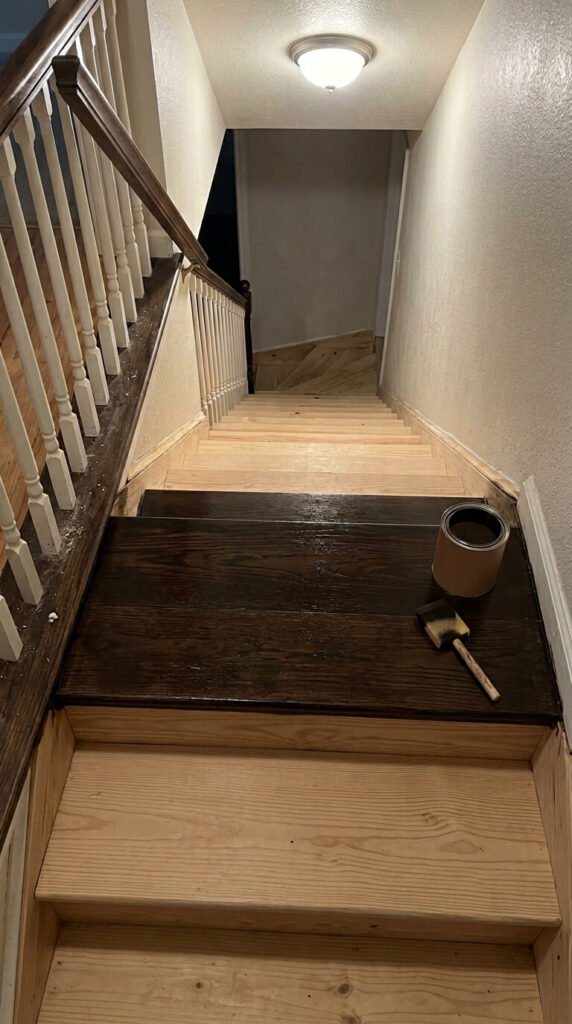
If your treads look dull or faded, restaining them is an affordable refresh. Sand the existing finish, wipe off dust, and apply a new stain in a color like dark walnut, ebony, or classic brown. Follow up with polyurethane for protection. The whole project costs under $60 in materials. Darker stains hide scuffs better than light ones — a practical advantage if you have kids or pets. You don’t need to replace anything. Just refinish what’s already there.
7. Frame Each Riser with Decorative Molding
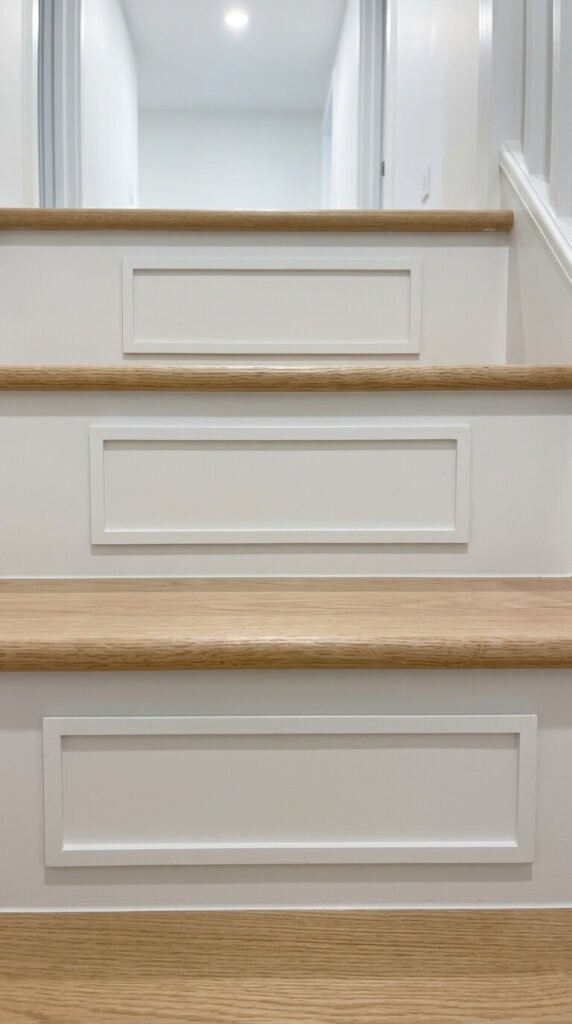
This trick makes basic stairs look like they were designed by an architect. Buy thin wood molding strips at the hardware store (cheap), cut them into rectangles, glue them onto each riser, and paint everything the same color. The shadow lines created by the molding add depth and detail. It’s the same look you’d see in high-end renovations — for about $40 in materials. Paint the molding the same color as the riser for a seamless, classic finish.
8. Add Stenciled Patterns to Each Riser
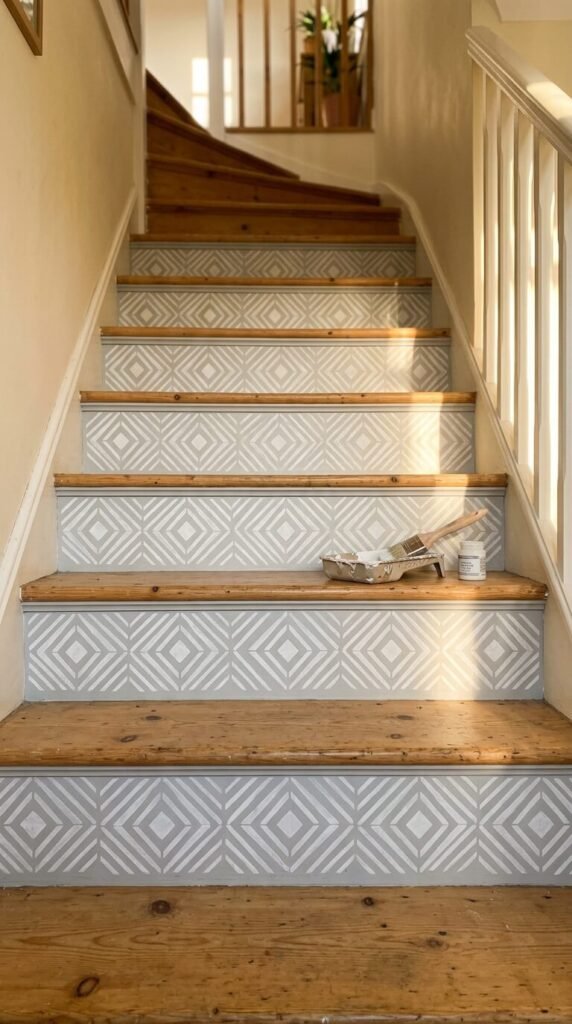
Stencils let you add custom patterns without any design experience. Buy a reusable stencil from Etsy or a craft store, tape it to each riser, and apply paint with a foam roller or brush. Geometric, floral, and Moroccan patterns are all popular choices. Clean up the edges with a small brush afterward. The whole project usually costs under $25. Each riser can match, or you can alternate patterns for an eclectic, collected look. It’s forgiving — small imperfections add charm.
9. Carpet the Entire Staircase in a Statement Color
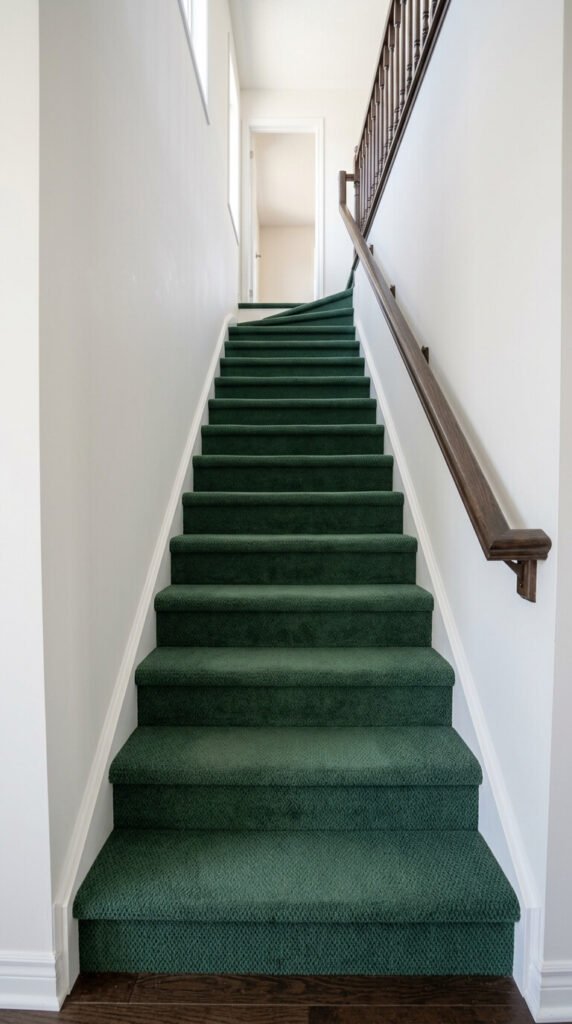
Wall-to-wall stair carpeting provides maximum comfort and sound reduction. A bold color — deep green, charcoal, or even dusty rose — can make the staircase a design feature rather than a functional afterthought. Professional installation is ideal, but motivated DIYers can tackle it with a stair tool and knee kicker. Choose a dense, low-pile carpet for durability. Get samples first to check how the color reads in your lighting. It dramatically changes the feel of the whole floor.
10. Paint the Banister and Handrail Matte Black
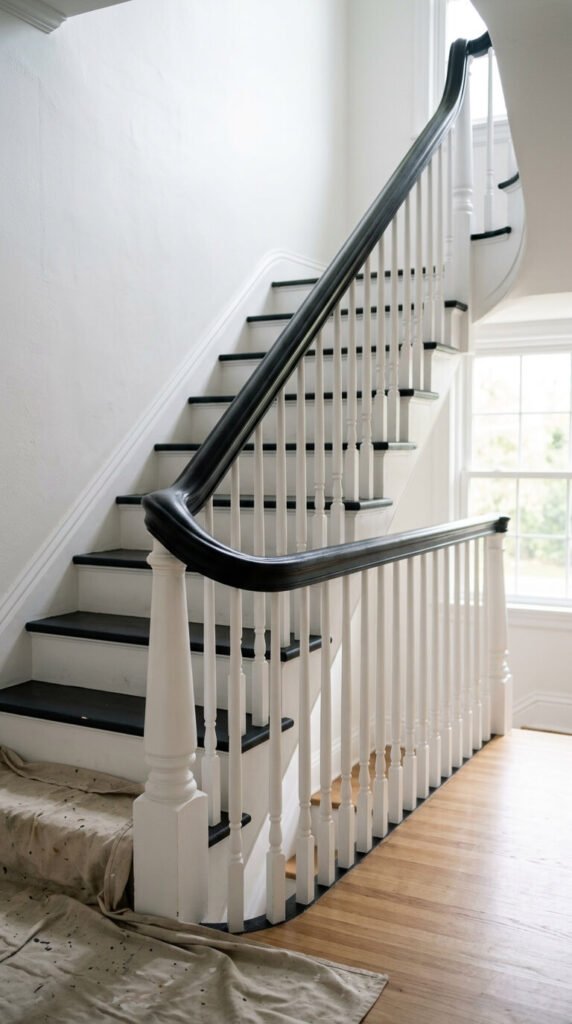
Painting the handrail and banister matte black is one of the highest-impact, lowest-cost changes you can make. It adds a modern, graphic quality that reads as intentional and polished. Use a latex paint with a matte or satin finish — oil-based holds up better on surfaces that get touched often. Sand first, apply primer, then two coats of black paint. The whole job can be done in an afternoon. It makes even a plain staircase look dramatically more considered.
11. Install Under-Stair LED Strip Lighting
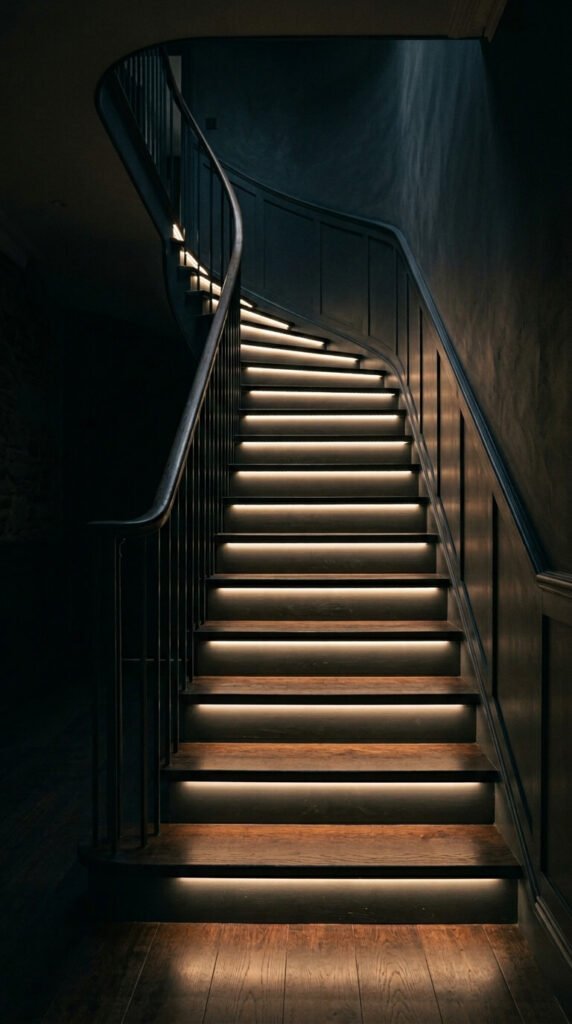
LED strip lighting under each tread creates a dramatic, hotel-lobby effect at home. Adhesive-backed LED strips are available for under $20 online. Stick them to the underside of each tread so the glow falls onto the riser below. Plug them into a smart plug for easy control or link to a dimmer switch. They make night navigation safer and add an ambient layer of lighting your home probably doesn’t have anywhere else. The warm-white variety looks most natural.
12. Wallpaper the Side of the Staircase
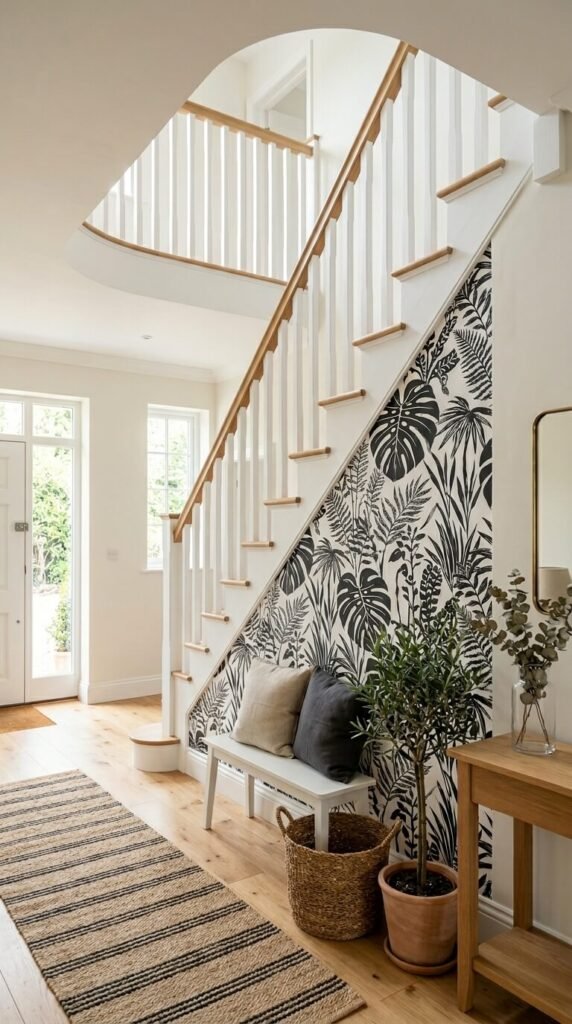
The side panel of the staircase — the flat wall that runs diagonally under the handrail — is often completely overlooked. Wallpapering it adds a moment of surprise and visual richness. Choose a pattern that contrasts with your walls: botanical prints, graphic geometrics, or a large-scale abstract. Peel-and-stick wallpaper makes this a low-commitment project. You can change it seasonally if you like. The irregular triangular shape requires careful measuring and trimming, but the effect is worth it.
13. Replace the Newel Post with a Sculptural One
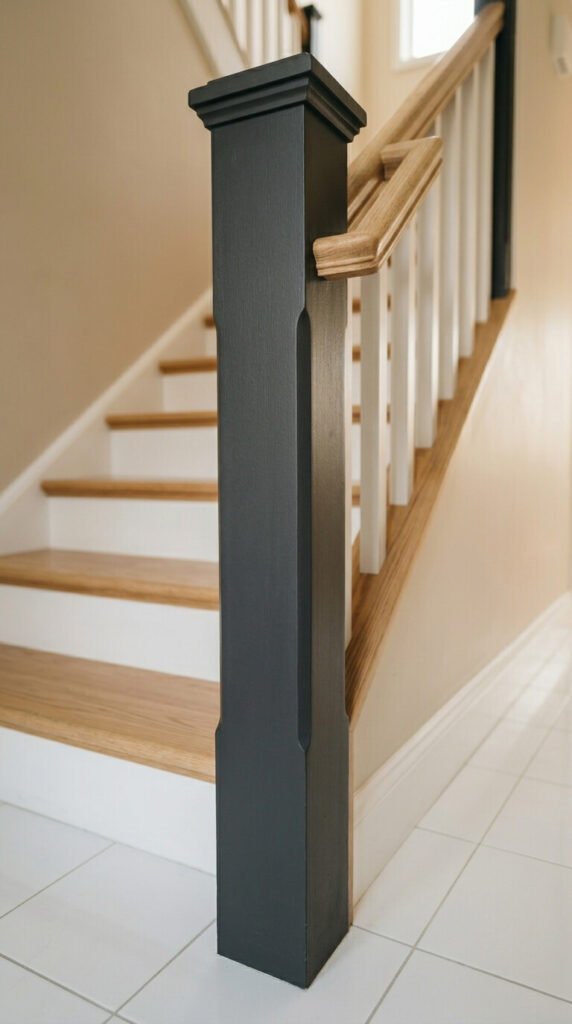
The newel post is the anchor of your entire staircase visually. Swapping a thin, basic post for a chunky, architectural one completely reframes the look. You can buy decorative newel posts at home improvement stores or online. Some styles are designed to slip over your existing post — no demolition required. Paint it the same color as your banister or go contrasting for drama. A bold newel post signals that the staircase was designed with care.
14. Add a Gallery Wall Along the Staircase
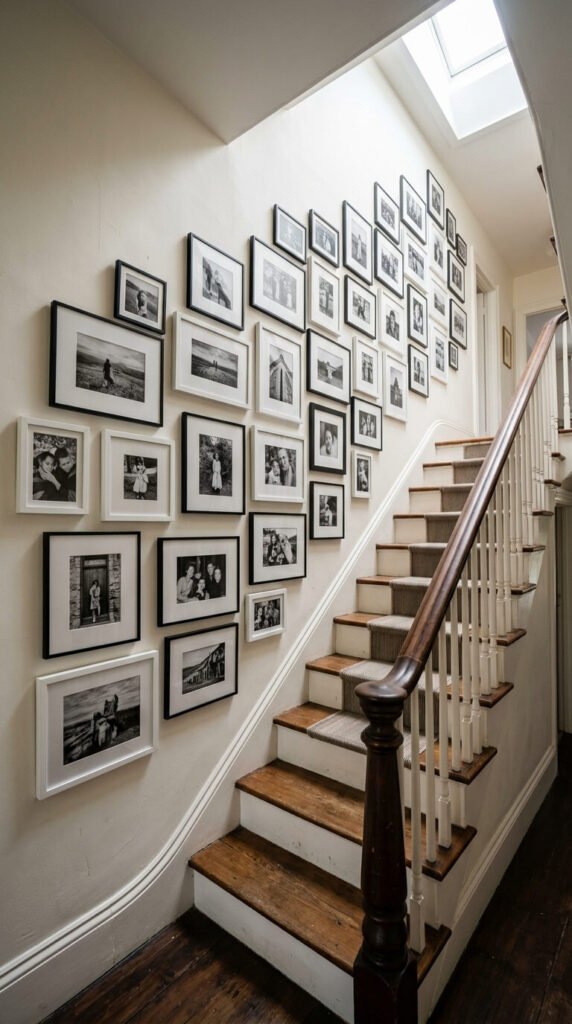
A staircase gallery wall uses the angled wall as a canvas for personal expression. Use a mix of frame sizes and keep the arrangement loose but intentional. Black and white photography gives a clean, editorial look. Color prints feel more personal and warm. Use a level and painter’s tape to plan the layout on the wall before hammering any nails. Budget version: print photos at home in 5×7 or 8×10 sizes and buy inexpensive frames at thrift stores or IKEA.
15. Use Chalkboard Paint on the Risers
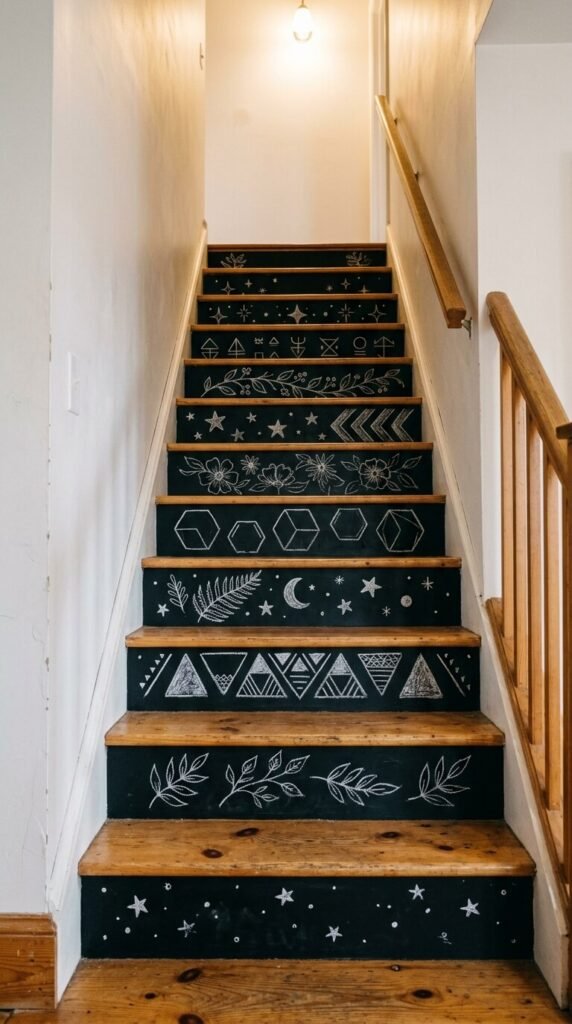
Chalkboard paint on the risers turns your staircase into a rotating art gallery. Kids can draw on them. You can write seasonal quotes, leave messages, or let guests contribute drawings at a party. Apply two coats of chalkboard paint to prepped risers and seal the edges. Change the artwork as often as you like — just wipe and redraw. This is a particularly fun option for family homes or creative households. The risers become interactive instead of just structural.
16. Install Carpet Tiles for a Customizable Pattern
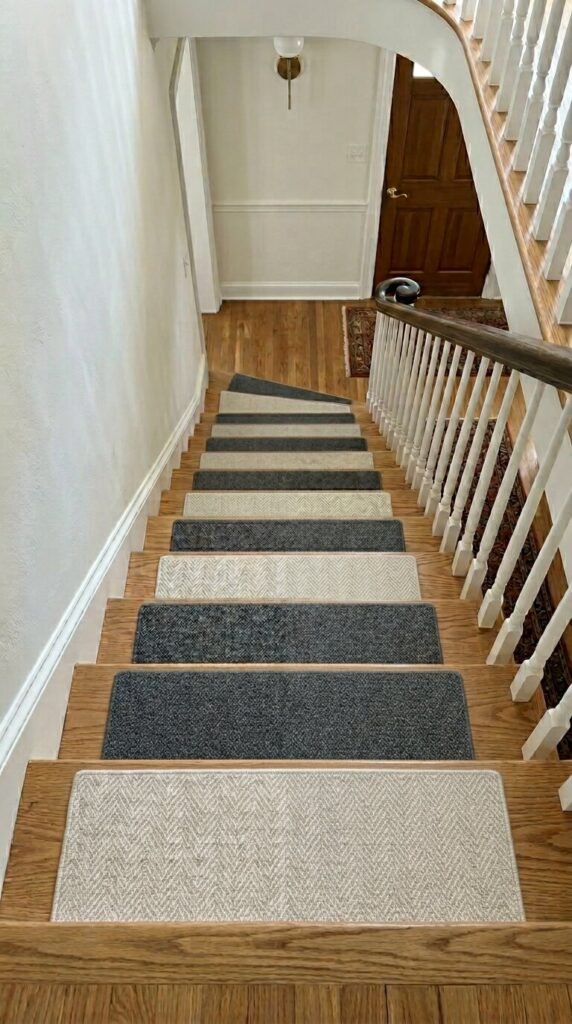
Carpet tiles give you total control over the pattern and color of your stair covering. Mix and match solid colors, textures, or subtle patterns. They’re cut-to-size and self-adhesive, making them a clean DIY option. Replace a single damaged tile without redoing the whole staircase — a major practical advantage. Brands like FLOR sell individual tiles in hundreds of styles. This is especially useful if your stair treads are irregular in size, since each tile can be trimmed independently.
17. Add Wainscoting to the Staircase Wall
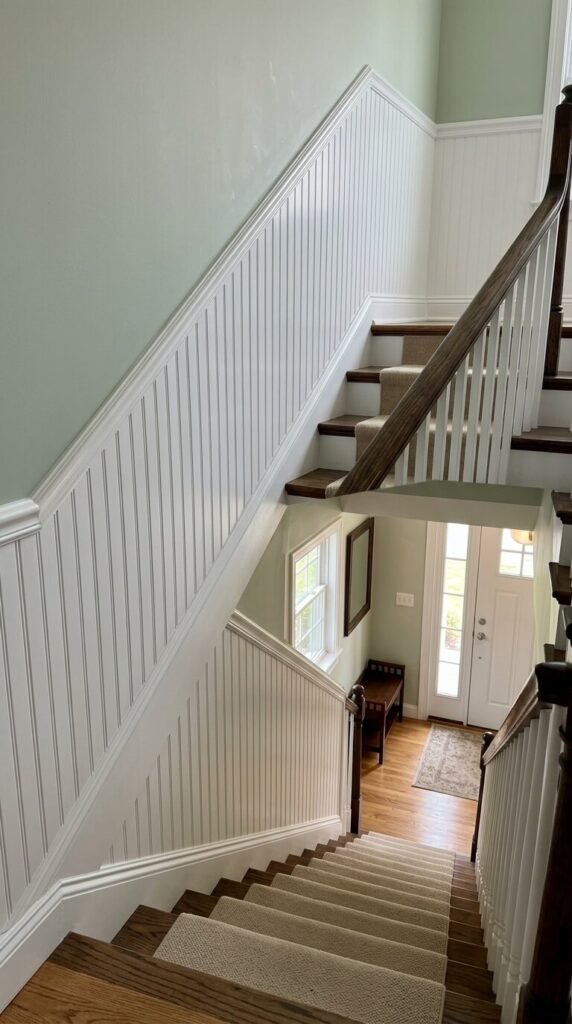
Wainscoting along the staircase wall adds architectural character that most newer homes lack entirely. Beadboard panels are the easiest to install — they come in sheets, can be cut to the diagonal angle of the stairs, and are sold at most hardware stores. Paint everything the same color as your trim for a cohesive, built-in look. Or use a contrasting wall color above the wainscoting line for definition. It’s an afternoon project for a confident DIYer with a miter saw.
18. Expose and Refinish Original Hardwood Treads
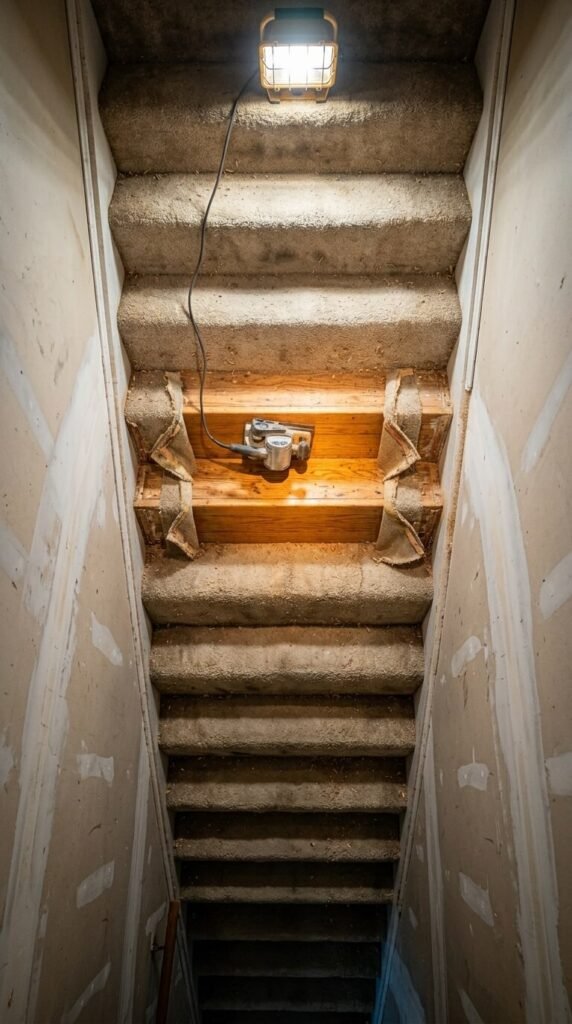
If your stairs have carpet, there’s a good chance original hardwood is hiding underneath. Peeling back old carpet reveals treads that often just need sanding and refinishing. Pull up the carpet, remove staples and tack strips, sand with a belt sander, and apply your preferred stain and finish. This transformation is dramatic because the result looks completely new while honoring what was already there. Budget: around $80–120 in materials for a full staircase.
19. Create a Color-Block Effect with Two-Tone Paint
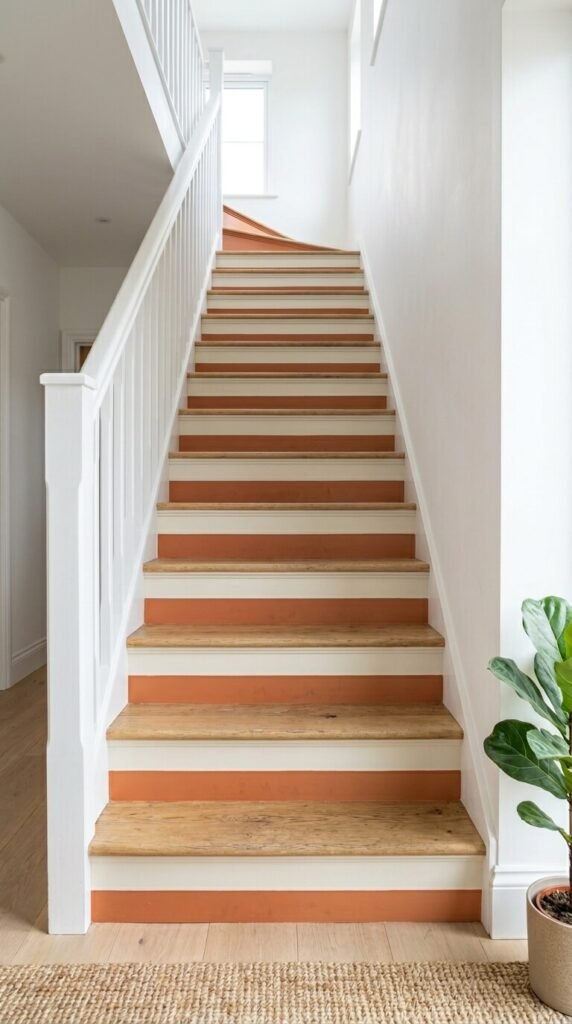
Color-blocking the risers creates a visual effect that looks like a deliberate design decision rather than a budget fix. Paint the lower half of your staircase one color and the upper half another. Or alternate every few risers. Use painter’s tape for sharp lines. Complementary colors — terracotta and cream, navy and blush, black and white — give the most polished results. The two-tone approach makes even a plain staircase look like it belongs in a design magazine without any structural changes.
20. Hang a Statement Light Fixture in the Stairwell
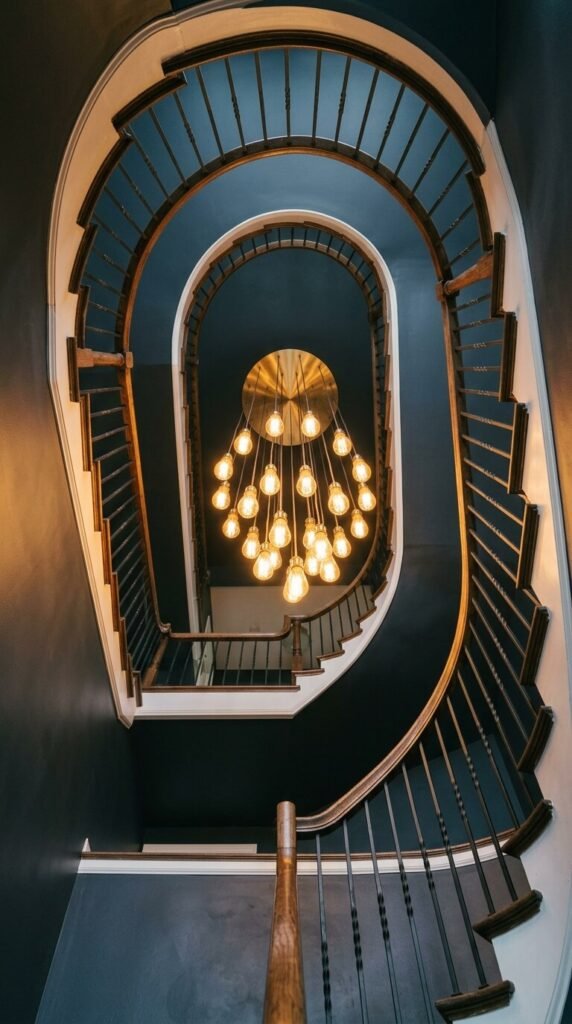
The stairwell ceiling is often wasted space. A dramatic pendant or chandelier hung at the right height changes the atmosphere completely. Look for long-drop pendants, cage-style lights, or clustered bulb fixtures that work with high ceilings. Budget-friendly options exist on Wayfair or Amazon starting around $60. Hire an electrician if you’re not comfortable with wiring. The light fixture becomes a focal point visible from the front door — one of the highest-impact changes in any entryway.
21. Use Rope Lighting as a Decorative Handrail Accent
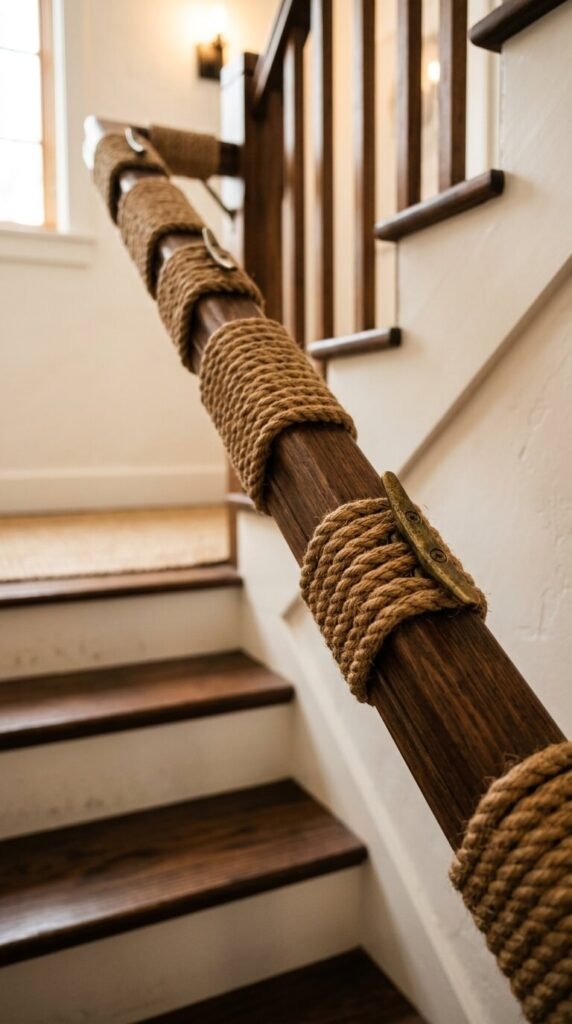
Wrapping the handrail with natural jute or sisal rope adds texture and a relaxed, coastal or rustic character. Secure the rope at both ends with construction adhesive or small brackets. The effect is tactile and warm in a way that painted wood never quite achieves. It’s also a great way to disguise an old or damaged handrail without replacing it entirely. Use a chunky rope diameter (at least 3/4 inch) for a substantial, deliberate look rather than a thin, decorative one.
22. Apply Geometric Tape Patterns to the Treads
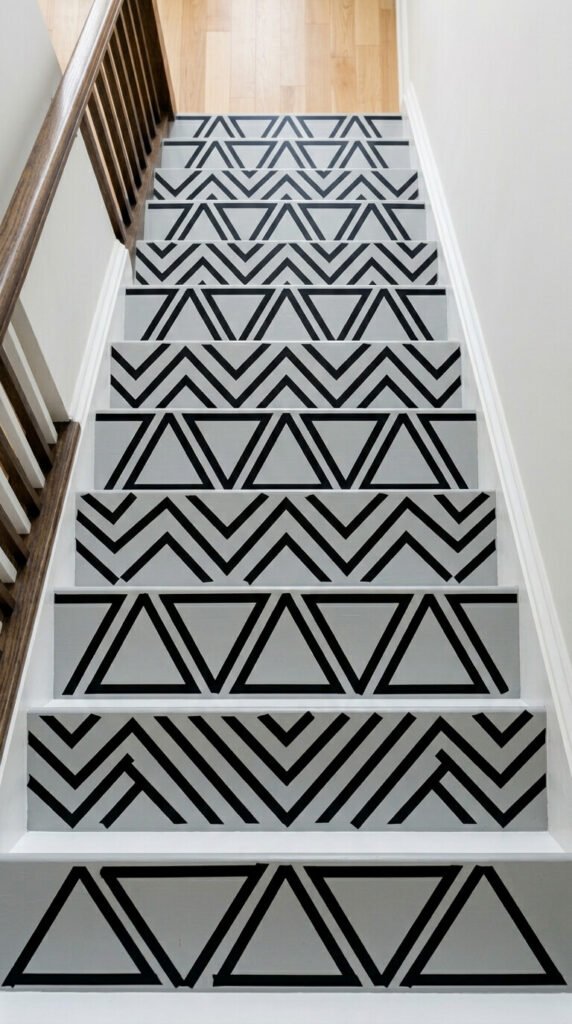
Geometric tape patterns on the treads are a zero-commitment, renter-safe design trick. Use painter’s tape or washi tape in solid black or a contrasting color to create chevrons, stripes, diamonds, or triangles. Press the tape down firmly so edges stay clean, and apply a thin coat of sealer over the tape to lock it in place. The pattern wears better than you’d expect. When you’re ready for a change, peel it off and try a different design. Cost: under $15.
Conclusion
Your staircase doesn’t have to be a forgotten part of your home. As you’ve seen, there are 22 real, affordable ways to make it something worth looking at — from painted risers and stair runners to statement lighting and rope-wrapped handrails. You don’t need a contractor, a big budget, or special skills for most of these projects. Pick one idea that fits your style and your weekend, gather your materials, and get started. Even a single change — a coat of paint, a new runner, or a string of LEDs — can completely shift how your home feels from the moment you walk through the door.