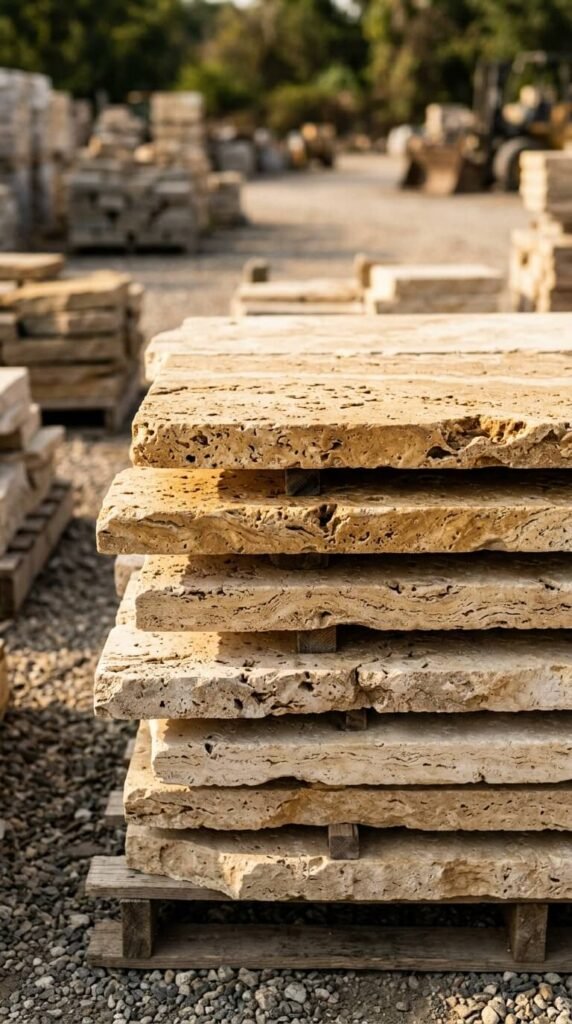
Travertine stone has been gracing homes, palaces, and public spaces for thousands of years — and it still looks just as stunning today. This natural limestone carries warm ivory, walnut, and golden tones that no manufactured material can replicate. Whether you’re planning a full renovation or a simple weekend project, travertine works beautifully across dozens of surfaces and styles. From rustic farmhouse kitchens to sleek contemporary bathrooms, this stone fits wherever character and durability matter. Read on to discover 26 real-world ways to bring travertine into your space without breaking the budget.
1. Travertine Kitchen Backsplash
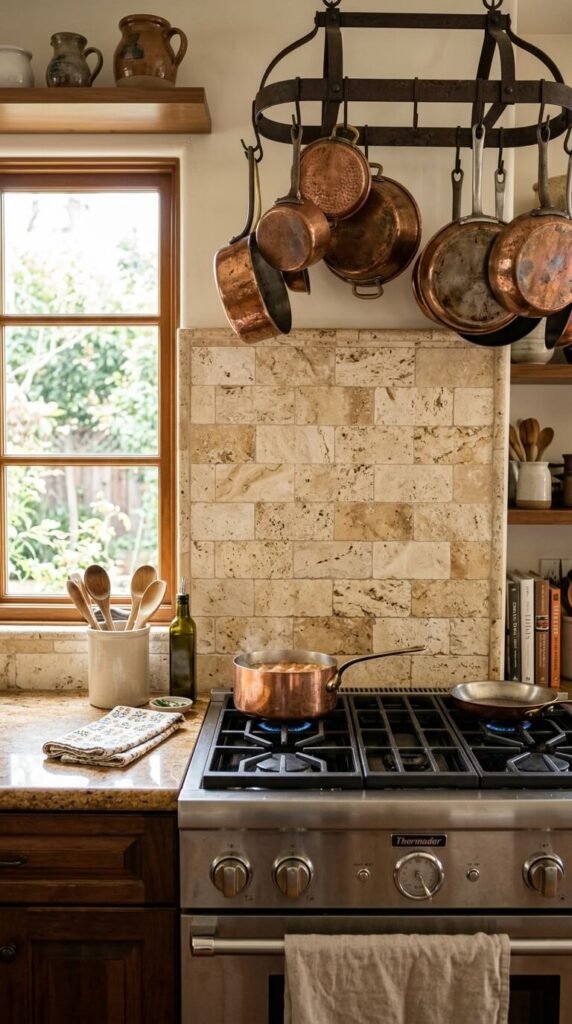
A travertine backsplash adds instant warmth to any kitchen.
The natural pitting and veining create a look that feels collected — not cookie-cutter.
Go with 4×4 filled-and-honed tiles for easier cleaning and a smoother surface.
You can install these yourself over a weekend with basic tiling tools.
Budget tip: Check tile liquidators or Habitat for Humanity ReStores for discounted travertine remnants. A small kitchen backsplash often needs fewer than 20 square feet, making this one of the most affordable entry points into natural stone.
2. Travertine Bathroom Floor Tile
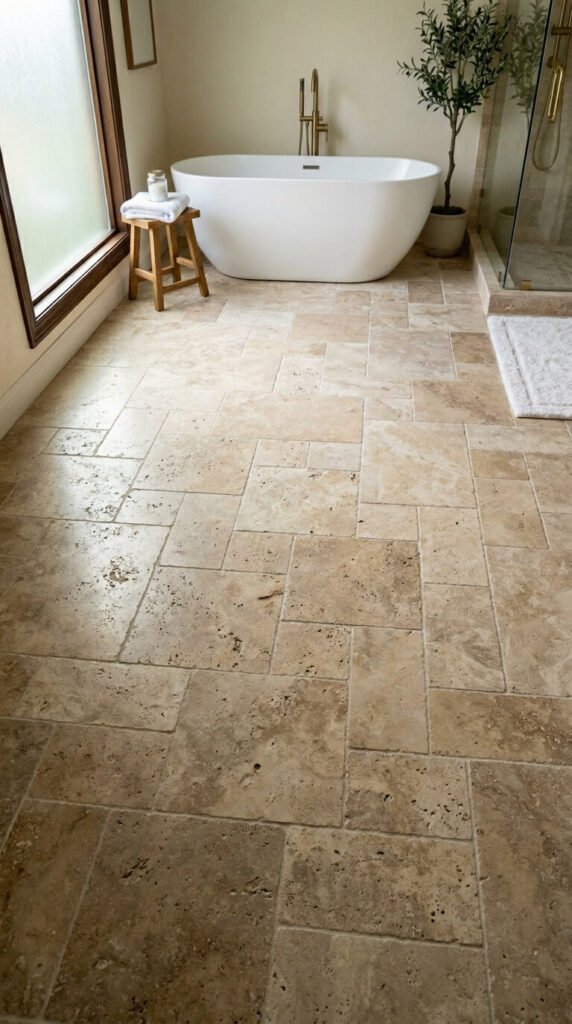
Travertine bathroom floors feel cool underfoot and age gracefully.
The stone’s natural texture adds subtle grip — helpful in wet areas.
Choose tumbled travertine for a more casual, worn-in look, or honed tiles for a cleaner finish.
Seal the floor before grouting and reseal annually to protect against moisture.
DIY tip: Lay tiles in a simple running bond pattern — it’s forgiving for beginners. A small bathroom floor (around 50 square feet) can cost as little as $150–$300 in travertine tile if you shop sales or buy surplus stock.
3. Outdoor Travertine Patio
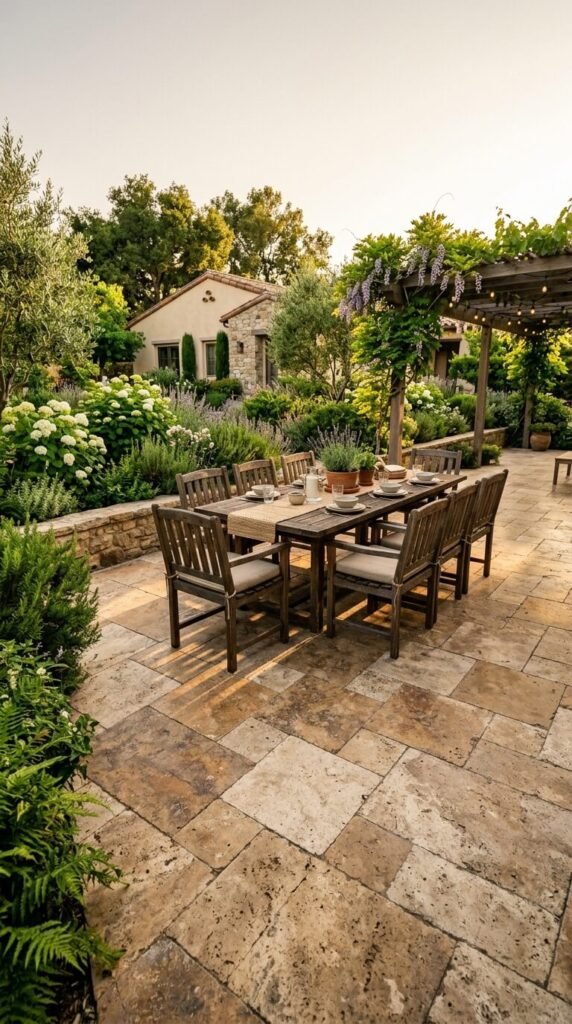
Travertine pavers are one of the best natural options for outdoor living spaces.
They stay cooler than concrete or porcelain in direct sunlight — barefoot friendly.
Silver or walnut travertine handles outdoor exposure particularly well.
These pavers interlock easily and can be dry-laid over compacted sand for a DIY-friendly install.
Budget tip: Buy “seconds” grade pavers — minor cosmetic flaws that are nearly invisible once installed. You’ll often save 30–40% off first-quality pricing, and the natural character of the stone makes any variation look intentional.
4. Travertine Pool Coping and Deck
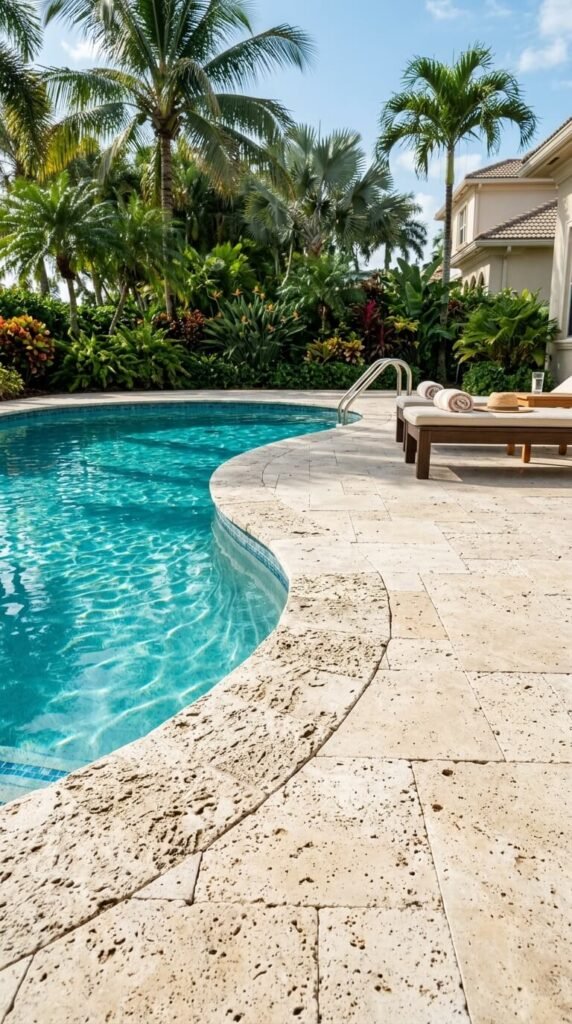
Travertine is a top choice for pool surrounds — and for good reason.
It’s naturally slip-resistant, heat-resistant, and gorgeous under sun exposure.
Brushed or tumbled finishes work best around pools as they offer the most grip.
The stone’s porous nature helps it stay cooler than brick or concrete decking.
If you’re replacing an existing pool deck, travertine pavers can often be laid directly over old concrete with a thin-set mortar system, saving on demolition costs. This makes it a smart, cost-effective upgrade for an outdated pool area.
5. Travertine Fireplace Surround
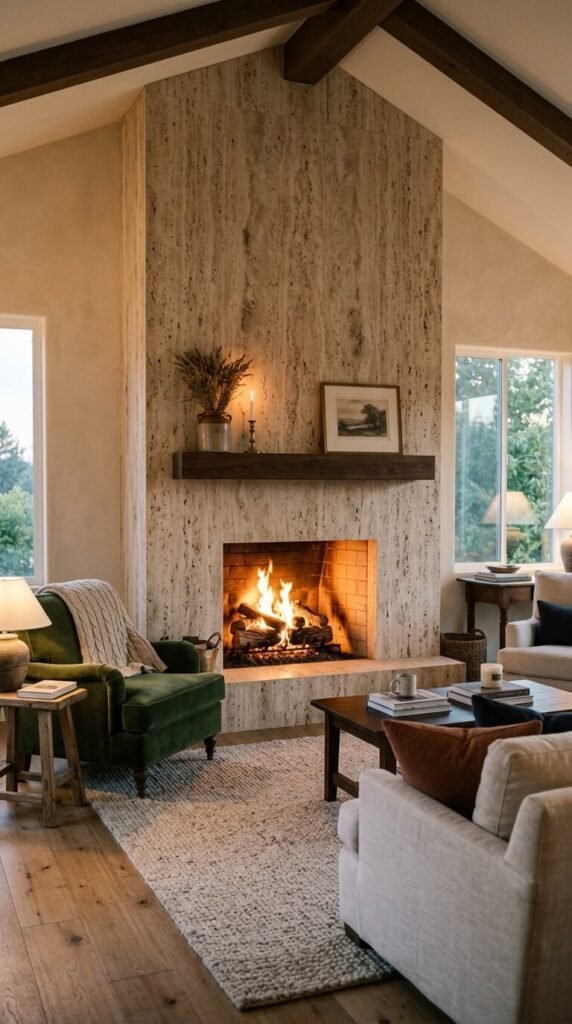
A travertine fireplace surround becomes the focal point of any living room.
The stone’s warm tones glow beautifully alongside firelight.
Filled and polished travertine gives a formal, elegant finish. Tumbled or honed tiles read more casual and rustic.
You can buy pre-cut fireplace surrounds or tile one from scratch using standard cuts.
DIY note: Even if you hire out the hearth and firebox work, the decorative surround tile is something a confident beginner can handle. Keep cuts simple and use a wet saw to score clean lines.
6. Travertine Shower Walls
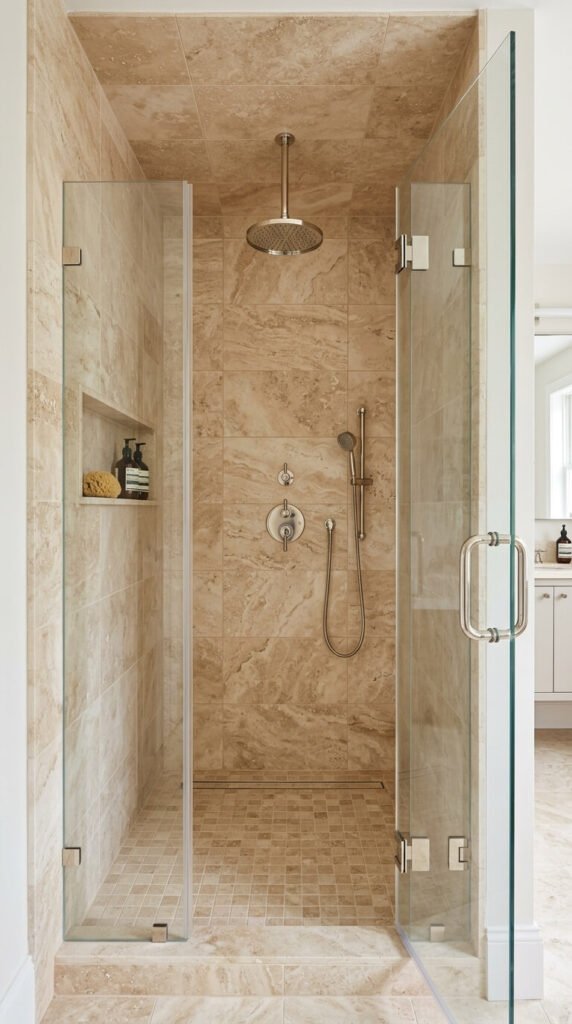
Travertine shower walls feel like a spa — at home.
The natural patterns mean no two showers ever look the same.
Use filled travertine for shower walls — the unfilled version traps moisture and soap in the pores.
Seal the stone before grouting and reapply sealant every 6–12 months to keep water from penetrating.
Budget tip: Mix large-format travertine on the main walls with a simple white subway accent niche to reduce the total tile cost while keeping the high-end look intact. It’s a small design trick with a big visual payoff.
7. Travertine Countertops
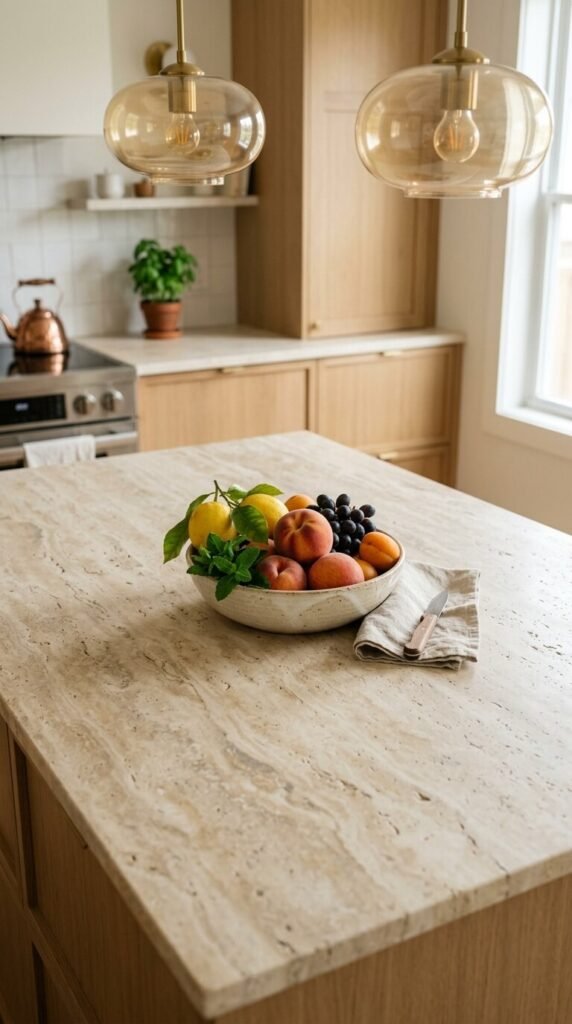
Travertine countertops have a character that granite and quartz simply can’t copy.
The matte, honed surface feels soft and organic — not cold or sterile.
Honed and filled travertine is the most practical finish for countertops. It’s easier to clean and less likely to etch than polished stone.
Travertine is softer than granite, so it can scratch if you’re rough with it. Use cutting boards.
Budget tip: Travertine slabs often cost less per square foot than premium granite, making this a genuinely affordable way to get natural stone counters in your kitchen or bathroom.
8. Travertine Entryway Flooring
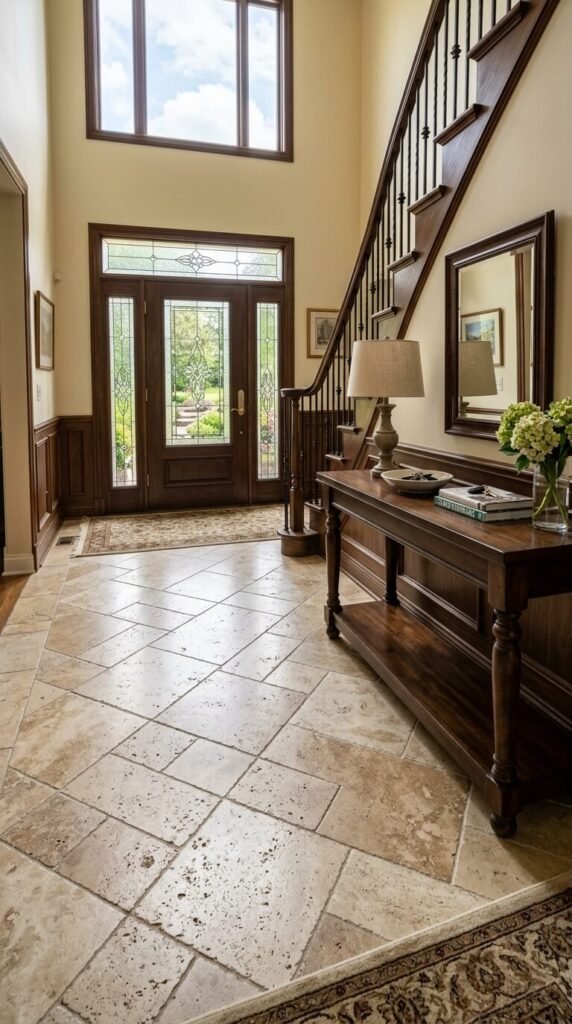
First impressions last — and travertine makes a powerful one.
A travertine entryway tells guests immediately that this home has character.
Diagonal tile layouts make small entryways feel larger and add visual movement.
Opt for a matte or honed finish here — it hides foot traffic scuffs better than polished stone.
DIY tip: Even a small 8×8 foot entry can be re-tiled in a weekend if you have basic tiling experience. Use a large-format tile (18×18 or 24×24) to reduce grout lines and keep the look clean and spacious.
9. Travertine Garden Path
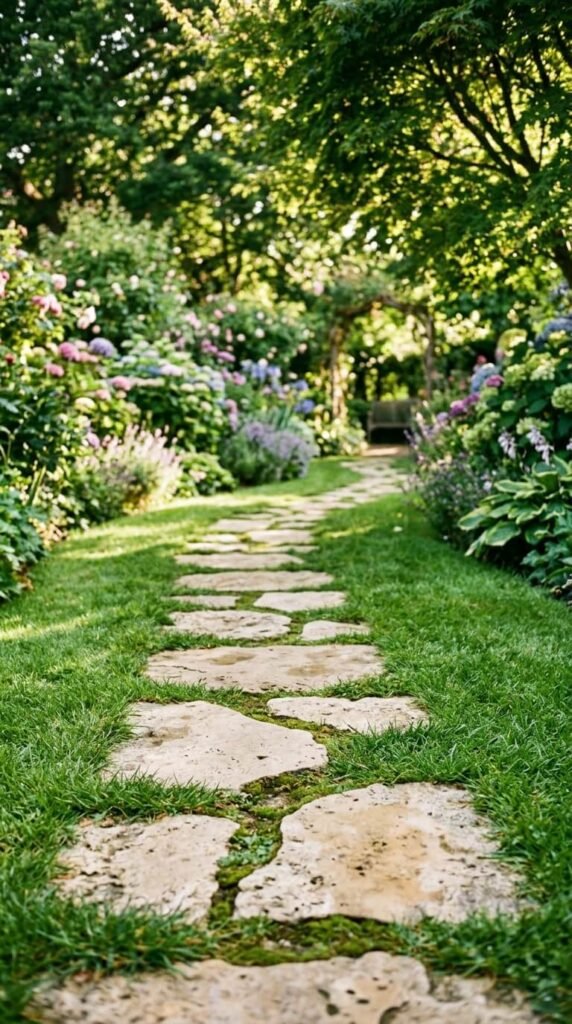
A travertine garden path looks like it’s been there for centuries — even when it’s brand new.
Irregular or cut-to-shape travertine stepping stones work beautifully in both formal and cottage gardens.
Set them 2–4 inches into the ground for stability and to keep them from rocking underfoot.
Leave small gaps and let creeping thyme or moss grow in between for a lush, established feel.
Budget tip: Use offcuts and irregular pieces from a tile shop or stone yard. These are usually sold cheaply by weight — and the imperfect shapes look perfectly natural in a garden setting.
10. Travertine Accent Wall
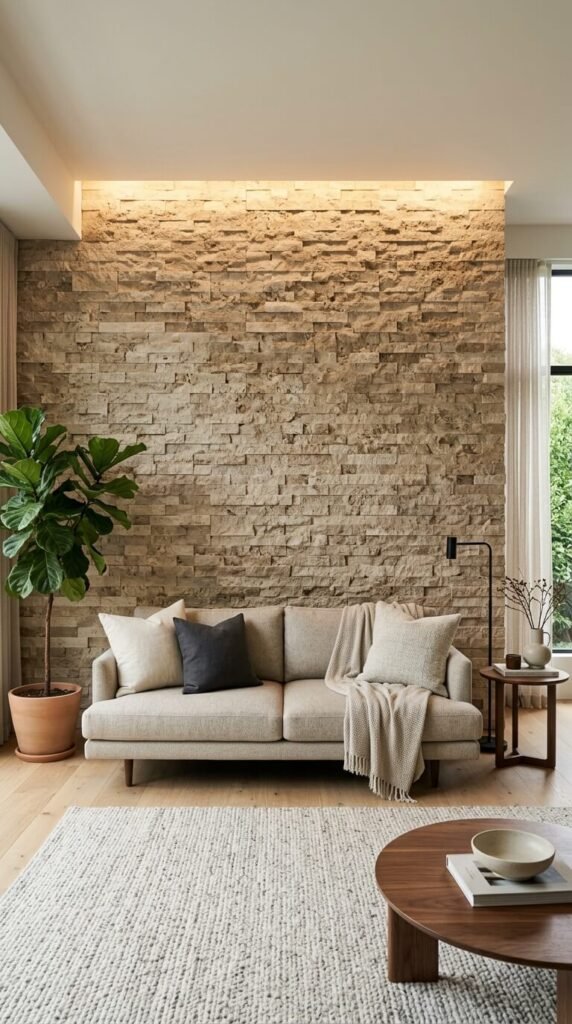
A travertine accent wall adds raw texture and depth that paint simply cannot achieve.
Travertine ledger panels — stacked thin-cut pieces — are the easiest way to create this look.
They’re lightweight, easy to cut with a wet saw, and go up quickly on a clean drywall surface.
You don’t need the whole room. One wall behind a sofa or bed transforms the entire space.
Budget tip: Ledger panels are sold by the square foot at most tile stores. A 10×8 accent wall needs roughly 80 square feet — often achievable for $400–$700 in materials alone.
11. Travertine Staircase
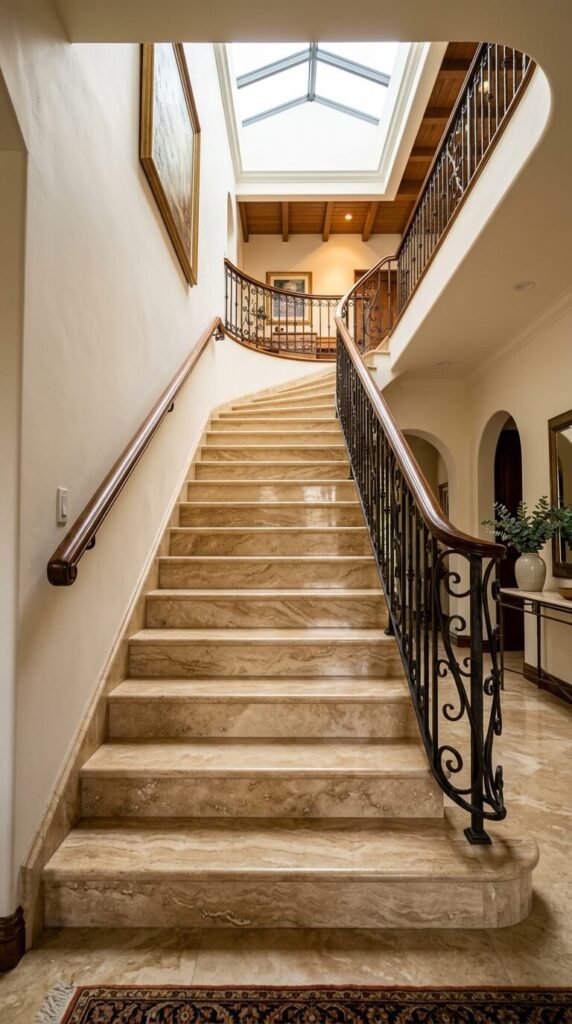
Travertine staircases look breathtaking — and they hold up to daily foot traffic for decades.
Stone treads are more durable than wood and don’t squeak over time.
Honed travertine treads are the safest choice — polished stone can be slippery underfoot.
Add a small non-slip strip at the edge of each tread for safety without sacrificing the look.
Budget tip: If a full stone staircase is out of reach, just replace the treads — keep painted risers in white. It still creates a high-end effect at a fraction of the full cost.
12. Travertine Bathroom Vanity Surround
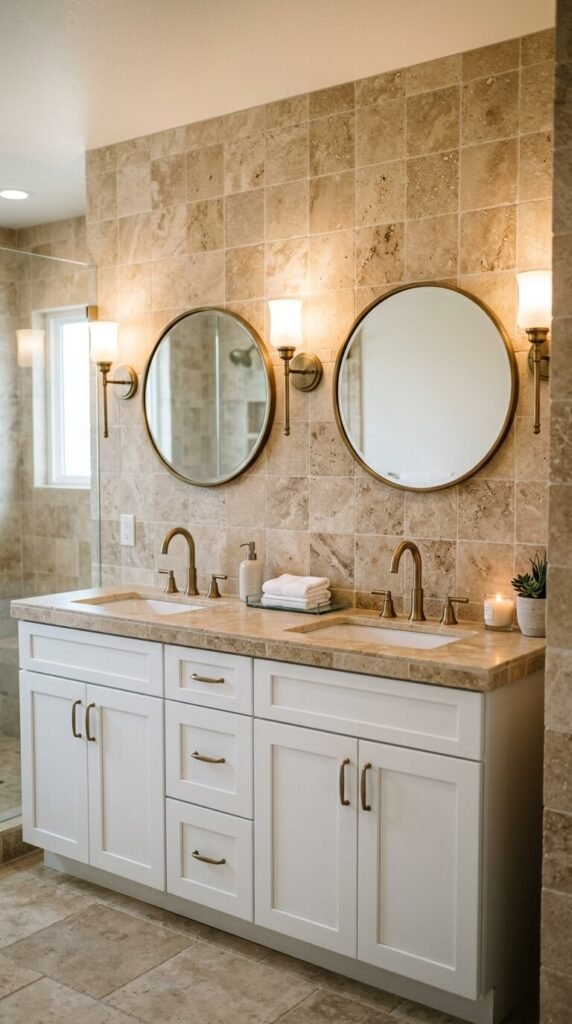
Framing your bathroom vanity in travertine takes it from basic to boutique.
Tile the wall behind the mirrors, the countertop, or both for maximum impact.
Mosaic travertine tiles work well as a backsplash here — they’re easy to cut around outlets and fixtures.
The warm tones pair naturally with warm-toned wood cabinetry, brushed gold, or oil-rubbed bronze hardware.
DIY tip: The vanity wall is a small, manageable project — usually under 20 square feet. It’s one of the best beginner-friendly travertine projects with a high visual reward.
13. Travertine Column Cladding
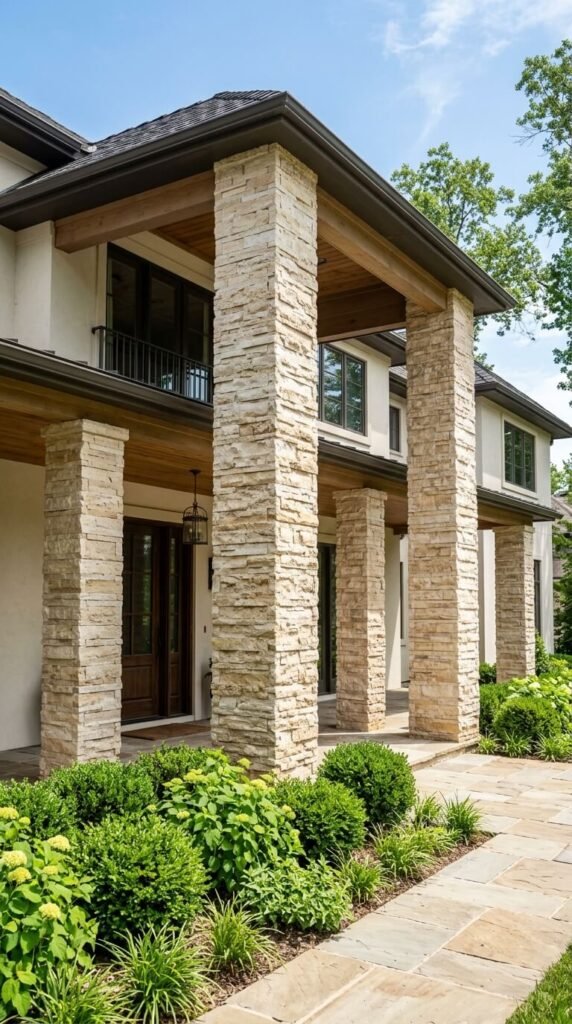
Cladding porch columns in travertine makes a home’s exterior look polished and substantial.
It’s one of the most impactful curb appeal upgrades you can make.
Split-face or ledger-style travertine works best for columns — the rough texture adds depth without looking overdone.
Wrap the panels around the column form and finish the top and bottom edges with a smooth cap.
Budget tip: Columns are small surfaces. Even a full set of four porch columns may need fewer than 60 square feet total, making this an affordable exterior upgrade with big visual returns.
14. Travertine Window Sills
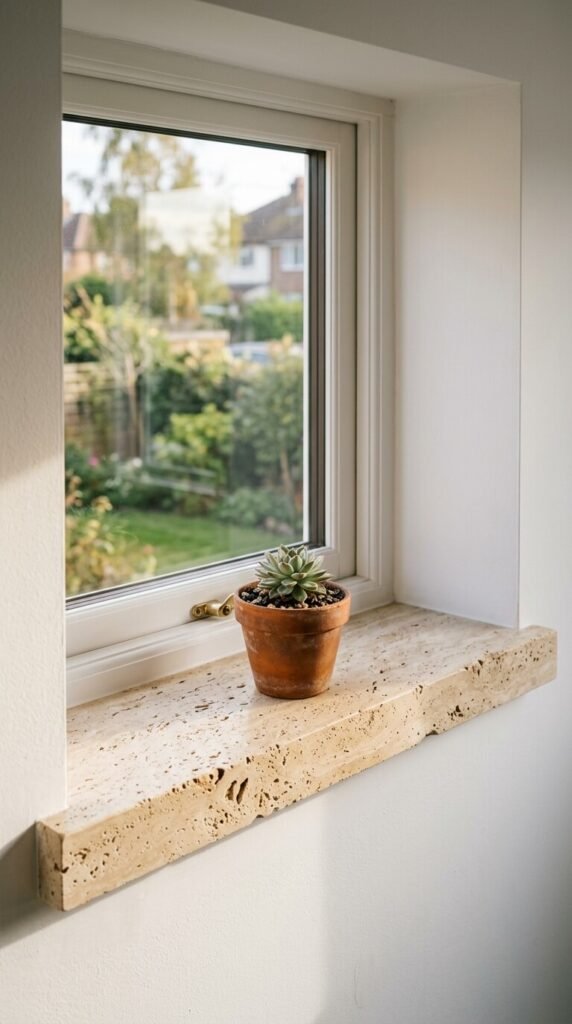
Travertine window sills are a small detail that makes a lasting impression.
They’re more durable than wood — no warping, no rot, no repainting.
A 2-inch thick honed sill looks substantial and refined in both modern and traditional rooms.
These are simple to install during a window trim update or any light renovation.
Budget tip: Window sills use very little stone — often just a few linear feet per window. This is one of the cheapest ways to incorporate real travertine into your home. Stone yards often sell cut sill pieces for $10–$30 each.
15. Travertine Outdoor Kitchen Countertop
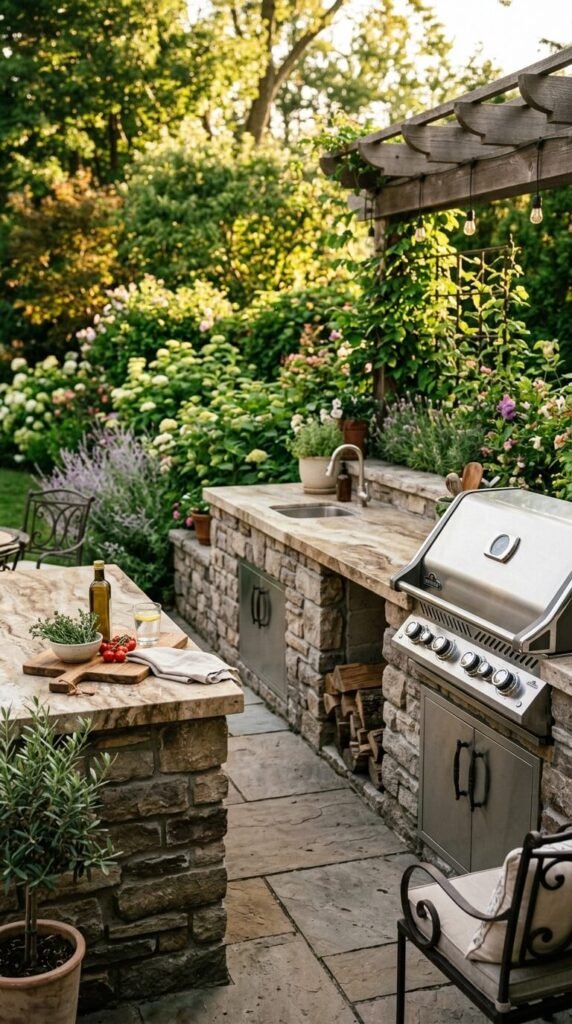
Travertine holds up surprisingly well outdoors when properly sealed.
An outdoor kitchen with a travertine countertop looks custom-built and expensive — even on a budget.
Seal the stone twice before use and reseal at the start of each outdoor season.
Honed or brushed finishes handle weather and UV exposure better than polished.
Budget tip: Build the base from CMU block (concrete block) and top it with a single travertine slab. The slab is the only expensive element — block and mortar are inexpensive, and the result looks professional.
16. Travertine Wet Bar Backsplash
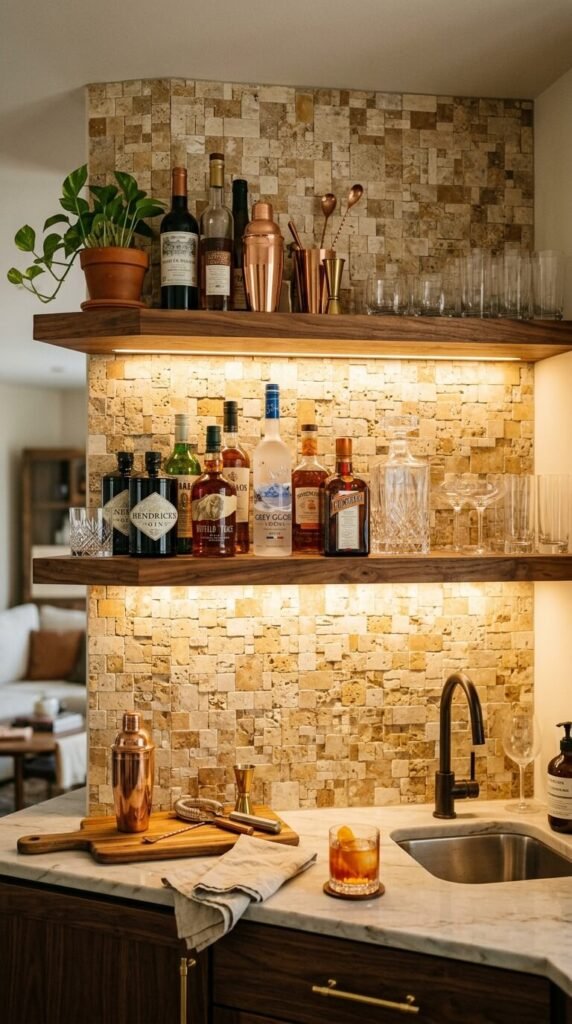
A travertine backsplash behind a wet bar or built-in bar cart area feels genuinely upscale.
The natural stone looks rich against dark wood shelves or white cabinetry.
Mosaic sheets in a classic pattern are easy to cut and install even in tight spaces.
This is a small project — most wet bar backsplashes are under 15 square feet.
Budget tip: Small mosaic sheets can often be found at tile clearance outlets. A full wet bar backsplash might cost $80–$150 in tile. Add a weekend and basic tile adhesive, and the project is well within DIY range.
17. Travertine Laundry Room Floor
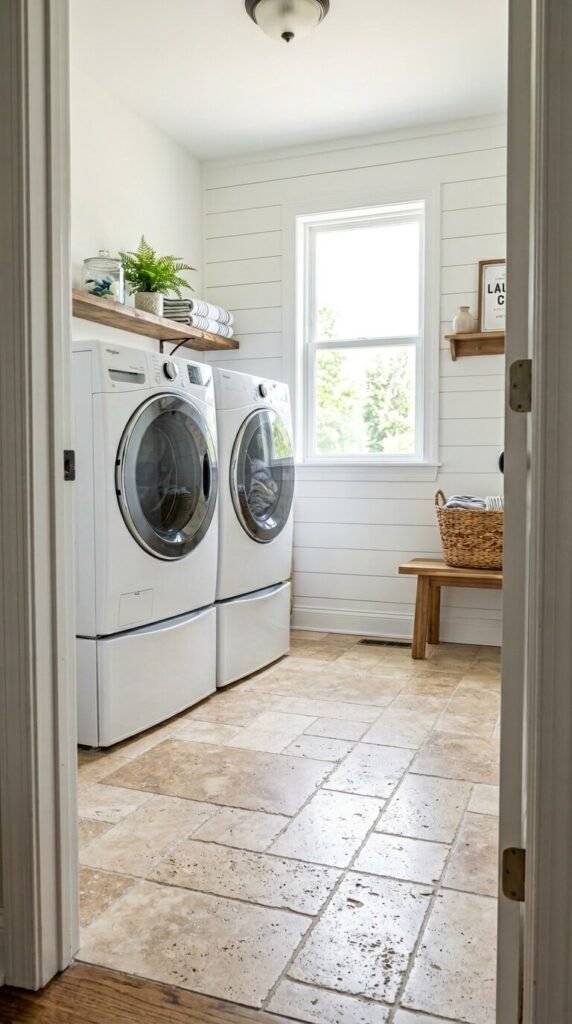
Your laundry room deserves more than vinyl or plain concrete.
Travertine floors make a utilitarian space feel finished and intentional.
Use filled and sealed travertine to prevent moisture absorption from laundry splashes.
The natural tones pair well with white appliances, shiplap walls, or any neutral palette.
Budget tip: Laundry rooms are typically small — 50 to 80 square feet. That’s one of the most affordable full-floor travertine projects in the house. Use leftover tile from another project, or buy budget-grade “seconds” for even more savings.
18. Travertine Dining Room Floor
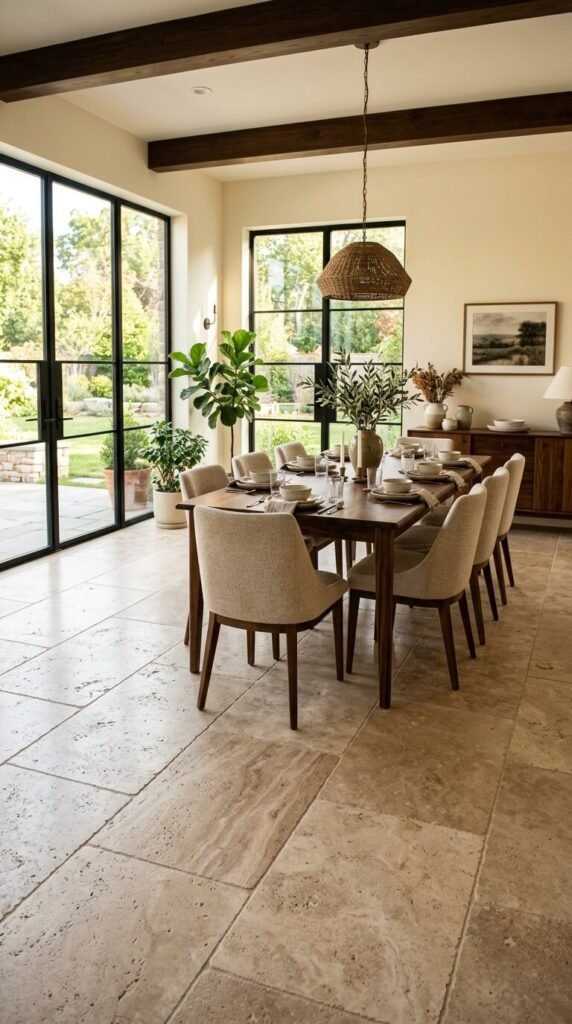
Travertine dining room floors feel warm underfoot and get better looking with age.
Light scratches and wear actually enhance the stone’s patina over time.
Large-format 24×24 tiles minimize grout lines and give the floor an open, seamless feel.
Seal before use and add felt pads to furniture legs to limit scratching.
Budget tip: If polished travertine is out of budget, honed finishes are often 20–30% less expensive and just as attractive — with the added benefit of being easier to maintain in a high-traffic dining space.
19. Travertine Outdoor Steps
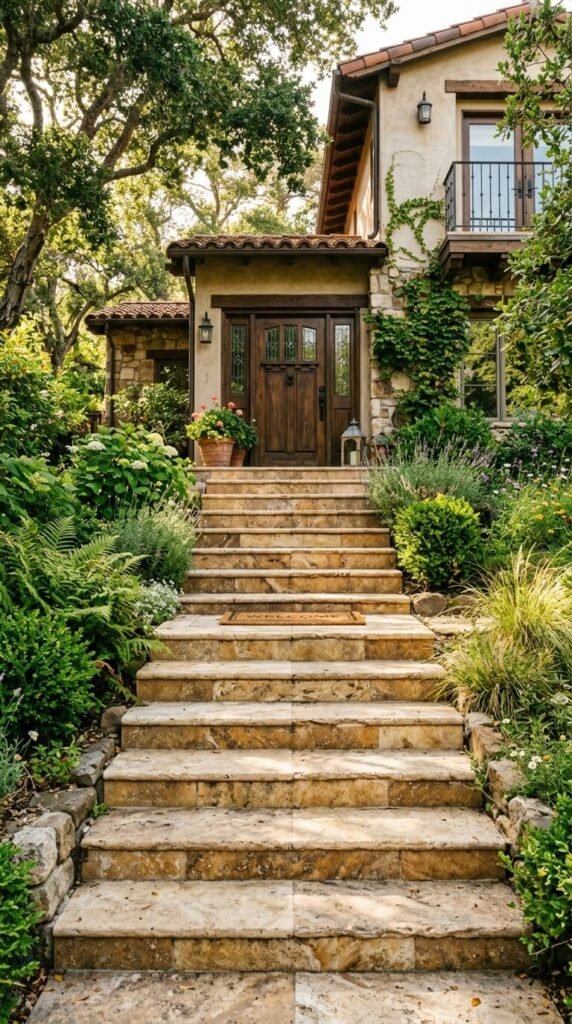
Travertine outdoor steps age beautifully — developing a patina that looks more refined with every passing year.
They’re a meaningful upgrade from painted concrete or plain brick steps.
Use tumbled or brushed travertine for outdoor steps — the texture adds grip in rain or wet conditions.
Cap the top step with a wider landing piece for a polished, finished look.
Budget tip: Steps are linear, not square footage. A modest front entry with 4–5 steps might need as little as 30–40 square feet of stone — an affordable project with a major impact on curb appeal.
20. Travertine Master Bedroom Floor
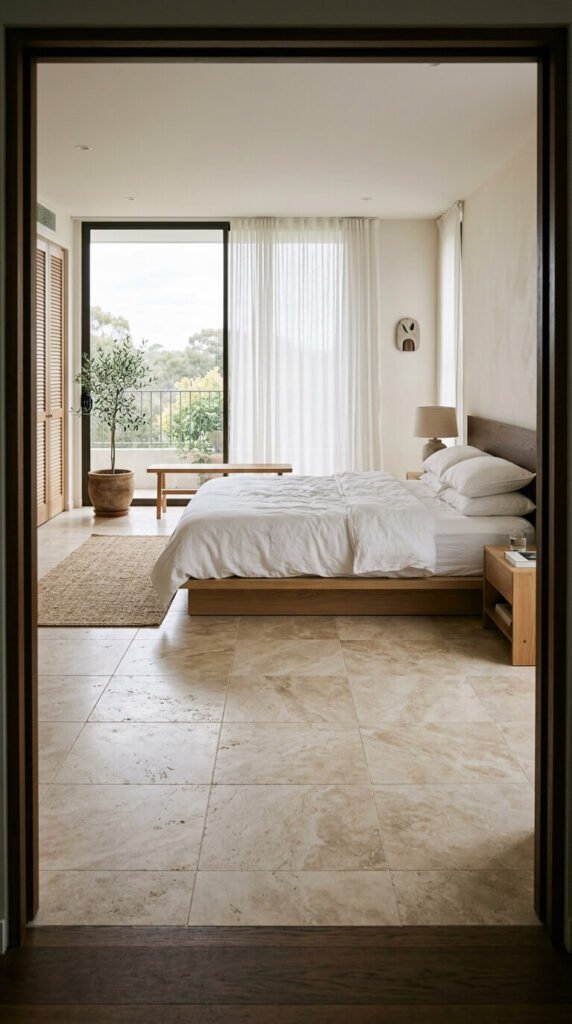
Travertine bedroom floors feel calm, grounded, and quietly luxurious.
The warm tones work with every bedding palette — white, navy, terracotta, or forest green.
Honed travertine is the ideal finish for bedrooms — it’s soft-looking and not slippery.
Add a large area rug over the stone for warmth underfoot when you step out of bed in the morning.
Budget tip: Because bedrooms have less daily traffic than kitchens or bathrooms, you can use lower-grade travertine here with minimal concern. The finish difference is cosmetic, not structural — and the savings can be significant.
21. Travertine Fountain Base or Surround
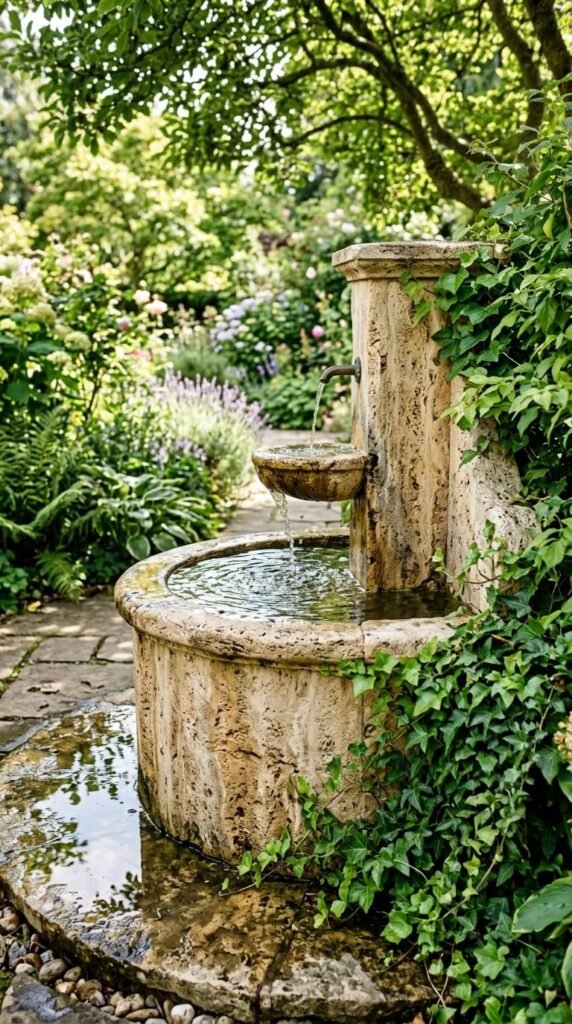
A travertine-clad garden fountain turns a simple water feature into a sculptural centerpiece.
The stone ages beautifully with outdoor moisture — taking on subtle moss and mineral tones.
Tile the basin and surround with honed travertine and seal thoroughly to handle constant water contact.
Even a basic tiered fountain base can be upgraded by wrapping it in travertine cladding.
Budget tip: This is a small-surface project. Wrapping a fountain base typically takes under 20 square feet of tile — affordable enough to use premium-grade material without a large investment.
22. Travertine Mudroom Floor
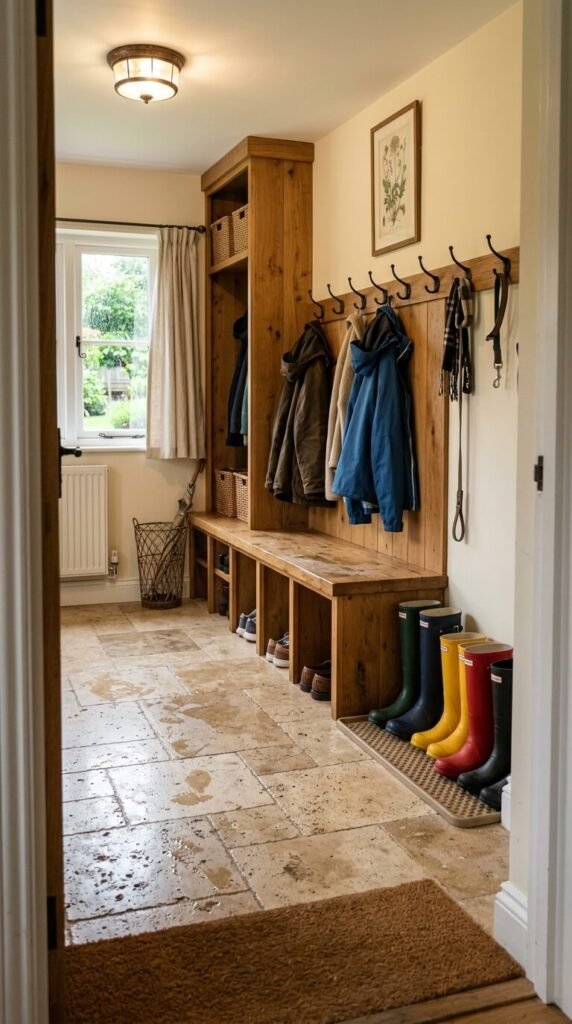
Mudrooms take a beating — and travertine handles it gracefully.
The stone is tough enough for wet shoes, dirt, and daily foot traffic.
Use a filled and sealed travertine here so grit and moisture don’t work into the natural pores.
A dark grout color in the mudroom hides dirt better than white or cream grout.
Budget tip: Mudrooms are usually compact — 30 to 60 square feet. That’s an easy, affordable travertine project. Use tumbled or textured tiles for grip near the door, where wet boots are most common.
23. Travertine Bathtub Deck
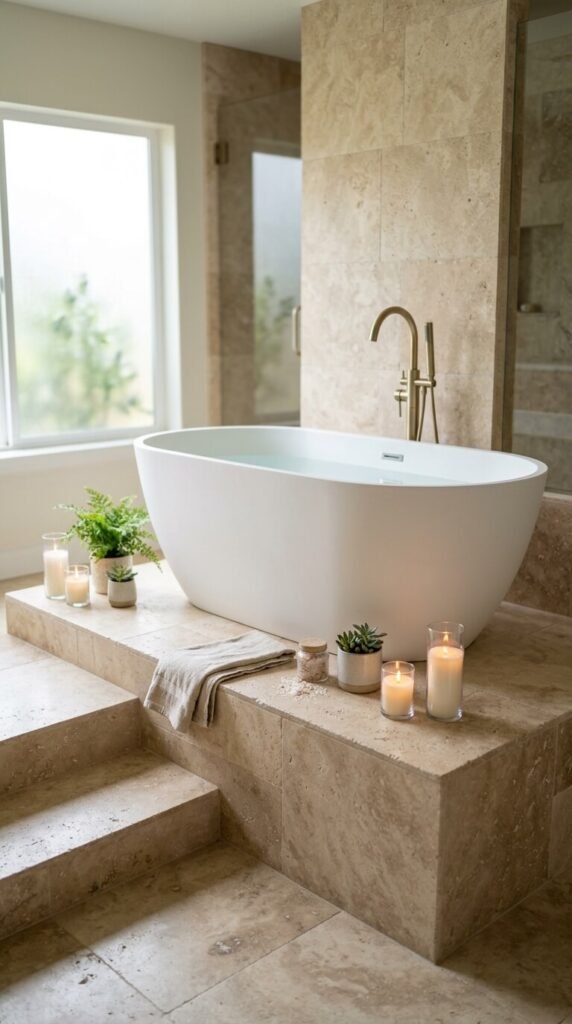
A raised travertine tub deck turns an ordinary bath into a spa-like ritual.
The stone platform frames the tub, adds visual weight, and creates a sense of ceremony around bathing.
Build the deck from cement board and tile with honed, filled travertine to prevent moisture damage.
Keep the edges square and clean for a modern look, or add a slight overhang for a classic finish.
Budget tip: The deck structure itself is simple — a wood or metal frame covered in cement board. The travertine tile is the main material cost, and a tub deck rarely exceeds 25–35 square feet. Very achievable on a mid-range budget.
24. Travertine Wainscoting
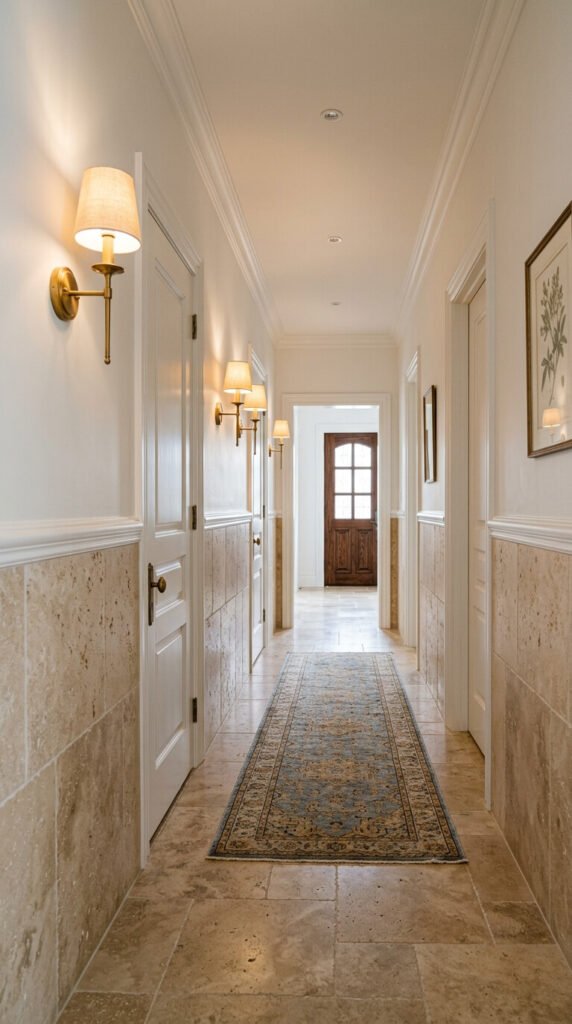
Travertine wainscoting adds architectural interest to hallways, dining rooms, or powder baths.
It protects walls from scuffs and scratches while looking undeniably polished.
Run tiles to chair-rail height — about 36 inches from the floor — and cap with a stone or wood rail.
Keep the upper wall painted in a warm neutral to let the stone breathe.
Budget tip: Because wainscoting only covers half the wall height, it uses less material than full-height tile. A standard hallway or dining room wall can often be done for $200–$500 in travertine tile — a reasonable price for such a dramatic upgrade.
25. Travertine Outdoor Shower
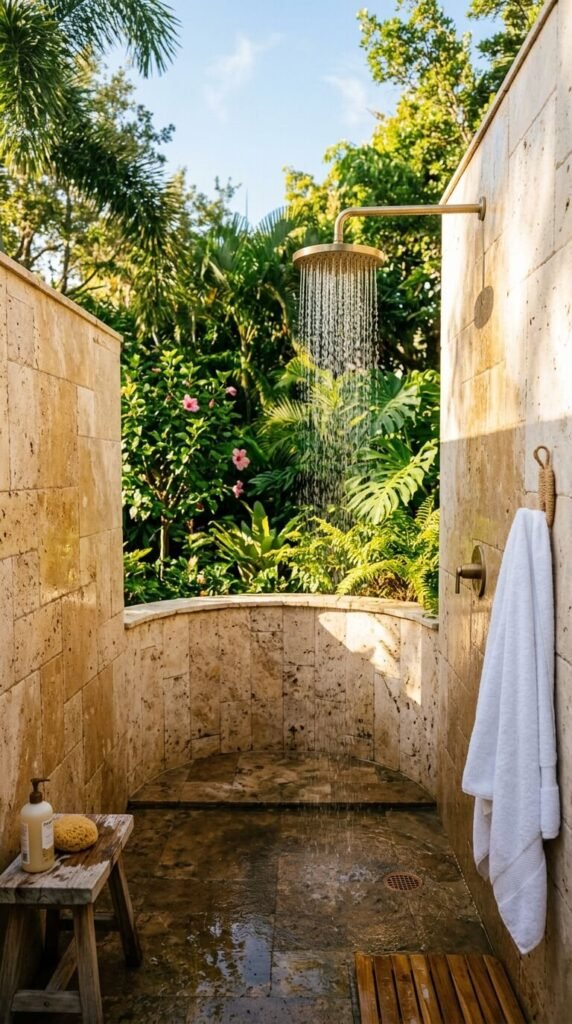
An outdoor shower clad in travertine looks like a resort — even in a modest backyard.
The stone holds up well in sun and rain when sealed properly each season.
Use brushed or tumbled tiles for the floor surface — they offer the best grip when wet.
Keep the layout simple: three walls and an open front. No roof needed.
Budget tip: Outdoor showers are small-footprint projects. A 3×3 shower area might need fewer than 60 square feet of total tile. DIY-friendly and highly rewarding — this is one backyard upgrade that gets used every single day in warm months.
26. Travertine Powder Room Feature Wall
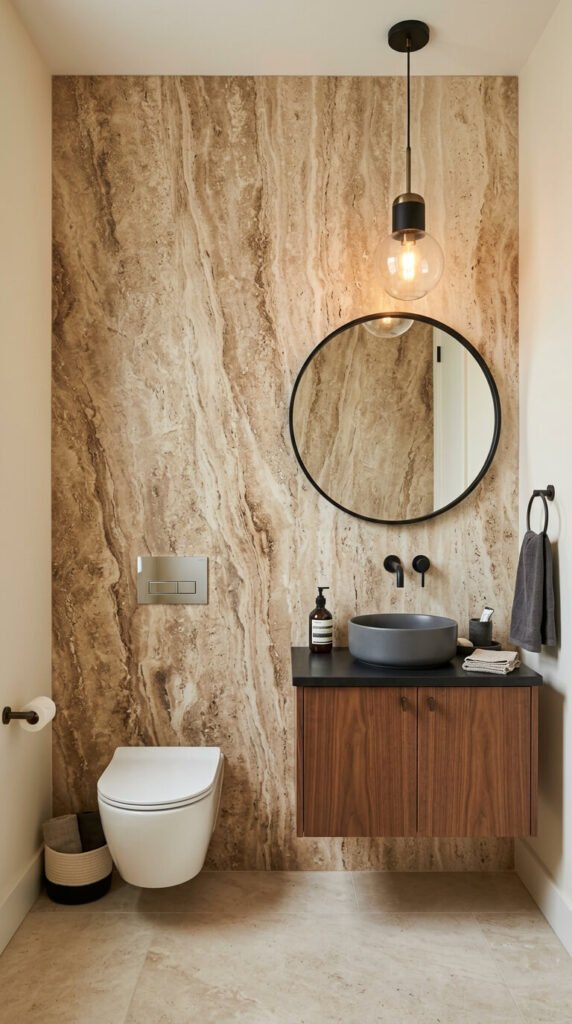
Powder rooms are small — and that makes them perfect for bold material choices.
A full travertine feature wall in a powder bath feels dramatic and expensive.
Use large-format travertine slabs or oversized tiles to minimize grout lines and maximize visual impact.
The room is small enough that even premium travertine stays affordable per square foot.
Budget tip: A powder room is typically under 30 square feet total. That makes this one of the best places to splurge on higher-quality stone — you’ll get a luxury look without the luxury price tag of a larger space.
Conclusion
Travertine is one of the most timeless and widely used natural stones in the world — and for good reason. It’s warm, durable, and deeply beautiful in a way that manufactured materials simply can’t replicate. From sweeping outdoor patios to small powder room feature walls, there’s a travertine application that fits nearly every budget, skill level, and home style. The key is starting somewhere. Pick one project — a backsplash, a fireplace surround, a garden path — and see how the stone transforms the space. Once you experience travertine in your home, you’ll understand why people have been reaching for it for thousands of years.