Fluted details are one of the oldest design tricks in the book — and they still work. Those repeating vertical grooves create rhythm, shadow, and depth on flat surfaces. Whether on a column, cabinet door, table leg, or wall panel, fluting makes ordinary objects look considered and crafted. The best part? You don’t need a renovation budget to use this idea. From peel-and-stick panels to DIY wood strips, there are affordable ways to bring this classic architectural detail into any room. Here are 27 ways to do it well.
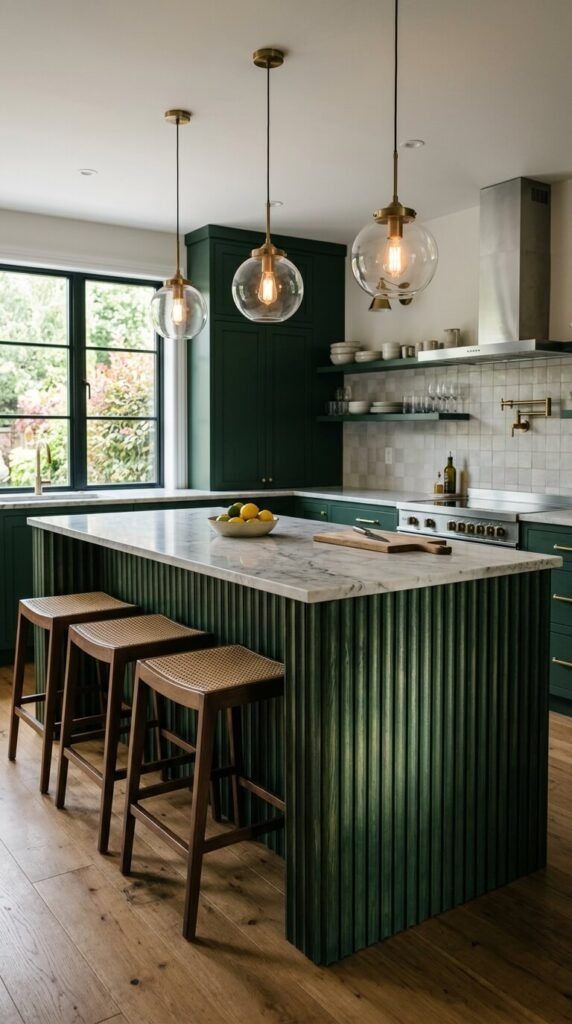
1. Fluted Kitchen Island Panels
A plain kitchen island base is a missed opportunity. Adding fluted panels to the sides transforms it into a furniture-quality piece. Use MDF routed with a fluting bit, or buy pre-made fluted MDF sheets from home improvement stores. Paint them the same color as your cabinets or go bold with a contrasting hue. This works even in rental kitchens if you use removable adhesive panel strips. The grooves catch light and shadow, making the island look far more expensive than it is.
2. Fluted Fireplace Surround
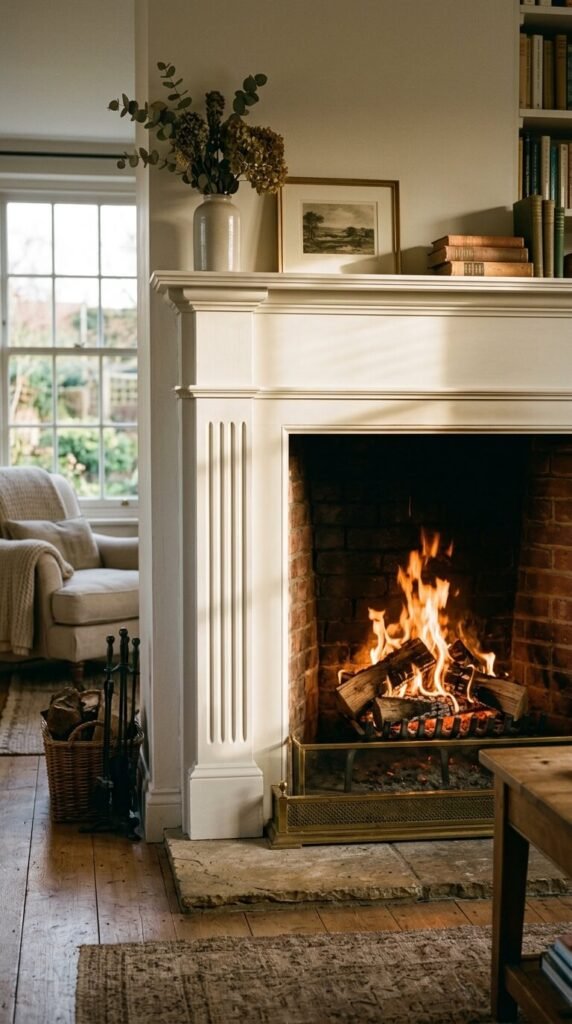
The fireplace surround is the natural home of fluted pilasters. Slim vertical channels on each side column give the whole surround a classical, grounded look. DIY option: glue thin wooden dowel rods at even intervals onto flat MDF panels, prime and paint. The result looks like custom millwork at a fraction of the price. Choose a spacing of about one inch between each groove for a traditional feel, or go wider for something more modern and graphic.
3. Fluted Wardrobe Door Fronts
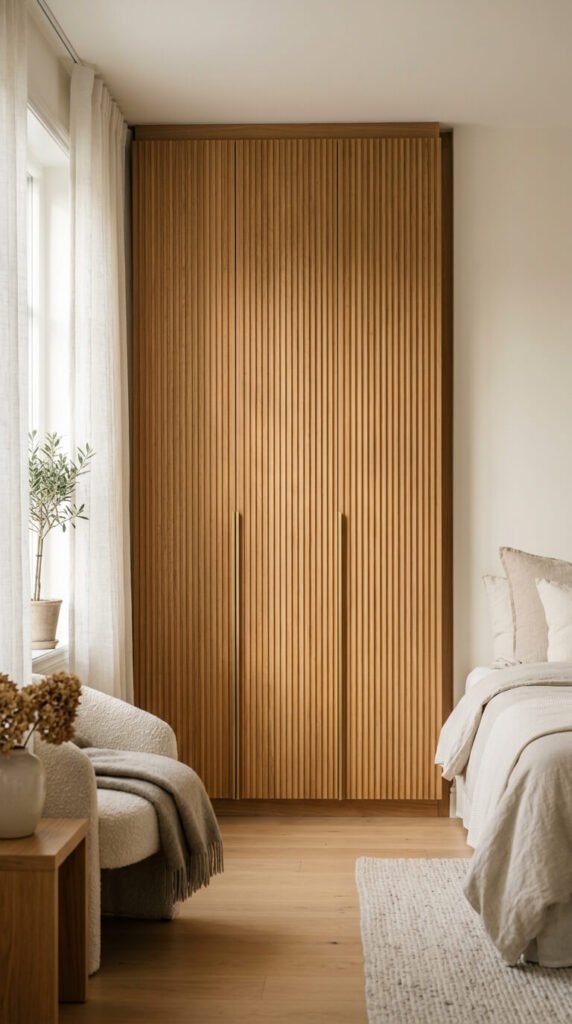
Flat wardrobe doors are forgettable. Fluted fronts change everything. IKEA PAX owners often add fluted panels on top of existing door fronts using routed MDF or pre-grooved sheets. The texture breaks up large flat surfaces and adds visual weight that feels intentional. Go for a natural wood finish to keep it warm and organic, or paint them deep navy for a more dramatic look. Either way, your wardrobe becomes a design feature rather than just storage.
4. Fluted Bathroom Vanity Skirt
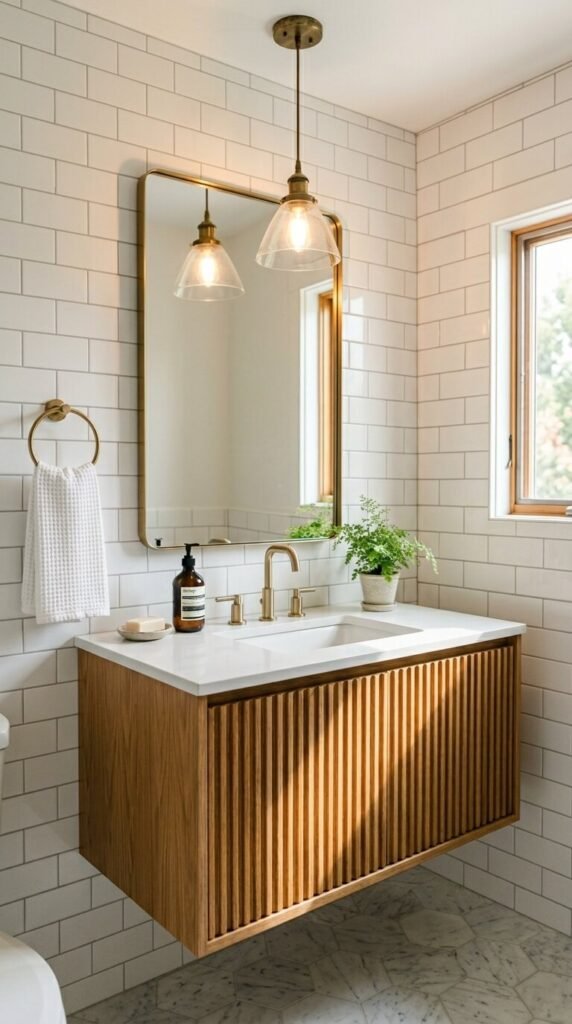
Most vanity bases are either hidden behind doors or left as plain boxes. A fluted skirt panel adds character without major work. Cut shallow grooves into a piece of MDF or plywood using a circular saw or router, then mount it across the front of the vanity frame. Seal it well to handle bathroom humidity. This detail draws the eye down and makes the room feel more layered. It works especially well in bathrooms mixing old and new.
5. Fluted Accent Wall Panels
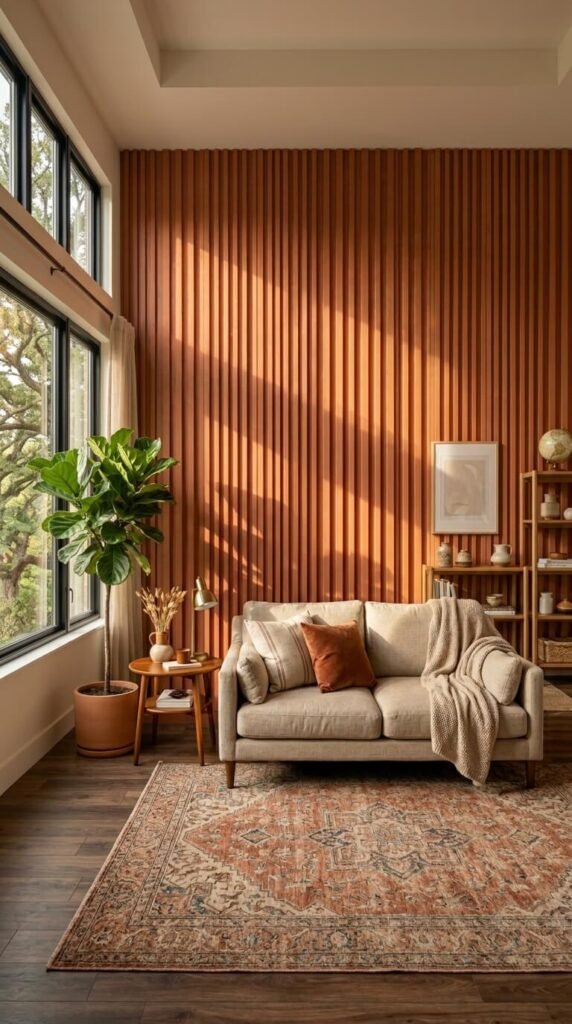
A full wall of fluted panels creates a textured backdrop that’s far more interesting than paint alone. Use standard tongue-and-groove MDF or routed flat sheets installed vertically from floor to ceiling. You can panel the whole wall or just the area behind a sofa or bed. Prime and paint in any color — warm neutrals read cozy, deep tones read dramatic. The grooves add shadow lines that change with the light throughout the day, making the wall feel alive.
6. Fluted Coffee Table Legs
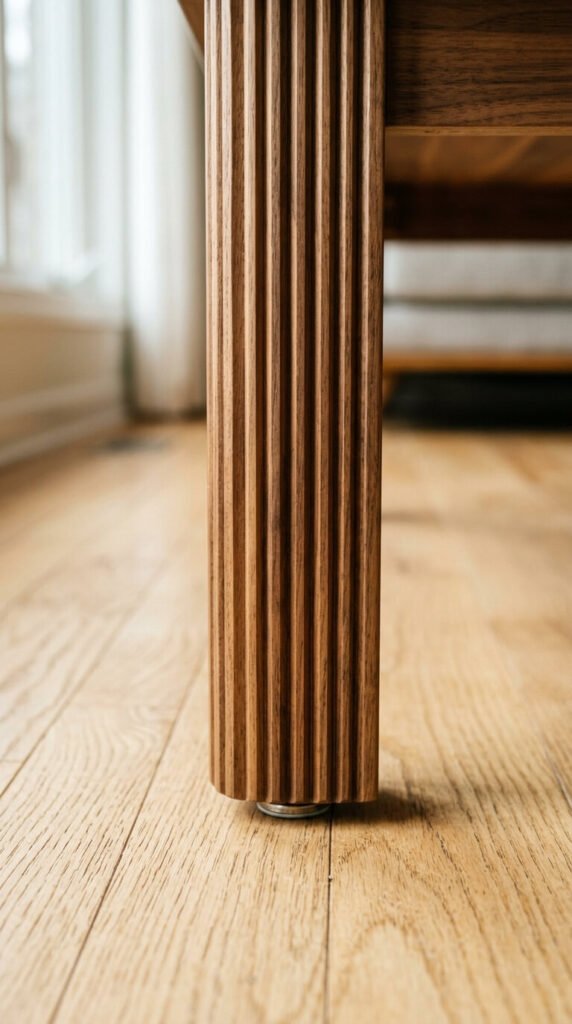
Table legs are easy to overlook. But fluted legs on a coffee table bring classical tailoring to a modern room. You can buy pre-turned fluted legs online from woodworking suppliers — no lathe required. Screw them onto a simple plywood tabletop, add a marble or glass surface, and you have a custom-looking piece for well under budget. The detailing on each leg catches light from every angle, giving the table a sculptural quality without being fussy or ornate.
7. Fluted Headboard Panel
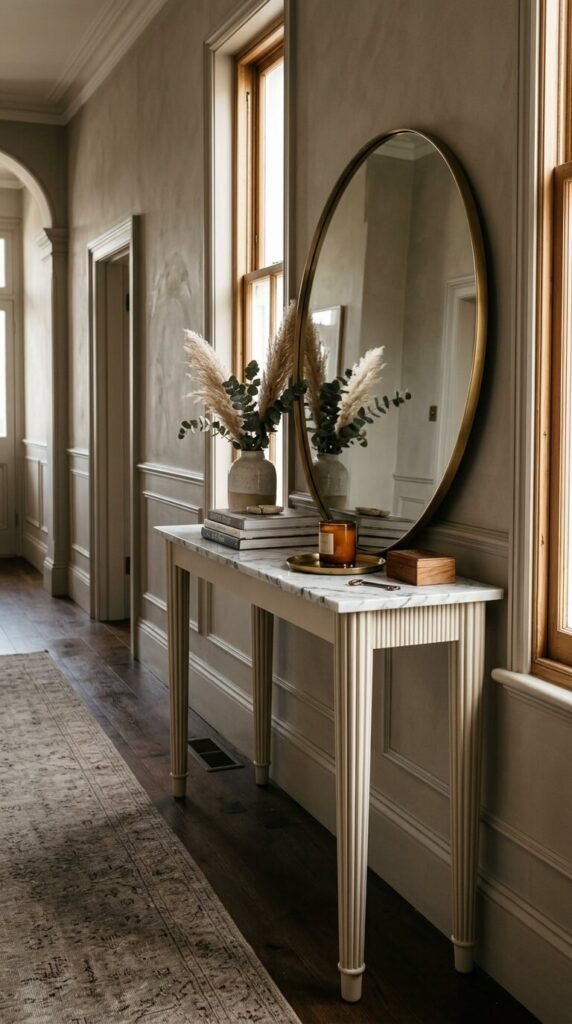
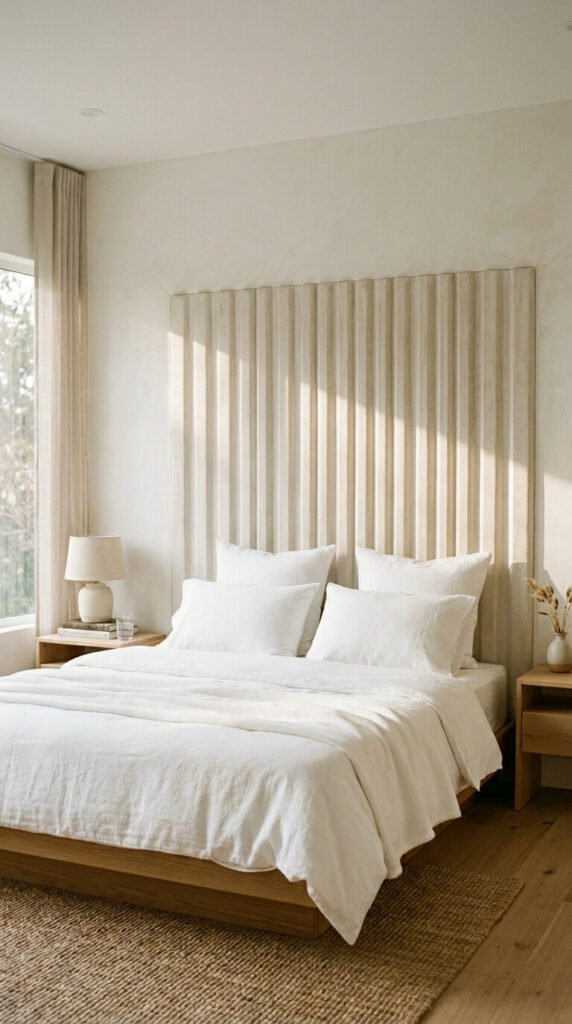
The wall behind your bed is prime real estate. A fluted headboard panel — whether carved plaster, routed wood, or fluted MDF — creates a focal point without requiring a freestanding headboard. Mount a wide panel directly to the wall, paint it the same color as the wall for a tone-on-tone effect, or go a shade darker for contrast. Even a simple plywood sheet with vertical cuts from a circular saw, sanded smooth and painted, looks refined when centered and well-proportioned.
8. Fluted Column Legs on a Console Table
Console tables with column-style fluted legs feel grounded and architectural. They work perfectly in entryways where you want the space to feel considered from the moment you walk in. Buy unfinished turned fluted legs from hardware suppliers, paint them white or a matte black, and mount them under any flat tabletop. This is one of the simplest furniture upgrades you can make. The legs add so much character they make even an IKEA tabletop look custom.
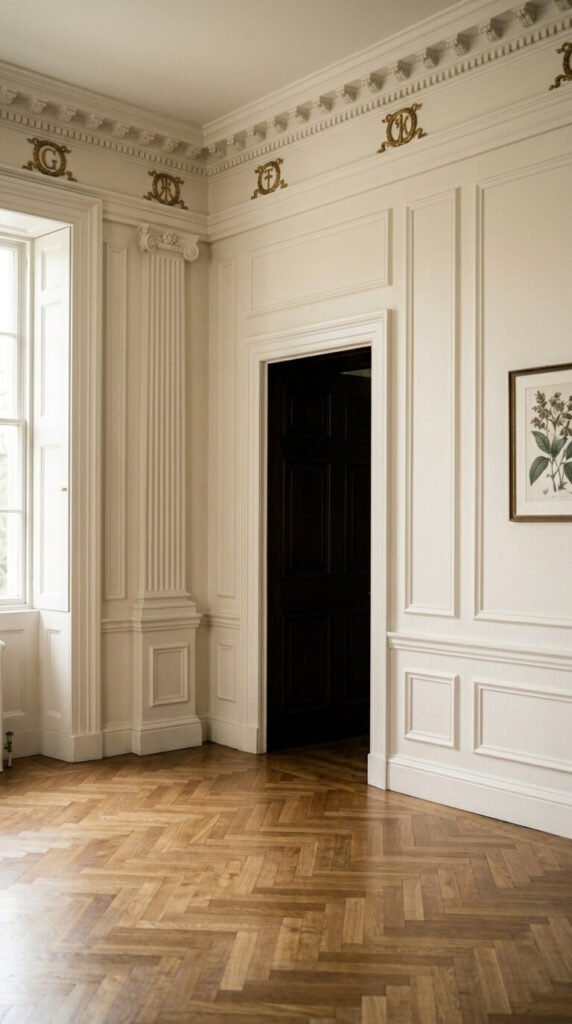
9. Fluted Door Casing Upgrade
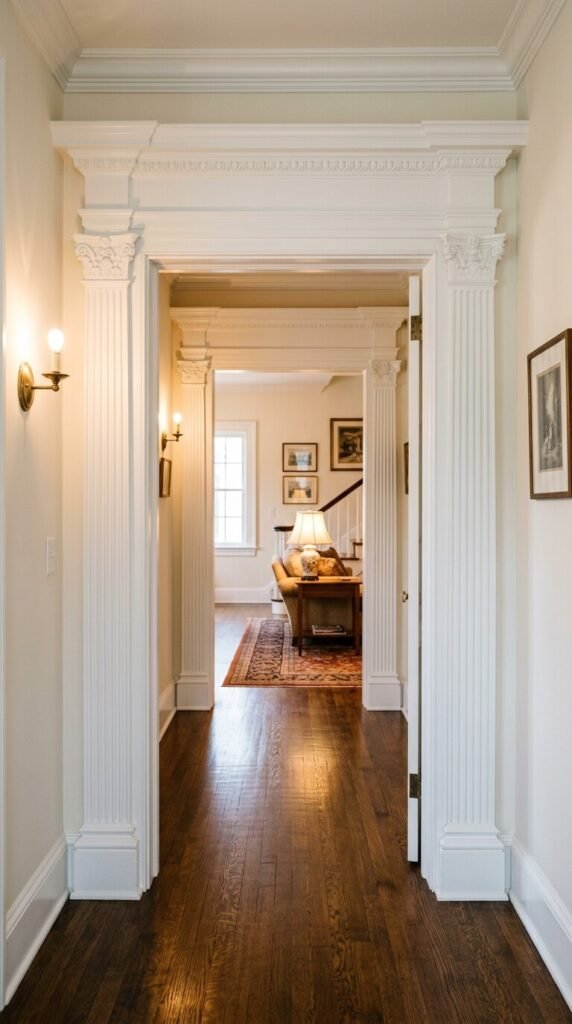
Standard door casings are plain and flat. Replacing them with fluted pilaster casings is a relatively quick carpentry upgrade that changes the entire feel of a doorway. You can buy pre-made fluted casing profiles at most lumber yards. They install just like standard casing — nail them in place and caulk the joints. Paint them to match your existing trim. The detail makes every doorway feel like it belongs in a well-designed older home with thoughtful bones.
10. Fluted Plinth Blocks at Door Bases
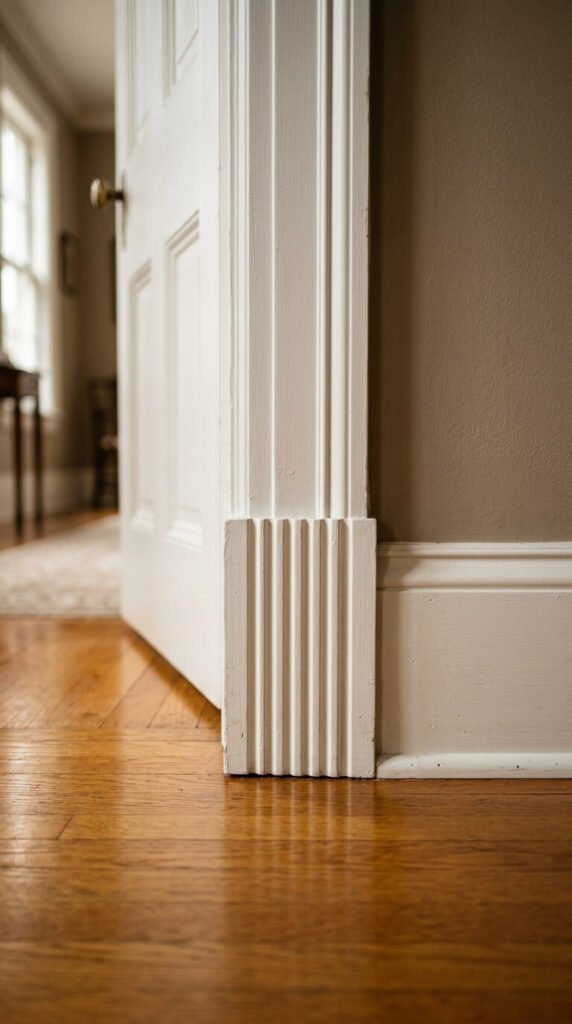
Plinth blocks are the small square blocks where door casing meets the baseboard. Fluted plinth blocks add a jewel-like detail at that junction point. They’re inexpensive — often just a few dollars each — and installing them requires no special skills. Just cut them to the right height and nail or glue them in place. When painted white with a satin finish, they look like something out of a Georgian townhouse. It’s a detail most people won’t consciously notice but will feel.
11. Fluted Kitchen Cabinet Doors
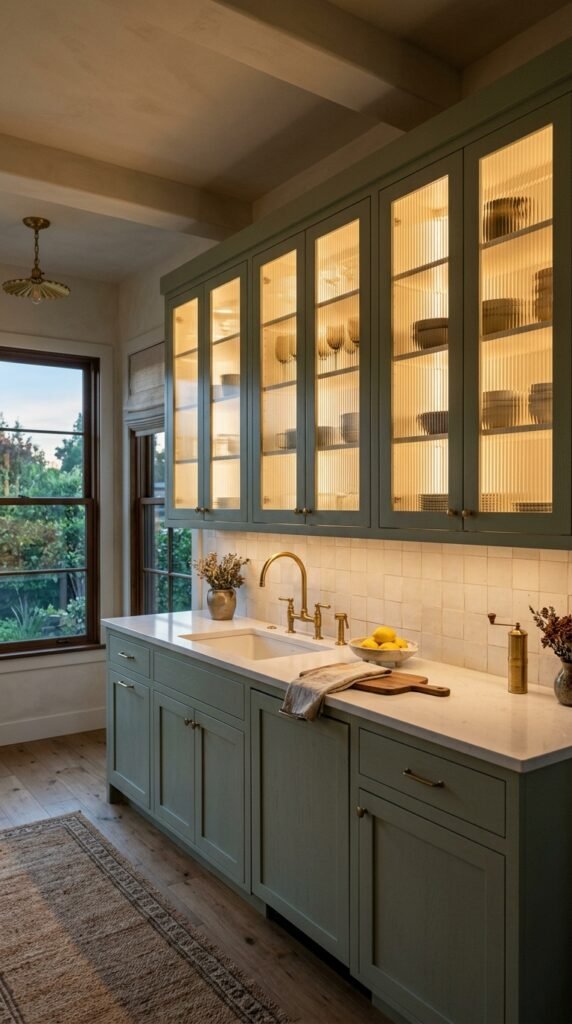
Fluted glass cabinet doors are a popular upgrade in kitchens where you want some visual interest without fully open shelving. Replace one or two upper cabinet door panels with reeded or fluted glass inserts. The texture blurs what’s inside while still letting light pass through. It’s particularly effective when you have under-cabinet or in-cabinet lighting. The frosted, ridged surface glows softly and gives standard kitchen cabinets a high-end custom look.
12. Fluted Pedestal Side Table
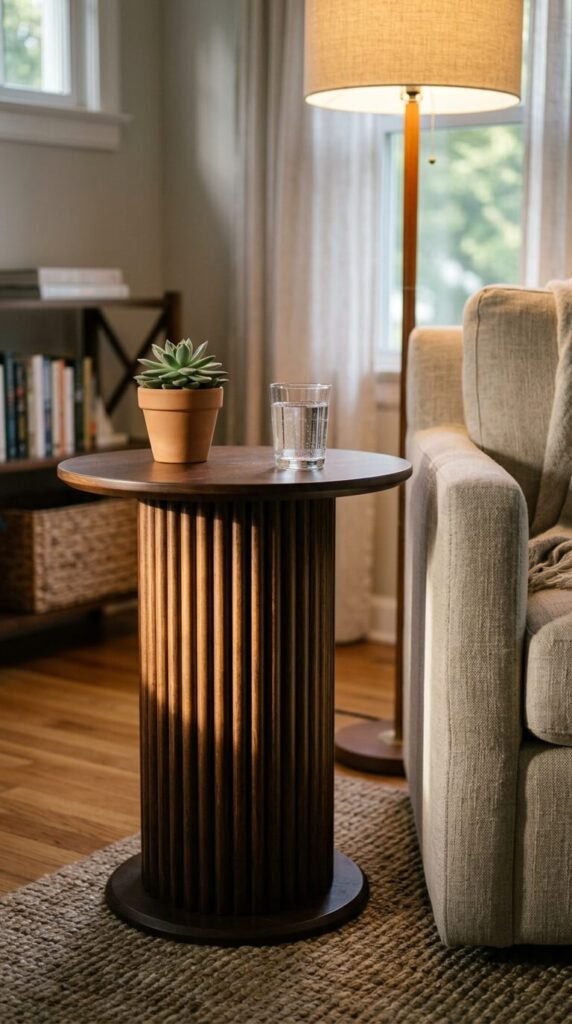
A pedestal table with a fluted central column is a compact piece that punches above its weight. The single column draws the eye down and the grooves give it sculptural depth. Look for these at antique markets, or buy unfinished wood versions from craft suppliers and finish them yourself with paint or stain. They work as nightstands, side tables, or plant stands. Because the base is slim and the detail strong, they work in small spaces without overwhelming the room.
13. Fluted Risers on Stairs
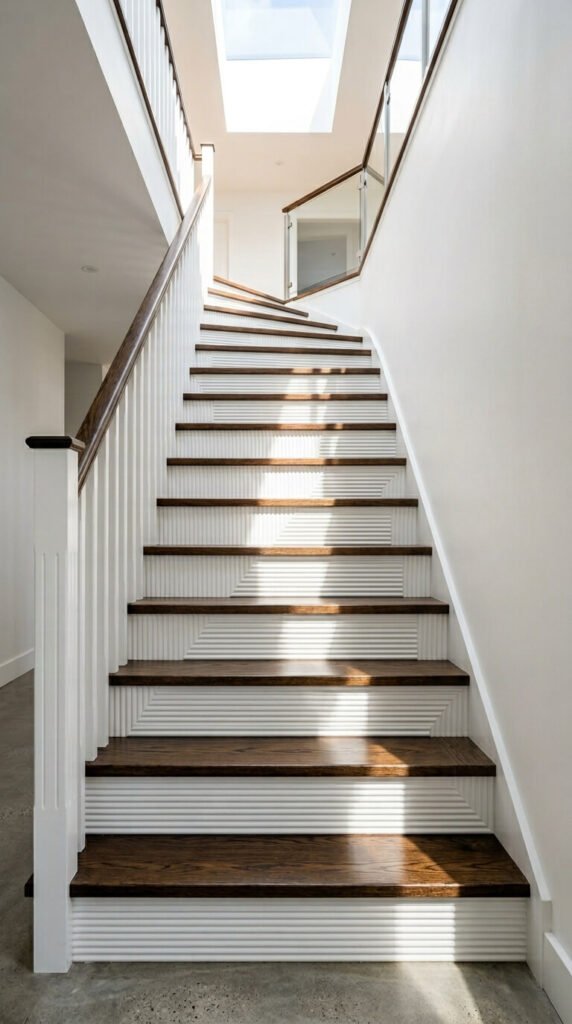
Most people tile or paint their stair risers. Fluted risers are an unexpected choice that adds a rhythmic, architectural quality to the whole staircase. Route horizontal grooves across each riser panel before installation, or apply thin wooden strips at even intervals. Paint them crisp white to contrast with darker treads. Every step becomes a small detail that contributes to the overall character of the staircase. It’s one of those ideas that makes guests stop and look twice.
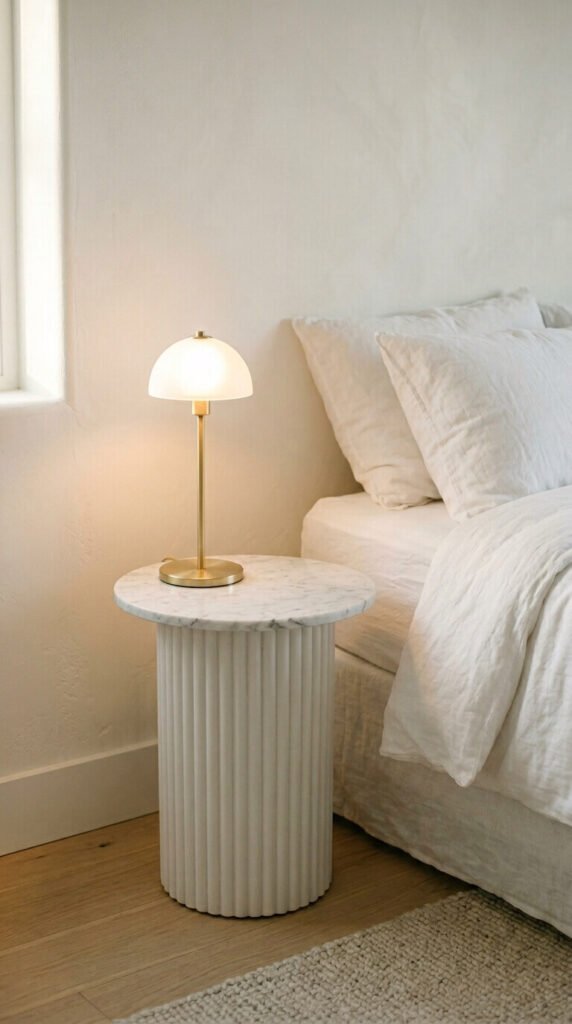
14. Fluted Bedside Table Base
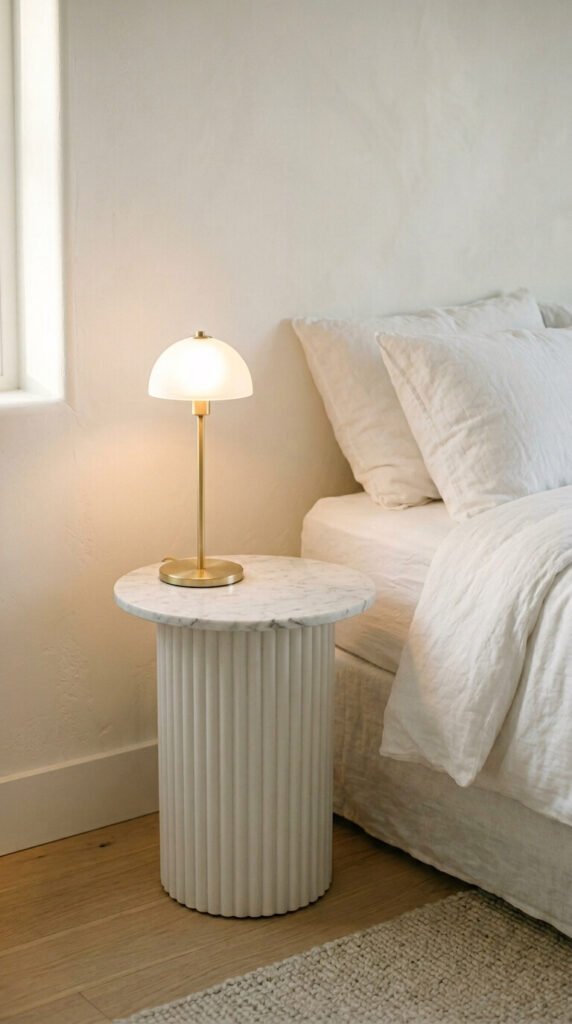
A fluted cylindrical base on a bedside table looks like something from a high-end boutique hotel. The rounded form with vertical grooves catches light differently than a flat panel — it creates a softer, more sculptural shadow effect. You can DIY one using a plaster mold or simply look for affordable versions at home decor stores. Pair with a marble or travertine top for contrast. Even a piece of cut stone set on top of a plain fluted vase can function as a side table.
15. Fluted Outdoor Planters
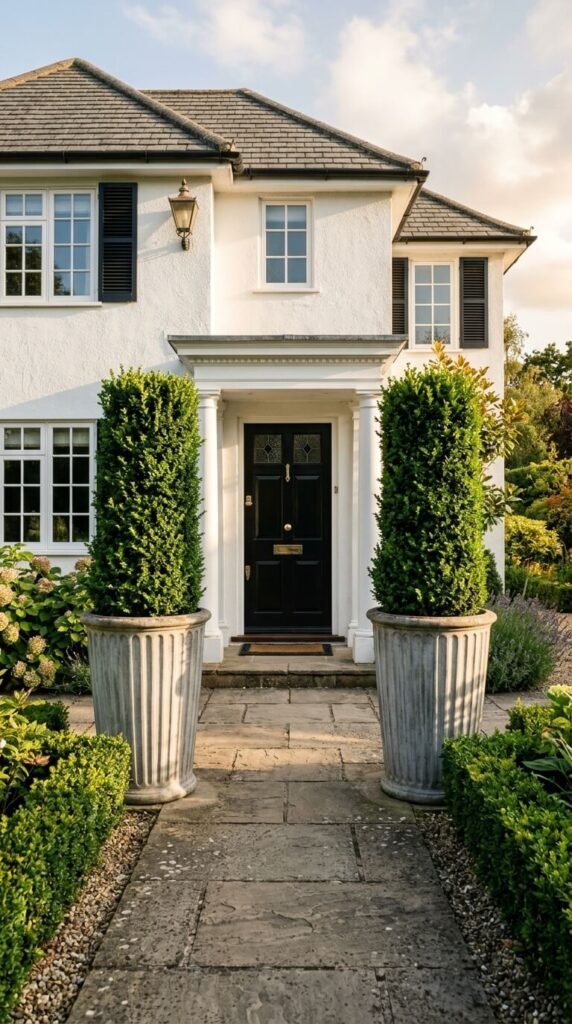
Fluted planters bring classical proportion to an outdoor space without requiring a formal garden. Concrete or cast stone versions age beautifully, developing a patina that adds to their character. Place a pair flanking a front door, at the base of steps, or along a terrace edge. If budget is a concern, look for lightweight fiberglass versions that mimic the same profile. The vertical grooves echo column forms and give even a simple planting of grasses or boxwood a finished, intentional look.
16. Fluted Lamp Base
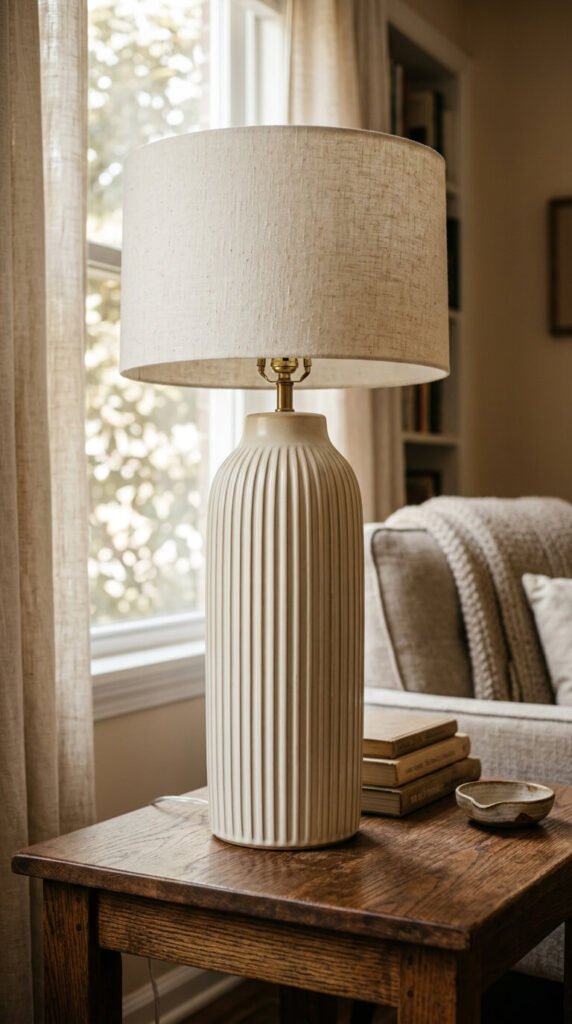
Fluted ceramic lamp bases are one of the easiest ways to add this detail to a room without any construction. They’re widely available at home decor stores in a range of price points. The grooves catch light from the lamp itself and from the room, creating a soft textured glow. Look for ones in plaster white, warm terracotta, or sage green. Pair with a plain drum shade to keep the focus on the base. Even a single fluted lamp changes the quality of a room’s light.
17. Fluted Bookcase Side Panels
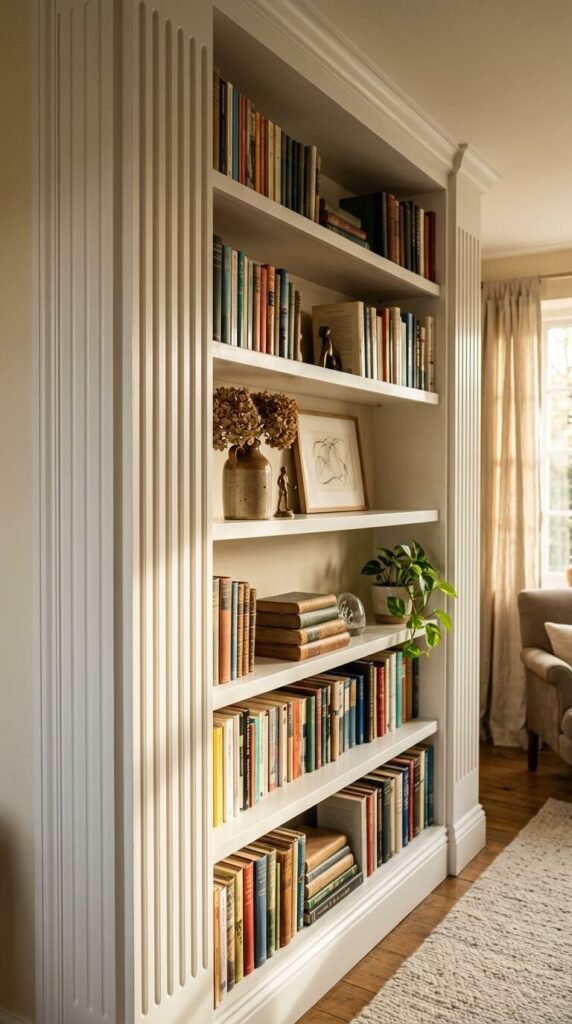
Most bookcases have completely flat side panels. Adding fluted detailing to the outer sides of a built-in or freestanding bookcase gives it the look of furniture-grade joinery. Glue thin routed MDF strips onto the existing flat panel, sand the edges, prime and paint. The vertical rhythm of the grooves echoes the vertical lines of the books inside. It’s a weekend DIY project with a high visual payoff, particularly on a full-height floor-to-ceiling bookcase where the detail reads from across the room.
18. Fluted Window Shutter Panels
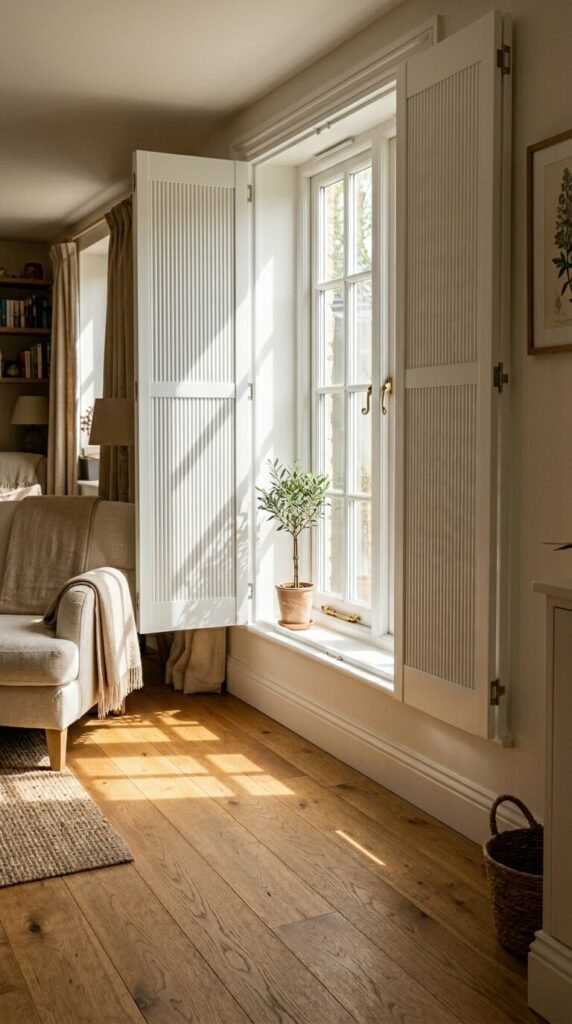
Fluted shutter panels take a standard window treatment and give it a more architectural quality. The horizontal grooves across each panel add shadow depth and make the shutters feel more substantial than plain painted wood. These work especially well in rooms that lean classical or coastal. If you already have flat wooden shutters, you can apply thin molding strips horizontally across each panel and paint over them for a similar effect. It’s an upgrade that reads as custom but costs relatively little.
19. Fluted Wainscoting
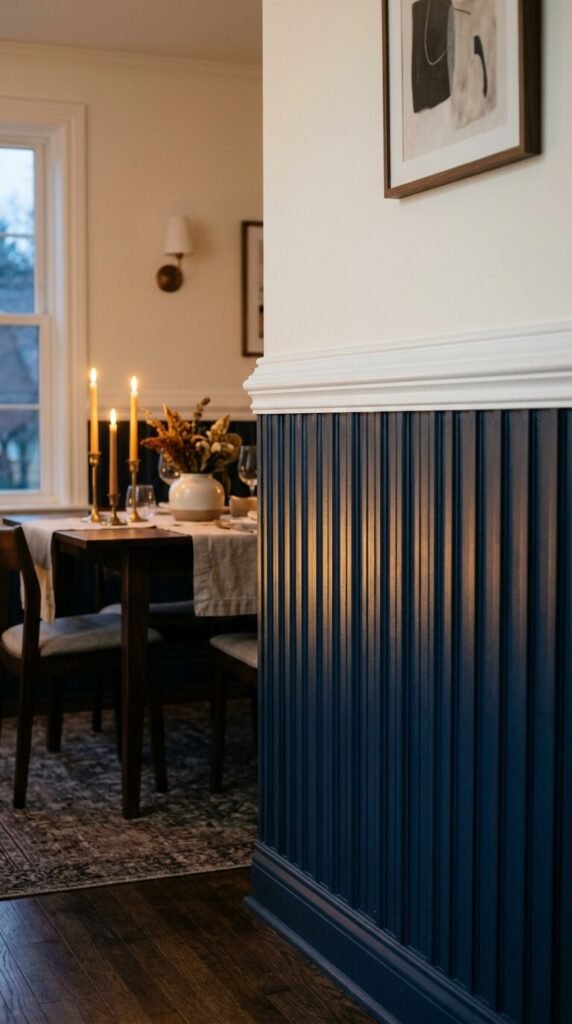
Fluted wainscoting replaces flat beadboard or plain paneling with a more classical alternative. The vertical grooves run floor to chair rail and give the lower half of the wall a rich texture. Paint it in a deep contrasting color — navy, forest green, or charcoal — to make the detail read clearly. In a dining room, it adds a formal quality without feeling stiff. The material cost is similar to standard wainscoting, but the visual result feels far more considered.
20. Fluted Corbels Under Shelving
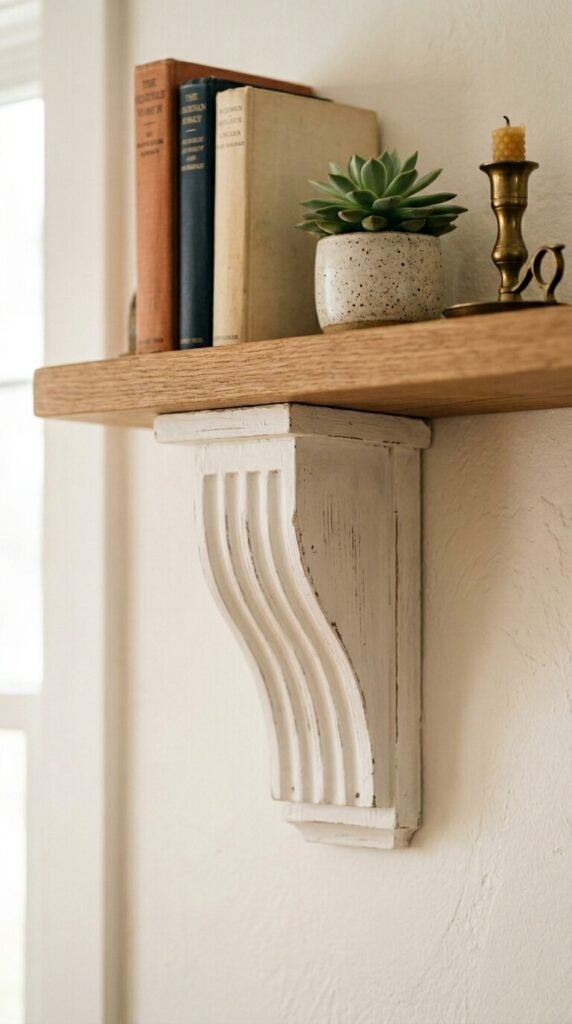
Corbels are the bracket supports under floating shelves or mantel pieces. Fluted corbels are an easy, low-cost upgrade available at most lumber yards and online wood suppliers. They replace plain bracket hardware or simple L-brackets and give the shelf a more finished, intentional look. Paint them to match the wall for a subtle effect, or match the shelf color for a more graphic one. A simple floating shelf goes from looking like an afterthought to looking like it was always part of the room.
21. Fluted Mirror Frame
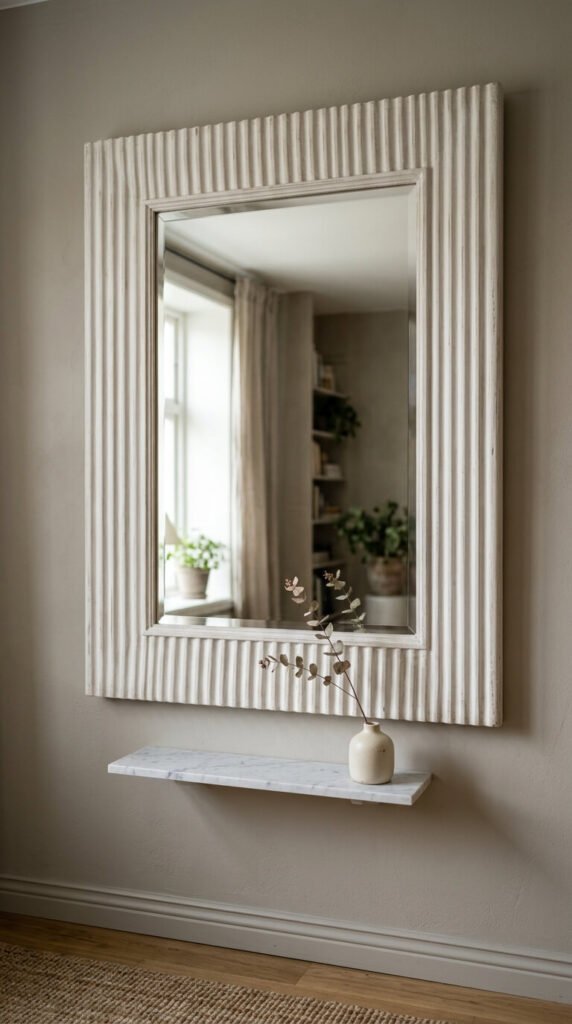
A fluted mirror frame adds architectural weight to a plain mirror. You can buy pre-made fluted wood trim at lumber yards and build a custom frame around an existing frameless mirror. Miter the corners, glue and nail the pieces together, then prime and paint. The grooves on the frame face give the whole mirror a presence that a plain flat frame can’t match. In an entryway or above a fireplace, a fluted mirror frame feels like a statement piece that was always there.
22. Fluted Ceiling Medallion Detail
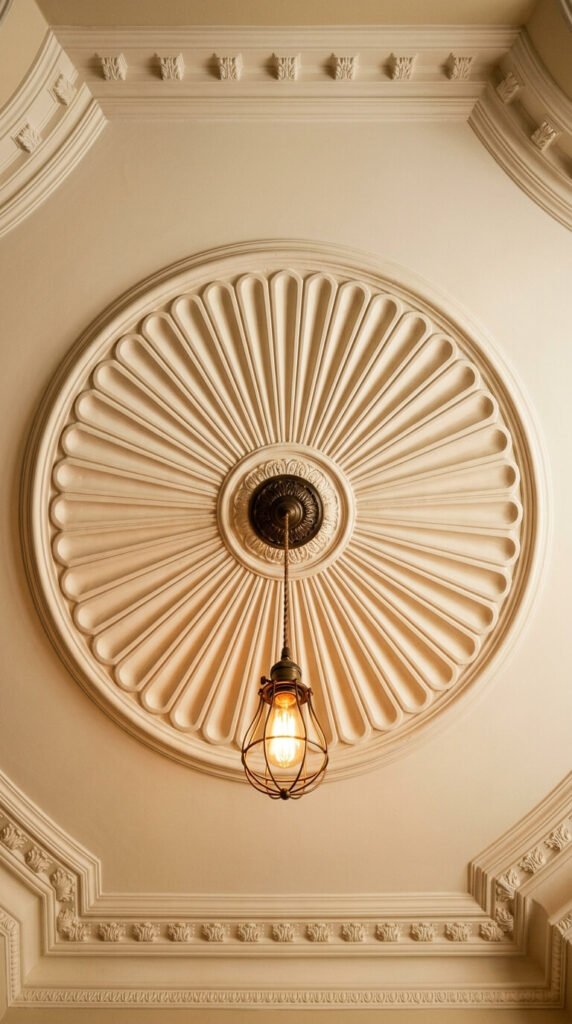
Fluted ceiling medallions are the decorative plaster rings that surround a pendant light fixture at the ceiling. The radial fluting creates a sunburst of shadow lines that radiates outward from the light source. Lightweight polyurethane versions are affordable and easy to install with construction adhesive — no plaster skills needed. They work best in rooms with ceiling heights of at least nine feet. They make a pendant light look anchored and intentional rather than just dangling from a wire.
23. Fluted Tile Backsplash
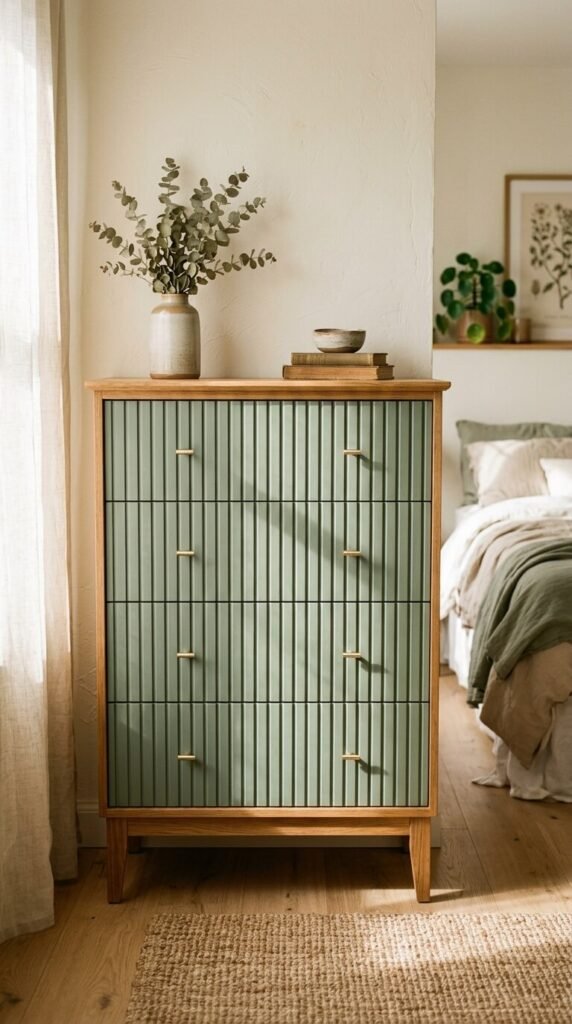
Fluted ceramic tiles used as a backsplash bring texture to a surface that is usually flat and uniform. The slim vertical grooves on each tile create a fine shadow pattern that changes with the light. These are available in a range of colors and finishes — unglazed terracotta for a warm rustic feel, glossy white for something cleaner and more modern. They install the same way as standard tiles. Grout color matters: use a tonal match to keep the focus on the texture itself.
24. Fluted Dresser Drawer Fronts
Flat dresser drawer fronts are easy to upgrade. Add fluted detailing by routing grooves into replacement MDF drawer fronts, or glue thin wooden strips at even intervals across existing fronts. Sand, prime and paint in any color. Brass or unlacquered hardware pulls look particularly good against fluted surfaces because the shadow lines give the hardware something to contrast with. This takes an IKEA HEMNES or basic flat-front dresser and makes it look like a considered piece rather than off-the-shelf furniture.
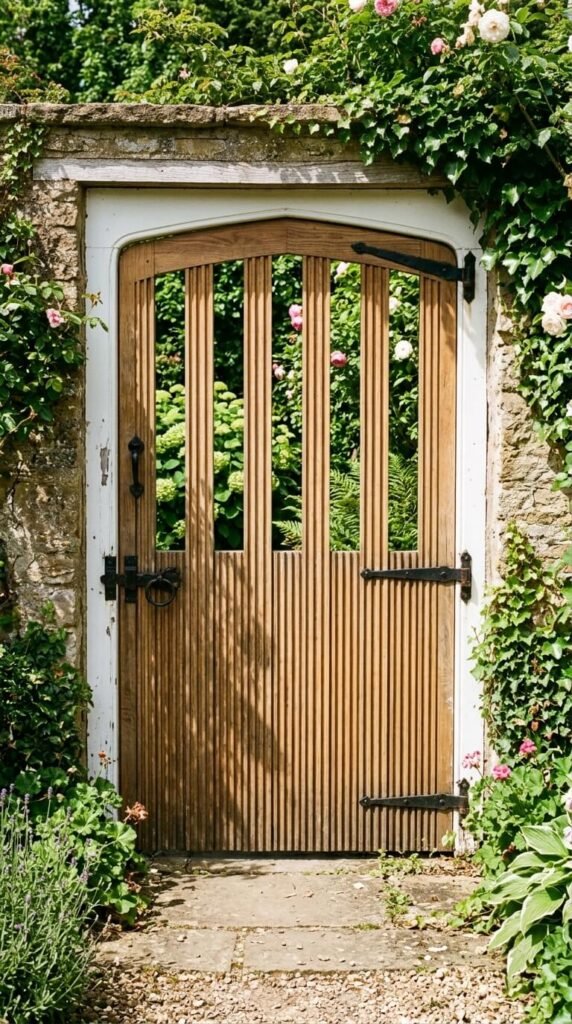
25. Fluted Outdoor Gate Panels
Fluted outdoor gate panels give a garden entry a far more polished look than plain timber boards. The vertical grooves add shadow depth and rhythm. Use pressure-treated timber or hardwood species that handle outdoor exposure well. Route the fluting before assembly, then finish with an exterior-grade paint or stain. The detail is visible from the street and sets the tone for the garden beyond. Pair with simple hardware — a heavy bolt latch or a period-appropriate hinge — to keep it looking intentional.
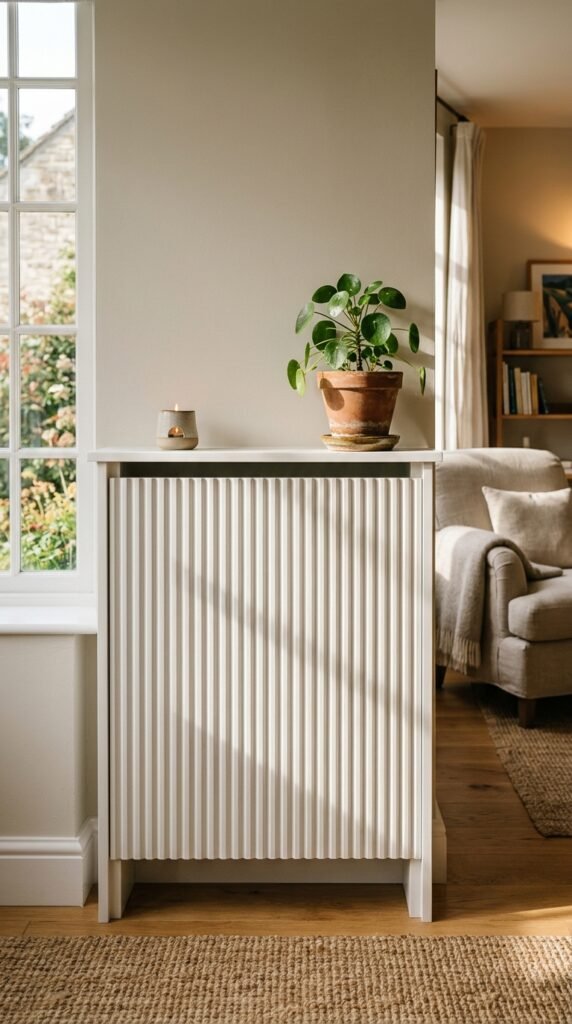
26. Fluted Radiator Cover
Radiators are necessary but rarely attractive. A fluted radiator cover hides the unit while turning it into a furniture piece. Build the box frame from MDF, then use a routed fluted panel for the front face — the grooves allow heat to circulate while looking far better than a standard grille. Paint to match your skirting boards or go for a contrasting color. The flat top becomes a useful surface for plants, books, or objects. Heat still flows freely through the grooved openings.
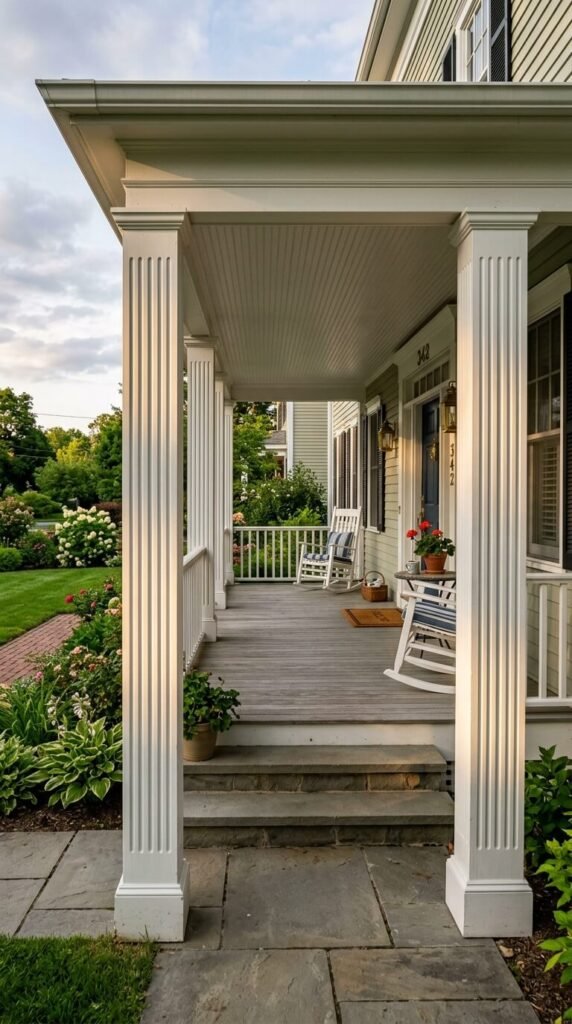
27. Fluted Porch Column Wraps
Many porch columns are plain square posts that support the roof but add nothing visually. Fluted column wraps are pre-made sleeves that fit around existing posts and give them a classical profile. They’re available in lightweight PVC or wood composite from most building suppliers. Installation is straightforward — the wrap fits around the existing post in two halves that join at the back. Painted white, they make a standard suburban porch look grounded and classical. The shadow lines from the grooves deepen as the sun moves throughout the day.
Conclusion
Fluted details prove that texture and shadow can do as much work as color or scale in a room. These aren’t complicated ideas. Most of them are weekend projects, affordable material upgrades, or simple swaps that anyone with basic tools can manage. Start small — a lamp base, a mirror frame, a set of drawer fronts. See how the light plays across the grooves and how the room responds. Then go bigger. The repeated vertical groove is one of the oldest design forms we have, and it still reads as refined, considered, and timeless wherever you put it.