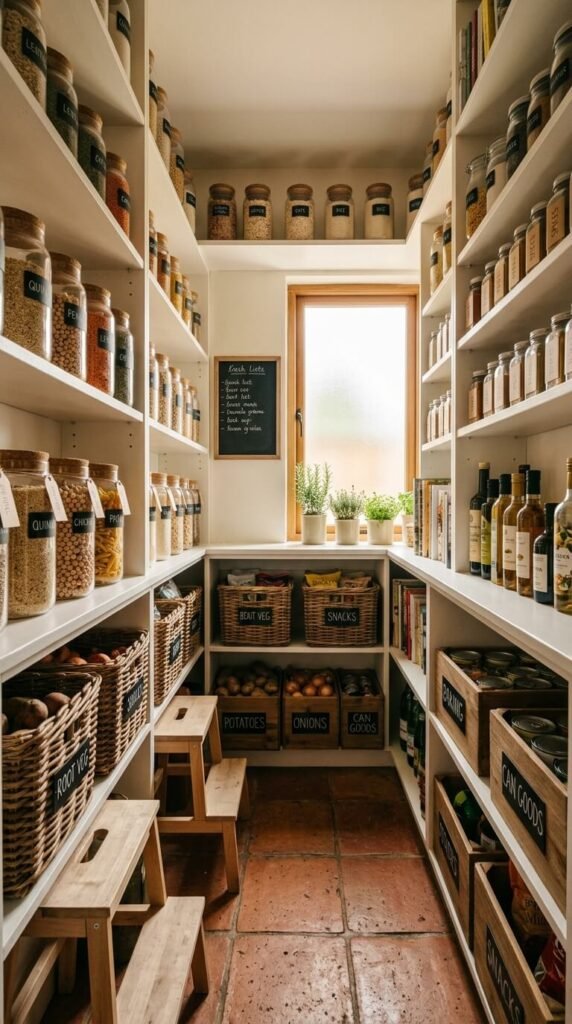
A cluttered pantry slows you down before you even start cooking. You dig for the pasta, knock over the spices, and lose the olive oil behind a forgotten can of beans. But when your pantry is organized and beautiful, cooking feels easy—almost automatic. The good news? You don’t need a kitchen renovation or a huge budget to get there. Small, intentional changes make a massive difference. Whether you have a walk-in closet, a few shelves, or just a single cabinet, these 25 pantry systems will help you build a space that actually works for your life.
1. Clear Canister System for Dry Goods
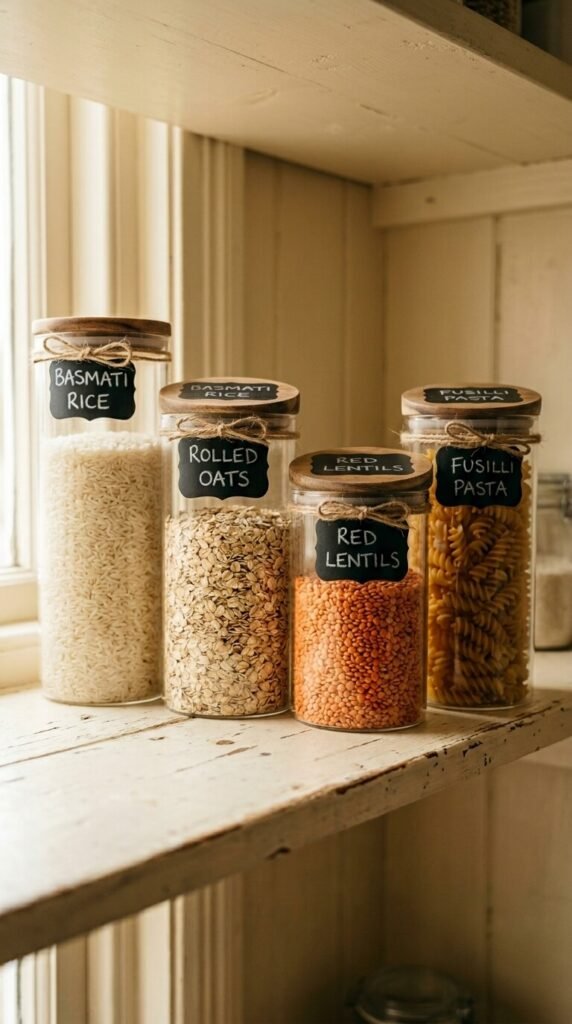
Swap out bulky bags and cardboard boxes for clear glass or acrylic canisters. When you can see what you have, you stop buying duplicates. It also makes restocking fast. Choose one canister size for most items and a taller one for pasta or spaghetti. Add small chalkboard labels on the lid or a sticky label on the front. You can find matching canister sets at IKEA or Amazon for under $30. It’s a one-time setup that saves time every single day.
2. The “Zones” Method
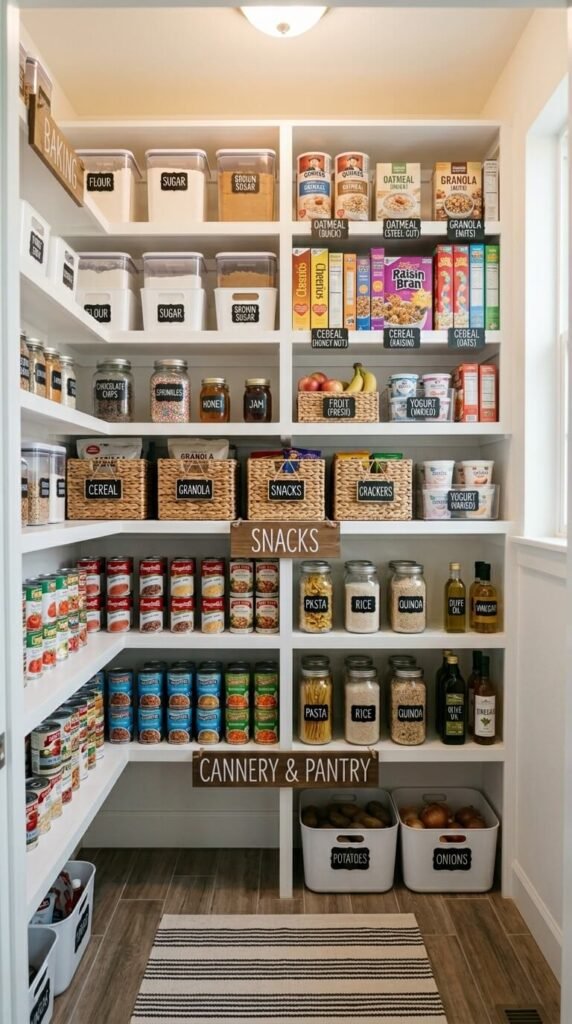
Organize your pantry by how you use things, not just by category. Create a baking zone, a snack zone, a breakfast zone, and a dinner zone. Everything for one type of cooking lives together. This means less hunting, less frustration. Use a piece of washi tape or a simple label to mark each zone on the shelf. It takes about 30 minutes to set up. Once it’s done, your family will actually put things back in the right place.
3. Lazy Susan Turntables for Corner Shelves
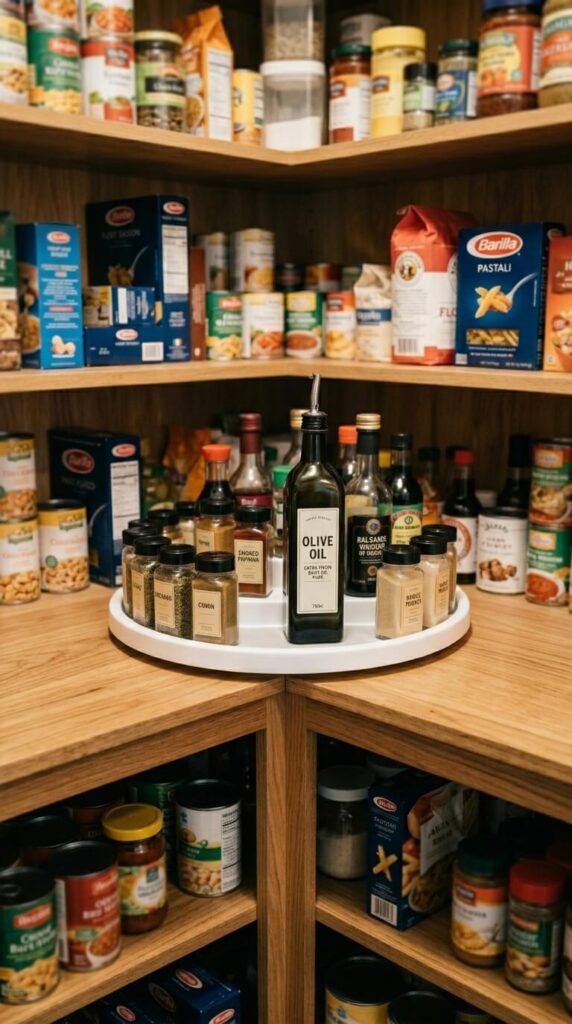
Corner shelves waste space because things get pushed to the back and forgotten. A lazy Susan turntable fixes that instantly. Place one on any deep shelf and load it with oils, vinegars, or sauces. Spin it to grab what you need. Bamboo and acrylic versions run between $8–$18. Buy two or three for different areas. Spice turntables are especially useful since small jars tend to scatter and tip. This is one of the easiest wins in any pantry setup.
4. Pull-Out Shelf Bins for Canned Goods
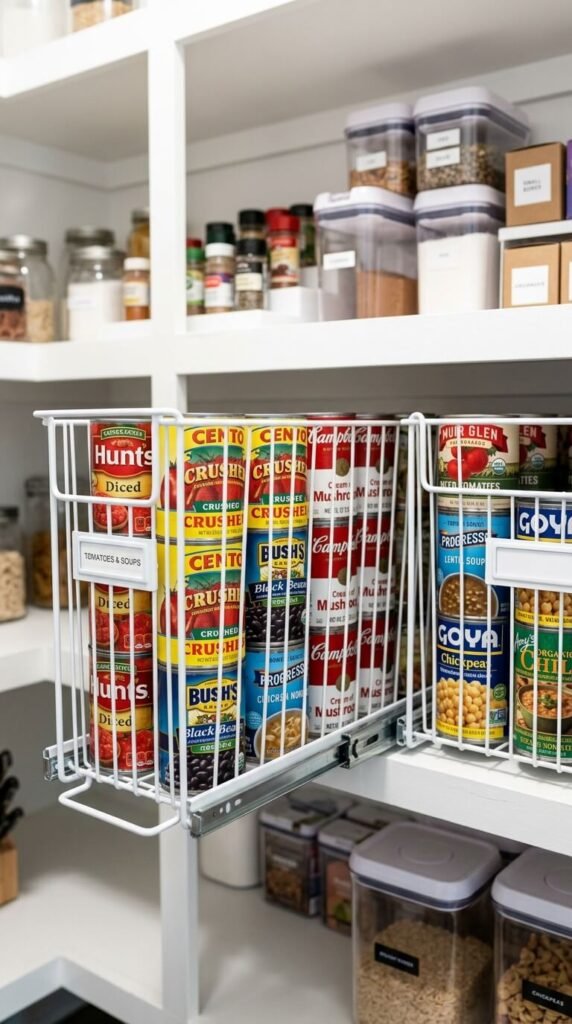
Cans stacked behind each other are hard to see and even harder to reach. Pull-out bins or sliding wire baskets let you see every can at once. They slide forward like a drawer. Install them on any fixed shelf with no tools required—most clip in and adjust to fit. Look for “sliding pantry bins” online for around $15–$25 each. Put the newest cans in the back and older ones in front. This is called FIFO (first in, first out) and it cuts food waste dramatically.
5. Over-the-Door Spice Rack
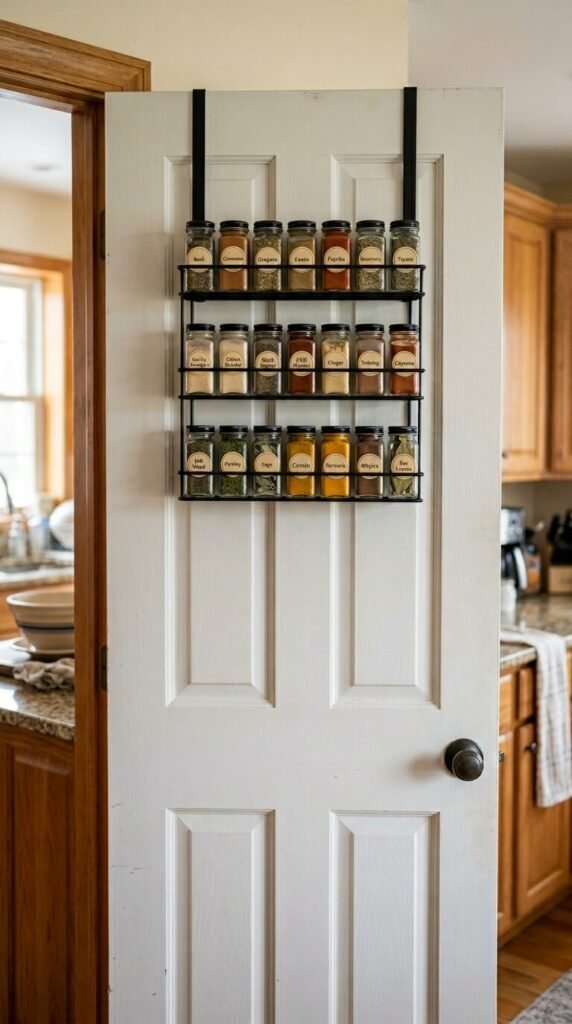
The back of your pantry door is prime real estate. An over-the-door spice rack turns wasted space into organized storage without touching a single shelf. Most units hang over the door and hold 20–30 spice jars. Pair it with uniform spice jars and printed labels for a clean look. You can find the rack for under $20 and print labels for free online. Your spices become visible, accessible, and easy to alphabetize. No more digging through a drawer or cabinet.
6. Tiered Shelf Risers for Visibility
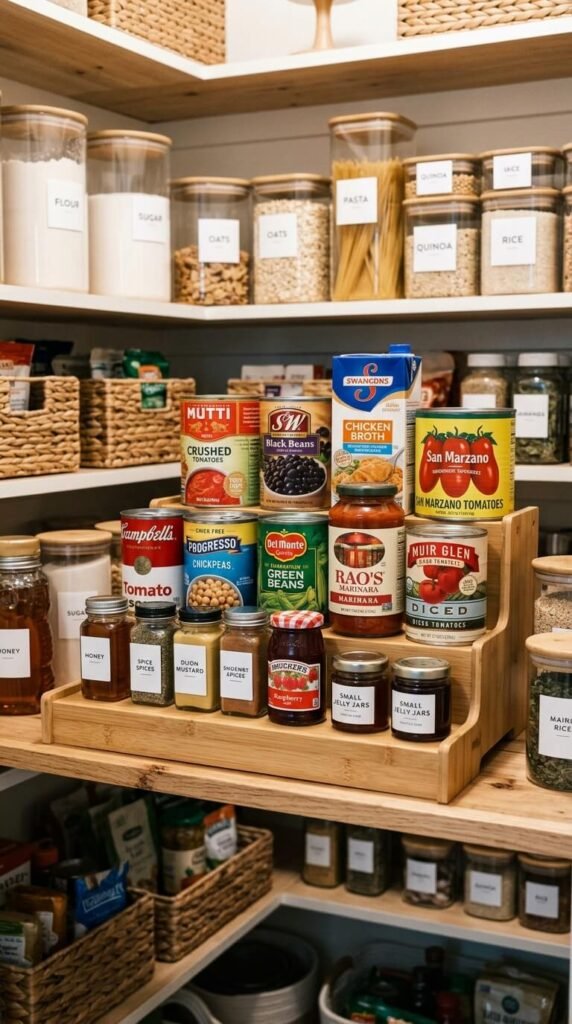
Flat shelves hide things in the back row. A tiered shelf riser creates levels so every item is visible at once—like stadium seating for your pantry. Bamboo risers are affordable, attractive, and sturdy. They work perfectly for spices, sauces, canned goods, or small jars. A two- or three-tier riser costs $12–$20 and requires zero installation. Stack your most-used items on the front tier and backups behind. You’ll reach for the right thing the first time, every time.
7. Labeled Wicker Baskets for Snacks
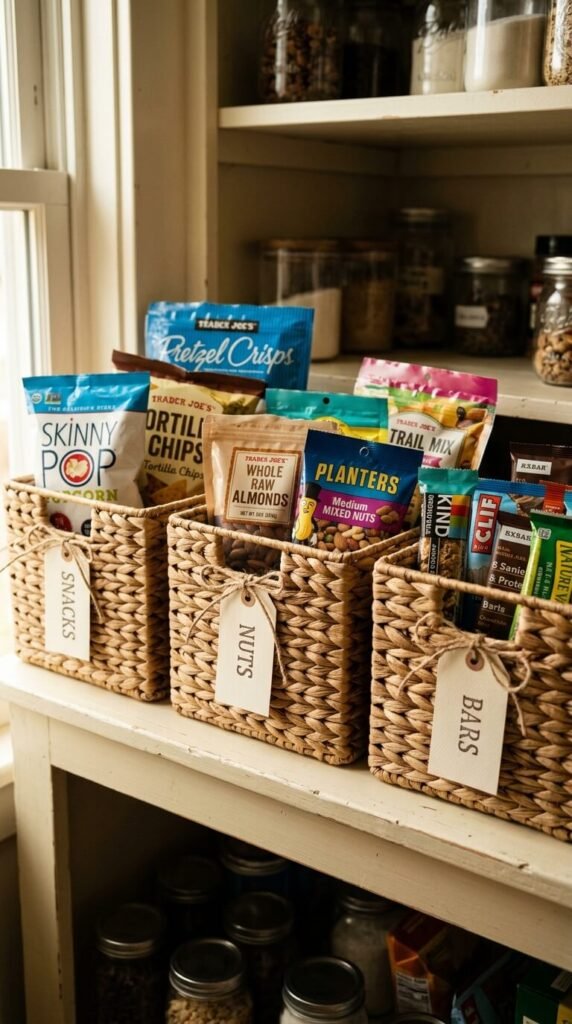
Snack bags are chaos. They spill, they crinkle, they fall. Labeled wicker baskets contain the mess beautifully. Toss all chips, bars, nuts, or crackers into their own basket. Add a tag using a luggage label or tie-on chalkboard tag. Wicker baskets are inexpensive—under $10 each at thrift stores or discount home goods shops. Line them up on a mid-height shelf at easy grab height for kids. When the basket is full, that’s the snack limit. Built-in portion control, zero willpower required.
8. Uniform Baking Supply Bins
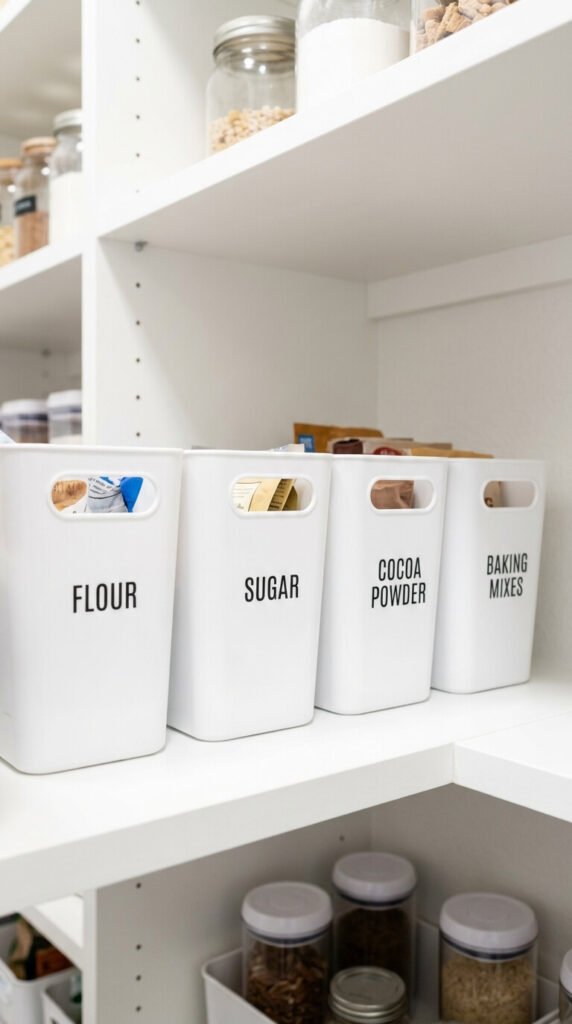
Baking supplies multiply quietly. Flour, sugar, baking soda, cocoa, cornstarch—they each need a home. Matching open-top bins with handles keep them grouped together and easy to pull out. Use one full shelf just for baking. Transfer bulk buys into clearly labeled bins. When it’s time to bake, pull the whole bin out and set it on the counter. Put it back when done. Bins from IKEA or The Container Store run $5–$15 each. Uniform sizes make the shelf look intentional and calm.
9. Pegboard Panel for Hanging Small Items
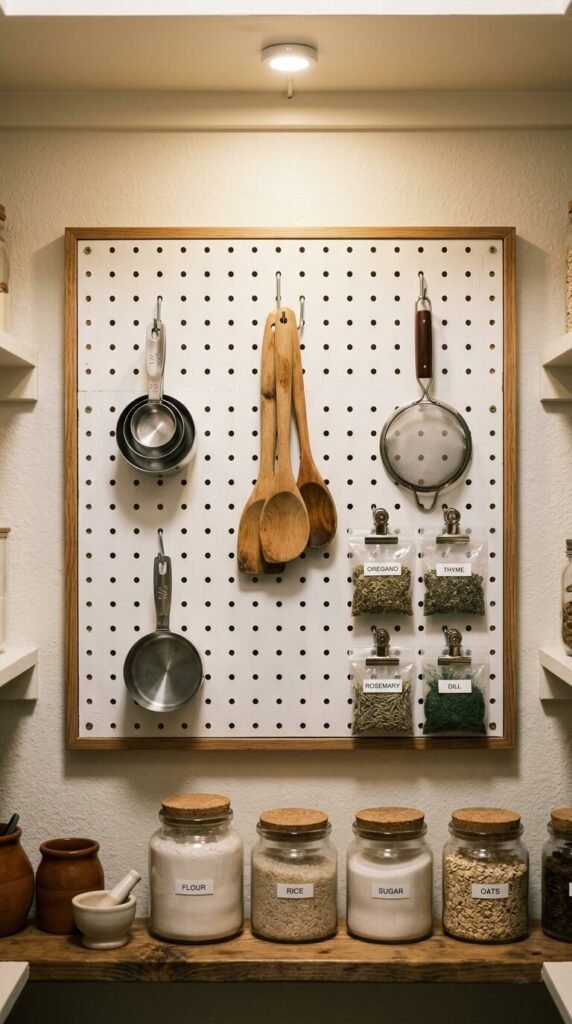
If you have a spare wall or cabinet side in your pantry, a pegboard panel turns it into functional hanging storage. Mount it at eye level. Add hooks for measuring cups, small bags, or kitchen twine. Pegboard is cheap—a 2×4 piece costs around $15 at a hardware store. Paint it to match your pantry walls. Hang frequently used tools instead of storing them in a drawer. It frees up shelf and drawer space while keeping things you reach for daily right in front of you.
10. Cereal and Dry Food Dispensers
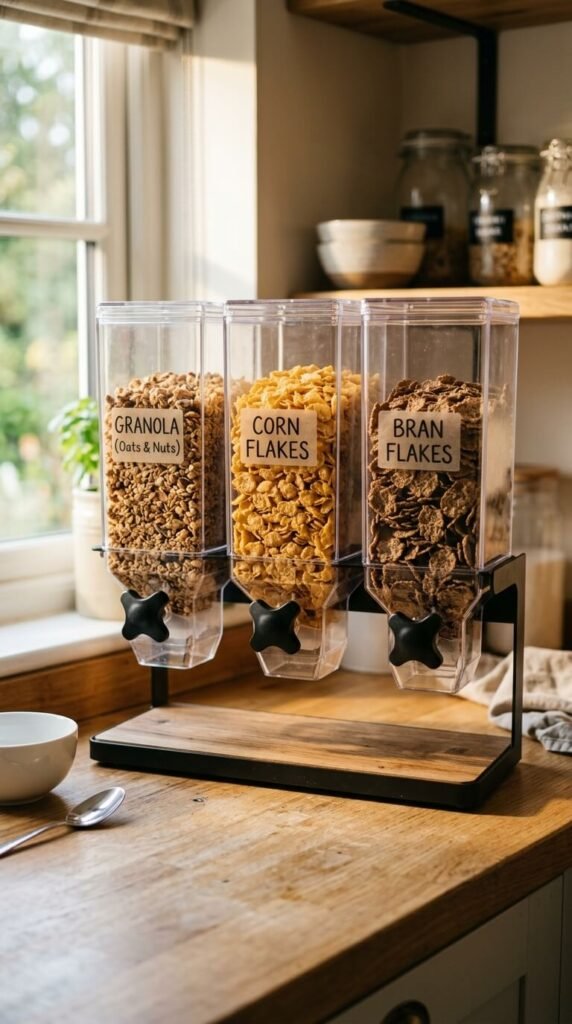
Cereal boxes are oversized and tip over constantly. Gravity-fed cereal dispensers take up less space, look polished, and let kids pour their own bowls without making a mess. Fill them at the start of the week. They hold most standard cereal box contents. Sets of three dispensers run about $20–$35 online. They also work well for granola, dog food, or dried lentils. Once you switch, you’ll wonder why cereal boxes ever existed. Clean lines, zero clutter, maximum function.
11. Deep Drawer Organizers for Packets and Pouches
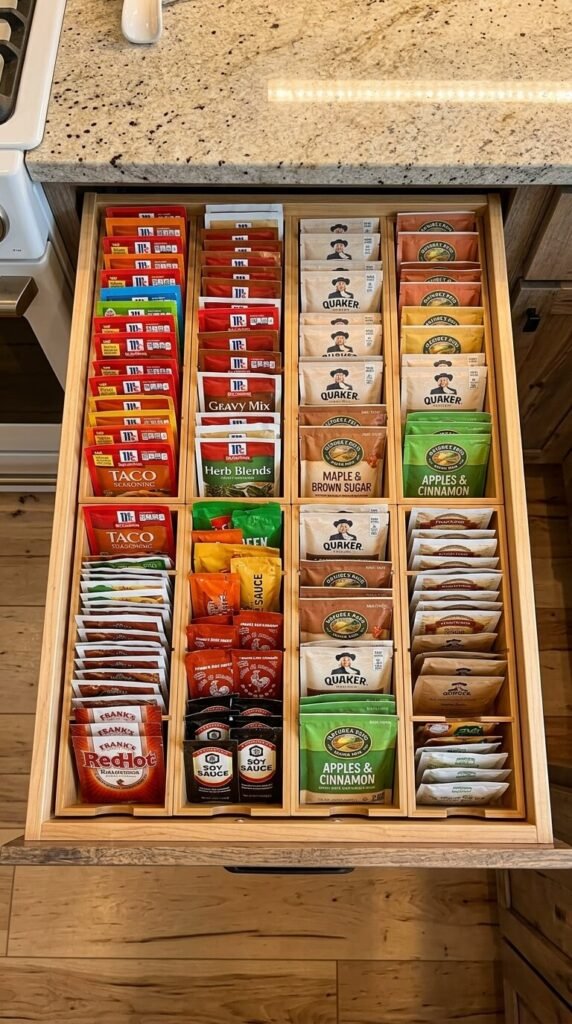
Seasoning packets, bouillon cubes, taco kits, and sauce pouches need a real home. A deep drawer with bamboo dividers gives each type its own lane. Lay pouches flat so you can read labels from above—like a filing system. This is sometimes called “filing” your pantry drawer. Bamboo dividers are adjustable and inexpensive ($10–$20 for a set). No more shaking a messy drawer looking for the right packet. Open the drawer, see everything, grab and go in under five seconds.
12. Magnetic Spice Jars on the Fridge or Wall
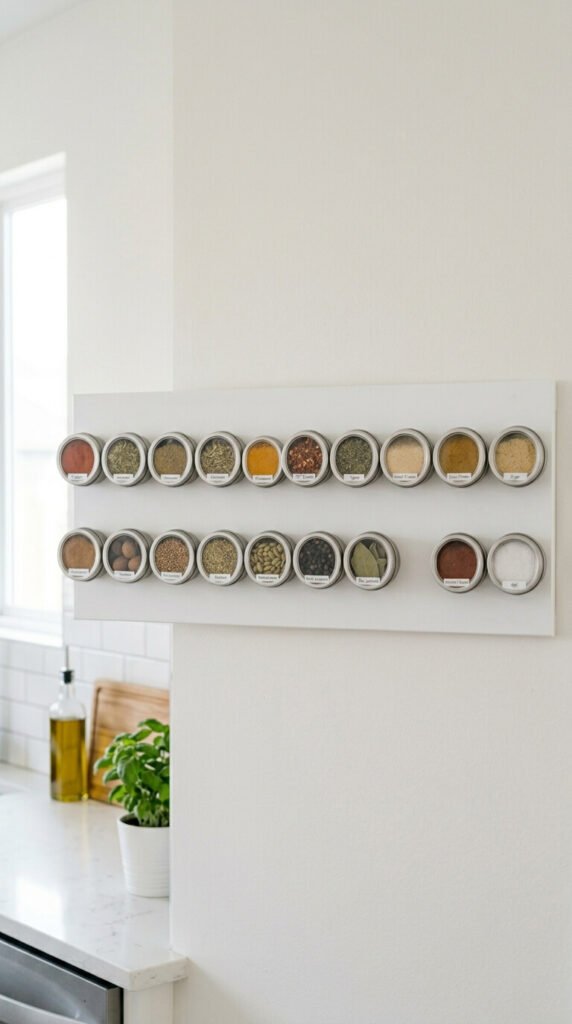
If your pantry lacks shelf space, move the spices out entirely. Magnetic spice tins attach to a magnetic board on the wall or directly to your fridge side panel. They save shelf space, keep spices visible, and look genuinely beautiful. Refillable magnetic tin sets with labels run $20–$35. Mount a magnetic board for under $15 from any hardware store. This is a great solution for small kitchens where every shelf inch matters. Once you see your spices displayed this way, going back feels impossible.
13. “First to Use” Crate at the Front
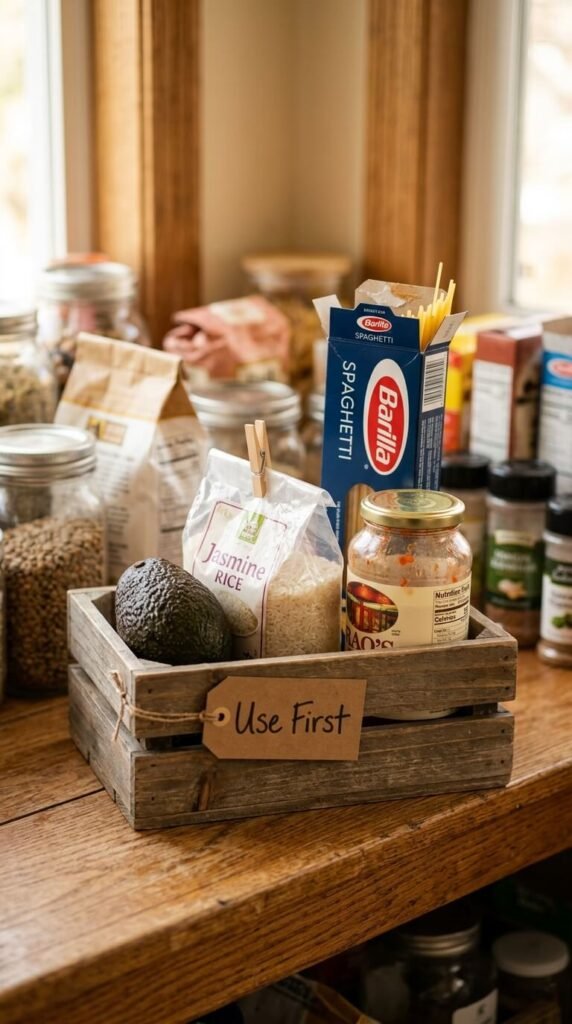
Food gets forgotten. A “first to use” crate solves this. Keep one small wooden crate or bin at the very front of your pantry. Move anything that’s close to its expiration date or already opened into it. Cook from this crate first before opening anything new. This habit alone reduces food waste and grocery spending significantly. A small wooden crate costs $5–$10 at a craft store. Write “Use First” on a chalkboard tag and tie it on. Simple, honest, and shockingly effective.
14. Stacking Modular Bins with Clear Fronts
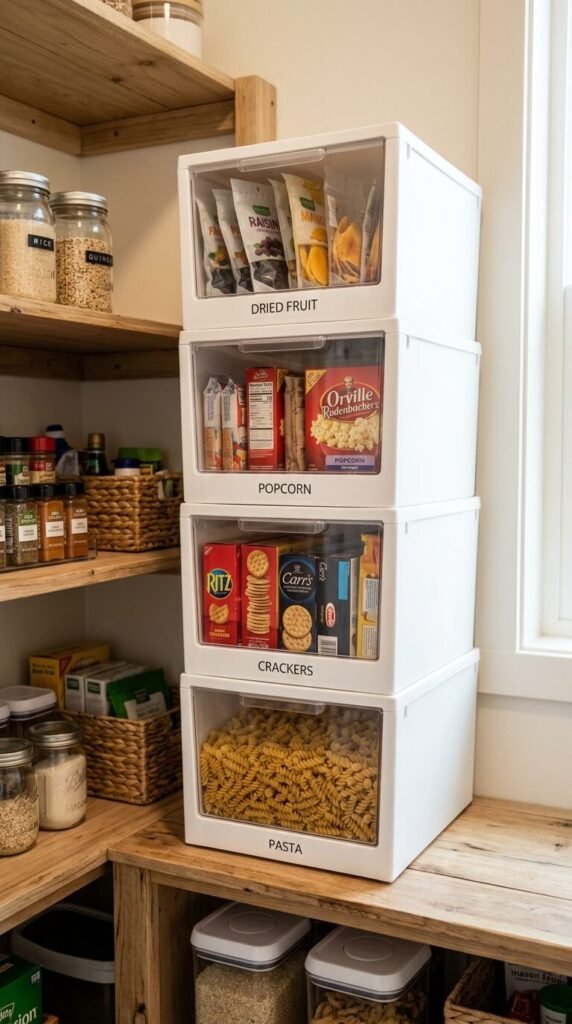
Stackable modular bins let you customize your pantry vertically. Clear-front bins are the best version—you see exactly what’s inside without pulling anything out. Stack them four or five high on a shelf. They come in matching sizes that lock together. Some brands sell these in modular sets where you can mix small and large bins. Sets run $25–$50 and can grow as your pantry grows. Move them to a new home easily if you rearrange. Flexible, scalable, and very satisfying to look at.
15. DIY Chalkboard-Labeled Mason Jar Wall
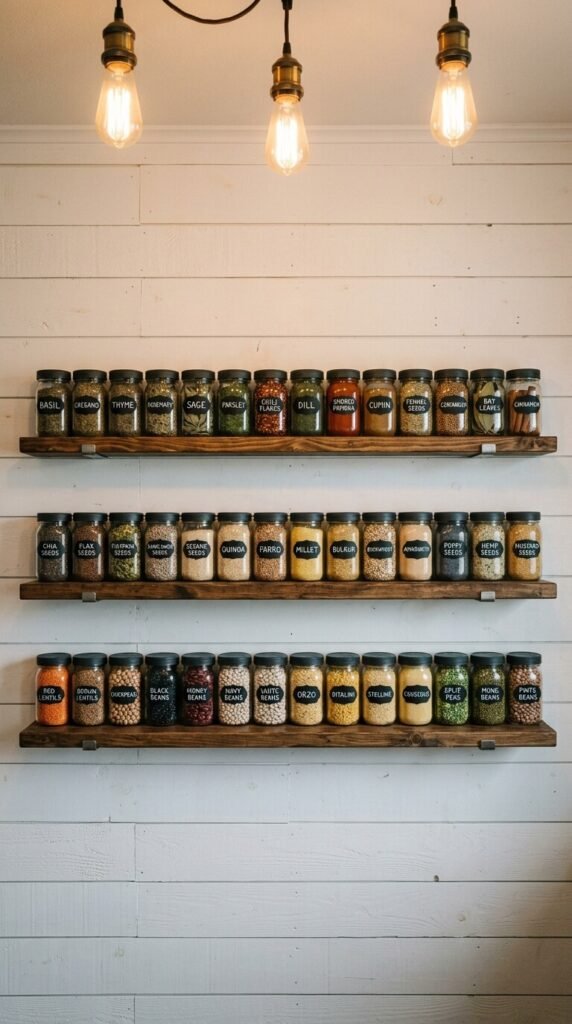
Mason jars are one of the most affordable pantry storage solutions available. Mount a wooden board on your pantry wall, add small hooks or jar clips, and hang mason jars filled with dried herbs, seeds, or small pastas. Use chalkboard paint on the lids for easy labeling. A case of mason jars costs under $15. The wooden board is a free reclaimed pallet piece or a $5 cut from a hardware store. This works especially well in a walk-in pantry or on a visible kitchen wall.
16. Single-Serve Snack Basket for Kids
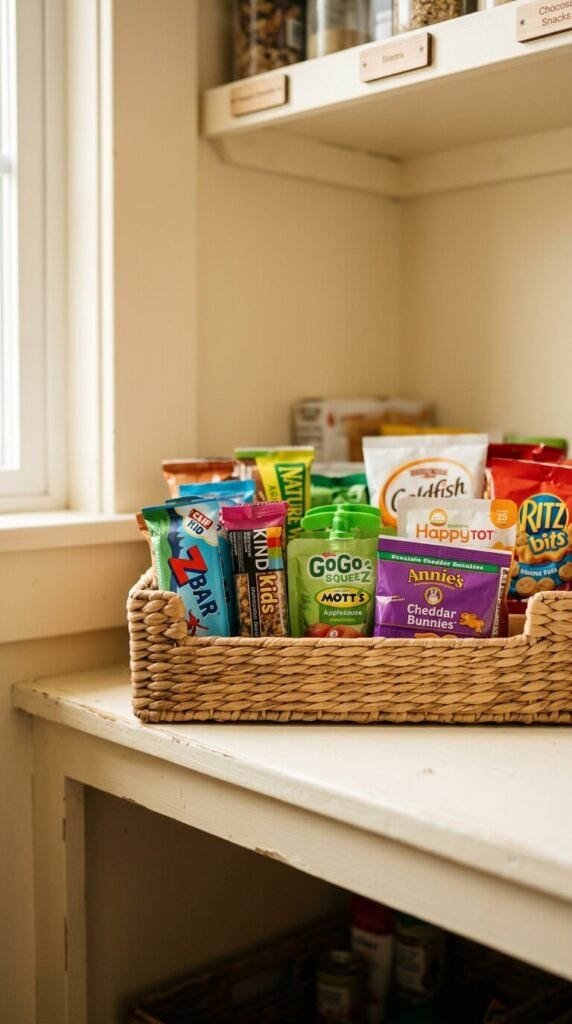
Give kids their own basket at a low shelf height. Fill it with pre-approved snacks in single-serve portions—fruit pouches, cracker packs, granola bars. Kids can grab their own snacks independently. Parents set the boundary by what goes in the basket. When the basket is empty, snacks are done for the day. No negotiating, no cupboard raiding. This also teaches kids that food has a designated home. A small low basket costs $8–$12. It’s one of the most practically life-changing pantry additions for families.
17. Bottle and Oil Organizer Rack
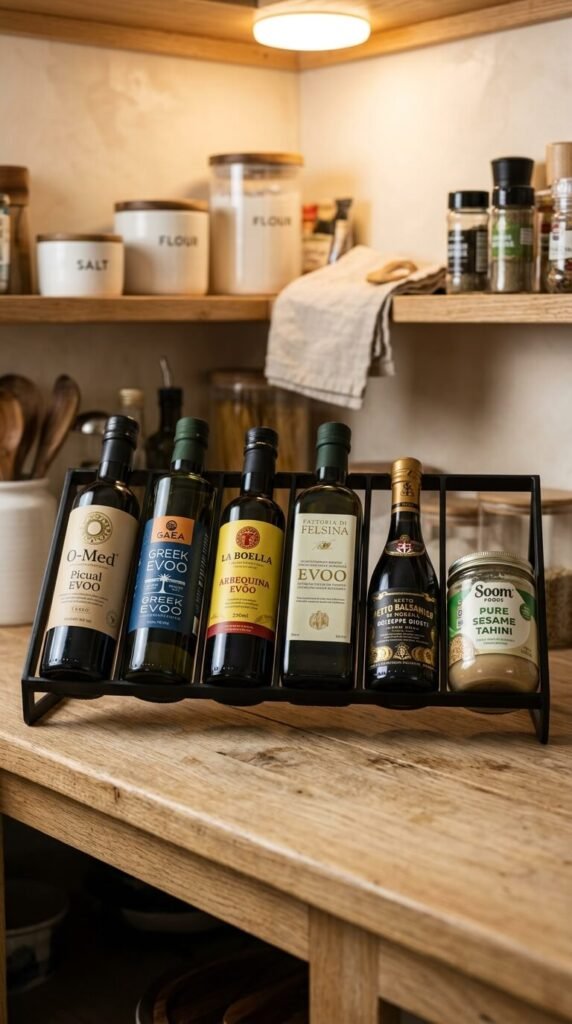
Tall bottles—olive oil, soy sauce, fish sauce, vinegars—always fall over or crowd a shelf. A bottle organizer rack lays them horizontally or keeps them upright in individual slots. This frees up surrounding shelf space and keeps bottles from migrating. Metal wine-bottle-style racks work well and cost $10–$20. Choose a countertop version or a shelf-top version depending on your space. Group all your oils and vinegars together in one rack. Reach for what you need without rearranging everything around it.
18. Stackable Can Organizer Rack
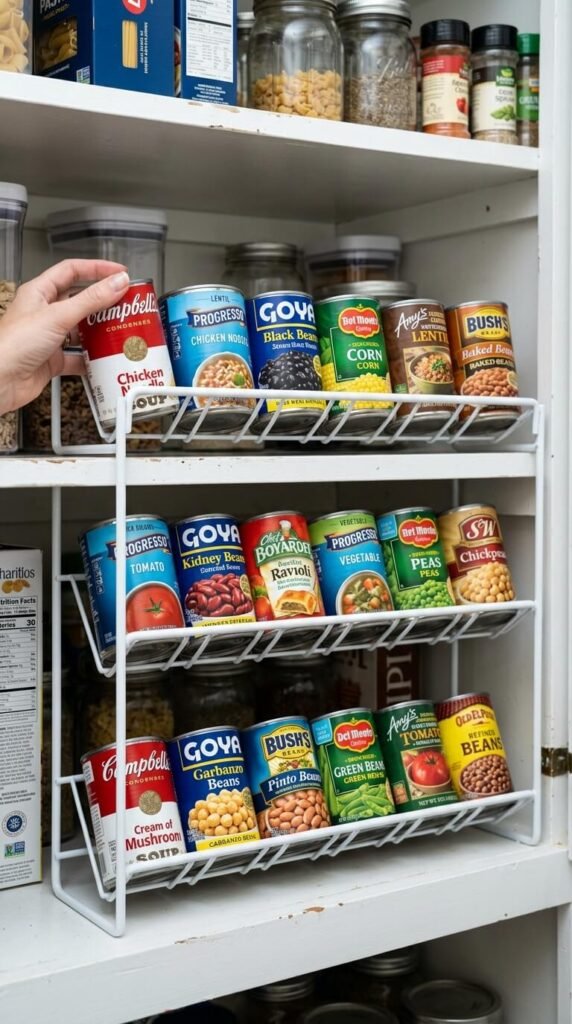
Cans are the most disorganized pantry item in most homes. A rolling can organizer rack stacks your cans in rows on a slight angle. You load new cans from the back and grab from the front. The oldest cans come out first automatically. No thinking required. Racks come in single-row and multi-row versions, running $15–$30. They fit on standard pantry shelves. Group by type—soups on one rack, beans on another, tomatoes on a third. The result is a pantry that practically manages itself.
19. Freezer-to-Pantry Backup Shelf System
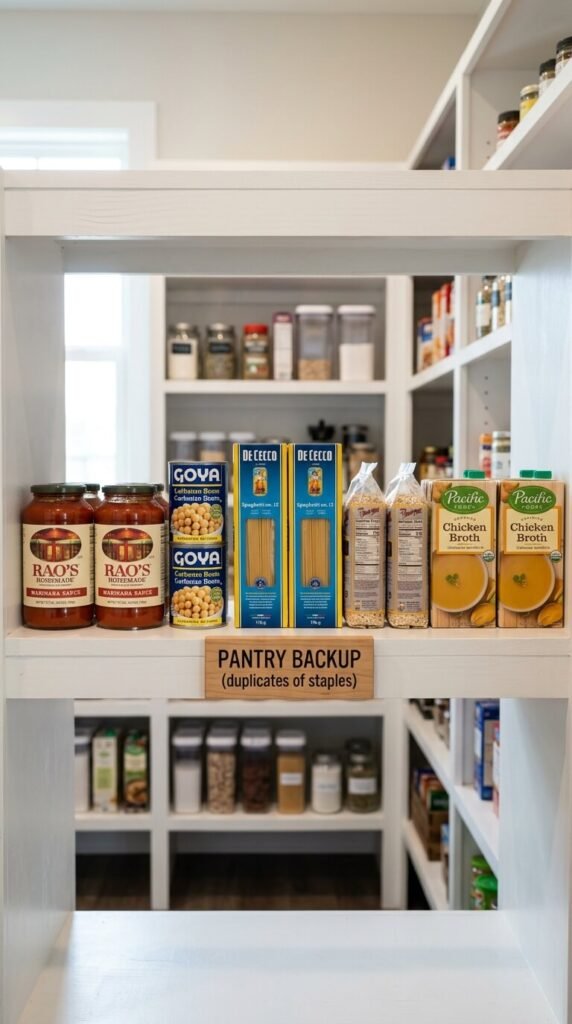
Keep one dedicated backup shelf for pantry staples you use constantly. When you open the last can of chickpeas on the main shelf, your backup shelf already has a replacement waiting. This prevents last-minute grocery runs. Keep the backup shelf stocked with one extra unit of each item. When you pull from backup, add it to your shopping list immediately. This system works best when labeled by row—”Backup: Pasta,” “Backup: Canned Beans.” Budgeting $10–$15 extra per week to build backup inventory pays off quickly.
20. Pull-Out Drawer Inserts for Small Items
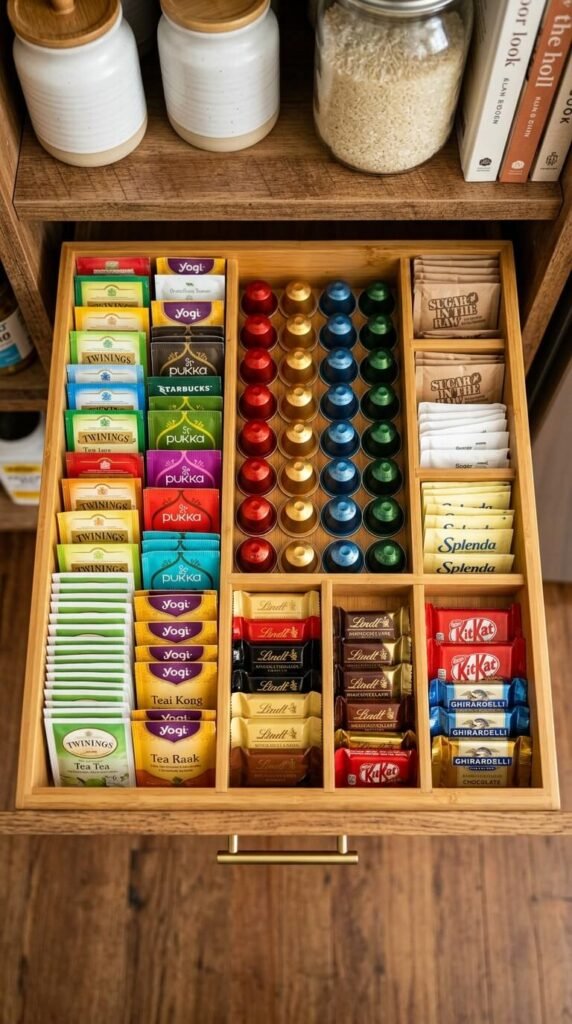
Small items fall through the cracks of standard shelves. Pull-out drawer inserts that sit on your existing shelves act like shallow drawers you can slide forward. Fill them with tea bags, coffee pods, bouillon cubes, or small condiment packets. Use bamboo or foam dividers to keep categories separated. These inserts cost $15–$25 and fit most pantry shelf depths. Once installed, grabbing a tea bag or coffee pod becomes a two-second task. No more small packets scattered behind large containers.
21. Clear Door Pocket Organizer for Foil and Wrap
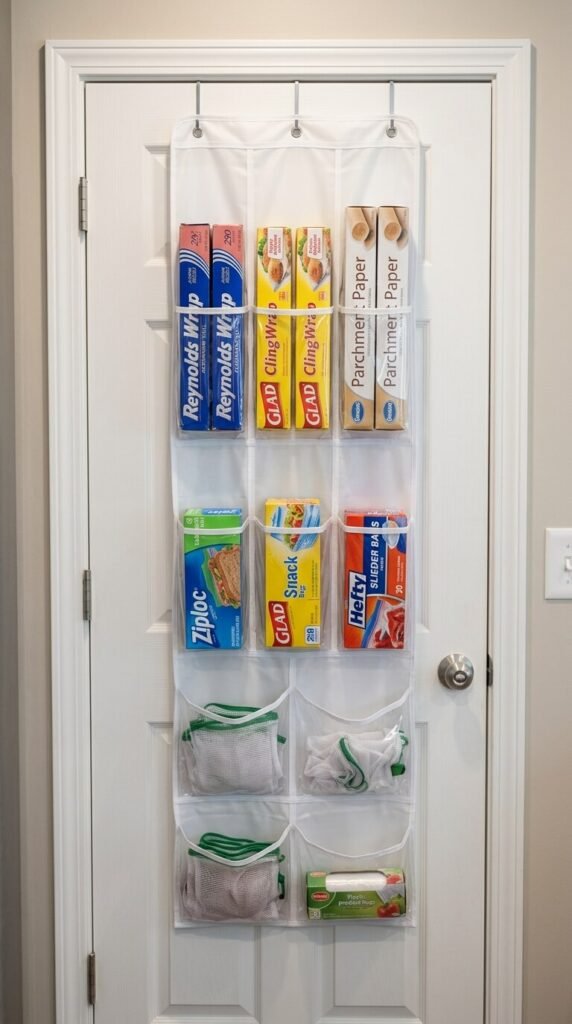
Foil, plastic wrap, parchment paper, and storage bags live awkwardly in drawers and fall out constantly. Mount a clear pocket door organizer on the inside of your pantry door. Each box or roll slides into its own pocket. You see what you have at a glance and never run out without noticing. These organizers come in many sizes and run $10–$20. They also work for small sauce packets, bread bag clips, or labels and markers. One mounted organizer frees up an entire drawer.
22. Color-Coded Bin System Per Family Member
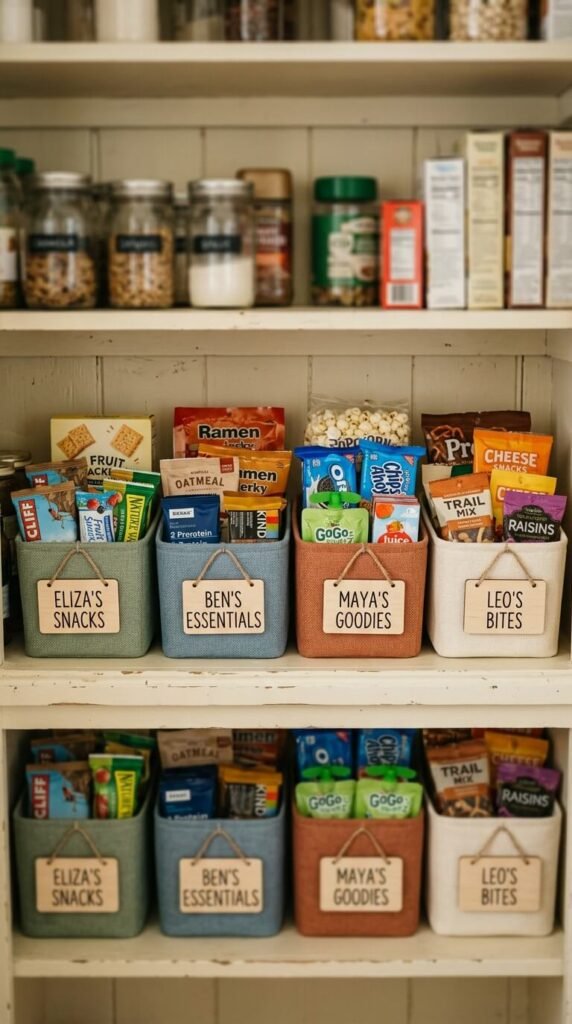
In households with multiple people and different dietary needs, a color-coded bin system eliminates confusion. Assign each family member a bin color. Their snacks, dietary-specific items, or packed lunch supplies live in their bin only. No shared snack wars. No accidentally eating someone else’s gluten-free crackers. Matching bins in different colors run $5–$10 each. Add a name tag using a clip-on label or a piece of tape. This is one of the most practical family pantry solutions you’ll find anywhere.
23. Staggered Height Shelf Arrangement
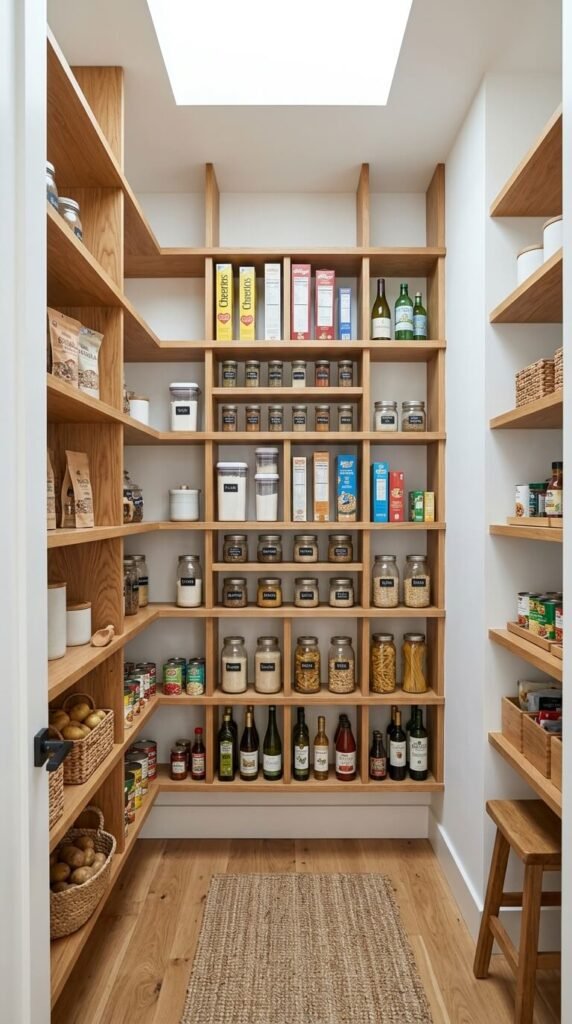
Pantries often have one-size shelves that waste space above shorter items. Staggered shelving adjusts shelf heights to match what you’re storing. Set one shelf higher to fit cereal boxes or tall bottles. Drop another shelf lower for spice jars or cans. Most pantry shelves are already adjustable—just reposition the shelf pegs. This costs nothing. You can gain an extra shelf simply by reconfiguring the heights. It’s the easiest free pantry upgrade most people overlook entirely.
24. Weekly Meal Prep Basket
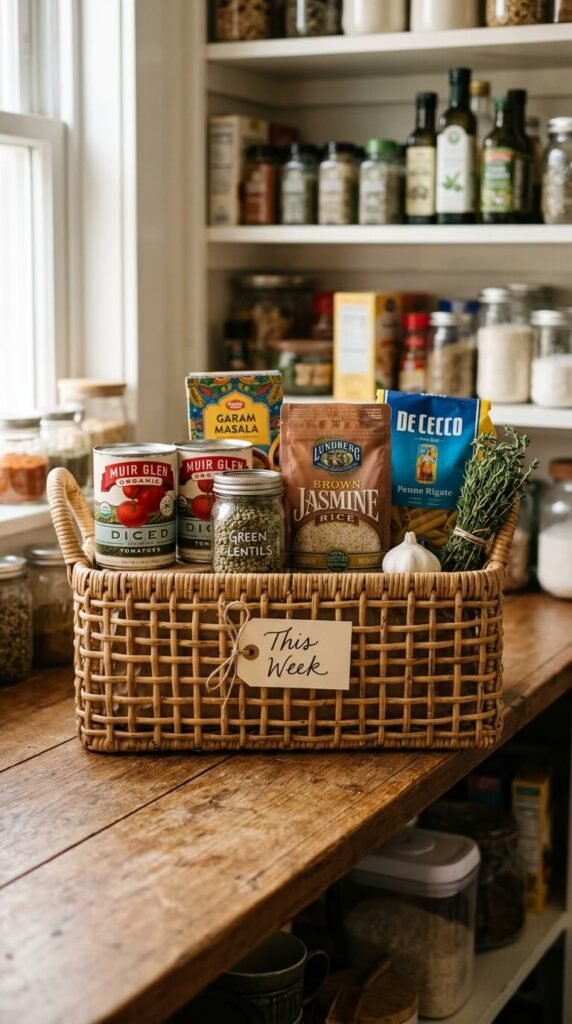
Every Sunday, pull the ingredients for your planned meals into one designated weekly basket. Label it “This Week.” When it’s time to cook on a Tuesday night, go straight to the basket—no hunting, no pantry dig. You already know everything you need is right there. This habit also makes you more aware of what you’re using and what’s going unused. A large rattan basket or a simple bin works perfectly. It ties pantry organization directly to meal planning in the most practical way possible.
25. Open Shelf Aesthetic Display Zone
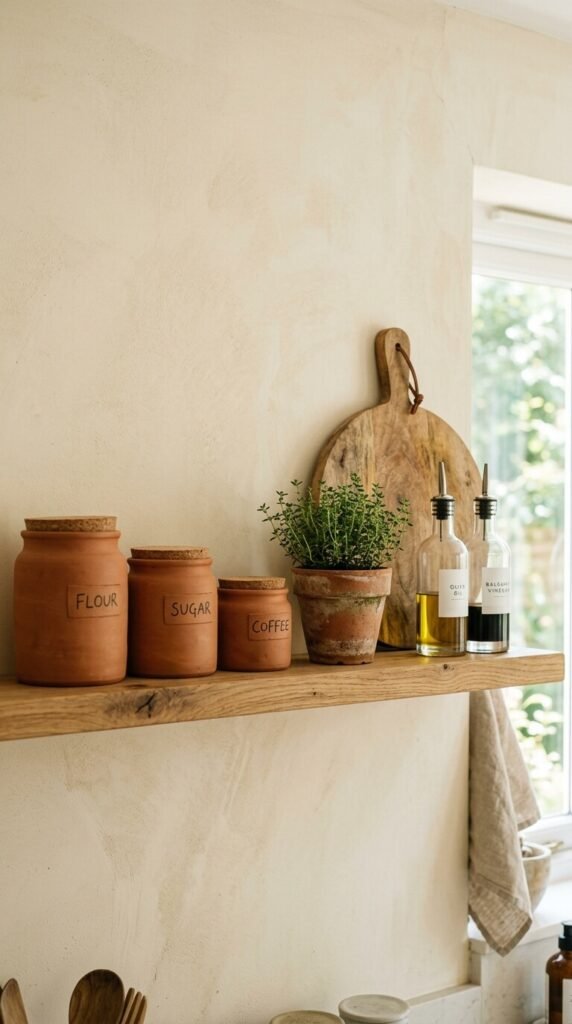
Not every pantry inch needs to be utility-driven. Reserve one small shelf or section for display. Show off your most beautiful canisters, a small plant, a wooden bowl of garlic or onions, or a favorite cutting board leaning against the wall. This single zone makes the whole pantry feel curated and personal. It also becomes the visual anchor that motivates you to keep the rest organized. You don’t need expensive items. A few matching terracotta pieces and a sprig of dried lavender can make your pantry feel like something you actually want to spend time in.
Conclusion
A great pantry isn’t about perfection—it’s about making your daily cooking routine easier. You don’t have to do all 25 of these at once. Start with one shelf, one system, one basket. Clear a corner. Add a lazy Susan. Label three containers. Small changes stack up fast, and once one area feels good, you’ll want to keep going. The pantry systems here are designed to work in real homes with real budgets. Pick what fits your space, your family, and your cooking habits—then make it yours. An organized pantry isn’t a luxury. It’s just a better way to live.