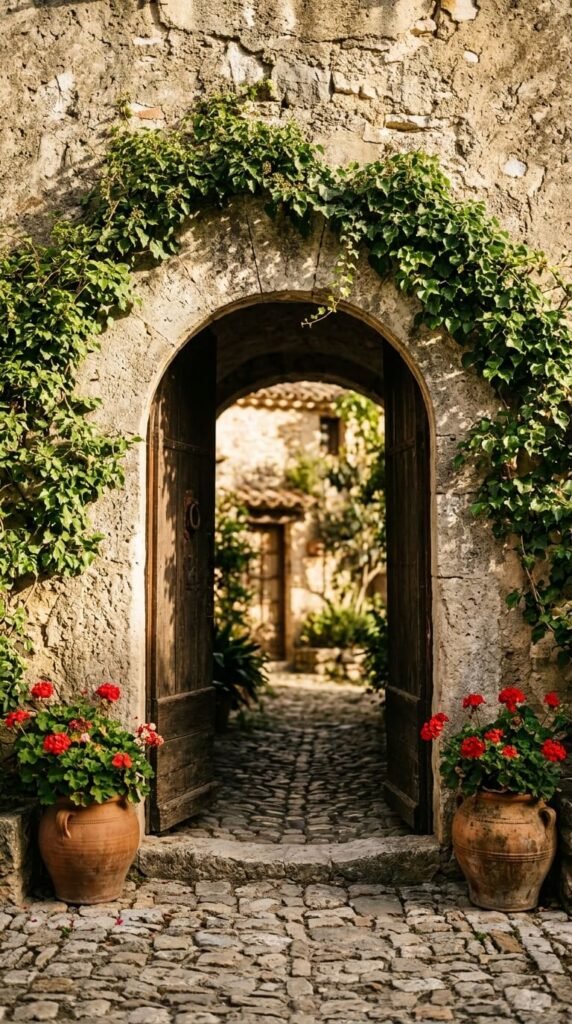
There is something about a rounded doorway that stops you in your tracks. Arched doorways carry a quiet elegance that flat, squared-off frames simply cannot match. They pull from centuries of European architecture — from Roman aqueducts to French country estates — and bring that same feeling into everyday homes. Whether you are renovating a century-old craftsman or sprucing up a new build, an arched doorway can completely change how a space feels. The good news? You do not need a massive budget or a team of contractors to make it happen.
1. The Classic Roman Semicircle
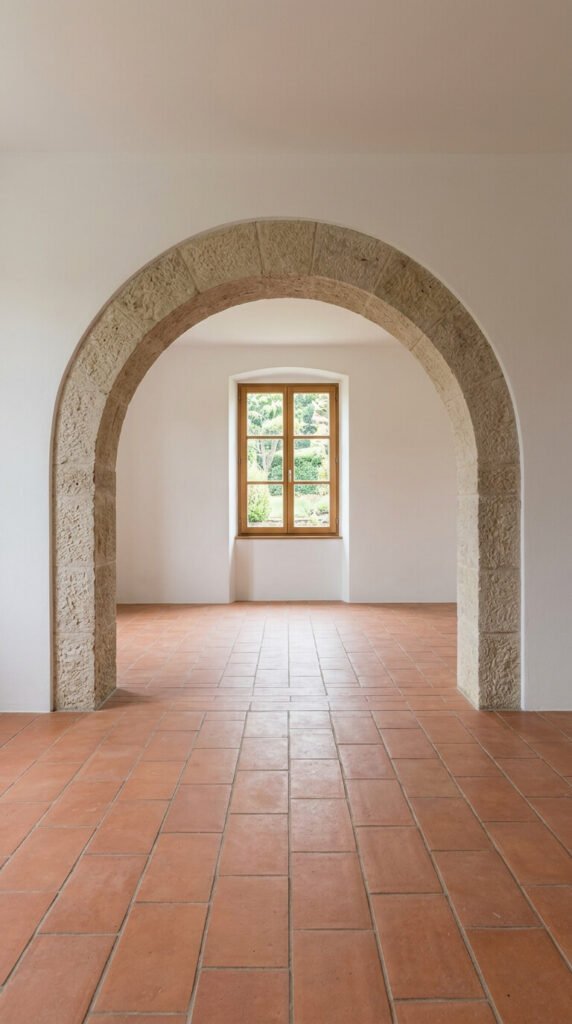
The full semicircle arch is the original European doorway shape. It is timeless for a reason.
This shape works in almost any home style — from Spanish Colonial to farmhouse modern. The arch spans exactly half a circle, so the width equals the height from the spring line up.
DIY tip: You can buy pre-made foam arch inserts at most home improvement stores for under $50. Paint them to match your trim and install them inside an existing rectangular frame. It is a weekend project that makes a big visual impact for very little money.
2. The Tuscan Terracotta Arch
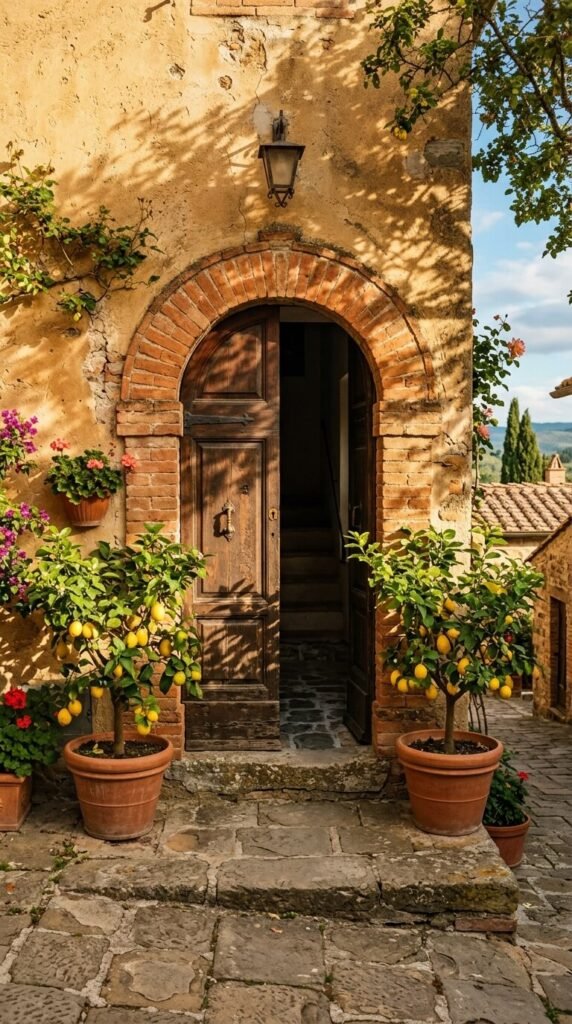
Brick arches with terracotta tones feel like they belong on a Florentine hillside.
The warm, earthy palette of this style works especially well in dining rooms, kitchen pass-throughs, and exterior entryways. You do not need real brick to get this look. Brick veneer panels cost around $3–$6 per square foot and glue directly onto drywall.
Add a coat of warm ochre or burnt sienna paint to the surrounding wall, and the arch instantly reads as authentically Italian. Seal the brick veneer with matte sealant so it does not look too shiny.
3. The French Country Keystone Arch
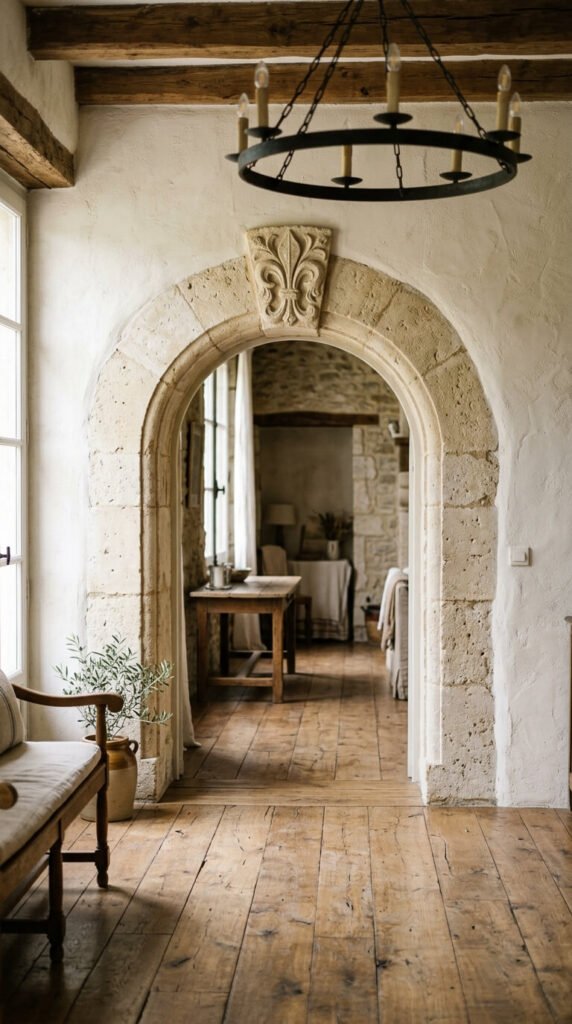
A keystone arch has that one signature stone at the very top — the crown jewel of the doorway.
In French country homes, keystones were often carved with florals or initials. Today, you can source decorative polyurethane keystones from architectural salvage shops or online for $20–$80. They are lightweight and paintable.
Install one over an existing arch frame using construction adhesive. Paint it a slightly darker tone than the surrounding wall to make it pop. This one small detail makes the entire doorway look far more considered and expensive.
4. The Whitewashed Moroccan Arch
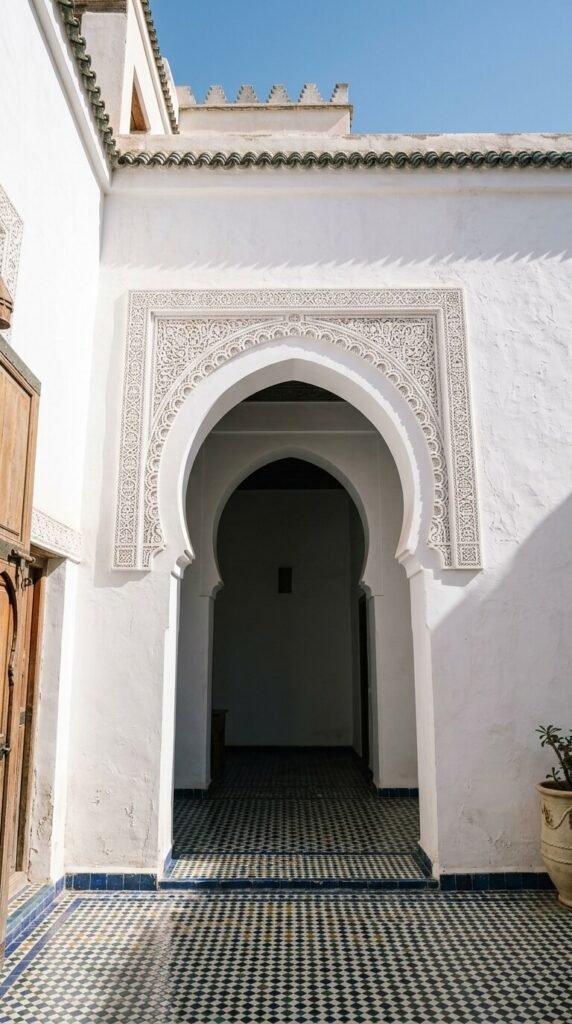
The Moorish horseshoe arch dips down at the sides before curving up. It is exotic, dramatic, and unmistakably European-North African in origin.
This shape is perfect for creating a visual moment in a boho or Mediterranean-style home. The distinctive pointed base sets it apart from the basic semicircle.
For a budget-friendly version, use joint compound to build up the arch profile on a flat wall. Score the shape, layer the compound, sand smooth, and finish with bright white limewash paint. The whole project can cost under $100 in materials.
5. The Pointed Gothic Revival Arch
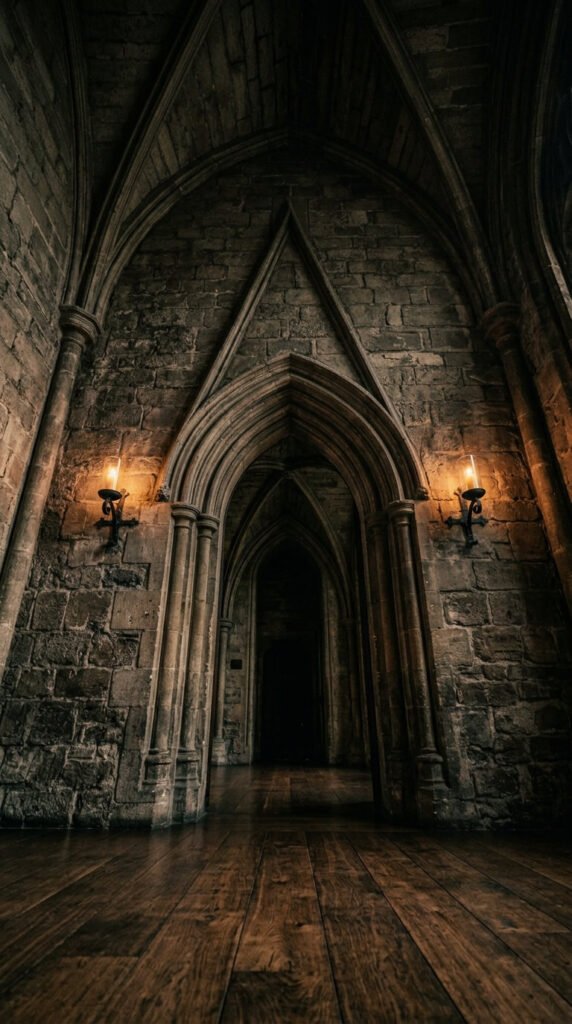
The pointed arch comes from medieval cathedral architecture and brings serious drama to a home.
This shape works brilliantly in libraries, home offices, wine cellars, or any space where you want a moody, serious atmosphere. The peak draws the eye upward, making ceilings feel taller than they are.
You can recreate this on a budget with curved foam molding strips bent and shaped to form the pointed profile. Paint them dark gray or charcoal to mimic stone. Combined with a dark wall color, the effect is striking and atmospheric without breaking your renovation budget.
6. The Segmental Arch (The Subtle One)
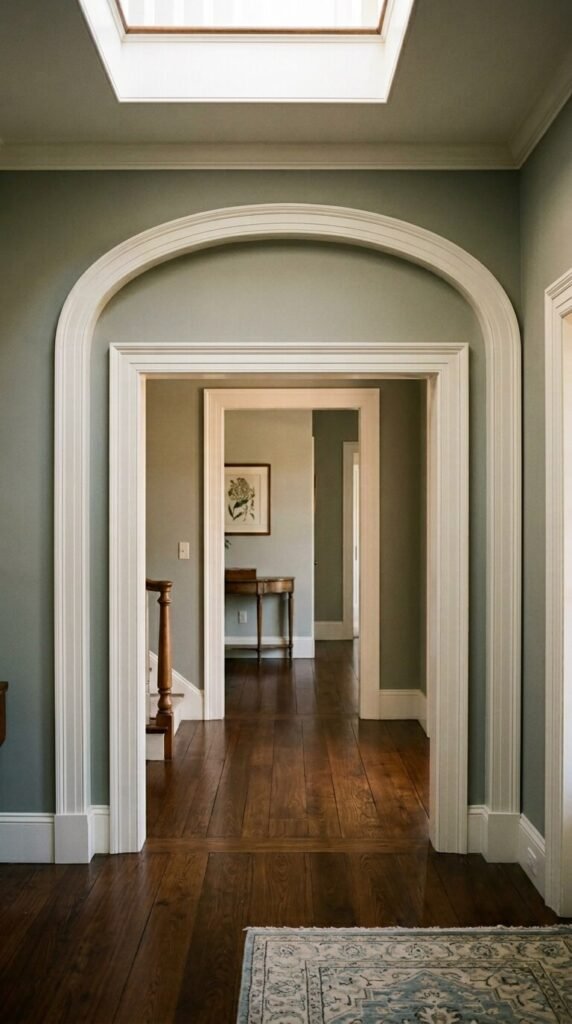
Not every arch needs to be dramatic. The segmental arch is a shallow curve — just a gentle rise at the top.
This is actually one of the most practical arched doorways because it fits into spaces with standard ceiling heights. It whispers “European” without shouting it.
A great DIY approach: add a flexible molding strip bent into a gentle curve inside your existing door frame. Secure it with finishing nails and caulk the seams. Paint to match the trim. For about $30–$50 in materials, you get an instant architectural upgrade.
7. The Stucco-Clad Spanish Mission Arch
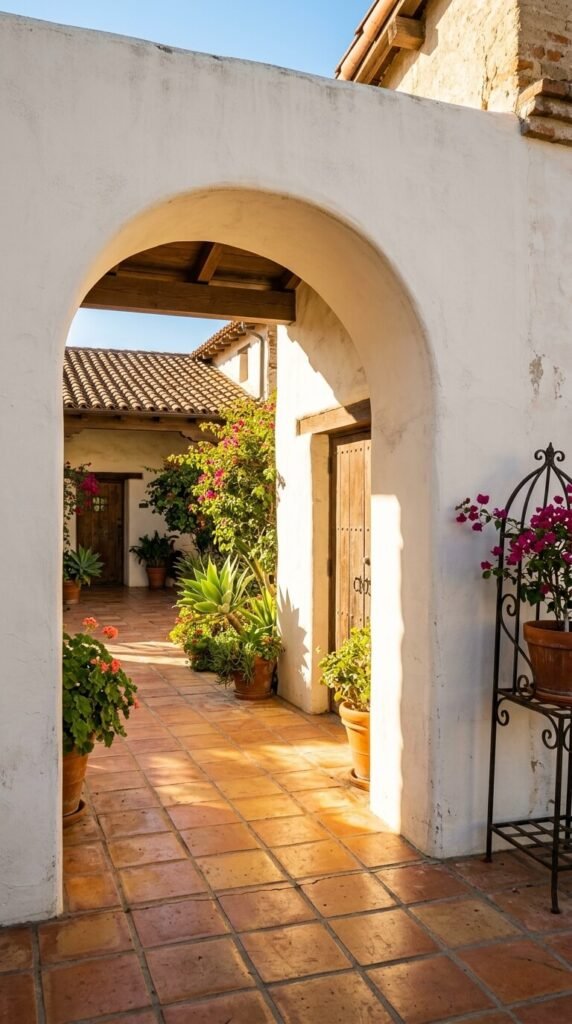
Spanish Mission architecture is built on thick walls and deep arch reveals.
That depth — sometimes 12 inches or more — is what gives this style its character. It creates strong shadow lines and makes the doorway feel substantial and ancient.
To replicate this on a standard wall, you can build out a faux reveal using MDF boards. Frame the arch opening with extra-deep casing material, paint it all white, and finish with a smooth stucco texture using joint compound. The added depth alone transforms how the doorway reads in the space.
8. The Rustic Stone Arch
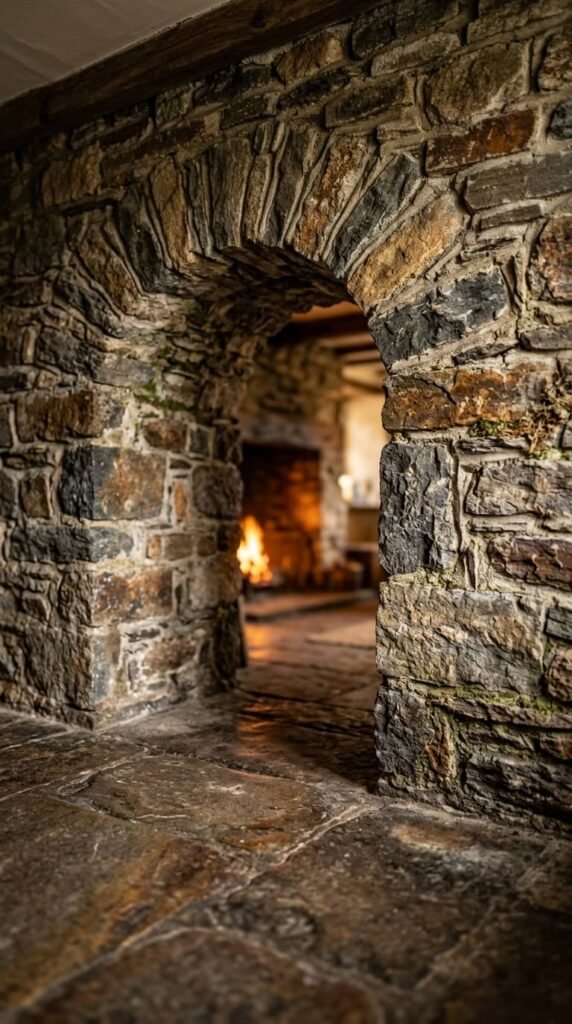
Nothing says “old Europe” like a fieldstone arch with irregular, rough-cut stones mortared together.
The beauty here is in the imperfection. Stones vary in size, color, and shape. Mortar joints are thick and uneven. It is the opposite of polished — and it is gorgeous for that reason.
Real stone work is expensive, but stone veneer panels — thin slices of real stone glued to a backing — cost $4–$8 per square foot and can be cut with a wet saw. Hire a tile setter for a day, or try it yourself over a long weekend. The result looks completely authentic.
9. The Painted Arch Trompe L’Oeil
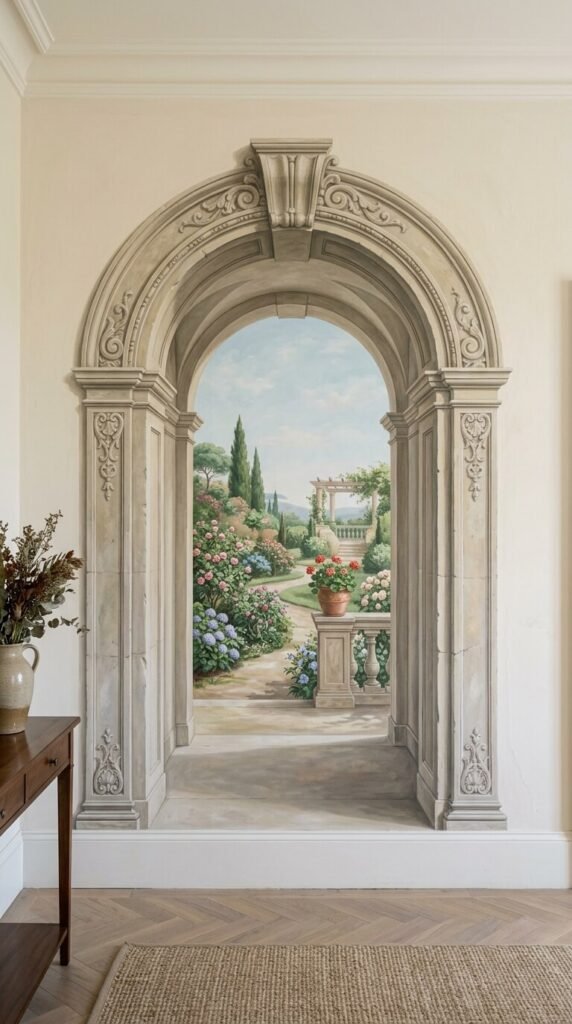
What if the arch is not structural at all — just painted directly on the wall?
Trompe l’oeil, French for “trick the eye,” is a centuries-old technique where painters create the illusion of depth and dimension on flat surfaces. A painted arch can look remarkably real when done with careful shadowing and perspective.
This is one of the most affordable options available. A skilled local muralist might charge $200–$500 for a simple painted arch. If you are handy with a brush yourself, a stencil kit and a few shades of gray paint can achieve a convincing stone arch effect for under $50.
10. The Weathered Wood Timber Arch
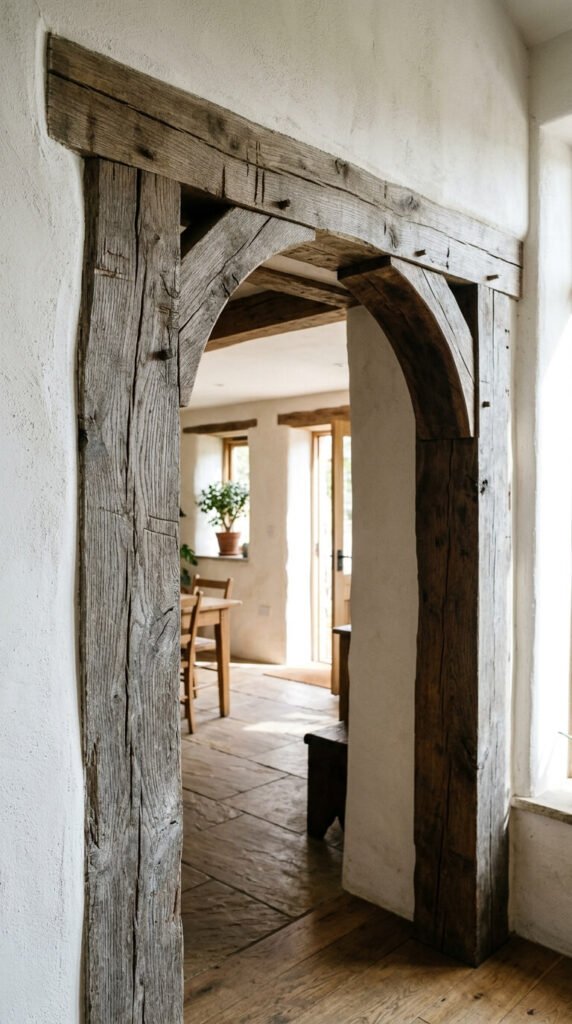
Reclaimed timber arches bring warmth, texture, and a hint of medieval European barn architecture.
The heavy wood contrasts beautifully against white plaster or limewash walls. This style suits farmhouse, cottagecore, and Scandinavian-influenced interiors especially well.
Source reclaimed beams from architectural salvage yards — prices vary widely, but rough-sawn beams can sometimes be found for $3–$6 per linear foot. A simple arch frame made from two curved pieces and a keystone beam can be built by an intermediate woodworker in a single weekend. Sand minimally and finish with raw linseed oil.
11. The Grand Double Arch
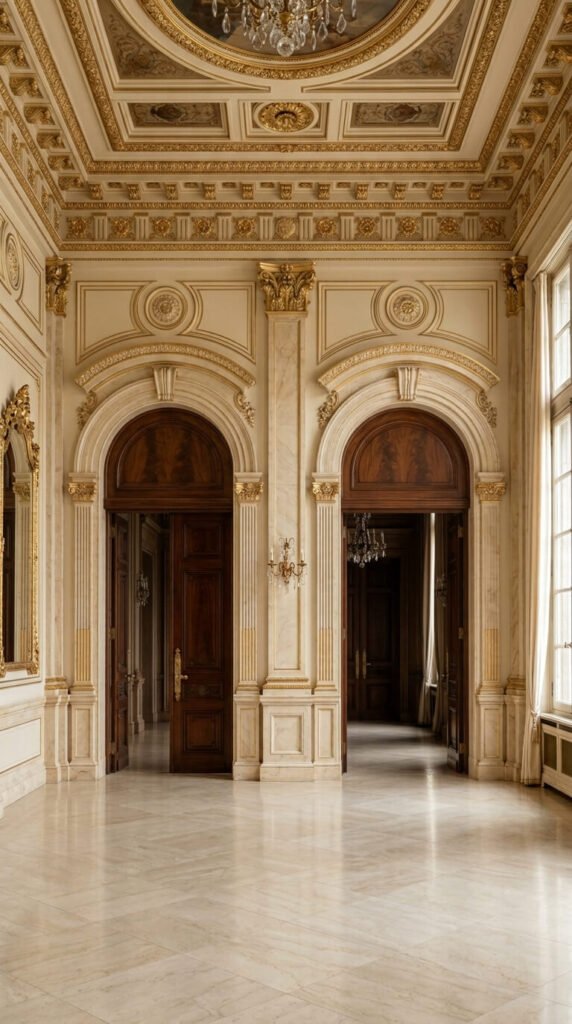
Two arches side by side create instant grandeur. This is a signature of European palace and villa architecture.
The double arch works brilliantly as a transition between a living room and a dining room, or anywhere you want to create a formal, ceremonial feel. Symmetry is the key — both arches must be identical in size and proportion.
For existing side-by-side doorways, adding matching arch frames turns a mundane layout into something special. Pre-made arch trim kits can be purchased and customized to match. Paint both surrounds in the same crisp white for maximum impact.
12. The Tunnel Arch Hallway
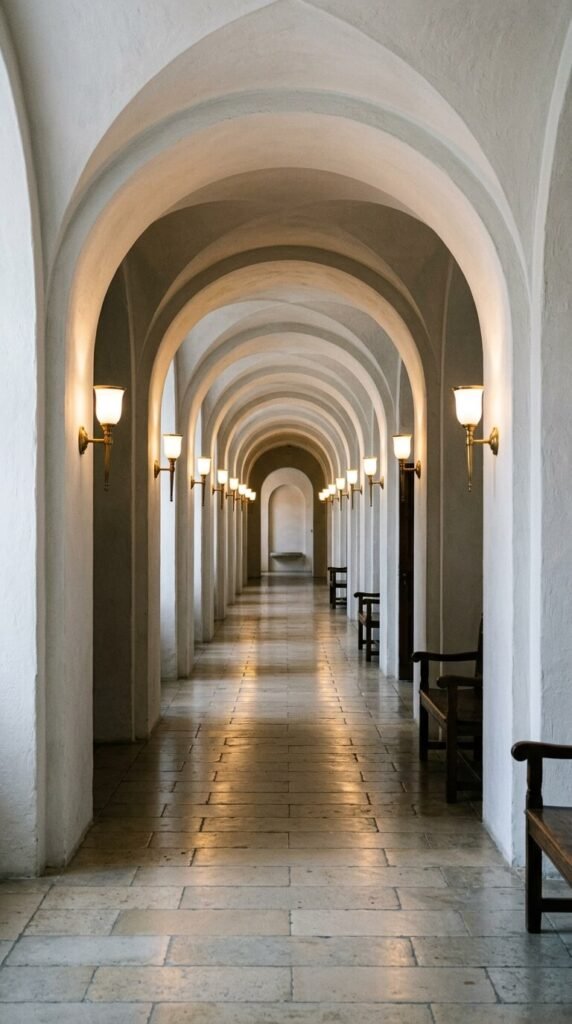
A barrel vault hallway — a series of connected arches forming a tunnel ceiling — is one of the most dramatic things you can do to a corridor.
This technique has roots in Roman infrastructure and later European monastery design. It transforms a plain hallway into an unforgettable architectural experience.
It is not a weekend DIY project, but it is achievable on a modest renovation budget using foam barrel vault inserts that attach directly to a flat ceiling. Kits for an 8-foot hallway width can be found for $300–$600. Finish with white plaster paint and lighting along the sides.
13. The Ornate Plasterwork Arch
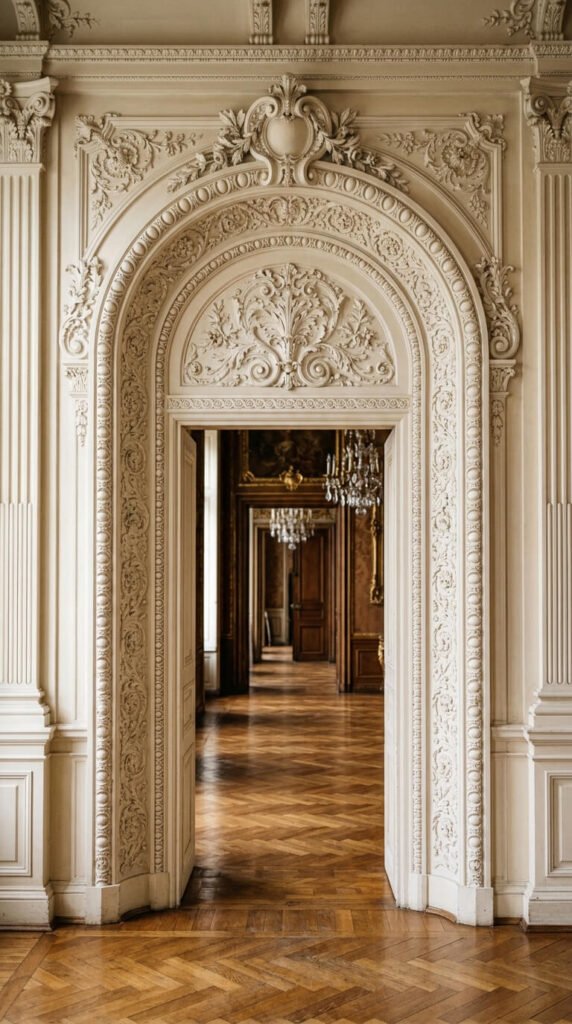
Decorative plaster molding around an arch can take it from simple to palatial.
Classical European motifs — egg-and-dart, acanthus leaves, rope molding — are all available in lightweight polyurethane versions that glue onto any surface. You do not need real plaster or a master craftsman.
Browse architectural millwork suppliers online. A full surround of decorative molding for a standard doorway might cost $150–$400 in materials. Paint everything the same crisp white or off-white, and the effect is seamless and seriously elegant.
14. The Blue-and-White Portuguese Arch
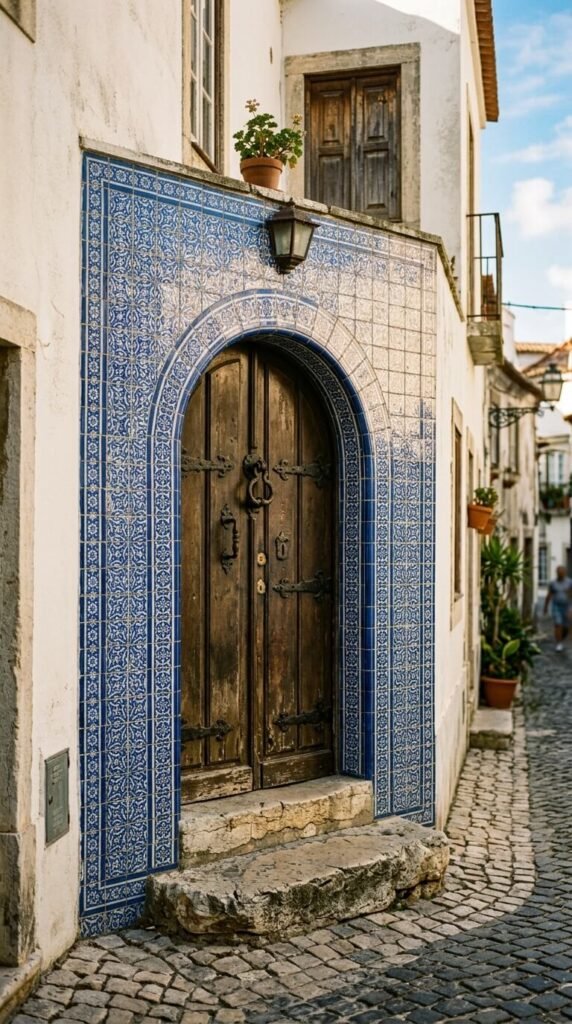
Azulejo tiles — the blue and white ceramic panels of Portugal — wrapped around an arch are visually spectacular.
This technique works beautifully on exterior arched entryways or as an accent around an interior arch in a kitchen or bathroom. The deep cobalt blue against white grout is immediately striking.
Original hand-painted azulejo tiles are expensive, but high-quality ceramic reproductions are widely available for $3–$8 per tile. You can tile just the arch surround — not the full wall — keeping costs manageable. Grout in bright white and seal well for longevity.
15. The Iron Gate Arch
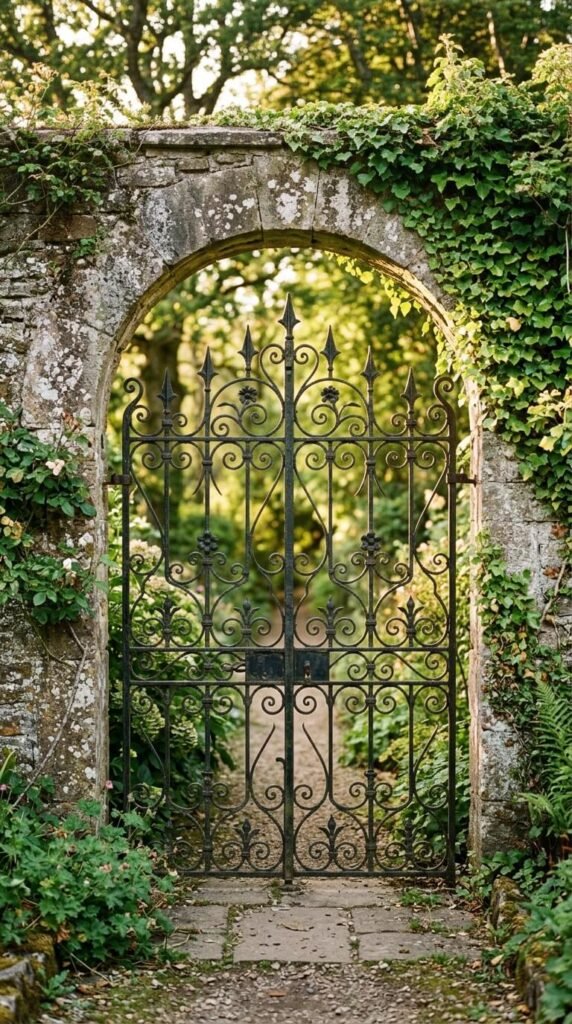
The combination of a curved stone arch and a wrought iron gate is quintessentially European.
This setup works perfectly for garden entryways, courtyard passages, and even interior wine rooms or cellar doors. The iron adds security and drama at the same time.
Wrought iron gates are available from metal fabricators, online marketplaces, and salvage yards. A simple decorative arch gate can run $200–$800 depending on size and complexity. Pair it with a stone or brick arch surround and climbing plants for the full European estate effect.
16. The Limewashed Plaster Arch
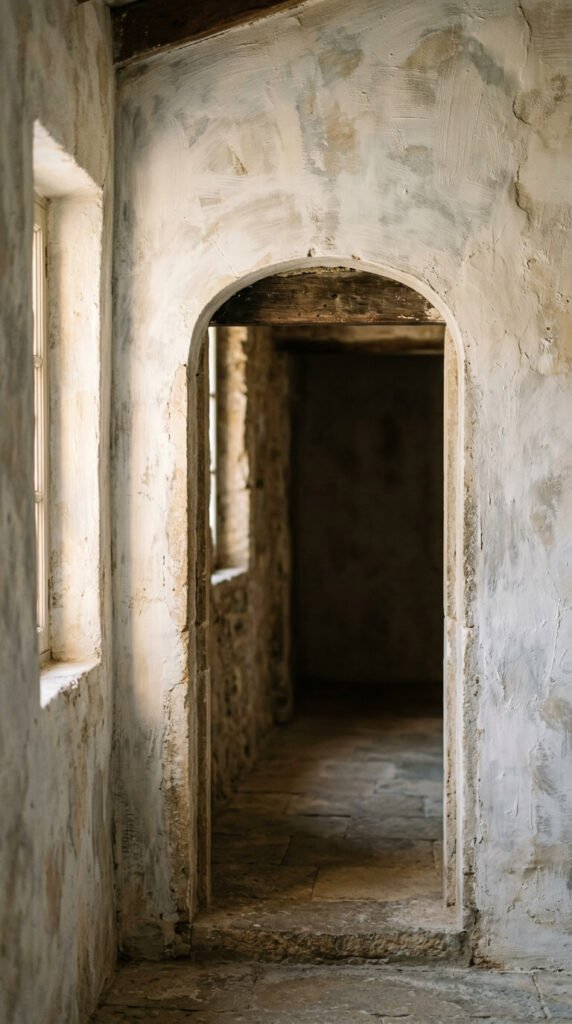
Limewash paint on an arch surround gives walls an aged, European farmhouse quality that regular paint simply cannot replicate.
Limewash creates a cloudy, translucent effect where each layer shows through the next. The result looks centuries old — but you can apply it in an afternoon.
Pre-mixed limewash paint is available from several brands for about $40–$60 per gallon. Apply it with a wide brush in loose, irregular strokes and let each coat dry before adding another. Two or three coats over an arch and its surrounding wall creates a beautiful, organic finish.
17. The Vaulted Entry Arch
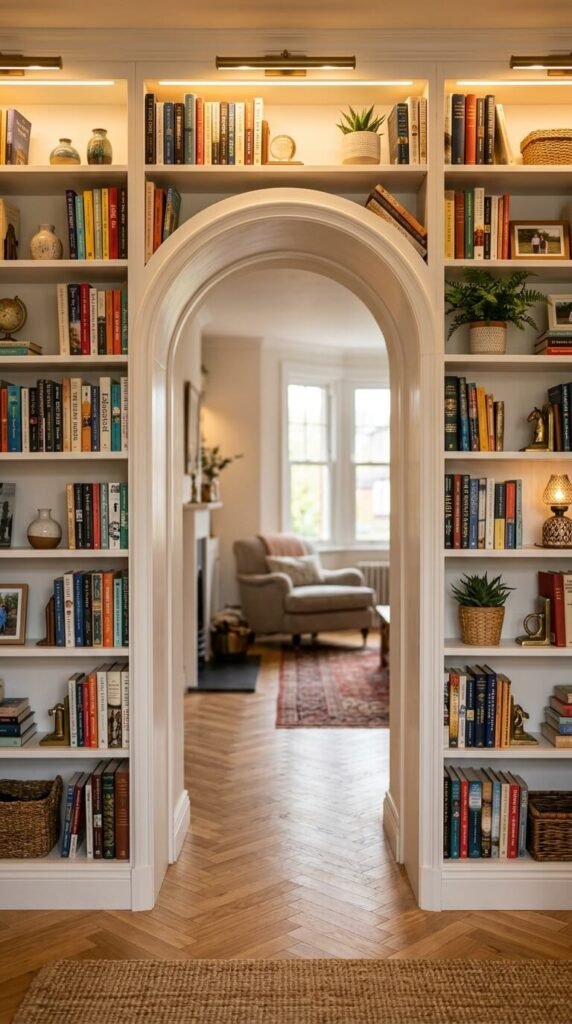
A vaulted ceiling arch in an entry foyer sets the tone for an entire home.
When guests walk through your front door and look up into a vault, the effect is immediate and memorable. It says “this house has history.” Even in new builds, a vaulted entry arch can be constructed using foam or plaster inserts on a standard flat ceiling.
Focus the arch on the entryway volume — not the whole house. Keep colors pale and neutral so the form reads clearly. This is one architectural detail worth investing in, because it creates a first impression that lasts.
18. The Arch with Built-In Bookshelves
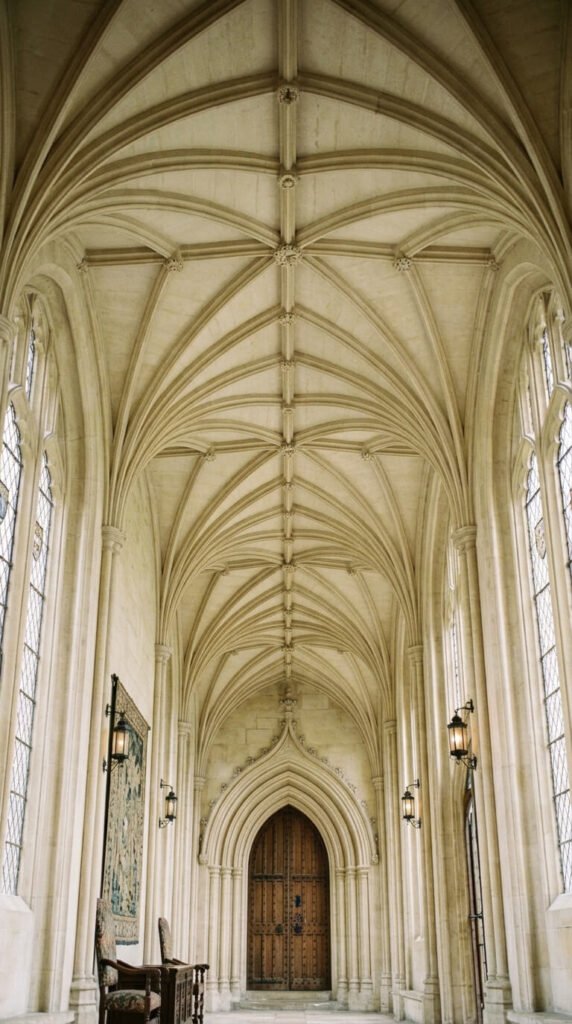
Arched openings flanked by built-in shelving combine European aesthetics with serious functionality.
This configuration — arch in the center, shelves on either side — is a classic library and study layout straight out of English manor houses and Parisian apartments. It looks intentional and expensive but can be built from simple plywood and MDF.
Frame the arch first, then build flanking shelf units to match the arch height. Paint everything the same color for a seamless, built-in look. A skilled DIYer can complete this project in a weekend for under $400 in materials.
19. The Arched Window-Door Combination
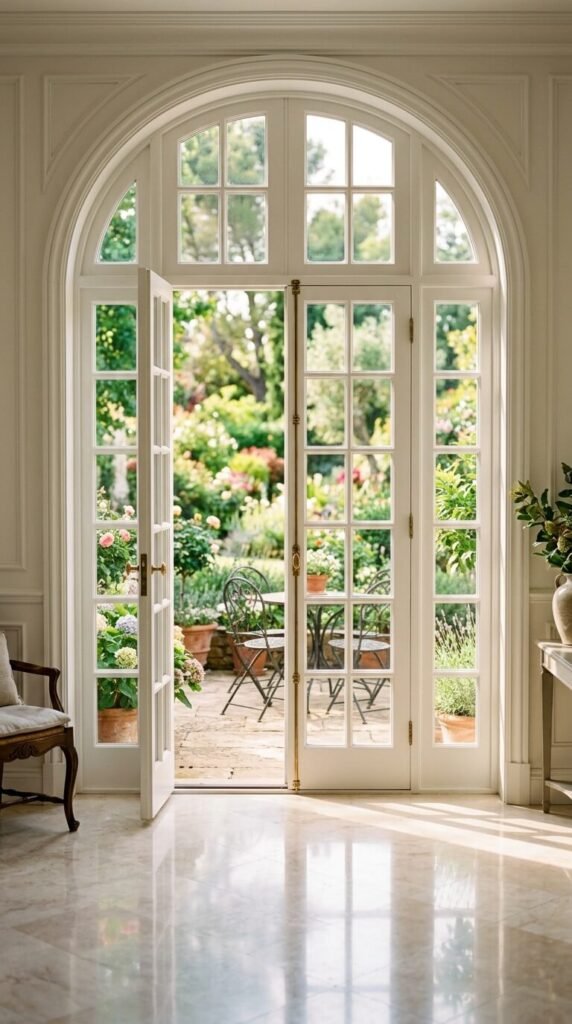
Arched French doors with matching arched sidelights create a wall of light and European elegance.
This configuration is a hallmark of French and Italian villa architecture. The arch continues across both the door and the flanking glass panels, creating one unified architectural form. Natural light pours in from all three openings.
If replacing windows or doors, specify arched tops at the time of manufacture — the cost premium is modest, often just 10–20% over standard rectangular units. The visual return on that investment is enormous in terms of curb appeal and interior character.
20. The Climbing Rose Arch
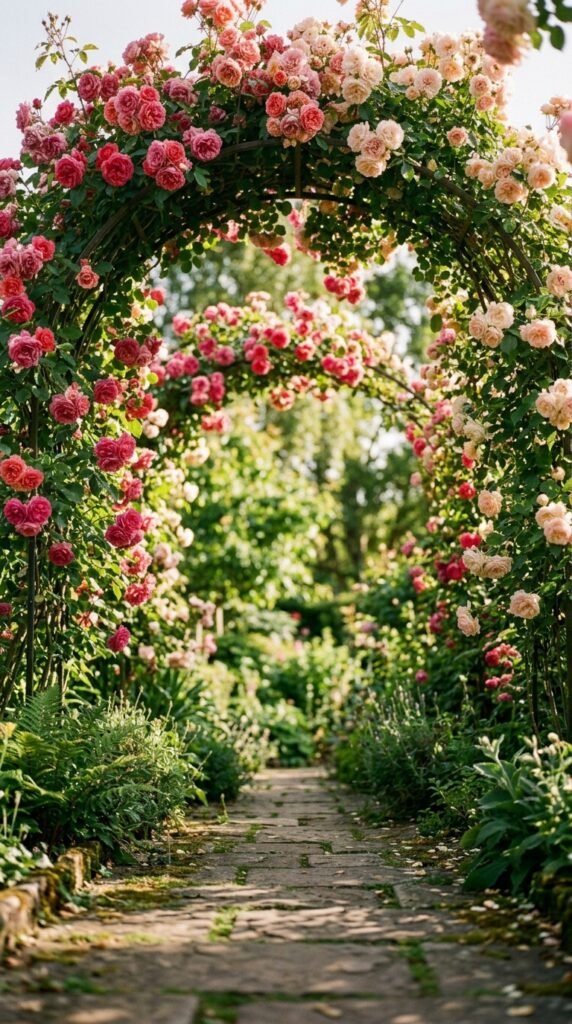
A rose-covered arch in a garden or courtyard is romantic European architecture at its most accessible.
You do not need stone or plaster for this one. A simple wrought iron or steel arch frame, positioned over a garden path and planted with climbing roses or wisteria on each side, creates an unforgettable entry experience.
Metal arch frames suitable for climbing plants start at around $50–$150. Plant climbing roses, jasmine, or wisteria at the base of each leg. Within two growing seasons, the arch will be covered. Prune annually to keep it shaped and full.
21. The Arched Niche (Not a Doorway, But Better)
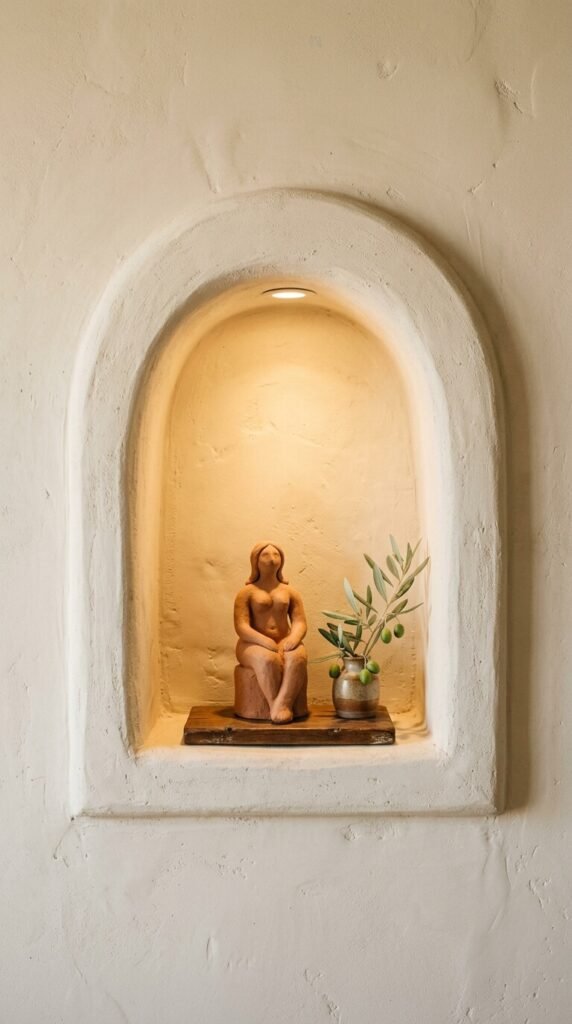
An arched niche is an arch that goes into the wall rather than through it — and it might be even more charming than a full doorway.
Niches appear throughout Mediterranean and colonial European architecture as display spaces for art, candles, or plants. They are deeply atmospheric.
For existing drywall, you can create a faux niche by building a shallow box, framing a rounded top, and mounting it flush to the wall surface. Finish with joint compound and paint to match the wall. Add a small LED puck light inside, and the niche glows beautifully at night. Cost: $50–$150 in materials.
22. The Arched Cellar Door
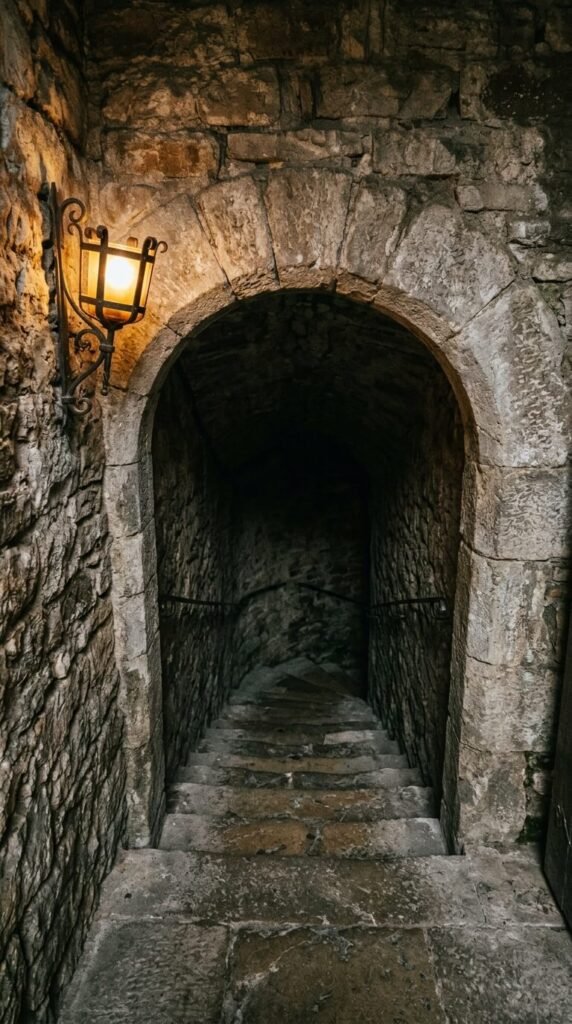
A low, rounded cellar arch brings immediate old-world atmosphere to a basement or wine room.
These short, sturdy arches appear throughout European farmhouse and chateau architecture. The low crown adds a sense of age and enclosure that feels genuinely ancient. Pair it with rough stone walls and iron hardware for the full effect.
Building one requires creating a curved form, laying brick or stone veneer in an arch pattern, then removing the form once the mortar sets. It is a weekend project for a confident DIYer or a half-day job for a mason. Materials for a standard cellar doorway: roughly $200–$500.
23. The Arch with Recessed Lighting
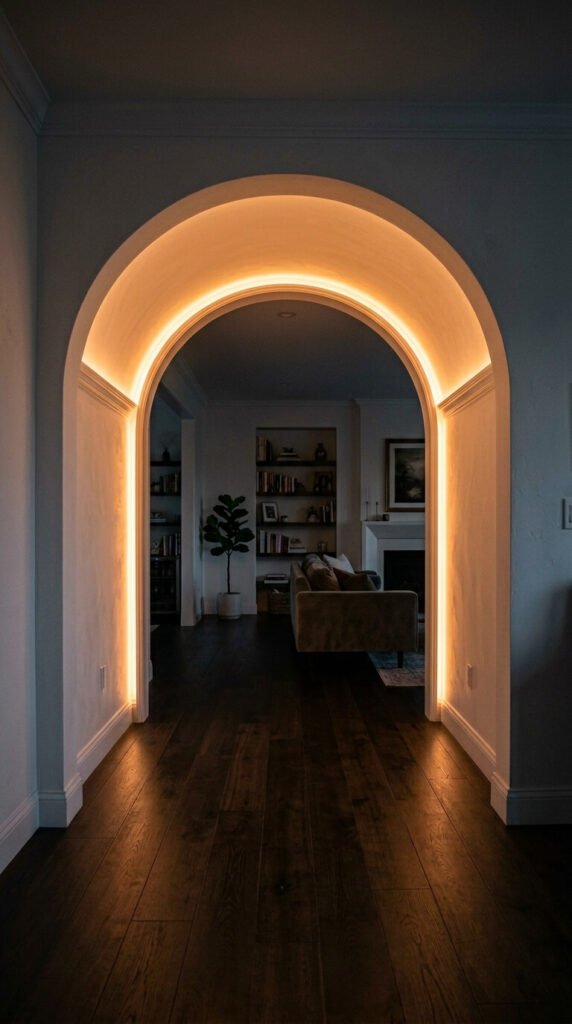
LED strip lighting hidden inside an arch reveal is one of the easiest ways to make an arch feel luxurious.
The light washes down the interior curve and spills onto the floor below, creating a dramatic halo effect. It looks like something out of a high-end European hotel lobby.
LED strip lights cost $15–$40 for a roll. Tuck them into a shallow channel routed into the arch soffit, or simply tape them with proper LED mounting tape. Use warm white (2700K) for the most atmospheric effect. Connect to a dimmer switch so you can control the intensity through the day and evening.
24. The Arched Doorway with Draping Fabric
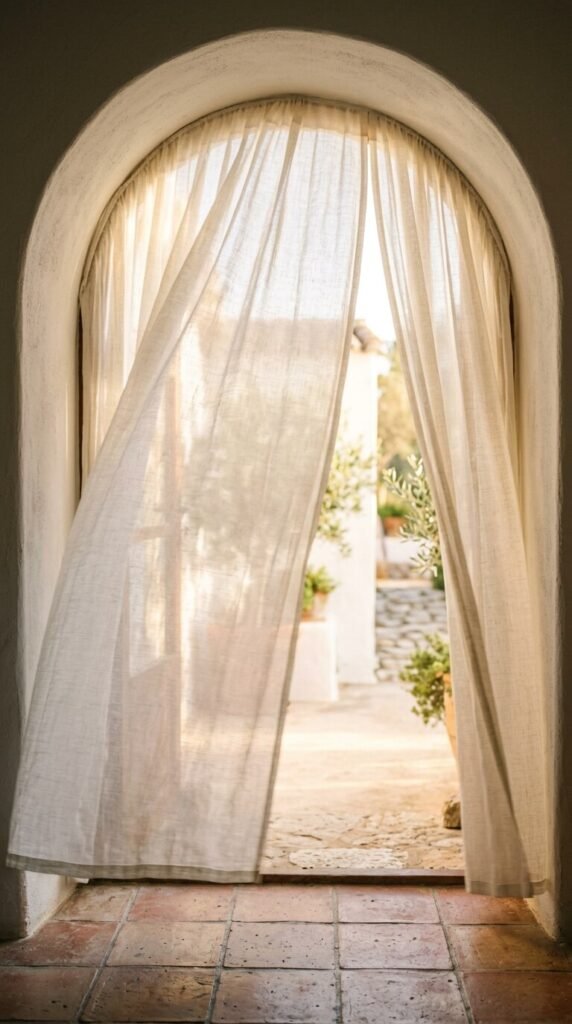
Soft fabric draped through an arch adds movement, texture, and European softness to any room.
Think of the billowing linen panels common in Italian and Greek island homes. The fabric does not block light — it filters it. Sheer linen or cotton in natural white or soft cream is the classic choice.
You do not need a rod or curtain hardware. A simple tension rod placed just inside the arch opening, with sheer panels hung from clip rings, works perfectly. The fabric moves in any air circulation, creating a living, breathing quality that no static doorway can match. Cost: under $40 for the whole setup.
Conclusion
Arched doorways are one of the most powerful tools you have in home design. A single curved opening changes how a room feels — it slows you down, draws your eye, and signals that something thoughtful happened here. The best part is that you do not need a massive budget or a team of architects to make it work. From a simple painted arch on a flat wall to a full stone reveal, from a reclaimed timber frame to sheer linen curtains billowing through a simple semicircle, there are options at every skill level and price point. Pick one idea that fits your space and your budget. Start there. You will be amazed how much one arched opening can change the feel of an entire home.