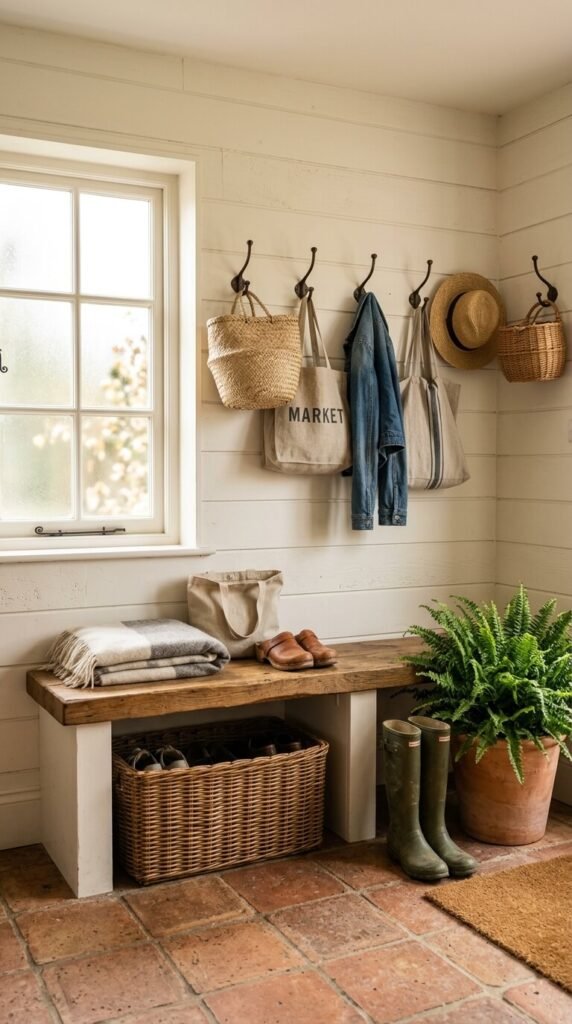
Your mudroom is the first and last room you see every day — and it takes a beating. Shoes pile up. Jackets fall off hooks. Backpacks explode across the floor. The good news? You do not need a full renovation or a designer budget to fix it. A few smart, affordable choices can turn even the tiniest entryway into a space that looks good and actually works. Whether you have a dedicated mudroom or just a strip of hallway near the door, these 26 practical solutions will help you tame the mess — without sacrificing style.
1. Install a Simple Shiplap Accent Wall
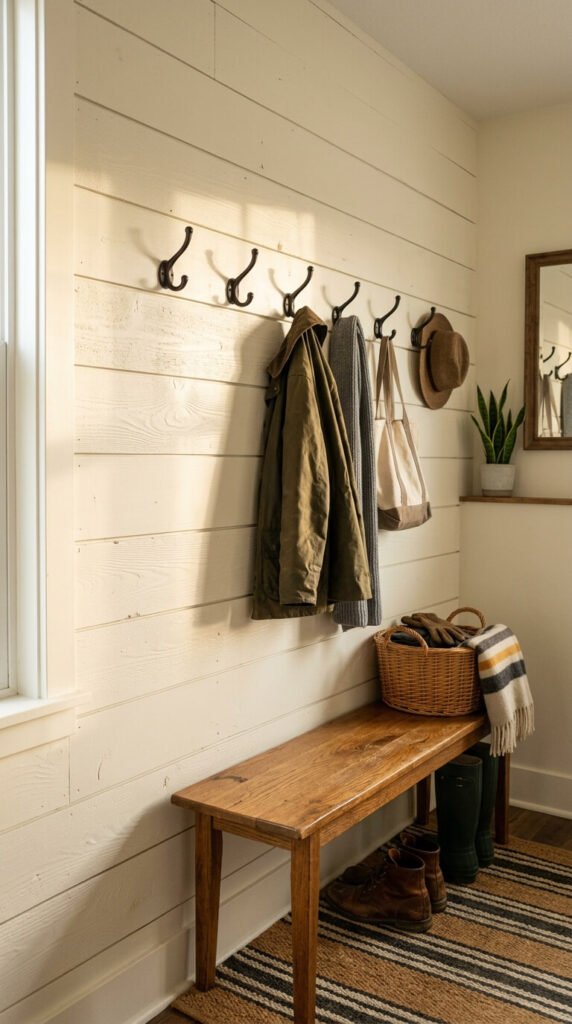
Shiplap sounds expensive. It is not. You can buy primed MDF shiplap boards at most big-box stores for under $30 a bundle. Cut them to size, nail them horizontally, caulk the seams, and paint. The result looks intentional and polished — not DIY at all. Pick a matte or eggshell finish so scuffs wipe clean easily. A single accent wall behind your hooks or bench pulls the whole room together without touching anything else.
2. Use a Floating Bench With Hidden Storage
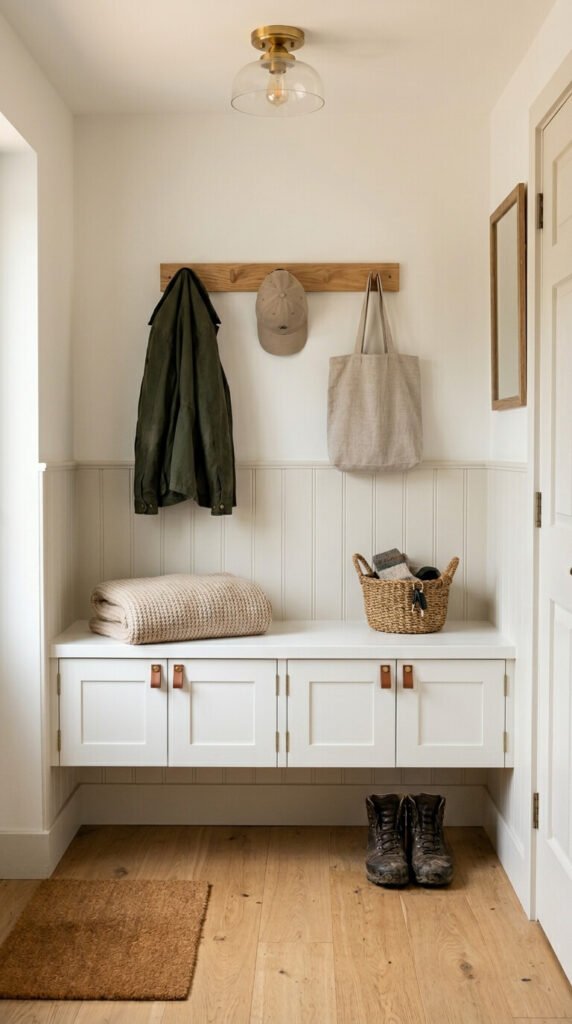
A bench you can sit on AND store things inside is the mudroom dream. Floating versions mount directly to the wall studs, keeping the floor clear underneath — a huge win for small spaces. IKEA KALLAX units work perfectly as a budget base. Add a plywood top with foam and fabric for the seat. You get seating, hidden shoe storage, and a styled surface — all for under $150 if you shop smart.
3. Hang a Pegboard for Flexible Hooks
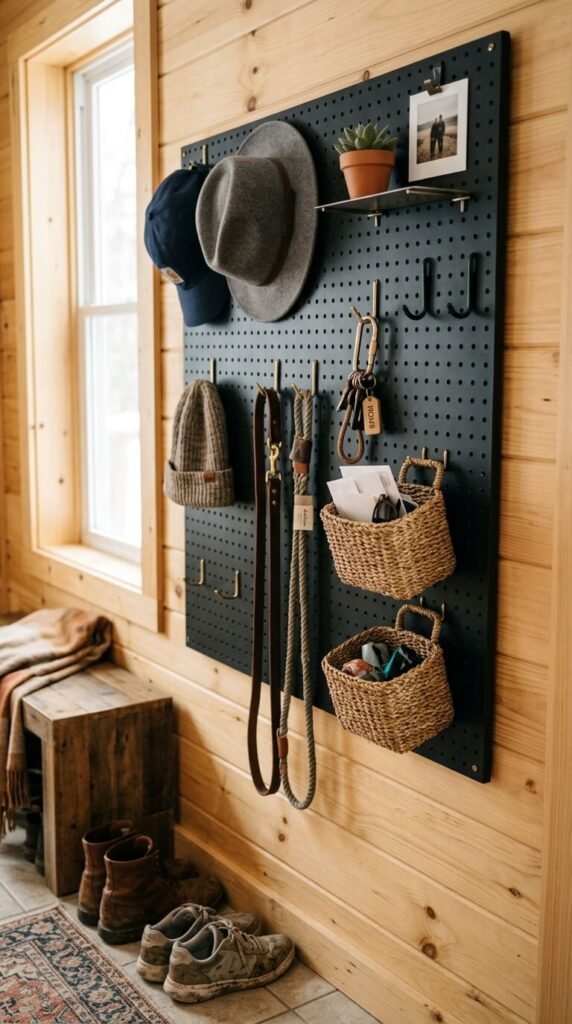
Pegboards are one of the most underrated mudroom tools. They are cheap, endlessly reconfigurable, and genuinely useful. Paint yours to match your wall for a seamless look, or go bold with a contrasting color. Brass or matte black hooks from the hardware store cost $1–$3 each. Hang bags, leashes, scarves, and even small baskets for mail or sunglasses. If your family’s storage needs change, just move the hooks. No new holes, no drama.
4. Add a Slim Console Table for Drop Zone Control
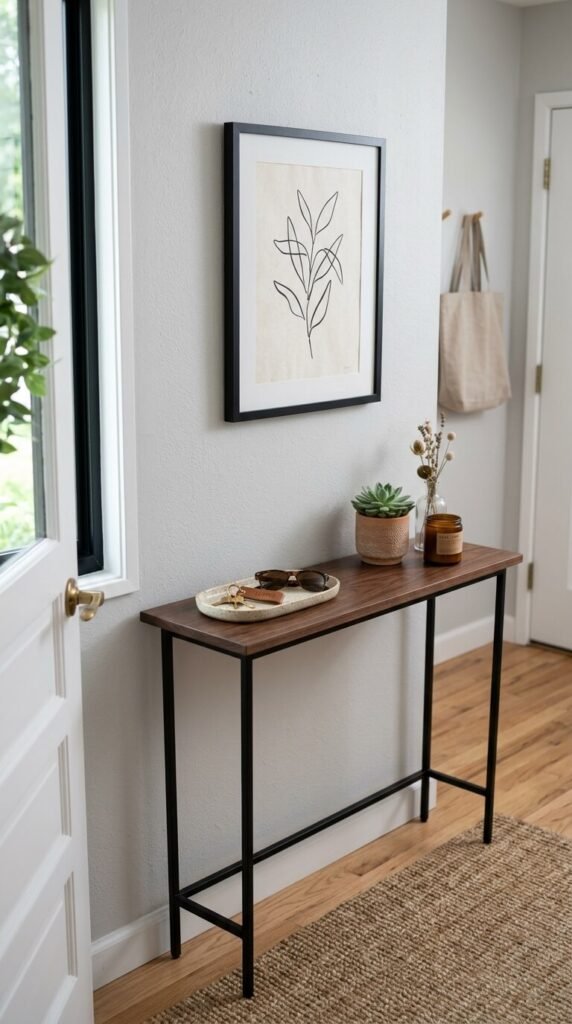
A console table gives everyone a place to drop things the moment they walk in — and that is exactly the point. Keep it slim — 10 to 12 inches deep is plenty for a narrow entryway. Add a small tray or bowl on top for keys and wallets. Use the shelf below for a basket of shoes or a folded throw. Thrift stores almost always have options for under $40. A quick coat of paint makes any old piece look intentional.
5. Layer Baskets for Catch-All Storage
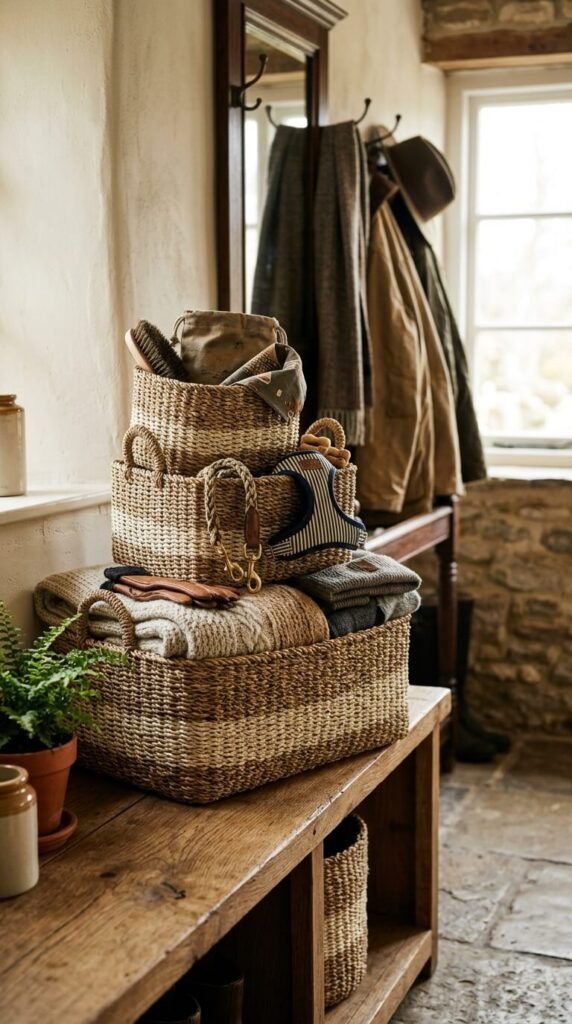
Baskets are the easiest win in any mudroom. They hide clutter instantly and look good doing it. Give each family member their own basket — one for shoes, one for hats, one for sports gear. Woven seagrass or rattan options from discount stores run $8–$20 each. Label them with chalkboard tags for added function. The beauty of baskets is that “throwing stuff in” actually counts as organizing.
6. Mount a Full-Length Mirror to Fake More Space
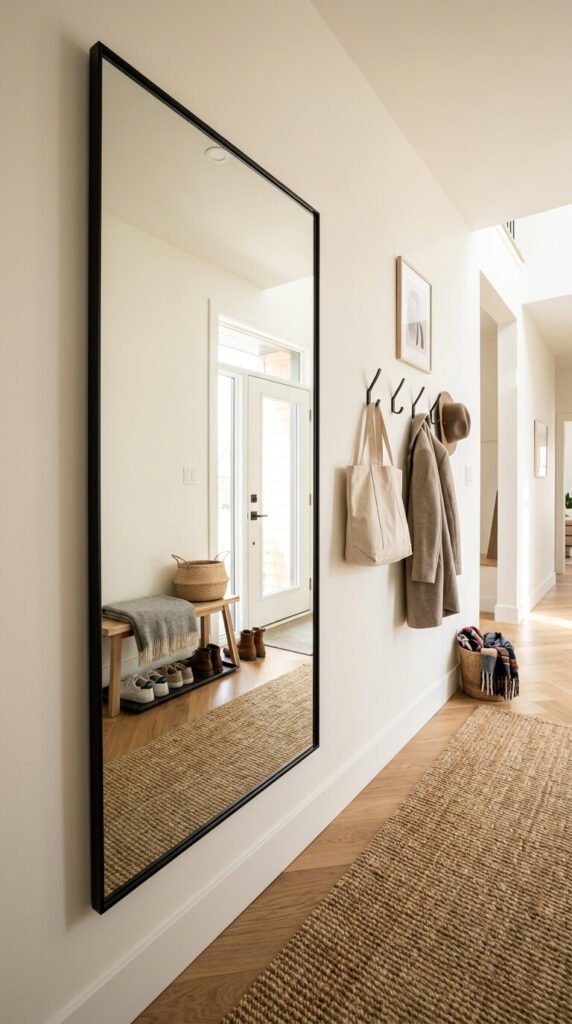
Mirrors make small spaces feel bigger. Period. A full-length mirror in the mudroom also serves a practical role — you can check your outfit before heading out. Lean one against the wall or mount it flush for a cleaner look. A basic black-framed mirror from a home goods store costs $30–$60. Position it beside the door to bounce light around and open up the space visually.
7. Create a Chalkboard Command Center
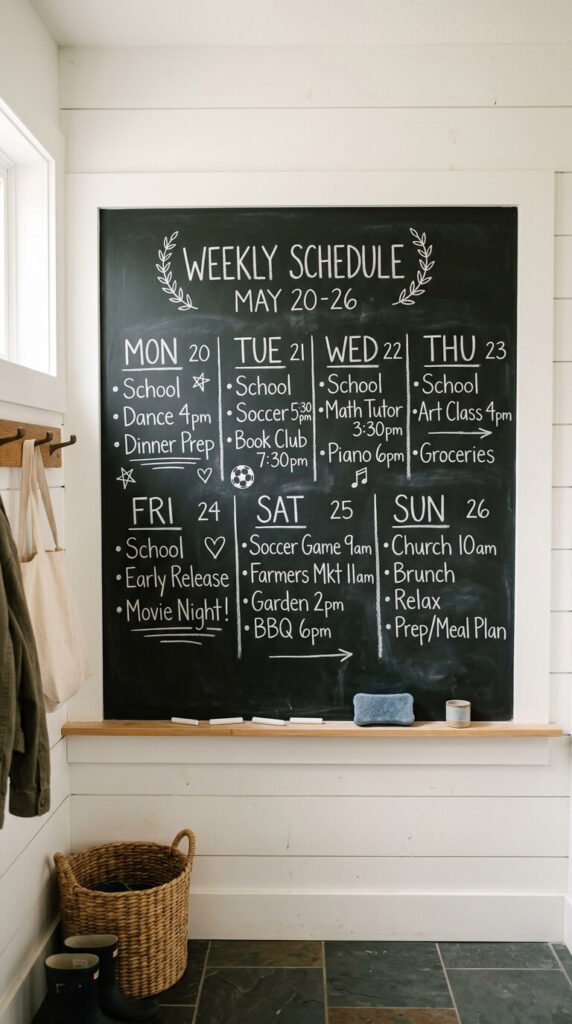
A chalkboard wall section pulls triple duty — it is a family calendar, message board, and grocery list all in one. Chalkboard paint comes in a small can for under $12 and applies directly over any smooth wall. Tape off a rectangle or paint the whole wall. Use it to track school schedules, leave notes, or write a grocery list before your next store run. It keeps paper clutter off the counter and looks surprisingly stylish.
8. Try a Dutch Door for Separation Without Walls
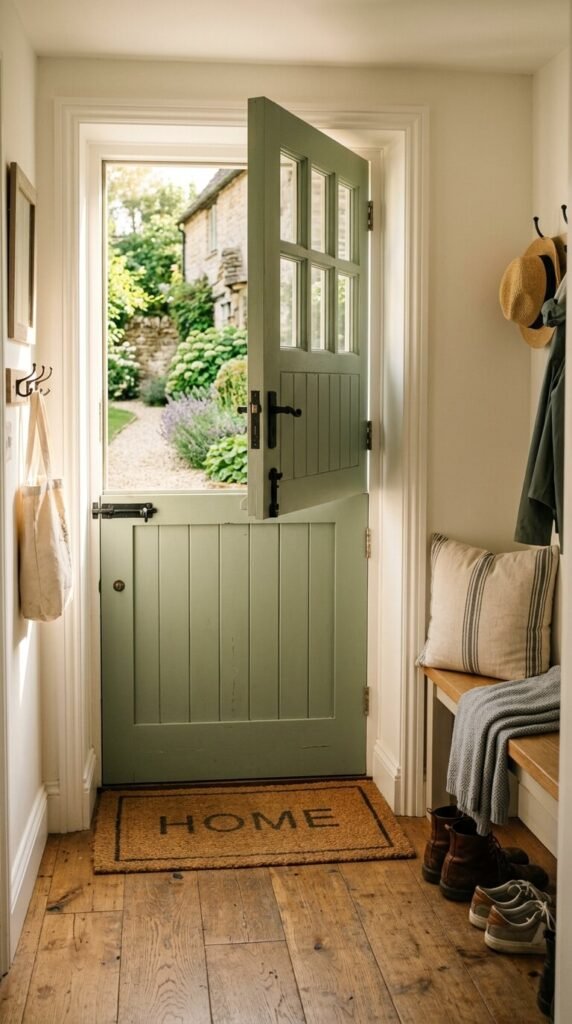
If your mudroom connects to a living area or kitchen, a Dutch door solves the chaos problem beautifully. The top stays open for airflow and communication. The bottom stays closed to keep dogs, small kids, and mud contained. Pre-hung Dutch doors start around $200 at lumber yards or Habitat for Humanity ReStores. This is a slightly bigger project, but it adds major character and real function without building an entire wall.
9. Use a Coat Tree for Apartment-Friendly Storage
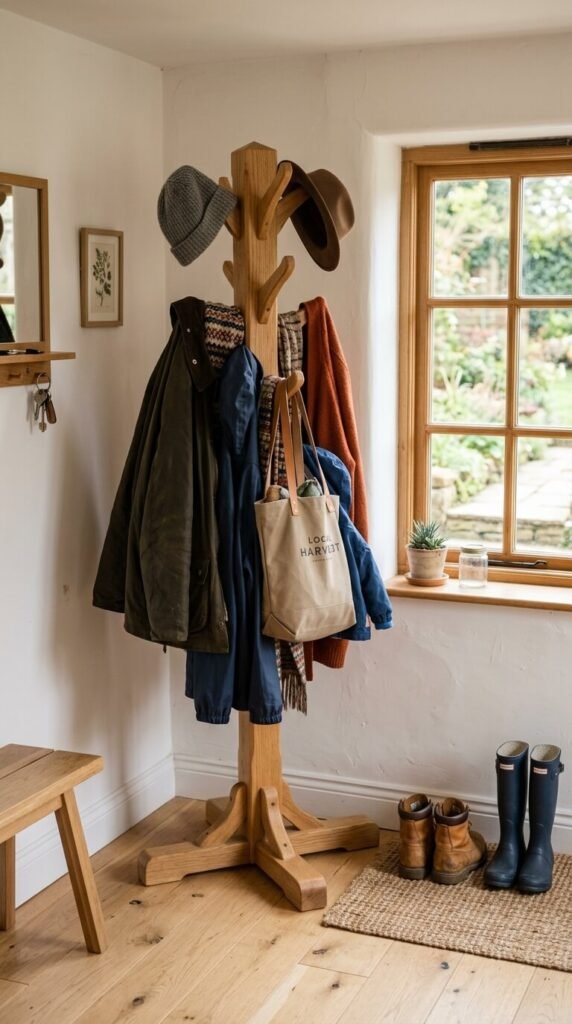
Not every home has wall space for mounted hooks. A coat tree fixes that without a single screw in the wall. Freestanding trees with a wide base do not tip easily, even when loaded with heavy winter coats. Look for options with lower hooks for kids and upper hooks for adults. Solid wood versions last for years. You can find them at thrift stores for $15–$30 or new for under $60. Renters especially love this option.
10. Install Open Shelving for Shoes and Accessories
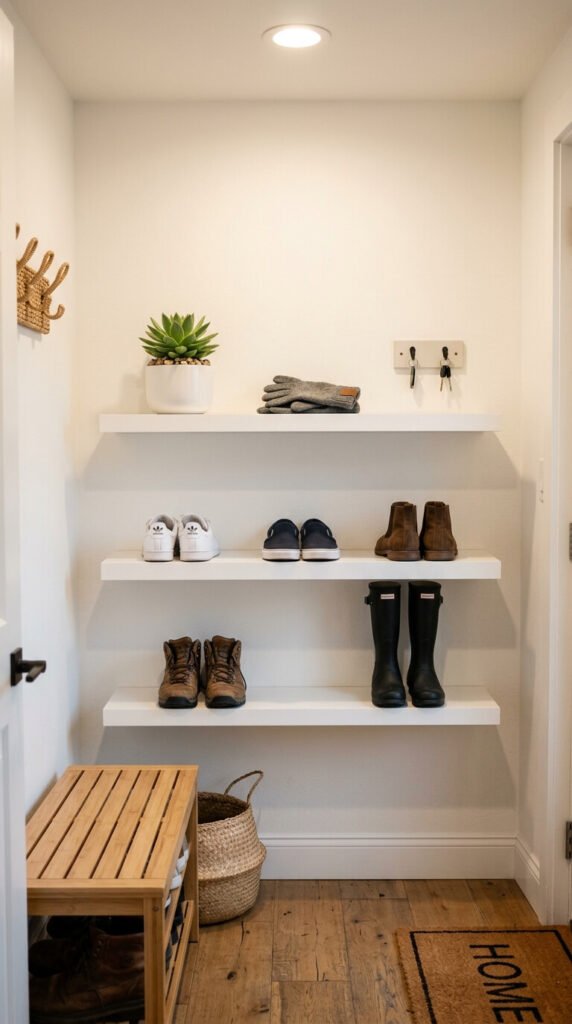
Open shelving beats a pile of shoes on the floor every time. Floating shelves mounted at staggered heights can hold shoes, hats, and folded items without looking crowded. Use 10-inch-deep shelves from a hardware store and a basic bracket kit — total cost is usually under $40 per shelf. Paint them the same color as the wall for a seamless built-in look. Add a small basket on each shelf to corral smaller items.
11. Add a Boot Tray to Protect Your Floors
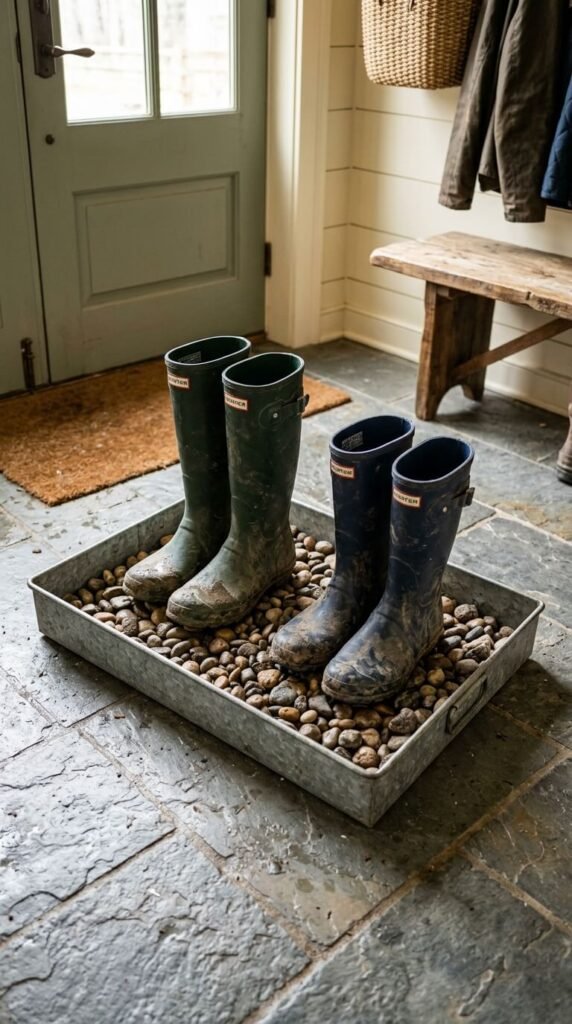
A boot tray is the simplest mudroom upgrade you can make today. It contains the mud, water, and salt that shoes bring in and keeps your floors from taking constant damage. Fill the tray with river rocks or a rubber mat to elevate wet boots so they dry properly. Metal trays from a garden center cost $10–$20. If you want something more polished, a stone or ceramic option from a home goods store runs $25–$40 and looks like a design choice.
12. Paint the Floor With Durable Porch Paint
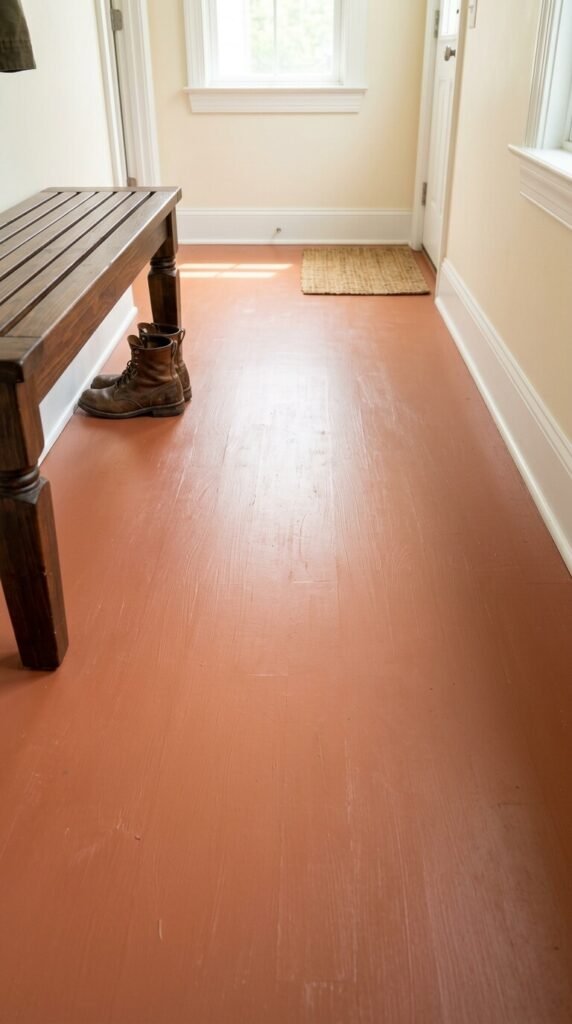
Your mudroom floor takes constant abuse. If it looks tired, paint it. Porch and floor paint is made for heavy foot traffic and comes in a wide range of colors. A gallon costs $25–$40 and covers most entryways in an afternoon. Terracotta, deep navy, forest green — a bold floor color actually hides dirt better than white or cream. Add a painted diamond or stripe pattern for a custom tile look without the tile price tag.
13. Hang Matching Hooks in a Horizontal Row
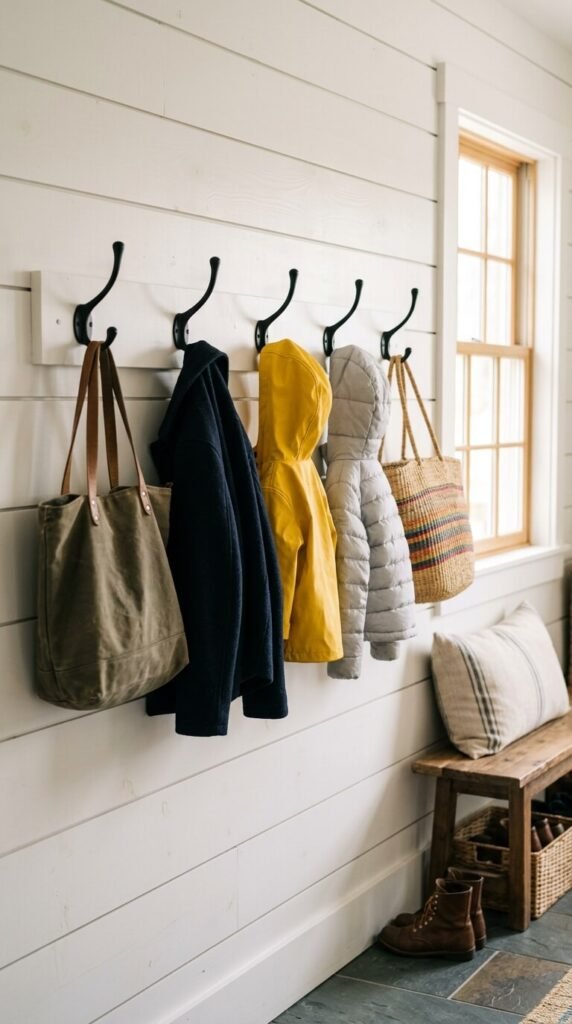
Hooks seem obvious. But matching hooks in a straight, even row look surprisingly elevated compared to a mismatched assortment. Pick one finish — matte black, antique brass, or brushed nickel — and commit. Mount them at a height that works for both adults and children. Five hooks can hold a family’s worth of coats without any shelving at all. A set of five solid hooks costs $15–$40 depending on material.
14. Use Wall-Mounted Mail and Key Organizers
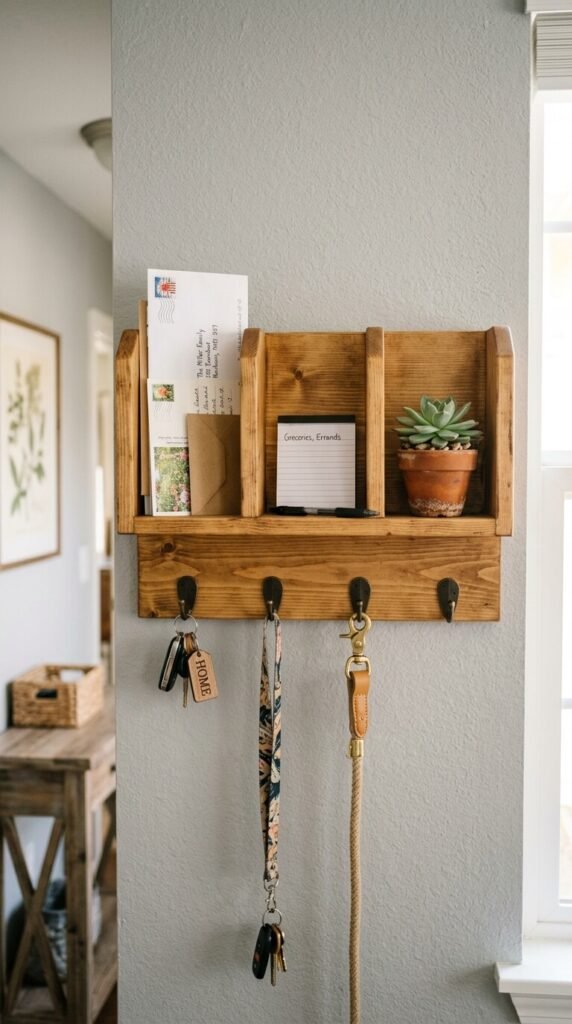
Keys and mail create invisible chaos. A wall-mounted organizer near the door gives both a permanent home in seconds. Look for units that combine small cubbies for mail with hooks below for keys. Wood versions with a natural finish look intentional and warm. A basic organizer costs $20–$40. Once it is mounted, the rule is simple: keys go on the hook the moment you walk in. That rule alone saves ten minutes of searching per week.
15. Build a DIY Lockers-Style Cubby System
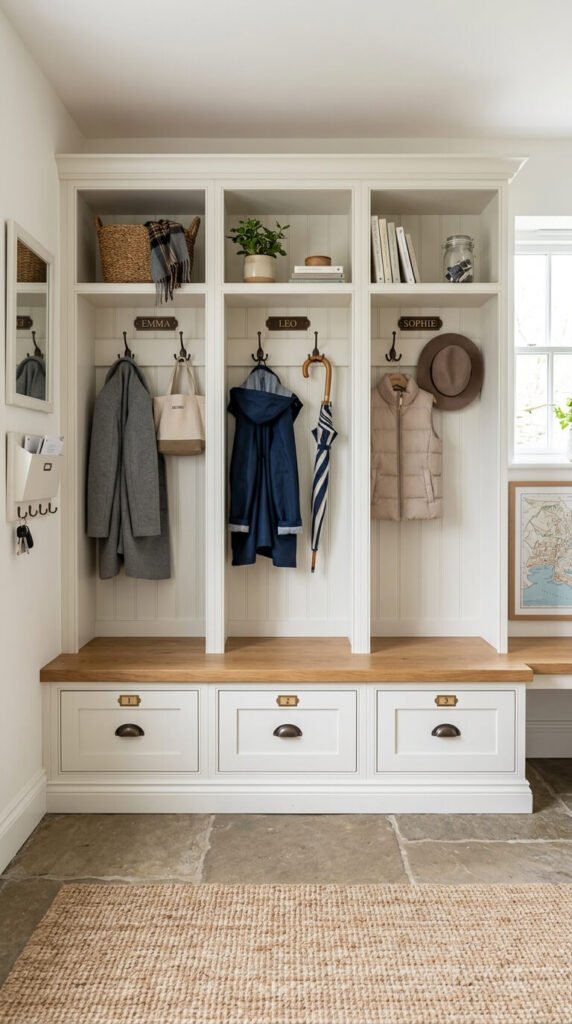
Custom lockers look like a big investment. But with basic plywood and a few hours, you can build your own modular cubbies for a fraction of the cost. Each unit is essentially a box with a shelf, a hook, and a space below for shoes. Build three side by side and paint them all the same color for a built-in look. Add crown molding along the top to make them look even more finished. Total materials cost: $200–$400 for a full wall of three.
16. Layer Rugs for Warmth and Easy Cleaning
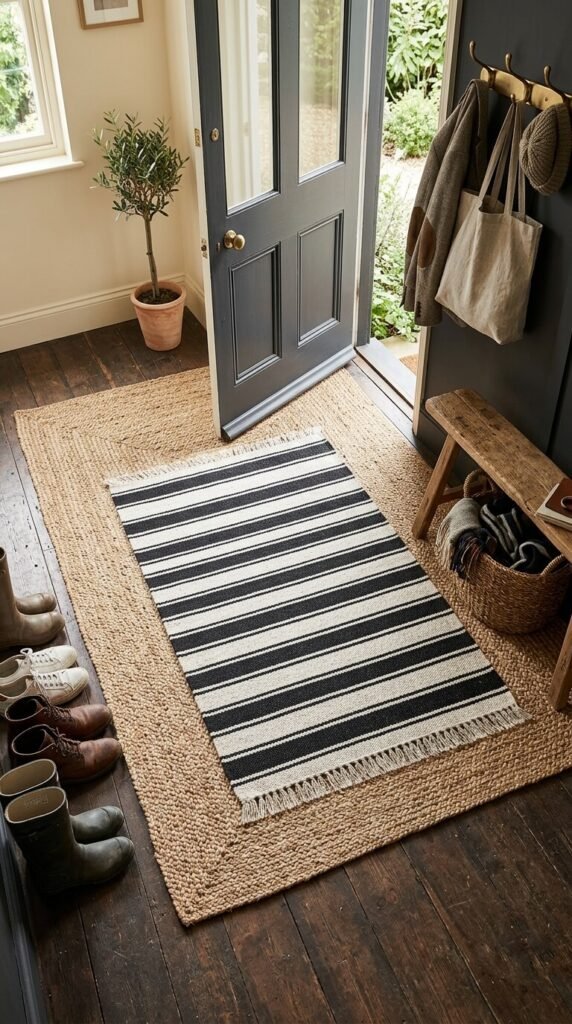
Layered rugs are not just a living room trick. In a mudroom, a large jute or sisal rug as a base layer adds warmth and texture. Place a smaller indoor-outdoor rug on top near the door — this is the one that absorbs the real dirt. The outdoor rug can go in the driveway and be hosed off. Replacing just the top layer costs $20–$40. The whole setup looks styled rather than purely practical.
17. Add a Small Chalkboard Jar for Supplies
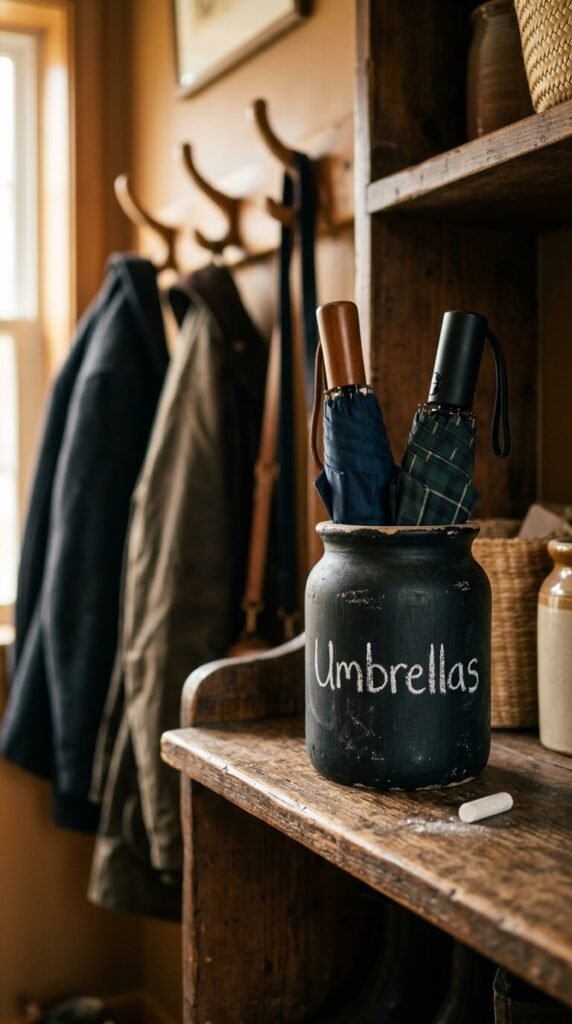
Small jars and containers painted with chalkboard paint become instant labeled storage for anything. Pens, sunscreen, dog treats, lip balm — all the little things that end up in pockets and on floors. A small can of chalkboard paint costs $8. Paint the outside of any glass or ceramic jar, let it dry, and label it with chalk. Erase and relabel whenever your storage needs change. It is the smallest possible upgrade with disproportionate organizing power.
18. Use Over-the-Door Organizers for Bonus Space
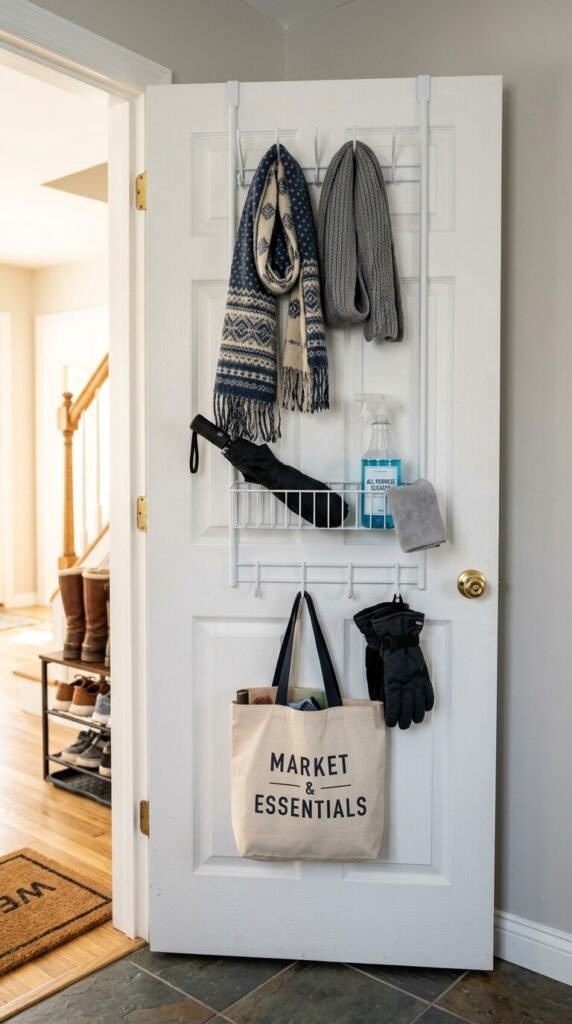
The back of the mudroom door is wasted real estate in most homes. An over-the-door organizer with pockets or hooks can hold scarves, sunglasses, reusable bags, or pet gear without using any wall space at all. Fabric pocket organizers cost $12–$25 on Amazon. Metal hook-over racks with multiple bars run $15–$30. No installation required — just hang it and load it up. Perfect for renters or anyone short on wall space.
19. Display a Small Plant for Life and Color
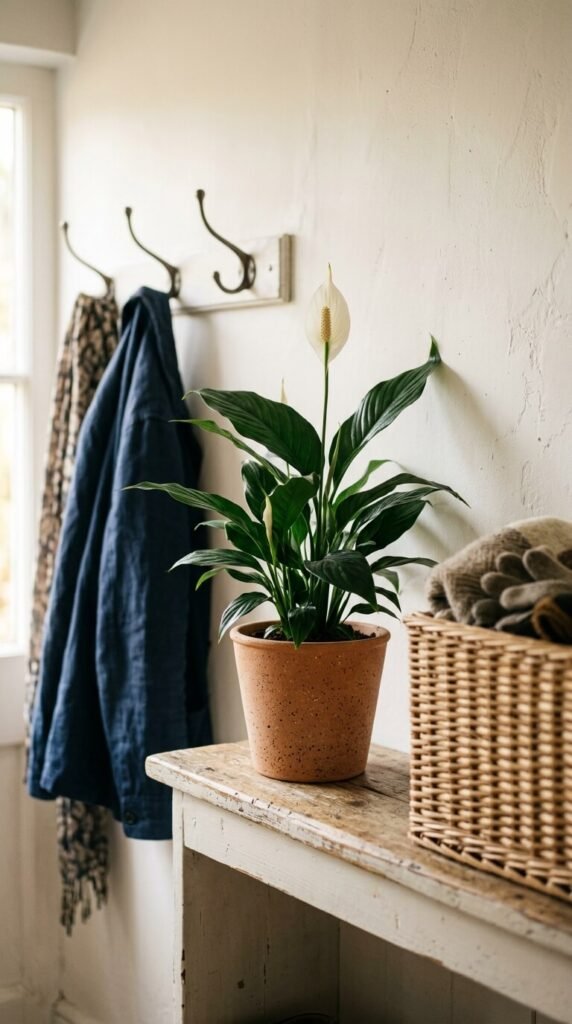
A single plant in the mudroom changes the whole energy of the space. It signals that this room is cared for — not just functional. Peace lilies, pothos, and snake plants thrive in lower light and do not need daily attention. A 4-inch pot costs $5–$12 at a grocery store or garden center. Place it on a shelf or windowsill where it will not get knocked over. Even one plant makes a mudroom feel intentional rather than rushed.
20. Mount a Power Strip for Charging Devices
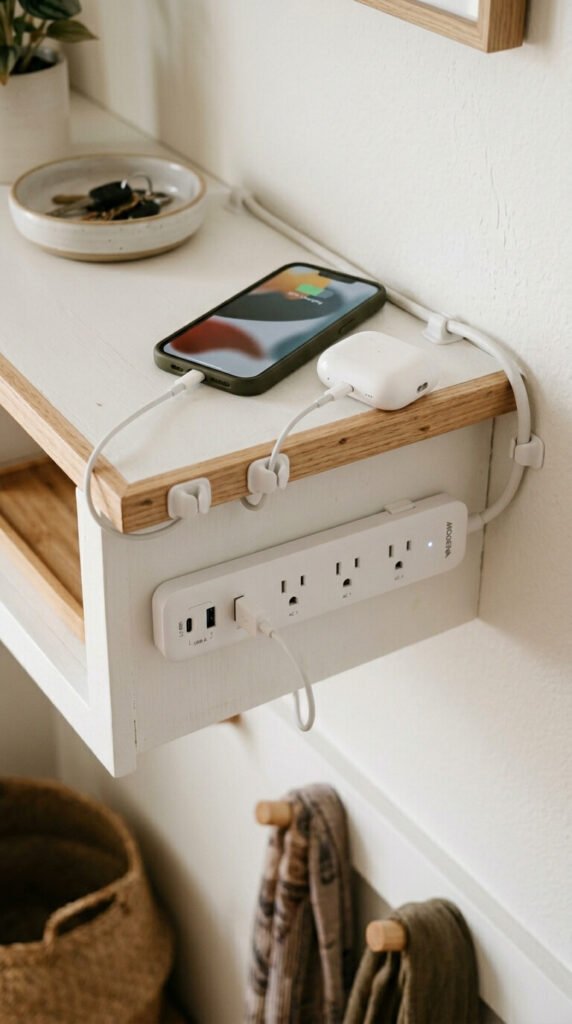
Phones get plugged in on the kitchen counter, creating clutter in the wrong room. Moving charging to the mudroom keeps devices out of the way and ready to grab on the way out. Mount a power strip under a shelf and use small cable clips to keep cords tidy. This takes 20 minutes and costs under $25. Add a small labeled basket for earbuds, chargers, and power banks. Devices charge while you sleep and leave with you in the morning.
21. Try Curtain Panels to Conceal Mess
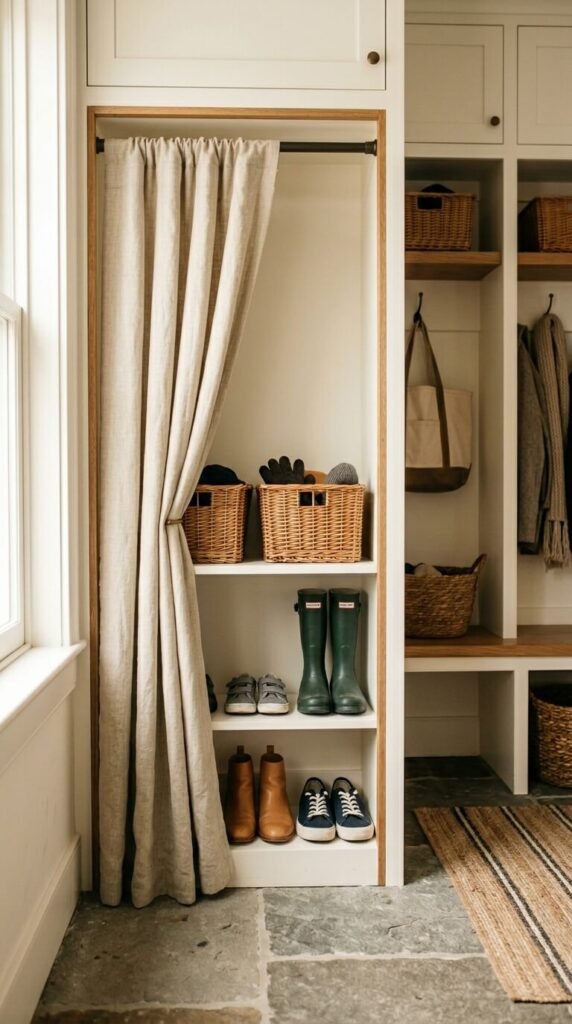
Not every mudroom mess needs to be solved — sometimes it just needs to be hidden. A simple curtain panel hung in front of an open shelving unit or cubby conceals everything behind it in seconds. Use a tension rod so no holes are required. Linen or cotton canvas panels give a relaxed, organic look. A tension rod plus curtain costs under $20. Pull the curtain closed when guests arrive. Open it when you need something. Done.
22. Use a Vintage Ladder as Extra Hanging Space
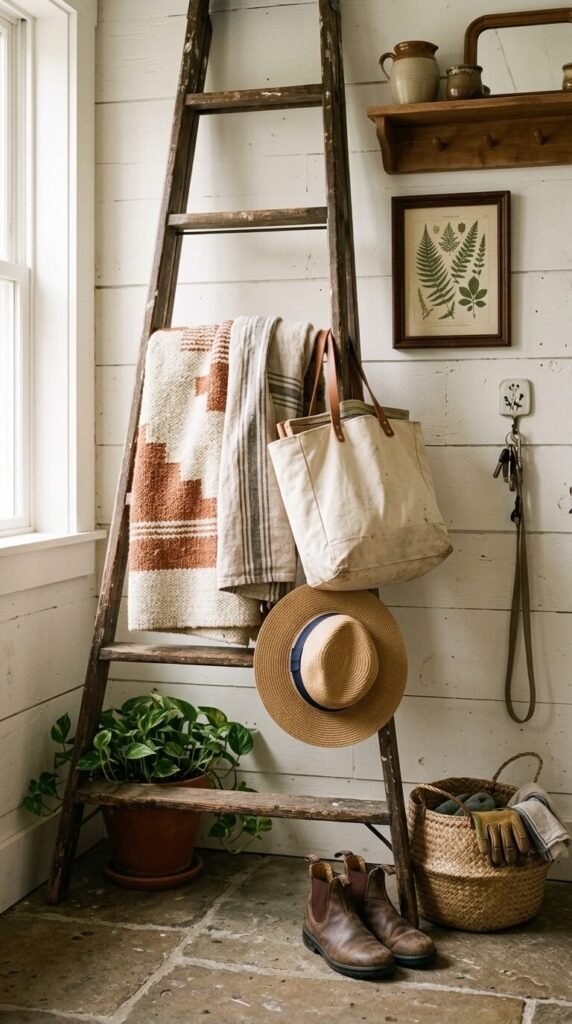
A vintage or thrifted wooden ladder propped against the wall becomes instant character storage. Drape blankets, hang bags, and loop belts or scarves through the rungs. No mounting or drilling required. Find a ladder at a flea market, estate sale, or the back of a barn for $10–$30. Lightly sand and seal it if the wood is rough. This works especially well in mudrooms with higher ceilings where vertical space goes unused.
23. Label Everything With a Label Maker
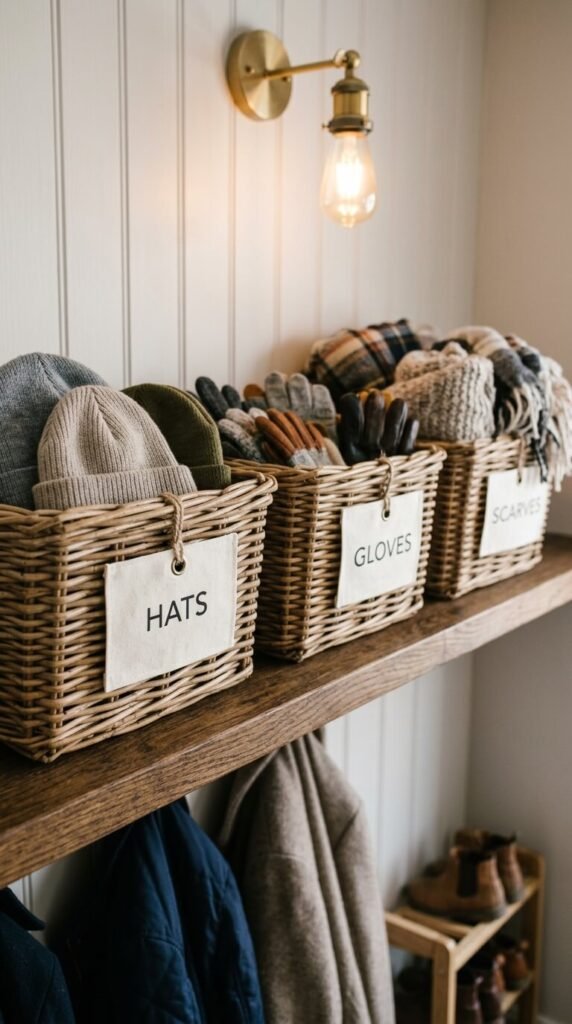
Labels sound obsessive until you live with them. When every bin, basket, and drawer has a label, the whole family knows exactly where things go — and more importantly, where to put them back. A basic label maker costs $15–$30. Use matte white or kraft paper labels for a softer look. Label the inside of drawers, the front of baskets, and the edge of shelves. The system runs itself once it is labeled. Guests will also actually use it correctly.
24. Hang a Horizontal Shelf With Lip for Display
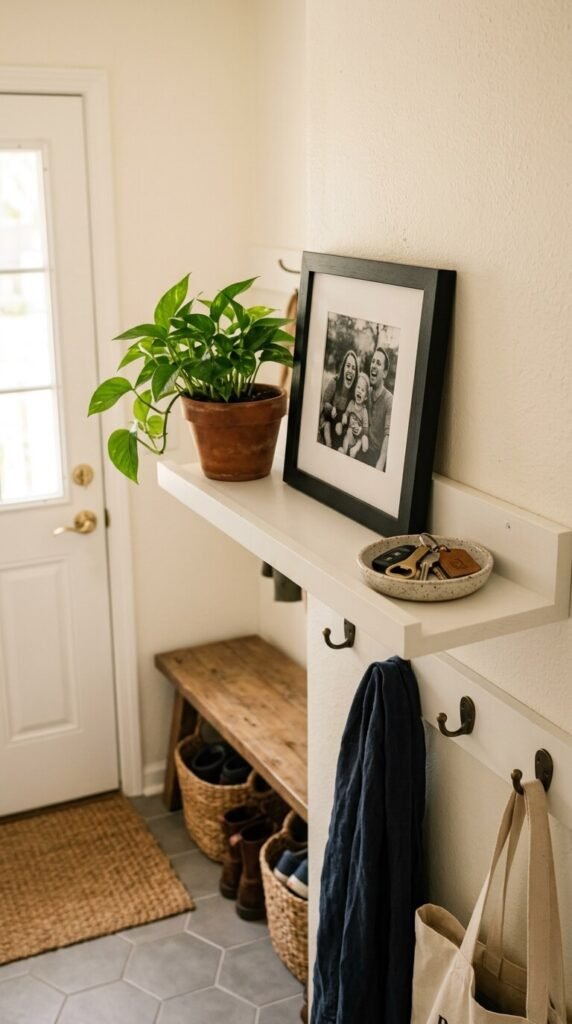
A shelf with a small front lip — sometimes called a ledge shelf or rail shelf — is perfect for small mudrooms because it holds items securely without looking like a storage shelf. Lean a small framed print against the wall on top of it, add a plant, and place a key dish at one end. It functions like a drop zone but reads more like a styled vignette. IKEA’s MOSSLANDA picture ledge is $15 and works perfectly for this.
25. Use Stackable Shoe Racks in Tight Spaces
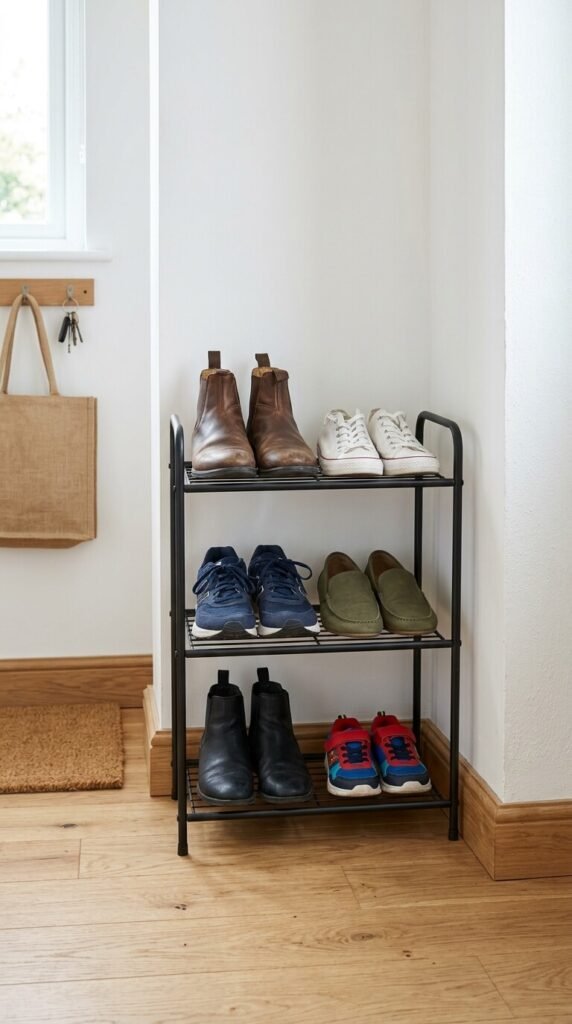
Shoes multiplied on the floor are the number one complaint in mudrooms. A stackable shoe rack with two or three tiers holds six to twelve pairs without taking up much floor space at all. Slim metal racks with a small footprint cost $15–$35. Put them in a corner or directly under a bench. Assign each tier to a different person if space is tight. Fewer shoes on the floor instantly makes the whole room look cleaner.
26. Frame the Whole Space With Painted Trim
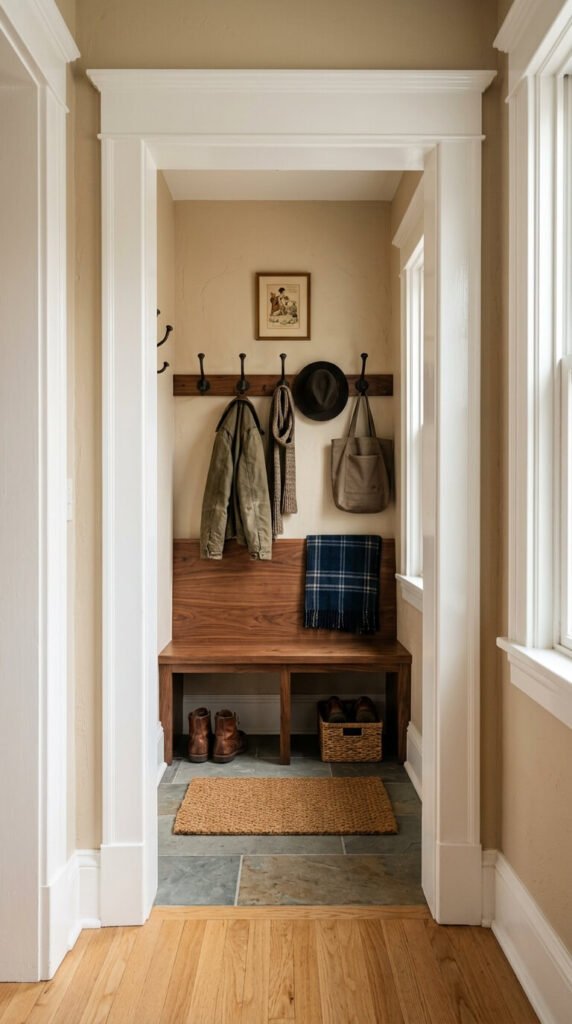
If you want one change that makes the entire mudroom look finished without touching anything inside it, repaint the door trim and baseboards bright white in a semi-gloss finish. Semi-gloss reflects light, wipes clean easily, and creates a crisp boundary that makes the room feel designed. A quart of trim paint costs $12–$18. Apply two coats with a 2-inch angled brush. It takes an afternoon and changes the way every other element in the room reads. Fresh trim makes everything look more expensive.
Conclusion
You do not need a renovation, a contractor, or a big budget to build a mudroom that actually works. The solutions above prove that a few focused decisions — the right hooks, a labeled basket system, a painted floor, a well-placed bench — can solve almost any entryway challenge. Start with one or two changes that address your biggest daily frustration. Then layer in more over time. A mudroom that handles the chaos quietly, looks good doing it, and welcomes your family home every single day is not a luxury. It is completely within reach.